



March 26, 2026

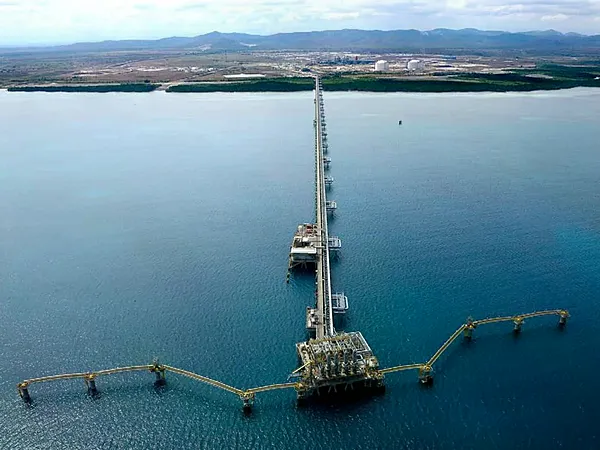
The Government has secured significant structural and financial gains for Papua New Guinea following its review of the 2019 Papua LNG Agreement, Petroleum Minister Jimmy Maladina said, asserting that the outcomes firmly favour the State despite ongoing political criticism.

Speaking on 19 March, Maladina said the review delivered “tangible outcomes in favour of the State”, a position he noted had been conceded by the project operator, directly countering claims that no progress had been made.

Central to the review are several provisions aimed at strengthening long-term national value. These include the formalisation of a National Content Plan to increase the participation of Papua New Guinean businesses and the local workforce in the project.

In addition, the project developer has agreed to maintain a minimum of US$250 million in a Bank of Papua New Guinea account to help buffer foreign exchange pressures.

The State has also secured the right to acquire the project’s pipeline infrastructure, subject to the repayment of loans and sunk costs, alongside guaranteed third-party access provisions. Furthermore, ownership of an LNG tanker to transport the State’s share of cargo will be held by Kumul Petroleum Holdings Limited.

“These are structural gains that improve long-term national value and were not in the original agreement,” Maladina said, referring to the deal negotiated in 2019.

The minister also addressed ongoing public debate surrounding project costs and alleged concessions. He rejected claims by Opposition Leader and Member for Ialibu-Pangia, Peter O’Neill, that the Government is providing a US$3 billion giveaway to developers, describing the assertion as “absolutely false”.

According to Maladina, the project’s capital cost has increased from US$12 billion to approximately US$14.5 billion — a difference of US$2.5 billion — largely due to global factors. However, through negotiations, the Government has reduced its exposure, with any support capped at less than US$2 billion and structured to be fully repaid over the life of the project.

“This is a give-and-take mechanism designed so that no party is better off than the other,” he said, reiterating that there would be “no permanent loss” to the people of Papua New Guinea.

Maladina further clarified that there will be no sovereign borrowing to finance the capital increase, and no plans to raise US$3 billion through public debt. He added that the arrangement would not place pressure on the national budget in the short to medium term, as any support would be contained within the project framework and agreed with developers.

While specific details remain subject to ongoing negotiations and pending National Executive Council approval, the minister stressed that the Government is negotiating from a “position of strength and discipline”.

He also placed the project’s delays and cost escalation in a global context, noting that the COVID-19 pandemic disrupted supply chains, financing and development timelines across the energy sector. At one stage, costs had risen to US$18 billion due to inflation and contractor pricing pressures, but the Government worked with the project operator to reduce this to approximately US$14.5 billion.

“That is a significant achievement,” he said.

Maladina underscored that the Government’s approach is balanced — aimed at protecting State value, ensuring investor returns remain viable, and advancing the project.

“If the project does not proceed, there is no revenue, no jobs and no economic benefit,” he said.

He also dismissed claims that Cabinet decisions were being rushed or influenced, stating that all processes are subject to proper scrutiny. Additionally, he cautioned against criticism of key project partners, including TotalEnergies and ExxonMobil, describing such actions as irresponsible.

The minister reaffirmed that the Government’s priority remains securing long-term benefits for Papua New Guinea through the project.

“We are ensuring that any support provided is capped at below US$2 billion and fully repaid,” he said. “We are delivering a project that will generate long-term revenue, employment and economic growth.”

“The people of Papua New Guinea should be assured that their interests remain our priority.”

March 25, 2026

At the heart of Port Moresby General Hospital, one of Papua New Guinea’s busiest and most critical healthcare institutions, a quiet but powerful movement has been transforming patient care and operational needs.

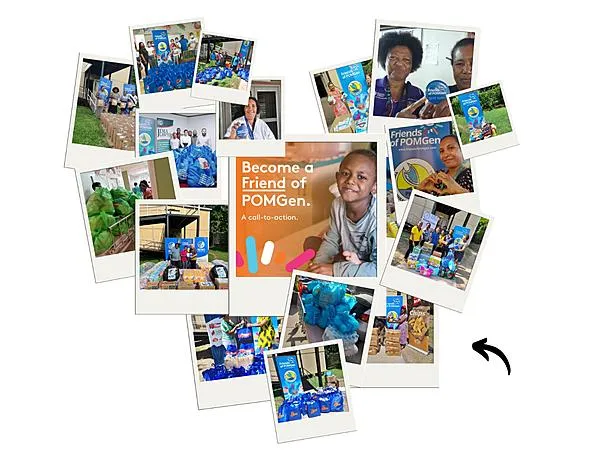
Friends of Pomgen (FOPG) has emerged as one of the country’s most recognised charity initiatives, supporting hospital patients and frontline workers through the provision of medical equipment, supplies, and refurbishment.

Since its establishment, Friends of Pomgen has grown into a national charity brand that mobilises communities, businesses, and individuals to support operational needs through donations, sponsorships, and fundraising partnerships.

Supporting Over 800,000 Patients

In just a few short years, the organisation’s impact has been remarkable. Since 2021, Friends of Pomgen has supported more than 800,000 patients receiving treatment at Port Moresby General Hospital.

Through community-driven charity campaigns and fundraising initiatives, the organisation has helped bridge critical resource gaps across hospital wards.

To date, Friends of Pomgen has raised over K15 million in donations, including essential medical supplies, patient care items, and equipment distributed directly to hospital wards. In addition, more than K1 million in infrastructure and medical equipment has been provided to strengthen the hospital’s capacity to deliver quality care.

These contributions ensure that patients, many of whom travel from across the country seeking specialised treatment, have access to essential items that support recovery and comfort during their hospital stay.

A Trusted Partner in Patient Care

Over time, Friends of Pomgen has become a familiar and trusted presence within the hospital community.

Working closely with ward managers, nurses, and healthcare professionals, the organisation maintains stock supplies and carefully monitors needs across hospital wards. This close collaboration ensures that critical items are distributed where they are needed most, helping medical teams deliver better care to patients.

Because of this consistent support and commitment, Friends of Pomgen has earned the affectionate nickname “Blue Angels” among hospital staff and patients alike. Their presence has become synonymous with compassion, support, and reliability within the hospital environment.

A National Charity Brand

Beyond the hospital wards, Friends of Pomgen has built a strong public presence through extensive charity drives and fundraising campaigns that attract audiences nationwide.

With a growing digital footprint and consistent support from mainstream media outlets, particularly print and radio, the organisation has successfully raised awareness of healthcare needs while encouraging community participation in charitable giving.

Today, Friends of Pomgen stands as one of Papua New Guinea’s most prominent healthcare charity brands, driven by a shared vision of supporting patients and strengthening healthcare services.

Recognising the Heroes of Healthcare

As part of its continued commitment to strengthening healthcare partnerships, Friends of Pomgen is preparing to launch an important new initiative later this year.

In September, the organisation will host its inaugural “Hospital Heroes Program”, a special event dedicated to recognising and celebrating the contributions of medical professionals, corporate sponsors, donors, and community partners who have supported the organisation over the years.

The event will serve as a platform to honour those who have stood alongside Friends of Pomgen in its mission to support patients and improve healthcare delivery at Port Moresby General Hospital. By acknowledging these contributions, the programme aims to inspire continued collaboration between the healthcare sector, private businesses, and the wider community.

Looking Ahead

Friends of Pomgen continues to focus on supporting the hospital through refurbishment initiatives and unfunded priority projects identified by the hospital. These projects aim to improve patient facilities, upgrade infrastructure, and support departments facing resource shortages.

With the continued support of the community, corporate partners, and dedicated volunteers, the “Blue Angels” remain committed to enhancing patient care and supporting the hardworking medical professionals who serve thousands of people every day.

Ultimately, the story of Friends of Pomgen is a testament to the power of community. It demonstrates that when individuals, businesses, and organisations unite around a common cause, they can create meaningful change and improve the lives of patients and families across Papua New Guinea.

March 25, 2026

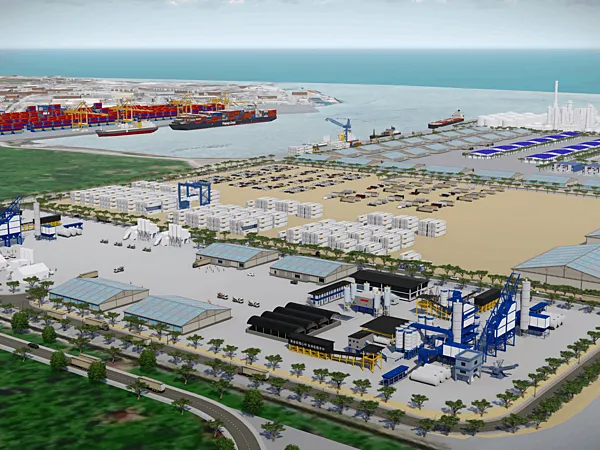
Positioned at the heart of Papua New Guinea’s most important trade gateway, Lae Industrial Park is redefining what is possible for industry, logistics and export-oriented investment in the country. Strategically located directly beside Lae Port – PNG’s busiest international port – the precinct provides businesses with a rare opportunity to establish operations at the centre of national and regional supply chains.

Developed and proudly owned by PNG Ports Corporation (‘PNG Ports’), Lae Industrial Park represents the next era of industrial and logistics growth for PNG, offering scale, speed to market and long-term flexibility for investors seeking a secure and well-connected operating base.

PNG Ports CEO Neil Papenfus describes Lae Industrial Park as “more than an industrial estate – it is a platform for export growth and industrial diversification, and together with Lae Port is set to become an engine for long-term growth and prosperity for Papua New Guinea.”

Development-Ready Today, Scalable for Tomorrow

The park provides 350 hectares of investment opportunity, including a 45-hectare hardstand supported by sealed roads, drainage, lighting and utilities. A further 305 hectares is available to support future expansion, enabling businesses to grow in step with increasing domestic and international demand.

Strategic Location and Logistics Advantage

Located directly beside Lae Port and key Asia–Pacific shipping routes, the park delivers a genuine operational advantage. Businesses benefit from the cost, efficiency and logistical gains of being located on the doorstep of a modern international port, reducing transport interfaces, improving reliability and strengthening access to export markets.

Lae to Become a Regional Transhipment Hub

Lae’s international terminal is being strengthened through the planned extension of its wharf, enabling the port to accommodate larger vessels and transition into a hub-and-spoke logistics centre. This capability will further enhance Lae’s role as a regional transshipment hub, linking PNG more efficiently with Asia, Australia and the wider Pacific. Moreover, it will deliver direct commercial benefits for Lae Industrial Park tenants through more frequent shipping services, shorter transit times, improved schedule reliability and lower end-to-end logistics costs for both imports and exports.

Special Economic Zone (SEZ)

Park tenants will also benefit when SEZ status is granted. A major milestone has already been achieved, with the National Executive Council granting concept approval for the proposed Lae Port SEZ. PNG Ports is now progressing the formal lodgement of its SEZ license application with the Special Economic Zones Authority (SEZA) and can also advance applications for fiscal incentives, including tax and customs concessions, to support and accelerate high-quality investment into Lae Industrial Park.

Delivered by a Trusted National Operator

Lae Industrial Park is delivered by PNG Ports Corporation, a reliable, state-owned operator with proven maritime and property expertise and a national network of strategically located ports. Investors benefit from a long-term partner committed to service excellence, integrated logistics and nationally significant infrastructure development.

March 24, 2026

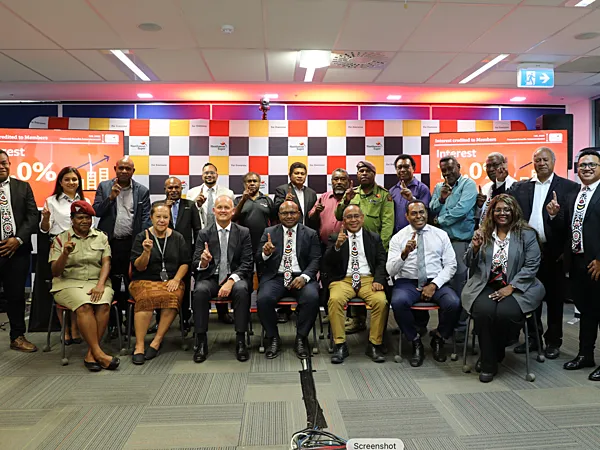
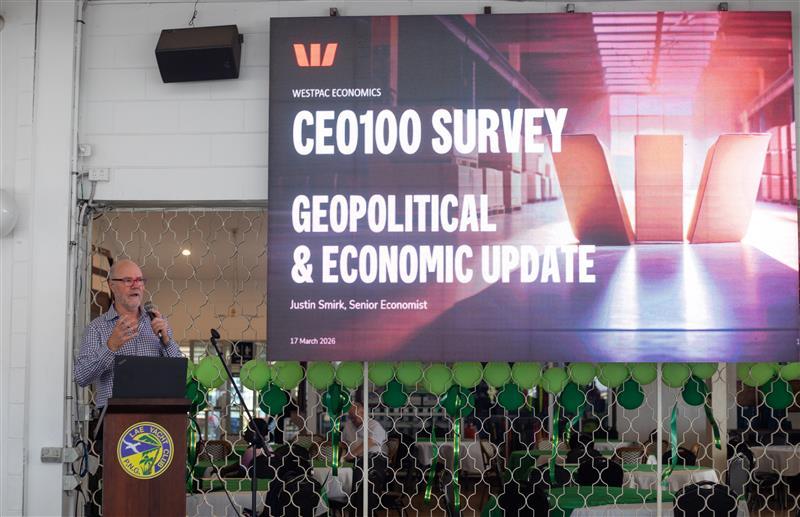
Westpac PNG recently hosted Westpac Group Senior Economist Justin Smirk in Papua New Guinea, where he shared insights on global and regional economic trends and their implications for PNG businesses and the broader economy.

During the visit, Smirk engaged with senior business leaders and customers, providing an analytical overview of global economic conditions, inflationary pressures, commodity markets, and growth prospects for Papua New Guinea. His discussions focused on helping businesses better understand the external forces shaping the operating environment and how PNG can position itself for sustainable growth.

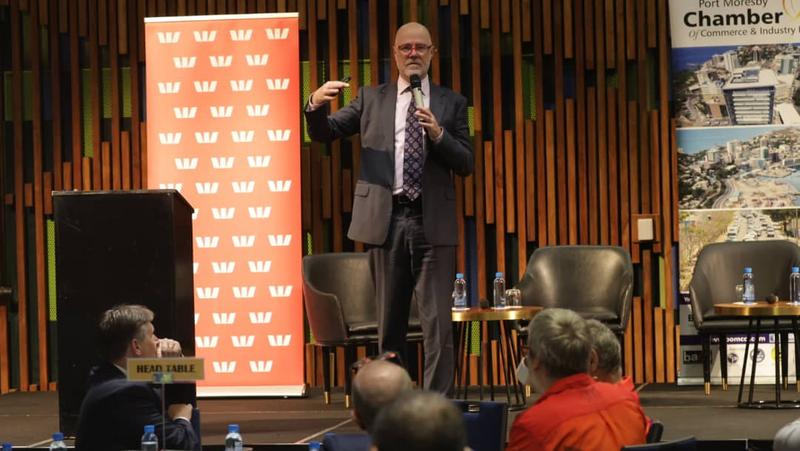
Speaking during the 100 CEOs Forum and the Lae Chamber of Commerce and Industry breakfast, Smirk said Papua New Guinea remains well placed to benefit from long-term demand for its natural resources, while ongoing reforms and investment in key sectors will be critical to strengthening economic resilience.

“PNG’s economic outlook continues to be influenced by global developments, particularly commodity prices, inflation, and interest rate movements,” Smirk said. “Understanding these trends is important for businesses as they plan, invest, and manage risk in a changing environment.”

Smirk also highlighted that ongoing geopolitical tensions in the Middle East, including the conflict between Iran and the United States, continue to affect global oil markets and contribute to volatility in fuel prices. As a net importer of refined fuel, Papua New Guinea is particularly exposed to these global price movements, with higher fuel costs flowing through to transport, logistics, electricity generation, and the cost of goods across the economy.

As part of the visit, Smirk also travelled to Lae, where he addressed members of the Lae Chamber of Commerce and Industry and participated in media interviews, including a live discussion on FM100, offering perspectives on economic conditions relevant to regional businesses.

Westpac PNG Chief Executive Andrew Cairns said the visit reinforced the bank’s commitment to supporting informed decision-making across the PNG economy.

“At Westpac PNG, we are committed to connecting our customers and stakeholders with global expertise that helps them navigate economic change,” Cairns said. “Justin’s insights provide valuable context for businesses as they plan for the year ahead.”

Westpac PNG continues to play an active role in supporting economic dialogue, financial literacy, and informed public discussion, helping customers and communities build confidence in an evolving economic environment.


March 23, 2026

The International Fund for Agricultural Development (IFAD) has joined the Government of Papua New Guinea and multilateral partners in launching the AgriConnect Project, an initiative aimed at transforming the country’s agri-food sector and strengthening rural livelihoods.

The project, unveiled in Goroka on 3 March, is co-financed by IFAD alongside the World Bank, the Asian Infrastructure Investment Bank and other development partners. It seeks to reposition small-scale farming as a driver of sustainable economic growth, employment and food security.

AgriConnect is designed to build a supportive ecosystem centred on agribusiness development, linking farmers and entrepreneurs to both domestic and global food value chains. The initiative aims to improve how smallholders produce, aggregate and market crops, while expanding access to markets.

Reehana Raza, IFAD regional director for Asia and the Pacific, said the institution brings extensive experience in connecting small-scale farmers to markets and strengthening food value chains.

“We value our partnership with the World Bank Group to support these goals and together broaden and deepen the impact of our two institutions,” Raza said during the launch.

The programme forms part of a broader global AgriConnect initiative, under which IFAD President Alvaro Lario has pledged to reach at least 70 million small-scale farmers by 2030 by improving incomes, productivity and market access.

In Papua New Guinea, AgriConnect will include co-financing for the Agriculture Commercialisation and Diversification Phase 2 (PACD-2) project, marking the first collaboration between IFAD and the World Bank under the initiative in the Asia-Pacific region.

The project aligns with the government’s National Agriculture Sector Plan 2024–2033, which targets the creation of one million rural jobs by 2033. It will focus on addressing barriers to private sector investment, including limited access to digital agricultural technologies, weak aggregation systems, financing constraints and regulatory inefficiencies.

Jing Pacturan, IFAD country director for Papua New Guinea, said the organisation’s investments in rural infrastructure and services aim to integrate farmers more effectively into the broader economy.

“In PNG, IFAD supports small-scale farmers through investments in rural feeder roads and improved agricultural extension services, including access to finance, to enable them to connect to markets and become active participants in a thriving food economy,” Pacturan said.

She added that IFAD’s co-financing for PACD-2 would scale up ongoing programmes, benefiting more farmers while supporting job creation in line with national targets.

Since 2019, IFAD has supported agricultural development in Papua New Guinea through initiatives such as the $46.8 million Market for Village Farmers project, which promotes the production of fresh food for both rural and urban markets. The project has drawn funding from IFAD, the national government, provincial and district authorities, as well as private sector participants and financial institutions. Additional financing of $18 million was approved in December 2025.

IFAD, a specialised international financial institution focused on rural transformation, currently has nearly $23 billion invested in projects worldwide aimed at strengthening food systems, creating jobs and fostering resilient rural economies.

March 23, 2026

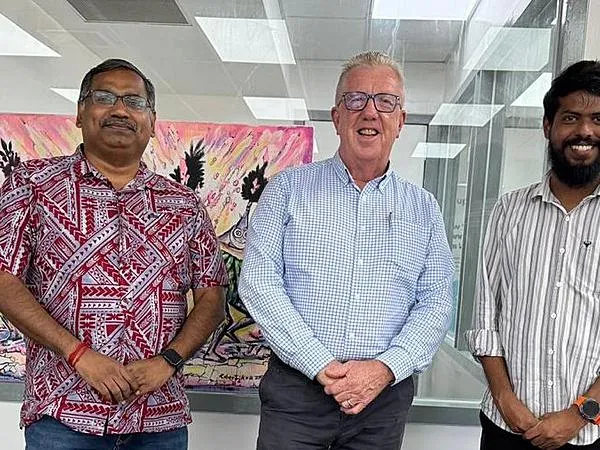
TISA Bank Limited and Crown Hotel Port Moresby have formalised a new strategic partnership with the signing of a Memorandum of Understanding (MOU) aimed at delivering exclusive hospitality discounts and enhanced digital payment services to TISA Bank customers and TISA Group employees.

Under the two-year agreement, Crown Hotel will offer substantial discounts across accommodation, dining, conferencing, and leisure services to eligible TISA Bank customers and employees. The partnership also includes the integration of TISA Bank’s digital payment channels within the hotel, including Visa Debit Card payments, QR Scan-to-Pay, and the Yumi Pei Wallet.

The agreement solidifies a commitment to enhancing the customer experience by merging Crown Hotel’s premier hospitality services with TISA Bank’s innovative financial technology. Eligible TISA Bank customers and group employees will now enjoy a 10–20% discount on various services, including accommodation, dining, conferencing, and leisure services at the hotel.

A key feature of the partnership is the integration of TISA Bank’s digital payment ecosystem within the hotel. Guests can now make secure and convenient cashless payments using TISA Bank’s Visa Debit Card, QR Scan-to-Pay, or the Yumi Pei Wallet, streamlining the customer experience.

Following the signing, Mr Shankar Ghoshal, General Manager of Crown Hotel Port Moresby, expressed his enthusiasm for the collaboration.

Mr Kumaresh Chithravelu, Acting Deputy CEO of TISA Bank, highlighted the broader vision behind the agreement.

“This partnership reflects our commitment to delivering meaningful value to both our customers and employees. By combining exclusive hospitality benefits with secure and accessible digital payment channels, we are extending the reach of TISA Bank’s services into everyday experiences.”

The MOU is part of TISA Bank’s strategy to promote digital banking and a cashless economy, and reinforces both organisations’ commitment to customer experience, digital innovation, and secure service delivery.

March 19, 2026

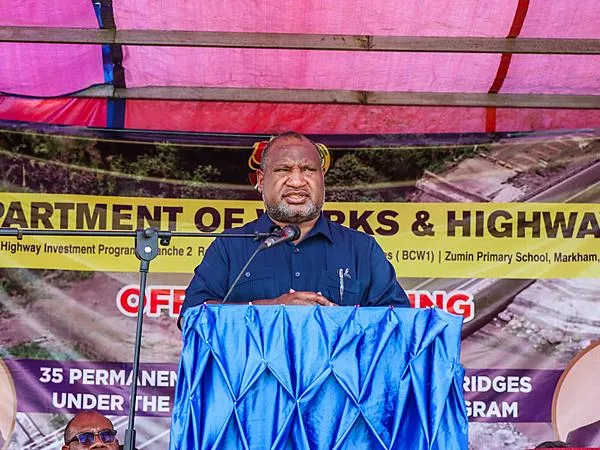
Prime Minister James Marape on 9 March 2026 officially opened 35 newly constructed permanent bridges along the Highlands Highway, describing the country’s most important transport corridor as the backbone of Papua New Guinea’s economy.

The ribbon-cutting ceremony took place at Zumim Bridge in Markham District, marking the completion of the first major phase of bridge reconstruction under the Asian Development Bank (ADB)-funded Sustainable Highlands Highway Investment Programme (SHHIP) Tranche 2.

The new dual-lane concrete bridges replace ageing Bailey bridges that had served the highway for decades but had deteriorated under increasing traffic loads and heavy freight movement along the critical corridor linking the Highlands region to Lae Port.

Prime Minister Marape said the Highlands Highway carries nearly 80 percent of Papua New Guinea’s economic activity, making continued government investment in its maintenance and modernization a national priority.

“This highway sustains the country. It carries the bulk of our economy from the Highlands to the port of Lae and to the rest of the world. It is worth reinvesting billions of kina into this national asset,” he said.

Joining the prime minister at the ceremony were Minister for Works and Highways Hon. Peter Tsiamalili Jr, Deputy Prime Minister Hon. John Rosso, Morobe Governor Hon. Rainbo Paita, Agriculture Minister Hon. John Boito, Markham MP Hon. Koni Iguan, representatives of the Asian Development Bank, and local leaders.

Prime Minister Marape acknowledged that the initial Highlands Highway restoration programme was secured under the previous government with approximately K1 billion in funding supported by ADB, but said the Marape–Rosso government expanded the program significantly, committing an additional K2 billion for bridge replacements, road reinforcement, and other critical upgrades along the corridor.

“In total, close to K3 billion has now been invested in rebuilding this highway, which is the economic spine of our nation,” he said.

He added that within the next six months, the highway corridor from Lae to Mount Hagen is expected to operate with modern bridge infrastructure and significantly improved road conditions.

Minister for Works and Highways Peter Tsiamalili Jr emphasized the national importance of the highway, stating that it connects close to five million people, nearly half of Papua New Guinea’s population, and carries the majority of the country’s exports.

“This highway links close to five million people. About 40 to 50 percent of the country uses this road, and nearly 80 percent of our exports travel along this corridor,” he said.

Tsiamalili also urged communities along the highway to take responsibility for protecting national infrastructure and ensuring development benefits local populations.

“There is both good and bad when development comes, and most of the bad comes from us men. It is time for us to change our mindset, protect this development, and look after our mothers and women in our communities,” he said.

Secretary for Works Gibson Holemba provided a technical overview of the project, explaining that the Nadzab to Henganofi section of the Highlands Highway spans approximately 202 kilometers and includes 35 bridges with a combined length of 1,773 meters. The project also delivered 45 roadside bus stops to improve accessibility and safety for communities along the corridor.

Holemba said the broader bridge reconstruction programme covers three sections of the Highlands Highway, including 19 bridges between Henganofi and Mangiro, and 17 bridges between Mangiro and the Kagamuga Airport Junction in Mount Hagen.

He added that through improved project management and contract savings of nearly K200 million, the Department of Works was able to include six additional bridges, increasing the total number of bridges to 77 across the project.

The opening of Zumim Bridge symbolically marks the completion of the first 35 bridges under the SHHIP programme, while construction and upgrades continue on the remaining bridges along the Highlands Highway.

Government leaders at the ceremony said the upgrades form part of the broader Connect PNG Programme, aimed at strengthening national transport infrastructure, improving economic connectivity, and supporting long-term development across Papua New Guinea.

March 19, 2026

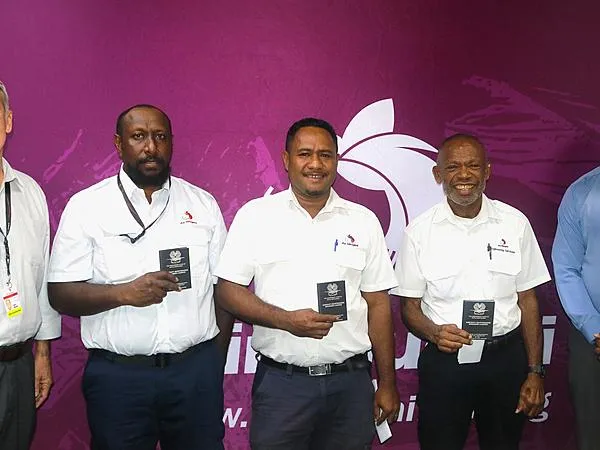
Air Niugini is proud to announce that four of its Licensed Aircraft Maintenance Engineers (LAMEs) have been granted Airbus A220 type ratings by the Civil Aviation Safety Authority of Papua New Guinea (CASA PNG). This marks a historic first, with the engineers becoming the first Papua New Guineans formally endorsed on the Airbus A220 aircraft type.

This achievement represents a significant milestone not only for Air Niugini but also for Papua New Guinea’s aviation industry, underscoring the airline’s commitment to world-class engineering standards, safety excellence, and the development of national capability.

The CASA PNG Airbus A220 licence endorsements were formally presented by the Deputy Director of CASA PNG and the Manager of Personnel Licensing, recognising both the individual accomplishments of the engineers and the strength of Air Niugini’s training and development systems.

Air Niugini Chief Executive Officer Mr Alan Milne commended the engineers for their dedication and highlighted the broader national significance of the achievement.

“This is a proud and defining moment for Air Niugini and for Papua New Guinea. These four engineers represent the very best of our national talent and are the first fruits of our investment in advanced training and capability development. Their achievement demonstrates that Papua New Guineans can meet and exceed global aviation standards,” Mr Milne said.

“As we introduce the Airbus A220 into our fleet as part of our fleet transformation program, having locally trained and CASA-certified engineers is critical to ensuring safe, efficient, and sustainable operations. This milestone strengthens our technical independence and builds a strong foundation for the future of aviation in our country.”

The four engineers recognised as Papua New Guinea’s first Airbus A220-endorsed Licensed Aircraft Maintenance Engineers are:
• John Pidik (Mechanical – Airframe and Powerplant)
• Henry Kaunger (Mechanical – Airframe and Powerplant)
• Abraham Gena (Avionics – Electrical Instrument Radio)
• Edward Polau (Avionics – Electrical Instrument Radio)

These senior engineers are highly experienced and multi-rated, each holding certifications across three to six different aircraft types.

They successfully completed an intensive Competency-Based Training and Assessment (CBTA) program aligned with international aviation standards.

Their Airbus A220 training commenced in January 2025 in Port Moresby, followed by specialised overseas training in Singapore and Mirabel, Canada, including a visit to the Airbus A220 production facility.

The program included advanced simulator-based engine ground run exercises, hands-on practical training such as engine change procedures, and an operational attachment with Qantas Airways.

This was complemented by extensive on-the-job training (OJT) in Papua New Guinea under the supervision of approved Airbus A220 LAMEs.

The program concluded with a comprehensive CASA PNG assessment process, including formal examinations and a structured oral competency evaluation across 11 critical technical areas.

Type rating endorsements were granted following submission of recognised theory training certification, a validated OJT logbook, and successful completion of all CBTA requirements.

A second group of engineers commenced Airbus A220 training in October 2025, further strengthening Air Niugini’s national engineering capability.

This achievement reflects Air Niugini’s successful transition from traditional knowledge-based training systems to a modern, competency-driven framework focused on real-world performance, operational safety, and technical excellence.

It also highlights strong collaboration between Air Niugini’s engineering and training teams, CASA PNG, and international partners including Airbus, Qantas Airways, and SAMCO.

Mr Milne added, “The certification of these engineers is critical to supporting Air Niugini’s growing Airbus A220 fleet, which forms the backbone of the airline’s fleet transformation program. Having highly trained, locally certified engineers enhances operational reliability, reduces dependence on external resources, and ensures the highest safety standards are maintained.”

Air Niugini acknowledges the dedication, discipline, and professionalism demonstrated by the engineers throughout this demanding process, as well as the continued support of CASA PNG in upholding rigorous regulatory standards.

This milestone not only strengthens Air Niugini’s engineering capability but also represents a significant step forward for Papua New Guinea, showcasing the country’s ability to develop world-class aviation expertise and reinforcing national pride.

March 19, 2026

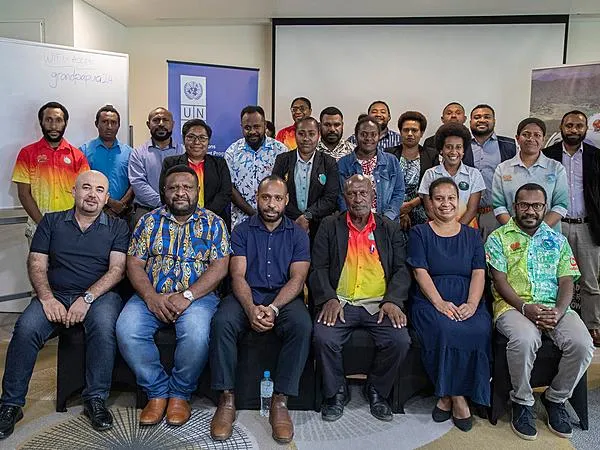
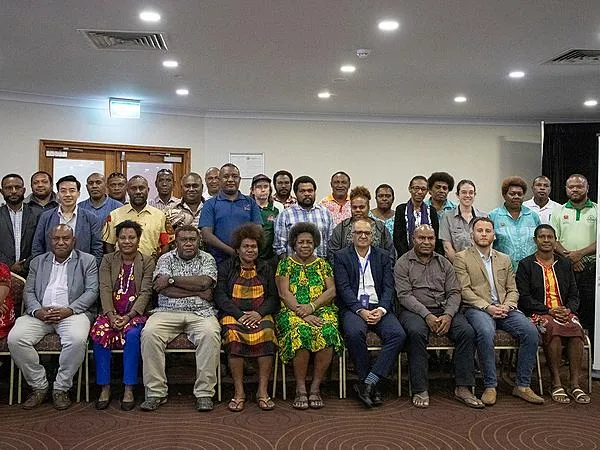
The United Nations Development Programme (UNDP), in partnership with the Conservation and Environment Protection Authority (CEPA), convened a coordination workshop to strengthen collaboration among stakeholders under the Global Environment Facility-7 Food Systems, Land Use and Restoration (GEF-7 FOLUR) Project.

The workshop brought together representatives from national government agencies, provincial administrations, private sector partners, grantees and civil society organizations to align efforts and improve coordination in implementing sustainable land use initiatives.

Officials said the meeting provided a platform for partners to deepen their understanding of the project, clarify roles and responsibilities, and strengthen collaboration across all components.

“It’s essential to view all project components as a connected and coherent set of interventions, leveraging technical, operational and financial synergies among partners,” said Aadil Mansoor, UNDP deputy resident representative. “At the same time, we must promote transparency and shared responsibility, ensuring that communities remain at the center of all project actions and outcomes.”

CEPA Director for Sustainable Environment Programs Kay Kalim underscored the importance of establishing a multistakeholder platform to improve coordination and policy alignment.

“Such a platform will strengthen cross-sector dialogue and enable stakeholders to work more cohesively and effectively,” Kalim said. “I encourage all participants to become active advocates who can help influence policy reforms and support the institutionalization of integrated approaches across sectors.”

The workshop focused on reinforcing CEPA’s role as an implementing partner, particularly in linking the project to protected areas and environmental management. It also aimed to align the activities of grantees, contractors and other partners with the broader goals of the program, while enhancing coordination with provincial governments and agencies with implementation agreements.

Participants reaffirmed their commitment to a more coordinated approach, highlighting the importance of integrated land use planning in addressing environmental and development challenges.

The GEF-7 FOLUR project, titled “Establishing systems for sustainable integrated land use planning across New Britain Island in Papua New Guinea,” seeks to reduce agriculture-driven deforestation and biodiversity loss while developing a long-term framework to guide land development in the country.

March 18, 2026

As Papua New Guinea enters a new phase of economic momentum, attention is turning to where business, policy and investment intersect, and, in May 2026, this conversation will take centre stage in Brisbane.

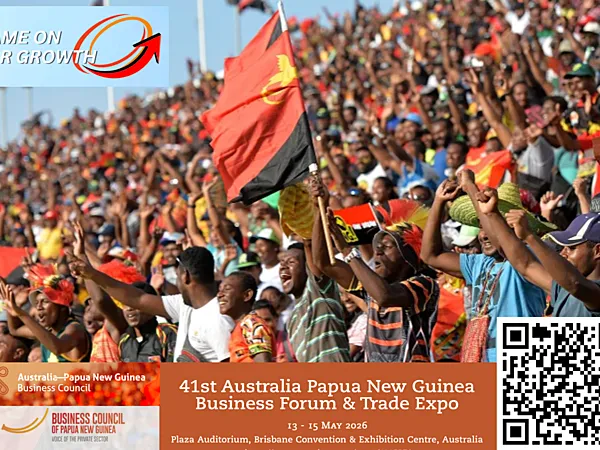
The 41st Australia Papua New Guinea Business Forum & Trade Expo will convene in Brisbane from 13–15 May 2026, bringing together business leaders, investors and policymakers for three days of high-level engagement focused on the Pacific’s largest economy.

Set against the electric atmosphere of the NRL Magic Round, this year’s Forum promises a unique blend of business opportunity and citywide excitement. Under the theme Game On for Growth, it signals a moment of renewed momentum in PNG’s economy and a clear invitation for businesses to engage.

PNG is entering a new phase of economic activity, driven by major resource developments, infrastructure investment and expanding sectors such as agriculture, telecommunications and services. For companies looking to enter or grow in this market, the Forum offers unmatched access to the people and insights that matter.

Where opportunity meets access

The Forum brings together senior government representatives, industry leaders and investors from both PNG and Australia. It provides a platform to hear directly from decision-makers about policy priorities, regulatory developments and upcoming investment opportunities.

The programme reflects the breadth of PNG’s economic landscape. Delegates will hear keynote addresses from PNG and Australian leaders, alongside sessions on economic infrastructure, agriculture and major projects in energy and resources.

Critical forward-looking themes will also be explored, including artificial intelligence, labour market transformation, sustainability and carbon markets, telecommunications, and SME development. Sessions on Bougainville and PNG’s infrastructure pipeline will further deepen understanding of emerging opportunities.

The Trade Expo: where business happens

Running alongside the Forum, the Trade Expo will be a focal point for visibility and engagement. Open from 13 to 15 May, it provides companies with the opportunity to showcase their goods and services to a highly targeted audience of decision-makers and industry leaders.

With limited booth availability and strong demand expected, the Expo is where conversations translate into commercial outcomes. Book early to secure your spot.

Networking that delivers results

From the opening cocktail function to the conference dinner and dedicated networking receptions, the Forum is designed to foster meaningful connections. These interactions often lead to long-term partnerships, making the Forum a catalyst for business across borders.

A partnership built over decades

Australia and PNG share a long-standing relationship grounded in history, trade and close people-to-people ties. Since PNG’s independence in 1975, the two countries have developed strong economic links across resources, infrastructure, finance and services.

For more than 40 years, the Australia Papua New Guinea Business Council (APNGBC) has worked closely with government and industry stakeholders to strengthen commercial ties and promote bilateral engagement. The Forum is delivered in collaboration with counterparts in PNG, including the Business Council of Papua New Guinea, reflecting the depth of private sector partnerships between the two countries.

Backed by leaders in business

The 41st Forum is supported by a strong line-up of partners and sponsors actively engaged in Papua New Guinea’s growth story. These include Kramer Asia Pacific, Investment Promotion Authority PNG, ExxonMobil, Kina Bank, Pronto Software, Pacific Marine Group, Westpac, SMEC, Austrade, Trade & Investment Queensland (TIQ), Santos, CC Pacific, ANZ Bank, Dentons, Steamships, Qantas and many more.

Be there

With Brisbane alive to the energy of the Magic Round and the Pacific’s premier business forum in full swing, May 2026 presents a rare convergence of opportunity and engagement.

If Papua New Guinea is on your business horizon, this is where you need to be.

Secure your place, and be part of the conversations shaping the future of the Pacific’s largest market.

Register before 31 March to go into the draw to win two NRL Magic Round tickets*.
T&Cs apply.

Click here to register or scan the QR code.

Link: https://events.apngbc.org.au/event/41APBF/home.html

March 16, 2026

PacSuper, Papua New Guinea’s oldest private-sector superannuation fund, has officially launched the country’s first fully digital Employer Portal, marking a major milestone in the ongoing modernisation of superannuation administration across Papua New Guinea.

The Employer Portal builds on PacSuper’s implementation of PRIMS, a new administration system introduced in 2025, alongside the launch of the PacSuper Member Portal. Together, these initiatives form a modern digital ecosystem designed to strengthen transparency, governance and retirement outcomes across Papua New Guinea.

PRIMS is the only superannuation administration system based in Papua New Guinea. While many funds rely on outsourced platforms hosted offshore, PacSuper has invested in a system designed specifically for the PNG market, strengthening control, reliability and service capability for members and employers.

PacSuper Chief Executive Officer Chris Hagan said the launch reflects PacSuper’s commitment to strengthening superannuation administration across the country.

“Following the introduction of our new PRIMS administration system and Member Portal last August, the Employer Portal represents the next step in modernising how superannuation is administered in Papua New Guinea,” Mr Hagan said.

“The system gives employers a clearer, more efficient way to manage contributions and engage with the Fund, while strengthening transparency and protection for members’ retirement savings.”

The Employer Portal delivers enhanced capability across four key areas:

Industry leadership
As the first fully digital employer experience introduced in Papua New Guinea’s superannuation sector, the portal represents an important step in lifting standards of transparency and accountability.

Employer service and interaction
Employers can now manage employee-related interactions more efficiently, including handling enquiries, completing required forms and following up on requests directly through a digital platform.

Improved contribution accuracy
Employers now have real-time visibility of contribution submissions and allocations, helping reduce reconciliation errors and improve reporting accuracy.

Operational efficiency and governance
Secure access controls, digital submission and auditable processing reduce manual handling while strengthening compliance and governance across the superannuation system.

These developments reflect PacSuper’s ongoing commitment to its members and employers, and to strengthening the future of superannuation in Papua New Guinea through continued investment in modern technology, local capability and improved retirement outcomes.

PacSuper is Papua New Guinea’s oldest private-sector superannuation fund, dedicated to making superannuation simpler, more efficient and more effective. Formerly the AON Master Trust, the fund rebranded as PacSuper in April 2024.

Committed to delivering better retirement outcomes, PacSuper is the only fund in PNG offering members the flexibility of multiple currency choices. With a strong focus on prudent risk management, PacSuper aims to ensure stability and security in an evolving financial landscape.

March 16, 2026

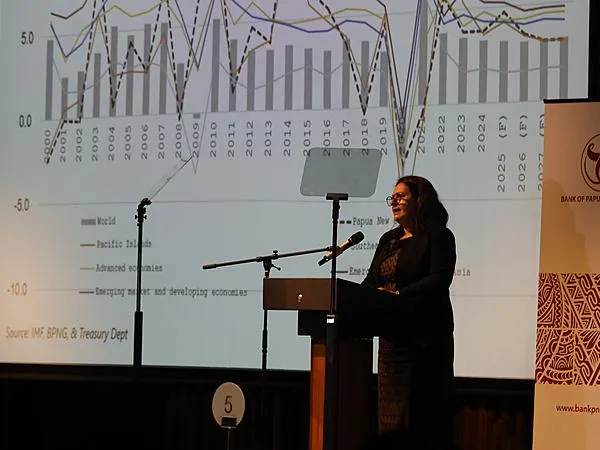
Bank of Papua New Guinea (BPNG) Governor Elizabeth Genia has assured the business community that Papua New Guinea’s recent placement on the Financial Action Task Force (FATF) grey list does not mean the country is unsafe for investment or business operations.

Governor Genia made the remarks during a BPNG business breakfast meeting held on Monday, March 9, where she presented the Bank’s March 2026 Outlook on the Economy, Inflation and Monetary Policy.

The Governor outlined recent economic developments, the outlook for inflation and the latest decisions of the Monetary Policy Committee (MPC), noting that Papua New Guinea’s economy continues to show resilience despite increasing global uncertainty.

Addressing concerns about Papua New Guinea’s placement on the FATF grey list, Governor Genia said reforms are already underway to strengthen the country’s anti-money laundering and counter-terrorism financing framework.

“Grey listing does not mean Papua New Guinea is sanctioned or unsafe to do business,” she said.

Governor Genia said the country continues to record steady economic growth with moderate inflation, although global developments are contributing to a more uncertain international environment.

Domestic economic growth for 2025 has been revised upward to 5.3 percent, largely reflecting stronger production in the liquefied natural gas (LNG) and mineral sectors.

“For 2026, growth is projected to moderate to around 3.0 percent, representing a return to a more sustainable pace of expansion following the strong rebound in 2025,” she said.

Global uncertainty and energy prices

The Governor also highlighted emerging geopolitical risks that could influence global and domestic economic conditions.

Governor Genia said the recent escalation of conflict in the Middle East has introduced significant uncertainty into the global economic outlook. Disruptions to maritime transport through the Strait of Hormuz have contributed to higher global energy prices.

“Higher energy prices would feed directly into global inflation at a time when central banks in many advanced economies have only recently brought inflation back towards target,” Governor Genia said.

According to BPNG data, annual headline inflation stood at 4.1 percent in the December quarter.

Core inflation measures remained lower, with the trimmed mean at 1.8 percent and exclusion-based inflation at 0.7 percent.

The Bank projects headline inflation of around 4 percent in 2026, while core inflation is expected to remain within the 2.5 to 3 percent range over the medium term.

Monetary policy position

The Monetary Policy Committee assessed current economic conditions and determined that existing policy settings remain appropriate.

“Overall, the Committee judged that the current monetary policy settings are consistent with a broadly neutral stance and remain appropriate given contained underlying inflation and steady economic activity,” Governor Genia said.

Despite global uncertainties and the FATF grey listing, Governor Genia said Papua New Guinea enters this period of heightened global uncertainty from a position of relative resilience.

“Inflation remains contained, our reserves are adequate, and the financial system is stable. The Bank will continue to monitor developments closely and adjust policy settings if required to maintain price stability,” she added.

BPNG also reaffirmed its commitment to independence, transparency and continued engagement with the private sector and development partners.

March 12, 2026

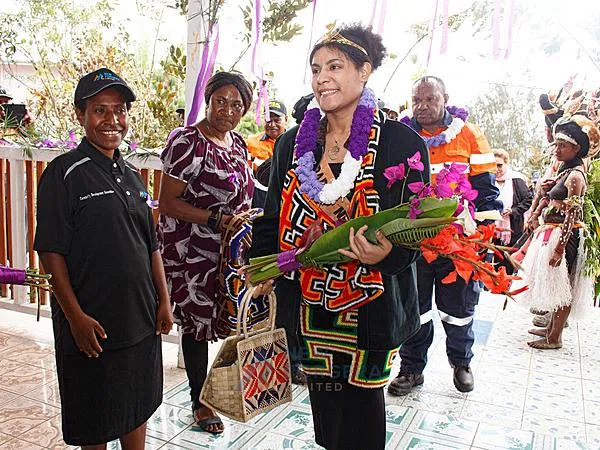
Porgera, Enga Province: Reigning Miss Bird of Paradise PNG Iampela Popena joined women from local communities and the Porgera mine workforce to celebrate International Women’s Day (IWD), bringing a message of leadership, empowerment and equal opportunity.

Popena arrived in Porgera on March 7, 2026, accompanied by Anna Bais, chairlady of the Miss Bird of Paradise organisation, which supports young Papua New Guinean women participating in the Miss Pacific Islands pageant. Both organisations promote women’s leadership while highlighting intelligence, cultural identity and community engagement.

During the visit, Popena and Bais toured the Porgera mine operated by New Porgera Limited (NPL). Guided by NPL employees, the pair viewed the scale of the mining operation through a helicopter tour over the site and visits to key operational and administrative areas.

Popena also joined one of the mine’s female truck operators, Sharon Umange, in the cab of one of the world’s largest haulage trucks, giving her a close look at daily operations at the mine.

Prior to the site tour, Popena attended the launch of the NPL Women’s Community Development Committee, where she served as guest of honour. The initiative, organised by NPL’s Corporate Social Responsibility (CSR) department, aims to strengthen families and communities in the Porgera–Paiela district through the leadership of local women.

The launch event, held as part of IWD celebrations, was attended by NPL General Manager James McTiernan, Sustainability Manager Fiorenzo Guarino, mine employees and community representatives, including Tawa Kina, president of the Porgera Rural Local Level Government.

In her keynote address, Popena encouraged women to seize opportunities and use their talents to contribute meaningfully to the country’s development.

“Women are strong. Families are strong because of women. Now, they are stepping into businesses, stepping into leadership. I’d like to commend you all for stepping out to be a voice of your people in the communities. Thank you also to the men for your support,” she said.

Popena also shared her journey through the Miss Bird of Paradise PNG pageant, describing it as a platform that nurtures emerging female leaders.

She urged communities to continue supporting both young women and men, emphasising that everyone has a role to play in national development.

The visit of Popena — the youngest entrant to hold the Miss Bird of Paradise title — and Bais, a former secretary of Papua New Guinea’s Department of Community Affairs and Religion, added energy to the celebrations.

Their presence reinforced the importance of women’s empowerment, leadership and active participation in community and national development.

March 12, 2026

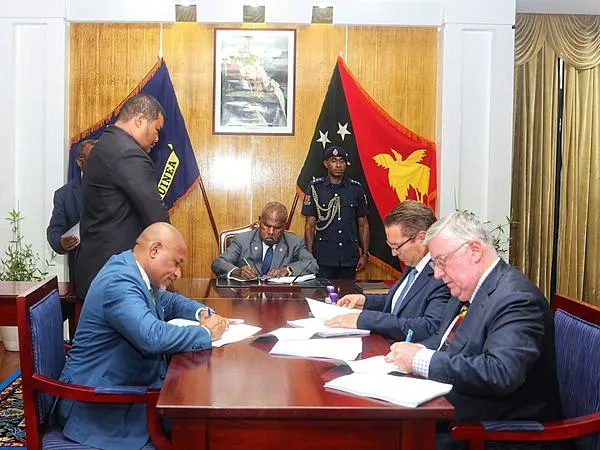
Papua New Guinea has signed a Project Development Agreement (PDA) with Mayur Resources for the Central Lime and Cement Project in Central Province, a move the government says will reduce reliance on imported cement and expand the country’s manufacturing base.

Minister for International Trade and Investment Richard Maru said the agreement, signed at Government House on March 12, marked the culmination of a decade of negotiations for the project at Kido and Rea Rea.

“I am delighted that we have finally, after 10 years, reached an Agreement on the Central Lime and Cement Project at Kido and Rea Rea in Central Province,” Maru said during the signing ceremony.

The PDA establishes the framework for developing an integrated facility that will produce quicklime, clinker and cement for both domestic use and export markets — the first of its kind in Papua New Guinea.

According to the minister, construction of Stage 1 of the project — which includes quicklime kilns, a quarry, a wharf and supporting infrastructure — is already under way following the developer’s final investment decision in August 2025.

“These works are progressing strongly and will deliver PNG’s first major quicklime production capacity by 2027,” Maru said.

He added that the agreement clears the way for Stage 2 of the project — the clinker and cement manufacturing facility — to begin construction later this year.

“Once built, this will provide locally made high-quality cheap cement that will replace hundreds of millions of kina in imports, anchor new downstream industries like casting and brick facilities, and significantly expand PNG’s manufacturing base,” Maru said.

Papua New Guinea currently imports nearly all its quicklime and cement requirements, placing pressure on foreign exchange and construction costs.

Government figures show that in 2024 the country imported approximately US$14.3 million (more than K55 million) worth of cement, alongside US$7.88 million worth of cement clinker, mainly from Japan and Indonesia.

“The Central Lime and Cement Project aims to reduce this reliance by utilising domestic limestone for industrial production, supporting national infrastructure programmes, including the Connect PNG Programme,” Maru said.

“As a country, we should not be importing limestone and cement because we are endowed with limestone resources.”

Under the agreement, the government expects cement prices in Papua New Guinea to fall significantly. The project will also be designated a pioneer industry and protected for up to 15 years through a 30 percent tariff on imported cement, while a 10-year tax holiday will apply to the project’s second phase.

“Cement is essential in building our nation. We want to see all our roads built with cement from the limestone resources within PNG,” Maru said.

“We do not want to see any of our limestone by-products like clinker being sent overseas. All our limestone must be used for our nation-building projects in PNG. Our priority is to meet our domestic demand before exporting the surplus.”

The agreement also provides benefits for local landowners and provincial authorities.

Landowners will receive a 2 percent royalty, while the state will provide K20 million in Business Development Grants and K20 million in Infrastructure Development Grants over two years, to be included in the next national budget.

Maru said 30 percent of the shares in Pacific Lime and Cement would be acquired by Papua New Guinean investors, including the Central Provincial Government, landowners and the National Government through a state nominee.

Additional local investors will be able to participate through an Initial Public Offering (IPO) expected by September this year, aimed at raising up to K1 billion to finance construction of the cement factory.

The project is expected to generate more than 2,000 jobs.

Maru also confirmed that three additional limestone projects are in development.

“This project is one of the four Special Economic Zones the Marape-Rosso Government has licenced through the regulator, the Special Economic Zones Authority,” he said.

March 12, 2026

Petroleum Resource Development

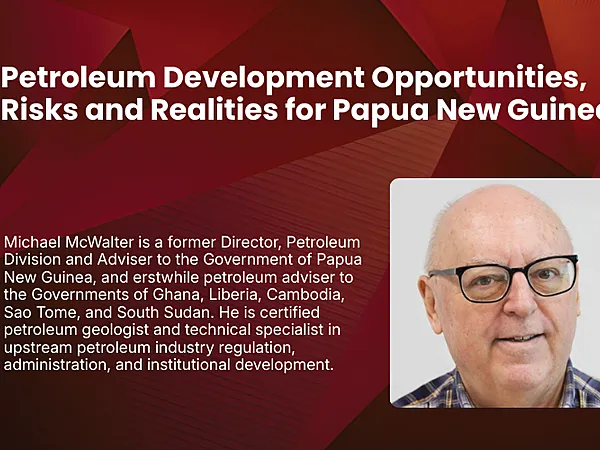
Michael McWalter writes about petroleum development in its widest sense and the finding and extraction of oil and gas resources from the ground to sell them to make money, provide energy and feedstock, and the various roles and responsibilities of stakeholders and their inter-relationships.

What is Petroleum Development?

In broad terms, petroleum development is the overall process of finding, extracting, and refining oil and gas from the Earth, often collectively called petroleum, or otherwise hydrocarbons, though this latter term includes coal. Sometimes, we more strictly reserve the term petroleum for crude oil which derives from combining the Latin words petra meaning rock and oleum meaning oil, hence rock oil. But oil scarcely ever comes without some contained or associated gaseous hydrocarbons, which are often termed natural gas, or simply gas. Some fields contain mainly gas and just a few of what we call wetter (liquid) hydrocarbons, which we can extract from the gas such as condensate and natural gas liquids. Papua New Guinea has some oil, but considerably more gas.

Figure 1: A typical black crude oil, after Wikipedia.
Figure 2: Natural gas burning on a stove; natural gas is colourless, but in the right proportion with air, it will burn at high temperatures causing ionisation of the molecules and blue light emission, after Freepic.

Once extracted, these substances have many uses, primarily as a source of energy, but also importantly as feedstock for the petrochemical industry. Oil and gas thus have very useful economic value, so we regard them as a resource which has a market price once they are extracted, processed and made ready and available for sale to customers.

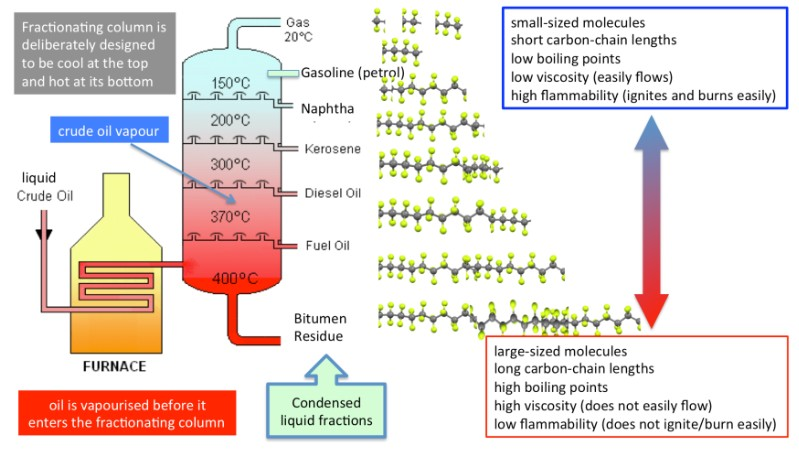
Petroleum resource development involves a complex and expensive process of exploration, drilling, discovery and appraisal, development and production, followed by the refining of the produced petroleum fluids, classically by distillation and other processes to make specification petroleum products with which we are all familiar. In the case of oil, these are typically: gasoline (petrol); kerosene; jet fuel; diesel; heating oil; solvents; lubricants; asphalt; and paraffin wax. Whilst for gas these are typically: reticulated gas; LPG (liquid petroleum gas) or bottled gas; and piped natural gas or Liquefied Natural Gas (LNG) for the long-distance transportation of natural gas. There are also other products, which we seldom see, such as heavy fuel oil, or which serve as intermediate feedstocks, such as: naphtha; ethane and propane.

Figure 3: Typical products from crude oil, after Secondary Science 4 All. 


It All Begins with Exploration 

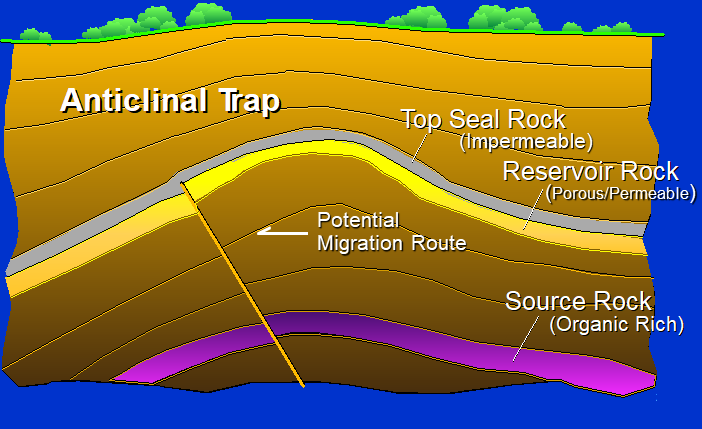
Exploration is an exhaustive, expensive and often high technology process. It is predicated on the essential and necessary ingredients being present that may have helped the rock strata and its contents to form gaseous and/or liquid accumulations in the subterranean rocks of the Earth. The process develops over millions of years as that organic matter contained in the rock strata under successive layers of overburden rock is transformed by heat and pressure into oil and gas.

The ingredients in that process are: 

  • an organically rich source rock which, when deeply buried and heated, generates petroleum;
  • the movement by dint of buoyancy of that generated petroleum from the source rocks through rock strata until it is caught and trapped in a reservoir, rather than leaked to the surface;
  • a reservoir rock that has not only sufficient porosity (space between its grains) to contain that petroleum, but adequate connection between those pore spaces to permit that petroleum to flow if tapped by a well drilled into the reservoir;
  • a closure or trap formed by the structural configuration of the rock strata that either through folding, faulting or stratigraphic pinch-out defines a place within which petroleum may accumulate; and 
  • a seal or containment that acts as a barrier to the upward flow of petroleum created by impermeable rocks and structures which prevents further upward movement and escape of the petroleum.
Figure 4: The essential ingredients for the formation of conventional petroleum accumulations, after AAPG. 

Papua New Guinea as a Petroleum Province

Papua New Guinea is not short of any of these ingredients. Indeed, the geology of Papua New Guinea is quite conducive to creating accumulations of petroleum, but all the essential ingredients have to be found in the correct sequence and occur at the right time. Accumulations also have to contain significant petroleum resources that may make their exploitation worthwhile, and can deliver what we call recoverable reserves. In Papua New Guinea, we have many surface seeps of oil and gas across the country, which provide evidence of the generation of petroleum in the subsurface, and its migration and seepage to the surface in discrete places.

Whilst such seepages indicate the presence of oil and gas, they also show that it is leaking to the surface. Oil and gas men look for accumulations that have been preserved intact deep in the rock strata, without such leakage, into which they may drill deep wells to tap the oil and gas in quantity, if they can find some. We have obvious and abundant folding and faulting of rocks and the right kind of rocks, both permeable and porous sandstones and limestones to serve as reservoirs, and abundant mudstones and shales to serve as sources and seals. The critical question is specifically where to look for a petroleum accumulation.
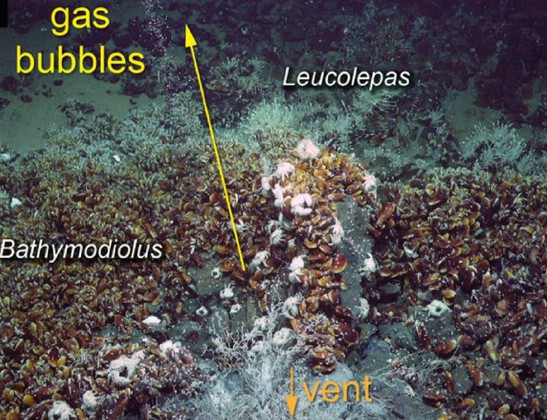
Figure 5: An active gas seep of methane, ethane, propane and butane from the seabed identified during the survey of the MV Sonne, off Lihir Island, New Ireland Britain, after Brandl, P.A., Sander, S.G., Beier, C. et al. Sci Rep 15, 32389 (2025).


The Value of Petroleum 

Oil and gas are not like gold. A barrel of crude oil, which is approximately 159 litres, currently (as of late February 2026) sells for about US$ 65, or PGK 278, or about US 40 cents per litre, or PGK 1.75 per litre.  A litre of crude oil is not going to make you rich, whereas a litre volume of gold would weigh a staggering 19.3 kgs (equivalent to 620 troy ounces) and be valued at an equally staggering amount of US$ 3.1 million or PGK 13.4 million at a gold price of US$ 5,000 per troy ounce. The petroleum business is a very different game to that of the gold business. A small surface seepage of natural gas or oil is scarcely of any value, and more a local curiosity. 

The discovery of an accumulation of oil and gas thus has to be large and extensive to make it worthy of future development and recovery. Accordingly, oilmen select their exploration prospects, for what we term wildcat drilling, most rigorously and carefully. Wildcat drilling is high-risk exploration for oil and gas in unproven, unmapped, or abandoned areas lacking, or far from, existing oil and gas production, often without any historic discovery or prior production. Oilmen screen the geology of an area for the necessary ingredients (described above) and particularly for large geological structures that may potentially contain significant volumes of oil and/or gas, if such have indeed accumulated in their target structure.

Figure 6: Oil and money, but at just US$ 65 per barrel, only large scale production can normally cover the costs of finding and extracting it.  


Oil production from a field, from which say, 100 million barrels of crude oil can be recovered, might at a crude oil price of US$ 65 per barrel have a sales value of US$ 6.5 billion, but not all of that can go into the oil man’s pocket. For example, it might have taken five wells to make the discovery and a further five wells to appraise the lateral extent of the field and another thirty wells from which the oil may be recovered. These forty wells might have cost an average of US$ 25 million each, making discovery and appraisal costs about US$ 1 billion. The development of the field will require field processing facilities to clean up the oil to acceptable standards and specifications to make it fit for transportation, and likely a pipeline or set of pipelines to convey the oil to a terminal at which ocean-going oil tankers can load the crude oil for export. This may cost another US$ 1.5 billion. And then there are operating costs.

To run an oil field and produce the crude oil safely, responsibly and prudently, there are daily operating expenses for manpower, machinery and materials. These may amount to US$ 100 million per year for twenty years. As you can see, the prize of finding the oil field is shrinking. And then the Government will want to ensure it is getting its agreed and defined share of its resource as the owner, typically at least 50% or more of the net value. One can see quite readily how the revenue arising from the 100 million barrels is whittled down. The oil companies might retain US$ 1 billion from this enterprise after recovering their costs, whilst the host government might make a similar amount. Naturally, each and every petroleum project has a different set of reserves, costs, and outcomes. Satisfying basic economics that the recovery of oil from the field is viable is the primary concern, and then having a firm and fair arrangement for the sharing of the net value of the produced petroleum is most desirable.

Exploration and Discovery Risk

The drilling of exploration wells only comes after extensive and expensive exploration surveys by geologists and geophysicists studying the rocks and their configuration at the surface and probing the subsurface with a variety of geophysical techniques. The most common geophysical technique deployed is the acquisition of seismic images of the subsurface, a bit like an ultrasound scan might be made of your stomach by a doctor, though on a vastly larger scale. Sound waves are sent into the ground, or the sea, if exploration is being conducted offshore, and the reflections from the layers of rocks are detected by a multitude of special microphones called geophones.

The jumble of signals is organised and processed by elaborate computer programmes so as to create a layer-cake image of the configuration or structure of the subsurface rock strata. Knowing the velocity of sound through the rocks, the geophysicists can interpret these images of the subsurface and make depth maps of potential trapping structures. It is a tedious and expensive process which is not at all easy in the jungle-wrapped, mountainous and often swampy terrains of much of Papua New Guinea. Combined with surface geological descriptions of the visible outcrops of rocks and their faulting and folding, the petroleum geologist will attempt to define leads and prospects which may be promoted for wildcat drilling. Already in this process, tens of millions of dollars will have been spent on physical surveys, data processing and geophysical and geological interpretation.
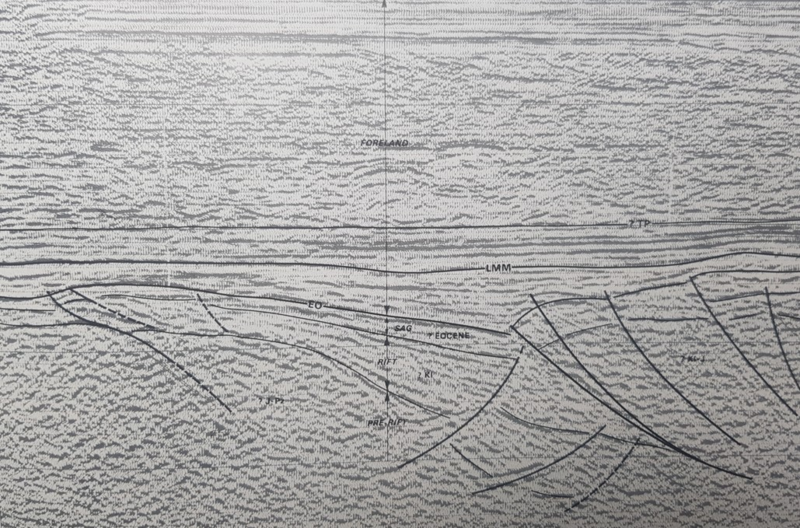
Figure 7:  A seismic reflection image of part of the Gulf of Papua called the Flinders Basin showing the underlying subtle faulting and folding of the strata, after PNG Chamber of Mines and Petroleum. 


The company then has to evaluate its portfolio of prospects, both within the country in which it is exploring and globally, and make a choice as to which prospects in which countries it will prioritise and commit to drilling. It does this on a risked basis and then applies the economics of the applicable national petroleum regimes to make an assessment as to whether it might be possible to make money. It is always a risky business, akin to making an expensive movie, which may be a success or a failure. Some liken it to gambling in a casino, because of the intrinsic uncertainty of the subsurface geological history. However, oil and gas companies shrewdly assess all the risks involved.

Drilling the Ultimate Gamble

There are fundamental geological risks as to whether an accumulation of petroleum may be present within a prospect. Alas, the only way to find out whether a prospect contains oil and/or gas is to drill the prospect. The chance of discovering oil and gas depends much on the type of well, with success rates for wildcat exploration wells typically ranging from 10–20% in new frontier areas to a global average of between 30–40%. Approximately 60–70% of initial exploration wells fail to find accumulations with quantities adequate for commercial development and production. In known petroliferous areas and where development drilling is taking place near to or on known accumulations, the success rate can be as high as 80% to 90%. Those petroleum provinces in well-established producing nations thus present much less risk than hitherto undrilled provinces where little or no drilling has previously taken place.
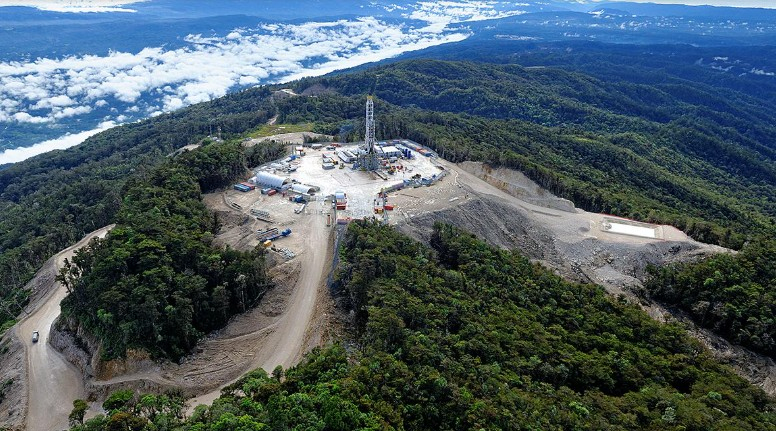
Figure 8: A drilling rig in the Highlands of Papua New Guinea, after PNG Business News.   

The risk of discovery is skewed by perceptions of the host nation’s petroleum endowment, and so the host Government necessarily has to adjust its terms and conditions of petroleum development up or down depending on the likelihood of discovery. Drilling a wildcat well in the Seychelles, where only four wells have previously been drilled without success**,** is a very different game from drilling a wildcat well in Libya**,** where more than 1,500 wells have been drilled over the last 70 years with more than 500 oil and gas discoveries. Hence, the Government of the Seychelles might have to offer the most attractive terms to encourage the international oil and gas companies to explore in its territory rather than in other perhaps more petroliferous places.

In Papua New Guinea, the total number of real wildcat wells is less than 275 spread out over the last hundred years. The Wohumul boreholes were drilled in the Oriomo River area of the Western Province, near Daru in 1925; these were shallow tests. The first deep well in Papua New Guinea was drilled at Kariava-1 in the Gulf Province. Interestingly, this well was spudded on 8th March 1941, suspended in 1942 due to World War II**,** and resumed drilling in 1946 before being abandoned in 1948. Exploration for oil in Papua New Guinea is not a new game; it has taken place for decades with tantalising results that have taunted many an oilman. It was only in 1986 that significant success was obtained at the Iagifu 2-X well when Niugini Gulf Oil, which became part of the Chevron Corporation as Chevron Niugini, found a significant accumulation of black oil near Lake Kutubu**,** which gave rise to the Kutubu Petroleum Development Project in 1990. Hitherto, nothing of commercial significance had been found and no development or production of oil and gas had been commercially undertaken. To date, Papua New Guinea has discovered oil and gas in dozens of prospects**,** at least half of which have been made the subject of development and production operations recovering both crude oil and natural gas in commercial quantities.
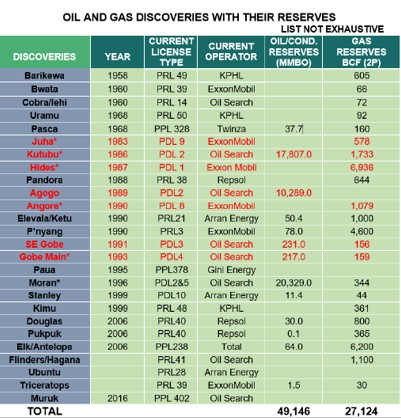
Figure 9: Oil and Gas Reserves of Papua New Guinea, after Manau, August 2021 modified.   
 

Factors Affecting Petroleum Development

Finding an accumulation of oil and/or gas is a great feeling for the oilman, but unless the volume of the accumulation is large enough to be commercially exploited by development and production operations, it cannot recompense the company for the considerable expense of finding it. The cost of drilling a well very much depends on its location and its distance from supply chains and support facilities. Papua New Guinea remains a remote place for petroleum development operations of all kinds, being far from major petroleum development hubs. Much of Papua New Guinea remains a frontier petroleum province, notwithstanding 34 years of crude oil production and 12 years of gas production and LNG export. Put quite simply, Papua New Guinea is not Texas, where over 1.5 million wells have been drilled and between 157,000 and 187,000 wells are active. The presence of abundant civil and petroleum infrastructure in Texas makes the cost of petroleum development vastly lower. While high-production wells currently dominate production, thousands of older, "stripper" wells across Texas produce less than 10–15 barrels per day – not an unreasonable income if privately owned and the crude oil is able to reach the market readily through a convenient nearby pipeline. It is a very different story in Papua New Guinea, in which civil infrastructure is scarce and petroleum infrastructure is project-specific and sparse.

A frontier province is an unexplored or underexplored geological region with suspected, but unproven, significant petroleum resource potential. Such is the case of the deep waters of the Coral Sea where TotalEnergies and Petronas plan to drill the Mailu-1 deepwater well soon, targeting Eocene carbonate reservoirs. Such a deepwater well is likely to cost about US$ 100 million for an estimated drilling period of less than two months. Such risks are not for the faint-hearted. It has been said that the drilling of absolutely rank wildcat wells in a petroleum basin where no prior exploratory drilling has taken place is indeed a bit like going into a casino for the first time, but bypassing the slot machines and going straight to the high-stakes tables!

Of course, whether a sedimentary basin holds petroleum accumulations or has even generated oil and gas is not always certain. Sometimes subsurface conditions are not correct, or in the right order. Sometimes, there is no sign of any oil or gas seeping to the surface. It can be very much a blind gamble. But once a discovery is made in a newly explored basin, most often the herd of oil and gas companies come charging in. Getting that critical breakthrough of the first discovery is very important, not only for the exploring company which is investing in that exploration effort, but also for the host government which wishes to elucidate its petroleum prospectivity fully.
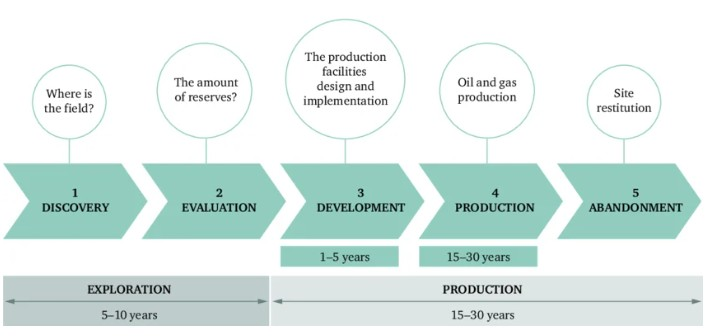
Figure 10: The steps of petroleum resource development, after Valerie Marcel. 

The Government Role

Many governments around the world shy away from all but the very basic pursuits of oil and gas exploration because of the considerable expense and enormous risks.  They may obtain some seismic reflection surveys, particularly in offshore areas, either though bilateral aid and/or by speculative surveys conducted by seismic survey contractors who will pay for the survey and then promote the resultant data and provide a royalty or profit share to the government.  This may initiate exploration interest from established oil and gas companies and, of course, scientific interest from academia which will now have new knowledge about the geological subsurface arising from those surveys.  

Governments typically offer their unexplored areas for exploration by competent oil and gas companies either by the grant of licenses or contracts.  That competency is not just technical, but includes corporate, environmental, financial, safety and social capacities; all are required at some stage during the cycle of petroleum development.  It is for these strengths that host governments tend to engage the international oil and gas companies; they know what they are doing.  But equally important, the host government needs to hold them strictly to account, most assiduously, and if deficiencies emerge, sanctions and penalties should be applied. A host government needs to rise to the challenge of the companies that it engages through licences or contract by having a highly competent petroleum regulatory organisation of its own, the staff of which should be very well rewarded for being guardians of the treasure of the nation’s oil and gas resources.

Government objectives are primarily monetary; to translate the value of its petroleum resources into revenue which can then be used for the national development agenda. But equally, governments do not like to be kept in the dark, so quite often they participate, not in exploration, but in development and production by taking a stake in the petroleum project. Papua New Guinea has a legal option to participate up to 22.5% all petroleum projects.  This brings valuable inside knowledge of the development to the host government, and further revenue. There are other aspects of a petroleum development though, which need to be fostered.  For many nations, a critical issue is the security of supply of oil and gas to the economy. For all nations, keeping as much of the business within the country is an important issue, making sure local people are employed and contracted, and local business are contracted for goods and services as far as is possible.  This should not just be a political wish, but a coordinated effort by company and government alike to do what is possible, and assess what may be feasible with incentives and capacity building. 
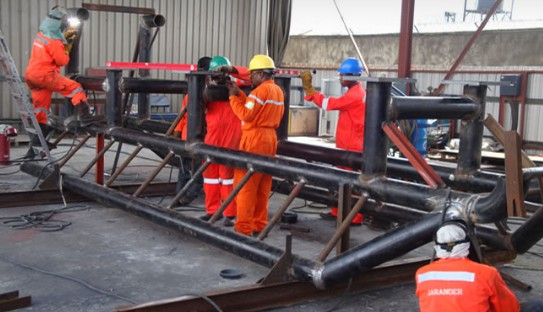
Figure 11:  Fabrication at a local engineering firm in Nigeria, after Jarander.  

The investing companies normally meet the costs of basic exploration and are required to culminate their exploration programmes by selecting prospects where petroleum accumulations may have been formed, and then drilling them to test whether there are indeed any.  These agreed exploration programmes are the work commitment of the companies to their host government. Failure to undertake and complete the work typically results in cancellation of the licence or contract.  Sometimes, the company simply quits for one reason or another. They may simply not be successful in finding structures eligible for the considerable expense of drilling. There may be inadequate evidence of the potential for an accumulation, or there may be better prospects in other areas which the company is exploring, either in the same country, or elsewhere.  The oil and gas company will maintain a portfolio of exploration areas around the world and seek to optimise overall exploration risk and invest in drilling its best prospects. 


If a company cannot fulfil its work programme, it normally has to depart and surrender the area back to the government, sometimes with penalties. This enables the host government to give the area to another company, which may have different ideas, theories, understanding and appetite for the petroleum geology of the area.  What governments hate is when companies sit on a prospective area without doing any work, hoping that the holders of adjacent areas will have success in discovering oil and gas and so elevate the value of their area. This is pure speculation and should be discouraged; it defies the intent of the government in granting the licence or contract in the first place for valid exploration work to be done. Of course, when a new petroleum province opens up after a discovery has been made, the herd mentality of the oil and gas industry is such that everyone rushes in to try to get a slice of the action.  This enthusiasm borne out of discovery needs to be captivated by the host government and it should be used to entice more exploration investment. Naturally, the best indication of the likelihood of the discovery of further oil and gas accumulations is an adjacent discovery; it certainly boosts the prospectivity of nearby areas. So governments need to be agile in their thinking and promotion of their petroleum resources for development. 


Petroleum Rights 


Apart from private lands in the USA, almost all petroleum rights around the world are held by the host sovereign government.  The USA is the odd one out; it has tied subsurface mineral rights to surface rights in private lands, though it retains control and ownership on Federal lands and offshore. Thus, across the world the government is normally the owner of the petroleum as it exists in the ground. In using the prowess and capabilities of the oil and gas companies to explore, the host government has to make sure it is rewarded as the guardian of the oil and gas resources that may lie in its territory. The oil and gas companies foot the bill for exploration, but if they are unsuccessful, they go home empty-handed. After the initial discovery of recoverable black oil at Kutubu in 1986, droves of oil and gas companies took up areas for exploration in Papua New Guinea, but only a few had success. Amongst those that came to Papua New Guinea, but left empty handed were: Conoco, Shell, Phillips, Pennzoil, Statoil, Mobil, Amoco, Marathon, Petrofina, Santos, Woodside, Union Texas Petroleum, and many a smaller company.   Some came and were successful in one area, but not in others. Some sold out their share of discoveries before development activities commenced, not having the commitment, will or ability to stay though development to production. Some departed, came back, departed and came back again; one could say that such companies were quite flexible and mobile in their thinking!   It is important to remember that the rights to conduct petroleum operations are typically exclusive over a defined area or tenement and finite in term after which they expire.   
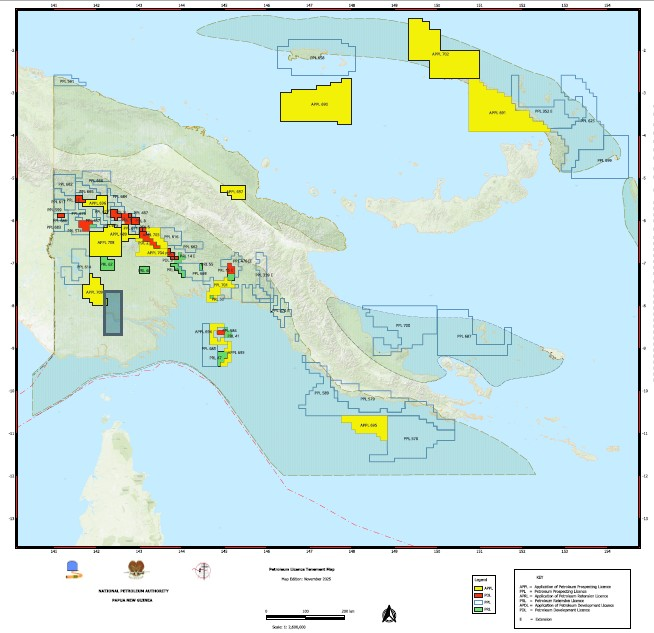
Figure 12:  A map of petroleum tenements in Papua New Guinea circa late 2025, after the National Petroleum Authority. 

The Petroleum Regime


Petroleum rights are licensed or contracted out to competent companies by a host government under defined term and conditions normally articulated in law, regulations, contracts and licences. Alas, the real substance of these terms and condition only comes into effect after discovery. If the companies are successful and find accumulations that are worthy of commercial extraction, they are subject to regimes in which they share a substantial proportion of that value with the host government. Petroleum regimes are a fundamental exercise of the sovereignty of a nation over its petroleum resources that may have value if they are recovered in quantity as recoverable reserves. Oil and gas in the ground have little value if they cannot be recovered to the surface and sold for value. It is upon this extracted value that petroleum regimes are assessed and implemented.  There are many different methods for the host government to extract value: by the charge of rents, royalties, levies, bonuses, duties, and fees; taxation on income; taxation of employees; withholding taxes on interest payments and dividends; the take-up of equity by the government in a project for the production of oil and gas; the sharing of petroleum production; domestic supply obligations at discounted prices; and local content provisions. These provisions are normally established by law, contract, agreements and/or licence conditions prior to the commencement of exploration activity and most certainly before production operations commence to provide certainty to both the investing oil and gas companies and the host government.  Such fiscal design should attempt to cover all likely scenarios, but often precedence and political emotions distort clear thinking.
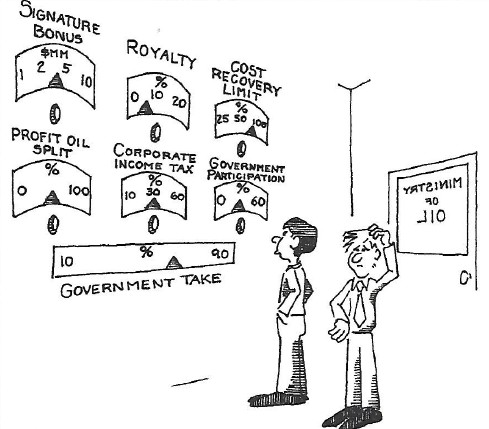
Figure 13:  Fiscal design can be quite daunting, after Dan Johnston.

The broad objectives of a petroleum regime are to reduce uncertainty; present a clear picture of the applicable commercial and tax terms, limit negotiations on tax issues, provide fair and equitable tax treatment for all investors, avoid double taxation and assure that the international oil and gas companies can obtain home country foreign tax credits for taxes paid overseas.  The general rule seems to be that the more attractive the resource base is, the tougher the fiscal and commercial terms of the host Government tend to be.  Of course, many other factors come into play, not the least of which is the remoteness of the place. 


Take for example the Falkland Islands where despite discovering oil in 2010, the companies only made a final investment decision for the Rockhopper oil field in late 2025 with first oil planned for 2028.  Its remoteness from supply chains of any kind, let alone oil field supply chains and concerns about the Falklands ability to remain unaffected by Argentinian claims prolonged the progress towards field development.  Papua New Guinea suffers from a similar remoteness, with Singapore and certain bases in Australia being the nearest supply depots for oil and gas operations. Also, there is inadequate petroleum exploration to keep drilling rigs and other oilfield exploration equipment permanently busy and stationed in Papua New Guinea, necessitating their importation repeatedly and sporadically for isolated exploration campaigns.  


Access to Land


Papua New Guinea also remains very much an under-tested frontier oil and gas province with comparatively low exploration density, but with reasonable success in locating oil and gas accumulations.  It is still attractive for exploration due to having significant and demonstrable oil and gas generation.  Other specific factors come into play as they do anywhere.  In Papua New Guinea, adherence to customary land tenure means that even though the State asserts its ownership rights of oil and gas in the subsurface, both the oil and gas companies and the State have to gain access to exploration areas, by dealing with the local landowners and entering onto their land. Their title to their land is undocumented, unalienable and enduring, and the companies and State have to treat with the landowners most carefully. 
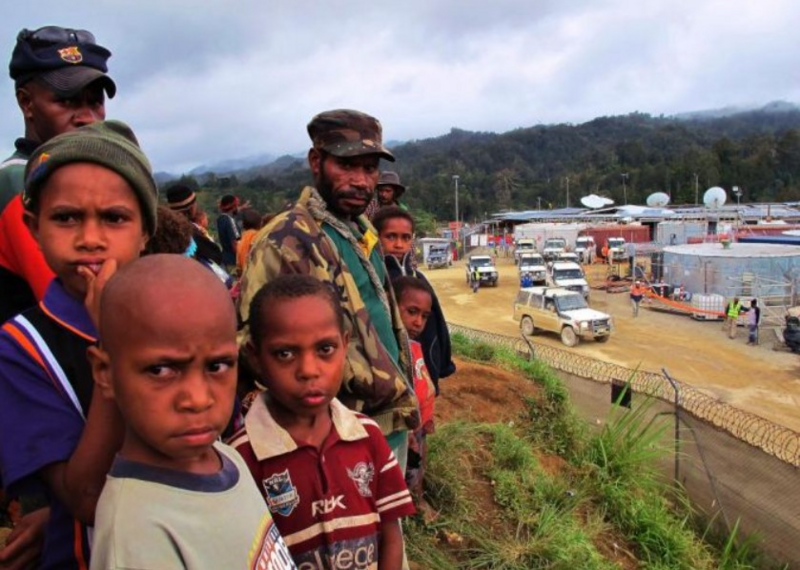
Figure 14: Landowners look on outside a petroleum operations camp, after Celine Rouzet.

The hopes and expectations of landowners are heightened as and when oil and gas are found on their land, as might be expected anywhere. If the discovery is large enough to warrant development and subsequent production, quite clearly the customary landowners will be affected.  In Papua New Guinea unlike more despotic places, where landowners might be forcibly removed and shunned away, there are legally defined provisions by which the landowners may share in the process and benefits of petroleum development. Even at the exploration stage, the oil and gas companies are strictly required to pay compensation for their entry on or occupation of the land. Moreover, the companies have to undertake social mapping and landowner identification studies to ensure that they are dealing with the correct people.  By law, neither party is to interfere with the rights of the other. The companies have the right by law to enter and occupy land reasonably required, but without interfering with the existing use to any greater extent than necessary, and they may not interfere with fishing or navigation. Landowners for their part, may not enter on, occupy or interfere with any land being used for petroleum operations. These are as much responsibilities as rights for each party.          


When development commences, the companies are encouraged to use as much local labour and content as possible. The Government typically provides the local community with business development grants to help the landowners participate.  Whilst National Content has been rightly emblazoned in Papua New Guinea Government policy in recent years, there have been provisions in the Oil and Gas Act, 1998 for domestic procurement obligations upon the companies for almost three decades. These require the use and purchase of goods and services supplied, produced or manufactured in Papua New Guinea whenever the same can be obtained at equivalent terms; encouraging and assisting citizens who are desirous of establishing businesses providing goods and services; and making maximum use of Papua New Guinea contractors and subcontractors. Alas, little emphasis has been made on enforcing this, let alone making regulations to give effect to the provisions or even examining compliance by companies.   


Additionally, the Oil and Gas Act specifically defines benefits for the landowners and also for the affected Local Level Governments and the Provincial Governments when petroleum development proceeds to production of oil and gas.  These variously comprise: royalty benefit; equity benefit; development levy; other project benefits; and project grants. Whilst the Act generically specifies beneficiaries, these grants and benefits still need to be shared out and it is for this that the Act requires the Government to hold a development forum to which representatives are invited from all community stakeholders. This is an excellent, though exhaustive process, but one that far exceeds the treatment of people in petroleum areas in many other nations.  Papua New Guinea should be proud of this legally enshrined sharing and consultative process and it should be implemented with utmost care and concern.


Changes to the petroleum regime or simple uncertainty of its application may also bring added risk for exploration and development. Obviously, all governments wish to optimise the value that they can garner from petroleum resource development; after all it is their resource – to be used for the benefit of all in the Nation. Striking the best terms with the oil and gas companies, whilst enabling those same companies to make a reasonable return on their investments, is often a delicate balance. Sometimes, that balance cannot be achieved, and therefore exploration is thwarted or development of the discovered petroleum resources cannot be pursued. Proposed projects cannot proceed if there is imbalance between the company and government requirements; both parties need to win.  However, all decisions for development are predicated on awkward and uncertain assumptions about the future business of petroleum production.


Production Risks 


Production profiles may be defined based on rigorous assessment of the amount of oil and gas that may be recovered from an accumulation.  Well tests are performed to gauge how reservoirs will behave and how much oil and gas a given well can produce. Test results are aggregated and a field development plan with a production profile is prepared based on tapping the oil and gas accumulation with a specific number of development wells. If enough appraisal drilling and sound geological assessment has been made of the reservoir and the physical parameters of the accumulation, a prediction may be made of the extent of recovery of the oil and gas from the accumulation.  Alas, only a fraction of the oil and gas originally-in-place can be recovered. Recovery factors vary from field to field and the nature of the oil and gas and the manner of how the field will deplete over time.  Sometimes, fields perform better during production, and sometimes they fail to live up to expectations.  The potential outcomes have to be risk-managed. Whilst petroleum engineers and geologists may attempt to limit such risk, it always exists. One only knows exactly how much oil and gas one can get out of a given oil and gas field on the last day of economic production when the value of the oil and gas which that field produces fails to covers the ongoing costs of its extraction. However, these risks pale into insignificance if one cannot get oil and gas production to market as result of exogenous risk, such as the closure of vital shipping lanes, like the Strait of Molucca between Indonesia and Malaysia, or the Strait of Hormuz between Iran and the United Arab Emirates and Oman through which 20% of the world’s global oil supply moves. 
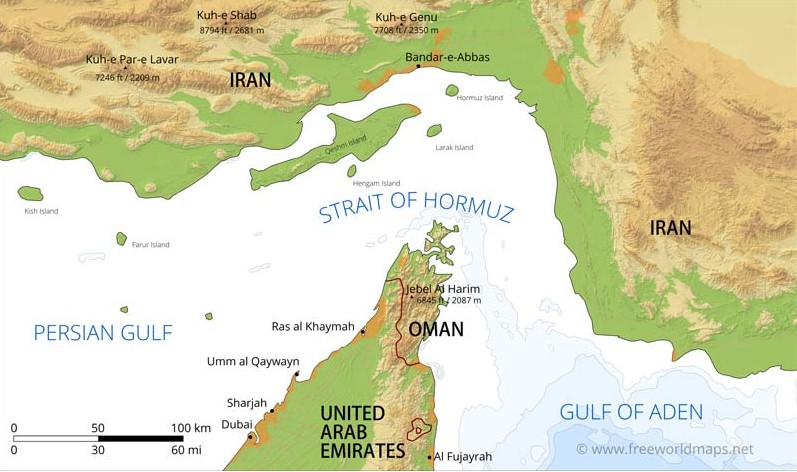
Figure 15: Whilst many production risks may be managed, exogenous risks such as the closure of major shipping routes may cut off petroleum producers from their markets, after freeworldmaps.net. 

Price Risks 


The economic outcome of production is determined by the volume of oil and gas produced by its sale price per unit of production. That depends on the quality of the oil and gas and the global market price for oil and gas of that quality. Gas is normally sold with reference to the crude oil price.  Importantly, that sales price for the oil and gas is only after it has been has been appropriately processed into saleable and transportable streams.  The oil has to be separated from water, sediment, and gaseous components, and likewise the gas has to be conditioned to specifications by the removal of water, noxious impurities like carbon, nitrogen and sulphur oxides, and natural gas liquids which can be sold separately. This all costs money to enable the produced oil and gas to be transported safely by pipelines and ships, and delivered to customers for downstream processing and supply. ,


The price of oil is, as we commonly know, subject to much fluctuation depending on global markets which are affected by many factors. Fundamentals such as global supply and demand predominate often highly influenced by politics and international relations, and nowadays, to a smaller degree, by energy transition policies. In so far as oil and gas revenues are thus variable, the projected income of any given oil and gas project is consequently variable. In embarking on an oil and gas development project, the investing oil and gas companies have to accommodate the risk of falling commodity prices and hence revenues, just as much as they have to consider the opposite with higher commodity prices. A development project has to weather the vagaries of the oil and gas prices as they occur.  Equally, as most oil and gas projects extend for decades, they have to countenance changing economic conditions, such as inflation and the cost of money as represented by the discount rate.
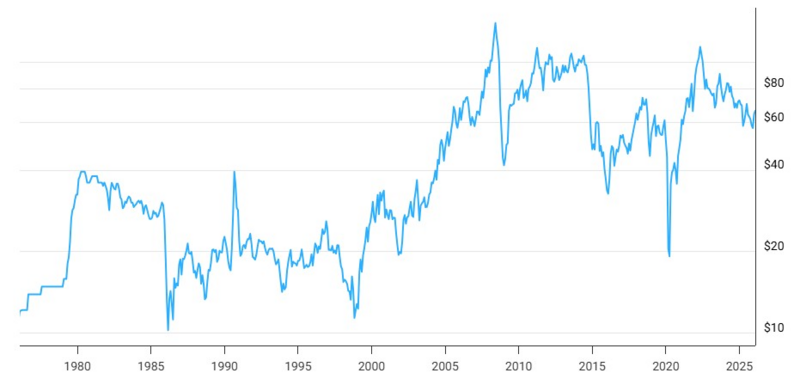
Figure 16: Crude oil prices 1976 to 2026 with volatility somewhat suppressed due to use of a logarithmic price scale, after CrudeFacts.

These extraneous matters often swamp the potential and forecast technical outcomes. Oil and gas price behaviour and the value of money throughout the life of a petroleum development project are key factors for both the investing company and the host Government alike.  No matter what petroleum arrangements and regime are used there needs to be an agreed understanding of the effect of swings in price and the value of money, lest either party is unduly penalised during the project life.  Most often the petroleum regime, one way or another, has a built-in ability to adjust the sharing of the net value of oil and gas production after the costs of exploration, development and production. For instance, income tax is only charged on net income or profit, so if oil and gas prices decline, profits decline and taxation accordingly also declines. In production sharing arrangements, the sharing of production comes only after the companies receive cost recovery payments, so a company’s share is reduced (as is the Government’s share) when prices are low. There can be elaborate fiscal adjustments made both for the upside and downside of production operations. Royalty and such direct levies can be made scalable. Capital depreciations for allowances against taxation income can also be adjusted, both up and down. Windfall taxes, additional production shares, or additional profits taxes can be triggered at times of elevated prices.  The key is for each party – both company and Government alike to respect the durability of the petroleum project and accommodate the volatility of prices by respecting the needs of the other party.


Other Development Criteria 


When preparing a petroleum project for the production of oil and gas from a field, many matters have to be considered. Not only do the fiscal and commercial arrangements with the host government have to be firmly agreed and be robust for all likely outcomes, but environmental protection and the welfare of the community in which the project may be developed are required. There are necessary social and environmental impacts of petroleum development, but they can be minimised and mitigated by good practice.  Whilst exploration and appraisal costs are normally funded out of the company’s own money – its equity, when it comes to development, the extreme costs most often necessitate recourse to the borrowing of funds from financial institutions. Not all banks are willing to finance oil and gas developments these days due to the degradation of the Earth’s atmosphere caused by the emission of carbon dioxide on combustion of oil and gas and the subsequent effect of global warming of the atmosphere by the greenhouse effect.  Alas, many of those banks that withhold their financing are resident in nations in which their industries have been the primary polluters of the atmosphere for decades. Having initiated global warming and developed their economies, they now seek less developed nations to curb their emissions. This seems to be quite unfair. Fortunately, there are financial institutions that are more pragmatic and realise that there is no single big switch in energy supply to curtail all oil and gas production and usage.  Oil and gas will be essential ingredients in the global energy mix for decades to come, unless we wish energy poverty to pervade the planet, and life as we know it to be halted. This is not to support a case against global warming which is a documented scientific fact. We all have to be considerate of the future of our planet and work carefully towards limiting emissions of carbon dioxide and so limiting the extent of global warming through appropriate policies and investment in non-polluting energy of which renewables are just part of the mix alongside improved nuclear technology.


The Final Investment Decision


Once all aspects of a specific petroleum development project have been organised and prepared, the project plans may be presented to the host government for approval. Naturally, being a predominantly interested party, the host government normally readily approves these plans. After all it will be looking forward to its share of the earnings and other benefits from the proposed project.   Once the development licence is granted or a production permit is approved pursuant to a production sharing contract, the company (most often a consortium) has to make its final investment decision which triggers development operations. Various measures are used to determine the acceptability of a project for investment, traditionally the internal rate of return was used. It measures the effective rate of return earned by an investment as though the money had been lent at that rate. Alternatively, and used much more these days, is the net present value of a project which measures the capital created over and above the company’s investment hurdle rate.   
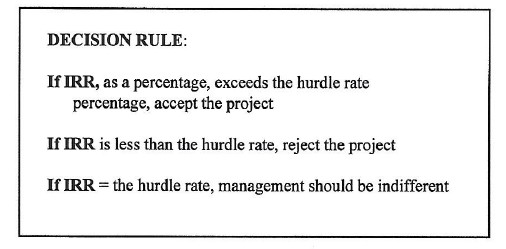
 

Figure 17:  The Decision Rule, after Allen and Seba.

This decision is not one made by the host government, but by the investing company, but failure to proceed with development may incur severe penalties once host government approval has been given. Most often the investing company is required to provide the host government with a corporate guarantee of value equivalent to the intended investment as part of its application for development approval.  That way the Government is not misled into approving a fake development where nothing happens, and allowing the company to slip away without repercussions.  When Chevron Niugini led the Kutubu Petroleum Development Project in 1990, Chevron Corporation, its parent company, provided an irrevocable letter of guarantee to the Independent State of Papua New Guinea to the value of its share of the expense in the project on its corporate letterhead signed by the President of Chevron Corporation; it was as good as gold! But they never hesitated in their development intent and resolutely developed the Kutubu fields as professionally as they could.


Michael McWalter is a former Director, Petroleum Division and Adviser to the Government of Papua New Guinea, and erstwhile petroleum adviser to the Governments of Ghana, Liberia, Cambodia, Sao Tome, and South Sudan. He is certified petroleum geologist and technical specialist in upstream petroleum industry regulation, administration, and institutional development.


 

Caption


March 11, 2026

TISA Bank Limited, a homegrown 100% Papua New Guinean financial institution, has emerged as a modern, values-driven alternative in the commercial banking sector after receiving its banking licence in 2024 — the year of the country’s 50th anniversary of independence.

In an exclusive interview with PNG Business News, TISA Group Chief Executive Officer Mr Michael Koisen OBE ML reflected on the institution’s rapid evolution, outlining how the bank is combining digital innovation, financial inclusion and ethical banking to reshape access to finance across the country.

He said 2025 represented a period of “transition and trust” as the group consolidated its operations following the approval of its banking licence in 2024.

“In 2025, TISA Bank did not just operate — we evolved,” Mr Koisen said, describing the year as a turning point following the bank’s successful launch as a licensed commercial institution.

Group CEO Mr Koisen remains confident that TISA Bank’s value-driven approach provides a strong foundation for long-term growth.

“Our vision is to be the heartbeat of PNG’s economy — a bank that listens, innovates and grows alongside every citizen,” he said. “We don’t just see customers; we see the architects of our nation’s next 50 years.”

“Since Papua New Guinea gained independence, TISA Bank has emerged as a homegrown financial institution proving that a bank deeply rooted in its people can still compete successfully with mainstream banks.”

TISA in PNG is the largest savings and loan society and credit union in the Pacific. Born from a teachers’ savings movement that began more than five decades ago in 1972, the financial institution has evolved with ambitious plans to expand financial access, modernise banking services and retain national wealth within the country.

“What began as a small savings group for teachers has evolved into a modern financial institution that seeks to balance commercial performance with national development goals,” Mr Koisen said.

Mr Koisen clarified that while he serves as Group CEO of TISA Group, the organisation’s structure includes several subsidiaries beyond the bank.

“TISA Group owns TISA Bank. We also own an insurance company that has recently been renamed TISA Insurance Group, with operations across Fiji, Tonga, Vanuatu, Solomon Islands and PNG. In addition, we have property investments, an equity portfolio and a security business.”

He added: “We have consistently paid our members a 7% bonus for more than 15 years. We have never dropped below that percentage.”

According to Mr Koisen, the bank’s philosophy is built around what it calls “values-based banking”, an approach reinforced by its membership in the Global Alliance for Banking on Values (GABV), a global network promoting financial institutions that prioritise community well-being and sustainable economic development.

This model reflects the bank’s commitment to ensuring profits remain within PNG, supporting national development rather than being exported overseas.

Strong Financial Performance in a Transitional Year

TISA recorded strong financial performance in 2025. Total group assets reached K1.39 billion, representing a 22% increase and signalling growing public confidence in the institution.

Even during this expansion phase, the bank maintained its commitment to members by distributing approximately K24.5 million in bonus interest, representing a 7% return to more than 80,000 members.

For Mr Koisen, the distribution reflects the bank’s continued commitment to its cooperative heritage.

“We are not just a financial institution; we are a partner in progress. We believe that empowering our people means unlocking prosperity for our nation,” he said.

Digital Transformation as a Growth Engine

A central pillar of TISA Bank’s growth strategy is its investment in modern digital infrastructure.

Rather than adapting outdated legacy systems, the bank adopted a digital-first architecture built around the Oracle FLEXCUBE 14.7 core banking platform. This system allows real-time transaction processing, automated back-office operations and enhanced data security.

The platform’s API-first architecture also enables integration with external systems, including government digital platforms and payroll systems such as ALESCO, which was successfully integrated in March 2025. The integration allows thousands of public servants to receive their salaries directly into TISA accounts, simplifying financial management for the workforce.

The new digital platform has driven a triple-digit increase in “new-to-bank” accounts, largely due to the convenience of mobile and internet banking services.

Pacific-First Innovation in Banking Technology

Building on its digital transformation strategy, TISA Bank has introduced several innovations designed to increase accessibility for customers across the Pacific region.

Among the most notable is voice-activated banking integrated with Siri technology, enabling customers to perform basic banking functions using voice commands.

The initiative represents a regional first and is particularly significant in a country where literacy levels and digital familiarity vary widely.

“We are the only bank in the South Pacific that allows you to talk to your bank using voice technology through your iPhone. You can tell the app to transfer money and it will complete the transaction for you,” Mr Koisen said.

The bank has also introduced the Yumi Pei digital wallet, designed to support QR payments and instant transfers while reducing PNG’s heavy reliance on physical cash.

In January 2026, the bank further expanded its digital offering with the launch of a vertical Visa debit card featuring modern security design and 3D Secure technology for safer online and international transactions.

While technological innovation remains central to TISA’s strategy, financial inclusion continues to be the institution’s primary mission.

Approximately 75% of PNG’s population remains outside the formal banking system, presenting both a national challenge and a major opportunity for financial institutions.

To address this gap, TISA has introduced an agency banking model that shifts away from expensive brick-and-mortar infrastructure.

Through partnerships with local trade stores and small businesses, the bank is establishing community-based agents capable of providing basic banking services such as deposits and withdrawals within rural villages.

This model allows customers to access financial services without travelling long distances to urban centres.

Complementing the agency network is biometric onboarding technology, which allows customers to open accounts using fingerprint or facial recognition verification. The system enables individuals with limited identification documents to register using community references from village magistrates or pastors.

Supporting Small Businesses and the Real Economy

Beyond retail banking, TISA Bank has also positioned itself as a key partner for Papua New Guinea’s small and medium enterprise sector.

Recognising SMEs as the “heartbeat of the economy,” the bank became the naming rights sponsor of the PNG SME Business Breakfast, committing K300,000 to initiatives supporting entrepreneurship and local business growth.

Through this initiative, the bank has supported credit guarantee programs that allow local businesses to secure financing when traditional lending options may be unavailable.

TISA also maintains deep ties with public servants and educators — communities closely connected to the organisation’s origins.

Expanding a Nationwide Banking Network

Alongside digital innovation, TISA Bank is rapidly expanding its physical presence across PNG.

As of early 2026, the bank operates five full commercial branches located in Port Moresby (Waigani), home to the flagship TISA Ruma headquarters; Lae in Morobe Province; Kokopo in East New Britain; Wewak in East Sepik; and Alotau in Milne Bay Province.

The Alotau branch, opened on January 8, 2026, represents the newest addition and supports Milne Bay’s push toward city status.

The bank continues to operate between 17 and 18 provincial service centres originally established under the Teachers Savings and Loan Society. These centres are progressively being upgraded into full commercial banking facilities.

By 2027, the bank aims to expand to 20 full-service commercial branches across 18 provinces, with Mt Hagen, Wabag, Kavieng and Madang among the next targeted locations.

To complement branch expansion, the bank has already deployed more than 50 agency banking partners, with plans to scale the network into the hundreds nationwide.

Strengthening Risk Management and Cybersecurity

Operating as a licensed commercial bank requires strict compliance with regulatory standards set by the country’s central bank, the Bank of Papua New Guinea.

TISA has adopted a “secure-by-design” philosophy, integrating cybersecurity and compliance systems directly into its digital infrastructure.

These include automated anti-money laundering and counter-terrorism financing monitoring systems that analyse transaction patterns and flag suspicious activity in real time.

The bank’s cloud-based infrastructure, hosted through Oracle Cloud, provides enterprise-level security, including encrypted data storage, continuous threat monitoring and disaster recovery systems designed to maintain services even during infrastructure disruptions.

Embedding ESG and Ethical Banking Principles

Ethical banking is another defining feature of TISA’s corporate identity.

As the first financial institution in the South Pacific to join the Global Alliance for Banking on Values, TISA integrates environmental, social and governance considerations into its decision-making processes.

“For TISA, ESG is not a compliance checklist — it is our DNA,” Mr Koisen said.

“We believe that banking can be a powerful force for good in overcoming social inequality and the climate emergency.”

The bank prioritises lending to sectors that directly contribute to the real economy, including agriculture and small-scale manufacturing.

Loans tailored for vanilla, cocoa and coffee farmers help support rural livelihoods while promoting sustainable land-use practices.

The bank also avoids financing projects that disregard community land rights or create significant environmental harm.

Investing in Local Talent

As a fully PNG-owned institution, TISA places strong emphasis on developing local leadership.

Mr Koisen said the bank is investing in staff training to build both technical expertise and a strong service culture.

“We want bankers who not only understand transactions but who genuinely care about improving the lives of Papua New Guineans,” he added.

The appointment of Luke Kaul as Acting Chief Executive Officer in February 2026, following his tenure as Group Chief Operating Officer since 2018, reflects the bank’s commitment to leadership continuity during its expansion phase.

TISA is also investing heavily in workforce development, training staff at its Waigani headquarters to manage complex digital banking systems and developing specialised roles such as market risk managers and digital compliance officers.

Partnerships with organisations such as CPA PNG support professional development among accounting and finance staff.

Looking Ahead

TISA Bank is now entering what leadership describes as a “scale and sophistication” phase.

The bank aims to balance its portfolio by shifting toward a 70% corporate and SME lending mix and 30% retail banking, while expanding into trade finance and foreign exchange services.

This strategy aligns with major economic developments expected in PNG, including large-scale resource projects such as Papua LNG and Pasca A, which could generate opportunities for local contractors and landowners.

However, the bank must also navigate emerging challenges, including regulatory scrutiny linked to PNG’s placement on the Financial Action Task Force grey list in February 2026, as well as infrastructure and skills gaps in rural areas.

Mr Koisen offered a word of advice.

“Banking is not a 100-metre sprint. The journey for us is a marathon because we want to do things properly and do them well. There is a saying: ‘speed kills’. While speed may be important for some, it can also be dangerous. Assess properly, make decisions and build robust systems that will stand the test of time.”

He told PNG Business News that the establishment of new banks in PNG would ultimately improve services across the country.

“For many years we only had four banks and customer service was often below par. With new banks entering the market, competition will drive improvements,” he said.

“One of my tasks is to give people services that are better than what they have been receiving for many years.”

According to Mr Koisen and the bank’s media management division, TISA Bank’s social media platforms have also played an important role in customer engagement and feedback over the years, helping strengthen the bank’s services and ensure accessibility for all customers — including farmers in rural communities.

He added that TISA Bank aims to position itself as an agile and customer-focused alternative.

“We are different. We are values-based, we are Papua New Guinean-owned, and our purpose is to empower our people financially.”

For TISA Bank, the mission is clear: to combine modern banking technology with community-focused values and ensure financial opportunity reaches every corner of Papua New Guinea.

March 11, 2026

Papua New Guinea is mobilising its energy sector to support the country’s transition towards a low-carbon future as part of preparations for its third Nationally Determined Contribution (NDC 3.0) under the Paris Agreement.

The United Nations Development Programme (UNDP) joined the Climate Change and Development Authority (CCDA) in convening a committee meeting with representatives from the energy sector, government agencies and development partners to discuss how the sector can contribute to the country’s climate commitments.

Papua New Guinea is currently developing its NDC 3.0, which outlines the country’s targets and strategies for reducing greenhouse gas emissions and adapting to climate change in line with global efforts to limit average temperature rise to below 2°C.

Officials said the energy sector will play a central role in advancing the country’s climate ambitions, particularly as global efforts intensify to reduce reliance on fossil fuels and shift towards cleaner, low-emission energy sources.

During the meeting, participants exchanged ideas and explored practical solutions to help accelerate Papua New Guinea’s energy transition.

Key proposals discussed included expanding the use of renewable energy sources, increasing electrification through off-grid and mini-grid solutions, and improving grid efficiency to reduce energy losses.

The meeting was co-chaired by the National Energy Authority and William Laikain, general manager of the Climate Change and Development Authority.

Outcomes from the discussions will help inform the finalisation of Papua New Guinea’s NDC 3.0 ahead of national endorsement and submission under the Paris Agreement framework.

Officials said strengthening collaboration between government agencies, development partners and the private sector will be essential to advancing sustainable energy solutions and supporting the country’s broader climate goals.

March 11, 2026

The United Nations Development Programme (UNDP) is strengthening efforts to improve cocoa traceability on New Britain Island, aiming to support sustainable production and enhance market opportunities for Papua New Guinea’s cocoa farmers.

The initiative comes as global consumers increasingly demand transparency in the environmental and ethical standards behind agricultural products. Strengthening traceability systems allows stakeholders to track the full production journey of cocoa beans, helping ensure they are produced sustainably and without contributing to deforestation.

Through its Global Environment Facility-funded Food Systems, Land Use and Restoration (FOLUR) project, UNDP is working with government agencies and industry partners to advance a more transparent and resilient cocoa sector.

A recent project mission to Kokopo brought together key stakeholders, including the Cocoa Board of Papua New Guinea, cocoa exporter Agmark, and the East New Britain Provincial Administration, to strengthen collaboration across the cocoa value chain.

The discussions focused on practical measures to improve traceability and strengthen the sector’s sustainability credentials.

Among the initiatives explored were the potential expansion of the Cocoa Management Information System, the digitisation of farm and value chain data, and improvements in post-harvest processing through the use of solar dryers and fermentaries.

Partners also discussed strengthening pricing systems and building greater resilience among cocoa farmers.

The project is implemented in partnership with the Conservation and Environment Protection Authority and financed by the Global Environment Facility.

According to UNDP, strengthening traceability systems will help reduce deforestation risks, protect biodiversity and position Papua New Guinea’s cocoa industry to access premium international markets.

Officials say a transparent cocoa supply chain can support stronger farmer livelihoods while safeguarding forests and natural ecosystems across the region.

March 11, 2026

Nine students supported under the Mineral Resources Development Company’s (MRDC) Education Subsidy Program were among 793 graduates who received their qualifications during the 44th graduation ceremony of Divine Word University (DWU) on March 6.

The group included three graduates with master’s degrees and six who completed bachelor’s degrees. One of the MRDC-sponsored students also received the university prize for the highest grade point average.

The students were sponsored through various landowner company boards under MRDC, representing project areas across Papua New Guinea.

MRDC general manager for external affairs Bartholomew Yacop attended the ceremony and commended the trustees and families who continue to support education as a long-term investment for their communities.

Yacop said the Education Subsidy Program creates opportunities for students to attain professional qualifications that would otherwise be difficult to access.

“The Subsidy Program is a privilege for many students and their parents, and the boards and their trustees must be commended for the investment in their students,” he said.

“Many students from the impacted communities are often disadvantaged by high tuition fees, and this investment helps them achieve these credentials. Our hope is that the students return to their host provinces and communities and help improve development initiatives," Yacop added/

Master of Business Administration graduate Roni Boli, who was sponsored through the Petroleum (Kutubu) PDL 1 Trust, said the financial support enabled students to focus fully on their studies.

“It is not an easy feat, but many of us managed to complete these studies knowing our board and community have invested in our education,” he said. “This success belongs to the community, and I look forward to heading back to my community and giving back.”

The graduating students included Aimee Wenis (Bachelor of Communication Arts), Shannilla Samuel (Bachelor of Accounting), Vero Kurupani (Bachelor of Health Management), Valentine Oma (Bachelor of Management), Amos Yolakeng (Bachelor of Environmental Science) and Clyde Masere (Bachelor of Information Systems).

The master’s graduates were Roni Boli (Master of Business Administration), Ben Aselai (Master of Education Leadership) and Junior Rody Ukin (Master of Leadership in Development).

They are among more than 1,000 students currently supported under MRDC’s Education Subsidy Program across higher education institutions in Papua New Guinea.

March 11, 2026

Nambawan Super Limited (NSL) has announced strong financial results for the year ending 31 December 2025, with the Fund’s current Net Asset Value now totalling K13 billion (US$3.51 billion), reflecting continued growth despite a challenging global and domestic economic environment.

The results were approved by the Nambawan Super Trustee Board and released today to Members and stakeholders.

Chairman of Nambawan Super Richard Sinamoi said the Fund remained focused on its core responsibility of protecting and growing the retirement savings of its Members despite ongoing economic pressures, including global inflation, geopolitical tensions, and local business challenges such as law and order issues, access to foreign currency and unreliable utilities.

“Nambawan Super has continued to deliver strong outcomes for our Members through disciplined investment management, prudent governance and the dedication of our Board, Management and staff,” Sinamoi said.

Strong growth and investment performance

Based on the performance in 2025, Nambawan Super announced an annual interest crediting rate of 12%, up from 10.5% in 2024.

The Membership increased by 4.1 percent to 245,514 Members, with more than 9,600 new Members joining during 2025.

Supporting Papua New Guinea’s economy

Nambawan Super continues to play a major role in supporting national economic development.

During 2025:

• K5.6 billion (US$1.51 billion) was invested in Treasury Bills supporting the Government’s fiscal program
• K9.7 billion (US$2.62 billion) remained invested within Papua New Guinea’s domestic economy
• K3.3 billion (US$891 million) was invested offshore to diversify risk and strengthen returns
• The Fund paid K88 million (US$23.8 million) in taxes and K3.3 million (US$891,000) in regulatory levies
• K958 million (US$259 million) flowed directly into the economy through Member benefit payments and operations

These contributions demonstrate the Fund’s role not only as one of PNG’s largest institutional investors but also as a key partner in supporting economic stability and growth.

Government obligations remain outstanding

Nambawan Super acknowledged and thanked the Government for demonstrating commitment towards meeting its obligations. The Fund also highlighted ongoing concerns about outstanding State obligations and the impact it has on superannuation Members.

In 2025, Nambawan Super received a payment of K52 million (US$14 million) towards Unfunded Liabilities and K50 million (US$13.5 million) towards Rental Arrears earlier this year.

However, approximately K2 billion (US$540 million) remains outstanding, in Unfunded Liabilities, including K204 million (US$55 million) owed to retired Members awaiting payment. In addition, more than K80 million (US$21.6 million) in rental arrears remains unpaid for properties occupied by Government departments.

The Chairman said that NSL remains committed to working collaboratively with the State to ensure that all financial obligations are met. Timely settlement of these arrears and consistency in future payments are crucial to maintaining the Fund’s income streams and ensuring that Members receive appropriate returns on their investments.

“As stewards of our Members’ retirement savings, we continue to engage with the State and urge the Government to provide a clear and accelerated roadmap for repayment,” he added.

New CEO joins Nambawan Super

The announcement also marked the first financial results presentation by newly appointed Chief Executive Officer Lachlan Baird, who brings more than 30 years of experience in financial services and superannuation leadership.

Baird said the Fund’s strong performance was driven by growth in domestic and international equities, improved yields from State securities, and favourable foreign exchange movements.

“Nambawan Super maintains a balanced investment strategy with approximately 75 percent of investments held locally and 25 percent offshore,” he said. “This diversified approach allows us to grow Members’ funds while managing risk over the long term.”

Delivering value to Members

In 2025, the Fund received K933 million (US$252 million) in Member contributions and paid out K716 million (US$193 million) in Member benefits.

Key benefit payments included:

• K410 million (US$111 million) in retirement benefits paid to 4,595 Members
• K115 million (US$31 million) in housing advances assisting 5,536 Members
• K72 million (US$19 million) in Retirement Savings Account withdrawals
• K40 million (US$10.8 million) paid to beneficiaries of deceased Members
• K23 million (US$6.2 million) in unemployment benefits

Apart from investment returns, the other key part of NSL’s mandate is to provide the best possible service to Members.

The Fund reported strong Member service performance, including 89 percent Member satisfaction and an improved Net Promoter Score of 39, alongside growing use of digital services such as the Mobile App and ‘Supertext’ balance checks.

Baird emphasised that, “Educating and empowering Members remains a key focus area for Nambawan Super in 2026 and onwards. A total of 8,700 Members around the country attended the Financial Literacy Training in 2025, through the Fund’s Education program.”

“Financial Literacy will continue to be a priority as part of our mandate to help Members achieve their best retirement outcomes.”

Looking ahead

Despite ongoing global and domestic uncertainties, including Papua New Guinea’s recent Financial Action Task Force grey listing, the Fund emphasised that Member savings remain safe and secure.

In closing, Sinamoi stated, “Nambawan Super remains financially strong and fully compliant with both local and international standards.”

“Our governance, regulatory oversight and investment frameworks are aligned with international best practice, and Members can be confident their retirement savings are protected," he added.

As the operating environment continues to evolve, Sinamoi said that the Board is working closely with Management to review and revise the Fund’s three-year Strategic Plan in 2026, centred on Visionary Leadership, Investment Excellence, Operational Effectiveness, and Reputational Confidence.

"This approach ensures the Fund remains resilient, accountable, and well positioned to deliver strong outcomes for Members in the years ahead," he said.

The Fund will provide further updates and outlook discussions at its upcoming Employer Conference in April 2026.

March 10, 2026

Frieda River Limited has joined the global community in celebrating International Women’s Day 2026 under the Australia-Pacific theme “Balance the Scales.”

Operating in one of Papua New Guinea’s most remote and disadvantaged regions, FRL recognises the vital contributions women make across its operations footprint and within its project communities.

Yet around the world, women and girls continue to face barriers to personal safety and wellbeing, economic participation and leadership. Achieving balance requires deliberate collective action from institutions, businesses, communities and individuals. At FRL, we remain committed to doing our part, as people — regardless of gender — are at the heart of our business.

This year’s theme, Balance the Scales, is especially meaningful for the PanAust Group. FRL’s parent company is led by Ms Yuan He, Acting Chief Executive Officer and Managing Director. With more than 20 years of financial and management experience across multiple sectors, her leadership exemplifies the impact and importance of women at the highest levels of decision-making.

Her role is a powerful reminder that gender balance is not only possible; it also drives stronger, more resilient organisations.

Project Director Phil McCormack reaffirmed FRL’s dedication to empowering women and working in genuine partnership with communities.

“Women are central to the strength of the Frieda River communities. Their leadership, vision and resilience are critical to the success of this project. By investing in education, infrastructure and opportunities for women, we are investing in the future of the Sepik region. Working together, we can make meaningful change a reality,” he said.

FRL Programmes Supporting Women and Inclusive Development

FRL delivers a suite of longstanding initiatives aimed at building capability, expanding opportunity and promoting inclusion for women in the Frieda River project area. These include:

• Adult Literacy Level 1 Training – equipping women with essential reading and writing skills.
• Financial Literacy and Governance Training – supporting women to build budgeting, banking and small business skills.
• Community Leadership Development – including representation in the Quarterly Community Leaders Forum, where women collaborate alongside community, district and national leaders.
• Family Livelihoods Support – including agriculture, small business and household welfare programmes and training to strengthen community resilience.
• Women’s Infrastructure Development – such as the newly completed Women’s Resource Centre at Ok Isai through the Public Investment Programme, offering a dedicated space for training, meetings and programme delivery.

These initiatives align with the broader PanAust commitment to gender equality, demonstrated through initiatives such as the Women in Extractives Programme, Village Birth Attendant training, and literacy and numeracy support across remote communities.

March 10, 2026

On International Women’s Day, Westpac PNG announced the official judging panel for the 2026 Westpac Outstanding Women (WOW) Awards, bringing together respected leaders and past award winners to recognise the next generation of female trailblazers across Papua New Guinea.

In a reflection of the awards’ growing impact and legacy, each category will be judged by the 2025 category winner alongside a senior Westpac PNG leader, combining lived experience, professional expertise and a shared commitment to advancing women’s leadership.

The 2026 judging panel is as follows:

• Entrepreneur: Violet Bukon and Tanya Drost, Head of Risk, Westpac PNG
• Not-for-Profit: Delsie Casper Nick and Venessa Vee, Head of Legal and Company Secretary, Westpac PNG
• Private Sector: Raka Numa Raula and Miriam Rothera, Head of Retail, Westpac PNG
• Public Sector: Dr Pamela Toliman and Olive Compain, Business Manager, Westpac PNG
• Sports & Arts: Ruth-meu Omenefa and Taumaia Hellesoe, Head of Operations, Westpac PNG
• Sustainability: Anne-Shirley Korave and Shannon Yap, Executive Manager, Business Controls & Monitoring, Westpac PNG
• Young Achiever: Julie Rereve and Emma Low, Managing Director, Westpac Pacific

The Overall Woman of the Year will be determined based on the highest-scoring category winner following the judging process.

Westpac PNG Chief Executive Andrew Cairns said announcing the judging panel on International Women’s Day underscores the purpose of the WOW Awards.

“International Women’s Day is about celebrating progress while recognising the work still to be done. The WOW Awards reflect our enduring commitment to elevating women’s voices and leadership across Papua New Guinea. We are honoured to have such an accomplished group of judges who bring credibility, insight and passion to this process,” Mr Cairns said.

By pairing past winners with Westpac leaders, the awards continue to strengthen a network of role models who understand both the challenges and opportunities facing women across all sectors in Papua New Guinea.

Westpac PNG also continues to strengthen women’s representation in leadership. Three of the bank’s seven directors are women, including the chairwoman, while women make up six of the 10 members of the executive leadership team. This representation reflects Westpac PNG’s commitment to inclusion, balanced leadership and creating pathways for women to lead at the highest levels of the organisation.

Westpac PNG Chairwoman Tamzin Wardley said the judging panel reflects the values of the awards.

“On International Women’s Day, it is especially meaningful to recognise the leaders who will help shape this year’s WOW Awards. Our judges represent excellence, integrity and service across their respective fields. By bringing together past winners and senior leaders, we are reinforcing the strength of this network and our commitment to ensuring women’s achievements are not only celebrated, but elevated and supported,” she said.

Westpac Pacific Managing Director Emma Low said the awards aim to inspire impact across the region. “The WOW Awards are about more than recognition, they are about sparking impact. The women serving as judges alongside me this year understand firsthand the courage, innovation and resilience it takes to lead. Their involvement ensures the Awards continue to inspire ambition and confidence in women right across Papua New Guinea and the broader Pacific region,” she said.

Now in its 24th year, the Westpac Outstanding Women Awards remain the country’s most prestigious recognition programme for women. Nominations for the 2026 awards are open until 31 May 2026.

How to nominate

Nominations for the 2026 Westpac Outstanding Women Awards are open until 31 May 2026.

Details on the nomination process, eligibility and award categories are available at: https://www.westpac.com.pg/westpac-outstanding-women-awards/

Applications can also be submitted at any Westpac branch by completing the nomination form. The WOW Awards ceremony will be held in July 2026, bringing together industry leaders, government representatives and community advocates to recognise the achievements of Papua New Guinea’s outstanding women.

Follow updates on social media:
Facebook: https://www.facebook.com/westpacPNG
LinkedIn: https://www.linkedin.com/company/westpacpng/

Join the conversation using #WOWA2026.