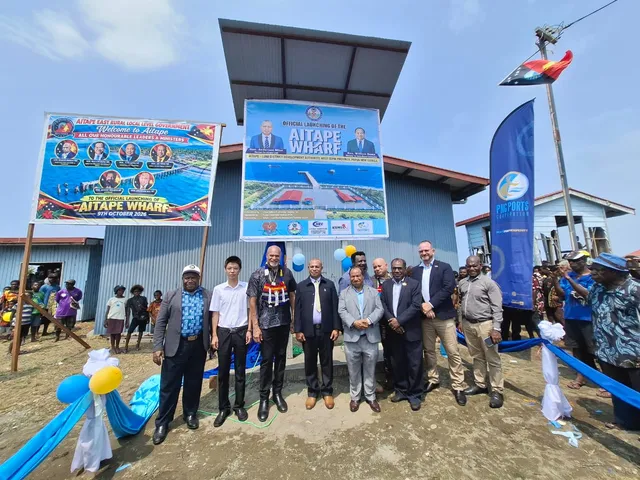
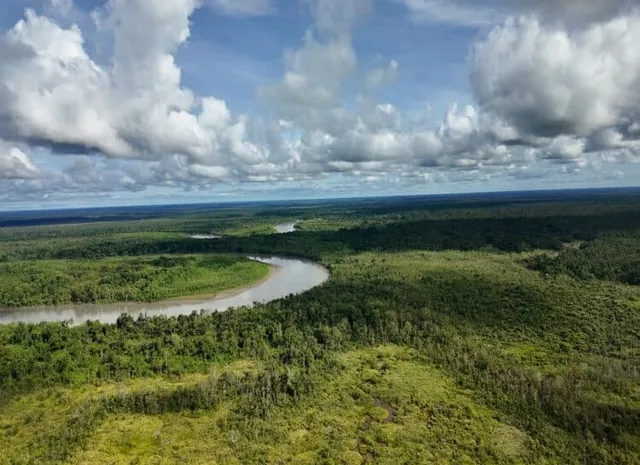
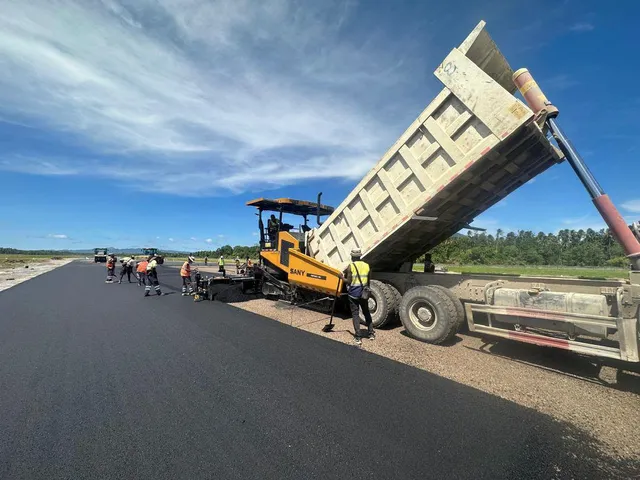
The people of Aitape and the wider West Sepik Province will benefit from new port facilities designed to provide safe and reliable sea access following the official launch of the K25 million Aitape Port Redevelopment Project.
The project is funded internally by PNG Ports Corporation Limited (PNG Ports) and forms part of its nationwide Port Upgrade Programme, which covers the national port network, from major gateways such as Lae and Motukea to ports serving communities in Kimbe and smaller Community Service Obligation (CSO) locations.
A recent independent socio-economic assessment found that the 15 ports managed by PNG Ports support about K29 billion in economic activity annually, equivalent to 22 per cent of Papua New Guinea’s gross domestic product (GDP).
Although only Lae, Port Moresby and Kimbe are commercially self-sustaining, every port in the network delivers significant social and economic value to the communities it serves. Earnings from the major ports help support the operation of smaller ports.
The assessment identified Aitape as a critical lifeline for the Aitape-Lumi District. With the port out of service, cargo has been transported by road to and from Wewak, a journey of three to five hours each way along a route prone to flooding at multiple river crossings.
Air freight is too expensive for most goods, while heavy cash crops such as cocoa cannot be transported economically by road to other ports.
With the investment, Aitape Port has the potential to handle about 25,000 tonnes of cargo annually and support approximately K101 million in regional economic activity each year.
The project was officially launched by Deputy Prime Minister John Rosso and Minister for State Enterprises William Duma, together with Aitape-Lumi MP Anderson Mise and other dignitaries.
Duma said the redevelopment fulfilled a commitment to bring larger vessels back to Aitape.
“Aitape is one of the remote ports, like Vanimo and Wewak, that are lifelines where road connectivity is impractical,” Duma said. “Moving people and freight to other destinations will be cheaper and more reliable.”
The project will be delivered by China Harbour Engineering Company (PNG) Limited over 12 months. The works include construction of a new main wharf and mooring dolphin structure, rehabilitation of the approach trestle and small ship wharf, and installation of new fenders, bollards and wharf furniture.
The new fender systems are designed to protect the wharf and trestle from the impact of berthing vessels, helping to extend the service life of the infrastructure.
Once completed, the port will support the safe and reliable movement of cargo, passengers, household goods, medical supplies and school materials. It will also give local producers of seafood, cocoa, vanilla and fresh produce better access to markets.
“We recognised that Aitape needed a lasting solution, not a temporary repair,” PNG Ports chief executive officer Neil Papenfus said. “Today, we are proud to launch these works, funded by PNG Ports at a cost of K25 million.”
“This port belongs to your community, and we are committed to delivering a facility that will serve you well for many years to come,” Papenfus said.
Duma also called on community leaders, landowners, churches and police to work together to protect the port infrastructure and support PNG Ports’ maintenance plan.
PNG Ports acknowledged Kumul Consolidated Holdings (KCH), the West Sepik Provincial Government, the Aitape-Lumi District Development Authority, and the people and customary landowners of Aitape for their support.
About PNG Ports Corporation Limited
PNG Ports Corporation Limited (PNGPCL) is Papua New Guinea’s national ports authority, managing 15 of the country’s 23 declared ports and handling 100 per cent of the nation’s seaborne trade.
The state-owned corporation is the successor to the PNG Harbours Board, with Kumul Consolidated Holdings (KCH) serving as its sole shareholder on behalf of the State of Papua New Guinea.
The corporation’s management and operations are governed by relevant port and shipping regulations, as well as policy directives issued by the National Executive Council through the Ministry of State Enterprises.
PNG Ports Corporation Limited was officially launched on 13 November 2006. Its predecessors operated under several names: the Papua and New Guinea Harbours Board from 1963 to 1969, the Papua New Guinea Harbours Board from 1970 to 2002, and PNG Harbours Board Limited from 2002 to 2006.
The corporation operates and manages 15 ports: Aitape, Alotau, Buka, Daru, Kavieng, Kieta, Kimbe, Lae, Lorengau, Madang, Oro Bay, Port Moresby, Rabaul, Vanimo and Wewak.
These ports handle more than 5.8 million tonnes of cargo annually, representing 100 per cent of Papua New Guinea’s seaborne trade and serving as key gateways to more than 300 scattered islands.
PNG Ports provides berthage, wharfage, storage, pilotage, harbour management, surveillance and other port-related services. Pilotage services are supported by pilot launches stationed at the corporation’s main ports. Port-related tariffs are regulated by the Independent Consumer and Competition Commission (ICCC).
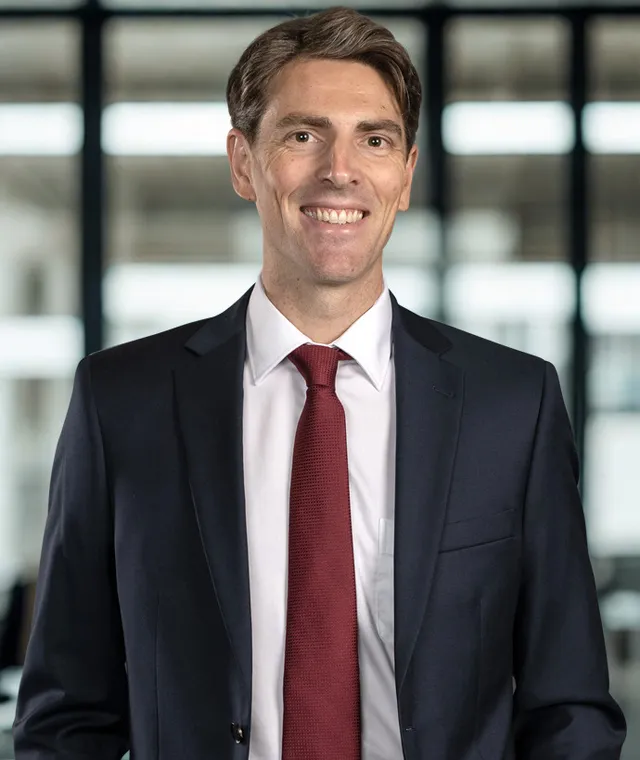
Global law firm Dentons has strengthened its national projects, energy and infrastructure capabilities with the appointment of Partner Jack Brumpton, expanding its expertise in sectors driving growth and transformation across Australia and the Asia-Pacific region.
Based in Brisbane, Brumpton will work closely with colleagues across Australia and the Asia-Pacific region, bringing extensive experience advising clients in the energy, resources and infrastructure sectors.
His expertise covers energy and infrastructure project development, project acquisitions and divestments, joint ventures, commercial contracting, regulatory and approvals frameworks, energy transition initiatives and emerging energy technologies.
Brumpton is recognised for his work on complex and first-of-their-kind projects. He has advised on major upstream oil and gas, liquefied natural gas, renewable energy, hydrogen, battery storage, energy transmission, offshore wind, carbon market and sustainable development projects across Australia and the Asia-Pacific region.
He previously served as in-house counsel at SunCable, advising on the Australia-Asia PowerLink project.
Business Unit Leader and Partner Marcus Graham said Brumpton's appointment reflected Dentons' continued investment in sectors driving significant growth and transformation across Australia.
His energy sector expertise, commercial approach and experience advising on major projects would further enhance the value the firm delivers to clients, Graham said.
Australian Chair and Chief Executive Officer for Australasia Amber Warren said Brumpton was widely respected for his work across the region's energy, resources and major projects sectors.
As governments, investors, developers and asset owners navigate opportunities arising from the energy transition and increasing infrastructure investment, Brumpton's experience would be valuable to clients pursuing their commercial objectives, Warren said.
Brumpton said he was pleased to join Dentons at a time of significant change for the firm and the broader energy sector.
The firm's energy, resources and infrastructure team brings together expertise spanning the full project lifecycle, and he looked forward to working with clients on opportunities and challenges shaping Australia's future, he said.
The appointment further strengthens Dentons' capabilities in key growth sectors, including renewable energy, transmission and storage, resources, utilities and major project development.
Dentons' national Infrastructure and Energy team advises clients across the project lifecycle, combining expertise in energy regulation, transmission and National Electricity Market connections with capabilities in project development, financing, delivery and the operation of critical infrastructure.
The Asian Development Bank (ADB) and the Australian government have committed $12.85 million to the fifth phase of the Pacific Private Sector Development Initiative (PSDI), continuing efforts to improve the business and investment environment across the region.
The initiative will help governments in ADB’s 14 Pacific developing member countries modernize business, investment and financial sector regulations, strengthen institutions and expand access to finance for micro, small and medium-sized enterprises.
Since its launch in 2007, PSDI has supported more than 500 reforms, including improvements to business laws, online business registries, secured transactions frameworks and capital markets. It has also supported reforms to strengthen state-owned enterprises and increase women’s representation in senior executive and board positions.
ADB Pacific Department Regional Head for Private Sector Development Haroun Khawaja said the new funding would sustain efforts to modernize business regulations and strengthen institutions, digital systems and financing mechanisms for small enterprises and women entrepreneurs.
ADB also cited its long-standing partnership with Australia as central to the initiative’s work since 2007.
Pacific economies face high business costs, limited access to finance and small, geographically dispersed markets. Exposure to climate-related disasters and regulatory frameworks that have not kept pace with changing business needs also constrain investment and job creation.
PSDI Phase V will support reforms to business and financial regulations, strengthen business registries and state-owned enterprises, and develop financing approaches for smaller businesses.
The program will also promote women’s economic empowerment through improved data, systems and institutional support, while producing research and outreach materials to encourage reform.
New priorities include climate and disaster resilience, digital government, anti-money laundering and countering the financing of terrorism, and disability inclusion.
The latest phase is funded by $3 million from ADB’s Technical Assistance Special Fund and $9.85 million in Australian government cofinancing.
Across its four previous phases, PSDI received $76.2 million from Australia, $8.9 million from New Zealand and $11.1 million from ADB.
ADB is a multilateral development bank established in 1966 to support sustainable, inclusive and resilient growth across Asia and the Pacific. It is owned by 69 members, including 50 from the region.
Tags: Asian Development Bank. Government of Australia. Pacific Private Sector Development Initiative. Haroun Khawaja. Pacific developing member countries. New Zealand government.
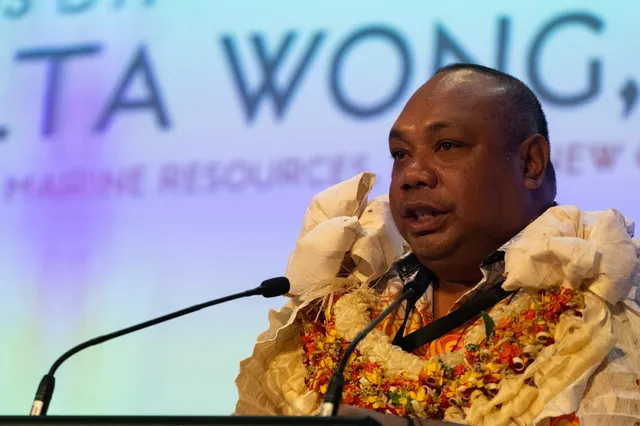
Papua New Guinea is pursuing fisheries reforms and strategic investments to expand domestic tuna processing, attract private investment and retain more economic value from its marine resources, Minister for Fisheries and Marine Resources Jelta Wong said.
In an exclusive interview with PNG Business News, Wong said the government was implementing reforms to strengthen local participation, increase export earnings and create jobs for Papua New Guineans.
The initiatives include the National Tuna Domestication Strategy, the StartFish Memorandum of Agreement (MOA), reforms to the Vessel Day Scheme and the transition to a sustainable Fisheries Incentive Framework.
“These reforms aim to increase domestic tuna processing, attract investment and ensure PNG retains more economic value from its fisheries resources,” Wong said.
A key development is the establishment of Fisheries Capital Limited (FCL), a state-owned enterprise created as the government’s commercial investment vehicle in the fisheries sector.
Wong said FCL would enable the state to invest in fisheries infrastructure, downstream processing and commercial partnerships, generating financial returns while creating jobs and opportunities for local businesses.
The government is also advancing Special Economic Zone (SEZ) initiatives to support large-scale processing and exports, including the Pacific Marine Industrial Zone (PMIZ).
While FCL will focus on commercial investment, the National Fisheries Authority will retain responsibility for regulation and sustainable fisheries management, Wong said.
Together, the initiatives are intended to expand domestic processing capacity, attract private investment and increase opportunities for Papua New Guinean businesses.
“Together, these initiatives aim to increase export earnings, foreign exchange, employment and government revenue, ensuring more Papua New Guineans benefit from the country’s marine resources,” he said.
Expanding opportunities for coastal communities and local businesses
Increasing the economic benefits flowing to coastal communities remains a key challenge despite PNG’s substantial marine resources.
Wong said the government was prioritizing domestic tuna processing, fisheries infrastructure, coastal fisheries development and commercial aquaculture to expand opportunities for local businesses and communities.
He identified the PMIZ and other SEZ initiatives, the StartFish MOA and FCL as key measures to increase local participation and develop the sector’s commercial potential.
The StartFish agreement is intended to encourage more tuna to be landed and processed domestically, helping PNG retain more value from its fisheries resources.
The government is also promoting investment in hatcheries, cold storage, processing facilities and export supply chains to strengthen the industry and improve access to overseas markets.
Wong said these investments would create opportunities for coastal communities, small and medium-sized enterprises and provincial governments to participate more directly in the sector.
Fisheries sector generates more than K1.6 billion in annual exports
Wong said the reforms build on an industry that generates more than K1.6 billion in annual fish and fisheries exports and supports approximately 14,000 jobs.
“Our objective is to ensure more of the value generated from our marine resources stays in Papua New Guinea through increased local participation, employment, investment and foreign exchange earnings,” he said.
The government aims to increase the share of fisheries revenue retained domestically through expanded processing, commercial investment and greater participation by Papua New Guinean businesses.
The extent of these benefits will depend on how effectively the reforms, infrastructure projects and investment initiatives translate into greater domestic processing capacity, stronger local businesses and sustainable employment.
The government’s strategy places tuna processing, fisheries infrastructure, commercial aquaculture and state investment at the center of efforts to increase economic returns from PNG’s marine resources.
New Simberi Gold has signed the revised 2013 National Executive Council-endorsed Community Development Agreement (CDA) for Simberi, marking a milestone in strengthening partnerships and establishing a framework for sustainable development across the Tabar Islands.
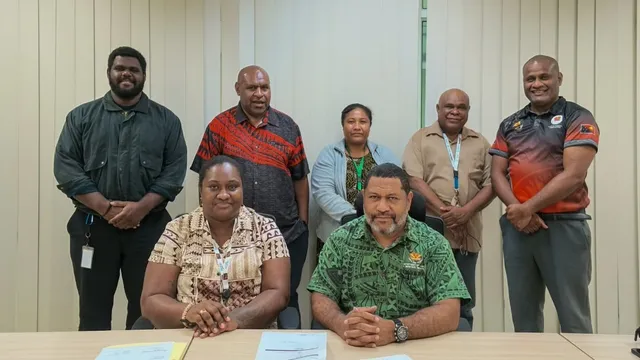
The agreement was signed on Friday at the Mineral Resources Authority (MRA) headquarters in Port Moresby by New Simberi Gold, operating under its parent company, Tabar Island Holdings Pty Ltd. (TIHPL), following a review and board approval process.
TIHPL Country Manager Randy McMahon said the signing followed years of negotiations and collaboration among the company, government representatives and landowner stakeholders. The agreement establishes a framework for improving the distribution of mining benefits and coordinating development priorities for Simberi communities.
A key provision allows royalties to be distributed directly to their intended beneficiaries, alongside a structured infrastructure and socioeconomic development plan involving the state and provincial government.
McMahon said the agreement would help ensure mining benefits reach their intended recipients while creating opportunities for the government and industry to work together on community priorities.
“Following concerns raised over royalty distribution in the past, this agreement establishes a more transparent process that directs royalties straight to beneficiaries. That is one of the most significant achievements of this CDA,” he said.
The agreement also includes a state commitment of 15 million kina (K15 million) for infrastructure projects over three years, providing a basis for coordinated investment in essential services and community development across Simberi.
McMahon said the CDA would strengthen cooperation among the company, government and landowner representatives to address development needs, improve living conditions and support the operation’s long-term sustainability.
It also provides a longer-term development framework that extends beyond the mine’s immediate operational needs, taking into account the future of landowners and their families after mine closure.
The signing follows a CDA ceremony on Aug. 28, 2026, when the other participating parties executed the agreement. New Simberi Gold deferred its signing to allow its partners — St Barbara, Lingbao Gold Group and Kumul Minerals Holdings Ltd. — to review the final document and obtain the necessary board approval.
McMahon acknowledged the MRA and other stakeholders for their continued efforts throughout the negotiations, saying the agreement required sustained collaboration and a shared commitment to reaching an outcome.
MRA Project Coordination Manager Pelis Vatnabar welcomed the signing, describing it as a significant step in a process spanning nearly three decades. He said stakeholders resumed discussions in 2025 and concluded negotiations the following year, paving the way for the formal signing.
Vatnabar said the milestone strengthened the partnership among the company, the state and various levels of government, creating an opportunity to work together on the broader development priorities of Simberi stakeholders.
The focus now shifts to implementing the agreement’s commitments and delivering lasting benefits to communities across the Tabar Islands and New Ireland Province.
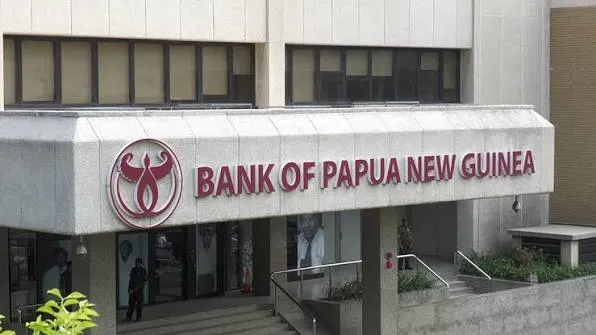
Papua New Guinea faces a high risk of money laundering, with corruption, fraud, tax crime and illegal resource extraction among the main threats. The Bank of Papua New Guinea (BPNG) is calling for stronger enforcement, effective prosecutions and the recovery of criminal proceeds to demonstrate progress in tackling financial crime.
Speaking at the opening of the Second Anti-Money Laundering, Counter-Terrorist Financing and Counter-Proliferation Financing (AML/CTF/CPF) Conference at APEC Haus in Port Moresby on September 30, 2026, BPNG Governor Elizabeth Genia, who also co-chairs the National Coordinating Committee (NCC), said the country must move beyond legislative reforms and demonstrate tangible results.
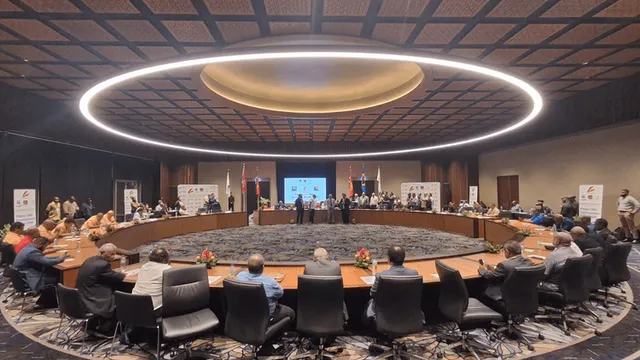
Held under the theme “Follow the Money, Eliminate the Threat,” the two-day conference brought together government agencies, financial institutions, international partners and other stakeholders to strengthen PNG’s response to financial crime.
“Awareness was our first step. We now need to demonstrate results,” Genia said.
PNG advances on FATF action plan
PNG was placed under increased monitoring, commonly known as the Financial Action Task Force (FATF) grey list, in February 2026. Its action plan requires coordinated reforms across 23 agencies represented on the NCC.
Genia said PNG submitted its first progress report to the FATF’s International Cooperation Review Group in September and had largely addressed the action items due during the initial reporting cycle.
Parliament has passed amendments to the Anti-Money Laundering and Counter Terrorist Financing Act, the United Nations Financial Sanctions Act and the Criminal Code. The changes aim to address deficiencies identified in PNG’s mutual evaluation and strengthen authorities’ powers to freeze assets, impose sanctions and confiscate criminal proceeds.
PNG has also updated its National Risk Assessment to identify vulnerabilities across the financial system and wider economy.
However, Genia said future FATF reporting cycles would focus on implementation rather than legislation alone.
“Every reporting cycle from this point forward will ask the same question, not just what legislation has been passed but what we have done with it,” she said.
Authorities must demonstrate effective investigations, prosecutions and the seizure or confiscation of assets linked to criminal activity. Initiatives such as Taskforce ARROW form part of the country’s efforts to pursue illicit funds through the courts.
Corruption and fraud pose major threats
PNG’s National Risk Assessment classified the country’s overall money laundering risk as high, identifying corruption and fraud as the most significant threats. Other risks include tax crime, illegal logging, fisheries crime, drug trafficking, cyber-enabled crime and illegal mining, including gold exports that go unrecorded.
Although terrorist financing and proliferation financing were assessed as lower risks, Genia said they still required attention.
The assessment also identified vulnerabilities in legitimate financial and professional services that could be exploited to move illicit funds into the formal economy. These include banks, money remitters, foreign exchange dealers, real estate businesses, lawyers, accountants and company service providers.
Genia said these findings were not an indictment of legitimate businesses but highlighted the need for stronger internal controls, transparency and cooperation with regulators and law enforcement agencies.
Cash transactions and the informal economy make financial flows harder to trace, while inadequate beneficial ownership transparency can hinder efforts to identify the individuals who ultimately control companies and assets.
The Financial Analysis and Supervision Unit (FASU), which receives and analyzes suspicious matter reports, plays a key role in identifying potential financial crime. Genia said, however, that financial intelligence must translate into investigations and prosecutions rather than remain within reporting systems.
Success should be measured by whether authorities can substantiate suspected criminal activity, bring cases before the courts, hold offenders accountable and recover illicit proceeds.
She urged banks to strengthen their controls, noting that the National Risk Assessment identified the banking sector as the most vulnerable among those assessed. Lawyers, accountants, real estate agents and dealers in precious metals were also encouraged to cooperate with authorities as risk-based supervision is strengthened.
Digital payments support financial inclusion
Genia linked the fight against financial crime to efforts to expand financial inclusion, cautioning that the reliance on cash in rural communities should not be treated as evidence of wrongdoing.
Cash remains central to everyday transactions for farmers, market vendors and people with limited access to formal banking services.
“Our task is not to punish the use of cash. It is to give people an alternative,” she said.
BPNG is working to accelerate the shift to digital payments, supported by know-your-customer controls proportionate to the risks involved. The approach aims to improve transaction transparency without imposing unnecessary barriers on small-scale traders, farmers and other people who rely on cash.
Genia said international partnerships were also important to ensuring anti-money laundering standards support financial inclusion rather than exclude ordinary citizens from the formal financial system.
Greater participation in that system could improve transaction visibility and make it harder for criminals to exploit legitimate financial channels. She said financial crime undermines economic development by depriving vulnerable communities of opportunities and resources.
The conference was co-hosted by BPNG’s FASU and Transparency International Papua New Guinea. Participating agencies included the Department of Prime Minister and National Executive Council, Department of Justice and Attorney General, Independent Commission Against Corruption, Office of the Public Prosecutor, Royal Papua New Guinea Constabulary, PNG Customs Service, Internal Revenue Commission and Investment Promotion Authority.
The program covered the National Risk Assessment, progress on the FATF action plan, corruption risks and Taskforce ARROW.
Genia urged participants to share experiences, address difficult questions and identify opportunities for closer cooperation. “Grey listing did not define PNG in February, and it does not define us today. What matters is how we respond,” she said.
PNG’s progress will depend on consistent enforcement of its strengthened laws, effective compliance by businesses and demonstrable results in identifying and recovering criminal proceeds.
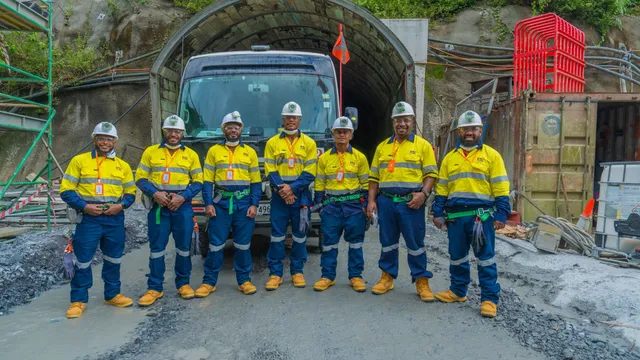
K92 Mining Inc produced 49,776 ounces of gold equivalent in the third quarter of 2026 at its Kainantu Gold Mine in Papua New Guinea, marking its second-highest quarterly production result and taking cumulative output beyond one million ounces.
The Canadian-listed miner said production from July to September included 46,063 ounces of gold, 1.95 million pounds of copper and 55,746 ounces of silver.
The company reported record quarterly ore processing of 250,042 tonnes, an 82% increase from the same period in 2025 and an 11% rise from the second quarter of 2026. The average head grade was 6.6 grams per tonne of gold equivalent.
K92 also achieved record quarterly ore mining of 252,744 tonnes, up 66% year on year, and total material mined of 485,812 tonnes, an increase of 37% from the third quarter of 2025.
Quarterly mine development reached a record 3,486 metres, up 41% year on year. The company said lateral development averaged 1,162 metres per month, exceeding the Stage 3 expansion requirement of 1,000 metres.
The results brought K92's cumulative production to one million ounces of gold equivalent since declaring commercial production in February 2018.
Chief executive David Medilek said the milestone reflected the company's exploration success and the expansion of production capacity through operational and project execution.
He credited the support of Papua New Guinea's government, alongside employees, contractors, local communities and other stakeholders, for contributing to the mine's growth.
Expansion supports higher production
K92 said its Stage 3 expansion remained on budget, with 98% of growth capital either spent or committed as at Sept. 30.
The expanded processing plant, which has an annual capacity of 1.2 million tonnes, continued to perform well after commissioning was completed in December 2025. It achieved record monthly throughput of 92,937 tonnes in September and daily throughput of 3,725 tonnes on Sept. 19, about 13% above its design capacity of 3,290 tonnes per day.
Gold recovery reached 94.1%, while copper recovery was 94.9%. Both exceeded the parameters in the company's updated definitive feasibility study.
Underground operations also advanced, with the second material pass becoming operational in June and the first stope ore from the third mining front, known as the Twin Incline, delivered in September. K92 expects to expand to four mining fronts in 2027.
Infrastructure upgrades are expected to further improve mine productivity. The Baupa and Kokomo bridges and Kasese river crossing were completed during the quarter, tripling payload capacity from 20 tonnes to 60 tonnes.
Five new 60-tonne Volvo surface trucks began operating late in the quarter, with three more expected to arrive in the fourth quarter. The company is also progressing a primary ventilation upgrade designed to increase underground airflow capacity from about 350 cubic metres per second to 600 cubic metres per second, with commissioning targeted for October.
K92 said these improvements should reduce haulage times, improve underground material movement and support higher production rates.
Full-year guidance maintained
The company maintained its 2026 production guidance of 190,000 to 225,000 ounces of gold equivalent, with the fourth quarter expected to be its strongest of the year.
K92 attributed the anticipated increase to a planned higher-grade stoping sequence, rising mining rates, the continued ramp-up of its second and third mining fronts, and completion of key expansion projects.
The company sold 41,587 ounces of gold, 1.91 million pounds of copper and 53,575 ounces of silver during the third quarter.
K92 said further improvements in underground development and material handling are expected as additional equipment arrives and expansion infrastructure is commissioned.
The company plans to increase lateral development rates beyond Stage 4 expansion requirements in 2027 to provide greater operational flexibility and support its next phase of growth.
Gulf and Central provinces have agreed to an 80:20 split of benefits worth K6.606 billion from the Papua LNG project, resolving a major dispute over the distribution of royalties, equity and development funding ahead of the project's targeted final investment decision in December.
The Tier 1 benefit-sharing agreement was signed at APEC Haus in Port Moresby on Oct. 8, following months of negotiations between the two provinces and the national government.
Under the arrangement, Gulf will receive 80% of the benefits, while Central will receive 20%. Gulf hosts the project's wellheads, while Central is recognised for its role in hosting downstream facilities and associated infrastructure.
The K6.606 billion package covers royalties, development levies, equity participation, infrastructure development grants, business development support, employment and training opportunities, and other benefits. The package is intended to be distributed among landowners, provincial governments, district development authorities and local-level governments in the two provinces over the project's lifetime.
The agreement establishes the allocation framework for the remaining benefit-sharing negotiations, although further agreements and government decisions are needed before all beneficiaries' allocations are finalised.
Dispute over allocation
The agreement follows weeks of contentious negotiations over how the benefits should be divided.
Gulf had sought a 95% share of the benefits, arguing that its position as the host province for the project's upstream facilities justified a larger allocation. Central, meanwhile, sought a greater share in recognition of its role as a co-host and the location of downstream processing and infrastructure facilities.
Central had proposed a 55:45 split in favour of Gulf in its position paper, while earlier discussions also included proposals for 60:40 and 65:35 allocations. The national government's initial proposal was a 70:30 split in Gulf's favour, which Gulf representatives rejected.
The final 80:20 arrangement represents a compromise between the provinces' competing positions. Reports on the negotiations also said the national government committed an additional K1.2 billion through Tax Credit Scheme projects to help bridge the differences, alongside proposed infrastructure, business development and equity-related support.
The formal signing involved provincial government representatives, district development authorities, local-level governments, landowner representatives, Petroleum Minister Jimmy Maladina and officials involved in the state negotiation process.
Central Province Governor Rufina Peter and other provincial representatives participated in the negotiations, while Gulf's delegation was led by Acting Governor Morris Taudevin.
The signing process also involves affected landowners along the project's pipeline corridor. Central landowners signed after the provincial-level agreement, while further signings involving Gulf landowners from the northern, southern and middle segments were expected to continue.
Marape welcomes agreement
Prime Minister James Marape welcomed the agreement, describing it as a milestone towards the project's targeted final investment decision on Dec. 15.
He said the arrangement demonstrated cooperation between the two provinces and would allow the government to advance the distribution of project benefits through the National Executive Council.
Marape said the agreement followed the broad principles established under the existing PNG LNG project, where benefits are distributed among upstream resource areas, downstream facilities and pipeline corridors.
He also reaffirmed the government's policy that 40% of the state's equity participation should flow back to the provinces and landowners where resources are developed.
The agreement comes after the government announced broader changes to Papua LNG's commercial arrangements in September, including an additional 2.5 percentage points of potential state equity, bringing Papua New Guinea's stake to 25%, according to Marape.
The government also said it had secured a revised domestic gas pricing formula, reducing the rate from 9% to 5% of the Japan Customs-cleared crude oil benchmark, with the aim of lowering domestic gas costs for power producers. These arrangements form part of the broader effort to advance the project towards a final investment decision.
Focus shifts to remaining negotiations
Maladina said the agreed benefits must deliver measurable improvements in the lives of communities affected by the project.
He said royalties and development levies should contribute to better schools, health services, roads, water supply and other essential services.
Equity participation should provide eligible beneficiaries with meaningful long-term economic interests in the project, supported by sound governance and responsible financial management, he said.
Infrastructure commitments must result in properly planned, completed and maintained projects, while business development assistance should help establish Papua New Guinean enterprises capable of supplying Papua LNG and serving the wider economy.
Maladina urged all parties to continue negotiations in good faith, with fairness and transparency, adding that the success of the development forum would ultimately be judged by whether commitments translated into tangible benefits.
Negotiations for Tiers 2, 3, 4 and 5 are scheduled to continue throughout October, with the government aiming to conclude the remaining discussions in early November.
The outstanding negotiations will determine how benefits are allocated among the other eligible stakeholders, including landowners and affected communities, under the framework established by the Tier 1 agreement.
Papua LNG targets December investment decision
The benefit-sharing agreement is a key step in preparations for Papua LNG, one of Papua New Guinea's major planned resource investments.
The project is targeting a final investment decision by Dec. 15, 2026, following revised commercial arrangements and efforts to reduce development costs.
French energy company TotalEnergies announced in September that the project had completed its engineering, procurement and construction tendering process, with contract award recommendations ready for approval by the joint-venture partners. Cost optimisation measures have reduced estimated capital expenditure to about US$14 billion, from earlier projections, the company said.
The project is also undergoing an operational restructuring, with ExxonMobil set to take over operatorship from TotalEnergies to improve coordination with the existing PNG LNG operation.
Marape has described Papua LNG as an investment of about K60 billion for Papua New Guinea, with the potential to generate employment, expand business opportunities and strengthen government revenue during construction and throughout its operating life.
The completion of the remaining benefit-sharing agreements will be an important part of the preparations for the investment decision. However, the December target remains dependent on the project's outstanding approvals and other requirements being completed.
For Gulf and Central, the immediate challenge will be ensuring that the agreed allocations result in improved infrastructure, public services, local employment and business participation, rather than remaining commitments on paper.
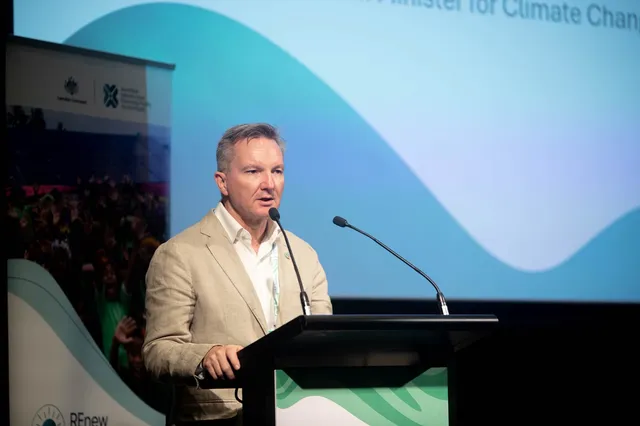
More than 66,000 people in Papua New Guinea and Bougainville are expected to benefit from two new renewable energy projects under Australia's REnew Pacific programme, which aims to expand access to reliable electricity in remote communities across the Pacific.
Australian Minister for Climate Change and Energy Chris Bowen announced the three new projects, including a third in Fiji, at a Pre-COP31 event in Fiji this week.
In Papua New Guinea's Oro Province, Sola PayGo and MiBank will deploy pay-as-you-go solar home systems, streetlights and education servers in 19 communities between Popondetta and the Kokoda Track, reaching about 55,000 people.
The project will also provide training in technical skills, financial literacy and digital literacy to support local livelihoods and improve access to education.
In Bougainville, Save the Children and the Autonomous Bougainville Government's Department of Education will install solar power and battery storage systems at five remote schools in Tinputz.
A school-managed solar lantern scheme will also provide safer lighting to as many as 2,000 nearby households, benefiting more than 11,400 people.
The projects are intended to improve electricity access for communities where reliable power remains a challenge, while supporting education, household needs and local economic activity.
The third project, led by the It's Time Foundation in partnership with Fiji's Ministry of Education, will install solar systems with battery storage at 13 remote schools and teachers' homes across Vanua Levu, Viti Levu, Taveuni and the Yasawa Islands. It will also provide Starlink internet, laptops and smart televisions, benefiting more than 1,200 students.
The announcements were made during a special Pre-COP31 session, *Powering the Pacific: Electrification for Climate Resilience, Energy Security and Development*, which brought together Pacific and Australian leaders, communities and experts to discuss renewable energy's role in regional development and energy security.
The three projects bring REnew Pacific's portfolio to 13 locally led projects across seven countries: Fiji, Kiribati, Papua New Guinea, Samoa, Solomon Islands, Vanuatu and the Republic of the Marshall Islands.
Launched less than two years ago, the programme now reaches more than 255,000 people through projects supporting more than 8,100 homes, 98 schools and 49 health centres.
REnew Pacific builds on the Australian Government's Off-Grid Renewable Energy Partnerships pilots, launched in 2024 across Fiji, Kiribati, Papua New Guinea, Solomon Islands, Timor-Leste and Vanuatu.
Combined, the two initiatives comprise 26 projects, 15 of which have been completed, reaching more than 428,000 people across 215 schools, health centres and communities.
Robinson Energy has received an offer from Papua New Guinea’s Petroleum Minister Jimmy Maladina to be granted a five-year Petroleum Retention Licence covering the Triceratops gas and condensate discovery in Gulf province.
The proposed PRL 68 would give Robinson a 100% interest in the nine-block licence area, subject to the completion of the grant process.
The offer, dated October 2, was made under Section 39 of the Oil and Gas Act 1998 following a report by the Petroleum Advisory Board and was served on Robinson by the National Petroleum Authority on October 5, the Canadian-listed company said.
The licence area was previously held under PRL 39, which lapsed in July.
Under the proposed terms, Robinson would commit about US$52 million to a five-year work programme covering geological and geophysical studies, seismic work, commercial studies and at least one appraisal well.
The Triceratops structure is an onshore gas and condensate discovery in the Papuan Basin. Gas has been flowed from three wells drilled over several decades, with the highest reported test rate reaching 28 million cubic feet per day.
BP’s Bwata-1 well, drilled in 1959, flowed gas at up to 28 MMcf/d. InterOil’s Triceratops-2 well recorded a test rate of 27 MMcf/d in 2012, while Triceratops-3 flowed 17.1 MMcf/d of gas and 200 barrels per day of condensate in 2015.
Triceratops is located about 45 kilometres west-north-west of the Elk-Antelope fields, which underpin the Papua LNG project.
Robinson said it intends to investigate a potential tieback of Triceratops into the Papua LNG system, with gas potentially transported for processing and tolled liquefaction at Caution Bay. Condensate could be transported by pipeline to the Kumul Marine Terminal.
The company plans to seek third-party access for up to 50 MMcf/d of gas.
However, no agreement has been reached with the Papua LNG project operator or its participants, and Robinson cautioned that access may not be secured on acceptable terms or at all.
The proposed development would initially involve recovering and reprocessing historical well logs, test data and seismic information before commissioning a new independent resource assessment.
Robinson also plans to acquire additional 2D seismic and drill the Triceratops-4 and Triceratops-5 wells, subject to the results of its technical evaluation. The company is targeting potential production of up to 50 MMcf/d of gas and associated condensate.
A previous independent assessment by GLJ Petroleum Consultants estimated gross unrisked best-estimate contingent resources of about 352 billion cubic feet equivalent, or 58.7 million barrels of oil equivalent, as at December 2015.
Robinson stressed that the estimate is historical and should not be treated as a current resource estimate. The company said it has not independently verified the underlying data and intends to commission a new evaluation.
The company said the Triceratops project could provide a potential route to production ahead of its broader plans for a Western Province gas pipeline and LNG export system.
Executive chairman Cam Bailey said the discovery had already demonstrated gas flow from three wells and was located on the same trend as the fields supplying Papua LNG.
“Our first priority is to rebuild the technical record and put a current independent evaluation behind the asset,” Bailey said.
The proposed PRL 68 remains subject to Robinson satisfying the conditions of the grant offer, including the formal grant of the licence. The company said development timing would also depend on financing, regulatory approvals, technical results and securing access to existing Papua LNG infrastructure.
The Office of Workers’ Compensation (OWC) has taken a major step in its digital transformation, signing a contract with NiuPay Limited to design, build and support the new OWC Website Development Platform. The platform will give injured workers, their dependants, employers, insurers and insurance brokers access to OWC’s information and services 24 hours a day.
The contract was signed at OWC’s offices in Port Moresby on 2 October 2026 by Chief Commissioner Mr Martin Pala, and NiuPay Business Development Manager Ms Kristina Kekedo, following a competitive tender. NiuPay was among three shortlisted bidders, and its technical proposal ranked highest in OWC’s evaluation.
The project supports OWC’s drive to align its services with the Digital Government Act 2022 and the digital government agenda of the Department of Information and Communications Technology (DICT). OWC’s evaluation panel found NiuPay’s proposal fully aligned with the Act, DICT’s Government Cloud Policy 2023 and the DICT Government Website Standards 2023, the frameworks that guide how public bodies deliver secure, interoperable services online.
“We want an electronic front desk that gives our clients and stakeholders better access to our services,” said Chief Commissioner Pala. “Information should be available 24 hours a day and easy to use for people at every level of computer literacy, so the man on the street can find us, understand our services and use them.”
Established under the Workers’ Compensation Act 1978, OWC is a statutory office of the Department of Labour and Industrial Relations. It administers compensation claims for workplace injuries and deaths, and enforces compulsory workers’ compensation insurance across Papua New Guinea. The new platform builds on OWC’s earlier move to online claims lodgement, with a modern, user-friendly design and a secure link to OWC’s internal processing system, so clients can follow the progress of their claims and officers can track cases.
In line with DICT’s Government Cloud Policy, the platform will run on AWS, one of DICT’s approved government cloud providers, across two availability zones for resilience. OWC will keep full ownership of the cloud environment, the encryption keys and the source code from day one, and NiuPay will provide 24/7 monitoring and support for three years.
“OWC supports workers and their families at some of the most difficult moments in their lives, and we take seriously the responsibility of building the platform they will rely on,” said Ms Kekedo. “We thank Chief Commissioner Pala, Commissioner Kolias and the OWC team for their trust, and we look forward to working alongside them to deliver a service every Papua New Guinean can use with confidence.”
Work on the project began on Monday 5 October. A Port Moresby-based NiuPay team is delivering it: Project Delivery Manager Mr Alistairs Dirua and Junior UI/UX Engineer Mr Julian Togel, with engineering support from NiuPay’s senior and executive teams.
For Papua New Guinea’s petroleum and energy sector, digital transformation is no longer simply about putting existing processes online.
The bigger challenge is building digital systems that can operate securely across complex organizations, connect fragmented data, support field operations, withstand demanding infrastructure conditions and remain reliable long after they go live.
That is where NiuPay Limited sees an opportunity.
The Papua New Guinean technology company designs, builds, deploys and supports digital platforms for organizations where security, interoperability, auditability and long-term operability are critical. Its delivery experience spans workflow automation, data integration, GIS, secure digital operations, cloud infrastructure and AI-enabled processing across PNG and the wider Pacific.
For an industry built around long-life assets, remote operations and highly regulated activities, those capabilities have direct relevance.
A petroleum project may involve information moving between field operations, corporate systems, regulators, contractors, communities and government agencies. Land access, spatial data, approvals, payments, reporting, identity and compliance can all depend on systems that need to work together.
The question, therefore, is not simply whether a company can digitize a process. It is whether the technology can work in the operating environment and continue to work as that environment evolves.
That question sits at the center of NiuPay's approach to what it calls practical modernization.
From digitizing transactions to modernizing operations
NiuPay's origins were in solving a straightforward problem: making payments and government transactions less dependent on paper-heavy processes and manual work.
Founded in PNG in 2018, the company has since expanded beyond payments into the design, build, deployment and long-term support of secure digital platforms.
Its operating model combines technical architecture, software engineering, cloud and infrastructure capability, security and governance controls, delivery management and ongoing support.
That evolution is important for industries such as petroleum and energy.
Large-scale projects rarely operate from a clean technology slate. Systems accumulate over time, data is held in different environments, workflows become dependent on manual coordination and different parts of an organization can end up using systems that do not communicate effectively.
Replacing everything at once is not always practical. NiuPay instead advocates a staged, evidence-led approach: understand the existing environment, map workflows and dependencies, establish the architecture and controls, then build and validate in manageable increments.
The prospectus describes the methodology as discovery first, architecture before build, controlled enhancement over disruption, operational validation before scale and capability transfer as a core deliverable.
For resource companies operating critical systems, that can mean modernizing without unnecessarily disrupting the operations those systems support.
Connecting the systems behind the asset
Interoperability is one of the less visible challenges of digital transformation — but potentially one of the most consequential.
A company can have sophisticated individual applications and still struggle to obtain a reliable view of its operations if information remains trapped in disconnected systems.
NiuPay's data integration and harmonization capability is designed around migration, data-quality improvement, system interfaces, reporting structures and controlled movement of information across fragmented environments.
For petroleum and energy companies, the application is potentially broad. Operational data, financial information, regulatory records, project documentation and stakeholder information can all sit in different systems. Connecting them can improve reporting, reduce duplication and provide decision-makers with more consistent information.
The objective is not integration for its own sake. It is to create a digital environment in which information can move securely between the systems and people that need it.
GIS brings the physical and digital worlds together
Few sectors are as dependent on geography as petroleum, energy and resources. Projects exist across physical landscapes. Land access, infrastructure corridors, environmental considerations, project boundaries and stakeholder interests all have a spatial dimension.
That makes geospatial information more than a mapping function.
NiuPay's GIS capability covers spatially enabled systems, geospatial data services, business-to-spatial integration, mapping workflows and field-level location capture. Its work with PNG's Department of Lands and Physical Planning provides a reference point.
NiuPay supports national-scale land administration functionality across records, billing, receipting and customer management, while its geospatial environment supports spatial dataset management, web-map visualization, WMS/WFS services and QGIS integration.
For the energy sector, the relevance lies in connecting business information with the physical environment in which projects operate. That can provide a foundation for more integrated approaches to land, project footprints, access, infrastructure and other location-dependent information. The value of GIS, in other words, is not simply a better map. It is making spatial information part of the operational system.
Digital systems that work beyond the office
One of the defining challenges for PNG's energy industry is geography. Operations can extend far from major population centers, where connectivity and infrastructure cannot always be assumed. That changes the requirements for digital platforms.
A system designed exclusively around continuous connectivity may struggle when it reaches the field.
NiuPay's Pacific delivery experience provides a practical reference point. During the 2023 Pacific Games border operations in the Solomon Islands, it built an offline-capable system with sync-when-available functionality and on-device AI/ML for passport and travel-document reading.
The underlying design principle has wider relevance. Field applications can continue operating locally and synchronize with central systems when connectivity becomes available.
For organizations working across remote locations, that approach can help reduce the dependence of critical workflows on uninterrupted network access.
The issue is not necessarily waiting for infrastructure to become perfect. It is designing technology that accounts for the infrastructure that exists today.
Making financial flows more transparent
NiuPay's original payments capability remains an important part of its proposition.
In partnership with Kina Bank, the company operates automated revenue-collection and reconciliation platforms for PNG public-sector clients, covering data ingestion, payment matching, crediting, receipting and reporting for EFT and card payments. The prospectus says the system typically matches around 99% of EFT payments automatically, while organizations see more than a 90% reduction in reconciliation costs.
For a resource economy, the underlying capability has obvious relevance.
Petroleum and energy projects involve financial relationships among companies, governments, provinces, communities and other stakeholders.
The ability to move and reconcile payments accurately, while maintaining an auditable record, can become particularly important where multiple parties are involved. The broader lesson is that automation should not be measured by how much manual work it eliminates.
Its value lies in better data, stronger auditability and greater visibility over financial processes.
AI with governance built in
Artificial intelligence is rapidly becoming part of enterprise technology strategies, but NiuPay's prospectus takes a use-case-driven approach.
Its AI capability includes computer vision, large language models, edge AI/ML and data-fusion techniques, but the company says these are applied where the use case, governance and infrastructure fit.
That distinction is particularly relevant to regulated industries.
The question for an energy company should not simply be where AI can be introduced.
It should be where AI can produce a measurable operational benefit while maintaining appropriate controls over data, access, decision-making and auditability. NiuPay's work for PNG Immigration provides an example.
Its Analysis Engine processes passports, identity documents, photographs, letters and supporting forms using computer vision and large language models in a controlled cloud environment. Lower-risk applications can be processed automatically, with officers intervening by exception.
The same principle can inform enterprise AI adoption more broadly: start with the workflow, establish the controls and then determine where automation adds value.
Security is part of the operating model
For petroleum and energy companies, cybersecurity cannot be treated as an IT issue sitting separately from operations. Digital platforms increasingly support processes that are integral to business continuity.
NiuPay's security model is built around least-privilege access, multifactor authentication for privileged users, encryption in transit and at rest, audit logging and environment hardening. Its cloud operations incorporate client-specific compliance requirements, backup and disaster recovery, while identity controls include role-based and attribute-based access and identity federation where appropriate.
The emphasis is equally important after deployment.
NiuPay's model includes monitoring, backup verification, training, handover and sustained operational support. That reflects a central proposition in the company's prospectus: a digital system is not finished simply because it has gone live.
It has to be operated, maintained, understood and supported. For industries with long project cycles, that distinction matters.
Cloud infrastructure without vendor lock-in
NiuPay operates production environments on Amazon Web Services in the Sydney region, aligned with PNG Government Leased Cloud requirements and with familiarity with controls expected of regulated-sector hosting in PNG.
Its prospectus also describes a vendor-informed but not vendor-locked approach to cloud and infrastructure operations.
That is significant as organizations consider how to modernize their technology estates without creating new dependencies that could constrain future choices.
The objective is to provide secure hosting, environment management, monitoring, performance, resilience and supportability while retaining the ability to evolve the underlying technology environment.
Built to be supported
For NiuPay, the defining measure of a successful technology project is not necessarily how sophisticated it looks when it launches.
It is whether the organization can continue using it effectively afterward. That philosophy is embedded in the company's operating model.
NiuPay describes itself as locally grounded, security-first, focused on practical modernization and structured for long-term support. Its model includes training, enhancement and managed operational support after go-live.
That is particularly relevant to PNG, where technology projects can face the combined pressures of infrastructure constraints, skills availability, changing operational requirements and the need to maintain services while systems evolve.
The company therefore treats capability transfer as part of delivery.
Users and technical counterparts are trained, the environment is documented and handover is supported so clients can operate and extend the platform with greater confidence.
A digital foundation for PNG's energy future
PNG's petroleum and energy industries are entering an environment in which digital capability will increasingly intersect with physical infrastructure.
Projects will continue to depend on reliable information, connected workflows, secure systems and accurate reporting. The challenge will be connecting those pieces.
NiuPay's six capability areas — workflow modernization, data integration, GIS, security and identity, cloud infrastructure, and AI-enabled processing and analytics — are presented as a single operating model rather than isolated technology services.
That integration is important. A field application may need to operate when connectivity is limited. A land-access process may depend on geospatial information. A payment workflow may require data from multiple systems. An AI application may depend on properly structured and governed information.
These are not separate technology problems. They are parts of the same digital operating environment.
For NiuPay, practical modernization means understanding that environment before attempting to change it.
For PNG's petroleum and energy sector, the opportunity is to build digital infrastructure that is not simply modern when it is deployed, but secure, interoperable, auditable and supportable throughout the life of the operation.
That is ultimately what NiuPay's "built to last" proposition means. Not technology for technology's sake. But digital systems designed around how PNG organizations actually operate — and built to keep operating as their needs change.
Learn more about NiuPay’s digital solutions and how they can help your organization: www.niupay.com.pg | +675 323 9111 | enterprise@niupay.com.pg
From family homes to staff accommodation and larger housing developments, PNGFP NiuHomes provides engineered kit-building solutions designed for Papua New Guinea and the wider South Pacific.
Building a home in Papua New Guinea presents challenges rarely encountered in more developed markets. Materials may need to travel considerable distances, building sites can be remote, and high humidity, heavy rainfall and termites all place additional demands on the finished structure.
PNGFP NiuHomes has developed its range with these realities in mind.
Manufactured in Papua New Guinea using locally grown plantation pine, NiuHomes combines proven timber construction with the efficiency of a prefabricated kit-building system. Every design is engineered to provide a practical, cost-effective building solution that can be transported throughout PNG and across the South Pacific.
Prefabrication brings greater consistency and control to the building process. Components are manufactured and prepared before leaving PNGFP’s facilities, reducing the amount of cutting and modification required on site. This can help simplify construction, reduce material waste and support more predictable project planning.
It also makes NiuHomes particularly well suited to projects outside major urban centres. The building components are consolidated into a complete kit and can be shipped to ports around the country, ready for transport to the project location. Whether the requirement is for an individual family home or a larger development, the same system provides an efficient foundation for construction.
NiuHomes is PNG’s only range of pressure-treated timber kit homes, providing protection against fungal decay and termite attack. This is an important distinction in a market where lower-cost, untreated hardwood is widely used for construction. Although hardwood is often assumed to be naturally durable, untreated hardwood does not provide the same protection against termites and rotting as pressure-treated timber. NiuHomes’ pressure-treated plantation pine provides consistent, built-in protection specifically suited to PNG’s tropical conditions.
The timber used in NiuHomes buildings comes from PNGFP’s sustainably managed pine plantations in Bulolo. It is processed locally through PNGFP’s own manufacturing facilities, which are powered by renewable hydroelectricity generated by the company’s hydro power stations. PNGFP’s engineered wood products are also independently certified to recognised quality and responsible forestry standards.
For customers, this means choosing a building system that supports Papua New Guinean manufacturing, employment and resource development while delivering a product made specifically for regional conditions.
The NiuHomes range offers designs for different lifestyles, locations and budgets. Contemporary homes such as the Pacifica provide modern architectural appeal and
generous family living spaces. Residential designs such as the Bikman offer the warmth and character of a traditional timber home, while practical Baset and Suburban designs provide efficient solutions for families, employers and organisations.
Plans can also be adapted to suit different site requirements and project needs. This versatility has enabled NiuHomes buildings to be supplied for residential, commercial, institutional and community applications throughout Papua New Guinea.
Behind every NiuHomes kit is the experience and capability of PNG Forest Products. With an established history of timber processing, engineered wood production and building supply, PNGFP provides customers with the reassurance of dealing with a Papua New Guinean company that understands the conditions in which its buildings will be transported, constructed and lived in.
For homeowners, developers and organisations planning their next building project, NiuHomes offers more than a set of materials. It provides a complete, engineered building solution combining local manufacture, efficient delivery and long-term durability.
Made in PNG and built for the South Pacific, NiuHomes is ready to go wherever the next home is needed.
Papua New Guinea’s maritime future depends not only on vessels and infrastructure, but also on strong local businesses that support the industry. Technical services, equipment support and operational coordination will be vital to a more resilient and efficient maritime economy. JJ Ship Equip Agencies Ltd (JJSEA) is positioning itself as a key local partner in that effort.
For JJSEA, local capability is practical. “We see local capability as the ability to solve real maritime problems inside Papua New Guinea with local knowledge, local people, local responsiveness and stronger in-country support systems,” the company says.
This means more than maintaining a market presence: it requires reducing reliance on slow external processes through dependable supplier access, effective coordination, technical expertise and consistent follow-through. For the wider industry, stronger local capability brings greater continuity, less downtime and improved resilience.
This view has shaped JJSEA’s evolution from a marine supplier into an integrated support provider tailored to PNG’s needs. “Operators do not only need items delivered; they need help with urgency, technical fit, sourcing complexity, compliance expectations and operational coordination,” the company explains.
JJSEA has therefore invested in supplier relationships, practical expertise and service capability, positioning itself as a problem-solving partner rather than a transactional vendor.
Shipping companies in Papua New Guinea face long distances, remote routes, unpredictable weather, infrastructure constraints and lengthy procurement lead times. Reliance on foreign sourcing and rising compliance expectations add further pressure. JJSEA responds by providing a reliable local point of contact.
“We give clients a practical local point of contact that can help source equipment, coordinate support, advise on urgency, manage follow-up and keep communication moving when time matters,” the company says. Reducing operational friction is central to the value it provides.
Coordination is a defining feature of JJSEA’s approach. Rather than treating supply as a standalone transaction, the company considers the wider operational context, including vessel schedules, locations and technical requirements.
“In many cases we act as a coordination point — aligning suppliers, technical parties, logistics and delivery timing so the operator can resolve the issue with less disruption,” it notes. This approach also supports forward planning for inspections, maintenance and known bottlenecks. In PNG, where procurement alone rarely resolves operational challenges, coordination and follow-through are essential.
As the maritime sector modernises, operators are placing greater emphasis on product quality, documentation, traceability, technical reliability and professional service. JJSEA observes “stronger demand for product quality, better documentation, more reliable technical support, greater traceability, and more professional operational follow-up.”
In response, it is tightening supplier discipline, improving documentation and expanding its capacity to handle more complex technical requirements. The company sees this shift as positive: modernisation depends not only on vessels, but also on the quality of the support ecosystem around them.
Established in 2015, JJSEA has expanded across Lae, Port Moresby, Rabaul, Madang, Kimbe and Buka. It has also built relationships with operators including Consort Express, Pacific Towing, Steamships, Swire, P&O Maritime and Lutheran Shipping. Although it does not disclose financial metrics, its growth is evident in its wider market reach, repeat business and rising demand for dependable local support.
Partnerships are central to building this capability. JJSEA operates within an ecosystem of vessel operators, regulators, ports, classification societies, technical providers and international suppliers.
“No single business can do that alone,” the company says, underscoring the need for collaboration. It works with stakeholders, including the National Maritime Safety Authority and technical partners, to support client outcomes and wider industry development.
Over the next three to five years, JJSEA plans to deepen and strengthen its services. Its priorities include expanding technical capability, improving inventory planning, investing in people and systems, and increasing collaboration with credible partners. The goal is to build “a more capable local maritime support platform” for commercial operators and coastal shipping across Papua New Guinea.
As the sector evolves, capable local businesses will become increasingly important. JJSEA’s trajectory reflects a broader shift towards stronger domestic solutions, higher standards and more resilient support systems.
By combining local knowledge with practical service, the company is helping build a more dependable and self-sustaining maritime sector that supports economic activity and national connectivity.
Ok Tedi Mining Limited (Ok Tedi) has committed K50 million to support drought relief and recovery efforts across Papua New Guinea, reinforcing the National Government’s response to the current El Niño-induced drought crisis.
The commitment comes amid growing concerns over worsening drought conditions, water shortages, food insecurity, and impacts on livelihoods across many parts of the country.
The National Weather Service has identified a number of provinces as experiencing critical, severe, or moderate drought conditions. Government estimates and assessments by development partners indicate that millions of Papua New Guineans could be affected if conditions persist or worsen.
Ok Tedi Managing Director and Chief Executive Officer Kedi Ilimbit said the company was committed to supporting national response efforts while recognising that the Government remains responsible for leading the country’s drought response.
“Ok Tedi stands with the people of Papua New Guinea during this difficult period. Our contribution is intended to strengthen existing Government and humanitarian initiatives and ensure assistance reaches communities most affected by the drought,” Mr Ilimbit said.
Ok Tedi will work closely with the National Disaster Centre, provincial disaster offices, and other response partners to identify areas where support can deliver the greatest impact.
Rather than providing direct cash assistance, the programme will focus on practical and sustainable interventions, including logistics support, water security projects, agricultural recovery initiatives, and community resilience activities.
“We are committed to ensuring that all assistance is delivered transparently, responsibly, and in a manner that complements ongoing national efforts,” Mr Ilimbit said.
Further details on programme implementation will be announced following consultations with Government agencies, humanitarian organisations, and other stakeholders.
Trukai Industries has renewed its sponsorship of the Papua New Guinea Game Fishing Association for another four years, reinforcing its support for sports tourism and community engagement.
The company presented a K50,000 cheque to the Game Fishing Committee for this year’s tournament.
Trukai said the four-year commitment reflects its continued support for anglers, organisers, and the wider community involved in the event.
The company also acknowledged the Game Fishing Committee for granting Trukai exclusive rights to showcase Trukai Rice and Trukai Flour during the tournament.
Trukai said the partnership would provide an opportunity to promote Papua New Guinea’s waters and support sports tourism.
The next Game Fishing Tournament will be held in Lae, the home of Trukai Industries.
The K50,000 cheque was presented to Scott Randal, President of the Lae Game Fishing Club.
Trukai said it looked forward to continuing the partnership over the next four years and supporting the growth of the tournament.
Trukai Industries has presented K133,100 to the Morobe Provincial Agriculture Show (MPAS), renewing its support for an event it has backed for 40 years.
The cheque was presented to MPAS President Hans Merl at the Lae Showgrounds, marking another year of Trukai’s longstanding partnership with the show.
The Morobe Provincial Agriculture Show provides a platform for the agricultural community to come together to showcase produce, livestock, farming activities, businesses, and other developments within the sector.
For Trukai, the partnership is a natural fit given agriculture’s importance to the company’s business and its connection with farmers and communities across Papua New Guinea.
Four decades of support represents more than a sponsorship relationship. It reflects a shared history between Trukai and the agricultural community in Morobe, with generations of people having participated in and supported the show over the years.
Trukai said it was proud to have been part of the MPAS journey and the growth of an event that continues to bring people together around agriculture.
The company said it hopes to continue its relationship with MPAS for many years to come, working closely with partners and providing support where possible.
“Forty years of support is something we are proud of. The Morobe Provincial Agriculture Show brings together the people, businesses and communities that are important to agriculture, making our partnership a natural fit,” said Heral Buksh, Trukai Industries National Sales Manager.
As the show continues to evolve, Trukai’s longstanding involvement demonstrates the value of sustained partnerships between businesses and community institutions, particularly those supporting agriculture and the people who depend on it.
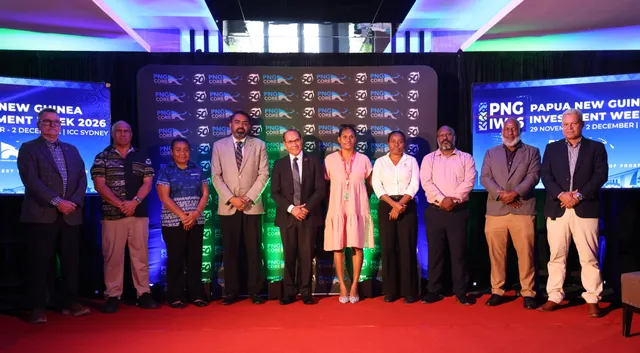
The PNG Chamber of Resources & Energy (PNG CORE) launched PNG Investment Week 2026 on Wednesday, 29 September, marking a major step in preparations for one of Papua New Guinea’s leading investment and business events.
Council President Anthony Smare, Events Chairman Mark McMonagle, Executive Director Richard Kassman and other Council members joined industry leaders, sponsors, stakeholder organisations, and public- and private-sector representatives at the launch. The Chamber confirmed that preparations for the Sydney event are well advanced.
Event Overview
PNG Investment Week 2026 will be held at the International Convention Centre Sydney in Australia from 29 November to 2 December 2026. It will bring together government representatives, investors, business leaders, development partners, and industry experts to explore opportunities across Papua New Guinea.
The event is designed as a global platform to showcase Papua New Guinea’s economic potential, support major project announcements and agreements, and create new business connections.
Last year’s event recorded:
Why Sydney
As a regional business hub with strong international connections, Sydney provides a strategic setting for presenting PNG’s investment story to a wider audience. PNG CORE views the event as an opportunity to attract new investment, strengthen business relationships, and support economic growth and job creation in Papua New Guinea.
Under the theme “50 Years & Beyond – The Next Wave of Prosperity”, the programme will examine opportunities across resources, energy, infrastructure, agriculture, fisheries, tourism, technology, finance, and downstream processing, while advancing discussions on investment, innovation, and economic development.
Leadership Perspectives
Executive Director Richard Kassman, the official spokesperson for PNG Investment Week 2026, said the event had become a respected platform for investment promotion and business engagement.
“It brings together industry leaders, policymakers, investors, and development partners from around the world to showcase opportunities in Papua New Guinea and build partnerships that support economic growth,” Mr Kassman said.
Mr Kassman noted that last year’s event reached a major milestone when Australian Prime Minister Anthony Albanese joined Prime Minister James Marape on stage to open the conference and welcome 1,200 delegates.
“Our objective is to promote Papua New Guinea to an international audience. The projects, opportunities, and discussions are focused on attracting investment that benefits our country. By engaging directly with investors, we can raise awareness of PNG’s potential and build relationships that may lead to sustainable investment.
“Our long-term vision is to continue growing PNG Investment Week, expand its profile across global industry markets, and create opportunities to host investment-focused activities in Papua New Guinea while maintaining the international reach needed to support that growth,” he added.
The Council also acknowledged the continued support of industry partners and sponsors, whose contributions have helped establish PNG Investment Week as a recognised regional business event.
Events Chairman Mark McMonagle said planning was well underway to deliver a strong programme of discussions, networking opportunities, and business engagement.
“PNG Investment Week succeeds because of collaboration among industry, government, and development partners,” Mr McMonagle said.
“We recognise the strong interest in hosting more major investment events in Papua New Guinea, and that remains an important goal. At the same time, we must reach the investors and decision-makers who can help drive economic growth in PNG. Hosting the event in Sydney enables direct engagement with those audiences while strengthening the platform for future growth.”
Invitation to Participate
Growing interest in this year’s event reflects confidence in PNG’s long-term potential. PNG CORE invites businesses, investors, exhibitors, sponsors, and industry stakeholders to join the conversations shaping the country’s economic future.
Opportunities include:
Businesses, organisations, and individuals interested in these opportunities are encouraged to register with PNG CORE.
About PNG CORE
The Papua New Guinea Chamber of Resources & Energy (PNG CORE) is the peak industry body representing Papua New Guinea’s mineral resources and energy sectors.
PNG CORE’s mission and vision are to build understanding, generate knowledge, and forge relationships that empower Papua New Guinea to secure sustained nation-building benefits from its natural resources.
PNG Chamber of Resources & Energy’s Women in Resources & Energy (WiRE) Committee Chair, Karo Maha, joined national leaders and advocates at Bel isi PNG’s seventh Leadership Forum on Monday, 21 September 2026, at the Sheraton Hotel, highlighting the role of leadership and the industry’s efforts to translate commitments on Gender-Based Violence (GBV) and Family & Sexual Violence (FSV) into meaningful action.
Held under the theme “Beyond the Ink: Moving GBV & FSV Policies from Commitment to Action,” the forum brought together leaders from government, development partners, civil society and the private sector to examine how organisations can move beyond policy frameworks and deliver practical outcomes for workplaces and communities across Papua New Guinea.
Speaking at the forum, Ms Maha said the resources and energy sector increasingly recognised its responsibility to contribute to positive social outcomes alongside economic development.
“Across our sector, we are seeing organisations move beyond policy and take practical action. Initiatives such as New Porgera Limited’s Women in Boots, Newmont’s Trupla Man, Trupla Meri and Santos’ support for the PNG Orchids show how industry can contribute to gender equality, challenge harmful behaviours and support positive change. Policies are important, but real progress happens when leaders turn those commitments into action and sustain them over time,” Ms Maha said.
Discussions at the forum reinforced the importance of ensuring policies are not treated simply as compliance requirements but are translated into practical measures that contribute to safer, more inclusive and respectful workplaces and communities.
The forum also featured keynote contributions from Dr Veera Mendonca, UNICEF Papua New Guinea Representative, and Hon. Powes Parkop, Governor of the National Capital District, alongside a diverse panel that included Public Solicitor Leslie Mamu, Executive Director of the National Gender-Based Violence Secretariat Diane Kambanei, and Vandhna Narayan of BSP Financial Group.
The panel, moderated by Ruth Kissam of Steamships Limited, focused on collective responsibility, leadership and sustained action. As Country Manager of New Porgera Limited and Chair of the Chamber’s WiRE Committee, Ms Maha contributed perspectives from the resources and energy sector, highlighting the importance of leadership, accountability and workplace culture in addressing GBV and FSV.
For PNG CORE and its WiRE Committee, participation in the forum reflects the industry’s broader commitment to advancing gender equality and supporting safe and respectful workplaces. It also provides an opportunity for the sector to contribute its experiences and perspectives to the national conversation on GBV and FSV.
The PNG Chamber of Resources & Energy congratulates Bel isi PNG on the successful hosting of its seventh Leadership Forum and acknowledges its continued efforts to bring government, industry, development partners and civil society together to turn commitments into meaningful action.
Papua New Guinea's central bank has raised its forecast for economic growth in 2026 to 3.5%, supported by stronger resources, construction and services activity, but expects growth to slow next year amid rising costs and risks from El Niño.
The Bank of Papua New Guinea (BPNG) upgraded its real gross domestic product growth forecast from 3% in its March outlook to 3.5% in September.
BPNG governor Elizabeth Genia said stronger mineral production, continued construction and infrastructure activity, and improved performance in parts of the services sector had supported the revision.
Higher production of gold, silver, nickel and liquefied natural gas has strengthened the resources sector, while communications, wholesale and retail trade, finance and infrastructure projects have also contributed to economic activity.
Growth is expected to moderate to about 2% in 2027 before recovering to around 3% in 2028.
BPNG said the weaker 2027 outlook reflected higher input costs and the expected effects of a developing El Niño weather pattern, particularly on agriculture.
Prolonged dry conditions could also affect water supplies, transport and power generation, the central bank said.
However, BPNG said its forecasts did not incorporate the full impact of major new resource projects. If those projects proceed and come on stream, they could lift medium-term economic growth above current projections.
Inflation has also emerged as a concern, with annual headline inflation rising to 5.3% in the June quarter from 2.2% in March. BPNG attributed the increase largely to higher food and energy prices and imported costs.
The central bank now forecasts headline inflation of about 5% in 2026 and 6% in 2027, before easing to around 4.5% in 2028.
BPNG has also modelled a more severe El Niño scenario based broadly on the 1997 event. Under that scenario, economic growth could fall to about 0.4% in 2027, while inflation could rise substantially above the central bank's baseline forecast.
The outlook points to continued activity in PNG's resources, construction and infrastructure sectors, while weather conditions, energy costs, freight expenses and weaker growth in parts of the non-mineral economy remain key risks.
The Hoskins Airport Upgrade Project in West New Britain Province is 78% complete, with the National Airports Corporation (NAC) confirming the runway has been extended to 1,580 metres under the latest construction stage.
NAC said airside works under Method of Work Plan (MOWP) stages 1 to 8 have been completed, initially providing 1,280 metres of available runway.
Following approval from the Civil Aviation Safety Authority of Papua New Guinea (CASA PNG), NAC opened stages 9 and 10, increasing the available runway length to 1,580 metres.
The extended runway can now accommodate Q400, ATR-72 and similar aircraft, according to NAC.
Work on MOWP Stage 11 began on 27 September 2026 as construction continues towards completion of the runway upgrade by late 2026, subject to weather conditions.
NAC said the temporary aerodrome restrictions would remain in place during construction and that it would notify airline operators, business communities and other stakeholders of any changes to the construction schedule or operational procedures.
The upgrade is intended to improve the safety and security of airport operations while increasing the reliability and efficiency of services at Hoskins Airport.
The K51.70 million project is being implemented by NAC under the Civil Aviation Development Investment Project II (CADIP II), funded by the Papua New Guinea government and the Asian Development Bank.
NAC said it appreciated the patience and cooperation of passengers, airline operators, businesses, stakeholders and communities in West New Britain during the ongoing works.
Australia is expanding its infrastructure investment in Papua New Guinea, with major programmes moving through procurement while a parallel skills initiative seeks to strengthen the workforce needed to deliver and maintain new projects.
Australian infrastructure investment in PNG is increasing from about A$200 million a year to more than A$250 million, creating opportunities across construction, engineering, telecommunications, energy, health and professional services.
The programme is supported by more than A$1 billion already committed through the Australian Infrastructure Financing Facility for the Pacific (AIFFP) for infrastructure projects in PNG.
Australia's wider development assistance to PNG is estimated at A$680.5 million for 2026-27.
Several programmes are currently in procurement or planning, including the second phase of the Papua New Guinea Economic and Social Infrastructure Programme (ESIP2).
ESIP2 is intended to support infrastructure development across power, telecommunications and social sectors while strengthening the capacity of PNG organisations to plan, operate and maintain infrastructure assets.
Other areas of activity include health infrastructure and advisory programmes, the Western Province Partnership and further projects supported by the AIFFP.
In September, Australia also released a tender for quantity surveying services linked to the refurbishment of the GWARE building at ANGAU Memorial Provincial Hospital in Lae and the construction of new staff housing at Daru Hospital.
Alongside infrastructure investment, Australia is increasing its focus on workforce development.
Pacific Australia Skills works with PNG institutions to provide training and Australian-accredited qualifications while strengthening local training providers. The programme is designed to complement the AIFFP and the Pacific Australia Labour Mobility scheme.
Earlier programmes, including the Australia Pacific Training Coalition and Skills for Sub-National Growth Investment, delivered full Australian qualifications to more than 4,000 Papua New Guineans in areas including construction, electrical trades, manufacturing, automotive, tourism, hospitality, health and community services.
The expanding infrastructure programme is expected to generate contracting opportunities for Australian and Papua New Guinean businesses while supporting efforts to build local skills and capacity alongside infrastructure development.
Australia has appointed senior Department of Foreign Affairs and Trade (DFAT) official Jamie Isbister as its next High Commissioner to Papua New Guinea, bringing extensive experience in Pacific infrastructure, development and humanitarian policy to the diplomatic post.
Foreign Minister Penny Wong announced Isbister’s appointment on 21 September, describing Australia and PNG as closer than ever and highlighting the Pukpuk Alliance as a reflection of the relationship between the two countries.
Isbister was most recently deputy secretary of DFAT’s Development, Multilateral and Europe Group and has more than 30 years’ experience in foreign, humanitarian and development policy.
His previous work includes senior roles in Australia’s Pacific infrastructure agenda. As first assistant secretary of DFAT’s Strategic Infrastructure Division and deputy head of the Office of the Pacific, Isbister was responsible for infrastructure strategy and represented Australia at international infrastructure forums.
His responsibilities included policy areas linked to the Australian Infrastructure Financing Facility for the Pacific (AIFFP), a key Australian vehicle for supporting infrastructure development across the Pacific.
Isbister participated in the 2023 Pacific Infrastructure Conference in Brisbane, organised by the Australia Pacific Islands Business Council in collaboration with the Australia Papua New Guinea Business Council and Australia Fiji Business Council.
He represented the Australian government at a conference session on bilateral infrastructure opportunities in the Blue Pacific, alongside representatives from New Zealand, the United States, Japan and France.
Isbister has also served as Australia’s Ambassador for the Environment, Australian Government Humanitarian Coordinator and Minister Counsellor for Development in Africa.
The Australia Papua New Guinea Business Council said it had previously engaged with Isbister in Canberra on issues affecting Australian businesses operating across the Pacific.
He succeeds Ewen McDonald AM as Australia’s High Commissioner to PNG.
Prime Minister James Marape has urged American businesses to increase trade and investment in Papua New Guinea, highlighting the country's resource projects, emerging industries and strategic access to Asian markets during a business roundtable in New York.
Marape made the pitch during a high-level meeting hosted by the Business Council for International Understanding (BCIU) during the 81st United Nations General Assembly week. The event brought together US business executives, institutional investors and senior US government officials.
Organised in partnership with Newmont and Washington Global Advisors, the roundtable focused on expanding commercial partnerships between PNG and the United States and moving beyond traditional development assistance towards trade and investment.
“Our message to the American business community during this UNGA week is clear: Papua New Guinea is moving from aid to trade,” Marape said. “We want American companies to come in, utilize our special economic incentives, and achieve strong returns on investment while simultaneously driving local employment and economic growth.”
Marape presented PNG as a free-market economy, a democratic partner of the United States and a gateway to the wider Asian market.
He said the country's economy had doubled in size since he took office in 2019 and that the government was working towards a balanced budget next year. The prime minister also pointed to major US-linked resource investments, including ExxonMobil's Papua LNG project and Newmont's Lihir and Wafi-Golpu operations.
Diversification opportunities
Marape encouraged US businesses to look beyond traditional resources and consider opportunities in clean energy, agriculture, fisheries processing and digital infrastructure. The government has identified hydro, geothermal and solar power as areas for investment, while also promoting agricultural and fisheries products for international markets.
The nationwide rollout of SpaceX's Starlink was highlighted as an opportunity in digital infrastructure and connectivity.
Marape also emphasised the importance of increasing domestic value from PNG's natural resources, saying investment should generate employment, support local businesses, strengthen supply chains and facilitate skills and technology transfers.
US Assistant Secretary of State for East Asian and Pacific Affairs Michael G. DeSombre also addressed the roundtable, highlighting the strength of the bilateral relationship and the role of commercial partnerships in economic development.
“The relationship between the United States and Papua New Guinea has never been stronger,” DeSombre said, according to the prime minister's office.
He referred to the US-PNG Framework for Strategic Cooperation and the Defence Cooperation Agreement, while stressing the importance of trade and commercial activity in driving economic growth. Investor confidence
Marape also sought to address concerns about PNG's business environment, highlighting legal and institutional reforms intended to strengthen investor confidence.
He pointed to international-standard arbitration and mediation mechanisms and a new appellate court system, while arguing that PNG's judiciary provides protection for legitimate commercial agreements.
The roundtable concluded with a question-and-answer session moderated by BCIU Vice President Max Horwitz, allowing US business representatives to discuss potential investment opportunities directly with Marape and his delegation.
Representatives from companies including Newmont, Moody's, Walmart, Fortinet, Zipline International and World Fuel, as well as senior US government officials, attended the discussions.
The PNG delegation included Foreign Affairs Minister Justin Tkatchenko, Permanent Representative to the United Nations Fred Sarufa, Ambassador to the United States Sir Arnold Amet and Deputy Permanent Representative to the United Nations Buri Gari.
Follow on LinkedIn:
PNG Business News
Be the "First" to get our exclusive Digital Magazine & Weekly Newsletter.