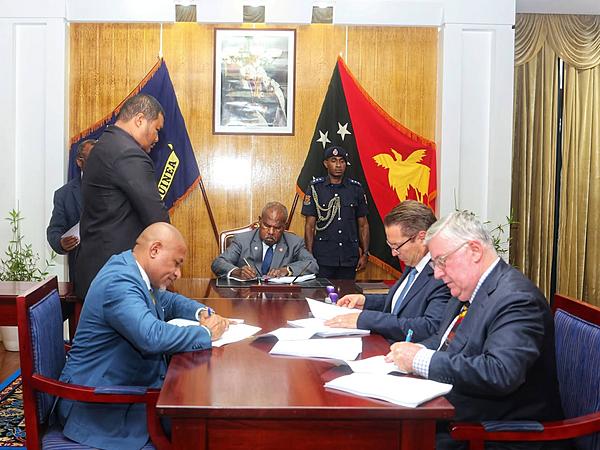
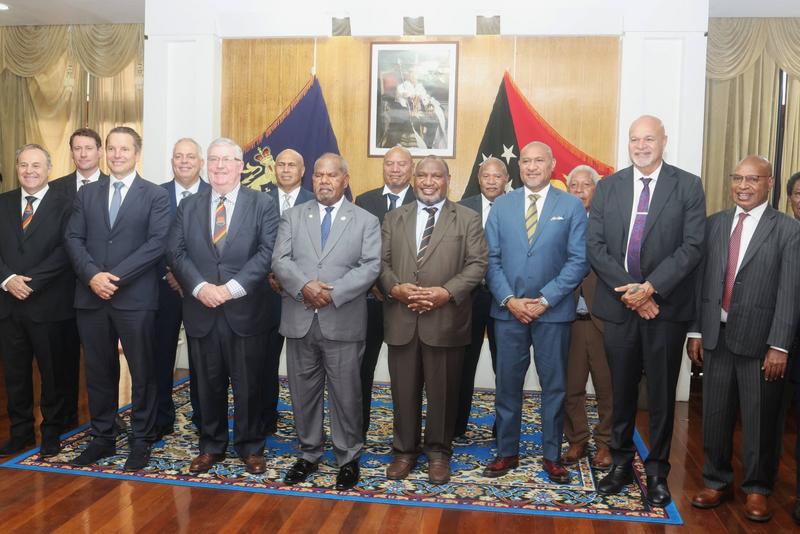
Papua New Guinea has signed a Project Development Agreement (PDA) with Pacific Lime and Cement Ltd for the Central Lime and Cement Project in Central Province, a move the government says will reduce reliance on imported cement and expand the country’s manufacturing base.
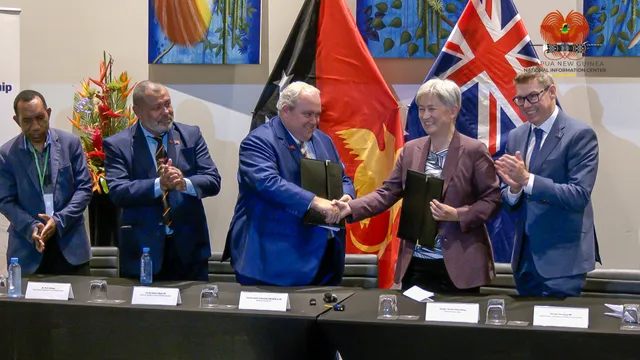
Minister for International Trade and Investment Richard Maru said the agreement, signed at Government House on March 12, marked the culmination of a decade of negotiations for the project at Kido and Rea Rea.
“I am delighted that we have finally, after 10 years, reached an Agreement on the Central Lime and Cement Project at Kido and Rea Rea in Central Province,” Maru said during the signing ceremony.
The PDA establishes the framework for developing an integrated facility that will produce quicklime, clinker and cement for both domestic use and export markets — the first of its kind in Papua New Guinea.
According to the minister, construction of Stage 1 of the project — which includes quicklime kilns, a quarry, a wharf and supporting infrastructure — is already under way following the developer’s final investment decision in August 2025.
“These works are progressing strongly and will deliver PNG’s first major quicklime production capacity by 2027,” Maru said.
He added that the agreement clears the way for Stage 2 of the project — the clinker and cement manufacturing facility — to begin construction later this year.
“Once built, this will provide locally made high-quality cheap cement that will replace hundreds of millions of kina in imports, anchor new downstream industries like casting and brick facilities, and significantly expand PNG’s manufacturing base,” Maru said.
Papua New Guinea currently imports nearly all its quicklime and cement requirements, placing pressure on foreign exchange and construction costs.
Government figures show that in 2024 the country imported approximately US$14.3 million (more than K55 million) worth of cement, alongside US$7.88 million worth of cement clinker, mainly from Japan and Indonesia.
“The Central Lime and Cement Project aims to reduce this reliance by utilising domestic limestone for industrial production, supporting national infrastructure programmes, including the Connect PNG Programme,” Maru said.
“As a country, we should not be importing limestone and cement because we are endowed with limestone resources.”
Under the agreement, the government expects cement prices in Papua New Guinea to fall significantly. The project will also be designated a pioneer industry and protected for up to 15 years through a 30 percent tariff on imported cement, while a 10-year tax holiday will apply to the project’s second phase.
“Cement is essential in building our nation. We want to see all our roads built with cement from the limestone resources within PNG,” Maru said.
“We do not want to see any of our limestone by-products like clinker being sent overseas. All our limestone must be used for our nation-building projects in PNG. Our priority is to meet our domestic demand before exporting the surplus.”
The agreement also provides benefits for local landowners and provincial authorities.
Landowners will receive a 2 percent royalty, while the state will provide K20 million in Business Development Grants and K20 million in Infrastructure Development Grants over two years, to be included in the next national budget.
Maru said 30 percent of the shares in Pacific Lime and Cement would be acquired by Papua New Guinean investors, including the Central Provincial Government, landowners and the National Government through a state nominee.
Additional local investors will be able to participate through an Initial Public Offering (IPO) expected by September this year, aimed at raising up to K1 billion to finance construction of the cement factory.
The project is expected to generate more than 2,000 jobs.
Maru also confirmed that three additional limestone projects are in development.
“This project is one of the four Special Economic Zones the Marape-Rosso Government has licenced through the regulator, the Special Economic Zones Authority,” he said.