Permanent presence to support Lae City Authority and partner with Morobe businesses on digitisation and automation as local government services move online
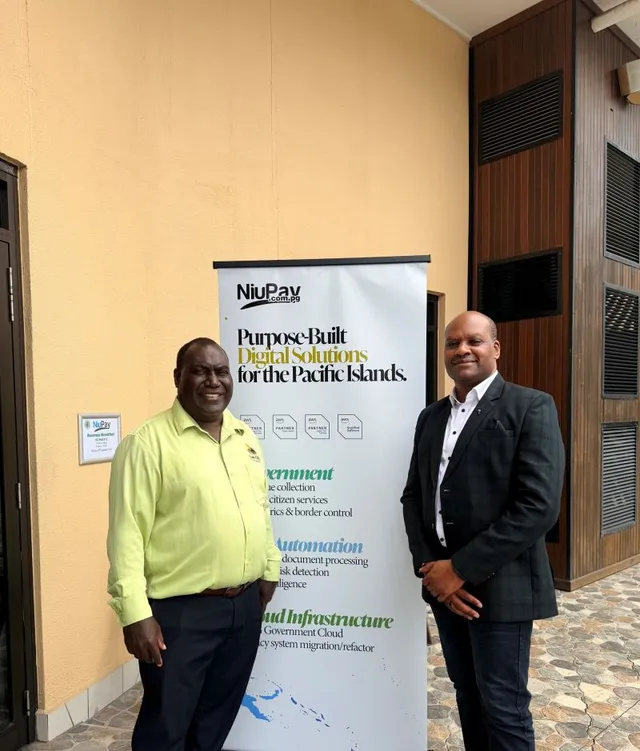
LAE, Monday 28 September 2026: NiuPay, the Papua New Guinean technology company that designs, builds and operates mission-critical digital platforms for government and enterprise, today announced that it is establishing a permanent presence in Lae.
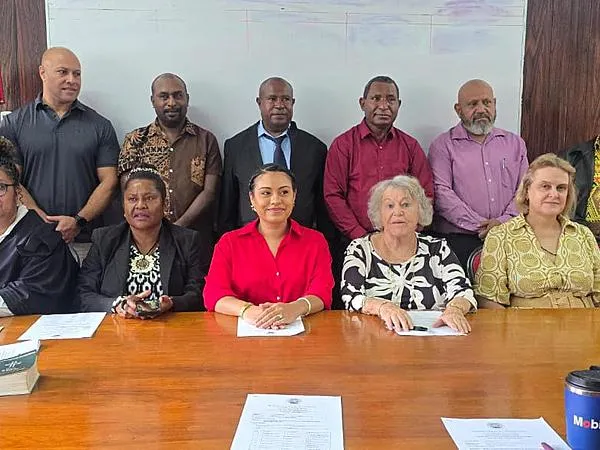
The announcement was made at the Lae City Authority Digital Modernisation Information Breakfast at the Lae International Hotel, hosted by the Lae Chamber of Commerce and Industry and Lae City Authority (LCA), on the same day LCA ended over-the-counter Land Tax payments in favour of its online ServiceLink platform.
The Lae presence will provide on-the-ground support for LCA and ServiceLink users, as well as a local team to support businesses across Lae and Morobe Province that want to digitise services, automate processes and move payments online.
“Today Lae takes a big step forward. Land Tax is now paid online through ServiceLink, not at the counter. That means no queues, no cash and a proper record of every payment for every business and resident.
“We look forward to bringing more of the city’s services online, starting with trading licences and permits.”
Robin Calistus, Chief Executive Officer, Lae City Authority
“My own registration on ServiceLink took three minutes. For a lot of Lae businesses, paying the city used to take half a day. That difference is why we’re here.
“For months our team has been flying in and out of Lae. Today we’re putting down roots. Lae City Authority, and every business in this city that wants to digitise, automate and move faster, will have a local team to work with. When they need help, they won’t be calling Port Moresby. They’ll be calling their neighbours.
“The only test that matters is whether someone is better off. Being here, alongside the people of Lae, is how we make sure the answer is yes.”
Trevor Manokore, Chief Operating Officer, NiuPay
ServiceLink: what Lae businesses and residents can do today
Through ServiceLink, businesses and residents can register an account, link their properties, pay Land Tax online at any time by card or EFT, view their property statements and keep a digital record of every payment. Payment of trading licence and permit fees is planned next.
Businesses are asked to nominate one authorised person to manage their account and billing, and to notify LCA if that person leaves. Assisted registration is available through LCA’s support team, and a radio awareness campaign is running on NBC Radio Morobe in English and Tok Pisin.
Part of PNG’s national digital agenda
The move supports Papua New Guinea’s Digital Government Plan 2023–2027, which aims to digitise and automate public services nationally. Lae, the start of the Highlands Highway, is home to the country’s largest port, which handles more than half of PNG’s import and export cargo, making it a natural place to show what digital government can do for business.
Local people, local capability
NiuPay intends to recruit its Lae team locally and to work with the PNG University of Technology (Unitech) on graduate intakes.
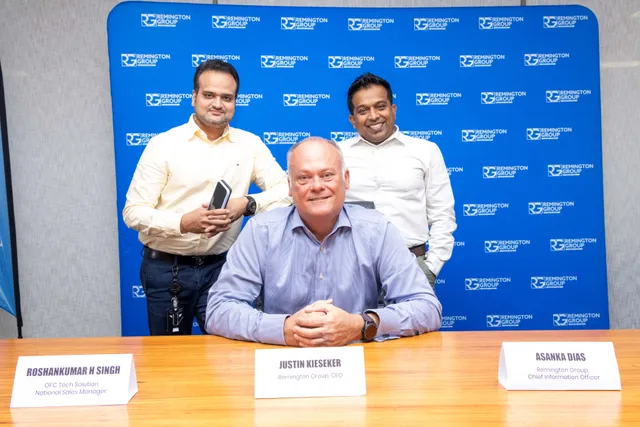
The Remington Group today announced its appointment as an official Starlink Enterprise reseller for Papua New Guinea, extending 78 years of nationwide service into the country’s satellite internet market.
“For 78 years, Remington has been the company Papua New Guinea trusts to show up — in Port Moresby, in Wewak, in Kavieng, and everywhere in between,” said Justin Kieseker, CEO of Remington Group. “That’s exactly what we’re bringing to Starlink. This isn’t a foreign call centre trying to serve PNG from overseas. This is a PNG company, with PNG staff, PNG stock and PNG billing, standing behind every installation we do.”
Remington’s 11 branches across the country will each hold Starlink stock ready for installation, backed by a dedicated technical lead in every location. The full range of genuine Starlink accessories will also be stocked in-branch, allowing customers to equip and expand their setups without delay. Customers nationwide will pay the same hardware price throughout the country — no regional markups and no waiting weeks for equipment to arrive from the capital.
As a direct reseller with access to the SpaceX billing portal, Remington will bill customers directly in kina. Businesses can apply for approved 30-day accounts, while other customers can pay in advance — with no foreign currency conversions, offshore deductions or unexpected billing charges.
Remington’s expert team designs tailored ICT solutions, including SD-WAN, multi-branch data pooling and complete IT integration, allowing multi-site businesses to manage their entire network through a single end-to-end partner.
Remington supports installations through a 24/7 Network Operations Centre and warranty replacement services, meaning faults can be resolved locally and hardware issues can be handled without sending equipment — or customers — offshore.
“That’s what keeping business in-country actually looks like,” said Kieseker.
Remington Group will also offer some of the most competitive data plans in the market, alongside the same trusted after-sales support that has defined its print and document solutions business for nearly eight decades.
“We didn’t build this business by being the biggest name overnight — we built it by earning trust, one customer at a time, for 78 years,” Kieseker added. “We intend to lead PNG’s connectivity evolution the same way we lead print: by being local, by being reliable and by being here for the long term.”
Businesses and households can visit their nearest Remington branch to learn more about Starlink Enterprise plans and installation.
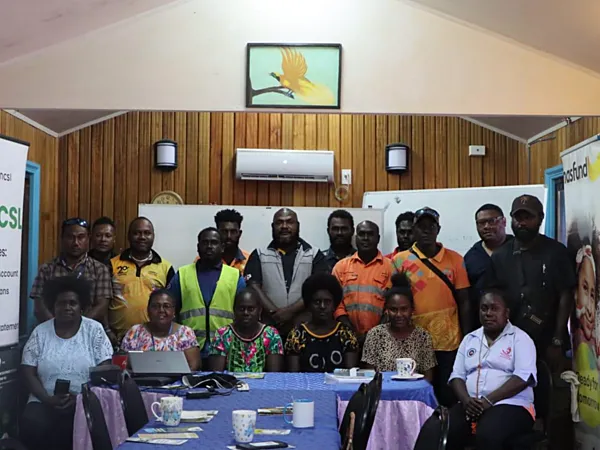
Partnering with the Centre of Excellence in Financial Inclusion (CEFI) through the Young Minds Savings Campaign, Nasfund teams conducted sessions focused on introducing concepts of financial literacy and financial inclusion across Alotau, Milne Bay Province, from Sept. 22 to Sept. 24.
The campaign ended last Thursday with the team visiting selected schools, with an estimated participation of more than 800 students, teachers and locals.
The Young Minds Savings Campaign is an initiative of CEFI aimed at strengthening financial literacy, promoting positive savings behavior and introducing school-aged children to the importance of financial management.
East Cape Primary School Head Teacher Toby Toweyaga said the campaign was an opportunity for organizations such as Nasfund to provide educational information to young people, including students.
“Most of the sessions were focused on introducing students to the language and concepts of how they could save money in the future,” Toweyaga said.
He thanked CEFI and its partners for the opportunity given to the school and the surrounding communities.
East Cape ward councillor Peter David said he was grateful to CEFI for bringing stakeholders to the doorstep of their community and creating awareness of the importance of managing and saving money.
“Especially for students, this awareness has created a way forward on the importance of investing for their school fees and their future,” David added.
Nasfund Alotau Branch Officer in Charge Benjamin Manumanua said it was important for the savings culture to begin in the classroom because what children learn about money today will help determine and secure their financial future.
“The Young Minds Savings Campaign involved financial literacy, where our teams had the opportunity to encourage students to become financially responsible citizens,” Manumanua said.
The Nasfund Alotau Branch is proud to partner with CEFI, the Bank of Papua New Guinea and the Milne Bay Provincial Government in shaping financially smart young leaders.
The campaign started on Tuesday, with the team visiting Watu-no Primary School and Divinai Primary School, where more than 100 students, teachers and locals visited the Nasfund booths to find out more about its services and products.
On Wednesday, the team visited Lelehudi and Walalaia Primary Schools, delivering financial awareness sessions that included presentations on Nasfund’s products and services. The Nasfund team on the ground also provided client services where necessary at the information booths during the visits.
At the conclusion of the campaign, the team visited East Cape Primary School and continued discussions with students, teachers and surrounding communities on financial literacy and financial inclusion.
Australian electrical infrastructure partner CE Group is expanding its regional focus into the Indo-Pacific, building on its established operations and project delivery experience across the Pacific.
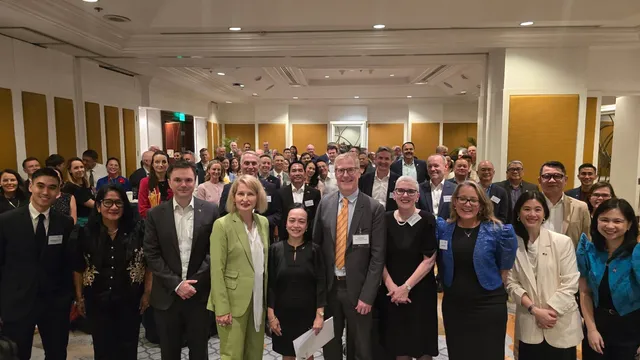
CE Group has taken another step in its regional growth strategy, joining the Australian delegation at the Asian Development Bank Business Opportunities Fair 2026 in Manila and contributing to discussions around the future of sustainable infrastructure across Asia and the Pacific.
The move reflects a broader direction for the Australian electrical engineering and infrastructure business: taking the experience developed across Australia, Papua New Guinea, Solomon Islands and Fiji into the wider Indo-Pacific market.
For CE Group, that expansion is closely connected to the infrastructure challenges already familiar across the Pacific-energy security, resilient infrastructure, remote delivery, local capability and the need for stronger partnerships between government, development institutions, industry and communities.
Infrastructure investment is moving
The scale of planned investment across the Pacific demonstrates the opportunity ahead. At the Manila forum, ADB outlined a US$3.652 billion active Pacific portfolio, a further US$3.686 billion program for 2026–2029, and a US$469 million procurement pipeline for 2026–2027.
Transport, energy, water and urban infrastructure represent some of the largest areas of current ADB investment in the Pacific. But the regional conversation is increasingly extending beyond the infrastructure asset itself.
Climate resilience, local participation, workforce capability, supply chains and long-term economic value are becoming central considerations in how infrastructure is planned and delivered.
These are areas where CE Group sees a direct connection between its Pacific experience and the wider Indo-Pacific market.
Pacific experience provides the foundation
Delivering infrastructure in the Pacific requires a different operating model. Distance, logistics, workforce availability, local supply chains and the capacity to operate in remote environments can influence every stage of delivery.
For CE Group, regional growth has therefore been built around developing capability on the ground rather than approaching the Pacific as an extension of the Australian market.
Its regional footprint now includes operations across Papua New Guinea, Solomon Islands and Fiji, supported by its Australian engineering, design, manufacturing and construction capability.
That experience is shaping the company's approach to the Indo-Pacific.
CE Group's focus is not simply entering new countries. It is building the relationships, local capability and delivery networks required to operate responsibly and effectively within them.
Joining the infrastructure conversation earlier
Participation in the ADB Business Opportunities Fair also placed CE Group within a much broader conversation about where regional infrastructure investment is heading and how industry participates.
ADB's Pacific program specifically examined development priorities for the next three to five years, emerging investment areas and where greater industry capability and innovation will be required.
For CE Group, engagement at this level represents an important evolution.
The business is moving beyond responding to individual project opportunities and engaging earlier with the governments, development institutions, delivery partners and industry networks influencing the region's infrastructure pipeline.
That includes understanding where investment is being directed, the infrastructure priorities of individual countries and the role Australian capability can play alongside local and regional partners.
Beyond Borders
CE Group's Indo-Pacific direction builds on a straightforward principle: infrastructure should create value beyond the asset being constructed.
Local employment, skills development, stronger supply chains and enduring in-country capability are increasingly important measures of successful regional delivery.
As investment in energy and critical infrastructure continues across the Indo-Pacific, CE Group intends to bring its electrical infrastructure capability and practical Pacific delivery experience into those conversations.
The geography may be expanding, but the approach remains consistent-work with local people, understand the operating environment and build partnerships capable of delivering infrastructure that lasts.
Beyond Borders. Progress Through Partnership.
Chinese mining company Lingbao Gold Group has agreed to acquire St Barbara Ltd.'s remaining interest in Tabar Islands Holdings Pty Ltd., paving the way for Lingbao to take full ownership of the New Simberi operation and exploration interests across Papua New Guinea's Tabar Islands.
The agreement, announced Sept. 10, is valued at A$410 million in cash, with a further A$43 million repayment to St Barbara for its construction capital contribution between April 2026 and the signing of the deal.
Completion is targeted for March 2027, subject to conditions and required regulatory and shareholder approvals.
The deal follows Lingbao's acquisition of a 50% interest in the company holding the Simberi business, completed April 1. The latest transaction would give Lingbao full ownership of Tabar Islands Holdings, which holds the New Simberi operation and exploration interests across the Tabar Islands.
Lingbao will also fund St Barbara's share of capital requirements between signing and completion, according to the announcement.
The transaction comes as New Simberi moves towards a major expansion phase. Its initial life-of-mine plan forecasts about 2.2 million ounces of gold production, including about 2 million ounces payable, over an initial 13-year mine life.
Huan Cai, managing director and chief executive officer of the Simberi companies, said the investment was an important step in Lingbao's strategy to build an international mining business.
The company said it intends to build on existing relationships with employees, communities, government, landowners and other stakeholders while maintaining safety, environmental and operational standards.
The proposed ownership change follows a separate agreement under which Kumul Minerals Holdings Ltd., through subsidiary Eda Minerals Ltd., would acquire a 20% interest in New Simberi for A$100 million, subject to approvals.
Tabar Islands Holdings was established as the corporate structure holding the New Simberi operation and the Tabar Islands exploration interests, with St Barbara and Lingbao represented in the entity.
Lingbao said continuity of operations, safety, compliance and workforce capability would remain priorities during the ownership transition. The company will continue to operate under Papua New Guinean laws and regulatory requirements.
The transaction comes amid growing interest in Papua New Guinea's mining and exploration sector, with Mining Minister Solen extending an invitation for greater Chinese investment and participation in the industry following a recent mining investment conference in China.
For Simberi, New Ireland province and the wider Tabar Islands, the proposed transaction marks another change in ownership as the New Simberi operation moves towards its next phase of development.
The Autonomous Bougainville Government is seeking to increase agricultural revenues by strengthening cocoa production, regulation and downstream processing across the region.
Speaking at the 2026 Bougainville Chocolate Festival in Buin, Minister for Primary Industry Clarence Dency said agricultural commodities should become a leading source of fiscal revenue for Bougainville and called on development and donor partners to support the government’s strategy to add value to agricultural products.
Dency urged cocoa farmers to maintain high-quality production and commended farmers in South Bougainville for contributing to the region’s highest cocoa production output.
He said the festival, established in 2016, provides a platform for cocoa farmers, industry representatives, legislators, exporters, development partners and communities to exchange knowledge, promote quality cocoa and create business and fair-trade opportunities.
Chief Secretary's representative Belinda Lanbong separately called on donor partners to strengthen support for ABG’s efforts to develop a sustainable cocoa industry from farming through to downstream processing.
At the farmers’ seminar, ABG Department of Commerce, Trade and Industry official Raymond Moworu outlined the potential role of Special Economic Zones in attracting investment, creating jobs and turning local commodities into higher-value products.
Moworu highlighted plans for the proposed Soraken Special Economic Zone, including a cocoa liquor processing facility with an annual capacity of 10,000 tonnes.
Cocoa liquor is a processed cocoa paste used in chocolate manufacturing and represents a further stage of processing beyond the production and export of cocoa beans.
Moworu said economic zones could support businesses through improved infrastructure and simpler administrative processes while creating opportunities for local people to gain skills and establish supporting businesses.
He also identified land access, environmental impacts and governance as issues requiring careful management, stressing that successful economic zones would depend on sustained political commitment, sound planning and implementation capacity.
Meanwhile, James Butubu, chief compliance officer of the Bougainville Agriculture Commodity Regulatory Authority, outlined efforts to strengthen cocoa regulation, quality and marketing.
The regulatory framework includes licensing across the cocoa supply chain, from nurseries and fermentaries to bean dealers and exporters. It also emphasises quality assurance, traceability and sustainability standards needed to meet international market requirements.
Butubu provided updates on compliance monitoring, officer training and the development of inspection and laboratory facilities. Facilities are located in Buka and Toniva/Arawa, while an inspection and laboratory facility is planned for Buin.
Funding, staffing capacity, data management and coordination with national commodity bodies remain challenges to implementation, according to the presentation.
Future priorities include strengthening research and extension services, improving marketing infrastructure and working with stakeholders and investors to advance local cocoa processing.
The discussions highlighted the link between improving cocoa quality and developing downstream processing, as Bougainville seeks to retain more value from its agricultural commodities within the region.
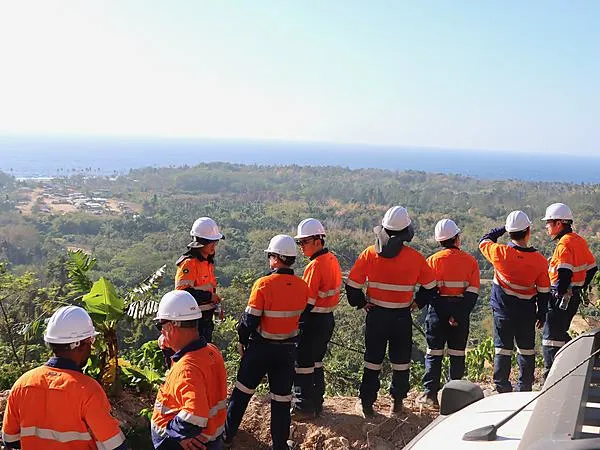
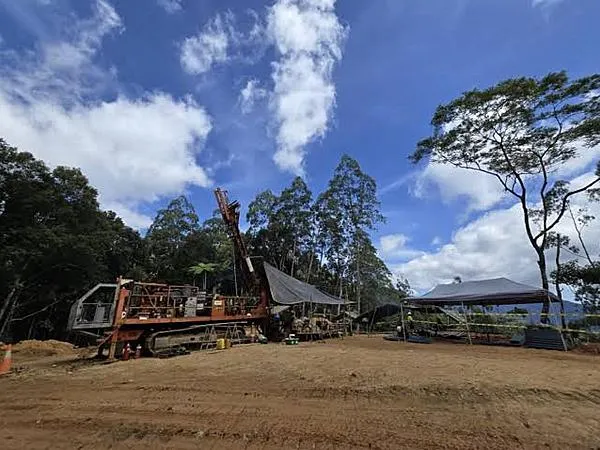
Great Pacific Gold has confirmed continuity of a large magmatic-hydrothermal system at its Kasie Ridge target in East New Britain Province, Papua New Guinea, with maiden drilling identifying gold-bearing structures and mineralisation that remains open at depth.
The company said two diamond drill holes, drilled about 315 metres apart, intersected correlated silica-rich and advanced argillic alteration within the Wild Dog Project's largest preserved alteration system.
The programme comprised KAS-01A, drilled to 595.7 metres, and KAS-02, drilled to 346.6 metres, delivering 942.3 metres of core. KAS-01A ended in the strongest sulphide-rich alteration encountered during the programme, leaving the system open below the hole.
Gold-bearing structures
Gold was identified in both holes, with the strongest results from KAS-02.
Eight individual samples from two structurally controlled zones returned grades of 0.20 grams per tonne gold or higher. The first zone, between 141 and 166 metres, returned five samples ranging from 0.20 g/t to 1.55 g/t gold, including the 1.55 g/t result at 151.7 metres.
A second zone between 231 and 256 metres returned individual samples of 0.47 g/t, 0.31 g/t and 1.25 g/t gold.
Great Pacific Gold cautioned that the reported values are individual point samples rather than composite intervals, and true widths have not been established. The company said the results are being used to characterise metal distribution and guide further exploration.
KAS-01A returned a maximum individual gold value of 0.11 g/t at 572.3 metres, while silver values reached 22.4 g/t within a broad silver halo extending from about 263 to 402 metres. Copper was uniformly low, with a maximum of 0.09%.
Deepening mineralisation system
The drilling also identified a vertically zoned alteration sequence, moving from propylitic rocks through a pyrite-rich phyllic transition into massive chalcedonic silica and deeper advanced argillic and phyllic alteration.
In KAS-01A, pyrite intensified through the deepest 130 metres, while hypogene anhydrite and visible chalcopyrite appeared below about 480 metres. The hole ended at 595.7 metres in sulphide-bearing alteration.
The company said quantitative X-ray diffraction analysis of 105 samples identified minerals including alunite, pyrophyllite, zunyite, diaspore, topaz and andalusite, which it interprets as consistent with highly acidic, high-temperature magmatic fluids.
Geochemical indicators also strengthened with depth. Selenium, tellurium and bismuth increased downhole, while molybdenum reached 53.6 parts per million at 421 metres and rhenium reached 2.84 ppm at 572.3 metres.
Great Pacific Gold's current geological model is that the drilling has tested a preserved lithocap above or beside an untested magmatic source. The company said the increasing pathfinder elements, high-temperature minerals, pyrite, anhydrite and deeper chalcopyrite are consistent with a source below or lateral to the drilling.
Follow-up exploration
Kasie Ridge is at the northern end of the Wild Dog structural corridor, about 5 kilometres north-east of the historic Sinivit open pit within Exploration Licence 2761. Its advanced argillic alteration footprint extends about 1.5 to 2 kilometres along strike and several hundred metres across.
The company is now undertaking geological, structural and alteration mapping, drainage sampling and specialist mineralogical and geochemical studies to refine its exploration model and rank potential drill targets.
A 6.47-kilometre Minju Creek traverse has already mapped and sampled drainages south and east of the drilled target, including areas containing porphyry-style quartz-chlorite-chalcopyrite-magnetite float and silicified boulders.
Great Pacific Gold chief operating officer and vice-president exploration Callum Spink said the first two holes had provided a clearer understanding of Kasie Ridge and established a vector towards the potential magmatic source.
The company said any follow-up drilling would target the interpreted source of the lithocap as well as structures associated with the later gold-bearing event, subject to the results of ongoing surface work and specialist studies.
Meanwhile, both of Great Pacific Gold's diamond drill rigs remain active at the Magiabe and Mengmut targets within the Wild Dog Project. As of 15 September, 1,639.4 metres had been drilled across nine holes, with assays pending for completed holes.
The Wild Dog Project covers a 15-kilometre structural corridor in East New Britain and hosts an epithermal system alongside several district-scale porphyry targets, including Magiabe and Kasie Ridge.
Tolu Minerals has more than doubled its reported gold resources in Papua New Guinea to 1.33 million ounces, following a maiden 293,000-ounce resource estimate for its Mt Penck Gold-Copper Project in West New Britain.
The company said its reported resources increased 111% from 631,000 ounces at the start of September, with the portfolio now comprising Tolukuma with 909,000 ounces, Saki with 128,000 ounces and Mt Penck with 293,000 ounces.
The increase follows a resource upgrade at the Tolukuma project announced on Sept. 16 and the maiden Mt Penck estimate announced on Sept. 21. Tolukuma remains Tolu's immediate priority, with a 75,000-metre near-mine drilling campaign under way and a return to gold production planned for early 2027 using existing permitted infrastructure.
Mt Penck resource
The maiden Mt Penck Mineral Resource Estimate comprises 293,000 ounces of gold from 7.3 million tonnes grading 1.2 grams per tonne, reported at a 0.5 g/t gold cut-off and classified entirely as Inferred under the JORC Code 2012.
The estimate was independently prepared by Rose Mining Geology Consultants and is based entirely on historical drilling carried out between 1989 and 2011 by BHP, Indo Pacific Resources and Kanon Resources.
Tolu said it has not undertaken drilling at Mt Penck. The historical database comprises 115 drill holes covering 12,267 metres, while the resource has been classified as Inferred because of drill spacing and limitations in the historical data, including the absence of collated quality assurance and quality control data and density measurements.
Mt Penck is located on Exploration Licence 2662, about 55 kilometres west of Kimbe in West New Britain. The project has access to the existing wharf at Silavuti, about 4.5 kilometres from the licence, while Kimbe has a deep-water port and Hoskins has a sealed airport with daily jet services to Port Moresby.
Copper-gold potential
The company is also targeting a larger copper-gold porphyry system beneath and adjacent to the shallow gold resource.
Tolu said its interpretation of airborne MobileMT data collected in 2024, together with historical 3D-IP data, has identified the Kavola Porphyry, an interpreted system covering about 1.6 kilometres by 900 metres.
Only two historical holes on its western margin extended beyond 300 metres. One of them intersected disseminated and fracture-controlled pyrite and arsenopyrite over its full 400-metre length, with minor copper sulphides in several intervals.
Three deep drill targets have been identified within the interpreted porphyry system, with Kavola East and Kavola Northeast considered ready for the first phase of drilling. Kavola South is planned for a second phase, subject to the results of initial drilling.
The company's proposed two-year exploration programme includes about 40,000 metres of drilling using three company-operated rigs, alongside mapping, sampling, LiDAR and ground geophysics. The programme has an estimated budget of about A$30 million.
Tolu is assessing options to fund Mt Penck separately from the treasury committed to the Tolukuma restart, potentially through a dedicated vehicle with its own funding and technical team. The company said no decision has been made and any transaction would be subject to board, regulatory and shareholder requirements where applicable.
Tolu managing director and chief executive Chris Muller said Mt Penck would be developed as a separate growth project while the company maintains its focus on restarting Tolukuma.
The company said the Mt Penck resource does not constitute an Ore Reserve and that no Ore Reserves have been estimated for any of its projects. It also noted that no metallurgical testwork, pit optimisation or mining studies have been completed at Mt Penck.
Tolu owns 100% of the Mt Penck project and the fully permitted Tolukuma gold-silver mine, about 100 kilometres north of Port Moresby. Tolukuma produced about one million ounces of gold between 1995 and 2015, according to the company.
Westpac Pacific is investing in the future of banking across the region through its Future Banker Development Series, a dedicated professional development program designed to strengthen the skills, confidence and expertise of emerging banking professionals in Fiji and Papua New Guinea.
The six-month program reflects Westpac's commitment to developing talent across the Pacific and equipping employees with the capabilities needed to support customers in an increasingly dynamic financial environment.
Bringing together early- and mid-career banking professionals from across Fiji and Papua New Guinea, the Future Banker Development Series provides participants with access to development opportunities that draw on the experience, expertise and learning frameworks of the broader Westpac Group, while remaining grounded in the realities of Pacific banking.
The program focuses on the practical skills that underpin strong customer relationships and professional excellence, including communication, emotional intelligence, stakeholder engagement, customer conversations and personal effectiveness. Participants complete a structured learning journey that combines virtual learning, peer collaboration and practical workplace application.
Westpac Pacific is celebrating the success of its inaugural cohort, with 15 participants having completed or being in the final stages of completing the program.
Westpac PNG Head of Corporate & Commercial Banking Patrick Wright said developing banking capability is particularly important as Papua New Guinea continues to invest in economic growth and business development.
"Papua New Guinea is a market full of opportunity, with businesses expanding, industries evolving and customers requiring increasingly sophisticated financial support. Ensuring our people have the skills and knowledge to meet those needs is essential."
Wright said the program provides emerging banking professionals with exposure to proven learning frameworks and industry expertise from across the Westpac Group.
"Future Banker provides emerging banking professionals with exposure to proven learning frameworks and industry expertise from across the Westpac Group, helping them broaden their capabilities while applying those insights within the PNG context. It's an investment in the people who will help shape the future of banking in Papua New Guinea."
Wright said bringing participants together from across the Pacific also creates broader benefits for customers and the business.
"There is enormous value in learning from colleagues across different markets. Sharing experiences, ideas and perspectives helps build stronger banking professionals and ultimately allows us to deliver better outcomes for our customers, businesses and communities."
Through programs such as Future Banker, Westpac is helping build a pipeline of skilled banking professionals equipped to support the Pacific's evolving financial services sector, combining local market knowledge with development opportunities drawn from the wider Westpac Group.
Japan and Papua New Guinea have formalised grant assistance for a landslide-prone section of the Kokopo-Rabaul Coastal Trunk Road and a scholarship program for PNG public servants, strengthening bilateral development cooperation between the two countries.
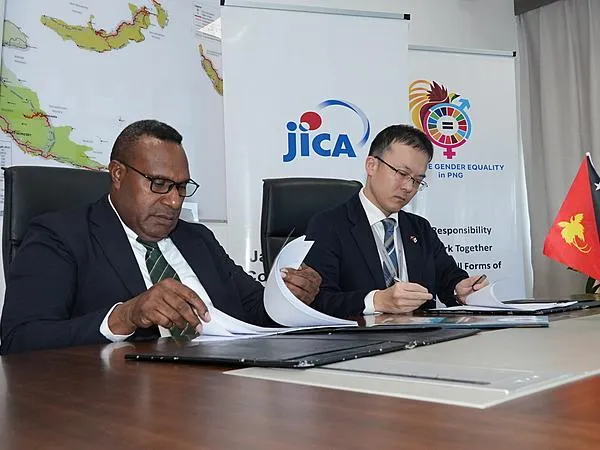
The projects were formalised on Sept. 18 through the signing of an Exchange of Note and Grant Agreement between the PNG government and Japan, with implementation to be supported by the Japan International Cooperation Agency (JICA) under Japan’s official development assistance program.
The projects — the Project for Landslide Risk Reduction on the Kokopo-Rabaul Coastal Trunk Road and the Project for Human Resource Development Scholarship (JDS) — were requested by the PNG government to support the country’s socio-economic development priorities under the Medium Term Development Plan IV.
Foreign Affairs Minister Justin Tkatchenko and Japanese Ambassador to PNG Mochizuki Hisanobu officiated the Exchange of Note.
The Grant Agreement was signed by Koney Samuel, secretary of the Department of National Planning and Monitoring, and Shirouzu Kenichi, chief representative of the JICA PNG Office.
Protecting key East New Britain corridor
The road project will target a 2.4-kilometre landslide-prone section of the Kokopo-Rabaul Coastal Trunk Road in East New Britain.
The Department of Works and Highways is the government executing agency.
JICA said landslides along the corridor have regularly disrupted transport, livelihoods and access to essential services.
The project will introduce sediment ponds, bridges and drainage systems, together with slope protection works, to reduce landslide risks and improve the reliability of the road.
The Kokopo-Rabaul corridor connects communities, businesses and markets across East New Britain. Reducing the risk of road closures is expected to improve the movement of people and goods, strengthen logistics and supply chains and maintain access to essential services.
The project is also intended to improve the corridor’s resilience to climate-related risks and support economic activity in the province.
Building public-sector capacity
The second grant will support the Human Resource Development Scholarship (JDS), which provides PNG public servants with scholarships to pursue master's degrees at universities in Japan.
The program is jointly implemented by the Department of National Planning and Monitoring and the Department of Personnel Management, with the Department of Foreign Affairs and the Embassy of Japan also involved in coordination.
JICA said the program aims to strengthen institutional capacity by developing public-sector professionals and future leaders who can contribute to PNG’s socio-economic development.
Since JDS was introduced in PNG in 2024, 22 public servants have been supported to undertake studies in Japan.
Applications for the 2027 intake opened in September 2026.
JDS is one of five scholarship programs JICA implements annually in PNG, aimed at strengthening the qualifications and skills of public servants while providing exposure to Japan’s development experience.
JICA said qualified women are encouraged to apply as part of its focus on gender equality and women’s empowerment.
The two projects add to more than five decades of development cooperation between Japan and PNG, with the latest grants combining infrastructure investment in a critical transport corridor with long-term investment in public-sector skills.
The Morobe Provincial Government is restructuring its tourism board to strengthen coordination across the industry and give businesses and communities a greater role in developing tourism opportunities across the province.
The Morobe Provincial Executive Council has appointed a new Tourism Board to advise and support the Provincial Government and Administration, with its membership drawn from tourism, business, agriculture, transport and community sectors.
The new structure moves away from appointments based primarily on political nominations and is intended to establish closer links between government and businesses and organisations involved in tourism and related economic activities.
Morobe Governor Rainbo Paita said the province needed a tourism board capable of working closely with the provincial administration and key sectors including commerce, transport, tourism attractions and tourism products.
He said tourism should be viewed as a broad economic activity extending beyond conventional tourism operators and major attractions.
“Tourism is everyone’s business,” Paita said, pointing to the movement of people between villages and Local Level Government areas as part of local economic activity.
People travelling for church conferences, community events and other gatherings contribute to local economies through the movement of people, goods and money, he said.
The broader approach is intended to identify and develop tourism opportunities at the local level while increasing participation by communities and businesses across Morobe.
The provincial government also wants to increase Morobe’s capacity to host sporting events and tournaments, including local competitions that can generate demand for accommodation, transport, food, retail and other services.
Agriculture is another area identified for tourism development, reflecting Morobe’s agricultural base and the potential to connect farming activities, agricultural organisations and tourism experiences.
The board will also focus on awareness and education, as well as promoting eco-tourism, culture and heritage.
Its composition reflects the provincial government’s push for greater industry and business participation in tourism planning and development.
Nominations came from the Chamber of Commerce, tour promoters, accommodation providers, transport operators, farmers and settlers, the Bulolo Agriculture Society, Morobe Agriculture Society, guides and porters, and community representatives.
PEC Chairman for Tourism and Hospitality Gideon Kepusing said the new board reflected the Paita-led provincial government’s “Move Morobe Up” policy of encouraging economic activity at the local level.
Kepusing said the board would provide advice and support to him and the Provincial Executive Council while helping communicate government policies and its tourism vision to communities across Morobe.
The newly sworn-in board comprises Jemmima Colbran as chairperson and Donna Harvey Hall as deputy chairperson, with members Debra Bubun, Zoe Harrison, Steven Wata, Tim Rodgers, Aaron Bimbo and Paul Pople.
Ex-officio representation includes the PNG Tourism Promotion Authority, National Development Bank, Air Niugini and the adviser for the Division of Commerce, Tourism and Industry.
The board members have been appointed for three years.
The new structure is expected to improve coordination among government, tourism operators, businesses, financial institutions, transport providers, agricultural organisations and communities as Morobe seeks to increase tourism’s contribution to the provincial economy.
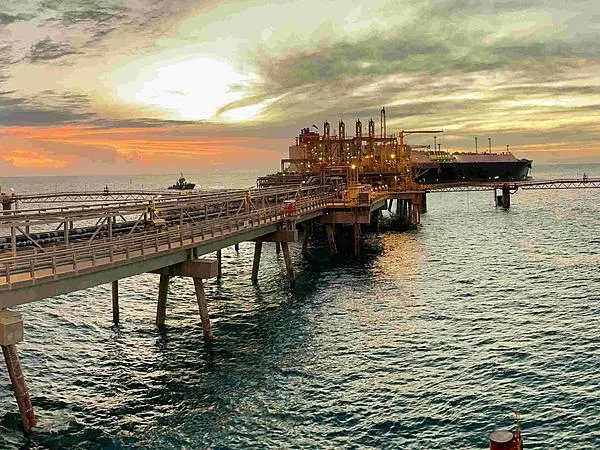
The PNG LNG Project has safely produced more than 100 million tonnes of liquefied natural gas since operations began in 2014, marking a major milestone for Papua New Guinea's petroleum industry.
The project, operated by ExxonMobil PNG Ltd., has connected Papua New Guinea's natural gas resources with global energy markets while supporting national development through employment, training, local business opportunities and community investment.
PNG LNG is an integrated gas development that produces natural gas from fields in Hela and Southern Highlands provinces. The gas is processed and transported through an approximately 700-kilometre pipeline network to a two-train liquefaction plant at Caution Bay in Central Province, where it is converted into LNG for export.
The project currently produces up to about 8 million tonnes of LNG a year, above its original nameplate capacity of 6.6 million tonnes. Since production began in 2014, it has supplied LNG primarily to customers in Asian markets.
The project's operations involve gas production and processing, pipeline transportation, liquefaction, storage and marine loading, forming an integrated value chain linking PNG's gas resources with international buyers.
ExxonMobil PNG Chairman and Managing Director Dinesh Sivasamboo credited employees, contractors and project partners for reaching the milestone.
“Reaching 100 million tons safely produced was only possible because of the unwavering commitment of generations of employees, contractors, and partners who embraced a shared purpose and maintained a relentless focus on doing the right things, the right way,” Sivasamboo said.
The milestone comes as Papua New Guinea continues to advance additional gas developments, including the proposed Papua LNG and P'nyang LNG projects, which are expected to build on the country's existing LNG industry.
ExxonMobil PNG said the achievement reflects the contribution of thousands of Papua New Guineans and project personnel who have supported PNG LNG's operations over more than a decade.
The company said it remains committed to creating long-term value for Papua New Guinea through the project's continued operations and its contribution to the country's energy and resources sector.
Central Province Kido landowner Morea H. Onno has independently invested in Pacific Lime & Cement Ltd. (PLC), becoming a shareholder in the listed company behind the Central Lime and Cement Project.
The project is being developed as Papua New Guinea’s first integrated lime and cement manufacturing development of its kind.
Onno said he bought PLC shares through the public market based on his confidence in the company and the project's long-term potential, having followed its development for more than a decade as a landowner from Kido.
“I wanted to invest my own money and gain exposure directly to the listed parent company, Pacific Lime & Cement Limited,” he said.
The investment gives Onno a direct financial interest in the company developing the project on land where Kido and Rea Rea communities are positioned to participate through project-level equity arrangements.
Landowners from Kido and Rea Rea have the opportunity to participate through free-carried equity provided by the developer. The PNG Government is also taking an ownership stake and has indicated it may eventually make part of its project equity available to landowners.
Onno said his investment was a personal decision and should not be taken as representing the views or investment decisions of other Kido or Rea Rea landowners.
The Central Lime and Cement Project has been under development for more than a decade, involving investment, regulatory approvals, engineering, infrastructure planning and engagement with landowners and communities.
For Onno, watching the project progress over that period has allowed him to assess it from both a landowner and investor perspective.
He said PNG's need for roads, bridges, housing, schools, hospitals, mines and other infrastructure would support demand for basic construction materials, much of which the country currently imports.
“Papua New Guinea needs to be built. We need roads, bridges, houses, schools, hospitals, mines and industries, and all of these require the basic building materials that our country currently imports in very large quantities,” he said.
Onno also cited Kido and Rea Rea's location, access to resources and proximity to the coast as factors behind his decision to invest.
“Our location, resources and access to the coast place our communities in a strategically important position for this development,” he said. “These are advantages that cannot simply be recreated somewhere else overnight.”
He said the project's more than 10 years of development had also demonstrated the capital, approvals, infrastructure and technical work required to establish a major industrial operation in PNG.
“Projects like this do not simply appear like corner stores once somebody sees an opportunity,” he said. “They require enormous capital, years of approvals and development, the right raw materials, infrastructure and logistics, and, importantly, a strategic location capable of supporting a major industrial operation for generations.”
Onno said observing the project's development had increased his confidence in making his own investment decision.
His investment marks a shift from being solely a landowner connected to the project area to also becoming a shareholder in the company developing it.
“My investment should not be taken as me speaking on behalf of every Kido or Rea Rea landowner,” Onno said. “It represents my own decision, made independently, and my own confidence in the future of PLC and the development taking place on our land.”
Onno said he was proud to see the industry being established at Kido and to participate in its future both as a landowner and shareholder of Pacific Lime & Cement Ltd.
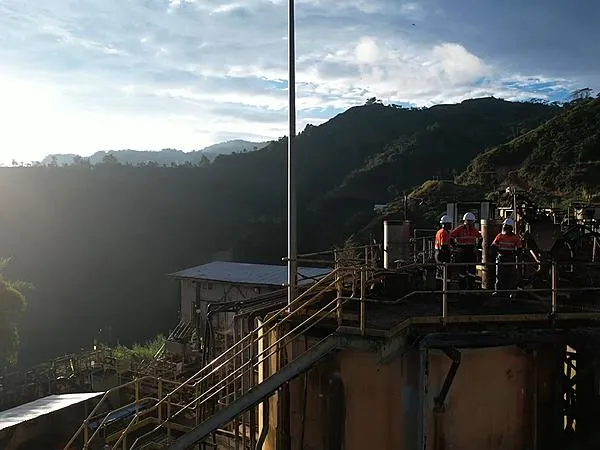
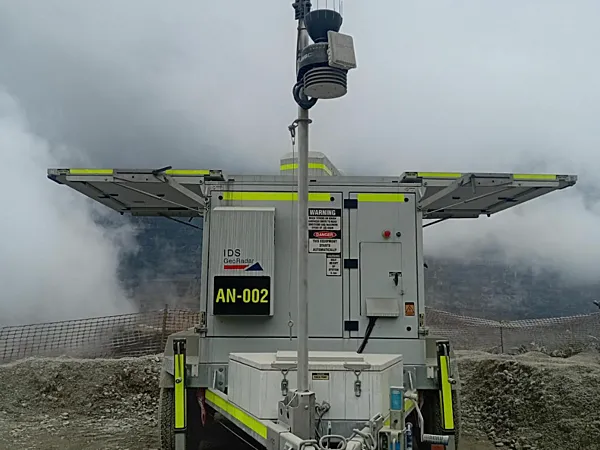
Ok Tedi Mining Limited (Ok Tedi) is pleased to announce the successful deployment and commissioning of the ArcSAR Neo slope stability monitoring radar system, marking an important advance in how mine slopes are monitored and managed. Ok Tedi is the first company in the world to acquire and deploy two units of this next-generation radar technology.
Developed by IDS GeoRadar, a Hexagon company, the ArcSAR Neo is one of the most advanced slope monitoring systems available today. Its introduction demonstrates Ok Tedi's ongoing commitment to improving safety, embracing innovative technology and promoting continuous improvement in geotechnical risk management.
The new system provides a clearer view of ground conditions, allows monitoring to continue during network interruptions and can automatically adjust its position after being moved for blasting activities. These features are particularly valuable in Ok Tedi's complex mining environment, where pit operations are becoming narrower and deeper, presenting ongoing challenges.
Since commissioning, the system has demonstrated significant improvements in data quality, reliability and confidence in decision-making. Equipped with advanced processing technology and sophisticated monitoring software, the ArcSAR Neo substantially reduces common sources of interference, including atmospheric conditions and signal distortions. This has resulted in fewer false alarms and more reliable slope stability assessments.
The radar's enhanced resolution enables the detection of very small ground movements at an earlier stage, allowing potential risks to be identified early and managed proactively. This capability strengthens Ok Tedi's ability to maintain safe, productive and efficient mining operations while effectively managing geotechnical hazards.
Designed to perform in challenging environments, the ArcSAR Neo incorporates durability improvements that address historical issues such as water ingress, ensuring reliable operations in Ok Tedi's high-rainfall conditions.
The system is supported by trained and certified Ok Tedi technicians responsible for ongoing maintenance and operation in accordance with industry best practice, with additional technical support from IDS GeoRadar specialists.
The deployment of the ArcSAR Neo represents a significant advancement in Ok Tedi's slope monitoring programme. While previous ArcSAR systems have delivered dependable service for many years, the ArcSAR Neo introduces a new level of precision, reliability and operational value.
Ok Tedi will continue to assess the long-term performance of the technology under site-specific conditions and progressively integrate its outputs into the company's broader strategy. Combined training and development of technical personnel will also help maximise the benefits of this strategic investment.
The successful acquisition and deployment of the ArcSAR Neo radar system reinforces Ok Tedi's commitment to leveraging innovative technology to improve safety outcomes, enhance operational performance and support sustainable mining practices for the future.
Building on years of dedicated service in the Autonomous Region of Bougainville (AROB), Nasfund’s Buka team, led by Martin Numan, has partnered with staff from its Port Moresby headquarters for a major regional outreach drive.
Central to this initiative is the onboarding of 1,300 employees from Lloyds Panguna Limited. Operating from a first-of-its-kind mobile branch directly at the Panguna Mine site, the joint team is working face-to-face with workers to register new superannuation accounts, activate Member Online access and guide them through their Retirement Readiness plans.
Alongside the Panguna onboarding, the team hosted an employer workshop in Buka and a networking event in Arawa to assist local organizations with compliance and superannuation education. These forums engaged more than 20 regional employers spanning government, retail, hospitality, education and emerging industries.
Nasfund Chief Executive Officer Rajeev Sharma thanked Lloyds Panguna Limited and the participating businesses for their strong partnership.
“Nasfund remains committed to maintaining a responsive presence in AROB,” Sharma said.
“Through the collaboration of our local and HQ staff, proactive member education and accessible services, we will continue working with stakeholders to expand superannuation coverage and safeguard our members’ retirement savings.”
Nasfund looks forward to building on this ongoing success at Panguna and continuing to serve the AROB business community for years to come.
Adyton Resources Corporation began trading on the Papua New Guinea stock exchange, giving local investors access to the Canadian-listed company developing gold and copper prospects in the country. Trading began at 10 a.m. September 23 under the code ADY.
Adyton was admitted to the PNGX official list on September 17 as an exempt issuer. Trading is being conducted through PNGX Depository Interests, or PDIs, with each PDI representing one underlying Adyton share, PNGX Markets Ltd. said.
PNG CSD Nominees Ltd. holds the underlying Adyton shares on behalf of PDI holders. Adyton is also listed on the TSX Venture Exchange in Canada.
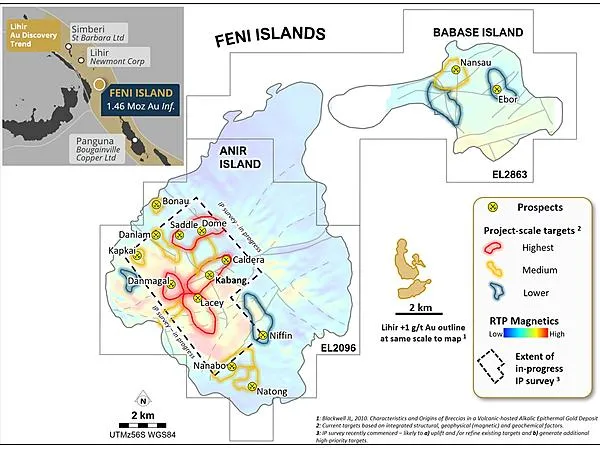
The company operates the Feni Island gold-copper project in New Ireland province and, through a joint venture with East Vision Investment Holdings, the Wapolu and Gameta prospects on Fergusson Island in Milne Bay province.
Feni has an inferred mineral resource of 60.4 million metric tons grading 0.75 grams of gold per ton, containing an estimated 1.46 million ounces of gold, based on a 0.5 g/t cut-off grade, according to an October 2021 NI 43-101 technical report cited by PNGX.
The Fergusson Island Gold Project has an indicated resource of 10.19 million metric tons grading 1.35 g/t gold, containing 441,000 ounces, and an inferred resource of 21.2 million metric tons grading 0.92 g/t gold, containing 626,000 ounces. The resources use a 0.4 g/t cut-off grade, according to technical reports cited by PNGX.
Adyton Chairman Sinton Spence said the secondary listing would provide PNG retail and institutional investors with a simpler way to invest in a company whose assets are wholly located in the country.
PNGX Chairman David Lawrence said the listing would give local investors access to the development of Papua New Guinea’s natural resources industry while broadening the domestic capital market.
PNGX Markets, a wholly owned subsidiary of PNGX Group Ltd., operates Papua New Guinea’s national stock exchange and is regulated and licensed by the Securities Commission of Papua New Guinea.
The mineral resources cited for Feni and Fergusson Island are not mineral reserves and have not demonstrated economic viability, according to the technical reports referenced by PNGX.
Editor’s Note: In this issue, Michael McWalter, former Director of the Petroleum Division and Adviser to the Government of Papua New Guinea, and erstwhile petroleum adviser to the Governments of Ghana, Liberia, Cambodia, Sao Tome, and South Sudan writes about Liquefied Natural Gas. He is a certified petroleum geologist, and technical specialist in upstream petroleum industry regulation, administration, and institutional development.
Natural Gas
Many people in Papua New Guinea will have heard of LNG, but how many of us know exactly what it is? LNG is Liquefied Natural Gas. That is natural gas that has come from within the Earth’s subterranean rock strata and then been chilled into a liquid, thus becoming Liquefied Natural Gas. It does not exist in the ground and there are no LNG wells, just gas wells from which to collect and aggregate large volumes of natural gas.
Natural gas, as we know it, is a useful fuel which can be burnt and may make heat for all manner of domestic, commercial and industrial purposes. It can also be used as a chemical feedstock to manufacture products like fertilisers and plastics. Natural gas is thus a valuable natural resource, but it is quite tricky to produce, handle and supply to customers, unlike crude oil and its classic liquid petroleum products such as petrol, kerosene, and diesel.
Turning natural gas into LNG can make natural gas even more accessible and useful. Unfortunately, many of the world’s gas fields are remote from the main consumers of natural gas. Natural gas is also bulky and thus quite expensive to transport. Methane, the primary constituent of natural gas, has a density of just 0.71616 kgs/cubic metre at normal temperature and pressure, which may be raised to 71.62 kgs/cubic metre at an applied pressure of 10,000 kilopascals (1,450 pounds per square inch (psi)), as may happen in a strong high-pressure pipeline. Therefore, natural gas is often supplied to customers through long pipelines.
If one liquefies natural gas to LNG, its density is raised to between 430 and 460 kgs/cubic metre (depending on its composition) making it much more compact and able to be shipped long distances on special insulated ocean-going tankers. We say that the energy density of natural gas at standard temperature and pressure as LNG is raised significantly, by more than 600 times for a given mass of gas. LNG ranges in density between 0.43 and 0.46 g/cm³ (depending on its exact ethane and propane content ratios), or slightly less than half the density of diesel. So, by liquefying natural gas, considerable energy is packed into a small volume as compared to natural gas in its gaseous state.
LPG is not LNG
We have to avoid the common confusion with LPG, which is Liquefied Petroleum Gas (sometimes referred to as Liquid Petroleum Gas). We know LPG otherwise as bottled gas, sold under local brand names: Puma Gas, Geogas PNG (Ggas), and Trugas. LPG is primarily propane and/or butane which liquefy under moderate pressure at room temperature. The heavy steel bottles with which we are familiar keep the petroleum gases at pressures of 7 to 20 bar or 100 to 300 psi depending on the temperature and gas mixture.
Figure 1: Typical domestic use LPG bottles, after Puma, Ggas and Trugas.
Propane has a boiling point of between minus 42.25 to minus 42.04 degrees Celsius, whilst butane has a boiling point of minus 0.5 degrees Celsius. Because of this low boiling point, both propane and butane are kept as a liquid under high pressure in such tanks. As long as the outside temperature is above the boiling point temperature, the liquid will naturally boil off into the vapour required to run appliances. Because it can get quite cold in the Highlands of Papua New Guinea, and butane stops turning into gas (vapourising) between minus 0.4 degrees and minus 2 degrees Celsius, a propane-based LPG is preferred for higher altitude locations to ensure a free flow of vapourised LPG.
Liquefied Natural Gas
The content of LNG is normally mainly methane with minor amounts of ethane, propane and butane. The boiling point of methane is minus 161.5 degrees Celsius, a temperature far removed from our terrestrial experience. This is the world of cryogenics, the branch of physics and engineering that studies materials and phenomena at extremely low temperatures and, specifically for LNG, how gases liquefy. It is a different and very expensive high-tech world when compared to crude oil, pipeline gas, or LPGs. LNG has been described as the "Frozen Flame" – a rather poetic term. It gets this name because natural gas must be chilled to extreme cryogenic temperatures to turn it into a liquid, yet it can form volatile, freezing, and highly flammable vapour clouds, if exposed to the air.
Fig 2: The Frozen Flame, after Shell International Gas Ltd, 1988.
We have heard of the oil and gas companies exporting LNG, and of the LNG Projects like the PNG LNG Project, operated by ExxonMobil for the last 12 years, the planned Papua LNG Project currently being prepared by TotalEnergies, and the future P’nyang LNG Project being prepared by ExxonMobil.
Figure 3: LNG vessel, Energy Fortitude berthed at the PNG LNG Project marine terminal jetty to receive the 116th cargo for 2025, after ExxonMobil.
These projects are spread out across the country. They produce, and will produce, natural gas from wells drilled deep into the ground that tap into various large accumulations of natural gas trapped in ancient porous and permeable sediments that have been discovered and appraised for their quality and extent. That natural gas may flow to the surface through the wells drilled into those accumulations, and after being cleaned up of basic impurities, it may be transported in gas pipelines hundreds of kilometres long to a liquefaction plant.
Cooling Natural Gas
At a liquefaction plant the gas can be liquefied, or turned from its gaseous state into a liquid by intense chilling in what can only be called some of the largest refrigerators in the world. Just as we commonly know of water in its three states of matter: solid ice, liquid water and gaseous steam, so we can also chill natural gas until it too becomes a liquid. These refrigerators or liquefaction plants are enormous, and they cool the gas to approximately minus 163 degrees Celsius at which point the natural gas becomes a liquid at normal atmospheric pressure. Of course, just as with any refrigerator, this takes energy.
Turning a gas into a liquid, or condensing the gas, requires the extraction of the latent heat of vapourisation. The gas must release this exact same thermal energy to the environment in order to cool; that is 510 kilojoules per kilogram, for methane. Seeing as such processes are by no means 100% efficient, this means the power input for the liquefaction process is quite enormous. That energy is commonly provided by a portion of the gas feedstock, and is consumed on-site to operate massive refrigerant compressors and run the auxiliary equipment needed for the cooling process. The amount of natural gas typically consumed in this process ranges from approximately 7% to 15% of the total gas feedstock received at the plant. Allegedly, the PNG LNG plant is so well-engineered and operated by ExxonMobil that it only consumes about 7.8% of the feedstock gas stream for liquefaction. It said that the Papua LNG Project, to be operated by TotalEnergies, might use solar-powered electric drivers for its compressors, further reducing feedstock gas utilisation in processing, and thus nicely mitigating carbon dioxide emissions from the use of gas.
Figure 4: Part of a liquefaction plant – a massive refrigerator for natural gas, after Shell Qatar.
The beauty of this is that the natural gas, once so liquefied, occupies only about one six-hundredth of the volume it would in its gaseous state. Thus, the volume occupied by the natural gas in the form of LNG is vastly less, and the energy density of LNG is conversely massively heightened. By conversion of natural gas to its liquid form, it can be loaded onto ocean-going LNG tankers and can be delivered to any customer willing and able to pay for it, and receive it, anywhere in the world.
In many countries, natural gas is conveyed in large volumes by networks of pipelines taking it to diverse customers throughout the land. Also, in many parts of the world, natural gas that is excess to country needs and requirements may be exported by pipelines to countries nearby that need it, provided they can pay a handsome-enough price for the gas and its delivery. Examples of such are many. Some plans about twenty-five years ago for the development of Papua New Guinea’s discovered gas fields called for the pipeline transportation of Papua New Guinea’s natural gas to Australia, primarily to markets in Queensland. However, the proposed customers were not able to pay an adequate enough tariff for purchase of the natural gas and its long-distance transportation, as they then had ample supplies of locally-produced natural gas that were cheaper. If Papua New Guinea had pursued that project as a strategy for its natural gas development, it would have earned little from the development of those resources. Fortunately, common sense prevailed and the concept of developing the gas fields of Papua New Guinea for the supply of LNG to East Asian markets, where customers are prepared to pay a premium price for natural gas, sensibly prevailed.
The cost of the conveyance of natural gas by pipeline naturally increases with the distance over which it is to be conveyed, such that for extremely long distances the transportation of natural gas as LNG on ocean-going tankers becomes cost effective. Necessarily, pipelines are still the preferred mode of conveyance of natural gas on land, but for maritime routes of supply, LNG is the best mode of conveyance, unless a maritime pipeline is short and cost effective, and cannot be avoided.
Figure 5: Natural gas transportation costs show a typical breakeven between the use of pipelines and LNG at distances: between 1,500 and 3,000 kilometres, after UNECE.
LNG – a Global Business
In 2025, some 578.5 billion cubic metres of natural gas, equivalent to 387 million tonnes per annum (mta) was produced and moved around the world as LNG from around 20 exporting Nations to around 30 importing Nations. International trade in LNG grew by 6.5% in 2025, after two years of little or no growth. This was led by a large increase in LNG exports from the USA, with it producing 147 mta, or 25.4% of global LNG. This was followed by Qatar and Australia at 19.2 mta and 18.2 mta respectively. Papua New Guinea produced a modest 7.9 mta, about 2.0% of global LNG supply.
Figure 6: Trade in LNG in 2025, after the Statistical Review of World Energy, Energy Institute, 2026.
The LNG business uses only about 15% of all the natural gas produced. The vast majority of natural gas, about 70%, is consumed domestically within the countries in which it is produced, while the remainder is used for international cross-border trade transported via pipelines in a compressed gaseous state. LNG has the advantage that it can be transported anywhere to any port that can receive its liquefied cargo. LNG is not dependent on point-to-point pipelines, which are generally dedicated to the supply of natural gas from one nation to another, forever. LNG projects do nevertheless still have to arrange for customers willing to pay the premium price for natural gas delivery as LNG.
The LNG Chain
LNG projects tend to have dedicated customers with corresponding LNG sales and purchase agreements. These are binding contracts, for considerable periods of time to guarantee the financing of gas field development, and construction of gas gathering and transmission pipelines, gas liquefaction plants, and storage and loading facilities. The costs can be massive. Furthermore, LNG tankers are needed; these are generally owned by specialised maritime shipping companies and major energy corporations, and are normally chartered. Importantly, the customers buying the LNG also have to have facilities to receive the LNG, store it, and re-gasify it back into the gaseous form for transmission and distribution to end-users. These facilities are LNG receiving terminals, which are built at the expense of the LNG buyers, or other parties that may lease them to the buyers. Altogether, for an LNG project to be successful, all aspects have to be developed simultaneously: the gas field, gas pipelines, liquefaction plant and LNG storage, loading terminals, LNG tankers, marine receiving terminals, regasification terminals, gas off-takers and customers. This is what we call the LNG Chain.
Figure 7: The LNG Business Chain, after ResearchGate.
Figure 8: An LNG tanker berthing at the Guangdong Dapeng LNG terminal in Shenzhen, Guangdong Province, China, after PetroChina.
Aside from the contractual sales and purchase arrangements, LNG export is not necessarily limited in its destination, especially as we saw in times of global upsets, such as the Covid pandemic. Some cargoes are sold on the spot market outside the framework of long-term contracts; these sales are typically for single shipments for delivery within three months of the transaction date. Prices in the spot market can be fixed, or indexed directly to oil or gas prices. Such cargoes can go wheresoever the cargo obtains the best price.
Thirty years ago, when the concept of LNG development was first examined by the Government of Papua New Guinea, there were just eight Nations exporting LNG and eight Nations importing LNG. The LNG industry has grown significantly into a truly global industry providing a flexible form of energy, often as an alternative to fixed pipeline gas supply arrangements, or exhausted domestic natural gas supplies. LNG usage has grown by 363% since the year 2000. According to many reports, that growth will continue with Shell, a major player in the LNG markets, saying that it expects it to grow to 65% from today’s level of 578 billion cubic metres (BCM) gas per year up to 955 BCM gas per year (equivalent to 700 mta LNG) by 2050 as countries continue to prioritise flexible and reliable energy security offered by gas and LNG. This would be just a 2.4% growth per annum in LNG production and demand. Papua New Guinea will likely contribute to that growth with the development and inception of LNG production by the planned Papua LNG and P’nyang LNG Projects.
Figure 9: Total global LNG export by years in billion cubic meters of natural gas equivalent from 2000 to 2025, data after the Statistical review of World Energy, 2026.
Gas Quality and Specifications
When natural gas emerges from its subterranean reservoir, either dissolved in liquid oil or with natural gas liquids dissolved in a gaseous vapour, it is typically in a mixture of petroleum fluids. Whenever oil and gas are produced, it is a fundamental requirement to separate the liquids from the gaseous components, and the various petroleum fluids from any contained water and sediment. Most often this is performed near the location of the producing natural gas field and these are the first processing steps, which are known as gas conditioning.
With separation, filtering and dehydration done, the gas may yet contain toxic and corrosive gases like hydrogen sulphide (H₂S) and carbon dioxide (CO₂). These components have to be removed to prevent damage to pipes and vessels, and to avoid their freezing and solidification in the cryogenic sections (typically at temperatures around minus 160°C) in a process known as acid-gas removal, or gas sweetening. Further dehydration of the natural gas has to be undertaken to almost completely remove (to less than 1 part per million) any vestigial water which might freeze and cause blockages in the liquefaction plant. Another troublesome impurity in natural gas is mercury which may cause severe corrosion and cracking in the aluminium cold boxes and heat exchangers used in liquefaction facilities.
LNG feedstock with high nitrogen content causes operational issues by lowering the liquefaction temperature and generating excess boil-off gas. To utilise or fix it, operators use cryogenic distillation to separate the gas, blend it with leaner feedstocks, or route the vapourised nitrogen for use for facility safety and maintenance.
Sometimes there may be some helium content in the natural gas. Helium is a valuable commodity used in semiconductor manufacturing, aerospace, and MRI machines. Even if the natural gas feedstock has a low helium concentration (less than 0.1% to 0.3%), the massive scale of an LNG plant concentrates the helium significantly, making extraction highly profitable. As natural gas is liquefied, helium remains a gas. It builds up in various parts of the LNG plant. Plant operators then use specialised cryogenic extraction, membrane separation, and adsorption techniques to draw out crude helium (50-70% purity), and then refine it to grades >99.999% pure.
Figure 10: A simplified process flow diagram of the PNG LNG Project liquefaction plant, after ExxonMobil’s PNG LNG Project Environmental Impact Statement.
Heavier hydrocarbons, or natural gas liquids, typically pentane, hexane, and benzene have to be removed to avoid premature freezing and the fouling of the liquefaction processes. The inclusion of some ethane, propane and butane in the liquefaction feedstock gas changes the quality of the LNG and its heating value, or energy content. The inclusion of these components is a matter of LNG product design and specification to meet customer requirements.
Japan's domestic gas pipeline network is strictly designed to handle "rich" gas (gas with more ethane, propane and butane). LNG imported into Japan typically has a higher heating value (HHV) of 39.7 to 43.3 megajoules per cubic metre (MJ/CM). Utilities consistently adjust the energy content to 45 MJ/CM (about 1,140 BTU/scf) before distributing it to homes and businesses. Because LNG imported from the U.S. and Canada is typically "lean" (dry, and thus lower in heating value), Japanese buyers blend it with rich LNG or enrich it with LPG to meet their domestic heating standards. LNG imported into Europe has a typical higher heating value (HHV) of roughly 50 MJ/CM (or about 1,267 BTU/scf). However, the exact heating value of LNG shipments into Europe fluctuates depending on the source region and liquefaction process, ranging roughly from ±10% to 15%.
Gas Type
Chemical Formula
Molecular Weight
HHV (MJ/CM)
HHV (MJ/kg)
Methane
CH4
16.042
39.8
55.5
Ethane
C2H6
30.068
70.4
51.9
Propane
C3H8
44.094
93.5
50.3
Butane
C4H10
58.12
121.8
49.5
Figure 11: Thermal properties of typical gases contained in LNG.
LNG is paid for by customers on the basis of its heating value, so no value is lost if some ethane, propane and butane remain in the natural gas feedstock for liquefaction. Every component earns value according to its mass and contribution to the heating value.
It has previously been argued that the PNG LNG Project should have stripped its ethane, propane and butane to serve as petrochemical feedstock. Whilst noble in notion, such stripping would have cost a lot of money, perhaps as much as US$ 400 million for the LPG stripping plant alone, and one wonders where the industries are that such stripped LPG could have supported. Studies found that below a crude oil price of US$ 60 per barrel, LPG stripping was not economically viable.
The specification of LNG produced by the PNG LNG Project seeks to meet the Japanese specifications as two of the major long-term customers for the PNG LNG Project are Osaka Gas Company Ltd and Tokyo Electric Power Company. The delivered LNG thus has a higher heating value of between 41.0-42.5 MJ/CM (1100 to 1140 Btu/scf). LNG production aims to have at least 85% methane content, and strictly limits other components to try to remain within an acceptable range of gas specifications.
Component of LNG
Content Limitation
>85 %
<9 %
<4 %
Butanes
<2 %
Pentanes
<0.25 %
Nitrogen
<1 %
Hydrogen Sulphide
<6mg/CM
Total Sulphur
<30 mg/CM
Mercaptans
Mercury
<10 mg/CM
Carbon Dioxide
<100 ppm by vol
Oxygen
<10 ppm by vol
Water
<0.1 ppm by vol
Figure 12: A typical LNG specification by mole percent. Note the tight limitations on impurities.
Gas Quantities and Measurement
Whilst the oil and gas exploration industry likes to measure gas flows in standard cubic feet per day (SCFD) (or standard cubic metres per day in the metric system [SCMD]), volume is not an appropriate measurement for what is sought by buyers: energy content. As seen in Figure 11, the energy content (typically, the higher heating value) per cubic metre of natural gas rises in proportion to the carbon number of the particular type of gas, whilst the energy content per mass stays more or less similar, though there is a small systematic decline. Thus, measurement of the mass of the gas supplied as LNG is normally the critical quantity in gas sales agreements. Then, knowing the energy content per unit mass of the LNG, it is relatively easy to determine the amount of energy provided. We commonly hear reports of the PNG LNG project shipping millions of tonnes (mta) of LNG to its customers. The heating value will still vary from time to time within agreed limits, depending on gas field operations for the production of natural gas and depending on which fields are contributing to the flow of natural gas feedstock to the LNG plant.
The measure of energy content of natural gas or LNG is typically provided in terms of energy units per unit of mass, such as kilojoules per kilogram (or in imperial units as BTU per pound). It is sufficient for gas explorers to use volumetric measurements, such as million standard cubic feet per day (MMSCFD where M denotes 1000, or mille), or million standard cubic metres per day (MSCMD, where M stands for million). However, for LNG sales, the heating value of the gas is what the customers pay for. Yes, the units can be confusing, and one constantly has to check one’s units and abbreviations, especially the use of ‘M’. In the gas industry, one needs to be most conversant with all manner of units of measurement and their abbreviations, and be on constant guard against incorrect interpretation. It is always good to give the numbers a sense check.
So, in the case of the PNG LNG Project, it is reported that it produced 7.9 mta LNG in 2025 which had a higher heating value of less than or equal to 1,140 BTU per cubic foot, or 42.5721 MJ/CM. Such a gas would have a specific gravity with respect to air of 0.633798. If the density of air is 1.2250 kg/CM (as used in ISO conditions at 15 °C and 101.325 kPa), the density of the natural gas that has been liquefied is 0.7764 kg/CM. So, for 7.9 mta of LNG production, at 7.8% gas usage during liquefaction and 95% plant uptime, gives us an estimated natural gas feedstock rate of about 1,124 MMSCFD, or 1.124 billion SCF (BCFD). This is not a rigorous calculation, but only one to show the scale of the current PNG LNG Project development and how much natural gas it produces.
By direct comparison, the Hides Gas to Electricity Project uses just 15 MMSCD to power the Porgera Mine electric power station, which produces 75 MW of electricity. It is simple arithmetic to show that the volume of gas used by the PNG LNG Project is an approximate equivalent to 5,620 MW or 5.62 gigawatts (GW). This has to be compared to Papua New Guinea’s estimated total installed electricity generation capacity of just around 600 MW.
LNG Sales
Sales of LNG are typically made to distant customers beyond the reach of gas pipeline supply, and obviously to those countries that are energy deficient, either by having little or no endowment of oil and gas resources, or not having enough to satisfy their present-day needs. Quite often countries take to importing LNG when their own gas resources have been depleted after the clamour to monetise them when first discovered by export and the earning of valuable foreign exchange.
Most often LNG Sales and Purchase Agreements are negotiated and agreed prior to the development of a particular LNG export project for a substantial period of time, at least ten years, and often spanning as long as 15 up to 25 years. These agreements effectively provide financial guarantees for the financing of the development of that project. Though there are some spot trades of LNG cargoes on the open market, most LNG supply is governed by term agreements for the supply of a specified amount of LNG per year for a given period. Spot sales are for individual cargoes for immediate delivery without a long-term supply contract.
The PNG LNG Project, which cost US$ 19 billion to develop, initially secured long-term binding agreements with four major Asian energy buyers: Tokyo Electric Power Company (TEPCO); Osaka Gas Company; China Petroleum and Chemical Corporation (Sinopec) and CPC Corporation of Taiwan. The PNG LNG Project routinely produces up to 8 mta LNG, significantly above its nameplate capacity of 6.6 mta. Amounts of LNG above and beyond the original contracted amounts have been the subject of some mid-term sales to the likes of PetroChina and BP Singapore, and some spot sales to CPC in Taiwan. Typically, LNG Sale and Purchase Agreements are strictly held in commercial confidence and rarely ever see the light of day, but once done, the sellers and buyers usually announce their arrangement with enthusiasm.
Figure 13: Media release by ExxonMobil 7 December 2009 announcing the LNG Sales and Purchase Agreement with Tokyo Electric Power Company Inc for 1.8 mta of LNG.
Taiwan recently oddly halted approximately US$ 800 million in scheduled spot LNG purchases from the PNG LNG Project after Papua New Guinea ordered the closure of Taiwan’s Taipei Economic Office in Port Moresby. However, long term contracted LNG volumes are legally insulated and are much harder to unwind, so Taiwan’s response has specifically targeted uncommitted spot market cargoes only. In a reassuring statement PetroChina expressed interest in buying surplus LNG from the PNG LNG Project.
The necessity for foundation buyers of LNG is very important for LNG projects, and recently there has been considerable speculation about the initial buyers for the LNG that will be produced from the forthcoming Papua LNG Project. No news has been announced about potential buyers, leading some observers to speculate that the Project might be having difficulties with identifying suitable buyers. However, it is more likely that the Papua LNG Project joint venture led by TotalEnergies is just being tight-lipped about its LNG marketing.
With the events of the past few months in the Middle East, Pacific-based LNG sources ought to be prized, especially as they are not compromised by any strategic maritime straits. PNG has open-ocean access to East Asian LNG customers. The closure of the Strait of Hormuz removed a substantial amount of global LNG supply from the market. This has demonstrated that the risk of physical disruption of LNG supply is now real, and that in turn damages the guarantees of supply that exist in LNG sales and purchase agreements. There is now a premium emerging for LNG supply from reliable producers through reliable routes of supply. The supply of LNG into the energy deficient markets of East Asian economies seeks more assurance of physical security of supply. This has caused customers to turn to US LNG exports as well as Australasian suppliers such as Papua New Guinea. This bodes well for the Papua LNG Project, its capture of foundational customers, and the continued sale of cargoes from the PNG LNG Project.
As the Papua LNG Project is still finalising its commercial framework and working towards a final investment decision (FID), the Project will most likely be targeting major international buyers in key Asian markets, such as Japan, China, and South Korea due to the region's geographic proximity and carefully assessing the ability of those countries to afford to buy energy in the form of LNG at a premium price.
Less buoyant economies within the region, although would-be buyers and wishing to import LNG as an energy-providing expedient, may have more difficulty demonstrating their financial capability to pay for cargoes and may have difficulty demonstrating that they have ready access to foreign exchange with which to pay for purchases. Again, the banks that are providing project financing would want to see not only binding Sales and Purchase Agreements, but such binding agreements would have to be with customers with good credit ratings and with guaranteed access to foreign exchange.
LNG sales are made on the basis of energy content sold to the buyer, typically measured in Million British Thermal Units (MMBTU) globally, especially in international spot and long-term contracts tied to US and Asian markets. However, the metric energy unit GigaJoules (GJ) is also widely used, particularly in domestic Australian and some regional European frameworks.
Oil referenced pricing has been a feature of LNG markets for a long time. The price paid for LNG is determined by reference to a formula linked to the crude oil price, typically the Japanese Customs Cleared Crude (JCC) index or Brent crude. The former is the weighted-average price of crude oil imports into Japan based on official customs clearance statistics, and is widely used as a benchmark price in East Asian energy markets. Platts JKM is the LNG benchmark price assessment for spot sales of physical cargoes. It is referenced in spot deals, tenders and short-, medium- and long-term contracts both in Northeast Asia and globally. It reflects the spot market value of cargoes delivered ex-ship (DES) into Japan, South Korea, China and Taiwan. Deliveries into these locations equate to the majority of global LNG demand. In Europe the Dutch TTF natural gas benchmark trades in Euros per megawatt-hour (MWh). The TTF index refers to the Title Transfer Facility, a virtual trading hub in the Netherlands that serves as the primary price benchmark for natural gas in Europe. Prices fluctuate daily based on regional demand, geopolitical updates, and liquefied natural gas (LNG) cargo shipments. In the USA, the Henry Hub is a physical natural gas pipeline distribution point in Erath, Louisiana. It serves as the official delivery location and pricing benchmark for the New York Mercantile Exchange (NYMEX) natural gas futures contracts, setting the standard price for the North American natural gas market.
Figure 14: Natural gas prices during the last year, showing JKM, TTF and Henry Hub prices, after JOGMEC.
The historical reason for LNG pricing being linked to crude oil is that early LNG trades were primarily designed around substitution of oil for power generation and industrial supply of energy. Substitution values were essentially based on energy values equivalence. More than 50% of LNG cargoes are still priced using crude referencing, particularly in the Asia Pacific market. The crude oil price referencing provides a durable, stable and predictable pricing mechanism that is transparent and genuinely market responsive. To provide added stability, LNG sales and purchase agreements include cap-and-floor mechanisms that limit the indexing by reducing the reference to crude oil during abrupt spikes and troughs in crude oil price. This gives comfort to both the producers and the buyers, and enables them to continue production supply and cargo receipt during periods of crude oil volatility.
Admittedly, crude oil and natural gas as LNG have different markets. Whilst crude oil has an integrated and global price reference system, LNG pricing can be affected by regional and seasonal factors, especially LNG spot sales prices. During the massive economic disruption caused by the Covid-19 pandemic, LNG oversupply caused prices in Asia to fall to as low as US$ 3 per MMBTU, or about US$ 15 per barrel of oil equivalent (boe). Meantime, the European energy crisis of 2021-2022 caused Asian spot LNG prices to spike at US$ 60 per MMBTU, or about US$ 300 per boe. More recent crises in the Middle East have again heightened crude oil prices, and hence LNG prices that are crude oil referenced, plus security of supply concerns have added a further premium.
Global LNG storage hubs are evolving to buffer the supply of LNG. Within Asia, there are LNG storage hubs in the key importing nations such as China, Japan and Korea. Singapore is trying to replicate its success as a crude oil hub by providing LNG commercial and bunkering hub facilities. Thailand, Vietnam and the Philippines are also variously creating regional and domestic supply hubs. Some large integrated oil and gas companies are also intent on being global LNG suppliers gathering LNG from various LNG projects in which they are involved and selling equity LNG to customers.
The Usefulness of LNG
LNG is a cleaner burning fuel than coal or oil, in terms of its combustion and consequent air pollution and carbon dioxide output. Its total climate impact has been the subject of considerable debate due to LNG’s energy-intensive processing and leaks of natural gas from the system of gas supply. However, the combustion of natural gas releases about 40% less carbon dioxide than burning coal, and fewer noxious substances are released. The combustion of LNG produces almost no sulphur dioxide or heavy particulates, or soot.
However, there are some hidden emissions. Natural gas can escape (so-called fugitive emissions) during its extraction, pipeline transportation, and liquefaction, and methane, its main component, is about 80 times more potent in trapping heat in the atmosphere than carbon dioxide.
The process of cooling natural gas to liquefy it at -162°C and shipping it overseas on large tankers requires a considerable amount of energy, which adds to the overall greenhouse gas footprint. The PNG LNG Project is said to use about 7.8% of the feedstock gas stream for liquefaction. But that still represents the combustion of 88 MMSCFD, or about six times more than the Hides Gas to Electricity Project produces and consumes for electric power generation.
The so-called fugitive emissions of natural gas are not normally entertained by respectable oil and gas companies which always try to keep petroleum of any kind, be it liquid or gas enclosed behind steel at all times. Much depends on the quality of the operating company and regulatory standards. Moreover, it is not uncommon for some oil-rich nations to still persist in burning off or venting associated gas when producing crude; such is simply arrogantly profligate.
Overall, the Intergovernmental Panel on Climate Change (IPCC), the United Nations body for assessing the science related to climate change, says that natural-gas power produces 50% fewer emissions than coal power — even when fugitive natural gas emissions are taken into account. The IPCC says, “Taking into account revised estimates for fugitive methane emissions, recent lifecycle assessments indicate that specific GHG emissions are reduced by one half (on a per-kWh basis) when shifting from the current world-average coal-fired power plant to a modern natural gas combined-cycle (NGCC) power plant.”
Coal currently accounts for about 45% of global carbon dioxide emissions from fuel combustion, and the world burns over one million tons of coal every hour. So, clearly a replacement of coal by LNG is a step in the right direction, but inevitably the burning of any hydrocarbons will result in carbon dioxide as a product of combustion. Both within the Middle East and the USA, this process continues unabated where natural gas is often flared and wasted as operators seek to produce and sell just the petroleum liquids.
Figure 15: Gas flaring in the Middle East, after BBC and Google Earth, Google GB, Landsat, and Date SIO.
Figure 16: Natural gas flaring in the USA, after phys.org and Skytruth.
Throughout the energy industry there is a constant quest for lower emissions. Specifically, new LNG plants vie to become cleaner, either by reducing the amount of gas consumed in powering liquefaction processes or replacing the energy for such with alternative non-hydrocarbon supplies, such as solar or hydroelectric and/or wind power. The International Energy Agency has said that new technology can cut LNG emissions by up to 60%.
In general, operators of LNG plants are also endeavouring to improve operations for heightened safety, resilience, and efficiency. The application of the latest automation, digitalisation, and cybersecurity strategies are helping facilities optimise performance across the LNG value chain. Such may also provide better uptime, cost efficiency, compliance, and asset performance.
Papua New Guinea’s LNG Projects
In the absence of a developed economy that might provide domestic, commercial and industrial markets for Papua New Guinea’s gas resources, successive Governments have elected to permit export-focused gas development projects to be pursued. This has been allowed on the basis of Papua New Guinea garnering a significant share of the net take of such projects, and gaining a boost to its overall economy. Whilst the pursuit of revenue-raising gas development projects may provide valuable financial inputs into the economy of the Nation today, they will ultimately exhaust the gas resources upon which they are based. Most likely further gas resources will indeed be identified, but that requires exploration, which needs to be incentivised somehow. In recent years, incremental progress has been made towards some domestic gas utilisation, but with such a dispersed and disparate demand for energy, LNG development still remains the main focus, one might say, somewhat akin to cash cropping rather than subsistence farming.
Figure 17: The PNG LNG Project terminal with the LNG plant in the background, after ExxonMobil.
The PNG LNG Project is operated by ExxonMobil PNG Limited on behalf of its fellow venture partners which include Santos, Kumul Petroleum Holdings Limited, the Mineral Resources Development Company and Eneo. Natural gas is produced from the well sites of the Hides and Angore gas fields in Hela Province and then treated at the Hides Gas Conditioning Plant, and joined by gas from the Kutubu and Agogo fields in the Southern Highlands Province. The natural gas is transported through an onshore and offshore gas pipeline system of overall length of approximately 700 kilometres to a two-train liquefaction plant at Caution Bay in Central Province. The LNG is then stored and loaded onto oceangoing LNG tankers for transport. Natural gas condensates recovered during gas conditioning are blended with Kutubu crude oil and exported through the Kumul Marine Terminal as Kutubu Blend. Naphtha is also produced from final processing at the LNG plant. The PNG LNG Project currently produces up to 8 mta LNG. Since LNG production commenced in 2014 to the end of 2025, the PNG LNG Project has loaded 1,259 cargoes of LNG plus some 123 cargoes of naphtha containing 94.5 mta LNG equivalent primarily for long-term customers across East Asia.
Figure 18: Papua LNG Project map, after TotalEnergies.
The Papua LNG Project proposes a development of the Elk-Antelope gas field for the production of 6 mta LNG. TotalEnergies is the operator of this project on behalf of co-venturers ExxonMobil, Santos and Eneos. The Papua New Guinea government has a statutory right to take up to a 22.5% equity interest in the project. It seeks to become the country’s second LNG project by commercialising natural gas resources in the Gulf Province for export to the global market. Gas will be produced and conditioned in the field for pipeline transmission to four new electrically driven 1 mta liquefaction trains to be located adjacent to its existing PNG LNG Project liquefaction facilities. Ullage in the PNG LNG Project liquefaction plant is also expected to provide a further 2 mta processing capacity. ExxonMobil as a co-venturer has been delegated as the Papua LNG Project’s downstream operator.
Figure 19: A well on the P’nyang gas field, after PNG Business News.
The P’nyang LNG Project plans to develop the P’nyang gas field discovered in 1990 and located in the northern part of the Western Province in Petroleum Retention License 3. The field is estimated to have recoverable gas resources of about 4.6 TCF. In 2022, the P’nyang LNG Projects Gas Agreement was executed, followed by its Fiscal Stability Agreement in 2024. The field, which is located 130 km northeast of the Hides gas field will most likely be developed after the Papua LNG Project development, and will most likely link into existing gas pipeline infrastructure and the LNG plant. It is planned to produce 2.7 mta LNG. The project is led by ExxonMobil as operator on behalf of co-venturers Santos and Eneos. The Papua New Guinea government has a statutory right to take up to a 22.5% equity interest in the project.
Words = 6,736
The National Capital District Commission (NCDC) has called for stronger municipal management, improved service delivery and closer cooperation with the private sector as Port Moresby enters a new phase of growth following Papua New Guinea’s 51st Independence Anniversary.
In his Independence message, NCDC City Manager Ravu Frank said Port Moresby’s role as the centre of government, commerce and international engagement placed the capital at the heart of PNG’s economic development.
He said the 51st anniversary was an opportunity to reflect on the country’s progress over five decades while shifting the focus towards implementation, reform and a more sustainable future.
“Following the historic 50th Independence Anniversary, our attention now turns to the next chapter of our national development,” he said. “The focus must now move from reflection to implementation.”
For Port Moresby, Frank said this meant strengthening the systems and processes that support the city’s economic and commercial environment. NCDC will continue to improve the efficiency of approvals and regulatory processes, strengthen accountability and enhance municipal services across the capital, he said.
Effective planning, permitting and compliance processes are particularly important for businesses and investors, whose operations depend on a predictable municipal environment.
Frank said NCDC’s goal was to build a capital city that is “clean, healthy, safe and planned”, supported by effective services, responsible development and accountable administration.
The Commission is also focused on cleaner public spaces, better management and safety of markets and communities, and building a more professional and responsive organisation.
Shared responsibility for the capital
Frank stressed that improving Port Moresby could not be achieved by NCDC alone. Businesses, residents, churches, community organisations, government agencies and development partners all have a role in maintaining an orderly, safe and well-managed city, he said.
“A well-managed city requires the cooperation of residents, businesses, churches, community organisations, government agencies and development partners,” he said.
Frank said cleanliness and safety depended on cooperation within communities, while orderly urban development required compliance with laws, regulations and planning requirements.
“Cleanliness begins with how we manage our homes, businesses and public spaces. Safety is strengthened when communities work together and respect one another. Orderly development depends on compliance with laws, regulations and planning requirements.”
The call for shared responsibility comes as Port Moresby accommodates a growing concentration of commercial, government and community activity.
For businesses, the quality of municipal administration can directly affect the operating environment through development approvals, public infrastructure, market management and the condition and safety of commercial areas. Frank said NCDC would continue to fulfil its responsibilities, but the capital’s development required “shared ownership” of the city.
Applying ResetPNG@50 to city management
Frank also highlighted the National Government’s ResetPNG@50 initiative, which provides an opportunity to examine PNG’s development experience over its first 50 years of Independence and identify areas for improvement and reform. He said NCDC was applying the same forward-looking approach to its own operations.
“Within NCDC, this means continuing to strengthen our systems, improve service delivery and build a professional and responsive organisational culture,” Frank said.
For NCDC, the focus on efficiency and accountability forms part of the broader challenge of ensuring Port Moresby can support economic activity and future investment. Frank also acknowledged the Motu Koitabu people, the traditional landowners and indigenous people of the land on which Port Moresby is established.
He reaffirmed NCDC’s commitment to preserving and promoting Motu Koitabu culture and traditions, including annual support for the Hiri Moale Festival.
As part of the 51st Independence celebrations, NCDC is also facilitating and supporting activities across Port Moresby. Frank encouraged residents and families to participate responsibly in the celebrations and mark the national anniversary in a spirit of unity, respect, pride and peace.
He said NCDC remained committed to improving its performance, strengthening municipal services and working with all sectors of the community to develop a capital capable of supporting future generations.
“As we celebrate 51 years of Independence, let us also recognise that the quality of our capital city is a shared responsibility," he said.
Papua New Guinea has a substantial body of extractive-sector governance data that could help shape the country's emerging environmental, social and governance (ESG) reporting framework, according to the Papua New Guinea Extractive Industries Transparency Initiative (PNGEITI).
PNGEITI Executive Director George Kauli said the information collected, reconciled and publicly disclosed through the EITI process could provide a credible foundation for stronger ESG reporting, assurance and investor confidence.
Kauli made the remarks during the 2026 Certified Practising Accountant Papua New Guinea (CPA PNG) conference in Lae on Aug. 28, where he delivered a presentation titled "Bridging Transparency and Transformation: Integrating PNGEITI Data into National ESG Reporting Frameworks."
It was PNGEITI's first presentation at a CPA PNG conference and opened a new avenue for engagement with the accounting and finance profession.
Kauli said the engagement was important because accountants and finance professionals play a central role in how information is collected, verified, reported and ultimately used for decision-making.
He said PNG did not necessarily need to start from scratch in developing the information base required for ESG reporting.
Instead, the country could make better use of governance data already collected and reconciled through PNGEITI.
Under the EITI Standard, government agencies and companies involved in PNG's mining and oil and gas sectors disclose information across the extractive industry value chain.
This includes contracts and licences, production and exports, government revenues, company payments, beneficial ownership, state participation, subnational payments and transfers, as well as social and environmental expenditures.
Kauli said the data provided an opportunity to connect transparency with ESG reporting while potentially reducing duplication between reporting systems.
The EITI value chain generates information from licensing and production through to revenue collection, allocation and benefits received by communities.
"When these datasets are connected, they provide a more complete picture of how Papua New Guinea's natural resources contribute to the economy and society," he said.
Kauli, however, stressed that data was valuable only when it was reliable, comparable, transparent and capable of supporting sound decisions.
He said this was where the relationship between EITI and ESG became particularly important.
Kauli also clarified that PNGEITI was primarily a governance initiative rather than an environmental reporting framework.
"As Papua New Guinea's national implementation of the Extractive Industries Transparency Initiative, PNGEITI collects information from reporting government agencies and extractive companies, reconciles payments and receipts, produces independently verified reports and publicly discloses the results," he said.
"Its broader purpose is to improve transparency, strengthen accountability and support evidence-based policy-making."
Looking at the EITI value chain through an ESG lens, Kauli identified significant areas of overlap.
PNGEITI provides governance information on revenues, tax payments, beneficial ownership, contracts, state participation and subnational transfers, while also capturing social information related to community investments, local content and benefit sharing.
Kauli said ESG was increasingly influencing how investors assess companies, projects and jurisdictions.
For PNG, he said the discussion should therefore go beyond whether companies were producing ESG reports and consider whether investors could trust the information provided, whether resource revenues were managed transparently, whether communities were benefiting and whether institutions had the capacity to produce reliable information.
"Investment follows confidence and confidence requires credible information," Kauli said.
He said one of the key messages for the accounting profession was that the focus should not simply be on what data was available, but on the reliability of that data.
Kauli highlighted independent reconciliation, multi-stakeholder oversight, public disclosure and reporting against an internationally recognised standard as key characteristics of PNGEITI data.
He said these principles were closely aligned with the work of accountants and assurance professionals, where the quality of a final report depended on the quality of underlying information, controls, verification processes and supporting evidence.
Revenue verification
The presentation prompted a question from an accountant about whether revenue data collected by PNGEITI was credible and could be relied upon for reporting.
Kauli said PNGEITI did not simply accept information provided by extractive companies at face value.
Instead, the EITI reporting process applies several layers of verification to establish the reliability of the information.
"Extractive companies provide financial and other relevant information for the specific financial year being reported and that information is subject to their own internal processes and controls, including internal audit processes," he said.
PNGEITI then verifies company-reported information against records held by relevant government reporting agencies.
"For example, if a company reports a particular amount of Corporate Income Tax for a financial year, we verify that information with the Internal Revenue Commission," Kauli said.
PNGEITI reporting also covers production, exports and sales, subnational payments and transfers and other information across the extractive industry value chain.
Information submitted by reporting entities is ultimately reconciled by an independent administrator, providing another layer of independent verification.
Kauli also highlighted efforts to strengthen assurance around government-reported data through the JICA-funded Revenue Management Project, implemented in partnership with the Office of the PNG Auditor-General.
Through agreed-upon procedures, or AUP, PNGEITI is supporting additional verification of selected extractive revenue streams and government reporting processes.
"Unlike a financial audit, AUP involves specific procedures agreed between the relevant parties, with the practitioner reporting factual findings rather than providing an audit opinion," he said.
The initiative complements PNGEITI's existing reconciliation process and is intended to strengthen government assurance systems and confidence in the accuracy and reliability of extractive revenue reporting.
Subnational transparency
Kauli also highlighted PNGEITI's expanding work to improve transparency at the subnational level through its Subnational Awareness Roadshow, supported by the World Bank.
The initiative engages provincial governments, local-level governments and landowner associations to improve understanding of extractive revenue flows and strengthen stakeholders' ability to access, understand and use the information.
Kauli said an important question for many Papua New Guineans was not simply how much extractive revenue had been collected nationally, but what happened to revenue intended to benefit their province, district, local-level government or community.
Strengthening transparency at the subnational level was also important from an ESG perspective, he said, because the social impacts and benefits of extractive projects were ultimately experienced at community and subnational levels.
Looking ahead, Kauli identified three opportunities for PNG: recognising PNGEITI as a governance data source for national ESG reporting; strengthening collaboration between PNGEITI and the accounting profession; and developing national ESG assurance capability in areas such as data controls, verification and assurance methodologies.
He said the accounting profession, including CPA PNG, had an important role to play as ESG reporting developed, particularly through its expertise in controls, materiality, reporting systems, assurance and data quality.
Kauli summed up his presentation in five words: transparency, trust, investment, opportunity and transformation.
"Transparency provides reliable and accessible information. Reliable information builds trust. Trust creates confidence, and confidence supports investment," he said.
"Investment, in turn, creates opportunities for jobs, infrastructure and inclusive development. Ultimately, these contribute to transformation."
Kauli said PNGEITI already had a trusted foundation of governance data, but integrating that information into PNG's broader ESG reporting landscape would require collaboration among government, industry, civil society and the accounting and finance profession.
Tolu Minerals Ltd. has increased the mineral resource estimate at its Tolukuma gold mine in Papua New Guinea by 81% to 909,000 ounces, as the company advances plans to restart production in early 2027.
The updated resource comprises 4.31 million tonnes grading 6.57 grams per tonne (g/t) of gold and 28.2 g/t of silver, containing 909,000 ounces of gold and 3.9 million ounces of silver at a 3 g/t gold cut-off.
The estimate includes a maiden 199,000-ounce Indicated Resource, comprising 850,000 tonnes at 7.33 g/t gold. Tolu said this provides a basis for mine planning and future Ore Reserve estimation.
The resource was independently prepared by H&S Consultants Pty Ltd under the 2012 JORC Code, using data available up to June 30, 2026.
Compared with the previous 2023 estimate at the same cut-off grade, contained gold increased 81%, tonnes rose 169% and contained silver increased 104%.
The average gold grade, however, declined from about 9.6 g/t in the 2023 estimate to 6.57 g/t, which Tolu attributed to the inclusion of a broader volume of mineralised material within the interpreted structural corridor.
Tolu said the increase was driven by 143 drill holes covering 22,975 metres completed between February and June, together with a rebuilt geological model.
The revised model identifies 44 mineralised veins and splays, compared with 15 in the previous interpretation. Only 10 of the 44 are included in the current resource estimate.
The company said the Tolukuma vein system extends for at least 8 kilometres, although only about 1.2 kilometres has been accessed by underground mining. The current resource has an interpreted strike length of about 2.33 kilometres and an average depth of approximately 550 metres below surface.
"Tolu has grown the Tolukuma resource by 81% to 909,000 ounces of gold at 6.6 grams per tonne," Managing Director and Chief Executive Officer Chris Muller said.
He said the company had identified 44 mineralised veins and splays within the mining lease, with only 10 incorporated into the current resource.
Drilling has continued since the June 30 resource cut-off, with seven rigs operating across surface and underground operations. Tolu expects to release a detailed exploration update in October, with results from the post-cut-off drilling expected to contribute to another resource update in 2027.
The company is undertaking a 75,000-metre-plus near-mine drilling campaign focused on the Central Mine Zone and Northern and Southern Expansion Zones.
The campaign is intended to systematically test the Tolukuma system along its known strike and support the planned restart of the mine using existing infrastructure.
Tolu's reported gold resources have now reached 1.037 million ounces, comprising the updated Tolukuma resource and the previously reported 128,000-ounce Inferred Resource at the nearby Saki prospect.
The combined figure represents an increase of 406,000 ounces, or 64%, from the 631,000 ounces previously reported across the two deposits. The two estimates have different effective dates and cut-off grades and have not been aggregated for grade purposes.
Tolu is targeting a return to production at Tolukuma in the first quarter of 2027 using the existing processing plant, hydroelectric station, road access and underground infrastructure.
The company cautioned, however, that it has not yet completed a feasibility study or established an Ore Reserve for Tolukuma.
The proposed restart remains subject to several works, including completion of the Major Infrastructure Project access road and incline, dewatering and exploration drives, underground tailings facilities, mill refurbishment and power upgrades, including the hydroelectric plant and camp expansion.
The Tolukuma mine, located about 100 kilometres north of Port Moresby in Central Province, previously produced about 1 million ounces of gold between 1995 and 2015, at an average recovered grade of about 14 g/t.
Tolu owns the fully permitted mine and about 2,200 square kilometres of surrounding exploration licences.
The company said the updated resource provides a foundation for its proposed production restart, while further drilling is expected to test additional mineralised veins and extensions of the Tolukuma system.
Note: The company's JORC documentation says its recent quality-control programme identified poor-to-medium accuracy and precision in some certified reference materials, including negative bias in a low-grade gold standard and positive bias in a medium-grade standard. No batches were re-assayed based on that performance, and the document says the issue needs to be resolved.
Adyton Resources Corp. has reported a 167-metre gold-copper intercept from surface at its Feni Island project in Papua New Guinea, as drilling continues to expand the Kabang mineralised system.
The company said drill hole FDD026 intersected 167 metres grading 1.03 grams per tonne (g/t) of gold and 0.12 percent copper, equivalent to 1.14 g/t gold equivalent (AuEq), from surface.
The intercept included 57 metres grading 1.91 g/t gold and 0.17 percent copper, or 2.03 g/t AuEq.
Adyton said the result validated historical drilling and provided further evidence of continuity, grade and scale at the Kabang gold-copper system.
The company, which owns 100 percent of the 1.46-million-ounce inferred-resource Feni gold-copper project, said the mineralised system remains open to the northeast and southwest.
Other results from the latest drilling included hole FDD018, which returned 92 metres at 0.61 g/t gold and 0.07 percent copper from 98 metres, and FDD027, which intersected 162 metres at 0.43 g/t gold and 0.06 percent copper from 94 metres.
Hole FDD029 returned 34 metres at 0.82 g/t gold and 0.04 percent copper from 24 metres.
Adyton said the northeast and southwest extensions now form a prospective mineralised structural corridor of about 2 kilometres in strike length.
"The Kabang system now spans more than 2km of strike length and remains open in both directions," Chief Executive Officer Tim Crossley said.
The company is continuing step-out drilling along the northeast zone, with six follow-up holes under way. It said successful drilling could add more than 500 metres to the strike length and mineralised footprint of the zone.
In the southwest, recent earthworks and geological mapping have identified a structural corridor with multiple parallel mineralised zones. Six follow-up holes are also planned to test and expand the corridor.
Adyton said historic drilling in the southwest had returned high-grade results, including hole MAD006, which intersected 2 metres at 16.3 g/t gold from 42 metres.
Drilling is also continuing around the central Kabang mineral resource estimate to test peripheral zones and support the potential conversion and expansion of the resource.
The company said it had drilled more than 18,000 metres at Feni year-to-date, with about 7,500 metres of assays still outstanding.
Adyton is targeting an upgrade of its mineral resource estimate to the indicated category while testing extensions to the existing resource, including higher-grade targets to the northeast and southwest.
The company also reported evidence of deeper porphyry-style mineralisation, citing elevated molybdenum levels in drilling on the southern flank of Kabang. Holes 19 and 21 recorded molybdenum levels of up to 1,205 parts per million.
Adyton said the molybdenum results were being used as a vector towards a potential deeper porphyry system.
A 5-kilometre by 5-kilometre induced polarisation (IP) geophysical survey is also under way across Feni Island. The survey is designed to identify blind gold-copper mineralisation, Kabang-style repeats and other potential porphyry systems.
The company said the survey was the first widespread systematic IP programme undertaken on Feni Island and would help guide future drilling.
Adyton also announced that the neighbouring Babase Exploration Licence (EL2863) had been granted, expanding its Feni Islands district position by almost 40 percent. The Kabang deposit is located on Anir Island under EL2096.
Separately, the company said work was progressing on its gold projects on Fergusson Island, including the Gameta and Wapolu projects.
At Gameta, locations for the process plant and tailings dam have been confirmed, while land mapping and baseline environmental and social work have begun.
At Wapolu, work is progressing on a processing plant to support bulk sampling and flowsheet testing, as well as production of concentrate samples for customer testing and final offtake pricing.
Adyton said the granting of a mining licence remained the final statutory hurdle for commercial operations at Wapolu. It expects the licence to be granted in October 2026 and is targeting commercial production in the fourth quarter of 2027.
The company also noted recent merger and acquisition activity in Papua New Guinea's gold sector, including St Barbara's sale of its remaining interest in the Simberi mine to Lingbao.
The Feni project is located along the Lihir Trend, which hosts major gold-copper deposits including the Lihir mine operated by Newmont.
Adyton said its Feni project has an inferred resource of 1.46 million ounces of gold and is focused on expanding the resource base and identifying additional high-grade targets.
The Farmers & Settlers Association is calling on Papua New Guinea to accelerate its transition from food security-focused agriculture to commercially driven farming, mechanisation and downstream processing as the country marks its 51st year of Independence.
The call comes as the association marks 70 years of involvement in PNG’s coffee industry, agriculture, rural business development and the establishment of the Goroka Show.
In a statement released on September 16, Farmers & Settlers Association President Wilson Thompson said primary industries had remained a major contributor to economic development through rural employment, domestic production, imports and exports.
“Wherever you work, in the remote or rural areas to the town and cities, the primary industry sector has been the engine for growth and sustenance including large workforce,” Thompson said.
He said the next phase of agricultural development should focus on expanding commercial production and retaining more value from agricultural commodities within PNG.
“As we move beyond the 70th Anniversary of the establishment of the HFSA, the Coffee industry and the Goroka Show, 2026 also marks the new era of the coffee industry under the National Coffee Authority and the onset of El Nino and drought that should challenge us in our communities and in our business,” he said.
“We must emphasise and move towards more commercial agriculture using mechanised farming and going into downstream processing in PNG.”
Coffee and rural enterprise
The association said its history was closely linked to the development of coffee as a commercial crop in the Highlands and across PNG.
Its involvement in the sector included policy and industry initiatives dating to the 1950s, including the visit of University of Hawaii Professor Baron Goto in 1953, a 1961 inquiry into coffee tariffs, the establishment of the Coffee Marketing Board — now the Coffee Industry Corporation — and the development of direct coffee exports.
The association also promoted other agricultural and rural industries, including passion fruit, peanuts, tea, tobacco, beekeeping, honey production, inland fisheries, sheep and goats, to diversify rural incomes and improve food and nutrition security.
Its work extended into rural commerce and supply chains. In 1969, it established the Farmers and Settlers Marketing Cooperative Ltd to transport farm supplies and produce between members’ farms and Lae. It later established Farmers and Settlers Cooperative Ltd, now Farmset Ltd, to provide agricultural supplies to farmers and communities.
Building value within PNG
The association said its current focus on downstream processing was aimed at retaining more of the value generated by agricultural commodities within PNG instead of relying primarily on exports of raw or minimally processed products.
It said processing, packaging, manufacturing and related services could create additional businesses and jobs, particularly in coffee and other agricultural industries.
The association has also promoted locally made products and domestic consumption as part of efforts to expand the local economy.
Its agricultural activities have been complemented by rural shows and cultural events that provide platforms for farmers, businesses and communities to showcase agricultural products, livestock and local industries.
The Goroka Show remains one of the most prominent outcomes of this work. The association has also been involved in agricultural shows in Wau, Kainantu, Morobe and the Waghi Valley, as well as the Papuan Agriculture Show, later known as the Port Moresby Show.
The association acknowledged the contributions of generations of farmers, businesses, employees and industry organisations to the development of PNG’s agricultural sector.
Thompson said the association’s seven decades of work had been underpinned by the contribution of farmers, businesses and communities to the wider economy.
“We thank your board and management and employees, past and present, for contribution to the business and agriculture sector and the imports and exports that underpins the economy of PNG,” he said.
As PNG enters a new phase of coffee industry development and faces climate pressures including El Nino and drought, the association said commercial agriculture, mechanisation and downstream processing should form part of the sector’s next stage of development.
It said the focus should be on expanding production, strengthening rural businesses, creating employment and developing industries that retain greater economic value within PNG.
Papua New Guinea’s natural resources must be managed as long-term economic assets that create opportunities for communities and future generations, Minister for Fisheries and Marine Resources Jelta Wong says.
In his Independence Day message marking PNG’s 51st anniversary on September 16, Wong said the country’s continued development required stronger policies and better resource management to ensure Papua New Guineans shared equitably in the benefits of its natural wealth.
“Our natural resources are not just commodities; they are the lifeblood of our communities and the key to our sustainable future,” Wong said.
Wong said the Government was implementing new policies and reviewing existing ones to improve access to resources and strengthen the benefits flowing to the people.
“The crux of our ongoing transformation lies in our dedication to implementing new policies and revising existing ones that ensure equitable access to our resources,” he said.
He said resource development must be balanced with environmental stewardship to preserve economic opportunities for future generations.
“By prioritizing sustainability and stewardship of our environment, we lay the groundwork for future generations, ensuring that they inherit a land that is not only rich in resources but also in opportunity,” Wong said.
For the fisheries sector, sustainable management of marine resources is closely linked to the long-term viability of fishing activities, coastal livelihoods and the broader blue economy.
Building on 51 years of independence
Reflecting on PNG’s development since 1975, Wong acknowledged the country had faced challenges and made mistakes, but said progress depended on learning from those experiences and addressing shortcomings.
He said PNG’s diversity, represented by more than 800 languages and thousands of tribal groups, remained a strength as the country pursued economic and social development.
“Our diversity is our strength, a testament to the resilience and spirit of our people,” Wong said.
He said the country’s development required cooperation and a shared commitment to building a prosperous and sustainable future.
“As we commemorate this significant milestone, let us reaffirm our commitment to working hand in hand, learning from one another, and striving toward a common goal,” he said.
Wong said the goal should be to leave PNG in a better position for future generations, with its natural resources supporting lasting economic and social opportunities.
“Together, we will leave Papua New Guinea better than we found it, ensuring that the baton of progress remains firmly in the hands of our people,” he said.
He concluded by calling for a renewed sense of purpose as PNG enters its next phase of national development.
“Let us celebrate our independence with a renewed sense of purpose, united in our vision for a prosperous and sustainable future,” Wong said.
Papua New Guinea's mining, oil and gas, infrastructure and industrial sectors continue to expand, driving increased demand for reliable, efficient and flexible equipment solutions. Whether supporting a shutdown at a major mine, powering a remote workforce accommodation village, providing compressed air for construction activities or delivering reliable power to critical infrastructure, today's projects require more than equipment alone. They require solutions.
As Papua New Guinea's authorised Atlas Copco distributor, High Arctic is bringing a complete range of power and industrial equipment solutions to the market, supported by local expertise, service capability and a deep understanding of the challenges faced by businesses operating throughout PNG.
More Than a Distributor
High Arctic's partnership with Atlas Copco provides customers with access to one of the world's most recognised equipment platforms across power generation, energy storage, lighting and compressed air technologies.
However, the real value extends far beyond the equipment itself.
Every project presents different operational challenges. Remote mining operations demand reliability in harsh environments. LNG facilities require dependable backup and standby power. Infrastructure developments require flexible solutions capable of adapting as project requirements evolve. Industrial facilities seek improved efficiency, reduced operating costs and greater visibility of critical assets.
By combining Atlas Copco's world-leading technology with High Arctic's local knowledge and support capability, customers gain access to solutions designed specifically for PNG conditions.
Power Generation Solutions
Reliable power remains one of the most critical requirements for many organisations operating throughout Papua New Guinea.
Atlas Copco's generator range provides power solutions spanning temporary construction power, standby applications, remote operational support and large-scale industrial projects. Designed for demanding environments, these generators deliver reliability, fuel efficiency and operational flexibility where power availability is critical.
For customers seeking greater flexibility, High Arctic can provide both sales and rental solutions, allowing organisations to select the ownership model best suited to their operational and commercial objectives.
Whether supporting planned shutdowns, remote resource developments or long-term infrastructure projects, High Arctic can develop power solutions tailored to project requirements.
Battery Energy Storage Systems (BESS)
One of the most significant developments in modern power generation is battery energy storage.
Atlas Copco's ZenergiZe battery energy storage systems are helping redefine how power is generated, stored and managed. By integrating battery storage into traditional power systems, organisations can reduce generator run hours, lower fuel consumption and improve overall system efficiency.
For operations where fuel transport and logistics represent a significant cost, these improvements can deliver substantial operational and commercial benefits.
Battery energy storage is particularly relevant for mining operations, workforce accommodation villages, industrial facilities and infrastructure projects where power demands fluctuate throughout the day.
As the market continues to move towards smarter and more sustainable energy solutions, High Arctic is well positioned to support customers through the transition.
Portable and Industrial Compressors
Compressed air remains a critical utility across many industries and is often referred to as the fourth utility behind electricity, water and gas.
Atlas Copco's compressor range supports a wide variety of applications including mining, construction, drilling, abrasive blasting, pipeline maintenance, civil works and industrial operations.
Known globally for reliability, efficiency and performance, Atlas Copco compressors are designed to operate in some of the world's most demanding environments.
Supported by High Arctic's sales, rental and service capability, customers can access compressed air solutions that deliver productivity while reducing downtime.
Lighting Solutions for Modern Worksites
Safe and productive worksites require reliable lighting.
Atlas Copco's lighting tower range includes modern LED, hybrid and solar-powered solutions designed to provide efficient site illumination while reducing fuel consumption and operating costs.
From mining shutdowns and infrastructure projects to emergency response activities and remote construction sites, modern lighting solutions play a critical role in supporting operational safety and productivity.
With increasing focus on sustainability and energy efficiency, lighting technology continues to evolve, creating new opportunities for customers to reduce costs while improving site performance.
Intelligent Equipment Monitoring
Today's equipment is smarter than ever before.
Atlas Copco's FleetLink telematics platform allows customers to remotely monitor equipment performance, utilisation, fuel consumption, operating hours, service intervals and alarm notifications from virtually anywhere.
For organisations managing equipment across multiple locations throughout Papua New Guinea, access to real-time information can significantly improve operational decision-making and maintenance planning.
Rather than reacting to equipment issues after they occur, businesses can take a more proactive approach to asset management, helping improve reliability while reducing operating costs.
Sales, Rental and Tailored Solutions
No two projects are the same.
Some customers prefer to purchase equipment as part of their long-term operating strategy. Others require the flexibility of rental equipment to support temporary projects, shutdowns, maintenance campaigns or changing operational requirements.
High Arctic's ability to provide both sales and rental solutions allows customers to select the commercial model that best supports their business.
From a single generator through to integrated power stations, battery energy storage systems, compressors and lighting fleets, High Arctic can design and deliver solutions tailored to specific operational requirements.
The opportunities are virtually endless.
Supporting PNG's Future
As Papua New Guinea continues to invest in mining, LNG, oil and gas, infrastructure and industrial development, demand for reliable equipment and energy solutions will continue to grow.
Through its partnership with Atlas Copco, High Arctic is committed to providing customers with access to world-class technology supported by local expertise, technical capability and responsive service.
The focus is not simply on supplying equipment.
It is about understanding the customer's challenge, delivering the right solution and becoming a trusted partner in their success.
Because when reliability matters, High Arctic is helping power the industries driving Papua New Guinea forward.
About High Arctic
High Arctic is the authorised Atlas Copco distributor for Papua New Guinea, providing sales, rental and service solutions across power generation, battery energy storage systems, compressors, lighting towers and industrial equipment.
Supporting the mining, oil and gas, infrastructure, utilities, construction and industrial sectors, High Arctic combines global technology with local expertise to deliver solutions specifically designed for PNG conditions.
For Further Information
Steve Macklin General Manager – Rental Equipment
Leon Townsend Sales Manager
High Arctic Energy Services PNG
Powering PNG's growth through world-class technology, local expertise and reliable energy solutions.
Follow on LinkedIn:
PNG Business News
Be the "First" to get our exclusive Digital Magazine & Weekly Newsletter.