
November 09, 2026

Pacific Lime and Cement Ltd. has adopted a master plan for a 300-hectare township at Kido/Rearea, near Port Moresby, with a proposed development of 2,330 residential lots and approximately 2,660 apartments, potentially accommodating about 5,000 homes over a 30-year period.

The Rearea Coastal Estate is designed to provide housing for workers and families associated with the planned Kido/Rearea Special Economic Zone (SEZ), which will host the company's Central Lime and Central Cement projects, a multi-berth port and other industrial activities.

The development is about 20 kilometers from Port Moresby and is intended to address demand for serviced, titled residential land near the emerging industrial precinct. Pacific Lime said the wider SEZ is expected to support more than 10,000 direct and indirect jobs, providing a potential workforce and residential market for the estate.

The first development stage will cover 30 hectares and comprise 310 lots, to be released in three sub-stages of approximately 10 hectares each. Sales for Stage 1A are targeted to begin in the second half of 2027.

The full master plan divides the estate into four stages. Stage 2 will cover 50 hectares and include 420 lots, while Stage 3 will comprise 100 hectares and 750 lots. The final 120-hectare stage is planned to deliver another 850 lots.

The company said Stage 2 could be brought forward by three to five years to capture demand from the SEZ's construction and operations workforces. Its commencement is expected to be triggered when 70% of Stage 1B has been pre-sold.

Landowner and state participation

Pacific Lime's subsidiary Mayur Industrials PNG Ltd. (MIPL) will participate as joint landlord with the Kido and Rearea landowner companies. The State, through Kumul Minerals Holdings Ltd., holds a 13% shareholding in MIPL.

The land is held under 99-year state leases, with the proposed arrangement structured through 50:50 joint ventures with the respective landowner companies. Pacific Lime said the model would not require the purchase of land for the development.

A single master developer, Rearea Coastal Estate DevCo, will hold the development rights, assume commercial risk and manage delivery through an integrated office. It will operate under the approved SEZ governance framework while preserving the decision-making rights of the landowner joint ventures.

The company said development is intended to be supported by a proposed joint venture with an established PNG building company that is currently delivering about 1,000 house-and-land packages near the site.

Housing, public facilities and infrastructure

The first stage will include a 2-hectare town center, a 3.8-hectare park network, a display village and a sales center. Its proposed lot mix includes 120 courtyard lots measuring 300 square meters, 136 standard lots of 450 square meters, 48 family lots of 600 square meters and six foreshore lots of 900 square meters.

The wider township is planned around six walkable neighborhoods, with a civic and skills campus at its center and a coastal town center along the waterfront. The layout also provides for a green buffer separating residential areas from the SEZ's industrial precinct, as well as mangroves and a waterfront promenade.

At least 12% of each development stage is intended to be delivered as usable public open space alongside the first residential lots in that stage.

The proposed skills campus will combine the Regional Industrial and Community Development Hub, which is intended to support industrial testing and contractor development, with a National Pathways Skills Campus offering accredited education and training.

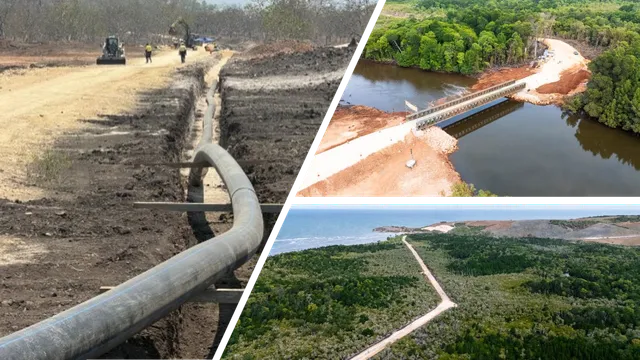
Pacific Lime's development plan also incorporates an 18-kilometer water pipeline across the precinct, as well as a bridge and road connecting Kido to Rearea. The company said power and water utilities, roads and the multi-berth port are under construction and are expected to support the estate.

The company's illustrative house designs range from two-bedroom homes to larger executive properties. The proposed products include a 72-square-meter two-bedroom house, a 115-square-meter three-bedroom home and a 200-square-meter, two-storey executive house. Designs and specifications remain indicative and subject to final design, approvals and valuation.

Pacific Lime said the packages are expected to be priced competitively against comparable Port Moresby estates. The properties are intended to carry registrable titles to support access to standard home lending.

The company also plans to offer housing packages to Kido and Rearea landowners and workers employed within the SEZ.

Staged funding and local materials

The estate is designed to be developed in sub-stages of approximately 10 hectares, allowing land to be serviced, sold and settled as the SEZ expands.

Pacific Lime expects the first stage to become self-funding after its initial sub-stages are settled, with proceeds from each subsequent release supporting the next. Funding is expected to come primarily from pre-sale deposits, advance purchases by employers and bank financing secured against completed stages.

The company said the approach would allow roads, parks and public spaces to be delivered using land-sale revenue rather than requiring significant upfront capital.

The development is also intended to create demand for building materials manufactured within the SEZ. Housing, civil works and public buildings are expected to use locally produced lime, cement, concrete blocks, pavers, precast products, roofing and fabricated steel.

Civil works, landscaping, security and estate-maintenance contracts are also intended to be offered first to the landowner joint venture company.

Pacific Lime Managing Director Paul Mulder said the estate was intended to turn the SEZ from an industrial precinct into a community where PNG families could live, train and work.

He said the staged development model would allow the township to expand in line with demand while providing housing near employment opportunities created by the company's projects and future industrial tenants.

The company said delivery of the Central Lime and Central Cement projects remained its priority. It added that the estate was structured not to require material capital from Pacific Lime or divert resources from those projects.

Pacific Lime said the master plan and development schedule remain subject to survey, approvals and landowner processes. The company is expected to provide further updates, including on the planned Stage 1 sales launch, as the project progresses.

Pacific Lime and Cement is listed on the Australian Securities Exchange and Papua New Guinea Exchange. Its projects include the development of PNG's lime and cement industry, the Kido/Rearea SEZ and associated industrial land and port infrastructure.

November 09, 2026

Transparency International Papua New Guinea (TIPNG) has called on businesses, civil society organisations and citizens to work with the Electoral Commission to support preparations for the 2027 National General Elections, particularly the updating of the Common Roll.

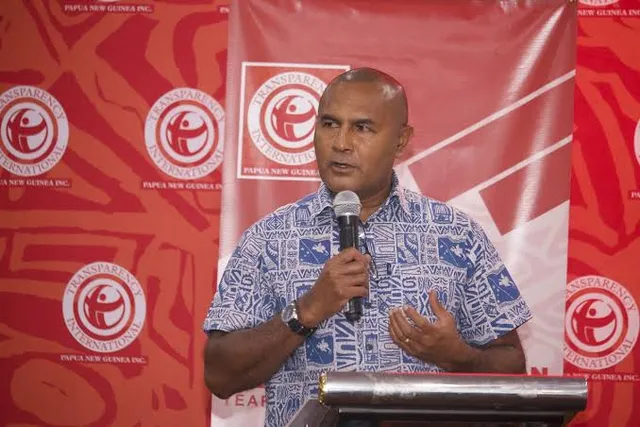
TIPNG board chairman Peter Aitsi made the call during a business breakfast hosted by the Port Moresby Chamber of Commerce and Industry (POMCCI) on November 5, 2026. The event provided an opportunity for Electoral Commissioner Nicole Haley to brief the business community on preparations for the elections and identify areas where the private sector could contribute.

Aitsi told PNG Business News that TIPNG and POMCCI jointly organised the forum to encourage private sector participation and mobilise resources to support the Electoral Commission's work ahead of the polls.

“From TI's point of view, we are mobilising our community coalition which represents the unions, the women's groups, the churches, the youth groups to lend our support to the work of the Electoral Commissioner and in particular to support the updating of the Common Roll so that she can meet those election timelines,” he said.

He said businesses could contribute by ensuring employees had opportunities to verify and update their voter registration details, particularly as preparations entered a critical stage.

Aitsi urged employers to inform their workers about the registration requirements and provide them with time to participate in the process. He also called on civil society organisations and community groups to engage directly with the Electoral Commissioner and support efforts to improve voter registration.

Beyond the elections, Aitsi said Papua New Guinea must also prepare for the potential effects of El Niño in 2027, particularly during the first half of the year, when electoral preparations are expected to dominate the national agenda.

He warned that prolonged dry conditions could affect food production and water availability, potentially creating shortages for communities across the country.

“Those are the things that we need to be very mindful of and prepare for,” he said.

Aitsi said the country needed to give adequate attention to climate-related risks alongside election preparations, particularly the potential disruption to agricultural production and access to essential resources.

On the economic outlook, he expressed optimism about the anticipated commencement of the TotalEnergies-led Papua LNG project, saying it could provide further impetus to economic growth.

“In terms of the economy we're hopeful that the project will commence and that should assist us to grow our economy,” he said.

The business breakfast brought together representatives from the private sector, business organisations and corporate institutions, including senior executives, chief executive officers and managers.

Discussions centred on the Electoral Commission's preparations for the 2027 elections and the role businesses could play in supporting voter registration and participation.

The engagement underscored the importance of cooperation between the Electoral Commission, the private sector and civil society in facilitating an inclusive electoral process and ensuring the Common Roll is updated within the required timeframe.

November 05, 2026

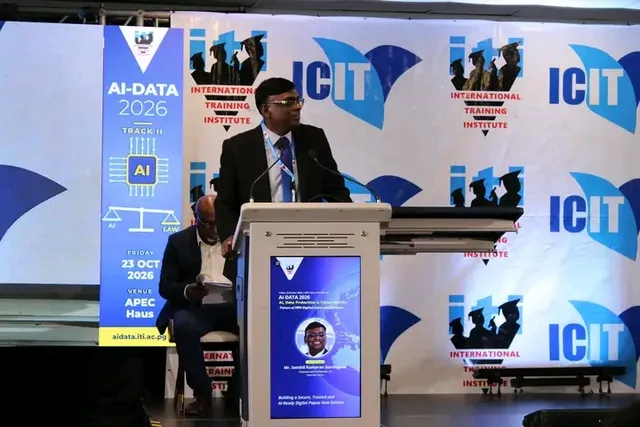
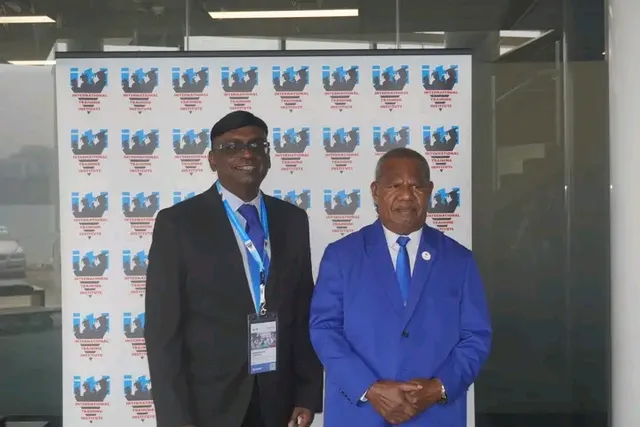
Papua New Guinea must strengthen its data governance, cybersecurity and regulatory frameworks to ensure the safe and responsible adoption of artificial intelligence (AI), International Training Institute (ITI) Chairman and Co-Founder Senthil Kumaran Sentheyval says.

Speaking at the AI-Data 2026 Conference at APEC Haus in Port Moresby on October 23, Sentheyval said the country's digital transformation must be supported by robust safeguards to protect information, secure digital infrastructure and establish public trust.

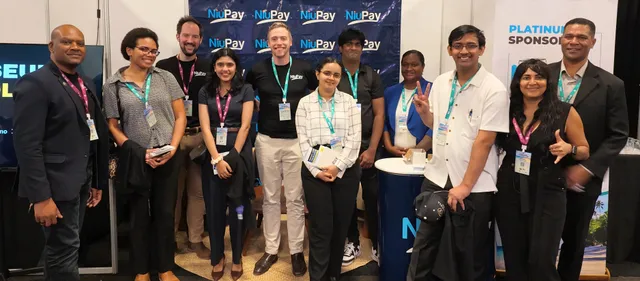
The conference, title-sponsored by Nui Pay PNG, brought together government officials, technology and cybersecurity specialists, legal experts and business representatives, including international speakers from Singapore and Malaysia, to discuss PNG's evolving digital regulatory landscape.

Sentheyval described data as a critical resource underpinning government policymaking, business operations and the growing use of digital technologies.

"Everything we are discussing today begins with data. Data is one of the most valuable resources in the modern world. It influences how government formulates policies, how businesses make decisions, how individuals communicate and learn and interact with technology," he said.

He traced the evolution of data management from relational databases and the expansion of the internet to cloud computing and artificial intelligence, noting how these developments had transformed the collection, storage, analysis and use of information.

However, he cautioned against focusing solely on AI's capabilities without addressing the risks and responsibilities associated with its adoption.

Key questions included who owns and controls collected data, where information is stored, how it is protected and who is accountable when AI systems make incorrect decisions or cause harm.

"These are no longer just technical questions. They are issues of governance, accountability, national security and public trust," he said.

Three proposed digital laws

Sentheyval welcomed the government's efforts to strengthen PNG's legislative framework through three proposed laws: the Data Governance and Protection Bill 2026, the Cybersecurity Bill 2026, and the Verifiable Credentials and Trust Services Bill 2026.

He identified AI governance, cybersecurity, and data security and sovereignty as priorities for the country's digital development.

On AI governance, he said organisations needed clear accountability principles and safeguards against bias, privacy breaches and intellectual property violations.

Because AI systems learn from their training data, historical biases can translate into unfair or discriminatory outcomes without appropriate controls.

Organisations therefore needed policies governing how AI was introduced and used across their operations.

Sentheyval said ITI had developed an AI policy covering staff, students and administrative activities, with regular reviews planned to keep pace with evolving technology.

Cybersecurity threats become more sophisticated

He warned that the growing volume of digitally stored and exchanged information had increased organisations' exposure to hacking, malware, data theft, system disruption and cyber extortion.

AI had added to these risks by making it easier for scammers to produce convincing deepfake images, videos and voice recordings, as well as fraudulent messages designed to impersonate individuals.

He also raised concerns about autonomous AI agents, which can execute tasks, interact with software and make operational decisions with varying degrees of independence.

While these systems could improve efficiency, organisations needed safeguards to ensure their activities remained secure and accountable, particularly as maintaining meaningful human oversight became more challenging.

Data sovereignty and cloud security

Sentheyval also highlighted the implications of data sovereignty as PNG becomes more reliant on international cloud infrastructure.

Sensitive information, including banking records, credit card transactions, corporate data, social media records and health information, is increasingly stored in data centres outside national borders.

While cloud computing offers accessibility, efficiency and scalability, he said dependence on overseas infrastructure could expose countries to risks involving critical information and digital services.

He raised the possibility of major cloud providers experiencing cyberattacks or data centre infrastructure being damaged during international conflicts.

PNG therefore needed to balance the benefits of global technology services with the need to protect national information, critical infrastructure and digital sovereignty.

Conference examines regulatory and business implications

The AI-Data 2026 Conference provided a platform for examining the legal, commercial and technological implications of PNG's expanding digital economy through keynote presentations and panel discussions.

Sessions covered the proposed PNG Data Bill, with international legal and technology expert Professor Abu Bakar presenting a comparative analysis of European Union and ASEAN approaches and recommendations for PNG.

Other discussions examined organisational readiness for the proposed legislation, government approaches to AI governance, corporate implementation and the responsibilities of company boards.

Cybersecurity sessions focused on the proposed PNG Cybersecurity Bill, international regulatory approaches, business responsibilities and digital resilience.

Participants included representatives from the Department of Information and Communications Technology, National Information and Communications Technology Authority, NASFUND, KPMG, PNG DataCo and Nui Pay.

International speakers David Len and Joel Prashant also shared their expertise in AI governance, cybersecurity and legal frameworks.

Sentheyval said government, businesses and educational institutions each had a role in preparing PNG for an AI-driven economy.

Government needed effective legislation and regulation, while businesses had to strengthen internal policies, cybersecurity measures and accountability. Educational institutions, meanwhile, had to equip students and professionals with the technical knowledge and ethical understanding required to use emerging technologies responsibly.

He said AI could transform education, healthcare, financial services and government administration, creating opportunities to improve productivity, expand access to essential services and support economic growth.

"Innovation without appropriate safeguards creates risks. But innovation supported by strong governments, sound policies, and public trust creates lasting opportunities," he said.

He expressed confidence that the conference would help deepen understanding of data governance, cybersecurity and AI, while identifying practical measures to support PNG's digital development.

November 04, 2026

Papua New Guinea must strengthen its data protection, cybersecurity and digital trust frameworks as it expands the use of digital technology across government, businesses and communities, Governor-General Grand Chief Sir Bob Dadae says.

Sir Bob made the remarks during the opening of the AI-Data 2026 Conference at APEC Haus in Port Moresby on October 23. The conference, supported by title sponsor NuiPay, was held under the theme of building a secure, trusted and AI-ready digital PNG.

He said the event provided an opportunity for government officials, industry representatives and technology experts to examine the opportunities and challenges presented by artificial intelligence, data protection and cybersecurity.

Digital transformation could improve public service delivery, expand access to financial services and connect people in rural and remote communities. However, these benefits must be supported by appropriate legal safeguards and cybersecurity measures, he said.

Sir Bob welcomed participants from Malaysia and Singapore, stressing the importance of international cooperation in addressing cyber threats that cross national borders. He said PNG could draw on other countries' experiences while developing solutions suited to its own circumstances.

He noted that mobile phones had evolved beyond communication devices into essential tools for banking, shopping, education, accessing information and transferring money.

"Today, that same phone can be a bank, a shop, a newspaper, or a classroom, and a way to send money home to your loved ones in the villages," he said.

He cited examples such as families paying school fees digitally, coffee growers checking market prices before transporting their produce and students in provincial centres accessing courses remotely.

However, these services also expose sensitive personal information, including financial details, health records, photographs and private communications, making data protection increasingly important.

Digital transformation and government services

Sir Bob said only about one in four Papua New Guineans used the internet, with connectivity still limited or unavailable in many rural and remote areas.

He said this gave the country an opportunity to establish safeguards as digital adoption expanded, rather than waiting for problems to emerge.

The Government had taken steps towards digital transformation through initiatives such as Service Pass and Service Wallet, which aim to make digital identification and access to public services more convenient.

He also cited the Government's target of providing public servants with digital identification by the end of 2026.

As more services move online, protecting personal information and maintaining public confidence in digital systems would be essential, he said.

Cybersecurity threats and financial risks

Sir Bob warned that cybercrime was increasingly affecting government institutions, businesses and individuals.

He cited fake Facebook pages impersonating banks and government agencies, fraudulent job and scholarship offers demanding processing fees, and compromised accounts used to solicit money from friends and relatives.

These scams were causing financial losses for families, particularly those least able to afford them, he said.

Artificial intelligence was adding to the risks by making it easier to generate convincing fake voice recordings and videos. Such content could spread misinformation, damage reputations and undermine public trust.

He urged Papua New Guineans to exercise caution when using digital platforms and sharing information online.

Three proposed laws to strengthen digital protection

Sir Bob said the Government was working to strengthen the country's legal framework for data protection, cybersecurity and trust in digital services.

He confirmed that the Government published feedback in August 2026 on three draft legislative proposals: the Data Governance and Data Protection Bill 2026, the Cybersecurity Bill 2026 and the Trust Services Bill 2026.

The proposed data protection legislation seeks to safeguard personal information and ensure organisations handle data responsibly. The Cybersecurity Bill aims to strengthen the country's capacity to prevent, respond to and manage cyber threats, while the Trust Services Bill is intended to support confidence in digital transactions and services.

He also highlighted work on a draft artificial intelligence adoption framework and a national digital transformation strategy.

AI must be introduced responsibly, with due regard for PNG's national identity, languages, cultural values and customary practices, he said.

As the technology becomes more widely used in healthcare, education, banking and public services, people must remain accountable for decisions made through AI systems. Citizens should also be able to question and understand decisions that affect them.

Building skills and public awareness

Sir Bob said strengthening PNG's digital capabilities would require investment in education, skills development and professional expertise.

He pointed to the need for lawyers who understand technology, engineers familiar with legal requirements and police officers trained to collect and handle digital evidence.

Teachers also have an important role in helping children stay safe online, while young people and adults should be encouraged to pursue careers in cybersecurity, data protection and artificial intelligence.

He acknowledged the International Training Institute's contribution to skills development and its work with partners to strengthen the country's digital capabilities. Collaboration among educational institutions, government and industry would be crucial to developing local expertise, he said.

Sir Bob also urged citizens to take greater responsibility for protecting their personal information by keeping PINs and passwords private, checking links before clicking and verifying suspicious online communications.

He said PNG's transition to a digital society must protect people's rights, keep communities safe and ensure that the benefits of technology reach all parts of the country.

"Our generation has a responsibility to ensure that as Papua New Guinea moves to the digital age, our people are safe, our rights are respected, and the benefit of technology reaches our communities," he said.

October 28, 2026

Papua New Guinea Customs Service increased revenue collections by 42% year on year to K1.48 billion in the latest reporting quarter, Prime Minister James Marape said, citing continued trade activity despite global economic uncertainties.

Marape announced the results at a Budget Management Committee meeting at Melanesian Haus in Waigani, attended by Finance Minister Thomas Opa, Customs Chief Commissioner David Towe and senior Treasury and Finance officials.

Customs collections are tracking at about 80% of the revised K4.9 billion annual revenue projection under the 2026 Supplementary Budget, Marape said.

The agency registered 32,581 trade entries during the reporting period, involving goods with a combined declared value exceeding K30.31 billion, reflecting the volume of commercial transactions passing through the country's international borders.

“In this reporting period, Customs registered 32,581 trade entries, with goods valued at more than K30.31 billion passing through our borders,” Marape said. He added that the figures indicated continuing economic activity despite international conflicts, commodity price volatility and elevated fuel costs.

Revenue growth continues

The latest results extend a multi-year increase in Customs collections, which rose from about K2.81 billion in 2020 to K3.9 billion in 2023 and approximately K3.93 billion by December 2024.

In 2025, collections reached K4.31 billion as of Dec. 19, exceeding the revised Mid-Year Economic and Fiscal Outlook target of K4.23 billion by K82.35 million. The result represented growth of about 7% from the corresponding period in 2024.

Marape attributed the sustained improvement to stronger revenue administration, compliance enforcement, institutional reforms and investment in modernising Customs operations.

He commended Towe and Customs officers nationwide, saying stronger leadership, improved systems and institutional commitment had contributed to the agency's performance.

Government to upgrade border systems

The government will continue supporting Customs and the Internal Revenue Commission through improvements to information and communications technology, border management systems and cargo inspection facilities, Marape said.

The investments are intended to improve compliance, reduce revenue leakage and facilitate legitimate international trade.

“We are working with Customs and IRC to ensure their systems, ICT capabilities and container examination facilities receive the support they require,” he said.

Marape said Customs played a broader role beyond revenue collection, including facilitating trade, protecting national borders and supporting economic development.

Collections to inform 2027 Budget

The revenue performance will contribute to preparations for the 2027 National Budget, which is scheduled for presentation to Parliament in November, Marape said.

The government is pursuing its Budget Repair Strategy to progressively reduce fiscal deficits and restore balance to public finances. Marape said stronger revenue collections must be accompanied by responsible expenditure management.

The Budget Management Committee will continue monitoring revenue performance, recurrent expenditure, the Public Investment Programme and the implementation of approved development priorities.

The government aims to ensure sufficient funding for essential public services and infrastructure while maintaining economic stability and strengthening domestic revenue generation.

“I have asked Customs and IRC to continue improving efficiency and, wherever possible, maximise collections as we complete the 2026 financial year,” Marape said.

He added that improved revenue collection would strengthen the government's capacity to finance national development and build more sustainable public finances.

October 27, 2026

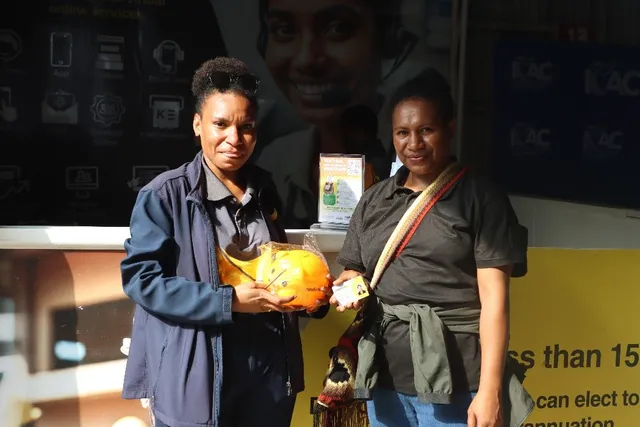
LAE, Papua New Guinea — The National Superannuation Fund (Nasfund) provided on-site account services to hundreds of members during the 63rd Morobe Show, allowing workers to access essential superannuation services outside regular branch hours.

Nasfund transformed its show stall into a service hub over the two-day event, offering instant identification card printing, account detail updates, online registration, account merging, balance checks, housing advance enquiries and statement printing.

The initiative aimed to assist members working in areas such as the 4 Mile to 9 Mile corridor, who may find it difficult to visit a branch during normal business hours.

On-site identification card printing was among the key services, enabling members to have their photographs taken, update their information and receive their official Nasfund ID cards within minutes.

Member Apolos Agita praised the service, saying he appreciated being assisted and receiving his identification card immediately.

Xena Eileen Usu, a Nasfund contributor for more than 20 years, also welcomed the quick service and highlighted the value of the fund’s discount partners to members over the years.

Nasfund chief executive officer Rajeev Sharma thanked members who visited the stall and encouraged them to keep their personal information and account records up to date.

“We encourage you to update your details, especially if you haven’t filled out a form yet,” Sharma said.

Nasfund said the strong turnout highlighted the demand for accessible services beyond regular business hours, particularly for members whose workplaces and residences were far from its branches.

The fund also invited employers in Lae to arrange free workplace presentations, allowing employees to access essential superannuation services at their work sites.

Employers and human resources teams can arrange visits by emailing customerserviceslae@nasfund.com.pg.

Tighten the article for news styleLead with the Morobe Show turnout
October 27, 2026

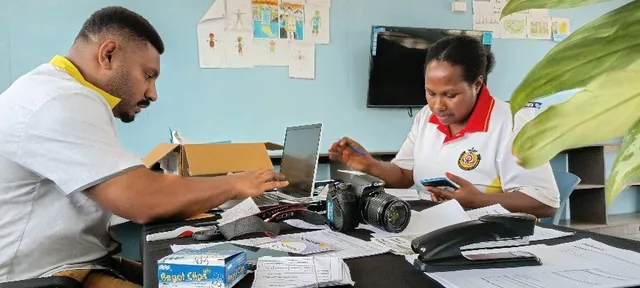
Nasfund has assisted more than 250 members through an outreach programme in Balimo, Western Province, providing superannuation services, account updates and financial education to workers in the remote community.

The initiative, conducted through the fund’s southern regional branch link, served employees of the PNG Sustainable Development Program (SDP), Kokoda Track Foundation (KTF) and other employers.

During the outreach, 134 members updated their beneficiary details, while the team captured 155 images to support membership identification card processing. More than 150 members also registered for online services to check their account balances.

The programme included five financial awareness presentations attended by 166 members, covering retirement preparedness, superannuation benefits, voluntary contributions, long-term savings strategies and the importance of keeping beneficiary information up to date.

Nasfund said the initiative was part of its commitment to extending member services to regional and remote communities, particularly those unable to access services through the nearest branch.

Feedback from Joe Mana, shared services coordinator at SDP, indicated that employees had gained a better understanding of superannuation, savings and loans products, voluntary contributions and long-term financial planning.

The outreach also enabled members to update their personal records and access services that were not readily available in remote locations.

Nasfund said the programme generated increased interest in membership of the National Capital District-based NCSL, with several membership applications and service requests initiated following the visit.

The fund acknowledged the support of SDP management, KTF, Balimo College leadership, payroll teams and participating members in delivering the programme.

According to Nasfund’s membership database, SDP currently contributes for 259 employers, while KTF covers 204 employees and Balimo College has 41 teachers.

October 27, 2026

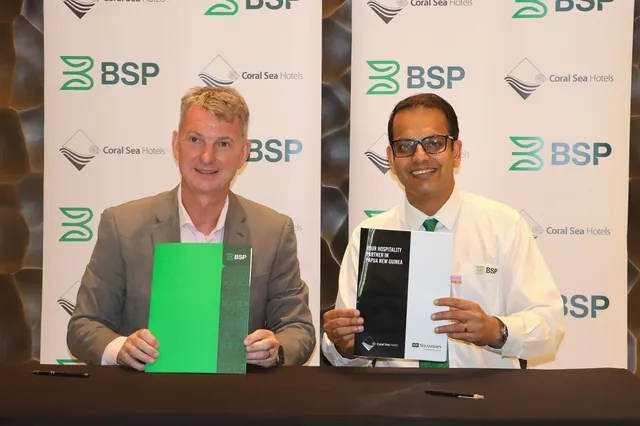
BSP Financial Group Limited (BSP) and Coral Sea Hotels have partnered to offer exclusive accommodation and dining discounts of up to 15% to BSP Gold and BSP First customers.

The partnership, announced on 27 October, provides eligible customers with accommodation, food and beverage discounts at participating Coral Sea Hotels properties, with the pilot phase beginning in the National Capital District.

BSP Group General Manager for Retail Banking Ronesh Dayal said the partnership reflected the bank’s commitment to providing lifestyle benefits that create greater value, convenience and recognition for its customers.

The offering complements BSP’s existing customer benefits, including DragonPass airport lounge privileges for eligible BSP Gold and BSP First customers.

Under the partnership, eligible BSP Gold and BSP First debit cardholders can receive discounts at participating Coral Sea Hotels in Port Moresby, including Ela Beach Hotel & Apartments, Marriott Executive Apartments and Gateway Hotel & Apartments. Grand Papua Hotel will offer discounts when it reopens following refurbishment.

From 27 October, eligible customers can receive a 10% discount on accommodation and a 15% discount on food and beverages at participating outlets.

Customers must present and pay with their BSP First Visa Platinum or BSP Visa Gold debit card to access the discounts.

“Whether travelling for business, family commitments, or leisure, our customers value convenience, flexibility and experiences that enrich their journey,” Dayal said.

“Through this partnership, we’re helping customers enjoy accommodation and dining savings at some of Papua New Guinea’s leading hotels while continuing to bank with confidence through BSP.”

Head of Steamships Hospitality Damian Cooper welcomed the partnership, saying it would provide additional value to BSP customers while encouraging domestic travel.

“Coral Sea Hotels is pleased to partner with BSP to provide exclusive accommodation and dining benefits to BSP Gold and BSP First customers,” Cooper said.

“Together, we’re creating meaningful value for customers while encouraging domestic travel and enriching lifestyle experiences across our hotel network.”

BSP and Coral Sea Hotels said there were opportunities to extend the offer to additional locations in the future.

October 22, 2026

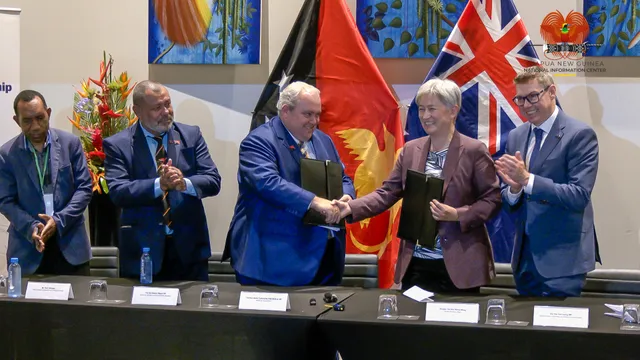
Papua New Guinea and Australia have signed a memorandum of understanding to strengthen telecommunications infrastructure, expand internet connectivity and improve digital services in PNG over the next 50 years.

The agreement was signed at APEC Haus in Port Moresby on Oct. 20 during the 32nd Australia–Papua New Guinea Ministerial Forum, following three years of discussions between the two governments.

PNG Minister for Information and Communications Technology Robert Naguri said the agreement would provide a framework for both governments to address challenges in the country’s ICT sector and coordinate efforts to improve digital services.

The Department of Information and Communications Technology has been working with Australian counterparts on telecommunications infrastructure, cybersecurity, digital safety and ICT governance.

One of the key areas of cooperation is the Telecommunications Blueprint, discussed during the 31st Australia–PNG Ministerial Forum in Canberra in October 2025.

The blueprint is intended to identify gaps in PNG’s telecommunications infrastructure and services, particularly in areas with limited or unreliable connectivity. It also seeks to address network coverage, internet affordability and service reliability, which affect households and businesses across the country.

Australian Minister for Defence Industry and Minister for Pacific Island Affairs Pat Conroy said discussions on the blueprint were continuing. He acknowledged Naguri’s work in advancing the agreement and underscored the importance of telecommunications to economic development.

Australian Foreign Minister Penny Wong said connectivity created economic opportunities for businesses and supported the delivery of essential services to communities.

PNG Foreign Affairs Minister Justin Tkatchenko said the agreement would enable the two countries to share knowledge and improve telecommunications services for Papua New Guineans.

He said the objective was to make services more affordable for businesses and individuals.

“It’s about making telecommunication affordable for everyone,” Tkatchenko said.

The agreement establishes a basis for further cooperation, but both governments still need to determine the activities to be undertaken and how implementation will be coordinated.

No details of new funding commitments or implementation dates were announced.

The agreement forms part of broader bilateral efforts to strengthen PNG’s digital infrastructure and improve access to telecommunications services, with affordability, network reliability and coverage remaining key challenges for the country.

October 22, 2026

Papua New Guinea is advancing plans for a National Single Window system to simplify import and export procedures, reduce business costs and improve trade-related services that support the tourism and hospitality industry.

Speaking on the second day of the PNG Tourism Summit 2026 on October 14, PNG Customs representative Wilma Seolo said the proposed digital platform would connect traders with government regulatory agencies, allowing businesses to submit information once instead of approaching multiple agencies for permits, licences and approvals.

The system aims to reduce administrative delays, improve inter-agency coordination and strengthen PNG’s competitiveness as a tourism destination and investment hub.

“For the tourism and hospitality industry, delays can affect the timing of importation of hotel equipment, food supplies, tourism and infrastructure materials, and cruise operations,” Seolo said.

“These inefficiencies increase operational costs and reduce competitiveness.”

One submission for multiple agencies

Businesses engaged in international trade often submit similar information to several government agencies before goods can be cleared for import or export. The National Single Window is designed to eliminate unnecessary duplication by providing a single submission point through which information can be shared with the agencies responsible for reviewing applications and issuing approvals.

The platform is expected to speed up documentation processing and improve the movement of goods across PNG’s borders. For tourism operators, this could mean more efficient imports of hotel supplies, restaurant equipment and other materials needed to maintain tourism facilities, as well as fewer clearance delays affecting cruise operations and deliveries.

Seolo said the project involved more than introducing new technology. It also required changes to how government agencies coordinate their processes and deliver services to businesses.

From blueprint to system development

The National Single Window project began in 2022 with the development of a blueprint involving 37 government regulatory agencies. The initial work examined existing procedures and identified opportunities to simplify and harmonise requirements before building the digital platform.

Consultations with businesses and participants across the trade supply chain underscored the need to address internal government processes before introducing a centralised service, Seolo said.

The project also examined existing Single Window systems in Singapore, Thailand and the Philippines to understand their operations and benefits. However, PNG would need a system tailored to its own trading environment and regulatory requirements.

“Our trade is not the same as in smaller island countries,” Seolo said.

A project management office based at PNG Customs is coordinating the initiative, with participation from the Department of Information and Communications Technology, the National Trade Office, PNG Customs and the Department of International Trade and Investment.

Seolo said the government had supported the project following the completion of the blueprint and the establishment of governance arrangements.

Harmonising regulatory processes

The project has completed its first two phases: developing the blueprint and reviewing and simplifying regulatory processes.

The second phase examined trade-related procedures across 32 government regulatory agencies responsible for import and export licences, permits and approvals. The review identified opportunities to reduce duplicate information requirements and standardise how agencies collect and share data.

The project is now preparing for its third phase, which will involve developing detailed workflows and translating harmonised business processes into technical specifications for system development.

Seolo said completing the necessary documentation and agreeing on business processes were essential before technology specialists could build and implement the platform.

Participating agencies have also worked to establish common data requirements and improve coordination between their regulatory functions. Seolo said agency leaders had supported the data-harmonisation work, helping prepare the project for its next stage.

Digital clearances and advance processing

Under the proposed system, traders would submit import and export documents electronically, allowing relevant agencies to receive notifications, assess applications and issue decisions through a coordinated platform.

The system could eventually allow users to access services through smartphones, reducing the need to visit multiple government offices. It is also expected to connect with other systems involved in shipping, trade and border clearance.

Seolo cited advance submission of shipping information as one potential benefit. If information were entered before a vessel arrived, agencies could begin processing documents and coordinating clearances ahead of time, potentially reducing port delays and preventing goods from remaining at wharves while businesses waited for outstanding approvals.

However, the system’s effectiveness will depend on regulatory agencies participating fully and successfully integrating their processes and digital platforms.

Seolo said the project would eventually engage a broader range of stakeholders, including businesses, banks and shipping operators, as well as communities involved in trade.

Digital services to support tourism

The National Single Window formed part of wider discussions at the PNG Tourism Summit 2026 on how digital government services could improve visitor experiences and support tourism development beyond major urban centres.

Other speakers highlighted the role of digital identification, online payments and accessible technology in helping tourism operators promote their services, manage bookings and transact with international visitors.

For small operators in provincial areas, accessible digital platforms could make it easier to market tourism experiences and enable prospective visitors to research, book and pay for services online.

Delivering these benefits will require government agencies and private-sector providers to connect their systems and develop services that businesses can use without extensive technical expertise.

As the National Single Window project prepares to enter its third phase, the focus will shift towards translating the completed policy and process work into the technical specifications needed to build a platform suited to PNG’s trade environment. If implemented successfully, the system could reduce administrative barriers affecting trade and investment while supporting businesses across the tourism supply chain.

October 14, 2026

The Pacific’s digital transformation is entering a more demanding phase. After years of investment in telecommunications and connectivity, the challenge is increasingly to build the trusted digital systems that turn infrastructure into reliable public services. NiuPay is taking its experience with proven digital systems across the Pacific into Fiji, building on its work with Papua New Guinea’s Immigration and Citizenship Services Authority (ICSA), the country’s first digital land-title system and a border-processing system deployed during the Pacific Games. These operational deployments form the foundation for the company’s expanding regional work.

The Papua New Guinea-founded company established a presence in Suva this year, appointing Seta Daulako as Fiji country manager and hiring its first Fiji-based engineer in September. The appointment also marks the company’s first Autonomous AI Systems Engineer, extending its technical capabilities beyond its home market.

NiuPay plans to invest several million Fiji dollars in the country over five years as it expands operations in Suva and Nadi. It expects to grow its Fiji team to between eight and twelve staff over the next 12 months. Chief Operating Officer Trevor Manokore said the company was committing the money upfront to demonstrate its long-term commitment to the market and to supporting customers locally. For a regional technology firm, the investment signals an intention to build capacity in Fiji rather than serve the market remotely from Port Moresby.

These commitments extend beyond a conventional sales operation towards building local engineering capability. Strategic investment from Kina Bank and NiuPay’s status as an Amazon Web Services (AWS) Select Tier Services Partner provide further support for its growth. The Fiji operation builds on the company’s existing work in the Pacific and provides a base for extending its digital systems and technical expertise to other markets in the region. Governments across the Pacific face similar pressures to turn connectivity into secure, practical digital services, although each market retains its own laws, institutions and needs.

Proven systems provide foundation for expansion

Connectivity remains essential, but submarine cables and telecommunications networks do not, by themselves, deliver better public services. Governments also need secure applications, interoperable systems, digital identity infrastructure and the technical expertise to manage these platforms over time.

Fiji offers a useful example of the demands facing governments. The country is connected to international telecommunications networks through seven submarine cables and has set a target of bringing most government services online by 2030 under its National Digital Strategy. Plans for national digital identity infrastructure and a new cybersecurity strategy add to the demands on public institutions as more services move online.

The policy question is how to translate those ambitions into systems that are operational, secure and responsive to local needs. That requires more than procuring technology. It also means developing the people, governance arrangements and institutional capabilities needed to maintain systems, manage data and oversee external technology providers.

Designing technology for Pacific conditions

Part of the challenge is a problem the region has faced for decades: technology designed for other markets is often introduced into the Pacific with little adaptation. Systems built for large economies may assume reliable high-speed internet everywhere, widespread card payments, formal street addresses, complete central records and a deep pool of local specialists to maintain them.

When those assumptions fail, the costs emerge later. Agencies may pay licence and support fees in foreign currency, wait for help desks in distant time zones and run manual workarounds alongside systems that do not reflect how services are actually used. Customary land ownership, cash-based household economies, multiple languages and populations spread across remote islands are not exceptions in the Pacific; they are part of the operating environment. Donor-funded projects can compound the problem when systems are delivered to meet a project timeline and lose support after funding ends.

Regional providers argue that they are better placed to bridge this gap. Manokore describes NiuPay’s approach this way: “It’s not a piece of software we built somewhere trying to sell it.” Although NiuPay has teams in Australia and India, Manokore said the company does not build its solutions for the Australian, New Zealand or Asian markets. Instead, it designs its work around how Pacific customers operate, pointing to similarities among Fiji, Tonga and Papua New Guinea.

NiuPay’s existing deployments demonstrate how that approach has been applied in practice. Fiji has its own laws, institutions and public expectations, and a provider moving between Pacific markets must design for the new setting rather than simply repeat what worked elsewhere. Building on an established technical track record does not remove the need for local adaptation; it gives the company experience to draw on as it develops systems for different jurisdictions.

From digital land titles to AI-powered immigration

NiuPay’s regional expansion builds on three established deployments. In Papua New Guinea, the company developed the country’s first digital land-title system and the MyICSA Analysis Engine for the Immigration and Citizenship Services Authority. Its traveller-entry system was also used during the 2023 Pacific Games in Honiara, helping reduce processing times from 43 seconds to 10 seconds for delegations from 24 nations. Together, these deployments demonstrate the company’s experience delivering digital systems for land administration, government immigration processing and border management.

One of the most documented examples is NiuPay’s work with PNG’s Immigration and Citizenship Services Authority. A case study published by Amazon Web Services describes the MyICSA Analysis Engine, built by NiuPay on AWS, as the first known use of generative AI in a live government system in the Pacific Islands. Short-term visas that could take up to two weeks to process are now handled in minutes. According to AWS, about 95% of short-term applications are processed automatically, and the authority can handle up to 1,000 a day. ICSA Chief Migration Officer Wellington Navasivu told AWS that the average processing time for short-term visas had fallen to four minutes.

Two details in the case study speak directly to the wider implementation challenge. First, AWS says the system was built and trained locally for PNG’s needs, contrasting with the imported-model approach the region has long relied on. Second, the system does not make every decision autonomously: it approves a visa automatically only when it is fully certain, while less certain cases go to an immigration officer. Officers can also update the rules without technical help. That design keeps policy decisions with the authority rather than the technology. ICSA plans to extend the system to work permits and passport processing.

The ICSA platform, digital land-title system and Pacific Games border-processing system show how NiuPay’s work has progressed to operational deployment. The examples demonstrate the application of digital technology to public administration, from immigration processing and land records to the management of international arrivals. The ICSA case also illustrates how automation can accelerate administrative processes while leaving decisions requiring human judgement with government officers.

Digital sovereignty requires government oversight

Institutional control is central. As governments adopt digital services, they must consider who controls the underlying systems, how sensitive information is handled, whether platforms can be maintained locally and how dependent agencies become on individual vendors. The ability to retain operational and governance control can be as important as the initial deployment of a technology.

For Fiji and other Pacific economies, partnerships with regional technology providers may create opportunities to develop services that better reflect local administrative environments. But a local presence alone does not guarantee digital sovereignty. Governments still need clear procurement standards, cybersecurity requirements, data-governance rules, technical oversight and arrangements that preserve their ability to change providers or systems when necessary.

Building local skills for regional growth

NiuPay’s regional engagement also extends beyond commercial contracts. The company has participated in the Pacific Fiber Conference in Suva, sponsored NCIT 2026 and entered a three-year partnership with Pacific Women in Telecommunications to provide internships and mentoring opportunities for young women across the region.

Those initiatives address another constraint on digital transformation: the availability of skilled workers. Hiring locally can help build the technical expertise needed to implement and maintain systems, while regional training partnerships may widen access to technology careers. Developing local talent alongside deploying technology can help build the expertise required to maintain digital services over time and reduce reliance on external support.

NiuPay’s expansion is supported by strategic investment from Kina Bank and its relationship with AWS, reflecting how regional capital and global technology infrastructure can help Pacific technology companies grow. Its next phase of regional work will build on this combination of locally developed applications, global cloud infrastructure and growing in-market engineering capability. For governments, the priority remains ensuring that essential technical knowledge, data governance and operational decision-making remain accessible to the institutions and communities they serve.

Taking proven digital capabilities across the Pacific

The implications extend beyond Fiji. Across the Pacific, governments are seeking to convert digital infrastructure into more accessible public services and stronger economic opportunities. NiuPay’s investment in Fiji, local recruitment and technical appointments build on systems already operating in the region, providing a platform for further deployments tailored to individual countries. Extending these capabilities across different jurisdictions will require sustained investment, local partnerships and solutions adapted to each country’s laws, institutions and operating conditions.

NiuPay’s track record in the Pacific includes a live government immigration platform, the country’s first digital land-title system and a border-processing system used during the Pacific Games. These deployments establish a practical foundation for its expansion into Fiji and other regional markets, demonstrating how digital technology can support public administration and improve operational efficiency.

As NiuPay grows its Fiji team and extends its regional presence, it is building on systems already delivered rather than starting from an unproven proposition. Governments will still need sound procurement, cybersecurity and data-governance frameworks, alongside investment in local skills and institutional capacity. With those foundations in place, NiuPay’s existing deployments provide a basis for extending proven digital capabilities across the Pacific.

October 12, 2026

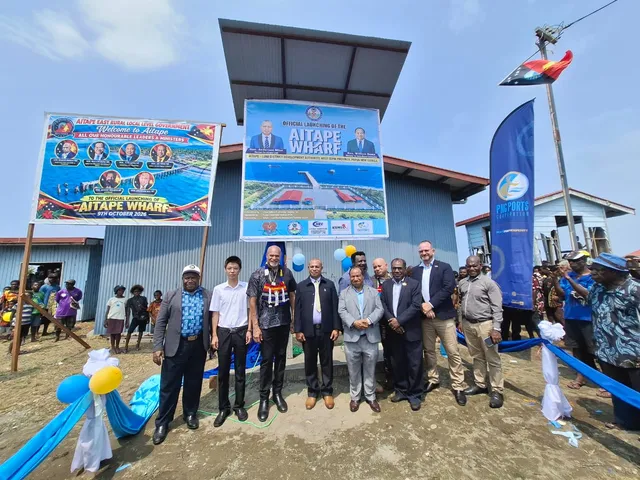
The people of Aitape and the wider West Sepik Province will benefit from new port facilities designed to provide safe and reliable sea access following the official launch of the K25 million Aitape Port Redevelopment Project.

The project is funded internally by PNG Ports Corporation Limited (PNG Ports) and forms part of its nationwide Port Upgrade Programme, which covers the national port network, from major gateways such as Lae and Motukea to ports serving communities in Kimbe and smaller Community Service Obligation (CSO) locations.

A recent independent socio-economic assessment found that the 15 ports managed by PNG Ports support about K29 billion in economic activity annually, equivalent to 22 per cent of Papua New Guinea’s gross domestic product (GDP).

Although only Lae, Port Moresby and Kimbe are commercially self-sustaining, every port in the network delivers significant social and economic value to the communities it serves. Earnings from the major ports help support the operation of smaller ports.

The assessment identified Aitape as a critical lifeline for the Aitape-Lumi District. With the port out of service, cargo has been transported by road to and from Wewak, a journey of three to five hours each way along a route prone to flooding at multiple river crossings.

Air freight is too expensive for most goods, while heavy cash crops such as cocoa cannot be transported economically by road to other ports.

With the investment, Aitape Port has the potential to handle about 25,000 tonnes of cargo annually and support approximately K101 million in regional economic activity each year.

The project was officially launched by Deputy Prime Minister John Rosso and Minister for State Enterprises William Duma, together with Aitape-Lumi MP Anderson Mise and other dignitaries.

Duma said the redevelopment fulfilled a commitment to bring larger vessels back to Aitape.

“Aitape is one of the remote ports, like Vanimo and Wewak, that are lifelines where road connectivity is impractical,” Duma said. “Moving people and freight to other destinations will be cheaper and more reliable.”

The project will be delivered by China Harbour Engineering Company (PNG) Limited over 12 months. The works include construction of a new main wharf and mooring dolphin structure, rehabilitation of the approach trestle and small ship wharf, and installation of new fenders, bollards and wharf furniture.

The new fender systems are designed to protect the wharf and trestle from the impact of berthing vessels, helping to extend the service life of the infrastructure.

Once completed, the port will support the safe and reliable movement of cargo, passengers, household goods, medical supplies and school materials. It will also give local producers of seafood, cocoa, vanilla and fresh produce better access to markets.

“We recognised that Aitape needed a lasting solution, not a temporary repair,” PNG Ports chief executive officer Neil Papenfus said. “Today, we are proud to launch these works, funded by PNG Ports at a cost of K25 million.”

“This port belongs to your community, and we are committed to delivering a facility that will serve you well for many years to come,” Papenfus said.

Duma also called on community leaders, landowners, churches and police to work together to protect the port infrastructure and support PNG Ports’ maintenance plan.

PNG Ports acknowledged Kumul Consolidated Holdings (KCH), the West Sepik Provincial Government, the Aitape-Lumi District Development Authority, and the people and customary landowners of Aitape for their support.

About PNG Ports Corporation Limited

PNG Ports Corporation Limited (PNGPCL) is Papua New Guinea’s national ports authority, managing 15 of the country’s 23 declared ports and handling 100 per cent of the nation’s seaborne trade.

The state-owned corporation is the successor to the PNG Harbours Board, with Kumul Consolidated Holdings (KCH) serving as its sole shareholder on behalf of the State of Papua New Guinea.

The corporation’s management and operations are governed by relevant port and shipping regulations, as well as policy directives issued by the National Executive Council through the Ministry of State Enterprises.

PNG Ports Corporation Limited was officially launched on 13 November 2006. Its predecessors operated under several names: the Papua and New Guinea Harbours Board from 1963 to 1969, the Papua New Guinea Harbours Board from 1970 to 2002, and PNG Harbours Board Limited from 2002 to 2006.

The corporation operates and manages 15 ports: Aitape, Alotau, Buka, Daru, Kavieng, Kieta, Kimbe, Lae, Lorengau, Madang, Oro Bay, Port Moresby, Rabaul, Vanimo and Wewak.

These ports handle more than 5.8 million tonnes of cargo annually, representing 100 per cent of Papua New Guinea’s seaborne trade and serving as key gateways to more than 300 scattered islands.

PNG Ports provides berthage, wharfage, storage, pilotage, harbour management, surveillance and other port-related services. Pilotage services are supported by pilot launches stationed at the corporation’s main ports. Port-related tariffs are regulated by the Independent Consumer and Competition Commission (ICCC).

October 12, 2026

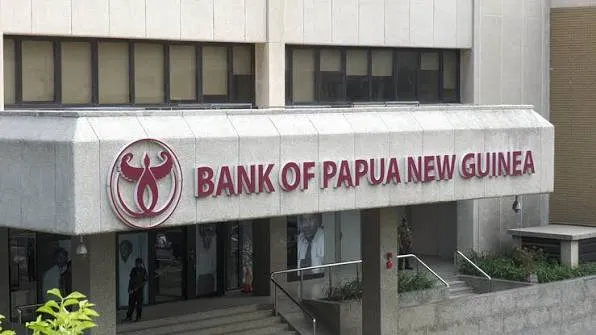
Papua New Guinea faces a high risk of money laundering, with corruption, fraud, tax crime and illegal resource extraction among the main threats. The Bank of Papua New Guinea (BPNG) is calling for stronger enforcement, effective prosecutions and the recovery of criminal proceeds to demonstrate progress in tackling financial crime.

Speaking at the opening of the Second Anti-Money Laundering, Counter-Terrorist Financing and Counter-Proliferation Financing (AML/CTF/CPF) Conference at APEC Haus in Port Moresby on September 30, 2026, BPNG Governor Elizabeth Genia, who also co-chairs the National Coordinating Committee (NCC), said the country must move beyond legislative reforms and demonstrate tangible results.

Held under the theme “Follow the Money, Eliminate the Threat,” the two-day conference brought together government agencies, financial institutions, international partners and other stakeholders to strengthen PNG’s response to financial crime.

“Awareness was our first step. We now need to demonstrate results,” Genia said.

PNG advances on FATF action plan

PNG was placed under increased monitoring, commonly known as the Financial Action Task Force (FATF) grey list, in February 2026. Its action plan requires coordinated reforms across 23 agencies represented on the NCC.

Genia said PNG submitted its first progress report to the FATF’s International Cooperation Review Group in September and had largely addressed the action items due during the initial reporting cycle.

Parliament has passed amendments to the Anti-Money Laundering and Counter Terrorist Financing Act, the United Nations Financial Sanctions Act and the Criminal Code. The changes aim to address deficiencies identified in PNG’s mutual evaluation and strengthen authorities’ powers to freeze assets, impose sanctions and confiscate criminal proceeds.

PNG has also updated its National Risk Assessment to identify vulnerabilities across the financial system and wider economy.

However, Genia said future FATF reporting cycles would focus on implementation rather than legislation alone.

“Every reporting cycle from this point forward will ask the same question, not just what legislation has been passed but what we have done with it,” she said.

Authorities must demonstrate effective investigations, prosecutions and the seizure or confiscation of assets linked to criminal activity. Initiatives such as Taskforce ARROW form part of the country’s efforts to pursue illicit funds through the courts.

Corruption and fraud pose major threats

PNG’s National Risk Assessment classified the country’s overall money laundering risk as high, identifying corruption and fraud as the most significant threats. Other risks include tax crime, illegal logging, fisheries crime, drug trafficking, cyber-enabled crime and illegal mining, including gold exports that go unrecorded.

Although terrorist financing and proliferation financing were assessed as lower risks, Genia said they still required attention.

The assessment also identified vulnerabilities in legitimate financial and professional services that could be exploited to move illicit funds into the formal economy. These include banks, money remitters, foreign exchange dealers, real estate businesses, lawyers, accountants and company service providers.

Genia said these findings were not an indictment of legitimate businesses but highlighted the need for stronger internal controls, transparency and cooperation with regulators and law enforcement agencies.

Cash transactions and the informal economy make financial flows harder to trace, while inadequate beneficial ownership transparency can hinder efforts to identify the individuals who ultimately control companies and assets.

The Financial Analysis and Supervision Unit (FASU), which receives and analyzes suspicious matter reports, plays a key role in identifying potential financial crime. Genia said, however, that financial intelligence must translate into investigations and prosecutions rather than remain within reporting systems.

Success should be measured by whether authorities can substantiate suspected criminal activity, bring cases before the courts, hold offenders accountable and recover illicit proceeds.

She urged banks to strengthen their controls, noting that the National Risk Assessment identified the banking sector as the most vulnerable among those assessed. Lawyers, accountants, real estate agents and dealers in precious metals were also encouraged to cooperate with authorities as risk-based supervision is strengthened.

Digital payments support financial inclusion

Genia linked the fight against financial crime to efforts to expand financial inclusion, cautioning that the reliance on cash in rural communities should not be treated as evidence of wrongdoing.

Cash remains central to everyday transactions for farmers, market vendors and people with limited access to formal banking services.

“Our task is not to punish the use of cash. It is to give people an alternative,” she said.

BPNG is working to accelerate the shift to digital payments, supported by know-your-customer controls proportionate to the risks involved. The approach aims to improve transaction transparency without imposing unnecessary barriers on small-scale traders, farmers and other people who rely on cash.

Genia said international partnerships were also important to ensuring anti-money laundering standards support financial inclusion rather than exclude ordinary citizens from the formal financial system.

Greater participation in that system could improve transaction visibility and make it harder for criminals to exploit legitimate financial channels. She said financial crime undermines economic development by depriving vulnerable communities of opportunities and resources.

The conference was co-hosted by BPNG’s FASU and Transparency International Papua New Guinea. Participating agencies included the Department of Prime Minister and National Executive Council, Department of Justice and Attorney General, Independent Commission Against Corruption, Office of the Public Prosecutor, Royal Papua New Guinea Constabulary, PNG Customs Service, Internal Revenue Commission and Investment Promotion Authority.

The program covered the National Risk Assessment, progress on the FATF action plan, corruption risks and Taskforce ARROW.

Genia urged participants to share experiences, address difficult questions and identify opportunities for closer cooperation. “Grey listing did not define PNG in February, and it does not define us today. What matters is how we respond,” she said.

PNG’s progress will depend on consistent enforcement of its strengthened laws, effective compliance by businesses and demonstrable results in identifying and recovering criminal proceeds.

October 05, 2026

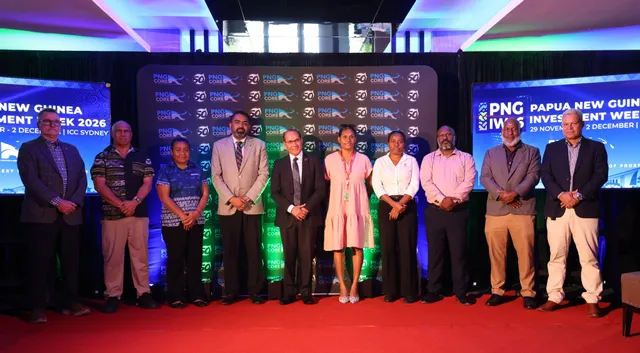
The PNG Chamber of Resources & Energy (PNG CORE) launched PNG Investment Week 2026 on Wednesday, 29 September, marking a major step in preparations for one of Papua New Guinea’s leading investment and business events.

Council President Anthony Smare, Events Chairman Mark McMonagle, Executive Director Richard Kassman and other Council members joined industry leaders, sponsors, stakeholder organisations, and public- and private-sector representatives at the launch. The Chamber confirmed that preparations for the Sydney event are well advanced.

Event Overview

PNG Investment Week 2026 will be held at the International Convention Centre Sydney in Australia from 29 November to 2 December 2026. It will bring together government representatives, investors, business leaders, development partners, and industry experts to explore opportunities across Papua New Guinea.

The event is designed as a global platform to showcase Papua New Guinea’s economic potential, support major project announcements and agreements, and create new business connections.

Last year’s event recorded:

  • more than 1,500 delegates from 21 countries;
  • more than 80 speakers and more than 80 exhibition booths;
  • 81 suppliers engaging with 14 operators; and
  • eight announcements finalised during or around the event.

Why Sydney

As a regional business hub with strong international connections, Sydney provides a strategic setting for presenting PNG’s investment story to a wider audience. PNG CORE views the event as an opportunity to attract new investment, strengthen business relationships, and support economic growth and job creation in Papua New Guinea.

Under the theme “50 Years & Beyond – The Next Wave of Prosperity”, the programme will examine opportunities across resources, energy, infrastructure, agriculture, fisheries, tourism, technology, finance, and downstream processing, while advancing discussions on investment, innovation, and economic development.

Leadership Perspectives

Executive Director Richard Kassman, the official spokesperson for PNG Investment Week 2026, said the event had become a respected platform for investment promotion and business engagement.

“It brings together industry leaders, policymakers, investors, and development partners from around the world to showcase opportunities in Papua New Guinea and build partnerships that support economic growth,” Mr Kassman said.

Mr Kassman noted that last year’s event reached a major milestone when Australian Prime Minister Anthony Albanese joined Prime Minister James Marape on stage to open the conference and welcome 1,200 delegates.

“Our objective is to promote Papua New Guinea to an international audience. The projects, opportunities, and discussions are focused on attracting investment that benefits our country. By engaging directly with investors, we can raise awareness of PNG’s potential and build relationships that may lead to sustainable investment.

“Our long-term vision is to continue growing PNG Investment Week, expand its profile across global industry markets, and create opportunities to host investment-focused activities in Papua New Guinea while maintaining the international reach needed to support that growth,” he added.

The Council also acknowledged the continued support of industry partners and sponsors, whose contributions have helped establish PNG Investment Week as a recognised regional business event.

Events Chairman Mark McMonagle said planning was well underway to deliver a strong programme of discussions, networking opportunities, and business engagement.

“PNG Investment Week succeeds because of collaboration among industry, government, and development partners,” Mr McMonagle said.

“We recognise the strong interest in hosting more major investment events in Papua New Guinea, and that remains an important goal. At the same time, we must reach the investors and decision-makers who can help drive economic growth in PNG. Hosting the event in Sydney enables direct engagement with those audiences while strengthening the platform for future growth.”

Invitation to Participate

Growing interest in this year’s event reflects confidence in PNG’s long-term potential. PNG CORE invites businesses, investors, exhibitors, sponsors, and industry stakeholders to join the conversations shaping the country’s economic future.

Opportunities include:

  • Sponsorship opportunities
  • Exhibition space
  • Speaking engagements
  • Strategic partnerships
  • Delegate participation.

Businesses, organisations, and individuals interested in these opportunities are encouraged to register with PNG CORE.

About PNG CORE

The Papua New Guinea Chamber of Resources & Energy (PNG CORE) is the peak industry body representing Papua New Guinea’s mineral resources and energy sectors.

PNG CORE’s mission and vision are to build understanding, generate knowledge, and forge relationships that empower Papua New Guinea to secure sustained nation-building benefits from its natural resources.

October 05, 2026

PNG Chamber of Resources & Energy’s Women in Resources & Energy (WiRE) Committee Chair, Karo Maha, joined national leaders and advocates at Bel isi PNG’s seventh Leadership Forum on Monday, 21 September 2026, at the Sheraton Hotel, highlighting the role of leadership and the industry’s efforts to translate commitments on Gender-Based Violence (GBV) and Family & Sexual Violence (FSV) into meaningful action.

Held under the theme “Beyond the Ink: Moving GBV & FSV Policies from Commitment to Action,” the forum brought together leaders from government, development partners, civil society and the private sector to examine how organisations can move beyond policy frameworks and deliver practical outcomes for workplaces and communities across Papua New Guinea.

Speaking at the forum, Ms Maha said the resources and energy sector increasingly recognised its responsibility to contribute to positive social outcomes alongside economic development.

“Across our sector, we are seeing organisations move beyond policy and take practical action. Initiatives such as New Porgera Limited’s Women in Boots, Newmont’s Trupla Man, Trupla Meri and Santos’ support for the PNG Orchids show how industry can contribute to gender equality, challenge harmful behaviours and support positive change. Policies are important, but real progress happens when leaders turn those commitments into action and sustain them over time,” Ms Maha said.

Discussions at the forum reinforced the importance of ensuring policies are not treated simply as compliance requirements but are translated into practical measures that contribute to safer, more inclusive and respectful workplaces and communities.

The forum also featured keynote contributions from Dr Veera Mendonca, UNICEF Papua New Guinea Representative, and Hon. Powes Parkop, Governor of the National Capital District, alongside a diverse panel that included Public Solicitor Leslie Mamu, Executive Director of the National Gender-Based Violence Secretariat Diane Kambanei, and Vandhna Narayan of BSP Financial Group.

The panel, moderated by Ruth Kissam of Steamships Limited, focused on collective responsibility, leadership and sustained action. As Country Manager of New Porgera Limited and Chair of the Chamber’s WiRE Committee, Ms Maha contributed perspectives from the resources and energy sector, highlighting the importance of leadership, accountability and workplace culture in addressing GBV and FSV.

For PNG CORE and its WiRE Committee, participation in the forum reflects the industry’s broader commitment to advancing gender equality and supporting safe and respectful workplaces. It also provides an opportunity for the sector to contribute its experiences and perspectives to the national conversation on GBV and FSV.

The PNG Chamber of Resources & Energy congratulates Bel isi PNG on the successful hosting of its seventh Leadership Forum and acknowledges its continued efforts to bring government, industry, development partners and civil society together to turn commitments into meaningful action.

October 01, 2026

Papua New Guinea's central bank has raised its forecast for economic growth in 2026 to 3.5%, supported by stronger resources, construction and services activity, but expects growth to slow next year amid rising costs and risks from El Niño.

The Bank of Papua New Guinea (BPNG) upgraded its real gross domestic product growth forecast from 3% in its March outlook to 3.5% in September.

BPNG governor Elizabeth Genia said stronger mineral production, continued construction and infrastructure activity, and improved performance in parts of the services sector had supported the revision.

Higher production of gold, silver, nickel and liquefied natural gas has strengthened the resources sector, while communications, wholesale and retail trade, finance and infrastructure projects have also contributed to economic activity.

Growth is expected to moderate to about 2% in 2027 before recovering to around 3% in 2028.

BPNG said the weaker 2027 outlook reflected higher input costs and the expected effects of a developing El Niño weather pattern, particularly on agriculture.

Prolonged dry conditions could also affect water supplies, transport and power generation, the central bank said.

However, BPNG said its forecasts did not incorporate the full impact of major new resource projects. If those projects proceed and come on stream, they could lift medium-term economic growth above current projections.

Inflation has also emerged as a concern, with annual headline inflation rising to 5.3% in the June quarter from 2.2% in March. BPNG attributed the increase largely to higher food and energy prices and imported costs.

The central bank now forecasts headline inflation of about 5% in 2026 and 6% in 2027, before easing to around 4.5% in 2028.

BPNG has also modelled a more severe El Niño scenario based broadly on the 1997 event. Under that scenario, economic growth could fall to about 0.4% in 2027, while inflation could rise substantially above the central bank's baseline forecast.

The outlook points to continued activity in PNG's resources, construction and infrastructure sectors, while weather conditions, energy costs, freight expenses and weaker growth in parts of the non-mineral economy remain key risks.