Businesses already operating in Papua New Guinea (PNG) or considering investing in the country would be aware that the PNG Government has stated its intention to promote the growth of micro, small and medium-sized enterprises (MSMEs).
Proposed changes to the Foreign Investment Regime The latest proposal from the PNG Government in this field is the Investment Promotion (Amendment) Bill 2019 (IPA Amendment).
An Explanatory Memorandum, 2 sets of Frequently Asked Questions, and a mark-up of the existing Investment Promotion Act 1992 (Existing Act) as it would be amended by the IPA Amendment are available on the Investment Promotion Authority’s website, www.ipa.gov.pg.
Contrast with the proposed Foreign Investment Regulatory Authority Bill 2018 Before looking at the IPA Amendment itself, it is worth noting that the IPA Amendment effectively replaces the proposed Foreign Investment Regulatory Authority Bill 2018 (FIRA Bill) which was put before the PNG Parliament in February 2019, but then withdrawn.
The FIRA Bill would have substantially changed the regulatory framework for foreign investment in PNG, and attracted substantial criticism regarding:
• the extent of the restrictions imposed on foreign investment, which it was claimed would result in negative economic impacts; and
• the lack of consultation with the business community before the preparation and introduction of the FIRA Bill. Features of the FIRA Bill that attracted most comment, such as:
• imposition of a minimum PGK10 million investment requirement; • application of a “national benefit” test on new applications;
• a 3 year sunset period for existing foreign owned operations in reserved activities;
• a requirement for a licence for a minority foreign investment in a majority PNG owned enterprise are not repeated in the IPA Amendment.
General comments on the IPA Amendment The IPA Amendment tries to achieve more of a balance between promoting MSMEs and the encouragement of foreign investment, and it draws back from the more extreme aspects of the FIRA Bill.
However, the PNG Government’s primary aim remains encouraging the promotion of MSMEs and the IPA Amendment proposals should be read against that background.
While there are a number of positive aspects to the IPA Amendment (its promise of quicker and more transparent processing of applications for foreign investment certificates is certainly welcome), much of the real detail of how the new system will operate will be in regulations that are not yet drafted.
It is possible that some of the elements of the FIRA Bill that attracted criticism could be resurrected in those regulations.
Changes to the system under the Existing Act that would be made by the IPA Amendment If the IPA Amendment as proposed became law, and assuming that the FIRA Bill is not reintroduced, major changes to the existing foreign investment regulation system would include:
Improved clarity of IPA functions and responsibilities
• Creation of a new Registrar of Foreign Investment, whose role is to issue foreign investment certificates.
• The Registrar will grant an application for a certificate, unless:
• the application is for a reserved activity; or
• the Registrar believes the applicant fails on probity grounds (bankruptcy, prior criminal convictions and the like); or
• the application is otherwise incorrect, misleading or non-compliant.
• The Registrar is now not empowered to impose conditions on certificates for activities that are not restricted activities. It would be necessary to see the Regulations before being certain how much of a change this represents from the current situation. It may be that the Regulations will impose a set of standard conditions which apply to all certificates, including those for unrestricted activities.
Additionally it may be that only a limited range of activities are left unrestricted once the lists of reserved and restricted activities are produced;
• The Registrar must give written notice of grant or refusal of an application within 5 working days of a “complete and correct” application being lodged (down from 35 working days in the current legislation); Introducing “restricted” activities and a rethink of the “reserved” activity list
• A new category of “restricted activities”, where foreign investment may be allowed subject to conditions, has been created;
• Regulations will set out what are restricted activities, and will set out conditions that may be imposed on those investments (which can vary from activity to activity).
The IPA Amendment sets out 2 categories of possible conditions that may be applied – the form and minimum level of investment required, and a requirement for a minimum level of PNG ownership – but Regulations may set out other types of possible conditions.
Until draft Regulations issue, it is not possible to comment on whether the introduction of “restricted activities” will or will not operate as a substantial restriction on foreign investment, counteracting the apparently more positive aspects of the IPA Amendment;
• There remains a category of “reserved” activities, but these are now reserved only to “citizens” (that is, individuals who are PNG citizens, or 100% PNG owned entities) and not to both citizens and “national organisations” (majority PNG owned entities).
The list of reserved activities is to be set by Regulation. It should be noted that the list put forward with the FIRA Bill is extensive – if that list was to stay in place, that would actually operate to prevent minority foreign investment into many fields of activity;
• Some limitation on what can be included in the lists of reserved or restricted activities is proposed, by reference to the number of existing businesses conducting that activity in PNG and whether or not the activity involves the supply of goods or services important to the operation of other PNG businesses.
While the drafting of this provision is unclear, the intent appears to be that reservation or restriction will not apply to activities which have few existing participants where the activity is an important supplier to other businesses.
This is likely not to greatly limit the activities that can be reserved or restricted;
• A review of the reserved and restricted activity lists is required every 3 years;
• There is no longer a separate mechanism to seek a certification to invest in a majority PNG owned enterprise, as under the Existing Act.
An investment that took an enterprise from majority PNG ownership to majority foreign ownership will require the Registrar to issue a certificate, as for a foreign investment in a new business;
• There is also no longer a requirement for religious, charitable and educational bodies to seek exemption from foreign investment legislation – rather the IPA Amendment limits the application of the legislation to for profit activities.
There may still be some grey area where a charitable body has associated entities or divisions that generate profits from, for example, the sale of services.
It is not clear whether the for profit division is subject to foreign investment licensing if the separate entity or division distributes the profit back to the charitable body for use in its charitable activities.
• Existing businesses operating lawfully in reserved or restricted activities will be permitted to continue operating indefinitely, in contrast to the FIRA Bill proposal. However, as currently drafted, any change of ownership of a reserved activity business removes the protection – including quite small changes, or changes resulting from an inter-family transfer, or the will of a family member. A change to the definition of “carrying on business”
• The threshold test for an investor wanting to invest in PNG has been changed to include any activity that is to be carried on for profit or gain on a long term or permanent basis.
On the other hand, professional service providers (defined as accountants, engineers, architects, lawyers, dentists, doctors and veterinarians) will not have to apply for certification if they are providing services on a temporary basis.
Improved compliance and monitoring powers
• A new foreign investment register will be established and maintained by the Registrar.
• A new annual reporting requirement is imposed. Certificates may be suspended if these requirements are not met.
Businesses may be concerned regarding the confidentiality of business sensitive information that may be required in such reports (again, the exact requirements for such reports are to be set by Regulation);
• The Registrar has strengthened inspection powers and powers to obtain information
• New offences are created in addition to those in the Existing Act where:
• any person is “knowingly” party to a foreign enterprise carrying on business with “intent to defraud” or for fraudulent purposes; or
• holders of investment certificates (including directors of corporate holders) either fraudulently induce a person to give credit to the foreign enterprise, or deal with property of the foreign enterprise with intent to defraud creditors.
The penalties applicable on conviction have not been provided in the current draft. While it is debatable how much this provision extends existing PNG law, it at least potentially makes a prosecution easier;
• Appeals from any decision can still be made to the Board and to the Minister. What do I need to do now? The IPA has invited public comment on the IPA Amendment, although it has imposed a very short deadline of 29 March 2019 for the receipt of comments.
If you wish to learn more about the proposed IPA Amendment or if you have any questions about it will affect your business (if it becomes law) please contact the authors at karo.lelai@nortonrosefulbright.com and paul.toua@nortonrosefulbright.com. w
Thanks to Hornibrook NGI Limited (HNGI) travellers living at the Lumbrum Naval Base and between Lombrum and Lolak junction in Manus can now ride easy, safely and travel in less time. On top of this, Hornibrook sourced road base material locally on Manus.
These were later crushed and screened by another Manus business and locals were employed to carry out the works.
According to Marketing Manager, Samadhi Lewis, prior to using the crushed road base material, samples were sent to a laboratory in Lae for testing with results passing all criteria for suitability, which reduced HNGI’s need to import materials from elsewhere.
The aggregates for the asphalt sealing works were also sourced locally on Manus, and also passed the test criteria for suitability.
In June 2018 Hornibrook NGI LTD (HNGI) were engaged by Jacobs on behalf of the Australian Department of Home Affairs to submit a tender for the remediation of 4.4 kilometers of unsealed roads within Lombrum Base and for the sealing of a further 5.65 kilometers of road between Lombrum and Lolak junction. The total project was valued at K22.48 milion. The road sealing option of an asphalt surface was accepted by the client.
The works also included the fabrication, supply and installation of a 12mtr bridge over a section where a tidal creek dissected the road.
The bridge was fabricated by HNGI’s Lae Fab steel division and transported to Manus and installed by the HNGI bridge team.
HNGI provided a full engineered design for the works that encompassed geo technical investigations and reports, full survey and as constructed details, and the base course preparation and road building specifications, which were all aligned with the PNG Department of Works and Aust.Roads standards.
Extensive drainage works and remediation of existing table drains and culverts were carried out prior to commencement of the road building activities, along with clearing and grubbing of the verges.
The works included the use of a Wirtgen road recycling machine, which was the first time such methodology had been used on Manus, to prepare and cement stabilize the basecourse prior to the sealing works.
The cement stabilization methodology provides a vastly increased quality of substrate for the road, and increases the lifespan of the sealing.
A high level of quality documentation was developed by HNGI’s Project Engineer for the works, which ensured that all works achieved the relevant standards and specifications.
This resulted in an outstanding road surface which has been recognized by the client and also the Manus Regional Department of Works management team.
The Base Commander at Lombrum, where a large contingent of personnel reside, has praised the HNGI team for their support and co operation during the project and has mentioned that the new road provides everyone living in that area of Manus with a greatly enhanced means of transport into the island center of Lorengau for shopping, hospital and other activities.
The road works were successfully completed in January 2019 on schedule, without any safety incidents for the duration of the project.
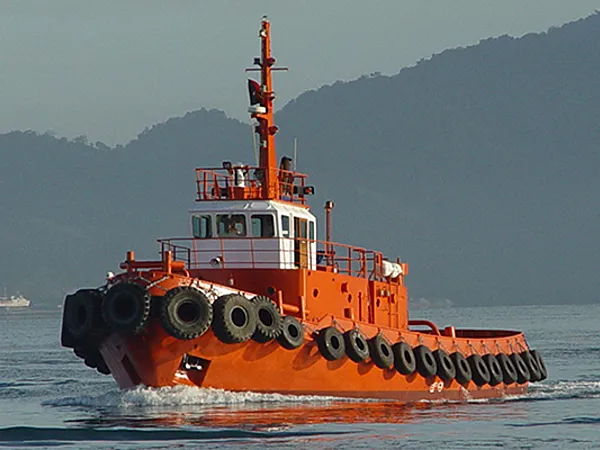
Pacific Towing has become the first business in the Steamships Group to set up in Fiji and is on track to successfully complete its first major project in Fiji since registering a new business last November.
Based at the main wharf in Suva, Pacific Towing’s newest business employs four Papua New Guinean divers and six Fijian locals.
The team of divers, engineers, welders and a crane operator is characterised by a raft of diverse skills and is presently engaged in the wreck retrieval of the container ship ‘Southern Phoenix’ which capsized and sank in Suva Harbour, Fiji on 6th May 2017.
Pacific Towing commenced the multi-stage retrieval of the 88 metre long vessel in November 2018 and was expected to complete the project by May 2019. Wreck retrieval can be technically challenging and high risk.
“Safety of our staff as well as safety of the reef is critical for the Southern Phoenix project and a lot of careful planning is necessary - but of course these plans mean nothing when unexpected bad weather picks up” explains Marine Operations Manager, Camara Geita.
He stresses that this is just one reason having Fiji staff is so important to ensuring projects stay on schedule as “no one knows Fiji’s waterways, reefs and weather patterns like the locals do.” Although local knowledge will be a key ingredient to Pacific Towing’s success in Fiji, so too will be an investment in training.
Pacific Towing staff benefit from training in numerous countries including Hong Kong, Japan, Thailand, Philippines, Singapore, Denmark, Qatar and Australia.
General Manager, Neil Papenfus, reports that in 2018 his staff received an average of 377 hours of training each. He sees no reason to do things differently in Fiji and one of the local divers there is confirmed to travel to Australia mid-year where he will complete his commercial dive training to ‘Commercial Diver Level 1’.
“Just like we have in PNG” says Papenfus “we will grow our Fiji business as we grow our people and we will make sure that the majority of our Fiji team are locals.”
Papenfus is also adamant that female employees will play an important role in the Fiji business.
Papenfus is a known advocate for the employment, development and promotion of women.
He introduced Pacific Towing’s ‘Women’s Maritime Scholarship’ program in 2017 and is a long-term director of the PNG Business Coalition for Women.
When asked about other business opportunities for Pacific Towing in Fiji. Papenfus, confirmed that he is not just pursuing wreck retrieval contracts.
“We are experienced in towage, salvage, mooring and commercial diving, as well as life raft servicing and sales so it makes good sense to take this experience to Fiji too” says Papenfus.
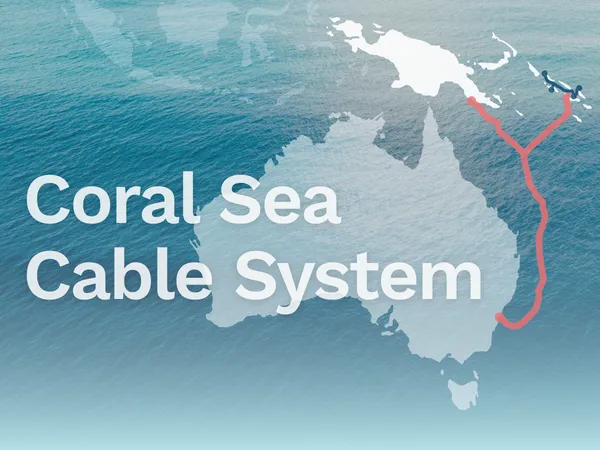
Economic activity will get a major boost when the Coral Sea Cable System is completed later this year. Internet users in Papua New Guinea will have access to improved internet access when the K331 million (AU$136.6 million) International Submarine Cable project linking Papua New Guinea, Solomon Islands and Australia is completed.
The Coral Sea Cable System will link PNG, Solomon Islands and Australia and is being jointly funded by the Australia and PNG governments.
When it comes on line, with commissioning earmarked for November 2019, the cable system will link Port Moresby to Sydney and increase the communications bandwidth capacity up to a massive 20Tb/second.
The advent of the cable system will ease PNG’s dependence on expensive satellite connectivity and unreliable ageing, congested infrastructure, thus boosting connectivity and improving access.
PNG’s National Executive Council had approved the Domestic Submarine Cable network to provide reliable, affordable and consistent in-country communications connectivity to existing networks.
Currently, the country’s communications systems rely on limited bandwidth microwave connections or expensive satellite connectivity.
A domestic fibre cable system will allow the rest of the country the opportunity to experience fast, affordable communications.
The Government secured a loan from China’s EXIM Bank to fund the Domestic Submarine Cable network, estimated at US$ 270 million (K879 million) – the Government is putting forward 15% of the cost while the EXIM Bank loan covers for 85%. DataCo, the wholesale arm of Kumul Telikom Holdings, is the implementing agency.
The project is intended to utilize approximately 5, 600 kilometres of submarine fibre optic cables to connect at least 15 coastal and maritime provincial centres across Papua New Guinea. The cable is manufactured in China and had been delivered to PNG by the end of October 2018.
Last year, Phase 1 commenced with signing of contracts and included appointment of the main contractor and survey of the domestic system.
Kumul Consolidated Holdings (KCH) is Papua New Guinea’s flagship trustee working with the State-Owned Enterprises to improve the national landscape for potential investment. w
The latest international commodity price data published by the World Bank in April 2019, show improvements for most of PNG’s export commodity prices of energy, metals and non-energy commodities, compared to actual outcomes in December 2018.
Bank of PNG Governor, Loi Bakani stated that price for Liquefied Natural Gas (LNG) based on imports to Japan increased by 0.7 percent to US$11.87 per one million British thermal units (btmu), while price of crude oil by West Texas Intermediate fell by 6.6 percent to US$54.9 per barrel.
The prices of most metals and mineral increased, with price of silver increasing by 6.8 percent to US$15.6 per ounce, gold by 6.1 percent to US$1,304.0 per ounce and copper by 1.8 percent to US$6,226 per metric tonne (mt).
For non-energy commodities, prices increased for palm oil by 5.8 percent to US$578 per metric tonne and coffee (Arabica) by 2.8 percent.
to US$2.24 per kg, while cocoa fell by 5.1 percent to US$2.95 per kg. Governor Bakani encouraged the export sector to take advantage of some of the high commodity prices and increase production levels, especially for the agricultural export commodities.
This also includes boosting local production for domestic consumption and replacing similar imported items. He noted the importance of a sustainable export sector as the main source of foreign exchange and reiterated that every support is needed from the private sector, growers and the Government to expand this sector.
“Without the right policies and support from all stakeholders to grow this sector, the on-going issues confronting the foreign exchange market in terms of lower foreign exchange inflows and build-up of import orders will continue to persist.
This will put pressure on the exchange rate and domestic inflation. While the Central Bank can intervene to support the market, its capacity to do so continuously is limited by its accumulated level of foreign exchange reserves,” he said.
Large investment projects such as the Papua LNG and Wafi Gold projects are expected to increase foreign exchange inflows soon like many of these major projects in the past, however, these inflows are not sustainable in the long run.
Therefore, growing the non-mineral export sector is critical for long term sustainable and inclusive growth because the majority of our people are engaged in this sector, especially the agriculture sector.
During the March quarter of 2019, the average daily kina exchange rate depreciated against the Japanese yen by 2.6 percent to ¥32.6844, pound sterling by 0.3 percent to 0.2301 and the US dollar by 0.2 percent to US$0.2968.
Against the Australian dollar and euro, it appreciated by 0.6 percent to A$0.4170 and 0.3 percent to €0.2613, respectively. w
The 2019 PNG Industrial and Mining Resources Exhibition will showcase over 100 local, national and international manufacturers and suppliers with the latest innovations in the supply of services and equipment for the industrial, mining and oil and gas sectors.
The two-day exhibition is the premier meeting place to connect and network with thousands of industry decision makers across a broad industry reach, including senior management, procurement, government personnel, engineers, contractors and trade technicians.
This year, exhibitors will have the opportunity to attend a free How to Do Business in PNG Seminar, and give a short presentation across one of two Conference stages on the exhibition floor over the two days.
An Industry Networking Event and Gala Awards Dinner will also run in support of the trade show.
TRADING HOURS: Wednesday, 12th June 9:00am to 4:00pm Thursday, 13th June 9:00am to 4:00pm
CONTACT renae@ttmediagroup.com.au | AUS: + 61 449 572 142
PNGEXPO.COM
Positive signs are on the horizon for business after three “flat” years due to tough economic times brought on by low commodity prices, last year’s earthquake, and lack of foreign currency, which has increased slightly this year.
Following the recent activity in the minerals and gas sector and a successful APEC Leaders’ Summit, the Australia PNG Business Council has successfully lobbied to bring to our shores four high-profile business investment conferences, -- all of which will be held from June 17 to 21 at the Stanley Hotel and Suites and APEC Haus.
* On Monday 17th to Tuesday 18th June, will be the 35th Instalment of the Australia PNG Business Forum and Trade Expo. Themed “The Road Ahead: Optimising Infinite Opportunities,”key statistics for this event include 900 delegates, 300 Exhibitors and 120 booths, 78 speakers and 15 topics ranging from unlocking customary land, agriculture, infrastructure development, MTDP3, start-ups, disruption and innovation, among others
* On Wednesday, 19th June, the Business Council of PNG in conjunction with the Speaker of the House of Parliament will host their annual Speaker’s Summit, the second instalment. This will also be held at the Stanley Hotel. Themed “Building Papua New Guinea’s Economy,” key statistics include 250 delegates, 100 exhibitors and 40 booths, 36 speakers and six topics in one day.
* On Thursday, 20th June the PNG European Union business conference on “Strengthening Trade and Investment ties between the EU and PNG” will be held at the Stanley Hotel. There is no fee to attend this conference. To register, please email to delegation-papua-new-guinea@eeas.europa.eu. A copy of the tentative program is attached.
* Then on Friday, 21st June the Asia Pacific Business Forum will be held at APEC Haus. David Morris, the Chair of UNESCAP Asia Pacific Business Forum stated: “They will bring to the Pacific for the first time the United National Asia Pacific Business Forum. This will be a high-level government business dialogue on how to bring the benefits from sustainable development to non-urban communities across our region.” Themed ‘Global Goals, Local Opportunities,” it’s the annual flagship event of the UN Economic and Social Committee for Asia and the Pacific Sustainable Business Network.
Interest has been overwhelming, particularly for the UN-sanctioned meet. People in Asia have called putting their hands up to present during the conference.
Follow on LinkedIn:
PNG Business News
Be the "First" to get our exclusive Digital Magazine & Weekly Newsletter.