
September 16, 2026

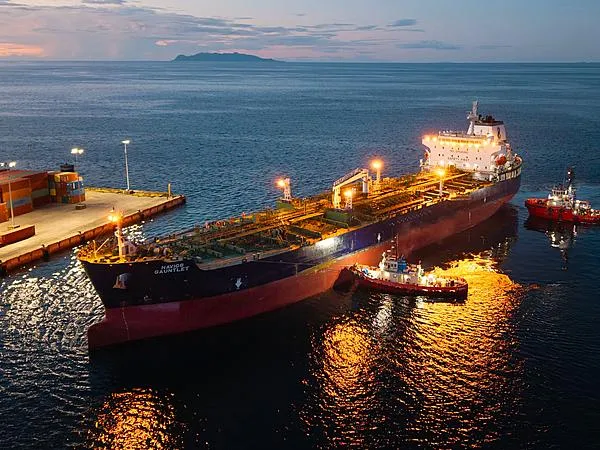
Pacific Towing (PacTow) is taking another significant step in its regional growth strategy, with the re-flagging of its Honiara-based ASD tug Pacific Salvor to Solomon Islands.

The move is more than a change of flag. It represents a shift from having a Papua New Guinea vessel permanently deployed into the Solomon Islands market to embedding a major marine asset within the country itself.

Once the re-flagging process is complete, Pacific Salvor will legally become a Solomon Islands vessel, fly the Solomon Islands flag and be renamed. The process is expected to take approximately six months.

PacTow General Manager Gerard Kasnari says the decision reflects the company’s long-term commitment to both Solomon Islands and the wider Melanesian maritime industry.

A major capability permanently based in Solomon Islands

Pacific Salvor is not just a harbour tug. The 50-tonne bollard-pull ASD vessel is also capable of emergency towage, salvage, wreck removal and long-distance ocean towage. It is equipped with specialist firefighting capability, enabling it to support vessels affected by onboard fires.

Recent events have already demonstrated the value of having such a vessel available locally.

When the cargo and passenger vessel MV Anjeanette caught fire at Honiara Port, Pacific Salvor was mobilised in the early hours of the morning, provided boundary cooling and towed the burning vessel away from the port and nearby fuel storage facilities.

The tug was also deployed when general cargo vessel MV Wealth broke down while under Solomon Islands police escort, requiring an emergency tow to Honiara.

Re-flagging reinforces a long-term regional strategy

The re-flagging of Pacific Salvor also sits within a much larger PacTow fleet investment program.

The company has invested PGK70 million in two technologically advanced new-build ASD tugs, Pacific Responder and Pacific Resolute.

With a 70-tonne bollard pull, Pacific Responder is more powerful than any other tug in the PacTow fleet and is equipped with advanced firefighting capability and high-powered forward and aft winches. The vessel has been designed to support not only complex harbour towage, but also salvage, emergency response and long-distance towage.  A very similar vessel, but with a 60-tonne bollard pull, Pacific Resolute, further increases PacTow’s fleet capacity.

While the two new-build tugs were acquired primarily to strengthen harbour towage capability in PNG, their significance extends well beyond PNG’s ports. 

In short, a stronger fleet in PNG creates a stronger fleet across the region. It improves PacTow’s ability to maintain harbour towage coverage while mobilising vessels for emergencies and major projects in other countries. In Solomon Islands, that regional investment is complemented by a very local commitment - the permanent deployment and now re-flagging of a second tug, Pacific Salvor.

September 15, 2026

Matrix Constructions PNG Limited has built its business around a straightforward proposition: combine decades of construction experience in Papua New Guinea with a predominantly local workforce capable of delivering projects across commercial, residential, infrastructure and resource-sector markets.

The Port Moresby-based company was established in 2011, but traces its PNG operating history to its parent company, which has been active in the country since 1960. Matrix is wholly Papua New Guinean-owned and says it has the capacity to design and construct projects in Port Moresby as well as regional areas.

Its work covers commercial, retail and industrial developments; low-, medium- and high-rise residential projects and resorts; housing; health and education facilities; aviation infrastructure; and mining and infrastructure projects.

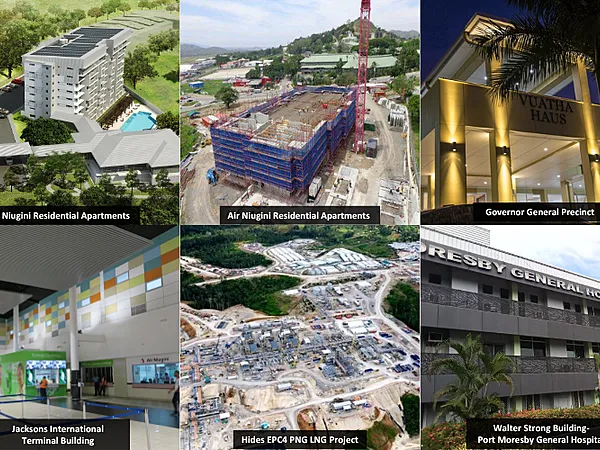
The breadth of those sectors is reflected in projects highlighted by the company, including the Air Niugini Residential Apartments, Governor General Precinct, Jacksons International Terminal Building, Hides EPC4 PNG LNG Project and Walter Strong Building at Port Moresby General Hospital.

For Matrix, the ability to operate across different sectors is supported by an in-house management structure covering operations, finance, safety, quality and environmental management.

Local workforce

A key feature of the company's model is its workforce.

Matrix says 98% of its employees are Papua New Guineans, supported by expatriate personnel. Its workforce includes labourers and apprentices through to project administrators, site engineers, site managers, project managers, design managers, cost planners and supervisors.

The company says its personnel collectively bring decades of construction experience in Papua New Guinea and Australia. That combination of local knowledge and technical experience is central to its approach to project delivery.

The focus on national participation is particularly relevant in a construction market where major developments increasingly require contractors to combine technical capability with an understanding of local operating conditions and workforce requirements.

Safety and quality

Matrix also places safety and quality at the centre of its project delivery model.

The company says its workforce is focused on meeting high standards of safety and quality and that its operations adhere to relevant Australian and international standards. It positions these capabilities as important credentials for undertaking both public- and private-sector projects.

Its project experience spans environments with significantly different requirements — from residential accommodation and government facilities to airport infrastructure, healthcare and the resources sector.

That diversity has given the company exposure to the different technical, logistical and management demands associated with construction in Papua New Guinea.

Building local capability

Matrix's story is ultimately one of building a locally owned construction business around established experience and a predominantly national workforce.

Its stated objective is not confined to construction capacity alone. The company has developed an organisational structure covering project management, design, cost planning, engineering, supervision and site operations, allowing it to maintain capabilities across different stages of project delivery.

For a Papua New Guinean contractor, that breadth matters as the country's construction market continues to encompass government infrastructure, private developments, resources projects and essential facilities.

More than a decade after Matrix Constructions was established, its positioning remains grounded in the same fundamentals: local ownership, experienced people, broad sector capability and a focus on safety and quality.

The company's profile presents those capabilities as the foundation for working with both public and private-sector clients across Papua New Guinea — with the experience of its parent business providing a history that stretches back more than six decades.

September 14, 2026

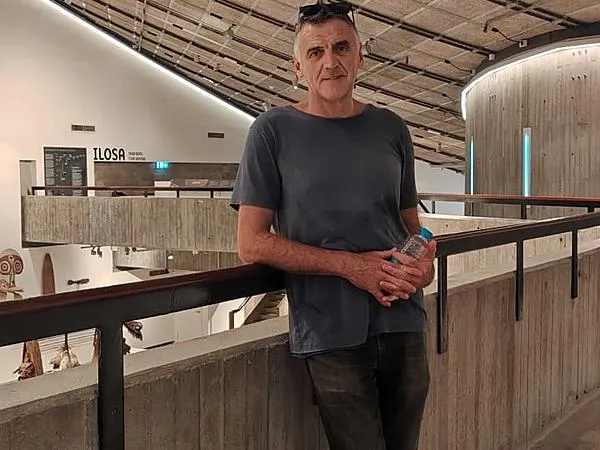
An Australian professional who arrived in Papua New Guinea for work on Friday, 28 August 2026, took time to explore the country’s history, culture and traditions through a guided Port Moresby tour arranged by Wisdom Travels Limited on 29 August 2026.

Mr Peter Smith said he came to PNG for work but also wanted to understand the nation beyond what is shared on social media. He specifically requested to visit Bomana War Cemetery, the National Museum, Parliament House, Nature Park, Koki Market and Ela Beach.

He was picked up from his hotel and taken on a tour of Port Moresby. He described the experience as emotional, particularly his visit to Bomana War Cemetery.

Mr Smith said the National Museum was the most important place to learn about Papua New Guinea’s culture.

“From there, I learned that Papua New Guinea is not just Port Moresby. It has a long, rich and beautiful history that is unique in the world, with more than 800 languages and diverse tribal cultures and ways of life,” he said.

“That is something we have forgotten in the West, and it makes me want to experience more of Papua New Guinea, not just the capital.”

Reflecting on his experience, Mr Smith encouraged visitors to get out and explore.

“From what you hear on social media, you get one picture. But Port Moresby is a city that is still growing. It is spread out, and the only way to really feel it is to get out and take a tour of different places,” he said.

He thanked Wisdom Travels Limited for organising the tour and taking him to the places he wanted to visit.

Mr Smith said he plans to return to Papua New Guinea to experience more of its culture, with a particular interest in visiting the Highlands.

September 14, 2026

Papua New Guinea’s primary industries sector is seeking an urgent update on outstanding Goods and Services Tax (GST) refunds and tax credits, with some major businesses reportedly still awaiting payments dating back to 2018, 2019 and 2020.

The Highlands Farmers and Settlers Association (HFSA), led by President Wilson Thompson, OBE, ML, has issued a circular asking members for details of their tax returns and most recent refunds.

The association has previously raised the issue with the Chief Secretary, Secretary for Treasury and the Internal Revenue Commission (IRC) Commissioner General, including during discussions around the 2025 Budget Lockup.

According to the September 6, 2026 circular, HFSA first wrote to the IRC on December 2, 2024, before following up with the Acting Commissioner General, who provided figures on tax refunds. However, information from members indicates that several businesses have yet to receive outstanding refunds.

HFSA is now seeking to reconcile member records with those held by the IRC. Businesses have been asked to provide their Taxpayer Identification Numbers, dates of their latest GST, Salary and Wages Tax and Corporate Income Tax returns, and the month in which their last GST refund was paid or credited.

The request spans a broad range of primary industries, underscoring the potential scale of the issue across agricultural production, processing, exports, livestock and related services.

Industries identified include oil palm, rubber, coconut, cocoa, coffee, livestock, horticulture and fresh produce, grains and rice, as well as farm supply and service companies. Listed businesses include Hargy Plantations, Ramu Agri Industries, Agmark NGIP, Outspan, PNG Coffee Exports, Olam International, Mainland Holdings, Trukai Industries, Goodman Fielder and Chemica, among others.

Provincial and industry organisations, including Morobe Resource Holdings, HFSA and the Poultry Industry Association, are also covered by the circular.

GST refunds can directly affect cash flow, particularly for export-oriented and capital-intensive businesses. For primary producers and processors, delayed tax credits can tie up working capital needed for operations, inputs, suppliers and expansion.

The matter therefore extends beyond tax administration, with implications for investment, business liquidity and the wider performance of PNG’s agriculture and primary production sectors.

HFSA said member information would be treated confidentially and provided to the IRC to obtain an updated position from its records. Members have been asked to respond by September 15, 2026, with individual updates to follow.

The circular has been copied to senior government agencies and officials, including the Chief Secretary, Secretary for Treasury, Department of Commerce and Industry, IRC Commissioner General, and the Secretaries for Agriculture and Livestock and International Trade and Investment.

The initiative reflects continued private-sector engagement with government on tax administration issues. Resolving long-standing GST refund claims could strengthen working capital and improve confidence in the tax system across PNG’s agriculture and resource-based business community.

September 14, 2026

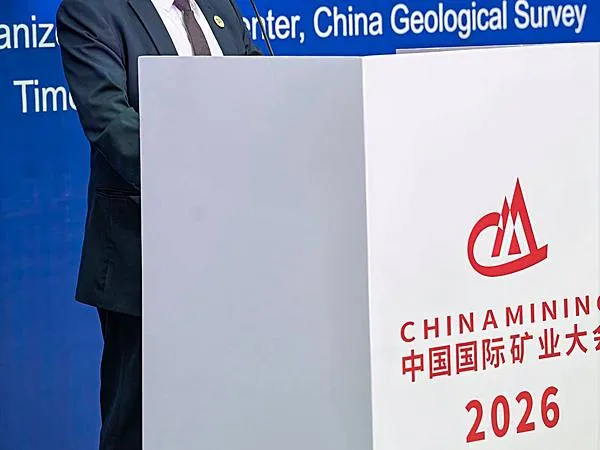
Papua New Guinea is open to Chinese mining and exploration investment, but projects must deliver fair benefits for landowners and the country while protecting the environment, Mining Minister Solen Loifa says.

Loifa made the remarks during an address to potential investors at the China Mining Conference and Exhibition 2026 in Tianjin, China, on Sept. 11.

He said the government welcomed investment that created returns for investors while also supporting the welfare of communities, the country’s economic interests and sustainable environmental outcomes.

“Mining should be done with win-win co-operation for the government, the people and investors,” Loifa said.

His message reflects Prime Minister James Marape’s position that Papua New Guinea welcomes investment when it delivers a fair share of benefits to the country and its people.

Loifa said the government was preparing for the next generation of mines by strengthening systems, improving regulatory processes and pursuing legislative reforms to address challenges in the sector and support economic growth.

The reforms include the establishment of a one-stop shop for mining and minerals investment. The government plans to realign policies and institutions to create an integrated service centre that centralises licensing, permitting and compliance processes.

The initiative is intended to reduce the fragmented departmental processes currently faced by explorers and miners.

The government also plans to extend the tenure of exploration licences from two years to five years. Loifa said the change would provide greater stability for high-risk, technology-driven exploration programmes.

A new retention licence category is also proposed. The licence would allow companies to retain discovered mineral deposits during periods of unfavourable market conditions or when further technical work is required to establish viability.

For projects of national significance, the government is moving towards a merit-based and strategic allocation of mineral tenements rather than relying solely on the first-in-time application process.

Loifa said the proposed approach would prioritise genuine operators in highly prospective areas. Existing licence holders and applicants seeking to explore areas not reserved for strategic purposes would not be affected, with first-in-time and merit-based applications to be considered on a case-by-case basis.

The government also plans to reduce administrative delays by increasing staff capacity and moving towards an electronically automated system. Proposed regulations would introduce stricter timelines for licence renewals to prevent projects from being delayed by administrative processes.

The Mineral Resources Authority, the government agency responsible for regulating Papua New Guinea’s mining sector, is undergoing a strategic realignment as part of the reforms. The authority is expected to serve as the main gateway for the proposed one-stop shop mining and minerals investment initiative.

“Our message to the global mining community is clear,” Loifa said. “We have heard your concerns regarding regulatory uncertainty and administrative delays. We are removing the hurdles that have historically slowed discovery while ensuring that the people of Papua New Guinea benefit equitably from our resource wealth.”

September 14, 2026

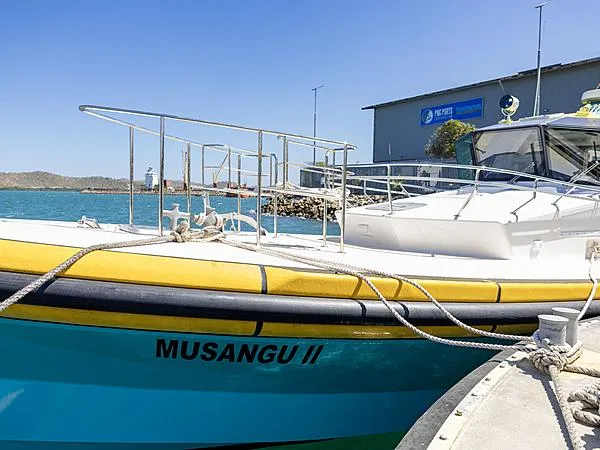
Madang Port is set to receive a new purpose-built pilot boat following the arrival of Musangu II, further strengthening Papua New Guinea’s maritime infrastructure and port operations.

The fourth of five pilot boats delivered through the Australian Infrastructure Financing Facility for the Pacific (AIFFP) is undergoing final safety and registration checks before entering service.

Australia is partnering with PNG Ports through the Ports Infrastructure Investment Programme (PIIP) to deliver coordinated port infrastructure upgrades across Papua New Guinea. The programme aims to enhance the safety, resilience and performance of the country’s ports for communities, businesses and maritime users.

Musangu II replaces an ageing pilot boat and will enhance safety by providing PNG Ports with a modern, reliable means of transferring marine pilots to and from ships calling at Madang Port.

Pilot boats play a critical role in port operations, helping vessels navigate safely through local waters. The arrival of Musangu II will strengthen these services in Madang and support the smooth movement of cargo and trade.

PNG Ports Chief Executive Officer Neil Papenfus said the vessel would help ensure PNG Ports continues to provide reliable services at Madang Port.

“PNG Ports has a responsibility to ensure our ports operate safely and efficiently for all users. The addition of Musangu II strengthens our marine pilotage capability and helps us continue providing safe and reliable services to vessels calling at Madang Port,” Papenfus said.

The new pilot boats deliver significant improvements in reliability, safety and operational performance, helping to minimise disruptions and ensure the continued safe movement of vessels through Papua New Guinea’s ports.

Another benefit of the fleet upgrade is the standardisation of pilot boats, replacing legacy vessels of varying ages, designs and capabilities. This will simplify crew training, maintenance and spare-parts management while improving operational flexibility.

All five vessels were manufactured by Norman R. Wright & Sons in Brisbane and are specifically designed to provide safe, reliable and efficient pilotage services in Papua New Guinea’s rugged operating environment.

Once final safety checks are complete, Musangu II will be transferred to Madang Port and begin service. Taubar II, the fifth and final pilot boat, is in the final stages of testing in Brisbane and is expected to arrive in Port Moresby in late September 2026.

PNG Ports Corporation Limited (PNGPCL) is Papua New Guinea’s national ports authority. It manages 15 of the country’s 23 declared ports and handles 100 per cent of the nation’s seaborne trade.

PNGPCL is a fully corporatised entity owned by the State and is the successor company to the PNG Harbours Board. Kumul Consolidated Holdings is the sole shareholder, holding shares in the corporation on behalf of the State of Papua New Guinea. The corporation’s management and operations are governed by relevant port and shipping regulations, as well as policy directives issued by the National Executive Council through the Ministry of State Enterprises.

PNG Ports Corporation Limited was officially launched on 13 November 2006. The organisation has operated under several names: Papua and New Guinea Harbours Board (1963-69), Papua New Guinea Harbours Board (1970-2002), PNG Harbours Board Limited (2002-06), and PNG Ports Corporation Limited from 2006.

PNGPCL operates and manages 15 of Papua New Guinea’s 23 declared ports: Aitape, Alotau, Buka, Daru, Kavieng, Kieta, Kimbe, Lae, Lorengau, Madang, Oro Bay, Port Moresby, Rabaul, Vanimo and Wewak. These ports handle more than 5.8 million tonnes of cargo annually, representing 100 per cent of Papua New Guinea’s seaborne trade. They also serve as the main gateways to more than 300 scattered islands.

The corporation provides berthage, wharfage, storage, pilotage, harbour management, surveillance and other port-related services. Pilotage services are supported by pilot launches stationed at PNGPCL’s main ports.

Port-related tariffs are regulated by the Independent Consumer and Competition Commission.

September 14, 2026

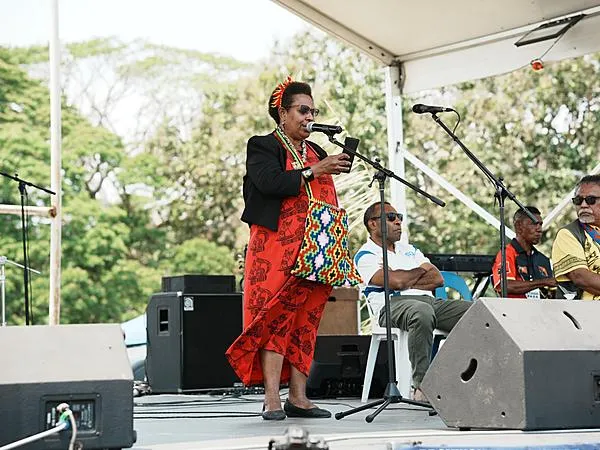
The Central Music Arts and Culture Festival, or CMACF, has opened in Bereina, Kairuku District, showcasing how cultural tourism, small businesses and community enterprise can contribute to Central Province’s local economy.

The festival began on Sept. 11, 2026, drawing a large crowd for traditional performances, contemporary music, local small and medium-sized enterprise displays, and community engagement.

The event provides a platform for local businesses and entrepreneurs to promote their products and services while bringing visitors and communities together through music, arts and cultural performances.

Beyond the entertainment programme, the festival grounds featured SME stalls, government agencies and commodity organisations engaging directly with the community. Representatives from the Papua New Guinea Cocoa Board, National Fisheries Authority and Internal Revenue Commission conducted public-awareness activities throughout the opening day.

Their participation added an economic dimension to the festival by connecting communities with information on agriculture, fisheries, taxation and opportunities in the formal economy.

Culture as a tourism asset

Kairuku District Administrator Henry Oa welcomed visitors and dignitaries, thanking Central Governor Rufina Peter and the Central Provincial Administration for selecting Kairuku as the host location.

Oa said the festival was about more than music and dancing. It was an opportunity to showcase Papua New Guinea’s heritage, beauty and talent to the country and the world.

“This festival is not just about music and dancing; it is about our heritage and showing PNG and the world our beauty and talent,” Oa said. “Unity is what binds us together.”

The festival offers an opportunity to position Central Province’s cultural heritage as part of its wider tourism offering while enabling local businesses to benefit from increased visitor activity.

Acting Provincial Administrator Bala Kapa emphasised the importance of preserving traditional knowledge as younger generations become increasingly exposed to modern technology and changing lifestyles.

Kapa challenged elders to pass on their knowledge, including traditional songs, tattoos, tapa-making, canoe carving, and local languages such as Motu, Roro and Mekeo.

“You are our library. If you close, we lose everything,” Kapa said.

He also encouraged young people to take pride in their cultural identity and use music and the arts to strengthen their connection to their communities and heritage.

Preserving and presenting these traditions can also support cultural tourism by giving visitors opportunities to experience local music, art, craftsmanship, language and traditional practices.

Governor Peter formally declared the festival open, commending the youth, local leaders and organising committee for bringing the event to life.

“This festival exists because of you,” Peter told the crowd.

“It is your colour, your song and your strength that make Central Province shine. The festival is more than an event—it is memory. It is the drumbeat of our ancestors speaking to us today.”

The opening day concluded with musical performances that kept the audience engaged into the afternoon. Gaire musician Hitsy Golu headlined the programme, alongside Martin Rawali, Igo Otto of Rearea, the Kanakas of Erima, the Rapids of Sogeri, and Bereina’s Iva Ovia and the Vmates, who closed out the first day.

The turnout and combination of cultural performances, music, SMEs and public-sector engagement showed how community festivals can bring together tourism, culture and local economic activity.

The festival continued through the weekend in Bereina, creating further opportunities for communities, performers, entrepreneurs and visitors to celebrate Central Province’s culture and creative economy.

September 14, 2026

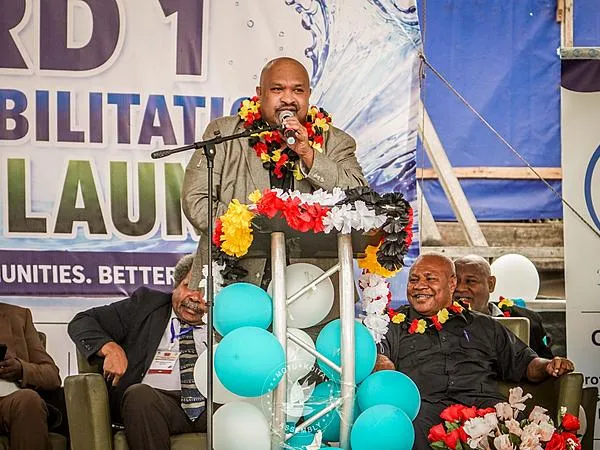
A major water infrastructure rehabilitation and expansion project is set to launch in Ward 1 of the Moresby North-West electorate in Papua New Guinea’s National Capital District, aiming to improve service reliability, reduce water losses and strengthen revenue accountability.

Moresby North-West MP Lohia Boe Samuel announced the project, which will serve communities including Hanuabada, Elevala, Gabi, Mirigini (Badihagwa), Tatana-Araira, Baruni, Koukou and Sasivaga.

The initiative follows a 2021 assessment that identified ageing infrastructure, inadequate distribution networks, water rationing and significant water losses as key challenges in the electorate.

The project will replace and upgrade ageing distribution pipelines, expand the network, and refurbish water tanks and pump stations. It is designed to meet projected demand and provide Ward 1 households with more reliable access to potable water as the population grows.

Reducing water losses, improving revenue

One of the project’s key priorities is reducing water losses in the existing system.

The affected communities are currently classified as unbilled consumers, meaning water is supplied without an effective metering and billing system. The project aims to transition these villages to a metered water supply.

Metering is expected to provide more accurate consumption data, improve billing and strengthen revenue collection. It could also support a more financially sustainable water supply system by helping service providers better understand demand and plan infrastructure investments.

The upgrade comes as communities across the National Capital District, including Moresby North-West, face growing demand for essential urban infrastructure. A reliable water supply is critical for households, businesses and community facilities, while rationing and service interruptions can impose costs on residents and economic activity.

The project will also target higher-elevation communities, where maintaining water pressure and reliable supply can be particularly challenging. Fire hydrants will be installed throughout the upgraded network, providing an added public-safety benefit and improving communities’ capacity to respond to fire emergencies.

Further upgrades planned

The Ward 1 project is expected to form part of a wider programme to improve water infrastructure across the Moresby North-West electorate.

The electorate office said Wards 7, 8, 10 and 11 would follow after the successful completion of the Ward 1 project, extending improvements in water reliability, network coverage, metering and revenue accountability to more communities.

For Moresby North-West, the investment is more than an upgrade to ageing infrastructure. It is an investment in the essential services needed to support population growth, economic activity and improved living standards in Port Moresby.

Its success will depend on delivering a reliable 24/7 water supply, reducing system losses, improving metering and billing, and establishing a sustainable model for maintaining and expanding the network as demand increases.

Suggested tags: Water Infrastructure, National Capital District, Port Moresby, Moresby North-West, Water Supply, Urban Development, Service Reliability, Water Metering, Revenue Collection, Public Infrastructure, Papua New Guinea

September 14, 2026

Central Province has rejected the proposed Papua LNG benefit-sharing arrangements, seeking a 55-45 split with Gulf Province and arguing that its role as a co-host warrants a greater share of the project’s economic benefits.

Central Gov. Rufina Peter presented the province’s Tier 1 position paper at the Papua LNG Forum in Port Moresby on Sept. 4, 2026. She later handed the document to Petroleum Minister Jimmy Maladina.

The Papua LNG benefit package under discussion is valued at K6.605 billion. It includes legislated benefits such as royalties, equity and development levies, as well as negotiated benefits including business development grants, infrastructure development grants and high-impact infrastructure projects.

The benefits would be shared among landowners, provincial governments, district development authorities and local-level governments in Gulf and Central provinces.

Central has rejected the director’s proposed allocation of 70% of legislated benefits to Gulf and 30% to Central, as well as an 80-20 split of negotiated benefits. Instead, it wants Gulf to receive 55% and Central 45% across all benefit streams.

Central challenges benefit calculations

The director’s proposal was based on project-impacted population, the number of affected clans, the physical area affected and capital expenditure. Central said those factors produced a 66-34 split, rather than the proposed 70-30 allocation for legislated benefits.

After reviewing the data, the province said it identified missing information and inaccuracies, including the population of Kairuku LLG, the number of clans in Central and the allocation of midstream capital expenditure.

Central said including Kairuku’s population of 29,485 increased its project-impacted population to 47,906, while the number of affected clans rose to 101.

It also disputed the allocation of midstream capital expenditure. The province said the component was recorded at US$2.465 billion but estimated that only US$783.4 million should be attributed to Central, based on 5% of the project’s total capital expenditure of US$15.6687 billion.

Central said its revised calculations produce a 58-42 split, which it considers a more equitable, data-based allocation.

Peter said Papua LNG should not be assessed solely by the location of gas resources and other physical impacts. She said the project extends from the wellheads to the export facilities, making Central a co-host rather than simply a project-impacted province.

Central’s case also rests on the use of existing PNG LNG facilities at Caution Bay, which will be integrated into Papua LNG. Peter said this integration has helped make the project economically viable and is expected to save developers about US$3.5 billion.

The project’s estimated cost was initially about US$18 billion before being reduced to approximately US$14.5 billion following the re-scoping and re-tendering of engineering, procurement and construction contracts, according to the position paper.

Central argues that the economic value of hosting processing, liquefaction, storage and export facilities should be reflected in the benefit-sharing arrangements.

The province is also seeking K2.2 billion for a 25-year infrastructure programme, citing population growth, migration and increased pressure on infrastructure and services. Peter said Central’s role as a gateway to the National Capital District means the investment would benefit residents as well as people who live, work and travel through the province.

Central proposes wider economic participation

Central wants the K1.228 billion reserve benefits package included in the current negotiations and divided equally between Gulf and Central. It is also seeking a 50-50 split of the 40% commercial equity associated with Papua LNG.

The province wants the commercial equity known as “Lakatoi Equity,” reflecting the historical relationship between Gulf and Central through the Hiri Trade.

Central is also seeking greater participation in opportunities arising from the project’s 5% domestic market obligation, or DMO. It proposes that Gulf and Central have the first opportunity to participate in DMO-related businesses through a joint-venture special purpose vehicle.

The province has further called on the state to share 20% of the 2% production levy with Central. Peter said the additional revenue would help fund infrastructure needed to serve the province’s growing population and the wider national community.

Another proposal is a dedicated Papua LNG-Central GST code through the Internal Revenue Commission. Central said the mechanism would allow it to capture GST generated by businesses operating in the province during the project’s construction and operational phases, including businesses based in the National Capital District that conduct substantial activity in Central.

Central also wants stronger governance and accountability measures in the Development Agreement. It has called for business development grants, infrastructure development grants and high-impact infrastructure projects to be clearly allocated according to the agreed Tier 1 arrangements.

The province also wants the Extractive Industries Transparency Initiative included in the agreement to strengthen transparency in the disbursement and management of project funds.

It has proposed an umbrella company for plant-site villages to participate in project contracts, along with a new trust entity under the Mineral Resources Development Company for those villages.

Peter said Central presented its position in good faith and wants negotiations with Gulf Province and the National Government to proceed amicably. She called for Tier 1 negotiations to conclude quickly so that Tier 2 and Tier 3 talks can begin before the Dec. 15, 2026, final investment decision deadline.

Central’s position seeks not only a larger share of Papua LNG benefits, but also longer-term participation through equity, domestic gas opportunities, GST revenue, infrastructure funding and stronger governance arrangements.

September 14, 2026

National Superannuation Fund Limited (Nasfund) has been delivering its Superannuation (Supa) Education Sessions in schools across PNG since 2024, as part of its commitment to preparing young Papua New Guineans for their future financial journeys.

The program is a superannuation education and awareness initiative designed to help students understand superannuation, retirement savings, and personal financial planning.

The initiative equips participants with essential knowledge, including how superannuation works, the role of Nasfund, the importance of starting to save early, strategies for growing retirement savings, and the value of making informed financial decisions throughout life.

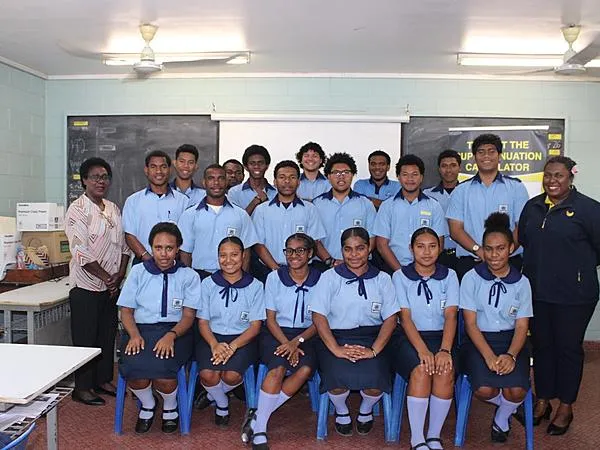
As part of this ongoing initiative, Nasfund Member Experience Manager Melisha Sindiwan conducted three Supa Education Sessions over the past two weeks at Port Moresby Grammar School. The sessions provided Grade 12 students with a practical introduction to superannuation and long-term financial planning.

The sessions were highly engaging and focused on building awareness of superannuation, encouraging students to begin thinking about financial planning well before they enter the workforce. Students were introduced to the basics of superannuation, its role in supporting financial security and retirement savings, and the benefits of developing saving habits.

This marks the third consecutive year that Nasfund has partnered with Port Moresby Grammar School to deliver the Supa Education Program as part of the Grade 12 school enrichment program, reinforcing the Fund’s commitment to investing in financial literacy and empowering future generations with the knowledge needed to make sound financial decisions.

Speaking on the importance of the program, Port Moresby Grammar School Director of Curriculum for Senior School Brenda Kekeao said the Supa Education Sessions align closely with the school’s future financial planning module.

“For this module, we looked at other organisations, but the school chose Nasfund because of the long-standing relationship it has with the company,” Ms Kekeao said.

“We hope these sessions will help educate students about their future financial planning.”

Ms Kekeao further acknowledged that the sessions serve as valuable enrichment opportunities for students, complementing classroom learning by providing expert knowledge from industry professionals.

“The sessions could also be regarded as enrichment programs because teachers are not specialised in superannuation. Experts like the Nasfund team are invited to conduct these sessions and provide students with practical knowledge and real-life financial insights,” she said.

The Supa Education Sessions also complement topics covered in the Grade 12 Business Studies curriculum, helping students connect classroom theory with practical financial concepts they will encounter throughout their lives and careers.

September 11, 2026

Australian gold miner St Barbara has agreed to sell its remaining interest in Papua New Guinea’s New Simberi Gold Project to Lingbao Gold Group for A$410 million in cash, plus a further A$43 million repayment of construction capital.

St Barbara said on 10 September it had signed a binding agreement with Lingbao under which the Chinese gold company will acquire St Barbara’s remaining ownership in Tabar Islands Holdings, which currently owns New Simberi and the Tabar Islands exploration licences.

The transaction is expected to deliver A$453 million in cash to St Barbara, comprising the A$410 million purchase consideration and approximately A$43 million representing St Barbara’s funding of construction capital for New Simberi between April 2026 and the signing of the agreement. Lingbao will also fund St Barbara’s share of capital requirements through to completion.

St Barbara will retain exposure to the project through a 2.75% net smelter return (NSR) royalty on 100% of future gold and silver production from New Simberi, as well as a 1.5% NSR royalty on 100% of future minerals production from the Tabar Islands exploration licences. The royalties are due to commence on 1 July 2027, with Lingbao providing a parent company guarantee for its royalty payment obligations.

Simberi ownership transition

The sale follows St Barbara’s agreement announced in December 2025 to sell a 20% interest in New Simberi to Eda Minerals, a wholly owned subsidiary of Kumul Mineral Holdings, for A$100 million.

That transaction is intended to establish the New Simberi Gold Joint Venture. Once completed, St Barbara’s attributable interest in New Simberi would fall from its current 50% to 40%, while the A$100 million purchase price and Kumul’s share of capital expenditure would be repaid from future sales by the joint venture.

The latest agreement would see Lingbao acquire St Barbara’s remaining ownership in Tabar Islands Holdings, consolidating Lingbao’s position in the project alongside Kumul’s 20% interest once the earlier transaction is completed.

Completion of the Lingbao transaction is targeted for the March quarter of 2027 and remains subject to conditions including regulatory approvals in Papua New Guinea and China, as well as shareholder approvals by St Barbara and Lingbao where required.

New Simberi royalty valued at A$212m

St Barbara said the retained royalty provides continuing exposure to what it considers a significant development project.

Under the New Simberi Initial Life of Mine Plan, the project is forecast to produce 2.2 million ounces of gold, including 2.0Moz payable, over an initial 13-year mine life.

Using a gold price assumption of US$4,000 an ounce and a 5% discount rate, St Barbara estimates the New Simberi NSR royalty has a net present value of A$212 million. The company's sensitivity analysis puts the royalty's NPV at between A$156 million and A$267 million at a 5% discount rate, depending on a gold price ranging from US$3,000/oz to US$5,000/oz.

The royalty cash-flow table on page 4 of St Barbara's announcement estimates annual royalty receipts beginning at A$11.1 million in 2027, rising to A$34.1 million in 2032 under the company's assumptions. The forecast assumes a gold price of US$4,000/oz and silver at US$35/oz.

St Barbara to focus on other projects

St Barbara managing director and chief executive Andrew Strelein said the transaction would crystallise value for shareholders while allowing the company to concentrate on its other assets.

“This transaction will crystallise substantial value for St Barbara shareholders and allows the Company to focus on the development of the Nova Scotia gold projects and the attractive exploration portfolio surrounding the 15-Mile Processing Hub,” Strelein said.

He said St Barbara recognised New Simberi as “an outstanding development project” and would continue to participate in its future through the royalties and exploration interests in the Tabar Islands.

The company said the divestment would simplify its portfolio, with the Touquoy Restart planned to commence by December 2026, while allowing St Barbara to focus on its Nova Scotia Gold Projects.

Subject to completion, St Barbara's pro-forma assets are expected to include approximately A$880 million in cash, the 15-Mile Processing Hub Project and exploration portfolio, the Touquoy Restart Project and its royalty portfolio, with no debt or hedging.

The company is also considering an additional fully franked special dividend of approximately A$0.13 per share following completion of the transaction. This would be in addition to the A$0.05 per share fully franked dividend declared on 28 August.

St Barbara has separately reaffirmed that it is considering an on-market share buy-back of up to 100 million shares, with a decision expected after the updated Pre-Feasibility Study for the 15-Mile Processing Hub Project, due at the end of September.

The proposed dividend and buy-back remain subject to future decisions by the board, market conditions, St Barbara's share price and capital requirements, and are not guaranteed.

The transaction is subject to satisfaction or waiver of the agreed conditions precedent, with completion targeted for the March quarter of 2027.

September 10, 2026

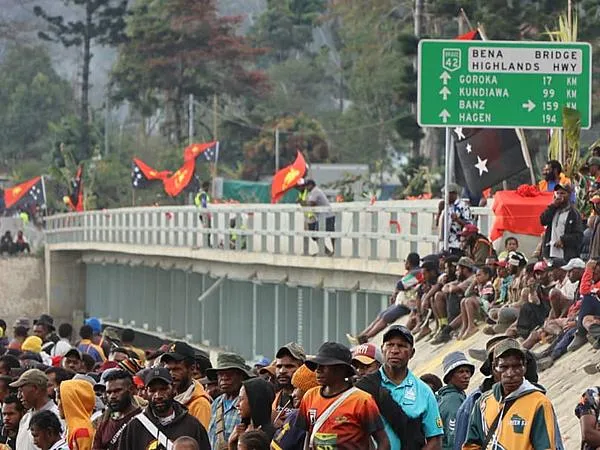
Prime Minister James Marape has challenged communities in Eastern Highlands to translate the government's multibillion-kina investment in the Highlands Highway into increased coffee production, businesses, jobs and household incomes.

Marape made the call at Bena, where he commissioned the new K20.2 million Bena Bridge and launched the Goroka Four-Lane Road Project toward Korofeigu.

He said improved roads and bridges should generate greater economic activity and help communities take advantage of better access to markets.

“This is the economic lifeline that keeps our economy growing,” Marape said. “The money we are putting into this road is not a misplaced allocation. It is the correct allocation in terms of our strategy to grow the economy.”

Marape urged communities along the highway to increase coffee and agricultural production, saying improved transport infrastructure would make it easier to market their products.

“I want you to deliver coffee bags to repay the money we are investing in building infrastructure,” he said.

He also encouraged unemployed Papua New Guineans to pursue agriculture and small and medium enterprises (SMEs) rather than wait for formal employment or government assistance.

“If you are unemployed, I point you back to SME and agriculture as an SME option,” Marape said.

He called on provincial and district leaders to use government funding to help communities become economically productive.

“Teach a man how to fish; don’t just give him fish,” he said. “Let us lead our people into self-employment activities so that this road can contribute to improving their lives and, collectively, the economy of our country.”

Highlands Highway upgrade

The K20.2 million Bena Bridge is a new 100-meter, two-lane permanent bridge replacing the former single-lane Bailey bridge.

The bridge was constructed by China Wu Yi Company Limited and funded by the Asian Development Bank (ADB) under the Sustainable Highlands Highway Investment Program.

Under Tranche 2 of the program, rehabilitation and modernization work covers 71 bridges along the Highlands Highway corridor — 35 between Nadzab and Henganofi, 19 between Henganofi and Mangiro, and 17 between Mangiro and Kagamuga.

Marape thanked the ADB, Department of Works and Highways, Department of Treasury, Department of National Planning and Monitoring, China Wu Yi, the Eastern Highlands Provincial Government, district authorities, local-level governments, development partners and communities involved in the program.

“Building modern infrastructure is part of building a modern country,” he said.

He also welcomed the construction of roadside market and sanitation facilities, urging communities to use them to capture economic opportunities created by the upgraded highway.

The Goroka Four-Lane Road Project toward Korofeigu is expected to increase road capacity as population, traffic and economic activity grow, while improving the movement of coffee, fresh produce and commercial freight.

With Papua New Guinea approaching its 51st Independence Anniversary, Marape said the country's development would require a stronger culture of work and personal responsibility.

“The drive we took over the last two days is just a symbol of ‘can do’. We can do it,” he said.

Marape also urged communities to protect new infrastructure and ensure public investment translates into increased economic activity.

“When you improve, the country improves. Together, we all grow,” he said.

September 10, 2026

Papua New Guinea has signed a K26 million, three-year agreement with TechnologyOne to advance the government's public financial management system through cloud technology and artificial intelligence.

The agreement marks the next phase of the government's digital transformation of its Integrated Financial Management System (IFMS) and was signed during PNG's 51st Independence anniversary year.

Acting Chief Secretary to the National Government Ivan Pomaleu OBE said the agreement represented a major step in modernizing how the government manages and accounts for public resources.

He said the focus was shifting from the deployment of basic software toward long-term operational sustainability, financial sovereignty and institutional capability.

The IFMS is now operating across all 22 provinces, connecting 43 national departments, 21 provincial health authorities, 89 districts, more than 313 local-level governments and 26 statutory bodies, according to the government.

The system provides a unified public finance platform with real-time financial tracking and banking capabilities across national and subnational government entities.

Pomaleu said the TechnologyOne agreement would support the Medium Term Development Plan IV (MTDP IV) 2023–2027, particularly Strategic Priority Area 7 on National Revenue and Public Finance Management and Strategic Priority Area 8 on Digital Government, National Statistics and Public Service Governance.

The modernization program is expected to strengthen internal fiscal controls, improve revenue management, reduce administrative delays and help prevent financial leakages.

A key component is TechnologyOne Plus, described as an enterprise-grade agentic artificial intelligence system governed under ISO 42001:2023 standards and a “human-in-the-loop” framework.

The system will enable public servants to interact with complex financial data through text and voice commands, including checking budget availability, tracking expenditures and streamlining approval workflows.

Pomaleu said embedding cloud technology and AI into government operations would help ensure public funds are deployed more efficiently and transparently in support of national development priorities.

He recognized Finance Secretary Samuel Penias, IFMS Board co-Secretary Andrew Oaeke, other central agency officials and the IFMS implementation team for their role in establishing the system nationwide.

He also called on public finance officers to embrace the technology as the government begins Phase 2 of its software upgrades and capacity-building programs.

The modernization is aligned with the government's target of building a K200 billion economy and improving public service delivery under MTDP IV.

The government said the investment is intended to establish a more transparent, resilient and sovereign financial management system capable of supporting Papua New Guinea's development priorities over the long term.

September 10, 2026

 The Bank of Papua New Guinea and 15 financial institutions have signed the PNG Empower Finance Code, committing to identify and reduce the ways financial products and services can be used to control, exploit or harm customers.

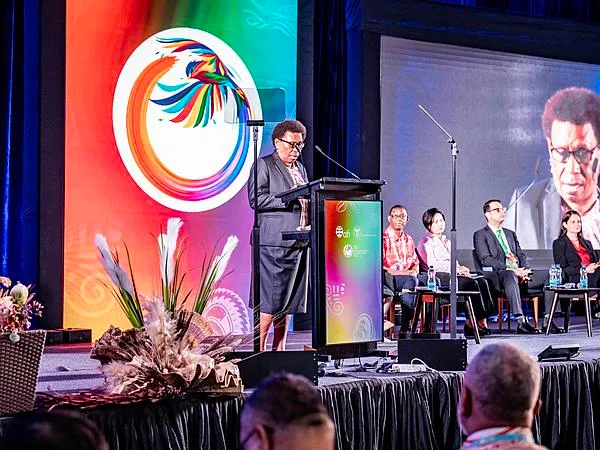
The voluntary Code was signed on the margins of last week's Alliance for Financial Inclusion Global Policy Forum in Port Moresby, which brought together central bankers and financial regulators from 79 countries.

BPNG Governor Elizabeth Genia said financial abuse can undermine financial inclusion, economic participation and confidence in the financial system.

“A person is not genuinely financially included if access to financial services makes them more vulnerable,” Genia said.

Financial abuse can include taking control of another person's income, creating debt in their name, restricting access to money, misusing passwords or accounts, or using financial services to intimidate or control another person.

The Code was co-designed with the financial sector through the PNG Empower Finance Community of Practice, established by BPNG in May 2026 with support from the International Finance Corporation, Australian Department of Foreign Affairs and Trade's PNG Women Lead, and the Centre for Excellence in Financial Inclusion.

The initiative brings together banks, savings and loan societies, finance companies, superannuation funds and payment service providers.

Signatories have committed to four areas: working together to identify and address risks; building financial capability and awareness; promoting safer financial services; and learning from experience and reporting progress.

The Code does not create new legal or regulatory obligations. Instead, participating institutions will join the Community of Practice, increase staff awareness, assess how their products and systems could be misused and implement practical improvements.

Genia said BPNG was, to its knowledge, the first central bank or financial regulator globally to bring financial institutions together to co-design a voluntary industry code specifically addressing financial abuse.

The Code was presented to central bankers and regulators attending the AFI forum, with Genia encouraging other countries, including Pacific neighbours, to consider similar approaches.

CEFI is developing financial-abuse training for participating institutions, with the aim of progressively incorporating awareness of financial abuse into broader financial education programmes.

“Signing the Code does not mean that every organisation is expected to already have all the answers,” Genia said. “It means they are committing to learn, identify risks and make practical improvements.”

September 10, 2026

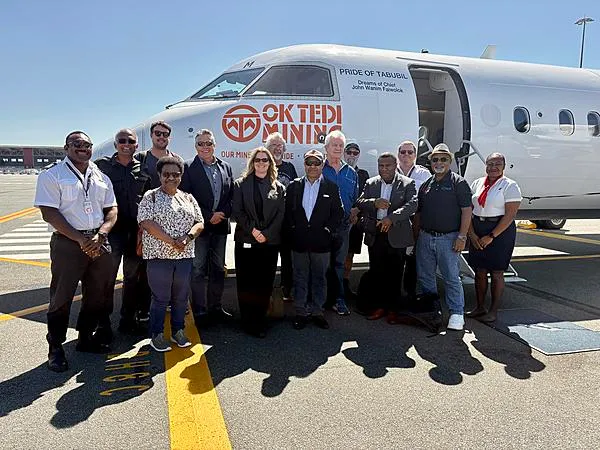
Ok Tedi Mining Limited has completed its first direct charter flight between Tabubil and Brisbane, establishing the Australian city as a new hub for the company's fly-in, fly-out workforce.

The inaugural flight departed Tabubil on September 4, 2026, marking a milestone in Ok Tedi's 42-year operating history and reducing travel time for employees and business partners travelling between its Western Province mining operations and Australia.

Ok Tedi managing director and chief executive officer Kedi Ilimbit said the direct service would eliminate three to four hours of airport delays and make travel more convenient for employees.

“It cuts off three to four hours of delays at airports and makes travel more convenient for our employees. It has been a successful inaugural flight, and I am very pleased,” Ilimbit said upon arrival in Brisbane.

He said the service would become the new hub for Ok Tedi's FIFO operations.

“After 42 years of operations, we have made it into Brisbane. This will become the new hub for Ok Tedi FIFO operations.”

The direct connection is expected to improve travel reliability and support workforce mobility between Australia and the Star Mountains mining operation in Western Province.

Ilimbit thanked charter operator Pacific Direct, the flight crew and Australian border, quarantine, customs and immigration authorities for facilitating the inaugural service.

The milestone comes ahead of Papua New Guinea's 51st Independence Anniversary and adds to Ok Tedi's international operating footprint, with the company maintaining a marketing and logistics facility in Brisbane.

Ok Tedi Mining Limited is a majority state-owned company operating an open-pit copper, gold and silver mine in Western Province. The company exports copper concentrate to smelters and refineries in Japan, the Philippines, Indonesia, South Korea, India and Germany.

The company has also expanded its growth strategy beyond Western Province through its acquisition of Gallipoli Exploration Limited, a wholly owned subsidiary of Australian-listed Kingston Resources Limited, for the Misima mine in Milne Bay Province.

Ok Tedi's registered office and senior operational management are based in Tabubil, with a representative office in Port Moresby and its Brisbane marketing and logistics facility.

September 09, 2026

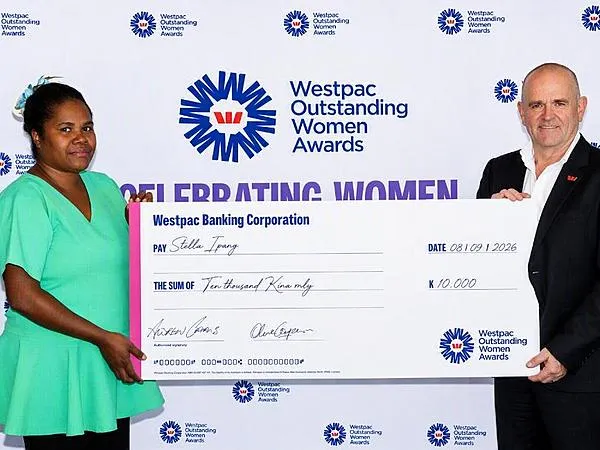
Stella Ipang, a PATH Outstanding Member and leader in Gender Equality, Disability and Social Inclusion (GEDSI), has been named the 2026 Overall Winner of the Westpac Outstanding Women Awards (WOWA), receiving a PGK10,000 grant in recognition of her work strengthening inclusive healthcare across Papua New Guinea.

Stella, who also won the Private Sector Category, was recognised for her leadership in embedding GEDSI principles into Papua New Guinea’s immunisation sector. Her work has helped make health programmes more inclusive, accessible and accountable for women, children and marginalised communities.

At a celebratory cheque presentation at Westpac’s head office at Harbourside West, Stella was presented with a ceremonial cheque acknowledging her contribution to advancing inclusion and improving health outcomes across the country.

Through her work with PATH, Stella has helped integrate inclusive approaches into immunisation programmes, including the development of a GEDSI Action Plan and scorecard assessment for Provincial Health Authorities. These practical tools support health teams in assessing programmes, identifying gaps, strengthening accountability and improving access for communities that may otherwise be left behind.

Beyond her professional achievements, Stella is also the creator of the GEDSI EmpowerMe Puzzle, which has been showcased internationally, and the author of My Action Words. These creative resources make inclusion, empowerment and agency easier to understand and apply across different audiences, including health workers, communities and young readers.

“Receiving this award is an honour,” said Stella following her win. “I am grateful to do work that has a positive impact on our community. I hope this recognition encourages more women and young girls to pursue their ambitions, embrace leadership opportunities and believe in their ability to make a difference.”

Westpac Pacific Managing Director Emma Low congratulated Stella on her achievement, saying, “Stella’s commitment to advancing inclusion and improving health outcomes has created tangible benefits for communities across Papua New Guinea. Her achievements stood out among an exceptional group of finalists and reflect the spirit of these awards.”

Westpac PNG Chief Executive Andrew Cairns said the awards continue to recognise women whose leadership and service are helping shape a stronger future for Papua New Guinea.

“At Westpac PNG, we are proud to recognise these outstanding women and the positive impact they are making across the country. Their leadership, courage and commitment show what is possible when people step forward to serve their communities and help build a stronger Papua New Guinea. I congratulate all the finalists and winners and thank them for the difference they continue to make.”

Stella’s recognition follows a strong 2026 awards programme, with more than 200 nominations received from across Papua New Guinea. The awards celebrated seven category winners across Entrepreneur, Not-for-Profit, Private Sector, Public Sector, Sports & Arts, Sustainability and Young Achiever.

The 2026 category winners were:

  • Entrepreneur Category — Martha Raka
  • Not-for-Profit Category — Jacqueline Mary Boga Garoau
  • Private Sector Category — Stella Ipang
  • Public Sector Category — Elizabeth Tandoa
  • Sustainability Category — Emma Oliver
  • Sports & Arts Category — Wosi Kaeyo
  • Young Achiever Category — Getta Kambar

As Overall Winner, Stella will receive a PGK5,000 grant and will attend an Australian executive leadership symposium in 2026 or 2027.

The Westpac Outstanding Women Awards (WOWA) is Papua New Guinea’s premier programme celebrating the achievements and leadership of exceptional women across the country. Commencing in 2002, the awards are designed to recognise and empower women who are making significant contributions in their communities, workplaces and industries.

September 09, 2026

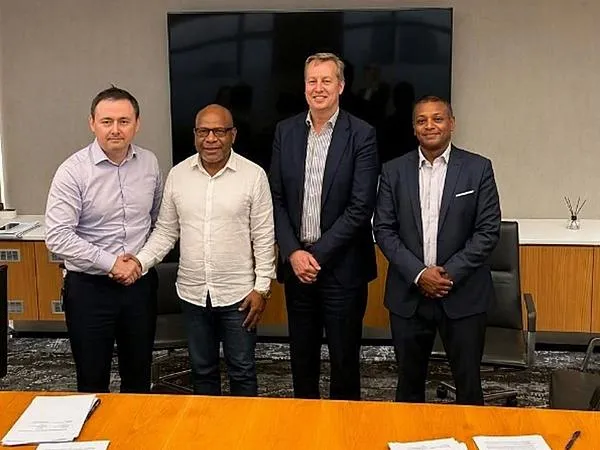
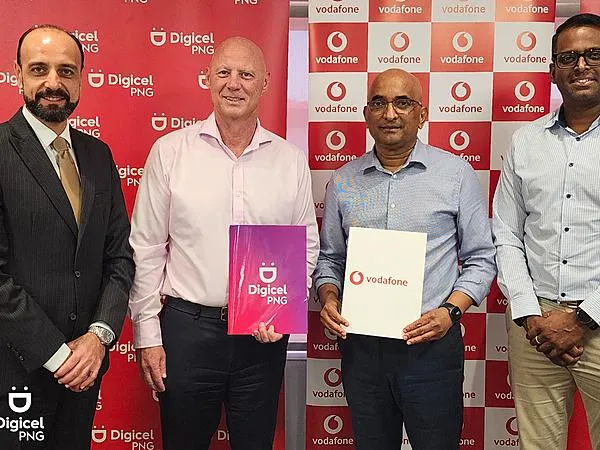
Digicel PNG and Vodafone PNG have signed a Tower Sharing Licence Agreement that will enable both telecommunications operators to share tower infrastructure across Papua New Guinea.

The Tower Sharing Licence Agreement represents a strategic infrastructure-sharing partnership aimed at achieving more efficient network expansion, resulting in improved connectivity and the delivery of greater value in mobile and broader ICT services to customers across Papua New Guinea.

Under this partnership, both operators will be able to install equipment on suitable tower sites owned by either party, subject to technical, operational, safety and commercial requirements. The framework establishes a consistent process for co-location while allowing each company to maintain independent network operations.

Digicel PNG Interim Chief Executive Officer Brett Goschen said the agreement reflects a practical and forward-looking approach to delivering connectivity across Papua New Guinea.

“Connectivity plays a critical role in Papua New Guinea’s social and economic development. This agreement is a practical step towards delivering better outcomes by overcoming the many costly challenges that mobile network operators face in delivering mobile and ICT services in PNG. By sharing existing tower infrastructure where appropriate, we can expand network reach faster, reduce duplication and costs, and maximise the value of investments already made across the country." Goschen said.

“This is a positive example of industry collaboration that benefits customers, communities and the broader telecommunications sector. We look forward to working with Vodafone PNG to help improve access to reliable connectivity for more Papua New Guineans," he added.

Vodafone PNG’s Regional Chief Executive Officer Pradeep Lal said the agreement represents an important milestone in strengthening telecommunications infrastructure and supporting the continued expansion of connectivity across Papua New Guinea.

“This partnership provides an opportunity to make greater use of existing infrastructure and support the continued expansion of mobile services across the country," Lal said.

“For Vodafone PNG, the agreement complements our ongoing investment in network coverage, capacity and customer experience," he added. "We are pleased to partner with Digicel PNG on this initiative and look forward to contributing to greater connectivity, digital inclusion and the long-term development of Papua New Guinea’s telecommunications sector.”

Digicel PNG is a leading telecommunications provider dedicated to delivering reliable mobile, broadband and digital services that connect people, empower communities and support Papua New Guinea’s growth in the digital age.

Vodafone PNG is a telecommunications provider delivering mobile voice, data, broadband and digital connectivity services to customers across Papua New Guinea. Vodafone PNG is committed to expanding access to reliable and affordable telecommunications services, investing in network coverage and capacity, and supporting Papua New Guinea’s continued digital transformation.

September 08, 2026

Santos Ltd. will increase its participating interest in the Papua LNG project to 21% after agreeing to acquire an additional 3.3% stake from TotalEnergies as part of a broader restructuring of the project's ownership and operatorship.

TotalEnergies has agreed with ExxonMobil to transfer operatorship of Papua LNG to ExxonMobil PNG Antelope Limited, while partially selling down its participating interest to the other Papua LNG joint venture partners in proportion to their existing interests.

Santos said it has executed a binding agreement to acquire the additional 3.3% participating interest, calculated after the Papua New Guinea state's back-in, in PRL 15 and the Papua LNG project for approximately US$189 million.

The transaction remains subject to regulatory approvals and the project reaching a Final Investment Decision (FID), currently planned for the fourth quarter of 2026. If completed, the acquisition will be effective from Jan. 1, 2026.

Santos expects the additional interest to increase its equity LNG production from Papua LNG by about 19% to approximately 1.2 million tonnes per annum (Mtpa).

The company said the acquisition is consistent with its strategy of disciplined, value-accretive growth around existing infrastructure and increasing exposure to Asian LNG demand.

ExxonMobil to operate Papua LNG

The proposed operatorship transfer would give ExxonMobil responsibility for Papua LNG while it continues to operate the existing PNG LNG project, a move Santos expects to generate operational synergies and strengthen project execution.

Santos Managing Director and CEO Kevin Gallagher said the transaction would better align the company's interests across PNG LNG and Papua LNG ahead of the planned FID.

“The Papua LNG project is a world-class development, strategically positioned to supply premium Asian markets and offering multiple value streams for Santos,” Gallagher said.

“ExxonMobil brings a proven track record of project delivery and reliable operations in Papua New Guinea, including PNG LNG, and is expected to realise significant synergies by operating both the upstream and midstream project scopes.”

Gallagher said Santos was prepared to increase its investment in Papua LNG because of the project's expected long-term production profile.

“Papua LNG is a world-class project and this is the right time to increase our position,” he said.

Santos said the proposed changes to equity interests and operatorship would improve alignment among the Papua LNG and PNG LNG joint venture participants.

FID remains key milestone

Completion of Santos' acquisition remains conditional on regulatory approvals and Papua LNG achieving FID.

Santos said it will provide the market with an update at FID on the project's cost, schedule and economics.

The transaction comes as Papua LNG moves toward its targeted FID in the fourth quarter of 2026, a key milestone for the proposed development and its future LNG production capacity in Papua New Guinea.

Santos also acknowledged TotalEnergies for its work advancing Papua LNG over the past decade and said the project remains on track for FID later this year.

September 08, 2026

Tolu Minerals Ltd. has secured a K95 million (about A$30 million) debt facility from Papua New Guinean bank National Banking Corporation Ltd. (NBC), providing funding for the remaining capital works required to restart the Tolukuma Gold Mine in Central Province.

Tolu said the facility, combined with approximately A$50 million in existing cash as of June 30, 2026, leaves the company fully funded to restart the mine, with production targeted for the first quarter of 2027.

The five-year facility carries an interest rate of 9.60% a year and is secured against the company's assets. Drawdown is expected in September, subject to customary conditions precedent, including registration of security.

The funding will support completion of major infrastructure and mine restart works, including the Major Infrastructure Project access road and incline, dewatering exploration drives, underground tailings facilities, processing plant refurbishment, power upgrades, the hydro plant and camp expansion.

Tolu Managing Director and Chief Executive Officer Chris Muller described the financing as a defining moment for the company, saying the focus is now on completing the capital works, delivering an updated Mineral Resource Estimate and returning Tolukuma to production.

“With the balance sheet now in place, with the existing cash balance plus the additional A$30m to complete the restart of Tolukuma, our focus is squarely on execution,” Muller said.

Restart works advance

Tolu said underground development at Tolukuma recommenced on the 1560 Level during the June quarter, with early face sampling returning multiple intervals exceeding 30 grams per tonne of gold.

Refurbishment of the processing plant is substantially complete, while supporting infrastructure works are continuing. The staged restart is expected to build processing capacity to approximately 500 tonnes per day by the end of 2027.

The company said the debt facility will fund completion of the incline access road and tunnels, processing plant and power infrastructure refurbishment, camp upgrades and construction of the tailings facility.

Resource estimate due

Tolu also expects to release an updated Mineral Resource Estimate within the next 14 days, describing it as the most comprehensive review of the Tolukuma resource undertaken to date.

The estimate is being prepared by independent consultants H&S Consultants and incorporates an updated three-dimensional geological model, together with historical and recent drilling data. Tolu said the database includes results from its most intensive drilling program at Tolukuma to date.

The updated resource is expected to underpin a new mine plan covering the Southern Expansion, Northern Expansion and Central Mine Zones.

Tolu said it is continuing a 75,000-plus-metre drilling campaign while advancing the capital works program and preparing for production in the first quarter of 2027.

The company said the development puts it on track to transition from an explorer to a producer over the coming months.

Editorial note: The source announcement contains forward-looking statements regarding the facility drawdown, Mineral Resource Estimate, funding position and first-gold timing, and notes that these are subject to risks and uncertainties, including satisfaction of the facility's conditions precedent.

September 08, 2026

Ok Tedi Mining Limited (Ok Tedi), through its wholly owned subsidiary Misima Minerals Limited (MML), has reaffirmed its commitment to working closely with government at all levels, landowners and local communities as planning and early works for the proposed Misima Project continue.

Representatives from Ok Tedi, Misima Minerals Limited, the Milne Bay Provincial Government, relevant state agencies, landowner groups and other key stakeholders met in Alotau this week to discuss project progress, address stakeholder concerns and identify priorities that will help guide the parties' focus on project development.

The meeting provided an opportunity for open dialogue on project activities, including feasibility studies and environmental and social impact assessments, both of which are required for mining and environmental permits, infrastructure planning and future opportunities for local participation.

Ok Tedi General Manager, Social Performance and Sustainability, Jesse Pile, said the company remains committed to ensuring stakeholders are actively engaged throughout the development process.

"The Misima Project can only succeed through genuine partnership between government at all levels, landowners, mine-associated communities and the developer. Meetings such as this are critical to ensuring we are listening to key stakeholders while sharing information openly to assist them in understanding the project's status as it evolves from exploration to mining."

"Meaningful partnerships are built through regular engagement and open communication. We are committed to working alongside the Provincial Government, landowners, communities and local businesses to ensure stakeholders' perspectives continue to inform project planning and help maximise long-term benefits for Misima, Milne Bay Province and Papua New Guinea."

General Manager of Misima Minerals Limited, Ben Burger, said stakeholder engagement continues to play a vital role in shaping project planning and decision-making.

"Stakeholder feedback remains critical as we progress feasibility studies, environmental assessments and project planning activities. The insights shared during this meeting will help inform our work as we continue to evaluate the project's technical, environmental and social aspects."

Burger also provided an update on the project's development stages, including:

  • Early works, including camp and access road development;
  • Exploration and resource drilling activities;
  • Feasibility study and permitting processes;
  • Environmental and Social Impact Assessment (ESIA) activities and environmental permitting requirements with the Conservation and Environment Protection Authority (CEPA); and
  • Preparation of the Mining Lease application and approval process.

Speaking on behalf of the Milne Bay Provincial Administration, Deputy Provincial Administrator, Technical and Advisory Services, Michael Viula, welcomed Ok Tedi and MML to Alotau and expressed appreciation for the continued collaboration between the Provincial Government, the project developer and landowners.

"We support the company's commitment to constructive engagement, transparency and collaboration. Working together is essential to achieving sustainable development outcomes that deliver lasting benefits for the people of Milne Bay Province."

A leader from Narian village, Elijah Gwama, said the ongoing consultation process is important in ensuring community voices remain central to project planning, execution and decision-making.

Gwama said: "We appreciate the opportunity to engage directly with the company and government representatives. Open dialogue allows our concerns, aspirations and expectations to be heard and considered as the project moves forward. We look forward to continuing to work together to ensure positive outcomes are achieved for our communities and future generations."

The participants discussed a range of issues and opportunities associated with the project and agreed on the importance of maintaining open communication and regular engagement as studies and project work continue.

The meeting forms part of Ok Tedi's broader commitment to responsible project development and ensuring stakeholders remain informed and involved as the Misima Project advances through feasibility, permitting and development planning stages.

Ok Tedi Mining Limited (OTML) is a majority state-owned entity that operates an open-pit copper, gold and silver mine located in the Star Mountains of Western Province, Papua New Guinea. We ship copper concentrate to smelters and ore refineries in Japan, the Philippines, Indonesia, South Korea, India and Germany.

The company has been operating in the region for more than 40 years and has made a significant contribution to development in Western Province through direct and indirect employment, royalties, compensation payments and business opportunities.

Ok Tedi is expanding its operations to Milne Bay Province through the acquisition of Gallipoli Exploration Limited, a wholly owned subsidiary of Australian mining company Kingston Resources Limited, for the Misima mine.

The company's registered office and senior operational management team are located in Tabubil, Western Province, PNG. It also has a representative office in Port Moresby and a marketing and logistics facility in Brisbane, Australia.

To learn more about Ok Tedi Mining Limited, visit our website at www.oktedi.com.

September 08, 2026

Sandvik has introduced a fully autonomous, battery-electric surface drilling concept that demonstrates the company’s vision for the next generation of surface mining.

Unveiled at Sandvik’s Future of Mining event in Tampere, Finland, the concept machine, known as Sami, showcases how AI, enhanced robotics, electrification and digital connectivity can work together as part of an intelligent, mine-wide operating system to improve safety and productivity.

“For years, Sandvik has helped define the future of underground mining through automation, electrification and digital technologies that have fundamentally changed how mines operate,” said Patrick Murphy, President Mining at Sandvik. “Our latest concept brings that same ambition to surface operations. By challenging conventional ways of working, we’re helping to create the next generation of safer, more productive, more reliable and increasingly autonomous mines.”

Built on a boom-drill platform, the concept machine has no operator cabin and operates fully autonomously. It carries its own drill bits, collar pipes and down-the-hole hammers onboard, while an integrated robotic manipulator autonomously performs bit changes, installs collar pipes and replaces hammers.

It can also measure hole depth and deviation after drilling, navigate autonomously through the mine environment and continuously adapt its behavior by identifying, tracking and classifying people, equipment and other objects around it. This enables the machine to distinguish between dynamic and stationary obstacles and respond accordingly. LED matrix displays communicate the machine’s operational status to personnel working nearby.

The concept also introduces a new level of mine-wide intelligence. Connected to a continuously updated digital twin, Sami is managed through Sandi, Sandvik’s AI agent. Sandi assigns drilling tasks and coordinates activities across the broader mining fleet, while Sami autonomously plans and executes its work cycle, adapting to nearby equipment and changing site conditions. Operators interact with Sandi using natural language, intervening only when human judgment is required.

In developing the concept, Sandvik looked beyond individual features to explore how electrification, autonomous operation, robotic tool handling and digital integration could be combined into a single system.

Sandvik’s latest concept machine continues the company’s tradition of challenging conventional equipment design and exploring what technologies come next for mining. Beginning with its AutoMine® Concept Loader in 2020, Sandvik has introduced a series of concept platforms spanning underground and surface mining applications, each serving as a proving ground for emerging technologies before they are incorporated into commercial solutions. Rather than being production machines themselves, these concepts are intended to accelerate the development of innovations that ultimately enhance the safety, productivity and sustainability of Sandvik’s commercial equipment portfolio.

Riku Pulli, President of Digital Mining Technologies at Sandvik, said the greatest innovation lies not in the concept machine itself, but in its integration into an intelligent mining ecosystem.

“By combining AI, autonomy and a continuously updated digital twin, we move from optimizing individual assets to optimizing the entire mining operation,” Pulli said. “That’s where the next step change in productivity and decision-making will come from. Sami is a concept rather than a product, but the technologies behind it are very real. Many of the capabilities being demonstrated today will help shape the evolution of our offering and find their way into future solutions for surface mining customers.”

Although demonstrated on a boom-drill platform, the technologies embodied in the concept machine are intended to be scalable across the wider Sandvik surface drilling portfolio, including rotary blasthole drills. Sandvik has developed the concept to stimulate conversation and collaboration with customers and industry stakeholders while accelerating the development of future commercial solutions for surface mining.

Sandvik is a global, high-tech engineering group providing solutions that enhance productivity, profitability and sustainability for the manufacturing, mining and infrastructure industries. We are at the forefront of digitalization and focus on optimizing our customers’ processes. Our world-leading offering includes equipment, tools, services and digital solutions for machining, mining, rock excavation and rock processing. In 2025, the Group had approximately 42,000 employees and revenues of about SEK 121 billion in more than 150 countries.

Mining is a business area within the Sandvik Group and a global leading supplier of equipment and tools, parts, service, digital solutions and sustainability-driving technologies for the mining and construction industries. Application areas include rock drilling, rock cutting, loading and hauling, tunneling, ground support and quarrying. In 2025, sales were approximately SEK 69 billion, with about 18,000 employees. For further information, visit mining.sandvik.

September 08, 2026

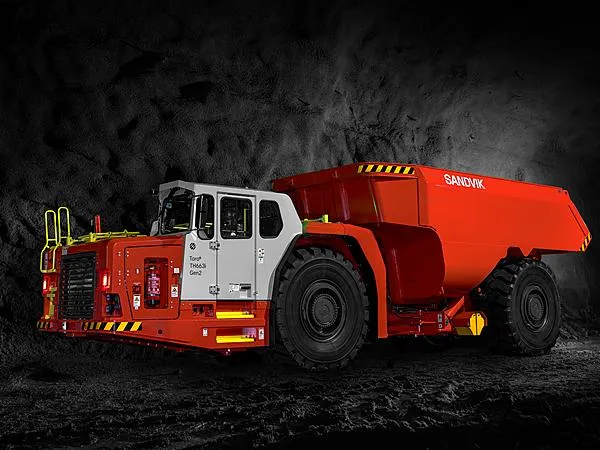
Sandvik is introducing the Toro® TH663i I Gen2 underground truck, the latest evolution of its proven 63-metric-ton haulage platform. Developed through continuous improvement, operational experience and customer insight, the updated truck incorporates more than 30 enhancements designed to improve reliability, productivity, operator safety and total cost of ownership in underground mining operations.

Performance data from underground operations shows measurable improvements compared with earlier Toro® TH663i models. Reference data indicates a 25% reduction in mean time to repair (MTTR) and a 12% increase in mean time between failures (MTBF), resulting in more than 170 additional operating hours per truck annually.

“Customers are looking for predictable performance they can rely on every shift,” said Esa-Pekka Kantola, Product Line Manager, Load and Haul at Sandvik Mining. “With Toro® TH663i I Gen2, we have used years of underground operating experience to refine a proven platform and help customers improve productivity, increase availability and control their cost per ton.”

Rather than a complete redesign, the Toro® TH663i I Gen2 builds on years of operating experience with the Toro® TH663i platform in underground mines around the world, incorporating accumulated improvements into the latest generation of the truck.

The more than 30 updates span multiple areas of the machine, including the engine, electrical systems, powertrain, software and structural systems. Together, the updates are designed to increase availability, enhance durability, improve serviceability and support lower cost per ton and total cost of ownership throughout the equipment lifecycle.

The Toro® TH663i I Gen2 can be combined with Sandvik digital and automation technologies, including My Sandvik Digital Services and AutoMine® solutions, and is supported by Sandvik's global parts, service and training network.

The Toro® TH663i I Gen2 will be showcased during Sandvik's customer day in Turku as part of Future of Mining 2026, where visitors can see the truck in the exhibition area and during live demonstrations.

Sandvik is a global, high-tech engineering group providing solutions that enhance productivity, profitability and sustainability for the manufacturing, mining and infrastructure industries. We are at the forefront of digitalization and focus on optimizing our customers' processes. Our world-leading offering includes equipment, tools, services and digital solutions for machining, mining, rock excavation and rock processing. In 2025, the Group had approximately 42,000 employees and revenues of about SEK 121 billion in more than 150 countries.

Mining is a business area within the Sandvik Group and a global leading supplier of equipment and tools, parts, service, digital solutions and sustainability-driving technologies for the mining and construction industries. Application areas include rock drilling, rock cutting, loading and hauling, tunneling, ground support and quarrying. In 2025, sales were approximately SEK 69 billion, with about 18,000 employees. For further information, visit mining.sandvik.

September 08, 2026

Kumul Petroleum Holdings Ltd. has secured stronger governance and economic protections for Papua New Guinea under an amended agreement with TotalEnergies governing the joint marketing of LNG and gas volumes from the Papua LNG project.

KPHL said it has executed the amended Shareholders Agreement with TotalEnergies covering Lakatoi Marketing Pte Ltd., the Singapore-registered entity responsible for marketing equity LNG and gas volumes from the project.

The agreement strengthens governance arrangements in line with the combined 52.94% majority interest held by KPHL and Mineral Resources Development Co. in Lakatoi Marketing, according to KPHL.

Key reserved matters, including pricing, will require unanimous shareholder consent, while the agreement also introduces stronger protections against potential exposures.

KPHL said the governance structure supports Papua New Guinea's compliance with its World Bank/International Bank for Reconstruction and Development negative pledge obligations, while maintaining balanced commercial participation among the shareholders.

The amended agreement preserves KPHL's decision-making rights and safeguards the state's commercial interests in the LNG marketing arrangements.

It also provides for the rotation of Lakatoi Marketing's general manager every four years and the secondment of KPHL personnel into key positions within the marketing company.

KPHL said these measures are intended to accelerate the transfer of LNG marketing expertise and skills to Papua New Guinean personnel and strengthen the company's long-term institutional capability.

"This outcome protects the State's financial and contractual interests, strengthens Papua New Guinea's participation in LNG marketing, ensuring that governance arrangements properly reflect the State parties' majority interest," KPHL Chairman Ambassador Isaac B. Lupari CBE, GCL, said.

KPHL credited TotalEnergies, particularly Asia-Pacific Senior Vice President Mansur Zhakupov and the company's business teams, for their constructive engagement and commitment to reaching what it described as a balanced and mutually acceptable agreement.

The company also acknowledged Prime Minister James Marape GCL MP and Minister for State-Owned Enterprises William Duma LLM MP for their leadership and support in securing the outcome.

The execution of the amended agreement represents another step toward the Papua LNG project's Final Investment Decision, which is currently targeted for end-November 2026.

Papua LNG is being developed by TotalEnergies and its partners in Papua New Guinea, with the project expected to play a significant role in the country's future LNG production and export capacity.

September 08, 2026

Santos is proud to recognise a historic milestone at the Kumul Marine Terminal (KMT), with the appointment of Jackson Jim as Team Leader, working back-to-back with Willie Mapal. This marks the first time the facility has been led entirely by Papua New Guinean nationals.

The achievement represents a significant moment in the history of one of Papua New Guinea's most important energy export facilities and reflects decades of investment in workforce development and capability building.

Located in the Gulf of Papua, the Kumul Marine Terminal is a critical piece of national energy infrastructure, serving as the primary offshore export terminal for crude oil production. Since commencing operations, the facility has played a vital role in supporting Papua New Guinea's petroleum industry and contributing to the country's economic development through safe and reliable oil exports.

Santos PNG Vice President PNG Operations, Rhys Ward, said the milestone demonstrates the strength of national talent and the company's commitment to developing Papua New Guinean leaders.

"The appointment of Jackson and Willie to lead the Kumul Marine Terminal is a proud achievement for Santos and Papua New Guinea. It reflects the dedication, professionalism and capability of our national workforce and demonstrates what can be achieved through long-term investment in people and leadership development.

"KMT is a critical asset within our operations. Seeing it fully led by Papua New Guinean nationals is a testament to the depth of talent within our workforce and our commitment to building sustainable careers for Papua New Guineans."

Santos Country Chair PNG, Leon Buskens, said the milestone reflects the company's long-standing commitment to developing Papua New Guinean talent and leadership.

"The Kumul Marine Terminal has been a cornerstone of Papua New Guinea's oil export industry for many years, and seeing it now fully led by Papua New Guinean nationals is a significant and proud achievement."

Jackson Jim, Team Leader, Kumul Marine Terminal, said he was proud to be part of the first fully Papua New Guinean leadership team at KMT, demonstrating Santos' commitment to developing local talent.

"I started with the company as an apprentice in 2007, so this is a proud moment for me personally. As PNG's petroleum industry continues to grow, I hope this achievement encourages more Papua New Guineans to see the opportunities available and pursue careers in the sector."

As Team Leader, Jackson Jim will oversee the safe and efficient operation of the terminal while continuing to champion operational excellence and workforce development. Together with Willie Mapal, the leadership team will continue to build on KMT's strong safety culture and commitment to reliable performance.

Santos congratulates Jackson, Willie and the entire KMT team on this landmark achievement and recognises their contribution to the continuing success of Papua New Guinea's oil and gas industry.

Background:

  • Jackson joined the company in 2007 as an Apprentice, while Willie joined in 2002 as a Platform Operator Trainee.
  • KMT commenced export operations in 1992.
  • The first export cargo, #0001, was loaded on 27 June 1992 onto the Ten-ei Maru tanker, carrying 650,000 barrels.
  • KMT has safely completed 1,064 loadings since that date.
  • KMT has exported approximately 664.8 million barrels of oil in total, based on 1,064 loadings of approximately 650,000 barrels each.
  • As of 31 August 2026, the facility has been in operation for 12,749 days, or approximately 34 years and two months.
  • Throughout this period, KMT has safely exported oil from Papua New Guinea 1,064 times.
  • Some KMT crew members have worked at the facility for more than 20 years, contributing to a highly experienced team.