

November 10, 2026

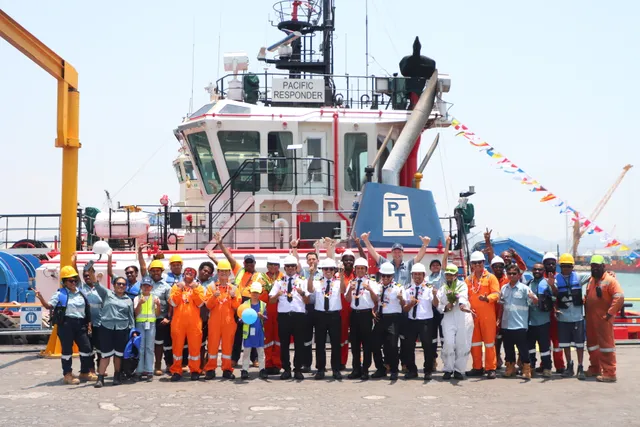
Pacific Towing (PacTow) has welcomed its newest and most powerful tug, Pacific Responder, to Port Moresby following a 27-day delivery voyage from Zhenjiang, China, marking a milestone in Steamships' investment in Papua New Guinea's maritime infrastructure.

The new-build Azimuth Stern Drive (ASD) tug arrived on Friday, 6 November, after travelling approximately 4,400 nautical miles across the region.

Following customs clearance, Pacific Responder proceeded to PacTow's dedicated tug base and headquarters at Motukea, escorted by the company's tugs Keera and Tavurvur.

The delivery voyage began on 11 October, with the vessel travelling from Zhenjiang to Zhoushan in China before heading south to the Philippines, where it took on essential supplies, fuel and equipment. A crew change was also conducted during the stopover.

From the Philippines, Pacific Responder sailed towards Papua New Guinea, transiting waters north of Australia and the Torres Strait before arriving safely in Port Moresby.

The voyage included challenging sea conditions, particularly during the passage from China to the Philippines, where the tug encountered heavy swells and strong winds.

Pacific Responder is expected to commence harbour towage duties in Port Moresby once all permits and compliance requirements have been completed, including comprehensive crew training.

Its arrival is expected to strengthen PacTow's towage capabilities in Port Moresby and support increasing shipping activity associated with PNG's growing economy.

Pacific Responder is one of two new-build tugs commissioned by PacTow under a PGK70 million investment in its fleet. The second vessel, Pacific Resolute, is currently en route to PNG.

With bollard pulls of 70 tonnes and 67 tonnes respectively, the two vessels will be the most powerful tugs in PacTow's fleet.

Steamships Marine Logistics general manager Alistair Skingley said the investment represented a significant commitment to strengthening the company's marine services and supporting the future requirements of PNG's shipping industry.

"An investment of PGK70 million in these two harbour towage tugs is a significant commitment by Steamships to Pacific Towing, our customers and the future of Papua New Guinea's maritime industry," Skingley said.

"Pacific Responder and Pacific Resolute will give PacTow greater capacity to support shipping companies operating in PNG, including those bringing larger vessels into our ports. They will also strengthen the reliability, safety and range of towage services we can provide to our customers."

He said the introduction of the vessels would also create opportunities for ongoing training and capability development among PNG's maritime workforce.

"This investment ensures PacTow remains well positioned to support PNG's ports and shipping industry as trade volumes and vessel sizes continue to grow," Skingley said.

The fleet expansion forms part of Steamships' broader investment in maritime services and infrastructure to support the country's growing shipping and trade requirements.

November 10, 2026

Crown Hotel is introducing Crown Coffee, a locally sourced Papua New Guinean coffee brand that combines premium coffee roasting with support for rural farmers, traditional coffee-growing practices and a traceability system designed to identify the growers behind every bag.

The brand's positioning is captured in its tagline: "Coffee fit for a king."

Sourced from the Wiru Valley in Southern Highlands Province, Crown Coffee brings together individual coffee farmers and Pangia Coffee, the local roasting operation responsible for processing and preparing the beans for market.

The initiative is being introduced through Crown Hotel's hospitality operations, with plans to establish the brand across its coffee shops and gift shops, and potentially in other cafés and retail outlets as market demand develops.

The concept combines three key elements: single-farmer coffee sourcing, locally managed processing and roasting, and a tracking system that follows the coffee from the grower's farm to the finished product.

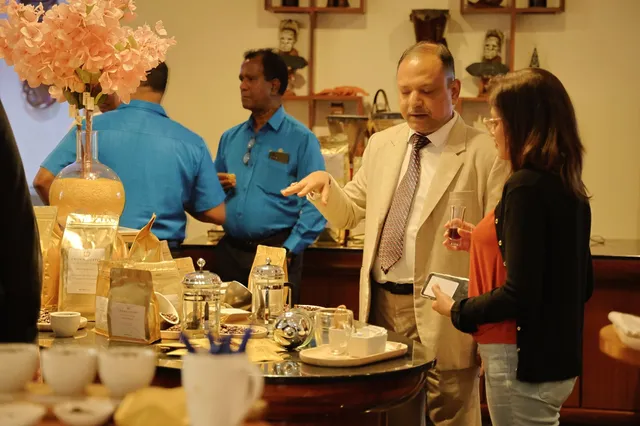
During Crown Coffee's first coffee tasting and packaging reveal, held on 9 October 2026 at Crown Hotel in Port Moresby, the hotel's executive assistant manager for food and beverage, Debasis Bera, said the brand had been developed around the concept of single-origin coffee. This would allow customers to learn more about where their coffee comes from and who produced it.

The coffee range comprises three roast profiles — light, medium and dark — each with different origins, characteristics and purposes within the product range.

While the light and medium roasts are sourced from individual farmers and kept separate throughout processing, the dark roast is blended from neighbouring farms within the Wiru Valley.

This distinction is reflected in the product labelling. The light and medium roasts are identified as single-origin, single-farmer coffee, while the dark roast carries a single-origin, single-valley description.

Bera said the different roast profiles would allow customers to explore PNG's Arabica coffee according to their preferred taste and preparation method.

"Every blend has its own nature," he said, explaining that Crown Hotel was also exploring distinctive coffee presentations and new beverage options to appeal to different consumer preferences.

Connecting consumers with the farmers behind the coffee

A major feature of Crown Coffee is its traceability system, which is designed to identify the individual farmer responsible for growing the coffee in each lot.

Unlike conventional coffee supply chains, where beans from different growers can be pooled together, Pangia Coffee purchases parchment coffee directly from individual farmers and maintains separate lot references throughout processing, hulling, roasting and packaging.

At the point of purchase, the farmer's name, village, GPS location of the coffee plot, weight of the parchment and moisture reading are recorded.

A unique lot reference is then issued and follows the coffee through each stage of production.

Each finished bag carries a sticker identifying the grower, while a QR code provides customers with additional information about the farmer, village, growing location, elevation and the dates the coffee was purchased and roasted.

The QR system is designed to operate through a mobile-friendly webpage, without requiring customers to download an application or create an account. The tracking system also records the country from which a bag is scanned, allowing Crown Hotel and Pangia Coffee to build a map showing where the coffee has travelled.

The intention is eventually to share this information with farmers so they can see the markets their coffee reaches beyond their communities.

The system also provides greater accountability throughout production, with moisture readings taken at three stages: when the parchment is purchased, after hulling and immediately before roasting. This helps the roasting operation assess the condition of the beans and determine the appropriate roasting profile.

According to Crown Hotel's production records, three farmers were supplying coffee to the operation at the time of the review, with approximately 1,000 kilograms already purchased and recorded in its tracking system.

Crown Hotel general manager Shankar Ghoshal said recognising the farmers behind the product was an important part of the brand's identity, ensuring that the people responsible for growing the coffee also received recognition in the market.

"We are promoting our farmers as well because they should be. They are the ones behind the coffee, and we shouldn't be taking the name by doing the business, but it's also them to introduce in the market. So that's the beauty of it," Ghoshal said.

A production model supporting rural farmers

The coffee supply arrangement is based on direct purchasing from farmers in the Wiru Valley, Southern Highlands Province.

According to the production model outlined by Pangia Coffee, growers pick, pulp and wash their coffee cherries before drying the parchment on raised beds in their villages.

The parchment coffee is then purchased directly from the farms, weighed and recorded before being transported to Pangia district in Ialibu-Pangia District for hulling and roasting.

The operation is designed to reduce the number of intermediaries between farmers and the roaster, allowing growers to receive better returns for their coffee.

The producer's pricing model offers between K1 and K3 more per kilogram than the alternative prices available from regional buyers at the time of purchase. The premium varies according to market conditions.

The arrangement also involves working alongside farmers to improve coffee quality through better cherry selection, fermentation and raised-bed drying techniques.

By encouraging improved production practices and purchasing higher-quality parchment directly from growers, the operation aims to strengthen the value of locally produced coffee.

The coffee is traditionally grown rather than plantation-produced. Farmers cultivate coffee trees on individual hillside plots, generally under shade, with cherries picked by hand. The brand uses the description "traditionally grown" to reflect these farming practices.

Local roasting and limited production

An important part of Crown Coffee's identity is that the coffee is roasted close to where it is grown.

Pangia Coffee handles the roasting operation in Pangia, within a few miles of the growing communities.

The arrangement keeps the major stages of production — picking, washing, drying, hulling, roasting and packaging — within a relatively small geographical area.

Production is deliberately being kept at a modest scale during the initial stages.

According to Crown Hotel's production review, the workforce has the capacity to process approximately 100 kilograms of roasted coffee each week. However, the first-year production target is 50 kilograms a week.

This will allow the business to establish the product, adjust production to Crown Hotel's requirements and assess how specialty coffee performs in the market before increasing output.

Ghoshal said Crown Hotel would initially introduce the coffee on a smaller scale, primarily serving hotel guests while also making limited retail quantities of 200–250 grams available under the Crown Coffee label.

He said the limited-production approach was intended to maintain the freshness of the coffee and create a product that customers could purchase within a defined production run.

The producer has also indicated that supply capacity needs to develop alongside market demand, rather than committing to large purchasing volumes before the supply chain is established.

Crown Coffee's records show that the business has been working with farmers to improve picking, fermentation and drying practices, with more growers expressing interest as they become aware of the purchasing prices offered.

The intention is to expand purchasing progressively as coffee quality, the roasting process and sales channels become established.

Three roast profiles and two packaging sizes

Crown Coffee's product range consists of light, medium and dark roasts, each serving a different purpose within the brand.

The light roast is a seasonal, limited-release product sourced from one farmer and one harvest. It is roasted to highlight the characteristics of the particular year's growing conditions and hillside.

Each light-roast bag is numbered by hand to identify its position within the limited production run.

The medium roast is the flagship product and the main volume line. It is sourced from an individual farmer and maintained as a separate lot, with one-kilogram packaging intended for hotel coffee shops and 250-gram packets for gift shops and retail customers.

The dark roast is the house blend, combining coffee from neighbouring farms within the same valley. It is designed to provide a deeper flavour that retains its character in milk-based beverages. Importantly, the dark roast is identified as single-valley coffee rather than single-farmer coffee because it combines beans from multiple growers.

The product range is available in two proposed packaging sizes: 250 grams and one kilogram, depending on the roast and intended market. All products are packaged as whole-bean coffee.

The packaging design also differentiates the three roast profiles through coloured side panels: orange for light roast, gold for medium roast and royal blue for dark roast.

The packaging review presents both black and white options, with the final selection intended to reflect brand preference rather than a technical requirement.

The light roast's hand-numbered packaging also gives customers a clearly identified limited-release product, while the medium and dark roasts are intended to remain the ongoing products within the range. Ghoshal said the limited-batch approach would allow customers to identify exactly where their packet sits within a particular production run.

"If I make 50 bags, every bag will be written 1 by 50 or 2 by 50," he added.

He explained that the numbering system, together with the farmer's name and QR code, would give customers more information about the coffee they were purchasing.

Crown Hotel looks towards wider distribution

For Crown Hotel, Crown Coffee provides an opportunity to introduce a locally sourced product to its existing hospitality customers before developing a wider distribution network.

Bera confirmed that the coffee would not be restricted to hotel guests, with plans to explore supplying other cafés and selected retail outlets as production and market demand develop.

The hotel also intends to introduce the coffee to its operations in Honiara, Solomon Islands, where the group has another hotel and a wine cellar. Ghoshal confirmed that the Honiara operation was also being considered as a market for the locally produced coffee.

However, expansion will depend on supply capacity and the level of demand established during the initial stages of the launch.

The approach provides Crown Hotel with an opportunity to develop the brand progressively, using customer feedback and sales performance to guide future production and distribution.

The production model also allows additional farmers to participate as demand grows, provided the operation can maintain its individual-farmer traceability and quality standards.

Building a coffee culture around PNG's beans

Crown Hotel's introduction of Crown Coffee also aims to encourage greater appreciation of PNG-grown Arabica coffee, including its origins, roasting profiles and preparation methods.

Ghoshal said coffee appreciation involved understanding the different characteristics of the product, including roast profiles, acidity and strength, much like wine consumers learn about grape varieties and how different wines complement food.

He said Crown Hotel wanted to help guests become more familiar with coffee and understand the different options available to them.

"It is all about the customer's choice. How they want their coffee: light, medium or dark roast. And the acidity level and how strong the coffee is," Ghoshal said.

He added that the hotel intended to develop a coffee culture within its hospitality operations, including a dedicated coffee counter where customers could learn more about the different roast profiles and the coffee they were drinking.

Customers would have opportunities to explore the different characteristics of the coffee through the hotel's hospitality operations.

For Crown Hotel and its production partner, the ambition is to establish Crown Coffee as more than another coffee product in the hospitality market. It represents an opportunity to showcase PNG's locally grown Arabica, recognise individual farmers, strengthen rural coffee production and connect agricultural communities with a wider commercial market.

Crown Coffee's distinguishing proposition is the connection between the coffee in the cup and the individual grower behind it — a story the brand intends to carry from the Southern Highlands to customers in PNG and around the world.

November 09, 2026

Papua New Guinea technology company NiuPay has won the Best AI-Powered Public Sector Innovation award at the AINext Awards 2026 in Singapore for its artificial intelligence system developed with the country's Immigration and Citizenship Services Authority (ICSA).

NiuPay chief operating officer Trevor Manokore accepted the award at a ceremony held on November 3 at the Crowne Plaza Changi Airport, recognising the company's MyICSA Analysis Engine (MAE), which has significantly reduced visa processing times.

The system uses generative artificial intelligence to assess visa applications and supporting documents, including passports, photographs and letters, against Papua New Guinea's immigration requirements.

According to an Amazon Web Services (AWS) case study, the technology has reduced short-term visa processing times from as long as two weeks to less than four minutes. It automatically processes about 95 per cent of short-term visa applications and can handle up to 1,000 applications daily.

The system has also processed more than 350,000 documents, according to NiuPay.

MAE automatically approves applications that meet all requirements, while cases involving uncertainty are referred to immigration officers for further assessment and decision-making.

AWS described the platform as the first generative AI deployment in a government production environment in the Pacific Islands.

The award was presented in the Excellence in AI and Technology Industry (Companies) category. Organised by Next Business Media, the annual AINext Awards recognise achievements in artificial intelligence and technology across three locations: the United States, Dubai and Singapore.

Winners are selected by an independent jury based on four equally weighted criteria: real-world impact, technical originality, scale and adoption, and responsible AI and technology practices. The assessment also considers transparency, data governance and measures to address bias.

Manokore said the recognition reflected the system's practical application within a national government rather than its development as a technology prototype.

He said MAE was designed to accelerate routine visa decisions while retaining human oversight for applications requiring additional assessment.

NiuPay chief executive officer James Inglis credited ICSA for its willingness to adopt generative AI in government operations and partner with a Papua New Guinean technology company.

He said the award demonstrated that locally developed technology could compete with solutions across the region and potentially support other public services, including land administration, taxation and education.

ICSA plans to expand MAE's capabilities to cover work permits and passport processing, while NiuPay is working with the authority to incorporate long-term visa applications into the system.

Headquartered in Port Moresby, NiuPay designs, develops and operates digital platforms for government and enterprise clients across the Pacific Islands. Its projects include the AI-assisted immigration processing system and Papua New Guinea's first digital strata titles.

The recognition adds to the country's efforts to apply artificial intelligence to public service delivery, particularly in improving administrative efficiency and access to government services.

November 09, 2026

Papua New Guinea technology company NiuPay has donated a Starlink satellite internet system to Bema Catholic High School in Gulf Province, providing connectivity to 205 students in one of the country's most isolated communities.

NiuPay chief executive officer James Inglis travelled to Bema Station in the Kaintiba area on November 5 to hand over the equipment, fulfilling a commitment made by Prime Minister James Marape during a visit to the school in September.

The donation includes a Starlink satellite internet kit, a solar and battery power system, a filtered Wi-Fi network and three months of internet data.

The package is designed to operate without access to the electricity grid, allowing the boarding school to provide internet services despite its remote location and limited infrastructure.

Bema Catholic High School is situated in mountainous terrain near the Morobe provincial border, approximately 135 kilometres from Lae and more than 250 kilometres from Port Moresby in a straight line.

Although Kerema, the provincial capital, is about 60 kilometres away, the journey on foot takes approximately two and a half days. The Kaintiba airstrip no longer has regular scheduled flights, while road access is limited to a single pilot track through Morobe Province.

School headmistress Sister Joyeeta Biswas said the connection would support teaching and learning by giving teachers and students access to online educational resources.

She said teachers would be able to obtain instructional materials, while students could use the school's e-library to research their subjects and develop computing skills.

The internet connection would also improve communication between the school and communities outside the remote station, she added.

Inglis said the donation was designed as a complete connectivity package because the school lacked electricity and reliable transport access.

The solar and battery system will power the equipment, while the filtered Wi-Fi network includes content restrictions intended to protect students online. A QR code will also allow teachers and students to connect to the network more easily.

He said the initiative demonstrated how technology could help extend access to essential services beyond major population centres.

The partnership was facilitated through the Office of the Deputy Prime Minister, John Rosso, which took responsibility for delivering the Prime Minister's commitment and engaged NiuPay to provide the equipment.

Rosso announced the partnership during the opening of the Menyamya District Office Complex on October 28. He subsequently travelled to Bema with Inglis and Australian Consul-General to Papua New Guinea Brenton Kanowski for the handover. The visit also included the delivery of medical supplies to the station's clinic.

The initiative complements the government's Connect PNG programme, which brought the Pangu Highway to Bema in September.

NiuPay said the donation was part of its broader work in developing and operating digital platforms for government and enterprise services across the Pacific.

Headquartered in Port Moresby, the company provides technology solutions for public-sector operations, including an AI-assisted visa processing system for the Immigration and Citizenship Authority and the country's first digital strata titles.

Editorial note: The strongest news angle is the extension of digital connectivity to an isolated school, rather than the corporate donation itself. The story also establishes the practical requirements for connectivity in off-grid communities through the combination of satellite internet, solar power, battery storage and filtered Wi-Fi.

November 05, 2026

Papua New Guinea's National Superannuation Fund (Nasfund) is expanding its engagement with employers and churches to improve members' understanding of retirement savings and access to superannuation services.

Recent visits to Ok Tedi Mining Limited (OTML) and the Evangelical Church of Papua New Guinea (ECPNG) provided members with updates on their contributions and savings, while highlighting the importance of preparing financially for retirement.

During a visit to OTML's Kwalimu Haus in Port Moresby, Nasfund representative Tony Deilala presented data showing that many employees had accumulated substantial superannuation balances, positioning them for greater financial security after leaving employment.

Deilala credited the results to employer support and employees' consistent voluntary contributions, which can significantly strengthen retirement savings over time.

He also urged members, particularly those based at OTML's Tabubil operations, to update their member detail update forms and ensure their nominated beneficiaries were valid and up to date.

Nasfund is also extending its services beyond workplaces through partnerships with religious organisations.

In a separate engagement, the fund's Hagen branch team provided on-site services to ECPNG members and other church agencies in Tari, Hela Province.

Nasfund Highlands Regional Team Leader Pagel Yawani said the visit marked the fund's second engagement with ECPNG.

He thanked the church for its continued partnership, saying such outreach activities helped members stay informed about their savings and make better financial preparations for themselves and their families.

Nasfund Chief Executive Officer Rajeev Sharma said workplace and church engagements were part of the fund's broader effort to make superannuation information and services more accessible.

"Whether we are engaging with members in their workplaces or through churches, our purpose is the same: to bring superannuation information and support closer to them," Sharma said.

He said the engagements gave members opportunities to ask questions, understand their savings and prepare for retirement.

Through partnerships with employers in the resource and mining sectors and churches across PNG, Nasfund aims to improve superannuation literacy, expand access to member services and help workers build greater financial security in retirement.

November 03, 2026

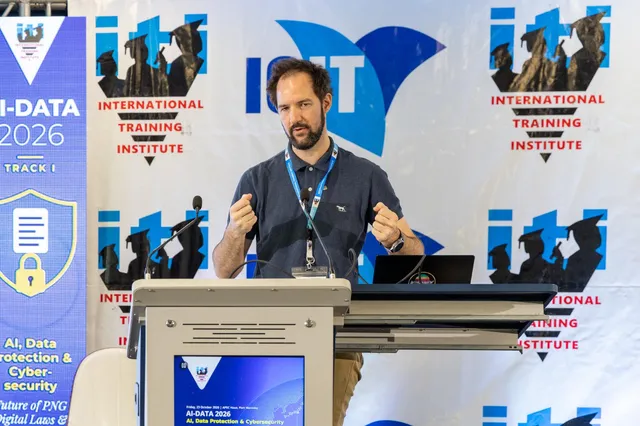
Digital trust must become a priority as Papua New Guinea advances its digital transformation agenda, with businesses and government institutions needing to ensure that the systems they develop are reliable, secure and capable of protecting people's information.

NuiPay Chief Technology Officer and Co-Founder Jason Kurdzinski said the success of digital transformation would ultimately depend on whether people could trust the systems they use.

Speaking at the AI Data 2026 conference on October 23, where NuiPay was the title sponsor, Kurdzinski said digital systems would not earn public confidence through good design, policies or legislation alone, but through their ability to work reliably and protect users' information.

“People do not trust the system because of how it was designed. People trust a system because it works the last time they've used it. And it works very, very well,” he said.

He illustrated this with the example of a coffee exporter in Baroqa who relies on a government digital platform to upload export documents before a deadline. The user's main concern, he said, would be whether the system worked correctly, accepted the documents on time and kept the information private.

Kurdzinski said artificial intelligence (AI) was accelerating technological development globally, expanding capabilities and creating new opportunities for businesses and institutions.

He said NuiPay's overall engineering output had increased 17-fold within a year, during which the company recruited about 10 additional engineers.

He attributed the improvement to the growing capabilities of AI tools, particularly AI agents that can work towards specific objectives and identify solutions with less human direction.

These developments could help organisations accelerate digitalisation by addressing longstanding challenges, including fragmented data systems, incomplete records and duplicated information.

However, he stressed that organisations must first establish strong data foundations, with clear accountability for the accuracy and management of information.

On data protection, Kurdzinski said businesses and government agencies had a responsibility to safeguard information entrusted to them by customers and citizens.

Organisations must be transparent about what information they collect, why they collect it, who has access to it and how they respond to data security incidents.

“The Data Governance and Protection Bill, which are being merged, is our chance to make that the norm, and that's the whole purpose of these laws,” he said.

He welcomed the Department of Information and Communications Technology's (DICT) work to strengthen PNG's digital legal framework through draft legislation.

However, he emphasised that laws must be practical, proportionate and enforceable to provide meaningful protection.

“There is no point saying that companies have to disclose a data breach within three hours if that's not actually enforced and you don't have the data to back that up,” he said.

Kurdzinski also highlighted the importance of focusing on how information is protected rather than concentrating solely on where it is physically stored.

He said cybersecurity measures, proper data management and effective legal frameworks were essential components of a trusted digital environment.

He called for legislation to be developed through genuine consultation involving government, industry, civil society and regional partners, noting that policies adopted in countries such as Singapore and Australia might not necessarily work in the same way in Papua New Guinea.

“The work has to be done here and by the people who know the country,” he said.

Kurdzinski's presentation followed remarks by DICT Secretary Steven Matainaho, who outlined the department's work on digital transformation, data governance, cybersecurity and the development of a national AI policy.

Matainaho also highlighted the need for appropriate safeguards governing the use of AI in the public service, particularly in handling government information and using publicly available AI models.

Kurdzinski said responsible AI adoption, quality data, data protection, cybersecurity and sound legislation were interconnected and needed to be developed together.

He said public confidence would ultimately depend on whether digital services worked reliably for ordinary users, including those outside major urban centres.

“That's what trust looks like when we get it right. Nobody notices. It should just work,” he added.

NuiPay is a PNG-founded technology company that develops and operates cloud-native digital platforms for government agencies across the Pacific region.

Under Kurdzinski's technical leadership, the company developed the NYICSA Analysis Engine, a generative AI-powered system used to process visa applications and automate visa decisions for PNG's Immigration and Citizenship Service Authority.

November 03, 2026

Papua New Guinea’s National Superannuation Fund Ltd (Nasfund) has warned members and stakeholders against fake social media accounts unlawfully using its name, logo and branding to spread misleading information and potentially facilitate scams.

Chief Executive Officer Rajeev Sharma said the Fund had identified several unauthorised accounts impersonating Nasfund, creating confusion among members and exposing the public to fraudulent activities.

He urged members to remain vigilant and report suspicious accounts rather than engage with them.

“We are advising all members and stakeholders to be cautious when interacting with social media pages claiming to represent Nasfund. If you come across a suspicious page or account, please report it immediately and refrain from engaging with it,” Sharma said.

He warned members against sharing personal, financial or membership information, including membership numbers, Nasfund identification card details, contact information, passwords and verification codes.

Sharma reiterated that Nasfund would never request sensitive personal information through unofficial social media pages or private messaging platforms.

He encouraged members to verify information through the Fund’s official communication channels and contact Nasfund directly if they were uncertain about the legitimacy of an online account or message.

Members can access the Fund’s official channels through its website, www.nasfund.com.pg, and verified social media accounts:

November 03, 2026

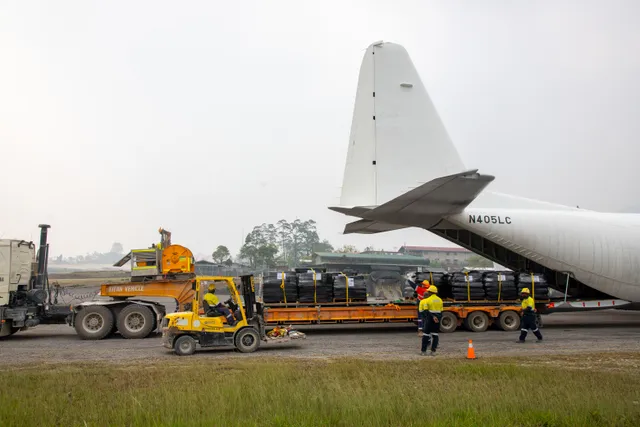
Ok Tedi Mining Ltd has airlifted 41 tonnes of emergency relief supplies to Tabubil to support communities affected by the prolonged drought in Papua New Guinea’s North Fly District of Western Province.

Managing Director and Chief Executive Officer Kedi Ilimbit confirmed the deliveries, which form part of the company’s K15 million allocation for Western Province from its K50 million El Niño Relief Fund.

Ok Tedi transported the supplies using its chartered Lynden Hercules cargo aircraft, delivering 14 tonnes on October 24 and another 14 tonnes on October 25. A further 13 tonnes were delivered on November 3, bringing the total airlifted volume to 41 tonnes.

The deliveries form part of an initial 50-tonne allocation designated for air transportation, with the remaining supplies to be delivered as relief operations continue.

Ilimbit said the company recognised the difficulties facing communities across Western Province, particularly as the drought had also affected its own operations and surrounding areas.

“As a Western Province-based company that has also been affected by the El Niño conditions, we recognise the hardships being faced by many communities and are committed to supporting relief efforts wherever we can.

“By making our chartered Hercules aircraft available, we are helping to ensure essential supplies reach those who need them most,” he said.

The aircraft is normally used to transport operational supplies between Port Moresby and Tabubil. Ok Tedi has extended its use to support the delivery of essential goods to drought-affected communities.

The company said it would continue to maintain safe and efficient operations while supporting the relief effort.

Ok Tedi will also work with government agencies and other stakeholders to support ongoing assistance programmes across Western Province.

October 30, 2026

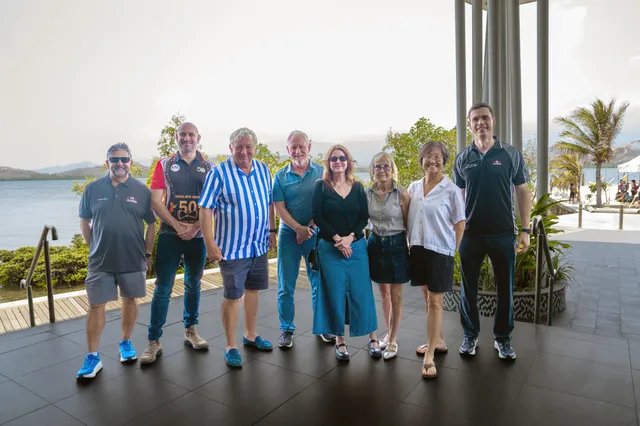
K92 Mining's newly appointed board chair, John Lewins, has led his first board meeting in Papua New Guinea, marking the start of a new leadership chapter following changes that took effect on 1 October.

Chief Executive Officer and Director David Medilek also attended his first board meeting in his new capacity.

As part of the board programme, directors travelled to the Kainantu Gold Mine, where they received operational briefings from the site management team and met employees from across the business.

The visit included an underground mine tour and inspections of the river crossing infrastructure and other operational areas, giving directors firsthand insights into mining activities and future development opportunities.

The board also toured key surface facilities, including the Stage 3 Expansion Process Plant, and received presentations on health and safety performance, major projects, exploration and geology, mine operations and human resources.

The briefings covered the company's operational performance, ongoing expansion initiatives and its approach to responsible mining and stakeholder engagement.

Following the site visit, directors travelled to Loloata Island Resort near Port Moresby for a strategy session and formal board meeting.

The programme concluded with a dinner in Port Moresby attended by business leaders, industry partners and other stakeholders. The gathering provided an opportunity to strengthen relationships and discuss opportunities to support Papua New Guinea's economic development and long-term growth.

K92 said the board's visit reaffirmed its commitment to maintaining a strong presence in Papua New Guinea as it advances the next phase of development at the Kainantu Gold Mine.

The company said direct engagement with employees, communities, business partners and other stakeholders provided directors with valuable insights into its operations, growth initiatives and long-term plans.

October 30, 2026

BSP Financial Group Ltd. has handed over a new double classroom, 80 desks and a 5,000-litre water tank to Gum Primary School in Madang Province under its 50for50 GivimBek Initiative.

The project was nominated by BSP employees in Madang and delivered with support from the school, parents, community members and local business partners.

Project lead Bernadette Massen, who has been based in Madang for more than 10 years, said she became aware of the school's need for additional classroom space through a fundraising drive organised by its head teacher.

Originally from Morobe Province, Massen said she applied for support through the initiative after learning that parents and teachers were raising funds to complete a partially constructed classroom.

She said the project brought together BSP employees, branch management, parents and community volunteers to provide facilities that would benefit students and ease the financial burden on families.

"We hope these new facilities will support teachers, improve learning outcomes and help students achieve better results," Massen said.

She added that parents and volunteers contributed their time, skills and resources to construct the classroom, reflecting the community partnership promoted by the initiative.

BSP Group General Manager for Retail Bank Ronesh Dayal, who officiated at the handover, said community development was most effective when organisations and local residents shared a commitment to improving lives and creating opportunities for future generations.

"At BSP, we believe that when we prosper, our communities should prosper too," Dayal said.

He said the new facilities reflected the partnership between BSP, the school, the community and local businesses.

Dayal acknowledged the school's board and management, parents who volunteered during construction, and local businessmen Steven Segifok and Jeffrey Turirik for their personal contributions to the project.

Ward 18 Councillor Peter Sepur said the facilities would serve more than 10,000 people across surrounding wards, where a growing number of school-aged children attend Gum Primary School.

He said the project had strengthened collaboration among local communities while supporting shared priorities in education, law and order and the welfare of children.

Sepur also pledged that the community would ensure the facilities were properly maintained.

Gum Primary School head teacher Jeffrey Baisen said the school had enrolled 1,000 students this year, supported by 35 teaching staff, creating an urgent need for additional learning space.

He said the new classroom had been designed to accommodate larger class sizes, with wider custom-built blackboards and improved ventilation to provide a more comfortable learning environment.

Baisen said the additional classroom, desks and water tank would help the school accommodate its growing student population and support its learning needs in the coming years.

Dayal congratulated the school's board, parents and students, as well as the BSP employees who initiated the project. He also recognised the BSP Madang team's contribution to delivering the facilities.

The Gum Primary School project follows other 50for50 GivimBek initiatives delivered in Western Highlands, Eastern Highlands, Hela, Simbu, Western Province, the National Capital District, the Autonomous Region of Bougainville and Central Province.

The initiative forms part of BSP's 50th anniversary community commitment, supporting projects in communities across Papua New Guinea and the wider South Pacific.

About BSP

BSP Financial Group Ltd. is a South Pacific banking group with roots in Papua New Guinea dating back to 1916. It serves about three million retail, business, corporate and institutional customers across Papua New Guinea, the Cook Islands, Fiji, Samoa, Solomon Islands, Tonga and Vanuatu.

The group operates a regional network of 124 branches and 596 ATMs, alongside digital banking services. BSP is listed on the Papua New Guinea Exchange (PNGX: BSP) and the Australian Securities Exchange (ASX).

October 30, 2026

PORT MORESBY, 30 October 2026 – Ok Tedi Mining Ltd. (OTML) has brought a fire involving waste tyres at the Tabubil Landfill largely under control, with monitoring continuing as authorities investigate its suspected deliberate ignition.

The fire was detected in the early hours of 26 October and prompted an immediate response from the company's Emergency Response Team and Incident Management Team, which implemented containment measures to minimise potential impacts on employees, contractors and the wider Tabubil community.

No injuries have been reported.

Preliminary assessments indicate the fire may have been deliberately lit. The matter has been referred to the Royal Papua New Guinea Constabulary, with Ok Tedi cooperating with authorities as investigations continue.

Managing Director and Chief Executive Officer Kedi Ilimbit said the safety of employees, contractors and community members remained the company's highest priority.

"Our immediate focus has been the safety of our people and community, and the safe containment of the fire," Ilimbit said.

He commended the company's emergency response personnel for their swift and professional action, which helped bring the situation under control.

Ilimbit said Ok Tedi would continue monitoring the site and working with authorities to manage potential risks while investigations into the incident were ongoing.

He also urged employees, contractors, business partners and community members to rely on verified information from the company's official communication channels and avoid circulating unverified reports that could cause unnecessary concern.

Ok Tedi further cautioned residents to remain vigilant amid current dry conditions, which increase the risk of fire-related incidents.

Anyone with information that could assist the investigation has been encouraged to report it to the Royal Papua New Guinea Constabulary.

October 30, 2026

Westpac Bank PNG delivered free financial literacy training to 9,013 people across Papua New Guinea in financial year 2026, equipping students, communities and small businesses with practical skills in budgeting, saving and money management.

The bank conducted 109 hours of financial literacy training through 67 facilitated sessions, reaching participants in Port Moresby, Goroka and other parts of the country.

Women accounted for 53% of participants, while men represented 47%.

The programme reached a broad cross-section of communities, including students, young people, church groups, community organisations, employees, corporate customers and small businesses. Training was delivered through face-to-face sessions, webinars and regional outreach activities.

Participants received practical guidance on budgeting, saving, managing personal finances and business planning. The programme also included Westpac's Financial Basics for My Business training, which focuses on strengthening financial management skills among small business owners.

Westpac Pacific Head of Corporate Affairs, Marketing and Community Rachel White said the FY2026 results demonstrated the value of making practical financial knowledge more accessible to individuals and businesses across Papua New Guinea.

“Financial knowledge plays an important role in giving people greater confidence in the decisions they make about their money. What makes this programme valuable is its practical focus, whether we're working with a student learning the basics, a community group or a small business looking to strengthen its financial management,” White said.

“Reaching more than 9,000 people in FY26 is a result we're proud of, and our focus is on continuing to make financial education accessible to more Papua New Guineans.”

Westpac continued to expand its financial literacy initiatives throughout FY2026. During the first quarter alone, 1,072 people took part in 18 training sessions, including programmes for schools and corporate customers. These covered Financial First Steps and Financial Basics for My Business, delivered through both face-to-face and virtual formats.

Beyond expanding its reach, Westpac also strengthened the programme's delivery and impact measurement during the financial year. Improvements included updated training resources, enhanced participant tracking, the collection of testimonials and more robust impact reporting.

Westpac's free financial literacy programme has been operating across the Pacific since 2007, providing education, resources and tools to help individuals and communities develop greater financial knowledge and confidence.

Westpac PNG said it would continue expanding the programme's reach across communities and businesses, helping more Papua New Guineans develop the practical financial skills needed to make informed financial decisions.

October 23, 2026

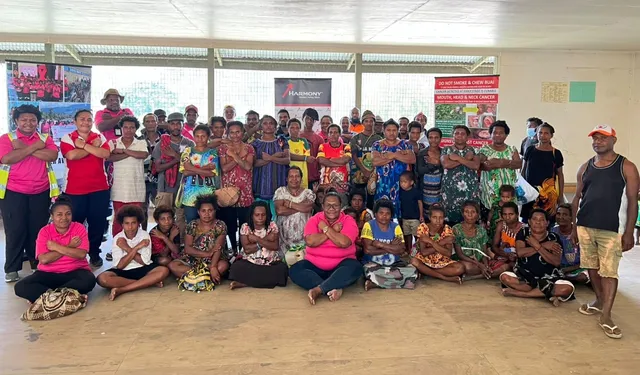
Harmony’s Hidden Valley mine, in partnership with Angau Memorial Hospital and the PNG Cancer Relief Society, has screened 154 people during a month-long breast cancer awareness campaign across host communities in Papua New Guinea.

The Pinktober programme screened 147 women and seven men, with eight cases referred for further assessment and specialist breast screening at the National Cancer Services Clinic at Angau Memorial Hospital.

More than 500 community members attended awareness sessions held at seven sites and surrounding communities throughout October, according to Harmony.

The programme aimed to promote early detection, improve understanding of breast cancer symptoms and treatment options, and encourage regular health checks among communities in the mine’s operational areas.

Harmony supervisor for the Gender Development Programme Sheenie Kapen said partnerships with medical professionals and cancer support organisations were important in reaching women and families in rural and remote communities.

“Harmony is proud to partner with Angau Medical Team and the PNG Cancer Relief Society to bring this important awareness programme directly to our communities,” Kapen said.

“By increasing awareness and encouraging early detection, we hope to empower women, families, and communities to take proactive steps towards better health.”

Representatives from Angau Memorial Hospital and the PNG Cancer Relief Society provided medical information, addressed misconceptions about breast cancer and explained available support services during the community visits.

The initiative also covered other cancers, including mouth and cervical cancer, which, alongside breast cancer, were identified in the programme materials as among the leading cancers in Papua New Guinea.

To strengthen follow-up care, Harmony and the Angau Cancer Clinic have established a breast cancer referral registry to track and support people referred through the campaign.

The registry is intended to improve continuity of care and help patients access specialist medical services in a timely manner.

The campaign forms part of Harmony’s community health and wellbeing initiatives and its participation in the annual Pinktober breast cancer awareness campaign.

October 23, 2026

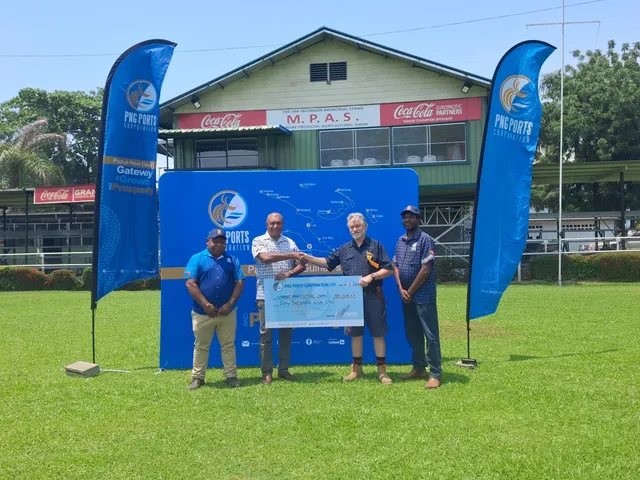
PNG Ports Corporation Ltd has provided K50,000 to support the 63rd Morobe Provincial Show, reinforcing the port operator’s ties with agricultural producers, businesses and communities across the region.

PNG Ports director George Gware presented the sponsorship cheque to Morobe Show Committee president Hans Mehl on Thursday. The annual event will be held at the Lae Showgrounds on 24 and 25 October.

Gware said the sponsorship recognised the importance of the industries and communities that depend on Lae Port to transport goods and products to domestic and international markets.

“Many of the farmers, producers and businesses exhibiting at the Morobe Show rely on Lae Port to bring in the goods they need and to move their products to domestic and international markets. When they succeed, the region succeeds,” he said.

He added that the sponsorship aimed to strengthen PNG Ports’ connections with Morobe, the wider Momase region and the Highlands, recognising their contributions to the national economy.

Lae Port is Papua New Guinea’s largest port and a major trade gateway for Morobe Province and the Highlands region. In 2024, it handled about 60% of the country’s imports and 55% of its exports, serving as the primary export port for commodities including coffee, cocoa and gold.

The port supports an estimated K11.2 billion in economic activity annually across the regions it serves.

Organised by the Morobe Province Agricultural Society Inc., the Morobe Show is one of Papua New Guinea’s major agricultural, cultural and commercial events. It brings together exhibitors, businesses, schools and visitors from Morobe, other Momase provinces, the Highlands and beyond.

Mehl welcomed the sponsorship, saying the event provided an opportunity for communities and businesses to showcase their cultures, agricultural products and achievements.

“The Morobe Show is more than an exhibition; it is a gathering that celebrates our diversity and the contributions people make to their communities and the nation,” he said.

“Support from organisations such as PNG Ports is important to sustaining an event that brings together agriculture, business and culture.”

PNG Ports is the state-owned national ports authority, managing 15 of Papua New Guinea’s 23 declared ports. Its facilities handle more than 5.8 million tonnes of cargo annually, accounting for all of the country’s seaborne trade.

The corporation provides port services including berthing, wharfage, storage, pilotage and harbour management, supporting domestic and international trade across the country.

October 22, 2026

Forty-four out of every 100 women diagnosed with breast cancer in Papua New Guinea die from the disease, highlighting the need for early detection and timely treatment, according to Pacific International Hospital (PIH) consultant oncologist Michael Shawel Lemma.

Lemma shared the figures during a breast cancer awareness session at Nasfund’s headquarters in Port Moresby, held as part of the superannuation fund’s Pinktober activities.

He said breast cancer accounted for more than 20 per cent of cancer cases treated at PIH, underscoring the importance of recognising symptoms and seeking medical attention early.

“When breast cancer is diagnosed while it is confined to the breast, the five-year survival rate is 99 per cent. If it has spread to the lymph nodes, the rate is 87 per cent,” Lemma said.

He said many women in PNG sought medical attention only after developing large breast lumps or open wounds, when treatment became more difficult and the chances of a cure were lower.

Other barriers to early diagnosis and treatment include limited access to radiotherapy and diagnostic services, geographical distance, cost, fear and cultural beliefs.

Lemma encouraged women to undergo regular breast self-examinations and clinical breast examinations, as well as appropriate diagnostic imaging, including mammograms.

He emphasised that early diagnosis and completion of recommended treatment were critical to improving outcomes.

Nasfund considers cancer coverage

Nasfund General Manager Talent and Culture Alex Rogea, speaking on behalf of chief executive Rajeev Sharma, thanked the PIH team and acknowledged the participation of both female and male employees in the awareness session.

“Breast cancer can affect men as well as women, so everyone should be aware of the signs and symptoms,” Rogea said.

Nasfund is partnering with PIH to deliver its Employee Assistance Programme and is exploring options to include cancer screening and treatment in staff insurance coverage, he said.

The session was attended by Nasfund staff and management at its Port Moresby headquarters, while employees at centres outside the capital joined online.

This year’s Pinktober theme is “Every story is unique, every journey matters”.

Lemma urged participants to share the message that early detection improves breast cancer outcomes, helping more people recognise symptoms and seek medical care without delay.

October 22, 2026

Westpac Papua New Guinea has appointed Mollie Sheekiot as head of people and moved Tanya Drost from head of credit to head of risk, strengthening its executive leadership team as the bank focuses on workforce development and risk management.

Sheekiot brings nearly 20 years of human resources and people leadership experience across financial services, mining, fast-moving consumer goods, logistics and manufacturing.

Before joining Westpac PNG, she held senior leadership roles at Nambawan Super, Newcrest Mining and other organisations, working in complex operating environments and developing people strategies.

As head of people, Sheekiot will work with leaders across the bank on talent development, employee engagement and workplace culture, supporting its business priorities and long-term growth in Papua New Guinea.

Drost, who has worked at Westpac for more than 35 years, brings over 25 years of experience in credit risk across various industry segments. A member of the PNG Leadership Team, she transitioned from head of credit to head of risk in 2026.

In her new role, Drost will lead the bank’s risk function, supporting risk management and business decisions as Westpac PNG serves customers and pursues sustainable growth.

Westpac PNG chief executive Andrew Cairns said the appointments brought extensive experience to the leadership team.

He said Sheekiot’s expertise in people leadership, organisational development and workplace culture would help the bank support its employees and improve outcomes for customers and communities.

Cairns also highlighted Drost’s knowledge of Westpac’s operations and the PNG banking sector, saying her experience would support disciplined risk management.

Sheekiot said she looked forward to working with teams across the bank to strengthen workplace culture, support employee development and advance its strategic priorities.

Drost said strong risk management was fundamental to serving customers, making sound decisions and building a sustainable business.

The appointments reflect Westpac PNG’s focus on developing its workforce, maintaining effective risk controls and supporting its long-term operations in Papua New Guinea.