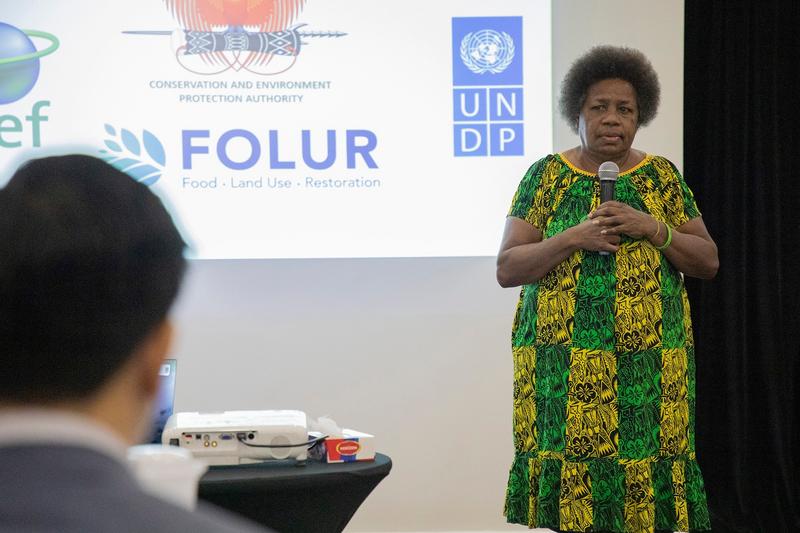
The United Nations Development Programme (UNDP), in partnership with the Conservation and Environment Protection Authority (CEPA), convened a coordination workshop to strengthen collaboration among stakeholders under the Global Environment Facility-7 Food Systems, Land Use and Restoration (GEF-7 FOLUR) Project.
The workshop brought together representatives from national government agencies, provincial administrations, private sector partners, grantees and civil society organizations to align efforts and improve coordination in implementing sustainable land use initiatives.
Officials said the meeting provided a platform for partners to deepen their understanding of the project, clarify roles and responsibilities, and strengthen collaboration across all components.
“It’s essential to view all project components as a connected and coherent set of interventions, leveraging technical, operational and financial synergies among partners,” said Aadil Mansoor, UNDP deputy resident representative. “At the same time, we must promote transparency and shared responsibility, ensuring that communities remain at the center of all project actions and outcomes.”
CEPA Director for Sustainable Environment Programs Kay Kalim underscored the importance of establishing a multistakeholder platform to improve coordination and policy alignment.
“Such a platform will strengthen cross-sector dialogue and enable stakeholders to work more cohesively and effectively,” Kalim said. “I encourage all participants to become active advocates who can help influence policy reforms and support the institutionalization of integrated approaches across sectors.”
The workshop focused on reinforcing CEPA’s role as an implementing partner, particularly in linking the project to protected areas and environmental management. It also aimed to align the activities of grantees, contractors and other partners with the broader goals of the program, while enhancing coordination with provincial governments and agencies with implementation agreements.
Participants reaffirmed their commitment to a more coordinated approach, highlighting the importance of integrated land use planning in addressing environmental and development challenges.
The GEF-7 FOLUR project, titled “Establishing systems for sustainable integrated land use planning across New Britain Island in Papua New Guinea,” seeks to reduce agriculture-driven deforestation and biodiversity loss while developing a long-term framework to guide land development in the country.