November 03, 2026

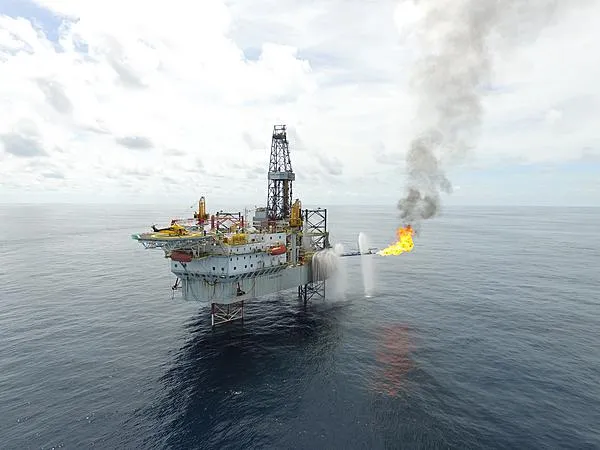
Papua New Guinea’s US$14.5 billion Papua LNG project is on track to reach a Final Investment Decision (FID) by December 15, 2026, with progress on the development drawing increased international interest in the country’s resources sector.

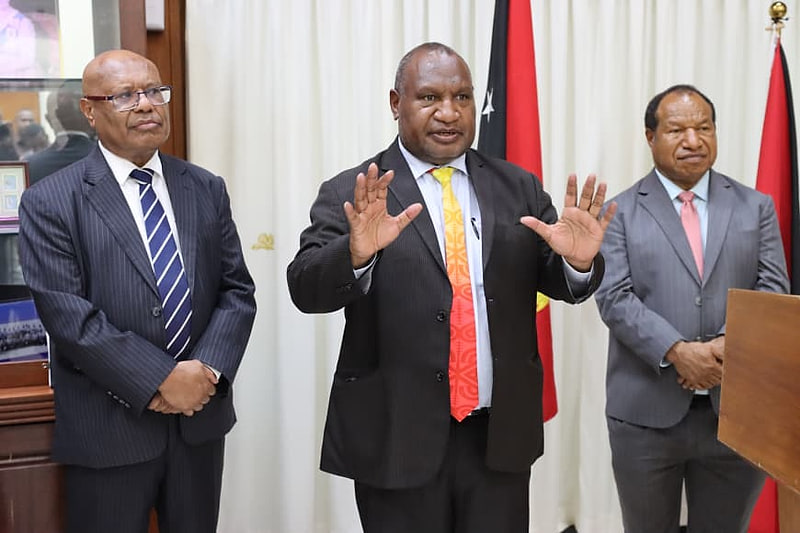
PNG Chamber of Resources and Energy (PNGCORE) President and PNG Investment Week Convenor Anthony Smaré congratulated the Marape-Rosso government, provincial leaders and project partners for advancing the project towards the investment milestone.

Smaré credited Prime Minister James Marape, Petroleum Minister Jimmy Maladina, the State Negotiating Team and leaders from Gulf and Central provinces for securing the agreements and legislative approvals needed to advance the project.

He also acknowledged landowners and communities in the two provinces for their agreement through the Development Forum, which cleared a key step towards FID.

The Papua LNG joint venture is led by ExxonMobil, which recently took over as project operator, alongside TotalEnergies, Santos, ENEOS Xplora, Kumul Petroleum Holdings and Mineral Resources Development Company (MRDC).

Smaré said ExxonMobil’s experience operating the existing PNG LNG project at Caution Bay provided confidence in its ability to deliver the next major LNG development.

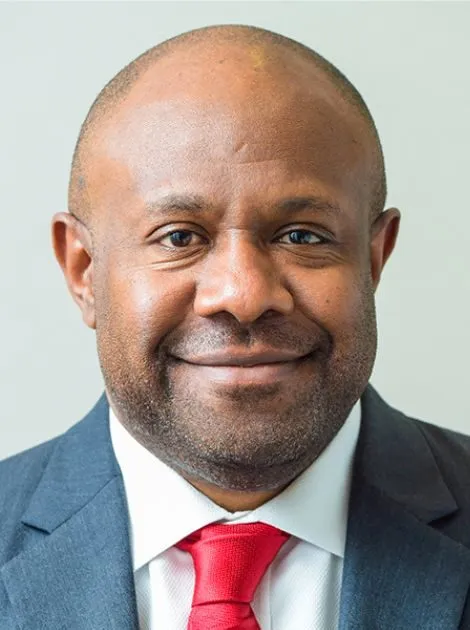
“ExxonMobil taking over as operator, alongside the PNG LNG plant it already runs at Caution Bay, gives everyone great confidence. Dinesh and his team have delivered one of the world’s best-performing LNG projects in PNG, and they are the right people to deliver the next one,” he said.

FID targeted for December 15

Smaré said reaching FID by December 15 would strengthen PNG’s position as a reliable LNG supplier to Asian markets amid growing demand for secure energy supplies.

He cited instability in the Strait of Hormuz as a reminder of the importance energy buyers place on supply security, noting that PNG’s LNG exports to Asia do not pass through major maritime chokepoints.

“PNG LNG has delivered reliably for more than a decade. Papua LNG lets us meet the growing demand from our customers and lock in PNG’s place as a trusted supplier for the long term. That is why getting to FID on time matters so much,” he said.

International interest boosts PNG Investment Week

Smaré said progress on Papua LNG had also generated increased international interest in PNG Investment Week 2026, scheduled for November 29 to December 2 at the International Convention Centre (ICC) Sydney in Australia.

He said international LNG buyers and engineering, technical and service companies were seeking opportunities to support Papua LNG and other proposed resource and energy developments.

These include P’nyang, Pasca, Muruk, Wildebeest and Wafi-Golpu.

Many of the interested companies were looking to establish partnerships with Papua New Guinean businesses, suppliers and landowner companies, he said.

Papua LNG will feature in a dedicated session at the PNG Resources Investment Summit on December 1, alongside updates on the country's major resource and energy projects.

PNG Investment Week is the country's premier international investment event, organised by PNGCORE in partnership with the PNG government to promote investment opportunities.

The 2026 event is expected to attract about 1,800 delegates and will include the PNG Regulators Forum, PNG Leaders Summit, PNG Resources Investment Summit, PNG Finance and Capital Forum, and PNG Infrastructure and Climate Investment Summit.

Further information on registration, the programme and sponsorship is available at www.pnginvestmentweek.com.pg.
October 23, 2026

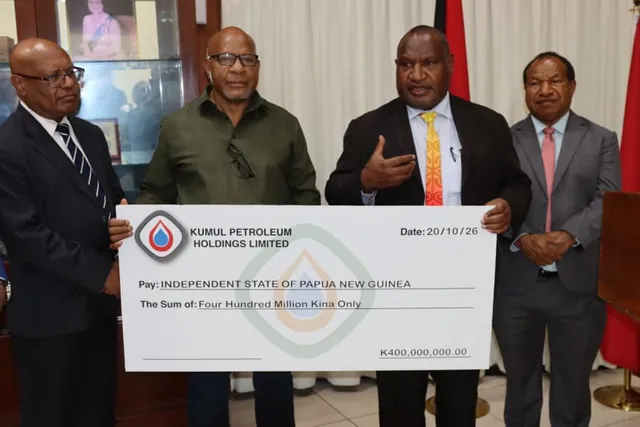
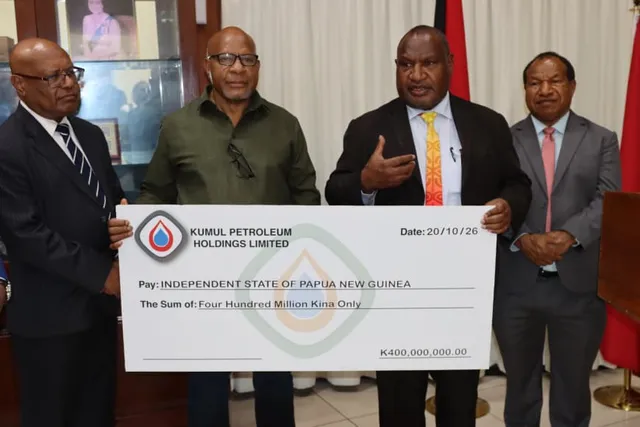
The Papua New Guinea Chamber of Resources and Energy (PNG CORE) has congratulated Kumul Petroleum Holdings Ltd (KPHL) on contributing more than K1 billion to the state in 2026, following the presentation of a K400 million interim dividend.

KPHL presented the dividend to the government on 20 October, bringing its total contribution for the year to K1 billion, providing additional revenue for the national budget.

PNG CORE executive director Richard Kassman said the payment reflected high global commodity prices and the management of the country's interests in petroleum projects, including the Papua New Guinea liquefied natural gas (PNG LNG) project.

He said the significance of the contribution extended beyond the headline figure, with the benefits depending on how petroleum revenues were translated into economic opportunities and improvements in people's lives.

“Revenue returned to the state strengthens its capacity to fund essential services and invest in development priorities, including support for healthcare, education, roads and other critical infrastructure,” Kassman said.

He added that stronger fiscal stability would help the government respond to the looming effects of El Niño.

PNG CORE also encouraged KPHL to maintain sound corporate governance and prudent management of its equity interests on behalf of the state and the people of Papua New Guinea.

The chamber called for continued collaboration between the government and industry, saying KPHL had a role in promoting the country as an investment destination.

Kassman said the company would have an opportunity to showcase its contribution to sustainable returns and long-term national development at the upcoming PNG Investment Week in Sydney.

He said the focus should remain on ensuring petroleum revenues delivered lasting benefits for current and future generations of Papua New Guineans.

October 22, 2026

Kumul Petroleum Holdings Ltd. (KPHL) has paid a K400 million interim dividend to the Papua New Guinea government, bringing its total direct contribution to state revenue this year to more than K1 billion, including tax payments.

KPHL chairman Isaac Lupari presented the dividend at a ceremony attended by Prime Minister James Marape, Petroleum Minister Jimmy Maladina, State Enterprises Minister William Duma, government officials and the company’s senior management team, led by acting managing director Luke Liria.

The payment brings KPHL’s dividend contributions for 2026 to K550 million, following an advance dividend of K150 million paid in December 2025. The company has also remitted more than K480 million in advance payments tax this year.

Lupari said the payment reflected the company’s financial performance, disciplined management and commitment to generating sustainable returns from the country’s petroleum resources.

“As the national petroleum company, our responsibility is to ensure that the country’s petroleum resources generate tangible and sustainable benefits for current and future generations of Papua New Guineans,” he said.

The latest payment follows KPHL’s K700 million dividend distribution in 2025. The company’s board said further dividends could be considered before the end of this year, subject to operational performance, cash flow requirements, debt obligations and future investment commitments.

Contributions to state revenue

Between 2014 and 2025, KPHL contributed K1.827 billion in taxes and K3.431 billion in dividends to the state, according to the company.

It also recorded K3.463 billion in strategic petroleum investments, including additional equity acquisitions in the PNG LNG project, petroleum development commitments and the establishment of Niu Power Ltd. in partnership with Santos.

The company further contributed K416 million to national development initiatives, including support for ANGAU Memorial Hospital, Port Moresby General Hospital and rural electrification programmes. Another K740 million was allocated to approved infrastructure projects.

KPHL said it had also supported community, education, health and social development initiatives across the country.

Papua LNG financing

KPHL has secured a US$1.1 billion funding package for the state’s 22.5% equity participation in the Papua LNG project, combining domestic financing with cash flow from its 15.1% interest in the PNG LNG project.

A consortium of domestic lenders led by BSP will provide US$300 million, while the remaining US$800 million will come from KPHL’s PNG LNG cash flow between 2026 and 2032.

The company said it had US$180 million available to meet its first cash call in 2026 following the project’s final investment decision.

Lupari described the financing arrangement as a milestone for the country, saying it was the first time in Papua New Guinea’s history that domestic financing of this scale, combined with cash flow from the national petroleum company, had been arranged to support the state’s participation in a major resources project.

He credited Marape and his government for the achievement.

Governance reforms and investment review

KPHL is undertaking an organisational transformation programme to strengthen governance, improve operational efficiency and prepare for future growth, including its participation in Papua LNG.

The reforms aim to increase returns to the state, improve commercial performance, strengthen accountability and tighten oversight of investments and procurement. The company has also introduced enhanced controls covering procurement, approvals, sponsorships, expenditure management and corporate decision-making.

Separately, the KPHL board has begun a forensic review of historical non-core investments and expenditures valued at about K1.2 billion. All non-core projects have been placed under care and maintenance while the review is under way.

The projects being examined include Kumul Tower, a Jet A-1 fuel facility, a fabrication and technical training facility, the construction of a surgical ward at Port Moresby General Hospital and the purchase of a vessel from India.

The review will assess compliance with governance requirements, procurement processes, investment performance, commercial outcomes and value for money.

Lupari said the exercise was intended to strengthen accountability and ensure that future investments aligned with KPHL’s core business and commercial objectives.

“As custodians of strategic state assets, we have a responsibility to ensure that every investment undertaken delivers measurable value and contributes to the nation’s long-term economic interests,” he said.

Refocusing on petroleum operations

KPHL is also reviewing its wider asset portfolio to concentrate on its core petroleum business.

The company said non-core assets could be jointly developed, leased to qualified operators or divested through structured commercial arrangements where appropriate. Potential partners would be assessed on their technical capabilities, operational experience and financial strength.

Lupari said KPHL’s objective was to create sustainable value for Papua New Guineans through the responsible management of national petroleum assets.

“Every dividend we pay, every investment we make and every decision we take must contribute towards the prosperity of our nation. Strong financial performance must be matched by strong governance, accountability and transparency,” he said.

He added that the company would continue to pursue disciplined growth, strengthen governance and support the government’s development agenda while seeking long-term returns from the country’s petroleum resources.

October 20, 2026

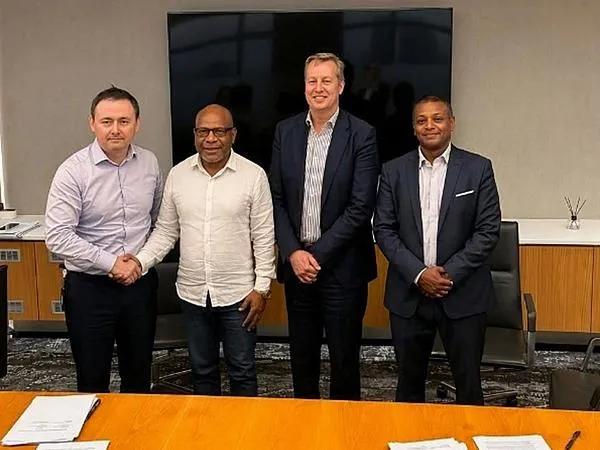
Papua New Guinea’s Mineral Resources Development Company Limited (MRDC) is expanding into the downstream energy sector through a proposed acquisition of six Mobil-branded service stations in Port Moresby and plans to establish additional outlets in Lae and Madang.

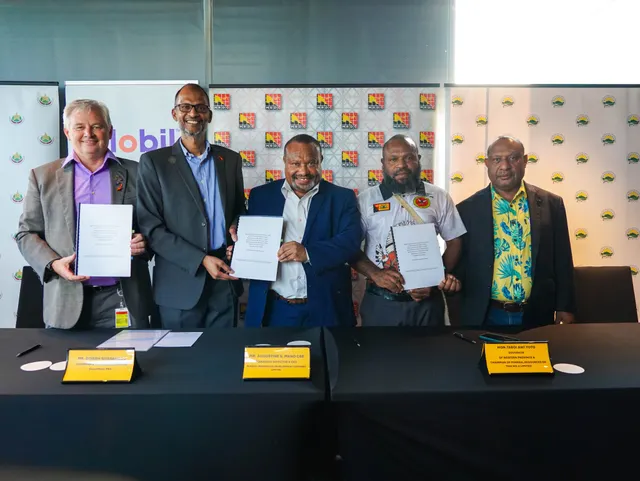
MRDC and Mobil Oil New Guinea Limited, an affiliate of ExxonMobil Corporation, announced on October 20 that they had signed agreements covering the proposed acquisition and a long-term fuel supply and branding partnership.

The acquisition will be undertaken by Star Mountain Service Station Limited (SMSSL), an investment company owned by three MRDC subsidiaries: MRSM, MROT2 and MRCMCAH.

The six existing service stations earmarked for acquisition are Mobil Boroko Drive, Mobil Islander, Mobil Gerehu, Mobil Tokarara, Mobil Ela Beach and Mobil Lahara.

SMSSL will also construct and operate Mobil-branded service stations on Markham Road in Lae and Modilon Road in Madang, extending the network beyond the National Capital District.

Under the proposed arrangement, the outlets will retain the Mobil brand, with Mobil continuing to supply fuel products through a long-term commercial agreement. The companies said customers could expect continuity in product availability, service standards and brand experience.

MRDC managing director Augustine Mano said the transaction aligned with the company's strategy to strengthen and diversify its investment portfolio in the downstream energy sector.

He said the acquisition would give the MRDC Group an opportunity to enter an established retail fuel business with existing assets, operations and a customer base.

“Subject to completion, the transaction will strengthen the MRDC Group’s presence in a key economic sector and add a strategic operating asset to our investment portfolio,” Mano said.

He added that the long-term partnership with Mobil would support continuity of fuel supply and service standards across the network.

ExxonMobil PNG chairman and managing director Dinesh Sivasamboo said the company would maintain its involvement in Papua New Guinea's retail fuel market through the supply and branding partnership.

The arrangement combines local ownership of the service station business with continued support from an international fuel brand, Sivasamboo said.

Both companies said they would work together to facilitate a smooth transition for customers, employees and business partners.

The agreements mark a proposed expansion of MRDC's investments into retail fuel distribution, while allowing Mobil to retain its brand presence through a long-term commercial relationship with the new owner.

October 19, 2026

Papua New Guinea’s Petroleum Minister Jimmy Maladina has welcomed the signing of the Papua LNG Development Forum Tier 1 Agreement, with negotiations on remaining benefit-sharing arrangements scheduled to continue through October and conclude in early November.

Maladina said the agreement establishes a foundation for further negotiations and the development of a benefit-sharing framework intended to ensure that the Papua LNG project delivers lasting economic and social benefits to Papua New Guineans.

The minister said negotiations on Tiers 2, 3, 4 and 5 would proceed throughout October, guided by the sharing arrangements established under Tier 1.

The remaining agreements are expected to be concluded in early November, he said.

“Today’s signing is an important achievement, but it is not the end of the Development Forum process,” Maladina said. “It establishes the foundation for the remaining negotiations and, ultimately, for the effective implementation of the benefits agreed for our people.”

The Development Forum process brings together the national and provincial governments, landowners and Papua LNG project partners to negotiate arrangements for sharing the benefits of the project.

Maladina said landowners and affected communities must remain active participants and beneficiaries throughout the project's life.

He identified royalties, development levies, equity participation, infrastructure development, business opportunities, employment, training and local content as key areas through which the project should deliver tangible benefits.

The minister said the project's success should be measured not only by gas exports and revenue generation but also by improvements in community infrastructure and services, employment prospects, skills development and opportunities for local businesses.

He also emphasized transparency, accountability and good governance in ensuring that benefits reach legitimate beneficiaries and support long-term development.

Local participation

Maladina called for greater participation by Papua New Guinean workers and businesses, supported by training, skills development, procurement opportunities and partnerships that transfer knowledge and capabilities to local companies.

He urged all parties to negotiate in good faith, saying differences should be resolved through dialogue, verified information and respect for the agreed process.

The minister acknowledged the contributions of provincial governments, landowner leaders, project partners, the National Petroleum Authority, other state agencies, forum facilitators, technical teams and advisers involved in the negotiations.

He said implementation would ultimately determine whether the commitments made through the Development Forum process translated into benefits for communities.

The government remains committed to working with stakeholders to develop Papua LNG in a way that strengthens the national economy, creates opportunities for Papua New Guineans and supports long-term development, Maladina said.

October 17, 2026

The Papua New Guinea Chamber of Resources and Energy (PNGCORE) today congratulated ExxonMobil on formally assuming operatorship of the Papua LNG Project and thanked TotalEnergies for its leadership in advancing the project to this important stage.

PNGCORE President Anthony Smaré issued the statement on behalf of the chamber, its members and stakeholders across Papua New Guinea’s resources sector.

“On behalf of PNGCORE, our members and all stakeholders in Papua New Guinea’s resources sector, I congratulate ExxonMobil on assuming operatorship of Papua LNG,” Mr Smaré said. “This is a major milestone for a project of national importance and an important step forward for the future growth of our country’s gas industry," Smaré said.

Smaré said ExxonMobil’s appointment inspired confidence, given the company’s proven track record in Papua New Guinea through its leadership of the PNG LNG Project.

PNG LNG commenced production in 2014, ahead of schedule. Originally designed for a capacity of 6.9 million tonnes per annum, the project has since expanded to more than 8 million tonnes annually. It supplies long-term customers in Asia and has become the largest investment in the nation’s history, as well as the country’s first LNG project.

“ExxonMobil has already demonstrated in Papua New Guinea that it can deliver and operate a complex, world-scale LNG project,” Smaré said. “The PNG LNG Project has become one of the country’s most important economic assets and a clear example of what can be achieved through strong project execution, long-term investment and effective collaboration.”

Smaré noted that PNG LNG had shipped more than 1,330 cargoes and delivered more than PGK40 billion to stakeholders in Papua New Guinea since production began. These benefits include equity distributions to Kumul Petroleum Holdings Limited and the Mineral Resources Development Company (MRDC), taxes paid to the national government, development levies and royalties.

He said the project’s performance had helped establish Papua New Guinea as a credible and reliable LNG exporter while creating employment, business opportunities, skills development and long-term revenue streams for the country.

“PNG LNG’s success gives the country and investors confidence that Papua LNG can also be progressed successfully,” Mr Smaré said. “It shows that Papua New Guinea can host major energy developments that are technically demanding, capital-intensive and nationally transformative.”

Smaré also acknowledged TotalEnergies for the substantial work it had undertaken to bring Papua LNG to its current stage of development.

“PNGCORE expresses its appreciation to TotalEnergies for its contribution, professionalism and commitment in progressing Papua LNG to this point,” Smaré said. “We also recognise the leadership of TotalEnergies Chairman and Chief Executive Officer Patrick Pouyanné and his personal commitment to our country and Papua LNG during an important phase in the project’s development. TotalEnergies has made an invaluable contribution in leading Papua LNG to its present stage.”

Smaré said PNGCORE also recognised the continued commitment of the wider joint venture and project stakeholders, including Santos, ENEOS Xplora, Kumul Petroleum Holdings Limited, MRDC, government institutions, landowners and communities.

He said the next phase should focus on maintaining momentum, ensuring policy stability and fostering practical cooperation to advance Papua LNG towards a final investment decision (FID) and construction.

“Papua LNG has the potential to deliver major long-term benefits for Papua New Guinea through investment, employment, local business participation, infrastructure and government revenue,” Mr Smaré said. “The sector will be best served by continued alignment among government, developers, landowners and industry so that this opportunity is converted into lasting national value.”

Smaré said ExxonMobil’s assumption of operatorship was also significant because it reinforced confidence in Papua New Guinea’s broader pipeline of gas development opportunities. Success in Papua LNG, he said, would help underpin the next generation of investment across the country’s resources sector.

“PNGCORE and the broader group of stakeholders in Papua New Guinea’s resources sector look forward to working with ExxonMobil, TotalEnergies, the project partners and the Government of Papua New Guinea to support the responsible and timely development of Papua LNG,” Smaré said. “Our shared objective should be to ensure that this project delivers lasting benefits for Papua New Guinea, investors and all stakeholders connected to the future of the resources sector.”

October 15, 2026

ExxonMobil PNG Antelope Ltd has formally assumed operatorship of the Papua LNG project, with the co-venturers targeting a final investment decision later this year.

The transfer follows an agreement reached in September by project partners TotalEnergies, Santos and ENEOS Xplora, ExxonMobil said in a media release dated 15 October.

The company will work with the Papua New Guinea government, the Gulf and Central provincial governments, local communities and project partners to advance the development.

Dinesh Sivasamboo, chairman and managing director of ExxonMobil PNG Antelope, said the transfer reflected confidence in ExxonMobil’s experience in liquefied natural gas development and operations.

He cited the company-operated PNG LNG project as an example of the country’s capacity to deliver major energy developments, adding that Papua LNG could strengthen the country’s position in the global energy market.

Sivasamboo also acknowledged TotalEnergies’ work in advancing Papua LNG and said ExxonMobil looked forward to working with stakeholders towards an investment decision.

The operatorship transfer builds on ExxonMobil’s longstanding presence in Papua New Guinea and could create opportunities for collaboration between Papua LNG and the existing PNG LNG operation, the company said.

Papua LNG is expected to generate construction jobs, support local businesses and provide economic benefits to communities across the country.

The project forms part of the government’s longer-term energy development plans, which include the proposed P’nyang LNG project following Papua LNG, as well as potential developments involving the Muruk and Wildebeest gas resources.

ExxonMobil said these developments could support more than a decade of investment in Papua New Guinea.

The announcement did not specify a construction start date or provide an updated project cost. The final investment decision remains a key milestone before the project can proceed to its next stage.

October 09, 2026

Gulf and Central provinces have agreed to an 80:20 split of benefits worth K6.606 billion from the Papua LNG project, resolving a major dispute over the distribution of royalties, equity and development funding ahead of the project's targeted final investment decision in December.

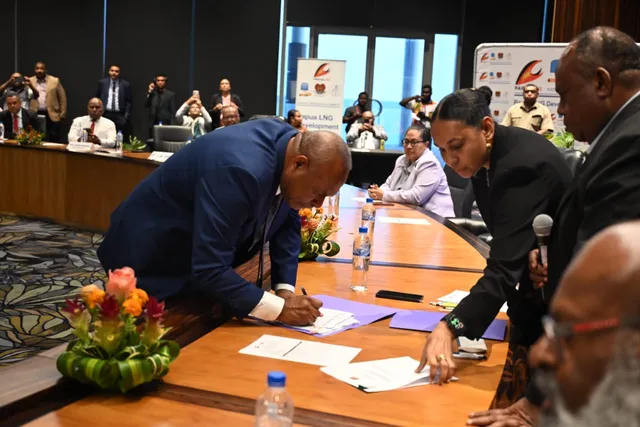
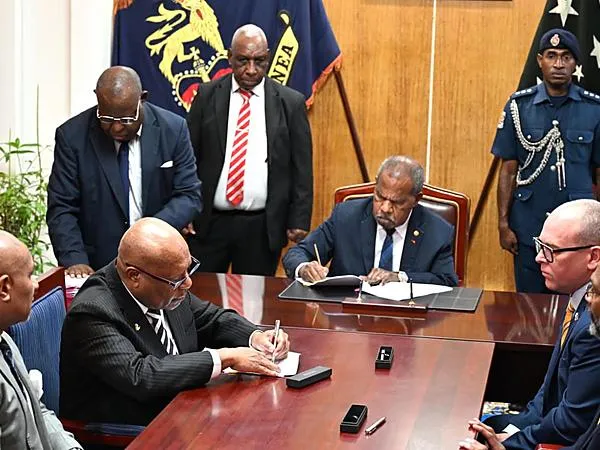
The Tier 1 benefit-sharing agreement was signed at APEC Haus in Port Moresby on Oct. 8, following months of negotiations between the two provinces and the national government.

Under the arrangement, Gulf will receive 80% of the benefits, while Central will receive 20%. Gulf hosts the project's wellheads, while Central is recognised for its role in hosting downstream facilities and associated infrastructure.

The K6.606 billion package covers royalties, development levies, equity participation, infrastructure development grants, business development support, employment and training opportunities, and other benefits. The package is intended to be distributed among landowners, provincial governments, district development authorities and local-level governments in the two provinces over the project's lifetime.

The agreement establishes the allocation framework for the remaining benefit-sharing negotiations, although further agreements and government decisions are needed before all beneficiaries' allocations are finalised.

Dispute over allocation

The agreement follows weeks of contentious negotiations over how the benefits should be divided.

Gulf had sought a 95% share of the benefits, arguing that its position as the host province for the project's upstream facilities justified a larger allocation. Central, meanwhile, sought a greater share in recognition of its role as a co-host and the location of downstream processing and infrastructure facilities.

Central had proposed a 55:45 split in favour of Gulf in its position paper, while earlier discussions also included proposals for 60:40 and 65:35 allocations. The national government's initial proposal was a 70:30 split in Gulf's favour, which Gulf representatives rejected. 

The final 80:20 arrangement represents a compromise between the provinces' competing positions. Reports on the negotiations also said the national government committed an additional K1.2 billion through Tax Credit Scheme projects to help bridge the differences, alongside proposed infrastructure, business development and equity-related support. 

The formal signing involved provincial government representatives, district development authorities, local-level governments, landowner representatives, Petroleum Minister Jimmy Maladina and officials involved in the state negotiation process.

Central Province Governor Rufina Peter and other provincial representatives participated in the negotiations, while Gulf's delegation was led by Acting Governor Morris Taudevin.

The signing process also involves affected landowners along the project's pipeline corridor. Central landowners signed after the provincial-level agreement, while further signings involving Gulf landowners from the northern, southern and middle segments were expected to continue.

Marape welcomes agreement

Prime Minister James Marape welcomed the agreement, describing it as a milestone towards the project's targeted final investment decision on Dec. 15.

He said the arrangement demonstrated cooperation between the two provinces and would allow the government to advance the distribution of project benefits through the National Executive Council.

Marape said the agreement followed the broad principles established under the existing PNG LNG project, where benefits are distributed among upstream resource areas, downstream facilities and pipeline corridors.

He also reaffirmed the government's policy that 40% of the state's equity participation should flow back to the provinces and landowners where resources are developed. 

The agreement comes after the government announced broader changes to Papua LNG's commercial arrangements in September, including an additional 2.5 percentage points of potential state equity, bringing Papua New Guinea's stake to 25%, according to Marape.

The government also said it had secured a revised domestic gas pricing formula, reducing the rate from 9% to 5% of the Japan Customs-cleared crude oil benchmark, with the aim of lowering domestic gas costs for power producers. These arrangements form part of the broader effort to advance the project towards a final investment decision. 

Focus shifts to remaining negotiations

Maladina said the agreed benefits must deliver measurable improvements in the lives of communities affected by the project.

He said royalties and development levies should contribute to better schools, health services, roads, water supply and other essential services.

Equity participation should provide eligible beneficiaries with meaningful long-term economic interests in the project, supported by sound governance and responsible financial management, he said.

Infrastructure commitments must result in properly planned, completed and maintained projects, while business development assistance should help establish Papua New Guinean enterprises capable of supplying Papua LNG and serving the wider economy.

Maladina urged all parties to continue negotiations in good faith, with fairness and transparency, adding that the success of the development forum would ultimately be judged by whether commitments translated into tangible benefits.

Negotiations for Tiers 2, 3, 4 and 5 are scheduled to continue throughout October, with the government aiming to conclude the remaining discussions in early November.

The outstanding negotiations will determine how benefits are allocated among the other eligible stakeholders, including landowners and affected communities, under the framework established by the Tier 1 agreement.

Papua LNG targets December investment decision

The benefit-sharing agreement is a key step in preparations for Papua LNG, one of Papua New Guinea's major planned resource investments.

The project is targeting a final investment decision by Dec. 15, 2026, following revised commercial arrangements and efforts to reduce development costs. 

French energy company TotalEnergies announced in September that the project had completed its engineering, procurement and construction tendering process, with contract award recommendations ready for approval by the joint-venture partners. Cost optimisation measures have reduced estimated capital expenditure to about US$14 billion, from earlier projections, the company said.

The project is also undergoing an operational restructuring, with ExxonMobil set to take over operatorship from TotalEnergies to improve coordination with the existing PNG LNG operation.

Marape has described Papua LNG as an investment of about K60 billion for Papua New Guinea, with the potential to generate employment, expand business opportunities and strengthen government revenue during construction and throughout its operating life. 

The completion of the remaining benefit-sharing agreements will be an important part of the preparations for the investment decision. However, the December target remains dependent on the project's outstanding approvals and other requirements being completed.

For Gulf and Central, the immediate challenge will be ensuring that the agreed allocations result in improved infrastructure, public services, local employment and business participation, rather than remaining commitments on paper.

October 08, 2026

Robinson Energy has received an offer from Papua New Guinea’s Petroleum Minister Jimmy Maladina to be granted a five-year Petroleum Retention Licence covering the Triceratops gas and condensate discovery in Gulf province.

The proposed PRL 68 would give Robinson a 100% interest in the nine-block licence area, subject to the completion of the grant process.

The offer, dated October 2, was made under Section 39 of the Oil and Gas Act 1998 following a report by the Petroleum Advisory Board and was served on Robinson by the National Petroleum Authority on October 5, the Canadian-listed company said.

The licence area was previously held under PRL 39, which lapsed in July.

Under the proposed terms, Robinson would commit about US$52 million to a five-year work programme covering geological and geophysical studies, seismic work, commercial studies and at least one appraisal well.

The Triceratops structure is an onshore gas and condensate discovery in the Papuan Basin. Gas has been flowed from three wells drilled over several decades, with the highest reported test rate reaching 28 million cubic feet per day.

BP’s Bwata-1 well, drilled in 1959, flowed gas at up to 28 MMcf/d. InterOil’s Triceratops-2 well recorded a test rate of 27 MMcf/d in 2012, while Triceratops-3 flowed 17.1 MMcf/d of gas and 200 barrels per day of condensate in 2015.

Triceratops is located about 45 kilometres west-north-west of the Elk-Antelope fields, which underpin the Papua LNG project.

Robinson said it intends to investigate a potential tieback of Triceratops into the Papua LNG system, with gas potentially transported for processing and tolled liquefaction at Caution Bay. Condensate could be transported by pipeline to the Kumul Marine Terminal.

The company plans to seek third-party access for up to 50 MMcf/d of gas.

However, no agreement has been reached with the Papua LNG project operator or its participants, and Robinson cautioned that access may not be secured on acceptable terms or at all.

The proposed development would initially involve recovering and reprocessing historical well logs, test data and seismic information before commissioning a new independent resource assessment.

Robinson also plans to acquire additional 2D seismic and drill the Triceratops-4 and Triceratops-5 wells, subject to the results of its technical evaluation. The company is targeting potential production of up to 50 MMcf/d of gas and associated condensate.

A previous independent assessment by GLJ Petroleum Consultants estimated gross unrisked best-estimate contingent resources of about 352 billion cubic feet equivalent, or 58.7 million barrels of oil equivalent, as at December 2015.

Robinson stressed that the estimate is historical and should not be treated as a current resource estimate. The company said it has not independently verified the underlying data and intends to commission a new evaluation.

The company said the Triceratops project could provide a potential route to production ahead of its broader plans for a Western Province gas pipeline and LNG export system.

Executive chairman Cam Bailey said the discovery had already demonstrated gas flow from three wells and was located on the same trend as the fields supplying Papua LNG.

“Our first priority is to rebuild the technical record and put a current independent evaluation behind the asset,” Bailey said.

The proposed PRL 68 remains subject to Robinson satisfying the conditions of the grant offer, including the formal grant of the licence. The company said development timing would also depend on financing, regulatory approvals, technical results and securing access to existing Papua LNG infrastructure.

September 22, 2026

The PNG LNG Project has safely produced more than 100 million tonnes of liquefied natural gas since operations began in 2014, marking a major milestone for Papua New Guinea's petroleum industry.

The project, operated by ExxonMobil PNG Ltd., has connected Papua New Guinea's natural gas resources with global energy markets while supporting national development through employment, training, local business opportunities and community investment.

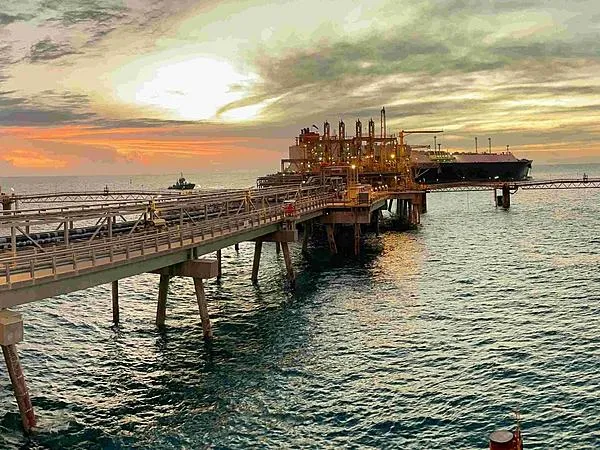
PNG LNG is an integrated gas development that produces natural gas from fields in Hela and Southern Highlands provinces. The gas is processed and transported through an approximately 700-kilometre pipeline network to a two-train liquefaction plant at Caution Bay in Central Province, where it is converted into LNG for export.

The project currently produces up to about 8 million tonnes of LNG a year, above its original nameplate capacity of 6.6 million tonnes. Since production began in 2014, it has supplied LNG primarily to customers in Asian markets.

The project's operations involve gas production and processing, pipeline transportation, liquefaction, storage and marine loading, forming an integrated value chain linking PNG's gas resources with international buyers.

ExxonMobil PNG Chairman and Managing Director Dinesh Sivasamboo credited employees, contractors and project partners for reaching the milestone.

“Reaching 100 million tons safely produced was only possible because of the unwavering commitment of generations of employees, contractors, and partners who embraced a shared purpose and maintained a relentless focus on doing the right things, the right way,” Sivasamboo said.

The milestone comes as Papua New Guinea continues to advance additional gas developments, including the proposed Papua LNG and P'nyang LNG projects, which are expected to build on the country's existing LNG industry.

ExxonMobil PNG said the achievement reflects the contribution of thousands of Papua New Guineans and project personnel who have supported PNG LNG's operations over more than a decade.

The company said it remains committed to creating long-term value for Papua New Guinea through the project's continued operations and its contribution to the country's energy and resources sector.

September 14, 2026

Central Province has rejected the proposed Papua LNG benefit-sharing arrangements, seeking a 55-45 split with Gulf Province and arguing that its role as a co-host warrants a greater share of the project’s economic benefits.

Central Gov. Rufina Peter presented the province’s Tier 1 position paper at the Papua LNG Forum in Port Moresby on Sept. 4, 2026. She later handed the document to Petroleum Minister Jimmy Maladina.

The Papua LNG benefit package under discussion is valued at K6.605 billion. It includes legislated benefits such as royalties, equity and development levies, as well as negotiated benefits including business development grants, infrastructure development grants and high-impact infrastructure projects.

The benefits would be shared among landowners, provincial governments, district development authorities and local-level governments in Gulf and Central provinces.

Central has rejected the director’s proposed allocation of 70% of legislated benefits to Gulf and 30% to Central, as well as an 80-20 split of negotiated benefits. Instead, it wants Gulf to receive 55% and Central 45% across all benefit streams.

Central challenges benefit calculations

The director’s proposal was based on project-impacted population, the number of affected clans, the physical area affected and capital expenditure. Central said those factors produced a 66-34 split, rather than the proposed 70-30 allocation for legislated benefits.

After reviewing the data, the province said it identified missing information and inaccuracies, including the population of Kairuku LLG, the number of clans in Central and the allocation of midstream capital expenditure.

Central said including Kairuku’s population of 29,485 increased its project-impacted population to 47,906, while the number of affected clans rose to 101.

It also disputed the allocation of midstream capital expenditure. The province said the component was recorded at US$2.465 billion but estimated that only US$783.4 million should be attributed to Central, based on 5% of the project’s total capital expenditure of US$15.6687 billion.

Central said its revised calculations produce a 58-42 split, which it considers a more equitable, data-based allocation.

Peter said Papua LNG should not be assessed solely by the location of gas resources and other physical impacts. She said the project extends from the wellheads to the export facilities, making Central a co-host rather than simply a project-impacted province.

Central’s case also rests on the use of existing PNG LNG facilities at Caution Bay, which will be integrated into Papua LNG. Peter said this integration has helped make the project economically viable and is expected to save developers about US$3.5 billion.

The project’s estimated cost was initially about US$18 billion before being reduced to approximately US$14.5 billion following the re-scoping and re-tendering of engineering, procurement and construction contracts, according to the position paper.

Central argues that the economic value of hosting processing, liquefaction, storage and export facilities should be reflected in the benefit-sharing arrangements.

The province is also seeking K2.2 billion for a 25-year infrastructure programme, citing population growth, migration and increased pressure on infrastructure and services. Peter said Central’s role as a gateway to the National Capital District means the investment would benefit residents as well as people who live, work and travel through the province.

Central proposes wider economic participation

Central wants the K1.228 billion reserve benefits package included in the current negotiations and divided equally between Gulf and Central. It is also seeking a 50-50 split of the 40% commercial equity associated with Papua LNG.

The province wants the commercial equity known as “Lakatoi Equity,” reflecting the historical relationship between Gulf and Central through the Hiri Trade.

Central is also seeking greater participation in opportunities arising from the project’s 5% domestic market obligation, or DMO. It proposes that Gulf and Central have the first opportunity to participate in DMO-related businesses through a joint-venture special purpose vehicle.

The province has further called on the state to share 20% of the 2% production levy with Central. Peter said the additional revenue would help fund infrastructure needed to serve the province’s growing population and the wider national community.

Another proposal is a dedicated Papua LNG-Central GST code through the Internal Revenue Commission. Central said the mechanism would allow it to capture GST generated by businesses operating in the province during the project’s construction and operational phases, including businesses based in the National Capital District that conduct substantial activity in Central.

Central also wants stronger governance and accountability measures in the Development Agreement. It has called for business development grants, infrastructure development grants and high-impact infrastructure projects to be clearly allocated according to the agreed Tier 1 arrangements.

The province also wants the Extractive Industries Transparency Initiative included in the agreement to strengthen transparency in the disbursement and management of project funds.

It has proposed an umbrella company for plant-site villages to participate in project contracts, along with a new trust entity under the Mineral Resources Development Company for those villages.

Peter said Central presented its position in good faith and wants negotiations with Gulf Province and the National Government to proceed amicably. She called for Tier 1 negotiations to conclude quickly so that Tier 2 and Tier 3 talks can begin before the Dec. 15, 2026, final investment decision deadline.

Central’s position seeks not only a larger share of Papua LNG benefits, but also longer-term participation through equity, domestic gas opportunities, GST revenue, infrastructure funding and stronger governance arrangements.

September 08, 2026

Santos Ltd. will increase its participating interest in the Papua LNG project to 21% after agreeing to acquire an additional 3.3% stake from TotalEnergies as part of a broader restructuring of the project's ownership and operatorship.

TotalEnergies has agreed with ExxonMobil to transfer operatorship of Papua LNG to ExxonMobil PNG Antelope Limited, while partially selling down its participating interest to the other Papua LNG joint venture partners in proportion to their existing interests.

Santos said it has executed a binding agreement to acquire the additional 3.3% participating interest, calculated after the Papua New Guinea state's back-in, in PRL 15 and the Papua LNG project for approximately US$189 million.

The transaction remains subject to regulatory approvals and the project reaching a Final Investment Decision (FID), currently planned for the fourth quarter of 2026. If completed, the acquisition will be effective from Jan. 1, 2026.

Santos expects the additional interest to increase its equity LNG production from Papua LNG by about 19% to approximately 1.2 million tonnes per annum (Mtpa).

The company said the acquisition is consistent with its strategy of disciplined, value-accretive growth around existing infrastructure and increasing exposure to Asian LNG demand.

ExxonMobil to operate Papua LNG

The proposed operatorship transfer would give ExxonMobil responsibility for Papua LNG while it continues to operate the existing PNG LNG project, a move Santos expects to generate operational synergies and strengthen project execution.

Santos Managing Director and CEO Kevin Gallagher said the transaction would better align the company's interests across PNG LNG and Papua LNG ahead of the planned FID.

“The Papua LNG project is a world-class development, strategically positioned to supply premium Asian markets and offering multiple value streams for Santos,” Gallagher said.

“ExxonMobil brings a proven track record of project delivery and reliable operations in Papua New Guinea, including PNG LNG, and is expected to realise significant synergies by operating both the upstream and midstream project scopes.”

Gallagher said Santos was prepared to increase its investment in Papua LNG because of the project's expected long-term production profile.

“Papua LNG is a world-class project and this is the right time to increase our position,” he said.

Santos said the proposed changes to equity interests and operatorship would improve alignment among the Papua LNG and PNG LNG joint venture participants.

FID remains key milestone

Completion of Santos' acquisition remains conditional on regulatory approvals and Papua LNG achieving FID.

Santos said it will provide the market with an update at FID on the project's cost, schedule and economics.

The transaction comes as Papua LNG moves toward its targeted FID in the fourth quarter of 2026, a key milestone for the proposed development and its future LNG production capacity in Papua New Guinea.

Santos also acknowledged TotalEnergies for its work advancing Papua LNG over the past decade and said the project remains on track for FID later this year.

September 08, 2026

Kumul Petroleum Holdings Ltd. has secured stronger governance and economic protections for Papua New Guinea under an amended agreement with TotalEnergies governing the joint marketing of LNG and gas volumes from the Papua LNG project.

KPHL said it has executed the amended Shareholders Agreement with TotalEnergies covering Lakatoi Marketing Pte Ltd., the Singapore-registered entity responsible for marketing equity LNG and gas volumes from the project.

The agreement strengthens governance arrangements in line with the combined 52.94% majority interest held by KPHL and Mineral Resources Development Co. in Lakatoi Marketing, according to KPHL.

Key reserved matters, including pricing, will require unanimous shareholder consent, while the agreement also introduces stronger protections against potential exposures.

KPHL said the governance structure supports Papua New Guinea's compliance with its World Bank/International Bank for Reconstruction and Development negative pledge obligations, while maintaining balanced commercial participation among the shareholders.

The amended agreement preserves KPHL's decision-making rights and safeguards the state's commercial interests in the LNG marketing arrangements.

It also provides for the rotation of Lakatoi Marketing's general manager every four years and the secondment of KPHL personnel into key positions within the marketing company.

KPHL said these measures are intended to accelerate the transfer of LNG marketing expertise and skills to Papua New Guinean personnel and strengthen the company's long-term institutional capability.

"This outcome protects the State's financial and contractual interests, strengthens Papua New Guinea's participation in LNG marketing, ensuring that governance arrangements properly reflect the State parties' majority interest," KPHL Chairman Ambassador Isaac B. Lupari CBE, GCL, said.

KPHL credited TotalEnergies, particularly Asia-Pacific Senior Vice President Mansur Zhakupov and the company's business teams, for their constructive engagement and commitment to reaching what it described as a balanced and mutually acceptable agreement.

The company also acknowledged Prime Minister James Marape GCL MP and Minister for State-Owned Enterprises William Duma LLM MP for their leadership and support in securing the outcome.

The execution of the amended agreement represents another step toward the Papua LNG project's Final Investment Decision, which is currently targeted for end-November 2026.

Papua LNG is being developed by TotalEnergies and its partners in Papua New Guinea, with the project expected to play a significant role in the country's future LNG production and export capacity.

September 07, 2026

Mineral Resources Development Company has appointed Howard Lole as a director of Gas Resources Gigira Limited, completing the Tuguba region’s required representation on the board responsible for PDL 1 interests in the PNG LNG Project.

The Board of Mineral Resources Development Company (MRDC) announced on September 7, 2026, that Lole had been appointed director-elect representing the Tuguba region of Petroleum Development License 1 (PDL 1) on the board of Gas Resources Gigira Limited (GRGL).

GRGL is the corporate trustee responsible for managing the equity and royalty benefits associated with PDL 1 in the PNG LNG Project.

Lole’s appointment follows an election held on August 21 at the Port Moresby Hilton Hotel, where he and fellow candidate Eric Kambe finished tied. MRDC said the appointment was made after the prescribed electoral process and a comprehensive review by its board.

The MRDC Board determined that the applicable legal, governance and procedural requirements had been met before making the appointment in its capacity as shareholder.

Completing Tuguba representation

MRDC said the appointment was made pursuant to Section 176 of the Oil and Gas Act, the MRDC Authorization Act, the GRGL Constitution, the relevant Trust Deed and the GRGL Directors Election Rules.

Lole becomes the second director representing the Tuguba region on the GRGL Board, joining Libe Parindali, Thompson Mugubigo, Philip Iruka, Thomas Dara Ola and Larry Andagali, who represent landowner interests on the board.

His appointment brings more than 25 years of experience across the public and private sectors, including the financial, industrial and mining industries.

Lole currently serves as a director of Tolu Minerals Ltd and the TWL Group. He holds a degree in Mining Engineering from the PNG University of Technology and a master's degree in Engineering from the University of New South Wales, specializing in Mining Industry Management.

MRDC managing director Augustine Mano congratulated Lole on his election, highlighting his experience across business, oil and gas and mining.

“Mr. Lole comes to the board with extensive experience in business, the oil and gas, and mining sector,” Mano said.

“He is a well-respected leader in the industry who joins a board blessed with a wealth of experience which will add value to the governance and direction of the company going forward.”

Election process and outstanding benefits

Mano also thanked Kambe and the PDL 1 Tuguba Clan Chairmen for their participation in the electoral process.

He acknowledged the Independent Observers, Chief Magistrate, Electoral Commission and National Petroleum Authority for their involvement in the process, which MRDC said helped ensure the clan chairman and director elections were conducted fairly and transparently.

The appointment also comes as MRDC works toward distributing outstanding PDL 1 royalty and equity benefits to beneficiaries.

Mano reiterated MRDC’s commitment to having the outstanding benefits paid during 2026. The company will now begin work to establish the sub-clan bank accounts, which MRDC described as the final stage before royalty and equity benefits can be distributed to beneficiaries.

The completion of the Tuguba directorship requirement therefore marks both a governance milestone for GRGL and another step in the process toward distributing outstanding benefits from PDL 1.

August 28, 2026

Papua New Guinea has signed a revised Papua LNG Project Agreement aimed at strengthening the project’s commercial viability while protecting the State’s long-term fiscal interests, with a firm deadline now set for a Final Investment Decision (FID) by 15 December 2026.

Petroleum Minister Jimmy Maladina said the revised agreement follows detailed negotiations between the Government and Papua LNG project participants and provides a targeted fiscal support mechanism designed to address weaker market conditions without permanently reducing the State’s overall fiscal take.

“This is a balanced transaction, not a giveaway,” Maladina said. “The arrangement recognises the commercial realities facing a project of this scale while ensuring Papua New Guinea retains appropriate protection and participates in the upside when market conditions are stronger.”

The fiscal mechanism is temporary, reciprocal and capped, with safeguards intended to protect government revenues over the longer term. Royalty and development levy payments to landowners, provincial governments and local-level governments will remain protected under the revised arrangements.

A key component of the negotiated package is an option for a State nominee to acquire an additional 2.5 per cent interest in Papua LNG, on top of the State’s existing entitlement under Section 165 of the Oil and Gas Act.

The associated PNG LNG arrangements will also provide an improved wellhead-value basis for calculating royalty and development levy payments, potentially strengthening the revenue base for government and project-area stakeholders.

The package further includes cheaper gas for domestic electricity generation and free gas to generate up to one megawatt of discounted electricity for landowner communities in and around Caution Bay.

The Government views Papua LNG as a major investment capable of generating construction and operational employment, contracts for local businesses, infrastructure development and substantial future government revenue.

For Papua New Guinea’s private sector, a move into development would create opportunities across construction, logistics, transport, accommodation, catering, engineering, security and other supporting services.

Maladina said the Government’s objective during negotiations was to establish a commercially viable pathway to development while maintaining safeguards for the State.

“Papua LNG represents a major investment in Papua New Guinea. It has the potential to generate employment, business opportunities, infrastructure investment and substantial future government revenue,” he said.

FID deadline

The revised arrangements are conditional on Papua LNG achieving an affirmative FID by 15 December 2026.

Maladina described the date as a “drop-dead deadline”, signalling that the negotiated fiscal arrangements are intended to secure a firm investment commitment rather than provide an open-ended concession.

“The State has provided this negotiated pathway for one clear purpose: to secure a firm investment commitment and move Papua LNG into development,” he said.

The signing now shifts attention to the project participants and the remaining work required to reach FID. If achieved, the decision would mark a significant step towards construction and development of another major gas investment in PNG, with potential flow-on impacts for government revenues, employment, local contracting and infrastructure spending.

For the Government, the immediate priority is therefore to convert the revised agreement into a firm investment decision by the December deadline while ensuring the State and affected communities retain an appropriate share of the project’s long-term economic benefits.

August 17, 2026

Papua New Guinea's petroleum sector has taken another step towards expanding local participation in the country's growing gas industry, with Petroleum Minister Jimmy Maladina approving the National Content Plan (NCP) for the Pasca A Gas Project.

Maladina approved the plan following a technical review and compliance assessment by the National Petroleum Authority (NPA).

The NCP was submitted by Twinza Oil (PNG) Ltd., operator of the Pasca A Gas Project, and approved under Section 129 of the Oil and Gas Act 1998.

The approval establishes a framework intended to increase opportunities for Papua New Guinean workers and locally owned companies to participate in the development and future operation of the project.

Maladina said the plan would support education, training, skills development and employment while increasing the participation of PNG-owned businesses and communities in the supply and procurement of goods and services.

“This approval gives effect to the objectives and principles of the Petroleum Sector National Content Policy 2023 and is intended to ensure that the development and implementation of the Pasca A Gas Project delivers meaningful and sustainable national benefits to Papua New Guinea,” he said.

Local business participation

The approved NCP provides opportunities for Papua New Guinean citizens and locally owned companies to participate in professional and technical services required by the project.

These include legal, accounting, financial, payroll and other professional services, creating potential opportunities beyond traditional construction and resource-sector contracting.

The plan also provides for targeted investment in areas with potential to deliver longer-term economic and social benefits, including health care, education, critical infrastructure, research and development, and technology.

For local businesses, implementation of the plan could create opportunities to build capacity, develop supply-chain relationships and position PNG-owned companies to compete for contracts across the project's different development phases.

The government expects communities in Gulf Province, as well as Papua New Guineans more broadly, to benefit from the project alongside other major gas developments, including Papua LNG.

Pasca A therefore adds to the potential pipeline of activity in PNG's petroleum sector and could generate demand for local labour, services, logistics, procurement and supporting businesses as the project progresses.

Maladina said implementation of the NCP would promote the progressive development of national content throughout the relevant licence and project phases.

The focus on national content is also intended to ensure that economic benefits from resource development extend beyond the project operator and into the wider domestic economy.

Quarterly monitoring during construction

The approval comes with regulatory conditions designed to ensure that commitments contained in the NCP are implemented and monitored.

Twinza will be required to submit quarterly status reports and implementation updates during the construction phase through the Petroleum Sector National Content Office to the NPA. During production, the company will be required to submit annual status reports.

The reports will allow the NPA to assess progress against the commitments, targets, programmes and outcomes contained in the approved plan.

Twinza must also maintain complete records of NCP implementation and facilitate monitoring, verification, audits and compliance reviews undertaken by the NPA.

The company is required to provide information and reasonable assistance necessary for regulators to verify compliance.

The approval remains subject to ongoing regulatory monitoring and compliance with the NCP, the Oil and Gas Act 1998 and applicable petroleum-sector policies.

For PNG's private sector, the effectiveness of the plan will ultimately depend on how successfully local companies can access procurement opportunities, develop the required capabilities and participate throughout the Pasca A project lifecycle.