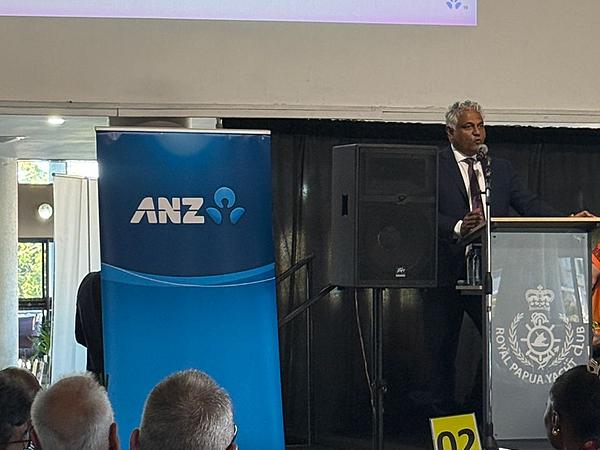
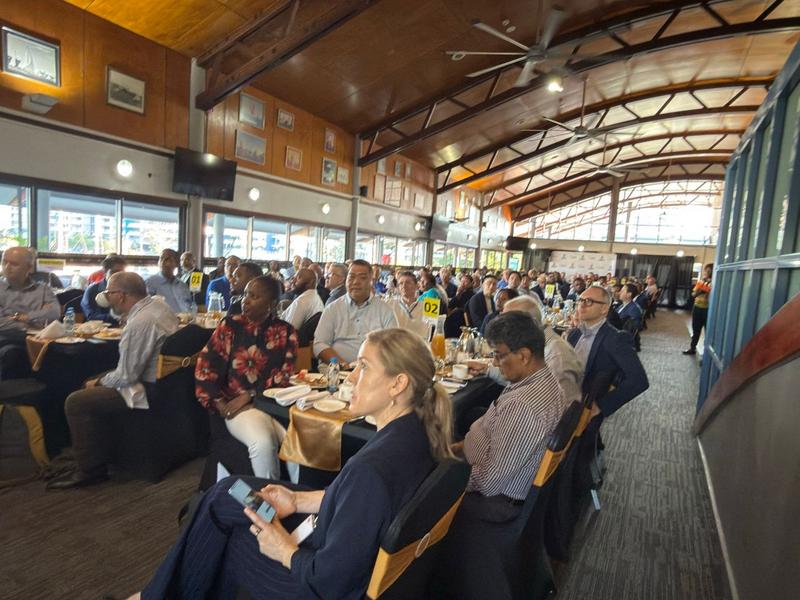
Papua New Guinea’s investment climate, grey listing status, and preparations for major resource and infrastructure projects were among the key issues discussed during a question-and-answer session at the Port Moresby Chamber of Commerce and Industry (POMCCI) breakfast meeting held on Wednesday, May 20, at the Royal Papua Yacht Club in Port Moresby.
Responding to questions on PNG’s evolving trade relationships, ANZ PNG & Pacific Economist Dr Kishti Sen said Asia is increasingly becoming the country’s most important growth market for exports.
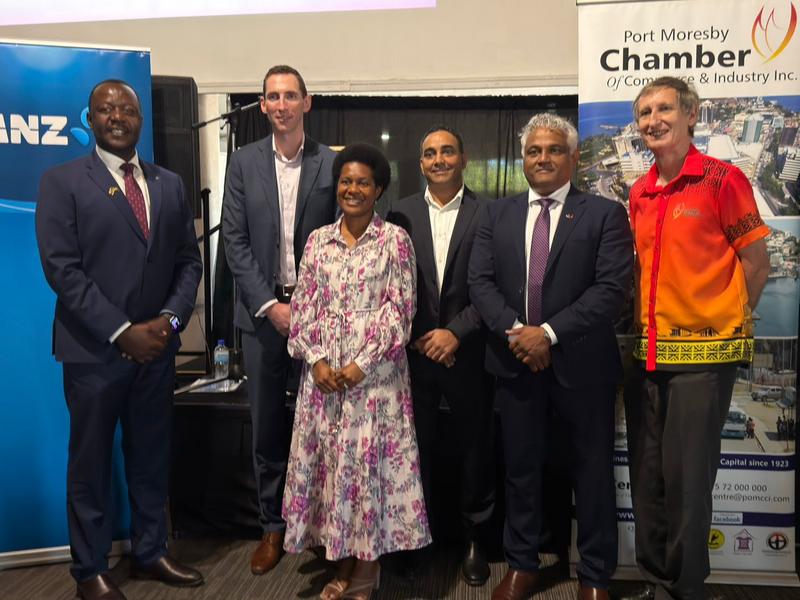
Leading business and industry panellists — Deloitte PNG Managing Partner Herbert Maguma, ANZ PNG Country Head Andrew Betteridge, POMCCI President Rio Fiocco, and Dentons Partner Wavie Leki — also addressed a range of issues raised during the session.
Discussions focused on foreign investment confidence, legal and financial systems, workforce pressures, and the readiness of businesses to position themselves for upcoming major developments in PNG.
Asia trade shift and expanding export markets
Dr Sen said that while Australia remains PNG’s largest trading partner, trade with Asian economies has grown strongly in recent years, driven by rising middle-class demand and changing consumption patterns.
“So Asia is the go-to region for Papua New Guinea,” Dr Sen said.
He explained that demand for agricultural products such as Highlands coffee and protein-based goods is increasing across Asia, creating new opportunities for PNG exporters.
Dr Sen also noted that Europe remains an emerging market opportunity, particularly as PNG expands its gas production and export capacity in the coming years.
Legal frameworks supporting foreign investment
Dentons Partner Wavie Leki said PNG continues to attract foreign investors, supported by ongoing improvements in legal and regulatory frameworks.
She said law and accounting firms are often the first point of contact for companies entering PNG, with advisory services typically focused on structuring investments correctly and ensuring compliance with local laws.
Ms Leki highlighted recent improvements in arbitration legislation as a key development strengthening investor confidence.
“We are seeing increased investment and hiring by large companies, and more interest coming from Asia,” she said.
She added that contract design has become increasingly important, particularly in relation to payment currency clauses and managing foreign exchange availability challenges in PNG.
Grey listing viewed as manageable risk
Another major focus of the discussion was PNG’s grey listing status and whether it could affect investment flows and banking relationships.
ANZ PNG Country Head Andrew Betteridge said the issue is widely understood by international investors and does not represent a structural weakness in PNG’s financial system.
“There’s been no suggestion across our customer base that there is reduced appetite for PNG because of the grey listing,” he said.
Mr Betteridge said the listing is primarily linked to efforts to strengthen enforcement of financial crime regulations, rather than concerns over banking stability or fiscal sustainability.
He added that PNG’s financial institutions and regulators are actively working to strengthen compliance systems and enforcement frameworks.
Deloitte PNG Managing Partner Herbert Maguma echoed this view, noting that correspondent banking relationships remain stable and capital continues to flow in and out of PNG.
He said improved compliance could ultimately strengthen competitiveness by ensuring all businesses operate under consistent regulatory standards.
“What it does is create a level playing field for everyone,” he said.
Strong investment pipeline and project timelines
POMCCI President Rio Fiocco provided insights into the timeline for major resource developments, particularly the Papua LNG project.
He noted that TotalEnergies’ petroleum retention licence is set to expire at the end of November, making the coming months critical for reaching a final investment decision.
Mr Fiocco said construction activity is expected to begin next year if approvals progress as planned, with peak workforce demand anticipated between 2029 and 2030.
He indicated that major developments could involve up to 10,000 workers during peak construction stages.
Businesses urged to prepare for multiple scenarios
Panellists repeatedly stressed the importance of strategic planning as PNG prepares for a new wave of investment-led activity.
Mr Betteridge advised businesses to prepare for multiple possible outcomes rather than relying on a single forecast.
“Plan for lots of different eventualities,” he said.
He encouraged companies to consider both the continuation of government support measures and scenarios in which subsidies may gradually be reduced or removed.
Mr Betteridge also noted that opportunities exist not only in large-scale resource projects, but also in smaller infrastructure, mining and construction-related developments.
Workforce pressures and talent retention
A key concern raised during the session was the growing shortage of skilled labour in PNG.
Ms Leki said businesses must prioritise workforce planning and talent development to remain competitive in a tightening labour market.
Mr Maguma highlighted the impact of overseas migration opportunities for skilled Papua New Guineans, particularly through Australia’s Pacific Engagement Visa program.
He warned that even relatively small migration numbers could significantly affect domestic labour availability across key sectors.
“You might think 1,400 a year is a small number, but it makes a significant difference across the sector,” he said.
He urged businesses to invest more heavily in training and workforce development to reduce reliance on external recruitment.
Strong emphasis was also placed on adaptability and long-term positioning within the private sector.
Speakers agreed that while global uncertainty, regulatory changes and cost pressures remain ongoing challenges, PNG’s expanding trade links, improving investment environment and major project pipeline continue to offer significant opportunities for businesses prepared to plan strategically and invest in capability.