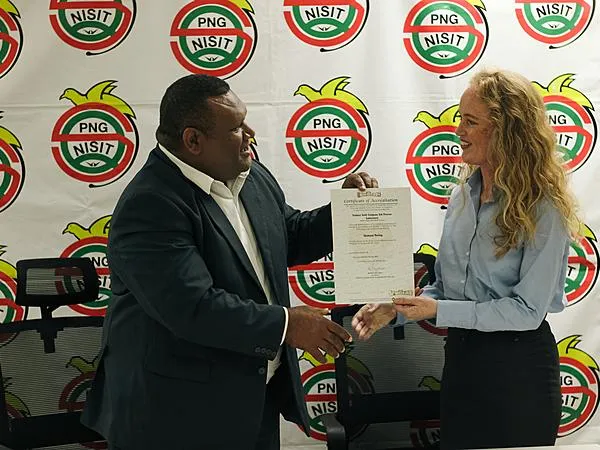
The National Institute of Standards and Industrial Technology (NISIT), through its accreditation arm, the Papua New Guinea Laboratory Accreditation Scheme (PNGLAS), has presented Simberi Gold Company Limited with an ISO/IEC 17025:2017 certificate of accreditation for the Simberi Gold Mine Process Laboratory, recognising the company's commitment to technical excellence and strengthening Papua New Guinea's national quality infrastructure.
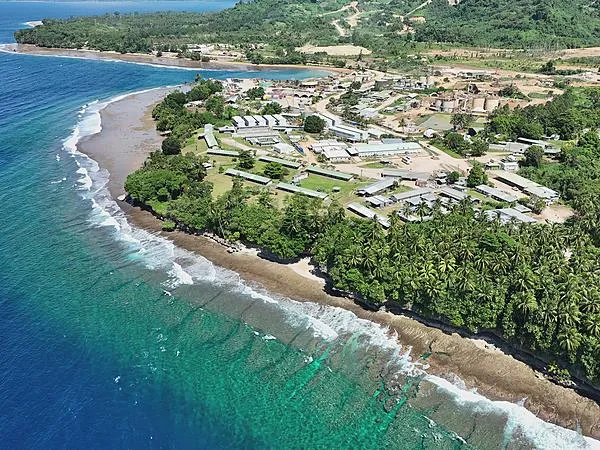
Simberi Gold Mine, part of the St Barbara Group, is one of Papua New Guinea's major gold mining operations and is located in New Ireland Province.
The certificate was presented at NISIT headquarters in Port Moresby on Wednesday, 29 July 2026.
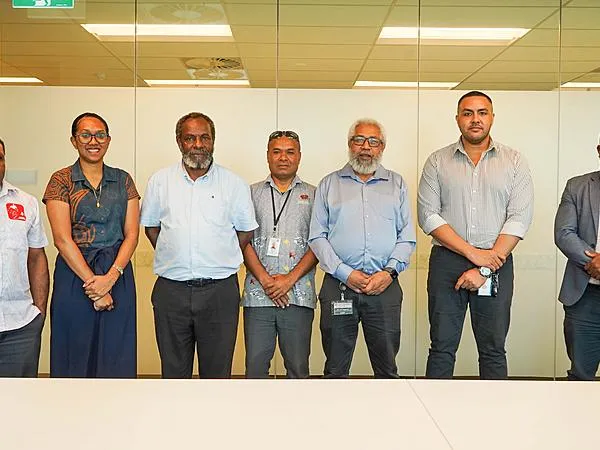
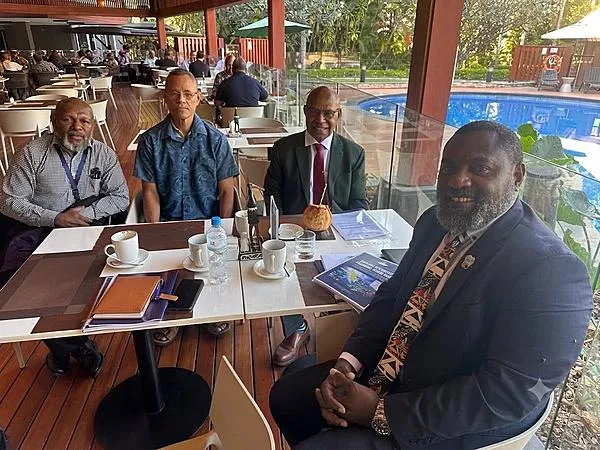
Receiving the certificate on behalf of Simberi Gold Company Limited were management representative Danielle Gunnell, senior chemist Alois Tanguri and senior chemist Nathan Aputi.
Presenting the certificate, NISIT Director General Joe Panga congratulated Simberi Gold Company Limited on attaining ISO/IEC 17025:2017 accreditation and commended the laboratory team for its dedication to technical excellence.
"The achievement of ISO/IEC 17025:2017 accreditation demonstrates that the laboratory operates in accordance with internationally recognised standards and provides confidence that its testing services are reliable and technically competent," Panga said.
The accreditation journey began with Simberi Gold Company Limited's application in April 2025. Following a comprehensive assessment and the successful close-out of all assessment findings, PNGLAS granted accreditation effective 6 July 2026, with the certificate presentation formally recognising the achievement.
Speaking on behalf of Simberi Gold Company Limited, Danielle Gunnell thanked NISIT and PNGLAS for their guidance throughout the accreditation process and acknowledged the commitment of the laboratory team.
"This has been a long journey for our laboratory, and today marks only the beginning.
"We have now set a high standard for ourselves, and our next challenge is to maintain that standard. This achievement belongs to our entire team, particularly those who led the accreditation process, and we appreciate PNGLAS for its continued support and willingness to assist us into the future."
Senior chemist Nathan Aputi, who led much of the accreditation work, described the process as both challenging and rewarding.
"Achieving accreditation required us to build our systems while continuing our day-to-day laboratory operations. It demanded commitment, teamwork and a willingness to embrace international best practices. Although it was challenging, it has strengthened our laboratory and reinforced the importance of quality, accuracy and integrity in the services we provide to our company and our clients," he said.
PNGLAS Executive Manager Christopher Mosoro commended the Simberi laboratory team for embracing the accreditation process and successfully meeting the requirements of the international standard. He also praised his technical team, led by Laboratory Accreditation Manager Doreen Amuki, for supporting the accreditation process.
"Accreditation is not simply about obtaining a certificate. It is about establishing robust management systems, demonstrating technical competence and fostering a culture of continual improvement. Simberi Gold Company Limited has shown its commitment to quality, and we encourage other laboratories throughout Papua New Guinea to pursue international accreditation as part of strengthening the country's quality infrastructure," Mosoro said.
Established in 2008 to support Simberi Gold Mine's operations, the Process Laboratory plays a critical role in mineral processing and quality assurance. The accreditation recognises the professionalism, technical competence and dedication of the laboratory team and demonstrates that its testing services meet internationally accepted standards.
Laboratory accreditation provides confidence that test results are accurate, reliable and internationally recognised. For Papua New Guinea's mining sector, accredited laboratories improve operational performance, strengthen confidence in testing results and enhance international credibility.
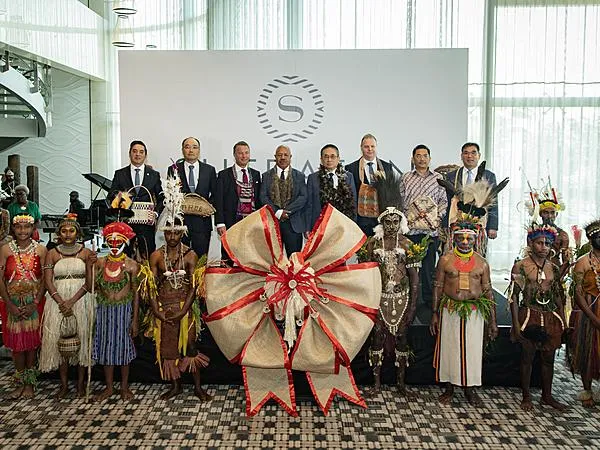
Sheraton Hotels & Resorts, part of Marriott Bonvoy’s portfolio of over 30 hotel brands, announced its debut in Papua New Guinea with the opening of Sheraton Port Moresby Stanley Hotel & Suites – a 394-key hotel located in Port Moresby’s central business and government district, five minutes from Jacksons International Airport and connected to the Vision City Mega Mall – marking Marriott International’s second property in the country and a significant milestone for the brand’s expansion in the Pacific.
KEY FACTS:
Jason Nuell, Regional Vice President Marriott International – Australia, New Zealand and the Pacific, said: “The opening of Sheraton Port Moresby Stanley Hotel & Suites marks a significant milestone as we introduce one of Marriott International’s most global brands to Papua New Guinea. With Sheraton’s focus on intuitive design, technology-enabled experiences and spaces that foster connection, the hotel is positioned to become a central gathering place for both international travellers and the local community, seeking trusted hospitality.”
A Space to Gather, Connect, and Belong
Sheraton Port Moresby Stanley Hotel & Suites’ lobby embodies the brand’s design philosophy and serves as a welcoming heart of the hotel, a vibrant, open space thoughtfully designed to foster community connection, productivity, and a sense of belonging. With large windows welcoming natural light, the spaces create a warm and inviting atmosphere designed to bring people together. Whether it’s families, business travelers, or longer stay guests the expansive lobby has been repositioned as an open, shared space, aiming to promote social interaction and collaboration. Anchored by Sheraton’s signature Community Table the space invites guests to gather, work, or unwind in an environment that blends residential warmth with modern functionality. Guests can also retreat into the soundproof Booths, offering a quiet space with privacy without breaking the flow of the open lobby experience. Tech-enabled Studios provide a polished but informal setting for guests to engage, innovate, and connect effortlessly.
Refined Accommodations Designed for Every Type of Stay
Sheraton Port Moresby Stanley Hotel & Suites features 394 accommodation rooms, including 284 guestrooms, 15 suites and 95 apartments, designed to meet the needs of both business and leisure travellers. The apartments include separate living areas, kitchens and dining spaces, supporting extended stays and family travel, while rooms reflect Sheraton’s contemporary design approach with functional layouts and integrated technology.
Meetings & Event Spaces Meant to Foster Connection
The hotel features over 2,500 square metres of meeting and event space, with the largest ballroom in Papua New Guinea. Designed for large-scale conferences, corporate meetings and social gatherings, the flexible venues are supported by integrated technology and dedicated event planning services.
This scale positions the hotel as a key hub for government, corporate and resource sector events in Port Moresby.
Dining and Social Spaces: Destination Dining and All-Day Gathering Places
Sheraton Port Moresby Stanley Hotel & Suites brings together a collection of distinctive dining and social venues designed to serve both hotel guests and the local diners, from refined destination dining and vibrant all-day restaurants to intimate cocktail experiences and relaxed poolside spaces.
Silverleaf, the hotel’s exclusive destination restaurant, offers an elevated à la carte dining experience centred on premium seafood and meat grilled over the Josper, complemented by Mediterranean-inspired flavours, private dining and sweeping city views. Greenhaus delivers a vibrant, contemporary buffet experience across all meal periods, with live cooking stations, artisan breads, New Guinea coffee, freshly baked pastries and globally inspired themed dining experiences.
At the heart of the lobby, &More by Sheraton is a dynamic fusion of a coffee shop, market stall, and laidback bar, where guests can seamlessly transition from a morning coffee to an evening cocktail. The space is designed for both social gatherings and solo relaxation, with locally inspired beverages and freshly made pastries. The broader dining offering also includes Monsoon Bar & Lounge, a lively sports and entertainment venue with cocktails, premium beverages and Australian and American-style pub favourites, and the Pool Bar & Café, a relaxed resort-style escape serving international favourites.
Wellness Facilities That Invite Guests to Relax and Reset
The hotel offers a range of wellness facilities including an infinity swimming pool with panoramic views, Sheraton Fitness – one of the city’s most comprehensive fitness offerings, and a full-service day spa. These facilities are designed to support both short stays and extended visits, catering to business travellers and leisure guests alike.
Prime Location Positioned for Ease & Discovery Located in Port Moresby’s government, sporting, commercial and cultural hub, the hotel is positioned just five minutes from Jacksons International Airport and is directly connected to Vision City Mega Mall, one of the city’s leading retail and entertainment destinations. Directly across the road, the Papua New Guinea Football Stadium offers guests direct access to the nations favourite sporting matches.
The integration with retail, dining and entertainment offerings reinforces the hotel’s role as a central hub for both visitors and locals and offers guests continual security and peace of mind to enjoy an array of shopping, dining and entertainment experiences while in Port Moresby.
Sheraton Port Moresby Stanley Hotel & Suites General Manager, Shin Ching, said: “The opening of Sheraton Port Moresby Stanley Hotel & Suites after it’s transformative renovation represents an important milestone for Papua New Guinea’s hospitality sector - bringing the global Sheraton brand and much-loved hospitality experiences to Papua New Guinea. We are thrilled to welcome guests to Sheraton Port Moresby Stanley Hotel & Suites, a place where travelers from around the world and locals can connect, relax, and create memories. We look forward to the Grand Opening Event slated for later this year, where we will officially launch Sheraton’s arrival to Papua New Guinea”
Sheraton Port Moresby Stanley Hotel & Suites strengthens Sheraton Hotels & Resorts’ presence of 8 other Sheraton properties across the Australia, New Zealand and Pacific region, where the brand continues to evolve through its global transformation focused on design, experiences and community connection. As Marriott International’s second property in Papua New Guinea, the opening reinforces the company’s long-term commitment to growth in the Pacific region.
The New Ireland Provincial Government has committed K1 million to a new partnership with the Fresh Produce Development Authority (FPDA), aiming to transform agriculture into a stronger economic driver while improving food security and increasing household incomes across the province.
The investment is part of a three-year Memorandum of Understanding (MoU) signed by New Ireland Governor Byron Chan and FPDA Chief Executive Officer Mark Worinu in Port Moresby on July 15.
Under the agreement, the provincial government will contribute K1 million in the first year, followed by K500,000 annually over the next two years, subject to project requirements. In addition to funding, it will provide land, project personnel and other resources to support implementation.
The partnership is expected to strengthen New Ireland's agricultural value chain by expanding commercial horticulture, improving market access and investing in infrastructure to reduce post-harvest losses.
Governor Chan said agriculture has the potential to become a key pillar of the province's economic diversification strategy, creating sustainable income opportunities for rural communities while reducing reliance on traditional industries.
"Agriculture remains the backbone of many of our communities. This partnership is about giving our farmers the support they need to move beyond subsistence farming and become successful commercial producers," he said.
To support that goal, the program will provide agricultural extension services, farmer training and technical assistance while establishing cool storage facilities in Kavieng and Namatanai to improve the quality of fresh produce reaching local and national markets.
The provincial government will also identify State land for the establishment of a certified English potato seed farm, together with a horticultural nursery and germplasm collection facility to ensure a reliable supply of high-quality planting materials.
Governor Chan said these investments would help build a productive and commercially competitive agricultural sector capable of supporting long-term economic growth.
"We are investing in infrastructure that will continue serving our farmers well into the future. Cold storage, quality seed production and modern farming techniques will improve productivity and give farmers greater confidence to expand their operations," he said.
He said New Ireland's favourable climate, fertile soils and growing domestic demand for fresh produce position the province to become a major contributor to Papua New Guinea's horticulture industry.
"Our vision is not simply to produce more food. We want to create an agricultural economy where farmers are earning sustainable incomes, supplying quality produce to markets and creating employment opportunities within their own communities," he said.
FPDA Chief Executive Officer Mark Worinu said the partnership would focus on developing modern production systems and strengthening agricultural supply chains, particularly for English potatoes.
"New Ireland has tremendous potential, particularly in English potato production. Through this partnership, we will establish a complete production, distribution and marketing system while developing a certified potato seed centre at Lelet to supply clean planting material for local farmers," Mr Worinu said.
He added that FPDA would also support the production and marketing of bulb onions and other priority horticultural crops to improve household incomes and strengthen food security.
Beyond increasing agricultural output, the initiative is expected to deliver wider economic benefits through higher rural incomes, improved productivity and stronger participation by local farmers in formal markets.
Governor Chan said the agreement aligns with the Chan-Kolivos Government's broader development agenda of creating sustainable economic opportunities beyond the province's mining and fisheries sectors.
He said strengthening agriculture would stimulate local businesses, create jobs and support inclusive economic growth.
"Economic development begins in our villages. When farmers have the skills, infrastructure and market opportunities to succeed, entire communities benefit. This partnership is an investment in our people, our land and our future," he said.
The project will be jointly administered by the Fresh Produce Development Authority and the New Ireland Provincial Government, with implementation expected to begin immediately.
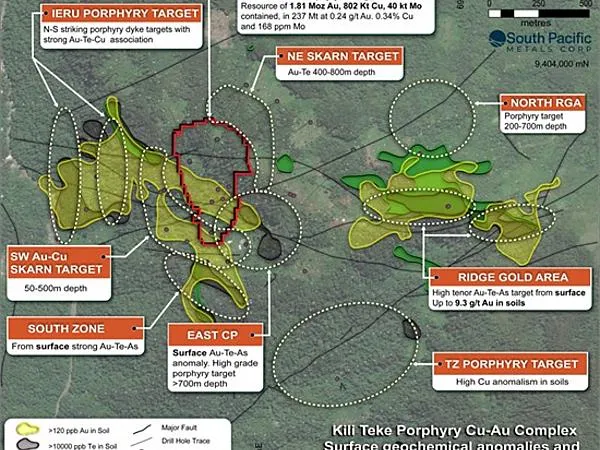
South Pacific Metals Corp. has begun the first phase of field exploration at its Kili Teke Copper-Gold Project in Hela Province, targeting mineralisation beyond the project's existing 4.2-million-ounce gold-equivalent inferred resource as it advances toward its maiden drilling campaign later this year.
The Vancouver-based explorer said more than 95% of historical drilling across the 253-square-kilometre licence focused on a single porphyry centre that hosts the current National Instrument 43-101 inferred resource. The latest exploration program is aimed at assessing the broader licence area, where machine-learning analysis has identified 14 ranked drill targets, including six classified as high priority.
Exploration Manager Octavio Garcia said the project offers considerable upside outside the existing resource.
"This is a licence that has been drilled in one place and looked at almost everywhere else," Garcia said, noting that the highest copper and gold grades reported on the property occur in skarn mineralisation excluded from the current resource estimate.
The field team has collected 52 rock samples, which have been dispatched to an independent laboratory for analysis. No assay results are currently available. The program includes geological mapping and target validation designed to narrow the list of prospects ahead of drilling planned for the second half of 2026.
Among the key exploration targets is a skarn corridor adjacent to the existing resource, where historical drilling intersected 7.8 metres grading 12.98% copper and 11.75 grams of gold per tonne within a broader mineralised zone. Surface rock-chip samples previously returned copper grades of up to 27.5%.
The company is also evaluating the Ridge Gold prospect, an alkalic gold target located about 40 kilometres from the Porgera gold mine, and a second undrilled porphyry target identified through magnetic inversion modelling. The existing Kili Teke porphyry resource also remains open at depth, with historical drilling indicating the potential for a higher-grade copper core below the current resource model.
South Pacific Metals said the exploration campaign follows months of engagement with customary landowners and government authorities in Hela Province. Community awareness meetings were held earlier this year, and local field technicians have been employed to support the program.
Executive Chairman Michael Murphy said the company had reached a significant milestone by returning its technical team to Kili Teke following the acquisition of the project.
"The resource is the floor. This program is about the rest of it," Murphy said, referring to the project's existing 4.2-million-ounce gold-equivalent inferred resource.
South Pacific Metals expects fieldwork to continue throughout the year, with additional mapping and sampling planned as it advances priority targets toward drilling. Assay results will be released once laboratory testing and validation are completed.
Simberi Gold Company Ltd.'s Process Laboratory has achieved ISO/IEC 17025 accreditation, an internationally recognised standard for testing and calibration laboratories, strengthening confidence in the reliability of its gold assay results and production reporting.
The accreditation was granted on 6 July 2026 following a 15-month assessment process that began with the company's application in April 2025. The National Institute of Standards and Industrial Technology (NISIT), through the Papua New Guinea Laboratory Accreditation Scheme (PNGLAS), formally presented the certificate at NISIT headquarters in Port Moresby on 29 July.
The accreditation confirms that the Simberi Gold Mine Process Laboratory meets internationally recognised quality and technical standards and is capable of producing accurate and reliable testing results.
The recognition provides independent verification of the laboratory's assay results, giving regulators, the Bank of Papua New Guinea and other stakeholders greater confidence in the data underpinning gold production reporting and export activities.
Simberi Gold said the accreditation enhances the credibility, integrity and transparency of its gold production reporting while reinforcing confidence in laboratory data used to support operational performance, mineral processing and regulatory compliance.
Representing the company at the presentation were Management Representative Danielle Gunnell, Senior Chemist Alois Tanguri and Senior Chemist Nathan Aputi.
Gunnell thanked NISIT and PNGLAS for their guidance throughout the accreditation process and acknowledged the dedication of the laboratory team.
"The accreditation is an important milestone that reflects the team's dedication and commitment to maintaining high standards," she said.
She noted that the accreditation process required the laboratory to strengthen its quality management systems while continuing to support day-to-day mining operations.
NISIT Director General Joe Panga congratulated Simberi Gold on the achievement, saying the accreditation demonstrates the laboratory's technical competence and provides assurance that its testing services meet internationally accepted standards.
Established in 2008, the Simberi Gold Mine Process Laboratory provides testing and quality assurance services that support mineral processing and operational decision-making at the mine. The ISO/IEC 17025 accreditation formally recognises the laboratory's commitment to quality, accuracy, integrity and continual improvement.
FX Business Centre, a business unit of the Remington Group, has partnered with the National Judicial Staff Services (NJSS) to digitize decades of court records, marking a major step toward modernizing the country's judicial records management system.
The initiative aims to address the growing challenge of managing the NJSS's extensive archive of physical court documents. The agency currently holds an estimated 96,000 hard-copy court files dating back to the 1930s, making storage, retrieval, and records management increasingly complex.
In Port Moresby alone, about 20 shipping containers filled with legal archives are scheduled to be converted into secure digital records.
Under the partnership, FX Business Centre, through Remington Digital Solutions, will provide end-to-end document digitization and advanced data management services. The project involves scanning individual court files and integrating the digitized records into the judiciary's existing information systems, reducing physical storage requirements while improving document accessibility.
During a recent press conference, Registrar Ian Augerea, senior officials from the archives department, and representatives from Remington outlined the project's objectives and its expected long-term benefits for judicial operations.
"Remington has come on board with a solution that allows us to easily extract data from all scanned documents," Augerea said.
NJSS officials said separating closed cases from active court records will enable staff to retrieve information more efficiently. The digitization project will use ELO, Remington's digital document management platform, to organize, secure, and manage the scanned records.
Once completed, the initiative is expected to eliminate time-consuming manual searches, improve operational efficiency, and significantly reduce the risk of document loss, deterioration, or damage caused by environmental factors.
Papua New Guinea's economy is expected to grow faster than the global average this year, supported by both its resource and non-resource sectors, according to the latest Westpac PNG Economic Update and Outlook, which Prime Minister James Marape said validates the government's economic reforms.
Westpac forecasts Papua New Guinea's real gross domestic product (GDP) to expand by 4.6% in 2026, following an estimated 5.5% growth in 2025, driven by stronger performance in agriculture, industry, communications, services and the country's resource sector. The projection is well above the 2.5% global growth forecast by the World Bank for 2026.
Marape said the report provides independent evidence that Papua New Guinea has remained resilient despite global economic headwinds, including geopolitical conflicts, inflation, commodity price volatility and the lingering effects of the Covid-19 pandemic.
"The independent assessment from Westpac is clear: our economy is resilient, it is growing, foreign exchange conditions are improving, our exports are earning more, and major investments are progressing," Marape said.
The prime minister said the report reflects the results of economic reforms introduced since his government took office in 2019, including fiscal consolidation, foreign exchange reforms, infrastructure investment and efforts to diversify the economy beyond its traditional reliance on oil, gas and mining.
Economy broadening beyond resources
According to Westpac, growth is no longer being driven solely by the extractive industries.
The report cited continued expansion in agriculture, manufacturing, communications and services, with increased economic activity also evident in provincial centers. The communications sector, in particular, has benefited from improved digital connectivity through the rollout of Starlink satellite internet services and the Pukpuk-1 submarine cable.
Marape said the findings support the government's strategy of building a broader economic base by promoting agriculture, fisheries, forestry, tourism, downstream processing and small and medium-sized enterprises.
"Our vision since 2019 has been to grow a broad-based economy in which agriculture, fisheries, forestry, tourism, manufacturing, downstream processing, communications and small-to-medium enterprises play a much larger role," he said.
Foreign exchange conditions improve
The report also pointed to significant improvements in Papua New Guinea's foreign exchange market, one of the country's longstanding economic challenges.
Westpac said foreign exchange availability has improved, with shorter clearing times and better market liquidity, attributing the gains partly to reforms supported by the International Monetary Fund and measures implemented by the Bank of Papua New Guinea.
Marape said addressing chronic foreign currency shortages has been one of his administration's priorities, noting that businesses had previously faced lengthy delays in accessing foreign exchange.
He said the government will continue working with the central bank, commercial banks, exporters, resource companies and development partners to further improve market liquidity and foreign exchange access.
Export earnings remain strong
Westpac said export earnings continued to strengthen, supported by stable liquefied natural gas production and higher global commodity prices.
Papua New Guinea exported about 3.73 million metric tons of LNG by May 2026, while gold exports benefited from higher international prices and stronger production. Cocoa exports also posted solid earnings, with coffee remaining an important contributor following favorable global prices.
Marape said the performance underscores the importance of supporting both large-scale resource projects and renewable agricultural industries that directly benefit rural communities.
Inflation contained despite global pressures
The report estimated annual inflation at 2.24% during the March quarter of 2026, although price pressures varied across the country.
Marape said the government remains mindful of the impact of rising living costs and pointed to its K1 billion fuel price stabilization program, which capped domestic fuel prices at March 2026 levels to cushion households and businesses from higher global fuel and freight costs linked to tensions in the Middle East.
Major projects to drive medium-term growth
Westpac identified the proposed $14 billion Papua LNG project as Papua New Guinea's most significant medium-term growth driver, with a final investment decision expected later this year.
The report also highlighted the potential contribution of the Wafi-Golpu copper-gold project and continued infrastructure investments under the Connect PNG Program, which aims to improve national transport connectivity.
Marape said these projects are expected to generate employment, attract investment, increase government revenue and strengthen foreign exchange inflows while complementing growth in agriculture, communications, construction and services.
Government cites reform progress
Marape said his administration inherited an economy burdened by fiscal pressures, foreign exchange shortages, high debt servicing costs and delayed investment projects in 2019.
Since then, the government has pursued reforms aimed at restoring macroeconomic stability, improving investor confidence, expanding infrastructure and increasing support for agriculture and small businesses, he said.
The prime minister acknowledged that challenges remain but said multiple international institutions continue to project positive economic growth for Papua New Guinea.
In addition to Westpac's 4.6% forecast, the International Monetary Fund expects the economy to grow 3.8% this year, while the Asian Development Bank projects 3.6% growth. Both institutions have also cited the country's improving macroeconomic conditions and resilience.
Looking ahead to the 2027 national elections, Marape said the government would continue pursuing disciplined fiscal management and long-term economic reforms rather than short-term political spending.
"We are not claiming that every problem has been solved," he said. "But the evidence shows that our economy is growing, our resilience is strengthening, and the future remains promising."
Ok Tedi Mining Limited (Ok Tedi) is aware of concerns circulating on social media regarding the health conditions reportedly affecting several women from communities along the Fly River system. The company has taken immediate steps to ensure the matter is assessed objectively and independently.
Ok Tedi takes all concerns relating to community health and environmental stewardship seriously. While allegations on social media have linked the reported skin conditions of two women to the company's operations along the Fly River, no medical assessment has established the cause of the conditions or any connection to the mine.
As part of its corporate social responsibility, Ok Tedi will deploy an independent medical team to investigate the reported cases. The team will work closely with Daru Hospital and the Western Provincial Health Authority to conduct medical assessments, collect samples, and gather the information necessary for a comprehensive review. Samples collected during the investigation will be sent to independent external laboratories for testing and evaluation.
Ok Tedi Health Services Manager Raymond Singamis said the company's priority is to establish the facts and ensure appropriate support is provided where needed.
"We understand the concerns being expressed by affected families and communities. Ok Tedi is committed to working with health authorities to ensure a thorough investigation is undertaken to establish the facts surrounding these reports. Where assistance is required, we will work with health authorities and medical specialists to provide appropriate care and treatment as part of our corporate social responsibility," Singamis said.
Ok Tedi Environment Manager Erizo Kepe said the company operates one of Papua New Guinea's most comprehensive environmental monitoring programs, including regular monitoring of catchment water quality, sediment chemistry, terrestrial and aquatic resources, and the safety of food resources for human consumption using World Health Organization (WHO)-accredited Codex Alimentarius methodologies. The program also includes extensive ecosystem health studies throughout the Fly River system.
"While no link has been established between the reported medical conditions and environmental impacts associated with Ok Tedi's operations, we take these concerns seriously and are committed to supporting a thorough investigation. It is important that any conclusions are based on verified medical and environmental evidence, and we will continue to work transparently with health authorities, regulators, and affected communities as the assessment progresses," Kepe said.
The company emphasized the importance of allowing the independent medical investigation and scientific analysis to be completed before drawing conclusions about the cause of the reported conditions.
Ok Tedi remains committed to responsible environmental management and the well-being of communities within its areas of operation. The company said it will continue to keep stakeholders informed as more information becomes available and once the independent assessments have been completed.
The National Information and Communications Technology Authority (NICTA) has welcomed Robert Naguri as Papua New Guinea's new minister for information and communications technology while commending outgoing minister Timothy Masiu for advancing the country's digital transformation agenda.
Speaking at the official handover ceremony at the National Broadcasting Corporation, NICTA Executive Director Warren Suti praised Masiu's leadership in strengthening Papua New Guinea's digital ecosystem and laying the foundation for a more connected and secure digital economy.
Among the achievements highlighted were the implementation of the Digital Government Act 2022, the development of the Digital Government Plan 2023–2027, the licensing of Starlink to expand internet access to remote and underserved communities, and progress on the National Cyber Security Strategy 2024.
NICTA also recognized Masiu's promotion of "meaningful connectivity," an approach that extends beyond network coverage to include affordability, digital skills, access to devices and relevant online services.
Naguri takes over the portfolio as Papua New Guinea continues to expand digital infrastructure and improve access to information and communications technology services across the country.
Suti said NICTA will work closely with the new minister to accelerate the rollout of digital services and communications infrastructure, particularly in rural, remote and geographically isolated communities.
The authority reaffirmed its commitment to keeping Universal Access and Service a national priority while promoting competition, encouraging innovation and investment, strengthening cybersecurity and supporting an enabling regulatory environment for digital growth.
"Digital connectivity is ultimately about people. It is about connecting our citizens to opportunity, empowering communities, protecting our digital future, and ensuring that no Papua New Guinean is left behind," Suti said.
International Trade and Investment Minister Richard Maru has welcomed R&F Group Chairman and President Li Zhang to Papua New Guinea, expressing confidence that the Chinese property developer will consider major investments in the country's tourism, hospitality and real estate sectors.
Li arrived in Port Moresby on Tuesday aboard a private jet after an advance team visited Papua New Guinea two weeks earlier to assess potential investment opportunities.
Maru said the government is optimistic the visit will encourage the company to pursue foreign direct investment in the country.
R&F Group is one of China's largest property developers and owns more than 80 luxury hotels managed by international brands including Ritz-Carlton, Park Hyatt and Grand Hyatt. The company's portfolio also includes shopping malls and office buildings, with more than 450 projects across more than 145 cities and regions worldwide.
Maru said the government hopes the company will invest in several priority developments, including the Paga Hill Estate, Portside Gardens Development and the Duran Farm Housing Project.
"We are very confident that the R&F Group is one of China's most serious investors and we look forward to hosting the chairman and his delegation and securing their firm decision to invest in a very big way in our country," Maru said.
He added that the government would provide support to facilitate the company's investments if they proceed.
The visit comes as Papua New Guinea seeks to build on the recovery of its tourism sector. According to the Papua New Guinea Tourism Promotion Authority, international visitor arrivals rose to 103,881 in 2025, while 92% of surveyed visitors said they would return and 88% indicated they would recommend the destination, reflecting growing confidence in the country's tourism offerings.
The Tourism Promotion Authority has also reported continued growth in visitor arrivals and spending, supported by improved air connectivity and targeted international marketing campaigns.
The Autonomous Region of Bougainville is seeking national government support to establish a Special Economic Zone (SEZ), with International Trade and Investment Minister Richard Maru backing plans to advance the proposed Soraken Integrated Special Economic Zone.
Bougainville Regional Member and Works and Highways Minister Peter Tsiamalili met with Maru to discuss the proposal, which would be developed under Papua New Guinea's Special Economic Zone Act 2019.
Maru said he plans to visit Bougainville in August to inspect the proposed site and hold further discussions with the Bougainville government on the project's development.
"I know the Bougainville Government is keen on establishing a number of SEZs. We have to start with one and the model can be replicated as a concept in other parts of Bougainville," Maru said.
The minister outlined the requirements for securing an SEZ license and encouraged Bougainville authorities to submit a detailed proposal for National Executive Council concept approval.
He also suggested incorporating a fish cannery, an international wharf and a fuel depot into the proposed economic zone to strengthen its industrial and trade potential.
Maru invited the Bougainville government to participate in the inaugural Papua New Guinea–China Business Forum and Trade Expo in Guangzhou in October to promote the region as an investment destination and showcase opportunities within the proposed SEZ.
During the meeting, Tsiamalili also discussed the proposed sale of PNG Power Ltd. assets in Buka and Arawa as part of the utility's recovery plan.
The Morobe Provincial Government is seeking to develop a Special Economic Zone (SEZ) at the 1,400-hectare Wawin Farm in Huon Gulf District, with support from International Trade and Investment Minister Richard Maru, as it aims to transform the site into a manufacturing and agriculture hub.
Governor Rainbo Paita said the proposed Wawin Integrated Special Economic Zone is expected to generate more than 4,000 direct jobs while creating business opportunities and new revenue streams for the provincial government, which owns the land.
Paita said preliminary topographic and geotechnical surveys have been completed and the province is now seeking investors to develop the site.
He said eight investors have already expressed interest in locating within the proposed SEZ, including Leon Hardware and DataCo, which plans to establish a data center.
"The proposed SEZ will support the Marape-Rosso government's vision for downstream processing," Paita said.
Maru, who visited the site on Sunday and met with leaders from the Wampar local-level government, said he wants to see at least one or two special economic zones established in Morobe Province before the end of the year.
He noted that Papua New Guinea currently has four SEZs, all located in Port Moresby, and said the government is looking to expand the program to other parts of the country.
Maru urged the Morobe Provincial Government to complete the core requirements for an SEZ license, including road access, electricity, water supply, sewerage infrastructure and a master plan incorporating a township, before seeking Cabinet approval for the project.
He welcomed progress already made by the province, including a proposed 25-megawatt solar power project awaiting approval from PNG Power Ltd. and roadworks scheduled to begin this week.
"Wawin must not just be known for the National High School; it must be a major town in the future," Maru said.
The Papua New Guinea government has exercised its equity participation rights in Pacific Lime and Cement's Central Lime Project, acquiring a 13% stake for US$16.3 million under the Project Development Agreement signed in March.
Pacific Lime and Cement (ASX: PLA; PNGX: PLC) said the investment will be held through the state's nominee, Kumul Mineral Holdings Ltd. The company and the state have executed the required Shareholders Agreement and Equity Acquisition Agreement, giving the government a 13% interest in Mayur Industrials PNG Ltd, the project's special purpose vehicle.
The equity acquisition was priced at a discounted valuation based on the project's base-case net present value, reflecting a negotiated sovereign participation discount.
Kumul Mineral Holdings also retains an option to acquire an additional 5% stake in the Central Lime Project for about US$6.8 million. The option may be exercised within 180 days after operations commence, with first quicklime production forecast for the first quarter of 2027.
The state also holds the right to acquire up to a 30% interest in the Central Cement Project special purpose vehicle. That option can be exercised two months before the project's targeted final investment decision in the fourth quarter of 2026. The Central Cement Project has a disclosed net present value of US$339 million, with the final valuation to be determined by an independent expert.
The investment marks the first capital commitment by the PNG government under the Project Development Agreement framework, which governs the development, fiscal, equity and regulatory arrangements for the Central Lime and Central Cement projects.
Pacific Lime and Cement Managing Director Paul Mulder described the investment as a milestone that strengthens the sovereign backing for the project.
"The PNG Government's decision to invest directly in the Central Lime Project is a landmark milestone that further strengthens the sovereign and institutional foundations of what we are building," Mulder said.
He said the investment reflects more than a decade of collaboration between the company, the government and project-area landowners, and ensures that the project's economic benefits will be shared directly with Papua New Guineans.
Kumul Mineral Holdings Managing Director Sarimu Kanu said the project would reduce PNG's dependence on imported quicklime from the Middle East and Asia by supplying locally manufactured products for the country's mining and infrastructure sectors.
"We are proud to support this nation-building project and its long-term contribution to PNG's economic growth," Kanu said.
The announcement comes after the recent passage of Papua New Guinea's trade defence legislation, which establishes a framework to protect domestic industries from unfairly traded imports.
Special Adviser to the Prime Minister Isaac Lupari said the new trade defence measures would help strengthen domestic manufacturing and reduce reliance on imported construction materials.
Pacific Lime and Cement said it is preparing for first quicklime production while progressing work toward a final investment decision for the Central Cement Project later this year. Construction activities are expected to transition from the lime project to the cement project during the first half of 2027.
For decades, governments have challenged the resources sector to do more than extract natural resources—they have called on the industry to create opportunities, build businesses and ensure local communities share in the economic benefits of development. At Ok Tedi Mining Limited (Ok Tedi), this commitment is not just a policy document; it is being delivered through significant investments that are placing local communities at the centre of the mine's operations.
Under Clauses 31 and 32 of the Mining (Ok Tedi Agreement) Act and the Ok Tedi Memorandum of Agreement, Ok Tedi has a mandate to encourage and support Papua New Guineans' participation in business opportunities, with a particular focus on mine area landowners and other recognised regions. Today, that commitment is translating into substantial economic participation and wealth creation across Western Province.
Ok Tedi currently engages 49 landowner companies that provide a broad range of goods and services to the operation. Some of these businesses have grown into major enterprises, with Tier 1 contractors generating an average annual turnover of approximately K800 million.
The opportunities available to local businesses span a wide range of goods and services, including accommodation and catering, aviation, land transportation, security, labour hire, equipment rental, maintenance services, civil works, mining services, electrical installations, rehabilitation support services, clothing supply, pest control and many others.
Beyond service contracts, local participation extends into significant capital investments.
Landowner investment entities currently own and lease assets such as buses, fuel tankers, liners and containers to Ok Tedi, generating between K60 million and K100 million annually. Landowner companies have also invested in mining haul truck fleets that are leased to Ok Tedi, representing an estimated value of K300 million to K400 million.
Speaking at the PNG CORE Community Affairs and National Content Conference (CANCONEX) last week, Ok Tedi Economic Programs Manager Steve Hoap said these investments demonstrate how local communities are moving beyond traditional royalty benefits and becoming active participants in commercial ventures that generate sustainable, long-term revenue.
Mr Hoap said community investment groups are increasingly partnering with Ok Tedi to develop infrastructure that delivers continuous revenue streams for local beneficiaries.
He cited the development of the first 150-person accommodation facility as an example. Ownership is shared between the CMCA Women's and Children's Fund (50%), LMP79 Bige Storage Area (25%) and the ART communities representing 15 villages in the Lower Ok Tedi region (25%).
The facility is secured under a 10-year lease commencing in March 2025 and is expected to generate approximately K23.5 million in rental income over the life of the agreement.
A second 150-person accommodation facility has been established through a partnership involving the Middle Fly Trust (50%), LMP85 Bige Storage Area (25%), and the Wai-Tri communities of the Lower Ok Tedi region (25%).
With a seven-year lease commencing in 2027, the investment is expected to generate approximately K21.1 million in rental returns, creating a reliable source of income for participating communities.
These are not one-off payments but investments that will continue to generate benefits for years to come, supporting community development long after construction is completed.
Mr Hoap said the investment model is already producing measurable financial returns.
"Another significant example is the partnership with MRCMCA Investment Holdings, which invested in a fleet of nearly 200 light vehicles leased to Ok Tedi under a five-year agreement from 2023 to 2027."
Mr Hoap said these initiatives reflect Ok Tedi's commitment to delivering measurable outcomes under both Clause 32 of the Mining Agreement and the PNG National Content Policy.
"The objective is clear: to maximise local participation, create sustainable businesses, strengthen community investment capacity and ensure the economic benefits of mining remain within Papua New Guinea.
"Rather than simply providing contracts, OTML is helping communities build capability, own productive assets and establish long-term income streams that can support future generations.
The result is a growing portfolio of community-owned enterprises worth hundreds of millions of kina, generating jobs, revenue and long-term prosperity throughout Western Province.
Papua New Guinea has won the Best Booth Award in the National Tourism Organisation (NTO) category at the 2026 Travel Madness Expo in Manila, Philippines, highlighting the country's growing profile as a tourism destination in Asia.
The award was presented during the three-day expo held from July 10 to 12, recognizing Papua New Guinea's exhibition booth for showcasing the country's tourism experiences, cultural heritage and visitor attractions.
More than 170 tourism organizations, airlines, hotels, resorts and travel agencies from the Philippines and across Asia participated in the event, one of the region's largest consumer travel exhibitions.
Papua New Guinea was represented by Air Niugini and the Papua New Guinea Tourism Promotion Authority (PNGTPA), supported by tourism operators and hospitality partners including Kokopo Beach Bungalow, Karanas Tours, Dynasty Seafood Restaurant, Alibi Bar & Grill, Akura, Daikoku Japanese Restaurant, Cuppa Cafe, Asia Aromas and PNG Coffee.
The delegation promoted Papua New Guinea's diving, birdwatching, trekking, cultural festivals, islands, coffee, handicrafts and other tourism experiences.
Air Niugini Chief Executive Officer Alan Milne said the recognition reflected the strong partnership between the national airline, PNGTPA and the country's tourism industry.
"This recognition is a wonderful achievement for Papua New Guinea. It demonstrates what can be accomplished when the national airline, PNGTPA and our tourism operators work together to showcase our country as a vibrant, welcoming and authentic destination," Milne said.
He added that international travel exhibitions remain an important platform for building relationships with travel partners, increasing destination awareness and encouraging more visitors to experience Papua New Guinea.
Air Niugini Regional Manager for Asia Joshua Koh, who coordinated the airline's participation alongside PNGTPA and industry partners, said winning the award exceeded expectations.
"We came to Manila with one objective—to promote Papua New Guinea as a destination and support our tourism industry. Winning the Best Booth Award was something we never expected, making this recognition even more special," Koh said.
He said the recognition belonged to all organizations that contributed to the country's exhibition and demonstrated that Papua New Guinea could compete alongside much larger tourism destinations through collaboration.
The Travel Madness Expo serves as a platform for tourism organizations, airlines, hotels and travel companies to market destinations, launch travel packages and build partnerships with travel agents and consumers across the region.
Following the Manila event, Air Niugini and PNGTPA will continue promoting Papua New Guinea at regional tourism exhibitions, including the NATAS Travel Fair in Singapore in August and the Holiday and Travel Expo in Hong Kong in September.
The Best Booth Award underscores Papua New Guinea's efforts to strengthen its presence in key Asian tourism markets through coordinated promotion by the national airline, tourism authority and private sector partners.
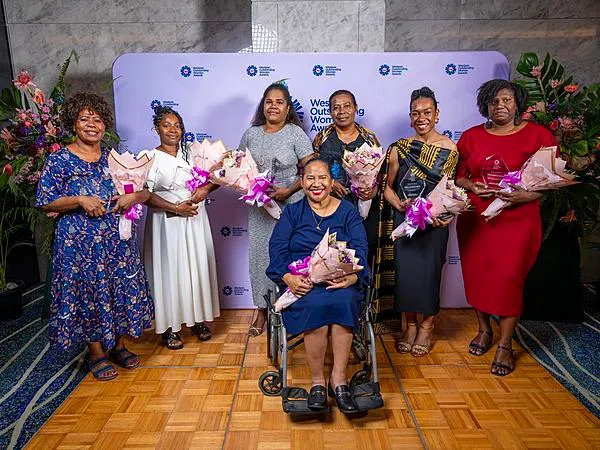
Westpac PNG recognized seven women for their leadership and contributions to communities across Papua New Guinea during the 2026 Westpac Outstanding Women Awards (WOWA) held in Port Moresby on July 25.
More than 200 nominations were received from across the country, with winners selected in seven categories: entrepreneurship, not-for-profit, private sector, public sector, sustainability, sports and arts, and young achiever.
Stella Ipang was named the 2026 Overall Winner after also taking the Private Sector award. She was recognized for advancing gender equality, disability and social inclusion (GEDSI) in Papua New Guinea's immunization sector, helping improve access to healthcare for women, children and marginalized communities.
Westpac PNG Board Chairwoman Tamzin Wardley said the awards celebrate women whose leadership and resilience are creating meaningful change.
"The Westpac Outstanding Women Awards recognize women who are breaking barriers, creating opportunities for others and helping shape a stronger future for our nation," Wardley said.
The 2026 category winners are:
Entrepreneur: Martha Raka
Not-for-Profit: Jacqueline Mary Boga Garoau
Private Sector: Stella Ipang
Public Sector: Elizabeth Tandoa
Sustainability: Emma Oliver
Sports & Arts: Wosi Kaeyo
Young Achiever: Getta Kambar
As the overall winner, Ipang will receive a PGK 5,000 grant, a year-long mentorship program with Westpac PNG, and the opportunity to attend an executive leadership symposium in Australia in 2026 or 2027.
Westpac Pacific Managing Director Emma Low said Ipang's work in advancing inclusion and improving health outcomes distinguished her among a strong field of finalists.
Accepting the award, Ipang said she hoped the recognition would inspire more women and girls to pursue leadership opportunities and make a positive impact in their communities.
Westpac PNG Chief Executive Andrew Cairns said the awards highlight the important role women play in strengthening communities and the nation through service and leadership.
The annual awards recognize women making significant contributions across business, public service, community development, sustainability, sports and the arts in Papua New Guinea.
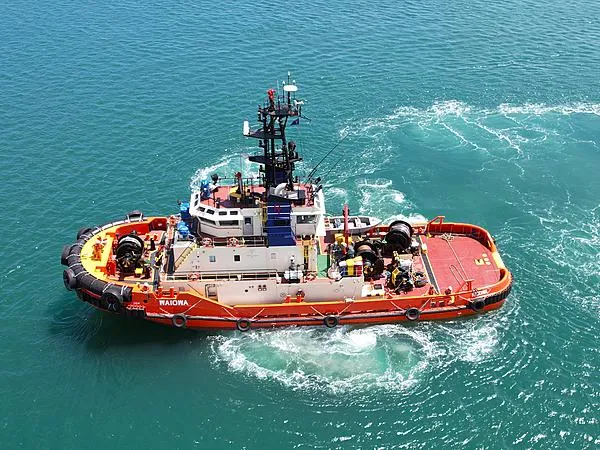
Steamships has announced a K100 million investment to modernize Pacific Towing's (PacTow) fleet and expand maritime training, reinforcing the company's commitment to safer port operations, reliable marine services and the development of Papua New Guinea's maritime workforce.
The investment includes K70 million for two state-of-the-art tugboats that will become the most powerful and technologically advanced vessels of their kind operating in Papua New Guinea. The first tug, Pacific Responder, is expected to arrive in Port Moresby within the next six to eight weeks, followed by Pacific Resolute, which will be based in Lae.
A further K30 million will be invested in life-extension drydocking, technical upgrades and maintenance across PacTow's existing fleet to enhance operational reliability and ensure uninterrupted services at the country's key ports and trade corridors.
"PNG's ports, waterways and trade are too important to accept anything less than safe, properly maintained marine assets and absolute operational resilience," Steamships Managing Director Chris Daniells said.
"This investment reflects Steamships' commitment to our vision that we do not just operate here—we invest here—and that PNG deserves high-quality vessels, strong local crews and long-term investment in national maritime capability."
PacTow employs more than 250 people, with 97% of its workforce comprising Papua New Guinean nationals. Over nearly five decades, the company has built local maritime expertise through technical and operational training that meets national and international industry standards.
The investment also supports Steamships' Maritime Training Centre (MTC) in Port Moresby, which provides practical training for seafarers across the group's fleet, including PacTow's tug operations. The center also runs initiatives such as the Women in Maritime Scholarship Program, delivered in partnership with the Australian government, Swire Shipping and Consort Express Lines.
PacTow General Manager Gerard Kasnari said the investment would improve service reliability while strengthening the country's maritime workforce.
"This fleet renewal program will strengthen our fleet and support safer, more reliable service for customers," Kasnari said.
"Our tugs are important, but our people are our ultimate strength. Developing PNG's next generation of seafarers is one of the most important contributions we can make at a time when the country urgently needs qualified maritime professionals to support LNG, resource and coastal trade projects."
Beyond harbor towage, PacTow also provides ocean salvage, pollution response and emergency marine services, supporting coastal communities and helping protect Papua New Guinea's marine environment.
Steamships said details of the commissioning and naming ceremonies for Pacific Responder and Pacific Resolute in Port Moresby and Lae will be announced once schedules are finalized.
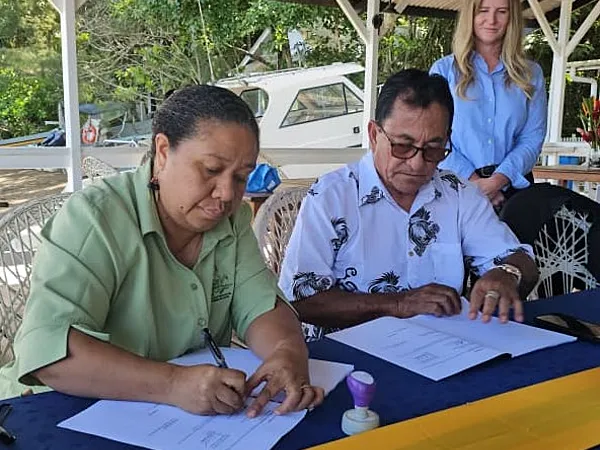
Misima Minerals Limited (MML) has signed a Memorandum of Agreement (MoA) with the Milne Bay Provincial Government, paving the way for the company to operate the Misima Aerodrome as part of broader efforts to improve connectivity and support the redevelopment of the Misima Gold Project. The agreement was signed in Alotau on June 19, 2026.
Under the MoA, MML will lease and operate the aerodrome through the Milne Bay Provincial Transport Authority while undertaking upgrades required to restore commercial aviation services.
The aerodrome has been restricted to small charter aircraft since 2020 after operations for third-level airlines, including PNG Air, were suspended.
Restoring the aerodrome to full operational status is expected to enable the return of scheduled commercial flights to Misima, improving access to the island and supporting economic activity, healthcare delivery, government services and community mobility across the Samarai-Murua District.
To meet Civil Aviation Safety Authority of Papua New Guinea (CASAPNG) requirements, the runway and other aviation safety infrastructure will be upgraded. The works will be coordinated by MML, the Provincial Transport Authority, the National Works Department and local contractors, with completion targeted before the end of 2026.
The aerodrome project forms part of MML's broader infrastructure program supporting the redevelopment of the Misima Gold Project.
A wholly owned subsidiary of Ok Tedi Mining Limited (OTML), MML has begun early infrastructure works to support exploration, feasibility studies and future mine development.
Following OTML's acquisition of the Misima Gold Project from Kingston Resources in May 2025, the company developed a five-year restart strategy comprising three phases: feasibility and permitting, construction, and production.
Since February 2026, MML has undertaken enabling works under the first phase, including environmental and social impact assessments, mine development planning, and preparations for environmental permitting and mining licence approvals.
Infrastructure projects underway or under assessment include the construction of accommodation facilities with a health clinic and support services, rehabilitation of access roads to the mine site, and the planned upgrade of Misima District Hospital.
The hospital improvements are intended to benefit local communities while supporting medical requirements for OTML and MML employees, including pre-employment medical examinations aimed at increasing local workforce participation.
Misima Minerals Limited is a wholly owned subsidiary of Ok Tedi Mining Limited responsible for redeveloping the historic Misima Gold-Silver Mine in Milne Bay Province.
The project supports OTML's Growth 2050 strategy to diversify beyond its Star Mountains operations and return one of Papua New Guinea's largest historic gold mines to production under Papua New Guinean ownership.
MML currently holds Exploration Licence 1747 through a two-year extension granted to Ok Tedi, allowing continued exploration, technical studies and resource evaluation ahead of the project's redevelopment.
The company says it is committed to responsible resource development, environmental stewardship, transparent stakeholder engagement and delivering long-term economic and social benefits to landowners, local communities, Milne Bay Province and Papua New Guinea.
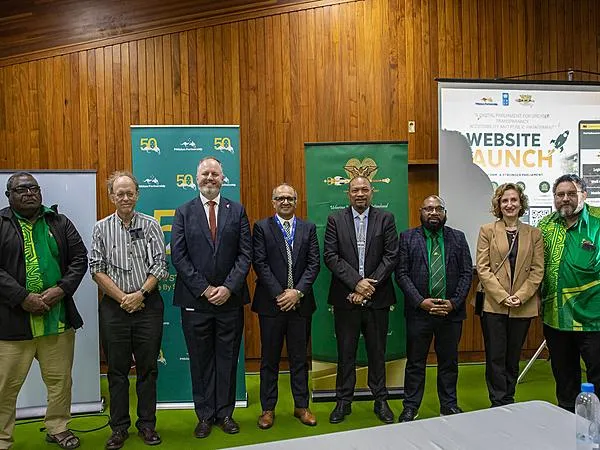
The National Parliament of Papua New Guinea has launched a new official website aimed at improving public access to parliamentary information and strengthening transparency, with support from the Australian government and the United Nations Development Programme (UNDP).
The website was developed under the Strengthening Papua New Guinea's Parliament Project, implemented by UNDP and funded by the Australian government. It provides easier public access to parliamentary business, including legislation, committee proceedings, reports and publications, and institutional information.
Speaking at the launch, Clerk of the National Parliament Kala Aufa described the website as the institution's "digital front door," saying it would strengthen transparency, public engagement and modern parliamentary governance by connecting Parliament with citizens across the country's provinces and islands.
Acting Speaker Koni Iguan said the platform reflects Parliament's commitment to making democratic processes more accessible to Papua New Guineans.
"This new website is our pledge to tear down those invisible walls and our commitment to ensuring that the House of the People is truly accessible by the people," Iguan said. "Our goal is simple: to make democracy understandable, accessible and meaningful to every single Papua New Guinean."
In addition to the website, the parliamentary strengthening project supported the development of a tracking system to monitor the implementation of committee recommendations, improving oversight and accountability.
Australian High Commission Counsellor for Subnational, Humanitarian and Accountability Craig Gillies said the initiative would help citizens better understand how Parliament functions and encourage greater public engagement.
"We hope that the website will serve as an effective public engagement tool, enabling citizens to more easily access parliamentary information and follow important committee work and decisions," Gillies said.
UNDP Deputy Resident Representative Aadil Mansoor said the initiative demonstrates the value of partnerships in strengthening democratic institutions.
"Today's launch is about more than technology; it is about strengthening democratic governance," Mansoor said. "These achievements reflect what can be accomplished through strong partnerships, and UNDP is proud to support the National Parliament in its efforts to strengthen democratic institutions."
The new website forms part of broader efforts to modernize parliamentary administration and improve transparency and accountability in Papua New Guinea's legislative processes.
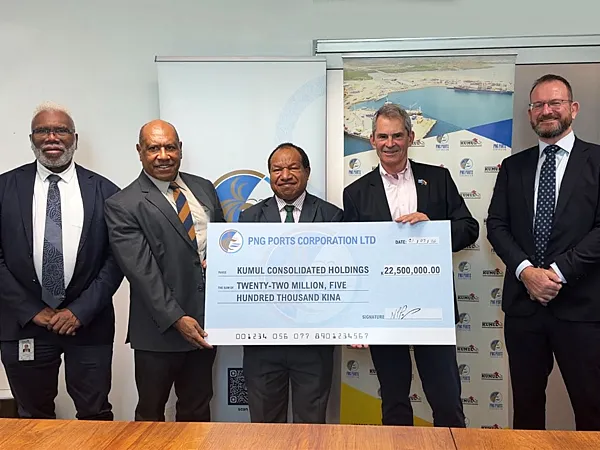
PNG Ports Corporation Limited (PNG Ports) has declared an interim dividend of K22.5 million to its shareholder, Kumul Consolidated Holdings (KCH), for the 2025 financial year, based on an estimated Net Operating Profit After Tax (NOPAT) of K90 million.
The company said the final dividend for FY2025 will be declared after the completion of its audited financial statements.
The result reinforces PNG Ports' position as one of Papua New Guinea's strongest and most resilient state-owned enterprises. Its network of 15 ports facilitates trade and cargo movements worth an estimated K28.9 billion annually. In 2025, the ports handled 10.8 million tonnes of cargo across 4,838 vessel calls.
Chief Executive Officer Neil Papenfus attributed the result to disciplined operations, operational efficiencies and sustained investment.
"PNG Ports Corporation Limited has once again delivered consistent value to the State. This marks the second consecutive year that PNG Ports has declared the same interim dividend, underscoring our steady, reliable and disciplined financial performance," Papenfus said.
He said the company's performance was driven by efficiency gains, growth in key revenue streams — including wharfage, berthage, storage, pilotage and terminal leasing — as well as strategic investments to modernise facilities at Motukea, Lae and Kimbe.
Minister for State Enterprises William Duma said the dividend demonstrated the progress of the Marape-Rosso Government's state-owned enterprise reform programme.
"This reflects sound financial management and the determination of the Board, management and employees of PNG Ports to ensure our ports system remains both commercially viable and nationally beneficial," Duma said.
"The profit once again delivered by PNG Ports is a shining example of how a state-owned enterprise can be successfully operated as a commercial business while continuing to provide essential services to our people," he added.
Beyond its commercial operations, PNG Ports continues to maintain 12 Community Service Obligation (CSO) ports, which operate below commercial viability but remain open to ensure remote provinces retain vital maritime access. The corporation is also continuing infrastructure upgrades under its 30-Year Port Infrastructure Master Plan.
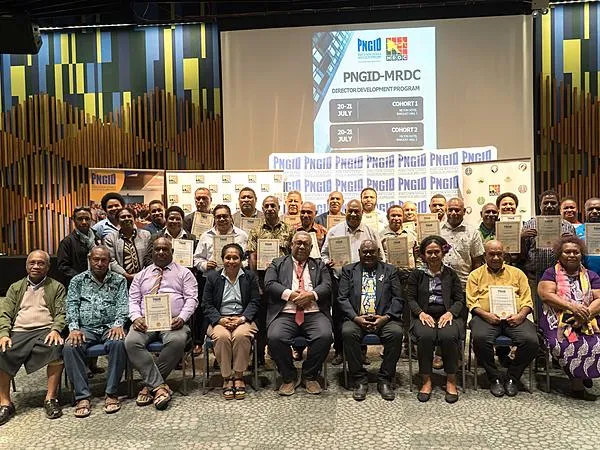
The Mineral Resources Development Company (MRDC) has strengthened the governance capabilities of its trust company directors and senior executives through a two-day directors' training programme delivered by the PNG Institute of Directors (PNGID).
About 45 participants, including directors from MRDC trust companies and senior staff from MRDC and its affiliated investment companies, attended the programme, which was held in two batches from July 20 to 21.
The training forms part of MRDC's continuing effort to improve corporate governance standards across the group by equipping directors with a stronger understanding of governance principles, legal and fiduciary responsibilities, compliance requirements, ethical leadership and board effectiveness.
The programme was delivered under the PNGID Directors Development Programme and supports ongoing discussions to formalise a memorandum of agreement between MRDC and PNGID.
Under the proposed agreement, PNGID will provide facilitators and customised training programmes for landowner-based directors, emerging directors and professional directors within the MRDC group.
Participants received certificates of participation upon completing the programme and were offered the opportunity to become members of the PNG Institute of Directors.
MRDC Managing Director and Chief Executive Officer Augustine Mano said the company remained committed to investing in director development to strengthen governance across its operations.
"We look forward to engaging PNGID to facilitate more trainings to deliver tailored directors' training on corporate governance, compliance, and directors' duties and responsibilities for our directors within our group," Mano said.
MRDC said strengthening governance capabilities remains a key priority as it manages resource-derived investments on behalf of Papua New Guinea landowners and other stakeholders.
Papua New Guinea has reaffirmed its commitment to attracting responsible long-term investment in the mining sector, unveiling a package of regulatory, legislative and digital reforms aimed at strengthening investor confidence while ensuring resource development delivers lasting benefits to communities.
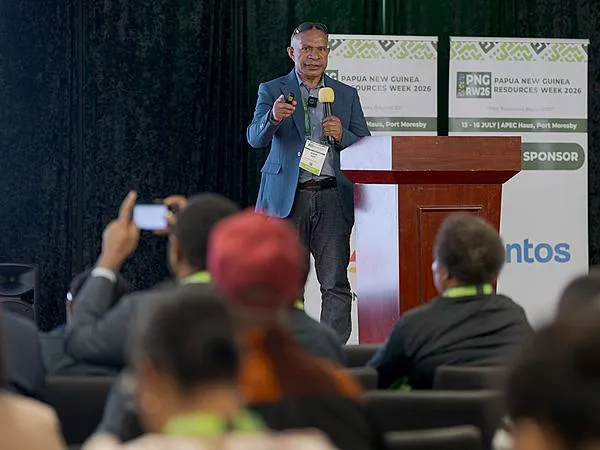
Speaking at PNG CORE Resources Week 2026 at APEC Haus, Mining Minister Solen Loifa said mining remains one of the country's strongest economic pillars and a key driver of PNG's long-term development agenda under the conference theme, PNG Resources Beyond 50.
Loifa said Papua New Guinea welcomes credible investors committed to long-term partnerships and sustainable growth.
Mining, together with the oil and gas sector, accounts for more than 80% of PNG's export earnings and remains a major source of government revenue, foreign exchange, employment and infrastructure development.
Mineral exports reached a record K32 billion in 2025, while the alluvial and small-scale mining sector generated more than K1 billion in export revenue. Mining communities also received more than K474 million in royalty payments.
"However, the value of mining must also be measured by the improvements it brings to the lives of our people. Mining must support stronger communities, better infrastructure, local employment, business opportunities and sustainable development," Loifa said.
Reforms aimed at boosting investor confidence
To improve PNG's competitiveness as a mining destination, the government is pursuing reforms designed to provide greater certainty for investors.
Loifa said the Mineral Resources Authority (MRA) has begun reviewing the Mining Act, with proposed amendments including extending exploration licence terms to five years, introducing a new Mining Retention Licence, enabling online mineral tenement applications and modernising the country's mineral tenement administration system.
The reforms are intended to give exploration companies more time to complete geological studies, drilling programmes, feasibility assessments and stakeholder engagement, while streamlining regulatory processes.
The government is also drafting new mine safety and health legislation to align PNG's workplace standards with international mining practices.
Digital overhaul
A central element of the reform programme is the digitalisation of the mineral tenement application system.
Loifa said the MRA is migrating its mineral tenement database into Papua New Guinea while introducing an online application platform to improve accessibility, transparency and regulatory oversight.
"The online system will improve accessibility, transparency and the monitoring of applications. It will also reduce unnecessary delays and provide investors with a clearer and more accountable process," he said.
Stable regulatory environment
Loifa reaffirmed the government's commitment to a stable legal and regulatory framework.
"Investor confidence depends on consistency, certainty and respect for the law. The Government will ensure that mining decisions are made in accordance with the Constitution, the Mining Act, environmental legislation and other applicable laws," he said.
He added that investors are expected to meet their environmental, taxation and community obligations, with disputes resolved through established legal and administrative processes.
Communities at the centre
Loifa said community support remains essential to the success of mining projects and stressed that resource development must deliver tangible benefits through improved roads, schools, healthcare, water supply, communications, employment, skills training and greater participation by local businesses.
The government will continue working with provincial governments, landowners and industry to strengthen Community Development Agreements and maximise regional economic benefits.
He also urged landowner groups to resolve leadership disputes so communities can fully benefit from resource development.
Positioning for critical minerals
Loifa said PNG is positioning itself to benefit from rising global demand for critical minerals used in renewable energy, battery storage, electric vehicles and advanced manufacturing.
The government is developing a policy framework for critical minerals and rare earth elements while expanding geological surveys and strengthening the country's mineral database through new partnerships.
Improved geological information, he said, will reduce exploration risk, attract investment and support future discoveries, helping keep the sector competitive well beyond 2060.
Tackling illegal mining
Loifa also highlighted efforts to curb illegal mining and gold smuggling.
The government is strengthening inter-agency enforcement, improving gold traceability systems and considering international responsible sourcing standards to boost confidence among global buyers, refiners and investors.
Invitation to investors
Loifa reaffirmed the government's support for commercially viable, environmentally responsible and socially sustainable mining projects.
He said Papua New Guinea would continue improving regulatory certainty, modernising mining legislation, strengthening government coordination and promoting transparent decision-making.
"Our task is to convert our geological potential into sustainable prosperity," Loifa said, inviting investors to partner with the government, landowners and communities to responsibly develop the country's mineral resources.
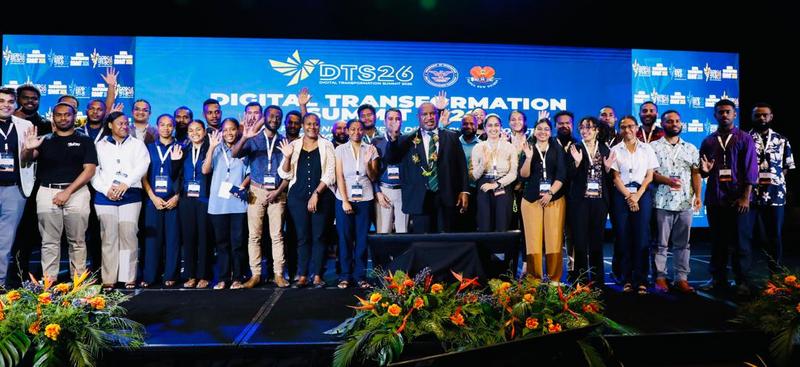
Papua New Guinea is seeking to accelerate investment in its digital economy through stronger regional partnerships, expanded digital infrastructure and greater adoption of artificial intelligence (AI), with the Digital Transformation Summit 2026 (DTS26) bringing together governments, businesses, technology leaders and development partners to chart the country's next phase of economic growth.
The three-day summit, running from 20 to 22 July at the Sheraton Hotel in Port Moresby, has brought together policymakers, technology companies, development partners and regional leaders to discuss digital infrastructure, AI, cybersecurity, digital government and innovation as key drivers of economic development.
Organised by the Department of Information and Communication Technology (DICT), the summit also serves as a platform to strengthen regional cooperation and encourage investment in PNG's growing digital economy.
Digital Transformation to Drive Investment and Regional Cooperation
Opening the summit, DICT Secretary Steven Matainaho said the event is more than just a technology conference, describing it as a regional platform designed to strengthen digital cooperation, encourage innovation and unlock new economic opportunities across Papua New Guinea and the Pacific.
"This summit brings together leaders from government, industry, academia and development organisations to share ideas, strengthen partnerships and work on practical solutions that will improve digital services across our country and the Pacific," Matainaho said.
He said this year's programme combines four major regional ICT events under one umbrella—the Digital Transformation Summit, Pacific Cyber Week, the Pacific ICT Ministers Forum and the Pacific Cyber Security Operational Network (PaCSON) annual activities—creating one of the region's largest digital policy and technology gatherings.
According to Matainaho, integrating policy discussions, technical expertise, innovation and cybersecurity into a single programme reflects the growing role of digital technology in economic development, investment, trade and government service delivery.
He welcomed Prime Minister James Marape, ICT Minister Robert Naguri, ministers from Pacific Island countries, senior government officials, and representatives from Australia, the United States, the International Telecommunication Union (ITU), regional organisations, universities, development partners and the private sector.
Matainaho said regional cooperation is becoming increasingly important as Pacific nations face common challenges, including expanding digital connectivity, strengthening cybersecurity, promoting digital inclusion and preparing for emerging technologies such as AI.
He said Pacific Cyber Week will focus on enhancing regional cybersecurity cooperation, while the Pacific ICT Ministers Forum will allow ministers to discuss shared policy priorities and future collaboration. PaCSON activities will also bring together cybersecurity specialists from across the Pacific to exchange technical expertise and strengthen regional cyber resilience.
Youth participation has also become a key component of PNG's digital transformation agenda.
The summit programme opened on Sunday with the DTS26 eGames Championship, the country's largest Call of Duty: Mobile competition, featuring about 20 teams competing in front of hundreds of spectators while thousands more watched online.
Matainaho said the competition aims to encourage young Papua New Guineans to pursue careers in technology and innovation while recognising the growing economic potential of esports and the wider digital industry.
The programme also includes a national hackathon, where software developers are creating digital solutions to local challenges, and a Capture the Flag cybersecurity competition that gives students and ICT professionals an opportunity to develop practical cybersecurity skills.
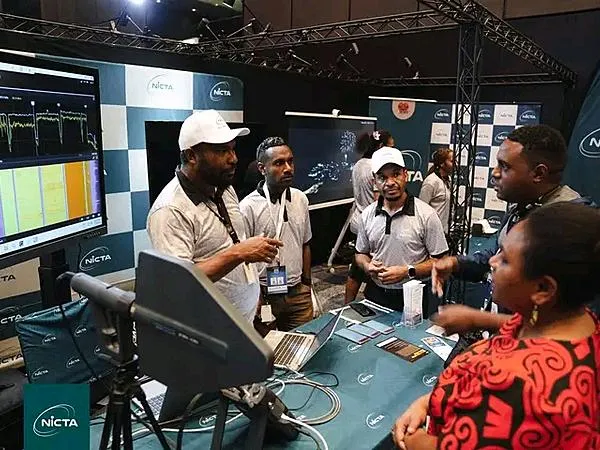
Technology companies, financial institutions, telecommunications providers, universities and government agencies are also showcasing digital products, emerging technologies and public sector innovations throughout the summit.
ICT and AI Critical to PNG's Future Economic Growth
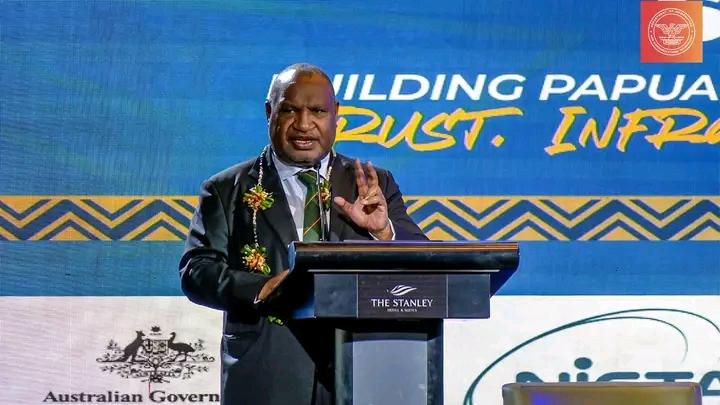
Officially opening DTS26, Prime Minister James Marape said digital technology has become one of the world's most important drivers of economic growth and national development, and that Papua New Guinea must continue investing in ICT to remain globally competitive.
He said the COVID-19 pandemic underscored the critical role digital technology plays in supporting healthcare, education, commerce, government services and communication.
"If there was any good that came out of COVID-19, it was the need and the importance of ICT as a driver of health, education, commerce, social connectivity and government work," Marape said.
Drawing on discussions at the World Economic Forum and the World Governments Summit, Marape said artificial intelligence is rapidly reshaping global economies and industries, making it essential for Papua New Guinea to prepare for the next phase of digital transformation.
He said the government is working toward making ICT a central pillar of public administration, reflecting its growing importance in improving service delivery, supporting business growth and driving long-term economic development.
Marape also highlighted significant progress in expanding digital infrastructure, revealing that broadband coverage has increased from about 40% in 2020 to around 80% in 2026 through continued investment in telecommunications networks.
He said the government is extending fiber-optic infrastructure alongside major road and infrastructure projects to improve connectivity nationwide, enabling more Papua New Guineans to access online education, healthcare, financial services, digital government platforms and business opportunities.
While greater connectivity is creating new opportunities for investment and innovation, Marape warned that increasing digitalization also brings heightened cybersecurity risks.
He said protecting government systems, businesses and citizens from cyber threats must remain a national priority as more economic and public services move online.
"The opportunities created by digital technology are enormous, but so are the risks if we fail to secure our systems and infrastructure," he said.
Marape said Papua New Guinea must continue building a trusted digital ecosystem that supports innovation while protecting businesses, public institutions and citizens from emerging cyber threats.
ICT Minister Outlines Four Pillars for Digital Economy
ICT Minister Robert Naguri, delivering his first national address since assuming the portfolio, outlined four strategic priorities that will guide Papua New Guinea's digital transformation agenda.
He said this year's summit theme, "Building Papua New Guinea's Digital Public Ecosystem on Trust, Infrastructure, Innovation and Inclusion," reflects the country's next stage of digital development.
Naguri said trust, digital infrastructure, innovation and inclusion will underpin the government's efforts to expand digital public services while creating an environment that encourages investment, technological innovation and greater private sector participation.
He said strengthening these four pillars would help improve public service delivery, expand digital access and position Papua New Guinea to compete in the rapidly evolving global digital economy.
DTS26 Expo Showcases Innovation and Regional Partnerships
Running alongside the summit at APEC Haus, the DTS26 Expo showcases emerging technologies, government digital initiatives, startup solutions and private sector innovations.
The exhibition provides businesses with opportunities to engage directly with delegates from more than 18 Pacific Island countries, alongside representatives from the International Telecommunication Union (ITU), the Asia-Pacific Telecommunity (APT), the Pacific Islands Forum (PIF) and other regional organizations, creating new opportunities for investment, technology partnerships and regional digital trade.
Throughout the three-day event, participants are attending keynote presentations, policy forums, technical workshops, innovation showcases and business exhibitions focused on artificial intelligence, cybersecurity, digital identity, digital public infrastructure and other technologies expected to shape Papua New Guinea's future digital economy.
As governments, businesses and development partners explore new opportunities for collaboration, the summit underscores Papua New Guinea's ambition to become a leading digital economy in the Pacific by expanding connectivity, embracing emerging technologies and building a trusted, inclusive and innovation-driven digital ecosystem.
Pacific Towing (PacTow) is joining the international maritime community in marking the 30th anniversary of the International Convention on Salvage 1989 entering into force—a milestone that continues to underpin marine salvage operations, environmental protection, and maritime safety around the world.
The Convention entered into force in July 1996 and established the internationally recognized legal framework for marine salvage. It reinforced the long-standing principle of "no cure, no pay," meaning professional salvors like PacTow undertake emergency response at their own financial risk and are rewarded only when their efforts are successful.
Although harbor towage is PacTow's core business, the company has successfully completed more than 100 salvage operations across Papua New Guinea and the wider Pacific, supporting shipowners, insurers, governments, and coastal communities.
PacTow General Manager Gerard Kasnari said the anniversary was an opportunity to recognize both the Convention and the people who respond when vessels are in distress.
"The Salvage Convention provides the legal foundation that enables professional salvors to respond quickly and confidently when ships need assistance," Mr. Kasnari said.
"Every successful salvage operation helps protect lives, ships and their cargoes, and the marine environment. Those outcomes are just as important today as they were 30 years ago."
PacTow is proud to be a long-standing full member of the International Salvage Union (ISU) and remains the only full ISU member in Melanesia. The ISU represents the world's leading professional salvage companies and works to promote high standards across the global salvage industry while supporting the continued development of international salvage practices.
The company is also a member of the International Spill Control Organization (ISCO), recognizing the close relationship between marine salvage and environmental protection. Salvage operations often involve managing the risk of fuel, oil, or hazardous cargo entering the marine environment, making effective spill preparedness and response an essential part of modern salvage capability.
PacTow's dedicated salvage, emergency response, and spill response capability is supported by a strategically positioned fleet operating throughout Papua New Guinea and the Solomon Islands. It also has specialized equipment and experienced personnel—including Melanesia's only commercial dive team—trained to respond rapidly to maritime incidents across the region.
Mr. Kasnari said maintaining regional emergency response capability is becoming increasingly important as shipping activity continues to grow throughout Papua New Guinea and the Pacific.
"Papua New Guinea sits on important international shipping routes and supports major resource, energy, and trade industries. Having an experienced, locally based salvage and emergency response capability is critical to keeping vessels moving safely, protecting our marine environment, and supporting confidence in regional trade."
"As PacTow approaches its 50th year of operation in 2027, we remain committed to investing in our people, equipment, and capability so that shipowners and the wider maritime community can rely on a rapid, professional response whenever it is needed."
Follow on LinkedIn:
PNG Business News
Be the "First" to get our exclusive Digital Magazine & Weekly Newsletter.