Investing in the education of your children or your organizations brightest potential future leaders is an important investment.
It gives you the edge that is vital in keeping abreast of changes and on par in a fast changing, interconnected world filled with challenges, opportunities and innovative technology that can change in an instant.
Finding the right university or college is another vital factor. A prestigious university that provides a serene, friendly and engaging setting bridled with lively tones of respect for cultural diversity, etiquette and a somewhat nerving hold of patience and service, coupled with a rich and diverse educational history.
There is one such prestigious university that has a rich history of educating and molding some of the world’s top leaders – the Asia Pacific University (APU).
I recently met a fellow Papua New Guinean, one of a few who have attended the Asia Pacific University located at Beppu City, Oita Prefecture on Kyusho Island, Japan.
Desmond Nambri and a colleague were engrossed in work, papers and documents stacked on the table near the poolside, when we met. We had missed the opportunity earlier and agreed to meet on the go.
Desmond is an APU alumni. He attended APU from August 2017 until September 2019 successfully attaining an accredited Masters in Business Administration.
He was identified and sponsored by his employer, the Department of Agriculture and Livestock (DAL) through the Cocoa and Coconut Research Institute, based at Taulo in East New Britain province.
“DAL saw me in their plans for future leadership program,” Nambri said.
He added that his experience of studying at APU in Japan had opened up many opportunities. There is a lot we can learn from Japan.
So, why Japan and why APU?
Japan is not only the world’s third largest economic center but is one of the most popular travel destinations thanks to its rich traditional and modern culture combined with beautiful landscapes. The country also prides in itself in cutting-edge technology and maintaining one of the highest safety records found anywhere in the world. It is the ideal location to earn your university degree.
Japanese culture is still relevant in modern society. During your time here, you will be able to visit famous temples and shrines of cities such as popular tourist destinations such as Kyoto and Nara.
Ritsumeikan Asia Pacific University (APU) first opened its doors in 2000 thanks to collaboration between the Ritsumeikan Trust, Oita Prefecture, and Beppu City. With an entirely new multicultural learning environment consisting of half international students and half Japanese/domestic students, APU’s aim was to provide an international education that lead to the development of global leaders, working in a diverse range of fields and industries.
In these past eighteen years, this goal has not only been reached but exceeded as APU now has over 10,000 alumni from over one hundred thirty countries and regions. Keep reading to learn more about the stories of APU alumni.
So, if you are looking for a prestigious Asian university that provides a seamless blend of modern and traditional culture, world-class cuisine, leading technology, safety, a dynamic student life and an accredited degree, you cannot go wrong with Ritsumeikan Asia Pacific University (APU).
Desmond is testament to the quality education provided at APU.
He thanked the PNG Department of Agriculture and Livestock, Cocoa Board of PNG, JICA and the Cocoa and Coconut Research Institute (CCRI) for providing him the opportunity to study in Japan.
Desmond says: ‘I hope more students can go and study in Japan, as it is more in-tune with our way of life and provides better opportunities for development.
Following is an introduction by Pacific Trade Invest’s (PTI’s) ‘Pacific Business Monitor’ survey to understand the ongoing effects of Covid-19 on the Pacific’s private sector. It is followed by a summary of the findings by PNG Business News correspondent Jason Kaut. Read to find out more, further below.
INTRODUCTION (PTI)
The COVID-19 outbreak has caused a global health emergency, and a global economic slowdown impacting millions of small and medium-sized enterprises (SMEs) around the world including the Pacific. Travel bans and restrictions on gatherings have particularly affected businesses in the Pacific, with tourism playing a major role in local economies.
Pacific Trade Invest (PTI) has commissioned Fifth Quadrant, an independent research agency, to run a fortnightly survey to understand the ongoing effects of COVID-19 on the Pacific’s private sector. The second wave of PTI’s “Pacific Business Monitor” surveys includes responses gathered from 1–7 June 2020 from 143 businesses across the Pacific Islands.
This report includes data from the top three Pacific Countries that provided responses from (Fiji, PNG and Niue), providing insights into the nuances between different Pacific countries and the effect COVID-19 is having on the private sector.
It is a long road ahead and through the fortnightly PTI Pacific Business Monitor surveys, the objective is to provide governments, donors and stakeholders with valuable data on how businesses in the Pacific are doing.
IMPACTS TO PACIFIC BUSINESSES DURING COVID-19 CRISIS: SURVEY
The level of impact COVID-19 is having on businesses is starting to decline, with fewer businesses (88%) in Survey 2 reporting a negative impact compared to 91% in Survey, though this is a very small margin and the end of the Covid-19 crisis still uncertain.
Fiji remains the most heavily affected with nearly three-quarters reporting a very negative impact.
The proportion of businesses reporting a significant decline in revenue due to COVID-19 has dropped to 66% (down from 79% in the last survey).
Meanwhile, 70% of business are confident they will survive COVID-19, but 50% don’t expect revenue to return to pre-COVID levels until 2021 or later.
Most nations are in negative unchartered waters with predictions of negative growth and recession becoming commonplace for many.
Survey 2’s 70% confidence rate includes a majority 48% who are ‘somewhat confident’ while only 22% were categorized as ‘Very confident’.
The Confidence in Business Survival after Covid-19 has however increased by five per cent – positive news all around, despite the slight increase and the challenging times under a ‘new normal’.
On the other end of the scale, 10 per cent of businesses in the Pacific are ‘Not Confident at all’’ of business survival after Covid-19.
For Papua New Guinea, 58% are confident business will survive Covid-19 crisis. Of these, 31% are very confident while 27% are skeptical. Twelve percent are not confident at all.
The Survey 2 also again looked at Business Operational Status which was categorized under four categories of Fully Operational (FO), Partly Operational (PO), Temporarily Closed )TC) and Permanently Closed (PC).
It found among Pacific businesses surveyed that 27% were FO, an increase of 1% from Survey 1 of the same businesses, while 50% were PO, a seven percent increase. TC businesses reduced from 29% in Survey 1 to 10% in Survey 2. There has been a 2% increase in businesses in the Pacific that have permanently closed doors due to Covid-19 crisis.
The Actions taken by participants to reduce cost and damage to business included the following in order of priority;
Reduced Other Operational Costs
Reduced Working hours,
Reduced Staff numbers
Reduced Staff wages
Diversified products and services
Requested Rent Relief
Pivoted the business to sell and do more online
The survey discovered that many of those surveyed pivoted their business to sell and do more online during the first wave then discovered during the second wave of surveys.
A commanding 62 percent said there are barriers preventing them from auctioning initiatives to supporting their businesses. This has risen 10% from the previous survey.
Lack of government support and stimulus has been the major barrier for PNG followed by closed borders/lockdown, lack of finance/revenue/cash flow and the last barrier cited is a lack of knowledge and skilled staff which PNG recorded a low 6%.
In line with the slightly waning negative impact on business, the proportion of businesses reporting a decline in revenue due to COVID-19 has dropped to two-thirds (down from three-quarters last wave), with Fiji remaining the most impacted of the 143 businesses surveyed across the Pacific. However, this is still a massive 90 per cent reporting a Decline in Revenue.
In Papua New Guinea, according to the survey conducted on a portion of the business community and obviously working in collaboration with local peak bodies, 62 per cent of surveyed PNG businesses have seen a massive decline in revenue while 31% saw only a slight decline.
Regionally and in PNG a massive 92 per cent of those surveyed believed Covid-19 has had a negative impact on the local economy while Confidence in Business Survival scored a respectable 70 percent across the 146 businesses surveyed in the region.
CHALLENGES AND SUPPORT NEEDED
Top 3 challenges as a result of COVID-19 remain unchanged:
» Not knowing how long the crisis will last (90%).
» Impact of closed international borders (90%).
» Poor cash flow (85%).
40% of businesses need support to access new markets (local or overseas), an increase from 35%in Survey 1.
PERSONAL IMPACTS ON BUSINESS DECISION-MAKERS
Nearly two-thirds of business decision-makers are now reporting that COVID-19 is having a negative impact on their mental health, with nearly a quarter reporting a very negative impact.
ABOUT PACIFIC TRADE INVEST
The PTI Network is an agency of the Pacific Islands Forum Secretariat and is the Pacific’s leading trade and investment promotion agency.
With offices in Australia, China and New Zealand, the PTI Network develops and promotes trade and investment across international markets.
Note:
All Respondents are Decision Makers in Small to Medium businesses across the Pacific
Responses for Survey 2, were collected 1-7 June, 2020
All surveys were completed online
Studying abroad is all exciting but can also be very expensive and concerning for parents whose children will be miles away for months on end in a foreign country.
Is this the right school for me or for my child? Is the fee within our budget and do they provide quality? Who will provide support and help settle in? What about accommodation and meals? What other options are available? And what is the total cost including health insurance and visas?
These are some of the myriad of questions faced by parents and students considering studying abroad options.
Most times they will have to enquire with different institutes, attend road shows, get conned by foreign marketing agents with no educational background or stand in long queues to get a visa. And many times they will end up paying extra and not get the best possible options that are available for their unique situation.
A ONE-STOP-SHOP
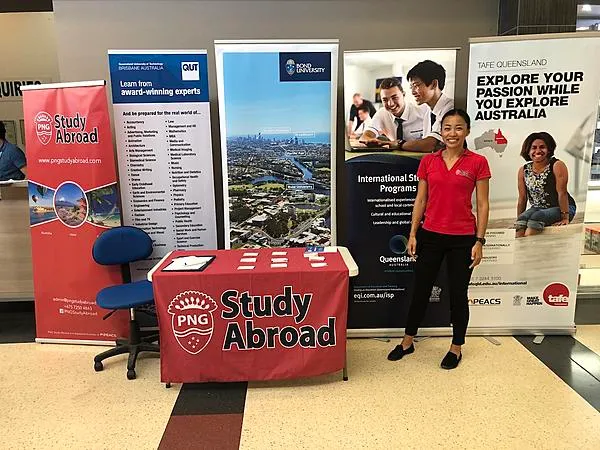
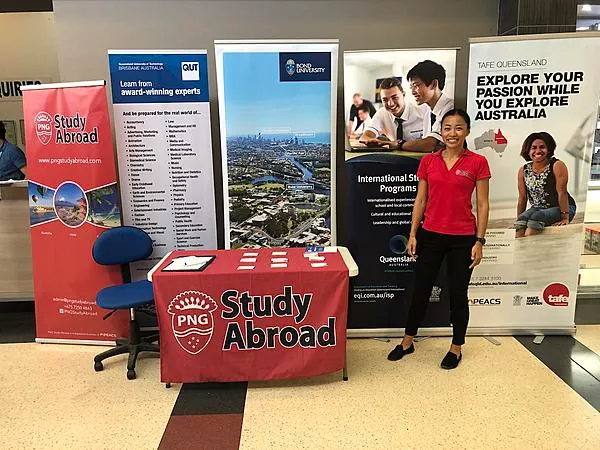
Well, that is no longer the case with the advent of PNG Study Abroad – a one-stop-shop for all your study abroad requirements, established four years ago by Mitsuki Sato, originally from Japan and now residing in PNG.
Seeing the lack of support for both students and parents looking for the best future by study abroad options, Mistuki set up what is now PNG Study Abroad, located at 5Mile in Port Moresby and has big plans for 2020 and beyond.
PNG Study Abroad provides the best possible options for parents and their children after one-on-one consultations to better understand their needs. They also provide free assessments through their website.
Many PNG students and their families have and are benefiting from the professional services of PNG Study Abroad.
“I realised that there was no support and lots of unfortunate and unsuccessful stories. I saw the need for help so decided to set up my own education agency,” she said.
She registered what was initially Pacific Education Agency Consulting Services (PEACS), now PNG Study Abroad and acquired certification as a Qualified Education Agent Counsellor (QEAC) in Australia.
“It was still a new concept in PNG being an education agent. The first three years was really hard, 4th and 5th year started picking up,” Mitsuki said.
She started with placements in Australia where globally recognised education and qualifications are offered to international students.
She actively looks for more study abroad opportunities and also got Fiji and Japan included in her Study Abroad options last year.
“It’s all about honesty and giving genuine advice to help those wanting to study abroad successfully, showing them the best options considering their individual interests and funding availability.
PNG Study Abroad does ‘one-on-one’ consultations and individual assessments on a case by case basis providing clients all the information necessary to make informed decisions.
“I show them a realistic fact and not a dream that leading them to a failure so I focus on giving the best and doing it properly,” she said.
‘It is challenging as a business, although the best moment is when I send off students overseas and they return and thank me, that is greatly rewarding...,” Mitsuki said.
From attention to detail and proper assessments procedure, she reveals that PNG Study Abroad has sent more than 50 students overseas successfully.
PLANS FOR 2020
For 2020, Study Abroad is looking at introducing a decent medical program that can be used in PNG as the medical schools in Australia and even PNG are quite expensive according to Mitsuki.
Other plans for 2020 include;
Finding more reasonable and decent quality education options outside of pacific regions ie Europe
Reaching out to people outside of Port Moresby
Discussions on involvement with private companies on Scholarship Management Services
The focus has always been to help students finding the best study options to realise their dreams and making sure that the qualification they obtained is needed in PNG.
PNG Study Abroad currently represents globally recognised education providers in Australia, Fiji and Japan as well as working closely with the government agencies to maintain its quality service and standard.
Growing up Mitsuki participated in short-term study abroad programs and also studied as an international student at TAFE Queensland and the University of the Sunshine Coast where she was later employed as an Administration Officer, experiencing and excelling in the broad area of Student Administration for seven years.
In 2013, she moved to Port Moresby and even though there was so much negative news about PNG on the international media but arriving here (in her own words) ‘I fell in love with the country’.
With PNG Study Abroad you can expect genuine assistance through one-on-one consultation to empower you to choose the best Study Abroad option for you and your family.
The Queensland University of Technology (QUT) has a proud history of engagement with Papua New Guinea and earlier this year extended a warm welcome to 26 teachers for a three-month intensive STEM education course funded through Australia Awards PNG by the Department of Foreign Affairs and Trade.
The experienced teachers – half of whom are women – all have university degrees and come from all over PNG. They will undertake the Graduate Certificate in STEM Education, which will be delivered by QUT’s highly regarded Faculty of Education lecturers. Whilst the course was originally to be delivered over two six-week blocks at QUT Kelvin Grove campus, in Brisbane, due to covid-19 restrictions the participants returned home early. However, QUT and Australia Awards Papua New Guinea are working together to continue delivery of some aspects of the program online, and ensure the teachers can continue their Australia Awards experience during this time.
Course leader Professor Dann Mallett said the course focused on recent developments in teaching STEM subjects in schools and the use of digital technologies as tools for learning.
“All participants are high school STEM teachers and this course is designed to demonstrate the technical and communication skills to design, evaluate, and implement development that will enhance their students’ learning,” Professor Mallet said.
“Each participant has submitted a STEM project they will work on and present at the end of the course."
“Projects include water treatment, converting school waste into valuable resources and ‘STEM today, entrepreneurs tomorrow’”.
QUT international projects development manager David Kozar said the Australia Awards Scholarships aimed to develop capacity and leadership skills so that recipients can contribute to development in PNG.
“The scholarships strengthen the partnership between the Australian Government and the PNG Government and further develop the skills of PNG people to make vital contributions to their country’s economic and social development.”
The course will also include several site visits to Queensland Education schools.
Australia Awards Short Course Awards offer targeted programs tailored to develop knowledge and skills, address priority human resource development needs and build partnerships and linkages between PNG and Australian organisations, in support of PNG’s development and the PNG-Australia Partnership.
IN LINE WITH THE VISION TO “TAKE BACK PNG”
Article by: Roger Kewa Avinaga
Roger Kewa Avinaga is an accomplished corporate and government executive and Board Director having worked in oil, gas, mining and energy sectors for 20 plus years. He also worked for an international organisation – The World Bank Group. He has in-depth knowledge, understanding and experience of business/commercial environment, financing, project procurement and management, economic/financial modelling, fiscal and regulatory regimes acquired through dealing with oil/mining companies, investors, banks/lenders, multilateral institutions, governments and key stakeholders in exploring new business opportunities, creating partnership, joint ventures, farm-out, project approval process and initiation to of major resource projects.
“Take Back PNG” - Petroleum Sector Perspective
A little over a year ago when the current Government took office it announced the new Government’s vision to lead the country to prosperity through undertaking some fundamental changes including taking hard line policy and legislative changes to the country’s petroleum sector. The Prime Minister said that it didn’t matter if the measures his Government take cost his job as the Prime Minister of Papua New Guinea. The Government adopted the slogan of “take back PNG” and to make Papua New Guinea become the “richest black nation” in the world. This is the bold move the Government announced since Independence. While some took this slogan as a positive vision to rescue and move the country forward others were disturbed off their comfort zone. For the Government to announce and take such a bold stand on “take back PNG” one would assume that the country is in “foreign control”. The Government could see that something is not right with the manner in which the country and its country’s resources has been managed to date. The Prime Minister had seen issues plaguing the nation despite of the fact that the country has abundant resources including oil, gas, minerals, forestry, fisheries and cash crops. The Government firmly believed that these issues will be appropriately dealt with and the country “regained” through translating and implementing the Government’s vision to “take back PNG”.
Current Structure
Taking back PNG may be interpreted from different angles. From the petroleum sector standpoint this may be defined as a vision to empower the role of the State and Papua New Guineans to fully participate through increased ownership and control of the petroleum resources development in the country. To achieve this, there must be drastic and structured changes made to the policy and legislative settings, fiscal regimes, restructuring of systems and processes, technical and compliance, among others. The country must increase ownership of the resources by ensuring the policies, laws, fiscal regimes, systems and processes are designed for fair and equitable distribution of resource benefits to every Papua New Guinean. The Government expects transparency, accountability and honesty in handling project benefits and discourages unfairness, bullying, greed, and everything that is wrong. The Government has also been very clear since taking office that it has no issues with oil companies operating in the country because the country needs them to bring clean money, technology, ideas, experience, skills and knowledge the country needs to develop the resources.
It is probably fair to state that the manner in which the country’s oil and gas resources have been exploited is influenced and dictated by the policy, legislative and fiscal regimes the country has adopted since Independence. These systems have been structured to favour the foreign companies, and not so much the resource host country. The salient features that qualify this view are;
Ownership structure – favours the oil companies on account of 77.5% equity ownership foreign companies own and 22.5% equity owned by the State.
State has a minority stake on the basis of the 22.5% equity in petroleum projects.
The industry is essentially controlled by foreign companies whereas the Government’s role is restricted to regulatory, fiscal and landowner related issues matters.
All oil and gas projects are operated by foreign oil companies.
Project benefits mostly favour foreign companies on account of more concessions/exemptions (discounts) granted to them. For example, in negotiating the PNG LNG and Papua LNG Gas Agreements the State exempted foreign companies from paying import/export taxes, Dividend Withholding Taxes, Goods and Services Tax, Tax Credit Scheme, among others.
National Content Plan – zero to very limited local participation in the construction phase such as PNG companies not taking part in engineering work. On record PNG participation during construction of the PNG LNG accounted for around 10-20%. Foreign companies dominated this area.
The State has lost control of the petroleum resources. Foreign corporations have taken ownership and control of the country’s important hydrocarbon assets. PNG’s destiny and future is at stake.
PNG inherited a system that favours foreign companies more than the State. This is why the Government has committed to making fundamental changes and tidying up of the loopholes. The key drivers relevant to the hydrocarbon sector that underpin the Government’s vision to “take back PNG” constitute the following:
A) Elevated participation in the exploitation and development of the petroleum resources,
B) Equitable distribution of benefits across all stakeholders,
C) Maximize value of the petroleum resources for lasting benefits to PNG communities,
C) Self-sufficiency in the downstream and energy supply space,
E) Improve the balance of payment and reduction of debt,
F) Promote sustainable economic growth,
G) Increased revenue generation.
Furthermore, the drivers include increased ownership and control over the country’s important resources and assets, creation of investment opportunities for PNG citizens and reduction in capital flight abroad, increasing spill over effect on sectors of the economy and improving the living standard across communities and societies in the country. These are key economic drivers that will support taking back PNG.
The government has an important role of promoting the national interest through actively facilitating policy, legislation and regulations. Without government intervention, very little will be achieved and the vision to “take back PNG” will not be achieved. Therefore, it is imperative that the Government ensures policy and legislative settings, systems and process re-defined and restructured to ensure maximum value from the resources are generated.
Petroleum is Bigger
Petroleum is bigger than we think and is crucial not to have a narrow view of this resource. The government mustn’t allow foreign companies to continue to play dominant role in the development of the resources. The State must elevate its position through increasing ownership and control of the country’s resources. The Government must be in the driver’s seat. Notice the following salient features of petroleum;
Petroleum dictates and influences the global geopolitics and equated with politics, authority and power, and has the ability to create friendship and enemy across borders and within jurisdictions,
Petroleum has the capability to dictate and influence the global economy, international business environment and movement of global trade. Notice the fluctuation of oil prices, it can either boost the global economy up or downgrade economy to a lowest point.
Petroleum can also influence a country’s economic growth. Notice too that the country’s economy plummets when oil price hits rock bottom. It takes years for oil producing country to recover and rebuild its economy.
Petroleum is characterised by high capital intensive and long lead time and long life span. Investment in oil and gas is too risky but highly profitable and pays off healthy dividend over many years to come.
Petroleum industry is highly complex and sophisticated, covering different segments along the entire value chain including upstream (exploration and development), midstream (processing and refining) and downstream (petrochemicals, retailing and marketing) and connects different players along the entire value chain including oil companies, service providers such as drilling services, catering services, security services, engineering services, financiers/lenders, multilaterals, National Government, lower level governments, NGOs, Landowners, producers, off takers, buyers, sellers, traders, lenders, and transport providers.
The Governments’ important priorities are not necessary oil companies’ priorities. Oil companies are dictated by corporate interests, profit maximisation and influenced by global factors such as price fluctuation, change in technology, niche markets and political dynamics. On the other hand, project host governments’ priorities are dictated by the need for infrastructure, social services such as health and education and development aspirations. Essentially, the priorities of the Governments and the corporate entities do not match.
The decisions that the petroleum host governments make, the policies and laws that they design and develop must consider and embrace the important features of petroleum. The Government mustn’t make decisions in isolation from these features. The petroleum industry also attracts different players along the value chain such as sellers, off takers, financiers, service providers, governments, multilateral, landowners, lower level governments, NOCs and NGOs which have myriad of interests in the extraction and development of the oil and gas resources.
Petroleum Sectoral Issues that Require Improvement
Several frontline issues directly affect the petroleum industry in Papua New Guinea. These issues need tidying up and the Marape Government has taken the initiative to take lead and resolve these issues through implementing the Government’s vision of “take back PNG”. The issues that must be the Government’s priority include;
(a) State’s Passive Role in Petroleum Project Development
The extent to which the petroleum agreements or contracts are structured and drafted for exploration, development, processing, transportation and selling of the hydrocarbon resources are influenced and dictated by the fiscal regime the country adopted at the Independence. PNG adopted Royalty/Tax System or Concessionary fiscal system where rights are issued through permits/licenses to oil companies to explore, develop, pipe, process and sell petroleum. The Government in then collects rents through royalties and taxes. However, in PNG the State has legal right to acquire up to a 22.5% interest in a petroleum project. The 77.5% interest is retained by the oil companies. The State becomes a minority stakeholder with the 22.5% interest compared to the 77.5% oil companies take. The State’s 20.5% equity interest is managed by the National Oil Company, (Kumul Petroleum Holdings) and the landowners’ 2% equity is managed by the Mineral Resources Development Company (MRDC). The NOC becomes a Joint Venture Partner in petroleum projects through accession to the JVOA (Joint Venture Operating Agreement) and other agreements but the NOC retains minority stake in the project. If a project is integrated like the PNG LNG Project, the interest split flows through from the upstream to the downstream on pro rata basis. The NOC has minority stake in a project hence, its chances of elevating to the role of an operator is quite clearly remote. The NOC is also not expected to hold a veto power or major voting power on project operational issues as it is limited by the minority stake in the project. So from ownership and control standpoint it is the foreign companies who are in the driver’s seat. On the basis of the 77.5% interests the foreign corporations hold in a project they take on the operatorship role, control the management of the projects, and they can easily become very power and influential. The State becomes a passive player in the exploitation of the hydrocarbon resources in the country.
(b) Change of Fiscal Regime
The manner in which contracts, agreements, laws, taxation terms and State participation structured by petroleum host countries is dependent on the types of fiscal regime a country may have. The main fiscal system practised by petroleum producing countries include: Royalty/Tax System, Production Sharing Contracts (PSC), Service Agreements/Contracts and Hybrid fiscal regimes. Concerns have been registered regarding the country’s fiscal regime that it turn to favour foreign investor more than the State. PNG’s Royalty/Tax system was inherited during British and Australia colonial administration. Numerous calls have also been made for PNG to switch to other fiscal systems such as the Production Sharing Contract (PSC) practised by Malaysia and Indonesia, or other fiscal systems that may benefit the State more than the Royalty/Taxation system. Switching from one fiscal system to another isn’t a mere policy and legislative changes. It is more complex. Changes to a fiscal system must be backed up with comprehensive review, assessment and comparative analysis of the fiscal regime against fiscal systems of countries within the region or of other jurisdictions. The assessment will show where PNG sits in relation to benefit distribution, and more importantly whether or not there is any logic PNG switching to another system.
In the past the Government made several attempts to review the Royalty/Tax system against other fiscal systems but none of these initiatives have been progressed further. However, the Marape Government has firmed up its position on switching from Royalty/Tax system to Production Sharing Contract. The fear is that the Government may head straight into making policy and legislative changes which is not the right approach. There must be qualifications for any changes contemplated as this will involve a major shift and overhauling of a well-established systems. Studies will demonstrate whether or not the current fiscal system can be abolished for another favourable system. This will require mobilising fiscal experts such as Van de Meurs, Wood Mackenzie, Daniel Johnstone and others. These studies must serve as prerequisite to policy and legislative changes. The best thing the Government can do is undertake a comparative analysis of the fiscal regimes to determine whether PNG is doing well or not under the Royalty/Tax regime. In the absence of such studies PNG will not know if project benefits are in its favour. On practical note, PNG may already be, on average, receiving more benefits than foreign investors under the current Royalty/Tax system, and if so there may be only minor adjustments required to the current Royalty/Tax system rather than the wholesale changes in view of switch to other fiscal system that might not work for PNG.
A comprehensive review and assessment of PNG’s fiscal regime against similar fiscal regimes is necessary before embarking on policy and legislative changes. It is very clear changing of fiscal system is on the priority list of the Government for implementation and this will be undertaken as part of the petroleum sector wide improvements. The Government re-affirmed its position to change the country’s fiscal system during the recent amendments to the Oil and Gas Act 1998.
(c) Legislative Reform
Central to the petroleum sector wide changes the Government is contemplating it has set his target of improving the country’s petroleum laws. There is general concern that the country’s laws have uncharacteristic flaws. This is why the country is missing on important project benefits derived from resources extraction such as oil, gas and minerals. Due to legal flaws and the country is also missing opportunities. Certain provisions of the law favour foreign oil companies hence, these foreign corporations have taken nearly full ownership and control of the country’s petroleum resources. Such predicament exists as result of gaps we have in the policies and laws. For example, section 165 of the Oil and Gas Act 1998 provides that the State will only take up to 22.5% equity interest in a project. This limits the State from increasing its equity position. The Government is obviously not keen on seeing the plight of the country continue in this form. The Government has set its eye on undertaking some serious corrective measures that ensure the legal flaws are appropriately addressed. Several underlying reasons underpin the Government’s determination to amend the petroleum law. The Marape Government has stuck with its commitment to amend the Oil and Gas Act. In introducing the Bill on the Floor of Parliament the Government defended its actions to amend the oil and gas laws: (a) Certain parts of the law are in conflict with the national interest, (b) The country has been missing on the resource benefits, (c) Some parts of the law are out dated and do not reflect the current trend of the industry, (d) The country does not have ownership and control over its resources. The country’s important oil and gas resources are in foreign hands through transfer of rights State grants to the companies in the form of permits and licenses. The Government has set its goal to correct the flaws in law which the Government is determined to implement it in the national interest of the country.
The petroleum resources sector is owned and controlled by foreign corporations. The petroleum industry encompassing different segments along the value chain including exploration and development, midstream (processing/refining) as well as downstream (marketing/retailing) are operated and controlled by the foreign companies. The petroleum resource owner – the State comprising the National Government, Provincial Governments, Local Level Governments, and project impacted landowners have not had meaningful participation in the resource development. The petroleum sector requires major restructuring of the systems and processes, policy, legislative, fiscal and taxation regimes. These changes will improve the State’s position in terms of ownership, control, decision making and increased participation in resource development.
The seriousness of the Government in changing the law was demonstrated in the recent amendment to the Oil and Gas Act 1998. This is the first of the series of amendments to follow. The first amendment to the Oil and Gas Act 1998 centred on two sections as outlined below;
Sections 54, 56 & 57 of the Act had allowed the applicant of a Petroleum Development License (PDL) to take the matter to the Arbitration in the event the Ministers refused to grant the license. This attracts international Arbitrators and foreign countries involvement. None of the PNG lawyers or judges will be involved in the Arbitration because the foreign judges or lawyers have no local trainings or know the cultural context of PNG. This exposes the State at high risk of involving billions of kina which the country may not afford it. The amendment to the three sections ensures that there is no longer risk to the State; and
The other set of changes relate to Sections 183, 184 & 185 which deal with Agreements. The order of the country’s legislations should be that the Act is superior to the Agreement. In other words, the Agreements are product of the Act and therefore subjected to the law. However, prior to the amendment, the Agreements have been operating as though they are above the law. This, in itself, causes conflicts. The Agreements should be merely contractual arrangements and not given same or supreme status over the Acts. The flaw in the law has now been rectified through the amendment. The Oil and Gas Act 1998 remains supreme to agreements executed under sections 183, 184 and 185 of the same Act.
The recent amendments to the Oil and Gas Act 1998 and passing of the same by Parliament copped criticisms from different sectors of the industry. The PNG Chamber of Mines and Petroleum and others in the industry circle criticised the amendment due to lack of consultation especially, with the industry. The argument concerning the amendment to the petroleum law may be subject of discussion at another time but from the Government’s commitment standpoint, the Government has in fact achieved its commitment to change the law.
(d) Negotiating Gas Agreements
Having negotiated the first and second LNG Gas Agreements the next major gas development is P’nyang. Experience of the first and second LNG projects has been seen as lost opportunity and giving away concessions to filthy rich oil companies. The experience from the PNG LNG would have provided sufficient lessons in order to negotiate better terms in Papua LNG. That did not happen. The experience in negotiating Papua LNG Project Agreement did not improve from the first LNG Project. The expectation of negotiating better terms in Papua LNG failed.
The negotiations of the first and second LNG Projects generated more dissatisfaction among the State parties especially, regarding the manner in which the gas agreements were negotiated. Immediately following the formation, the Government re-negotiated the Papua LNG Gas Agreement but only with slight improvement. The four points the State team negotiated include National Content Plan, Third Party Access, LNG Shipping and commitment by the oil companies to inject additional foreign currency into the country. The re-negotiated terms were contained in a letter which stated that the four points would be negotiated. It appears that this may not be the final negotiated position meaning that the parties may negotiate again.
The thing about both gas agreements is that they have been negotiated, signed off and so they are essentially done deals. These agreements cannot be unwinded. The agreements are legally binding and the parties have been locked in to the agreed terms. The PNG LNG project is six years into production. These agreements were “poorly” negotiated on the part of the State. However, on positive note these experiences should enable the State to improve on negotiating P’nyang Gas Agreement and future gas agreements. Future agreements should be handled differently from the experiences of the first and second gas agreements if the State wishes to see a better outcome.
The important question is how can the State improve on the next gas agreement negotiations? The Government has taken a positive step in addressing the legal flaws. In the recent amendment to the Oil and Gas Act the Government has amended sections 183, 184 and 185 which deals with the agreements. The issue State had prior to the amendment had been that the agreements were superior to the Act, when it supposed to be subjected to the law. The agreements became powerful and dictated the same law that provisioned its existence. The recent amendment now ensures that Oil and Gas Act sits above the agreement and that is the right order.
On account of the previous gas agreements concerns have been raised regarding the representations by the negotiators whether or not they have genuinely represented the State as the agreed terms fell below the expectations of the State. It is not known if the outcome of the agreements exposes the weakness in the negotiation techniques, the negotiating team and whether or not there have been clear directions from the Government as to what it really wants out of the negotiations. Past agreements have been “hijacked” or “dictated” by a handful including advisors thereby subjecting the agreements to abuse of processes and systems and ending up with the agreements that fail to serve the interests of the State.
The repeat of the same is not expected by the Government in negotiating the P’nyang Gas Agreement. P’nyang is the only single largest gas volume of 4.2 tcf yet to be negotiated. Other discovered gas fields have less than 1 tcf and as low as below 100 bcf. The negotiators of P’nyang gas must ensure superior terms are achieved. The Government has stepped up when it tabled superior terms for negotiating P’nyang gas agreement. This made the project participants led by ExxonMobil reject the terms proposed by the State. The project participants argued that they did not stand the chance of generating sufficient benefits from investment on the basis of the terms proposed by the State. The State was never going to back down having given away more concessions to the companies on two major LNG projects. The State has lived with the bitterness of missed opportunities and giving away unqualified concessions but on this occasion, it had to step up with superior terms.
The negotiation on P’nyang Gas Agreement has been deferred due to the COVID-19 pandemic but will resume anytime. The State team should stand by its proposed terms and negotiate it through with the project participants. If the negotiators achieve a superior outcomes this will be a positive achievement for the country. Having the right negotiation team, negotiation skills and in-depth industry knowledge are some of the key drivers the negotiators should possess to negotiate superior terms.
The State may further improve its position by delaying the negotiation on P’nyang gas development until the policy and legislative framework is tidied up. There are several outstanding matters the Government can sort out first including changes to the Oil and Gas Act and finalisation of the Gas Template Agreement. The recent legislative amendments are an encouraging start. While further changes are made to the law the Government should focus on getting the Template Gas Agreement approved as this will serve as a model gas agreement for negotiating future gas agreements rather than reinventing a new gas agreement for every project that has been proposed for development. Further work is also required in developing the gas policies. The Government approved in principle three gas policies but further work is required in finalising them. Completing the outstanding tasks will enable the State to consolidate and strengthen its position in negotiating future gas agreements and ultimately achieve better outcomes. The State looks vulnerable without the policy and legislative framework in place. The delay in P’nyang gas agreement negotiation may be a blessing in disguise for the State to regroup and consolidate its position for tough negotiation with the project participants.
(e) Further Areas for Improvement
For a developing country like PNG its prosperity rely on foreign investment. Changes to policy and legislations should also consider the important roles played by the foreign companies in developing the resources sector. The foreign companies have the knowledge, experience, financial and technical resources that PNG as a growing nation surely requires to develop its oil, gas, minerals and other resources in the country. Further sectoral changes are required on the following fronts:
(i) Institutional Restoration and Strengthening
The Department of Petroleum and Energy is duly legislated institution of the Government responsible for the country’s hydrocarbon and energy. The Department’s role is to encourage exploration and development of the country’s petroleum and energy resources for the benefit of the country. Nevertheless, the Department has not lived up to its expectations in discharging the policy, regulatory and legislative roles due to lack of leadership and government support, high staff attrition and loss of motivation. Over time the important institution has disintegrated and lost credibility, lack impetus, drive and focus to promote and regulate the industry. The Department has lost leadership and direction in providing technical advice to the Government especially, during negotiating agreements. The department needs to be strengthened to effectively and efficiently fulfil its role through undertaking the following actions:
A) Improve manpower planning and management in the Department,
B) Restore confidence and motivation in the staff,
C) Provide daily administration of the Department including budget management,
D) Provide leadership and direction for the Department to actively lead in formulating policies, legislation and regulation,
E) Strengthen the technical leadership role of the Department,
F) Improve license processing and administration,
G) Positive impact on landowner and lower level government relations.
(ii) Petroleum Sector Improvement
The progression of this country depends on who is in control and how well the State manages its resources. Up to this point, the petroleum industry has virtually been controlled and dominated by external players. In spite of the industry been the source of infrastructure development, revenue generation, creation of employment opportunities and economic growth the exploitation of the petroleum has been dictated by external parties. Driven by their corporate objectives, profit maximisation, and external factors such as niche market or narrow window of opportunity oil companies set time lines and project schedules when projects get developed. When opportunities are presented to better leverage State’s position those entrusted to negotiate better outcomes end up conceding to foreign companies’ agenda and compromise the State’s position. The Government must undertake sector wide restructuring of the systems and processes, policies, laws, fiscal, licensing systems and compliance administration to the extent that the country is in control of its destiny to economic growth, prosperity and independence.
The Marape Government has clearly set its bearing on improving the petroleum sector in the country. The petroleum industry is highly complex and sophisticated. The sector encompasses different segments from the upstream to midstream and to downstream. Along these value chains, different policies are required to be developed and ensure the gas resources are developed for the benefit of the country and the stakeholders. There is no secret that the State wants more benefits from its resource extraction. But it has also set its bearing on improving ownership, control and active participation in the development of the country’s hydrocarbon resources.
Consider the entire segments of the petroleum industry. There is a general feeling that the country’s petroleum industry is essentially controlled by the foreign companies from exploration and development, the midstream including processing/refining, marketing and retailing as well as pipeline infrastructure. The petroleum resources owner, the State has been pushed to the periphery. The State ends up being a minority stakeholder with the 22.5% interest it has in petroleum projects. Compare that with the 77.5% interest owned by the foreign companies State’s ownership of the project is four times less than the foreign companies’. The State has no control, no operatorship status and no involvement in project decisions. The role of the State is restricted to regulatory, legislative and policy role and obviously cannot play commercial and technical role. For this reason, it has created a NOC to assume the commercial role but the State owned entity cannot become an influential player because it carries a minority stake in the project. Increased participation in the resources sectors require some restructuring and overhauling of the systems and processes, policy, legislations, fiscal and taxation changes in order that the State’s expectations are met. One way would be to empower its entities with clearly defined ownership structure and control so that the country will meaningfully participate in the resources development.
The Government is also adamant of improving the State’s position on certain issues some of which include;
National Content Plan –improved and greater participation in the construction phase such as PNG companies taking part in certain engineering work.
Domestic Market Obligation – clear policy on DMO gas including increasing the DMO gas from the recently agreed 5% DMO in the Papua LNG Project to up to 15% DMO.
Third Party Access – the TPA policies to allow future producers and buyers to access infrastructure with reasonable tariff arrangements.
Other specific issues that require tidying up include increased State equity participation, sunk cost and financing through carry arrangement. These have been the impediments to State playing increased role.
Conclusion
It is important to point out that the real issues impacting the petroleum sector has been identified and discussed. Institutional restoration and strengthening is required as well as policy, legislative and regulatory changes. Also, the technical role of the Department needs to be improved and it can do so on the basis of instilling leadership, direction, motivation and confidence to the Department. Further, serious issues plague the industry especially, from the State playing dominant role in the development of its important resources. At present, the State has no control on how the petroleum resources are exploited by the foreign companies. The State is restricted to regulatory and policy role but in case where it participates in oil and gas projects it is restricted to a minority stake. As noted, even in cases where the State’s NOC participates in petroleum projects the NOC holds minority stake and therefore cannot play a dominant role.
This format of managing the country’s important non-renewable assets must change. The petroleum resources are owned by the State and it should rightly take control of its resources. That is why critical changes are needed in the way the nation’s oil and gas resources have been exploited and developed to date. The Government’s vision of taking back PNG makes sense.
Through embarking critical and important changes to policy setting, legislative framework and fiscal regimes, the State’s position will be elevated to taking control of the resources, driving economic growth and development aspiration. Given the current circumstance, the country cannot aspire to develop as a nation. After 45 years of Independence foreigners have dominated and controlled the petroleum industry. The changes proposed by the Government must seek to elevate the role of the State in the decision making and participation, exploitation and development of the hydrocarbon resources. It is time to re-think and re-shape the country’s destiny and the Government must take control of the country’s destiny.
Further, it has to be pointed out here that whilst the Government is driving ”take back PNG” it should also be mindful of the fact that a system is as good as its people. The composition of the Boards and appointment of management team on to SOEs and Government Departments must be merit based and people who put the people’s and the country’s interests above theirs. The Government can make changes to the policies, laws, fiscal systems and processes and structures but it will be the people who will drive these changes. Having the right minded people, zero greed driven and those that aspire to take back PNG must be appointed.
As the country move forward, it will be important to develop the country’s petroleum resources in a way that ensures all citizens benefit from the resources development. Drastic changes will ensure PNG participates directly in the benefits emanating from development of the nation’s oil and gas resources. This can be meaningfully achieved, if the Government is focused on “take back PNG”.
When we focus on growing or developing an industry, we must also ensure that the same attention is given to investing in research says Minister for Agriculture and Livestock and Member for Maprik John Simon.
Minister Simon spoke these words in the presence of heads of the Kokonas Indasri Koporesian while paying an official visit to the organization’s Stuart Research Station located in Murunas, Madang province.
The research station was established under the PNG Cocoa and Coconut Research Institute to conduct breeding and evaluation studies as well as agronomy and entomology research.
According to studies, Copra is the fourth most significant agriculture cash crop of PNG. An estimated 2.6 million people are engaged in coconut activities in PNG to either generate income and / or as food to supplement their livelihoods.
The Minister for Agriculture arrived in Madang last week as part of his office’s focus on visiting all major projects and programs under DAL to see for himself the status of the programs and projects.
Minister Simon said research institutes are very important as they will ensure the smooth operation in terms of development and growth of an industry.
He said I decided to carry out these sort of visits to get straight to the core of many issues being faced in this great industry; There are many issues such as why are plantation’s being run down, why are there no growth and development in crops when PNG is rich and surrounded by them.
He noted that in 2011 it was established that Copra and coconut prices were going downhill; what are we doing about that, something is missing along the line there is continuity in the industry, crop production needs to be increasing and this is where research and science comes in.
The Minister noted that he appreciated what KIK is doing and one of the pathways is to go downstream that will add value to the industry, one pathway is also to go into cottage industry.
He said he is happy with how the station at Murunas is being run and it is much better looked after than other station he has visited in the country.
“These are the institutions that are run by the state adding the at the Prime minister says there is money in the industry, we need to be able to raise money for ourselves; and one way of doing this is through researching the best pathways to commercialize each commodity” he said.
He said my office is ready to support any development in the industry as long as each industry is willing to develop and grow the crops under their responsibilities.
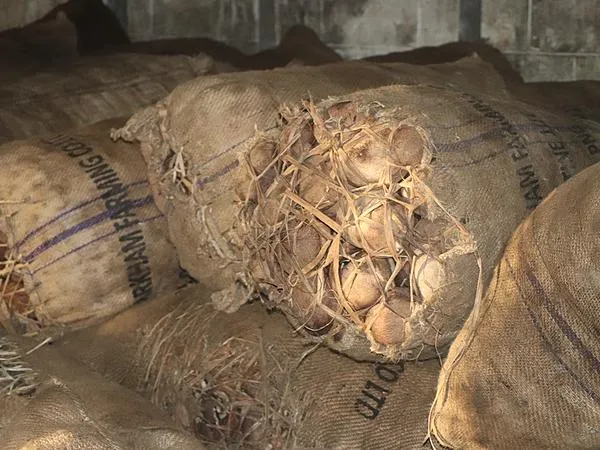
The research center has also gone into integrated crop farming where various different crops are now being observed and tested to integrate with coconut trees; this also includes pineapples and vanilla plants.
In terms of commercialization – there are currently 16 Small to Medium Enterprises engaging in the Coconut Industry with the aid of KIK.
Meantime, copra farmers in Mirap in Sumgibar LLG, Sumkar district who are currently experiencing support from the local Member’s office with a K200 000.00 subsidization of cash crop prices.
Minister Simon said DAL will wholly support this move by the local MP and Minister for Sumkar and will ensure that the people are a major beneficiary in this initiative.
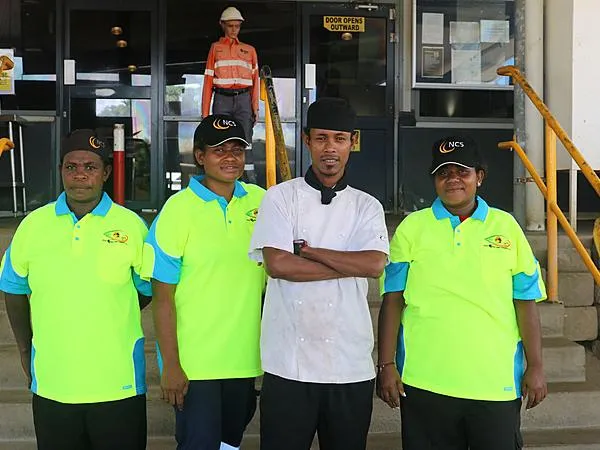
Island Chef winner - Chef Mena & team
What do you get when you cross hit TV shows ‘Master Chef’ and ‘Survivor’ with a good dose of PNG creativity and humor on a tiny gold mining island cut off from the rest of the world in the midst of a pandemic? Why, ‘Island Chef’ of course!
‘Island Chef’ is the brainchild of PNG catering and camp management company, NCS. It was in direct response to COVID-19 and provided some light relief and entertainment to thousands of workers stuck on the remote island of Lihir. It showcased the best of PNG resilience as well as the skills and culinary expertise of NCS’s catering team.
Eleven teams of four, expertly lead by a professionally trained chef battled it out to be crowned ‘Island Chef 2020’. Some amazing dishes were served over the competition, until only two teams remained – Chef Mena and Chef Leonard. The two teams battled it out to serve a three course dinner to VIPs on Lihir Island. The competition was fierce and, in the end, only a few points separated the teams.
CHEF MENA AND HIS TEAM WERE CROWNED THE WINNERS!!
Word is that his main course could rival similar dishes at Michelin star restaurants worldwide! Congratulations must also go to Chef Leonard and his team who put up an amazing fight and produced dishes that they can be proud of.
Patrick Doekes, CEO of NCS’ parent company, Anitua, was relieved to see so much enthusiasm for Island Chef. “COVID-19 and its associated travel bans has meant that just about all of us are well and truly stuck on Lihir and away from our loved ones for a long and indefinite period of time. It’s a really tough position for everyone and we’ve been worried about how it will impact people’s health.” He says that Island Chef has “most definitely lightened the mood”
Video footage and images of the teams who competed in ‘Island Chef 2020’ can be viewed on Facebook (@islandchefpng). Some great videos were produced, showcasing the amazing talents of the teams who competed, so go ahead and check them out.
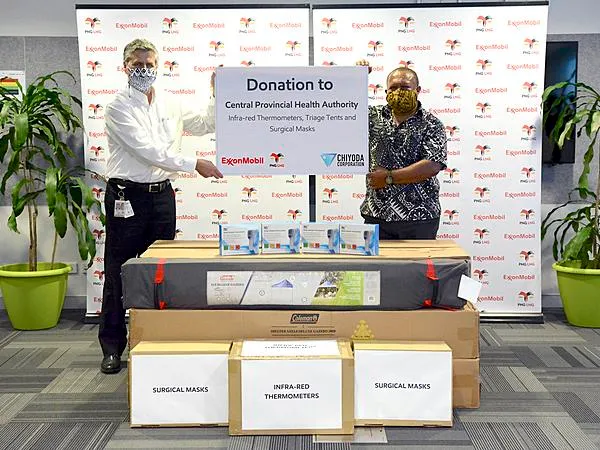
ExxonMobil PNG as operator of PNG LNG, together with Chiyoda Oceania Pty Ltd, have supported the Central Province Health Authorities (CPHA) long-term healthcare preparedness efforts with a donation of triage tents, infra-red thermometers and surgical masks.
In response to COVID-19, CPHA is looking at ways to bolster their healthcare services by ensuring workers have access to vital equipment needed to respond to any health situation.
Keith Killian, Executive Director of ExxonMobil PNG, thanked the CPHA for the work they are undertaking to safeguard the health of its communities for the long-term from threats such as COVID-19.
“During these unprecedented times, it is essential that we stand together to prevent the spread of COVID-19 and focus on actions that protect us all.”
“Healthcare preparedness requires ongoing community education on the benefits of practicing good hygiene and physical distancing, and enables healthcare workers to better position themselves to respond to current and ongoing health challenges in PNG,” Mr. Killian said.
The donation of triage equipment will support healthcare workers in the screening and treating of medical conditions, including COVID-19.
Dr. James Amini, Chief Executive Officer at CPHA, said this donation will ensure there are no disruptions to day-to-day medical services.
“Local hospitals are located right in the middle of communities and the COVID-19 pandemic has raised concerns around screening methods.”
“These new triage tents will not only provide a separate area where frontline officers can isolate patients, but give us peace of mind that we are now better prepared to respond to future medical emergencies,” Dr. Amini said.
The handover ceremony was also attended by Ulato Avei, the LNGP Gas Resources Director, and Hon. Robert Agarobe, the Central Province Governor.
Hon. Robert Agarobe thanked ExxonMobil and acknowledged the leadership role the company has taken in setting an example for following recommended health guidance.
“It's very challenging for us as a government to try to change the mentality and the habits of our people, who are used to the freedom that they have always had. Trying to put restrictions on the freedom they have enjoyed is a big task.”
“It is all about people seeing what others are doing, seeing is believing, and with big organisations like ExxonMobil taking the lead, it sets an example,” Hon. Agarobe said.
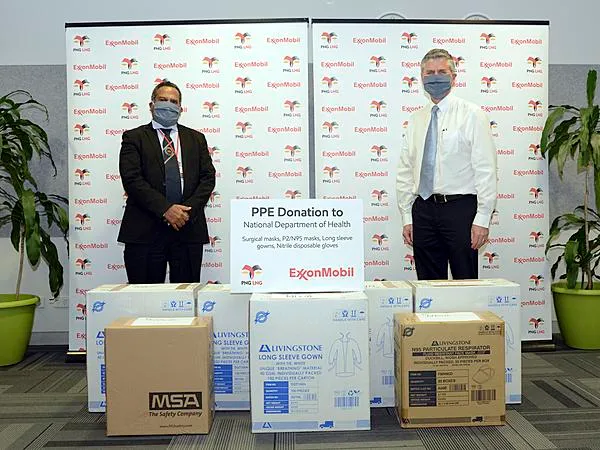
ExxonMobil PNG is committed to supporting PNG health initiatives, including COVID-19 preparedness, by partnering with provincial health authorities and the National Department of Health to deliver awareness campaigns and donations of personal protective equipment, medical equipment and office supplies.
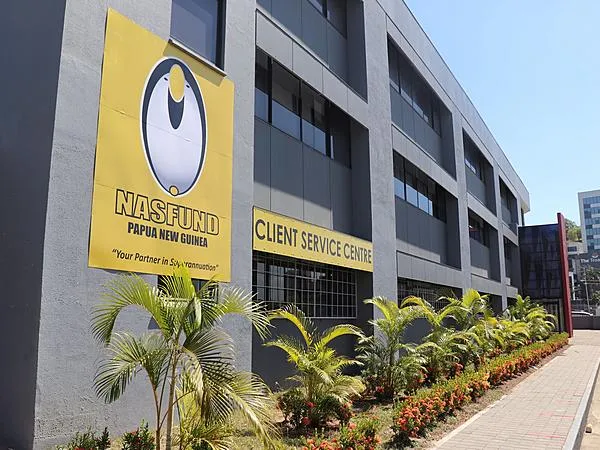
In line with improving accessibility and services to its members, Papua New Guinea’s largest superannuation provider, NASFUND, today opened its third Client Service Centre in Waigani, Port Moresby.
Port Moresby & Central Province host over 60% of NASFUND’s membership base.
Located at Lakatoi Haus, this Centre provides easy access for members in Waigani – which includes our members in the Finance & Banking, Manufacturing & Construction, Tourism & Hospitality, Retail, and MSME sectors.
Commenting on its opening, NASFUND CEO Ian Tarutia says it is a welcome addition, as the fund ramps up its services, especially during the COVID-19 State of Emergency, and more so with the fund preparing to process COVID-19 relief payments once necessary approval is given by Parliament.
“We welcome the Waigani Service Centre to the NASFUND branch network throughout the country.
Situated here at Lakatoi Haus, in the heart of Waigani, it is an important addition to our branch network, as NCD accounts for 60% of the Fund’s total membership – a good number of whom work within this busy area.
We are confident that our membership within the Waigani precinct will take ownership of this Service Centre, and utilize the services offered here.
The opening of this centre is part of a few new developments for our members, which we will be rolling out in the next few months. This includes a larger services centre at this very location, which will be completed by early next year.
This demonstrates our commitment to ensuring that we are here to serve you – no matter who you are, where you are.
Whilst the COVID-19 SOE is still in place, it is important that as the largest superannuation fund by membership size, we have taken extra precautions, to protect the health and safety of our members. This includes social distancing protocols, and temperature testing, which will be carried out here at this new facility.
Whilst we open this Service Centre, we also encourage our members to utilize our electronic services, which includes the Member Online Portal , the Mobile phone App, or Mobile SMS facilities.
These electronic options are aimed at providing the services needed by members, at their fingertips, without the need to physically walk into our branches, which is also a safer option.”
NASFUND, is pleased to announce the appointment of Anne Wilson to the role of Chief Officer Member Services (COMS).
Anne is no stranger to the Superannuation Industry. Since July 2017 she was Head of Superannuation Services at the Aon Master Trust, another Approved Superannuation Fund in PNG. Prior to this, she was head of the AonHewitt Fund Administration, who were NASFUND Fund Administrators from May 2002 until June 2017.
Anne brings a wealth of Fund Admin and leadership experience to NASFUND which aligns with the Board’s strategic objective of enhancing our outsourced Fund Administration relationship.
In accepting this appointment Anne shares our vision of being a world class superannuation fund and understands the journey we have to take to get there.
CEO Ian Tarutia said “I am even more pleased that Ms. Anne Wilson joins Ms. Seema Dass-Raju our Chief Risk & Compliance Officer as the second female to be a part of NASFUND’s EXCOM Team. Her qualifications, experience and skill sets as well as her extensive experience at Aon, as a Fund Administrator including, an intimate understanding of BPNG regulatory requirements makes Anne a solid leader of the Member Services Division.
Anne holds a Master of Business Administration from the University of Papua New Guinea, a Bachelors Degree in Business from Southern Cross University, Australia (Affiliated to IBS) and a Diploma in Accounting from University of Technology, Lae.
We look forward to her contributions in improving services to our membership nationwide.
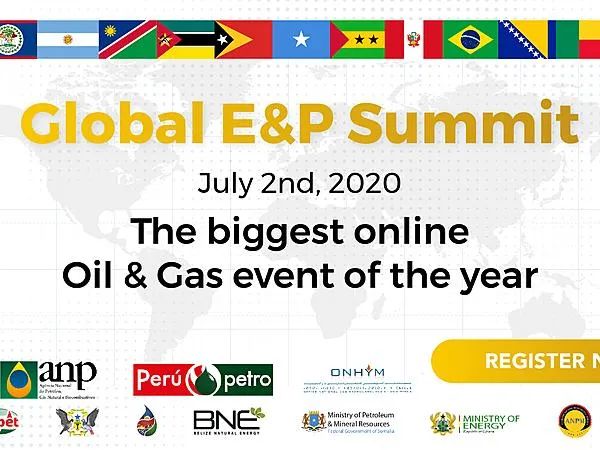
IN-VR is organising the Global E&P Summit on July 2nd, taking place completely online. For the first time ever, 16 national oil & gas ministries, regulators and NOCs are gathering online to promote their available E&P global opportunities to IOCs and service providers from all over the world.
The biggest online E&P event of the year
Meet with hundreds of IOCs and service providers at the biggest online oil & gas event to ever take place. Book private meetings, network, and find the latest news on Licensing Rounds, discoveries, and tech updates.
Listen to presentations from Brazil, Namibia, Timor-Leste, Ghana, Morocco, Peru, Argentina, Benin and many more authorities on the same stage for the first time. The countries will discuss their success, challenges and new opportunities after COVID-19.
Promote your company to IOCs and service providers from all over the world looking to prospect and expand their business.
Who is presenting at the Global E&P Online Summit?
ANP, Brazil
Ministry of Energy, Ghana
Ministry of Mines and Energy, Namibia
Ministry of Petroleum and Mineral Resources, Somalia
Gabon Oil, Gabon
ONHYM, Morocco
Perupetro, Peru
ANPM, Timor-Leste
CUPET, Cuba
SOBEH, Benin
Ministry of Energy, Sao Tome and Principe
and many more, soon to be announced!
Three stages, more than 60 topics
With hundreds of VIPs, officials from 16 countries, and 12 hours of non-stop streaming, you will have the option to choose the session you are most interested in watching and participate in it, before having private meetings. All three stages will be hosting sessions with different topics, discussions, Q&As and presentations on: onshore and offshore available acreage, upcoming Licensing Rounds in 2021, latest E&P technology advances, farm-in opportunities and many more.
For further information please visit:
https://www.in-vr.co/global-ep
Or contact: felix@in-vr.co
NCS Chef, Helen Marum has worked at NCS for over 13 years and is hoping to be crowned “Island Chef 2020”
‘Island Chef’ is the brain child of PNG catering and camp management company, NCS. It is in direct response to COVID-19 and is providing some light relief and entertainment to thousands of workers stuck on the remote island of Lihir. It showcases the best of PNG resilience as well as the skills and culinary expertise of NCS’s catering team.
How It Works
Eleven teams of four, expertly lead by a professionally trained chef will battle it out to be crowned ‘Island Chef 2020’
Teams will cook a mix of their own signature dishes and create new dishes from mystery boxes of ingredients
Three judges will score teams on presentation, taste and technique
Diners at Lihir’s main mess facility where the competition will take place will also be involved in scoring the teams’ dishes
Elimination rounds will be held over four weeks with two teams eliminated each week
Dish choices for the grand finale will be decided by the “2020 Island Chef Competition” executive team members consisting of; Anitua Group CEO, Patrick Doekes, NCS site project manager, William Gracie, purchasing and logistics operations manager, Antony Hebron and site services manager, Steve Honey.
The final round will see the last two surviving teams go ‘head to head’ in a cook off challenge within a two hour timing as they compete for the glory of being crowned ‘Island Chef 2020’.
“Island Chef is a great distraction” says NCS Chef, Philip Wandi from New Ireland Province “We have all been worried about the Corona Virus but now we’ve got something fun to think about and fun to do. Plus, I’m looking forward to competing against the other NCS chefs. We come from all over the country and can be very competitive when it comes to our cooking.”
Patrick Doekes, CEO of NCS’ parent company, Anitua is relieved to see so much enthusiasm for Island Chef. “COVID-19 and its associated travel bans has meant that just about all of us are well and truly stuck on Lihir and away from our loved ones for a long and indefinite period of time. It’s a really tough position for everyone and we’ve been worried about how it will impact people’s health.” He says that Island Chef has “most definitely lightened the mood and given us something to look forward to.”
‘Island Chef’ can be viewed on Facebook (Island Chef Competition 2020), “We’re expecting to have a lot of likes” enthuses Doekes. “Not only is just about everyone in PNG on Facebook but tens of thousands of people have lived or worked on Lihir since the mine started. And I don’t just mean Papua New Guineans, there’s a huge international community of ex-workers and residents, especially Australians, who’ll be interested in Island Chef.”
The Anitua Group of Companies (including its catering and camp management business, NCS) is a 100 percent Lihirian owned company that was established in 1989 to provide landowners a means to participate in the Lihir Gold project. Today the Anitua Group is one of PNG’s largest single suppliers of goods and services to a broad range of industries. To learn more about Anitua: www.anitua.com.pg.
For More Information & Interview Requests
Dr Linda Van Leeuwen Savii Solutions linda@saviisolutions.com.au
+61 407994 890
Patrick Doekes CEO Anitua Group patrick.doekes@anitua.com.pg
+675 73221868
Video footage: https://youtu.be/aUV_J--JJ7M
or Facebook https://www.facebook.com/Island-Chef-Competition-2020-101091488262364/
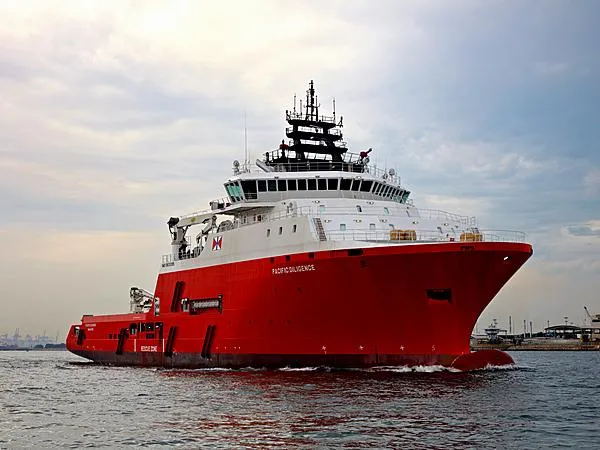
World class training on Swire Pacific Offshore vessels is providing Pacific Towing’s Melanesian mariners with professional development opportunities of a lifetime. Moreover, a partnership with Swire Emergency Response is enabling a world class oil spill response service in the region.
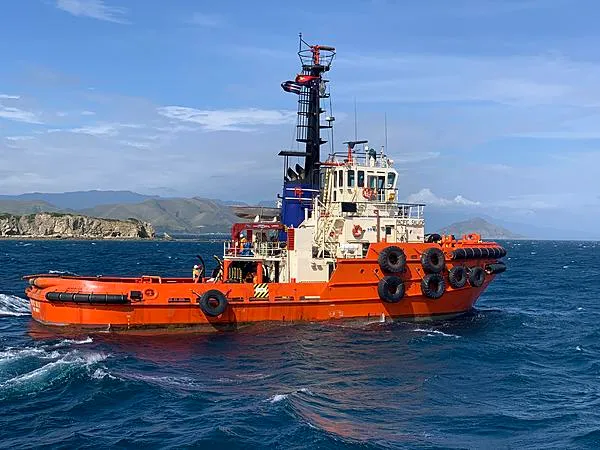
Swire Pacific Offshore (SPO) and Pacific Towing (PacTow) are both part of the international and diversified Swire Group. Whereas SPO is a globally recognised shipping brand, ‘little sister’ PacTow has a more modest profile as Melanesia’s marine services market leader.
Headquartered in Papua New Guinea (PNG) with additional businesses in Fiji and Solomon Islands, PacTow is steadily increasing its geographic footprint in Oceania and South East Asia.
The company’s core services include towage, moorage, salvage, commercial diving, life rafts, customised project solutions, and most recently, in-water hull cleaning.
Training Partnership
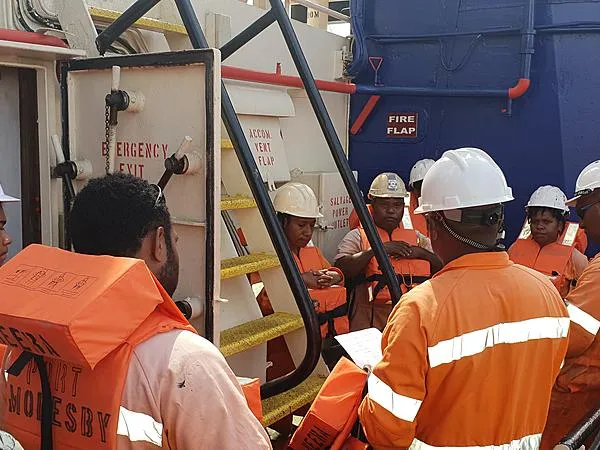
SPO commenced training PacTow cadets at the beginning of 2017. The cadets experience four-month intensive training modules on a diversity of SPO vessels such as Anchor Handling Tug Supply (AHTS) vessels and Platform Supply Vessels (PSV) all around the world (e.g., Denmark, Japan, Hong Kong, Scotland, Singapore, Taiwan, and Vietnam). PacTow General Manager Neil Papenfus calls the training both “top end” and “invaluable”.
Papenfus describes SPO as a “highly respected global entity with excellent systems” as evidenced by it winning the ‘Excellence in Offshore Support Award’ at the 2019 Lloyd’s List Asia Pacific Awards held in Singapore. (The award recognises maritime businesses that have demonstrated excellence in supporting the offshore energy industry.)
Without the training provided by SPO, Papenfus concedes that PacTow cadets would be unable to experience working on some of the world’s most sophisticated vessels and in several of its busiest waterways. “SPO’s best practice training on their vessels teaches our cadets how to do things the right way to the highest international standards and they then bring this professionalism back to Melanesia,” explains Papenfus.
Officer of the Watch training for both Deck and Engine cadets is provided by SPO. A considerable training component encompasses safety at sea, including Oil and Gas specific safety training. SPO has established Oil and Gas safety standards, systems and training programs. Oil and gas safety training is critical to PacTow mariners given PNG’s sizeable LNG industry and the company’s plans to further grow its oil and gas market share.
“SPO has considerable experience in training cadets of diverse nationalities and we are pleased to assist in the training of the next generation of Officers for PacTow. We have been in the industry for more than 40 years and are known as a trusted and reliable service provider. As a market leader, we believe in sharing our expertise and knowledge in safety and operational excellence with industry partners and local communities where we operate. Through our training programmes, we hope to do our part to elevate the safety and operational standards of seafarers in the wider maritime industry,” says Peter Langslow, Managing Director, SPO.
SPO invests in statutory and discretionary training for its sea-going employees to ensure that consistently high standards of safety and operational excellence are maintained across its diverse fleet. SPO’s flagship training centre, the Swire Marine Training Centre (SMTC) in Singapore is a Nautical Institute (NI) approved training facility equipped with state-of-the-art training facilities. Structured training programmes are regularly held for seagoing employees. In 2017, SPO made these facilities and courses accessible to industry partners so that they may benefit the larger community of seafarers and collectively raise standards of seafarers in the industry.
Oil Spill Response Partnership
Swire Emergency Response (SER), a wholly owned subsidiary of SPO, has substantial expertise in oil spill response. In 2018 the SPO-PacTow relationship evolved beyond cadet training to include an oil spill response partnership with SER. This partnership involves SER storing its oil spill response equipment (e.g., booms, skimmers, pollutant recovery and storage pods) on PacTow premises in PNG for ease and speed of deployment. Furthermore, SER provides oil spill response training to PacTow mariners so that staff from both companies can provide the service, at times collaboratively, such as the 2019 wreck retrieval of the Southern Phoenix container ship off Fiji.
SER Manager, Simon Valentine, says that “pre-positioning equipment with PacTow and training their personnel in its use and in general oil spill response procedures, substantially increases SER’s capability in the region, allowing us to respond for our joint clients in a timely manner, which is the key to all successful oil spill response incidents.”
Papenfus adds that “the SER-PacTow oil response partnership enables the delivery of an international standard service with in-country infrastructure at a domestic price.” In other words, a world class oil response at an extremely reasonable local rate.
In addition to SER providing oil spill response training to PacTow, the company also trains PacTow clients such as Puma. PacTow and SER work together to regularly conduct training drills and exercises for Puma personnel throughout the year. Oil spill prevention services and equipment are provided to Puma whenever one of its vessels discharges in Port Moresby’s Fairfax Harbour.
Future Partnership
SPO, SER and PacTow are exploring other ways in which they may work together. Currently there are plans on the table to introduce an Emergency Management training program to PNG’s maritime sector. Such a program would utilise SPO and SER world class systems and training protocols with PacTow playing a support role. Valentine acknowledges that a benefit of “additional training courses, such as the Emergency management training course, will be a raised SER profile for existing and new clients in the region.”
There are other future shared service provision options for the companies to explore. Given the extensive oil and gas capabilities and experience of SPO and SER, PacTow’s desire to increase its oil and gas market share, and a history of working together with energy clients (e.g., oil spill response services for Puma, as well as PacTow having supported SPO move rigs in PNG waters) it is likely that PNG’s burgeoning oil and gas sector will be a foreseeable target for expanding their partnership.
To learn more about Pacific Towing: www.pacifictowingmarineservices.com.
Pacific Towing reached an important safety milestone on 14 May, having achieved 4 Years Lost Time Injury (LTI) Free. The marine services provider attributes its safety success to an ongoing and considerable investment in high quality training and rigorous safety management systems and processes.
A Lost Time Injury (LTI) is an injury sustained by an employee that results in a loss of productive work time. An injury is considered an LTI only when the injured worker is unable to perform regular job duties, takes time off for recovery, or is assigned modified work duties while recovering.
Pacific Towing’s Safety Manager, Richard Hayka, says that “LTI’s are a commonly reported safety statistic and they provide an indication of how well an employer is tracking when it comes to providing a safe workplace. If a company has a lot of LTI’s then there is definitely something going very wrong when it comes to their safety management systems and processes.” The reporting of LTI’s is important to every industry but its particularly prominent in the resources sector, as well as in the construction and maritime sectors.
Pacific Towing’s focus on safety extends beyond its own organisation. GM Neil Papenfus explains how the marine services provider has collaborative programs with contractors, clients and business partners. “Because we provide services to clients across multiple sectors we have to thoroughly understand and obviously comply with the different safety requirements of these different sectors. Our oil and gas clients for example have some of the strictest workplace safety requirements anywhere in the world. This is why the oil and gas safety training we do with our international sister companies, Swire Pacific Offshore and Swire Emergency Response, are so valuable.”
Prior to the COVID-19 pandemic most businesses were primarily concerned with the ‘Safety’ side of ‘Workplace Health and Safety’ with ‘Health’ being much less of a priority. However, employee health is now very much ‘front and centre’ and like other employers Pacific Towing has implemented a range of recommendations in accord with World Health Organisation (WHO) guidelines to keep its staff as safe and healthy as possible, both at sea and on shore. Furthermore, the company is regularly distributing WHO health messages to not just its staff but also to their families, as well as to the broader PNG public via social media.
“Pacific Towing has been more fortunate than many other businesses when it comes to dealing with the Corona Virus because we already had a rigorous safety management program and well-oiled safety systems and processes in place” says Hayka. “I won’t say that it was easy to rapidly implement the necessary controls to mitigate the health and safety risks of the Corona Virus but we did have a certain capacity to ‘hit the ground running’ so to speak. As a result, we’ve been able to continue to safely crew and despatch our vessels both here in PNG as well as overseas. We’ve also been able to generate some new businesses by helping out other marine service providers who haven’t been quite as fortunate.”
IN-VR is organising the Timor-Leste Oil & Gas Energy Online Summit, taking place completely online and sponsored by SundaGas and Pacific Towing. All the profits will be donated to charity supporting their initiative to provide masks, gloves and necessities to groups in need.
The online summit will take place on July 9th 2020, focusing on Timor-Leste's plans in the current oil price landscape, new business opportunities in its 2nd Licensing Round, exploration updates and new midstream projects.
The summit will gather government officials, key IOCs, investors and service providers that will discuss these topics and network with attendees online in sessions and private B2B meeting rooms.
What are the key thematics of the online summit?
● Timor-Leste’s 2nd Licensing Round: Acreage opportunities and terms
● ANPM’s instrumental role and jurisdiction in the country and region
● Timor-Leste’s geology and available seismic data
● Why invest in Timor-Leste - Investor's perspective
● Service provider opportunities in Timor-Leste
● The Timor-Leste / Australia Maritime Boundary Treaty – the new framework
● What are the best companies to partner within Timor-Leste?
● Exploration updates in Timor-Leste
● The Chudith Gas Discovery and the PSC TL-SO-19016 license, SundaGas’ success and update
● Bayu-Undan field updates and new opportunities
Who will be presenting?
● Dino da Silva, President, ANPM
● Mateus da Costa, Director of Exploration, ANPM
● Amado Hei, Director for PSC & Legal Compliance, ANPM
● Andy Butler, Chief Executive Officer, SundaGas
● Neil Papenfus, General Manager, Pacific Towing and many more, soon to be announced!
Let's get masks, gloves and food to the right people while we network with Timor-Leste's oil & gas industry!
For further information please visit: https://www.in-vr.co/timor-leste-online
Executive Director of ExxonMobil PNG Keith Killian (right), presents boxes of PPE to Department of Health Secretary Dr Paison Dakulala.
ExxonMobil PNG donated Personal Protective Equipment to the National Department of Health yesterday in its effort to further support the fight against COVID-19.
"The Safety of our workforce, their families, and the communities in which we live and work are of the highest priority," said Executive Director of ExxonMobil PNG (EMPNG) Keith Killian. "On behalf of ExxonMobil PNG and PNG LNG, we are pleased to donate these supplies in support of the front-line response workers, to enable them to safely carry out their important roles in the country’s COVID-19 response”.
Receiving the donation at the ExxonMobil office in Port Moresby, the National Department of Health Secretary, Dr Paison Dakulala, said that the donation would go down to the frontline workers like the security forces and other professionals who are helping to implement the SOE, doing testing, and caring for those that get sick.
Dr Dakulala also had an after-hours tour of the ExxonMobil office to see how EMPNG is applying preventive and protective measures as part of the “new normal” at the workplace.
"Just looking at what you've got here, the entry screening, the information broadcast on the screens, the social distancing mechanisms and wearing masks, is an example of what needs to be done everywhere in all organisations and facilities in PNG. And the masks were made by our people who are SMEs, which is very important because we need to support our SMEs as well."
ExxonMobil PNG and PNG LNG also continues to support the National Department of Health COVID-19 prevention awareness efforts in Hela, Southern Highlands and Central Provinces to educate people on necessary preventative measures against the spread of the virus. In Hela, fuel and rations are being provided to support remote areas, while across the three provinces it is assisting with printing and distribution of awareness materials. It has also donated critical medical equipment to the POM General Hospital.
The company has also supported the SOE with its charter airplane with the transportation of NDoH supplies and materials between Port Moresby and Hela province, as well as the transportation of samples to the PNG Institute of Medical Research for testing.
Pacific Towing continues to safely crew and despatch its vessels throughout South East Asia and Oceania despite COVID-19. Evidence of the company’s unthwarted capacity in the region is its recent successful towage of a vessel and crane barge to Guam. The towage project was significant not just because it occurred in the midst of the region’s COVID-19 induced lock down but because it was the first time in its 42 year history that Pacific Towing had one of its vessels in American waters.
COVID-19 is severely hampering the global maritime industry. Pacific Towing, like any other marine services provider is feeling the pandemic’s impact but is fortunate in that its services are in demand due to their centrality to ships being able to unload vital food, medical and fuel supplies and hence keep countries running.
General Manager, Neil Papenfus, admits that being headquartered in Papua New Guinea has also been an advantage. “COVID-19 didn’t hit PNG until several weeks after it had caused devastation in other countries which gave us vital additional time to prepare.” Pacific Towing now finds itself in the enviable position of being able to take on new business as it supports other marine service providers, including those that service oil and gas clients.
COVID-19 Response
Marine Operations Manager, Gerard Kasnari, notes that numerous changes have been made and risk controls introduced in accord with World Health Organisation (WHO) recommendations. “Some of the measures we’ve taken include new cleaning and disinfecting protocols, not allowing staff to take shore leave, as well as banning all non-essential visitors from our worksites, vessels and accommodation facilities. We’ve also introduced a range of measures to keep crew safe when it comes to transferring customs and quarantine staff or marine pilots, such as social distancing, not allowing the transferred persons inside the tug, and no longer letting them use our lifejackets.”
Significantly, Pacific Towing has also converted its decommissioned tug ‘Koranga’ as its designated Isolation Unit in the event that any of its crew contract COVID-19. The ‘Koranga’ is moored at Pacific Towing’s dedicated tug base and headquarters in PNG’s capital, Port Moresby. Also located at the tug base is the company’s warehouse of oil spill response and salvage equipment as well as its specialised response personnel, including its commercial dive team.
Emergency Response & Salvage
“A key concern in the maritime community at present” says Papenfus “is the impact COVID-19 will have on the capacity of salvors and emergency response teams to come to the assistance of vessels in distress.” Flights normally used to despatch equipment and response personnel in the event of a maritime disaster continue to be cancelled and crew are being quarantined throughout the world. “When it comes to salvage and emergency response in our region, which includes large parts of South East Asia and Oceania, we are one of very few service providers who can assist.” Pacific Towing has nearly 40 years of salvage and emergency response history including partnered responses with salvage operations based in Australia, Greece, Japan, Netherlands, Singapore and the US.
Guam Ocean Tow
The tandem tow of offshore supply vessel ‘MV Marianas Voyager’ and a crane barge from the PNG Dockyard in Port Moresby on 18 March to Guam’s Apra Harbour on 1 April necessitated a 3825 NM (i.e., 7,084 KM ) round trip. On board the tug ‘Pacific Salvor’ were a PNG crew of 12 including Captain Lepan Maluira as well as two cadets from the ‘Women in Maritime’ scholarship program.
Kasnari concedes that the main challenges of the project were not the weather conditions or the technicalities of a tandem tow which included a less than streamlined, 65 metre crane barge. Instead, the key challenges were largely administrative due to the strict United States maritime regulatory requirements for Guam and that these were exacerbated by COVID-19.
“It is a very big deal to get a PNG flagged and classed vessel in to a United States port. It hasn’t happened for a long time” explains Kasnari. “The US Coast Guard’s enforcement of maritime rules and regulations are extremely high. Hence it took the PacTow team a lot of effort to ensure that the vessel and crew were properly prepared and in full compliance with all regulations in terms of lifesaving, fire-fighting, and pollution prevention. Above all we had to have all of the necessary documentation or their exemptions. Furthermore, we had to provide our COVID-19 plan to the Guam authorities before the ‘Pacific Salvor’ could depart PNG.”
Papenfus is quick to acknowledge the vital role various PNG government departments and regulatory agencies at all levels played in the success of the Guam towage project, especially the National Maritime Safety Authority (NMSA) and the Department of Transport. “The NMSA helped us get the ‘Pacific Salvor’ ready for US waters and conducted the Port State Inspection, as well as helped us with additional documentation. Just as significantly, the Department of Transport issued us with an International Ship Security Certificate, a critical requirement for getting in to Guam.” Notably, the ‘Pacific Salvor’ is the first PNG tug to ever achieve this level of certification and Pacific Towing is now embarking on securing certification for several other tugs in its fleet with open ocean towage capability.
Although not as much a challenge as getting in to Guam, the return trip to PNG was not all smooth sailing. Kasnari recalls how “we were initially supposed to clear quarantine in Rabaul but were re-routed to Madang due to PNG recording its first case of Corona Virus and Rabaul being locked down to all incoming vessels.” Pacific Towing liaised directly with the State of Emergency Controller who gave them the necessary clearances. “Things didn’t go strictly to plan on the way home but with the help of the various agencies it was without a doubt an extremely successful international towage project and we’re greatly appreciative of everyone’s support.”
She actively looks for more study abroad opportunities and last year also got Fiji and Japan included in her Study Abroad options.
“I show them a realistic fact and not a dream that leads them to a failure so I focus on giving the best and doing it properly,” she said.
Other plans for 2020 include:
Pacific Towing (PacTow) is using its fleet of strategically positioned vessels and 200+ staff to help keep vital food and medical supplies coming in to its home country, Papua New Guinea (PNG). The company also has capacity to further support PNG’s various marine sectors, all key contributors to the economy. Moreover, with COVID-19 severely hampering maritime operations in the region, PacTow has capacity to provide assistance and deliver a range of services outside PNG’s waters.
Like many countries, PNG declared a state of emergency and implemented a lock down seriously restricting international as well as domestic flights and shipping. However, due to the essential nature of PacTow operations the company continues to provide its harbour towage services enabling ships to berth and unload supplies and thus keep the country running. It is estimated that approximately 90 percent of PNG’s food is imported as are up to 100 percent of its medical supplies.
In addition to keeping PNG’s food and medical supply lines open, PacTow has also advised marine service providers that it has vessels and crews available to support them if required. General Manager, Neil Papenfus explains that “operators all over the world are struggling to re-crew because the COVID-19 lockdown prohibits them from flying in their staff. PacTow doesn’t have these re-crewing problems because we have a 94 percent nationalised workforce with the majority of our tugs being crewed solely by Paua New Guineans.”
When asked about PacTow’s capacity to provide services outside of PNG waters, Operations Manager Gerard Kasnari reports that PacTow has been expanding its geographic footprint internationally for nearly 10 years. “We have businesses established in Fiji and Solomon Islands and we have successfully completed ocean towage, salvage and emergency response projects in these countries as well as in Northern Australia, Indonesia and Micronesia.” (At the time of writing, PacTow were part way through an ocean towage project to Guam.)
“Of course COVID-19 places some restrictions on our operations and we’ve made numerous changes and introduced risk controls so that we don’t compromise the health and safety of our crew, our clients or our communities” emphasises Kasnari. With only two confirmed cases of COVID-19 in PNG at time of writing, companies like PacTow had additional time in comparison to those in other countries to prepare for the pandemic.
World Health Organisation (WHO) recommendations were taken on board and new procedures and guidelines implemented. Senior managers from PacTow worked with regulatory authorities to ensure that tugs and additional staff could be deployed to the most significant PNG ports. “These tugs and additional staff will prove critical if there is a breakdown or an emergency” explains Kasnari. “PacTow has a long history of emergency response, including saving lives and vessels, as well as cleaning up oil spills.”
Kasnari reports that PacTow has new procedures in place to specifically safeguard the health of its crews. “We have new cleaning and disinfecting protocols for example and staff can no longer take shore leave. Likewise, all non-essential visitors are banned from our worksites, vessels and accommodation facilities. We’ve also introduced a range of measures to keep our crew safe when it comes to transferring persons such as Customs and Quarantine staff or marine pilots. Some of these measures include social distancing, not allowing the transferred persons inside the tug, and no longer letting them use PacTow lifejackets.” PacTow has also converted its decommissioned tug ‘Koranga’ as its designated Isolation Unit in the event that any of its crew contract COVID-19.
“PacTow is in a more fortunate position than many other businesses in this time of crisis” says Papenfus. “As an essential service that helps the country keep running we are still able to operate and we are not laying off staff. Also, we will potentially see an increase in business if other marine services operators in the region struggle with their crewing and vessel deployment thus requiring outside assistance.”
‘Home-base’, were the words Company Director of Pacific Industries Limited, Ashlon Chue, chose to describe Papua New Guinea and the company’s operations.
He said the Chue family, having come to PNG in the early 1900’s have ‘always maintained the philosophy of Papua New Guinea as home-base’.
“So we have always seen the positive side of investing in PNG and continue to invest in our business here,” Ashlon said revealing plans for a second state of the art Carbonate Production Facility (beverages) and export plans for the Pacific.”
Ashlon and dad Mr Paul Chue, Managing Director of Pacific Industries Ltd, were responding to questions about the current tough economic challenges and investments in PNG during an exclusive interview with PNG Business News.
‘Business is tough at the moment with delays in new major projects with a shortage of foreign exchange, PIL is not immune and feeling this impacts in our daily business,” Mr Chue said.
‘We have invested heavily in our PNG business...we are here to stay, he said.
Ashlon further revealed that in past five years PIL has invested significantly in PNG, particularly in its Rabaul plant which now has a state of the art Carbonate Production Facility (beverages).
The investments have increased production and distribution in all their beverage ranges.
“Two of our focus projects this year are the major expansion of our Port Moresby and Lae facilities. The construction of a new warehousing facility in Port Moresby is 50% completed which will give PIL three times the amount of current warehouse space. A similar model is planned for roll out in Lae later this year, and might I add, we are very proud to relay that the POM project from start to end will be built by PNG owned businesses,” Ashlon said proudly.
The PNG companies are J&M sons for surveying, PhilMak engineering services and Anuitua constructions.
These new facilities will see an increase to current national staff ceiling of 1000 employees across an established distribution network that includes 11 depots nationwide. It has also invested heavily in training, up-skilling and mentoring program for national employees.
Last year, Pacific Industries picked up the Pepsi franchise which has helped make up for some of the drop in revenue sales.
“It has softened the blow for Pacific Industries,” Paul says.
As one of the oldest companies in Papua New Guinea, Pacific Industries initially set up as a manufacturer of beverages in Rabaul and now has depots in Pom Moresby, Lae, Mt Hagen, Goroka, Madang, Kokopo, Rabaul, Kavieng, Kimbe, Buka Island and Arawa in the Autonomous Region of Bouganville (AROB).
MAJOR FOCUS AREAS 2020
Increasing our production capabilities –warehouses, equipment
Development of our national workforce with ongoing trainings
Up-skilling of senior management team and localisation programs
Ashlon commended the Government’s move to support local industry in 2018 that introduced new laws to ensure local companies are not being disadvantaged by fraudulent and illegal activities and imports.
“We are very optimistic about the outlook for PNG. It has huge potential in many areas that are yet untapped, not just the resource sector. We are not concerned, but optimistic...,” Ashlon says.
“We are here to stay, all our investments are here,” Paul said.
Despite the tough times, for Pacific Industries, ‘home-base’ PNG will come out bigger and better.
Pacific Industries like many business houses has scaled down operations and put in place mitigation strategies and measures due to COVID-19 lock down, after PNG Prime Minister James Marape declared a SOE following PNG’s first confirmed case of coronavirus.
Papua New Guinea’s leading rice manufacturer and distributer, Trukai Industries Limited has reached a significant milestone as it reaches its 50thanniversary in PNG.
From its humble beginnings in Lae, Morobe Province, on February 17, 1970, the company has now grown to be a leading household name in PNG with over 1,000 employees and 12 distribution centres nationwide.
Trukai Industries Limited, Chief Executive Officer, Greg Worthington-Eyre said this is a huge milestone for the business and dedicated it to all staff, past and present who have contributed to making Trukai to what it is today.
“Our success is driven by passionate people in our business that has supported us over the years. We also acknowledge our customers and consumers at large who are an integral part of our business and we remain committed to continue providing the best quality rice for them.
“Apart from providing food security for the people of PNG for the past 50 years, we are also proud of our social responsibility programs and our contributions back to the community, We have a strong Corporate Social Responsibility (CSR) program that spans across various social sectors such as education health, youth and women empowerment, sports and agriculture amongst others.
“We have invested significantly over the years across these various sectors and that is a testament of our strong commitment towards supporting the communiti9es in which we operate in,” he said.
‘Despite many challenges, Trukai had invested over K60 million in the past 15 years testing different agricultural crops, training landholders and providing equipment to provide food security capabilities in PNG.
“We are pleased to be the leading rice company in PNG that encourages and supports local communities to grow rice and provide them with income earning opportunities by providing them with market access.
“We want to ensure that we properly develop a viable local rice industry for PNG that can gradually reduce rice import overtime and we look forward to working with the government and relevant stakeholders to achieve this dream for PNG.
“After many years or trial and research, we are pleased with our most success story to date where we pioneered and delivered PNG’s first commercial rice project through our Markham Valley Rice Project in 2018. Unfortunately we are not able to continue new plans for this year due to challenges beyond our control such as law and order and landowner issues.
“However, we hope that this will be resolved soon and we can be able to continue on the project to help support the government’s vision to encourage and promote a viable rice industry for PNG,” he said.
Mr Worthington-Eyre also announced that just yesterday, Trukai Industries Limited signed an agreement with local landholders in Luhu LLG in the Nawaeb District of Morobe Province, to venture into commercial rice farming to supply the PNG rice market.
Last year, 38 tons of rice was harvested from the pilot project and it was proven that they can now upscale that to commercial farming.
When ready, the rice will be harvested and packed into Trukai Hamamas rice, which will be the brand to cater for all our local rice products.
As for the loyal consumers, there are promotions in place to reward them and it will be announced accordingly in the coming months.
Papua New Guinea on Friday called off negotiations with Exxon Mobil regarding the P’nyang gas project, casting a shadow on a $13 billion plan to double the country’s gas exports by 2024.
The government said Exxon had refused to budge on the financial terms for developing the gas field and failed to come up with an offer it could accept.
The P’nyang field was key to helping feed the expansion of Exxon’s PNG LNG plant, which it operates with partners Oil Search and Santos, among others.
The P’nyang agreement is one of two agreements needed for Exxon and its partners to go ahead with their $13 billion plan to expand LNG exports. The other agreement, the Papua LNG pact, was sealed with Total in September.
“Exxon Mobil’s offer had barely changed from its opening offer presented last November,” Prime Minister James Marape said in a statement, adding that it was not “substantially different” from a recent LNG agreement with Total.
The country is hoping Total will still go ahead with its Papua LNG project, a person close to the negotiations said.
A spokesman for Exxon Mobil told Reuters the company was disappointed an agreement could not be reached.
“We are hopeful that we can continue to work toward an outcome that benefits all stakeholders,” the spokesman said in an email.
The country’s petroleum minister had said last year that the government would press Exxon for “far better” terms on the P’nyang project than it had with the Total agreement.
The government was seeking terms that would give the state more than the 45-50% take that the country is set to reap on the value of Total’s Papua LNG project, the person said, adding that the share was much less than the 80% take that governments such as Malaysia and Indonesia have on gas projects in their countries.
Source: https://www.reuters.com/article/us-papua-exxon-mobil/papua-new-guinea-scraps-talks-with-exxon-on-pnyang-gas-project-idUSKBN1ZU1AQ
TEN legislative amendments to the Papua LNG project gas agreement were passed during the final quarter of 2019, according to Oil Search Ltd.
The company, a partner in the project, noted in its final quarter report that it was while detailed discussions took place between PRL 3 (P’nyang) joint venture and the Government on the terms for the P’nyang field development.
Managing director Peter Botten said: “In mid-October, 10 legislative amendments relating to the PRL 15 (Papua) gas agreement were passed by Parliament.
“In addition, discussions between the PRL 3 (P’nyang) joint venture and the PNG Government on the terms of the P’nyang gas agreement continued.
“The terms were not finalised by the end of 2019, which was the targeted timeframe. “However, negotiations recommenced early in 2020 and remain ongoing, with all parties striving to reach an equitable solution.”
Botten said key commercial agreements and pre-Feed (front-end engineering and design) activities for the three-train integrated development had been completed.
“And, subject to the completion of the P’nyang gas agreement, the joint venture participants are ready to progress the three-train LNG expansion into the Feed phase,” he said.
“Discussions with potential LNG customers in Asia continued during the quarter, with continued interest expressed by the market in contracting additional LNG volumes from PNG.
“However, we do not anticipate making any further tangible progress until the joint ventures enter Feed on the expansion project.”
Meanwhile, in mid-December, the Oil Search board approved entry into the Feed phase for the Pikka unit development on Alaska’s North Slope.
Source: https://www.thenational.com.pg/oil-search-talks-continuing/
A growing number of PNG businesses are enjoying the benefits of sourcing a diverse array of quality products direct from Chinese factories. Sourcing direct, as opposed to via retailers and wholesalers, cuts out expensive middlemen, saving businesses thousands and making them more competitive. Sourcing from the manufacturing mecca of China provides businesses with an almost infinite array of product choices. Indeed ‘anything and everything’ is manufactured and ready for export in China.
Tom Yang, Managing Director of ‘Harbour Lights’ – a company that specialises in helping PNG businesses source direct from Chinese factories – has been travelling back and forth to PNG for more than 10 years. “Just over 80 percent of our business is done in PNG” says Tom “we know the nuances and challenges of the market here exceptionally well and it’s fair to say that we are PNG experts.”
Although most Harbour Lights clients are based in Port Moresby, the company also has a track record of sourcing for businesses in other parts of the country such as Lae, Mount Hagen and Kokopo.
Yang has considerable experience servicing hotel, resort, restaurant and apartment clients, sourcing a vast array of building and fit out materials, as well as furniture, linen, bedding and so much more. Indeed numerous readers will have dined at a table, sat on a lounge, or slept in a bed sourced by the Harbour Lights team!
Although many of his clients represent the ‘high end’ of PNG’s hospitality and accommodation providers Yang also assists mid-tier organisations and NGOs and not just in PNG. One recent Australian project saw Harbour Lights supply furniture to a nursing home. Another in the Philippines involved sourcing items for a large office-share project. Harbour Lights also sources for staff and student accommodation projects as well as for retail operations.
“PNG retailers, whether they sell furniture, floor tiles, office equipment, sporting goods, or just about anything really, will be able to source these through us at anywhere between 10 – 50 percent of what they pay their current suppliers” says Yang. “Our retail customers end up being considerably more competitive as they can pass savings on to customers. Alternatively, they can enjoy much higher profit margins.”
Harbour Lights is not the only sourcing enterprise servicing PNG. Yang advocates that “businesses shop around and do their homework before selecting a sourcing business partner”, ensuring that they work through a well reputed and experienced agent who ticks the following boxes:
Only uses quality vetted suppliers who manufacture to Australian or New Zealand standards – China has undergone a quality revolution and produces items of the most exceptional quality (however it also produces items of atrocious quality)
Very good English literacy skills – save time, frustration and misunderstandings with excellent and clear communications
PNG experience and legitimate (verifiable) testimonials from satisfied customers – a ‘no brainer’
Willing and able to take clients on a tour of Chinese factories/suppliers for product viewing and quality assessment – allowing clients to touch and feel the products before purchase
To learn more on how to source smartly, safely and cost-effectively from China: tomyang7503@harbourlightsltd.com
Follow on LinkedIn:
PNG Business News
Be the "First" to get our exclusive Digital Magazine & Weekly Newsletter.