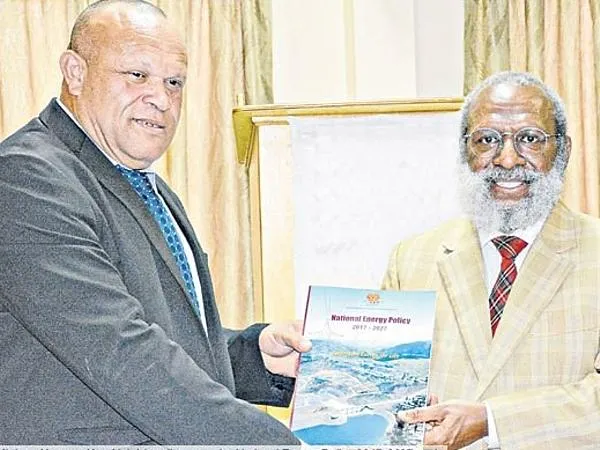
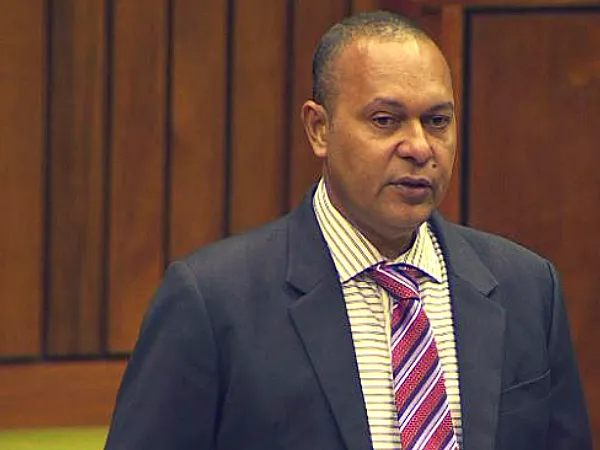
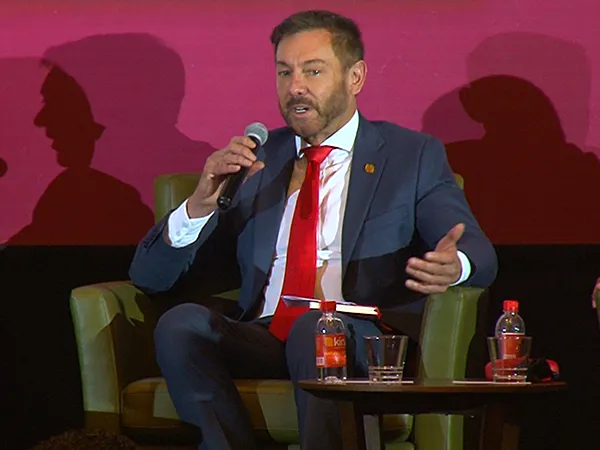
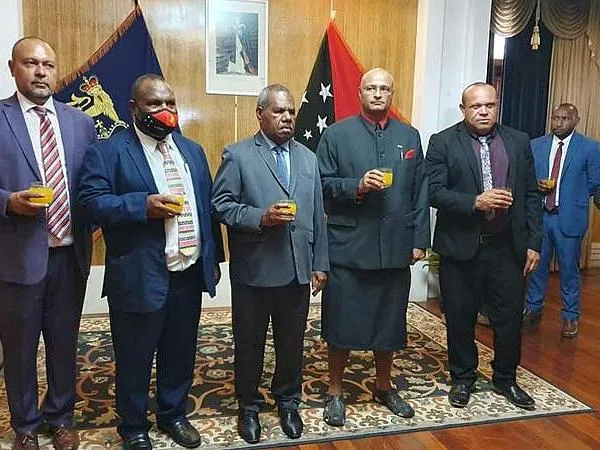
During the handover ceremony of Petroleum Minster Kerenga Kua to Energy Minister William Onglo, the former chided the latter that at this point in time, there should be a department created for the energy sector.
“For Papua New Guinea’s quest for development, (we should start) by making energy a standalone department, with its own dedicated minister, with its own dedicated secretary and staff,” Kua said. “We have about 30 to 40 dedicated staff at the energy wing. Presently, under the public service determinations, we are one department.”
He added, though that the sooner the Energy Minister advances his department, the better it is for the country.
He continued, “Some of your challenges would be sourcing different sources of energy. There are all sorts of energy that you can look at. In PNG’s case, we have so much cheap energy, and cheap labour. But what has been lacking has been cheap energy.. We have not been able to figure out how to provide ourselves, cheap, affordable energy. It’s through the energy that you will encourage industrialisation.”
As a response, Onglo agrees that the energy in the country has gained ground and deserves to have a separate minister. “No doubt the energy sector is now gaining momentum as a very important driver to economic growth and deserves a separate minister,” he said. “I will ensure that the Energy Bill is presented to the NEC for endorsement and to the National Parliament for enactment as soon as possible.”
There are, of course, major challenges, Onglo said, but he is still hopeful that this department will push through.
In a market survey participated by business leaders, more than 60 per cent have shown that they are not going to lay off employees during this time, according to the PNG Business Council. Executive Director Douveri Henao said that this is a good sign and that companies are now employing measures such as using a skeletal workforce and reduction of work hours to stay afloat.
In a statement, he said, “It’s an increase from 12 per cent from our Q1, 2020 (first quarter) numbers where this confidence in the market on staff reduction would not occur in the next six months.”
Henao added that among the strategies that companies use include employee headcount or redundancy in which 19 per cent was already applied, an increase of 12 per cent since the first quarter; and the skeletal workforce which has 18 per cent, reducing work hours was at 17 per cent.
“During this period, we saw an increase in redundancy programmes but this increase has actually plateaued,” he said in a statement. “There was anxiety in the market that there will be mass redundancy programmes and they will be queued up in as fund and elsewhere to collect their entitlements after the mandatory three month grace periods are over.
He added, “We haven’t seen that come out into the market place largely because there is confidence in the market to retain jobs. So those that have been laid off were not to the extent where there has been a complete increase or a sharp rise in redundancy. And that’s also reflected in our conversations with the superfunds as well. They haven’t seen the large numbers prevailing throughout the year. There’s been a period in Q1 and the beginning of Q2 but that levelled off because most of these MDs (managing directors) and CEOs (chief executive officers) are quite confident that they could retain their staff. Although people have been laid off, there has not been large redundancy across the market.”
Aside from the tourism industry, Henao said that the other sectors that had employed this kind of programme included the real estate and property, manufacturing and professional services, and retail and consumer. He added that businesses have already employed such measures and are ready to continue their operations.
The tourism industry of PNG is looking up. According to Treasurer Ian Ling-Stuckey, the government has pointed out stimulus funds to help the tourism industry. He didn’t say the amount but added that the budget for tourism was overlooked. In a statement during the handover ceremony of the tourism ministry to incoming Walter Schnaubelt from outgoing Emil Tammur, he said, “Tourism is a serious economic portfolio, unfortunately, it doesn’t seem to be always represented when putting together a budget.”
Ling-Stuckey added that the tourism industry had really been hit hard and that they need all the support to get back up.
Meanwhile, Chairman of the Parliamentary Committee on Tourism Kennedy Wenge said tourism was about taking care of the ownership of all resources. He added that aside from tourism, the government also zeroes in on agriculture. “Agriculture is based on export and import while tourism is a ‘hand purse’ industry meaning tourists bring money in and it remains in the country,” he said.
When the Business Council proposed two options for the Bank of PNG to move forward - trading at its market value and devaluing kina - the business space suddenly put its foot down. They claim that smaller businesses are more worried than ever and are asking the government to establish a policy framework that can help them. According to Executive Director Douveri Henao, PNG is experiencing difficult times and during this health crisis, there is a need to make the kina attractive to the world for the country's exports.
“Largely because the whole world has literally come to a point where they’re not trading in noble conditions and our Kina should also not be trading in noble conditions,” he said in a statement. That’s one of the reasons why we’re also encouraging the monetary policymakers to consider these two options.”
Mr Hanao added that all economies around the world are currently making monetary adjustments whether devaluing their currencies or quantitative easing but still, the idea is to make the currency more tradable, effective, and attractive.
“That’s where we see the opportunity is presenting itself to revisit the trading of the kina in these very difficult and different times where it should be of consideration,” he said.
In a previous interview with the Central Bank Governor Loi Bakani, he maintained that devaluing kina doesn’t work with the country and this is a prescription for a well-developed economy. He added that while the kina has been depreciating at a slow pace, the currency can still move forward - it is just that PNG has a one-sided market.
He added that when a depreciation happens, reforms or other changes in the economy should transpire. He said that the Bank of PNG was in discussions with the Australian Treasury to involve market experts from Australia to aid the PNG to improve the domestic interbank market for a price-setting mechanism which works better than the current one.
“The demand for gold almost always rises as the economy worsens. And that is just what is happening today,” New Ireland Governor Sir Julius Chan said in a statement during a meeting with Kumul Petroleum Holdings Limited (KPHL) board in the province.
He added, “In less than two years, gold has gone from US$1,200 (K4,197) per ounce to nearly US$2,000 (K6,995) per ounce – an increase of nearly 70 per cent in two years. The outlook is that the price will continue to rise at a moderate but steady rate. That means the returns from gold – unlike returns from oil, LNG or copper – will be much higher over the next year than in the past year. Returns from gold in PNG will increase by about 40 per cent over the next year. The revenues from gold will likely go from about K10.5 billion last year to around K15 billion next year – an increase of K4.5bil in one year, I believe these windfall profits should benefit the people, not just the companies.”
With the meeting held at the newly-opened New Ireland legislative building, the KPHL paid a courtesy visit to Sir Julius and other executives of the New Ireland administration. Among those who visited and took part in the meeting included KPHL board chairman Dr Benedict Yaru, managing director Wapu Sonk and directors Dr Ila Temu and Peterson Pipi.
Aside from the price of gold, Some of the things discussed were the proposed amendment to the Oil and Gas ACt slated to have a reading in the next Parliament sitting, the power issues faced due to PNG Power’s lack of capacity to supply to the town of Kavieng (some suggested solutions where the use of LNG and the preferred energy solar power of the government of New Ireland), and the welfare of the mining sector.
Like many industries around the world, the tourism and hospitality sector in PNG are struggling to survive and recover, Lae Chamber of Commerce president John Byrne said, who hails from Lae.
According to Mr Byne, businesses in the Lae area have developed procedures to keep themselves afloat - with at the most 40 to 60 per cent capacity. While some have reduced their staff, others have chosen to do rotational shifts to give everyone a chance to continue working.
In a statement, he said, “Hospitality in Lae serves both international and domestic with local customers and a lessening of movement of people, less disposable income means less hospitality and job losses. Many businesses are choosing to split-shift or rotate staff rather than create job losses and that is commendable.”
Mr Byrne added that prior to COVID-19, businesses in the Lae area have not been quite successful, and they are doing measures to revive the industry. One such process is for several tourism operators to work closely with domestic and local clients, and look for more ways to grow and adapt.
“On a larger scale there are some exciting projects coming up for tourism which will cement Lae and Morobe as a place to visit,” Mr Byrne said in a statement. “Disappointingly but not unexpectedly the world-class Morobe Show which attracts more international visitors annually had to be cancelled including many of our provincial cultural shows and this also has an impact on tourism and local revenue.”
Mr Byrne also added that small cafes in the area are leading the way towards safety measures: handwashing, wearing of face masks and disinfecting.
Meanwhile aside from the hotel and tourism industry, bars, clubs, and gambling houses have also been damaged by COVID-19 and some organizations such as the LCCI through the Morobe Provincial Emergency Operations Committee are finding ways to help them.
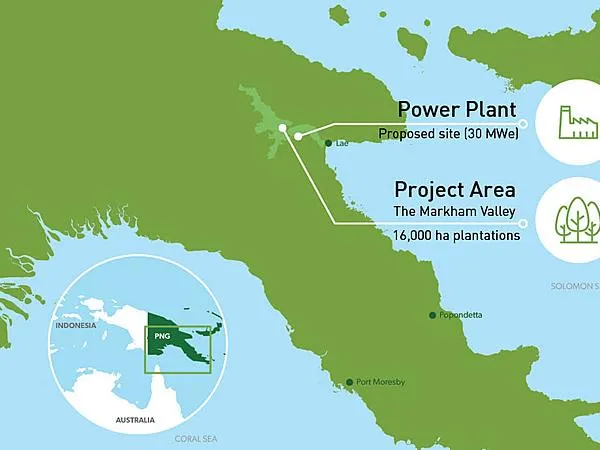
For the development of their renewable energy park, landowners from Markham Valley, Morobo have signed lease agreements and development with PNG Biomass, saying that the lease enables construction, site clearing, and operation of the park.
The agreement between these two sanctions is sure to benefit landowners.
Operated by the Mark Markham Valley Biomass Ltd, a wholly-owned subsidiary of Oil Search Ltd, PNG Biomass envisions the park to feature 30MW biomass power plant, funded by Oil Search, and a 17MW solar farm with battery storage that the Australian government and European Union have funded.
PNG Biomass stakeholder engagement manager Jessie Mitir said, “You all are paving the way for sustainable green energy development not only for your own family and community but also for the province and nation for the next 45 years.”
The signing of the agreement happened in Lae followed by a ceremony on the Ganef land in Zifansing Wampar local level government, Huon Gulf.. Witnesses for the event included Orogwangin clansman Luke Kifas.
As part of the agenda of the government, New Deputy Prime Minister Sam Basil who is also the Minister for National Planning has vowed to link PNG beginning from Morobe to Port Moresby - which ultimately costs between K400 and K500 million.
According to Mr Basil, the road runs from Kasengare, Kaitaipi, Rupila, Omu, Guari, Tapini and Aropokina to link to the Hiritano Highway.
“We will be opening up all the new agriculture areas of the country by road,” Mr Basil said. “Do not give up hope. Start planting coffee and other agriculture produce.”
For the funding, Mr Basil said that an initial K5 million has already been put down, and another K5 million was given to the public investment program this year for the Tapini road. Under this program, he said that the government has budgeted K5 million for all districts in the country to link up with main highways. Another K5 million is given to the investment in the Dabuy road that connects Woitape district to Vanapa River to open up Goilala, the first engagement to visit Ononge in Goilala by invitation of Transport Minister William Samb.
Other projects that the Prime Minister has launched include:
The groundbreaking of the Dubuy road project - Gollala DDA has bought earth-moving equipment to start work
The water supply project of the Ononge station
The launch of the green bean coffee hulling machine
Distribution to coffee farmers the coffee pulping machine
Launch of the Digicel tower for Udaba valley which is installed in Ononge
The launch of the cooperative society
In addition, the Deputy Minister also gave K500,000 cheques for the water supply project for more villages, both K500,000 for Rupila Primary School and Ononge Primary School.
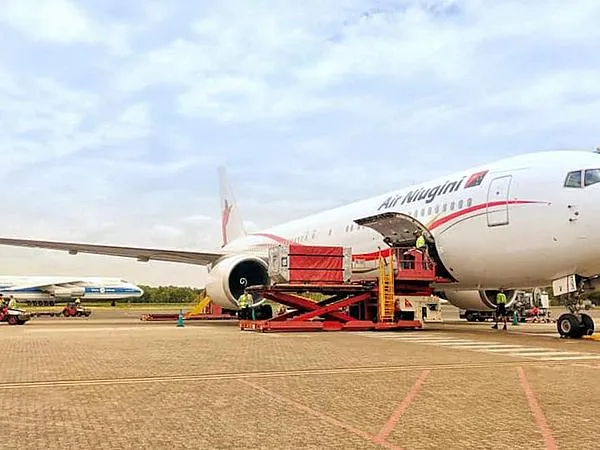
In a move that slowly opens the economy and boosts the tourism industry, Papua New Guinea has opened its borders for four more countries - Singapore, Hong Kong, Solomon Islands, and Japan. This comes after PNG has already opened its doors to Australia.
According to pandemic response controller David Manning, passengers are still required to obtain approval from his office and must be able to show that they are free of COVID-19 before boarding their flight.
In addition to opening for these countries, Manning said that the curfew of 12pm to 5am in the national capital district has now been lifted. All the rest of the restrictions in relation to the pandemic remains the same.
At present, PNG has seven COVID-19 deaths and 500 cases of the coronavirus.
Because of the economic downturn brought about by the global health crisis, the Bank of Papua New Guinea has revised its outlook on the gross domestic product (GDP) to decline by 4%, a downward spiral from its original projection last March 2020 of 0.3 per cent.
This decline is also brought about by the imposing of State Emergency, lockdown and various policies and programs to contain the virus, thus affecting economic growth. The Central Bank expects that the impact of COVID-19 will continue for the rest of 2020 and into 2021.
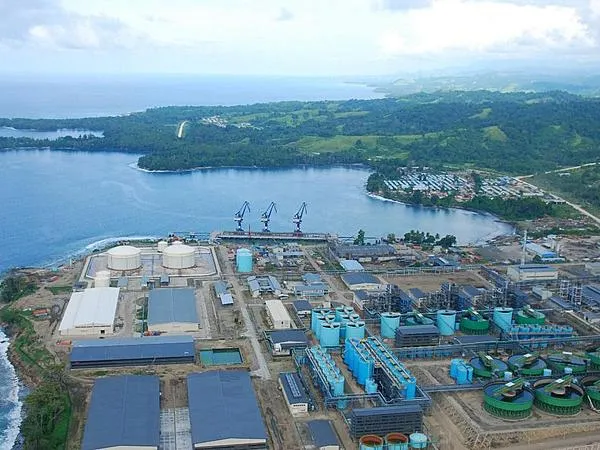
In a statement, the Central Bank said that this revision mirrors the negative growth in PNG’s major trading partners, as well as the containment measures instituted by the government and temporary shutdown of major mining operations. “The closure of Porgera mine since April, 2020 due to the expiry and non-renewal of the Special Mining Lease for the operator, Barrick (Niugini) Limited, also contributed to this negative growth,” it said, “In the non-mineral sector, most sectors are expected to record lower growth.”
The Central Bank also noted that among the most affected include hotels, financial and insurance services, construction, and transportation.
“To maintain their operations, most firms have reduced their costs by laying off workers, reducing working hours and delaying investment plans,” the bank stated in a statement.
In the first six months since the pandemic started, the Bank conducted a survey to evaluate the impact of COVID=19 to businesses, particularly the Micro, Small, and Medium Enterprises (MSMEs) in the sectors of manufacturing, construction, professional, and information services. The bank found out that over two-thirds have scaled down their operations while the rest survey closed their businesses and expected to continue for the rest of the year.
The bank stated, “MSMEs experienced disruptions in their supply chains and cash flow, lower demand, reduced workforce and increased arrears to service providers and on loans.”
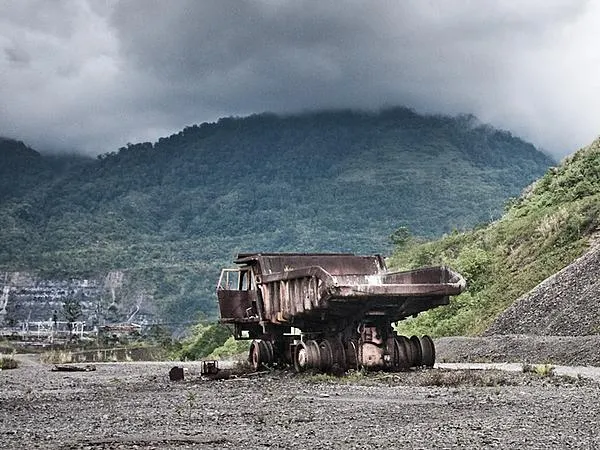
To grow its economy, the new Autonomous Bougainville Government has looked at the Panguna mine as a key target. According to Bougainville President Ishmael Toroama, aside from Panguna, the government is also looking at other factors such as projects in agriculture, mining, fisheries, and tourism - that generates revenues and increases employment in Bougainville.
Toroama also said that the government has welcomed foreign investment for the reasons that outside funding and technology can help in furthering the advancement of Bougainville’s natural resources. Of course, as the President has said, this comes with fair share and participation through equity and shareholding in large scale projects.
This also means that people control the medium to small enterprise sector.
The new government is also looking at other policies in fulfilling these programs under an Economic Development Plan.
To expand the small and medium enterprises (SMEs) and fund additional strategic projects that enhance digital leadership in the country, Kina Bank is planning to raise around A$91 million (K224mil). According to Kina Bank chief executive officer Greg Pawson, they want to be more competitive in lending particularly for large SMEs, commercial and corporate type customers, and this equity raising will just give them a more robust and solid capital base to be able to do that.
“It also means that we will be well in advance with our prudential or regulatory requirements such as capital adequacy and leverage,” he said. It just makes us a much stronger bank, it’s not that we are weak at the moment, we are well-positioned but we wanted to push a bit harder particularly into those commercial and corporate sectors of the market.”
As part of its programme to become the leading digital bank, Pawson said that the main two or three that they are focused on at the moment is their newest internet payment gateway in partnership with a local firm called NiuPay and that’s currently in pilot with the Lands Department.
“We’re planning to roll that out to our SMEs and commercial customers in the coming weeks once we see that the pilot has been successful so that gives merchants the ability to accept payments online for goods and services,” he said. “That’s something we do in a relatively short space of time. We’re doing a lot of work with our point-of-sale (POS) network at the moment. So we arguably have the best performing POS terminals in the market in terms of reliability and speed and the next phase of that is called integrated POS. We want to continue to be at the forefront of the new technologies that are coming to support POS and the next phase of that will be starting to integrate the POS terminals with the merchant software.”
Kina Bank is also looking at a number of other things largely at payments to help facilitate e-commerce, more electronic payments for both personal and business customers in PNG and they are working very closely with some of the government departments around moving some of their services to e-commerce platforms as well and being able to accept some of the payments online.
“So a lot of the programmes are geared around e-commerce and electronic payments, and the game falls back to digital banking,” he added. “Not just for customers but also with the new organisation, a lot of our internal systems and processes are digitalised or electronic which just makes us a more efficient and productive organisation at the end of the day and it enables us to free up people to focus on more value added activities.”
In its first half of the year, Kina is in a good position. Their net profit after tax was about 24 per cent up on the same period last year and they didn’t lose any ANZ customers.
“That was deliberate on our part,” said Pawson. “We wanted to make the acquisition as seamless as possible. It was such a complex programme that took 18 months to complete but it worked. We did have some hiccups along the way but about 90 per cent of our customers were happy with the transition. We’re still building some of our business and corporate online capability. It has gone better and even off the back of that, we have on-boarded about 6,000 new customers this year alone in addition to that. So, hopefully, it’s a reflection of how well we did with the ANZ acquisition and also our brand campaign which we launched in May with our three brand ambassadors which we’re proud of.”
For the second half of the year, Pawson said it is about finding the right balance between what’s right for the resource companies versus what’s right for the sovereign. He says that the government has learned some lessons from past experience and said that it doesn’t look good offshore when these projects are delayed.
In spite of this health crisis, Kina Bank has kept its focus. According to Pawson, they are focused particularly around service sync with their desire to be the leading digital bank in PNG.
“We also want to be the leading service organisation, not necessarily a bank but as a brand, known for providing good services,” he said. “Lending is our big focus so we are very liquid following the ANZ acquisition and we want to be actively lending out to SMEs and commercial customers where we can, and bolster some economic growth. Another area that aligns with our digital capability is technology and infrastructure and just making sure we’ve got the right network and the right infrastructure to support our growth aspirations. PNG is in a reasonably good position at the moment and, yes, it’s tough like other markets but it’s still presenting us with some good opportunity for growth which we are after.”
Because of the pressing issues surrounding four mines in the country - Ramu Nico mine in Madang, Ok Tedi in Western, Porgera in Enga and Sinivit in East New Britain - Environment and Conservation Minister Wera Mori said an assessment will be done to determine their environmental and socio-economic impacts.
Mori said that officials from the Conservation and Environment Protection Authority (Cepa) are scheduled to visit these mine sites to check out their impacts.
“There have been pressing issues that have been raised regarding the Ramu Nico project in Madang, the Porgera gold mine in the Enga and the contamination of the Fly River system from tailings and other mine wastes in Ok Tedi,” Mori said. “We will undertake the second phase of investigations into the spillage of Basamuk (Madang). Work will soon go into the second phase that will also extend to the Ramu river catchment basin.”
Mori said that a team was already in place and an independent one will also be sent to the Ramu River to check out its operations and see its impacts on the communities. According to Mori, an initial investigation showed that the recent slurry spill in Madang didn’t go over the required threshold.
He added that the Ok Tedj and Porgera mines also share the same descriptions in terms of its effects on the river systems because of wastes from the mines.
“We are going to secure money and conduct studies on the environmental and socio-economic impacts that the Porgera mine has had on the people of Porgera which is important for Porgera to move forward,” he said. “Cepa has also already written to Ok Tedi so that we could investigate the possibility of dredging the Fly River below the confluence of the Strickland as it comes out of Lake Murray and Ok Tedi River.
He added, “We will engage people who would go and start undertaking dredging. We have today serious exposures of cyanide tailings in East New Britain in Sinivit of the Wild Dog mine. Unfortunately, when the developer of the mine left the country, they did not address the tailings issue. We have got to bring in people who are capable of cleaning industrial waste that are highly toxic. Therefore the staff from Cepa together with MRA (Mineral Resources Authority) will make a trip to Wild Dog and make an assessment.”
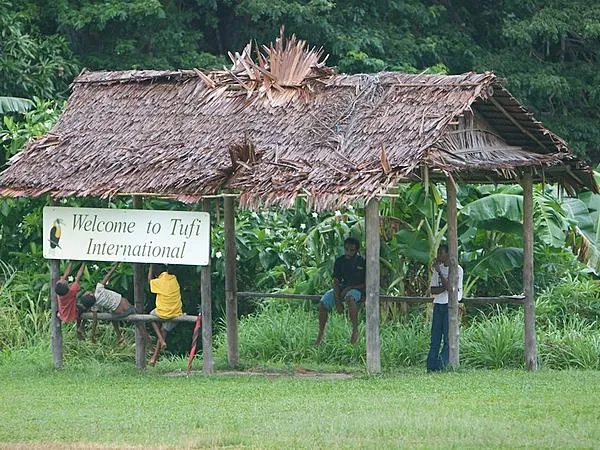
Tufi will soon undergo some changes following the inaugural Link PNG flight to Tufi. According to Transport and Infrastructure Minister William Samb, Tufi is soon to be made into Northern’s second airport. He said that Tufi will be part of the civil aviation development programme phase two (Cadip 2).
He added that the government had an overall Connect PNG programme. “The three modes of transportation are currently in our medium-term transport development plan,” he said. “For air transport, we have partnered with rural airstrips authority to progress the partnership with mission aviation fellowship and civil aviation (department) and regional airports to support the main airports. Asian Development Bank, based on their study, included Tufi as one of the regional airports to be featured in the Cadip2 programme.”
Samb also disclosed that the commitment of the government of K2 million will go directly to Ijivitari and the Civil Aviation Authority to partner with the district development authority to start with the transformation of the airport - which includes the lighting system, the sealing and the fencing.
In addition, the development of jetties will also be part of the major changes - where Tufi is included to upgrade its existing jetty. “We will send our technical team together with the Ijivitari DDA team to assess the jetty on how we can improve that facility to support the Tufi airport,” he said.
Part of the flight included Minister for Health and HIV-AIDS Sir Puka Temu, Minister for Labour and Industrial Relations Lekwa Gure, and Minister for Land and Physical Planning John Rosso MPs included National Capital District Governor Powes Parkop, Western Governor Toboi Awi Yoto, Alotau MP Charles Abel and North Fly MP James Donald.
Also included are Secretary for Transport Roy Mumu, and executives from the National Airport Corporation, Civil Aviation Safety.
Production sharing contracts have always been specific to oil and gas and therefore never works in the mining sector. This, according to the CEO of Global Miner, Barrick Gold, who added that the highest risk in gas and oil is exploration and once you put it in infrastructure, you just pump forever.
“This is where production sharing is a classic example, whereas mining, mines don’t have the lives of gas fields and the real risk is the construction risk where all the money goes. “You spend 100 million dollars developing feasibility in a mine and spend billions of dollars in building it".
The more than 30-year old in the mining industry said the viability in the sectors in gas and oil where these work have also taken a hit, especially during this health crisis.
Mr. Bristow added that some countries also introduced product sharing contracts - but to liabilities. This was also relayed by John Chambers General Manager of Santos PNG during a webinar when looking at the proposed scheme to this sector.
“It is not that production sharing contracts won’t work - it is just that sometimes it gets complicated. It works on oil and gas because they have a huge capital on a big upstream income while in a mining project, it has an ongoing rolling capital,” he said. “When you work in the mining industry, you keep putting money so the huge share goes to the contractors and investors.”
The government stressed how important this really is for all to benefit, but has given a new direction to veer away from the operated system of concessional licensing. This is where 100 per cent of the government’s natural resources are transferred to developers where they grant the government a 22.5 per cent for the petroleum space and a 30 per cent option in mining.
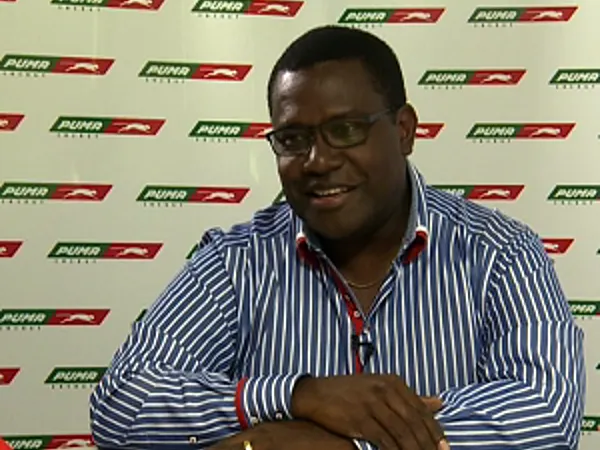
Better roads along Highland Highways means more economic potential. This, according to Papua New Guinea Puma Energy Country Manager Hulala Tokome, who said in a statement that he is already seeing businesses growing as the areas open up to more opportunities.
“We have experienced a strong entrepreneurial mindset from SMEs there along the road who are keen to develop their business skills and learn as they go,” he said. “We are proud to say that we already have a presence along Highland Highways starting in Kainantu all the way to Tari and Porgera, mainly partnering with entrepreneurial SMEs.”
In addition, Mr. Tokome said that they have a combination of Puma-owned and dealer-owned sites that operates under the same costs of the ICC pricing model that is applied through PNG.
“This is because we are supporting a lot of SMEs and other businesses from PNG who want to build their own sites in strategic locations so you can see more of these dealership sites,” he said. “But more importantly with the widening of the highways through Mt. Hagen township and the long-term plans for improving the roads, we expect to see more communities participate in the market and trade.”
He added that Puma Energy is excited to see the road infrastructure plans improving and to work with SMEs in developing quality service stations for its users.”
To ensure the stability of his coalition, Papua New Guinea Prime Minister James Marape has reshuffled his cabinet.
His line up includes Sam Basil, the leader of the United Labour Party and MP, who is now the new deputy prime minister and Minister for Planning and Implementation and Walter Schnaubelt who replaces Emil Tamur as Minister for Tourism, Arts and Culture.
The line up also includes Sir Puka Temu, now the Health Minister, who replaces Jelta Wong while the latter takes over his position to oversee Civil Aviation.
While Lekwa Gure is the new Minister for Labour, Davis Steven remains as Justice and Attorney General. Davis was dumped as the deputy prime minister.
Mr. Marape also takes an active role as Sir Puka’s Bougainville Affairs portfolio while Willie Onguglo holds a new position - as the Minister for Energy.
“These changes draw on the substantial capabilities within our Government,” said Mr. Marape in a news release. “They come at a critical time where our nation faces great challenges from the economic shock caused by the COVID 19 pandemic. The changes also adhere to a ratio of three to one in the allocation of ministries against party representation, and this has been a key factor in my decision making.”
The Head of Papua New Guinea Extractive Industries Transparency (PNGEITI), Mr. Lucas Alkan announced today that the country will be validated for the second time since PNG signed up to implement the EITI global best practice Standard in 2013.
The validation exercise is set to commence on the 30th of October 2020.
Mr. Alkan stated that the validation is an essential feature of the EITI implementation process.
It is intended to provide stakeholders with an impartial assessment of whether EITI implementation in a country is consistent with the provisions of the EITI Standard.
PNG underwent its first validation in 2018 in which the EITI Board granted ‘meaningful progress’ in implementing the EITI Standard. The Board commended PNG’s efforts in implementing a number of reforms to address weaknesses in government systems and in improving the level of transparency in the country’s extractive sector.
The Board recognised PNG’s efforts in ensuring appropriate multi-stakeholder oversight of EITI implementation and aligning objectives for the EITI with national priorities. It further commended the country’s efforts to produce EITI data in a timely manner and to effectively disseminate the findings of the EITI Reports to influence public debate.
The Board welcomed the government’s continued commitment to strengthening government systems by using the EITI process as a diagnostic tool to support reforms. As part of improvements of such systems, the EITI Board encouraged PNG to pursue efforts to systematically disclose data required by the EITI Standard as part of routine government and company disclosures.
The outcome of the first validation was a positive step for PNG in the EITI implementation process, and demonstrated that the EITI process can contribute to enhancing transparency and accountability in the management of resources related revenues.
In granting ‘meaningful progress’ to PNG in its efforts to implement the EITI, the Board allowed 18 months (up till 30 April 2020) for PNG to take corrective actions on the areas identified to meet the EITI global standard before a second validation was undertaken.
There were 14 areas identified as having made no progress or inadequate progress which required actions to be taken.
The 14 corrective action areas included:
public disclosure of information related to the award or transfer of mining tenements and oil and gas licenses pertaining to companies covered in the EITI Report;
ensuring a comprehensive list of state participation in the extractive industries, including terms associated with state equity and any changes in the year under review, be publicly accessible;
ensuring that complete production volume for oil and gas, and production values for each of the extractive commodities produced during the year under review be publicly accessible and disaggregated by commodity;
ensuring that export volumes and values are disclosed publicly for each mineral commodity (including oil, condensate and gas) exported in the year under review;
ensuring that the materiality threshold for selecting companies ensures that all payments that could affect the comprehensiveness of EITI reporting be included in the scope of reconciliation;
undertake a comprehensive assessment of transactions between extractives SOEs (and their subsidiaries) and mining, oil and gas companies, as well as between the extractives SOEs (including their subsidiaries) and government in its scoping for future EITI Reports;
establish whether direct subnational payments (to government entities) by extractives companies are material;
an assessment of whether the payments and revenues are subject to credible, independent audit, applying international auditing standards;
clarify which extractive revenues are recorded in the national budget;
ensure that material subnational transfers of extractives revenues are publicly disclosed, when such transfers are mandated by a national constitution, statute or other revenue sharing mechanisms such as benefit-sharing agreements;
ensure that reporting of mandatory social expenditures be disaggregated by type of payment and beneficiary, clarifying the name and function of any non-government (third-party) beneficiaries of mandatory social expenditures; and
undertake a comprehensive review of all expenditures undertaken by extractives SOEs (and their subsidiaries) that could be considered quasi-fiscal.
Mr. Alkan indicated that the onset of the Covid19 pandemic late last year and the associated lockdowns and restrictions to normal operations had severely affected our ability to prepare well by addressing the above areas before the second assessment.
He said that due to the Covid19 pandemic, the EITI Board deferred PNG’s validation from April to October 2020. A further deferment to next year would work well for us in our continued effort to take corrective actions, however this did not seem imminent.
Despite the Covid19 inflicted disruptions, he encouraged all stakeholders involved in the EITI implementation process to prepare as best as we could for the second validation.
The Head of Secretariat emphasised that failure to make considerable improvements in the above areas (in the second validation) could result in PNG being suspended from the EITI in accordance with the provisions of the EITI Standard.
Pacific Towing (PacTow) has nearly 40 years’ salvage experience in not only its home country of Papua New Guinea but in the waterways of many countries in Oceania and South East Asia. Whether working in partnership with international operators, or individually, PacTow has considerable open ocean, coastal and also river and estuary salvage expertise and capacity. The company is a full member of the International Salvage Union and the International Spill Control Organisation.
PacTow built its salvage capacity in the 1980’s through early joint venture partners, Howard Smith Towage and United Salvage. Initially, United Salvage undertook the major salvages in PNG using PacTow crew and equipment supplemented with plant, tugs, salvage master, salvage engineers and other technical personnel from Australia where required.
General Manager, Neil Papenfus, says that the company’s salvage capacity and expertise has grown considerably with each operation since the 1980s. “In terms of vessels, we now have a fleet of 15 tugs, four of which are central to the majority of our salvage work. We also have a low draft vessel which is ideal for shallow water salvage operations in rivers and estuaries, such as one we’re working on right now on the Fly River. Our fleet of tugs is complemented by numerous additional support vessels, including dedicated dive vessels and a barge fitted with a 150 tonne capacity crane.”
When it comes to personnel, Papenfus is appreciative of the 200+ PacTow team, 97 per cent of whom are Melanesian. “We enjoy a position of market leadership in Melanesia because of our staff, many of whom have been with our company in excess of 10 years. No one knows the waterways and weather patterns here better than the locals and because of their longevity with our company, their salvage experience is the best in our region.” Critical to PacTow’s salvage capacity is its internationally trained and accredited commercial dive team, with members having worked on salvage operations as far afield as New Zealand, Australia, Fiji and Solomon Islands.
The company’s salvage capacity is complemented by its spill response capabilities. PacTow is a member of the International Spill Control Organisation and partners with ‘sister’ company and global operator, Swire Emergency Response (SER) on spill control and prevention in PNG. SER stores its oil spill response equipment (e.g., booms, skimmers, pollutant recovery and storage pods) at PacTow’s dedicated tug base in Port Moresby for ease and speed of deployment. Both SER and parent company Swire Pacific Offshore (SPO) also provide PacTow staff with valuable training.
Although not immune to the impacts of COVID-19, PacTow is still managing to crew and despatch its vessels and has additional capacity to support other marine service providers and salvage operators in the region. It has proactively and strategically deployed assets to four major PNG ports in a ‘standby’ capacity so as to better provide rapid emergency response, salvage and spill services when required.
To learn more about PacTow’s salvage capabilities, as well as its breadth of other marine services: www.pacifictowingmarineservices.com.
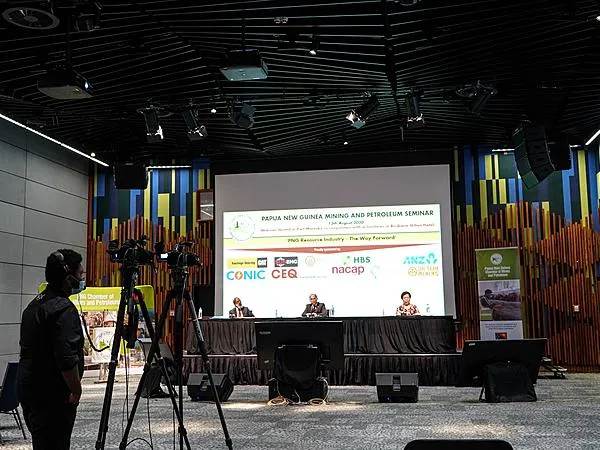
VIRTUAL ENGAGEMENT: The Chamber Webinar set up in Port Moresby at the Hilton Hotel
The Papua New Guinea Chamber of Mines and Petroleum held its first ever virtual seminar last Thursday 13 August to give an update on the resources sector, and its plans moving into the new normal.
With recent amendments having been made to both the Mining and Oil and Gas Acts, and with more proposed amendments announced by the government to the organic law on resource ownership, the webinar was also aimed at creating an avenue for both government, and industry, to reconnect and progress dialogue on these future changes in resource laws.
UNCERTAINTY: PNG Chamber of Mines and Petroleum President, Gerea Aopi voice industry’s
concern about low levels of consultation with industry.
Jointly broadcast and hosted between the Hilton Hotel in Port Moresby, and the Hilton Hotel in Brisbane, the webinar was opened by PNG Chamber of Mines and Petroleum President, Gerea Aopi.
Mr. Aopi voiced the collective concern of the industry, over the lack of consultations on changes to national resource laws.
“The position of the Chamber on legislative reforms has not changed. We welcome and encourage government to initiate reviews of policies and legislation, and the resource laws are no exception.
What is important, however, is that the consultative process with the industry must be consistent, open, and transparent. “We want to engage and stand ready to consult with the government on these legislative reforms. Fundamentally this is to be the bedrock of our partnership, a consultative partnership,” Mr. Aopi said.
STATE PERSPECTIVE: Minister for Petroleum, Kerenga Kua speaks of the government’s
motivation for pushing reforms in the mining and petroleum sector.
Minister for Petroleum and Energy, Kerenga Kua, thanked the Chamber for the invitation to speak at the forum to explain the Marape-Steven government’s motivation for the reforms in legislation.
“The main reason why the state is setting about carrying out a series of legislative reforms at the moment in mining and petroleum is because we think there are certain aspects of the legislative framework that we are working under at the moment, that is not operating to the benefit of the state and the citizens of this country, from whom we the political leaders, obtain our mandate,” Mr. Kua said.
He explained three major points upon which the government was focused.
A perceived loss of resource ownership by the state which can be mitigated by moving to a platform of production sharing. “When we sign a project agreement and give a licence, we lose our ownership to the resource, without any compensation flowing back to the state. Here we forfeit all our ownership to resources to the developer, and no compensation comes back,” Mr. Kua said.
The need for the State to “buy-back” into Projects after the exploration phase to take up an equity share in development. Mr Kua explained that the present system obligates government to borrow money to meet their interests in commercial projects. Loans that the government could use as budget financing.
As the present Debt: GDP ratio is close to the maximum permitted level, the Government does not have the capacity to borrow to participate as an equity partner.
The Minister also reassured industry stakeholders that proposed legislation currently before parliament, was only to enable the mechanisms and vehicles needed to establish and operate a production sharing regime for both mining and petroleum.
“We are going to do some structural adjustments and create the operating vehicles and agencies that will have to carry the responsibility, or share it out between them.
“The organic law that we now have sitting in Parliament, only aims to achieve that outcome, which is to create the operating vehicles and the agencies. It’s not going into other details, such as the operational side of the mining and petroleum things. That will be in the next stage when we introduce legislations later next year. So this year, the organic law that will be introduced will just create the states operating vehicles,” Mr. Kua explained.
First of regular Industry Webinar Updates
VIRTUAL CONNECTION: Chamber Council Member and Co-Chair of the webinar from
Brisbane, John Chambers.
Following the Minister’s statement a strong panel of speakers both from Port Moresby, and Brisbane provided a legal, financial and investor view of some of the changes being proposed by the Minister. As Mr. Chambers who chaired the Brisbane end of proceedings stated, “the key is to understand the Government, Industry and Investor positions better through dialogue so that a path can be navigated that enables continued investment and growth of the PNG economy for the benefit of its citizens as well as creating a stable platform for investment”.
The legal and impacts of the changes already made to the Oil and Gas and to the Mining Acts were discussed by Sarah Kuman and Rob Merriman of legal firm Allens Linklaters, who pointed out that the removal of the certainty of obtaining a Petroleum Development License after successful exploration will likely deter investment in exploration within PNG. Uncertainty created as a result of the required minimum “expected level of return” and the fact that The State is no longer strictly required to comply with its obligations under State Agreements will likely discourage further investment. Additionally, on the mining side, there is a risk that new mining lessees will not be able to exploit a discovery to its full economic extent.
On the Financial side, Mark Couchman, Director of Resources, Energy and Infrastructure at ANZ, explained what financiers look at when considering providing finance to a resource project. In addition to the commodity risk, investors need to consider construction risk, environmental approvals logistics/Infrastructure access and key areas where the project can go wrong. Additionally, does management have the expertise to fix things when they go wrong? And what is their track record and relationship with key suppliers and customers? This expands into operating risk and cost control and offtake agreements. However, although this is all to an extent within an investor’s control, risks such as political & sovereign risk, legal tenure and regulatory risk (likelihood of changes to the legal framework that may impact the financing structure & security) will impact the ability to finance a project.
Sang Ratnam, from Total PNG, showed how the multiplier effect of large projects works and impacts economic growth in a developing nation citing examples from Total’s worldwide experience on the relationship between direct activity, indirect activity, and induced activity. Of relevance is the fact that indirect and induced employment can be nine times larger than the direct employment of major projects. In Ghana, direct take from major projects makes up only one third of the economic contribution to the economy. There are possible lessons here to PNG on the value to economic growth and the potential to lower the debt to GDP ratio if large projects can move forward and have a positive impact on GDP. The key being to ensure a sound local content program is in place.
John Gooding, a retired mining executive with a global reputation, including time spent in PNG, summarised the PNG Trade and Investment policy for 2017- 2032 which is to maximise trade and investment by increasing exports, to reduce imports and to increase foreign direct investment. He explained how PNG is a resource rich but capital poor nation, and thus needs foreign direct investment to create jobs and local capacity. Unfortunately, PNG has fallen in its ranking as an investment destination in recent times as shown by the Fraser Institute falling from 41st to 54th on the list of 76 states from the 2018-2019 survey even prior to the recent changes to the legislation. This is something we all need to work together on to change if PNG is to realise its policy goals and improve the lives of its citizens. Mr Gooding pointed out that continued resource sector revenues in Australia were responsible for that nation being in a stronger position than most nations at present with the Covid19 crisis.
Mr Wapu Sonk on behalf of Kumul Petroleum Holdings and Mr. Augustine Mano from MRDC gave a brief summary of their views on the proposed changes and the need for continuing investment and to get legacy issues sorted.
KUMUL PETROLEUM: Chairman of Kumul Petroleum, Wapu Sonk, addressing the Chamber
Webinar.
LANDOWNERS: Executive Director of the Mineral Resources Development Corporation
(MRDC), Augustine Mano, speaking on behalf of resource sector landowners at the Chamber
Unfortunately, time was limited and did not enable a more detailed debate, but the Chamber intends to hold follow-up seminars to try to work to bridge the gap between Government and Investor sentiment within the Resource Sector.
“Due to COVID19, a series of planned seminars will replace the 2020 conference, and these events will be held via Webinars,” said Chamber President, Gerea Aopi.
SUMMING UP: Chamber Council Member Leon Buskens, presenting a summary of
discussions to close up the webinar.
Next Chamber Webinar in September
Petroleum Minister, Kerenga Kua, has already committed to speaking at the next webinar, which is scheduled for the first week of September.
You can register for the September Webinar: www.pngchamberminpet.com.pg or you can contact our Projects Team on Telephone +675 321 2988 / 321 3785 / 321 0546 and Email: proj3@pngchamberminpet.com.pg
Protecting lives, assets, land and reputations, Parabellum International delivers unrivalled emergency and medical response, safety, security and risk management services, along with equipment and vehicles to some of the largest capital and operational projects in the oil, gas, mining, resources and construction industries. Parabellum can support you throughout your operations lifecycle from exploration, construction, and production. Our depth of experience and knowledge operating in demanding high-risk conditions and remote environments sets us apart. We hold ourselves to the highest standards protecting both our client’s reputations and Parabellum’s standing in the industry.
By working in partnership with you, Parabellum International allows you to focus on your core operations with confidence. Our personnel do not just respond to emergencies, they become a comprehensive resource to assist in the proactive planning and implementation of your site’s health, safety, and environmental protection initiatives. Our experienced personnel work with your safety and operations teams to ensure that the potential for incidents is reduced. Incidents that do occur are quickly contained therefore minimising injuries, operational delays and remediation costs. Our teams are supported by globally compliant procedures, processes and systems.
“We are setting new standards for site Emergency Response Services and providing our clients with a single source for obtaining experienced expert personnel, accredited training, critical advisory and audit services, customised vehicles and innovative equipment all designed to meet our client’s needs,” said Parabellum International’s Manager APAC, Nathan Turner, a 40 year veteran of PNG. “Having worked on projects as diverse as the Frieda River Exploration Program, PNGLNG Construction at both Hides and Komo, early works at Wafi Golpu and delivering packages of work at OTML, OSL operations Kutubu, USAid UXO program in Torokina Bougainville and Australian Aid (DFAT) Security Programs in Honiara Solomon Islands, I am confident that as a company, with a core APAC presence, Parabellum International has the technical and social capabilities to deliver exceptional Fire and Emergency Response Services in PNG,” said Turner.
Parabellum International’s specialist trainers are not only experts in their field they also have real-world experience in responding to emergencies and medical incidents. At Parabellum we do not just help our clients tick the box for training, we provide internationally accredited Emergency Response Training that is tailored and relevant to your industry and site. We are also fully committed as a company to provide local employment opportunities on all our operations and having the internal capability to provide the relevant training to personnel makes employing locally possible.
Parabellum International’s current project experience includes a variety of oil, gas, mining, construction and expansion projects including LNG, Bauxite/Alumina, Gold and Iron Ore internationally. Parabellum operates to the highest standards and delivers solutions that are planned, supported and reviewed with their clients as partners rather than in isolation. We have a proven track record of having the agility to mobilise our personnel, equipment and vehicles at short notice when needed for clients unplanned needs. When you partner with Parabellum International you are assured of collaborating with a market leader who operates to the highest standard of emergency preparedness. Should an on-site emergency occur, Parabellum is able to provide swift and appropriate responses.
Our offices are located throughout the APAC region, with long-time PNG resident and Resources industry advisor Nathan Turner as Regional Manager. You can be guaranteed that Parabellum International will provide trusted advice, consistent service delivery and compliant, accredited, best practice training for your entire Emergency Response and Fire Rescue needs across your project lifecycle.
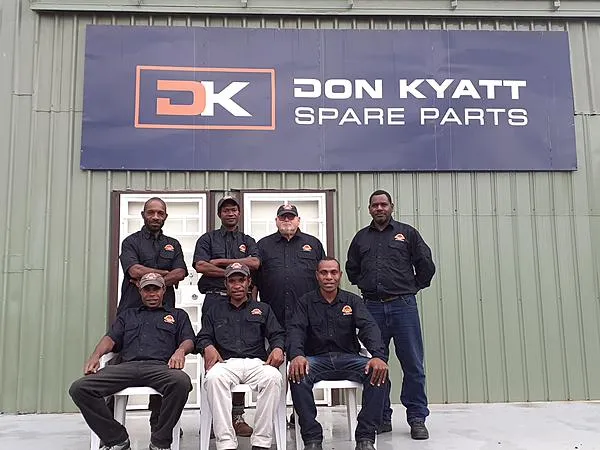
Don Kyatt Spare Parts, Terrain Tamer have officially opened their new warehouse in Lae.
The warehouse is the second Papua New Guinea branch for the Australian 4wd Parts company, and their 15th internationally, including locations across Australia, Europe, New Zealand and Fiji.
After the success of their Port Moresby branch, which opened in early 2018, Terrain Tamer was looking to expand, to service a wider area of Papua New Guinea’s strong agricultural and mining industries, as well as recreational drivers, with their range of over 40,000 4WD spare parts.
General Manager Brent Hutchinson says the company chose Lae for the new warehouse because it is an industrial hub for Papua New Guinea, with good access to the mountain ranges and islands that are hard to reach from Port Moresby.
“The conditions and terrain around Lae and the surrounding mountains mean that 4WD owners there really rely on strong, rugged and reliable operation of their vehicles.” Mr Hutchinson said.
“Terrain Tamer parts are made to be equal to or stronger than their OE equivalent, so we are well suited to these types of areas.”
The Lae branch is managed by Eddie Saria, and is now open at Shed No 1, Lot 13, Portion 345, Malahang Industrial Estate.
For more information visit terraintamer.com
Transparency mechanisms must be considered and built into project agreements and memorandum of agreement reviews.
Head of the PNG Extractive Industries Transparency Initiative (PNGEITI) National Secretariat, Lucas Alkan, said it would be interesting to see how negotiations take place as the government proceeds with preparation for negotiating the Wafi Golpu project, the Woodlark and Kainantu Gold Mines MOA reviews and other projects in the pipeline.
Alkan said the Government’s commitment to implementing EITI will not increase transparency overnight, however, it will assist the government to manage the extractive sector in a more inclusive and transparent manner.
He added that highlighting transparency will also assist in minimising public speculations and distrust towards the government.
“The EITI framework works to assist in bringing various sectors of the economy together and builds trust amongst them and creates a platform for these issues to be discussed so that solutions could be found together for better management of the sector.
“Now that PNG is an EITI implementing country, the Government should not lose traction on EITI implementation. It stands to gain from implementing EITI because of the potential governance gains associated with it.
Alkan said PNG still has a lot of work to do when it comes to citizen engagement.
“According to the World Bank’s World Governance Index 2018 edition, PNG scored very low on the ‘voice and accountability’ indicator which indicates weak performance,” he said.
“As an EITI implementing country, mining and petroleum impacted communities and civil societies have a platform to access information and constructively engage with companies and the government on resource governance issues,” Alkan said.
Source: http://www.looppng.com/business/consider-transparency-mechanisms-projects-eiti-93519
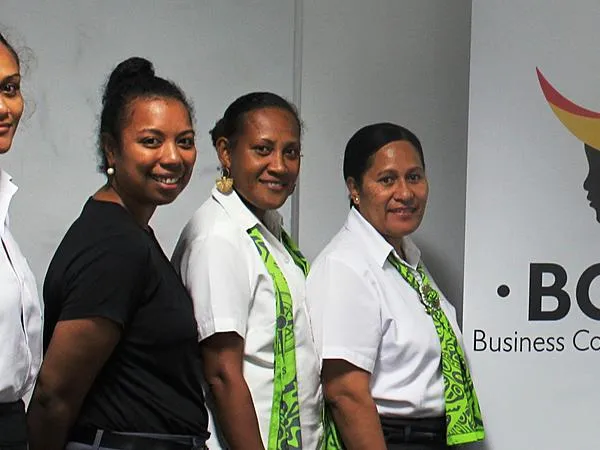
Committed to ensuring women do not lose employment as a result of FSV, BSP’s Head of Support Services, Alicia Sahib (Far Left) engaged the BCFW to review BSP’s workplace policy, ensuring it was in accord with best practice.
Did you know that Papua New Guinea’s private sector has a suite of best practice and culturally appropriate resources to help it combat the negative impact of Family and Sexual Violence (FSV)? These resources not only provide critical and compassionate support to FSV-impacted workers they also help businesses save money.
The Cost to Business
A survey conducted by the PNG Business Coalition for Women (BCFW) and World Bank revealed that 94 percent of business leaders surveyed believed their staff experienced FSV and that violence against women negatively affected their businesses. It is estimated that the equivalent of 10 percent of company payroll in PNG is lost due to FSV. One of the BCFW’s member businesses in the resources sector calculated that FSV cost it 3 million kina per year just in lost staff time!
Executive Officer of the BCFW, Evonne Kennedy, reports that “FSV hurts businesses irrespective of where it occurs … whether it’s at work, at home, or in the community.” FSV causes lower productivity amongst not only those staff who experience the violence but also staff who try to assist them, as well as the perpetrators themselves. Kennedy explains that impacted staff tend to take more days off work, their minds are often not ‘on the job’ and they may be physically impaired from working properly.
In addition to lower productivity amongst FSV-impacted staff are several increased business costs associated with additional recruitment and training, security requirements, insurance premiums, litigation, and administration.
A Policy to Help Business
The BCFW began developing resources to assist businesses reduce the damaging impact and costs of FSV in 2014. Origin Energy CEO and foundation BCFW Chair, Lesieli Taviri, recalls that this was in direct response to a plea for assistance from the PNG business community. “We [PNG business leaders] all knew we had to do something about FSV and the toll it was taking on our staff and our businesses but we just didn’t know where to start or who to turn to. With the help of international experts, as well as our own member businesses, we were able to develop our FSV Workplace Policy and associated trainings and consultancy services.” Several additional and complementary resources to assist businesses address FSV have since been developed and to date 46 PNG businesses have utilised at least one of these.
“Implementing an FSV workplace policy is paramount to a company laying the right foundations for a coordinated and systematic approach to tackling FSV” advises Kennedy.
Acting as a blueprint for companies, the policy works towards providing a course of action should employees be subjected to violence, warns perpetrators of their wrongdoings and the consequences of their behaviour and lastly works towards shifting cultural perspectives – educating peers that violence in any form is not to be tolerated.
Businesses Taking Action
BSP, Oil Search, Steamships, NCS, Nambawan Super and Hastings Deering are among the many businesses who have implemented the BCFW’s FSV policy. Although these businesses are very different from one another, the FSV policy has equal applicability and one of its strengths is that it can be adapted to suit individual business characteristics and requirements.
Indicative of this are the different measures businesses take to prevent the incidence of violence occurring as well as the various ways they support staff and respond to incidents they cannot prevent.
“BSP has shown exceptional leadership across PNG’s finance sector and indeed the broader corporate community when it comes to addressing FSV and supporting impacted staff” states Kennedy. Not only has BSP implemented an FSV policy it was also instrumental in the establishment of the private sector’s first women’s refuge and case management centre – ‘Bel Isi PNG’ – in Port Moresby in 2018. (*The Bel Isi PNG model is not just a first for PNG but also the world and something for which the PNG private sector should be commended.)
Head of Support Services at BSP, Alicia Sahib, fully embraces the importance of an FSV policy and advocates the need for such a policy to encompass leave guidance around absenteeism.
“When I first started working for BSP, as per policy, I let a female employee go due to absenteeism. This incident always remained at the back of my mind as I didn’t feel I really got to understand her ‘no show’ to work. As time passed I became aware of domestic violence suffered by employees, and to my dismay, I also learned the employee’s ‘no show’ was a result of domestic violence.”
Committed to ensuring women do not lose employment as a result of FSV, Sahib engaged the BCFW to review BSP’s workplace policy, ensuring it was in accord with best practice.
“Our FSV policy shows employees that we care. It allows employees to feel safe, to come forward, and when they do ask for help or leave, then each of our respective line managers know the appropriate steps to take.” Launched in May 2019, BSP’s FSV policy has had numerous survivor cases.
Businesses Benefit
“When you look at the data associated with BSP’s FSV policy experience, as well as the experience of our other member businesses, you quickly come to realise that a policy driven and systematic approach to addressing FSV is not only a ‘life saver’ but a ‘cost saver’ too” enthuses Kennedy. “Staff welfare and safety improves, as does productivity, while costs associated with problems like absenteeism and staff turnover decrease.”
With a suite of culturally appropriate and best practice FSV resources now readily available to businesses via the BCFW, Taviri says the question is no longer “What can we do about FSV and the negative impact it has on our staff and our business?” Instead, the question is “Why isn’t our business doing something about FSV?”
To learn more about the BCFW and how it can help your business efficiently and compassionately combat FSV visit: www.pngbcfw.org. Additional resources are available to improve the leadership and management skills of talented female staff, to prepare senior female staff for executive level positions and board representation, as well as to increase the number of female owned businesses in supply chains.
The BCFW is PNG’s ‘go to’ resource for gender equality. It is supported by the Australian Government in partnership with the Government of Papua New Guinea as part of the Pacific Women Shaping Pacific Development program.
Follow on LinkedIn:
PNG Business News
Be the "First" to get our exclusive Digital Magazine & Weekly Newsletter.