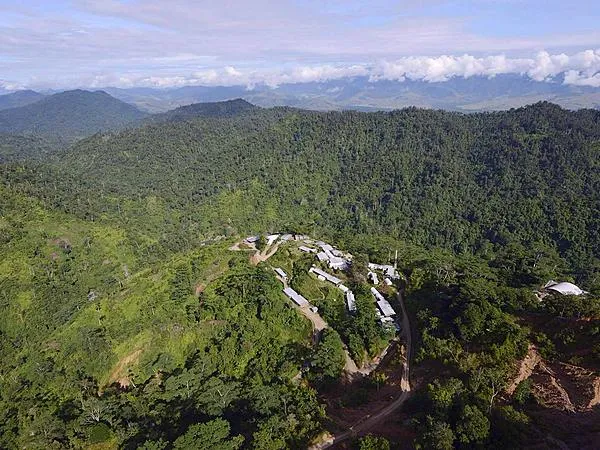
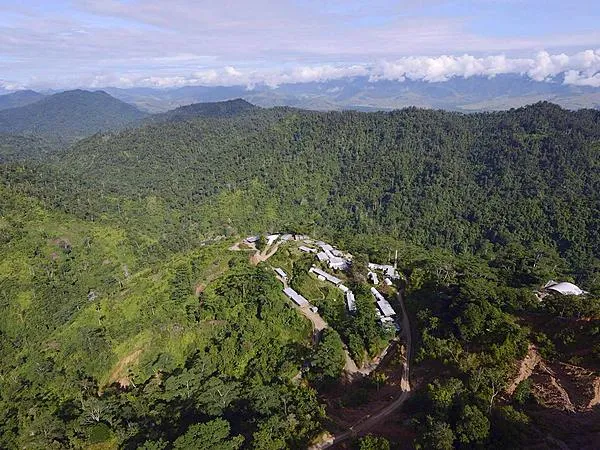
By the end of the month, a technical team from the Papua New Guinea technical (PNG) Mineral Resources Authority (MRA) will soon be tabling an assessment on the details regarding the construction of the Wafi-Golpu Mining project to the mining advisory council (MAC)
According to MRA managing director Jerry Garry, “Permitting of a special mining lease for large projects will require a different pathway than permitting a medium scale to small scale mine under the mining lease,” he said. “For a special mining lease, requires three distinct pathways for permitting. One, environmental permitting is a mandatory requirement and is done independently through the environment act under the custody of the Conservation and Environment Protection Authority (Cepa). That process has been done and Cepa has issued the environmental permit for the Wafi-Golpu project.
“The other is technical, from the mining perspective,” he said. “That includes looking at structures to be built on the ground, the roads the buildings, the processing plants. Because it will be an underground operation, we will also look at designs to critically ensure that the integrity of the structures and any development met the expected standards. Once that is done and we are satisfied, we will give the green light for them to go and construct. During construction, we also provide that oversight to ensure that it is done safely. We have looked at all the proposals. Our technical team is about to table the technical assessment to MAC for the council to deliberate on. We anticipate that process to conclude by at least the end of March.”
Garry added that if it goes to the MAC and the council was okay with it, then the council would deliberate on the application. The third stream was the mining development contract, he said.
“It’s between the State and developer to go by the books in terms of the benefits and any fiscal stability that they want,” he said. “When that is locked in, then we have a lower level called a development forum which will then involve MRA and State team to negotiate with the provincial government, LLGs and landowners in terms of benefits.”
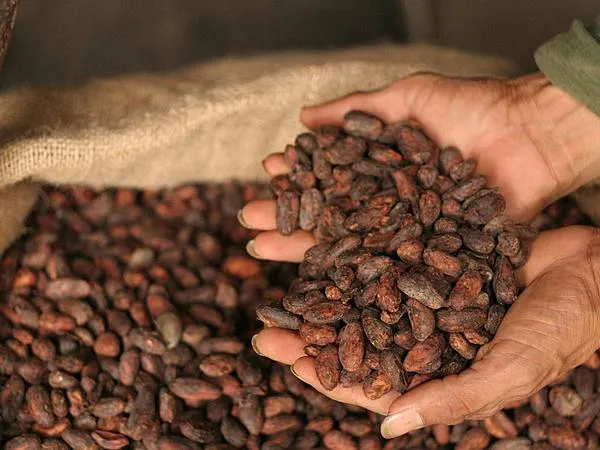
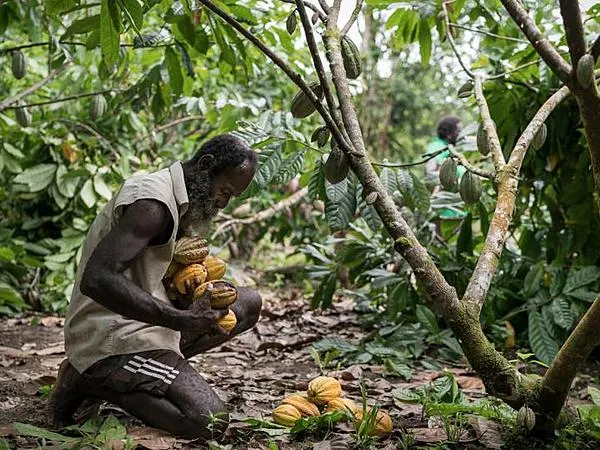
The government has so far put in K19 million for cost support to cocoa.
According to Agriculture and Livestock Minister John Simon, the high-quality cocoa needed to be produced for the price to stay at K3 per kg. He added that last year, it was K10million and this year, K9 million as an incentive to growers to increase production.
He said that what was being rolled out now was the K10 million from last year.
“This year, the Government has allocated another K24 million (for agriculture price support), of which we have given another K9 million to cocoa, which makes it K19 million,” he said. “This money is for you (cocoa farmers). The money, however, will only be paid when you bring out your cocoa and weigh it on the scales.”
He added, “I want to see men and women in the villages who are involved in cocoa, I want to visit them, I want to see that their cocoa gardens are clean, I want to see a good production of cocoa, I want to see happy farmers who are receiving money.”
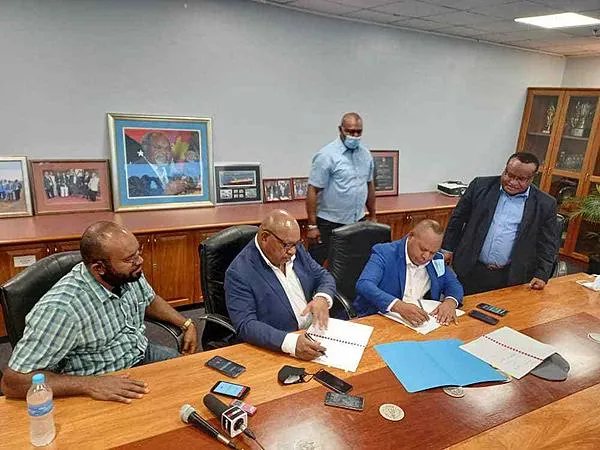
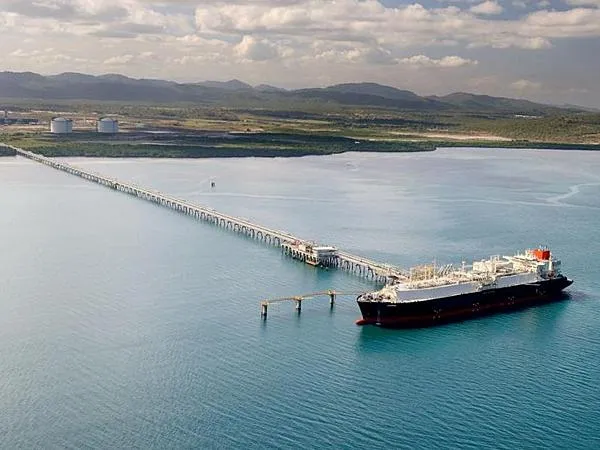
To set out how benefits from the PNG LNG project will be divided between two provincial governments, Papua New Guinea's Governors Hon. Philip Undialu (Hela province) and Hon. William Powi (Southern Highlands province) have recently signed a Memorandum of Agreement.
In 2009, benefits from the PNG LNG Project to the provincial government and landowners were agreed during the UBBSA when the Hela region was still part of the Southern Highlands province, but three years later in 2012, the Hela region became a province.
With oil and gas and wells supplying gas to the PNG LNG Project located in both provinces, leaders decided on a split of the benefits agreed in 2009, and instructed the Mineral Resources Development Company (MRDC) to work out the formula.
“First and foremost, we want to thank and pay homage to Grand Chief Sir Michael Somare for delivering the PNG LNG Project, the single biggest investment ever undertaken in our nation’s history. The project remains a milestone achievement for the nation by the founding father, whose passing we are mourning at this moment.
“We also thank and remember late Anderson Agiru, former governor of Southern Highlands and foundation governor of Hela, for his role in delivering the project, and negotiating the benefits for the landowners and the provincial government.
“At that time, the Hela region was part of Southern Highlands province. Work had begun for the establishment of a new province, and it was agreed that the benefits to the southern Highlands province agreed under the UBBSA would be reviewed once Hela province was established.
“MRDC undertook that exercise and worked out a formula for the split of the benefits between the Southern Highlands and Hela provinces, and we want to thank MRDC for almost their years of hard work put into this document we signed today.
“Essentially, this Agreement allows benefits from oil and gas fields in Southern Highlands to be split 60% (Southern Highlands) and 40% (Hela). Likewise, benefits for oil and gas fields in Hela province will be split 60% (Hela) and 40% (Southern Highlands).
“To illustrate, SHP will retain 60% of the benefits from PDL2 (Kutubu and Moran), which includes royalties, SSG funds, and development levies.
“Hela will retain 60% of benefits from all gas fields, which includes royalties, development levies, and the Kroton Equity as well.
“The Southern Highlands Provincial Government equity in Bank South Pacific (BSP) and Petroleum Resources Kutubu (PRK) will also be split, with 40% going to Hela province.”
“We are proud and honoured to sign this agreement on behalf of our people.
“This split ensures equitable distribution of benefits from this project to the two provinces so that vital social development projects that uplift the lives of our people can continue to be delivered.”
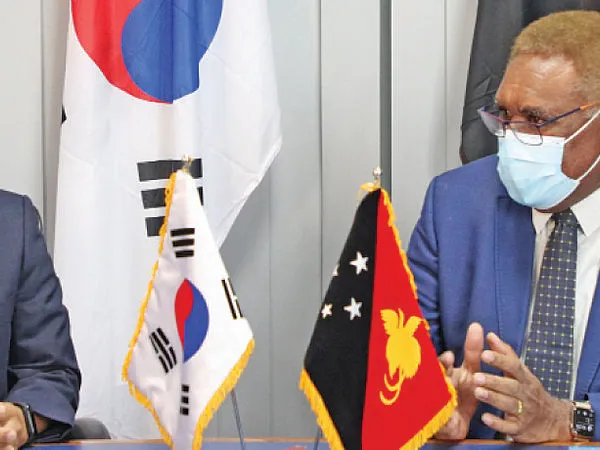
To collaborate in fisheries infrastructure development, the National Fisheries Authority (NFA) has signed a Memorandum of Understanding (MOU) with the Korea Fisheries Infrastructure Public Agency of the Republic of Korea on Fisheries Ports Development.
The MoU provides a framework for both these groups to facilitate the sharing of best practices and exchange of technical and administrative human resource in the Fisheries Ports Development. This is also to support the development of the fishing industry.
National Fisheries Authority Managing Director John Kasu said, “We’ve been having these discussions with the public agency in Korea and that has been for a number of years. So finally last year we agreed and as a result of that we agreed and as a result of that, we developed this MOU.”
He said that this MoU is significant because they are building important fisheries infrastructure at the moment. “So it’s an important MOU, for us moving forward,” he said.
Ambassador Kang, meanwhile, said. “The signing ceremony today may be small, but I’m sure this event is a big step toward our solidarity and our partnership in the future.”
In support of the 2021 budgets and to boost the pandemic response, the government has secured a K1 billion loan from the Japan International Cooperation Agency (Jica).
The funds will be used to support regional health centres. Jica will disburse about K988 million to help the national budget with an interest rate of 0.1 per cent per annual and four-year grace period which benefits the economy.
According to Treasury Minster Ian Ling-Stuckey, “Subsequently, the PNG government reached out for international support and we thank you (Japan) for responding. Today, we are here to execute a loan agreement that was part of the 2020 financing plan but due to some delays, it was brought forward to this year. There is a process to follow to ensure the loan agreement is consistent with PNG’s Loan Assistance Act of 1971. As the minister responsible, after the signing of this particular agreement, the borrowing will become effective.”
He added, “The loan will support our budget for 2021. This loan continues the Marape government’s policy of replacing expensive commercial loans with good, cheap concessional financing. Last year, based on the financing plan, we raised K5.379 billion in concessional financing and I am proud to say that the total cost of those loans averages about 1.5 per cent and certainly no more than two per cent. That demonstrates our commitment to continue seeking support for concessional financing. Clearly, the strategy here is to pursue a revenue strategy because during the last 15 months under the COVID-19 conditions, the Marape government is focused.”
The grants coursed through the Bougainville partnership commodity support facility will benefit cocoa farmers and women.
An initiative of the Autonomous Bougainville Government supported by Australia through the PNG-Australia partnership, and the New Zealand government, the grants range between K300,000 and K500,000 benefitting.
Some of those selected include Kukurina Business Group which will use the grant to improve crop quality and rehabilitate cocoa blocks, among others. Jonathan Kopas head this group, with support from treasurer Larry Augustine, secretary Hilda Kopa and vice-secretary Peninah James.
Meanwhile, Australian High Commission’s counsellor for Bougainville Clayton Harrington said that obvious were the economic benefits of the programme. “Australia believes in the future of the Bougainville cocoa industry to improve livelihoods,” he said.
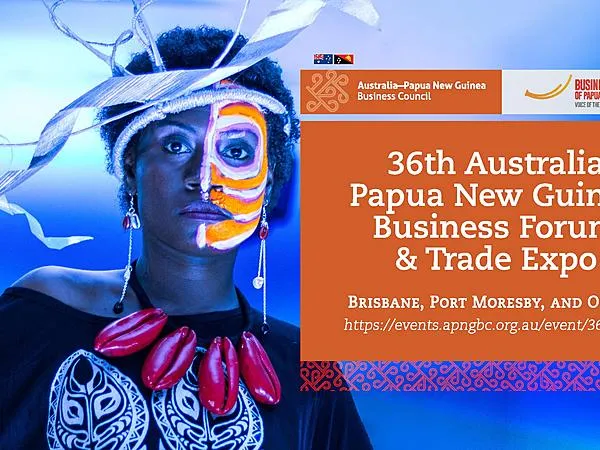
The Australia Papua New Guinea Business Council and the Business Council of Papua New Guinea are pleased to be re-launching the 36th Australia Papua New Guinea Business Forum and Trade Expo, which was deferred from 2020 to 24 to 26 May 2021. For the first time ever, this event will be held concurrently in Brisbane (at the Royal International Convention Centre), Port Moresby (at Hilton Port Moresby Hotel) and also online, with a shared speaking program.
The Forum theme for this year is “Reimagining the Future Papua New Guinea”. The theme aims to capture the important message that Australia and Papua New Guinea along with the rest of the world, must move and pivot with the times and circumstances in order to prosper. It also looks to advance discussion about greater diversity in the PNG economy. Coronavirus and all its related restrictions and issues, along with advancements in technology mean that we must, collectively, think of different ways to work in trade, economy and indeed life. Online connectivity appears to be one of the important forms of communication that will continue for the foreseeable future.
This Forum is distinctly established as the leading annual bilateral business meeting between Australia and Papua New Guinea, and builds on the work both Councils have done over more than three decades in growing the bilateral business relationship.
The program for the Forum includes an overview of the political and economic climate, particularly issues which affect business and investment, and will include specific sessions by expert presenters on topics such as the Covid-19 Pandemic, emerging economic business opportunities in PNG, agribusiness, infrastructure, SME growth, Papua New Guineans in the Australian labour market, and resources.
Key government ministers from Australia and Papua New Guinea, and a range of other expert speakers, have been invited to address the Forum to inform business representatives of policy issues in their portfolio relevant to business, and they will be able to join us from whichever location they are in, whether Brisbane, Port Moresby or elsewhere. Delegates will be able to engage in lively interaction with presenters in most sessions either live in person, or via the online platform with a Q&A feature. Video recordings of presentations will become available online soon after they are given so that delegates may go back and revisit portions they may have missed.
There is something in the program for just about anyone who has an interest in the bilateral business and economic relationship and in the economy of Papua New Guinea.
Delegates will be able to connect via the online platform by sending messages and/or booking appointment times with each other, particularly if they are not attending the Forum at the same venue.
The Forum will again feature a Trade Expo for Australian and Papua New Guinean companies wishing to use the opportunity to match their goods and services to clients and purchasers in each country, and to broaden their business relationship. An innovative development this year is that all the trade booths will be online, with a limited number of physical booths at each location (as well as online) due to Covid restrictions. Booth exhibitors will be able to display their corporate logo, upload documents and short videos for visitors, include links to their own website, and chat one-on-one with delegates online, who can request meeting times with them via the online platform. This is a new, exciting and pioneering way to do things, and we will endeavour to have answers for you immediately should you encounter any problems while using the online platform.
Register early for this conference as in-person spots at each location are limited and demand will be heavy. To register, complete the online booking process at https://events.apngbc.org.au/event/36APNG/. Please take care to show where/how you wish to participate. There are many new features that we will be introducing during this Forum as we look to resume regular business to business engagement, which has been so disrupted during the last year. This is a very good value conference.
Enquiries about registration, Trade Expo bookings and accommodation should be directed to the secretariat of the Australia Papua New Guinea Business Council, on telephone + 61 7 3348 5142 or by e-mail at info@apngbc.org.au or to the Business Council of Papua New Guinea on telephone + 675 323 8465, fax + 675 323 5162 or by e-mail at admin@bcpng.org.
We look forward to hosting you at the 36th Australia Papua New Guinea Business Forum and Trade Expo on 24-26 May 2021, whether in Brisbane, Port Moresby, or Online.
The Singapore company exploring sand mining opportunities in Madang in Papua New Guinea has withdrawn its interests.
According to the Mineral Resources Authority (MRA) Jerry Garry, the company had told them of its intention to pull out.
“The (mining advisory) council has not deliberated on the withdrawal application,” he said. “As and when it’s received and tabled before the mining advisory council, we will then affect the withdrawal of the licence, what we technically call a ‘surrender’. They have written to our technical branch stating their intention to surrender the tenement. But it has not come to the attention of the mining advisory council. It is highly likely that it will come to the council in the next meeting which will be about three weeks from now. It is a voluntary withdrawal by the proponents and it has nothing to do with MRA. We didn’t force them to withdraw.”
He added, “Unless and when we see that the project proposal has detrimental consequences to people and the environment, the council has the power to force them to reconsider their application in terms of demarcating, realigning their boundaries. In the case of the sand, it’s really an exploration license that they applied for not a mining lease.”
Meanwhile, the Madang tourism industry association chairman Sir Peter Barter said the mining would affect the environment.
“These types of projects, especially to do with our marine ecosystems, will affect the leatherback turtle sanctuary in the Sumgilbar LLG,” he said.
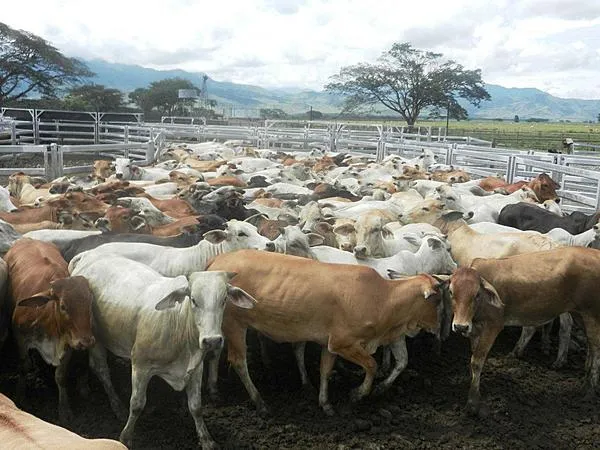
The signing of a Memorandum of Understanding (MOU) between the Livestock Development Corporation (LDC), ENB Provincial Government and the Rabaul District Investment Corporation Ltd at Kurakakaul has pledged the government K1 million towards setting up the Kurakakaul abattoir and ranch rehabilitation project in Rabaul, East New Britain.
Agriculture and Livestock Minister John Simon said that the government wants to help this province through this MoU.
“We want to revive the cattle industry in terms of cattle, sheep, goats and other livestock hence, we are also committed to reviving the abattoir and will provide a funding of K1 million to get this project started,” he said. “We will bring in cattle and other livestock to be distributed to farmers, who will look after them, and sell them to the abattoir. A stockyard for cattle will be built as well.”
He said that the government has made the same commitment in remote Sialum, Morobe, where a stockyard would be built to buy cattle from local farmers.
The MOU was signed by Minister Simon, ENB Governor Nakikus Konga, Rabaul MP Dr Allan Marat, Department of Agriculture and Livestock Secretary Daniel Kombuk, ENB provincial administrator Wilson Matava.
The increase of oil prices above US$60 (K207.90) has made Papua New Guinea’s Mineral Resources Development Company satisfied.
According to the company's managing director Augustine Mano, the average oil price last year was at “historical lows”.
“This year is better than last year given the oil price is above US$60,” he said. “Last year, the oil price average was at a historically low and on average for the year around US$32 (K110.88). With the Covid-19 pandemic, companies around the world struggled. PNG was no different. If the price holds at US$60 for this year, it will be a strong recovery for the MRDC group.”
Mano added that the revenues for Kumul Petroleum Holdings Ltd, MRDC and the petroleum sector would be important.
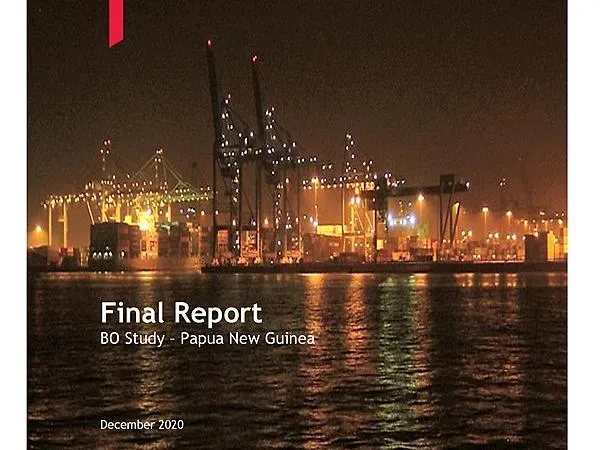
As a need under the EITI 2019 global practice standard, the Papua New Guinea Extractive Industries Transparency Initiative (PNGEITI) has published its first Beneficial Ownership (BO) Report.
Head of PNGEITI National Secretariat Lucas Alkan said that this has already been published on its website last December 2020. “All EITI implementing countries including Papua New Guinea are required to produce a Beneficial Ownership Report by the 1st of January 2020,” he said.
Alkan said to fully comply with this requirement, PNG should have a public register that lists the beneficial owners of corporate entities who hold a particular interest in oil, gas, or mining contracts. This also includes the identity of the beneficial owner.
Besides implementing the EITI Standard, PNGEITI is devoted to making sure Beneficial Ownership information disclosure is implemented through its role in; Open Government Policy National Action Plan 2018-2020; the PNGEITI Annual Workplan 2019; and the PNGEITI BO Roadmap for Implementing disclosure including existing legislation such as the Anti-Money Laundering and Counter-Terrorist Act 2015.
Alkan said, however, that reporting entities did not fully understand the meaning of Beneficial Ownership Reporting. “This is because they were unable to provide complete information of what was requested in the reporting template,” he said. “In addition to the challenges faced in obtaining information for BO reporting, PNGEITI still does not have a legal basis to collect the required BO information which makes it difficult to obtain complete information from the companies.”
There are, of course, many challenges that the report found. These include unfamiliarity with the BO concept especially for non-publicly listed companies; several reporting entities did not attend the BO training workshop, and complex corporate structures especially where there are multiple layers of ownership involving several jurisdictions and different types of legal entities.
With these many gaps, the report recommends to have a dialogue with the following organizations: the Financial, Analysis and Supervision Unit (FASU) of the Bank of PNG, Investment Promotion Authority (IPA): and the Mineral Resources Authority (MRA).
Falling export earnings have impacted the external sector of Papua New Guinea. But surging gold prices and import compression contained the damage.
According to the World Bank PNG’s economic update titled “Dealing with a triple crisis”, the current account surplus broadened in the first half of 2020, which increased by 14 per cent. This was supported by a strong merchandise trade performance. It said that even if prices for major exports were reduced, the earnings from the mining sector, especially gold exports, posted a surplus.
In addition, continued import compression brought about an overall current account surplus. Meanwhile, lower export earnings were more than offset by a 24 per cent decline year-on-year during the first half of 2020.
Negative was the trade services balance, caused by negative balances on education, transport, and other business services. The deficits in income and services narrowed. These developments led the current account into a positive area.
Earning exports decreased by 14.3 per cent, and prices of major exports also dropped since the beginning of the pandemic. Exports from mineral resources - which includes LNG - went down to 15 per cent year on year, crude oil decreased to 22 per cent and copper, 18 per cent. In addition, agricultural commodity exports decreased by 9.2 per cent, caused by lower export values for coffee, cocoa, and logs - with a little bit offset from palm oil exports.
In spite of this decrease, the increase in the cost of gold outweighed all of these impacts, giving rise to the total export earnings to 9 per cent year on year.
There will be confidence in the PNG economy in 2021.
According to Bank South Pacific Group Chief Executive Officer Robin Fleming, this was attributed to the resource sector with several major projects in the pipeline - such as the Fiscal Stability Agreement signed between the Government and Total and Joint Venture Partners of the Papua LNG Project. This also included the Environmental Permit awarded to Wafi-Golpu Joint Venture for the mine negotiations to gin on the Wafi-Golpu Mine.
“Certainly we feel that by the end of this year there is going to be far more confidence within the economy. The Wafi-Golpu Mine, and there is a much higher level of confidence within Lae as well, that the business community is looking at further expectations of growth,” he said.
Other drivers to this growth also included the ongoing investments in infrastructure and the improvement of State-Owned Entities.
“The Government has indicated in its Budget that it’s looking to continue with some of the development of the road construction, for the business community as they know they (PNG Power) got the capability to put their capital to investments which are revenue-generating and not just investments which are protecting their own infrastructure,” he said.
The World Bank Groups Papua New Guinea Economic Update of January 2021 said that the Papua LNG Project and the fast resolutions related to key mining projects can contribute to higher inflows of taxation revenue and foreign currency.
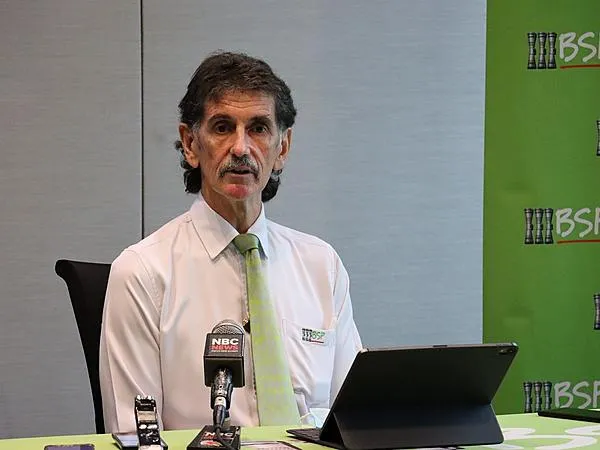
Bank South Pacific (BSP) Group expects its financial results to be no less than last year’s.
This was according to BSP chief executive officer Robin Fleming, who said that the year started off well for the bank.
Ending December 31, 2020, the bank made a net profit of K806.2 million, a 9.5 per cent decrease compared to K890 million in 2019. The decrease was caused in part by the effects of the pandemic.
Other highlights for 2020:
Total assets up by 12.3 per cent and loans up 3.0 per cent
Cost to income stable at 37.4 per cent, 37.7 per cent in 2019
Capital adequacy steady at 23.3 per cent, still well above the Bank of PNG requirement of 12 per cent
Loan provisions increased to 5.9 per cent
Dividend yield at 11.17 per cent based on the share price at K12
Increased profit contributions.
Fleming said that even with the challenges of COVID, the bank performed well in 2020.
“For 2021, we’ve certainly planned on archiving a result which is no less than 2020,” he said. “And the year has started off well and from an investor perspective always caveat by saying that if there had been any material change in our profitability, we would be compelled under the continuous disclosure (requirement) to announce to the market. Therefore absent of any continuous disclosure announcement, we can say that this year has started off as we would have expected according to plan.”
He noted, “There has been no event that gives BSP indication to signal to the market that there’s been a change in our operating performance which would require to make a disclosure to our investors.”
The Morobe government has recently passed its budget worth K662,675,000.
Morobe Governor and finance chairman Ginson Saonu said that this budget is for developmental and rural growth, adding that the budget had K204,026,700 from internal revenue and K458,648,300 from the national grants.
“The 2021 internal revenue total estimate is increased by 10 per cent, while the national grants total estimate is increased by 34 per cent,” he said.
Included in the national grants are the following:
teachers’ salaries (K165,345,800
district services improvement programme (K90,000,000)
special support grant (K30,000,000)
staffing grant (K34,644,300)
teacher leave fares (K7,210,300)
public servant leave fares (K1,239,500)
provincial services improvement programme (K10,000,000)
grants to local level governments (K9,717,500)
teachers’ leave fares – former year’s unspent (K34,700)
provincial services improvement programme – former year’s unspent (K12,089,000)
other public investment programme (K96,840,000)
public servant leave fares – former year’s unspent (K27,200)
provincial support grant – former year’s unspent (K1,500,000) totalling K458,648,300
The estimates of the internal revenue from services and goods tax amount to K124,241,544.
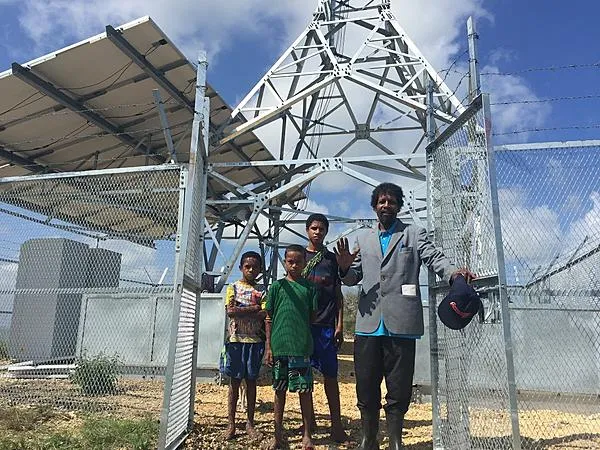
In order to achieve full radio, television and internet coverage, the Ministry of Information and Communication Technology plans to help the Autonomous Bougainville Government through improved tower infrastructure and fibre connectivity.
In a statement, ICT Minister Timothy Masiu plans to seek cabinet approval to roll out these programs. He said that his ministry is putting a submission through the NEC proposing how to roll out these programs.
He also added that the National Broadcasting Company is planning the establishment of two towers in Panguna and Wakunai, and installing the two FM transistors and accessories at these sites.
“It will also see the existing shortwave transmission from the Kubu site being relayed through these FM sites carrying the local NBC Bougainville broadcast to more people in Panguna and Wakunai and the surrounding communities,” he said. “We must plan and invest in the rollout of tower infrastructure all around the island to deliver improved and new mobile broadband services and to enable high-speed internet bandwidth access.”
He also added that they are in discussions with a private company to pull an undersea fibre cable from Taro Island. The idea, he said, is to land this in Buin and work it along the east coast.
“The existing undersea cable managed by PNG DataCo landed in Arawa, and this adds to the current challenge to connect the entire Autonomous Region of Bougainville,” he said.“My ministry has an interest in pursuing accessibility and affordability policies so that our people have access to affordable services through better tower infrastructure, connectivity and reliable broadband access. Besides the department also wants to service the atolls and health centres with VHF radios through the universal access scheme administered by NICTA.”
The Internal Revenue Commission has signed a Memorandum of Understanding with the Gulf Province in Port Moresby.
IRC Commissioner-General Sam Koim said that they have also forged similar partnerships with other provinces except for Hela, Southern Highlands, and Gulf and that this partnership is very timely because they will also be forming relationships with others.
He said that these are the places where businesses are taking place.
“With the Papua LNG project signing, Pasca and other significant projects taking shape.,” he said. “These projects will bring a lot of revenue to the province and it is important for the tax office to be close where business activities are happening so we can collect the taxes.”
This is the reason why they are going forward with these partnerships, he said.
“We are also undertaking a project where we are identifying where the businesses are operating and where the money is coming from so we will be degrouping a lot of businesses who file from the headquarters in Port Moresby.,” he said.“So we will be making sure that we collect the goods and services taxes (GST) at the point of sale so that whatever the 60 per cent is attributed to that point of sale and we can give that per cent back to the province and help in generating that money.”
Meanwhile, Gulf Governor Chris Haiveta said that they have embraced this partnership as they both can help each other with revenue programs, among other things. “We will province an office space and housing for the staff to take this partnership forward and work with the tax office to deliver the much-needed services moving forward,” he said.
The Global Sustainable Seafood Initiative (GSSI) has welcomed the country’s Fishing Industry Association (FIA) as a funding partner.
According to Fishing Industry Association (PNG) president and chairman Sylvester Pokajam, this partnership was an achievement for them to improve and to raise their commitment to the conservation of the ecosystem and to protect people who are working in the industry.
He said that to do this, several approaches such as the marine litter and fishing gear management practices and labour onboard improvement should be implemented.
“This partnership is also a great opportunity to collaborate with global stakeholders to ensure sustainability, transparency and traceability in the seafood supply chain,” he said.
Established in 1991, the FIA provides a voice for the fishing industry and encourages promotion in the country.
To address the problems of electric supply in the region, PNG Power Limited has focused its efforts on addressing key issues in the country.
According to Managing Director Flaggon Bekker, the organisation was split into two - corporate and execution - to see how to solve these problems.
“With the split in the organisation, there are no-cost implications or job loses rather we are having staff working in the right places and addressing a specific problem,” he said, adding that they are looking at other problems aside from ageing equipment that causes power outages.
“For land issues, we need local and provincial governments’ involvement, we want to execute the project but we can’t leave the solutions for landowners,” he said. “We need all the governments around the PNG Electrification Partnership (PEP) project to engage with us to address this because the projects are important and are national projects.”
To address illegal power connections, PNG Power has introduced smart meters.
“This (smart meters) is a project we are working with donor partners as a solution for illegal connection,” he said. “Smart meter is a meter that goes in and comes out and is digitally linked. When that difference changes then there is a leak and there is an illegal connection.”
The group is also looking at fixing specific parts of power grinds in the region.
“Solutions will be different in different places because the problems might be slightly different and components can be different but the same strategy will be applied in all the power grids,” he said. “We will be looking at the certain parts of the grid and when we strengthen it (or the weakest link) this will help the whole grid.”
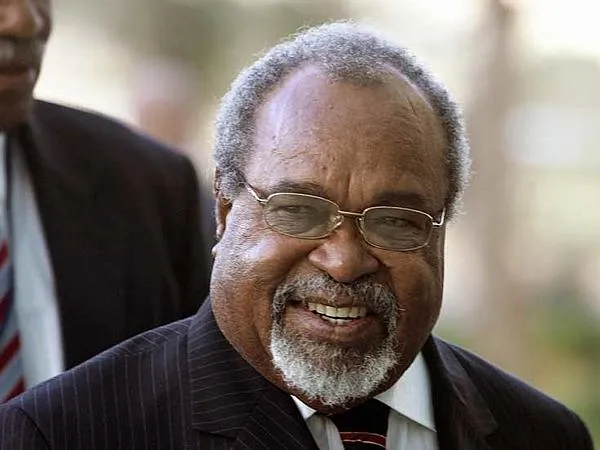
Papua New Guinea has lost a great man.
Grand Chief Sir Michael Thomas Somare, the man who led the country to independence in September 1975, died of pancreatic cancer at the Pacific International Hospital in the country’s capital. He was 84 years old.
The national government has urged all flags to lower at half-mast to honour the great man.
In a statement, Somare’s family announced, “Sir Michael was only diagnosed with a late stage of Pancreatic Cancer in early February and was admitted to hospital on Friday 19 February 2021. Sadly, pancreatic cancer is one of the most aggressive cancers that are rarely detected early. We as a family had only two weeks to look for possible treatments.”
Born on April 9, 1936, in Rabaul, Sir Michael was an important politician leading PNG into independence on September 16, 1975. His political career ran from 1968 to 2017 and has been the longest-serving prime minister for 17 years. He has been a minister of foreign affairs, governor of East Sepik, and the leader of the opposition.
The family said, “As a man of great faith, we are pleased that Sir Michael was able to be given his last rites and Anointing by Cardinal Ribat. In our presence, Sir Michael opened his eyes to acknowledge the blessing by his Emminence before passing away peacefully. We take this opportunity to thank the Cardinal for making himself available so quickly.”
The family added that in due time, he will be laid to rest in the East Sepik province.
“We, his children know that it is the wish of both our parents to be laid to rest together on Kreer Heights in Wewak,” the family said. “We thank everyone who in those few days had worked so hard to save Sir Michael’s life be it through a Medivac, healthcare itself or providing transport. We also thank everyone who wrote in to express their support and offer their prayers to our father and our family. We are humbled.”
With international borders shut down to contain the virus, PNG experienced a downfall in international travellers from January to June last year - 32,805 as compared with 75,556 of the same period n 2019, a drop of 57 per cent.
In addition, tourism-related businesses and enterprises suffered major losses, and there is a dearth of tourists visiting shopping malls and recreational parks
In an assessment survey conducted last September and October, tourism stakeholders and tourism product owners revealed interesting responses.
According to the chief executive officer of the Port Moresby Nature Park, park visits fell from 70,346 visitors between March and August 2019 to 42,435 over the same period in 2020, a drop of 40 per cent. There were also a lot of cancellations of programs and projects for the parks. Also suffered was the souvenir shop of the park as there were no tourists anymore.
However, some good samaritans also helped the park such as the Sir Brian Bell Foundation and the British High Commission paying entrance fees for their students and teachers.
In addition, the earnings of local artisans were disrupted too.
The hotel industry was another one of those hardest hit. Facing closure were the Ela Beach Hotel and the Holiday Inn Express because there were no tourists or visitors. Rates for room occupancy also dropped. But operations started picking up last quarter of 2020, especially with the food and beverages at the hotel.
Lodges also faced some massive challenges.
Aside from the airlines, travel agents such as PNG Explorers International, Mix Travel Limited also faced some losses and huge cancellations. Others such as dry cleaning, rental cars, barbershops, and florists all lacked customers.
Local arts and crafts vendors also struggled.
While it is believed that international travels boost the economy, domestic tourism can also contribute a lot. It is, therefore, everyone’s business to keep tourism alive in PNG.
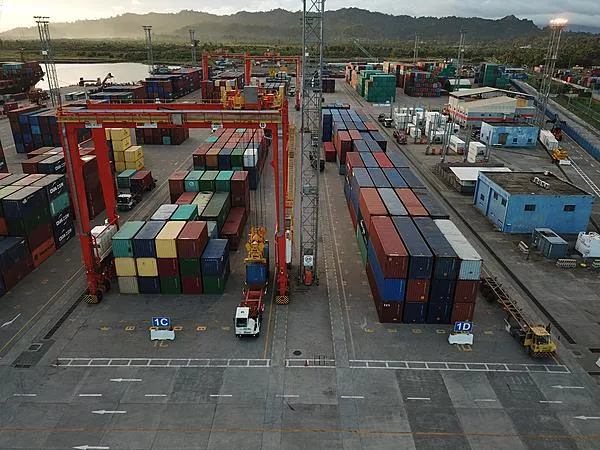
The major cause of the lack of foreign exchange is trade imbalance.
According to Acting Chief Trade Officer Richard Yakam, import service are costing the economy about K5 billion and that the constant increase and leakage in the economy is causing an imbalance in trade.
“This leakage in the economy has resulted in the forex issue that means more currencies are going out and that has impacted the Kina value,” he said. “The trade-in services particularly importing services such as the hiring of engineers in the mining areas, sub-contractors engagements in project sites, and recruiting of foreign professionals, and seeking medical treatment overseas are all added that is costing the country’s economy running into billions.”
Import services are also increasing, he said. The challenges in these sectors are therefore huge.
“For manufacturing sector across the board, I can’t give you a figure, but from the import of services like those who provide support services in the extractive sector is constantly increasing and is running into K5-K6 billion,” he said. “The cost of manufacturing itself is very high as well, mainly because of utility costs that hinder the growth and expansion in the economy like the freight costs, water, electricity, internet costs and infrastructure.”
The sad part, he said, is that the SMEs in the manufacturing sectors face challenges in meeting international standards for consumption reasons.
“This is one of the challenges that are faced by some of our local manufacturers who are not up to standard and it continues to be an impediment in the growth and expansion of the industry,” he said. “In the instances where the country is going for a third lockdown, while we are putting in restrictions we are killing the economy. Otherwise, the government should implement the COVID-19 Act and allow the business to continue.”
Crucial reforms have to be made so that the tourism industry can move forward.
According to Minister for Tourism, Arts and Culture Isi Leonard, they need to ensure that the environment for the tourism industry is significant to these changing times. He added that the enforcement of standards will add value to competitive advantage as a destination to ensure that the process of tourism goes smoothly.
“Papua New Guinea’s tourism industry is a sleeping giant and has a huge potential to generate considerable wealth for our country,” he said. “The tourism industry will play a vital role in growing Papua New Guinea’s economy by harnessing the huge untapped tourism potential and open doors to the outside world into our shores to a million different journeys."
He is confident that the national tourism plan will give the guidelines and frameworks for the tourism industry to get back on track.
“We have to take back our tourism industry at the local level to the national level,” he said. “Every citizen in the Informal Sector, MMSEs, SMEs and big corporate organizations in all sectors of the economy can effectively participate and contribute to the overall growth and productivity of the Tourism Industry in Papua New Guinea.”
The Wafi-Golpu landowners have finally voiced out their support to the National Government on the environmental permit given to mine developers.
The five associations chairmen - Victor Geactuluc (Yanta Development Association), John Nema (Hengambu Landowner Association), Jack Raban (Babuaf Development Corporation) of the Special Mining Lease (SML) area including Joseph Tetang (Wampar Pipeline Association) and Gae Galang (Wagan Outfall Association) - said they want the project to proceed and are asking Morobe Governor Ginson Saonu to desist from any purported court proceedings against the Sate about the deep-sea tailings placement (DSTP).
Saonu, however, said that Morobe’s position still stands. “I will do what is right, just and fair for everyone,” he said.
According to an independent body monitoring and evaluating process for the last four years, the landowners shouldn’t rush into things. The leaders argued that this process may cost Morobe and the provincial government millions of kina and added that the mining forum is the best place to discuss this problem.
Nema said that he has lost more than 20 of his community members to common natural calamities and lack of basic health services. “I am against the move by our governor to register another court proceeding against the National Government while my people are suffering and dying without seeing any real developments or benefiting from their land,” he said.
Geactuluc said that they don’t support the intention of the governor to take this to court. “We urge the good governor to refrain from wasting his time with his consultants and advisers but instead commit his time and resource to mobilise the SML, Pipeline and Outfall landowners through their associations in preparation for the upcoming Wafi Project MoA,” he said.
For his part, Tetang urged the governor to have a discussion on how he intends to recognise the Huon Gulf coastal communities benefit-sharing instead of fighting a losing arrangement to prevent DSTP. “That is why the developer has chosen DSTP because it is much safer and could not harm the marine resources or the coastal communities based on the research and studies conducted,” he said.
Follow on LinkedIn:
PNG Business News
Be the "First" to get our exclusive Digital Magazine & Weekly Newsletter.