May 18, 2026

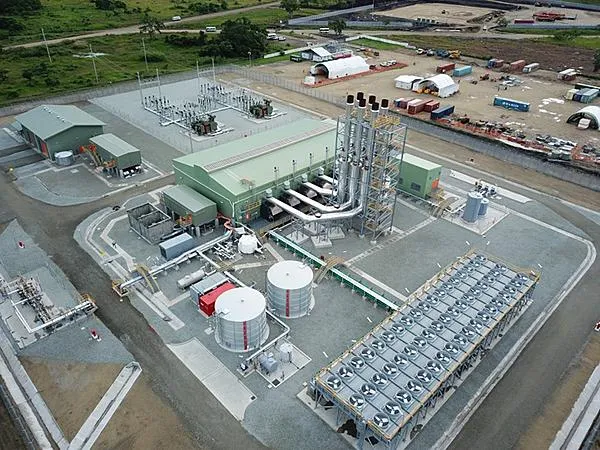
Kumul Petroleum Holdings Limited says it is seeking to advance smaller gas discoveries toward commercial development as Papua New Guinea moves to position itself within the global energy transition.

Speaking at the 41st Australia Papua New Guinea Business Forum and Trade Expo in Brisbane, Kumul Petroleum Chairman Gerea Aopi said Papua New Guinea still holds significant gas potential despite declining oil production.

“Whilst oil production has tapered off, PNG’s gas future is just beginning,” Aopi said.

“There is plenty of gas already discovered and a high likelihood of further gas discoveries in the next few years. PNG is not short of gas resources, however, we are short of time in the rapid transition towards renewable energy sources.”

Aopi said Kumul Petroleum is currently in discussions with other parties regarding licenses where gas discoveries have already been made, including Petroleum Development License 10 in Western Province.

The chairman said the company wants to ensure that smaller gas fields are also progressed toward development in the years ahead alongside larger LNG projects.

As a 19.4 percent owner in the PNG LNG Project, Aopi said Kumul Petroleum welcomed the early retirement of project debt late last year.

“Our priorities are clear: This additional PNG LNG Project income will be used to meet our cash calls, repay outstanding loans, and develop the licences where we are Operator — Pandora, Kimu, Barikewa and Uramu — to commerciality and fund future investments, such as acquiring equity in the forthcoming Papua LNG Project,” he said.

Aopi added that one of Kumul Petroleum’s main priorities is securing Papua New Guinea’s maximum mandated equity position in the Papua LNG Project.

“Kumul Petroleum’s principal focus at present is ensuring that we are in fact in a position to take up PNG’s maximum mandated equity position in the forthcoming Papua LNG Project and are able to carry MRDC in this shareholding,” he said.

According to Aopi, the key challenge for Papua New Guinea is not the availability of energy resources, but the speed and manner in which those resources are developed.

“The key message was not that PNG lacked the energy resources to drive growth but how the resources were developed and how soon,” he said.

May 18, 2026

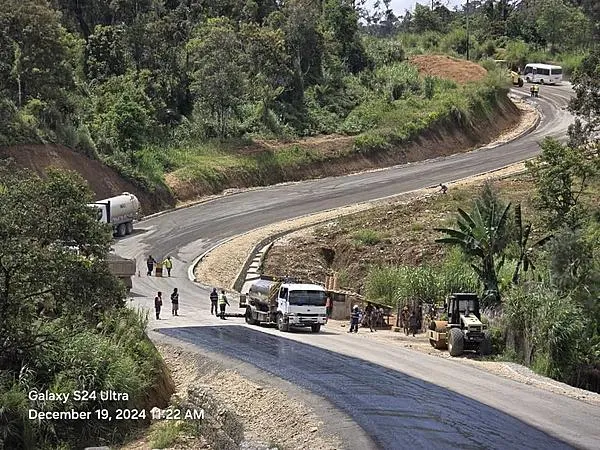
Prime Minister James Marape says major road infrastructure developments in West New Britain Province are demonstrating how transport connectivity can stimulate agriculture and broaden economic participation across Papua New Guinea.

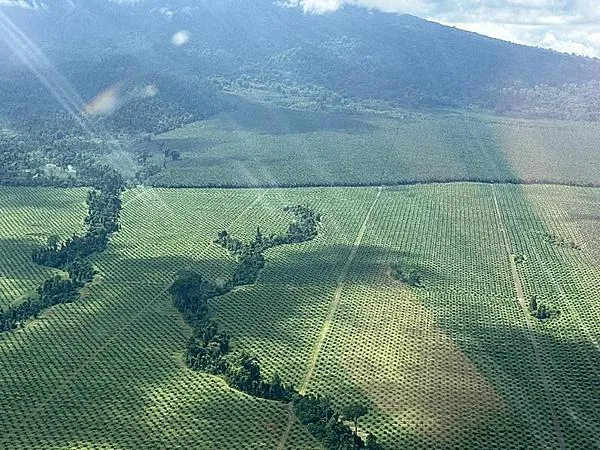
Speaking after travelling along the improving road corridor linking Kimbe in West New Britain Province and Kokopo in East New Britain Province, Marape said the expansion of oil palm developments alongside the road network showed how infrastructure investment could unlock economic opportunities for local communities.

“It is good to see that the new Road, or the improved Road we are doing from Kimbe to Kokopo, is taking shape,” Marape said.

“But more importantly for me, this Road is opening up Agriculture potential. It is encouraging to see Oil Palm growing along the sides of the Road. This shows clearly that when Government invests in Roads, Agriculture must expand alongside it.”

The prime minister said the road corridor is improving connectivity between West New Britain and East New Britain while also creating opportunities for rural landowners, farmers, and local businesses to participate more actively in economic activity.

Marape also acknowledged the efforts of the West New Britain Provincial Government, local districts, landowners, and oil palm stakeholders, including Hargy Oil Palms Limited, for supporting development initiatives linked to the national government’s infrastructure investments.

“I want all Provincial Governments to observe what East and West New Britain are trying to do. They are aligning Road development with Land access and getting their people involved in Agriculture development,” Marape said.

According to the prime minister, the visible expansion of oil palm developments along the road corridor demonstrates how infrastructure projects can encourage productive use of customary land while generating income and employment opportunities for local communities.

“This is a clear depiction that some Provinces are embracing the National Government’s development direction — where Roads go, Agriculture must follow,” he said.

“Five years ago when I travelled this area, there was no sealed highway or extended Oil Palm areas as it is now. So I am happy this economic development is taking place.”

Marape stressed that roads should not function solely as transport corridors, but also as catalysts for broader economic activity in agriculture, tourism, fisheries, forestry, and other productive sectors.

“May this Road not be wasted. May this Road become an Agriculture road, a Tourism road, a Fisheries road, and a Forestry road,” he said.

The prime minister said the Marape-Rosso Government remains committed to the Connect PNG program, which aims to strengthen national connectivity through modern infrastructure while ensuring that economic activity expands alongside infrastructure investments.

“The Road investments we are making must translate into real opportunities for our people. Roads must connect our citizens not only to each other, but also to markets, jobs, services, and economic participation,” Marape said.

May 18, 2026

Prime Minister James Marape says the government’s Connect PNG infrastructure program is intended to transform road networks into “economic corridors” that unlock agriculture and other renewable-sector opportunities across Papua New Guinea.

Speaking on the government’s nationwide road connectivity agenda, Marape said roads being developed throughout the country are designed not only to improve transportation, but also to unlock the productive potential of customary land and create sustainable income and employment opportunities for ordinary Papua New Guineans.

“The Connect PNG Program focus and the Roads we are opening up should be unbundling the economic potential of every Land right across our country,” Marape said.

The prime minister said the government is progressively linking provinces and districts through major road projects stretching across the country, including east-to-west Manus, east-to-west Sepik, north-to-south Bougainville, the Buka Ring Road, the Kerema-to-Alotau corridor through Port Moresby, roads linking Gulf into the Highlands, and strategic road links across Morobe, Western Province, New Ireland, and West New Britain.

According to Marape, the road projects are intended to stimulate agriculture, tourism, fisheries, forestry, and downstream economic activity in areas where communities live and own land.

“All these Roads, especially those closest to ports and economic centres, must be used productively,” Marape said.

“Provincial Governments must work with Districts, Local-Level Governments, and Communities so that the Lands alongside these Roads become economically productive.”

Marape said Papua New Guinea possesses significant untapped economic potential through its renewable sectors, particularly agriculture, where citizens can generate household income from customary land.

He pointed to smallholder oil palm schemes in West New Britain Province as an example of successful rural economic participation.

“You have close to 7,000 families engaged in smallholder extension around the nucleus estates, and many families are earning between K4,000 and K6,000 a month,” Marape said.

“That is the type of Revenue we are talking about when we speak of Agriculture — whether in Oil Palm, Coffee, Cocoa, Copra, Fisheries, or Tourism.”

The prime minister said the government’s “One Million Jobs” initiative and broader agricultural expansion programs are aimed at replicating similar success stories nationwide to enable more Papua New Guineans to participate in formal economic activity without leaving their communities.

“This country must not be lazy. Money can be earned from wherever you are on your own Land,” he said.

Marape described agriculture, fisheries, forestry, and tourism as Papua New Guinea’s “lowest hanging fruit” for broad-based economic growth and job creation, particularly in rural areas where most of the population resides.

“These Sectors can create jobs, empower families, strengthen communities, and grow our economy in a sustainable way while we continue to expand downstream processing and other industries,” he said.

The prime minister also revealed that before Papua New Guinea’s 51st Independence Anniversary on Sept. 16, the government plans to announce a policy framework that would allow properly registered customary land to be used as collateral through the National Banking Corporation and other financing mechanisms.

“Properly registered Traditional Land can become bankable Land,” Marape said.

He said the proposed reform would help Papua New Guineans access financing and participate more actively in agriculture, small business, tourism, and other productive sectors.

Marape also called on provincial governments, district authorities, and community leaders to work closely with the national government to ensure that road connectivity translates into economic outcomes for local communities.

“The future prosperity of Papua New Guinea will not only come from Mining and Petroleum, but from empowering our people to utilise their Land, Resources, and God-given opportunities in a productive and sustainable way,” he said.

May 18, 2026

BSP PNG | BSP says small and medium-sized enterprises (SMEs) need to build capability to take full advantage of the opportunities that will be created through the coming super-cycle of PNG resource projects.

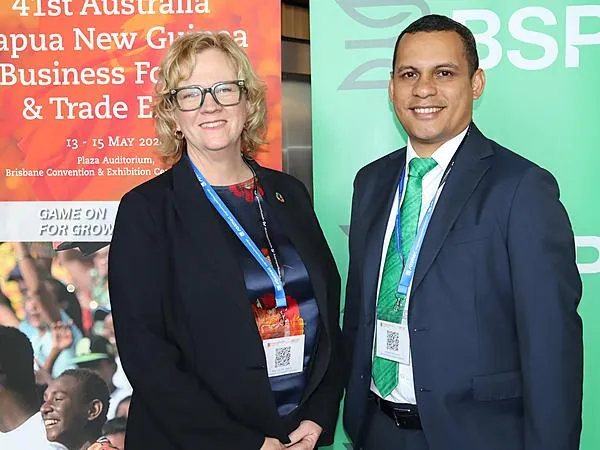
Speaking at the 41st Australia Papua New Guinea Business Forum Conference in Brisbane, BSP Head of Business Banking Raymond Logona said building capability was essential for PNG businesses to maximise the benefits arising from the country’s next wave of major resource developments.

“We know that in the next decade there will be major opportunities for PNG businesses as major projects are developed, such as the Papua LNG Project, the Wafi-Golpu Project, the Frieda River Copper-Gold Project, and energy projects in Bougainville and Port Moresby.

“Together, these projects present a super-cycle of opportunity for small and medium-sized enterprises in PNG. However, to take full advantage, businesses need to start working now on their business strategies and the capabilities required to support these major investments.

“BSP has recognised the opportunity to support our business customers. We launched our dedicated Business Bank last year and are investing K1.2 billion in a multi-year programme to modernise the BSP Group for growth.

“This includes upgrading our technology and digital channels and creating world-class products and services to support the growth of small and medium-sized enterprises.

“We are also investing through our partnership with Australian Business Volunteers (ABV) to deliver the YES GROW programme, which is designed to build capability among our SME customers so they can use new digital tools, manage cash flow, and make better use of finance to prepare for growth opportunities.

“For example, through our partnership with ABV, we currently have a YES GROW Business Development Programme workshop underway in Lae, with 18 local PNG SMEs from the agriculture, construction, electrical, transport, and retail sectors attending.

“This group joins more than 600 small businesses across PNG and the South Pacific that have strengthened their capability through the programme’s intensive training and personalised coaching.

“These skills are vital for businesses seeking to take advantage of the opportunities being created by PNG’s continued economic growth and the coming super-cycle of resource and infrastructure projects,” Logona added.

Logona was joined by ABV Chief Executive Officer Liz Mackinlay, who highlighted the achievements of the partnership.

“ABV is proud to be partnering with BSP to help SMEs transform their enterprises for sustainable growth, positively impacting the wider economy and supporting their families and communities into the future. We look forward to bringing the YES GROW Programme to Bougainville later this year,” Mackinlay said.

Since its inception in 2018, BSP’s partnership with Australian Business Volunteers has provided intensive, practical training and personalised mentoring to more than 600 small businesses in the South Pacific, including 400 in Papua New Guinea across 19 sectors.

According to BSP, investing in the YES GROW initiative is a strategic response to the operational challenges facing small business owners and the local economy.

The YES GROW model, co-designed by ABV and BSP, is specifically tailored to address the realities of the PNG market, including foreign exchange (FX) pressures, rising costs, and infrastructure constraints.

Participants emerge from the programme with an advanced understanding of commercial requirements, improving their ability to navigate economic challenges, manage operations successfully, and achieve long-term business goals.

BSP is the Magic Diamond sponsor of the Forum Registration Desk at the 41st Australia Papua New Guinea Business Forum, which was held in Brisbane from Wednesday, 13 May, to Friday, 15 May 2026.

May 18, 2026

Misima Minerals Limited (Misima Minerals) is committed to working closely with communities on the island.

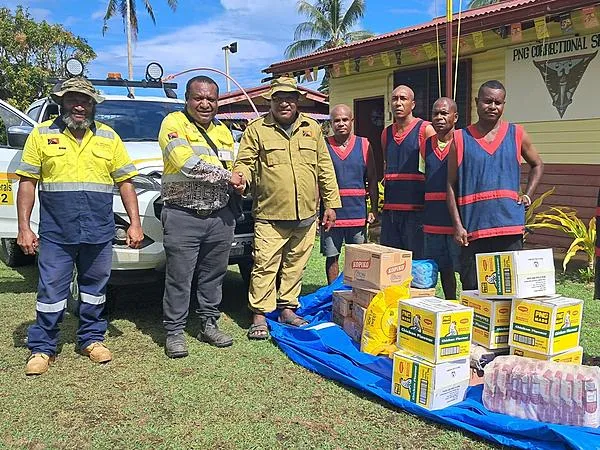
The company, a wholly owned subsidiary of Ok Tedi Mining Limited (Ok Tedi), recently demonstrated this commitment through the delivery of food supplies to the Misima Papua New Guinea Correctional Services (PNGCS) facility.

The donation strengthens the partnership the company is building with its stakeholders on the island.

Ok Tedi Community Relations and Sustainability Superintendent Joshua Dimel acknowledged the professionalism and cooperation demonstrated by the Misima PNGCS team and emphasized the importance of collaboration between industry and government agencies in achieving shared outcomes.

“The assistance provided by CS officers and inmates was prompt and invaluable,” Dimel said.

“This contribution is a small but sincere gesture of appreciation, and it reflects our commitment to maintaining respectful and mutually beneficial partnerships wherever we operate.”

Dimel also highlighted Ok Tedi’s long-established working relationship with Ningerum Correctional Services in Western Province, noting that similar partnerships founded on trust, respect, and collaboration would be fostered on Misima Island as Misima Minerals advances its operations.

The company donated rice, noodles, coffee, sugar, and tinned goods to support the day-to-day needs of the Misima PNGCS facility and its inmates.

Misima Jail Commander Barry Kakeni welcomed the donation and expressed appreciation on behalf of Misima Correctional Services.

“We are grateful for this support from Misima Minerals and Ok Tedi,” Kakeni said.

“This gesture strengthens our relationship and demonstrates the value of cooperation between the private sector and government institutions. We look forward to continued collaboration.”

The donation reflects the shared responsibility of corporate organisations and public institutions in supporting operational effectiveness, community development, and social stability.

Misima Minerals and Ok Tedi reaffirmed that such engagements form part of Ok Tedi’s broader commitment to sustainability, social responsibility, and building long-term partnerships with local stakeholders across Papua New Guinea.

Ok Tedi Mining Limited (OTML) is a majority state-owned entity that operates an open-pit copper, gold, and silver mine located in the Star Mountains of Western Province, Papua New Guinea. The company ships copper concentrate to smelters and ore refineries in Japan, the Philippines, Indonesia, South Korea, India, and Germany.

The company has been operating in the region for more than 40 years and has made a significant contribution to development in Western Province through direct and indirect employment, royalties, compensation payments, and business opportunities.

Ok Tedi is expanding its operations into Milne Bay Province through the acquisition of Gallipoli Exploration Limited, a wholly owned subsidiary of Australian mining company Kingston Resources Limited, for the Misima mine.

The company’s registered office and senior operational management team are located in Tabubil, Western Province, PNG. It also has a representative office in Port Moresby and a marketing and logistics facility in Brisbane, Australia.

To learn more about Ok Tedi Mining Limited, visit: www.oktedi.com.
May 18, 2026

Ok Tedi Mining Limited (Ok Tedi) is joining hands with the community to fight tuberculosis (TB), one of the leading health challenges in Western Province.

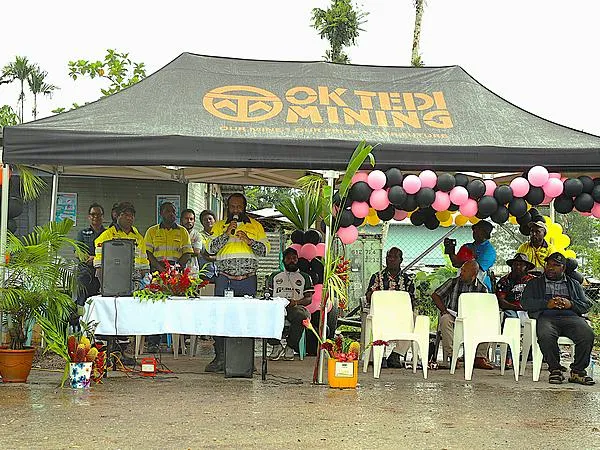
The initiative follows an awareness campaign carried out by Ok Tedi’s Health Services team at Wangbin Village, a mine village located on the outskirts of the township. The campaign focused on dispelling myths about TB, encouraging early diagnosis, and reinforcing the importance of completing treatment.

The awareness program followed the 2026 World TB Day theme, “Yes! We can End TB! Led by Countries, Powered by People,” and aimed to encourage early testing and treatment.

Speaking during the awareness program, Ok Tedi Health Services Manager Raymond Singamis highlighted the seriousness of the TB burden in the province.

“Western Province is a recognised ‘hotspot’ for TB and multi-drug-resistant TB (MDR-TB), frequently ranking within the top two to three provinces for total TB cases, and the situation in North Fly is particularly concerning,” Singamis said. “North Fly District alone has 1,018 confirmed TB patients, while the remaining districts each have more than 500 cases. These numbers are a clear warning — TB is here, and it affects our families.”

Singamis emphasized that access to healthcare should not be a barrier, noting Ok Tedi’s ongoing support.

“With Ok Tedi providing free medical checks, diagnosis, and medication, there is no excuse for delayed treatment. If you have been coughing for a long time, feeling weak, losing weight, or experiencing night sweats, go to the hospital immediately. TB spreads silently within households if left untreated," Singamis said.

The event also received strong backing from community groups. President of the Women and Children Association, Alice Mumuyong, shared a personal message on the impact of TB on families.

“As a mother with a child currently undergoing TB treatment, I have witnessed firsthand the critical role Ok Tedi Health Services plays in our lives,” Mumuyong said. “Their support gives families hope and a real chance at recovery. On behalf of the Women and Children Association, we sincerely acknowledge and appreciate this commitment.”

Mumuyong announced that the Women and Children Association has committed its own resources to support TB awareness at the community level.

“We have set aside funds to partner with the Ok Tedi Health Services team to take TB awareness directly to our communities. TB is not something to hide or fear — it is something we must confront together.”

Mumuyong further urged community members to take responsibility for their health. “I strongly encourage everyone — men, women, and children — to go and get checked. Early testing saves lives and protects your family.”

Ok Tedi continues to work closely with stakeholders, community organisations, and health authorities to strengthen TB prevention, detection, and treatment in line with its commitment to improving health outcomes across Western Province.

Ok Tedi Mining Limited (OTML) is a majority state-owned entity that operates an open-pit copper, gold, and silver mine located in the Star Mountains of Western Province, Papua New Guinea. The company ships copper concentrate to smelters and ore refineries in Japan, the Philippines, Indonesia, South Korea, India, and Germany.

The company has been operating in the region for more than 40 years and has made a significant contribution to development in Western Province through direct and indirect employment, royalties, compensation payments, and business opportunities.

Ok Tedi is expanding its operations into Milne Bay Province through the acquisition of Gallipoli Exploration Limited, a wholly owned subsidiary of Australian mining company Kingston Resources Limited, for the Misima mine.

The company’s registered office and senior operational management team are located in Tabubil, Western Province, PNG. It also has a representative office in Port Moresby and a marketing and logistics facility in Brisbane, Australia.

To learn more about Ok Tedi Mining Limited, visit: www.oktedi.com.
May 18, 2026

China has reaffirmed its commitment to supporting Papua New Guinea’s disaster response and recovery efforts, highlighting years of humanitarian assistance and future cooperation opportunities in disaster management, energy transformation, and emergency response technologies.

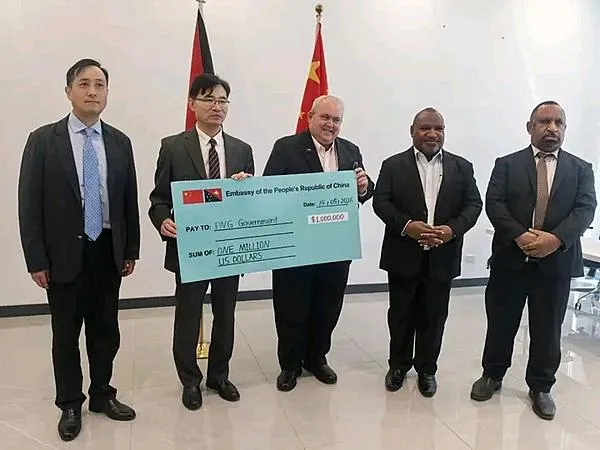
The commitment was reiterated during a handover ceremony for humanitarian cash assistance from the Chinese Government to the PNG Government held on Thursday, May 14, where Minister-Counsellor Pang Hanzhao, Chargé d'affaires a.i. of the Chinese Embassy in PNG, officially handed over US$1 million (approximately K3.9 million) in humanitarian assistance to Foreign Affairs Minister Justin Tkatchenko.

Prime Minister James Marape, Foreign Affairs Secretary Elias Wohengu, Defence Secretary John Akipe, and PNG National Disaster Centre Director Lusete Mana attended the ceremony.

Speaking during the event, Minister Pang reviewed the history of disaster response cooperation between China and PNG and said China has consistently provided assistance following major natural disasters in the country in recent years.

He said that in 2018, China donated US$800,000 (approximately K3.1 million) to PNG following the 7.5-magnitude earthquake.

In 2022, China donated US$100,000 (approximately K390,000) in cash assistance and also provided millions of US dollars to help PNG repair the Kumul Submarine Cable Network after the 7.6-magnitude earthquake.

Following the devastating Enga landslide in 2024, Pang said China provided the PNG Government with US$1.2 million (approximately K4.7 million) in cash assistance, as well as disaster relief supplies including thousands of solar lights, blankets, and sleeping bags.

He also noted that after last year’s landslide in Wapenamanda, the Chinese Embassy provided support within its capacity, while Guangdong Province donated disaster relief equipment worth half a million RMB to PNG’s National Disaster Centre.

Minister Pang expressed condolences and sympathy to communities affected by disasters across PNG.

“A friend in need is a friend indeed,” he said.

“Disasters are ruthless, but people have love. China, as PNG’s reliable partner for 50 years, is always ready to give a hand when PNG needs help.”

Minister Pang said the past 50 years of relations between the two countries had demonstrated China’s reliability as a development partner for PNG.

“The past 50 years of history have proved that China is one of the most reliable development partners of PNG,” he said.

Minister Pang also highlighted broader cooperation between the two countries, including the contribution made by the Chinese Navy hospital ship Silk Road Ark during its visit to PNG and Prime Minister Marape’s successful visit to Guangdong Province in China.

He said China was prepared to deepen cooperation with PNG under the framework of the China-PNG Comprehensive Strategic Partnership over the next 50 years.

Minister Pang emphasized that growing global challenges require stronger international cooperation.

“He emphasized that the pressing new challenges the world faces go far beyond any fences or the capability of any country or group of countries to deal with. The only reasonable choice for countries is to join hand in hand,” the media release stated.

He also highlighted opportunities for cooperation in renewable energy and disaster prevention technologies.

Minister Pang said China, as the world’s largest renewable power producer, could play a unique role in supporting PNG’s energy transformation ambitions.

He added that China’s satellite technology capabilities could assist PNG in disaster prevention and mitigation through the provision of real-time satellite imagery.

Minister Pang further stated that the early signing of the Memorandum of Understanding on disaster risk reduction and emergency response — the text of which had already been agreed upon by both sides in 2024 — would further strengthen bilateral cooperation in the sector.

The PNG Government welcomed the assistance and acknowledged China’s continued support for PNG across various sectors over the years.

The PNG Government greatly appreciated China’s timely and valuable support and reaffirmed its commitment to continue working together with China as partners for the betterment of both countries.

May 18, 2026

Fuel suppliers represented by the Papua New Guinea Chamber of Resources & Energy (PNG CORE) said they would transition to market-based pricing effective May 15 following delays and uncertainty surrounding the government’s fuel subsidy reimbursement program.

In a statement, PNG CORE, which represents the country’s fuel importers and suppliers, acknowledged the government’s efforts to shield consumers from rising global fuel prices driven by geopolitical tensions and international supply disruptions through a fuel subsidy program.

The chamber said fuel prices in Papua New Guinea are regulated by the Independent Consumer and Competition Commission (ICCC) and are based on international market benchmarks, including Singapore fuel prices and applicable market premiums.

While the ICCC announced substantial fuel price increases effective April 8, the government intervened through a subsidy mechanism that allowed retail fuel prices to remain at March levels, PNG CORE said.

However, the industry body said the administration of the subsidy program had presented challenges for suppliers, including reimbursement delays and uncertainty over its continued implementation.

“The administration of the subsidy program has, however, presented challenges, including delays in reimbursement and some uncertainty regarding its ongoing implementation,” PNG CORE said.

According to the chamber, industry participants have been carrying subsidy costs in advance, while delays in reimbursements have contributed to uncertainty surrounding supply arrangements.

PNG CORE said fuel suppliers had “no alternative” but to transition to market-based pricing in line with the May Import Parity Price and applicable product premiums effective May 15.

The chamber said the change could affect the ability of some retail outlets and service stations to maintain continuous fuel supply.

PNG CORE emphasized that the issue was “not a supply availability issue,” but rather the financial pressure associated with supplying fuel below cost without timely reimbursement and certainty around the subsidy mechanism.

“Continuing to supply fuel materially below cost, without timely reimbursement and certainty, places significant pressure on suppliers and creates unacceptable risks to ongoing fuel security,” the statement said.

The chamber noted that fuel importation involves significant upfront financial commitments, including foreign exchange requirements secured months in advance.

PNG CORE said industry participants remained committed to working with the government toward a long-term solution that would provide greater certainty for consumers, suppliers and the state.

“The industry remains committed to supporting the people and government of Papua New Guinea,” the chamber said.

May 18, 2026

Papua New Guinea used the global Women Deliver 2026 Conference in Melbourne, Australia, to highlight the country’s growing investment in gender equality, reproductive health, and long-term strategies to address gender-based violence, with leaders emphasising the importance of empowering women and girls.

National Capital District Governor Powes Parkop, who also chairs the Permanent Parliamentary Committee on Gender Equality and Women’s Empowerment (GEWE), is leading PNG’s delegation to the high-level conference alongside Deputy Chairman and East Sepik Governor Allan Bird.

The conference, held from 27–30 April 2026, brought together global leaders, parliamentarians, and advocates focused on advancing gender equality and the empowerment of women and girls, particularly in the area of sexual and reproductive health and rights (SRHR).

At the High-Level Ministerial and Parliamentary Forum, Governors Parkop and Bird presented PNG’s progress in strengthening national systems and financing mechanisms aimed at improving outcomes for women and reducing gender-based violence.

Among the key achievements highlighted by the PNG delegation were strengthened parliamentary leadership through the GEWE Committee, increased domestic financing for reproductive health, and the recent approval of a long-term national strategy to prevent and respond to gender-based violence across the country.

The delegation also outlined how PNG is translating international commitments into practical national programmes through increased government investment in reproductive health supplies and long-term gender-based violence strategies covering all provinces.

Governor Parkop said PNG was demonstrating that gender equality policies must be supported by tangible financial commitments and long-term planning.

“We are not here simply to add our voice — we are here to show that Papua New Guinea is taking decisive action,” Governor Parkop said.

“From increasing domestic investment in gender equality and women’s economic empowerment to committing long-term resources to end gender-based violence, we are turning global commitments into real outcomes for our people.”

The broader economic implications of these reforms were also underscored during the forum, with gender equality increasingly recognised as a key development and productivity issue for the country.

Business leaders, development partners, and policymakers have long argued that improving women’s access to health services, safety, education, and economic participation contributes directly to workforce productivity, household income growth, and broader national economic resilience.

Gender-based violence alone continues to carry significant economic costs through lost productivity, healthcare expenses, and reduced workforce participation, particularly in both the formal and informal sectors where women play a major role.

Governor Bird said international parliamentary cooperation remains important in helping countries strengthen reforms and share practical solutions.

He said cross-border collaboration enables nations to exchange experiences, strengthen collective advocacy, and support policy improvements at the national level.

The presence of both governors at the global forum also signals PNG’s growing engagement in international policy discussions and its intention to position itself as an active voice from the Global South on gender equality and development issues.

The Permanent Parliamentary Committee on Gender Equality and Women’s Empowerment continues to oversee legislative, policy, and accountability mechanisms supporting gender equality initiatives nationwide.

According to the delegation, the broader objective is to ensure that every woman and girl in PNG has access to opportunity, protection, and the full realisation of her rights, while also strengthening the country’s long-term social and economic development.

May 18, 2026

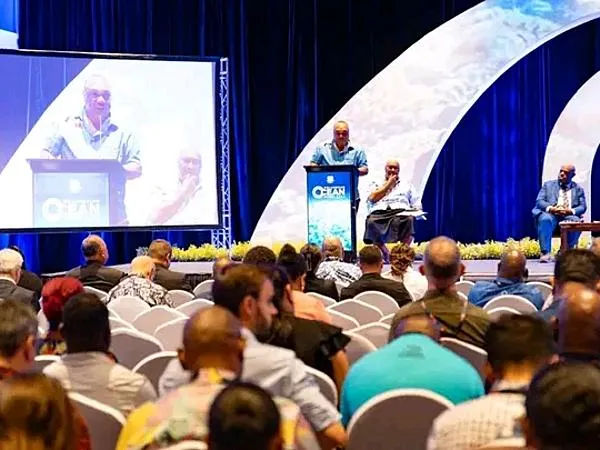
Papua New Guinea has strengthened its push to become a regional leader in sustainable ocean industries following the successful hosting of the inaugural 2026 Melanesian Ocean Summit at APEC Haus in Port Moresby from May 11–14.

Held under the theme “Ensuring Ocean Protection with Sustainable Ocean Economies,” the four-day summit brought together Pacific leaders, government representatives, researchers, development partners, and fisheries stakeholders to advance a regional strategy focused on marine conservation, fisheries development, climate resilience, and blue economy investment.

Closing the summit on May 14, the Minister for Fisheries and Marine Resources said the gathering had “transformed ambition into action, and solidarity into a shared Melanesian pathway for our ocean.”

The Minister said the summit demonstrated that Melanesian nations are increasingly viewing ocean protection and economic growth as interconnected priorities.

“Our ocean is not a frontier to be exploited, but a legacy to be stewarded,” the Minister said.

A major outcome of the summit was renewed commitment to the Melanesian Ocean Corridor of Reserves (MOCOR), a regional framework designed to protect marine ecosystems while supporting economic growth, coastal livelihoods, and food security.

Leaders reaffirmed support for the global “30 by 30” conservation target, which aims to protect 30 percent of the world’s oceans by 2030, while emphasizing that conservation initiatives must also deliver direct economic benefits to Pacific communities.

The Minister said discussions throughout the summit reinforced the importance of building “resilient blue economies” supported by sustainable financing, stronger fisheries management, renewable energy investment, and regional cooperation.

Business and investment opportunities linked to the blue economy emerged as a major focus throughout the summit.

Delegates discussed expanding sustainable fisheries industries, strengthening tuna value chains, developing blue carbon markets, improving marine tourism opportunities, and increasing climate-resilient coastal enterprises across Melanesia.

One of the major economic initiatives highlighted was the East New Britain Initiative for tuna value capture, aimed at increasing downstream processing and boosting returns from PNG’s fisheries sector.

“The takeaway is clear: the blue economy must be people-centred, climate-resilient, and anchored in sustainable fisheries,” the Minister said.

PNG also announced that it will host the Pacific-Led Innovation Tuna Forum later in 2026 in Port Moresby, positioning the country as a regional hub for fisheries innovation and sustainable tuna industry development.

The summit emphasized that marine protected areas should not only serve conservation purposes but also function as economic assets supporting fisheries productivity, food security, tourism growth, and climate adaptation.

“MPAs are not just conservation tools — they are food security, climate resilience, and economic engines,” the Minister stated.

Pacific nations including PNG, Fiji, Vanuatu, and Palau shared experiences on locally managed marine areas and traditional conservation systems that have delivered positive environmental and economic outcomes for coastal communities.

Ocean finance discussions also featured prominently during the summit, with leaders acknowledging that long-term marine protection will require stronger governance systems, improved institutional capacity, and diversified financing mechanisms.

Delegates reviewed existing Pacific financing models, including the Micronesia Conservation Trust, the Coral Triangle Initiative Fund, and Niue’s ocean conservation credits system, as examples of innovative funding approaches for sustainable marine management.

The Minister said the challenge facing the region was “not only mobilising money, but building the systems to manage it.”

Leaders agreed that future financing for MOCOR would require stronger governance structures and Pacific-led investment mechanisms capable of supporting enforcement, scientific research, and community resilience programmes.

The summit further highlighted the growing economic importance of blue carbon ecosystems such as mangroves and seagrass habitats, which contribute to climate adaptation, coastal protection, and national emissions reduction goals.

In the high-value fisheries sector, Melanesian countries agreed to strengthen cooperation on bêche-de-mer management through coordinated licensing systems, stronger traceability measures, and regional branding standards aimed at increasing export value for sustainably sourced marine products.

The proposed Melanesian Bêche-de-mer Ocean Alliance will work through the MSG Fisheries Technical Advisory Committee to improve standards across the supply chain while maintaining national control over fishing quotas.

According to the Minister, “a traceability and branding regime will capture the premium for verified Melanesian provenance — turning sustainability into direct economic return for our fishers.”

The summit also addressed the growing economic risks associated with climate change, with scientists warning that warming oceans are already affecting tuna migration patterns and coastal fish stocks across the Pacific.

To strengthen regional scientific capability, delegates committed to establishing a Melanesian Ocean Research Hub linking universities and research institutions across the region.

Maritime security and fisheries enforcement were also identified as critical economic priorities.

PNG announced plans to establish a national Fusion Centre to improve monitoring, surveillance, and compliance operations targeting illegal, unreported, and unregulated fishing activities, marine pollution, and transboundary maritime threats.

“Without enforcement, paper parks fail,” the Minister said, while reaffirming regional cooperation against illegal fishing activities.

The summit additionally highlighted the role of Indigenous knowledge systems in sustainable resource management and economic resilience.

PNG committed K1 million towards establishing a National Cultural Research Fund and announced plans for an Institute of PNG Studies dedicated to cultural and traditional knowledge research.

Leaders concluded the summit by declaring that the Melanesian Ocean Corridor of Reserves had moved beyond the concept stage into a functioning regional framework capable of attracting investment, strengthening marine governance, and supporting sustainable economic development across the Pacific.

“The Melanesian Ocean Corridor of Reserves is not an aspiration — it is now a working framework, owned by us, designed by us, and ready to be financed and enforced by us,” the Minister said.

Vanuatu was confirmed as the host of the next Melanesian Ocean Summit in 2028.

May 18, 2026

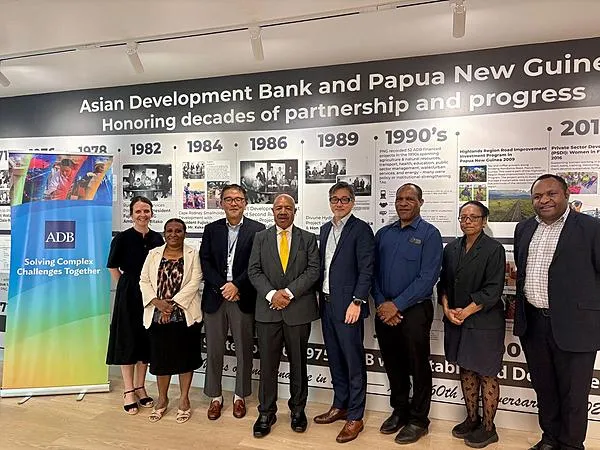
The Asian Development Bank (ADB) and the National Capital District have entered discussions on future urban development and infrastructure investment opportunities for Port Moresby following a meeting between newly appointed ADB Country Director Takafumi Kadono and NCD Governor Powes Parkop on 13 May, in Port Moresby.

The courtesy orientation meeting focused on strengthening cooperation between ADB and the National Capital District Commission (NCDC) in priority sectors, including city transport, affordable housing, water and sanitation, urbanisation, and resilient infrastructure development.

Governor Parkop welcomed Mr Kadono and acknowledged ADB’s longstanding support for Papua New Guinea’s national and community development projects over several decades.

He said continued engagement with development partners such as ADB was critical to addressing the increasing urban challenges facing the capital city while supporting sustainable economic and social development.

“These include the city transport sector, urbanisation and affordable housing, water and sanitation projects, and resilient urban infrastructure initiatives aimed at improving the living standards of residents in the city,” Governor Parkop said.

The discussions also highlighted the importance of coordinated urban planning, sustainable infrastructure investment, and improved essential services to support Port Moresby’s growing population and future development aspirations.

Officials from ADB and the Governor’s Office attended the meeting, which concluded with both sides reaffirming their commitment to maintaining strong relations and continuing dialogue on priority urban development initiatives in the NCD.

ADB is one of PNG’s major development partners and has supported infrastructure, transport, energy, water, and urban development projects across the country.

May 18, 2026

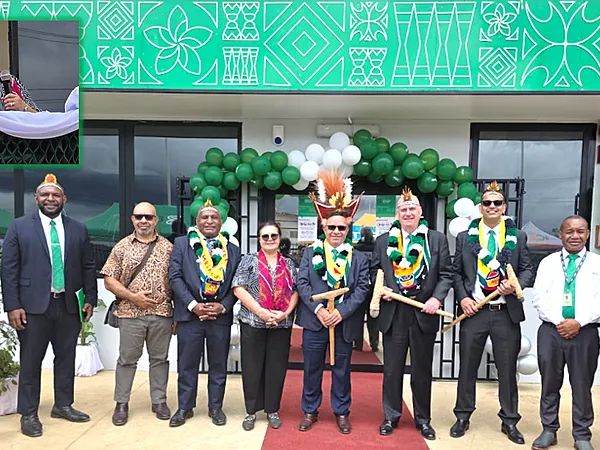
Bank of Papua New Guinea (BPNG) Governor Elizabeth Genia has said the reopening of Bank South Pacific’s (BSP) Tari Branch in Hela Province is a significant step toward strengthening financial inclusion, supporting small businesses, and improving economic participation in rural Papua New Guinea.

Speaking at the official reopening ceremony in Tari Town on April 24, 2026, Governor Genia said the upgraded banking facility would improve access to formal financial services for individuals, subsistence farmers, and small-to-medium enterprises (SMEs) operating in one of PNG’s key resource regions.

The reopening ceremony was attended by PNG Prime Minister James Marape, Hela Provincial Governor Philip Undialu, BSP Chairman Mark Robinson, BSP management, and other invited guests.

Governor Genia said the reopening follows closely on the heels of the opening of BSP’s Minj branch, reflecting continued investment by commercial banks in provincial and rural banking infrastructure.

“It is an important moment for BSP and for the people of Tari and surrounding communities who need the full range of financial services offered by this new facility,” she said.

She emphasized that while Hela Province is widely recognised for its contribution to PNG’s resource economy, many residents continue to rely on subsistence farming and informal economic activities, making access to secure and reliable banking services critical.

“For remote communities, the lack of a modern bank branch means higher costs and greater risks. Access to banking services is essential,” Governor Genia said.

She said many Papua New Guineans in rural areas still store cash at home, exposing their savings to theft, fire, and damage caused by harsh environmental conditions.

“When savings are hidden away, they are vulnerable to theft, fire, or the demanding conditions of this remote area. By bringing people into the formal financial system, we offer them protection,” she said.

Governor Genia also highlighted the role of the banking sector in advancing financial inclusion through both digital innovation and physical banking infrastructure.

She said the new Tari branch features smart ATMs and digital banking tools designed to simplify banking services and reduce the travel burden for customers who journey long distances to access financial services.

However, she stressed that physical bank branches remain essential for building customer trust and encouraging broader participation in the formal economy.

“Alongside digital innovation, a physical branch will always remain an essential anchor,” she said.

“Branches provide the face-to-face trust necessary to encourage customers toward a more inclusive future and greater participation in the formal economy.”

The BPNG governor also used the occasion to highlight the importance of cash management within PNG’s economy, noting that despite increasing digital banking adoption, cash continues to play a major role in local trade and markets.

She said the Tari branch would support BPNG’s national cash management programme by helping remove damaged and soiled banknotes from circulation.

“A dirty or damaged note is still legal tender,” Governor Genia reminded the community.

“By depositing these notes here, you help us return them to the Central Bank for replacement with clean, new currency.”

She said maintaining the quality and integrity of currency circulation is important for sustaining public confidence in the financial system.

Governor Genia also addressed Papua New Guinea’s ongoing efforts to resolve issues related to its placement on the Financial Action Task Force (FATF) “Grey List,” describing the matter as a national economic priority.

She acknowledged Prime Minister James Marape’s support in driving reforms aimed at strengthening transparency, compliance, and financial system integrity.

“As we work to meet global standards, commercial banks remain our key implementing partners, including through branches such as this one,” she said.

Governor Genia explained that customers may experience additional identification and verification checks when conducting transactions as part of enhanced anti-money laundering and counter-terrorism financing measures.

“These are not hurdles designed to keep customers out; they are designed to keep ‘bad money’ out and ‘good money’ safe,” she said.

She added that strengthening banking compliance systems would help protect PNG’s international financial reputation and improve confidence in the country’s financial sector.

Governor Genia said the reopening of the Tari branch demonstrates how stronger banking infrastructure can support economic growth, improve transparency, and expand financial access in rural provinces.

“Today’s opening is a reminder that, no matter how remote the location, our people deserve access to financial services,” she said.

She also acknowledged BSP Bank for its continued investment in Hela Province and its partnership with Bank of PNG in supporting a more inclusive and modern financial system for PNG.

May 15, 2026

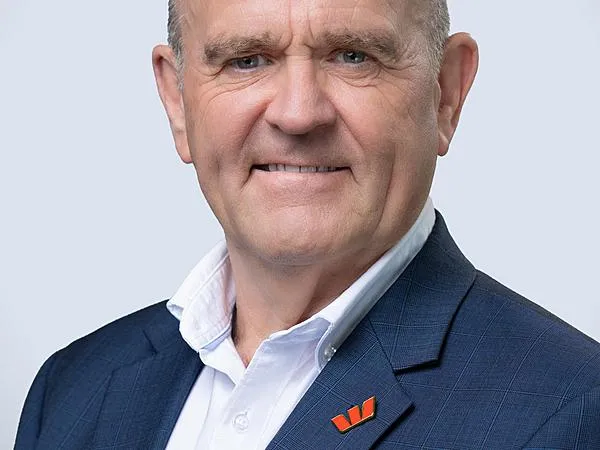
Andrew Cairns, chief executive of Westpac PNG, has been appointed President of the Australia Papua New Guinea Business Council (APNGBC), reinforcing his commitment to strengthening economic ties and advancing business opportunities between Australia and Papua New Guinea.

The Australia Papua New Guinea Business Council is a member-based organisation that promotes trade, investment and commercial collaboration between the two countries, while providing a platform for private sector engagement with both governments.

Cairns’ appointment comes at a time of renewed focus on bilateral growth, with businesses in both markets seeking to expand trade, investment and partnerships.

“The relationship between Australia and Papua New Guinea is built on deep connections between our businesses, communities and people. The Australia Papua New Guinea Business Council plays a critical role in strengthening those links and creating opportunities for shared growth," Cairns said.

Cairns said taht Papua New Guinea is a market rich with opportunity across multiple sectors, and strong collaboration between business and government will be key to unlocking sustainable economic development.

“I look forward to working with members and stakeholders to continue building confidence, supporting investment and ensuring the private sector contributes to long-term prosperity in both countries," he added.

The Council’s President leads the Executive Committee and works with members to advocate on key policy issues, facilitate dialogue with government, and support initiatives that promote trade and investment between Australia and Papua New Guinea.

Cairns said, “The Council will continue to provide an important platform for collaboration, including through its flagship Australia PNG Business Forum and Trade Expo, which brings together leaders from government, industry and the development sector.”

Cairns has served as Chief Executive of Westpac PNG since 2025 and brings extensive international leadership experience across banking, telecommunications and social finance.

Under his leadership, Westpac PNG has continued to focus on customer-led growth, digital innovation and support for economic development across the country.

The Australia Papua New Guinea Business Council was established in 1980 and has played a central role in promoting strong commercial relationships between the two countries for over four decades.

May 14, 2026

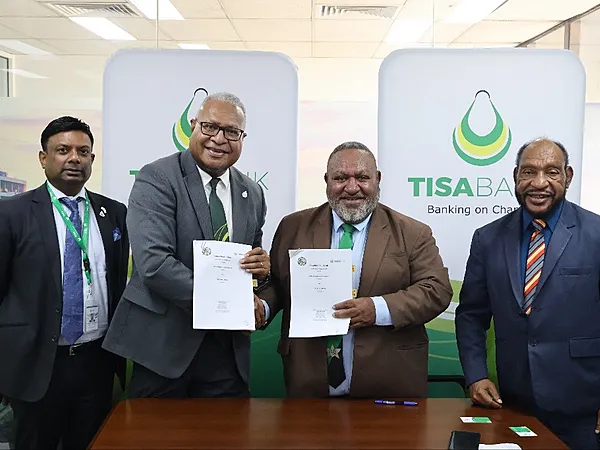
TISA Bank Limited has formalised a lease agreement with the Enga Provincial Government to establish a new branch at the Dr. Samson Amean Commercial Centre in Wabag.

The agreement also enables TISA Insurance to operate from the same location, allowing both entities to deliver integrated banking and insurance services to the people of Enga Province.

Located next to the provincial administration headquarters in the heart of Wabag Town, the modern commercial centre provides a strategic base to improve access to financial services across the province.

TISA Group Chief Executive Officer Michael Koisen welcomed the partnership, describing it as a significant step in the group’s ongoing commitment to serving communities across Papua New Guinea.

“Leasing space at the Dr. Samson Amean Commercial Centre allows us to bring both TISA Bank and TISA Insurance closer to the people of Enga. This is about more than opening a branch; it is about building trust, supporting local businesses, and contributing to sustainable economic growth in the province,” Koisen said.

He added that the co-location of banking and insurance services would provide customers with greater convenience and improved access to financial protection.

Enga Provincial Administrator Sandis Tsaka said the agreement marked an important milestone for the province.

“The establishment of TISA Bank and TISA Insurance in Wabag will improve access to essential financial services for businesses, entrepreneurs, and residents. This partnership will help drive economic activity, strengthen financial inclusion, and support long-term development in Enga Province,” Tsaka said.

The new presence is expected to expand access to financial services, empower local businesses, and support continued socio-economic growth across Enga Province.

May 14, 2026

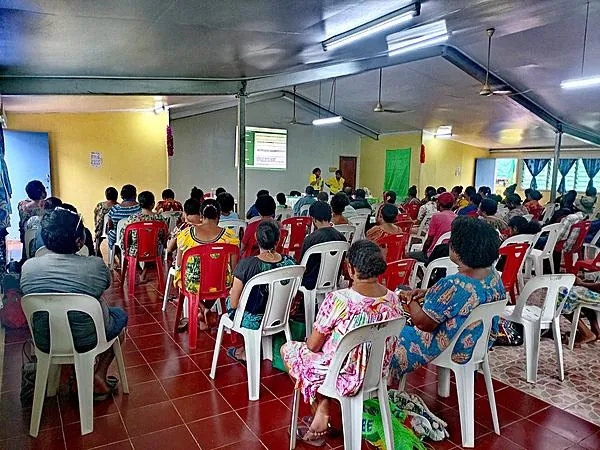
TISA Bank Limited has strengthened its engagement with small and medium-sized enterprises through an SME Road Show held in Alotau, aimed at promoting financial inclusion and supporting business growth in Papua New Guinea’s regions.

The road show, conducted on May 2, brought together SMEs, cooperatives and local business owners to showcase the bank’s SME and MSME financial solutions, including lending products, business banking services and tailored financial support programs.

TISA Bank acting chief executive officer Luke Kaul said the initiative reflected the bank’s commitment to supporting entrepreneurs and expanding access to financial services outside major urban centres.

“Our SME Road Shows are about getting closer to our customers and understanding their needs,” Kaul said.

“Alotau has a vibrant SME community, and we are committed to providing accessible financial solutions that support business growth and economic development in the province and across the country.”

The event provided participants with information on financing options, business development support and opportunities to strengthen commercial networks within the local business community.

Participants welcomed the initiative, saying the direct engagement with the bank and partner organisations provided valuable insights into business development and entrepreneurship.

“The road show was very informative and gave me a clearer understanding of the importance of business and networking,” participant Valerie Joy Miller said.

“The presentations from the different organisations were insightful, and it was encouraging to see how each contributes to growth and development. The event was well organised and engaging, and it motivated me to think more seriously about future business opportunities.”

TISA Bank said the Alotau road show formed part of its broader strategy to strengthen relationships with SME customers and promote inclusive economic growth across Papua New Guinea.

The bank said it would continue expanding its outreach programs to ensure SMEs and cooperatives have access to the financial knowledge, banking services and tools needed to build sustainable businesses and support local economic development.

May 14, 2026

Kumul Petroleum Holdings Limited has announced an upcoming change in board leadership, with chairman Gerea Aopi, MBE, set to hand over the role to fellow director Isaac Lupari, CBE GCL, effective May 19.

The transition follows requirements under the Kumul Petroleum Holdings Limited Act, which mandates the retirement of directors upon reaching the age of 72. Aopi will reach the retirement age milestone on May 18 and has formally advised trustee-shareholder Prime Minister James Marape of his decision to step down.

Kumul Petroleum said the leadership transition process between the two directors had been underway since mid-April to ensure continuity and a smooth handover.

Aopi said it had been a privilege to serve as chairman during what he described as a challenging period for the national oil and gas company.

“Since taking office in the last quarter of 2025, my fellow directors and I have made strong progress — we have implemented strict cost containment and strengthened financial controls, refocused capital investment on core petroleum assets, restored governance, signed off on the 2022 audited accounts and advanced major projects,” Aopi said.

“KPHL has been stabilised due to the resolve and commitment of the current board. However, the work is far from finished, and I am certain that Mr Lupari will continue to progress the initiatives that we have started.”

Lupari acknowledged Aopi’s contribution to the company, saying his extensive experience in the petroleum industry had played a significant role in the organisation’s ongoing reforms and restructuring efforts.

“Gerea’s vast experience and knowledge in the petroleum industry has contributed significantly to the ongoing organisational changes, and the board thanks him for his leadership,” Lupari said.

He also thanked Prime Minister Marape for appointing him to the board and expressing confidence in his leadership.

Lupari said Kumul Petroleum had received another clean audit opinion for 2022, extending the company’s record of unqualified audits since its establishment in 2014.

“This is good news for Kumul Petroleum at this critical time when our main focus is preparing to take up equity in the forthcoming Papua LNG Project,” he said.

Both directors said completion of the 2022 audit would help accelerate the finalisation of the company’s 2023 and 2024 audits before the end of the year.

Lupari said Kumul Petroleum remained committed to working closely with the government, industry partners and financiers to support sustainable growth and national development objectives.

Kumul Petroleum acting managing director Dr Luke Liria thanked Aopi for his leadership over the past eight months, particularly his focus on governance and organisational integrity.

“Chairman Aopi prioritised both general and project governance, ensuring our operations are conducted with the utmost integrity and transparency,” Liria said.

“We welcome Mr Lupari, who brings many years of experience in the government sector. I look forward to continuing with Ambassador Lupari to grow and expand KPHL as a reputable national oil company in the nation and the region.”

Kumul Petroleum said it remained focused on supporting the development of Papua New Guinea’s natural resources sector while contributing to national socio-economic development through its projects and investments.

May 14, 2026

K92 Mining has reported record financial results for the first quarter of 2026, supported by strong operational performance and continued expansion activities at its Kainantu gold mine in Papua New Guinea’s Eastern Highlands Province.

The company reported quarterly revenue of US$236.3 million for the three months ended March 31, 2026, up 63% from the corresponding period last year. Net income rose 66% year-on-year to a record US$116.6 million, or US$0.48 per share, while EBITDA increased 68% to US$179.9 million, or US$0.74 per share. Operating cash flow before working capital adjustments climbed 64% to a record US$132.9 million, or US$0.54 per share.

K92 ended the quarter with record cash and cash equivalents totaling US$287 million, including a record net cash position of US$242.6 million.

Quarterly production totaled 46,743 ounces of gold equivalent, comprising 44,022 ounces of gold, 1.7 million pounds of copper and 38,845 ounces of silver, which the company said was in line with budget expectations.

Ore processed during the quarter rose 37% year-on-year to 142,017 tonnes, with a head grade of 10.9 grams per tonne gold equivalent. Metallurgical recoveries reached 95.1% for gold and 94% for copper, exceeding or matching updated definitive feasibility study parameters. K92 said the new 1.2 million tonnes-per-annum Stage 3 Expansion Process Plant continued to perform well following commissioning completed in December 2025.

The company also achieved record quarterly mine development of 3,007 metres, a 21% increase from the same quarter in 2025, including a new monthly development record of 1,067 metres in March. Subsequent to quarter-end, K92 reported another monthly record of 1,109 metres in April.

Quarterly total material mined, including ore and waste, reached 378,430 tonnes, while ore mined totaled 154,104 tonnes. Record quarterly tonnes hauled to surface reached 410,356 tonnes, supported by the completion of the Decline-Incline Convergence Project and the commencement of surface truck operations in the Twin Incline.

Gold sales during the quarter totaled 44,854 ounces, alongside sales of 1.87 million pounds of copper and 41,467 ounces of silver. Gold concentrate and doré inventory stood at 12,318 ounces as of March 31, 2026.

K92 reiterated its 2026 annual production guidance of between 190,000 and 225,000 ounces of gold equivalent.

The company said 96% of Stage 3 expansion growth capital had either been spent or committed as of March 31, with the project remaining on budget.

During the quarter, significant progress was made on key expansion infrastructure projects, including the Underground Pastefill Plant, Surface Tailings Filtration Plant, Binder Blending Plant and Filter Cake Storage Facility. K92 said first tailings filter cake production from the Surface Tailings Filtration Plant was delivered in late April, while commissioning activities continued.

The miner also reported progress across several underground construction and operational improvement projects, including the completion of the Decline-Incline Convergence Project in January and the Phase 3 Ventilation Upgrade in February, which increased primary mine airflow capacity by 75% to 350 cubic metres per second.

K92 chief executive officer and director John Lewins said the company was pleased to deliver record financial results while continuing to advance key expansion milestones at Kainantu.

“We are well positioned to continue executing on our growth strategy, advance the Stage 3 and Stage 4 expansions, and unlock the broader potential of Kainantu through exploration,” Lewins said.

May 13, 2026

Santos has announced a final investment decision (FID) to proceed with the Agogo Production Facility (APF) Tie-In Project in Papua New Guinea following approval by the PNG LNG joint venture, with first gas targeted in the second quarter of 2028.

The brownfield development will involve the installation of a new 19-kilometre pipeline linking the Santos-operated Agogo Production Facility to the existing PNG LNG gas pipeline system, together with the drilling of two new wells and associated modifications to production facilities.

Santos said the project is expected to deliver incremental production capacity of about 135 million standard cubic feet of gas per day gross, with Santos’ net share estimated at about 54 million standard cubic feet per day.

According to the company, Santos’ share of capital expenditure is estimated at about US$160 million, with gross capital expenditure projected at approximately US$400 million over three years. The project will utilise existing PNG LNG processing and export infrastructure as part of Santos’ strategy to maximise value from established assets and infrastructure in Papua New Guinea.

Santos Chief Executive Officer and Managing Director Kevin Gallagher described the APF Tie-In Project as a “highly value-accretive investment” that aligns with the company’s disciplined capital allocation framework and supports Santos’ long-term production outlook.

“The APF Tie-In Project is a high-quality development with strong economics and a clear role in our strategy to build and grow portfolio production,” Gallagher said.

He said the project is expected to convert Santos’ 66 million barrels of oil equivalent of 2P undeveloped reserves into developed reserves while supporting a production plateau of about 12 years, with potential for production to continue beyond 2050 depending on reservoir performance.

Gallagher added that the project is expected to generate an internal rate of return greater than 50 per cent, with a payback period of less than four years from FID and approximately two years from first gas.

Santos Australia and PNG Chief Operating Officer Brett Darley said key regulatory approvals had been secured, required land access arrangements completed and all material joint venture approvals obtained.

Darley said the company would now focus on progressing detailed engineering design, awarding the two main construction contracts and developing a temporary construction camp ahead of targeted first gas in 2028.

He added that Santos would continue investing in community partnerships and resilience initiatives in the Highlands through the Santos Foundation and broader stakeholder engagement programmes.

Santos holds a 39.9 per cent interest in the PNG LNG joint venture. Other joint venture participants include ExxonMobil PNG Ltd, ENEOS Xplora, Kumul Petroleum and Mineral Resources Development Company.

May 13, 2026

Westpac Bank PNG Limited has congratulated the PNG Indigenous team following an impressive campaign at the 2026 National Indigenous Cricket Championships (NICC) in Mackay, Australia, where Papua New Guinea received the NICC Men’s Spirit of Cricket Award and players secured multiple Westpac match honours throughout the tournament.

Held on Yuwibara Country from 14–19 April 2026, the men’s and women’s T20 championships were played at Great Barrier Reef Arena and Harrup Park. Papua New Guinea participated in the men’s competition as an invitational team for the first time, while four PNG Lewas players joined South Australia’s women’s squad for the tournament.

The championship also featured a dedicated cultural activity day on 17 April, alongside national broadcast and streaming coverage.

Westpac PNG said the results highlighted the depth of cricket talent in Papua New Guinea, as well as the strong culture of respect and sportsmanship within the national programme ahead of upcoming international fixtures.

Among the key recognitions received during the tournament were:

• NICC Men’s Spirit of Cricket Award – Papua New Guinea
• Westpac Player of the Round (Round 2) – Michael Charlie
• NICC Men’s Player of the Championship – Tony Ura
• NICC Men’s Team of the Championship – Tony Ura
• NICC Women’s Team of the Championship – Henao Thomas

Westpac ‘Player of the Match’ awards were also presented throughout the tournament:

• Round 1 vs Queensland – Tony Ura
• Round 2 vs Tasmania – Michael Charlie
• Round 4 vs South Australia – Sese Bau
• Round 5 vs Northern Territory – Hila Vare
• Round 7 vs Tasmania – Tony Ura

PNG delivered a series of strong performances during the week, including back-to-back wins in rounds four and five to maintain an unbeaten run midway through the tournament.

The competition also served as a high-performance preparation platform for upcoming international fixtures, including Papua New Guinea’s ICC Men’s T20 World Cup Qualifier campaign in Japan.

Westpac Bank PNG Limited Chief Executive Andrew Cairns praised the team’s achievements and conduct throughout the tournament.

“We’re proud to see the PNG Indigenous team recognised for both performance and sportsmanship at the NICC. Congratulations to the players and staff, especially those who received Westpac match awards throughout the tournament,” Mr Cairns said.

Cricket PNG High Performance Manager and Head Coach Tim McCaskill said the tournament provided valuable preparation for the team’s upcoming international commitments.

“This tournament provided valuable high-performance preparation. The Spirit of Cricket award reflects the standards we set for ourselves as a group, and the individual honours are a credit to the players’ hard work,” Mr McCaskill said.

The squad has since returned to Port Moresby and will continue preparations for future fixtures and tournament commitments.

Westpac said the participation of the PNG Indigenous team and PNG Lewas players was supported through the Australian Government’s PacificAus Sports programme, which provides Pacific athletes, coaches, officials and administrators with opportunities to access high-performance training and elite competition.

May 13, 2026

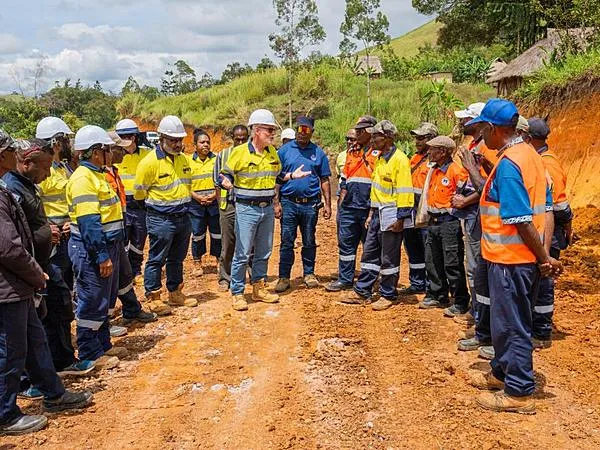
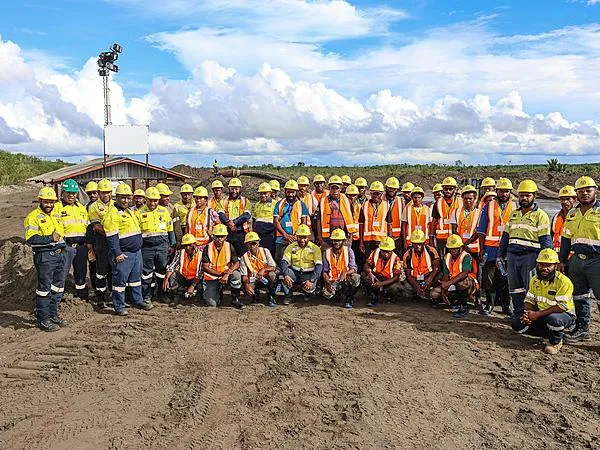
Ok Tedi Mining Limited (Ok Tedi) recently hosted 30 landowners from Ok Birim villages in the North Fly District on an awareness visit to its Bige Operations as part of the company’s commitment to transparency, early engagement and informed decision-making.

The visit provided landowners with firsthand insight into the Bige Operations, which include river dredging, landform rehabilitation and the secure subaqueous storage of pyrite concentrate. The activities form part of Ok Tedi’s long-term environmental management efforts aimed at addressing challenges associated with historical riverine tailings disposal.

Ok Tedi said a similar and enhanced operating concept is being considered for the proposed Tailings Storage Facility (TSF) Project at Ok Birim, which has been identified as the preferred site and is currently undergoing feasibility studies.

The proposed TSF is a key component of the company’s Growth 2050 Strategy and is intended to provide a long-term tailings management solution while progressively reducing reliance on river-based disposal and dredging activities at Bige.

The awareness visit was organised by Ok Tedi’s Community Relations Department to allow landowners to observe operations firsthand, ask questions and gain a clearer understanding of how mine waste is managed in a controlled and environmentally monitored manner.

Ok Tedi emphasised that the TSF project will only proceed following extensive consultation, community understanding and agreement with potentially affected landowners.

The company said engagement activities are guided by the principles of Free, Prior and Informed Consent (FPIC), ensuring communities receive accurate information, adequate time for consideration and the freedom to make decisions without pressure.

Manager Community Relations Jeffery Tom said early awareness initiatives are critical in helping communities make informed decisions.

“It is important that communities understand what a project involves before any discussions about agreements take place,” Mr Tom said.

“Bringing Ok Birim landowners to Bige allows them to see for themselves how similar operations work and the safeguards that are in place.”

Ok Tedi said it remains committed to responsible resource development, environmental stewardship and respectful partnerships with landowners throughout the project lifecycle.

May 13, 2026

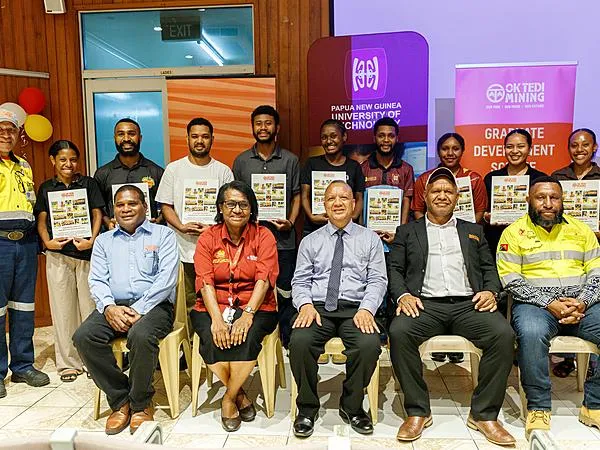
Ok Tedi Mining Limited (Ok Tedi) has strengthened its position as one of Papua New Guinea’s leading investors in human capital through the awarding of its 2026 Undergraduate Scholarships to high-performing students from three universities across the country.

As part of its ongoing investment in education and skills development, Ok Tedi recently awarded 21 scholarships to students from the Papua New Guinea University of Technology (UNITECH) in Lae, Divine Word University (DWU), and the University of Papua New Guinea (UPNG) during a presentation ceremony at the company’s Port Moresby office.

The awards included 11 new third-year scholarship recipients and 10 continuing scholars, representing a total 2026 investment of K593,741.

Speaking during the ceremony, Manager Mine Production Mr Yagatau Hamena highlighted the company’s long-standing contribution to nation building through education and workforce development.

“For more than 40 years, Ok Tedi has been more than a mining company. Yes, we mine copper, gold and silver — but the real treasure we invest in is people,” Mr Hamena said.

“We have mined potential. We have mined talent. And we have supported and developed leaders across PNG who are now driving change in engineering, technology, science, business, community development and many other fields.”

Ok Tedi said its scholarship programme forms a key part of the company’s investment in people under its Growth 2050 Strategy. The company said building a capable Papua New Guinean workforce remains critical to ensuring the long-term sustainability of its operations, community development initiatives and national economic contribution.

The company’s long-term human capital development contributions include:

• 689 graduates completing the Graduate Development Scheme since 1988
• 1,191 apprentices trained since 1982
• 731 trainees upskilled from Preferred Area Development communities
• 50 industrial trainees provided with practical work experience
• 40 vocational students supported through the on-the-job training programme since 2023
• 81 students sponsored through the Undergraduate Scholarship Programme
• K37 million invested in training in 2025 alone

Third-year Computer Science student Jodanah Malus expressed gratitude after receiving the scholarship.

“I am deeply honoured to be a recipient of the 2026 Ok Tedi Undergraduate Scholarship. This sponsorship lifts a heavy burden from my parents and allows me to focus fully on my academic goals,” Ms Malus said.

“I am incredibly grateful to Ok Tedi for believing in my potential.”

UNITECH Vice Chancellor Dr Ora Renagi reaffirmed the university’s partnership with Ok Tedi, describing education as central to national development.

“I fully embrace this partnership with Ok Tedi. True change for PNG will only come through the development of our human resources,” Dr Renagi said.

“Ok Tedi recognises that universities exist to transform students into capable, skilled professionals who will drive Papua New Guinea forward.”

Executive Dean of the School of Business and Public Policy at UPNG, Dr Lekshmi Pillai, said the scholarships represented both an opportunity and a responsibility for recipients.

“This is not just an ordinary occasion — it is a momentous one that signifies a profound responsibility,” Dr Pillai said.

“Ok Tedi’s support reflects its commitment to nurturing the future leaders of Papua New Guinea by investing in students currently pursuing higher education.”

“For our scholarship recipients, this support is not only an opportunity but also a privilege that calls for dedication, discipline and excellence.”

Acting Registrar of Divine Word University Marie Clare Aribi thanked Ok Tedi for its continued partnership and support for students across the country.

“We sincerely thank Ok Tedi Mining Limited’s Human Resources team, Training team and Executive Leadership team for your generous support, partnership and belief in our young students at Divine Word University and across Papua New Guinea,” Ms Aribi said.

“Your commitment goes beyond financial assistance — it demonstrates a deep dedication to growth, innovation and meaningful community impact.”

Beyond scholarships, Ok Tedi said it continues to support UNITECH, UPNG and other tertiary institutions through strategic infrastructure and capacity-building investments aligned with Papua New Guinea’s national development priorities.

The company congratulated all 2026 Undergraduate Scholarship recipients and reaffirmed its commitment to supporting their academic and professional development.

Ok Tedi said it remains committed to building a strong, skilled and prosperous Papua New Guinea through sustained investment in education, people and community partnerships.

May 13, 2026

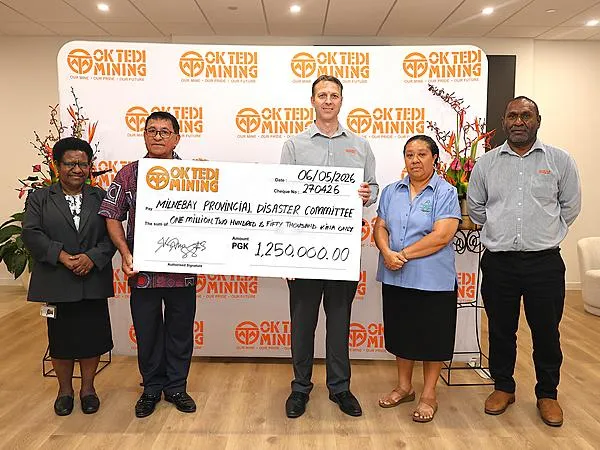
Ok Tedi Mining Limited (Ok Tedi) has donated K1.25 million to Milne Bay Province to support relief efforts for communities affected by Tropical Cyclone Maila.

Of the total amount, K1 million will go to the Milne Bay Provincial Disaster Committee, while K250,000 will support relief efforts in the Samarai-Murua district.

Ok Tedi hosted a presentation ceremony last Thursday at its Operations Office at Kwalimu Haus in Waigani. The event was attended by Milne Bay Governor Gordon Wesley, Acting Milne Bay Provincial Administrator Ms Sharon Mua, Misima Minerals General Manager Ben Burger, and members of the Ok Tedi Corporate Affairs team.

Ms Mua thanked Ok Tedi for its timely support for relief and recovery efforts in communities affected by the cyclone.

“Your timely support will make a significant difference to families in our most impacted wards across Samarai-Murua district, Maramatana, Huhu, Weraura, Duau, Goodenough and other LLGs,” Ms Mua said.

“The funds will be directed to urgent priorities identified in our initial damage assessment — shelter kits, medical supplies, clean water, food security, and the restoration of basic services.

“The spirit of Papua New Guinea is seen when we stand together in times of hardship. Ok Tedi’s support demonstrates genuine corporate citizenship and care for our people.”

As a 100 percent Papua New Guinean-owned mining company, Ok Tedi said it remains committed to national development and to supporting Papua New Guineans during times of need. The assistance aligns with the company’s long-standing practice of responding swiftly and meaningfully to natural disasters and humanitarian emergencies across the country.

Managing Director and Chief Executive Officer Mr Kedi Ilimbit said the company’s support reflects its national responsibility and values.

“Ok Tedi is a company built by Papua New Guineans, for Papua New Guineans. As a wholly nationally owned mine, we stand with our people wherever they are, especially in times of hardship. Misima is now part of the Ok Tedi family, and our commitment goes beyond investment — we are here to support communities, restore hope, and contribute to rebuilding lives.

“Our nation is strongest when we stand together, and Ok Tedi will continue to play its role in nation building,” Mr Ilimbit said.

Ok Tedi said its recent acquisition of the Misima Mines Project represents a significant milestone in the company’s growth and long-term commitment to nation building. The K1 million support package for Milne Bay Province, together with the additional K250,000 for Misima communities, recognises Misima’s place within the Ok Tedi family and underscores the company’s commitment to contributing positively to the wellbeing of local communities.

In recent years, Ok Tedi has also supported disaster relief efforts across Papua New Guinea, including:

• Mulitaka, Enga Province (2024–2025): Donated K1 million to support humanitarian assistance and long-term recovery efforts following the devastating landslide.

• East Sepik and Chimbu provinces (2024): Provided K500,000 each to assist communities affected by severe flooding, landslides and a major earthquake.

• Middle and Lower Fly, Western Province (2024): Delivered K250,000 worth of food supplies to flood-affected villages.

Ok Tedi said these contributions reflect its ongoing commitment to supporting Papua New Guinean communities during times of crisis.

May 11, 2026

The Board of the Bank of Papua New Guinea (BPNG) has endorsed a new Emergency Liquidity Assistance (ELA) Policy Framework aimed at strengthening the central bank’s ability to respond to extreme short-term liquidity pressures within the country’s banking system.

In a statement issued on April 30, 2026, and authorised by Governor Elizabeth Genia, the central bank said the framework forms part of standard contingency planning undertaken by central banks globally and is not linked to any current concerns about the health of PNG’s financial system.

“The banking system is well-capitalised, with high levels of liquid assets held by all institutions,” the statement said.

BPNG said the ELA framework formalises the Bank’s approach to providing temporary liquidity support to eligible commercial banks experiencing severe but short-term funding constraints, consistent with its role under the Central Banking Act as the country’s “Lender of Last Resort.”

According to the central bank, the framework is designed to support overall financial system stability while ensuring that any emergency support is delivered in a prudent, controlled, and transparent manner.

The policy specifies that assistance would only be available to institutions deemed solvent and viable, with emphasis placed on safeguarding the broader financial system rather than supporting the survival of any individual institution.

The framework also outlines broad eligibility criteria, governance arrangements, and operational procedures governing how emergency liquidity assistance may be accessed.

BPNG stated that access to the facility would remain subject to strict conditions, including solvency requirements, appropriate collateral arrangements, and credible recovery measures by recipient institutions.

The central bank said the ELA Policy Framework complements its wider financial stability and prudential oversight responsibilities and enhances its capacity to respond effectively to emerging liquidity pressures across the financial sector.

BPNG added that it will continue engaging with stakeholders while developing supporting guidelines to ensure effective implementation and a consistent understanding of the framework.

“The Bank of PNG remains committed to maintaining a stable and resilient financial system that supports sustainable economic development,” the statement said.

May 11, 2026

The Mineral Resources Authority (MRA) has clarified that no alluvial mining lease has been granted in connection with the recent incident at Sambio Village in Morobe Province, describing reports circulating in mainstream and social media as “factually incorrect.”

In a media statement issued on April 30, 2026, Acting Managing Director Harry Kore confirmed that Mining Lease 687 (ML 687) remains under the statutory application process required under the Mining Act 1992 and has not been approved by the State.

“MRA confirms that Mining Lease 687 has not been granted,” the statement said.

The Authority explained that the registration of a mining tenement application does not equate to the approval or issuance of a mining lease, but merely indicates that an application has been formally lodged and recorded for administrative purposes.

The clarification comes amid public concern and online commentary linking the Sambio Village incident to claims that an alluvial mining lease had already been approved.

According to MRA, all mining lease applications are subject to a comprehensive legal and technical assessment process before any final decision is made. This process includes preliminary compliance checks, public notification, a Warden’s Hearing to consider objections, technical assessments, review by the Mining Advisory Council (MAC), and ultimately a decision by the Minister for Mining.

Under the Mining Act 1992, the Minister for Mining has the authority to either grant or refuse a mining tenement based on recommendations from the MAC.

MRA also noted that mining lease applications likely to affect public infrastructure, existing developments, or public safety may be refused.

The Authority urged landowners, stakeholders, and the public to rely on official information released by MRA regarding mining tenements and regulatory matters.

“MRA remains committed to transparency and compliance with the law in administering mining applications,” the statement said.

The Authority also extended its condolences to the families affected by the recent incident at Sambio Village.

“MRA wishes to convey our sincere condolences to the families and relatives of those who lost their lives in the recent incident,” Mr Kore stated.