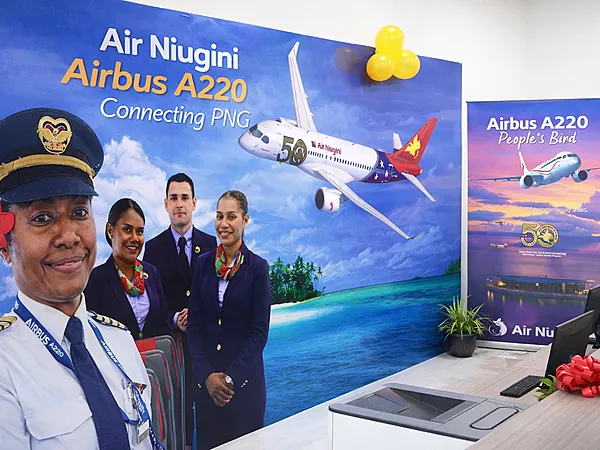
Air Niugini has expanded its corporate services and regional operations through a new corporate payment solutions initiative and the opening of a new flagship sales office in Wewak, East Sepik Province.
The national carrier hosted a corporate client information and awareness session at Gateway Hotel in Port Moresby focused on the Universal Air Travel Plan, or UATP, a payment platform designed to modernize corporate travel transactions and improve operational efficiency.
The session, themed “Modernising Corporate Payment Solutions: The UATP Advantage,” highlighted benefits including simplified billing systems, enhanced transaction security and improved cash flow management for corporate clients.
Presentations were delivered by representatives from Air Niugini’s Corporate Sales, Finance, Destinations Loyalty Program, Tours and Cargo divisions.
A total of 44 representatives from 24 government agencies and corporate organizations attended the session, including the Prime Minister’s National Executive Council, PNG Power Limited, Bank South Pacific, National Airports Corporation, St John Ambulance, the Internal Revenue Commission, the University of Papua New Guinea and the Department of Justice and Attorney General.
Air Niugini said the initiative forms part of wider efforts to improve service delivery and strengthen relationships with government and corporate clients.
Separately, the airline also announced the opening of a new sales office in Wewak located within the newly developed Tangmow Plaza.
The airline described the facility as a modern, fully equipped office featuring upgraded technology, spacious customer service areas and improved accessibility for passengers and corporate customers.
Its location in central Wewak provides easy access to public transport, banks, retail shops, markets and other services.
Air Niugini Chief Executive Officer Alan Milne said the office reflects the airline’s commitment to improving customer access and supporting economic growth in the region.
“The opening of our new sales office in Wewak demonstrates Air Niugini’s commitment to enhancing access and convenience for our customers,” Milne said.
“This fully equipped, modern facility offers spacious service areas and is designed to provide a comfortable and efficient customer experience.”
Milne said the office represented Air Niugini’s flagship presence in East Sepik Province and had already contributed to a 50 percent increase in sales compared with the same period last year since opening about a month ago.
He said Wewak remained a busy regional port and aviation hub served by two daily flights, including direct services between Port Moresby and Wewak as well as connections through Madang and Vanimo.
“Wewak is a busy port served by two daily flights — one direct midday service and another in the afternoon that connects Vanimo — so this new sales office will help meet strong travel demand,” Milne said.
The office currently employs three staff members and includes up to five customer service counters catering to retail clients, corporate travel, group bookings, government travel and VIP handling services.
East Sepik Governor Allan Bird, who officiated at the launch, welcomed the investment and said improved aviation services would help support tourism, business activity and economic growth in the province.
“This new office is a significant addition to Wewak and will serve as a catalyst for economic growth in our province,” Bird said.
Air Niugini currently operates direct Port Moresby-Wewak services on Mondays, Tuesdays, Thursdays and Saturdays, while Wednesday and Sunday flights also connect through Madang. Daily afternoon services also connect Wewak and Vanimo.
The airline said the new office would strengthen domestic aviation connectivity while supporting businesses, cargo operators and communities across East Sepik Province.
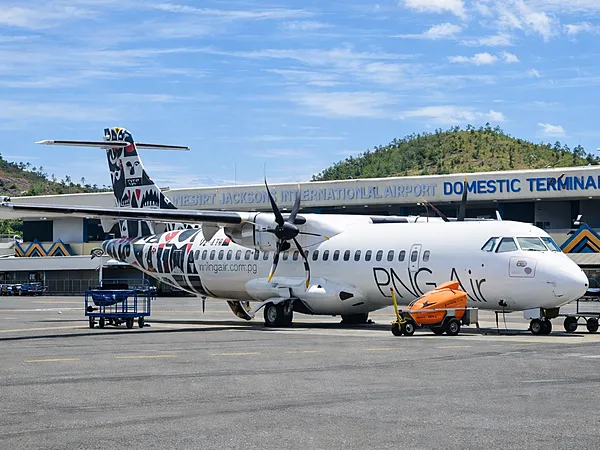
Three Papua New Guinean landowner companies have acquired three new ATR42-600 aircraft that will be leased to PNG Air under a long-term arrangement linked to Ok Tedi Mining operations.
According to a government statement, the aircraft are being acquired through Ok Tedi Mining shareholder companies Mineral Resources Star Mountain, Mineral Resources Ok Tedi and Mineral Resources CMCA.
The aircraft will be contracted to Ok Tedi Mining and are expected to replace PNG Air’s ageing DHC-8-100 fleet used for fly-in, fly-out charter operations.
Mineral Resources Development Company, or MRDC, Managing Director Augustine Mano said PNG Air would manage and operate the turboprop aircraft under a long-term lease arrangement.
The first ATR42-600 departed ATR’s Toulouse facility on May 20.
Flight tracking data showed aircraft P2-ATT was ferried from Toulouse Francazal to Port Moresby between May 20 and May 26 through multiple stops across Europe and Asia.
PNG Air confirmed in a social media statement that the aircraft is owned by Ok Tedi Mining landowners and would be operated across the airline’s network.
Mano said the new ATR aircraft would replace PNG Air’s Dash 8 aircraft, which currently have an average age of about 40 years.
“This is history because, for the first time, landowners are buying aircraft directly from the factory and leasing them to a major airline company under a long-term arrangement,” Mano said.
He added that additional landowner companies are expected to acquire three more aircraft in the future.
The transaction comes as PNG Air continues expanding its ATR fleet.
The airline recently took delivery of another ATR42-600, aircraft P2-ATU, under its previously announced direct aircraft order program.
PNG Air currently operates a fleet of 16 aircraft, including ATR42-600s, ATR72-600s and DHC-8 aircraft, and plans to expand its ATR fleet to around 18 aircraft.
Papua New Guinea’s state investment arm, Kumul Consolidated Holdings, or KCH, is set to acquire shares in Ramu Agri Industries Limited, or RAI, as part of a proposed partnership aimed at expanding agribusiness operations in the country.
International Trade and Investment Minister Richard Maru said on Thursday that the state’s independent valuation of RAI would be completed next week ahead of the planned share acquisition.
“We will have two investors from the private sector who will partner the State through KCH in buying shares into RAI,” Maru said in Port Moresby.
RAI is a subsidiary of the New Britain Palm Oil Group, or NBPOL, which is wholly owned by Malaysian company SD Guthrie.
Maru described NBPOL as one of Papua New Guinea’s largest private-sector operators, with activities spanning five provinces and more than 92,000 hectares of planted oil palm.
“The NBPOL Group currently operates across five provinces in the country and manages over 92,000 hectares of planted oil palm,” he said.
“It has a workforce of over 20,000 directly employed Papua New Guineans and also supports thousands of smallholder farmers, suppliers, and service providers who are connected to its operations.”
Maru said the proposed joint venture between the state and NBPOL would be used to expand RAI operations into the Sepik Plains through a new subsidiary focused initially on cattle and palm oil development in Urimo.
“The Government has released K10 million for the immediate update of the Kusaun to Urimo Road,” he said.
“This project will be launched on Monday, June 15.”
Maru said the partnership reflected the government’s broader strategy of working with the private sector in strategic industries rather than directly operating commercial businesses.
“This is a very exciting journey as we partner the private sector to venture into strategic businesses knowing that the State is not competent in running businesses,” he said.
Meanwhile, NBPOL management raised concerns over the capacity of the existing Wewak wharf, saying shallow water levels could limit future shipping operations and the handling of larger vessels.
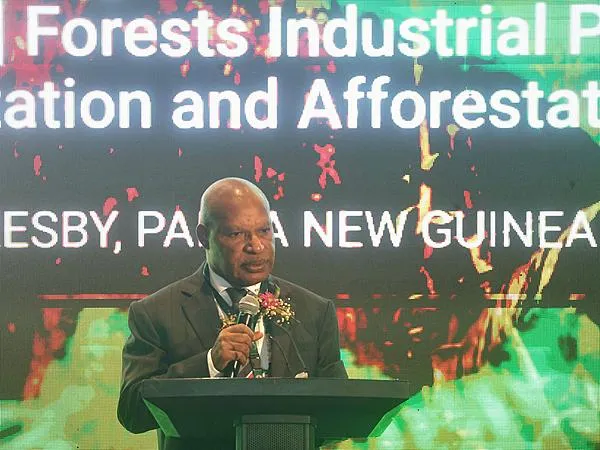
Papua New Guinea’s International Trade and Investment Minister Richard Maru has urged the newly launched PNG Diwai Holdings Limited, or PNG DHL, to begin its downstream timber processing ambitions with a single facility before expanding into larger manufacturing operations.
Speaking during the launch of PNG DHL and four downstream processing facilities in Port Moresby on Friday, Maru said the Papua New Guinea Forest Authority, or PNGFA, should adopt a gradual and commercially sustainable approach as it moves into downstream processing.
“The PNGFA cannot go from being a regulator to becoming a major manufacturer overnight,” Maru said.
“It must start with one downstream processing facility, come up with a modality, get it right, know the market, and expand with a strategic partner.”
PNG DHL was established as the commercial arm of the PNGFA to advance Papua New Guinea’s downstream processing agenda in the forestry sector.
Maru said the government’s long-standing policy to ban round log exports had faced implementation challenges because the PNGFA’s core role was regulatory oversight rather than industrial manufacturing.
“Our policy was to ban all round log exports by last year. We cannot blame the PNGFA for not implementing this policy,” he said.
“Downstream processing of timber products is not the expertise of the PNGFA – it is the regulator.”
Maru said limited government funding had also constrained implementation efforts but added that partnerships with the private sector could help accelerate development.
“The PNG DHL does not have to be an operator; it can be a joint venture partner with the private sector,” he said.
Maru described the launch of PNG DHL as a significant milestone for the forestry industry and commended Forests Minister Salio Waipo and PNGFA Acting Managing Director John Mosoro for advancing the initiative.
“This is the start of a new journey,” he said.
“Currently, our round logs are processed outside the country, and nobody knows their origin. We now want final timber products leaving our shores with the PNG DHL logo and our flag.”
Maru said the forestry sector has remained a major contributor to the Papua New Guinea economy for decades, generating more than K1 billion in annual foreign exchange earnings while supporting rural employment and infrastructure development.
He said the sector supports between 8,000 and 10,000 formal jobs in logging and primary processing, alongside indirect employment in transport and related services.
The minister also said forestry operations continue to provide royalties and benefit-sharing income for customary landowners and support the development of roads, schools and health facilities in remote communities.
“Forestry will continue to be a key sector in our country, and we can only do better,” Maru said.
“Through downstream processing we will increase its contribution to the economy on a long-term sustainable basis, maximize benefits for our people in the new Project Development Agreements, and create sustainable permanent jobs for our people.”
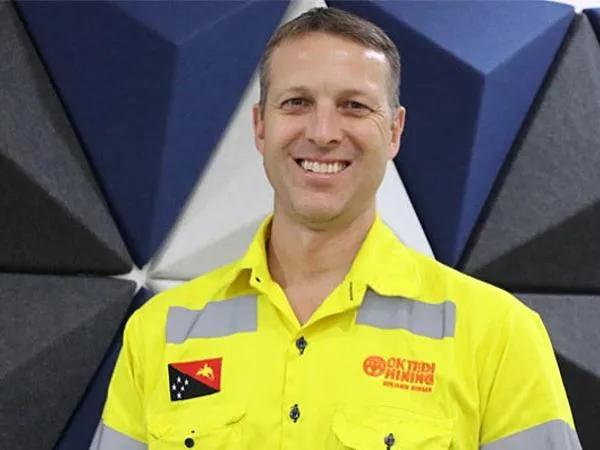
Ok Tedi Mining Limited (Ok Tedi) has appointed Ben Burger as General Manager of Misima Minerals Limited (Misima Minerals).
Burger was previously the General Manager Operations at Ok Tedi. He joined the company in 2024 during a period of significant organisational change. During his tenure, he successfully established the new Operations Business Unit, provided strong leadership and strategic direction, and played a key role as a member of the Ok Tedi Executive Leadership Team (ELT).
Under Burger’s leadership, Ok Tedi Operations delivered strong performance outcomes from 2023 to 2025.
Managing Director and Chief Executive Officer Kedi Ilimbit said the appointment marks a significant leadership milestone in advancing the operations of Ok Tedi subsidiary Misima Minerals Limited.
“The results Burger and his team delivered in Operations clearly demonstrate his leadership capability. I am confident that his experience will be instrumental in leading Misima Minerals, a 100 percent Ok Tedi subsidiary, to become an operating mine within the next two years,” Ilimbit said.
Burger said he was honoured by the appointment and committed to delivering the Misima Project for the benefit of the Ok Tedi Group and Papua New Guinea.
“Misima Minerals represents a significant opportunity for Ok Tedi’s future, and I am proud to lead this next phase on behalf of the company,” Burger said.
“I look forward to working closely with our teams, stakeholders and partners to safely and responsibly progress Misima towards operations, aligned with Ok Tedi’s Vision and Growth 2050 Strategy.”
Ilimbit thanked Burger for his significant contribution to Ok Tedi Operations and wished him every success in leading Misima Minerals as part of the wider Ok Tedi Group.
In the interim, Alan Bong will assume the role of Acting General Manager Operations, in addition to his current responsibilities at Ok Tedi as General Manager Strategic Business Development and Optimisation.
The appointment of Burger reflects Ok Tedi’s strong commitment to disciplined leadership, strategic growth and responsible stewardship of its subsidiary assets.
As Misima Minerals progresses towards operational delivery, this leadership transition signals a decisive step forward in implementing the Ok Tedi Group’s long-term growth strategy.
With experienced executives in place and a clear pathway aligned with the Vision and Growth 2050 Strategy, Ok Tedi continues to strengthen its position as a resilient, future-focused organisation.
“Together, as One Team, Wan Pasin, we are building the leadership, capability and alignment required to secure Ok Tedi’s future and deliver sustainable value for Papua New Guinea,” Ilimbit said.
France has reaffirmed its long-term economic, environmental and security commitment to the Pacific, outlining major investments and regional partnerships aimed at strengthening ocean governance, fisheries protection and the blue economy during the opening of the Melanesian Ocean Summit, held from May 11-14 in Port Moresby.
Speaking at APEC Haus on May 12, French Ambassador to Papua New Guinea, His Excellency Pierre Fournier, said France viewed ocean preservation as central to global economic stability, livelihoods and regional prosperity.
Addressing Pacific leaders, diplomats and delegates at the summit, Ambassador Fournier linked France’s Pacific engagement to outcomes from the Third United Nations Ocean Conference (UNOC3), held in Nice in June 2025, which France co-hosted alongside Costa Rica.
He said the conference resulted in the “Nice Ocean Action Plan,” a political declaration backed by voluntary commitments from governments and stakeholders aimed at improving ocean protection and sustainability.
“With the biggest ocean, the Pacific has the biggest impact on the implementation of this outcome,” Ambassador Fournier said.
He also highlighted international efforts to reverse ocean degradation, including commitments to protect at least 30% of the world’s oceans by 2030 and support for the High Seas Treaty, also known as the Biodiversity Beyond National Jurisdiction (BBNJ) Agreement.
According to the ambassador, the treaty would play a major role in supporting regional ocean corridor initiatives currently being promoted across the Pacific.
Blue Economy Financing a Key Focus
Ambassador Fournier said financing remained one of the biggest challenges in ocean protection, noting that Sustainable Development Goal 14 — focused on life below water — remained the least funded of all UN Sustainable Development Goals.
He said the Blue Economy and Finance Forum held in Monaco helped accelerate practical financing solutions for ocean conservation and sustainable marine development.
The ambassador also referenced recommendations from the “One Ocean Science Congress,” which brought together 2,000 international scientists ahead of the UN Ocean Conference. Their recommendations, now incorporated into the Nice Ocean Action Plan, included improving scientific knowledge of the deep sea.
France’s Economic Footprint in the Pacific
France also outlined the scale of its economic presence in the Pacific through its territories of New Caledonia, French Polynesia and Wallis and Futuna, which collectively manage an exclusive economic zone covering 6.5 million square kilometres.
Ambassador Fournier said France spends an average of 5 billion euros annually in the Pacific through these territories, contributing to regional ocean protection and support for Pacific regional organisations.
He said France’s management of its Pacific territories positioned the country as a major contributor to the region’s sustainability, prosperity and security.
The ambassador added that France continued to support conservation, fisheries management and maritime cooperation through active participation in regional organisations.
Fisheries Surveillance and Maritime Security
France also detailed its operational support for Pacific fisheries monitoring and maritime security.
Ambassador Fournier said France supports the Pacific Islands Forum Fisheries Agency (FFA) through the deployment of navy vessels and patrol aircraft in regional operations, representing approximately 130 days at sea and 50 flight hours annually at a cost of 2 million euros per year.
He said French armed forces in the Pacific also organise the large-scale humanitarian assistance and disaster relief exercise “Croix du Sud” every two years.
The most recent exercise involved 2,000 personnel from 19 countries and territories across the Pacific, with operations extending from New Caledonia to Wallis and Futuna.
France also highlighted the role of Maritime Information Fusion Centres in New Caledonia and French Polynesia, which provide maritime monitoring and operational intelligence support throughout the Pacific.
Marine Protection and Resource Policies
Ambassador Fournier described France’s marine conservation initiatives in the Pacific as “exemplary,” highlighting major marine protected areas and resource management policies.
He said French Polynesia declared its entire 5 million square kilometre exclusive economic zone a marine protected area during the UN Ocean Conference in Nice, while Wallis and Futuna is pursuing a similar initiative.
In New Caledonia, the Coral Sea Natural Park — established in 2014 — covers the territory’s entire 1.3 million square kilometre EEZ and includes high-protection nature reserve zones covering 10% of the area.
The ambassador also pointed to New Caledonia’s adoption in April 2025 of a 50-year moratorium on the exploration and exploitation of mineral resources on its continental shelf.
Regional Partnerships and Security Cooperation
France said its regional strategy would continue to focus on strengthening Pacific territories, expanding sovereignty partnerships and supporting regional multilateralism.
Ambassador Fournier said France was also contributing to European Union capacity-building initiatives, including the CRIMARIO III Indo-Pacific maritime security project.
He noted that French maritime and air surveillance assets support broader Pacific efforts against transnational crime, including drug trafficking.
The ambassador cited recent seizures involving New Zealand, Australian and French authorities in New Caledonia, including 2.5 tonnes of drugs and 76 tonnes of cigarettes intercepted during separate operations.
Ambassador Fournier commended Papua New Guinea for convening the Melanesian Ocean Summit, saying the initiative enabled Melanesian countries and regional partners to unite around shared ocean priorities.
He also reaffirmed France’s diplomatic and strategic relationship with Papua New Guinea, referencing PNG’s foreign policy white paper, which described France as both a friend and neighbour.
“We share the same vision; we share the same values. You can count on us,” Ambassador Fournier said.
The New Ireland Province in Papua New Guinea is pushing for increased equity participation, higher royalties and expanded development funding as negotiations continue over future benefits arrangements for the Simberi and Lihir mining projects.
New Ireland Governor Byron Chan said on 22 May that the province is seeking stronger long-term economic returns from the two major mining operations to ensure greater benefits flow back to local communities and the provincial economy.
Negotiations are currently underway between the New Ireland Provincial Government, representatives of Lihir Gold Limited and St Barbara Limited, and the Mineral Resources Authority regarding the renewal and future benefits agreements for the Simberi and Lihir mines.
Governor Chan said the provincial government is pursuing greater participation in the projects and a fairer share of mining-generated revenue for the people of New Ireland.
As part of discussions relating to the Simberi Mine agreement, the provincial government is seeking 10% of the existing 20% state equity currently allocated to Kumul Mineral Holdings Limited under the Simberi Gold Project arrangements.
“For too long, our people have watched resources leave our province without seeing sufficient long-term returns. We are now negotiating for a fairer level of participation that reflects the aspirations and interests of the people of New Ireland,” Governor Chan stated.
Meanwhile, discussions concerning the Lihir Mine agreement are focused on increasing mining royalty benefits to 3%, while also pursuing what the governor described as an equitable level of equity participation for the people and government of New Ireland Province.
Beyond equity and royalty negotiations, the provincial government is also seeking increases in Special Support Grants and Infrastructure Development Grants as part of broader efforts to strengthen economic and social development outcomes linked to the mining sector.
Governor Chan said the province wants to ensure mining companies continue to meet their social responsibilities by contributing to infrastructure development, healthcare, education, economic opportunities and essential services throughout New Ireland.
“These projects operate within our province and on our people’s land. It is only fair that the benefits flowing back to our communities are strengthened to support infrastructure, health, education, economic opportunities and essential services,” he said.
The negotiations come amid ongoing national discussions surrounding resource ownership, provincial participation and the distribution of benefits from Papua New Guinea’s extractive industries.
Governor Chan has also called on ward members, presidents of the Nimamar and Sentral Niu Ailan local-level governments, landowners and community leaders to unite in support of the proposed agreements.
“This is a defining moment for New Ireland. Unity and cooperation among leaders and landowners will be critical in ensuring we secure agreements that benefit not only the present generation, but future generations of our province as well,” Governor Chan added.
Negotiations remain ongoing, with further updates expected as discussions progress.
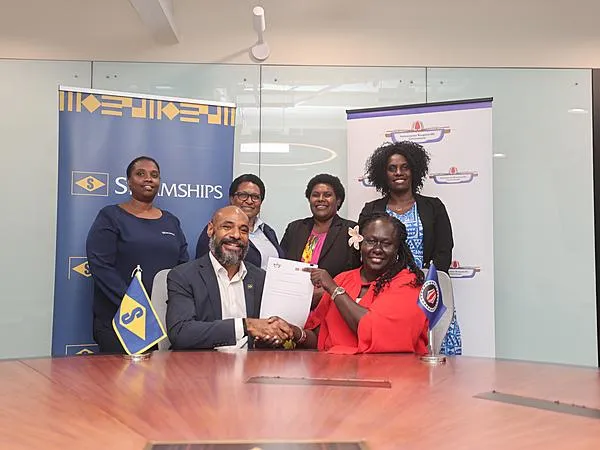
The Autonomous Bougainville Government (ABG) and Steamships Trading Company (Steamships) are pleased to announce the signing of a Memorandum of Understanding (MOU) establishing a framework for collaboration between ABG institutions, traditional land custodians and Steamships.
The MOU follows a longstanding series of consultative engagements between traditional land custodians, key ABG departments and Steamships aimed at strengthening alignment on the land engagement process in Bougainville.
These engagements brought together the Office of the Chief Secretary; the Department of Lands, Physical Planning, Environment, Conservation and Climate Change; the Department of Community Government and District Affairs; the Department of Commerce, Trade, Industry and Economic Development; and the Department of Justice and Legal Services, providing a platform to work together to address key land management matters.
This collaborative process will assist the ABG in sustainably developing land with titleholders and future developers, allowing the government to realise its full economic potential for the benefit of the people of Bougainville.
Steamships holds title to properties in Central Bougainville acquired prior to the Bougainville Crisis. Noting that this process commenced in 2021, the company reaffirmed its steadfast commitment to working through a structured and considered consultative process in partnership with traditional land custodians and the government to address the various complexities associated with undertaking such critical foundational work.
This collaborative process is guided by a focus on responsible investment, stakeholder engagement and alignment with Bougainville’s broader economic priorities. As a responsible developer, Steamships emphasised that its future decisions will consider opportunities to support local economic participation, employment and sustainable development outcomes.
Representatives from the ABG and traditional land custodian groups welcomed the consultative and collaborative approach.
The formalisation of this framework marks a significant step in strengthening cooperation between government, traditional land custodians, the private sector and foreign investors as Bougainville continues its recovery and development journey toward independence.
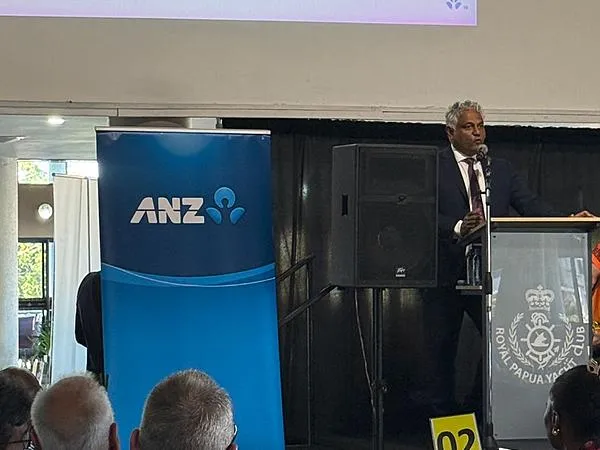
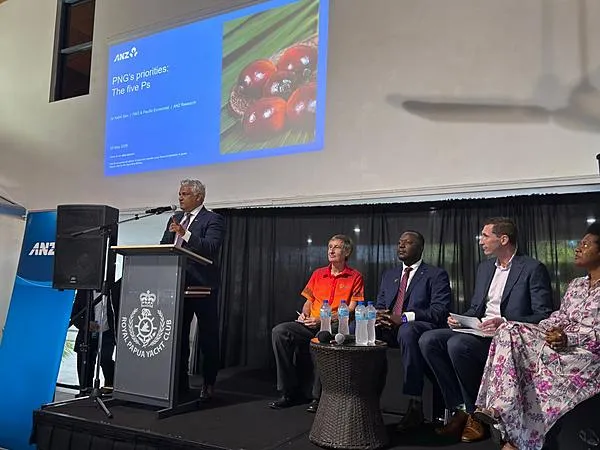
Papua New Guinea’s investment climate, grey listing status, and preparations for major resource and infrastructure projects were among the key issues discussed during a question-and-answer session at the Port Moresby Chamber of Commerce and Industry (POMCCI) breakfast meeting held on Wednesday, May 20, at the Royal Papua Yacht Club in Port Moresby.
Responding to questions on PNG’s evolving trade relationships, ANZ PNG & Pacific Economist Dr Kishti Sen said Asia is increasingly becoming the country’s most important growth market for exports.
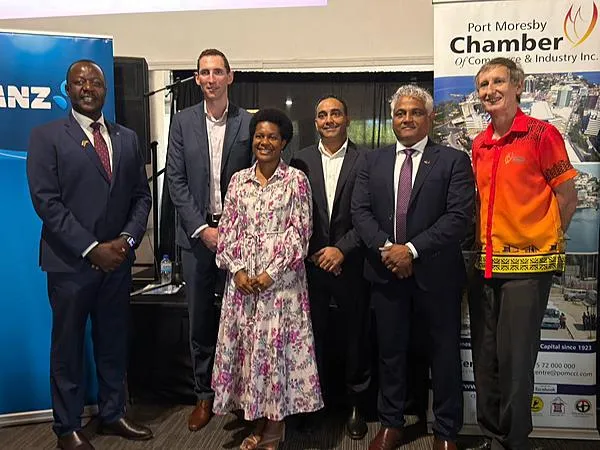
Leading business and industry panellists — Deloitte PNG Managing Partner Herbert Maguma, ANZ PNG Country Head Andrew Betteridge, POMCCI President Rio Fiocco, and Dentons Partner Wavie Leki — also addressed a range of issues raised during the session.
Discussions focused on foreign investment confidence, legal and financial systems, workforce pressures, and the readiness of businesses to position themselves for upcoming major developments in PNG.
Asia trade shift and expanding export markets
Dr Sen said that while Australia remains PNG’s largest trading partner, trade with Asian economies has grown strongly in recent years, driven by rising middle-class demand and changing consumption patterns.
“So Asia is the go-to region for Papua New Guinea,” Dr Sen said.
He explained that demand for agricultural products such as Highlands coffee and protein-based goods is increasing across Asia, creating new opportunities for PNG exporters.
Dr Sen also noted that Europe remains an emerging market opportunity, particularly as PNG expands its gas production and export capacity in the coming years.
Legal frameworks supporting foreign investment
Dentons Partner Wavie Leki said PNG continues to attract foreign investors, supported by ongoing improvements in legal and regulatory frameworks.
She said law and accounting firms are often the first point of contact for companies entering PNG, with advisory services typically focused on structuring investments correctly and ensuring compliance with local laws.
Ms Leki highlighted recent improvements in arbitration legislation as a key development strengthening investor confidence.
“We are seeing increased investment and hiring by large companies, and more interest coming from Asia,” she said.
She added that contract design has become increasingly important, particularly in relation to payment currency clauses and managing foreign exchange availability challenges in PNG.
Grey listing viewed as manageable risk
Another major focus of the discussion was PNG’s grey listing status and whether it could affect investment flows and banking relationships.
ANZ PNG Country Head Andrew Betteridge said the issue is widely understood by international investors and does not represent a structural weakness in PNG’s financial system.
“There’s been no suggestion across our customer base that there is reduced appetite for PNG because of the grey listing,” he said.
Mr Betteridge said the listing is primarily linked to efforts to strengthen enforcement of financial crime regulations, rather than concerns over banking stability or fiscal sustainability.
He added that PNG’s financial institutions and regulators are actively working to strengthen compliance systems and enforcement frameworks.
Deloitte PNG Managing Partner Herbert Maguma echoed this view, noting that correspondent banking relationships remain stable and capital continues to flow in and out of PNG.
He said improved compliance could ultimately strengthen competitiveness by ensuring all businesses operate under consistent regulatory standards.
“What it does is create a level playing field for everyone,” he said.
Strong investment pipeline and project timelines
POMCCI President Rio Fiocco provided insights into the timeline for major resource developments, particularly the Papua LNG project.
He noted that TotalEnergies’ petroleum retention licence is set to expire at the end of November, making the coming months critical for reaching a final investment decision.
Mr Fiocco said construction activity is expected to begin next year if approvals progress as planned, with peak workforce demand anticipated between 2029 and 2030.
He indicated that major developments could involve up to 10,000 workers during peak construction stages.
Businesses urged to prepare for multiple scenarios
Panellists repeatedly stressed the importance of strategic planning as PNG prepares for a new wave of investment-led activity.
Mr Betteridge advised businesses to prepare for multiple possible outcomes rather than relying on a single forecast.
“Plan for lots of different eventualities,” he said.
He encouraged companies to consider both the continuation of government support measures and scenarios in which subsidies may gradually be reduced or removed.
Mr Betteridge also noted that opportunities exist not only in large-scale resource projects, but also in smaller infrastructure, mining and construction-related developments.
Workforce pressures and talent retention
A key concern raised during the session was the growing shortage of skilled labour in PNG.
Ms Leki said businesses must prioritise workforce planning and talent development to remain competitive in a tightening labour market.
Mr Maguma highlighted the impact of overseas migration opportunities for skilled Papua New Guineans, particularly through Australia’s Pacific Engagement Visa program.
He warned that even relatively small migration numbers could significantly affect domestic labour availability across key sectors.
“You might think 1,400 a year is a small number, but it makes a significant difference across the sector,” he said.
He urged businesses to invest more heavily in training and workforce development to reduce reliance on external recruitment.
Strong emphasis was also placed on adaptability and long-term positioning within the private sector.
Speakers agreed that while global uncertainty, regulatory changes and cost pressures remain ongoing challenges, PNG’s expanding trade links, improving investment environment and major project pipeline continue to offer significant opportunities for businesses prepared to plan strategically and invest in capability.
Senior economists highlight fuel subsidy risks, kina stability and growth opportunities at POMCCI breakfast meeting
By Roselyn Erehe
Questions surrounding the long-term sustainability of Papua New Guinea’s fuel stabilisation measures, the future direction of the kina, and the readiness of businesses to absorb rising costs dominated discussions during the Port Moresby Chamber of Commerce and Industry (POMCCI) breakfast meeting held on Wednesday, May 20, at the Royal Papua Yacht Club in Port Moresby.
The discussion followed presentations on Papua New Guinea’s economic outlook by ANZ PNG & Pacific Economist Dr Kishti Sen, alongside a high-level panel discussion involving Deloitte PNG Managing Partner Herbert Maguma, ANZ PNG Country Head Andrew Betteridge, POMCCI President Rio Fiocco, and Dentons Partner Wavie Leki. Discussions focused more directly on concerns raised by business leaders and participants attending the event.
Dr Sen and Mr Maguma responded to a range of questions relating to inflationary pressures, government intervention measures, foreign reserves, consumer behaviour and opportunities linked to major upcoming projects.
Fuel subsidy measures under scrutiny
Responding to questions about the government’s fuel stabilisation package, Dr Sen said authorities had little choice but to intervene quickly because of the immediate impact rising fuel costs would have had on transport operators and households.
He emphasised that many public transport operators could not instantly adjust fares to match higher operating costs, creating additional pressure on consumers and businesses alike.
Dr Sen said the combination of fiscal support measures and monetary policy options gave Papua New Guinea greater room to manage short-term inflation risks than many other economies facing similar pressures.
He argued that further depreciation of the kina during a period of elevated global inflation would worsen affordability pressures by increasing the cost of imported goods.
“Depreciating the kina further is just going to add to inflationary pressures,” he said during the session.
Instead, he suggested that maintaining exchange rate stability — and potentially allowing for a modest strengthening of the kina — could help reduce imported inflation, particularly for goods sourced from Australia and other international markets.
Foreign reserves remain strong
One of the key questions raised during the session centred on whether PNG had sufficient foreign reserves to maintain exchange rate stability amid continuing global inflationary pressures.
Dr Sen assured attendees that the country’s reserve position remained healthy.
“There’s plenty of reserves,” he said.
He explained that improving commodity prices and stronger foreign exchange inflows had significantly strengthened PNG’s external position, while turnover in the foreign exchange market had also improved.
According to Dr Sen, these conditions made it increasingly difficult to justify continued downward pressure on the kina.
Revenue collections supporting subsidy measures
Deloitte PNG Managing Partner Herbert Maguma provided further insight into how the government may be funding its current stabilisation measures.
Mr Maguma pointed to stronger-than-expected revenue collections by the Internal Revenue Commission and Customs, noting that both agencies had reportedly exceeded budget projections during the first quarter of the year.
He said improved collections had strengthened government revenues without the need for significant additional borrowing.
Mr Maguma also highlighted the government’s participation in petroleum investments through Kumul Petroleum Holdings, explaining that rising oil and LNG prices generate additional returns for the state through royalties and equity participation.
However, he acknowledged that questions remained over whether the current level of support could be sustained over an extended period if global volatility persists.
Businesses warned against panic buying
The Q&A session also explored how businesses and consumers may respond if uncertainty over fuel supply or pricing intensifies.
Drawing comparisons with behaviour observed during the COVID-19 pandemic, Mr Maguma warned that perceptions of scarcity could trigger panic buying and stockpiling.
He noted that concerns over possible fuel price increases had already led to longer queues at fuel stations over the previous weekend.
Businesses reliant on fuel for production, transport and energy generation may also attempt to increase fuel storage where financially possible, he said.
“If I was a business person and fuel was a key input into my operations, I would probably stockpile fuel if I had the capacity,” Mr Maguma said.
He warned that any future reduction in subsidy support would likely place additional pressure on operating costs across multiple sectors of the economy.
Major projects expected to drive economic activity
While much of the discussion focused on inflation and fuel-related pressures, panellists also highlighted several major projects expected to generate economic activity over the coming years.
Mr Maguma said the proposed Papua LNG project remained a significant opportunity for the economy, with ongoing discussions involving landowners and project stakeholders continuing ahead of a final investment decision.
He also pointed to construction activity linked to PNG’s future National Rugby League franchise, including new accommodation developments and plans for a Centre of Excellence near Santos National Football Stadium.
According to Mr Maguma, the sporting infrastructure projects are expected to create additional opportunities across construction, accommodation, tourism and hospitality.
He added that broader tourism opportunities linked to major sporting events could also support eco-tourism operators and small businesses across the country.
Throughout the discussion, speakers repeatedly stressed the importance of preparedness within the private sector. Businesses, industry leaders and investors were encouraged to strengthen operational planning, closely monitor input costs and prepare for potential volatility in fuel prices and broader inflation trends.
Despite ongoing global uncertainty, panellists maintained that PNG remained well-positioned for medium-term economic growth due to its strong resource pipeline, improving revenues and major infrastructure developments currently underway.
Papua New Guinea’s economic outlook, investment opportunities and long-term development priorities took centre stage during a business breakfast session hosted at the Royal Papua Yacht Club in Port Moresby on Wednesday, May 20, where leading economists and private sector representatives discussed the country’s future through a “Five Ps” framework — Petroleum, Policy, Projects, Produce and Partnerships.
The session featured ANZ PNG & Pacific Economist Dr Kishti Sen, who delivered a presentation outlining the major economic forces shaping PNG’s future. A high-level panel discussion also brought together Deloitte PNG Managing Partner Herbert Maguma, ANZ PNG Country Head Andrew Betteridge, Port Moresby Chamber of Commerce and Industry (POMCCI) President Rio Fiocco, and Dentons Partner Wavie Leki.
Organisers from POMCCI described the event as a forward-looking discussion focused on the opportunities, challenges and priorities facing PNG. Strong participation from members of the business community reflected continued private sector engagement in the country’s economic direction.
Petroleum and global energy risks
A key topic during the presentation was the impact of global petroleum market volatility and ongoing geopolitical tensions on PNG’s economy.
Dr Sen outlined ANZ Research scenarios relating to instability in the Middle East and the Strait of Hormuz, a critical global oil shipping route. Under ANZ’s base-case scenario, a US-Iran agreement would reopen the Strait by June, easing oil prices to below US$100 per barrel while still leaving a geopolitical risk premium in place.
However, ANZ warned that prolonged conflict could trigger major global supply disruptions, potentially pushing oil prices towards US$200 per barrel if international stockpiles are exhausted and infrastructure damage in the Persian Gulf region worsens.
The presentation noted that fuel supply in PNG remains secure for now, although stakeholders were encouraged to prepare for worst-case scenarios, including possible fuel rationing if global disruptions intensify.
Government fuel interventions under scrutiny
The “Policy” component of the framework examined government measures aimed at cushioning consumers from sharp increases in fuel prices.
According to the presentation, the PNG government introduced a PGK1 billion fuel stabilisation package to absorb rising costs for petrol, diesel and kerosene. Data presented showed that between March and April 2026, fuel prices rose sharply before government intervention, with petrol prices increasing by K1.70 per litre, diesel by K3.25 and kerosene by K3.35.
To offset these increases, the government removed GST and fuel excise taxes while also introducing direct subsidy payments to fuel importers.
The combined measures effectively returned fuel prices to March levels, with revised April retail prices set at K4.39 for petrol, K4.44 for diesel and K4.09 for kerosene.
Despite the intervention, the presentation questioned the long-term sustainability of the measures, particularly as the Papua New Guinea kina continues to weaken against the US dollar.
Resource projects and local economic benefits
Discussions also focused heavily on major resource projects and the broader economic contribution of PNG’s mining and petroleum sectors.
ANZ Research data presented during the session showed that PNG’s resource sector continues to generate significant value across the wider economy through direct and indirect employment and business activity.
The presentation estimated that the oil, gas and mining sectors collectively support more than 96,000 formal-sector jobs through direct, first-round and secondary economic effects.
Figures presented showed that oil and gas extraction contributes nearly one kina in economic value for every kina of final demand, while mining delivers similar multiplier effects through indirect economic activity.
Discussion under the “Projects” pillar centred on maximising local participation, ensuring broader economic benefits from resource developments and creating stronger linkages between large-scale projects and domestic industries.
Calls to expand agricultural production
Under the “Produce” pillar, Dr Sen highlighted growing global demand for PNG’s agricultural exports and the need to expand downstream processing capacity.
The presentation noted that high commodity prices are encouraging increased planting activity, with more agricultural seedlings now being planted across the country.
However, several constraints continue to limit PNG’s ability to maximise export earnings, including inadequate downstream processing facilities and infrastructure that is not designed to handle high export volumes.
Participants heard that improving processing capability will become increasingly important as upstream agricultural production expands. The discussion also reinforced the importance of agricultural diversification and value-adding industries as PNG seeks broader-based economic growth beyond the extractive sector.
Trade partnerships driving market access
The final pillar — “Partnerships” — focused on PNG’s growing trade relationships with regional and international markets, particularly across Asia.
ANZ Research data showed Australia remains PNG’s largest trading partner, with trade flows valued at more than PGK25 billion.
Other major trading partners identified during the session included Japan, China, Singapore, the United States, South Korea, Taiwan, Malaysia, Germany and the Netherlands.
Speakers noted that strengthening partnerships with Asian economies is opening new export opportunities for PNG businesses and producers, while regional cooperation remains critical to long-term economic resilience.
Private sector engagement remains strong
The breakfast session also featured discussions on investment confidence, leadership, policy certainty and the importance of collaboration between government and the private sector.
Panel members shared perspectives on the country’s operating environment, business confidence, financial systems, legal frameworks and the role of institutions in supporting sustainable economic growth.
POMCCI said the strong attendance from Chamber members demonstrated continued interest from the business sector in PNG’s economic outlook and future development priorities.
The event concluded with renewed emphasis on the importance of partnerships, policy consistency and long-term planning in unlocking PNG’s economic potential.
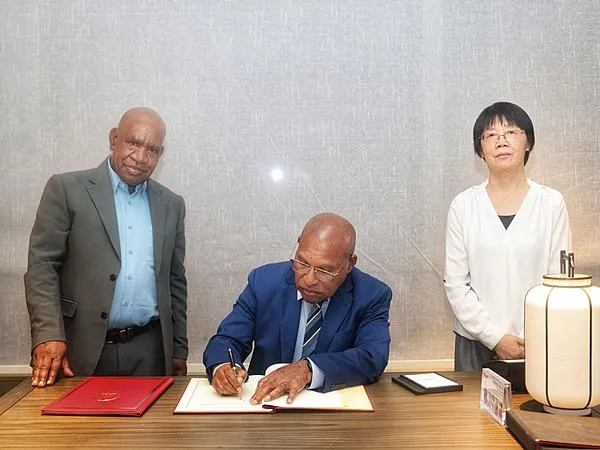
Papua New Guinea has signed a Framework Agreement on Enhanced Economic Partnership with China, paving the way for deeper bilateral trade cooperation and future negotiations on a potential free trade agreement between the two countries.
The agreement was signed on May 21 in Suzhou, China, by Papua New Guinea Minister for International Trade and Investment Richard Maru and Chinese Commerce Minister Wang Wentao during the Asia-Pacific Economic Cooperation, or APEC, Ministers Responsible for Trade Meeting.
In a joint statement, both sides said the agreement reflected their commitment to further strengthening and elevating China–Papua New Guinea economic and trade relations under their Comprehensive Strategic Partnership Featuring Mutual Respect and Common Development.
The two countries also acknowledged the completion of a Joint Feasibility Study on a possible free trade agreement, saying the report would serve as an important reference for future trade negotiations and practical cooperation initiatives.
Under the framework agreement, both parties agreed to launch subsequent module negotiations “as soon as possible” and explore new opportunities to expand bilateral economic and trade cooperation.
Both governments said any future trade agreement should be mutually beneficial and take into account the differing levels of development between the two countries.
The statement said future negotiations would aim to be fair, transparent and reflective of the respective needs and capacities of both parties.
China also recognized Papua New Guinea’s trade capacity needs identified in the Joint Feasibility Study, with both sides committing to pursue “pragmatic outcomes” in future practical cooperation.
The two countries further agreed to align development strategies, expand cooperation across areas of mutual interest, and promote the liberalization and facilitation of trade and investment.
They also pledged to strengthen coordination and collaboration under multilateral frameworks including the United Nations and APEC.
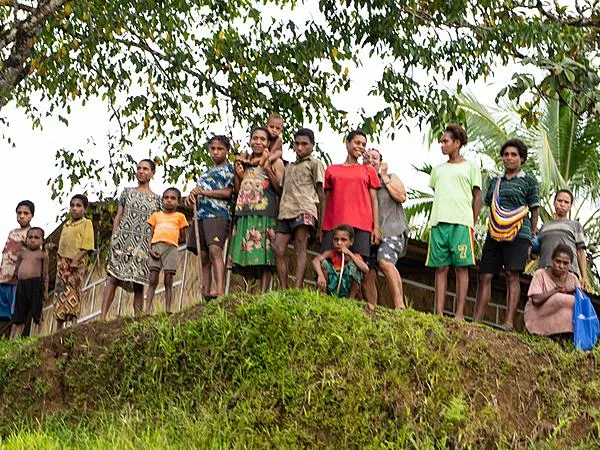
A new classroom and staff housing project is underway in the remote Baina community in Gulf Province as part of efforts to improve access to education within the PNG LNG pipeline corridor.
Located along the Kikori River near the border with Southern Highlands Province, Baina Village is one of the most isolated communities in the project area, accessible only by air and river transport. The village is situated about 97 kilometres from Moro and Mendi, and approximately 78 kilometres from Kikori Station.
Home to more than 4,000 residents across four hamlets in Segment 6 of the PNG LNG project area, Baina has long faced challenges in accessing essential services due to its geographical isolation.
To address those challenges, Gas Resources Pipeline Ltd., in partnership with the Mineral Resources Development Company, or MRDC, is constructing a new double classroom and staff house at Baina Primary School under the Community Investment Trust Fund, or CITF, programme.
Foundation works have already been completed, with the facilities set to include solar power systems and other essential fittings to support both classroom learning and teacher accommodation.
Augustine Mano acknowledged the logistical and financial challenges involved in delivering infrastructure to remote communities such as Baina.
“These are some of the most remote communities in the country, where access is extremely difficult and the cost of delivering services is very high,” Mano said.
“It is not an easy task, but Gas Resources Pipeline Ltd must be commended for its vision in investing in its people — especially in the education of its children, who are the future of these communities.”
According to MRDC, the project is expected to ease classroom overcrowding, improve learning conditions and support teacher retention in a location where attracting educators has traditionally been difficult.
Baina Primary School head teacher Robert Kawi said the school had experienced growing enrolment in recent years despite limited infrastructure.
“When I first arrived, we only had one double classroom for a growing student population,” Kawi said.
“Education here has always been a struggle due to our location and limited facilities. Today, we are seeing real progress. With more classrooms and staff housing, we can take in more students and improve the quality of teaching.”
Student enrolment at the school has grown to nearly 400, while teaching positions have increased from two to six in recent years.
Kawi said the provision of proper staff housing would help address long-standing challenges faced by teachers assigned to remote communities.
“Because of our geographical location, it is very difficult for teachers to travel here and sustain themselves. Proper housing will make a big difference in attracting and keeping teachers in Baina,” he said.
MRDC said the Baina Primary School project forms part of its broader investment in education infrastructure across project-impacted communities through the CITF programme, which supports the delivery of classrooms, staff housing and other essential infrastructure in remote areas.
Australia has announced a major new push to support Papua New Guinea’s telecommunications and digital infrastructure sector, with Australian Minister for Pacific Island Affairs Pat Conroy outlining plans aimed at accelerating economic growth, expanding business opportunities, and improving nationwide connectivity in PNG.
Speaking at the 41st Australia Papua New Guinea Business Forum and Trade Expo on May 20, 2026, Conroy said digital connectivity would play a critical role in PNG’s long-term economic transformation, with improved telecommunications infrastructure expected to drive investment, reduce business costs, expand financial inclusion, and create tens of thousands of jobs.
The minister said PNG stood to gain significantly from investment in digitisation and telecommunications reform, citing projections that effective digital transformation could lift the country’s GDP growth to more than 4.5 percent between now and 2035.
According to figures outlined in his speech, this could contribute an additional K85 billion to the economy, create more than 130,000 jobs, and support the establishment of over 45,000 new businesses.
Conroy said widespread and affordable internet access had the potential to double PNG’s non-mining growth rate while transforming economic activity across all 22 provinces.
“We know that for PNG, investing in effective digitisation could elevate GDP growth to over 4.5 percent between now and 2035, adding K85 billion to the economy, driving the creation of more than 130,000 jobs and over 45,000 new businesses,” he said.
He described telecommunications infrastructure as essential for development rather than a luxury, saying affordable and reliable internet services were now fundamental to education, healthcare, trade, investment, financial services, and business operations.
“Connectivity supports businesses, industries, and jobs, and helps inform, engage, and empower people,” Conroy said.
The Australian minister highlighted the significant digital access challenges currently facing PNG, emphasising that only around 36 percent of the population has consistent mobile coverage, while internet penetration remains at approximately 32 percent, largely concentrated in Port Moresby and Lae in Morobe Province.
He said PNG’s internet penetration lagged behind every ASEAN and Pacific neighbour, while internet access costs were among the highest globally relative to income levels, placing services beyond the reach of more than 80 percent of the population.
“High service costs, plus expensive installation and maintenance costs, further limit access and industry development,” he said.
Despite those challenges, Conroy said improved connectivity could unlock substantial economic and entrepreneurial potential across PNG, particularly in rural and regional areas.
He reflected on visits to marketplaces in locations including Wewak and the Highlands, where he witnessed what he described as the strong entrepreneurial spirit of Papua New Guineans.
“I’ve seen the spirit of business that is there and that needs to be harnessed by giving connectivity to the people,” he said.
“When it’s done well, it drives development. It reduces the divide between cities and rural areas, and it reduces costs for businesses.”
Telecommunications blueprint launched
A major announcement during the forum was the launch of the Telecommunications Blueprint process, a joint PNG-Australia initiative first agreed to during the Australia-PNG Ministerial Forum in Canberra last year.
The blueprint is intended to provide a long-term roadmap for building a “connected, digital-ready nation” by identifying reforms, investment priorities, and regulatory measures needed to improve access, lower telecommunications costs, and strengthen cyber resilience.
Conroy said the initiative would support digital growth across sectors including health, education, tourism, and trade, while helping PNG maximise the value of data capacity provided through the Australian-funded Coral Sea Cable.
The blueprint process will be led by former Australian Competition and Consumer Commission chair Professor Rod Sims AO alongside PNG Department of Information and Communications expert adviser Jack Tomon.
Conroy said Australia would provide a “complete package of support” to PNG, including additional assistance for capital expenditure and support in strengthening market settings and regulatory structures.
He noted that Australia’s own experience demonstrated that achieving universal connectivity, particularly in remote areas, required close cooperation among governments, regulators, and the private sector.
The minister also highlighted the potential role of low-earth-orbit satellite technology in improving internet access in PNG alongside subsea cables and terrestrial telecommunications networks.
“That’s what the Blueprint is all about: how technology, business, government, and regulators can all work together to maximise connectivity,” he said.
New “Pukpuk” connectivity initiative announced
As part of broader digital infrastructure cooperation, Conroy announced that PNG and Australia would progress work on exploring additional secure internet cable connections into Port Moresby through what Acting PNG ICT Minister Peter Tsiamalili Jr. has named the “Pukpuk Digital Connectivity Initiative.”
The proposed initiative is expected to build on the Coral Sea Cable infrastructure and strengthen PNG’s international data connectivity capacity.
Conroy said any future investment under the initiative would add to the approximately A$2.5 billion Australia has already invested in digital connectivity projects in PNG.
He further noted that Australia’s Infrastructure Financing Facility for the Pacific had committed more than A$1 billion to PNG’s critical infrastructure projects since 2019.
“These projects will in turn help grow PNG’s development, trade, investment, and our broader economic partnership,” he said.
Beyond telecommunications infrastructure, Conroy linked digital access to broader social and commercial opportunities, including increased participation in sports, education, and professional industries.
He referenced PNG’s planned entry into the National Rugby League competition in 2028, saying affordable internet access would allow people in rural and remote communities to follow the PNG Chiefs and access wider opportunities connected to sport and sports administration.
The minister also used the forum to emphasise the evolving strategic and economic relationship between PNG and Australia following the signing of the PNG-Australia Mutual Defence Treaty and broader bilateral alliance arrangements last year.
He described the agreement as Australia’s first alliance since the ANZUS Treaty more than 70 years ago and PNG’s first alliance with another country.
Conroy said the relationship between the two nations was increasingly focused on practical economic opportunities in trade, investment, infrastructure, and digital development.
“The underpinning principle among all this is, yes, we make investments based on the priorities of the PNG government,” he said.
“The PNG government is putting skin in the game. The PNG government, under wise budget management, is making investments, and Australia is pleased to be a partner and supporter of what the PNG government says are its priorities.”
“This is a partnership of equals — a partnership of equals that is now a partnership of allies.”
Geopacific Resources Ltd. has released the definitive feasibility study, or DFS, for its Woodlark Gold Project in Papua New Guinea, outlining a long-life open-pit gold development with projected post-tax net present value of A$1.3 billion at a gold price of A$5,500 per ounce.
The Australia-listed company said the DFS confirmed Woodlark as a technically and economically viable project capable of generating strong cash flow and rapid capital payback.
The Woodlark project, located on Woodlark Island in Milne Bay Province, is wholly owned by Geopacific subsidiary Woodlark Mining Ltd. and is covered by Mining Lease 508.
According to the DFS, the project is forecast to produce an average of 100,200 ounces of gold annually over an 11-year processing life, with peak annual production of 116,900 ounces in year four.
The study outlines a production target of 35.6 million tonnes grading 1.07 grams per tonne gold for 1.23 million ounces of contained gold, underpinned by a JORC-compliant ore reserve of 34.3 million tonnes at 1.09 g/t gold for 1.2 million ounces.
Geopacific said the project would use conventional open-pit mining methods across the Busai, Kulumadau and Woodlark King deposits, with ore processed through a 3.5 million tonnes-per-annum conventional carbon-in-leach processing plant.
The DFS estimated pre-production capital expenditure at A$534.6 million, including contingency allowances and mining pre-strip costs, while total project funding requirements were estimated at around A$650 million.
The company said the project was expected to generate post-tax net cash flow of A$2.52 billion and achieve payback approximately 18 months after first production.
Managing director Hamish Bohannan said the DFS marked a major milestone for the company.
“The completion of the DFS marks a major milestone for the Company and confirms Woodlark as a technically robust, long-life project capable of delivering strong margins and significant free cash flow,” Bohannan said.
The company said measured and indicated mineral resources account for 96 percent of material planned to be mined over the life of the operation, with the first three years of production almost entirely supported by measured and indicated resources.
Geopacific also said the project already held key approvals and permits, including an approved environmental permit valid until March 2034 and executed landowner agreements.
However, the company noted further amendments would still be required to extend mine construction timelines beyond October 2027 and to extend Mining Lease 508 beyond its current expiry date in July 2034.
The DFS assumes those approvals and extensions will be obtained.
Geopacific said it would now advance discussions with financing partners and continue front-end engineering and permitting activities ahead of a targeted final investment decision by late 2026. Construction is targeted to begin in late 2026, with first gold targeted for November 2028.
Canada-listed Great Pacific Gold Corp. has provided an exploration update on drilling and fieldwork at its flagship Wild Dog Project in Papua New Guinea, outlining plans for expanded drilling across multiple epithermal gold-copper target areas in 2026.
The Wild Dog Project, located in East New Britain Province, hosts a series of interpreted epithermal vein structures extending across the broader Wild Dog structural corridor.
The company said six main target areas distributed across approximately 4.5 kilometres of interpreted epithermal vein structures were planned for drill testing this year.
At the Sinivit target, Great Pacific Gold completed approximately 3,000 metres of drilling across 18 diamond drill holes in 2025 and identified two high-grade ore shoots.
Results included hole WDG-08 from the Northern Sulphide zone, which intersected 8.4 metres grading 50.1 grams per tonne gold equivalent, including 59.6 g/t gold, 1.9 percent copper and 59.6 g/t silver.
At the Southern Oxide zone, hole WDG-02 returned 7 metres grading 10.9 g/t gold equivalent, including 5.5 g/t gold, 3 percent copper and 68.8 g/t silver.
The company also reported drilling results from the Kavasuki target, where approximately 1,000 metres of drilling across seven diamond drill holes identified a broad mineralised zone from surface. Hole KVH-03 returned 38.4 metres grading 2.23 g/t gold equivalent, including 2.4 g/t gold.
Great Pacific Gold said six additional drill holes totalling approximately 900 metres were planned at Kavasuki to test strike continuity to the north and south.
Elsewhere at the project, the company outlined ongoing exploration work at Magiabe, Mengmut, Morgan and the EK target area, which includes Elamaraka and Kargalio.
At Magiabe Main, historical drilling returned 4.4 metres grading 9.2 g/t gold and 37.9 g/t silver, while a 2026 channel sample at the newly identified Magiabe West vein returned 8 metres grading 18.1 g/t gold equivalent.
At the Morgan target, 2026 mapping expanded the interpreted strike length to 850 metres, while a recent channel sample returned 19.3 metres grading 4.13 g/t gold equivalent.
The company said trench sampling completed in 2026 at the Mengmut target returned 4 metres grading 2.5 g/t gold, with further exploration focused on refining drill targets along the broader trend.
Chief executive Greg McCunn said the project continued to demonstrate district-scale exploration potential.
“The main epithermal target zone at Wild Dog continues to show district-scale potential with six main target areas distributed across approximately 4.5 km of interpreted epithermal vein structure planned for drill testing in 2026,” McCunn said.
The company said it planned to undertake a further 10,000 metres of diamond drilling between May and December this year to test priority targets across the main epithermal target area.
Vice-president for exploration Callum Spink said recent work at Elamaraka and Kargalio supported the company’s interpretation that Wild Dog represented an underexplored district-scale epithermal mineralised system.
Great Pacific Gold said it remained well financed through 2026 and beyond, with a cash position of approximately C$26.3 million at the end of the first quarter.
The company noted that reported drill intercepts represent core lengths and that true widths are not yet known.
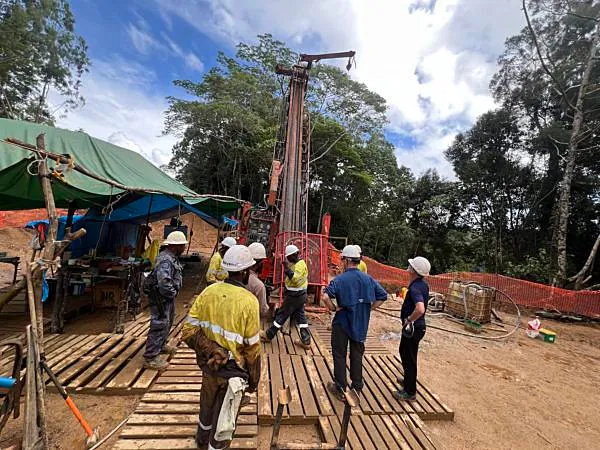
Canada-listed South Pacific Metals Corp., or SPMC, has reported results from its maiden drilling programme at the Ontenu NE prospect in Papua New Guinea, with mineralisation intersected in five of seven holes completed to date.
The drilling programme, comprising seven holes for 2,266 metres within the wider Osena Project area, targeted the Ontenu NE prospect along the Kainantu Transfer Zone — the same regional structural corridor hosting K92 Mining’s producing Kainantu gold-copper mine.
SPMC said drilling identified mineralisation across two zones — Onki and Jorkol — and two distinct mineralisation styles.
At the Onki Zone, hole ONED26-006 intersected 92 metres grading 0.34 grams per tonne gold from 67 metres, including 2 metres grading 5.74 g/t gold, 1.49 percent copper and 35 g/t silver from 119 metres. The company said the interval included a peak re-assay of 9.92 g/t gold and 2.35 percent copper.
At the Jorkol Zone, hole ONED25-001 returned 4.5 metres grading 0.77 g/t gold, 0.14 percent copper and 19 g/t silver from 203.5 metres, including a 0.5 metre sample grading 3.16 g/t gold, 0.62 percent copper and 96 g/t silver with 602 parts per million bismuth.
The company said geological logging and geochemical data indicated the drilling had intersected an intermediate- to high-sulfidation epithermal system, with alteration and mineralisation signatures suggesting the productive parts of the system may remain untested at depth or along strike.
Chief executive Timo Jauristo said the programme had achieved several milestones for the company.
“We targeted and have been drilling Ontenu NE to confirm our concept that we have signatures of Kora-Judd style mineralisation on our ground — and the answer is yes,” Jauristo said.
“We have intersected mineralisation in 5 of 7 holes; hit two high-grade Au-Cu intercepts within wider lower-grade halos; are developing a better understanding of the geology, structure and mineralisation in the area; and are compiling a geological model that will help guide future drilling towards more productive parts of the veins.”
SPMC said drilling would continue at Ontenu NE, targeting newly identified north-west trending structures at Onki, deeper levels beneath the interpreted silica cap and strike extensions at Jorkol.
The company also said drilling at Ontenu Central was expected to commence shortly following detailed mapping work. SPMC said Ontenu Central hosts a two-kilometre zoned alteration footprint with a porphyry-style signature and a relatively shallow porphyry target interpreted beneath surface gold-copper anomalies.
Separately, the company announced the appointment of Octavio Garcia as exploration manager. Garcia has more than 30 years of international mineral exploration experience, including previous roles with Mt Isa Mines, Barrick and Xstrata, and prior exploration work in Papua New Guinea.
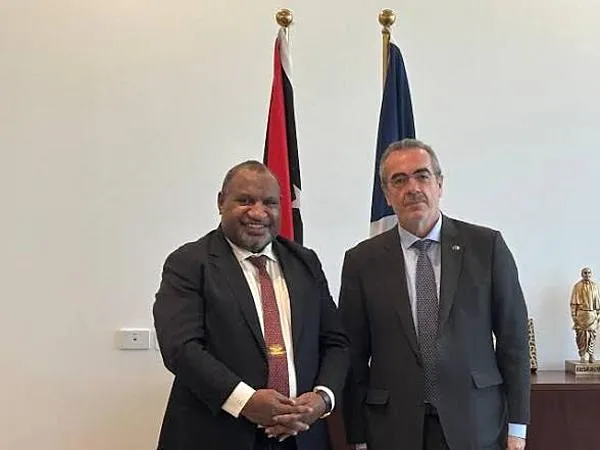
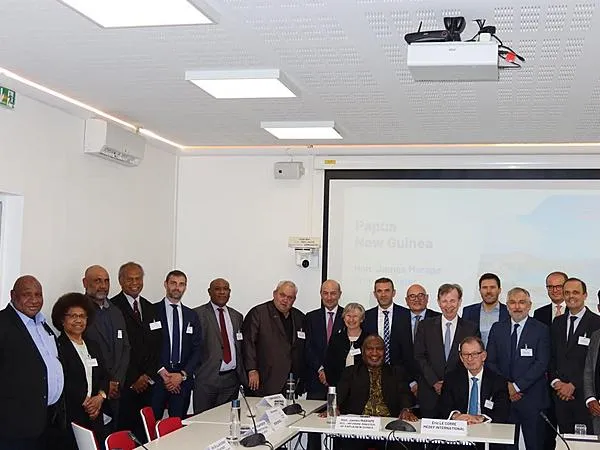
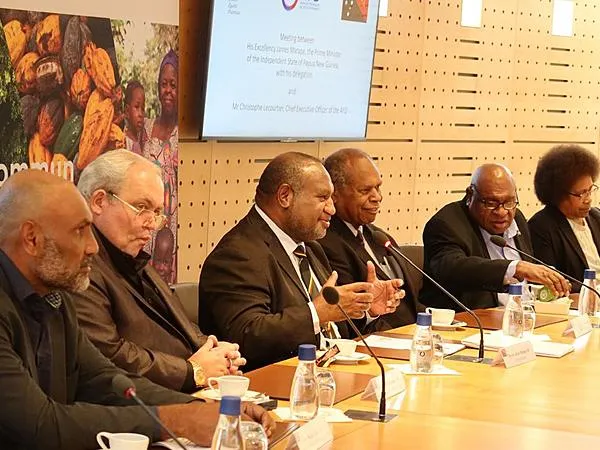
Prime Minister James Marape has invited French investors, financiers and technology firms to expand into Papua New Guinea as the country positions itself for long-term growth driven by energy, infrastructure and industrial development.
Speaking during a high-level meeting hosted by MEDEF International in Paris, Marape told representatives from major French companies that PNG was entering a new phase of economic transformation as it marked its 50th anniversary of Independence.
Companies attending the meeting included Global Sovereign Advisory, Matière, Veolia, BPCE, Flying Whales and telecommunications company iBASIS, with discussions spanning energy, infrastructure, utilities, aviation logistics, healthcare and digital connectivity.
“The next 20 years for Papua New Guinea will be about building roads, roads, roads and bridges,” Marape said.
“We have major rivers, difficult terrain, and enormous infrastructure needs. We are open to innovative financing and strong private-sector partnerships.”
Marape said PNG was on track to return to a balanced budget next year for the first time since 2010, which he said would strengthen investor confidence and support long-term economic management.
The prime minister also promoted the Papua LNG project as one of the country’s largest investment opportunities, saying it could generate tens of billions of US dollars in economic activity over its lifetime.
“Papua New Guinea and national stakeholders will need to finance participation in the project, so we are already exploring options for raising funds — either independently or through partnerships,” he said.
Marape said PNG’s gas pipeline extended beyond Papua LNG, with the P’nyang project and several additional developments expected to sustain construction activity through to 2040.
He also confirmed that discussions were continuing with French energy major TotalEnergies and project partners regarding the Papua LNG final investment decision.
Marape said earlier project cost estimates had been revised down from about US$18 billion to closer to US$14 billion following rebidding processes and cost optimisation measures amid changing global economic conditions after COVID-19 and geopolitical instability.
French engineering company Matière outlined its ongoing work in PNG, including the construction of more than 20 bridges linked to PNG LNG infrastructure and involvement in the government’s Connect PNG programme. The company also presented plans for more than 55 additional bridge sites nationwide.
Marape challenged the company to consider relocating bridge manufacturing operations to PNG.
“If I give you clean hydro energy and reliable power, can you relocate bridge manufacturing to PNG?” he asked.
Discussions also covered public-private partnership opportunities in utilities and healthcare infrastructure, including financing options for the stalled Kimbe General Hospital project.
“Kimbe Hospital remains a priority project,” Marape said.
“We need modern hospitals across PNG. If financing below three percent with a reasonable grace period can be arranged, I am interested.”
French banking group BPCE also expressed interest in PNG’s financial sector, while aviation company Flying Whales presented heavy-lift airship technology aimed at improving cargo transport into remote regions without road or airport access.
Marape said aviation and telecommunications would remain critical to PNG’s future economic development, highlighting ongoing efforts to expand digital connectivity through Starlink and other satellite technologies.
“Telecommunications are critical for future economic growth and governance,” he said.
“PNG is open for business.”
In his closing remarks, Marape announced Papua New Guinea’s intention to establish an embassy in Paris, saying the move would strengthen diplomatic and economic ties between the two countries.
Papua New Guinea is nearing the signing phase for the redevelopment of the Port of Rabaul following high-level talks in Paris between Prime Minister James Marape, French development agency Agence Française de Développement, or AFD, French government officials and European development partners.
The discussions, held on May 19, focused on infrastructure development, renewable energy, biodiversity conservation, green finance and broader economic cooperation between PNG and France.
Marape said financing negotiations for the Rabaul port redevelopment were approaching completion after the project recently received National Executive Council approval. The project is jointly financed by AFD, the European Investment Bank and the European Union under a broader “green port” strategy.
“Before the volcanic eruptions of 1994, Rabaul was regarded as one of the most beautiful natural harbours in the world,” Marape said.
“The restoration and redevelopment of Rabaul is not just for East New Britain Province, but for the whole country and the Pacific region.”
The prime minister said the government aimed to transform Rabaul into a regional import-export hub, Pacific redistribution centre and modern green port supporting tourism, trade, manufacturing and downstream processing industries.
Marape said industries linked to cocoa, fisheries, sustainable timber processing and renewable energy could emerge around the redeveloped port infrastructure.
“We want economic activity surrounding the port — processing our cocoa, our fisheries products, and our timber sustainably here in Papua New Guinea before export,” he said.
The discussions also covered climate and biodiversity cooperation under the SoNG Project — “Solwara na Graun blo Pipol” — a PNG-France initiative backed by AFD and development partners supporting marine conservation, forest preservation and community-based climate resilience programmes.
“Papua New Guinea possesses some of the last remaining pristine biodiversity on Earth,” Marape said.
“We have around six percent of the world’s biodiversity in our forests and oceans. These are not only PNG assets — they are assets for humanity.”
Marape also outlined PNG’s ambitions to expand hydro, solar and geothermal energy generation as part of a longer-term transition away from fossil fuels. Discussions included renewable energy partnerships, battery technology research, green finance and reforms within PNG Power Ltd.
“There is enormous opportunity in battery technology, clean energy innovation, and renewable energy systems,” he said.
The prime minister also called for greater collaboration between French universities and the Papua New Guinea University of Technology in renewable energy and battery technology research.
Marape said PNG’s partnership with France would continue to strengthen beyond current political leadership.
“What we are doing today is building bridges into the future for our children and grandchildren,” he said.
Prime Minister James Marape has thanked the Government and people of France for their warm hospitality and enduring friendship with Papua New Guinea during a luncheon hosted in Paris on Wednesday, May 20, 2026, with members of the French National Assembly and senior French officials.
Ahead of the luncheon, Marape and the Papua New Guinea delegation were given a tour of the French National Assembly and later observed proceedings in session, where the Prime Minister received a standing ovation from French Members of Parliament.
Marape said Papua New Guinea deeply valued France’s support and partnership over the past five decades, particularly as PNG marks its 50th anniversary of Independence in 2026.
“Since the day we arrived, we have felt very much at home and very welcome,” he said. “I want to sincerely thank the Government of France, the National Assembly, and all our French friends for the wonderful hospitality extended to my delegation and my family.”
Marape said Papua New Guinea and France shared common values and responsibilities, particularly in safeguarding the planet for future generations.
“We cannot change history, but we must live in the present and construct the future,” he said. “As leaders of today, we have a responsibility to ensure we leave behind a livable planet for our children and grandchildren.
“Papua New Guinea and France share common interests in preserving our oceans, forests, biodiversity, and our collective planet," he added.
Marape said Papua New Guinea was proud to contribute to the global environmental agenda through the protection of its vast rainforests and oceans.
“Six percent of the world’s biodiversity is found in Papua New Guinea,” he said. “Our forests and oceans are among the world’s vital carbon sinks that help clean the atmosphere for all humanity. These are not just Papua New Guinea’s resources — they are global assets that benefit the entire world.”
He also thanked France for supporting ocean and forest preservation initiatives in Papua New Guinea and encouraged greater French investment in environmentally responsible projects across the country.
“Your investors coming into Papua New Guinea can help us grow our economy while also helping us preserve our forests and oceans,” he said.
Reflecting personally on his own journey from rural Papua New Guinea to addressing leaders in one of the world’s leading democracies, Marape spoke of the opportunities created through education, leadership and international partnership.
“My father once told me stories as I was growing up in the remote parts of my country,” he said.
“Fifty years ago, I spoke no English. Fifty years ago, I did not know France existed.
“But within one lifetime, I have come from absolute obscurity into a position where I can stand here today and share our nation’s story with you.”
Marape also stressed the need for nations to work together beyond political divisions and geopolitical rivalries in order to protect global peace and human dignity.
“COVID-19 reminded us that we all live on one shared planet,” he said. “What happens in one part of the world can affect the entire planet. We are all part of one human family. If you cut my vein and cut another person’s vein, the blood is the same human blood."
Marape urged France to continue using its voice and influence in global affairs to advocate for democracy, human rights, environmental protection, and fairness for smaller nations and the Global South.
“France is not just a middle power — France is a great power,” he said. “The weight of your history, your democracy, your science, your education, and your commitment to human rights gives France an important place in shaping the future of humanity.”
Marape said that while political leaders may come and go, the shared values underpinning the relationship between Papua New Guinea and France must endure.
“President Macron may come and go. Prime Minister Marape may come and go. But the common values of humanity must remain strong,” he said. "We thank France for standing beside Papua New Guinea over the last 50 years, and we look forward to strengthening this partnership into the future.”
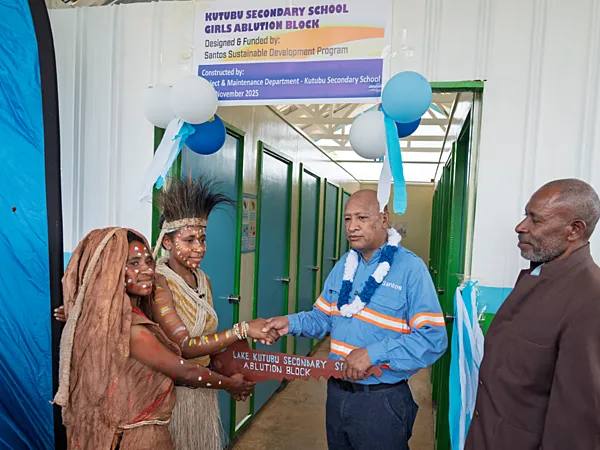
Kutubu Secondary School has marked a major milestone with the official handover of three new community infrastructure projects delivered by Santos, representing an investment of nearly K600,000 in education, water and sanitation facilities.
The projects were formally handed over by Santos Regional Manager Vagi Tamari at a ceremony held at the school this year, attended by students, teachers and members of the local community.
Speaking at the event, Mr Tamari highlighted the critical role that education, health and sanitation play in shaping opportunities for young Papua New Guineans and reiterated Santos’ commitment to sustainable partnerships with host communities.
“These projects are about investing in people – particularly young people – by creating a safe, healthy and enabling learning environment,” Mr Tamari said.
“Santos has delivered critical infrastructure to support your learning journey. I encourage students to take ownership of these facilities, maintain them well, and honour this investment by striving for academic excellence.”
Santos Sustainable Development Supervisor Philip Makari outlined the scope of works delivered through Santos’ Sustainable Development Program.
The projects included upgrades to the school’s rainwater catchment system, maintenance and improvements to the student dining hall with new dining tables and six 9,000-litre water tanks, and the construction of a new female ablution block featuring six shower rooms and six septic toilets.
Kutubu Secondary School Principal Bai Irabo highlighted the importance of the investment, which comes as the school celebrates its 27th anniversary.
“For many years, the school struggled with limited infrastructure,” Mr Irabo said. “These facilities – particularly the water tanks, dining hall upgrades and new female ablution block – will make a lasting difference to our students.”
Mr Irabo also highlighted the significant impact of improved sanitation facilities for female students, noting that inadequate infrastructure had previously contributed to girls discontinuing their education.
Speaking on behalf of the student body, Year 10 student Samantha Mora thanked Santos for its support and acknowledged the importance of the projects in improving learning conditions at the school.
Kutubu Secondary School currently educates 553 students, including 137 female students, supported by 24 teachers, and serves communities across the Southern Highlands districts.
Delivered through a close partnership with the school, the projects enable Kutubu Secondary School to manage and deliver the works internally, strengthening local capacity, ownership and long-term outcomes. The completion and handover of these facilities reinforce Santos’ ongoing commitment to community-led investment and building a better future for local communities.
A group of students from Buk bilong Pikinini’s Koki Library Learning Centre recently swapped classroom walls for the deck of a working tugboat, stepping into the world of maritime operations as part of a new partnership between Buk bilong Pikinini (BbP) and Svitzer PNG.
The partnership, launched through a K20,000 contribution from Svitzer PNG to support BbP’s School Library Re-establishment Program, combines literacy support with experiential learning opportunities aimed at broadening children’s understanding of future careers and industries in Papua New Guinea.
To mark the collaboration, students were invited aboard the Svitzer Venture tugboat for an educational excursion that introduced them to life at sea and the role maritime services play in supporting trade, shipping, and the energy sector.
For many students, it was their first time boarding a working vessel.
During the visit, students met Captains Denys and Oleksandr, Chief Engineer Alexander, Officer Emmanuel, and other crew members, who guided them through different parts of the tugboat while explaining daily operations and onboard safety procedures.
The students explored the vessel’s Bridge, Engine Room, Deck, Crew Accommodation, and Galley, gaining firsthand insight into the technical and operational responsibilities involved in maritime work.
Crew members also explained how tugboats assist larger ships entering ports, support oil and gas operations, and respond to emergencies such as maritime firefighting operations.
The excursion concluded with lunch onboard prepared by the vessel’s chef, Catherine, adding to what organizers described as a memorable learning experience for the students.
Svitzer PNG officials attending the event included General Manager Dylan Sheehan, Port Manager John Whitfield, Lead People and Culture Partner Emma Yabsley, and Melbourne Port Manager Simon Riddle.
Representing Buk bilong Pikinini were Executive Officer Leanne Resson, teachers, and members of the organization’s head office team.
Sheehan said the company viewed education and community engagement as important parts of its long-term commitment to Papua New Guinea.
“Svitzer PNG is proud to support and invest in the communities we operate in and specifically with Buk Bilong Pikinini in Port Moresby,” he said.
“We hope this partnership sees young children in Port Moresby not only given the opportunity to access much-needed learning materials and resources, but also inspired to one day work in the maritime industry in PNG and internationally.”
Resson said the partnership addresses both literacy needs and student exposure to real-world learning environments.
“Schools across PNG are in dire need of quality library books,” she said.
“Students need books to enhance their learning, while books are useful teaching resources for teachers. Svitzer PNG’s contribution reflects its dedication to community engagement and education through the replenishment of school library books.”
She added that experiential activities such as the tugboat excursion can help inspire curiosity, confidence, and ambition among young students.
The K20,000 contribution will help fund School Library Kits and additional library books for schools supported by Buk bilong Pikinini across Papua New Guinea.
The organization said it hopes to continue expanding partnerships that combine literacy support with educational opportunities that expose students to industries and career pathways they may not otherwise encounter.
For many students at Evedahana Primary and Junior High School, the start of Term 2 brought more than just a return to classes — it brought shelves of new stories, learning opportunities, and renewed excitement for reading.
Through a partnership between maritime services company Svitzer PNG and literacy-focused nonprofit Buk bilong Pikinini (BbP), 2,000 library books were donated to the school community, helping address ongoing shortages of educational materials while reinforcing efforts to build a stronger reading culture among young learners.
The donation included 1,000 books each for the primary and junior high school sections, providing students and teachers with additional resources for classroom learning, independent reading, and research activities.
The initiative also carries deeper significance for Buk bilong Pikinini, which operates an Early Childhood Centre within the Evedahana school community. Many children who begin their learning journey through the organization’s literacy programs later continue their education at the primary and junior high school.
By extending support beyond early childhood education, Buk bilong Pikinini hopes to sustain reading habits as students progress through higher levels of schooling.
“Books open the door to imagination, creativity, and opportunity,” said Buk bilong Pikinini Executive Officer Leanne Resson.
“When a child picks up a book, they begin a journey where anything is possible. By simply opening these pages, they can start building a future filled with knowledge and success.”
Resson said the organization also wanted to create safe and supportive learning spaces where children could continue exploring literacy beyond the classroom.
“We encourage all students to develop a daily reading habit, and we thank the teachers for their continued dedication in guiding and inspiring young readers,” she said.
Svitzer PNG said the partnership reflects its broader commitment to education and community development in Papua New Guinea.
“We are proud to support Buk bilong Pikinini in delivering these books to Evedahana,” said Anna Ingip, Crewing Officer PNG at Svitzer PNG.
“Education is a powerful tool for change, and we believe that access to quality reading materials can help shape brighter futures for young people across Papua New Guinea.”
Teachers and school leaders said the donation arrives at a critical time, with many schools across the country continuing to face shortages of books and educational resources.
Primary School Head Teacher Kagayabi said literacy challenges remain significant in many parts of Papua New Guinea, making access to books especially important for improving learning outcomes.
“We are truly grateful for this generous donation made possible through Buk bilong Pikinini and Svitzer PNG,” he said.
“I encourage our students to make reading a daily habit because the more they read, the more they learn and grow. These books will open many opportunities for them.”
The principal of the junior high school also expressed appreciation for the donation, saying the additional resources would support students’ academic development and confidence.
Beyond the Evedahana donation, Buk bilong Pikinini said many schools across Papua New Guinea still face major resource gaps that limit children’s access to quality education.
The organization is now encouraging more corporate organizations to support literacy and educational initiatives nationwide through similar partnerships.
Buk bilong Pikinini also acknowledged logistics partners PNG Air, Express Freight Management, and Sea Fast for helping transport books from Australia to Papua New Guinea and distribute them across different provinces.
Additional support this quarter has also come from Fincorp, Blue Water Shipping, and the Warrnambool Rotary Club, whose contributions have helped expand book access for children across the country.
For Buk bilong Pikinini, the message remains simple: investing in literacy today helps shape opportunities for Papua New Guinea’s next generation tomorrow.
Nickel 28 Capital Corp. says updated estimates for the Ramu Nickel-Cobalt operation in Papua New Guinea show higher mineral resources and continued reserve replacement following exploration activities completed in 2025.
In a statement, Nickel 28 said updated mineral resource and reserve estimates provided by project operator China Metallurgical Group Corporation (MCC) reflected successful drilling and resource conversion work undertaken during the year.
Nickel 28 currently holds an 8.56 percent joint-venture interest in the Ramu Nickel-Cobalt operation, while MCC and its partners own an 85 percent interest in the project.
The company said its ownership interest in Ramu will automatically increase to 11.3 percent at no cost following repayment of construction debt owed to MCC. Nickel 28 also retains the option to acquire an additional 9.25 percent interest at market value, which would increase its stake to 20.55 percent.
According to the company, total mineral reserve tonnage remained effectively unchanged year over year, while average nickel grades increased from 0.81 percent to 0.87 percent despite ongoing mining depletion, reflecting continued drilling success and resource conversion.
Measured and indicated mineral resource tonnage increased by approximately 16 percent year over year, while average nickel grades declined modestly from 0.88 percent to 0.81 percent, resulting in an approximate 13 percent increase in contained nickel.
Nickel 28 said the increases in mineral resources and continued reserve replacement were driven by exploration work completed in 2025, including 1,026 boreholes totaling 10,397 meters, primarily in Areas 4 West and 6 of the Ramu project.
“The updated mineral resource and reserve estimates reflect continued exploration success and ongoing conversion of mineral resources into mineral reserves at Ramu,” Nickel 28 Chief Executive Officer and President Craig Lennon said.
“At current production rates, the reserve base supports an estimated mine life of approximately 20 years, while the broader mineral resource inventory continues to provide additional long-term upside potential,” Lennon added.
Separately, Nickel 28 announced that it expects to receive its tenth cash distribution from the Ramu joint venture, amounting to approximately US$2.1 million for second-half 2025 operating performance tied to its 8.56 percent stake in the project.
The company also confirmed repayment of US$4 million of Nickel 28’s portion of remaining Ramu joint-venture partner construction debt, reducing its attributable balance to approximately US$31.9 million. Receipt of the distribution is anticipated during May 2026.
Lennon said the Ramu operation delivered a strong operational performance in 2025, producing 33,007 tonnes of nickel and 3,099 tonnes of cobalt contained in mixed hydroxide precipitate, while sales totaled 32,627 tonnes of nickel and 3,061 tonnes of cobalt.
According to the company, average realized nickel prices during the year reached US$6.88 per pound, while cobalt prices averaged US$16.07 per pound.
Nickel 28 said operations in 2026 have started positively, with production tracking in line with targets and nickel and cobalt prices trending above 2025 averages. However, the company noted that rising sulphur prices continue to place pressure on operating margins for high-pressure acid leach operations globally, including in Indonesia.
The updated mineral resource and reserve estimates were prepared by the Nanjing Center of the China Geological Survey according to the Australasian Code for Reporting of Exploration Results, Mineral Resources and Ore Reserves, with an effective date of Dec. 31, 2025.
Nickel 28 cautioned investors that the updated estimates were not prepared in accordance with Canada’s National Instrument 43-101 standards for disclosure of mineral projects.
The company added that independent consulting firm RedDot3D Inc. conducted a site visit to the Ramu operation in 2022 to review drilling procedures, quality assurance practices, and mining activities, with Nickel 28 stating that the updated report appeared consistent with those observations.
The Ramu Nickel-Cobalt operation is one of Papua New Guinea’s major nickel and cobalt projects and is operated by MCC through Ramu NiCo Management.
Follow on LinkedIn:
PNG Business News
Be the "First" to get our exclusive Digital Magazine & Weekly Newsletter.