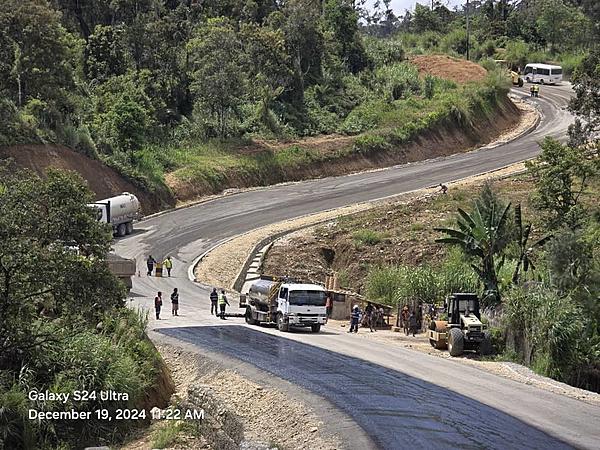
Prime Minister James Marape says the government’s Connect PNG infrastructure program is intended to transform road networks into “economic corridors” that unlock agriculture and other renewable-sector opportunities across Papua New Guinea.
Speaking on the government’s nationwide road connectivity agenda, Marape said roads being developed throughout the country are designed not only to improve transportation, but also to unlock the productive potential of customary land and create sustainable income and employment opportunities for ordinary Papua New Guineans.
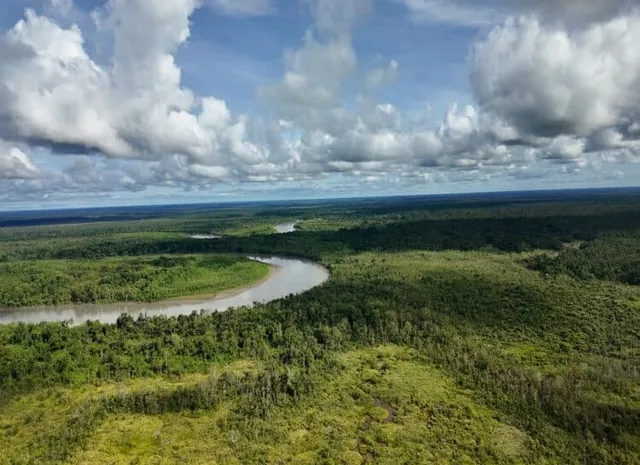
“The Connect PNG Program focus and the Roads we are opening up should be unbundling the economic potential of every Land right across our country,” Marape said.
The prime minister said the government is progressively linking provinces and districts through major road projects stretching across the country, including east-to-west Manus, east-to-west Sepik, north-to-south Bougainville, the Buka Ring Road, the Kerema-to-Alotau corridor through Port Moresby, roads linking Gulf into the Highlands, and strategic road links across Morobe, Western Province, New Ireland, and West New Britain.
According to Marape, the road projects are intended to stimulate agriculture, tourism, fisheries, forestry, and downstream economic activity in areas where communities live and own land.
“All these Roads, especially those closest to ports and economic centres, must be used productively,” Marape said.
“Provincial Governments must work with Districts, Local-Level Governments, and Communities so that the Lands alongside these Roads become economically productive.”
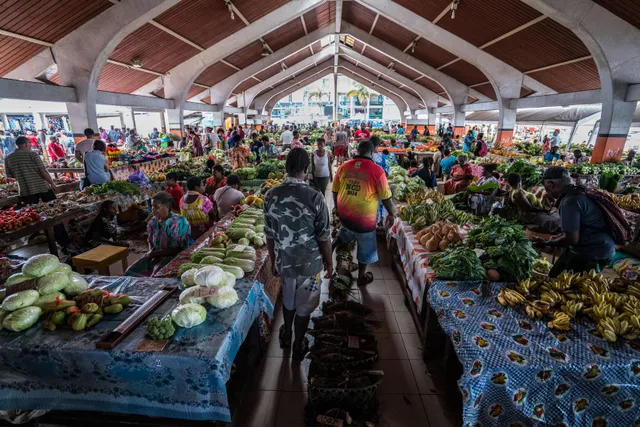
Marape said Papua New Guinea possesses significant untapped economic potential through its renewable sectors, particularly agriculture, where citizens can generate household income from customary land.
He pointed to smallholder oil palm schemes in West New Britain Province as an example of successful rural economic participation.
“You have close to 7,000 families engaged in smallholder extension around the nucleus estates, and many families are earning between K4,000 and K6,000 a month,” Marape said.
“That is the type of Revenue we are talking about when we speak of Agriculture — whether in Oil Palm, Coffee, Cocoa, Copra, Fisheries, or Tourism.”
The prime minister said the government’s “One Million Jobs” initiative and broader agricultural expansion programs are aimed at replicating similar success stories nationwide to enable more Papua New Guineans to participate in formal economic activity without leaving their communities.
“This country must not be lazy. Money can be earned from wherever you are on your own Land,” he said.
Marape described agriculture, fisheries, forestry, and tourism as Papua New Guinea’s “lowest hanging fruit” for broad-based economic growth and job creation, particularly in rural areas where most of the population resides.
“These Sectors can create jobs, empower families, strengthen communities, and grow our economy in a sustainable way while we continue to expand downstream processing and other industries,” he said.
The prime minister also revealed that before Papua New Guinea’s 51st Independence Anniversary on Sept. 16, the government plans to announce a policy framework that would allow properly registered customary land to be used as collateral through the National Banking Corporation and other financing mechanisms.
“Properly registered Traditional Land can become bankable Land,” Marape said.
He said the proposed reform would help Papua New Guineans access financing and participate more actively in agriculture, small business, tourism, and other productive sectors.
Marape also called on provincial governments, district authorities, and community leaders to work closely with the national government to ensure that road connectivity translates into economic outcomes for local communities.
“The future prosperity of Papua New Guinea will not only come from Mining and Petroleum, but from empowering our people to utilise their Land, Resources, and God-given opportunities in a productive and sustainable way,” he said.