State-owned enterprises, businesses, companies, and key government departments in the nation’s capital have joined a unified campaign to address gender-based violence (GBV) in Papua New Guinea, with the Governor of the National Capital District acknowledging that the government itself has been the major missing link in adequately tackling this crisis.
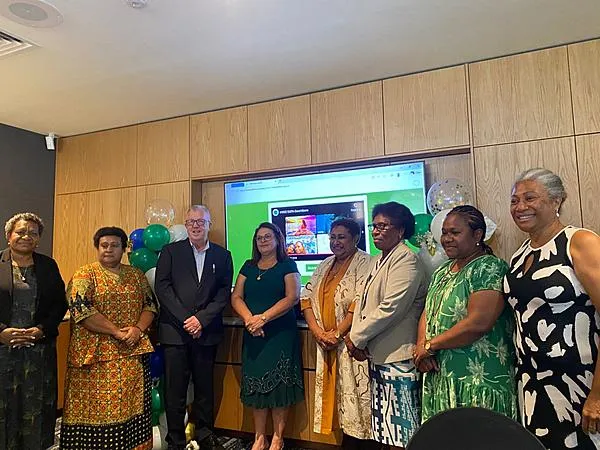
The Department of Community Development and Religion, in collaboration with the National Capital District Commission, UN Women, the European Union, the Government of Australia, the Government of the United States of America, and development partners, convened a joint press conference on November 25 to commemorate the International Day for the Elimination of Violence Against Women and Girls.
This was part of the 20 Days of Human Rights Activism launched on November 20 in Mt. Hagen, Western Highlands Province.
This year’s global theme, “Unite to End Digital Violence Against All Women and Girls,” focuses on addressing rapidly increasing online and technology-facilitated violence, including cyberbullying, harassment, and non-consensual image sharing.
PNG’s national theme, “It’s My Responsibility – Let’s Work Together to Prevent All Forms of Violence,” links this effort with the country’s 50th Independence Anniversary, emphasizing shared responsibility across all sectors and communities.
The conference highlighted the EVAW and the 16 Days of Activism Against Gender-Based Violence, a global campaign that runs annually from November 25 (International Day for the Elimination of Violence Against Women) to December 10 (Human Rights Day).
Throughout the 16 Days, partners also mark World AIDS Day (December 1), the International Day of Persons with Disabilities (December 3), and other key observances with joint advocacy, digital campaigns, human rights trainings, sign language training, film festivals, and youth-led actions that reinforce the message of dignity, equality, and safety for all.
Hon. Jason Peter, MP and Minister for Community Development and Religion, said: “We join the world in marking the International Day for Ending Violence Against Women and Girls. Violence against women and girls remains one of our greatest human rights and development challenges, and ending it is both a national priority and a shared responsibility that begins with each of us."
He added that the government, with the strong support of our development partners, NGOs, and community leaders, is taking practical actions to end violence. "On this special day, I call on families, schools, workplaces, men and boys, and leaders at all levels to promote respect, equality, and responsibility as we work together to make our country (PNG) safer and fairer for all women and girls," he said.
Hon. Powes Parkop, MP, Governor of the National Capital District, said: “Let us all stand together to take a stand to end violence against women and girls at home, in the workplace, in public places, and in cyberspace.”
For his part, Mr. Richard Howard, UN Resident Coordinator in PNG, said that violence against women and girls in Papua New Guinea remains a major barrier to equality and development.
"This year’s call to unite to end digital violence against all women and girls reminds us that safety must reach every space, including the online world where many still face abuse and intimidation. Real change needs leadership, accountability, and a shift in attitudes among men and boys. Together with the government, civil society, and partners like Australia, the EU, the Republic of Korea, and the United States, we can support a country where every woman and girl lives with safety and dignity, both online and offline," he said.
Ms. Elizabeth LeBas, Minister Counsellor, Australian High Commission to Papua New Guinea, said that Australia stands side by side with PNG in calling for an end to all forms of violence against women and girls, including online.
"Empowering and ending violence against women and girls is a key priority of the PNG-Australia Partnership – in all that we do and everywhere we work. We recognize that safety is important online and offline. Australia’s Online Safety Act of 2021 and the introduction of a social media ban for under-16s place Australia at the international forefront in the fight against online harm," she said.
LeBas said taht Australia will continue to work with PNG partners to address, respond to, and prevent violence – including gender-based violence (GBV) and sorcery accusation-related violence (SARV) – and empower women and girls through PNG Women Lead and Law and Justice Partnership.
Her Excellency Erika Hasnoz, Ambassador, Delegation of the European Union to PNG, said that the European Union is a strong global defender of the human rights of women and girls and opposes all forms of gender-based violence, including online and technology-facilitated.
"In Papua New Guinea, the EU is funding several programs that empower women and girls. For example, we support GBV referral pathways for survivors, are revitalizing the Village Court System, and develop digital skills for women and girls. This is made possible by the engagement and determination of PNG authorities and all stakeholders," Hasnoz siad.
U.S. Ambassador to Papua New Guinea, Ann Marie Yastishock, said: “The United States takes every opportunity to defend and promote women and girls across the world. Gender-based violence undermines stability and prosperity. When women and girls are safe, nations are stronger, and communities can reach their full potential.”
The Department (DFCDR) and UN Women acknowledged the longstanding leadership and support of the European Union Delegation, the Government of Australia, the Government of the United States of America, NCDC, and the GBV Secretariat in advancing gender equality, strengthening GBV prevention systems, and enabling community-driven change across Papua New Guinea.
The awareness programs were hosted by Hon. Powes Parkop in conjunction with the 20 Days of Activism Against Gender-Based Violence.
Community awareness programs were run by the National District Commission from November 20–30 at different locations across Port Moresby, especially in urban settlements and busy suburbs. The program included free movie screenings, awareness talks, community cleanups, and community mobilization for change.
Governor Parkop Leads as Businesses and Companies Commit to Support and Combat GBV
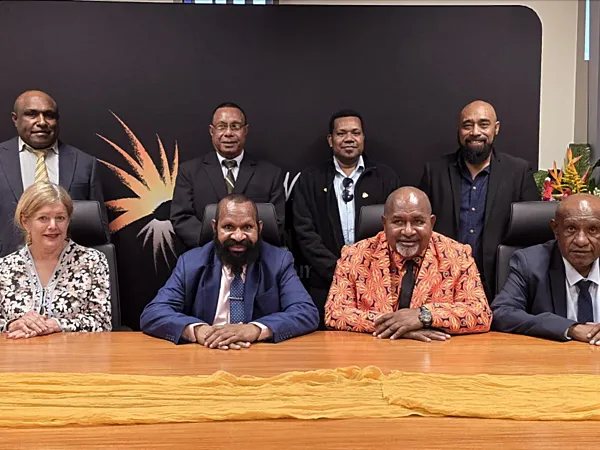
Governor Parkop, as Chairman of the Permanent Parliamentary Committee on Gender Equality and Women’s Empowerment, secured commitments from administrative heads of SOEs, including Air Niugini, PNG Ports Corporation, and the National Development Bank, alongside representatives from the United Nations and disciplinary forces, to actively join the campaign with the Redvember End Violence Against Women (EVAW) Walk on November 30, 2025.
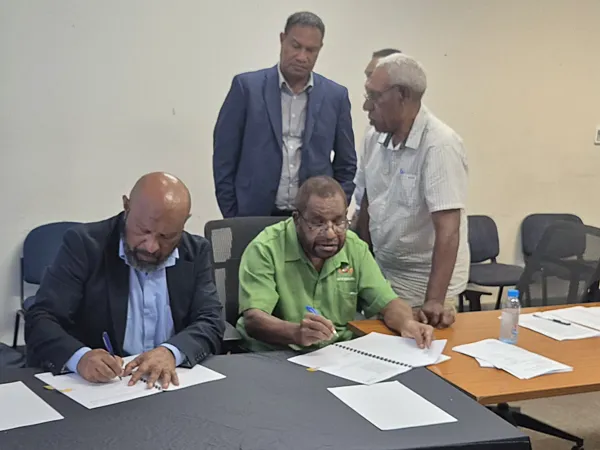
This program strategically focuses on the active participation of the government in NCD as an essential first step, with all Secretaries of Departments, Chairmen of Boards, CEOs, and MDs of state-owned enterprises and other agencies signing a pledge to take all steps to end GBV in their departments, organizations, and lives.
Governor Parkop said that while the NCD Commission, as the municipal government of Port Moresby, has taken the lead in becoming the gold standard organization with zero tolerance for GBV at the workplace, in communities, and at homes, NCDC alone cannot succeed unless all other government organizations in the city also join NCDC’s efforts.
“The success of the National GBV Response and Prevention Strategy requires all levels of government in the city to take leadership and walk the talk. Otherwise, all our efforts and resources will continue to fail. NCDC and all national government departments and agencies have to take ownership and implement the strategy before we call on our people to follow suit.”
To highlight this commitment, two major awareness events were scheduled:
Redvember 2025, ‘A Sea of Red’
Businesses, companies, and government organizations came together in a national stand as part of the 16 Days of Activism on Sunday, November 30, for the Walk to End Violence, especially against women and girls.
Governor Powes Parkop acknowledged the thousands of people who participated in this year’s Redvember Walk, calling the massive turnout a significant moment and a tipping point in the campaign to eliminate violence against women and girls.
The turnout was described as a “sea of red” stretching approximately 1.5 kilometers, temporarily stopping traffic along the Poreporena Freeway for up to two hours from 5 a.m. to 7 a.m.
The day’s program included secretaries and CEOs signing a pledge to take concrete action and integrate the GBV strategy into their corporate plans, codes of ethics, and contracts of employment across all government departments, SOEs, and state agencies.
Governor Parkop specifically acknowledged participation from 23 government departments, Members of Parliament, State Ministers, members of the diplomatic corps, SOEs, agencies of state, and city residents. He also recognized the commitment of the private sector, civil society organizations, and community groups, including Active City, Amazing Port Moresby, and Men of Honor from the Digicel Foundation.
“When government starts to make and take the pledge and walk the talk, that’s when real change starts to happen. This leading action in Port Moresby will create a ripple effect, ultimately contributing to efforts across the country to end GBV and violence against women.”
The Independent State of Papua New Guinea (PNG), RD Tuna Canners Limited, and RD Corporation have reached agreement on the terms of the Project Development Agreement (PDA) for the cannery project within the new Madang Integrated Special Economic Zone (SEZ). The Letter of Agreement was signed on 9 December and witnessed by the Minister for International Trade and Investment Richard Maru at PNG Investment Week in Sydney, Australia.
“The investment is subject to final NEC and RD Board approval. This new cannery will be developed under a joint venture company, 50% owned by the State and 50% by RD, with initial expertise provided by RD to help PNG transition from being a rent collector to being an owner—initially of a cannery and later a full-scale fishing company," Maru said.
Maru said that each party will contribute K80 million to the joint venture, and RD will hold a 10-year management contract. The project is expected to create well over 5,000 direct and indirect jobs in Madang Province.
The Minister thanked all parties for their commitment, patience, and contributions toward finalising the PDA.
“I personally take this opportunity to thank the Marape-Rosso Government for providing the State funding of K80 million for this strategic investment," he said.
The Prime Minister will launch the new joint venture fish canning company early next year, and construction of the cannery will commence immediately after the launch.
"This is a critical project under our PNG Reset economic independence agenda as we move into the next 50 years, during which we can no longer export raw materials, including our fish,” he added.
He added: “This marks the beginning of a deliberate effort by our Government to invest in downstream processing so that we can replace all canned fish imports from other countries. This 300-metric-tonne cannery will serve as the anchor investment for the proposed Madang Integrated Special Economic Zone, with another eight canneries expected to follow. This is a very exciting development, and we look forward to the launch and construction of the cannery in January next year.”
Minister Maru said the Government’s long-term plan is to list Kumul Fisheries Limited on the National Stock Exchange as a public company once it proves profitable.
“The initial shareholders will be the State, through KCH, the Madang Provincial Government, and RD. Our focus is to get the company operational and profitable before opening it to public investment. We want this to become a fully fledged PNG fishing company. If we can own a mine, we can own a fish canning company. We cannot remain rent collectors all our lives,” he said.
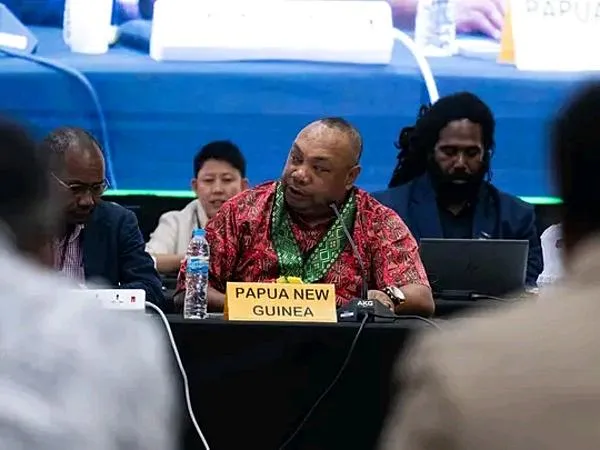
Papua New Guinea has renewed its call for fairness, strengthened scientific management, and climate-resilient policies at the Twenty-Second Annual Regular Session of the Western and Central Pacific Fisheries Commission (WCPFC22), held 1 to 5 December in Manila, Philippines.
Addressing ministers, fisheries heads and delegates from across the region, Minister for Fisheries and Marine Resources, Hon. Jelta Wong, reaffirmed PNG’s commitment to sustainable tuna management and the protection of Pacific Island interests under the WCPF Convention.
Minister Wong emphasised PNG’s alignment with fellow Pacific Island countries, highlighting that the region’s globally recognised healthy tuna stocks are the result of “disciplined governance, regional solidarity, and the sacrifices of our people.”
He noted that Pacific nations are pursuing greater value from their fisheries—but always through science-based and sustainable measures.
“The efforts to agree on measures that are sustainable and supported by scientific information have enabled Pacific Island countries to directly benefit from this significant natural resource.”
Upholding Article 30, Protecting Small Island Developing States
PNG’s message was a strong reminder that the Convention’s Article 30 is a legal safeguard for Pacific Island states.
“Our Pacific Island countries’ economies, food security, and livelihoods are deeply tied to tuna and other highly migratory fish stocks. This recognition is not symbolic—it is essential,” he stated.
Wong cautioned that increasing technical and compliance demands within the Commission risk marginalising the very nations Article 30 seeks to protect. To address this, he called on developed members to support a new requirement:
“We further call on this Commission to recognise that climate-driven changes in tuna abundance must not result in a redistribution of benefits away from those who have historically conserved these resources. We urge the Commission to integrate climate resilience into all future conservation and management measures, ensuring that Pacific Island countries are financially and technically equipped to adapt and respond to shifting tuna stocks.
“We further rely on the recent advisory opinions of the International Tribunal for the Law of the Sea and the International Court of Justice, which reaffirm the obligation of States to prevent and mitigate climate harms. The Commission must act in accordance with these principles.
“We now call upon the Commission and our members of developed States to ensure that all new measures adopted by this Commission include a SIDS Special Requirements review clause, which will guarantee that equity is not assumed but assured,” he added.
A Growing Threat to Tuna Stocks and Pacific Economies
The Minister warned that climate change is already reshaping tuna distribution and compromising the economic stability of Pacific Island countries.
“The Pacific did not create the climate crisis, yet we bear its brunt,” he said. “Scientific evidence confirms that climate change is already altering the distribution and productivity of key tuna stocks.”
Wong urged the Commission to ensure that climate-induced shifts in tuna abundance do not result in a loss of benefits for the region. He also highlighted the recent advisory opinions of the International Tribunal for the Law of the Sea and the International Court of Justice, saying they “reaffirm the obligation of States to prevent and mitigate climate harms.”
Backing FFA Proposals: Albacore Management and High Seas Transshipment
PNG offered strong support for two key proposals submitted by the Forum Fisheries Agency (FFA):
South Pacific Albacore Management Describing it as the product of “many years of rigorous discussions and negotiations,” Wong said the proposal is “supported by factual scientific data, with the collective endorsement of all 17 FFA member countries.”
He appealed for cooperation from developed member states, stressing the profound dependence of Pacific nations on decisions made at WCPFC22.
High Seas Transshipment Reform The Minister said strengthening high seas transshipment rules is essential for combating illegal, unreported and unregulated (IUU) fishing while boosting port-based economic benefits.
“For PNG and Pacific Island countries, strengthening the high seas transshipment measure is vital. By requiring transshipment in ports, we combat IUU fishing, ensure transparency and accountability, and safeguard our tuna resources,” he said. “At the same time, port-based transshipment drives domestic development—creating jobs, generating revenue, and distributing the economic benefits of our fisheries amongst our communities.”
Wong emphasised that national sovereignty must remain central to regional fisheries governance.
“The sovereign rights of member countries over their waters and resources must not be infringed upon. Regional decisions must further respect and complement national laws and priorities,” he said.
He added that the Pacific is not seeking handouts: “Let us remember: the Pacific is not asking for charity. We are demanding fairness. We are not passive recipients of global decisions—we are active architects of regional solutions.
“May our deliberations be guided by justice, equity, and the spirit of Pacific solidarity.”
WCPFC22 continues in Manila, where member states are negotiating key conservation and management measures that will shape the future of tuna stocks in the world’s largest and most valuable tuna fishery.
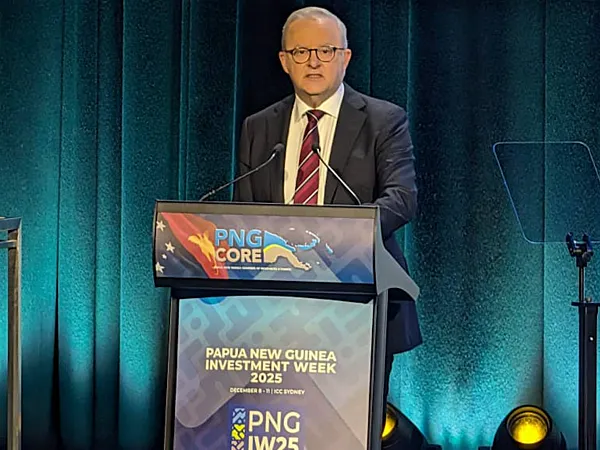
Australia’s Prime Minister, Anthony Albanese, has reaffirmed the strength, trust and long-term vision underpinning the Australia–Papua New Guinea relationship, highlighting deeper economic cooperation, shared prosperity and a historic new security alliance during his address at the PNG Investment Week Leaders’ Summit in Sydney 9 December 2025.
Speaking before leaders from business, government and regional partners, Prime Minister Albanese underscored the unique bond between the two nations, grounded in history, friendship and growing economic ties.
Before his speech, he acknowledged the Traditional Owners of the land on which the summit was held and extended a warm welcome to delegates from PNG, Australia and across the region.
“This forum is about all of us working together to find new pathways for investment and development and maximising the dynamic and growing trade relationships that do so much to benefit the people of both PNG and Australia,” Prime Minister Albanese said.
He reflected on the close personal and national ties linking the two countries. He briefly referenced the many milestones shared with PNG Prime Minister James Marape in recent years—from addressing each other’s parliaments to walking the Kokoda Track together, honouring the Second World War legacy that binds both countries.
He also recalled shared celebrations at PNG’s 50th Independence Anniversary in Port Moresby earlier this year, describing it as a powerful moment to reflect on both nations’ intertwined histories and future ambitions.
“These moments,” Albanese said, “are defined by mutual respect, deep trust, and an appreciation of the history and geography that unite our peoples," he said.
Pukpuk Treaty
A central point of his remarks was the Pukpuk Treaty, the security pact signed between Australia and PNG earlier this year. Albanese described it as Australia’s third-ever alliance, and its first in more than 70 years—an achievement he called “a historic moment”.
The treaty formalises the long-standing defence partnership between the nations.
“We are mates. We are equals,” he said, repeating Prime Minister Marape’s words that the relationship represents “equal partners… working side by side going forward into the future.”
Trade and Investment Drive Shared Prosperity
Albanese highlighted strong two-way trade, which reached $8.1 billion in goods during 2024–2025. He noted growth in PNG’s agricultural exports—particularly vanilla, coffee and cocoa—supported by new biosecurity investments and infrastructure upgrades that are improving market access.
Australia is financing several major infrastructure projects to support PNG’s economic expansion, including:
A 47 km upgrade of the Wau Highway, improving connectivity across Morobe Province
Sealing of the Kokoda Highway, undertaken jointly with PNG
More than $600 million for the upgrading of five key ports, critical for a country of more than 600 islands dependent on maritime trade
He emphasised that all these initiatives aim to strengthen local employment, supply chains and economic resilience within PNG.
“Australia is committed to remaining a proud and reciprocal economic partner of PNG. PNG’s exports to Australia continue to flourish. And while raw materials are an important feature of our trade relationship, they are by no means the whole of it," he said.
New investments to strengthen biosecurity mean PNG’s dynamic agriculture sector can continue to thrive and grow its market access. Exports of vanilla, coffee and cocoa beans to Australia are growing strongly, diversifying our trade relationship and proving that Australian markets are hungry for PNG’s exceptional produce.
“Infrastructure investments are helping local producers take their goods to port and to market by better, safer, more reliable roads,” Prime Minister Albanese added.
Supporting Climate Resilience and Human Development
Recognising climate change as an existential threat to the Pacific, Albanese reaffirmed Australia’s commitment to helping PNG access greater international climate finance. This includes support for infrastructure and agriculture designed to withstand more extreme weather patterns.
He added that Australia is investing both in physical development and in PNG’s greatest asset—its people—through improved health systems, education and skills training, and enhanced energy and communications networks.
“These are the foundations for stronger communities and stronger economies,” he said.
NRL Expansion Creates New Economic Opportunities
A particularly celebrated development is the anticipated entry of the PNG Chiefs into the NRL. Prime Minister Albanese described the move as a cultural milestone that also carries significant economic potential.
The expansion is expected to boost tourism, spur infrastructure development and generate new investment opportunities, including direct flights between Sydney and Port Moresby, which Qantas is set to resume in March 2026.
“It is all part of welcoming a country that has given so much to rugby league into a competition where they so clearly belong,” he said.
Albanese closed by urging leaders to continue building the next chapter of the relationship—one centred on regional stability, strengthened sovereignty, robust trade and sustainable development.
Invoking Prime Minister Marape’s words, he said PNG and Australia are “two houses with one fence”, benefiting from a neighbourhood that is peaceful, stable and prosperous.
“Our shared history guides us, and the opportunities of our shared future lie ahead,” he said.
Prime Minister Anthony Albanese’s speech formed a core highlight of the PNG Investment Week Leaders’ Summit, reaffirming the strategic importance of PNG–Australia cooperation at a time of growing regional and global change.
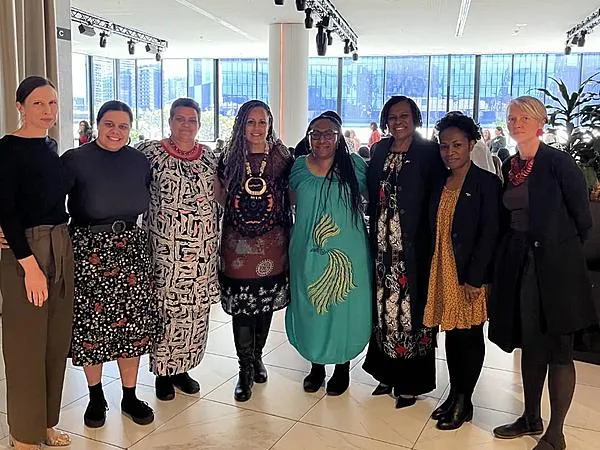
Five women entrepreneurs representing diverse sectors—from social enterprise and traditional crafts to sustainable manufacturing—have travelled from Papua New Guinea to Melbourne to participate in the 2025 World Indigenous Business Forum (WIBF).
The forum also provided an opportunity to forge new connections.
The delegation included Anne-Shirley Korave (Queenpads), Annette Sete (Maku Gifts and Lava Girl), Florence Kamel (Jaukae Bilum Products), Evelyn Mopafi (Apo Meri Social Enterprise), and Eli Webb (PNG Women’s Business Resource Centre).
The Australian Government supported the entrepreneurs to join First Nations Australian business leaders and global delegates in a week-long exchange of ideas, innovation and partnership. The delegation’s presence at WIBF highlights the vibrancy of PNG’s women-led enterprises and the strong ties between Australia’s and Papua New Guinea’s business communities.
Their visit reflects the Australian Government’s commitment to supporting micro, small and medium enterprises (MSMEs), particularly those led by women. By supporting the delegation’s participation—and through other initiatives such as the PNG SME Awards and the EmployAbility programme—Australia is helping entrepreneurs access training, mentoring and market opportunities to grow their businesses and strengthen local economies.
Over the week, the entrepreneurs showcased their products and ideas and gained knowledge and insights that will help strengthen their businesses and contribute to PNG’s thriving Micro, Small and Medium Enterprise (MSME) sector. Their programme included participation in panel discussions, networking events and site visits, including a morning tea hosted by the Australian Government’s Office for First Nations International Engagement.
Delegate Sete, founder of Maku Gifts and Lava Girl, said the forum broadened her understanding of what is possible. “It helped me realise that we can do more in terms of organising our Indigenous businesses in PNG to have a stronger voice in promoting empowerment for PNG Indigenous-owned businesses," She said.
"It has set us up to consider establishing something like the Kinaway Chamber of Commerce in Victoria," Sete added.
Evelyn Mopafi, founder of Apo Meri Social Enterprise, said she took away many new ideas from her participation.
“It provided exposure to new ideas, market trends and sustainable practices that will strengthen Apo Meri’s social and environmental impact. The experience has inspired clear next steps for collaboration, capacity building and the advancement of women-led enterprises in Papua New Guinea.”
The forum also offered a platform for PNG entrepreneurs to connect with First Nations Australian businesses, share cultural and commercial insights, and explore opportunities for collaboration. It reflects Australia’s broader approach to development—one that values locally led solutions, inclusive growth and genuine partnership.
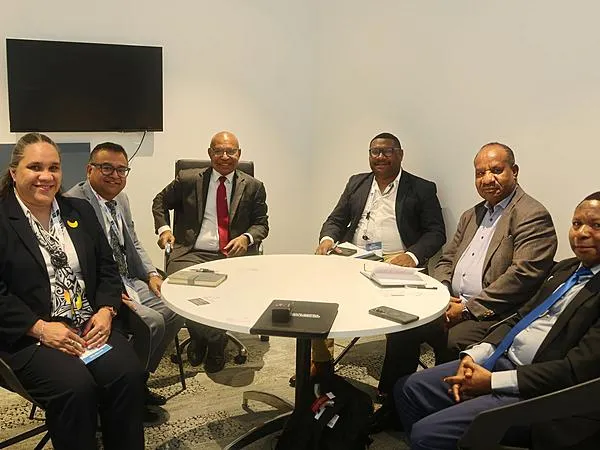
The Ministry of International Trade and Investment will enter into a strategic partnership with the superannuation funds to raise capital for investment in Special Economic Zones and national transformational projects, including the planned acquisition of shares in Ramu Agri Industries.
This was discussed in a meeting this morning between the Minister for International Trade and Investment, Richard Maru, and the CEO of Nasfund and Chairman of the Pacific Island Investment Forum (PIIF), Rajeev Sharma, on the margins of PNG Investment Week in Sydney.
“My Ministry will partner the superannuation industry of PNG and the Pacific by entering into a Memorandum of Understanding (MoU) with PIIF. The Marape-Rosso Government do not want only the foreign companies to benefit from tax incentives; we also want our Papua New Guinean companies to invest and when our superfunds invest, they are investing on behalf of thousands of our citizens so it is very important that we sign this MoU in January,” said Minister Maru.
Sharma said the MoU will be drafted and ready for signing in January next year to support the investment drive.
Plans to reform PNG’s capital market were also discussed during the meeting.
“We want to look at how we can provide tax incentives for companies right across the world to list on our stock market so more financial products will be offered on the market for our domestic investors. Our citizens are currently spectators in their own country. They are only getting 1.5 percent interest by investing in the commercial banks when they could be earning 10 to 15 percent in return of investment from investing in a stock market," said Minister Maru.
"We also want to rebrand, rename and list the Pacific Balanced Fund to reflect PNG ownership for massive funding drive in the new year. We will host a Capital Market Summit in PNG next year where we will discuss this and also learn from other countries like India where everybody is involved buying and selling on the stock market,” he added.
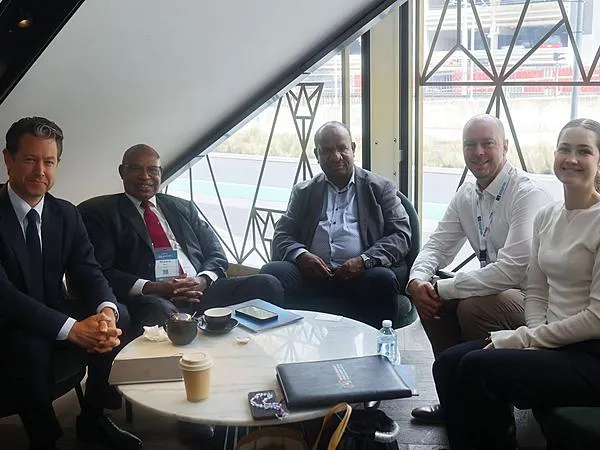
The Minister for International Trade and Investment, Richard Maru, has welcomed the decision of Swedish company Epiroc to pursue a potential long-term investment in Papua New Guinea (PNG), with a particular focus on the mining sector, downstream processing, and developing and upskilling PNG’s engineering workforce.
The Minister met with Epiroc’s Business Development Manager, Kent Howlett, and Business Sweden’s Trade Commissioner to Australia, New Zealand and the Pacific Islands, Martin Ekberg, on the margins of PNG Investment Week in Sydney this morning.
“Epiroc provides equipment, tools, and services for the mining, infrastructure, and natural resources industries. They develop and sell a range of products including drill rigs, rock excavation and construction equipment, and underground loaders. They operate globally, serving customers in around 150 countries and operating in 36 countries. We welcome their plan to establish their operations in PNG. Our Government will go all out to support them,” said Minister Maru.
The Minister encouraged Epiroc to consider establishing its operations—including storage, warehousing, and training facilities—at the proposed Lae Port Special Economic Zone in Morobe Province.
“Epiroc is currently supplying and supporting the mining sector in PNG by providing equipment, service, and automation/digital solutions through its Australian operations. They want to move the bulk of their Australian operations to PNG so they can continue to supply and support our major operators including OK Tedi, K92 Mine, Porgera, Harmony and Newmont out of PNG instead of from Australia. This will create employment opportunities for our citizens and skill transfer through partnerships with National Polytechnic Institute of PNG and the PNG University of Technology. I have encouraged them to also consider entering into a Joint Venture with all the mining landowner companies so their operations will also benefit the landowners,” said Minister Maru.
Epiroc will formally submit a letter to the Government of PNG confirming its intention to invest. It was also agreed during the meeting that a high-level dialogue will be held between the Governments of Sweden and PNG to establish a Government-to-Government relationship and discuss investment opportunities for Swedish investors, scholarship opportunities for PNG students—particularly in engineering—and the possibility of a Comprehensive Economic Partnership Agreement between the two countries.
MiBank, PNG's largest microbank, is proud to announce a groundbreaking partnership with Digicel PNG Ltd, PNG’s leading telecommunications, ICT, and mobile financial service provider.
The partnership between MiBank and Digicel Financial Services Limited (DFSL) marks the first-of-its-kind collaboration in PNG, enabling customers to transfer funds instantly between their MiBank accounts and Digicel Cellmoni wallets.
As part of Digicel Cellmoni’s commitment to expanding interoperability and offering customers more convenient options to load funds, MiBank has joined forces with DFSL to deliver a seamless experience. Customers can now move money from their bank account to their CellMoni wallet and vice versa in real time.
The official signing ceremony took place at Digicel headquarters in Port Moresby today, attended by senior executives from both organizations, including Thompson Sakyi, Managing Director of Digicel Financial Services Limited; Christian Reyes, Chief Financial Officer of MiBank; and Steven Nori, Head of IT.
With this partnership: • MiBank customers can transfer funds from their MiBank account to a CellMoni wallet using the USSD short code 678# or the MiBank Mobile App (MiCash App). • Once completed, funds are instantly credited to the customer’s Digicel Cellmoni wallet. • The reverse transfer from a CellMoni wallet to a MiBank account has been available since 2021; this new feature complements the existing service for full two-way interoperability.
Thompson Sakyi, Managing Director of DFSL, stated: “Digicel CellMoni continues to expand its footprint across Papua New Guinea, delivering mobile financial services that offer convenience and security to individuals and businesses. This partnership—the first between a mobile network operator and a regulated financial institution in PNG—marks a major step toward enhancing financial inclusion and revolutionizing fintech services in PNG.”
Christian Reyes, MiBank’s CFO, added: “This collaboration between Digicel and MiBank combines digital technology with customer-focused service delivery mechanisms, drawing from our extensive network experience. It demonstrates both institutions’ deep understanding of PNG’s market needs. Together, we aim to provide more accessible, affordable, and reliable financial services in the future.”
Reyes also noted that the technical integration between both institutions paves the way for a broader range of value-added financial services and digital products soon to hit the market, tailored for the use and benefit of PNG citizens and the growing number of MSMEs seeking access to innovative financial products.
Digicel CellMoni and MiBank express gratitude to the Bank of Papua New Guinea for creating and fostering an enabling environment that supports innovation, drives digital transformation in the financial industry, and promotes financial inclusion across PNG.
PNGX Group and MUFG Pension & Market Services announced that they have reached agreement for PNGX Group to acquire PNG Registries from MUFG Corporate Markets, a division of MUFG Pension & Market Services. The transaction is subject to clearance by the ICCC.
The proposed acquisition represents a significant milestone in the strategic development of the country’s financial infrastructure and capital markets. If cleared, the transaction will see PNG Registries become part of PNGX Group, combining strengths and capabilities to better serve customers and support long-term market growth.
“This is a transformative opportunity for both organizations and for the capital markets as a whole,” said David Lawrence, Chairman of PNGX Group. “If cleared, the integration of PNG Registries into our group will not only enhance our service offering but also help drive innovation and efficiency in financial market operations.”
“PNG Registries has been an integral part of our business and operations since 2007. We would like to thank all of our clients for their partnership and support during this time, and sincerely thank our people, whose dedication and commitment is second to none. This opportunity presents the right time to pass the business into new ownership, and we are confident that PNGX Group will take the business to its next phase of growth,” said Lysa McKenna, CEO of MUFG Corporate Markets.
PNG Registries is a key provider of securities registry services, and the proposed acquisition will strengthen the foundation for capital market modernization.
Part of a Broader Market Development Strategy
The acquisition is aligned with broader national efforts to strengthen the capital market ecosystem. In due course, it is expected to support the end-to-end automation of trading, settlement, and registration processes, enabling a more modern, transparent, and efficient market platform. This development is intended to enhance liquidity and facilitate broader market participation.
Continuity for Customers
Until regulatory clearance is obtained, PNG Registries and PNGX Group will continue to operate as separate businesses. There will be no changes to services or operations in the interim. Customers and partners of both companies have been notified and will be kept informed as the process progresses.
MUFG Pension & Market Services and PNGX Group are committed to a smooth and transparent transition, with a focus on continuity and customer service.
PNGX Group is a diversifying business services company based in Port Moresby.
PNGX Markets Limited (PNGX Markets), a wholly owned subsidiary of PNGX Group, is the operator of Papua New Guinea’s national stock exchange and is responsible for providing an orderly and fair market in relation to securities traded through its facilities, and for acting in the public interest, having regard to the need for investor protection. PNGX Markets is regulated and licensed by the Papua New Guinea Securities Commission. PNGX Markets is the National Numbering Agency for Papua New Guinea.
MUFG Pension & Market Services is a member of MUFG, a global financial group. We are a global, digitally enabled business that empowers a brighter future by connecting millions of people with their assets – safely, securely, and responsibly.
Through our two market-leading businesses, MUFG Retirement Solutions and MUFG Corporate Markets, we partner with a diversified portfolio of global clients to provide robust, efficient, and scalable services, purpose-built solutions, and modern technology platforms that deliver world-class outcomes and experiences.
We help manage regulatory complexity, improve data management, and connect people with their assets through exceptional user experience that leverages the expertise of our people combined with scalable technology, digital connectivity, and data insights.
PNG Registries is a wholly owned subsidiary of MUFG Pension & Market Services and is the leading provider of integrated registry services for companies listed on Papua New Guinea’s national stock exchange.
PNG Registries provides clients with a comprehensive registry offering, which includes shareholder management, stakeholder engagement, dividend and meeting services, as well as specialist offerings such as corporate action services.
Prime Minister James Marape has outlined the Economic Transformation and Implementation Pillars of the PNG Reset@50 Roadmap, describing them as “the engine room of growth, jobs, and national productivity for the next 20 years.”
The roadmap sets a vision for Papua New Guinea’s economic and social development through evidence-based governance, private sector-led growth, land reform, public service efficiency, and strengthened project delivery systems.
Driving Evidence-Based Governance and Digital Identity
Prime Minister Marape stressed that progress requires decisions grounded in data rather than sentiment. “For too long, we have made decisions based on feelings. The Roadmap insists on evidence, cost-benefit analysis, and measurable outcomes,” he said.
The government plans to enforce mandatory evidence-based Cabinet submissions, strengthen the Parliamentary Budget Office, establish independent extractive and infrastructure advisory councils, and provide public access to national statistics.
A key focus is completing a universal National Identification (NID) system integrated across government, enabling inclusive finance, social protection, and secure identification.
Enshrining Private Sector–Led, Government-Facilitated Growth
The Prime Minister reiterated that private sector-led growth must remain the foundation of PNG’s economy. “Government must facilitate, not suffocate, Private Sector growth. The Roadmap reinforces this principle as official Policy,” PM Marape said.
Planned measures include a national policy confirming the private sector as the engine of growth, major regulatory reforms to reduce red tape, accelerated resource projects with strong environmental safeguards, state-owned enterprise reform, modernisation of agriculture, and regional visa access for PNG citizens.
Land Reforms to Unlock Housing and Agriculture
Land reform is another key pillar, focusing on freeing up land for development through voluntary and respectful customary land registration systems.
“Land is our greatest blessing. But unused land is not productive land. With voluntary best-practice land reforms, we will unlock land for Housing, Agriculture, and SMEs while respecting customary ownership,” PM Marape said.
Reforming the Public Service
The roadmap identifies unproductive bureaucracy, duplication, and payroll abuses as major obstacles. PM Marape revealed that the government has already begun payroll cleansing, uncovering more than 4,000 unattached employees.
“This is just the beginning. A whole-of-Government functional audit will remove duplication, improve integrity, and link pay to performance,” he said.
Building a Strong Delivery System
To ensure reforms are implemented effectively, the government plans to establish a centralised Project Management Unit and fully activate the National Monitoring and Coordination Authority.
“Monitoring and delivery have been the greatest weaknesses of successive Governments. It ends now. Every Kina spent must hit the development target,” PM Marape said.
A Nation Positioned for Growth
PM Marape concluded by emphasising PNG’s long-term economic ambitions. The nation is targeting a K200 billion economy by 2029–2030 and aims to become “a prosperous, wise, and wealthy society by 2050.”
“Reset@50 is our chance to reboot governance, transform services, expand the economy, and build the richest Black Christian nation on earth,” he said.
New Porgera Ltd. (NPL) has submitted its three-year Training and Employment Plan to the Papua New Guinea National Training Council (NTC) at the Department of Labour and Industrial Relations.
The 2026–28 plan, presented to NTC Director Kinsella Geoffrey on 26 November 2025, outlines NPL’s initiatives to strengthen workforce development through targeted skills training, with a focus on nationalisation and localisation. Workforce representatives were also present for the submission.
Director Geoffrey reminded the workforce representatives that while localisation is a key focus, employees must meet the required standards to progress into higher roles with the company’s confidence and support. He noted that the NTC was pleased to see NPL workforce leaders, led by George Yope, witness the presentation — the first time an operator has presented its plan before its workforce.
NPL Country Manager Karo Maha said the plan aligns with the national content provisions of the New Porgera Mining Development Contract and NPL’s National Content Plan.
“The NPL Three-Year Training and Employment Plan includes workforce data, a localisation and succession-planning framework, and a trades training programme,” Maha said. “With the Porgera mine now operational, our focus is shifting to implementing structured capacity-building initiatives that will enable us to nationalise our workforce into the future.”
NPL Manager for Human Resources Adlyn Nagwi, who also attended, highlighted several employee training initiatives already underway on site.
“NPL currently has 3,055 employees, 97 percent of whom are Papua New Guinean citizens. Only 3 percent are non-citizens.
Engan employees make up 55 percent of our workforce, including 33 percent who are Porgeran. Women account for 10 percent of our workforce, and the company aims to increase that to 20 percent.
"NPL continues to work with industry to remove the statutory prohibition on women working underground. Our Employee Development team is leading the implementation of the Training and Employment Plan, and several initiatives have already commenced at Porgera.
“These include the NPL Graduate Programme, the Job-Ready Programme and the Frontline Leadership Programme, which form the foundation of our training efforts. Additional programmes will be developed for high-performing employees who represent tomorrow’s workforce leaders.”
The NTC will next conduct a site inspection at Porgera, with planning now underway.
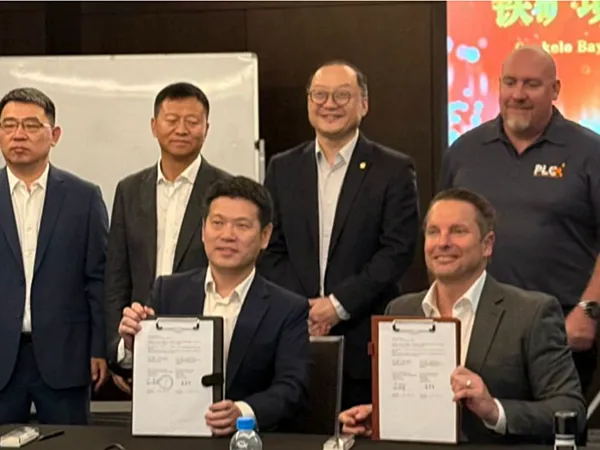
Pacific Lime and Cement Limited has entered a strategic national partnership with PowerChina PNG Limited (PowerChina) to advance the Orokolo Bay Industrial (Magnetite) Sands Project (OBP) in Papua New Guinea’s Gulf Province.
PowerChina has joined PLC’s wholly owned subsidiary, Mayur Iron PNG Limited, as the project’s development partner. The collaboration follows years of dialogue and a commercial reset designed to deliver the OBP at scale, with speed, and optimised value for PLC shareholders, the PNG Government, and local landowner communities. PowerChina replaces the project’s former partner, Pacific Unison, whose role under the Joint Cooperation Agreement was terminated.
The partnership brings a global engineering, procurement, and construction powerhouse to PNG. PowerChina’s parent entity is one of the world’s largest construction companies and was ranked 100th on the Fortune Global 500 list in 2025. Under the agreement, PowerChina will finance, construct, operate, and market the OBP’s products, targeting first cashflows in 2026. PLC retains 100% equity ownership and a majority of profits over the life of the asset, while continuing to focus on its flagship Central Lime and Cement Projects.
Strong foundation and accelerated delivery
PLC Managing Director Paul Mulder highlighted the scale and capability PowerChina brings to the project.
“We are excited to welcome PowerChina to our Orokolo Bay Industrial Sands Project as a development partner. PowerChina subsidiaries and project offices span over four continents and are involved in engineering, procurement, and construction (EPC); power; renewables (wind, solar); and large-scale infrastructure such as ports and industrial parks. PowerChina’s experience, reputation and financial strength makes it a trusted partner for national infrastructure and industrial growth initiatives," he said.
Mulder emphasised the strategic nature of the partnership, noting that under this Agreement, PowerChina, will provide development capital, with the Company and its parent (PLC) maintaining 100% equity ownership of the Orokolo Bay Project.
With profit share as the adopted remuneration mechanism, Mulder said that it aligns the parties to a clear delivery schedule that targets completion of construction and commencement of production in calendar year 2026. "This strategic and critical partnership provides the development capital, capability and certainty needed to transform Orokolo Bay into a near-term, fully operational, revenue-generating asset," he added.
The OBP has been in development for more than a decade, with over 2,000 drill holes and extensive field studies conducted to establish a Definitive Feasibility Study (DFS).
“The Orokolo Bay Project is underpinned by an extensive technical foundation of field programmes and detailed studies on the resource and project development, from concept through to Definitive Feasibility. The work completed by PLC over this 10-year period means PowerChina will enter the project immediately, continuing with construction while preparing for operations,” Mulder said.
Sustainable development and community benefits
PLC will remain the long-term developer and custodian of the OBP, maintaining engagement with PNG landowners and government agencies.
“Importantly, PLC as the long-term developer with PNG Landowners and PNG Government, remains the project owner and custodian of Orokolo Bay. Through magnetite production, shared value will be generated for the Company, PowerChina, and its PNG landowner stakeholders," Mulder said.
“This is a model that protects the Company and its parent (PLC’s) balance sheet, accelerates delivery, and positions the Project to generate meaningful employment, community development and shared value in partnership with the Government and people of PNG," he added.
The official said the progress of the OBP creates the opportunity for subsequent development of the valuable critical mineral resources, including titanium, vanadium, and zircon. "With PLC, PowerChina is an early mover in identifying the opportunity of these resources, which have the potential to support downstream processing opportunities, including critical mineral extraction through an iron and steelmaking process," he said.
The agreement ensures statutory payments, royalties, and landowner compensation are prioritised in the project’s cashflow structure, with joint oversight of accounts. The OBP is expected to generate significant local employment, skills transfer, and supply chain participation. Infrastructure upgrades and environmental safeguards will be implemented alongside community development programmes, providing tangible benefits to Gulf and Central Province communities.
Project scale and next steps
Initial production from the OBP will focus on high-grade magnetite, with potential downstream processing of critical minerals. PowerChina and PLC anticipate an initial production capacity of 300,000 tonnes per annum, with scope to increase to 500,000 tonnes under certain development scenarios outlined in the DFS. PowerChina will cover working capital, operating costs, and sales and marketing.
Following the termination of Pacific Unison’s role, PowerChina has begun mobilisation and staged construction, with commissioning and first shipments scheduled for the latter half of 2026. The partnership complements PLC’s Central Lime and Cement Projects, which remain its flagship development, and creates potential for co-development opportunities across PLC’s broader asset base.
PowerChina PNG Limited is a subsidiary of the Power Construction Corporation of China, a Fortune Global 500 state-owned enterprise founded in 2011. PowerChina specialises in large-scale infrastructure delivery, including hydropower, thermal power, renewable energy, waterworks, transportation, and industrial facilities, with subsidiaries such as Sinohydro, HydroChina, and SEPCO.
Pacific Lime and Cement Limited is advancing PNG’s lime, cement, and industrial sands sectors. Anchored by its Central Lime and Cement Projects, PLC is creating a fully integrated platform for local manufacturing and sustainable growth. Its diversified portfolio also includes renewable energy, nature-based forestry carbon credits, and a 16.6% stake in copper-gold explorer Adyton Resources Corporation. PLC is committed to environmentally and socially responsible project development, supporting decarbonisation and sustainable growth in PNG.
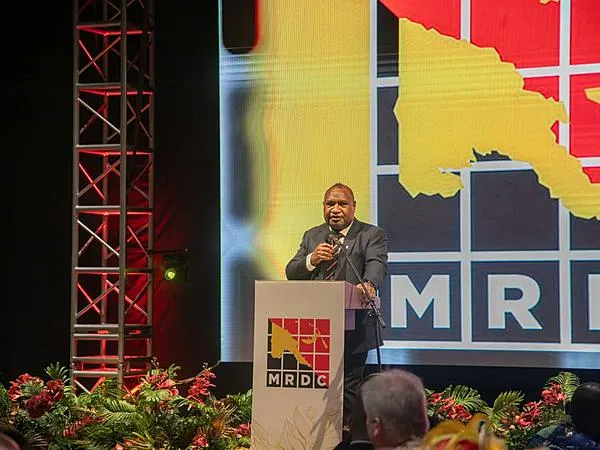
Prime Minister James Marape 29 November congratulated the Mineral Resources Development Company (MRDC) on its 50-year anniversary, describing the company as a “powerhouse” that “reflects the Papua New Guinean story of resilience and can-do attitude.”
Speaking at a packed and well-decorated grand hall of the Hilton Hotel – one of MRDC’s investments in hospitality and tourism – Prime Minister Marape paid tribute to founding father Sir Michael Somare for his vision in establishing the company, which has grown into a K16 billion enterprise today.
“Two months after our 50th anniversary, we are here, and if anyone thinks that Papua New Guinea has no success story, MRDC rubbishes that line of thinking. Amidst our ups and downs, MRDC remains one of our greatest positive stories in our nation’s life,” Marape said.
“The Mineral Resources Development Company reflects the story of Papua New Guinea – of resilience and self-belief," he added.
In the 70s when it was generally believed that Papua New Guineans could not do anything, Papa Somare believed they could. MRDC is the true reflection of the can-do attitude of the Somare generation, Marape said.
“This company has wonderful lessons for all of us to learn on our 50th; it is a lesson about investing in the future and not only in the present. From a zero-starting point, MRDC is now a K16 billion company 50 years on," the official said.
The Prime Minister said the structure of the company, set up in 1975 by Sir Michael, has proven successful and self-sustaining, driving the company forward and ensuring continued success in the future.
PM Marape acknowledged the work of all managing directors of the company, highlighting that since its inception, MRDC has had all national managing directors and board members.
He drew a link between the Hilton Hotel in Hohola – once an overlooked part of Port Moresby – and the beginnings of the Pangu Pati in Hohola as the “Bully Beef Club,” symbolising the “can-do attitude” of Papua New Guineans and the birth of the nation.
“This space that was picked for Hilton Hotel coincides with the story of Bully Beef Club meeting in this once-rejected part of Port Moresby, Hohola. In the 1960s rationale of being squeezed into the corner, that we could not do it, this hotel reflects the aspiration of this country, including landowners – that from a small, tucker-box-size house you can leapfrog in one generation to a hotel of this standard, a hotel which you can find anywhere in a first world nation,” he said.
Prime Minister Marape emphasised that in all equities his government secures, 40 percent would be passed back to landowners and provincial governments.
The event was attended by US Ambassador to PNG Ann Marie Yastishock; Minister for Foreign Affairs Justin Tkatchenko; Minister for Tourism, Arts and Culture Belden Namah; Minister for Energy Peter Isoaimo; Minister for Bougainville Manasseh Makiba; Governor for Gulf Chris Haiveta; Governor for Hela Phillip Undialu; and leaders of MRDC subsidiary companies from Star Mountains, Kutubu, Hides, Gulf Province, Central Province, and Madang Province.
The Papua New Guinea Extractive Industries Transparency Initiative (PNG EITI) National Secretariat has signed a Memorandum of Understanding (MOU) with the Office of the Auditor-General (AGO) to strengthen collaboration among government reporting agencies and enhance the quality of data in EITI reports.
The MOU was signed on 28 November 2025 in Port Moresby by PNG EITI Executive Director George Kauli and Auditor-General Gordon Kega.
The agreement represents a key step towards improving the accuracy of revenue data from the extractive sector. It enables the AGO to undertake the Agreed-Upon Procedure (AUP), testing receipts of revenue data provided by government entities for the 2024 PNG EITI Report and subsequent reports, thereby providing greater assurance and reliability of the information.
Kauli said the signing forms part of the government’s commitment to ensure transparent reporting of revenue flows from the extractive industries, in line with national policies for transformation and accountability and PNG EITI standards.
He expressed gratitude to the Japan International Cooperation Agency (JICA) for providing both financial and technical support for the project. Kauli also thanked the project’s key beneficiaries, the National Petroleum Authority (NPA) and the Office of the Attorney-General, as well as government reporting agencies including the Internal Revenue Commission, Mineral Resource Authority, PNG Customs, Department of National Planning and Monitoring, Department of Treasury, and Conservation and Environment Protection Authority.
“The signing of this MOU is a significant milestone in the implementation of the project,” Kauli said. “The project now aims to foster institutional strengthening, provide further capacity building for AGO staff, NPA personnel and PNG EITI Secretariat officers, and expand AUP testing across all government entities.”
Auditor-General Gordon Kega described the agreement as a “significant milestone” that will strengthen accountability in PNG’s resource sector. “This MOU demonstrates our shared commitment to transparency. By working together, we can ensure that revenue from our extractive industries is properly accounted for and used for the benefit of our people,” he said.
He added that the partnership with PNG EITI goes beyond technical arrangements, serving as an important step towards improving public trust, strengthening government systems, and supporting better governance.
JICA, which funds Phase 2 of the Project for Improving Resource-Related Revenue Management, welcomed the signing. Chief JICA representative in PNG, Hideaki Matsuoka, said: “We are excited to be part of this milestone. A stronger partnership between PNG EITI and AGO will help improve the sharing of information across government agencies.”
Deputy Secretary for Economic Policy at the Department of Treasury and Acting Chair of the PNG EITI Main Stakeholder Group, John Uware, welcomed representatives from JICA, AGO and other government departments to the ceremony.
“The PNG Department of Treasury, which facilitates the implementation of EITI standards in PNG, will continue to support the achievement of agreed outcomes and looks forward to the successful execution of this understanding,” he said.
Pacific Lime and Cement Limited has provided an update on construction progress at its Central Lime Project (CLP) in Papua New Guinea, reporting that activities remain on schedule and within budget.
Construction continues to gain momentum across earthworks, wharf construction, access infrastructure, and early-stage processing facilities.
Key highlights include:
Kiln cutting is nearing completion, a major milestone in preparing the site for foundation works.
Foundations for the fuel storage facility and batch plant have been completed, with installation scheduled to follow.
Wharf Phase 3 design and offshore material procurement are advancing, while the wharf remains fully operational throughout the construction program.
Development of access roads is improving logistics flow from the Port Moresby end to the mine lease boundary.
On-site workshop facilities have been established and energisation is underway, enhancing fleet maintenance capacity ahead of peak activity.
The workforce has grown to more than 200 personnel, with over 90% sourced from local villages, supporting regional employment and project participation.
Managing Director Paul Mulder said: “It’s great to see continued momentum at the Central Lime Project. The team is hitting major construction targets and maintaining a disciplined approach as we work toward first production. The progress we’re seeing across the kiln precinct, wharf, access road and supporting infrastructure gives us increasing confidence as we move through the build.”
The company remains on track to achieve first production within its planned 18-month development window.
Pacific Lime and Cement Limited is advancing the development of Papua New Guinea’s lime and cement industry to supply essential building materials for the nation and the wider Asia–Pacific region. Anchored by its flagship Central Lime and Cement Projects, PLC is creating a fully integrated platform for local manufacturing, import substitution, and sustainable growth.
The company’s diversified portfolio also extends to industrial sands, nature-based forestry carbon credits, and renewable energy, supporting its commitment to delivering cleaner, long-term solutions that build enduring value for PNG and its communities. PLC also holds an approximately 16.6% interest in copper–gold explorer and developer Adyton Resources Corporation (TSXV: ADY).
PLC’s strategy aims to support Papua New Guinea and the broader Asia–Pacific region on their decarbonisation journey by developing projects that deliver higher-quality, lower-cost, and targeted low-carbon inputs for the mining, resources, and construction sectors. These projects will be supported where applicable with a diversified renewable energy portfolio, including solar, wind, geothermal, nature-based forestry carbon credits, and battery storage initiatives.
The company is committed to engaging with host communities throughout the lifecycle of its projects and incorporating internationally recognised Environmental, Social and Governance (ESG) standards into its strategy and business practices.
PacSuper has announced the launch of I-WE Supa, a voluntary retirement savings pathway championed and driven by PNG Indigenous Women Enterprises Connect (PNG IWEC) to support women across Papua New Guinea.
The initiative was developed in direct response to the financial exclusion experienced by women in the informal economy, including market vendors, caregivers and those balancing earnings with family responsibilities. It aims to provide a flexible, accessible and culturally realistic pathway to long-term financial security.
The concept was led by Linda Paru, CEO of PNG IWEC and a PacSuper board member, whose vision and advocacy for women’s economic empowerment formed the foundation of the programme. PacSuper CEO Chris Hagan worked closely with Paru to bring the pathway into operation, with PacSuper administering I-WE Supa as Papua New Guinea’s oldest superannuation fund.
The programme is powered by PRIMS, the only PNG-based superannuation administration platform, enabling voluntary and irregular contributions through mobile payment channels. This removes the need to visit a bank branch and ensures women can contribute as income allows.
Key features include:
• Voluntary contributions starting from K100 per year • Mobile-enabled payments via Vodafone, Digicel, MiBank and BSP – seven days a week • Real-time balance visibility via the PacSuper Member Portal • Member discounts including Kimbe Bay Shipping and Brian Bell • Group life insurance access for PNG IWEC members • Housing eligibility after five years of contributions • Ability to save in PGK or AUD
“I-WE Supa addresses a very real and urgent gap affecting women in PNG, particularly those in the informal economy who continue to be excluded from formal savings and retirement mechanisms,” Paru said. “By creating a pathway that works with women’s realities rather than against them, we move one step closer to true financial inclusion, confidence and independence.”
PacSuper CEO Hagan added: “Small, irregular contributions, made when income allows, can grow into meaningful savings over time. Our PRIMS platform allows women to save on their terms, wherever they are, empowering them to build a more secure future for retirement.”
PNG IWEC and PacSuper — partnering to enable choice, opportunity and financial inclusion for PNG women.
PacSuper is Papua New Guinea’s oldest private-sector superannuation fund, dedicated to making superannuation simpler, more efficient and more effective. Formerly the AON Master Trust, the fund rebranded as PacSuper in April 2024.
Committed to delivering better retirement outcomes, PacSuper is the only fund in PNG offering members the flexibility of multiple currency choices. With a strong focus on prudent risk management, PacSuper ensures stability and security in an evolving financial landscape.
There is significant potential for Papua New Guinea (PNG) and New Zealand (NZ) to deepen their trade and investment relationship, Minister for International Trade and Investment Richard Maru said, addressing a delegation from the New Zealand-PNG Business Council.
“In terms of trade, PNG’s exports to NZ are valued at US$15 million, while NZ’s exports of goods to PNG stand at US$150 million. We have no issue with this trade imbalance favoring NZ on a ratio of 1:10. However, we need NZ’s support through aid for trade to train our people to meet their strict biosecurity requirements, so we can export more into the NZ market,” Maru said.
The New Zealand-PNG Business Council is currently in PNG to explore potential partnerships, secure new business opportunities, and strengthen economic ties between the two nations.
He expressed concern over the lack of New Zealand investment in PNG over the past 50 years.
“Despite our government’s efforts to attract NZ investments, traction has been minimal. There are numerous opportunities for NZ investors, including in the chicken and dairy industries, which would support our agenda for downstream processing, boosting exports, and replacing imports," Maru said.
"New Zealand has been a long-standing friend, and we are committed to supporting their investments in PNG. Meanwhile, Australia remains our largest investor with over AU$27 billion and is very proactive. It is up to NZ whether they want to remain a marginal player in our economy or become a major one," the minister said.
Minister Maru highlighted that the present moment is ideal for investment in PNG, citing the upcoming Papua LNG project, the Wafi-Golpu mine, and approximately ten new mining and petroleum projects in the pipeline.
“We are poised to become one of the most dynamic economies in the region, with 5 percent economic growth expected next year, which could be sustained over the next 20 to 30 years. Despite our challenges, PNG is a prime investment destination, as demonstrated by world-leading companies such as Newmont, Santos, and ExxonMobil investing here,” he added.
On trade agreements, Minister Maru emphasized that PNG has opted not to join regional deals like PACER Plus. Instead, the country seeks a Comprehensive Economic Partnership Agreement (CEPA) with New Zealand.
“The offer is on the table. This is the path our countries must take if we are serious about our future relationship. We already have a CEPA with the European Union, and in the coming months, we aim to sign our second CEPA with the United Arab Emirates, which NZ recently concluded a CEPA with. We have also proposed CEPAs with Japan and South Korea, and I plan to discuss one with India during my visit next week. Our goal is to partner with countries that will support economic growth and prosperity, as outlined in our new Foreign Policy,” he said.
Minister Maru also highlighted gaps in connectivity and sporting exchanges between PNG and NZ.
“How can business-to-business relationships grow when there are no weekly flights between our countries? This is an issue both governments must address,” he noted.
He concluded with a call for stronger engagement. “Our trade and investment relationship has not grown substantially over the past 50 years. I strongly urge the NZ Government to enter into CEPA negotiations with PNG next year if they are serious about deepening economic ties. It is time to take stock of our relationship, and I look forward to seeing NZ adopt a more aggressive approach to investing in PNG and finalizing a CEPA as soon as possible.”
Discussions have been concluded between the Minister for International Trade and Investment, Hon. Richard Maru, and the Chairman of New Britain Palm Oil Limited (NBPOL), Datuk Mohamad Helmy Othman Basha, for the State to take equity in Ramu Agri Industries Ltd (RAI) early next year.
Minister Maru, who is also responsible for State Equity, said that the state will take up equity under the State Equity Funding with other Papua New Guinea (PNG) investors as investment partners in RAI. It will also be relatively easy to raise capital in the stock exchange through an Initial Public Offering to raise large sums of investment funds because RAI is a well-managed and very profitable business in oil palm, cattle and sugar industries and has a very bright future except its limited by land for expansion.
"The proposed joint ownership will specifically focus on expansion of RAI to the Sepik Plains (oil palm and cattle) and in Abau, Central Province (sugar). It is important that the Government take up equity so we can give comfort and confidence to the company to invest outside of its current areas of operation. This is part of our reset agenda to double the size of the palm oil industry and stop sugar and cattle imports," he said.
RAI is owned by NBPOL, a large, integrated producer of sustainable palm oil. NBPOL currently operates across five provinces, including West New Britain, Oro, Milne Bay, Madang, and New Ireland, managing over 92,000 hectares of planted oil palm. It employs more than 20,000 people in PNG and supports thousands of smallholder farmers, suppliers, and service providers connected to its operations.
“The company is already investing in the country and understands the local conditions and is also a leading global player. This makes the proposed partnership a very strategic one. They also have access to Tax Credit through which we can develop townships, police posts, schools and other infrastructure,” said Minister Maru.
The Minister noted that oil palm is PNG’s largest agricultural industry, with export earnings of K2.2 billion (approximately USD $283 million), and significant potential for growth.
Oil Palm in PNG is grown on about 236,000 hectares of land on estates and on smallholder farms. The estates produce 65% of the country’s oil palm, while smallholders produce the remaining 35%. The palm oil industry of PNG remains the country’s biggest earner as far as cash crops are concerned.
Oil palm became a commodity in 1960, and has been contributing to the economy by providing jobs and revenue.
In Indonesia, the palm oil industry accounts for 1.6% of GDP and employs 4.5 million people. As the majority of the harvest is exported, the industry generates more than USD $18 billion a year in foreign exchange — the single biggest contributor in the country. It is the only country that has significantly increased the size of its palm oil, which grew by almost 650% between 2000 and 2022.
"If we are to grow oil palm on all our 6 million hectares of grassland, we are looking at generating over K20 billion (approximately USD $2.57 billion) annually in export earnings and creating one million new jobs in the formal sector and another one million indirect jobs. We need volume to go into downstream processing,” he said.
Regarding sugar, the Minister said that PNG is a net importer of sugar. In 2023, PNG imported over USD $29 million worth of sugar from mainly Thailand and Malaysia.
"We are potentially missing out on tens of thousands of jobs by importing sugar instead of developing and expanding our domestic industry. We have the potential as a country to replace sugar imports, be a net exporter, and we can also use bagasse, the fibrous residue left after crushing sugarcane, to produce electricity," he said.
He further explained that while RAI cannot supply the total market demand, the Government will not offer any tariff protection like the 15-year infant protection previously available.
“We can only protect a new sugar company, which is possible under this new partnership and at a new location like Abau where ENBPOL owns 5,000 hectares of land which can be used for sugar development. The balance of the sugar can be supplied by village farms or through planting of large estates using lease-leaseback scheme,” he said.
Datuk Basha committed to providing a formal Offer Letter for the State to take up equity in RAI. Minister Maru assured him that upon receipt of the letter, he would take a submission to Cabinet to seek approval in principle for this strategic partnership, which he said will transform the oil palm industry over the next 50 years. He also reassured the company of the Government’s highest level of support.
The Minister also acknowledged concerns about limited industry consultation on the Palm Oil Industry Authority Bill 2025 and the Palm Oil Management Bill 2025 and promised to advise the Government of these concerns.
Japan is the first country in 50 years to receive visa-on-arrival privileges for all its passport holders entering Papua New Guinea (PNG), according to Minister for International Trade and Investment Richard Maru.
“This is a very historic and one of the best decisions by the Marape-Rosso Government in terms of its bilateral, security, and trade and investment relationship with Japan. It reflects the Government’s commitment to our partnership and friendship with Japan over the last 50 years, and importantly our considered opinion that Japanese travellers do not possess a security threat to PNG,” Maru said.
During a meeting with Maru, Japanese Ambassador to PNG Hisanobu Mochizuki said the announcement had generated “joy and excitement” across Japan’s tourism and business sectors. He added that Japan is eager for Air Niugini to resume direct flights between Port Moresby and Narita to enable more Japanese visitors from a range of sectors to travel to PNG.
As part of broader cooperation efforts, Ambassador Mochizuki confirmed that work has begun on the scoping and design of the new Tokua International Airport in East New Britain (ENB) Province. He said the facility’s design “will not be any less than the Tomodachi International Airport in Morobe Province.”
“It will be something that PNG will be very proud of and another flagship project for Japan in PNG that will further enhance the relationship between our two countries,” he said.
Maru emphasized that ENB holds deep historical significance for the Japanese people due to its cemeteries, caves, war relics and memorials from World War II. He credited Prime Minister James Marape for securing Japan’s development aid commitment to Tokua International Airport during high-level talks.
“I want to commend Prime Minister James Marape for pushing for development aid funding from Japan for the new Tokua International Airport at the Prime Minister-to-Prime Minister level while myself and the Minister for Foreign Affairs and our colleagues did our part at the Ministerial level. This project will be a major transformational project for ENB Province and the New Guinea Islands Region and I cannot wait to see this project start,” said Minister Maru.
Looking ahead, Maru invited Ambassador Mochizuki to encourage greater Japanese private-sector investment across PNG’s resource and non-resource industries. He also reiterated PNG’s position on international tax arrangements.
“PNG as a Sovereign State has made the decision not to enter into any more Double Tax Treaties with any country. I want to appeal to Japan and other countries to respect this decision. However, there are many other ways that Japanese companies could benefit and that is through incentives like 10-year tax holidays and duty-free market access for their tradeable goods. We are happy to support them and we will go all out to help Japanese investors to invest in tourism, agriculture, manufacturing, forestry, fisheries and other non-resource sectors as well as the resource sector in PNG,” said Minister Maru.
Maru added that the two nations’ longstanding ties provide a strong foundation for deeper cooperation.
“All in all, PNG has enjoyed the very good 50-year friendship with Japan who is our second biggest aid donor and we want to elevate that relationship and anchor it on trade and investment by entering into a Comprehensive Economic Partnership Agreement with Japan as soon as practical. I plan to visit the new Japanese Trade Minister to continue this discussion in March next year as soon as the new Government settle into office,” he said.
ShieldCrete® International has established a significant presence in Papua New Guinea through a strategic joint venture between Malaysia-based ShieldCrete® International and local partner Workforce South Pacific, creating ShieldCrete® South Pacific (SCSP). This advanced coatings company operates major facilities in Port Moresby and brings over 30 years of specialised experience in abrasive blasting, advanced coatings, and polyurea applications for the heavy industry, mining, and oil and gas sectors.
State-of-the-Art Facilities and Mining Focus
SCSP operates PNG's largest indoor paint and blast facilities in Port Moresby, positioning itself as a key player in the region's industrial coatings sector.
"This is one of the premium standards because it has the largest indoor blast and paint facility, which we believe sets a record in PNG," explains SCSP Director Nigel Marshall.
ShieldCrete® South Pacific has already established a strong footprint in PNG's mining industry, working at prominent sites including Simberi, OK Tedi, and Hidden Valley mines.
Addressing Critical Industry Challenges
PNG's mining operations face unique environmental challenges, from tropical humidity to constant battles against corrosion and asset degradation, which can significantly impact equipment lifespan and operational efficiency. ShieldCrete® South Pacific provides specialised protective coatings that address these challenges head-on, offering solutions for various plant operations and underground mining environments. Their coatings are designed to prevent rust, reduce maintenance requirements, and significantly decrease application times, ultimately minimising costly shutdown hours for mining operations.
In an exclusive interview, SCSP Managing Director Mike McGrory detailed the company’s mission and strategic approach in delivering advanced coating solutions to tackle operational challenges across PNG’s mining and commercial sectors.
“Our coatings can dramatically reduce shutdown hours and maintenance costs,” explains Mr McGrory. “This translates to improved productivity and better returns for mining operations across PNG.”
Diverse Coating Solutions
ShieldCrete® South Pacific offers a wide range of protective coatings, including solutions for corrosion resistance, wear protection, and fire resistance for multiple substrate types. Beyond mining, the company has completed projects for major clients such as Harbourside and has expanded into retail sectors, including supermarkets and vehicle coating applications.
Key products include:
BeltShield® for conveyor belt repairs
ShieldPoly Advanced Polyurea Coatings for impact- and corrosion-resistant surfaces
ShieldPatch™ X1 for quick, hand-applied repairs on steel, concrete, and rubber components
Concrete protection is also a focus, with ShieldSeal and ShieldFoam preventing moisture ingress and long-term deterioration. Fast-curing formulations and customised solutions ensure operations remain productive, safe, and cost-efficient.
Sustainability and International Standards
SCSP places a strong emphasis on environmental responsibility, adhering to ISO-compliant manufacturing processes and using recycled products for blasting operations. All products are sourced from internationally recognised suppliers and promote sustainable practices by extending the life of structures and reducing natural resource consumption.
Global Expertise, Local Presence
The company leverages technical knowledge and resources from its global network, spanning South Africa, New Zealand, Europe, Indonesia, the Philippines, and the Middle East. Its team includes experienced chemists and technical experts who specialise in developing custom solutions for specific industrial challenges.
Current Growth and Future Vision
SCSP is currently managing significant projects, including a 4,000-square-metre roofing project for Food Prime, and is rapidly expanding, offering over 28 job opportunities in PNG. Beyond employment, SCSP is developing comprehensive training programmes and community engagement initiatives, contributing to local skills development in the specialised coatings industry.
With its parent company’s 104-year history, European manufacturing facilities, and €400 million annual revenue, ShieldCrete® South Pacific combines global expertise with local commitment to provide comprehensive services—including stocking, selling, training, and project execution for PNG's industrial sector—while maintaining a strong local presence.
The company’s commitment to sustainability aligns with PNG's environmental priorities, utilising ISO-compliant manufacturing processes and recycled materials where possible. Their products meet international standards and are specifically adapted for PNG's unique operating conditions.
As PNG's mining sector continues to expand, ShieldCrete® South Pacific is well-positioned to support this growth with innovative protection solutions. Its ability to provide comprehensive services from product supply and training to full project execution makes it an attractive partner for both established mining operations and new developments.
With major mining projects on the horizon and increased focus on operational efficiency, ShieldCrete® South Pacific’s specialised expertise in asset protection and maintenance reduction is likely to play a crucial role in PNG's continued mining sector success.
With over 70 years of manufacturing in Papua New Guinea, PNG Forest Products has long been an industry leader in Engineered Wood Products across the South Pacific, Australasia, and South East Asia.
Their extensive range of products and services for the domestic and export markets includes pressure-treated pine timber and plywood; kit homes and prefabricated buildings; modular bridges and bridge decking; and project construction and infrastructure development.
In fact, PNGFP is the largest supplier of timber housing and infrastructure projects in the South Pacific, having delivered more than 10,000 buildings.
PNGFP supplies PNG's only kit-set buildings engineered to both PNG and Australian building codes, preservative pressure-treated to provide full protection from termites and rot.
The construction division, NiuBuild, has built well over 2,000 buildings in PNG, including numerous mining and exploration camps, over 1,000 school buildings, and supplied hundreds of educational and health facilities throughout the country.
Innovation is at the core of the company’s success, as reflected by PNGFP’s Managing Director, Tony Honey: “We are producing and exporting some truly innovative and interesting engineered wood products that add value to an otherwise basic piece of plywood.”
“Modular bridges and decking into Australia and New Zealand; specialised railway bridge re-decking in Sydney; sound barriers along Australian highways and rail corridors; scarf-jointed bus and train floors for Australia, NZ and Malaysia—the list goes on.”
The company’s origins date back to the early 1920s, when Bulolo Gold Dredging Limited (BGD) was developing extensive alluvial mining operations in the Bulolo Valley.
To facilitate this large-scale operation, they needed sufficient housing in the valley for hundreds of workers and their families. BGD secured timber permits, established sawmill and joinery facilities, and set about building a town complete with a school and hospital.
As the operation grew, so did the town and the need for more timber. In the 1940s, the Forestry Department established a pine nursery and reforestation programme, planting 60,000 young pine trees in December 1948 and continuing each year thereafter.
When the mining operation scaled down, BGD formed Commonwealth New Guinea Timbers Ltd and constructed the largest plywood factory in the Southern Hemisphere. In 1954, plywood production and the export of product overseas commenced, signalling the birth of a new industry.
Today, PNG Forest Products employs over 1,500 Papua New Guineans and is committed to building a better future through sustainable manufacturing practices. All timber is sourced from renewable pine plantations managed by the PNG Forest Services. Sawdust and wood-chip waste from the mills are utilised to power biomass boilers for the veneer driers and kilns.
PNGFP also works in conjunction with the Department of Environment and Conservation to ensure that best environmental practices are maintained. PNG Forest Products is the only company in PNG to have achieved PEFC Chain of Custody accreditation based on 100% controlled wood.
PEFC (Programme for the Endorsement of Forest Certification) is an international organisation that promotes sustainable forest management through independent third-party certification. PNGFP’s Chain of Custody certification demonstrates a commitment to sustainable forest management that is unique in this country.
Further emphasising sustainability, the company’s manufacturing facilities in Bulolo are powered by their own hydro power stations, in which they continue to invest heavily.
In 2023, PNGFP Hydro commissioned their fourth power station at Baime, feeding 11.6MW into PPL’s Ramu grid and raising their capacity to supply PPL to a total of 22MW.
The combination of a renewable timber resource, processed with sustainable hydro power and biomass heat energy, makes PNGFP’s engineered wood products truly and uniquely green.
By Robina Hapo
In a market long dominated by major oil companies, one local aviation fuels and lubricants supplier is carving out a bold new path, expanding across PNG’s aviation network and positioning itself to compete for major mining contracts by securing diesel fuel supply. After years of strategic groundwork, the Pacific Energy company is now entering a pivotal phase of growth, driven by a clear vision: to build a nationwide fuel presence capable of supporting the country’s biggest industries.
For the past several years, Pacific Energy Aviation (PNG) Limited (PEAL) has focused heavily on strengthening its lubricants division. As the authorised distributor of Shell lubricants in Papua New Guinea, PEAL has been steadily increasing its footprint through both B2B and B2C channels, supplying mining firms, transport companies, roadside service stations, retail outlets, and smaller workshops across the country. But competition in the lubricants market is fierce, given that more than 16 brands exist locally. Major oil companies often win large mining tenders because they bundle diesel fuel discounts with lubricants—an advantage PEAL is pursuing.
“Diesel fuel is the missing link,” Chief Executive Officer Henry Elias explained. “Without diesel fuel, we cannot offer the combo deals that major mining companies expect. This limits our chances in big supply tenders, even though we have competitive product pricing and technical expertise.”
Despite this challenge, PEAL achieved a major milestone last year, surpassing 1 million litres in lubricant sales for the first time since launching distribution in 2016—a notable achievement without the advantage of having the diesel fuel combo. Sales are again on track to reach the one-million-litre mark this year. However, with diesel fuel supply, the company estimates it could capture contracts worth in excess of three million litres or more annually from just one major mining client.
This ambition is shaping the company’s next strategic move. Plans are underway to acquire an existing ground fuels depot or develop a new facility near the main port, either in Port Moresby or Lae. The team is also monitoring potential sell-offs, such as the Kimbe and Kavieng Fuel Depots, recently acquired by another oil major, and other facilities that may become available in the near future, with intentions to expand its diesel fuel footprint nationwide. “To grow our fuels portfolio, we need diesel fuel everywhere,” Mr Elias said. “It is the missing link that will unlock the next level of growth.”
While lubricants remain a highly lucrative growth prospect, the most rapid expansion this year has come from Jet-A1 aviation fuel. Traditionally operating only in Port Moresby since 2010, the business made a decisive leap into new regional markets in 2024. In partnership with Ok Tedi Mining Limited (OTML), whose fly-in fly-out (FIFO) operations depend on reliable Jet-A1 fuel supply, PEAL has expanded its aircraft refuelling operations to five strategic airports: Nadzab, Kagamuga (Mount Hagen), Kiunga, Tokua (Rabaul), and Vanimo, with Wewak scheduled to come online next.
By next year, the company expects to have operations in 10 or more airports nationwide, including Daru, Kavieng, Hoskins, Manus (Momote), Buka, Madang, Goroka, and Tari. The expansion includes major investment in new equipment, fixed storage facilities, and aviation refuelling infrastructure. “Aviation has become one of our strongest growth pillars,” Mr Elias said. “The partnership with OTML gives PEAL the strategic link into remote airports, where consistent fuel supply must be maintained for the mining workforce.”
Even as PEAL expands geographically, the company continues to build technical credibility. One of its key strengths is its certified Lubricants Technical Advisor, an engineer trained and certified in machinery lubrication technology, who supports clients in selecting the most suitable products for heavy machinery and industrial applications. This technical capability has helped strengthen the company’s reputation among the mining, transport, marine, power generation, and engineering industries.
With its dual focus on aviation fuels and lubricants, and a strategic push towards diesel fuel, PEAL is positioning itself to become a more competitive and integrated fuels supplier across Papua New Guinea. Its growth story is one of resilience and long-term planning—hitting milestones, navigating structural disadvantages, and preparing for the next wave of opportunities in the country’s diverse industries and markets.
“We have relentlessly pursued and achieved current outcomes so far without diesel fuel,” Mr Elias said. “Now imagine what more can be achieved when we finally have the diesel fuel mix.”
For more than two decades, Golden Shipping has quietly but steadily positioned itself as a vital player in Papua New Guinea’s maritime logistics sector. Established in 2001 as the shipping division of a larger group, the company initially serviced its own logging camps. Today, under new leadership and with an ambitious forward strategy, Golden Shipping is stepping confidently into the wider industry as a provider of comprehensive marine transport and logistics solutions.
Golden Shipping currently operates a diverse fleet of six landing craft, ranging from 500 to 1,400 tonnes, supported by over ten sets of tugs and barges. This robust fleet allows the company to serve vast stretches of PNG waters—from Daru to Manus, Vanimo to Kiunga, and across the Milne Bay Province—ensuring that even the most remote coastal and river communities receive essential goods and services. The company also owns wharf facilities at Motukea, with additional operating points in Alotau, Kamusi, and other key maritime locations.
Having moved away from dependence on logging operations, Golden Shipping now focuses on offering a broad portfolio of marine services to the public and private sectors. These include vessel chartering, wharf handling and port services, bunkering operations, and marine repair services through its yard facilities. The shift reflects the company’s goal to contribute meaningfully to the growing needs of PNG’s industrial, commercial, and resource sectors.
Safety remains at the heart of the company’s operations. All vessels are locally registered and fully compliant with National Maritime Safety Authority (NMSA) requirements, with several also maintaining international class certifications. This commitment to safety and compliance is strengthened by the team’s deep expertise: many of Golden Shipping’s master mariners and engineers are former international seafarers with 30 to 40 years of experience. Their global exposure shapes the company’s vision to raise PNG’s marine standards by integrating efficiency-driven systems, best practices, and an improved operational culture.
As PNG experiences increasing activity in oil and gas, construction, and infrastructure development, Golden Shipping sees enormous potential to fill gaps in the coastal shipping network. While major players dominate containerised shipping, the company is strategically positioning itself in the bulk and project cargo segment, where specialised vessels and experience are critical.
Shipping Manager Edward Soo elaborates on the company's vision and what Golden Shipping wishes to contribute to the marine standards of Papua New Guinea. Mr Soo says, "With our past experiences overseas, we are trying to capitalise on bringing up the marine standard of PNG in line with the country’s development strategies and authorities."
The management believes this niche not only aligns with national development priorities but also leverages their long-standing expertise in project logistics across demanding international environments. While PNG’s maritime sector continues to face demanding challenges—from infrastructure limitations to logistical complexities—Golden Shipping remains optimistic. The company believes that with proper planning, investment, and collaboration with authorities and communities, PNG’s marine sector can evolve rapidly. Golden Shipping aims to play a key role in building stronger maritime infrastructure, enhancing capacity, and enabling smoother flow of goods that support economic growth.
As Golden Shipping enters a new chapter, its vision is clear: to provide dependable, compliant, and solution-driven marine logistics that support the country’s development. Backed by decades of experience and a renewed strategic direction, the company is charting a course not only to strengthen its own operations but also to elevate PNG’s coastal shipping landscape as a whole.
The Papua New Guinea Tourism Promotion Authority (TPA) has officially sworn in its new Board members during a ceremony at Kwalimu Haus in Port Moresby, marking a key step in strengthening governance and oversight across the nation’s tourism sector.
The appointments complete TPA’s legal requirements under the TPA Act 1993, ensuring the Authority operates with proper governance and accountability.
The new Board includes ex-officio members such as the Chairman of the Permanent Parliamentary Committee on Tourism, the Head of the Department responsible for Finance and Planning, and the Chief Executive Officer of TPA. Other members represent key segments of the tourism industry, including tour operators, the national airline, hoteliers, tourism attractions, third-level airlines, banks and financial institutions, and the tourism industry association. This diverse composition is designed to ensure broad and balanced representation of the sector.
Speaking at the ceremony, the Minister for Tourism, Arts and Culture, Belden Norman Namah, congratulated the new board members, describing their appointment as timely. “The board’s leadership is vital for building tourism infrastructure, strengthening community participation, and forging a sustainable public-private partnership framework for tourism development in PNG,” he said.
TPA’s Chief Executive Officer, Eric Mossman Uvovo, emphasised the significance of the swearing-in. “This is more than a procedural requirement. It marks a renewed commitment to stronger governance, effective policy implementation, and better collaboration across the tourism sector,” he said.
The newly constituted Board is expected to lead TPA in strengthening tourism governance and oversight, enhancing partnerships with provincial authorities and industry stakeholders, and supporting sustainable tourism development that benefits local communities and businesses.
It will also ensure that policies translate into real, positive outcomes for tourism operators, including SMEs, while promoting Papua New Guinea’s cultural and natural attractions globally.
Follow on LinkedIn:
PNG Business News
Be the "First" to get our exclusive Digital Magazine & Weekly Newsletter.