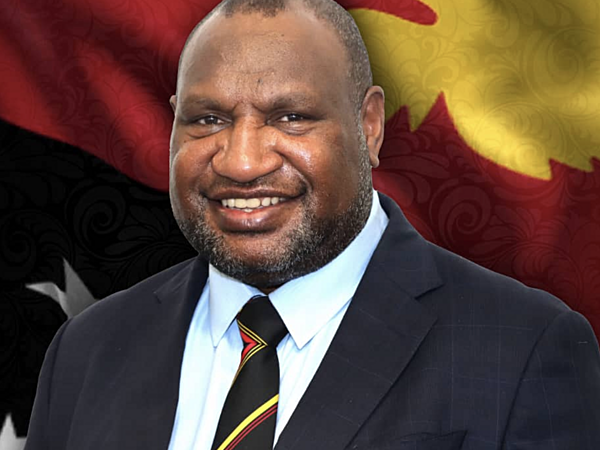
Prime Minister James Marape has outlined the Economic Transformation and Implementation Pillars of the PNG Reset@50 Roadmap, describing them as “the engine room of growth, jobs, and national productivity for the next 20 years.”
The roadmap sets a vision for Papua New Guinea’s economic and social development through evidence-based governance, private sector-led growth, land reform, public service efficiency, and strengthened project delivery systems.
Driving Evidence-Based Governance and Digital Identity
Prime Minister Marape stressed that progress requires decisions grounded in data rather than sentiment. “For too long, we have made decisions based on feelings. The Roadmap insists on evidence, cost-benefit analysis, and measurable outcomes,” he said.
The government plans to enforce mandatory evidence-based Cabinet submissions, strengthen the Parliamentary Budget Office, establish independent extractive and infrastructure advisory councils, and provide public access to national statistics.
A key focus is completing a universal National Identification (NID) system integrated across government, enabling inclusive finance, social protection, and secure identification.
Enshrining Private Sector–Led, Government-Facilitated Growth
The Prime Minister reiterated that private sector-led growth must remain the foundation of PNG’s economy. “Government must facilitate, not suffocate, Private Sector growth. The Roadmap reinforces this principle as official Policy,” PM Marape said.
Planned measures include a national policy confirming the private sector as the engine of growth, major regulatory reforms to reduce red tape, accelerated resource projects with strong environmental safeguards, state-owned enterprise reform, modernisation of agriculture, and regional visa access for PNG citizens.
Land Reforms to Unlock Housing and Agriculture
Land reform is another key pillar, focusing on freeing up land for development through voluntary and respectful customary land registration systems.
“Land is our greatest blessing. But unused land is not productive land. With voluntary best-practice land reforms, we will unlock land for Housing, Agriculture, and SMEs while respecting customary ownership,” PM Marape said.
Reforming the Public Service
The roadmap identifies unproductive bureaucracy, duplication, and payroll abuses as major obstacles. PM Marape revealed that the government has already begun payroll cleansing, uncovering more than 4,000 unattached employees.
“This is just the beginning. A whole-of-Government functional audit will remove duplication, improve integrity, and link pay to performance,” he said.
Building a Strong Delivery System
To ensure reforms are implemented effectively, the government plans to establish a centralised Project Management Unit and fully activate the National Monitoring and Coordination Authority.
“Monitoring and delivery have been the greatest weaknesses of successive Governments. It ends now. Every Kina spent must hit the development target,” PM Marape said.
A Nation Positioned for Growth
PM Marape concluded by emphasising PNG’s long-term economic ambitions. The nation is targeting a K200 billion economy by 2029–2030 and aims to become “a prosperous, wise, and wealthy society by 2050.”
“Reset@50 is our chance to reboot governance, transform services, expand the economy, and build the richest Black Christian nation on earth,” he said.