February 25, 2026

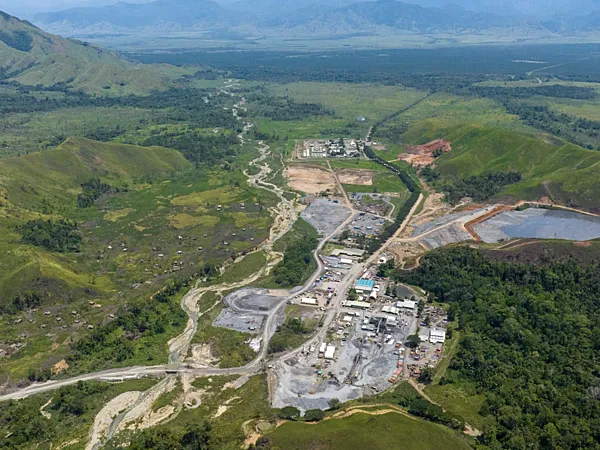
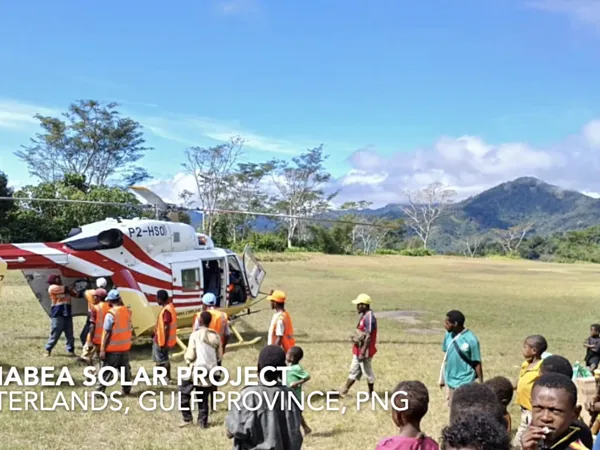
A 100-kilowatt solar mini-grid has been commissioned at Kanabea Rural Health Centre in Gulf Province, delivering round-the-clock electricity to one of the country’s most isolated communities after a logistics operation that required 31 helicopter lifts and nearly 22 tonnes of equipment.

Operational since September 2025, the system powers the rural health centre, Kanabea Primary School, the local Catholic church, staff housing and more than 40 surrounding households, marking a major step forward for a community accessible only by air or a three-day trek over two mountain ranges.

The project was initiated in late 2023 under the USAID-Papua New Guinea Electrification Programme, or USAID-PEP, which committed 700,000 kina in support of rural electrification aligned with the government’s Medium Term Development Plan IV target of 70% national electrification by 2030. Of that amount, 545,000 kina was disbursed before the programme was terminated by the Trump administration under the US Department of Government Efficiency initiative.

The initial proposal sought 50% co-funding. In total, the project received 545,000 kina from USAID-PEP, 700,000 kina from the Kerema District Development Authority and 20,000 kina from PNG Foundation in Melbourne, Australia. Any shortfall was absorbed by PNG Solar Supply and installation contractor Construction Electrical Services.

The Kerema DDA support was provided under the leadership of Thomas Opa, who now serves as Papua New Guinea’s finance minister.

Despite the early closure of USAID-PEP, the project proceeded to completion. The funding disruption resulted in minor scope adjustments, with installation teams hiking in and out of Kanabea and carrying approximately 120 kilogrammes of smaller equipment on foot. On-site works ran for 15 weeks from May to September, with delays caused by limited aircraft availability for the final material deliveries. Typical installations take eight to 10 weeks where logistics are less complex.

The system has recorded 100% uptime since commissioning.

Air-only logistics

All materials were transported by road to Kerema before being airlifted approximately 27 nautical miles (50 kilometres) to the site. The 15-minute flight belies the scale of the task: the cargo — including solar panels, battery systems, mounting structures, poles and distribution lines — weighed nearly 22 tonnes.

Thirty-one helicopter lifts were required, most carrying underslung freight.

Fully solar configuration

The mini-grid is fully solar powered, with no diesel generator backup. It comprises two 50kW Sunsynk inverters paired with 122.8 kilowatt-hours of high-voltage Sunsynk lithium battery storage. The solar array uses Trina Vertex S+ 430-watt n-type panels. The system is designed to allow additional panels and battery storage to be added as demand grows.

Reliable power is expected to transform public services. The health centre, which is estimated to see around 40,000 patients annually, can now operate vaccine refrigeration, diagnostic equipment and emergency services at night. The primary school, with approximately 500 students, can extend study hours and introduce digital learning tools.

Prepaid tariff model

The system operates under a prepaid off-grid metering arrangement, with electricity priced at 1 kina per kilowatt-hour — comparable to urban tariffs. Billing and collections are managed by the local Catholic church, with revenue allocated to routine maintenance and a reserve fund to ensure long-term sustainability.

Replicable model

PNG Solar Supply has delivered 23 similar mini-grids nationwide. The Kanabea model has since been replicated at six sites in Bougainville — five high schools and one USAID-PEP-initiated project in Bumpuka village in the Autonomous Region of Bougainville. A further 16 sites have progressed from procurement and design to installation.

The Kanabea project highlights both the logistical challenges and the transformative potential of decentralised renewable energy in Papua New Guinea’s most remote regions.

February 24, 2026

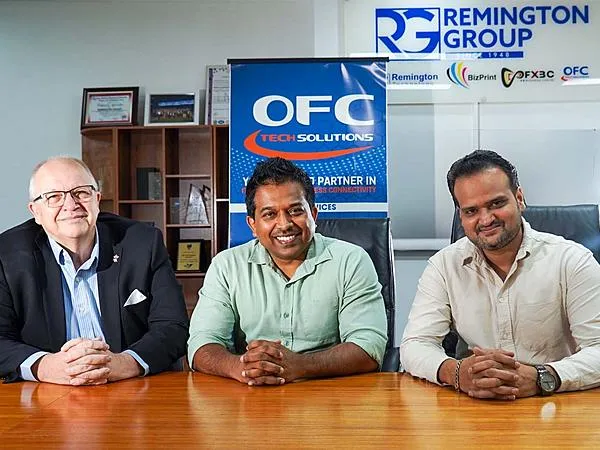
OFC Tech Solutions welcomes Colin Edgar, a representative of its global partner Enghouse Interactive, for a strategic partner visit aimed at strengthening enterprise communication and customer experience solutions across Papua New Guinea.

The visit reinforces the growing collaboration between Enghouse Interactive and OFC Tech Solutions, focused on delivering secure, scalable and IP-based communication platforms tailored to local organisations.

During the visit, both teams will conduct enterprise customer meetings, strategic discussions and collaborative interviews to explore how advanced customer engagement and unified communications technologies can support PNG’s evolving digital landscape.

“This visit demonstrates our shared commitment to long-term growth in Papua New Guinea,” said Edgar, Channel Manager at Enghouse. “By combining Enghouse’s global expertise with OFC’s local presence and technical capability, we are well positioned to deliver future-ready solutions to enterprise organisations.”

Enghouse Interactive is recognised globally for its customer experience, contact centre and unified communications technologies. Through this partnership, OFC Tech Solutions continues to expand its portfolio of enterprise-grade communication platforms designed to enhance operational efficiency and customer engagement.

The visit will conclude with strategic planning sessions focused on innovation, scalability and expanding enterprise adoption throughout Papua New Guinea.

For more information about OFC Tech Solutions and its enterprise communication offerings, visit https://www.ofc.com.pg/
February 24, 2026

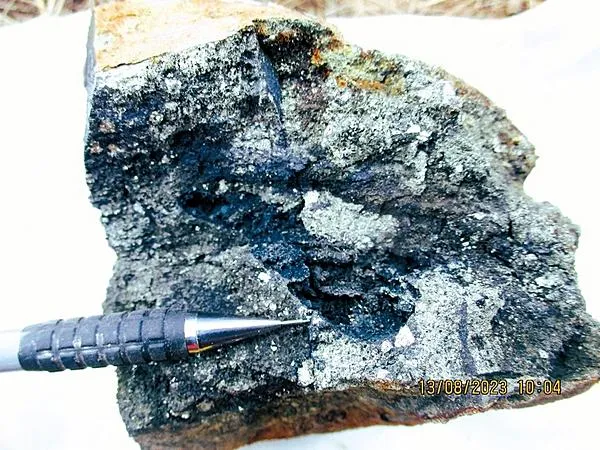
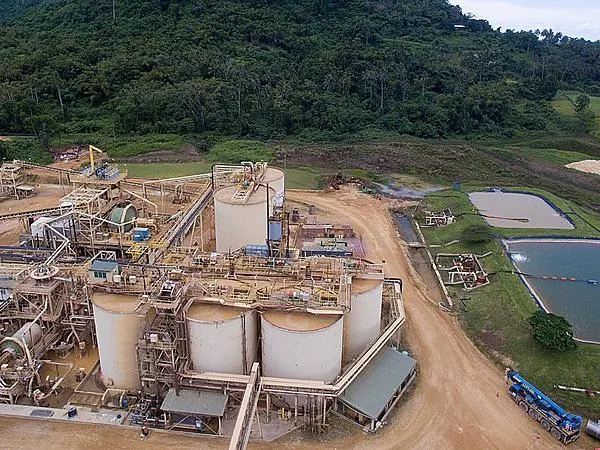
Great Pacific Gold Corp. has unveiled a significant high-grade epithermal gold-copper vein discovery at its Wild Dog Project in the East New Britain province of Papua New Guinea (PNG), reinforcing its interpretation of repeated mineralisation along the project’s 15-kilometre structural corridor. The news, announced on 19 February 2026, follows ongoing fieldwork and drilling across the flagship asset.

The newly identified Magiabe West Vein, located around 100 metres west of the established Magiabe Vein target and roughly 700 metres southwest of the Sinivit deposit, delivered exceptionally high surface rock-chip assays, including:

  • 123 g/t gold, 4.01 % copper and 66 g/t silver (WDG250197)

  • 137 g/t gold, 3.97 % copper and 76 g/t silver (WDG250202)

  • 113 g/t gold, 2.47 % copper and 71 g/t silver (WDG250239)

These results — among the highest surface grades reported from the southern sector of the Wild Dog structural corridor to date — underpin the company’s view that multiple, parallel high-grade vein structures are present within a 100–200 metre-wide structural trend.

Expanding the Wild Dog structural system

Geological mapping and structural interpretation suggest that the Magiabe West discovery is hosted within the same northeast-trending framework that controls mineralisation at Sinivit. Company technical personnel believe this supports the notion that Wild Dog is a district-scale, structurally controlled epithermal Au–Cu system, rather than a series of isolated occurrences.

Alongside surface work, the company has completed 18 diamond drill holes at the Sinivit target, delineating two high-grade shoots before shifting north by 1 km to test the Kavasuki target. Initial drilling at Kavasuki revealed broad zones of altered and mineralised quartz veining consistent with a robust hydrothermal system.

To support ongoing exploration, a second drill rig has arrived on site and is scheduled to begin work at the Kasie Ridge target — an interpreted high-sulphidation epithermal system at the northern extent of the corridor. With two rigs active, the company plans systematic drilling along the full strike of the Wild Dog structural corridor.

Executive commentary

Callum Spink, Vice-President of Exploration for Great Pacific Gold, described the Magiabe West Vein results as validating the strength and continuity of the Wild Dog structural system. He emphasised that identifying repeated high-grade mineralisation in the southern corridor highlights the project’s underexplored potential.

Project context

The Wild Dog Project encompasses a district-scale exploration land package in East New Britain, PNG, with structural corridors and associated targets exhibiting both low- and high-sulphidation epithermal gold-copper mineralisation. Initial focused drilling began in May 2025 and has progressively expanded to test multiple targets across more than 15 km of prospective strike.

Great Pacific Gold’s shares trade on the TSX Venture Exchange under the symbol GPAC, on the OTCQX as GPGCF and on the Frankfurt exchange as V3H.

February 24, 2026

Australian gold producer St Barbara Limited has returned to underlying profitability in the first half of FY2026, while expanding mineral resources at its Simberi Operations in Papua New Guinea and advancing a fully funded pathway for the New Simberi Gold Project.

For the six months to 31 December 2025, the group reported an underlying net profit after tax of A$1.336 million, a marked reversal from an underlying loss of A$48.058 million in the corresponding period a year earlier. Statutory loss after tax narrowed to A$249,000, compared with A$48.526 million previously.

Revenue from ordinary activities rose 32 per cent to A$128.83 million, underpinned by improved operating performance at Simberi and a stronger gold price environment.

Simberi drives operational recovery

Simberi generated a pre-tax segment operating profit of A$20.639 million in the half year, contributing A$23.382 million in operating cash before sustaining capital.

Gold production at Simberi totalled 20,215 ounces, compared with 22,495 ounces in the prior corresponding period. The average gold price received was A$5,822 per ounce, up from A$3,916 per ounce a year earlier. Cash cost for the period was A$5,170 per ounce, with all-in sustaining cost at A$5,397 per ounce.

Mine operating costs declined to A$95.82 million from A$116.164 million, reflecting lower maintenance costs following fleet upgrades and plant improvements.

Total growth capital expenditure at Simberi reached A$36.111 million, largely associated with advancing the New Simberi Gold Project, including mobile fleet additions, camp upgrades, ball mill procurement and water treatment infrastructure.

Resources expand; silver reported for first time

Alongside its half-year results, St Barbara updated its Mineral Resources and Ore Reserves Statement as at 31 December 2025.

Group Mineral Resources for gold increased to 7.9 million ounces, up 1.0 million ounces from 6.9 million ounces a year earlier. Group Ore Reserves for gold stood at 3.8 million ounces, compared with 4.0 million ounces at 31 December 2024.

At Simberi alone, gold Mineral Resources rose by 0.9 million ounces (17 per cent) to 5.8 million ounces (net of depletion), while Ore Reserves decreased by 0.2 million ounces to 2.5 million ounces.

Total Simberi gold Mineral Resources are estimated at 136.5 million tonnes at 1.3 g/t for 5.8 million ounces of contained gold. Simberi gold Ore Reserves stand at 42.9 million tonnes at 1.8 g/t for 2.5 million ounces.

Significantly for PNG, silver Mineral Resources and Ore Reserves were reported for the first time at Simberi. Silver Mineral Resources total 15.3 million ounces and Ore Reserves total 4.5 million ounces of contained silver.

The increases in Mineral Resources were largely driven by updated feasibility and pre-feasibility studies and revised economic assumptions, including reporting at a higher gold price of US$2,500 per ounce.

Fully funded pathway to expansion

St Barbara’s strategic focus remains the development of the New Simberi Gold Project. During the half year, the company reached agreements with Lingbao Gold International Company Limited and Kumul Mineral Holdings Ltd that are expected to fully fund St Barbara’s share of development costs.

Lingbao will acquire 50 per cent of St Barbara Mining Pty Ltd, delivering A$370 million in cash to St Barbara upon completion, targeted by the end of Q3 FY2026. In parallel, Kumul’s subsidiary will acquire a 20 per cent interest in the Simberi Operation for A$100 million.

Recent study outcomes reinforce the project’s scale. The New Simberi Gold Project Feasibility Study outlined annual production of over 200,000 ounces per annum at an all-in sustaining cost of between US$1,100 and US$1,400 per ounce over a mine life extending to 13 years.

The study reported a post-tax net present value of US$1.023 billion, assuming a gold price of US$3,000 per ounce.

Balance sheet and liquidity

As at 31 December 2025, St Barbara held cash and cash equivalents of A$74.784 million, in addition to restricted cash of A$87.288 million lodged as security for reclamation bonds at its Atlantic Operations.

Net assets stood at A$434.597 million. The board said it remains confident the group can meet its obligations as they fall due for at least 12 months, though the independent auditor included an emphasis of matter regarding material uncertainty relating to going concern.

For Papua New Guinea, the half-year results signal both improved financial resilience and a material uplift in long-term resource confidence at Simberi. With silver now formally recognised and expansion funding arrangements nearing completion, Simberi is positioning itself as a long-life, multi-metal operation central to St Barbara’s growth strategy.

February 24, 2026

South Pacific Metals Corp. has bolstered its 2026 exploration campaign at the Ontenu prospect in Papua New Guinea by contracting a second drill rig, the company announced on 18 February. The additional rig is expected to arrive on site within approximately two weeks and will work alongside the company’s existing drill to step up testing across multiple targets in the Ontenu portion of its broader Osena Project in the Kainantu District.

The move reflects South Pacific’s strategy to expedite evaluation of high-grade targets identified in its 5 km by 3 km Ontenu project area, which lies on the southwestern flank of K92 Mining Inc.’s Kainantu Gold Mine tenure.

High-grade surface results guide new phase

Surface rock chip sampling across the Ontenu NE (Northeast) area has revealed encouraging multi-element mineralisation. Assays from structures in the Onki Fault area — the initial focus for the new rig — include:

  • 21.2 per cent copper, 214 g/t silver and 0.41 g/t gold;

  • 18.1 per cent copper, 310 g/t silver and 0.32 g/t gold;

  • 12.4 per cent copper, 131 g/t silver and 1.21 g/t gold; and

  • 0.2 per cent copper, 32 g/t silver and 8.6 g/t gold.

These results, drawn from earlier news releases in November and October 2025, are driving the company’s prioritisation of drill targets.

Campaign goals and logistics

Drilling is already under way with South Pacific’s first rig at Ontenu NE southern area, and targeting work continues across several structures and corridors within the project. The company aims to complete approximately 5 000 metres of drilling across these multiple targets during 2026.

The new contractor-operated rig will initially focus on the Onki Fault zone but is expected to contribute to broader testing as the programme progresses.

South Pacific Metals’ chief executive, Timo Jauristo, said the decision to add a second rig reflects both the wide array of targets identified from surface work and the company’s desire to accelerate evaluation of high-grade epithermal systems. He noted that Ontenu NE in particular has produced multiple compelling targets over a broad area.

Strategic context: Osena Project

The Osena Project covers about 738 km² of highly prospective ground adjacent to major operations in the Kainantu District. Within this region, Ontenu sits amid a recognised mineralised corridor associated with significant gold-copper deposits.

The addition of the second drill rig aligns with a broader push by the company to advance technical understanding across its portfolio, which includes other projects such as Anga, Kili Teke and May River.

South Pacific Metals shares are listed on the TSX Venture Exchange, OTCQB and Frankfurt Stock Exchange.

February 24, 2026

K92 Mining Inc. on 18 February announced high-grade results from ongoing underground diamond drilling at its Kora, Kora South, Judd and Judd South deposits, as well as the first results from its Kora Deeps and Judd Deeps targets at the Kainantu gold mine in Papua New Guinea.

The company said drilling has expanded a near-mine infrastructure dilatant zone at the K2 vein within the Twin Incline Mining Front, located about 50 metres from underground development. The zone is now defined over roughly 100 metres along strike and 200 metres vertically.

Recent intercepts at the K2 vein dilatant zone included 20.50 metres grading 14.04 grammes per tonne gold equivalent (g/t AuEq) in hole KMDD0915 and 10.70 metres at 10.83 g/t AuEq in hole KMDD0914.

K92 said the expanded zone is expected to provide a near-term boost to mining productivity once pastefill is introduced, enabling bulk transverse long-hole open stoping.

Significant depth extensions

The first set of results from the Kora Deeps and Judd Deeps programmes delivered significant depth extensions below the existing mineral resource estimate, effective Sept. 12, 2023.

At Kora Deeps, thick, high-grade mineralisation along the K1 vein was intersected up to 350 metres below the Twin Incline and 250 metres below the 2023 mineral resource estimate. Mineralisation has been defined over approximately 400 metres of strike and remains open at depth and along strike.

Highlights included 8.00 metres at 10.16 g/t AuEq in hole KMDD0909 and 17.20 metres at 5.04 g/t AuEq in hole KMDD0880A.

At Judd Deeps, drilling along the J1 vein intersected mineralisation up to 300 metres below the Twin Incline and 350 metres below the mineral resource estimate. High-grade mineralisation has been defined over a 450-metre strike and remains open.

Intercepts included 8.50 metres at 8.64 g/t AuEq in hole KMDD0896 and 6.80 metres at 6.21 g/t AuEq in hole KMDD0944.

High-grade extensions above and along strike

K92 also reported continued high-grade extensions up-dip from the Main Mine at both Kora and Judd, with several intersections exceeding mineral resource estimate grades.

At the K1 vein, results included 4.95 metres at 38.46 g/t AuEq in hole KMDD0893 and 4.16 metres at 24.24 g/t AuEq in hole KMDD0894. At the K2 vein, hole KMDD0977 returned 18.19 metres at 11.70 g/t AuEq, while hole KMDD0904 intersected 4.35 metres at 29.62 g/t AuEq.

At Judd’s J1 vein, notable results included 5.45 metres at 66.99 g/t AuEq in hole JDD0306 and 1.65 metres at 185.79 g/t AuEq in hole JDD0307.

Step-out drilling along strike to the north and south also returned multiple high-grade intercepts, including several exceeding 20 g/t AuEq.

At the Judd North target, defined as an up-dip extension over an 800-metre strike, underground drilling towards surface intersected 20.29 metres at 14.06 g/t AuEq in hole JDD0355. K92 said it plans to begin surface drilling at Judd North in the second half of 2026.

All holes intersect mineralisation

The company said results from 101 underground diamond drill holes demonstrate the high-grade continuity and expansion potential of the Kora-Kora South and Judd-Judd South vein systems.

All drill holes at Kora-Kora South, including Kora Deeps, intersected mineralisation, with 31 intersections exceeding 10 g/t AuEq and 61 exceeding 5 g/t AuEq.

At Judd-Judd South, including Judd Deeps, all drill holes intersected mineralisation, with 16 intersections above 10 g/t AuEq and 36 above 5 g/t AuEq.

Exploration budget increase

John Lewins, K92 chief executive officer and director, said the latest results highlight strong near-mine growth and depth potential.

“We are very pleased with the latest drilling results, which continue to deliver strong near-mine growth and demonstrate the exceptional continuity and scale of the Kora-Judd system,” Lewins said.

“Key highlights include the expansion of a dilatant zone near-mine infrastructure at the Twin Incline Mining Front, extensions of high-grade zones above the Main Mine at grades outperforming the mineral resource estimate, and significant depth extensions at both Kora and Judd from our initial set of deeps drill program results. Numerous high-grade intersections were also recorded along strike to both the north and south, further reinforcing the strength of the vein system and our organic resource growth pipeline.”

Lewins said the company will increase its exploration budget by more than 50% in 2026 to between $31 million and $35 million.

“We currently have seven underground drill rigs operating at Kora and Judd, five surface rigs at Arakompa and Maniape, one at Wera, and two additional rigs scheduled to arrive in the second quarter,” he said.

“Later in the year, we plan to expand drilling to target several highly prospective regional targets, including Mati, Mesoan, Bona-Creek, and Judd North from surface. We look forward to providing further exploration updates in due course.”

February 23, 2026

The Papua New Guinea Chamber of Resources & Energy (PNG CORE) has welcomed the inaugural meeting of the National Petroleum Authority (NPA) board, held in Port Moresby, describing it as an important step toward strengthening governance in the country’s petroleum sector.

PNG CORE interim executive director Philip Samar commended the new leadership team led by Petroleum Minister Jimmy Maladina and board chairman Hubert Namani, saying the early convening of the board signals a commitment to establishing a sound governance framework for the Authority.

“Regular board meetings are central to good governance. They provide clear oversight, ensure accountability and support transparent and informed decision-making,” Samar said.

He noted that in Papua New Guinea’s petroleum and energy sector — where projects typically require substantial long-term capital investment — regulatory stability and institutional strength are essential to maintaining investor confidence.

“For Papua New Guinea’s petroleum and energy sector, where projects require significant long-term capital investment, strong governance and regulatory stability are critical to maintaining investor confidence,” Samar said. “An active and engaged board is essential in setting strategic direction, monitoring performance and managing risks in the best interests of stakeholders and the country.”

Samar also encouraged other regulatory agencies across the industry to adopt independent board structures to reinforce accountability, enhance investor trust and improve sector outcomes.

PNG CORE said it looks forward to constructive engagement with the NPA board and management to advance policy alignment, strengthen regulatory clarity and support the responsible development of Papua New Guinea’s petroleum resources.

The chamber reiterated its commitment to initiatives that promote stronger governance, improved transparency and long-term sustainable growth across the extractive industry.

February 23, 2026

Nambawan Super Limited (NSL) has received a K50 million payment from the State toward outstanding rental arrears for several properties occupied by government agencies, marking what the fund described as a critical step in resolving a two-year debt.

In a statement, NSL said the payment followed constructive discussions with the Government through the Department of Treasury, culminating in agreement on a formal Memorandum of Agreement (MOA) that sets out a structured repayment plan.

Under the arrangement, the State will repay the remaining balance through monthly instalments of K10 million. Of this amount, K5 million per month will be applied to arrears from previous years, while another K5 million will cover current rental obligations.

NSL said it agreed to the structure in good faith to support the State’s cash flow management while ensuring that outstanding obligations are cleared.

The superannuation fund said it looks forward to receiving the signed MOA, which provides for the settlement of the remaining K67 million over 12 months.

NSL thanked the Government for its commitment to addressing the issue, saying the payment and repayment schedule represent a positive shift toward financial accountability and the restoration of a stable landlord-tenant relationship.

The fund stressed that timely settlement of arrears and consistency in future payments are essential to safeguarding its income streams and delivering appropriate returns to members, many of whom are employees of the same government departments occupying NSL-owned buildings.

State agencies currently occupying NSL properties include the Internal Revenue Commission at Revenue Haus; the Department of Education at Vulupindi Haus; the Department of Lands and Physical Planning at Eda Tano Haus; the Department of Health and the Department of Higher Education at AOPI Centre; and the Ombudsman Commission, Independent Consumer and Competition Commission, and Auditor General’s Office at NSL Haus in Lae.

February 23, 2026

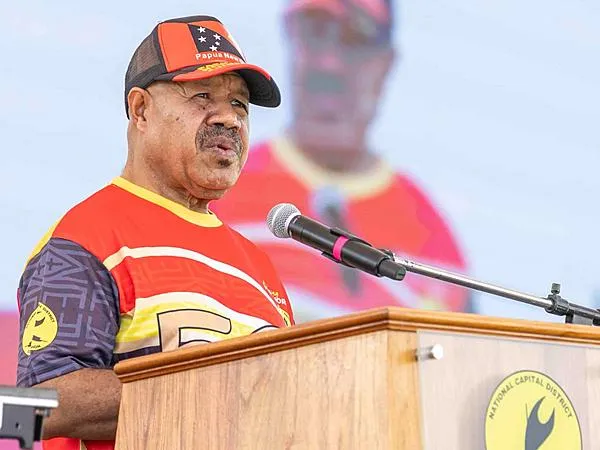
National Capital District Governor Powes Parkop has urged the government to treat Papua New Guinea’s recent placement on the Financial Action Task Force (FATF) grey list as a catalyst for economic reform, calling for stronger import substitution policies and reduced reliance on unprocessed mineral exports.

PNG was placed on the FATF list of Jurisdictions Under Increased Monitoring on Feb. 13, alongside Kuwait. More than 20 countries are currently subject to increased monitoring.

Parkop said the designation should prompt deeper structural reforms rather than political alarm.

“The more we depend on imports and export only crude or raw materials, the more vulnerable our economy becomes to manipulation and control by bigger economies, especially those in the G7,” he said.

He also argued that PNG must reduce its dependence on external borrowing to plug fiscal deficits, particularly from the International Monetary Fund.

The grey listing has sparked debate over financial governance and economic management, with the parliamentary opposition criticising the government’s handling of the economy.

Parkop, however, rejected suggestions that the designation reflects failures in monetary or fiscal policy.

“It’s not the first time for PNG to be grey listed. In 2015 we were placed on the list and were able to exit relatively quickly,” he said.

He maintained that the current listing is unrelated to how the government and the treasurer are managing monetary or fiscal policy.

“The opposition has been making a big hue and cry over the grey list when this has nothing to do with how our government and treasurer are managing our monetary policies, fiscal policies or the economy generally,” he said.

Parkop clarified that the listing relates specifically to “strategic deficiencies in combating money laundering and terrorist financing”, not broader economic mismanagement.

According to him, the designation signals increased monitoring and highlights weaknesses in enforcement, inter-agency coordination and supervision of financial institutions in relation to anti-money laundering and counter-terrorist financing measures.

“The public needs to understand this. We cannot allow the opposition to mislead people into thinking the government has committed some cardinal sin in the economy or financial system resulting in this grey listing,” he said. “Yes, there are issues in the management of the economy, but these are not the causes of the grey listing.”

Parkop said resolving the matter is achievable through improved institutional coordination. He urged the central bank and the Internal Revenue Commission to strengthen compliance, supervision and enforcement measures.

“It just needs us to ramp up inter-agency coordination. It’s absolutely doable,” he said.

At the same time, he cautioned against what he described as excessive regulatory prescriptions from international financial institutions, particularly the IMF.

“We brought this on ourselves. I keep warning the government not to allow the IMF to over-prescribe regulations to us. We are a small, vulnerable economy. Over-regulation — whether to prevent money laundering, terrorist financing or otherwise — will hurt our economy, especially the financial sector,” he said.

Parkop argued that heavy compliance burdens risk pushing some transactions into informal channels.

“Over-regulation is actually promoting money laundering, as people, including corporates, tired of all the regulations are banking and trading via the black market,” he claimed.

His remarks come amid ongoing exchanges between the government and opposition over the implications of the FATF decision.

Parkop said that while compliance gaps in anti-money laundering and counter-terrorist financing frameworks must be addressed, the issue remains technical and administrative in nature.

“With coordinated action by key institutions, we can meet the FATF requirements and exit the grey list, as we have done before,” he said.

February 23, 2026

Papua New Guinea has been placed on the Financial Action Task Force’s list of Jurisdictions Under Increased Monitoring, commonly known as the “grey list”, following the FATF plenary in Mexico City on 13 February.

The designation subjects PNG to enhanced monitoring by the global financial crime watchdog over weaknesses in its anti-money laundering, counter-terrorist financing and counter-proliferation financing (AML/CFT/CPF) regime.

The decision was confirmed in a joint statement issued Feb. 17 by Eric Kwa, secretary of the Department of Justice and Attorney General, and Elizabeth Genia, governor of the Bank of Papua New Guinea. Both serve as co-chairs of the National Coordinating Committee on AML/CFT/CPF.

Officials moved to reassure the business and financial community that the listing relates to the effectiveness of PNG’s legal and enforcement frameworks, not the prudential soundness of its banking system.

Government endorses action plan

PNG has agreed to implement a structured action plan developed through the FATF process. The plan sets out benchmarks and timelines aimed at strengthening the effectiveness of the country’s AML/CFT/CPF systems.

Prime Minister James Marape conveyed the government’s commitment at the highest political level, and the National Executive Council has directed all 23 agencies represented on the NCC to prioritise implementation.

The NCC comprises enforcement bodies, supervisory authorities, intelligence units, prosecutors and policy agencies. Officials said grey-listing requires a coordinated national response.

“Grey-listing is not a matter for one institution — it requires a coordinated national response across all responsible agencies,” the central bank said. Genia said the focus now shifts to execution.

“The action plan provides PNG with a clear roadmap and defined reporting cycles,” she said. “Our responsibility is disciplined implementation, measurable outcomes and regular progress updates to the FATF.”

PNG is scheduled to submit its first progress report in September 2026, in line with FATF reporting cycles. While monitoring follows set timelines, authorities said the objective is to demonstrate sufficient progress to move towards removal from increased monitoring within, or ahead of, the established deadlines.

Kwa underscored the importance of inter-agency coordination.

“The NCC mechanism ensures that investigative bodies, supervisors and policy agencies work in concert. Their collaboration is already delivering results,” he said.

Early enforcement activity

Implementation of the action plan has already begun, according to the statement. Authorities cited recent asset freezes and arrests as evidence of strengthened cooperation among NCC agencies, including through the ARROW referral pathway.

Officials indicated that businesses can expect increased enforcement activity and heightened regulatory scrutiny as agencies intensify compliance efforts under the action plan framework.

For the business and investment community, authorities sought to draw a clear distinction between FATF monitoring and financial sector stability.

PNG’s financial institutions, including commercial banks and the central bank, continue to operate under prudential frameworks aligned with international standards. Authorities said correspondent banking relationships and access to the international financial system remain stable.

The FATF process assesses the effectiveness of a country’s legal, supervisory and enforcement systems in combating financial crime. It does not evaluate the solvency, liquidity or capital adequacy of the banking sector.

Political and international backing

The NCC co-chairs said the government has provided full political and financial backing, noting that FATF places significant weight on demonstrated political commitment to reform.

They said agencies have been assured of the funding, policy direction and legislative support required to meet FATF timelines.

International partners have also indicated their readiness to assist PNG. Support was signalled during the Mexico City plenary and in discussions with multilateral partners in Washington. The NCC will coordinate external technical assistance to align with the requirements of the action plan.

While the increased monitoring designation may bring heightened scrutiny, officials stressed that the process is structured, time-bound and focused on measurable reforms, with the government’s stated objective being accelerated progress towards removal from the grey list.

February 23, 2026

The Minister for Works and Highways, Peter Tsiamalili Jr, has called for stronger accountability, tighter financial management and engineering excellence as the Department of Works and Highways convened its 2025 final quarter budget review in Lae.

The three-day review, held at the Lae International Hotel in Morobe Province on Tuesday, Feb. 17, aims to consolidate departmental performance, strengthen accountability mechanisms and set the strategic direction for infrastructure delivery in 2026 under the Connect PNG and National Road Network agenda.

Addressing senior management, regional and provincial works managers and departmental staff, Tsiamalili described the meeting as a critical national exercise.

“This meeting is of national importance. It is not merely an administrative requirement. It is a moment of accountability, reflection and strategic alignment as we close the 2025 financial year and prepare for 2026,” he said.

He commended officers for their efforts throughout 2025, noting the challenging operating environment marked by extreme weather events, landslides, flooding, ageing infrastructure backlogs, procurement pressures and growing public demand for reliable connectivity.

The minister cited progress in national road connectivity, including completion of major missing links such as the Magi Highway connection between Port Moresby and Milne Bay, the Kerema-to-Lae Trans-National Highway missing link, and the Tabubil-to-Telefomin link in the Trans-Fly and Sandaun border corridors.

He also paid tribute to the late former minister, Solan Mirisim, for his leadership from 2022 to 2025 in advancing the government’s infrastructure agenda.

“Our roads and bridges are not just engineering assets — they are the lifelines of our nation,” Tsiamalili said.

Public funds and discipline

Setting the theme for discussions — “Connecting the Unconnected and Reaching the Unreached under the Connect PNG Program and Preserving the Road Network through Sustainable Maintenance” — the minister stressed that public funds must be managed with discipline and integrity.

“Every kina we spend belongs to the people of Papua New Guinea,” he said. “Public resources are entrusted to us through Parliament and government.”

He directed senior, regional and provincial managers to enforce strict discipline in budget execution, expenditure control, reporting compliance and value-for-money delivery. He warned against wasteful spending, inflated costs, unnecessary contract variations, weak project controls and poor accountability.

“The people deserve results — not leakage,” he said.

Zero tolerance for malpractice

Tsiamalili declared a zero-tolerance stance on unethical conduct within the department, warning there was no place for abuse of office, unethical engineering practices, substandard construction, negligent supervision or corrupt contract management.

“Poor engineering is not just a technical failure. It is a national cost and a national loss,” he said, adding that recurring collapses, repeated repairs and wasted budgets erode public trust.

He reminded engineers of their professional obligation to safeguard public safety and the national interest.

Alignment with national priorities

The minister reaffirmed that infrastructure delivery must align with the National Road Network Strategy, the government’s Connect PNG Economic Road Development Program, the Connect PNG Phase 1 implementation plan (2020–2027), and the national road maintenance plan.

He described Connect PNG as the government’s flagship initiative to link districts, provinces and economic corridors, unlocking agriculture, trade, health and education access, as well as promoting national unity and inclusive economic development.

“Prioritise projects that align with the approved national agenda of connecting the unconnected and reaching the unreached,” he said. “Avoid fragmented spending. Avoid politically convenient diversions. Focus on roads and bridges that matter to national connectivity and economic transformation.”

Tsiamalili also emphasised strict compliance with the Public Service Management Act, General Orders, the Public Finance Management Act, the Appropriations Act and the Connect PNG Act.

“Every expenditure must be lawful, appropriated, justified, transparent and auditable,” he said.

Innovation and service

Acknowledging recurring challenges such as flooding, bridge failures, landslides and climate impacts, the minister called for greater innovation, including climate-resilient designs, improved maintenance regimes and stronger asset management systems.

“We cannot continue solving tomorrow’s problems with yesterday’s approaches,” he said.

He proposed establishing a Public Works Training and Research Institute to strengthen applied research and develop long-term solutions to infrastructure challenges.

In closing, Tsiamalili reminded officers that public service is a national calling.

“This department is not about contracts. It is about service,” he said, urging staff to uphold integrity, duty and accountability as the department finalises its 2025 financial year and prepares for 2026.

“The future of our infrastructure depends on what we do now,” he said.

February 20, 2026

The Autonomous Bougainville Government (ABG) has clarified its position on Bougainville Copper Limited (BCL) and the redevelopment of the Panguna mine, following questions over recent partnering arrangements.

The ABG confirmed that Bougainville now holds a 72.9 per cent shareholding in BCL, split evenly between the ABG and Bougainville Minerals Limited, making it the controlling majority shareholder. Under corporate law, this status allows the ABG to determine the strategic direction of the company in the best interests of the people of Bougainville.

“The ABG operates in two distinct capacities — as regulator under the Bougainville Mining Act and as majority shareholder in BCL,” President Ishmael Toroama said. “All developments involving BCL, CMOC, and Lloyds Metals and Energy Limited are occurring strictly at the shareholder level, with no regulatory breaches or issues under the Mining Act.”

BCL retains lawful control of Exploration Licence EL01 over Panguna and remains responsible for implementing its approved work programme. This includes land access and compensation agreements, landowner identification, social mapping, geological and engineering studies, environmental baseline studies, and other statutory obligations.

While BCL currently lacks the technical and financial capacity to advance EL01 activities independently, a previous proposal to introduce CMOC as a partner — which would have diluted Bougainville’s shareholding by around 20 per cent — was rejected by the ABG. Instead, the Government has endorsed Lloyds Metals and Energy Limited (LMEL) as a partner to provide the necessary funding and technical expertise to progress exploration under EL01.

President Toroama clarified that recently referenced timelines for Panguna relate solely to Pre-Feasibility and Feasibility Study activities under the EL01 licence and are not production timelines. The ABG remains committed to a lawful, transparent, and orderly development process that delivers tangible benefits to the people of Bougainville.

ABG Launches Stakeholder Awareness Program

Following the statement, the ABG initiated stakeholder awareness meetings in Arawa this week. The programme, led by the Department of Mining & Petroleum in collaboration with the Department of Community Government, aims to ensure that communities, local government authorities, and landowners are fully informed about developments relating to BCL, LMEL, and the Panguna EL01 project.

On 17 February, ABG officials met with government authorities from the Panguna and Kieta Districts, including ward members from the Ioro Community Government, to brief public servants on the latest developments. Officials also held a session with Panguna landowners to provide updates and discuss landowner priorities, reaffirming the ABG’s commitment to dialogue, transparency, and collaboration.

Stakeholder engagement will continue as the ABG seeks to maintain unity, clarity, and informed participation in decisions regarding the Panguna project. The Government encourages all parties to rely on official communications for accurate information.


February 20, 2026

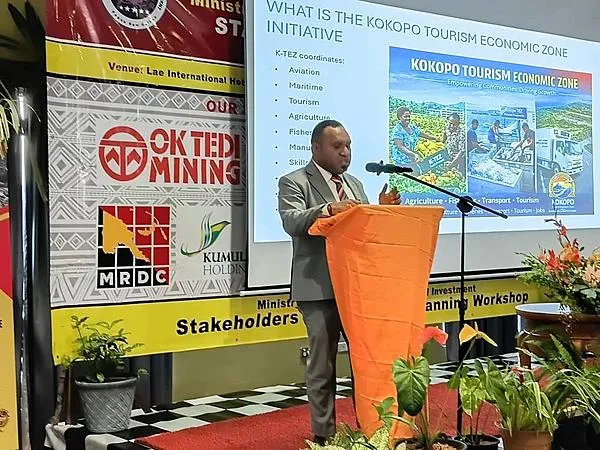
The Mineral Resources Development Company (MRDC) participated in the Ministry of International Trade and Investment Stakeholders High-Level Planning Workshop in Lae, Morobe Province on 16 February 2026.

Deputy CEO and Chief Investment Officer John Tuaim presented MRDC’s vision to transform the East New Britain township of Kokopo into the regional tourist hub of the Pacific under the Kokopo Tourism Economic Zone (K-TEZ) Initiative.

The K–TEZ initiative proposes a comprehensive infrastructure uplift program, including the construction of multiple internationally branded hotels and resorts, development of marine facilities, and supporting tourism infrastructure, with an estimated total investment exceeding US$4 billion.

The infrastructure plan includes the development of Tokua Airport as an international gateway, road upgrades linking Kokopo, Rabaul, Pomio, and all tourism precincts, development of wharf, marina, and cruise ship terminal facilities, upgrades to water, power, sewerage, sanitation, and communications facilities, and further strengthening of digital connectivity and tourism safety infrastructure.

The master plan envisions the construction of approximately 4,500 hotel and resort rooms across 22 properties, alongside marine and diving facilities, a precinct hub for cultural tourism and heritage, and the development of a PGA-standard 36-hole golf course.

“What we are proposing under the Kokopo Tourism Economic Zone Initiative is more than a tourism proposal; it is a foreign exchange engine, a jobs and skills development engine, a domestic industrial stimulus, and a diversification strategy for PNG,” Tuaim said.

He noted that tourism is one of the most powerful and proven economic multipliers available to island economies like PNG. Globally, tourism contributes approximately 10% of GDP, supports one in ten jobs, and remains one of the fastest-growing service export sectors.

He said Kokopo was the ideal platform for this initiative because of its proximity to Australia, the Pacific, and Southeast Asia; its active volcanoes and geothermal attractions; World War II sites; world-class marine and diving ecosystems; strong cultural heritage; and a stable provincial government environment.

MRDC has commenced exploratory discussions with the East New Britain Provincial Government, customary landowners, community leaders, and other key stakeholders to ensure that the Kokopo Tourism Economic Zone is developed through inclusive partnerships and aligned provincial planning.

He said Kokopo is geographically positioned to become PNG’s tourism gateway, a domestic aviation hub, and a model province for diversified growth.

“If we are to build a tourism economic zone anywhere in PNG, Kokopo is the logical starting point,” Tuaim said.

He added that under the plan, the K–TEZ is expected to attract 600,000 visitors annually, delivering US$1.2 billion per year. It is expected to create 10,000 jobs directly, another 25,000 jobs indirectly, strengthen the balance of payments and foreign exchange liquidity, and contribute to Kina stability. The initiative is projected to contribute 3–5% growth to the national GDP.

February 20, 2026

Steamships is pleased to announce the appointment of Damian Cooper as Head of Division for Steamships Hospitality.

Managing Director Chris Daniells said: “Damian joins us at an exciting time as we continue to strengthen and grow our hospitality portfolio. Damian’s deep operational expertise, development background and strategic vision will play a critical role in supporting Steamships’ long-term growth ambitions and reinforcing its position as a market leader in Papua New Guinea.”

An accomplished hospitality executive, Cooper brings more than 20 years of global leadership experience across luxury, upper-upscale and mixed-use hospitality operations throughout Asia Pacific, the Middle East, Africa and the Pacific.

His career includes senior leadership positions with leading international brands such as Marriott, Starwood, Westin, Sheraton, InterContinental, Radisson Blu, Anantara and Swiss-Belhotel.

Cooper is widely recognised for his ability to lead complex operations, drive commercial outcomes and build resilient teams in challenging environments. He has managed some of the region’s largest hospitality assets, including properties with over 600 rooms, extensive MICE facilities, and workforces exceeding 500 employees. His career highlights include Michelin-starred operations, multiple Marriott awards, board-level experience, and regional leadership roles across APAC, Africa and the Indian Ocean.

His expertise spans full hotel operations, post-COVID repositioning, major refurbishments, rebranding, crisis management, and large-scale development projects. Under his leadership, operations have consistently delivered above-market and record GOP performance while building high-performing and resilient teams.

Prior to joining Steamships, Cooper served as General Manager – Hotel & Development at The Stanley Hotel & Suites, leading a flagship five-star hotel and mixed-use precinct.

Steamships welcomes Cooper to the executive leadership team and looks forward to the positive impact he will bring to the company and its hospitality division.

February 20, 2026

Westpac PNG is proud to officially announce the 2026 launch of the country’s most prestigious recognition programme, the Westpac Outstanding Women (WOW) Awards.

Established in 2002 to honour exceptional women making significant contributions across business, government, community, education and social development, the Westpac Outstanding Women Awards reflect Westpac’s long-standing commitment to Papua New Guinea beyond banking.

The 2026 Awards will once again celebrate extraordinary women across seven categories: Private Sector, Public Sector, Young Achiever, Entrepreneur, Sustainability, Not-for-Profit, and Sports & Arts Advocate. An Overall Woman of the Year will be selected from the category winners. Westpac invites individuals and organisations to nominate women who are making a difference in their fields.

Nominations are free and simple and must be submitted before 31 May 2026 via the nomination link: https://westpacpacific.smartygrants.com.au/2026WestpacOutstandingWomenAwards or by visiting any Westpac branch and completing an application form.

Each category winner will receive a K5,000 grant to support her professional or community development, a trophy, and fully funded travel and accommodation for herself and a guest to attend the awards ceremony. The Overall Winner will also receive an additional K5,000 grant and an all-expenses-paid trip to Australia to attend a major conference relevant to her field.

Westpac PNG Chairwoman Tamzin Wardley said: “Women are at the heart of our communities, businesses and economy, and their contributions deserve to be seen, celebrated and supported. These awards go beyond recognition; they amplify voices, create opportunities and help unlock pathways for women to lead, influence and drive positive change.”

Emma Low, Westpac Pacific Managing Director, added: “The Westpac Outstanding Women Awards shine a powerful light on the extraordinary achievements of women across Papua New Guinea. By sharing their stories, we aim to inspire the nation to embrace progress, resilience and inclusive leadership, while encouraging the next generation of women to step forward with confidence and ambition.”

From a business perspective, the Westpac Outstanding Women Awards underscore Westpac’s values-driven approach to leadership and sustainable growth. The Awards represent a strategic commitment to inclusion, empowerment and long-term impact, while providing a powerful platform to recognise women who are breaking barriers, driving innovation and leading meaningful change across their industries and communities.

Westpac PNG Chief Executive Andrew Cairns said: “For more than a century, Westpac has been part of Papua New Guinea’s story, standing alongside communities through periods of growth, change and transformation. Throughout that time, women have been central to progress in every sector of our economy and society. When we invest in women’s leadership, innovation and potential, we are not only supporting individuals; we are backing the future of our nation.”

How to nominate:

Nominations are open for the 2026 Westpac Outstanding Women Awards until 31 May 2026. Details on the nomination process, eligibility and award categories are available on the official webpage:
https://www.westpac.com.pg/westpac-outstanding-women-awards/
or by visiting any Westpac branch and completing an application form.

The WOW Awards ceremony will be held in July 2026, where winners will be recognised at a prestigious event attended by industry leaders, government representatives and community advocates.

Follow the conversation on social media at
https://www.facebook.com/westpacPNG
and
https://www.linkedin.com/company/westpacpng/
or by using #WOWA2026 to stay updated on upcoming announcements.
February 20, 2026

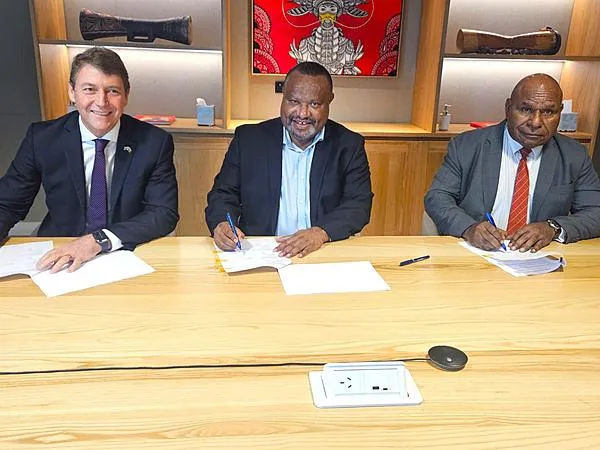
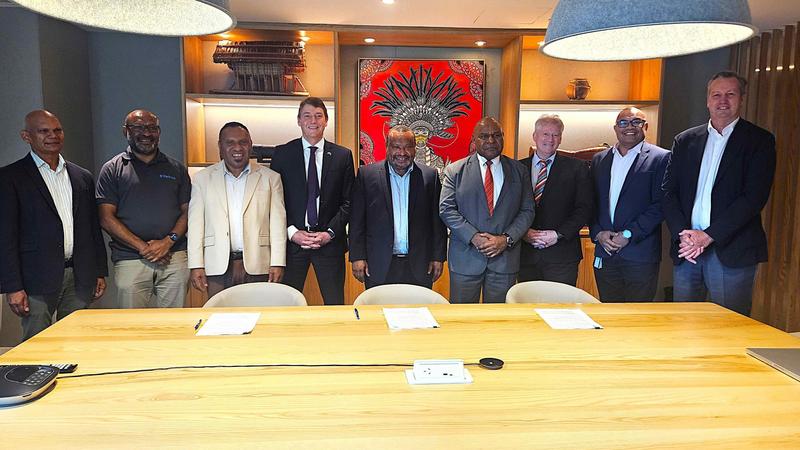
Kumul Petroleum Holdings Limited, Hevehe Petroleum Limited and Twinza Oil (PNG) Limited have signed a Memorandum of Understanding (MoU) to jointly investigate gas aggregation opportunities in the Gulf of Papua.

The agreement provides a framework for the parties to undertake joint studies and evaluate the technical and commercial feasibility of aggregating gas from discovered or prospective assets within the broader Gulf of Papua area for domestic use and/or export through shared infrastructure.

Luke Liria, acting managing director of Kumul Petroleum, said the company welcomed the partnership as part of its mandate as the national petroleum and energy company.

“KPHL, as the national petroleum and energy company, looks forward to partnering with MRDC and Twinza to explore pathways that could accelerate the development of Papua New Guinea’s offshore gas resources and contribute to the national economy,” Liria said.

Augustine S. Mano, managing director and chief executive officer of Mineral Resources Development Company (MRDC), described the MoU as an important step for MRDC and Hevehe Petroleum.

“Landowners and provincial governments hold 50 per cent of the Pasca A Project through Hevehe, and this gives real value to their participation. By working with Kumul Petroleum and Twinza, we can look at ways to develop gas in the Gulf of Papua more efficiently and at lower cost. This will lead to better returns for our landowners and communities. We are committed to using our experience to support this partnership and deliver long-term benefits for our people,” Mano said.

Stephen Quantrill, executive chairman of Twinza, said the MoU marked a significant step towards unlocking offshore oil and gas potential in the Gulf of Papua.

“By assessing the aggregation of resources from multiple discovered and prospective fields, we will evaluate shared infrastructure to enhance commercial viability for both domestic use and export. This collaboration enables us to jointly pursue strategic growth, ensuring we create a scalable, efficient energy platform for the benefit of partners and for the people of PNG,” Quantrill said.

Twinza is the operator of the Pasca Project, PNG’s first offshore oil and gas development, and is partnering with MRDC and Kumul Petroleum under the new agreement to examine options for coordinated development in the Gulf.


February 19, 2026

From First Oil and Gas to LNG

By Michael McWalter


EDITOR’S NOTE: Michael McWalter, former Director, Petroleum Division and Adviser to the Government of Papua New Guinea, and erstwhile petroleum adviser to the governments of Ghana, Liberia, Cambodia, São Tomé, and South Sudan, recalls the foundations of petroleum resource development in Papua New Guinea, and continues his story of oil and gas exploration and production in independent Papua New Guinea.

Michael McWalter is a certified petroleum geologist and technical specialist in upstream petroleum industry regulation, administration and institutional development.

Introduction

In my last article titled “Decades of Exploration to First Oil and Gas Production,” I told the story of the early days of petroleum exploration in the new nation of Papua New Guinea up to the days of first oil and gas production in the early 1990s. Gas was first produced and sold from the Hides gas field by BP and Oil Search in December 1991, and crude oil was first produced and sold from the Kutubu fields by Chevron and their joint venture partners in June 1992. The discovery of crude oil and natural gas at Iagifu and Hides respectively in 1986 and 1987 in significantly large accumulations worthy of commercial production sparked an exploration boom in subsequent years.

Papua New Guinea became a vogue place for oilmen to be. In the 20 years or so after these discoveries, Port Moresby was home to oil and gas companies large and small that needed to be in this opening frontier of exploration; such is the herd mentality of oilmen. Together they spent a staggering 3 billion kina, which amounted to some US$2 billion at the exchange rates of those days, or about US$4.1 billion in today’s money. That effort involved the drilling of some 150 wells and the conduct of some 108 seismic surveys that eventually led to the discovery of moveable hydrocarbons in 61 wells and the location of 20 new petroleum accumulation fields, though many of these contained natural gas rather than oil. I now continue the story. However, it is an immense tale, so I shall just delve into it here and there to show where the petroleum industry has taken us at the time of our 50th anniversary of independence. And I apologise if at times my tale is anecdotal or lacking.

Gobe and Moran Oil Fields

Along the frontal trend of anticlines in the Papua New Guinea fold and thrust belt, wells drilled on the Gobe and Moran structures found additional pools of oil, in lesser quantities than the accumulations of the Kutubu fields, but still enough to warrant development. Almost every anticline was drilled along the frontal trend, even to the point of one supposed anticline turning out upon drilling to be a syncline rather than an anticline, and thus unable to trap any fluids in the subsurface.

The Moran field north-west of Kutubu was estimated to hold about 113 million barrels of recoverable oil, whilst the Gobe field was estimated to contain about 83 million barrels of recoverable reserves. Both of these fields had structural complexities due to faults that compartmentalised the accumulation of oil within the reservoirs.

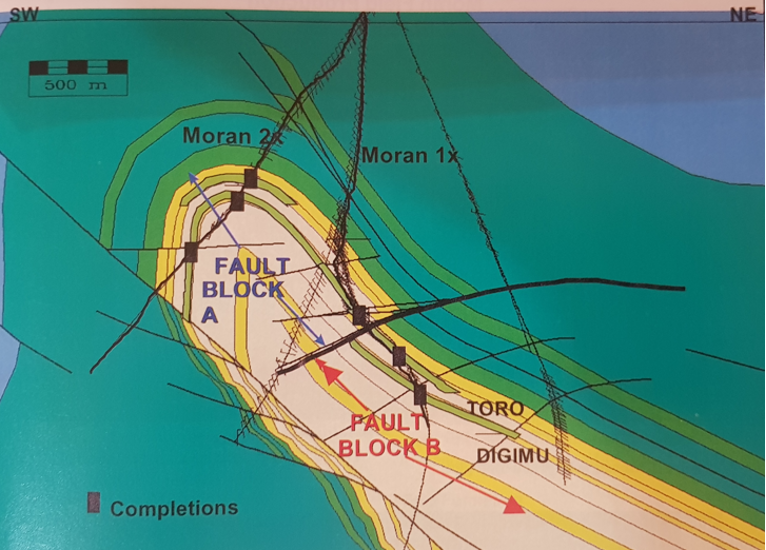
Figure 1: A geological section through the Moran anticline showing Moran 1X and 2 wells penetrating the tightly folded and faulted structure


This isolation of separate pools of oil also led to some considerable rivalry between adjacent petroleum licensees, who sought to exert their prowess one over the other by naming the parts of the fields in their licences differently. Hence, we had supposed field names like South East Gobe, Gobe Main, Moran Central and North West Moran. With these fields awkwardly extending across licence boundaries, both co-ordinated development and unitised development arrangements had to be negotiated between the different licence joint venture groups. This was not always easy due to often intense corporate rivalries and differing economic and commercial positions.

Figure 2: A tectonic map of New Guinea showing the Papuan Thrust and Fold Belt (PTFB) on the edge of the Australian tectonic plate. The blue star marks the location of the Hides gas field. After Cloos et al 2005.  


The development of these fields ensued with different production arrangements. The Moran field depended on the use of the Kutubu Central Production Facility, to which flowlines from Moran to Kutubu were installed. Meantime, the Gobe field had a separate production facility installed (the Gobe Production Facility) and a short project-specific spur pipeline. Both of these fields used the Kutubu Export trunk oil pipeline and its integral offshore Kumul Marine Terminal for transmission and dispatch of crude oil for export. This entailed the negotiation of tariffs for the use of the various Kutubu facilities, which added further complexity to the commercial arrangements for field development. However, such arrangements did serve to optimise the use of existing field processing facilities, storage and transportation systems, and obviated the unnecessary and redundant duplication of petroleum infrastructure.

In the case of the use of the Kutubu Export Pipeline by the producers of the Moran Joint Venture and Gobe Joint Venture, some companies were also parties to the Kutubu Joint Venture, whilst others were not. Beguiling arguments for high tariffs were made by those members of the Kutubu Joint Venture that were not involved in these new field developments, while conversely equally beguiling arguments were made for low tariffs by those members of the Moran and Gobe Joint Ventures that were not involved in the Kutubu Joint Venture. Those involved in the new field developments as well as the Kutubu project were quite mute in their tariff arguments. The threat of impending ministerial regulation, as was then permitted by the Petroleum Act, rapidly crystallised the thinking of the various licence ventures, and those commercially adamant arguments rapidly dissolved into a commercial and fair resolution of the tariffs!


Oil Field Production


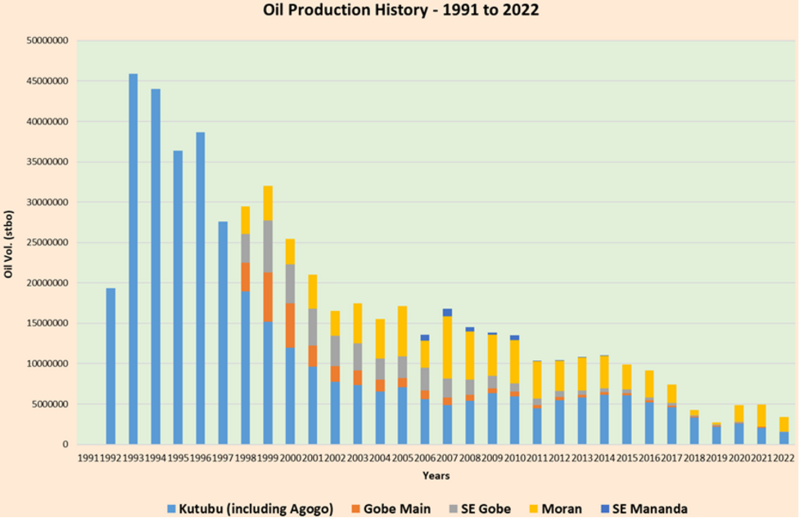
Both Gobe and Moran oil fields commenced production in 1998, some six years after the Kutubu field. Gobe reached peak production in 1999 at an annualised rate of 34,278 barrels of oil per day (bopd) and declined thereafter, whilst Moran only reached peak production in 2007 at an annualised rate of 21,503 bopd. The two fields contributed to supporting Papua New Guinea’s aggregate oil production as that at the Kutubu fields inexorably declined as reservoir energy was depleted.

Figure 3:  Oil production history 1991 to 2022 after the Dept of Petroleum and Energy at 16th PNG Mining and Petroleum Investment Conference and Exhibition, Sydney, Australia, 2022


The development of the Kutubu field has, in retrospect, been a great success, with oil production continuing to this day, albeit much reduced in volume from its high production rate of its halcyon days when it almost reached 150,000 barrels of oil per day, plus production of the field’s associated gas.

The Kutubu development was launched on the basis of recoverable oil reserves of just 164.8 million barrels, but as of 31 December 2019, it had produced 319.8 million barrels of oil. Based on an estimated original-oil-in-place volume of 556.2 million barrels, this suggests that the original projection of just 29% recovery has eventuated in as much as 57.5% recovery by the end of 2019. With production still taking place at about 3,000 barrels of oil per day, the Kutubu field is clearly reaching its last days. It does this in considerable glory as it reaches 60% recovery of its original oil-in-place, quite an extraordinary recovery factor.

Admittedly, associated gas obtained from the field separators was originally re-injected into the field at the gas/water interface as a semi-miscible flood so as to enhance oil recovery, but even by the standards of such secondary recovery techniques, this level of oil recovery has been quite remarkable. Of course, a large uncertainty always remains in the petroleum geology, insofar as we do not have precisely mapped subterranean field limits on account of it not being possible to obtain clear seismic imaging of the reservoirs. We therefore cannot rule out the possibility that oil is being extracted from an original pool that may have a geometric volume and areal extent somewhat different from that originally conjectured, which was based solely on well penetrations and geological mapping.

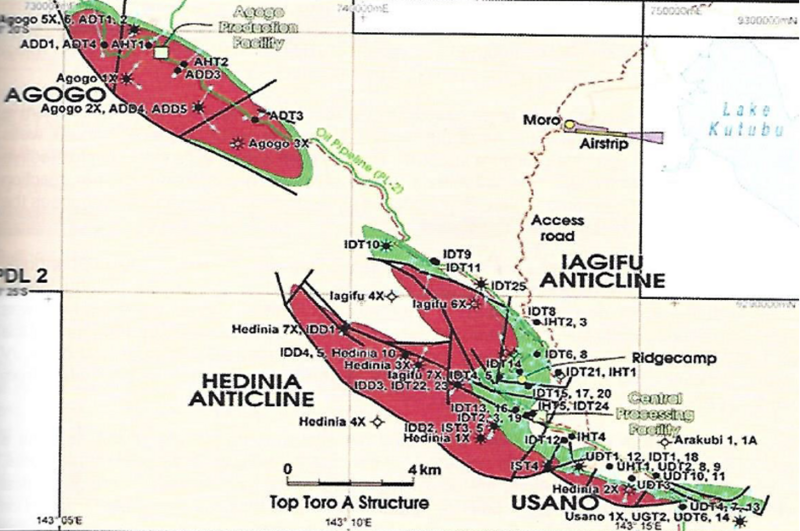
Figure 4: The Kutubu Oil Fields structural configuration. Red is gas overlying oil in green. The grid lines are five minutes apart by latitude and longitude. After the Scheme Booklet: Merger of Oil Search and Santos 2021.


Whilst the Kutubu fields have been a great success, both Moran and Gobe fields have had a chequered development history with various problems of one kind or another. The development of the Gobe fields started with feuding over operatorship between the Chevron-led joint venture and the Barracuda-led venture. Barracuda, a subsidiary of Mount Isa Mines Ltd, had acquired the small independent company Command Petroleum, which had bravely drilled the South East Gobe-1 discovery well as operator of Petroleum Prospecting Licence No. 56. Chevron’s prowess won out, and they retained operatorship over the Gobe field development and subsequent production.

Intractable problems with customary landowner identification of the people of the Gobe area have persisted through development and production. The land of the Gobe Mountains was gazed upon by both people from the north and the south and only sparsely used for hunting and gathering and ancestral rights. The land was hotly contested, and ownership was very difficult to determine outright. The Government had to resort to using the Lands Title Commission to help determine landowner rights. With initial development delays, production never reached its planned output, only reaching 34,000 barrels of oil per day in September 1999. Additionally, reservoir problems were encountered which involved sanding problems due to the reservoir sandstone being extremely fragile and friable.

Extensive extended well testing (EWT) at Moran enabled early oil production and the gathering of some very useful field production data. However, it depleted the reservoir pressure to such an extent that the associated gas started to effervesce from the oil and create a gas cap above the oil. This required re-pressurisation of the Moran oil field using gas sourced from the adjacent Agogo field. The Moran oil field’s high compartmentalisation broke the field into many small fragments which were often difficult to resolve.

Gas Development Preparations


In the absence of any further significant oil discoveries, the future was considered to lie in the development of the gas fields, where exploration drilling was demonstrating them to be significantly more abundant than oil by a factor of about ten times.
The Government realised that its petroleum endowment was not so full of oil, but was comprised substantially of natural gas resources. It was recognised that it would be difficult to develop these in the absence of any domestic gas demand from households, commerce or industry, and all the more so because PNG is remote from the gas markets of other nations.

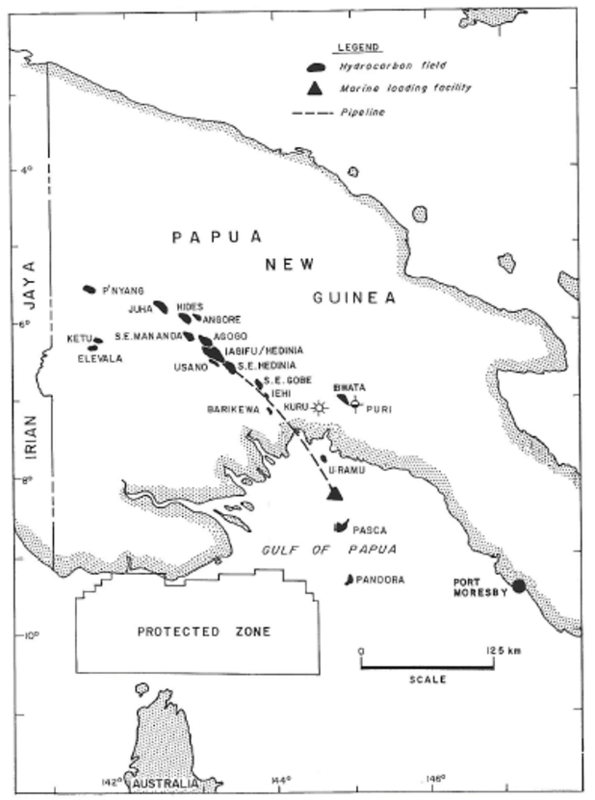
Figure 5: An index map of discovered oil and gas fields of Papua New Guinea as of 1993. Of these fields, only Iagifu-Hedinia, Agogo, SE Gobe, SE Hedinia and Usano contained oil; the rest were gas fields, some with large amounts of gas. 


Accordingly, in 1992, the PNG Government, through the newly established Petroleum Branch of the Geological Survey, commissioned a special study on all the discovered oil and gas fields of PNG. This work was conducted by the US firm Scientific Software Intercom in collaboration with the Government’s Petroleum Division and sought to assess the extent of the petroleum resources and reserves to proper and systematic standards of reserve reporting as were then published by the Society of Petroleum Engineers.

Based on aggregation of the recoverable reserves, an economic study was then undertaken applying the then prevailing PNG petroleum fiscal and commercial regime. The results were presented to the National Executive Council, showing that if the gas fields discovered to date were aggregated, there could conceivably be a large-scale commercially viable gas development based on the export of liquefied natural gas (LNG) to energy-hungry East Asian markets. However, more work would be needed to obtain better estimates of the recoverable gas reserves, the quantification of gas field development costs and the construction costs of a gas conditioning plant, gas pipelines, liquefaction facilities, and storage and export facilities.

The Government liked the idea of gas development and embarked on reviewing and examining suitable policies for such and began fostering the notion of gas development. Economic and policy studies were conducted and extensive discussions between gas field licensees, owners and promoters ensued. After extensive consultations between Government agencies and licensees, in 1995, the Government tabled a Natural Gas Policy before the Papua New Guinea Parliament. The policy laid down the regulatory, commercial and fiscal terms that the Government was willing to consider for the encouragement of investment in gas development. Key features were the introduction of Petroleum Retention Licences (PRLs) to allow the companies to keep their discoveries beyond the period of tenure provided by a normal Petroleum Prospecting Licence. These would be allowed in consideration of an acceptable programme of gas field appraisal and delineation, the conduct of commercial studies and development promotion by the licensees. So long as a field was currently not commercially viable, the PRLs would allow retention by the licensees for up to 15 years, and no longer. This was a significant encouragement to the holders of petroleum prospecting licences, which normally only gave a combined tenure of eleven years in which to explore, make a discovery and launch a field development. The introduction of PRLs recognised the very long lead time for large-scale gas development.

The gas policy also introduced a single ring-fence for project development, including gas pipeline infrastructure, liquefaction plant and marine facilities. Based on considerable economic modelling and debate, the policy landed on a concept of 50/50 sharing of the net value between the developer and the Government. The income tax rate for gas operations was set at 30% of net profits, without any dividend or interest withholding taxes, and the State decided it would keep its right to take up to 22.5% equity in the entirety of any development, including the LNG plant and associated facilities. Royalty rates and development levies were left at 2% of the wellhead value. Fiscal stability was to be offered, but only upon payment of a 2% income tax premium and the execution of a Fiscal Stability Agreement with the Government. This was effectively an elegant user-pays principle. Standard depreciation allowances on capital expenditure and exploration would remain at 10% per annum and 25% respectively under the existing fiscal regime. These still represented a quite harsh depreciation schedule by petroleum sector standards because it is not possible to fully recoup one’s field development costs until ten years after expenditure, unlike more accelerated cost recoveries allowed in Production Sharing Contracts.

With the foundations for commercial gas development defined by the new gas regulatory and fiscal regime, Exxon and BP pursued their LNG development plans based on the large Hides gas field with the idea of taking the gas to the north coast of Papua New Guinea. There in Madang, they planned to build a coastally located deep-water liquefaction plant sited next to deep-water fjords which would give direct access for LNG carriers to moor alongside these coastal facilities. However, these plans faltered due to the Asian financial crisis in 1997 and the consequent sudden reduction in East Asian LNG demand. The tragic and terrible tsunami that occurred in 1998 at Aitape on the north coast accentuated the seismic risk for an LNG plant on the north coast of Papua New Guinea. The tsunami demonstrated that, whilst placing any LNG facilities nearer to markets, any north-coast-located LNG facility would have to be built to much more exacting standards of construction and operation to cater for the additional seismic risk.

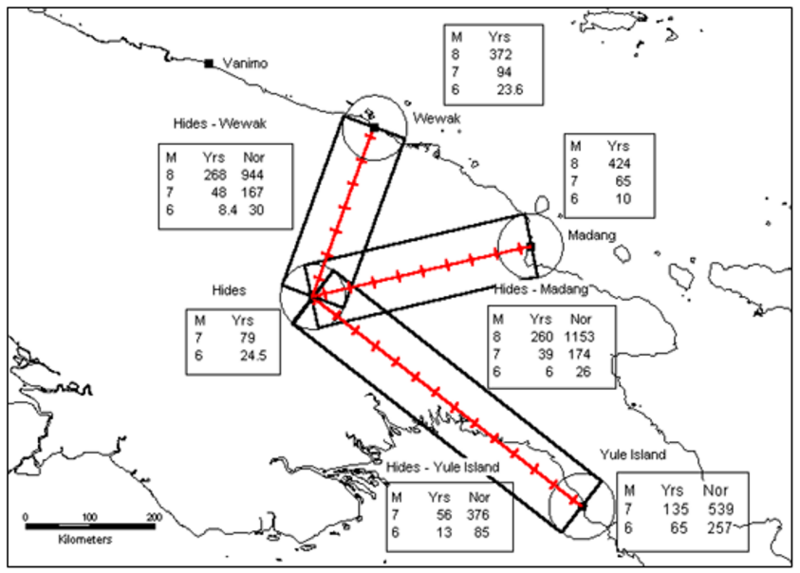
The Petroleum Division, mindful of the seismic hazards of the northern part of PNG, had earlier commissioned a PNG Seismic Hazard Study from Dr Horst Letz, formerly resident seismologist at the Port Moresby Geophysical Observatory (and later to be the chief scientist who set up the Earthquake and Tsunami Warning Centre in Jakarta, Indonesia). This report was published around the time of the tsunami. It clearly defined the risk and indicated that a southern coast location for an LNG plant and facilities would be preferable, even if it meant a slightly longer shipping route for LNG carriers to transport LNG to likely markets in East Asia.

Figure 6: Summary of earthquake return periods for terminals and pipeline corridors for magnitude M 6, M7 and M 8 earthquakes. The Hides-Yule Island route was the least seismically active. After Dr. H Letz

Additionally, gathering gas from gas fields aligned with the prevailing geological structure of the Papuan Basin running north-west to south-east would have a better chance of collecting gas from multiple fields to be found in the same orientation rather than orthogonally across the dividing range of mountains and across the swamps of the Sepik River basin, all of which were void of gas discoveries. Later, BP withdrew from Papua New Guinea and took their ideas about larger-scale gas development by way of an LNG project to West Papua in Indonesia, where they successfully launched the Tangguh LNG Project in a similar environment, peopled again by Melanesians.

When the amendments to the Petroleum Act were being prepared for gas development pursuant to the approved Gas Policy, the results of policy studies on landowner benefits (both royalty and equity sharing), strategic access to pipelines and petroleum processing facilities, and elementary domestic gas business provisions became available. An effort was made to incorporate them into the amendments to the Act. The Government was also intent on providing statutorily defined benefits to communities hosting any future oil and gas development, together with proper processes of consultation and liaison with communities, rather than having negotiated and often capricious benefit-sharing arrangements. For such benefits, the Government devised the idea of a separate Development Agreement between the community parties, sub-national Government parties and the State. The allocation of defined and additional benefits was to be agreed in a formally convened development forum. Proper professional research was also to be made as to land matters through the conduct of formal social mapping and landowner identification studies conducted by and at the expense of the petroleum licensees themselves, but with such studies being furnished to the Government for its use.

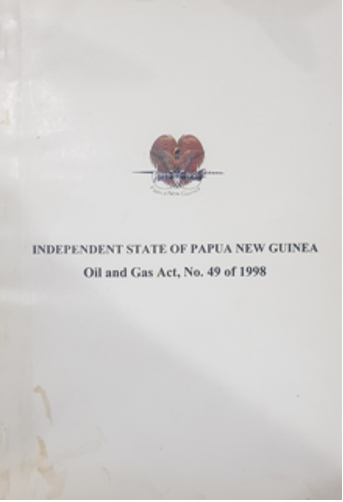
Significant and specific political lobbying arose from the Southern Highlands Province, home to many of the known major oil and gas fields. The Province, quite bizarrely, wanted a separate Gas Act just for gas operations. For a while, it seemed that the National Government was stymied in its plans for gas development due to these concerns, but extensive consultations took place. In the resulting compromise, the Government agreed at the political level to introduce some of the reforms suggested by the Province, but only if the Act would remain intact, though it was now agreed that the new Act would be rebranded as the Oil and Gas Act, whilst still generically referring to petroleum for the most part. Thus, the Oil and Gas Act, No. 49 of 1998, was born. It represented a major restatement and overhaul of the former Petroleum Act and has paved the way for improved and formalised participation by communities and their sharing in statutorily defined benefits arising from oil and gas production. It is only a shame that timely and efficient benefit processing and reconciliation with the correct beneficiaries have been difficult at times to achieve. Disputation of land ownership has not helped in this matter.

Figure 7: An early copy of the Oil and Gas Act No.49 of 1998 which was certified on 9th February 1999 and commenced on 18th February 1999. It replaced the Petroleum Act, No. 46 of 1977.  


Gas to Australia Schemes


Meantime, Chevron, realising that they were handling increasing volumes of associated gas in their operation of the Kutubu oil fields (as much as 400 million standard cubic feet of gas per day (MMSCFD)), bought out the commercial notions that the International Petroleum Corporation (IPC) (the early Lundin Oil Company) had about developing their offshore Pandora gas field. Pandora had been discovered by IPC in 1988 in the middle of the Gulf of Papua, and subsequently the company had plans of producing and piping gas to Townsville in Queensland, Australia, to supply a 200-megawatt power plant. Chevron had gas aplenty and was taking great pains to re-inject as much of it as possible into the reservoirs, but if that gas could be sold into a market, they considered that perhaps that could enhance their sales revenue and obviate the need to inject quite so much gas.

There then ensued a period when all manner of gas development notions were focused on transmitting gas to Australia from the associated gas of the producing oil fields plus gas from development of the as-yet-undeveloped gas fields, such as Hides, Angore, Juha and P’nyang. Over the course of the next several years, various schemes to send gas southwards to Australia waxed and waned and struggled to gain traction.

In the early 2000s, exploration reached an all-time low as corporate enthusiasm waned. There was little point in exploring for petroleum with the high likelihood of finding gas rather than oil, if even the substantial discovered gas fields could not be developed and produced. In 2003, Chevron departed the Kutubu Joint Venture as its material economic interest in the Kutubu Project diminished below its corporate threshold. It sold its Papua New Guinea assets and interests to Oil Search.

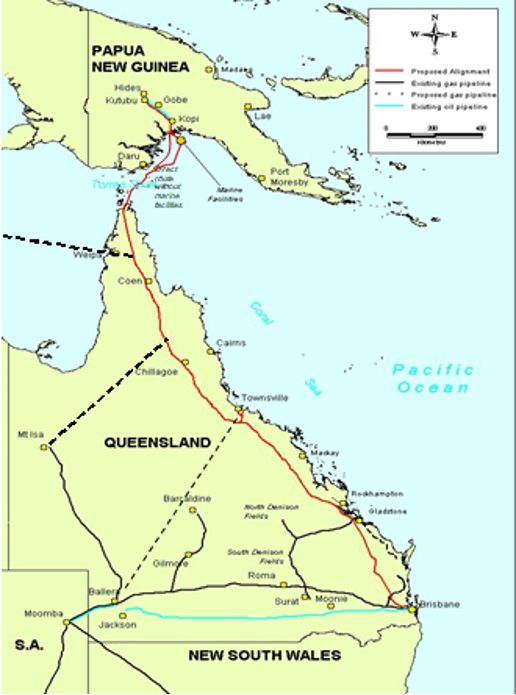
Figure 8: The PNG Gas Project as at the end of 2005 waxed and waned in scope for several years

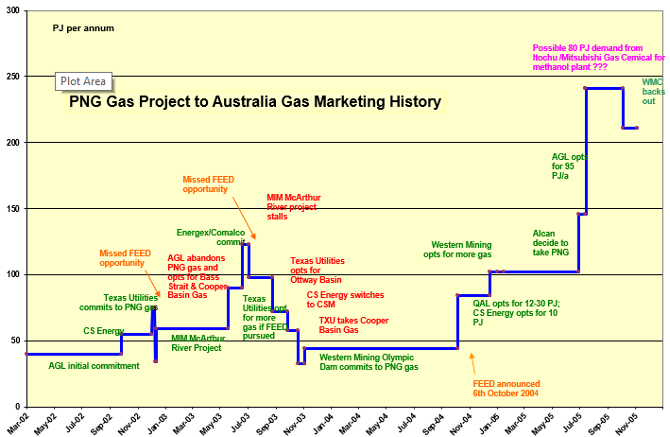
The PNG Gas Project, also known as the PNG Gas to Queensland Project, or Gas to Australia Project, ended up at one time with over 4,300 kilometres of trunk gas pipelines and laterals hanging off the Papua New Guinea gas fields with nearly 250 PJ per annum (equivalent to about 600 million standard cubic feet of gas per day at 1,056 British Thermal Units per cubic foot) of potential gas sales. Alas, fundamental flaws in the concept led to most of those potential customers being quite quixotic.

Figure 9: The variable potential markets for gas from Papua New Guinea prior to the switch to LNG development in 2006. After S. Khwaja, World Bank, 2005 


Most of that infrastructure was in the north-eastern quadrant of Australia and its installation was to be expensed against the supply of gas to a wide and quixotic range of Australian gas customers. With low gas prices, high steel prices and the emergence of coal seam methane development notions in Australia, it was eventually realised that PNG might end up giving its gas away for nothing, and that the only value for Papua New Guinea might remain in the natural gas condensates extracted from the gas in Papua New Guinea. The PNG Gas Project for the supply of gas to Australia failed. Additionally, such a large-scale transnational activity needed considerable support from the Governments of both Australia and Papua New Guinea to protect sovereign interests. Fundamentally, Australia’s policy of gas-versus-gas competition and gas system regulation was at odds with such a trunk gas delivery pipeline, which would need special treatment within the Australian pipeline regime and due respect for its transnational delivery of gas.

Eventually, in 2008, an abrupt turn was made to change all the development notions towards supplying gas to an LNG plant to be located on the Papuan coast beside the Gulf of Papua. An effort was immediately made to market the gas as LNG to East Asian markets. Australia had specifically encouraged gas-versus-gas competition, but in doing so it spoiled the market price for gas imports from countries such as PNG and encouraged the furtherance of coal seam methane (CSM) schemes to extract gas from extensive coal deposits in Queensland. Indeed, this later gave birth to Australian LNG export projects supplied by gas from CSM sources, the supply of which has not turned out to be so plentiful, necessitating the purchase of make-up gas from domestic markets and thus creating a domestic gas supply shortage along Australia’s east coast. In abandoning gas supply to Australia by pipeline, Papua New Guinea now needed to consider capturing the premium values that gas exports into energy-deficient East Asian economies were able to achieve.

The dependence on external infrastructure and specific gas demands in Australia was not seen as either politically attractive or sustainable, nor was it commercially attractive due to low gas prices brought about by Australia’s gas competition policies. It was most fortunate that Papua New Guinea backed away from such schemes for the dispatch of gas to Australia. Thus was born the PNG LNG project.

PNG LNG had many factors in its favour as a distinct source for LNG for supply to East Asian markets. PNG is a non-aligned Christian nation; it is not an Islamic nation. PNG was desirous of investment and keen for development based on commercial fiscal terms. PNG, as a nation, has open-ocean access and does not rely on any strategic straits. It has a Westminster-style Government and observes the principles of law and contract. PNG is favourably positioned to supply the Australasian region, but can reach out to serve Asian, Pacific and American markets. With diminishing oil production and the absence of new oil finds, PNG’s explorers needed to capitalise on prior exploration investments that failed to find oil. Gas in the new 21st century was no longer a hindrance and could be profitably developed, even extending the life of the oil fields.

The PNG LNG project was projected to export LNG at a heating value of 1,135 BTU/SCF gas and the liquids were forecast to sell at US$60/barrel. Anticipated LNG prices were: US$8.07 per MSCF, equivalent to US$10.20 per MMBTU, or US$9.69/GJ. The original plant design was upgraded early on from 6.3 million tonnes LNG per annum to 6.9 million tonnes LNG per annum for production over a 30-year period. Gross income was estimated to be about US$74.3 billion. Even at US$50/barrel oil, the project was still forecast to yield US$61.9 billion in LNG sales. The gas is rich in natural gas liquids (NGLs), so at just 20 barrels of NGLs per million cubic feet of gas, some 210 million barrels of NGLs were forecast to yield an additional US$12 billion of sales revenue.

In May 2014, PNG became an LNG exporter and is now producing consistently more than 8 million tonnes per annum (mta) LNG to customers in China, Japan and Taiwan – well above the nameplate capacity of the original LNG plant design. It got there because of fine operatorship on the part of ExxonMobil of a coherent joint venture. ExxonMobil was able to market the gas to top-quality customers and obtain superior project financing. The only major disappointment has been the collapse in crude oil prices below projections on several occasions, and hence the LNG prices due to the indexing with crude oil. For the first year, some elevated prices were obtained, but clearly the fall of crude oil below US$30 per barrel in the early days of LNG production hurt the project economics and outcomes to all stakeholders, as it again did during COVID-19 when LNG prices plummeted below US$3 per million British Thermal Units.

Figure 10: The PNG LNG Logo was designed around Papua New Guinea’s distinctive cultural icons, a traditional mask, in Papua New Guinea’s national colours.  The two swishes represent has emerging from the ground. The nicks in the right swish suggest the plumage of Papua New Guinea stunning Birds of Paradise.


The PNG LNG Project produces gas from a variety of gas fields including the Hides and Angore gas fields, and the Kutubu, Moran, Agogo and Gobe oil fields. The more remote Juha gas field is set to produce gas later. Altogether, these fields have about 9 trillion standard cubic feet (TCF) of gas to contribute for liquefaction.

Other discovered gas fields will likely be developed later and, despite being cast as different projects, will likely seek to optimise gas infrastructure; these are the P’nyang gas field and the Muruk gas field which can add about 5.25 TCF of additional gas for liquefaction. Quite how much gas will eventually be recovered from each field still has considerable uncertainty, just as stated before for oil recovery. This is due to the considerable remaining uncertainty of definition of the subsurface reservoir volume due to a lack of seismic imaging and lateral resolution of field boundaries. The geology is already complicated on account of the extensively folded and faulted nature of the strata, so we might anticipate some surprises, both positive and negative.

Figure 11: The Hides Gas Conditioning Plant which conditions gas from Hides and Angore gas fields before transmission down the trunk gas pipeline to Caution Bay 
Figure 12: The PNG LNG Project LNG Plant Terminal in Caution Bay where an average of nine cargoes of LNG is loaded each month. It sits at the end of a 2.4-kilometre jetty build out into Caution Bay

Access to lands for the PNG LNG Project development came with resounding landowner consent after enormous development forums were held at project level in Kokopo in New Britain and at licence level in each licence area. During the forums, the sharing of the benefit streams of the 2% royalty, 2% free equity from the State, 2% development levy, and other project grants including business development and infrastructure grants were discussed. Oddly, whilst some grants were paid quite promptly, distribution of the royalties and equity benefits has been the subject of considerable delay, mainly due to some remaining uncertainties about landownership, often brought about by disputes over landownership. This is exceedingly difficult to accomplish where traditional customary title persists, often with multiple and overlapping ownership and usufructuary rights. But notwithstanding this situation, the landowners have been extremely patient, and in some cases, and for many years into LNG production and export, they have remained quite stoical.

Aside from the statutorily defined equity benefit of 2% of the project, the Government agreed to provide additional equity to the communities in the amount of 4.2%. This was promised to them in the main PNG LNG Project development forum in Kokopo. This was to have been a commercial deal, but successively its commercial cost to the beneficiaries has been whittled down to nothing. Provided that this additional equity benefit can be managed properly and in accordance with the Oil and Gas Act, it will be a most valuable asset once the project finance has been paid down by the State.

Elk/Antelope Gas Field

A bold and entrepreneurial company called InterOil, championed by a charismatic leader Phil Mulacek, had two Petroleum Prospecting Licences (PPLs) in the Eastern Papua Fold Belt: PPLs 237 and 238. They were granted in 2003 near to small historic gas discoveries of the 1950s, such as Kuru, Puri and Bwata, each in Miocene limestones.

In 2006, the Elk-1 well was drilled and declared to be a gas discovery in fractured Puri Limestone after testing at 21.7 MMSCFD. Two more wells, Elk-2 and Elk-4, were drilled to appraise the structure. Elk-2 penetrated the Puri Limestone below the gas-water contact. The Elk-4 well penetrated the Puri Limestone again, but at depth it intersected a gas-bearing reefal facies of shelfal limestone which was tested as a gas discovery. A thrust fault separates the Elk structure from a major feature to the south that was named Antelope. Seismic and regional analogy studies indicated that a significant reefal buildup occurs over the Antelope structure. Subsequently, wells Antelope-1 and -2 appraised the lateral extent of the field to the south with good reservoir quality to an approximate extent sufficient to realise that a substantial gas field had been discovered. InterOil applied for a Petroleum Retention Licence, which was designated PRL 15 on granting by the Minister on 10 November 2010.

After many bold attempts to devise a scheme of development consisting of mini-LNG trains, including floating offshore LNG trains and all manner of deals, InterOil decided to farm down its equity and introduce an experienced project champion from amongst world-class players. After much wrangling and corporate intrigue, including arbitration hearings between new equity participants, InterOil finally left the Elk-Antelope gas field and its future development to a joint venture comprised of Total (as operator) 61.3%, Oil Search 22.835%, ExxonMobil 36.45% and other parties 0.5%. Altogether, some 10 wells have penetrated the Elk-Antelope structure, and the area is covered by several generations of 2-D seismic data. Subsequently, Oil Search merged with Santos and, once the project licences are granted, the Government will most likely exercise its lawful option to take equity at cost, reducing each participant's equity proportionately to give the final project equity as: TotalEnergies 31.1%, ExxonMobil 28.7%, Santos 17.7% and the State 22.5%.

February 19, 2026

The PNG Chamber of Resources & Energy will deliver two major events in 2026, providing platforms for dialogue, collaboration, and investment engagement across Papua New Guinea’s key resources sectors.

PNG Resources Week

📍 APEC Haus, Port Moresby

🗓 29 June – 16 July 2026

🔗 Register your interest: https://pngcmp.eventsair.com/2026.../prw26eoi/Site/Register

🌐 pnginvestmentweek.com.pg

PNG Investment Week

📍 ICC Sydney, Australia

🗓 29 November – 2 December 2026

🔗 Register your interest: https://pngcmp.eventsair.com/2026.../piw26eoi/Site/Register

🌐 pngresourcesweek.com

Attendees will include government representatives, global investors, industry leaders, landowners, project developers, and other key decision‑makers involved in PNG’s economic development.

Organisations and investors with interests in investment, resources, infrastructure, and community affairs are welcome to attend these two flagship events.

For more information, contact our team:

📩 events@pngcore.org

📞 +675 207 9080


February 19, 2026

Weir, a global leader in mining technology, has successfully installed China’s largest mill circuit slurry pump. The order includes six WARMAN® MCR® 650 pumps and two WARMAN® MCR® 750 pumps.

The site, located in the Tibet Autonomous Region (TAR), sits 5,300 metres above sea level. The thin air and freezing temperatures create a complex operating environment.

Despite these challenges, the Weir service team successfully carried out the installation on schedule, completing the precise lifting, positioning, and pipeline connections of multiple large-scale, high-end pumps while overcoming low temperatures, oxygen scarcity, and harsh terrain to ensure steady progress toward key milestones.

Angela Wang, Managing Director, China, said:
“Delivering the largest slurry pumps in China is a significant technical achievement, and the fact that Weir was able to do this at such a high-altitude site epitomises our commitment to being at the forefront of reliability in the mining industry.

“The Chinese slurry pump market is one of the most competitive in the world. There are many new local competitors that make claims about their products’ performance, but these are rarely backed by reliable, long-term operational data. Weir, on the other hand, has a vast installed base, world-class manufacturing and testing facilities, and an unrivalled service network. That’s why Weir is still the preferred partner for Chinese miners, particularly for large-scale, challenging projects like this one.”

Elias Aho, Pump Optimisation Director, said:
“It’s great to see WARMAN® MCR® 750 pump installations now in China too. Weir has been at the forefront of supplying and supporting the largest, highest-capacity mill pumps on the market. With declining ore grades and increased demand, large mill pumps are increasingly playing a vital role in helping miners boost their throughput.

“Delivering these solutions at high-altitude sites presents significant engineering challenges, but Weir’s team of experts—drawing on decades of experience from across the globe—continues to be trusted by miners with their most critical mill circuit operations.”

About The Weir Group PLC

Founded in 1871, The Weir Group PLC is one of the world’s leading engineering businesses with a purpose to make its mining and infrastructure customers’ operations more sustainable and efficient. Weir’s highly engineered technology enables critical resources to be produced using less energy, water, and waste, while reducing customers’ total cost of ownership.

Weir is ideally positioned to benefit from structural trends that support long-term demand for its technology, including the need for more essential metals to support economic development and the carbon transition. The Group has approximately 12,000 employees operating in over 50 countries, with a presence in every major mining region of the world. Find out more at www.global.weir.

Weir’s ordinary shares trade on the London Stock Exchange (ticker: WEIR LN), and its American Depositary Receipts trade over-the-counter in the USA (ticker: WEGRY).

February 19, 2026

Continuing its commitment to developing local talent, Steamships is delighted to commence its 2026 Graduate Development Program (GDP), welcoming nine new graduates into the program while also celebrating the successful completion of the program by the 2022 cohort.

Managing Director of Steamships, Chris Daniells, said, “We are pleased to welcome the 2026 GDP cohort to Steamships and equally proud to congratulate our 2022 graduates on successfully completing the program. Their progression reflects the strength of the program and our continued investment in growing local talent for the future.”

In the first week of February, the new graduates completed a week-long induction program designed to immerse them in Steamships’ culture, values, and operations, while laying a strong foundation for their professional development. As part of the induction, the cohort also conducted site visits across the Logistics, Hospitality, and Properties divisions, gaining practical insight into the Group’s diverse businesses and meeting key personnel.

Meanwhile, members of the 2022 GDP cohort, Gabriel Junnie and Kurere Matanzana, successfully completed the program and formally graduated last Friday. Both have since secured placements within the business, with Gabriel joining Steamships’ Logistics Division Landside Operations as Warehouse Supervisor, and Kurere taking up the strategic role of Government & External Affairs Manager within Steamships Corporate Affairs, where they will continue to build their professional careers.

Since its inception in 2013, the Steamships GDP has continued to evolve to meet the needs of both the business and the broader workforce. The program now offers a comprehensive development framework, incorporating industry-relevant certification training, structured mentoring from senior leaders and executives, hands-on industrial experience through rigorous rotations across the Group, and targeted leadership and professional skills development.

Initiatives such as the GDP and various internal programs reflect Steamships’ ongoing commitment to equip, empower, and promote Papua New Guineans across all levels of the organization. These programs align with Steamships’ Three-Year Training and Employment Plan (3YTEP) 2025–2028, approved by the National Training Council.

February 18, 2026

At his first appearance on the Nasfund–FM100 Talkback Show this month, Nasfund CEO Rajeev Sharma announced two major milestones set to reshape member and employer  engagement in 2026. 

Nasfund is preparing to deliver its first multi-location Employer Conference, scheduled  for 25th March 2026. This annual event will be streamed live from a central location and  simultaneously delivered across the Southern, Momase, Highlands, and New Guinea  Islands regions. It will mark the first time employers nationwide participate in a unified,  real-time conference experience. 

Announcing the initiative, Nasfund CEO Mr. Rajeev Sharma said the new approach reflects  the Fund’s commitment to modernising engagement with employers and strengthening  national consistency in superannuation education. 

“This conference represents a new standard for how we connect with employers  across Papua New Guinea. By streaming one conference to multiple regions on the  same day, we ensure every employer receives the same information and support as  well as allow them to see and appreciate common experiences with other employers  in other regions.” 

Sharma also reaffirmed another important date: the Annual Crediting Rate  Announcement will take place on 12th March 2026, when Nasfund will reveal the interest  earned by members for the 2025 financial year. 

These two major events occurring just weeks apart and highlight Nasfund’s focus on  transparency, digital innovation, and strengthening superannuation outcomes for both  employers and members. The Employer Conference will address key areas including  contribution compliance, employer obligations, digital services, and tools to support  workforce retirement readiness. 

Nasfund is encouraging members and employers to follow the Fund’s social media  channels for instant updates, livestream links, and further announcements. Those who  prefer traditional media can also expect full coverage through mainstream news outlets.

February 18, 2026

Datec PNG has appointed Preetam Talukdar as acting chief executive officer effective 12 January, following the departure of former acting CEO Russell Tato.

Talukdar, who currently serves as chief operating officer, brings extensive leadership experience across technology, telecommunications and enterprise ICT solutions in Papua New Guinea and the wider Asia-Pacific region. Since joining Datec, he has played a key role in strengthening operational performance, driving customer-centric initiatives and supporting the company’s strategic growth agenda.

Prior to joining Datec PNG in October 2024, Talukdar served as general manager for corporate services at Digitec ICT for four years. He has held senior leadership roles in global telecommunications and technology organisations, including Airtel, British Telecom, Telstra India and Reliance Global Cloud Xchange.

“I am honoured by the Board’s trust and grateful for the opportunity to lead Datec PNG during this period,” Talukdar said. “I look forward to working closely with our people, customers, and partners to continue delivering innovative technology solutions and strengthening Datec’s position as PNG’s leading ICT provider.”

Three pillars for transition

Talukdar said his immediate priorities over the next three to six months would centre on three pillars — employees, clients, and technology partners and suppliers — aligning with Datec PNG’s 2030 Vision.

“As Acting CEO, my immediate priorities over the next three to six months are centred on three pillars — our Employees, our Clients, and our Technology Partners & Suppliers. These are not short-term focus areas; they are the foundational drivers of Datec PNG’s 2030 Vision,” he said.

“The next three to six months are about reinforcing the core ecosystem that will carry us to 2030,” he added.

Talukdar believes that strong people drive strong execution and strong client relationships drive sustainable revenue, and strong partnerships drive innovation and market leadership.

“By anchoring our immediate actions around these three centres of gravity, we are not simply managing transition — we are deliberately building momentum toward Datec PNG’s 2030 Vision,” he said.

Rising demand for digital solutions

Talukdar said demand for enterprise ICT and digital solutions in PNG is poised for accelerated growth over the next three to seven years as organisations shift from traditional infrastructure to digital-first operations.

He identified accelerated cloud adoption, cybersecurity as a boardroom priority, digital transformation and process automation, and reliable connectivity and edge infrastructure as key technology trends.

Sectors presenting strong growth opportunities for Datec PNG include banking and financial services, government and state-owned enterprises, natural resources — including mining, energy, oil and gas — as well as education, healthcare and telecommunications.

Focus on operational discipline

During the transition period, operational discipline will be central to sustaining growth while maintaining service quality, Talukdar said.

“During this transition period, operational discipline will be central to ensuring that Datec PNG not only sustains growth but also scales efficiently while maintaining service quality,” he said.

Key focus areas include service delivery excellence, operational efficiencies, revenue and commercial discipline, cybersecurity and risk management, and employee productivity.

Investing in local talent

Talukdar underscored Datec PNG’s commitment to developing local talent across its geographically distributed workforce.

“Absolutely—100%! Of our 260-strong team at Datec, only 7% are expatriates, while an impressive 93% are homegrown PNG talent. This reflects our strong commitment to nurturing local capability,” he said.

To accelerate leadership development, the company has engaged an external consultant for the 2026 financial year to train a select group of 35 employees as part of its succession plan.

Datec PNG will also launch its Graduate Programme this year, offering university and business school students internship placements across various business units, with top performers transitioning into full-time roles.

Continuity with transformation

Continuity under his leadership will mean “delivering consistency, reliability, and trust while driving purposeful transformation across Datec PNG”, Talukdar said.

“We will strengthen operational discipline, empower local talent, and maintain deep client relationships, ensuring our core values remain intact,” he said.

“To differentiate, we will focus on end-to-end digital transformation, industry-specific solutions, and managed cloud and cybersecurity services, positioning Datec as the partner of choice for PNG enterprises, BFSI and Govt/SoEs. By combining proven expertise with innovation, we turn continuity into a platform for sustained growth and market leadership,” he added.

The board expressed confidence in Talukdar’s ability to provide strong leadership and continuity during the transition, while maintaining focus on operational discipline, stakeholder engagement and long-term value creation.

February 18, 2026

Acting Minister for Information and Communications Technology Peter Tsiamalili Jr. formally closed a week-long programme on international cyber law and cybercrime cooperation, calling it a pivotal step in Papua New Guinea’s digital development pathway.

The workshop, held at APEC Haus from 9 to 13 February, brought together government agencies, international experts, and partners to strengthen PNG’s national capability in cyberspace. In his closing remarks, Minister Tsiamalili emphasised that protecting essential systems, maintaining trust, and responding credibly to cyber incidents is now “mandatory, not optional” for the country.

“The Government is very clear on what it wants to achieve,” he said, reflecting on PNG’s realignment of priorities since its 50th anniversary last year. He noted that the ICT sector has become an integral part of every government function and operation.

Minister Tsiamalili highlighted PNG’s recent international commitments, including Parliament’s ratification of the Budapest Convention on Cybercrime in November 2025. He noted that the country is now set to deposit its instrument of accession. PNG also signed the Hanoi Convention, informally known as the United Nations Convention Against Cybercrime, in October 2025 in Hanoi, Viet Nam, and has taken deliberate steps to align national policies with trusted international frameworks.

“These actions reflect PNG’s intent to build a lawful, credible, and cooperative national posture, supported by real institutional capability,” Minister Tsiamalili said.

He underscored PNG’s regional leadership, citing the 2023 Lagatoi Declaration as evidence of Pacific Island Forum countries’ shared understanding that cooperation is essential to protecting citizens and growing digital economies. Accession to the Budapest Convention, he added, will strengthen collaboration with State Parties in the Pacific and globally on lawful data requests, timely assistance, and coordinated responses to cybercrime.

During the week-long programme, participants completed the course International Law Applicable in Cyberspace, which focused on implementing the Budapest Convention. International faculty from Cyber Law International, including Ms Liis Vihul, Professor Marko Milanovic, and Mr Alexander Seger, guided PNG officials through legal principles, enforcement realities, and cross-border cooperation.

Closing the programme, Minister Tsiamalili stressed immediate follow-through. “The task now is execution: coordinated institutions, clear mandates, lawful powers, safeguards that protect rights, and trained officers who can act quickly and correctly. Let us translate this week’s learning into a national work programme with clear responsibilities and timelines.”

He said PNG’s accession to the Budapest and Hanoi Conventions marks a major national step, aligning institutions with trusted international standards for tracking cybercrime and enabling lawful cooperation on electronic evidence.

The programme was co-organised by the Government of Papua New Guinea through NICTA and facilitated by the Australian Government through Australian AID.

February 18, 2026

The Remington Group has welcomed five new young professionals into its 2026 intake, comprising two Graduate Development Program (GDP) trainees and three Junior Service Technician apprentices, following a competitive nationwide selection process.

From applicants across Papua New Guinea’s four regions, 19 GDP candidates and 7 apprenticeship candidates were shortlisted, with five ultimately selected to join the programs.

The 2026 intake includes:

  • Michelle Bilson – Junior Service Technician Apprentice (Remington Technology)
  • Nadia Kila – Graduate Trainee (Marketing)
  • William Marjen – Junior Service Technician Apprentice (FX Business Centre)
  • Sinclair Sabadi – Graduate Trainee (IT)
  • Antonette Bapi – Junior Service Technician Apprentice (Remington Technology)

The one-year Graduate Development Program provides structured training, mentoring, and preparation for long-term career opportunities within the Group.

The four-year Apprenticeship Program, delivered in partnership with the National Apprenticeship and Trade Testing Board (NATTB), combines formal trade certification with hands-on experience to develop nationally recognized technical skills.

Chief Executive Officer Justin Kieseker said investing in young Papua New Guineans remains central to the Remington Group’s long-term strategy.

“Sustainable growth depends on building local capability. Since launching in 2020, these programs have created clear pathways into permanent roles and future leadership," Kieseker said.

General Manager – Human Resources, Madeline Orim, added: “Our selection process was rigorous. We looked for technical ability, character, and long-term potential. This intake reflects our continued commitment to developing skilled professionals who can contribute meaningfully to both the business and the country.”