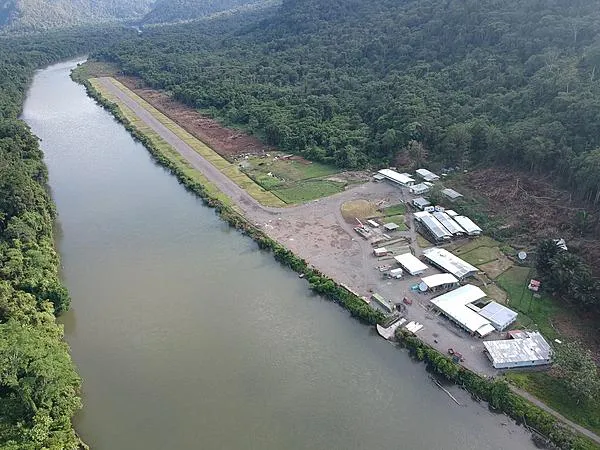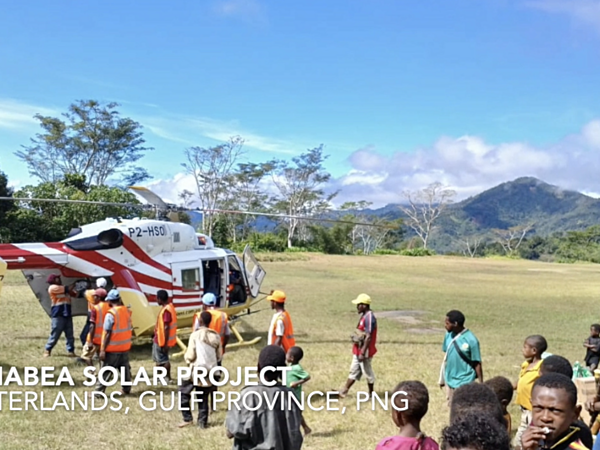
A 100-kilowatt solar mini-grid has been commissioned at Kanabea Rural Health Centre in Gulf Province, delivering round-the-clock electricity to one of the country’s most isolated communities after a logistics operation that required 31 helicopter lifts and nearly 22 tonnes of equipment.
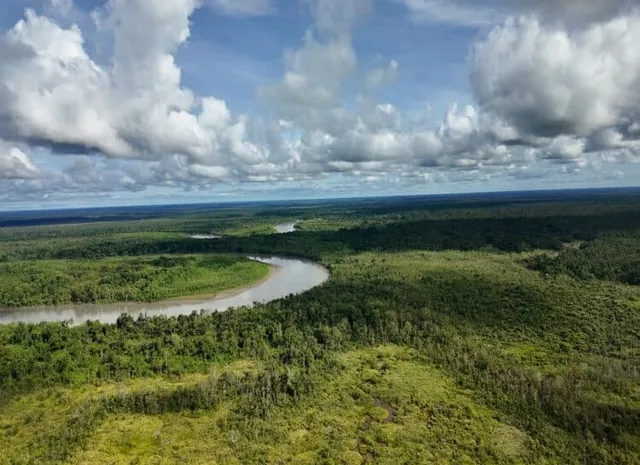
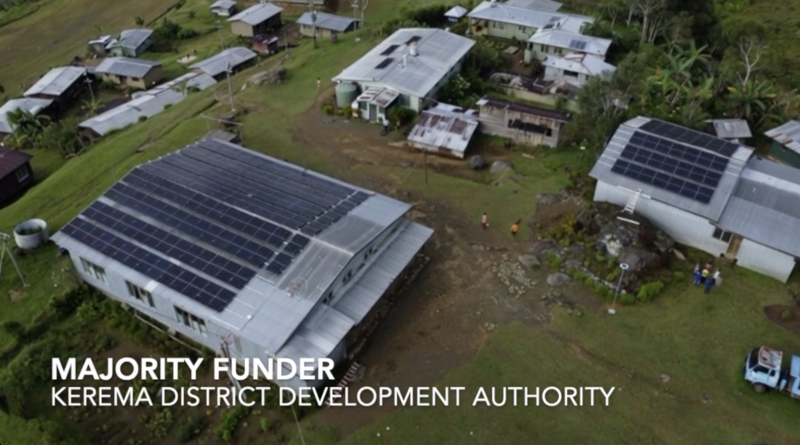
Operational since September 2025, the system powers the rural health centre, Kanabea Primary School, the local Catholic church, staff housing and more than 40 surrounding households, marking a major step forward for a community accessible only by air or a three-day trek over two mountain ranges.
The project was initiated in late 2023 under the USAID-Papua New Guinea Electrification Programme, or USAID-PEP, which committed 700,000 kina in support of rural electrification aligned with the government’s Medium Term Development Plan IV target of 70% national electrification by 2030. Of that amount, 545,000 kina was disbursed before the programme was terminated by the Trump administration under the US Department of Government Efficiency initiative.
The initial proposal sought 50% co-funding. In total, the project received 545,000 kina from USAID-PEP, 700,000 kina from the Kerema District Development Authority and 20,000 kina from PNG Foundation in Melbourne, Australia. Any shortfall was absorbed by PNG Solar Supply and installation contractor Construction Electrical Services.
The Kerema DDA support was provided under the leadership of Thomas Opa, who now serves as Papua New Guinea’s finance minister.
Despite the early closure of USAID-PEP, the project proceeded to completion. The funding disruption resulted in minor scope adjustments, with installation teams hiking in and out of Kanabea and carrying approximately 120 kilogrammes of smaller equipment on foot. On-site works ran for 15 weeks from May to September, with delays caused by limited aircraft availability for the final material deliveries. Typical installations take eight to 10 weeks where logistics are less complex.
The system has recorded 100% uptime since commissioning.
Air-only logistics
All materials were transported by road to Kerema before being airlifted approximately 27 nautical miles (50 kilometres) to the site. The 15-minute flight belies the scale of the task: the cargo — including solar panels, battery systems, mounting structures, poles and distribution lines — weighed nearly 22 tonnes.
Thirty-one helicopter lifts were required, most carrying underslung freight.
Fully solar configuration
The mini-grid is fully solar powered, with no diesel generator backup. It comprises two 50kW Sunsynk inverters paired with 122.8 kilowatt-hours of high-voltage Sunsynk lithium battery storage. The solar array uses Trina Vertex S+ 430-watt n-type panels. The system is designed to allow additional panels and battery storage to be added as demand grows.
Reliable power is expected to transform public services. The health centre, which is estimated to see around 40,000 patients annually, can now operate vaccine refrigeration, diagnostic equipment and emergency services at night. The primary school, with approximately 500 students, can extend study hours and introduce digital learning tools.
Prepaid tariff model
The system operates under a prepaid off-grid metering arrangement, with electricity priced at 1 kina per kilowatt-hour — comparable to urban tariffs. Billing and collections are managed by the local Catholic church, with revenue allocated to routine maintenance and a reserve fund to ensure long-term sustainability.
Replicable model
PNG Solar Supply has delivered 23 similar mini-grids nationwide. The Kanabea model has since been replicated at six sites in Bougainville — five high schools and one USAID-PEP-initiated project in Bumpuka village in the Autonomous Region of Bougainville. A further 16 sites have progressed from procurement and design to installation.
The Kanabea project highlights both the logistical challenges and the transformative potential of decentralised renewable energy in Papua New Guinea’s most remote regions.