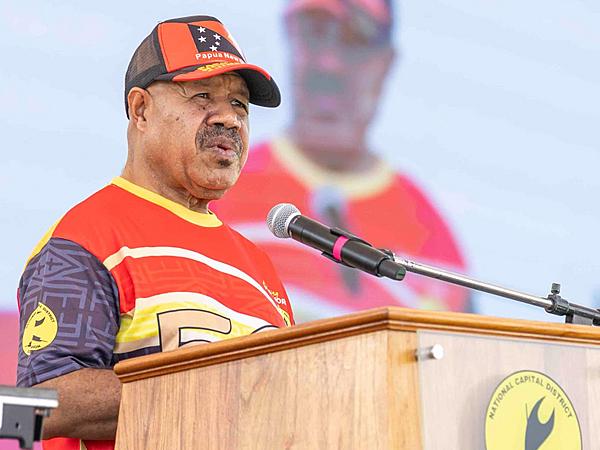
National Capital District Governor Powes Parkop has urged the government to treat Papua New Guinea’s recent placement on the Financial Action Task Force (FATF) grey list as a catalyst for economic reform, calling for stronger import substitution policies and reduced reliance on unprocessed mineral exports.
PNG was placed on the FATF list of Jurisdictions Under Increased Monitoring on Feb. 13, alongside Kuwait. More than 20 countries are currently subject to increased monitoring.
Parkop said the designation should prompt deeper structural reforms rather than political alarm.
“The more we depend on imports and export only crude or raw materials, the more vulnerable our economy becomes to manipulation and control by bigger economies, especially those in the G7,” he said.
He also argued that PNG must reduce its dependence on external borrowing to plug fiscal deficits, particularly from the International Monetary Fund.
The grey listing has sparked debate over financial governance and economic management, with the parliamentary opposition criticising the government’s handling of the economy.
Parkop, however, rejected suggestions that the designation reflects failures in monetary or fiscal policy.
“It’s not the first time for PNG to be grey listed. In 2015 we were placed on the list and were able to exit relatively quickly,” he said.
He maintained that the current listing is unrelated to how the government and the treasurer are managing monetary or fiscal policy.
“The opposition has been making a big hue and cry over the grey list when this has nothing to do with how our government and treasurer are managing our monetary policies, fiscal policies or the economy generally,” he said.
Parkop clarified that the listing relates specifically to “strategic deficiencies in combating money laundering and terrorist financing”, not broader economic mismanagement.
According to him, the designation signals increased monitoring and highlights weaknesses in enforcement, inter-agency coordination and supervision of financial institutions in relation to anti-money laundering and counter-terrorist financing measures.
“The public needs to understand this. We cannot allow the opposition to mislead people into thinking the government has committed some cardinal sin in the economy or financial system resulting in this grey listing,” he said. “Yes, there are issues in the management of the economy, but these are not the causes of the grey listing.”
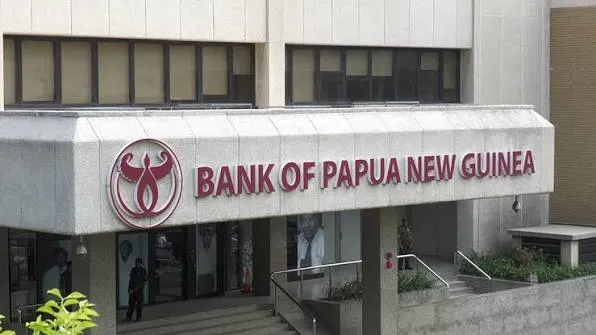
Parkop said resolving the matter is achievable through improved institutional coordination. He urged the central bank and the Internal Revenue Commission to strengthen compliance, supervision and enforcement measures.
“It just needs us to ramp up inter-agency coordination. It’s absolutely doable,” he said.
At the same time, he cautioned against what he described as excessive regulatory prescriptions from international financial institutions, particularly the IMF.
“We brought this on ourselves. I keep warning the government not to allow the IMF to over-prescribe regulations to us. We are a small, vulnerable economy. Over-regulation — whether to prevent money laundering, terrorist financing or otherwise — will hurt our economy, especially the financial sector,” he said.
Parkop argued that heavy compliance burdens risk pushing some transactions into informal channels.
“Over-regulation is actually promoting money laundering, as people, including corporates, tired of all the regulations are banking and trading via the black market,” he claimed.
His remarks come amid ongoing exchanges between the government and opposition over the implications of the FATF decision.
Parkop said that while compliance gaps in anti-money laundering and counter-terrorist financing frameworks must be addressed, the issue remains technical and administrative in nature.
“With coordinated action by key institutions, we can meet the FATF requirements and exit the grey list, as we have done before,” he said.