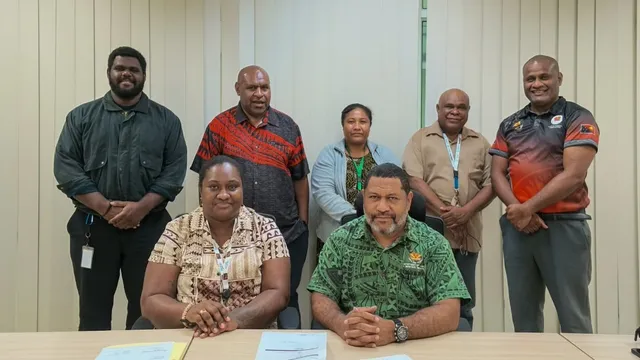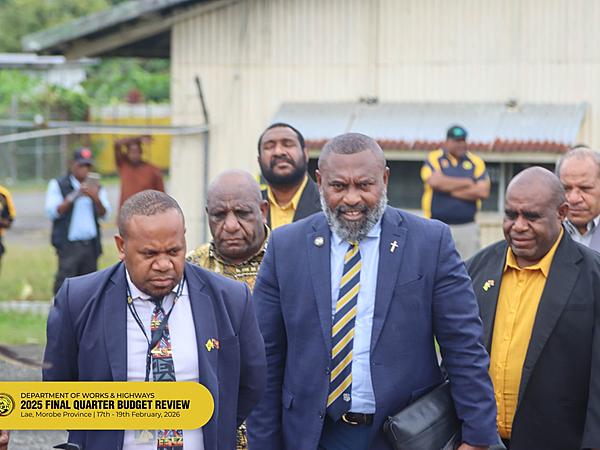
The Minister for Works and Highways, Peter Tsiamalili Jr, has called for stronger accountability, tighter financial management and engineering excellence as the Department of Works and Highways convened its 2025 final quarter budget review in Lae.
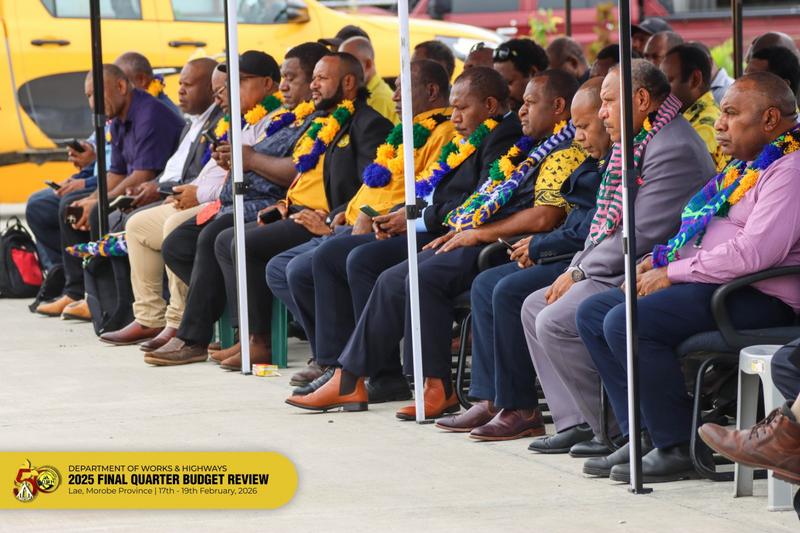
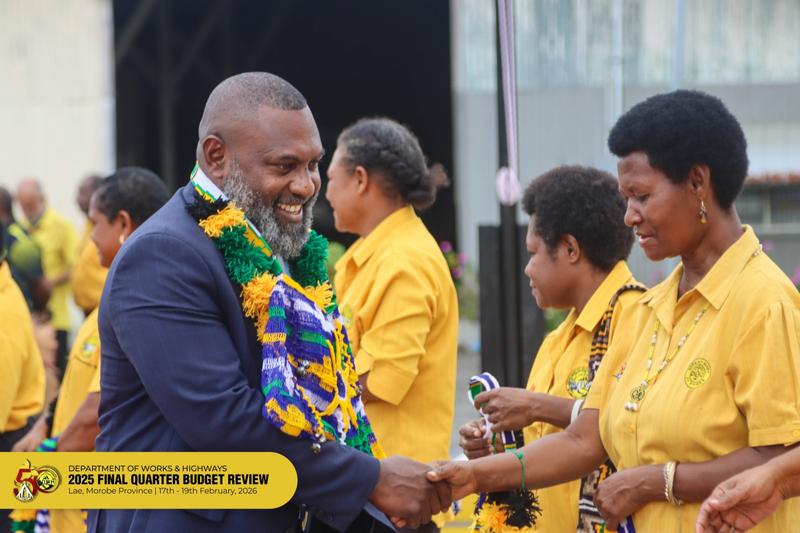
The three-day review, held at the Lae International Hotel in Morobe Province on Tuesday, Feb. 17, aims to consolidate departmental performance, strengthen accountability mechanisms and set the strategic direction for infrastructure delivery in 2026 under the Connect PNG and National Road Network agenda.
Addressing senior management, regional and provincial works managers and departmental staff, Tsiamalili described the meeting as a critical national exercise.
“This meeting is of national importance. It is not merely an administrative requirement. It is a moment of accountability, reflection and strategic alignment as we close the 2025 financial year and prepare for 2026,” he said.
He commended officers for their efforts throughout 2025, noting the challenging operating environment marked by extreme weather events, landslides, flooding, ageing infrastructure backlogs, procurement pressures and growing public demand for reliable connectivity.
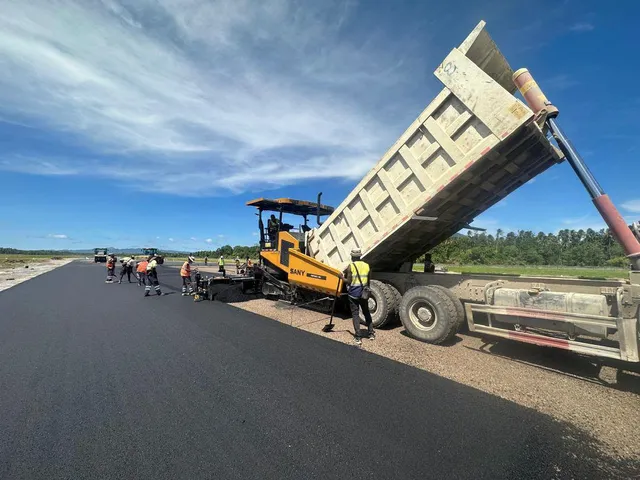
The minister cited progress in national road connectivity, including completion of major missing links such as the Magi Highway connection between Port Moresby and Milne Bay, the Kerema-to-Lae Trans-National Highway missing link, and the Tabubil-to-Telefomin link in the Trans-Fly and Sandaun border corridors.
He also paid tribute to the late former minister, Solan Mirisim, for his leadership from 2022 to 2025 in advancing the government’s infrastructure agenda.
“Our roads and bridges are not just engineering assets — they are the lifelines of our nation,” Tsiamalili said.
Public funds and discipline
Setting the theme for discussions — “Connecting the Unconnected and Reaching the Unreached under the Connect PNG Program and Preserving the Road Network through Sustainable Maintenance” — the minister stressed that public funds must be managed with discipline and integrity.
“Every kina we spend belongs to the people of Papua New Guinea,” he said. “Public resources are entrusted to us through Parliament and government.”
He directed senior, regional and provincial managers to enforce strict discipline in budget execution, expenditure control, reporting compliance and value-for-money delivery. He warned against wasteful spending, inflated costs, unnecessary contract variations, weak project controls and poor accountability.
“The people deserve results — not leakage,” he said.
Zero tolerance for malpractice
Tsiamalili declared a zero-tolerance stance on unethical conduct within the department, warning there was no place for abuse of office, unethical engineering practices, substandard construction, negligent supervision or corrupt contract management.
“Poor engineering is not just a technical failure. It is a national cost and a national loss,” he said, adding that recurring collapses, repeated repairs and wasted budgets erode public trust.
He reminded engineers of their professional obligation to safeguard public safety and the national interest.
Alignment with national priorities
The minister reaffirmed that infrastructure delivery must align with the National Road Network Strategy, the government’s Connect PNG Economic Road Development Program, the Connect PNG Phase 1 implementation plan (2020–2027), and the national road maintenance plan.
He described Connect PNG as the government’s flagship initiative to link districts, provinces and economic corridors, unlocking agriculture, trade, health and education access, as well as promoting national unity and inclusive economic development.
“Prioritise projects that align with the approved national agenda of connecting the unconnected and reaching the unreached,” he said. “Avoid fragmented spending. Avoid politically convenient diversions. Focus on roads and bridges that matter to national connectivity and economic transformation.”
Tsiamalili also emphasised strict compliance with the Public Service Management Act, General Orders, the Public Finance Management Act, the Appropriations Act and the Connect PNG Act.
“Every expenditure must be lawful, appropriated, justified, transparent and auditable,” he said.
Innovation and service
Acknowledging recurring challenges such as flooding, bridge failures, landslides and climate impacts, the minister called for greater innovation, including climate-resilient designs, improved maintenance regimes and stronger asset management systems.
“We cannot continue solving tomorrow’s problems with yesterday’s approaches,” he said.
He proposed establishing a Public Works Training and Research Institute to strengthen applied research and develop long-term solutions to infrastructure challenges.
In closing, Tsiamalili reminded officers that public service is a national calling.
“This department is not about contracts. It is about service,” he said, urging staff to uphold integrity, duty and accountability as the department finalises its 2025 financial year and prepares for 2026.
“The future of our infrastructure depends on what we do now,” he said.