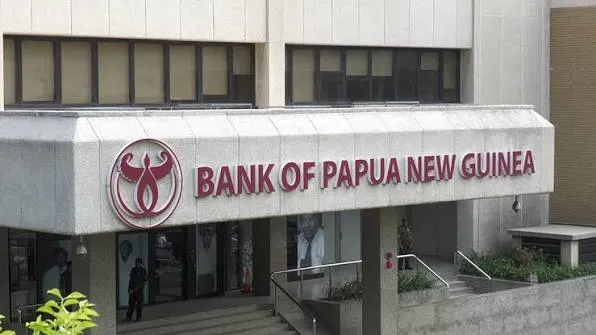
Papua New Guinea faces a high risk of money laundering, with corruption, fraud, tax crime and illegal resource extraction among the main threats. The Bank of Papua New Guinea (BPNG) is calling for stronger enforcement, effective prosecutions and the recovery of criminal proceeds to demonstrate progress in tackling financial crime.
Speaking at the opening of the Second Anti-Money Laundering, Counter-Terrorist Financing and Counter-Proliferation Financing (AML/CTF/CPF) Conference at APEC Haus in Port Moresby on September 30, 2026, BPNG Governor Elizabeth Genia, who also co-chairs the National Coordinating Committee (NCC), said the country must move beyond legislative reforms and demonstrate tangible results.
Held under the theme “Follow the Money, Eliminate the Threat,” the two-day conference brought together government agencies, financial institutions, international partners and other stakeholders to strengthen PNG’s response to financial crime.
“Awareness was our first step. We now need to demonstrate results,” Genia said.
PNG advances on FATF action plan
PNG was placed under increased monitoring, commonly known as the Financial Action Task Force (FATF) grey list, in February 2026. Its action plan requires coordinated reforms across 23 agencies represented on the NCC.
Genia said PNG submitted its first progress report to the FATF’s International Cooperation Review Group in September and had largely addressed the action items due during the initial reporting cycle.
Parliament has passed amendments to the Anti-Money Laundering and Counter Terrorist Financing Act, the United Nations Financial Sanctions Act and the Criminal Code. The changes aim to address deficiencies identified in PNG’s mutual evaluation and strengthen authorities’ powers to freeze assets, impose sanctions and confiscate criminal proceeds.
PNG has also updated its National Risk Assessment to identify vulnerabilities across the financial system and wider economy.
However, Genia said future FATF reporting cycles would focus on implementation rather than legislation alone.
“Every reporting cycle from this point forward will ask the same question, not just what legislation has been passed but what we have done with it,” she said.
Authorities must demonstrate effective investigations, prosecutions and the seizure or confiscation of assets linked to criminal activity. Initiatives such as Taskforce ARROW form part of the country’s efforts to pursue illicit funds through the courts.
Corruption and fraud pose major threats
PNG’s National Risk Assessment classified the country’s overall money laundering risk as high, identifying corruption and fraud as the most significant threats. Other risks include tax crime, illegal logging, fisheries crime, drug trafficking, cyber-enabled crime and illegal mining, including gold exports that go unrecorded.
Although terrorist financing and proliferation financing were assessed as lower risks, Genia said they still required attention.
The assessment also identified vulnerabilities in legitimate financial and professional services that could be exploited to move illicit funds into the formal economy. These include banks, money remitters, foreign exchange dealers, real estate businesses, lawyers, accountants and company service providers.
Genia said these findings were not an indictment of legitimate businesses but highlighted the need for stronger internal controls, transparency and cooperation with regulators and law enforcement agencies.
Cash transactions and the informal economy make financial flows harder to trace, while inadequate beneficial ownership transparency can hinder efforts to identify the individuals who ultimately control companies and assets.
The Financial Analysis and Supervision Unit (FASU), which receives and analyzes suspicious matter reports, plays a key role in identifying potential financial crime. Genia said, however, that financial intelligence must translate into investigations and prosecutions rather than remain within reporting systems.
Success should be measured by whether authorities can substantiate suspected criminal activity, bring cases before the courts, hold offenders accountable and recover illicit proceeds.
She urged banks to strengthen their controls, noting that the National Risk Assessment identified the banking sector as the most vulnerable among those assessed. Lawyers, accountants, real estate agents and dealers in precious metals were also encouraged to cooperate with authorities as risk-based supervision is strengthened.
Digital payments support financial inclusion
Genia linked the fight against financial crime to efforts to expand financial inclusion, cautioning that the reliance on cash in rural communities should not be treated as evidence of wrongdoing.
Cash remains central to everyday transactions for farmers, market vendors and people with limited access to formal banking services.
“Our task is not to punish the use of cash. It is to give people an alternative,” she said.
BPNG is working to accelerate the shift to digital payments, supported by know-your-customer controls proportionate to the risks involved. The approach aims to improve transaction transparency without imposing unnecessary barriers on small-scale traders, farmers and other people who rely on cash.
Genia said international partnerships were also important to ensuring anti-money laundering standards support financial inclusion rather than exclude ordinary citizens from the formal financial system.
Greater participation in that system could improve transaction visibility and make it harder for criminals to exploit legitimate financial channels. She said financial crime undermines economic development by depriving vulnerable communities of opportunities and resources.
The conference was co-hosted by BPNG’s FASU and Transparency International Papua New Guinea. Participating agencies included the Department of Prime Minister and National Executive Council, Department of Justice and Attorney General, Independent Commission Against Corruption, Office of the Public Prosecutor, Royal Papua New Guinea Constabulary, PNG Customs Service, Internal Revenue Commission and Investment Promotion Authority.
The program covered the National Risk Assessment, progress on the FATF action plan, corruption risks and Taskforce ARROW.
Genia urged participants to share experiences, address difficult questions and identify opportunities for closer cooperation. “Grey listing did not define PNG in February, and it does not define us today. What matters is how we respond,” she said.
PNG’s progress will depend on consistent enforcement of its strengthened laws, effective compliance by businesses and demonstrable results in identifying and recovering criminal proceeds.