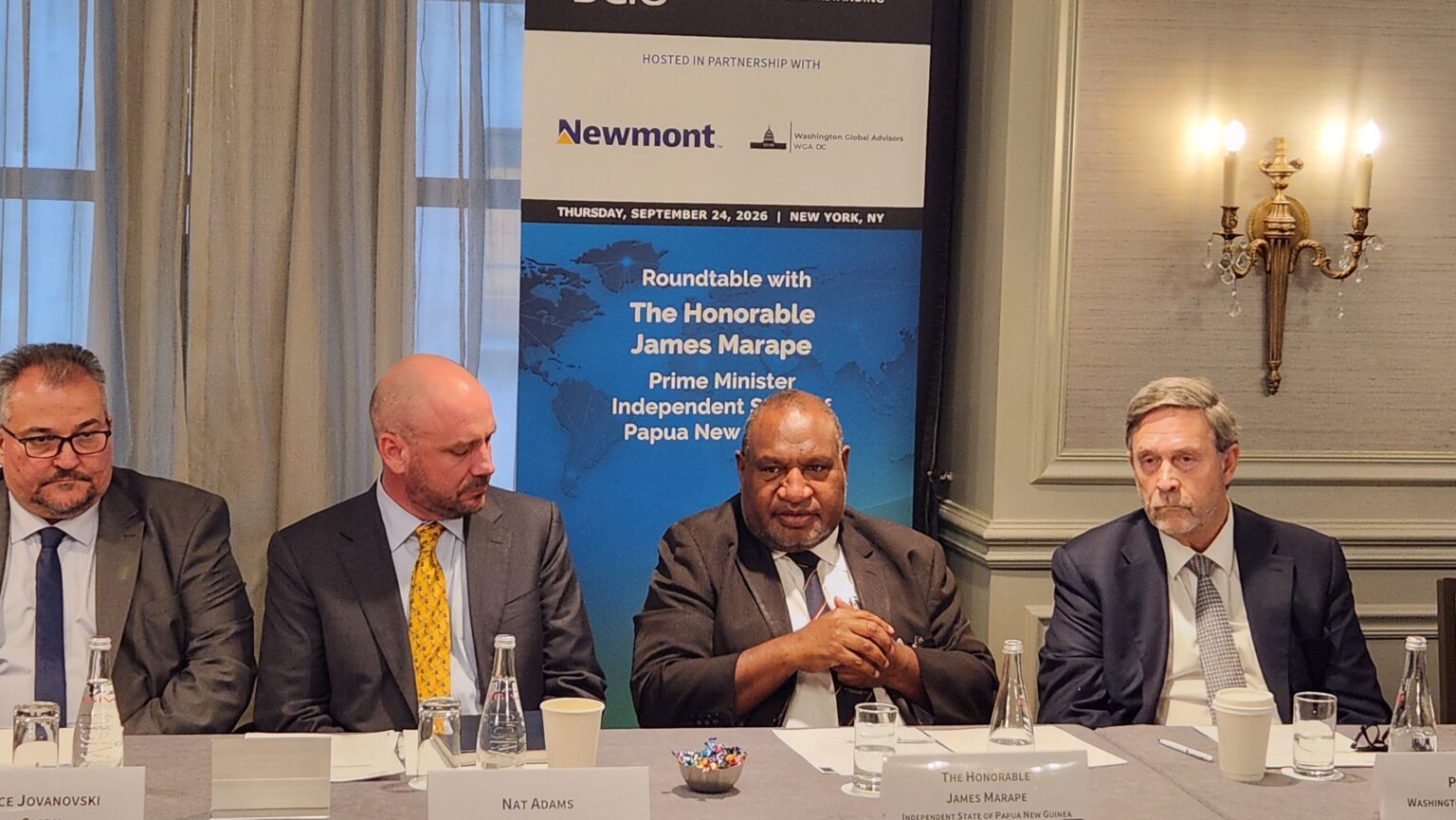
Prime Minister James Marape has urged American businesses to increase trade and investment in Papua New Guinea, highlighting the country's resource projects, emerging industries and strategic access to Asian markets during a business roundtable in New York.
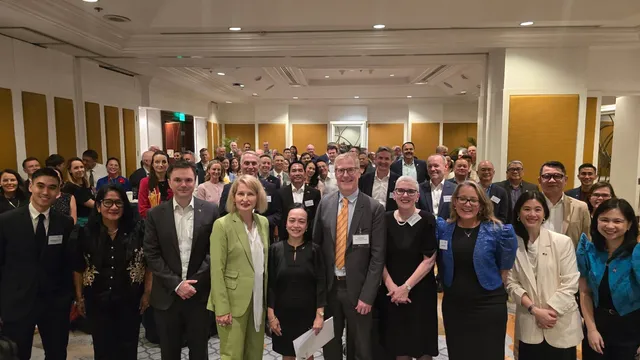
Marape made the pitch during a high-level meeting hosted by the Business Council for International Understanding (BCIU) during the 81st United Nations General Assembly week. The event brought together US business executives, institutional investors and senior US government officials.
Organised in partnership with Newmont and Washington Global Advisors, the roundtable focused on expanding commercial partnerships between PNG and the United States and moving beyond traditional development assistance towards trade and investment.
“Our message to the American business community during this UNGA week is clear: Papua New Guinea is moving from aid to trade,” Marape said. “We want American companies to come in, utilize our special economic incentives, and achieve strong returns on investment while simultaneously driving local employment and economic growth.”
Marape presented PNG as a free-market economy, a democratic partner of the United States and a gateway to the wider Asian market.
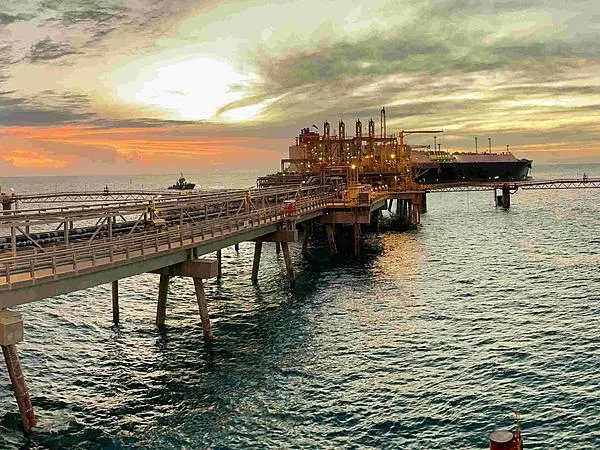
He said the country's economy had doubled in size since he took office in 2019 and that the government was working towards a balanced budget next year. The prime minister also pointed to major US-linked resource investments, including ExxonMobil's Papua LNG project and Newmont's Lihir and Wafi-Golpu operations.
Diversification opportunities
Marape encouraged US businesses to look beyond traditional resources and consider opportunities in clean energy, agriculture, fisheries processing and digital infrastructure. The government has identified hydro, geothermal and solar power as areas for investment, while also promoting agricultural and fisheries products for international markets.
The nationwide rollout of SpaceX's Starlink was highlighted as an opportunity in digital infrastructure and connectivity.
Marape also emphasised the importance of increasing domestic value from PNG's natural resources, saying investment should generate employment, support local businesses, strengthen supply chains and facilitate skills and technology transfers.
US Assistant Secretary of State for East Asian and Pacific Affairs Michael G. DeSombre also addressed the roundtable, highlighting the strength of the bilateral relationship and the role of commercial partnerships in economic development.
“The relationship between the United States and Papua New Guinea has never been stronger,” DeSombre said, according to the prime minister's office.
He referred to the US-PNG Framework for Strategic Cooperation and the Defence Cooperation Agreement, while stressing the importance of trade and commercial activity in driving economic growth.
Investor confidence
Marape also sought to address concerns about PNG's business environment, highlighting legal and institutional reforms intended to strengthen investor confidence.
He pointed to international-standard arbitration and mediation mechanisms and a new appellate court system, while arguing that PNG's judiciary provides protection for legitimate commercial agreements.
The roundtable concluded with a question-and-answer session moderated by BCIU Vice President Max Horwitz, allowing US business representatives to discuss potential investment opportunities directly with Marape and his delegation.
Representatives from companies including Newmont, Moody's, Walmart, Fortinet, Zipline International and World Fuel, as well as senior US government officials, attended the discussions.
The PNG delegation included Foreign Affairs Minister Justin Tkatchenko, Permanent Representative to the United Nations Fred Sarufa, Ambassador to the United States Sir Arnold Amet and Deputy Permanent Representative to the United Nations Buri Gari.