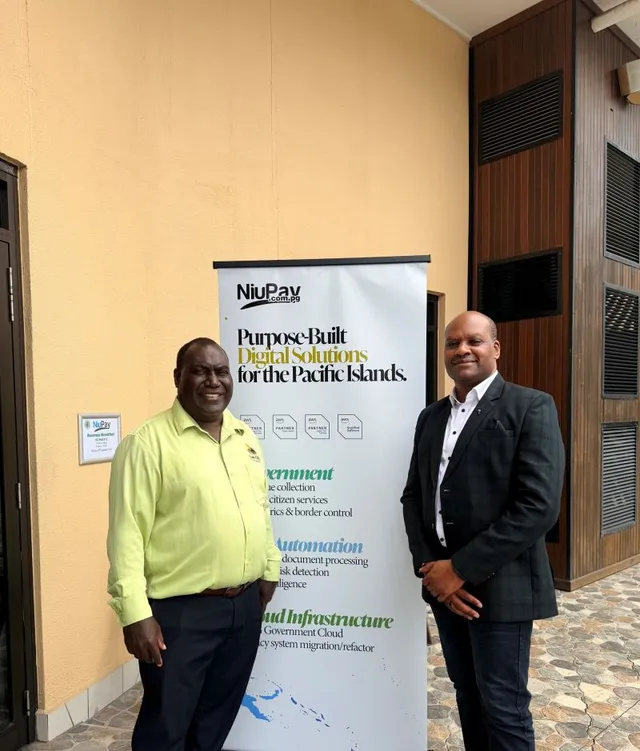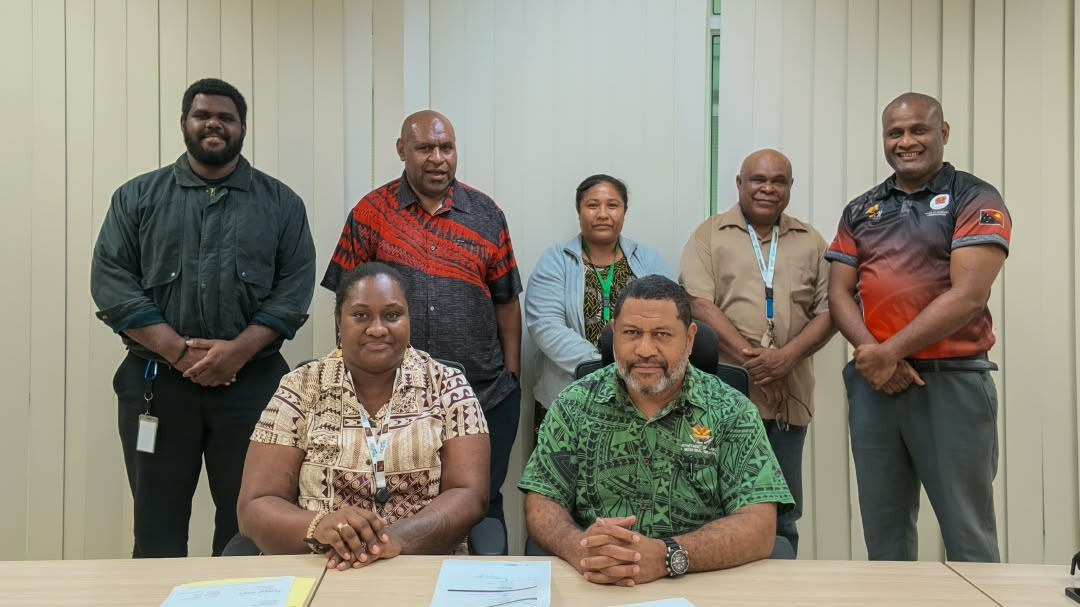
The Office of Workers’ Compensation (OWC) has taken a major step in its digital transformation, signing a contract with NiuPay Limited to design, build and support the new OWC Website Development Platform. The platform will give injured workers, their dependants, employers, insurers and insurance brokers access to OWC’s information and services 24 hours a day.
The contract was signed at OWC’s offices in Port Moresby on 2 October 2026 by Chief Commissioner Mr Martin Pala and NiuPay Business Development Manager Ms Kristina Kekedo, following a competitive tender. NiuPay was among three shortlisted bidders, and its technical proposal ranked highest in OWC’s evaluation.
The project supports OWC’s drive to align its services with the Digital Government Act 2022 and the digital government agenda of the Department of Information and Communications Technology (DICT). OWC’s evaluation panel found NiuPay’s proposal fully aligned with the Act, DICT’s Government Cloud Policy 2023 and the DICT Government Website Standards 2023, the frameworks that guide how public bodies deliver secure, interoperable services online.
“We want an electronic front desk that gives our clients and stakeholders better access to our services,” said Chief Commissioner Pala. “Information should be available 24 hours a day and easy to use for people at every level of computer literacy, so the man on the street can find us, understand our services and use them.”
Established under the Workers’ Compensation Act 1978, OWC is a statutory office of the Department of Labour and Industrial Relations. It administers compensation claims for workplace injuries and deaths, and enforces compulsory workers’ compensation insurance across Papua New Guinea. The new platform builds on OWC’s earlier move to online claims lodgement, with a modern, user-friendly design and a secure link to OWC’s internal processing system, so clients can follow the progress of their claims and officers can track cases.
In line with DICT’s Government Cloud Policy, the platform will run on AWS, one of DICT’s approved government cloud providers, across two availability zones for resilience. OWC will keep full ownership of the cloud environment, the encryption keys and the source code from day one, and NiuPay will provide 24/7 monitoring and support for three years.
“OWC supports workers and their families at some of the most difficult moments in their lives, and we take seriously the responsibility of building the platform they will rely on,” said Ms Kekedo. “We thank Chief Commissioner Pala, Commissioner Kolias and the OWC team for their trust, and we look forward to working alongside them to deliver a service every Papua New Guinean can use with confidence.”
Work on the project began on 5 October. A Port Moresby-based NiuPay team is delivering it: Project Delivery Manager Mr Alistairs Dirua and Junior UI/UX Engineer Mr Julian Togel, with engineering support from NiuPay’s senior and executive teams.
About NiuPay
Founded in Port Moresby in 2018, NiuPay designs, builds and supports secure, cloud-native mission-critical platforms for governments, regulated sectors and Tier-1 enterprises across Papua New Guinea and the Pacific. NiuPay is an AWS Select Tier Services Partner.
About the Office of Workers’ Compensation
The Office of Workers’ Compensation is a statutory office of the Department of Labour and Industrial Relations, established under the Workers’ Compensation Act 1978. OWC provides compensation-related services to workers and their dependants for injuries and deaths arising out of or in the course of employment, regulates and administers compensation claims, and enforces compliance with compulsory workers’ compensation insurance.