Gulf and Central provinces have agreed to an 80:20 split of benefits worth K6.606 billion from the Papua LNG project, resolving a major dispute over the distribution of royalties, equity and development funding ahead of the project's targeted final investment decision in December.
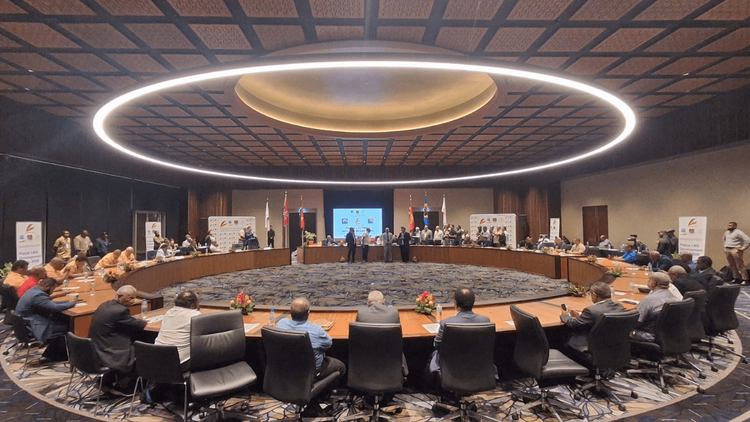
The Tier 1 benefit-sharing agreement was signed at APEC Haus in Port Moresby on Oct. 8, following months of negotiations between the two provinces and the national government.
Under the arrangement, Gulf will receive 80% of the benefits, while Central will receive 20%. Gulf hosts the project's wellheads, while Central is recognised for its role in hosting downstream facilities and associated infrastructure.
The K6.606 billion package covers royalties, development levies, equity participation, infrastructure development grants, business development support, employment and training opportunities, and other benefits. The package is intended to be distributed among landowners, provincial governments, district development authorities and local-level governments in the two provinces over the project's lifetime.
The agreement establishes the allocation framework for the remaining benefit-sharing negotiations, although further agreements and government decisions are needed before all beneficiaries' allocations are finalised.
Dispute over allocation
The agreement follows weeks of contentious negotiations over how the benefits should be divided.
Gulf had sought a 95% share of the benefits, arguing that its position as the host province for the project's upstream facilities justified a larger allocation. Central, meanwhile, sought a greater share in recognition of its role as a co-host and the location of downstream processing and infrastructure facilities.
Central had proposed a 55:45 split in favour of Gulf in its position paper, while earlier discussions also included proposals for 60:40 and 65:35 allocations. The national government's initial proposal was a 70:30 split in Gulf's favour, which Gulf representatives rejected.
The final 80:20 arrangement represents a compromise between the provinces' competing positions. Reports on the negotiations also said the national government committed an additional K1.2 billion through Tax Credit Scheme projects to help bridge the differences, alongside proposed infrastructure, business development and equity-related support.
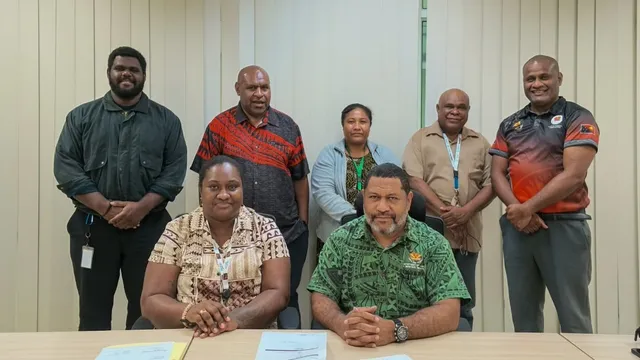
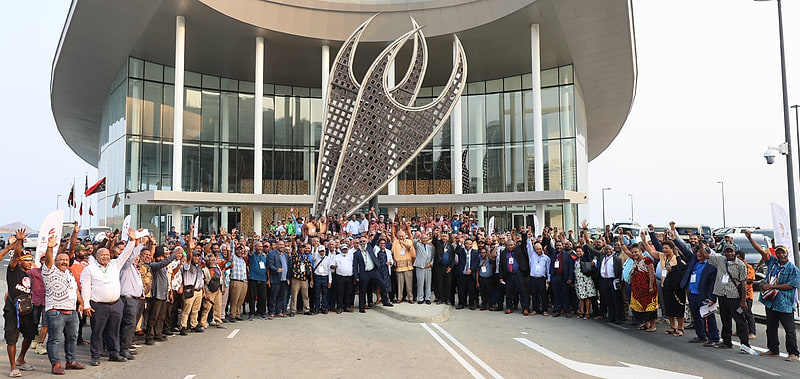
The formal signing involved provincial government representatives, district development authorities, local-level governments, landowner representatives, Petroleum Minister Jimmy Maladina and officials involved in the state negotiation process.
Central Province Governor Rufina Peter and other provincial representatives participated in the negotiations, while Gulf's delegation was led by Acting Governor Morris Taudevin.
The signing process also involves affected landowners along the project's pipeline corridor. Central landowners signed after the provincial-level agreement, while further signings involving Gulf landowners from the northern, southern and middle segments were expected to continue.
Marape welcomes agreement
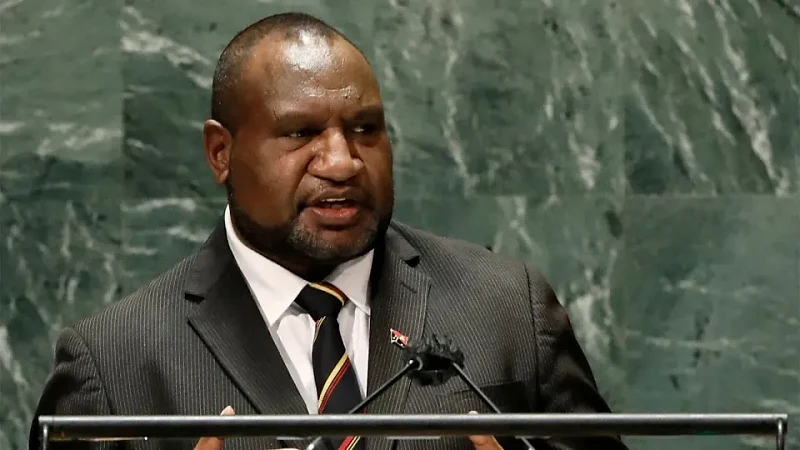
Prime Minister James Marape welcomed the agreement, describing it as a milestone towards the project's targeted final investment decision on Dec. 15.
He said the arrangement demonstrated cooperation between the two provinces and would allow the government to advance the distribution of project benefits through the National Executive Council.
Marape said the agreement followed the broad principles established under the existing PNG LNG project, where benefits are distributed among upstream resource areas, downstream facilities and pipeline corridors.
He also reaffirmed the government's policy that 40% of the state's equity participation should flow back to the provinces and landowners where resources are developed.
The agreement comes after the government announced broader changes to Papua LNG's commercial arrangements in September, including an additional 2.5 percentage points of potential state equity, bringing Papua New Guinea's stake to 25%, according to Marape.
The government also said it had secured a revised domestic gas pricing formula, reducing the rate from 9% to 5% of the Japan Customs-cleared crude oil benchmark, with the aim of lowering domestic gas costs for power producers. These arrangements form part of the broader effort to advance the project towards a final investment decision.
Focus shifts to remaining negotiations
Maladina said the agreed benefits must deliver measurable improvements in the lives of communities affected by the project.
He said royalties and development levies should contribute to better schools, health services, roads, water supply and other essential services.
Equity participation should provide eligible beneficiaries with meaningful long-term economic interests in the project, supported by sound governance and responsible financial management, he said.
Infrastructure commitments must result in properly planned, completed and maintained projects, while business development assistance should help establish Papua New Guinean enterprises capable of supplying Papua LNG and serving the wider economy.
Maladina urged all parties to continue negotiations in good faith, with fairness and transparency, adding that the success of the development forum would ultimately be judged by whether commitments translated into tangible benefits.
Negotiations for Tiers 2, 3, 4 and 5 are scheduled to continue throughout October, with the government aiming to conclude the remaining discussions in early November.
The outstanding negotiations will determine how benefits are allocated among the other eligible stakeholders, including landowners and affected communities, under the framework established by the Tier 1 agreement.
Papua LNG targets December investment decision
The benefit-sharing agreement is a key step in preparations for Papua LNG, one of Papua New Guinea's major planned resource investments.
The project is targeting a final investment decision by Dec. 15, 2026, following revised commercial arrangements and efforts to reduce development costs.
French energy company TotalEnergies announced in September that the project had completed its engineering, procurement and construction tendering process, with contract award recommendations ready for approval by the joint-venture partners. Cost optimisation measures have reduced estimated capital expenditure to about US$14 billion, from earlier projections, the company said.
The project is also undergoing an operational restructuring, with ExxonMobil set to take over operatorship from TotalEnergies to improve coordination with the existing PNG LNG operation.
Marape has described Papua LNG as an investment of about K60 billion for Papua New Guinea, with the potential to generate employment, expand business opportunities and strengthen government revenue during construction and throughout its operating life.
The completion of the remaining benefit-sharing agreements will be an important part of the preparations for the investment decision. However, the December target remains dependent on the project's outstanding approvals and other requirements being completed.
For Gulf and Central, the immediate challenge will be ensuring that the agreed allocations result in improved infrastructure, public services, local employment and business participation, rather than remaining commitments on paper.