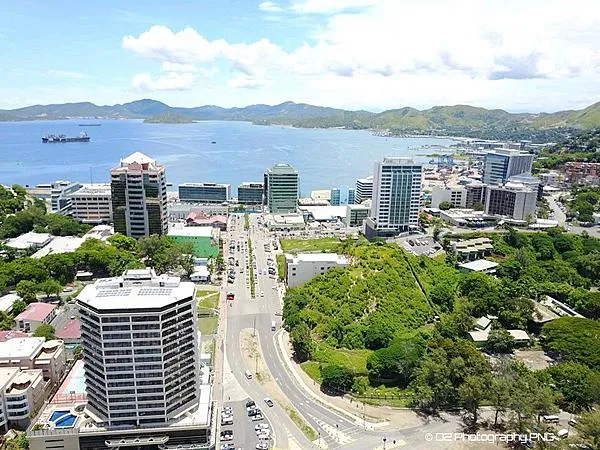
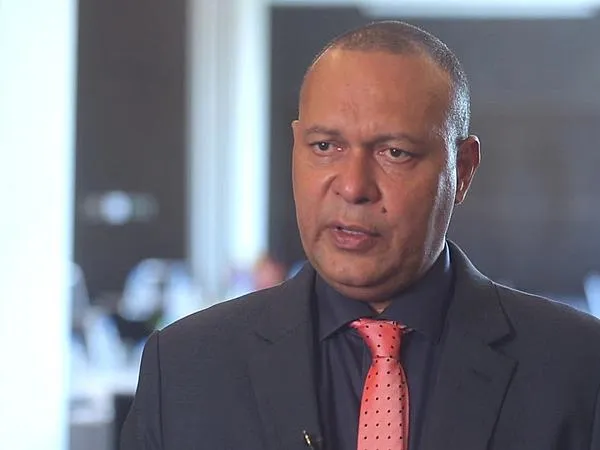
The National Gaming Control Board is looking at casino tourism as a way to boost PNG's economy and tourism.
Last week, the National Gaming Control Board met for the first time with newly selected board members after almost two years.
Members of the corporate chamber, women's council, churches, and non-executive directors from the Departments of Finance, Treasury, and Community Development make up the NGCB team.
The board of directors discussed revenue-generating operations as well as job openings.
The creation of a casino with the cooperation of the Paga Hill Development Company under a Special Economic Zone program is one of the activities that the NGCB will be venturing into, according to NGCB Chairman Clemence Kanau.
While the chairman recognizes that this measure would face strong resistance, he remains enthusiastic about the prospect of turning the country into a gambling tourism destination.
Since last year, COVID-19 prohibitions have kept gambling websites and bookmakers closed.
The NGCB board also discussed the implementation of COVID-19 steps at gambling establishments, the development of internet gaming, Total Automated Betting Software, the launch of lottery, and on-stream bingo.
The Market Conditions Survey showed that company morale is high, with 70% of businesses have continued operations in the fourth quarter of 2020.
Businesses continue to face challenges due to lower consumption and market demand.
According to the Corporate Council of PNG Market Conditions Survey, businesses have seen a steady turnaround between the first and second quarters of 2020, with 70% of businesses working in existing market conditions.
At the end of 2020, the majority of companies experienced a financial loss, with Covid-19 regulations cited as the main factor impacting the industry.
The delay in approving resource ventures, the closing of activities due to COVID-19, the closure of the Porgera Mine, a lack of foreign exchange, and the global and local economies are all contributing to the revenue decrease.
In addition, since September of last year, job rates have remained steady, according to the survey.
Although the travel and hospitality industry has been struck the hardest by the pandemic, there has also been evidence of a significant knowledge deficit on the government stimulus plan, with 75% of businesses claiming they have not gained from it.
Based on the study, restoring consumer interest, fixing foreign exchange problems, paying loans to the private sector, and the government focusing on driving resource ventures are only a few of the recommendations.
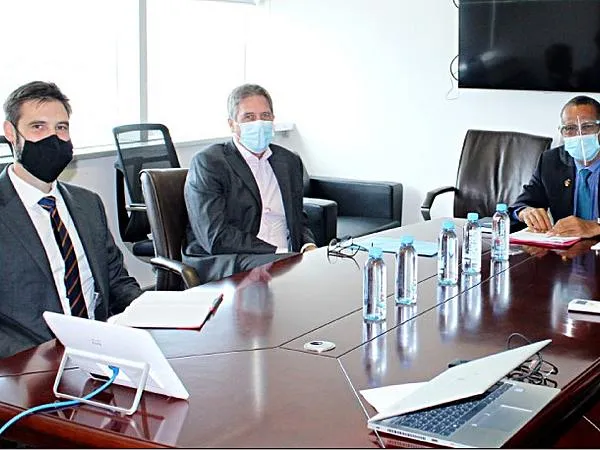
Sam Basil, the Deputy Prime Minister and Minister for Commerce and Finance, is in Paris this week for trade negotiations with Franck Riester, the French Minister Delegate to the Minister for Europe and Foreign Affairs.
The two ministers met to discuss ways to improve PNG-France economic relations.
Both ministers want to see more coordination in new areas such as renewable energy, especially as part of the French Development Agency's (AFD) Pacific mandate being expanded.
They applauded the signing of an agreement between the government and Total, allowing the PAPUA LNG project to resume after two years of negotiations.
DPM Basil was told by Minister delegate Riester of France's support for Papua New Guinea in its war against COVID-19.
France has thus sent humanitarian aid to the PNG government, including tents, Covid kits, antigen scans, and travel respirators, to assist the government and its people, who are suffering from a deteriorating health situation.
This assistance is part of a FRANZ deal between France, Australia, and New Zealand to coordinate relief to people impacted by natural disasters in the Pacific region, and it is a tangible example of the Indo-Pacific steps being taken.
“We are happy to underline that the first visit of a government official since the beginning of the Covid Crisis was in France,” Riester said.
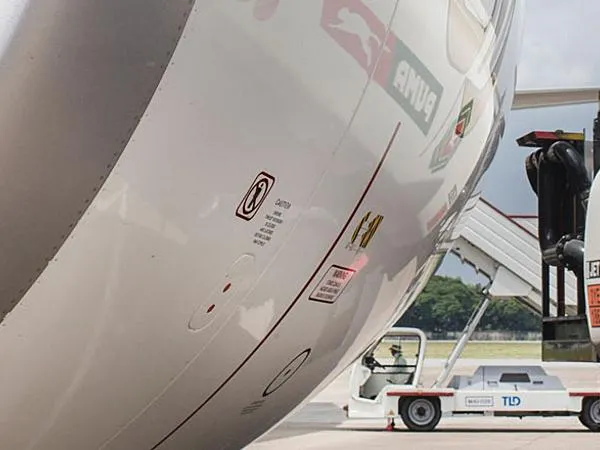
Puma Energy, a fuel and energy provider, has pointed out that the aviation industry has been struck the hardest.
Puma Energy country manager Hulala Tokome mentioned that Puma supplies 100% of the country's jet fuel needs, demand remains poor, which is in line with a global downturn in travel that has also affected this country.
He said that while most of Puma's business in PNG has remained robust, the company's employees have played a key role in this by operating in bubbles and being segregated at the refining camp, shift working at our terminal and aviation facilities, and 60% of the head office workers working from home.
“Demand for aviation fuel remains at about half the level before COVID struck and recovery will be closely tied with the nation’s recovery from the pandemic,” said Tokome.
“This is not only true of aviation but many other industrial sectors where we are seeing companies going out of business or in distress, thousands of people out of work and suffering as a result.”
He said that the country's future is in jeopardy and that everyone in PNG has a part to play in its recovery.
“We know that the pandemic can be controlled from observing other countries, but it will depend on all of us working together,” said Tokome.
“The government sets the recovery plan and enabling policies and regulations to stimulate the economy, the private sector needs to adapt to the changing environment, and all of us need to observe the Niupela Pasin measures and change our behaviour to avoid infection and reduce transmission as fast as possible.
“That means changing lifelong habits, wear masks, step up for hygiene, avoid crowds, isolate yourself when sick, minimise travel, and work virtually where possible.
“It is clear that vaccination will play a major part in recovery and research has already been shown it can reduce the rate of infection, severity and spread of the disease.”
He explained that this is a personal choice, but he urges all Puma employees to get vaccinated as soon as possible, on top of all the work they've already done in implementing stringent modern COVID work initiatives and transitioning to new ways of working to keep their families secure and healthy.
COVID-19 has spread throughout the country, and Prime Minister James Marape has launched a national drive to stop it.
The national vaccination rollout's slogan is "Sleeves Up Be A Vaccine Champion” which emphasizes the importance of rolling up your sleeves and getting vaccinated.
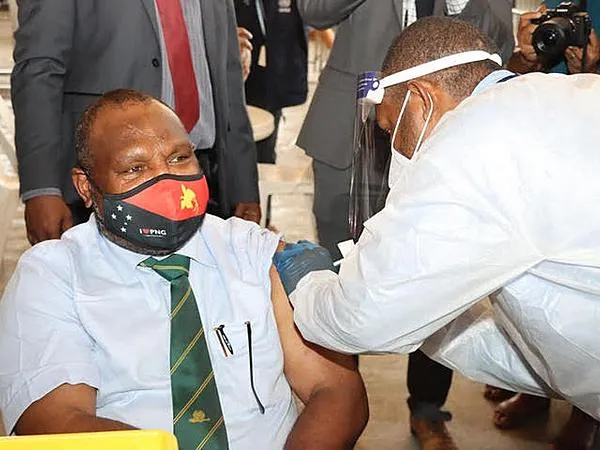
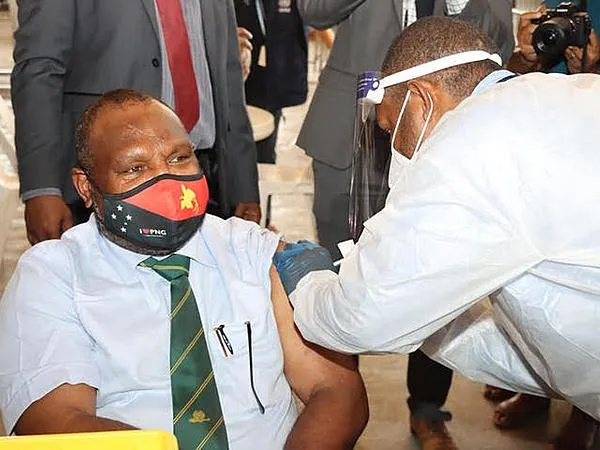
On May 5, the second round of vaccinations began. Marape was joined by David Manning, the Controller of National Pandemic Response, and Dr. Osborne Liko, the Secretary of State for Health, as well as WHO, UNICEF, and other participating donor partners.
Since the country is dealing with 11,000 incidents and 121 deaths as a result of COVID-19, Controller Manning believes it is important to take the required and responsible action.
“We are faced with many challenges but rarely is there an opportunity to present a solution. The solution that’s literally in our hands,” Controller Manning said.
PM Marape shared concern about the seriousness of the COVID-19 scenario.
“Papua New Guinea has felt the pain of COVID-19, you only ask the 11,000 positive cases who have been tested…. will they tell you that it is real and it’s not fake.”
He said that among the many diverse views and perspectives held in our country, there has also been an opposing perspective and controversy claiming that COVID-19 is not genuine.
PM Marape, who was the first to volunteer for the vaccine to express his respect for the citizens' welfare, is sticking to his word that vaccination will remain voluntary, even among high-risk and frontline health workers.
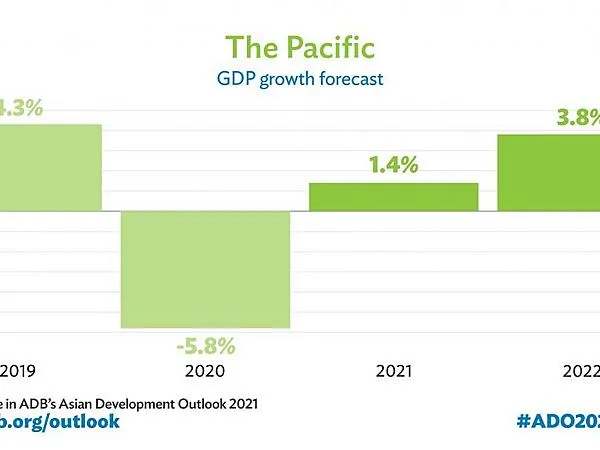
According to a new report published by the Asian Development Bank (ADB), the Pacific will return to positive growth in 2021.
However, the region's outlook is still fraught with dangers, and there is substantial variation among the 14 Pacific developing member countries (DMCs). According to the Asian Development Outlook (ADO) 2021, the ADB's flagship economic publication, the DMC economies contracted by 5.8% in 2020 as the coronavirus disease (COVID-19) pandemic directly impacted tourism and trade flows, as well as construction investment.
In 2021, a 1.4 per cent recovery is anticipated, based on increased tourism, the start of long-delayed development programs, and the resumption of labour mobility and cross-border trade.
“The start of the COVID-19 vaccine rollouts, both within Pacific DMCs and among their trade and tourism partner countries, indicate some economic recovery is likely in 2021,” said ADB Director General for the Pacific Leah Gutierrez. “However, risks to the recovery remain, particularly in tourism-oriented economies that are feeling the heaviest impacts of the pandemic crisis.”
Smaller tourism-dependent economies, such as the Cook Islands, where GDP is forecast to slip by more than a quarter this year; Palau, one of the world's most tourism-dependent economies; Samoa; and, to a lesser degree, Tonga, are likely to stifle overall development in the Pacific subregion this year. Travel bubbles are expected to help these economies rebound gradually, first in the Cook Islands and Niue with New Zealand, and then in Palau with Taipei, China. Overall, the Pacific is forecast to rise at a rate of 3.8 per cent in 2022.
With the launch of a planned travel bubble with New Zealand, the Cook Islands economy is expected to contract by 26% in 2021 before returning to 6% growth in 2022, according to the ADO. Samoa's economy is expected to contract by 9.2% in 2021 before rebounding to 3.1 per cent growth in 2022 until full vaccination coverage is reached and foreign visitors are allowed to return. Tonga's building and tourism markets will continue to be hampered by the twin shocks of Tropical Cyclone Harold and the COVID-19 pandemic in early 2020, leading to a 5.3 per cent contraction in 2021. The Tongan economy is expected to expand by 1.8 per cent in 2022, according to the ADO.
As it recovers from a pandemic-induced contraction in 2020, Papua New Guinea (PNG), the Pacific's largest economy, is forecast to rise slowly at 2.5 per cent in 2021. However, a new spike in COVID-19 cases is jeopardizing the economy's rebound. Budgetary funding and distribution of COVID-19 vaccines were provided by development partners. PNG's economic growth is expected to pick up to 3% in 2022.
Following an extraordinary 19.0 per cent contraction last year, Fiji, the subregion's second-largest economy and one highly reliant on tourism is expected to grow by 2.0 per cent in 2021. Fiji's economy is expected to rise by 7.3 per cent in 2022, assuming a rebound in tourism as a result of strong vaccine services both at home and abroad. Part of the effects of COVID-19 could be mitigated by increased tourism, but it could take many years for the economy to recover to pre-pandemic levels.
The Solomon Islands economy is expected to recover, with a growth of 1.0 per cent in 2021 and 4.5 per cent in 2022, according to the ADO, as fishing and construction resume. Work on public infrastructure programs, such as the Tina River Hydropower Initiative, transportation improvements, the reconstruction and extension of water supply and sanitation facilities, and construction for the 2023 Pacific Games, are expected to fuel the construction and related industries. The government's attempts to increase biodiversity are likely to result in a decrease in logging production.
Vanuatu's economy contracted in 2020 as a result of COVID-19 and Cyclone Harold's trade and travel restrictions. A tentative turnaround is expected as these limits are steadily lifted, with the growth of 2.0 per cent in 2021 and 4.0 per cent in 2022. This, however, would be contingent on a strong vaccine campaign and the development of travel bubbles with Vanuatu's major tourism markets.
In 2021, the North Pacific economies of the Federated States of Micronesia (FSM), the Marshall Islands, and Palau are expected to begin to weaken, with negative growth of 1.8 per cent in FSM, 1.4 per cent in the Marshall Islands, and 7.8 per cent in Palau. However, relative to 2020, these contractions are likely to be more subdued, as the current COVID-19 vaccine rollout eases pandemic-related border constraints that slowed international tourism and commerce. As sanctions are relaxed further and businesses continue, the ADB study forecasts a return to growth for all three North Pacific economies in 2022 (2.0 per cent for the FSM, 2.5 per cent for the Marshall Islands, and 10.4 per cent for Palau).
Despite being free of COVID-19 infections so far, the economies of Kiribati, Nauru, and Tuvalu in the Central Pacific slowed in 2020 as trade and travel constraints caused infrastructure projects to be postponed. As these programs return, development in Nauru and Tuvalu is projected to increase by 1.5 per cent and 2.5 per cent, respectively, in 2021. Kiribati's economy will decline by 0.2 per cent as a result of continuing constraints on the flow of goods and people as the world waits for COVID-19 vaccinations to arrive. According to the ADO, construction activity would aid Kiribati's return to economic expansion in 2022, with a growth of 2.3 per cent, while Tuvalu's growth will be 2.0 per cent. With the Regional Processing Centre set to close in 2021, Nauru's growth is expected to slow to 1.0 per cent in 2022.
The Asian Development Bank is dedicated to creating a stable, democratic, robust, and secure Asia and the Pacific while continuing to fight extreme poverty. It was established in 1966 and is owned by 68 owners, 49 of whom are from the city.
According to a Business Council of PNG market condition report, the majority of companies continued to witness financial loss through the end of last year, with at least 60% failing to reach their expected performance for the fourth quarter.
The findings said that 69% of companies expect their annual sales in 2020 to be lower than the previous year.
The survey found that nearly a year after the government's stimulus package was announced, 75% of companies said it had yet to have a significant impact on their operations, with 59 per cent ranking it as "not successful at all." “Consistent with findings from our second quarter survey, a majority of the respondents (75 per cent) say that their company has not benefited from the Government’s economic stimulus package, while 22 per cent say that they are unaware of its details,” BCPNG said.
“This highlights the continuing need for information, awareness, clear terms and guidelines as well as structures to be in place to support the effective implementation of the different stimulus efforts.
“Fifty-nine per cent of the respondents also rate the stimulus package as ‘not effective at all’ citing reasons such as a lack of action and clear direction to implement the stimulus package, lack of positive outcomes that would have come from the stimulus package, and the package not being accessible to SMEs and MSMEs.
“Reduced consumption and market demand remain to be the top challenge that businesses face.
“Aside from financial and productivity challenges, respondents also say that the lack of foreign currency and the inability to get the right skills in-country at the right time remains a business impediment.”
Despite the continuing pattern of financial loss, business leaders in PNG remain hopeful about their short-term business opportunities, according to the report.
In the next six months, 44% of respondents expect a sales to increase, while 25% expect a revenue decrease.
“This is a significant improvement from the previous quarter when only nine per cent anticipated revenue growth in the next six months and 74 per cent anticipated revenue decrease,” it said.
“Survey findings show that there are fewer businesses that reduced their headcount in quarter four for 2020 compared to quarter two.
“Furthermore, 82 per cent of respondents do not intend to reduce their employee headcount in the next three to six months. Seventy per cent of the respondents are now able to operate in the current environment for more than 12 months.
“This is a continuous improvement from Q2 and Q1 when only 51 per cent and 35 per cent, respectively, of the business leaders surveyed were able to operate in the current environment for more than 12 months.
“To boost business recovery, respondents believe that the Government should focus on accelerating resource projects, restoring investor confidence and resolving foreign investment issues, as well as settling debts to the private sector.”
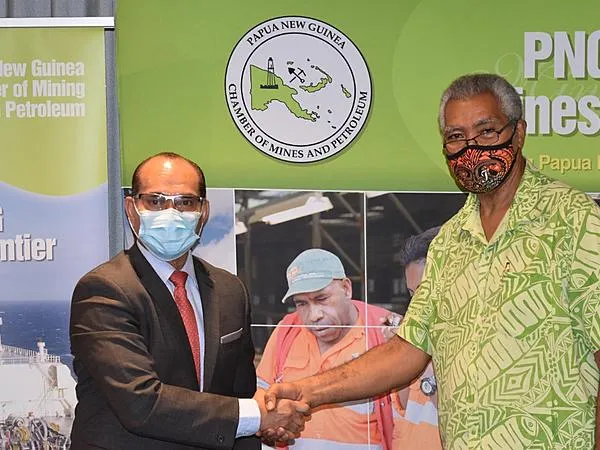
The PNG Chamber of Mines and Petroleum has appointed Richard Kassman as its current president.
Kassman, who has served as the chamber's vice president for the past three years, succeeds Gerea Aopi, who began his career in the industry in 1991.
Following the announcement, Kassman praised the outgoing president, Aopi, for his extensive work and guidance.
“My first task as president-elect is to thank outgoing president Gerea Aopi. A colossus of a man whose contribution to our industry and indeed his beloved Papua New Guinea is unrivalled.
“Gerea always guided the discourse ensuring being cognizant with national interests, when the chamber represented its diverse membership and promoted the industry. He served with class and distinction. He was measured, thoughtful and compassionate, and when required, frank and direct. Hallmarks of a courageous servant leader,” Kassman said.
In his final remarks, Aopi put the industry's attempts to stay open during the COVID-19 pandemic into perspective.
“Amidst the onset of the COVID-19 pandemic’s impact on the country last year, the chamber has been active in discussing legislation and policy that affects our industry.
“Constant dialogue and discussion amongst council members representing mining and petroleum have been at the core of our engagement in the national and political space,” he said.
Kassman, who works for Total E&P PNG Limited as the Public Affairs and External Communications Head, spoke about the mining and petroleum sector's future as well as the chamber's work.
“The chamber plays a crucial role in providing discourse on major national issues. And it represents members who are always ready to step in to assist the national leadership in times of national calamity,” he said.
The Chamber of Mines and Petroleum is PNG's apex body for the mining and petroleum industries, with a diverse membership that spans both the mineral and industry sectors. It comprises the majority of PNG's productive mining and petroleum firms.
According to the Asian Development Bank's 2021 forecast, the extractive and agricultural industries are projected to expand in 2021.
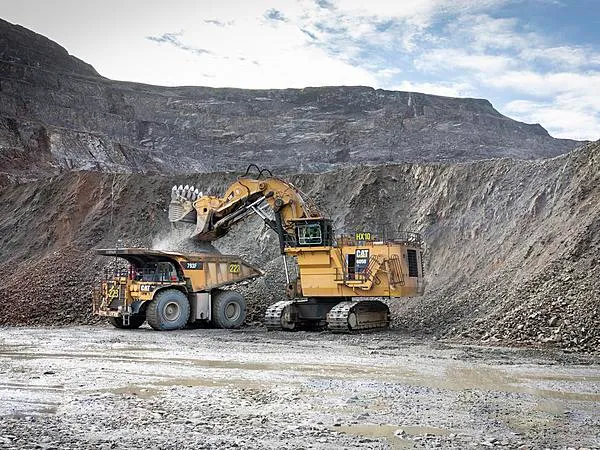
Mine and quarry production could rise in 2021 and 2022, according to the ADB's recently issued forecast for 2021, as favourable international metal prices spur production.
The Lihir and Ok Tedi mines, both multibillion-dollar ventures, are projected to increase gold production in 2021 after a tough year in 2020, while oil and gas production is expected to plateau. However, two new mineral and petroleum developments on the horizon, the Wafi-Golpu gold and copper mine and the Papua LNG project, both multibillion-dollar projects, have the potential to drive substantial development. In 2021, Papua LNG is scheduled to begin front-end engineering and design.
Meanwhile, the agriculture, forestry, and fisheries sectors are projected to rise by more than 3% in 2021, owing to low demand in 2020.
If conditions improve, transportation and storage, hotels and lodging, and renovation can all improve.
Capital spending is expected to increase by 16.9% in 2021 and another 9.7% in 2022, according to the National Budget for 2021.
The resulting stimulus would boost growth and local industries, but successful implementation would depend on development partners' support, according to the outlook.
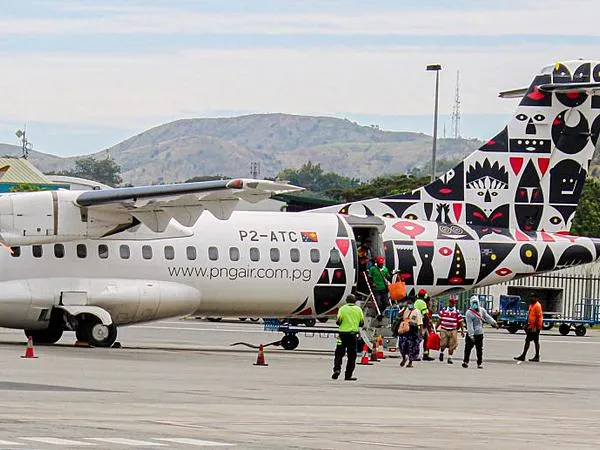
According to the company's board member, all PNG Air employees will be retained after the acquisition by Link PNG.
The key goal of the acquisition, according to PNG Air chairman Augustine Mano, is to achieve a viable airline industry in order to secure PNG Air's future, creditors, and personnel said a letter from the board to management and staff of PNG Air.
He said the board had reviewed and considered all practicable alternatives for reforming the company to resolve the continuing effect of the COVID-19 pandemic on domestic and foreign travel when it decided to endorse the 40 per cent shareholding to Link PNG.
He stated that this agreement needs ICCC approval and that an application to that effect has been filed, with shareholder approval expected shortly.
Mr Mano stated that the Memorandum of Understanding (MOU) signed in January 2021, as well as the recommendations submitted and staff questions, have all been resolved.
He also said that all employees would be kept.
PNG Air will continue to operate as a standalone carrier with its own board of directors and management.
This is done while maintaining the identity, with the exception of areas where resource maximisation is needed to allow shareholder returns.
He promised that rivalry with Air Niugini will continue until cost-cutting measures are identified and introduced.
He went on to say that the benefits from this joint venture would help all core stakeholders, including employees and the general public, who will benefit from lower airfares.
The Independent Consumer and Competition Commission (ICCC) is worried about the Climate Change and Development Authority's (CCDA) proposed new carbon levies or extra excise duties.
The ICCC expressed its reservations in a recent media release, stating that there has been a lack of substantive meetings with the impacted sectors on the issue, as well as the procedural mechanism used to enact these new levies and its negative effect on PNG users and companies.
These carbon levies were first gazetted by the Ministry of Finance in National Gazette No. G304 on May 27, 2020, and then updated in National Gazette No. G673 on October 12, 2020, resulting in a rise in excise tariffs, according to ICCC Commissioner and Chief Executive Officer Paulus Ain.
The ICCC decided not to incorporate the extra excise duties in the pump prices for gasoline, diesel, and kerosene after the new levies were gazetted, according to Commissioner Ain, so any alteration to the Excise Tariff Act should be introduced by the Department of Treasury and passed by Parliament.
He also stated that the Department of Treasury recommended in October 2020 that the carbon levies or extra excise not be imposed until the effect on enterprises and customers is completely evaluated.
“Despite the advice from Treasury, who is responsible for tax policy matters, the CCDA has proceeded to implement the carbon levies or additional excise tariffs, as per G673, on 12th April 2020,” Mr Ain said.
“Despite the important role the ICCC undertakes in the pricing the refined petroleum products at the retail level, the ICCC found out about this latest development when it was brought to our attention by a concerned stakeholder.”
He said, “Treasury and ICCC were not copied on recent correspondences in relation to this matter when CCDA informed the industry of their intention to commence collecting these new levies or additional excise duties.”
At a moment when the economy and companies are still suffering from the global and national impacts of COVID-19, the ICCC is very worried about the influence of these carbon levies and fees on the petroleum, airline, and agriculture sectors, as well as customers.
Ain said, “Based on the actual volume of fuel products used in the country in 2020, the ICCC has estimated that from 2021 onwards, consumers and businesses in PNG will incur an additional fuel cost of about K12 million annually.”
“This additional estimated cost to the economy will increase once the economy recovers and more fuel is consumed in the market, or when CCDA further increases the carbon levies in the future.”
Despite the CCDA and the Department of Finance's plan to raise the latest levies in April 2020, according to National Gazette No. G673 of 2020, Puma Energy PNG Refining Limited started collecting them in November 2020.
“The CCDA needs to clarify what it is going to do about the levies Puma Energy has been collecting from consumers since November 2020,” Ain said.
The ICCC is mandated by the Prices Regulation Act to incorporate all valid market costs in controlled prices.
Given the legal concerns and Treasury's recommendation to postpone the introduction of the new levies before the matter is fully discussed on a policy level, ICCC is urging CCDA to postpone the implementation of the new levies until Treasury receives its input on the matter and appropriate procedures are followed to amend the Excise Tariff Act if required.
This is because the new excise duties on processed fuel goods are designed to reduce emissions in the atmosphere.
To avoid imposing redundant fees and charges on companies in the region, any carbon levies or additional excise duty on refined fuel goods should be viewed holistically by Treasury.
According to Ain, the ICCC has decided to exempt these levies from the prices of refined petroleum products while waiting for more information from Treasury.
The Port Moresby Chamber of Commerce and Industry has asked the government to pay over K100 million in unpaid dues to its members in order to help them develop their businesses.
Stacey O'Nea, the Chamber's chief executive officer, stated that they are not after free handouts or a stimulus budget for companies; rather, they want what is owed to them to be compensated so that their businesses can be stimulated.
“Many of our members are starting to scale down and are letting go of their employees due to the impact of COVID-19 on the country’s economy, and businesses are unable to continue to save jobs in the current prolonged COVID-19 threat environment,” she said.
“The sensitive issue of job loss also has an impact on livelihoods in PNG’s extended family system and has a direct spillover effect on social and security issues.
“Coupled with ongoing concerns on revenue challenges, subsequent profit decline, depreciating kina, forex availability, increased fuel and security costs and COVID-19 restrictions are a myriad of serious challenges shared across our businesses and industries.”
O'Nea stated that the chamber is in talks with relevant authorities over receiving government compensation owed to its members.
“While we are thankful for the Government’s efforts this year towards settling a number of urgent arrears for rentals, goods and services, we urge continuity of payments for contracts that have satisfied the vetting process, as they will help act as a stimulus to sustain operations in these times for our businesses and industries,” she said.
Meanwhile, Opposition Leader Belden Namah has said that the economy is in free fall and has urged the government to ease controls on enterprises and social events as soon as possible while maintaining the new standard.
Lockdowns, he claimed, are killing the economy by throwing workers out of jobs and forcing companies to close.
On Tuesday, May 4, 2021, Papua New Guinea Prime Minister James Marape will formally start the vaccine roll-out in the country at the APEC House in Port Moresby.
Government ministers, regional governors, and dignitaries, including delegates from PNG's foreign partners, are scheduled to attend the presentation, which begins at 10 a.m.
David Manning, Police Commissioner and Controller of the PNG COVID-19 National Pandemic Response, said most of PNG's 22 provinces will have obtained their AstraZenega vaccine and completed their training in advance of the May 5 national roll-out.
He explained that the COVID-19 vaccine's National Roll-out Programme began on March 25-26 with a COVID-19 vaccination training for all Provincial Emergency Operation Centres (PEOCs), followed by a series of training activities/workshops for different target groups covering an outline of the vaccination program and microplanning, vaccine, immunization protection, connectivity, and demand creation.
In the first round, 103,725 people have been registered to be vaccinated, according to Manning. They are either health care employees, support personnel in both public and private health hospitals, workers in quarantine and isolation facilities, students in health establishments such as nursing colleges and medical schools, jail guards, border and immigration/customs agents, seaport workers, or airport/aviation workers. officers, airline workers, police, Defence Force personnel and teachers.
According to the Controller, the cumulative number of cases in PNG had increased to 11,206 in the last 24 hours, finishing at 12 p.m. on Friday, April 30.
“That is from a total of just over 92,000 tests we have conducted to date for COVID-19. We are recording cases every day so the vaccine will be critical to our COVID-19 response going forward. I urge everyone to be responsible and make that important life-saving decision to take the jab. Protect yourself and your family,” Manning said.
A Papua New Guinea transparency group wants the government to reveal more information on how the Covid-19 solution is funded.
With over 10,000 cases and 100 deaths, Papua New Guinea has become the Pacific nation worst affected by the pandemic, but the real tally is estimated to be much higher due to poor testing speeds.
At this time, there have been several allegations of misappropriation in the government's response to the pandemic, including contracts being given to government employees that have a potential conflict of interest.
"Clearly this is not acceptable," said the director of Transparency International PNG, Peter Aitsi.
Government authorities have failed to get the public to listen to demands for social distancing and other health initiatives as the pandemic continues to grip PNG.
According to Aitsi, the citizens of the country have no confidence in the government, and work must be done to rebuild trust in institutions.
"There is an underlying suspicion and uncertainty around Covid and the impacts of Covid and also the treatment of Covid," Aitsi said.
"In this type of environment I think it's incumbent on all of us to try and build public confidence in everything related to this pandemic so that people can have faith in the processes that are put in place to respond to Covid."
To regain public confidence, Aitsi suggested that the government disclose all information on support for the Covid-19 response, including summaries of international contributions and grants to provincial health authorities.
The Ok Tedi Development Foundation (OTDF) has unveiled its five-year strategic business strategy for the years 2021-2025.
The strategy aims to realign the company's policies and services to meet practical goals.
This aligns with OTDF's goal of empowering the Western Province's Community Mine Continuation Agreement (CMCA) societies and related bodies to be self-sustaining past 2025.
Over the last 12 months, OTDF has conducted extensive research and preparation with key stakeholders to gain a deeper understanding of current growth needs, emphasizing the value of successful stakeholder cooperation, the growing importance of women and youth, and the increase of neighbourhood law and order concerns.
Economic and income production, schooling, water and sanitation, food storage, and agribusiness are all part of the programme.
“We have done our groundwork, we know our current position, we have set our targets and are focused to achieve these over the next 5 years,” said OTDF CEO, Havini Vira at the launch.
“This plan has aligned all of us and we are now challenged to make this plan become a reality.
“It will take commitment, dedication, effort and energy to deliver the plan and I am confident that we can,” said OTDF board chairman, Musje Werror, who launched the plan.
OTDF began as a non-profit organization in 2001, serving the CMCA groups in Western Province.
The Australian government will contribute K190 million to the Connect PNG road project.
The funds will be used to construct the Trans-Island Highway, which will link Momase to the Southern and Highlands regions.
The Australian government has decided to fund the PNG government's transportation program, according to Minister for Treasury Ian Ling-Stuckey.
Australia will contribute $70 million (K170 million) on favourable terms, including a grant portion, and PNG will contribute K16 million, or just under one-tenth of the total cost. The Trans-National Highway is the subject of Tranche 1 of PNG Connect.
The 9-Mile Junction to Bulolo segment of the highway in Morobe Province, as well as the Passam to Lumi section in East and West Sepik provinces, will be covered by this funding from the Australian Infrastructure Financing Facility for the Pacific.
Mr Ling-Stuckey described it as a significant contribution to PNG Connect and the government's goals of transforming the domestic economy.
“The returns from building this type of road, connecting markets, far exceed the loan costs. This is good, sensible development,” Mr Ling-Stuckey said.
“PNG Connect is a fundamental part of our push to promote development from a grassroots level rather than relying on a handful of major projects, as has happened in the past.
“The government regards agriculture, forestry and fishing, and the small and medium entrepreneurial businesses serving those sectors, as the main drivers of sustainable national development.
“PNG Connect transport spending is the key to unlocking the economic power of the grassroots, and I am grateful to the Australian Government for supporting it.”
Mr Ling-Stuckey stated that the tranche 1 project could be the start of additional AIFFP road funding of up to $370 million for the Trans-National Highway.
The Trans-National Highway is a key component of PNG Connect, a 20-year plan to connect the country's four regions.
Follow on LinkedIn:
PNG Business News
Be the "First" to get our exclusive Digital Magazine & Weekly Newsletter.