A new partnership to establish downstream balsa processing in Oro Province of Papua New Guinea is being hailed as a significant step towards industrialisation, with plans to transform Kararata into a future Special Economic Zone (SEZ) aimed at attracting investment, creating jobs and increasing export value.
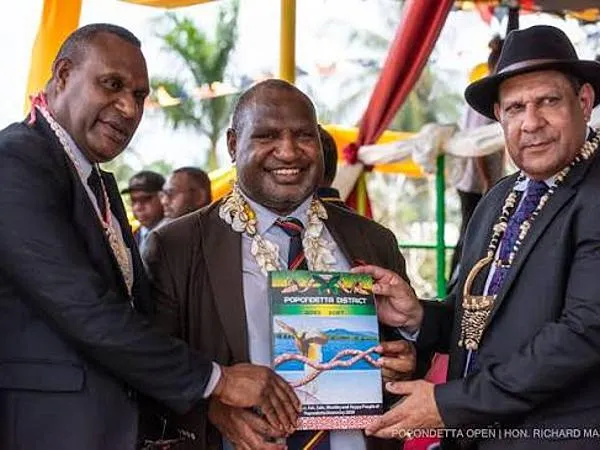
The Popondetta District Development Authority (PDDA), the Jaumo Balsa Project and the Papua New Guinea Forest Authority (PNGFA) signed a Memorandum of Understanding (MOU) at Kararata Village in the first week of June, laying the foundation for the commercial development of the Jaumo Balsa Project and a value-added forestry industry in the province.
The agreement was witnessed by Administrative Services Minister and Popondetta MP Richard Masere, Oro Governor Gary Juffa and International Trade and Investment Minister Richard Maru, alongside landowners and community members from Kararata Village and the wider Sauga community in Oro Bay East LLG.
The MOU establishes a strategic partnership to promote downstream timber processing, shifting from the export of raw forestry products to the manufacture of higher-value processed balsa products within Papua New Guinea.
Jaumo Balsa Project representative Stanford Motamota described the project as a "lifeline" for Oro Province, saying it would generate long-term economic benefits while positioning the province to achieve its first shipment of processed balsa products.
PNGFA Managing Director John Mosoro said the project supports the National Government's forestry reform agenda, which prioritises downstream processing, value addition, increased local ownership and greater participation by customary landowners.
He said processing forestry products within PNG rather than exporting raw logs would create employment, expand business opportunities and deliver greater economic returns to local communities.
Masere reaffirmed the district's commitment to establishing a downstream processing facility at Kararata, saying local processing would retain more value within the district, create jobs and increase incomes for customary landowners.
He also announced plans to support the development of Kararata as a Special Economic Zone, positioning the area as an emerging industrial and investment hub for Oro Province.
Masere said the proposed SEZ is expected to attract domestic and international investors, stimulate infrastructure development, encourage value-added manufacturing and strengthen economic participation by local communities.
Maru said reliable infrastructure would be critical to the success of the proposed economic zone and called on the Oro Provincial Government to ensure electricity is extended to Oro Bay, with a reliable 24-hour power supply in place before development begins.
He also revealed plans to invite an Oro Province delegation to participate in the inaugural Business Forum and Trade Expo in China this October to promote the province's investment potential, strengthen trade links and attract foreign investors.
Juffa said the proposed SEZ should ensure locally produced goods are traded at genuine market prices, helping address longstanding concerns over the undervaluation of Papua New Guinea's natural resources.
He stressed that investor screening and due diligence would be essential to protect landowner interests, ensuring only reputable and responsible investors operate within the province.
The MOU marks a major milestone in the development of the Jaumo Balsa Project and is expected to accelerate plans to establish Kararata as a forestry processing and industrial hub.
The initiative is projected to create employment opportunities, increase household incomes for landowners and expand participation in the formal economy through value-added forestry production.
As part of its commitment to the project, the Popondetta District Development Authority also presented a two-tonne truck to the Jaumo Balsa Project during the signing ceremony. The vehicle will support the transportation and distribution of balsa seedlings to farmers throughout the district, strengthening supply chains and supporting the expansion of the emerging balsa industry.
The project aligns with PNG's broader economic strategy of promoting downstream processing, reducing dependence on raw commodity exports and building regional industries that generate greater value, investment and employment within the country.
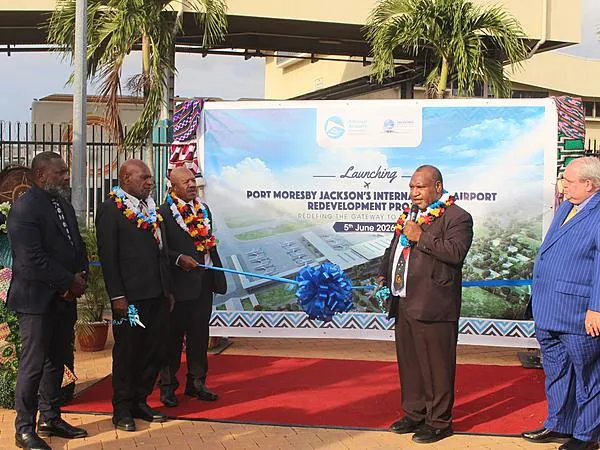
Papua New Guinea has launched the K2.5 billion Port Moresby International Airport (PMIA) Redevelopment Project, one of the country's largest aviation infrastructure investments, aimed at transforming Jacksons International Airport into a modern aviation gateway and strengthening PNG's position as a regional aviation and economic hub over the next 50 years.
Officially launched by the National Government and the National Airports Corporation (NAC), the project will be delivered in four phases over six and a half years. It combines public investment with private sector participation to expand airport capacity, improve passenger services and support long-term growth in trade, tourism and investment.
Speaking at the launch, Minister for Civil Aviation Waki Goi thanked Prime Minister James Marape and the National Executive Council (NEC) for backing what he described as a transformational national investment.
Goi said the project would begin with a K25 million government investment and was expected to attract substantial additional funding from both the public and private sectors over its lifetime.
"Investing in areas that bring big returns is the way to go forward for the next 50 years," he said.
The redevelopment includes major runway upgrades, expansion of the domestic and international terminals, and the replacement of ageing airport infrastructure with modern aviation facilities.
"You will see many changes over the coming years. We will improve the runway, upgrade the domestic and international terminals, and replace ageing facilities with modern infrastructure," Goi said.
A key component of the redevelopment is the creation of "airport cities" around major airports to stimulate commercial development and attract private investment.
Goi said investors were prepared to commit significant capital to Papua New Guinea's aviation sector, provided the country demonstrated sound financial management and fiscal discipline. He urged the newly restructured NAC board and management to maintain strong financial governance by keeping expenditure below revenue to reinforce investor confidence.
According to NAC, the redevelopment represents one of the largest aviation infrastructure projects in Papua New Guinea's history. It is expected to increase airport capacity, improve operational efficiency, deliver passenger services to international standards, strengthen PNG's preparations for APEC 2033, and support long-term expansion of the country's aviation sector.
The minister also called for closer collaboration between the country's major aviation centres, including Tokua, Lae and Mount Hagen, describing them as important drivers of future economic growth.
"I would like to encourage all of you, we must not fight for positions, we must not fight for the cake, we must fight for the real development that must take place. This is where our major income for Papua New Guinea lies. We must partner equally, talk equally, understand each other and move forward," he said.
Four-phase redevelopment
The redevelopment will be delivered in four stages over the next six and a half years.
Phase One will focus on relieving congestion by extending the domestic terminal by 110 metres while upgrading the airport's airfield ground lighting (AGL) and power supply systems.
Phase Two, funded under the Civil Aviation Development Investment Programme (CADIP III), will significantly expand and reconfigure the domestic terminal. Works include new check-in counters, aerobridges, upgraded baggage handling systems, VIP lounges, expanded retail and concession areas, and improved accessibility for passengers with disabilities.
Phase Three will expand apron facilities to accommodate Air Niugini's new Airbus A220 and Boeing 737 aircraft.
Phase Four will deliver a new international terminal equipped with modern passenger-processing technology, including self-service check-in, advanced baggage screening, walk-through metal detectors and expanded commercial facilities.
The final phase will also extend the airport's existing 2,750-metre runway to 3,500 metres, construct rapid-exit and parallel taxiways, expand cargo and aircraft maintenance facilities, incorporate green energy solutions, and develop associated landside infrastructure through public-private partnerships.
Prime Minister James Marape described airports as critical national infrastructure supporting trade, investment, tourism and economic growth.
"Airport is crucial, airport is key," he said.
Marape commended the NAC board, chaired by Shannon Anga, and Acting Managing Director Conway for prioritising the expansion of the domestic terminal, describing it as the corporation's strongest revenue-generating asset and the financial engine needed to sustain airport operations nationwide.
To accelerate the first stage of the project, Marape announced K20 million in National Government funding, complemented by K5 million allocated internally by NAC.
Marape linked the redevelopment to Papua New Guinea's broader economic outlook, noting that the country's non-resource sector has recorded annual growth of around four per cent over the past four years.
He pointed to strong occupancy rates at major hotels, including the Hilton and Airways Hotel, as evidence of rising business activity and increasing visitor numbers.
The Prime Minister said Papua New Guinea was preparing for a significant increase in passenger and business travel, driven by major resource developments expected through the late 2020s and early 2030s. These include Papua LNG, PNG LNG expansion, Pasca gas development, the reopening of the Porgera gold mine, the Wafi-Golpu and Yandera projects, the Frieda River project, and the 20-year extension of the Ok Tedi mine.
"By 2028, the volume of traffic will decrease, but into 2033 with APEC coming aboard, I see future growth in the economy," Marape said.
Passenger growth underpins expansion
Passenger growth projections reinforce the need for the redevelopment.
National Airports Corporation data shows that Port Moresby International Airport handled 779,039 passengers in 1997. That figure had risen to 1.68 million by 2025—an increase of almost one million passengers over 28 years, representing a compound annual growth rate of 2.8 per cent.
Based on an estimated annual growth rate of four per cent, passenger numbers are projected to reach 2.5 million by 2035 and 3.7 million by 2045.
Across NAC's network of 22 airports, passenger movements increased from 1.9 million in 1997 to 3.04 million in 2025. The corporation projects this will grow to 4.4 million by 2035 and 6.6 million by 2045, highlighting the need for continued investment in airport infrastructure nationwide.
Expanding international links
Marape said Papua New Guinea was also strengthening international connectivity.
Following recent discussions with the President of China, he said China Southern Airlines had increased services between Guangdong Province and Port Moresby from one weekly flight to three, boosting tourism, trade and business links between the two countries.
The Prime Minister also emphasised the importance of transparency and accountability within the National Airports Corporation, saying the organisation must remain free from corruption, favouritism and nepotism to maintain investor confidence and safeguard the country's aviation sector.
In a direct message to Air Niugini, he urged the national carrier to settle outstanding debts owed to NAC.
"I know you owe NAC some money. For goodness' sake, Chairman of Air Niugini, pay NAC the money. Don't hold back. If you don't have enough to pay ASAP, pay something and not nothing. Work as a business with NAC and sequence your payments," he said.
Marape also commended Airlines PNG for maintaining strong operational reliability and encouraged the airline to continue complementing the domestic aviation market as demand continues to grow.
Building on decades of investment
The redevelopment builds on decades of investment at Jacksons International Airport.
Since transitioning from military to civilian operations in 1945, the airport has undergone several major upgrades, including the commissioning of new terminal facilities in 1963, refurbishment for the 2015 Pacific Games, and the opening of the APEC Terminal in 2018.
The launch also demonstrated a whole-of-government commitment to the project, with the Minister for Foreign Affairs, the Minister for Works and Highways, and the Governor of the National Capital District joining the project team.
Goi called on government agencies, industry and development partners to work together to ensure the success of Papua New Guinea's aviation sector.
"If you are listening now, please contribute one way or the other to make civil aviation work for us all as we move into the future," he said.
The phased redevelopment is expected to provide immediate relief from congestion while laying the foundation for long-term expansion of Papua New Guinea's principal international gateway.
Feasibility studies and financing arrangements for the fourth phase are scheduled to begin in 2027. NAC is expected to invite investors, contractors and development partners to participate in delivering what is set to become one of the country's most significant aviation infrastructure projects, reshaping PNG's aviation sector and supporting economic growth for decades to come.
The National Airports Corporation (NAC) has advised airlines, businesses and the travelling public that runway restrictions at Kiunga Airport will remain in place as the airport upgrade project enters its next phase.
NAC said the Kiunga Airport Upgrade Project in Western Province has reached 48% completion, with significant progress recorded on both airside and landside works.
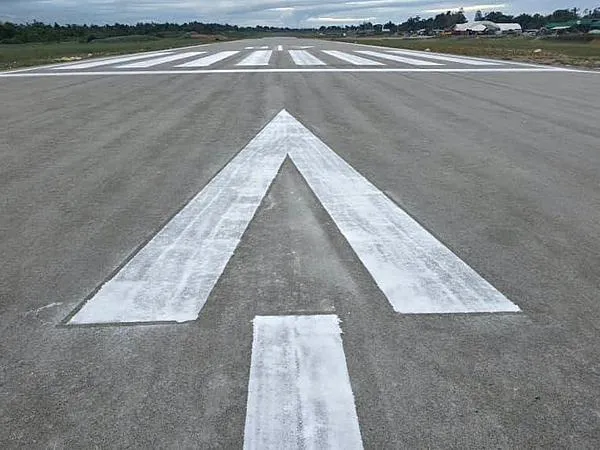
According to NAC, airside works covering Major Operational Works Program (MOWP) Stages 1 to 6 have been completed up to the application of temporary runway line markings. The completed sections are undergoing inspections ahead of the application of permanent line markings, which are expected to be completed by the end of June.
The project will move into MOWP Stages 7 to 9 from the first week of July, with works scheduled to continue until the first week of September.
Commercial flight operations are expected to resume only after the completion of the remaining works and subject to inspections, safety assessments and commissioning approval by the Civil Aviation Safety Authority of Papua New Guinea (CASA PNG).
Kiunga Airport's 1,200-metre runway remains under temporary restrictions, resulting in the continued suspension of Regular Public Transport (RPT) services, including Dash 8 aircraft operations.
However, NAC said the aerodrome will remain open to smaller general aviation aircraft operating under applicable Notices to Airmen (NOTAMs), operational restrictions and safety requirements.
The corporation acknowledged the ongoing disruption to passenger travel and cargo movements into and out of Kiunga.
NAC attributed the extended restriction period primarily to prolonged dry weather conditions that have lowered river water levels, affecting the transportation and delivery of construction materials to the project site.
"The main reason for the extended restriction period is the prolonged dry season, which has resulted in low water levels and affected the procurement and delivery of construction materials to site," NAC said.
The corporation urged airline operators, businesses and the travelling public to make alternative travel and freight arrangements while works continue.
NAC said it would continue providing updates on project progress and commissioning arrangements.
The airport upgrade forms part of efforts to strengthen aviation infrastructure in Western Province and improve long-term connectivity for communities and businesses in the region.
The Kiunga Airport Upgrade Project is being implemented by NAC under the Civil Aviation Development Investment Project II (CADIP II) and is funded by the Papua New Guinea government and the Asian Development Bank.
Acting Managing Director and Chief Executive Officer Dominic Kaumu said NAC appreciated the patience and cooperation of airline operators, stakeholders and the people of Western Province while the works are being completed.
New Zealand High Commissioner Georgina Roberts has reaffirmed her country's commitment to deepening economic and people-to-people ties with Papua New Guinea during her first official visit to Lae, the country's industrial and commercial hub.
Roberts, accompanied by New Zealand Honorary Consul in Lae Zoe Harrison, met with local authorities, business leaders and academic stakeholders last week to explore opportunities for greater cooperation in trade, education, skills development and sustainable economic growth.
The visit comes as New Zealand and Papua New Guinea advance the Economic Plan of Action announced in 2025, which seeks to strengthen bilateral trade, investment and development cooperation between the two countries.
"Lae's role as a key economic gateway continues to present strong opportunities for collaboration," the New Zealand High Commission said in a statement.
Located in Morobe Province, Lae is Papua New Guinea's largest cargo port and a major center for manufacturing, agriculture, logistics and resource-related industries, making it a strategic location for expanding commercial links between the two countries.
During the visit, Roberts also toured the Lae Temporary Market, which provides a secure and accessible trading space for up to 1,000 vendors while the city's main public market undergoes redevelopment.
The High Commission delegation met with vendors and sampled locally grown produce, highlighting the importance of agriculture and small-scale enterprises to household incomes and local economic activity.
The redevelopment of the Lae Main Market is being carried out through a partnership among the Lae City Authority, New Zealand and Australia. Once completed, the upgraded facility is expected to improve market infrastructure, sanitation, safety and accessibility for vendors and consumers.
The new market is scheduled to open in 2027 and is expected to serve as a key commercial hub for farmers, traders and small businesses across Morobe Province and neighboring regions.
New Zealand has been a longstanding development partner of Papua New Guinea, supporting initiatives in education, agriculture, renewable energy, governance and economic development across the Pacific region.
Officials said Roberts' visit underscored New Zealand's commitment to fostering stronger economic partnerships and people-to-people connections while supporting sustainable and inclusive growth in Papua New Guinea.
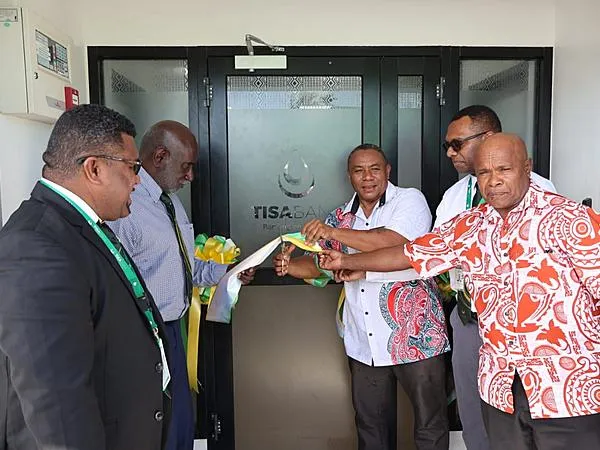
TISA Bank has officially opened its Kavieng Branch, marking a significant milestone in the bank's commitment to expanding access to banking services in New Ireland Province.
The opening ceremony was held in Kavieng and attended by the Governor of New Ireland Province, the Honourable Byron Chan, alongside provincial leaders, TISA Bank representatives, business partners and members of the public.
Speaking at the event, TISA Bank Board Chairman Moses Koiri said the new branch represents more than a physical expansion; it reflects a commitment to being closer to the people of New Ireland.
“This is more than a new branch for TISA Bank. It is our commitment to be closer to the people of New Ireland, making banking more accessible and practical for families, workers and businesses across the province,” Koiri said.
He noted that New Ireland is known for its strong communities and hardworking people, and TISA Bank’s presence in Kavieng reflects its desire to support local development through reliable and relevant banking services.
“Our aim is simple: to be here for our people and make everyday banking easier. Whether it is helping families manage their finances, supporting small businesses to grow, or providing companies with the tools they need to expand, this branch is here to serve those needs,” he added.
Welcoming the bank to the province, Governor Byron Chan commended TISA Bank as a modern and reliable financial institution.
“TISA Bank has proven to be a professional and reliable institution. I have personally experienced its services both locally and overseas, and it is encouraging to see this level of service now available in Kavieng. The opening of this branch is a key milestone that supports New Ireland’s ongoing economic growth and transformation,” Chan said.
Koiri acknowledged the support of provincial leadership and thanked the people of Kavieng for their warm welcome, describing the branch opening as the beginning of a strong and lasting relationship with the community.
The Kavieng Branch will provide a full range of banking services to individuals, businesses and organisations throughout New Ireland Province while reinforcing TISA Bank’s mission to deliver accessible, customer-focused banking across Papua New Guinea.
Papua New Guinea’s ports are more than gateways for cargo. They are the economic arteries of a nation. With a bold 30-Year Infrastructure Master Plan now being realised, PNG Ports Corporation is modernising its network to connect communities, attract investment and navigate towards the next generation of national growth.
PNG Ports Corporation Limited (PNG Ports) manages 15 of the country’s 23 declared ports, handling 10.8 million tonnes of cargo in 2025 alone and underpinning an estimated K29 billion, or 22 per cent, of Papua New Guinea’s GDP. From rice and fuel to gold, copper and palm oil, almost everything that moves in and out of the country passes through a PNG Ports facility. Yet the infrastructure supporting this vital national role has long been in need of modernisation.
That is now changing. PNG Ports’ 30-Year Infrastructure Master Plan, described as the largest port upgrade program in the corporation’s history, is delivering transformative investment across the entire national network. Backed by the Australian Government’s Australia-PNG Infrastructure Financing Partnership (AIFFP) contributing A$621.4 million (approx. K1.5 billion) and supported by the European Investment Bank (EIB) and Agence Française de Développement (AFD), the program is building resilient connectivity well into the future.
PNG Ports CEO Neil Papenfus says the program's ambition stretches well beyond the waterfront.
“Our infrastructure program is not simply about repairing wharves. We are securing the economic future of every province this network serves, improving the lives of the Papua New Guinean people who depend on it, and positioning PNG as a serious player in Pacific trade and logistics,” Papenfus said.
Kimbe Port: Rehabilitation Underway
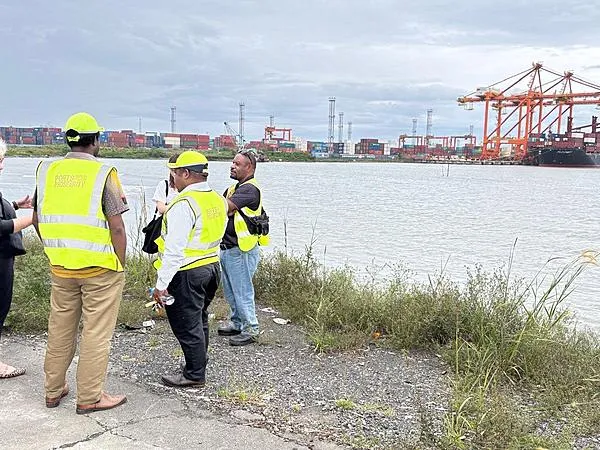
The program is already delivering on the ground. Kimbe Port, PNG’s third-largest port and a critical gateway for West New Britain Province, the country’s largest producer and exporter of crude palm oil, is the first port to undergo rehabilitation under the K1.5 billion Port Infrastructure Investment Program (PIIP), financed by the Australian Government through the AIFFP. Since works commenced in August 2025, the project has progressed beyond the halfway mark, generating local jobs and direct economic engagement for communities across the province. Lae Tidal Basin, Kavieng, Oro Bay and Daru are next in line for upgrades under the same program.
Community Service Obligation Ports
Of the 15 ports managed by PNG Ports, only three, Lae, Port Moresby and Kimbe, are commercially self-sustaining. The remaining 12 operate as Community Service Obligation (CSO) ports: facilities that would not be viable on purely commercial terms, but which perform an essential social function for the communities they serve. Ports such as Daru, Aitape, Vanimo and Wewak are lifelines for remote and rural populations where PNG’s terrain makes road connectivity impractical.
Without these ports, the cost of basic goods in these communities would escalate sharply, supply chains would break down and economic opportunities would wither. PNG Ports is working to ensure that the 30-Year Plan addresses both the physical upgrade of CSO ports and the development of sustainable funding pathways, including government support mechanisms, to keep these vital connections open and operational for generations to come.
A Pacific Pioneer: Rabaul’s “Green Port” Model
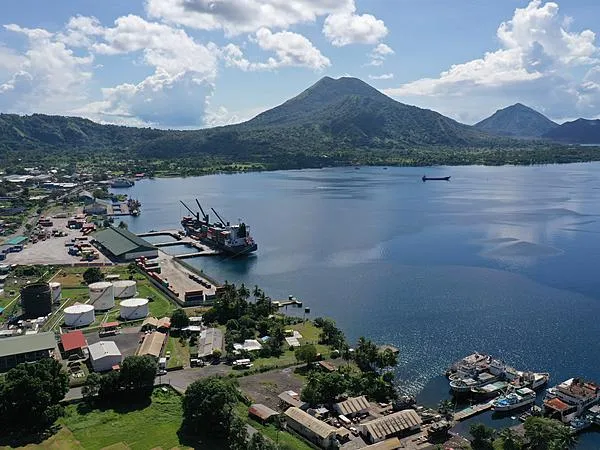
One of the most significant projects in the infrastructure program is the rehabilitation of Rabaul Port, with financing agreements between PNG Ports and AFD currently underway. The project, valued at approximately €82.6 million and expected to be co-funded by a €16.6 million EU grant, a €24 million AFD loan and a €24 million EIB loan, will be the first initiative in PNG to combine an EU grant with European partner loans under the Global Gateway strategy.
The Rabaul upgrade will rehabilitate key berths, upgrade the overseas berth, and pioneer a “green port” model for the Pacific, incorporating solar energy, advanced wastewater management, and climate-resilient infrastructure built to withstand rising sea levels and tropical storms. Construction is scheduled to commence in 2027, with completion targeted by 2030. The project is expected to create local jobs, reduce vessel waiting times, and strengthen Rabaul’s role as a regional import-export hub and redistribution centre serving some 300,000 residents of the East New Britain Province.
Lae Industrial Park: 350 Hectares of Opportunity
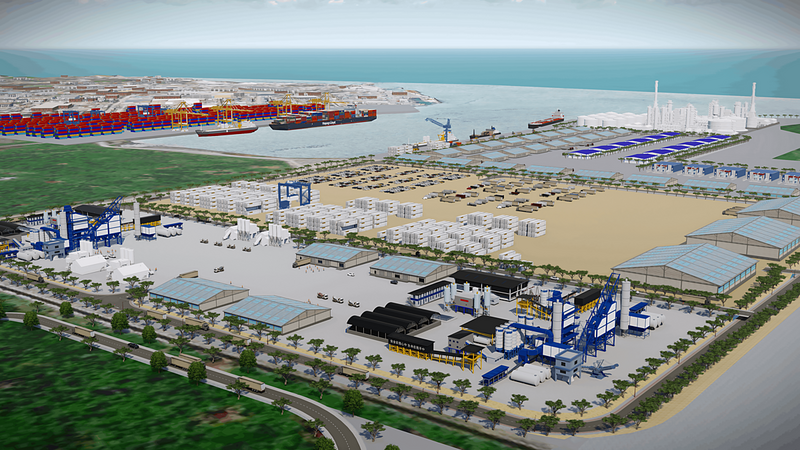
At the commercial frontier of PNG Ports’ growth strategy sits Lae Industrial Park, a 350-hectare world-class industrial and logistics precinct located directly adjacent to Lae Port, PNG’s busiest international terminal. With 45 hectares already developed, including hardstand with container capacity, sealed internal roads, drainage and security infrastructure, the park is open for business while offering significant room to grow.
The National Executive Council (NEC) has granted concept approval for Special Economic Zone (SEZ) status at the Lae Port precinct, a major milestone that will ultimately deliver fiscal incentives including tax and customs concessions to park tenants. Targeted industries include agribusiness and onshore processing, manufacturing, energy and utilities, and logistics and warehousing: precisely the sectors PNG needs to diversify its economy beyond primary commodities.
PNG Ports Chief Commercial Officer, Deborah Onga, describes the park’s appeal to investors as already tangible.
“Lae Industrial Park is a genuine investment-ready proposition. Businesses that locate here gain direct access to PNG’s largest port, proximity to regional shipping routes, and the flexibility to scale operations as their needs grow. With SEZ status on the horizon, the value proposition for investors will only strengthen, and we are ready to work with partners to bring that vision to life,” said Onga.
PNG Ports’ 30-year infrastructure plan represents a coherent and ambitious national vision, one in which Papua New Guinea’s ports are not simply maintained but fundamentally transformed into engines of economic growth, regional connectivity and community resilience. Critically, that transformation is also a matter of readiness. With a new wave of major resources projects on the horizon, PNG needs ports that are capable of handling the scale and complexity of next-generation industry. The infrastructure program is ensuring they will be.
New Ireland Governor Byron Chan is pursuing international education partnerships aimed at strengthening the province's public sector workforce, a move viewed as central to efforts to improve governance, attract investment and prepare the province for greater autonomy and economic self-reliance.
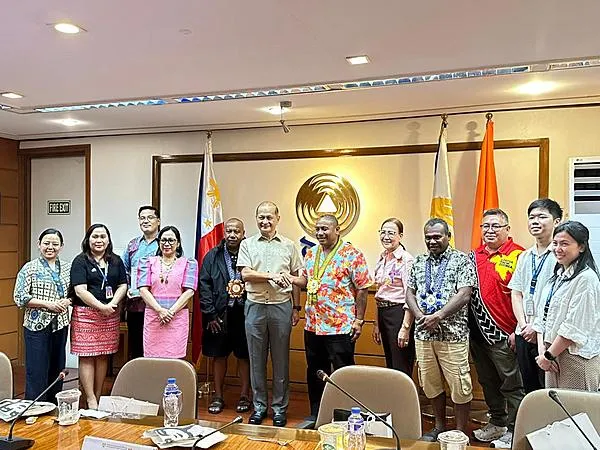
Chan traveled to the Philippines in the second week of June, where he met senior executives of the Development Academy of the Philippines (DAP) in Manila to explore professional development and higher education opportunities for officers within the New Ireland Provincial Administration.
Discussions focused on establishing a partnership that would provide internationally recognized certificate, diploma and master's degree programs designed to strengthen institutional capacity and develop a future-ready workforce capable of supporting New Ireland's long-term development agenda.
The governor's delegation met with DAP Acting President and Chief Executive Officer Leocadio Sebastian and senior directors on June 12.
Chan said investing in people remains one of the most important foundations of sustainable development and effective public service delivery.
"One of the greatest investments any government can make is in its people. Buildings, roads, and infrastructure are important, but it is our human resource capacity that ultimately determines whether we succeed as a province," he said.
"We want a Provincial Administration that is equipped with modern skills, international best practices, and the leadership capabilities necessary to meet the challenges and opportunities of the future."
The proposed collaboration would create educational pathways for provincial officers to undertake training in governance, leadership, project management, strategic planning, public administration, financial management and service delivery.
Chan said a capable public service is essential to creating an enabling environment for investment, supporting governance reforms and ensuring the province can effectively manage future growth opportunities.
The initiative forms part of a broader strategy to modernize the Provincial Administration and strengthen the institutional frameworks needed to support economic expansion and increasing provincial responsibilities.
As New Ireland continues discussions on autonomy, Chan said human capital development has become increasingly important.
"If New Ireland is to achieve its development ambitions and autonomy aspirations, we must first build the skills and expertise of our people. A strong and capable public service is the foundation of good governance," he said.
DAP is regarded as one of Southeast Asia's leading public sector training institutions, providing executive education, policy research, leadership development and capacity-building programs for government agencies across the Philippines and the wider region.
Beyond formal academic qualifications, discussions also covered technical exchanges, executive training programs, leadership development initiatives and customized courses tailored to the operational needs of the New Ireland Provincial Government.
Chan said the opportunities would extend beyond senior management to support emerging leaders and young professionals within the Provincial Administration, including teachers, helping build a stronger pipeline of future leaders.
The governor also visited the University of Perpetual Help to explore similar partnerships and additional opportunities for professional and academic advancement for New Ireland public servants.
The international engagement aligns with the Chan-Kolivos government's broader development agenda, which places education, skills development, economic empowerment and institutional strengthening at the center of provincial growth.
Since returning to office, Chan has reintroduced the provincial tertiary school fee subsidy program, expanded support for women through the Empowering Mama Bilas Peles Program, strengthened economic development initiatives through the New Ireland Development Corporation and advanced autonomy discussions through state agency capacity assessments.
According to Chan, the initiative reflects a development approach that balances infrastructure investment with human capital development.
"The future of New Ireland will not be built solely through projects and funding. It will be built by educated, skilled, and capable people who can lead our institutions and create opportunities for future generations," he said.
Chan also acknowledged the legacy of his late father, former Papua New Guinea prime minister and New Ireland governor Julius Chan, whose vision consistently emphasized education and leadership development as drivers of national and provincial progress.
"Julius Chan always believed that education was the most powerful tool for transforming lives and communities. As we continue his vision for New Ireland, we remain committed to creating opportunities for our people to learn, grow, and lead," he said.
The New Ireland Provincial Government is expected to continue discussions with DAP in the coming months as both parties work toward establishing a framework for future cooperation and educational exchange.
If formalized, the partnerships with DAP and the University of Perpetual Help could become among the most significant public-sector capacity-building initiatives undertaken by the New Ireland Provincial Government in recent years, strengthening the province's ability to deliver services, manage investment opportunities and support long-term economic growth.
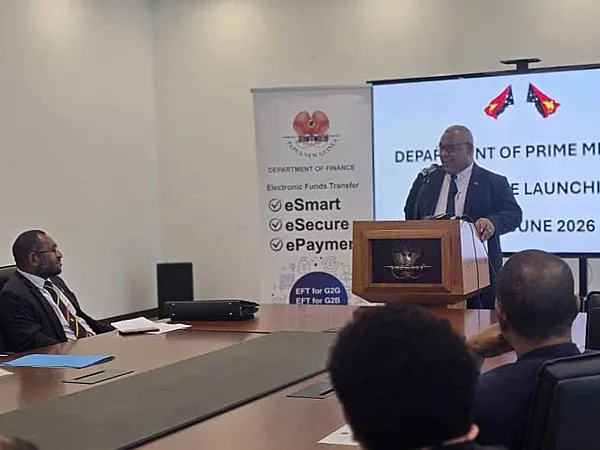
The Department of Prime Minister and National Executive Council (DPMNEC) has officially launched its Electronic Funds Transfer (EFT) Payment System as part of the government's efforts to modernise public-sector financial management, improve efficiency and strengthen accountability.
The announcement was made by Chief Secretary to Government Ivan Pomaleu during the official launch of the EFT Payment System on Friday, June 12, at Melanesian Haus in Port Moresby, marking the department's transition from traditional cheque payments to electronic fund transfers.
Pomaleu said the reform stemmed from a directive issued on March 13, 2025, following the Department of Finance's presentation of its 2025 Annual Plan during the Prime Minister's Review Meeting on Feb. 10, 2025. Under the directive, DPMNEC was selected as the first pilot agency to move away from manual cheque payments and adopt electronic payment arrangements.
He described the transition as more than an administrative change, saying it represents a significant milestone in transforming how government conducts business and manages public funds.
"For many years, government agencies have continued to rely on cheque payments long after the private sector and ordinary citizens moved to electronic banking platforms," Pomaleu said.
He noted that most Papua New Guineans no longer use cheques and that many businesses have adopted paperless operations and direct deposits, making it necessary for government agencies to meet the same standards expected of businesses and citizens.
According to Pomaleu, the previous cheque-based payment process required officers to physically collect cheques, visit banks, queue for deposits, wait for clearance and provide receipts before transactions could be completed. He said the process created unnecessary delays, administrative burdens and inconvenience for both government agencies and suppliers.
The new EFT system addresses many of these inefficiencies by allowing funds to be transferred directly into verified supplier bank accounts through secure banking channels.
Pomaleu said the reform would deliver faster payment processing, stronger security controls, improved transparency and accountability, better visibility over government cash flows, lower operational costs and greater support for paperless government operations.
Electronic transactions also generate automatic audit trails and more reliable financial reporting while reducing risks associated with physical cheque handling, including lost, misplaced or stolen cheques.
While highlighting the efficiency gains, Pomaleu stressed that the reform is fundamentally about strengthening financial governance.
"The objective is not simply to move money electronically, but to ensure that every payment is properly authorised, properly verified, properly recorded and paid to the correct recipient account," he said.
He warned that while EFT removes many risks associated with cheque payments, it introduces new risks related to the accuracy and integrity of supplier banking information.
To mitigate those risks, DPMNEC has incorporated stringent Know Your Customer (KYC) requirements and internal governance controls into its financial management processes.
Under the new arrangements, suppliers must declare and verify their nominated bank account details before being registered in the payment system. Supporting documentation must be submitted and independently verified before approval. Once approved, account details will be locked and managed only by officers with administrator-level authority.
Pomaleu directed that no supplier banking details be entered, amended or activated without completion of the prescribed KYC process, independent verification and administrator approval.
He said segregation of duties, account verification protocols and administrator controls would serve as critical safeguards under the new payment environment.
"Electronic transfers make payments faster. They do not justify haste. Speed must never come at the expense of control," he said.
To ensure compliance, Pomaleu said his advisers would conduct periodic random reviews of EFT transactions and associated procedures to confirm that appropriate controls remain in place.
He added that the rollout aligns with broader administrative reforms within DPMNEC aimed at using technology to improve service delivery, decision-making and government operations.
Pomaleu commended DPMNEC advisers, finance officers, the Department of Finance, banking partners and other stakeholders for their contributions to implementing the reform, noting that they had transformed a policy directive issued in March 2025 into an operational reality.
He also linked the initiative to Papua New Guinea's Reset PNG @ 50 reform agenda and the country's 50th Independence Anniversary celebrations.
According to Pomaleu, the EFT system supports Big Bet No. 10 and Quick Win No. 414, which seeks to enable government payments through any bank or mobile platform.
"As we move forward, we must continue to challenge outdated practices and embrace reforms that improve efficiency, transparency and public confidence in government," he said.
"Today we are retiring a process of the past and embracing a system fit for a modern public service."
Pomaleu said DPMNEC's transition from cheque payments to EFT demonstrates the department's commitment to leading by example, embracing reform and operating to the same standards expected of the citizens and businesses it serves.
He formally launched DPMNEC's Electronic Funds Transfer System and declared the department's transition from cheque payments to EFT.
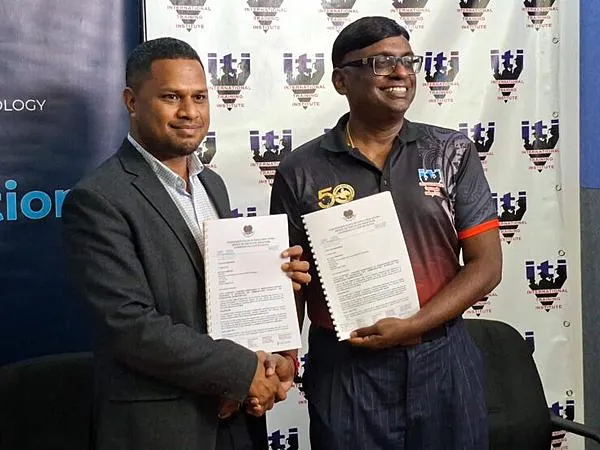
Papua New Guinea's Department of Information and Communications Technology (DICT) and the International Training Institute (ITI) have signed a five-year memorandum of understanding aimed at strengthening cooperation in artificial intelligence, digital skills development, research and innovation.
The agreement, signed in Port Moresby on June 9, seeks to build national ICT capability through curriculum enhancement, internship opportunities, corporate training, staff upskilling programs and the joint development of AI-driven use cases aligned with Papua New Guinea's digital transformation agenda.
A technical working group will be established to coordinate and oversee implementation of the partnership over the next five years.
The signing ceremony was attended by DICT Secretary Steven Matainaho, Deputy Secretary for Policy and Emerging Technology Flierl Shongol and senior departmental officials. ITI was represented by Chairman and Co-Founder Senthil Kumaran Sentheyval, Director and Dean of Studies Sivanathan Sivaruban and members of the institution's academic leadership team.
Sentheyval said the agreement reflects a shared commitment to advancing technology, education and innovation in Papua New Guinea.
"We want to progress, we are also going into IT and AI, so this is something we would like to do — to find out where we can share," he said.
"DICT has its own summit and conference, and we have ours. Working together in the same direction is good, and it is encouraging to collaborate with the department to progress further."
He said ITI's role extends beyond training to supporting innovation and the development of emerging technologies.
"As an institution, we are here for the training side, but also to be part of the innovation of future progress in digitalization and AI. It is always good to have the educational side involved in that as well," Sentheyval said.
Matainaho said the partnership supports the government's broader objectives for digital government, digital economy development and implementation of Papua New Guinea's national AI strategy.
He emphasized that artificial intelligence must be linked to practical applications to deliver tangible benefits.
"AI alone is nothing, but AI pegged to a use case — that's where you start to see the value," Matainaho said.
"This partnership is about exploring and incubating those ideas and use cases, and what better way to do it than with higher education institutions."
Matainaho identified small and medium-sized enterprises as a key area of focus, saying AI technologies can help businesses reduce costs, improve efficiency and access new markets.
He said DICT's AI Adoption Framework and National AI Strategy are intended to be implemented through collaborative partnerships that translate policy objectives into practical solutions.
Under the agreement, the two organizations will collaborate on AI training programs, development of industry and government use cases, AI laboratory experimentation and wider adoption of digital technologies across the public and private sectors.
The partnership will also be featured during the Digital Transformation Summit 2026 as part of broader efforts to accelerate digital transformation and technology adoption across Papua New Guinea.
The five-year agreement is expected to support the development of digital skills, strengthen national AI capability and encourage innovation across government agencies, businesses and educational institutions.
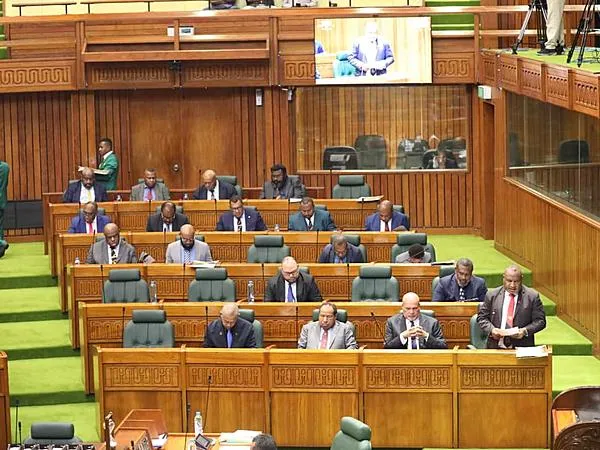
Papua New Guinea Prime Minister James Marape has called on cabinet ministers, government departments and agencies, provincial governors and district members of parliament to publicly present detailed reports on achievements, spending and challenges within their respective sectors and jurisdictions over the past seven years.
The directive follows Marape's presentation to parliament on June 5 of the Marape-Rosso government's Seven-Year Performance Report, which reviewed the administration's performance since it assumed office in May 2019.
Marape said the report presented in parliament was intended to provide an overview of the national government's work, investments, achievements, challenges and ongoing programs, but was not a comprehensive account of all government activities.
"The Seven-Year Report is not conclusive; it is not inclusive. This is just an indication of what we have done," he said.
He said every sector minister possesses more detailed information on their respective portfolios and should now make those reports available to parliament, stakeholders and the public.
"The Sector Ministers have full Reports on each Sector in terms of what we have done in the last seven years," Marape said.
According to the prime minister, the report demonstrates that the government has made significant investments across priority areas despite criticism that little progress has been achieved during its time in office.
"We have made substantial investments in all the key Sectors — infrastructure, education, health, law and justice sector, economic sector interventions — and our numbers do not lie," he said.
Marape said the government deliberately chose to table the report publicly because transparency and accountability are essential components of democratic leadership.
He said the document provides members of parliament, development partners, public servants, civil society organizations, churches, businesses, citizens and the opposition with an opportunity to assess government performance and scrutinize its delivery record using factual information and official statistics.
"In my view, such a Report has not been presented in Parliament since 2007," Marape said. "I am a student of PNG Parliamentary proceedings, and I am yet to find a detailed self-assessment Report presented by a Government of the day that gives opportunity for stakeholders, including the Opposition, to criticise the Government on its own delivery and its own numbers."
Marape said public funds and government responsibilities must be accounted for, making it important for the administration to openly report on its performance.
He acknowledged that parliamentary time constraints prevented a full discussion of every sector during the presentation, reinforcing the need for ministers and departments to release more detailed reports.
"We ran out of time on Friday, but Ministers who are responsible for these Departments and Portfolios have Reports to present on what has been achieved by our Government collectively over the last seven years," he said.
The prime minister also stressed that the report should not be interpreted as a claim that all government objectives have been achieved.
"I am first to say that we have not achieved all we want to do for our country," he said. "Many works remain undone or half-complete or just started, but some works are going to be in progress to maturity."
Marape said Papua New Guinea remains a developing country with significant long-term infrastructure and social development needs, and that no government could realistically complete all necessary work within a single term or even seven years.
"If all work was complete before 2019 when I took office, then certainly there would be no task for me to do," he said. "Much work remains for Governments into the future, including the Government that will come into office from 2027 to 2032."
He encouraged Papua New Guineans to use the report as a reference document to assess completed projects, ongoing programs and areas requiring further attention.
"I want to ask our people: use the Report. Where you have interest, if you have any questions, ask the relevant Ministers or Departments, or ask my Department. We will answer those questions accordingly," Marape said.
The prime minister said the report should serve as the beginning of an informed national discussion on government performance, service delivery, public investment and future development priorities rather than bringing debate to a close.
Under his directive, ministers are expected to provide detailed accounts of departmental performance, including programs implemented, reforms undertaken, projects completed, funds utilized and operational challenges encountered.
Provincial governors and district MPs have also been asked to explain how national government allocations, Provincial Services Improvement Program (PSIP) funds, District Services Improvement Program (DSIP) funds and sector funding have been translated into tangible services and infrastructure projects for communities.
"The National Report indicates what work we have done, what we have started, and where Departments are as we progress towards more work for the balance of this term in preparation for 2027," Marape said.
He said the Marape-Rosso government remains focused on completing ongoing projects, improving service delivery, strengthening accountability mechanisms and preparing the country for the next phase of development.
Marape said the administration's goal is to leave behind not only infrastructure and development programs, but also a stronger culture of reporting, transparency and accountability throughout the public sector.
He reaffirmed the government's commitment to continuing work across a broad range of sectors, including roads and infrastructure, education, health, law and order, economic growth, agriculture, resource development, energy, international relations, youth development, churches, social development, governance, and provincial and district service delivery.
"We have not achieved all we want to do, but we are working," Marape said. "The work of nation-building is continuing, and this Government remains committed to doing its part for our people and for the future of Papua New Guinea."
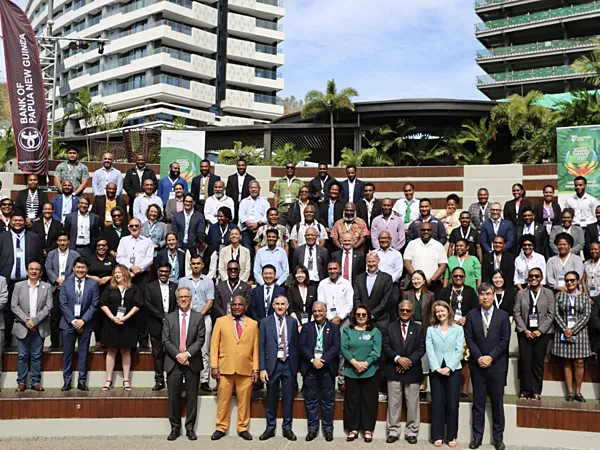
Papua New Guinea and the European Union have reaffirmed their commitment to expanding trade, investment and sustainable development cooperation, with more than 300 participants from PNG and Europe gathering in Port Moresby for the 5th EU–PNG Business Forum.
Held at the Hilton Port Moresby Hotel & Residences on June 2–3 under the theme “The EU Global Gateway for Sustainable Investment, Connectivity and Growth in Papua New Guinea,” the forum brought together government officials, private sector representatives, financial institutions, development partners and investors to explore new business opportunities and strengthen economic ties.
Representatives from 77 companies, including 23 European firms, attended the event, which facilitated more than 170 business-to-business (B2B) and business-to-government (B2G) meetings aimed at fostering long-term commercial partnerships and identifying new investment opportunities.
Opening the forum, Prime Minister James Marape outlined his vision for sustainable and inclusive development, encouraging European and Papua New Guinean businesses to work together and “grow together” through partnerships that create jobs, stimulate investment, transfer technology and improve livelihoods.
Marape reaffirmed the Government’s commitment to maintaining a stable and predictable environment for responsible investment and private sector growth, emphasizing that Papua New Guinea remains open for business and ready to unlock its economic potential through international partnerships.
The forum also served as a platform for PNG and the European Union to reaffirm their shared commitment to sustainable investment, economic cooperation and private sector-led development.
Minister for National Planning and Monitoring Sir Ano Pala described the European Union as a trusted strategic partner that has supported Papua New Guinea’s development over many years. He joined other senior leaders in stressing the importance of attracting quality investments that contribute to long-term national development.
European Union Ambassador to Papua New Guinea H.E. Erika Hasznos said the forum reflected a shared commitment to building a prosperous and sustainable Indo-Pacific region while translating political cooperation into tangible business outcomes.
“This Forum is about our shared vision of an open, sustainable and prosperous Indo-Pacific; about translating political commitments into bankable projects; and about building long-term, high-quality partnerships between European and PNG businesses,” Ambassador Hasznos said.
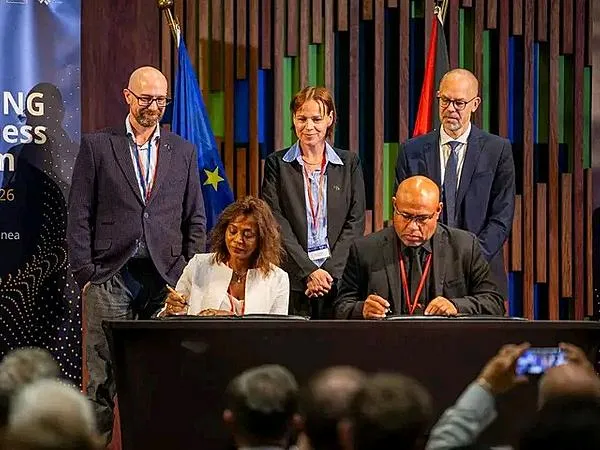
A key outcome of the forum was the signing of a new Global Gateway investment under the Water Wise Communities Project, which aims to improve water security and climate resilience across Papua New Guinea.
Under the agreement, the European Investment Bank (EIB) will provide a concessional loan of €25 million (approximately PGK126 million), supported by a €16.4 million (approximately PGK83 million) grant from the European Union. The project is expected to expand access to reliable drinking water for an additional 400,000 people while strengthening urban sustainability and resilience to climate-related challenges.
Peteris Ustubs, Director for Asia, Central Asia and the Pacific at the European Commission’s Directorate-General for International Partnerships (DG INTPA), said Papua New Guinea remains an important partner in the European Union’s Indo-Pacific strategy.
He said PNG’s strategic location, abundant natural resources and commitment to sustainable development make it a key destination for future investment under the Global Gateway initiative.
Throughout the two-day event, discussions focused on priority sectors including renewable energy, water security, digital transformation, connectivity, sustainable extractive industries and agricultural value chains.
Participants also attended practical sessions on exporting to the European Union market and conducting business in PNG, while masterclasses provided guidance on compliance with the European Union Deforestation Regulation (EUDR). The programme included site visits to selected Global Gateway-supported projects in and around Port Moresby.
According to the European Union, the forum was designed to identify new trade and investment opportunities, strengthen strategic partnerships and leverage Global Gateway financing and technical support to support sustainable economic growth in Papua New Guinea.
The event highlighted the growing economic relationship between PNG and the European Union, which is valued at more than K5 billion annually. Papua New Guinea was the first Pacific nation to ratify the EU–Pacific Interim Economic Partnership Agreement (iEPA) in 2011 and continues to benefit from duty-free and quota-free access to the European single market. The European Union is now PNG’s fourth-largest export destination.
Ahead of the forum, approximately 400 participants, including more than 40 representatives from European companies, had registered to attend.
Speaking during a media conference before the event, Ambassador Hasznos said the European Union intended to use the forum both to facilitate business connections and to showcase major infrastructure and investment projects being delivered through the Global Gateway strategy in partnership with the PNG Government.
“As part of the Business Forum, the European Union will present itself as a developer of major upcoming infrastructure and investment projects under the Global Gateway strategy, while facilitating business-to-business and business-to-government contacts,” she said.
National Trade Office Chief Trade Officer Richard Yakam said PNG’s participation in the Interim Economic Partnership Agreement reflects the country’s commitment to sustainable growth and economic diversification.
“The EU Global Gateway initiative complements these efforts by enhancing connectivity and attracting investments. PNG remains dedicated to strengthening its partnerships with the European Union and translating trade agreements into tangible development outcomes for our people and our future,” Yakam said.
Investment Promotion Authority Managing Director Clarence M. Hoot said European interest in Papua New Guinea has continued to grow since the inaugural PNG-EU business conference in 2019.
“We have witnessed the growing interest of European businesses and investors establishing a presence in PNG, and we stand ready to facilitate further opportunities following this forum,” Hoot said.
The forum was organised by the European Union in partnership with the International Trade Centre (ITC), in cooperation with the Government of Papua New Guinea, particularly the National Trade Office, the Investment Promotion Authority and the PNG-Europe Business Council.
A high-level plenary session brought together representatives from the European Commission, the PNG Government, the European Investment Bank, the World Bank, the International Trade Centre and private sector leaders to discuss opportunities for sustainable investment, trade and economic cooperation.
At the closing ceremony, Minister for Foreign Affairs Justin Tkatchenko said the forum demonstrated how relations between Papua New Guinea and the European Union have evolved beyond traditional development assistance into a broader strategic partnership.
He said the event strengthened business connections while reinforcing cooperation based on mutual respect, shared values and common development goals.
The forum concluded with a renewed commitment by both sides to deepen cooperation under the Global Gateway Strategy, promote responsible resource development, strengthen trade and investment linkages, and expand economic opportunities for Papua New Guineans.
Since its launch in 2011, the EU–PNG Business Forum has served as a key platform for strengthening economic ties, encouraging sustainable investment and expanding trade relations between Papua New Guinea and the European Union. Following the regional Pacific Business Forum held in Fiji in 2025, this year’s edition focused exclusively on Papua New Guinea and the opportunities available to PNG and European businesses through the Global Gateway Strategy.
Through Global Gateway, the European Union supports sustainable investments in digital connectivity, energy, transport, water security, health, education and research, while mobilising public and private sector financing to advance inclusive and sustainable development in partner countries, including Papua New Guinea.
Ok Tedi Mining Ltd. (OTML) marked World Environment Day 2026 with extensive tree-planting and community sustainability initiatives across its operations, underscoring its commitment to environmental stewardship, climate action and sustainable development.
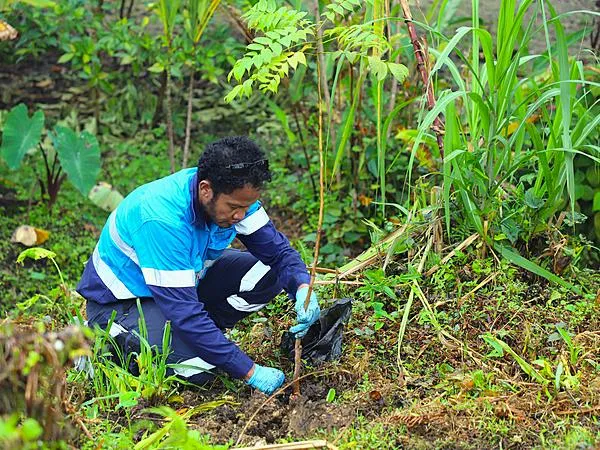
The company planted more than 900 trees representing over 30 native species in Tabubil and Bige as part of activities commemorating the annual event observed globally on June 5.
According to Ok Tedi, the initiative promotes biodiversity conservation while supporting efforts to restore and protect ecosystems in areas where the company operates. The program also contributes to greenhouse gas reduction and environmental awareness among employees and surrounding communities.
World Environment Day, established by the United Nations and formally recognized in Papua New Guinea under National Gazette No. G600, serves as a platform to raise awareness and encourage action on environmental challenges.
This year's global theme, "Climate Action," aligns closely with Ok Tedi's 2026 environmental focus, "Committed to Positive Climate Action," highlighting the company's emphasis on reducing emissions while strengthening resilience to the impacts of climate change.
Ok Tedi said climate action remains central to its operations and the wellbeing of communities in its project areas. The company noted that rising temperatures, shifting rainfall patterns, flooding and drought pose increasing risks to infrastructure, workforce safety and downstream river systems.
The miner said these challenges reinforce the need for responsible mining practices that protect environmental integrity while supporting long-term operational resilience and economic benefits.
Ok Tedi continues to align its environmental programs with Papua New Guinea's Climate Change (Management) Act 2015, the National Climate Change Policy and international commitments under the Paris Agreement.
The company is also pursuing certification under The Copper Mark, an independent assurance framework that assesses environmental, social and governance standards across the copper value chain.
As part of its Growth 2050 Energy Transition Strategy, Ok Tedi is investing in renewable energy projects beyond its existing Ok Menga hydropower facility and is working toward achieving carbon neutrality by 2050.
At its Bige Operations, the company highlighted one of its largest environmental management programs, which annually manages about one million tonnes of piped pyrite concentrate and 17 million tonnes of dredged neutralized sand sediments recovered from the Fly River system.
Ok Tedi said strategic dredging helps mitigate downstream impacts, maintain river capacity and support the long-term sustainability of ecosystems and communities along the Fly River corridor.
The company also undertakes progressive rehabilitation of completed storage areas at Bige, rehabilitating approximately 30 hectares each year through the planting of more than 50,000 native trees.
According to Ok Tedi, former tailings storage areas are progressively converted into stable, vegetated landforms, contributing to environmental restoration, biodiversity enhancement and sustainable land use.
In addition to rehabilitation and tree-planting efforts, the company organized a series of environmental awareness and community engagement activities to mark World Environment Day.
These included a Workplace Environmental Improvement Competition aimed at promoting environmental awareness, inspections and hazard identification; Environmental Recognition Awards honoring teams that demonstrated excellence in meeting environmental obligations; and school-based photo and essay competitions in Tabubil and Kiunga focused on the Climate Action theme.
Ok Tedi said the activities reflect its broader commitment to fostering environmental responsibility among employees, students and communities while supporting sustainable development across its areas of operation.
Nationwide Ticketing Access Expanded Through Post PNG’s Trusted Branch Network | PNG Air Ranks 3rd in Regional On-Time Performance | Phasing Out of the Dash 8 and New ATR Fleet Era Begins
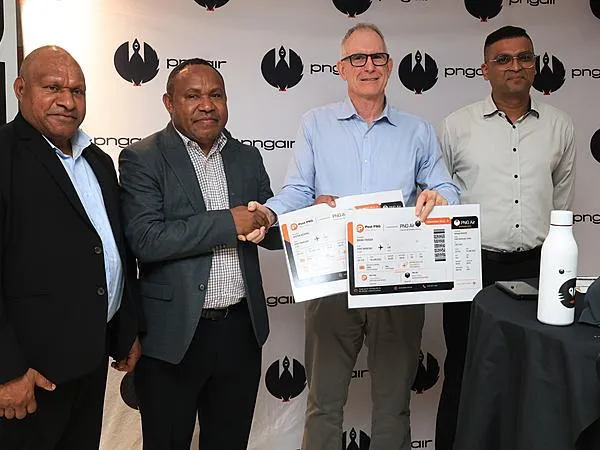
PNG Air, Papua New Guinea’s People’s Choice Airline, today officially relaunched its partnership with Post PNG, expanding access to airline ticketing services through Post PNG’s trusted nationwide branch network. The event, held at the Post PNG Brian Bell Plaza outlet in Gordons, brought together two of Papua New Guinea’s most recognised state-linked institutions in a shared commitment to serving the people of this nation.
For PNG Air, the People’s Choice Airline, this partnership is not just a business arrangement. It is a promise kept — a promise to keep Papua New Guineans connected to opportunity, essential services and one another, no matter where they are in this great nation.
THE PEOPLE’S CHOICE, CONNECTING OUR PEOPLE
As Papua New Guinea’s People’s Choice Airline, PNG Air has always believed that air travel should be accessible to all Papua New Guineans, not just those in major centres. Today’s relaunch of the PNG Air and Post PNG partnership turns that belief into action, making it easier for people across the country to purchase tickets from trusted, familiar Post PNG locations close to where they live, work and travel.
The first phase of the rollout begins in Port Moresby, with PNG Air ticketing now available at the following Post PNG locations:
• Post PNG Head Office – Konedobu • Eliseo Shopping Centre – Rainbow • University of Papua New Guinea Campus • Tabari Place – Boroko • Waterfront Shopping Centre – Konedobu • Eliseo Shopping Centre – 9 Mile • Brian Bell Plaza – Gordons
Over the coming weeks, the rollout will expand nationwide across Highlands, Momase, New Guinea Islands and Southern Region Post PNG locations, bringing the People’s Choice closer to the people in every region of Papua New Guinea.
Post PNG Chief Executive Officer Justin Worinu said the partnership reflects Post PNG’s responsibility as a state entity to serve all Papua New Guineans.
“As a state entity, it is our responsibility to ensure we continue to create important partnerships and bring access closer to our people. Providing services to our people is what our business focuses on, and with this PNG Air partnership we are excited to grow from strength to strength," Worinu said.
PNG Air Chief Executive Officer Brian Fraser said the People’s Choice Airline is proud to make travel more accessible for every Papua New Guinean.
“At PNG Air, everything we do starts with our people. As the People’s Choice Airline, our focus is not just on getting passengers from one destination to another. It is about making travel easier, more accessible and more convenient for the people of Papua New Guinea. By working together with Post PNG, we are bringing that promise to life through a network that communities already know and trust," Fraser said.
PEOPLE’S CHOICE: BUILT ON RELIABILITY, SAFETY AND CONNECTION
The People’s Choice title is one PNG Air earns every day. The airline currently ranks 3rd among Oceania’s major airlines for on-time performance, alongside carriers such as Qantas, Virgin Australia and Singapore Airlines, reflecting its unwavering commitment to the three pillars that define PNG Air: reliability, safety and keeping our people connected.
For PNG Air, being the People’s Choice is about more than a name. It is a daily commitment to every passenger who boards a PNG Air flight, to every community the airline serves and to every Papua New Guinean who relies on dependable air services to access healthcare, business, education and family.
GROWING FOR THE PEOPLE: NEW FLEET, NEW CHAPTER
PNG Air is in an exciting period of expansion. New aircraft are arriving, routes are growing and services are deepening, all in service of the People’s Choice promise to keep Papua New Guineans connected.
Most recently, Mangi Kutubu completed its maiden flight, adding to a growing modern fleet that reflects the confidence being placed in PNG Air and in Papua New Guinea’s aviation future.
With this growth also comes a farewell. In the coming weeks, the People’s Choice Airline will begin phasing out the beloved Dash 8, an aircraft that has faithfully connected Papua New Guineans for decades. It has earned its place in the nation’s aviation story, and PNG Air bids it a fond and grateful goodbye.
Its retirement makes way for a modern fleet built to meet the standards and expectations of today’s passengers and those of tomorrow.
Looking ahead, PNG Air remains committed to strengthening connectivity across the country through strategic partnerships, continued investment and a growing fleet designed to serve Papua New Guineans well into the future.
“We are proud to be the People’s Choice. Aviation plays a vital role in connecting communities, supporting business, improving access to services and creating opportunities for growth. Through partnerships like this one with Post PNG, and through our continued investment in our fleet and network, we can keep delivering meaningful outcomes for the people of Papua New Guinea. This is who we are. This is what we do," Fraser said.
Papua New Guinea has launched a new set of green finance standards and policy tools as it seeks to mobilize greater investment into climate-resilient development and strengthen the sustainability of its financial system.
The initiatives were unveiled during the Green Finance Summit 2026, which opened in Port Moresby on May 27 under the theme "Greening PNG's Financial System."
Bank of Papua New Guinea Governor Elizabeth Genia said the country was moving beyond policy discussions and focusing on practical implementation of sustainable finance reforms.
"This year, we move the conversation forward — 2026 is not about introducing ideas; it is about implementation," Genia said during the summit. She said Papua New Guinea remained committed to building policy frameworks that encourage green investment, strengthen financial-sector resilience and support sustainable economic growth.
Among the key measures launched were Version 2 of Papua New Guinea's Inclusive Green Finance Taxonomy, new standards for green loan classification and reporting, environmental risk policy guidelines for financial institutions and the establishment of a Green Finance Academy.
The summit brought together government officials, financial institutions, development organizations, investors and regional central bank representatives to discuss ways of expanding green lending, sustainable investment and climate-resilient financing mechanisms. About 250 participants attended the two-day event.
Chief Secretary Ivan Pomaleu said sustainable finance should be viewed not only as a climate initiative but also as a tool for economic development, job creation and financial inclusion.
"It is about jobs. It is about agriculture. It is about energy access. It is about infrastructure. It is about financial inclusion," Pomaleu said during the summit.
Pomaleu said public funding alone would not be sufficient to meet Papua New Guinea's development goals and called on commercial banks, pension funds and other financial institutions to increase investment in renewable energy projects, green small and medium enterprises, and resilient infrastructure.
The summit also highlighted Papua New Guinea's efforts to strengthen its green finance architecture following the launch of the Inclusive Green Finance Policy in 2023 and the Green Finance Centre in 2024. Officials said the latest reforms aim to improve transparency, reduce greenwashing risks and build market confidence in sustainable investment products.
International participants praised the country's progress in developing a sustainable finance framework.
Dr. Ma Jun, chairman of the Capacity-building Alliance of Sustainable Investment, said Papua New Guinea could serve as a model for other island economies in the Asia-Pacific region.
He said the organization was prepared to work with the Bank of Papua New Guinea and the Green Finance Centre to strengthen sustainable finance capacity and investment expertise across the region.
The summit was organized by the Green Finance Centre, a department under the Bank of Papua New Guinea, in partnership with the Agence Française de Développement, the International Finance Corp. and the Global Green Growth Institute. Organizers said the collaboration would help accelerate the growth of credible green finance solutions and support the development of a more resilient financial system in Papua New Guinea.
Papua New Guinea is poised to enter a new era of aviation innovation through strategic partnerships with global aviation technology leaders, aimed at modernising the country's air navigation and traffic management capabilities.
NiuSky Pacific announced collaborations with Australia's Skykraft and Italy's ENAV Group that will focus on key areas including Air Traffic Management (ATM), Unmanned Traffic Management (UTM), drone ecosystem development, flight procedure design, Aeronautical Information Services (AIS), Aeronautical Information Management (AIM) digital transformation, training and capacity building, as well as digital and remote tower technologies.
The partnerships were announced in Port Moresby on 31 May 2026 as part of NiuSky Pacific's broader strategy to strengthen and modernise Papua New Guinea's aviation sector through collaboration with leading international technology providers.
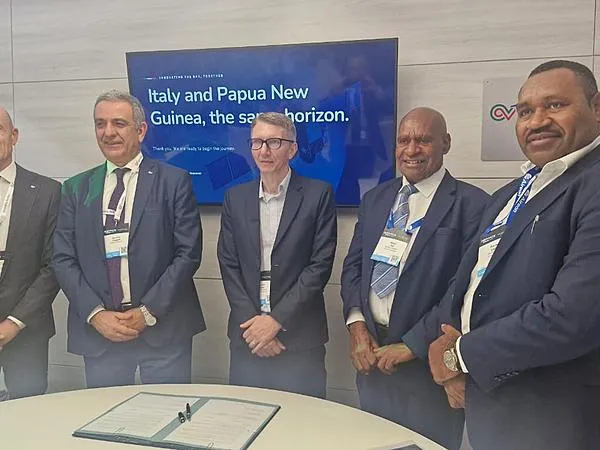
The partnership with ENAV Group was formalised through a Letter of Intent signed during Airspace World 2026, establishing a framework for strategic cooperation in air navigation services and aviation innovation.
At the same event, NiuSky Pacific signed a landmark strategic collaboration agreement with Australian aerospace company Skykraft to introduce space-based Air Traffic Management services across Papua New Guinea.
The agreement was signed by Skykraft Chief Executive Officer Michael Frater and NiuSky Pacific Managing Director Graham Blythe, with the signing witnessed by Civil Aviation Minister Wake Goi and First Secretary to the Ministry of Civil Aviation Reuben Daniel.
According to a media release, the partnership positions Papua New Guinea to become the first country in the world to implement a comprehensive space-based Air Traffic Management capability across its national airspace.
The initiative is expected to significantly enhance aviation safety, connectivity, operational efficiency and air traffic management services, particularly across Papua New Guinea's vast remote, mountainous and oceanic regions.
By deploying advanced space-based communications and surveillance technologies, the programme is expected to strengthen situational awareness, improve air navigation services and support safer, more efficient aircraft operations throughout the country.
Through its partnerships with Skykraft and ENAV Group, NiuSky Pacific aims to gain access to next-generation aviation technologies from globally recognised industry leaders. The collaborations will combine technical expertise, operational experience and innovation capabilities to develop joint initiatives and explore new opportunities at both regional and international levels.
Industry observers say the agreements mark a significant step in Papua New Guinea's efforts to modernise its aviation infrastructure while embracing emerging technologies that are reshaping global air navigation systems.
The partnerships also reinforce the country's commitment to strengthening air navigation services and positioning itself as a leader in aviation innovation within the Asia-Pacific region.
As the aviation sector continues to evolve, NiuSky Pacific's latest international collaborations are expected to play an important role in improving aviation safety, connectivity and operational efficiency, while supporting Papua New Guinea's long-term economic and infrastructure development objectives.
Papua New Guinea Prime Minister James Marape used a video address to the 41st Australia Papua New Guinea Business Forum & Trade Expo in Brisbane to reassure investors of the government's commitment to business, economic reform and long-term growth, while urging companies to look beyond the country's traditional mining and petroleum sectors.
Unable to attend the forum in person, Marape told delegates that his “thoughts, heart and support” were with participants gathered during Papua New Guinea's 50th anniversary year.
He described the Australia-PNG relationship as permanent and deeply intertwined, repeating a line from his address to the Australian Parliament that the two countries were “joined at the hips”.
Marape thanked the business community for continuing to invest in Papua New Guinea and said the government remained committed to supporting investors and addressing policy issues affecting profitability and growth.
“We continue to place our appreciation to every businessman and businesswoman, every company that chooses to operate in Papua New Guinea,” he said.
“If there are any policy matters you feel we need to attend to that help and enhance your profit, we will attend to them.”
At the same time, he said investment and business success must also translate into broader economic benefits for the country.
“When the company wins, the government is able to roll back to the economy, make sure health is okay, education is okay, infrastructure is okay, including power,” he said.
The Prime Minister said PNG remained committed to free-market principles and an independent court system, while reforms were underway to strengthen dispute resolution mechanisms through additional judges, mediation and arbitration processes.
Marape said the economy had grown steadily since 2019, when it was valued at about K79 billion, with annual growth averaging about 4 percent.
“PNG is much bigger than just mining and petroleum,” he said, pointing to opportunities in manufacturing, agriculture, logistics, fisheries and trade.
Marape also flagged plans to reduce corporate taxes as the economy grows toward his target of a K200 billion economy and encouraged investors to “look deep into PNG”.
Infrastructure pipeline attracts investor interest
Infrastructure investment emerged as a major theme during the forum, with government agencies, development financiers and state-owned enterprises outlining major projects across transport, ports, energy and digital connectivity.
Rachael Thompson, Acting Head of the Australian Infrastructure Financing Facility for the Pacific, said the facility had committed A$2 billion toward 59 projects in 13 Pacific countries since its establishment in 2019.
Papua New Guinea accounted for 11 projects valued at about A$1 billion, including major port upgrades, road projects, rural electrification and digital connectivity initiatives.
“These projects include the A$621.4 million package to refurbish, replace and upgrade five ports,” Thompson said.
She added that AIFFP was also exploring support for Papua New Guinea's digital ambitions through the Puk Puk Digital Connectivity Initiative.
Speaking on behalf of Kumul Consolidated Holdings, Chief Investment and Infrastructure Officer David Kitione said Papua New Guinea's infrastructure agenda was being guided through a structured national framework.
“What we are presenting to you today are not aspirations,” he said.
“They are the outputs of a structured, nationally owned infrastructure development process.”
Kitione highlighted plans for the Portside Business Precinct in Port Moresby, describing it as a strategically planned waterfront commercial development aimed at attracting long-term investment.
Ports seen as critical economic infrastructure
PNG Ports Corporation Managing Director Neil Papenfus said the country's ports handled 10.8 million tonnes of cargo in 2025 and supported 22 percent of national GDP.
“When ports work well, supply chains work well,” he said.
Papenfus said the A$621 million port infrastructure upgrade program was the largest in the corporation's history and was designed to rebuild infrastructure for the next 50 years.
Australia expands focus on digital connectivity
Australian Minister for Pacific Island Affairs Pat Conroy and Papua New Guinea Deputy Prime Minister John Rosso highlighted the growing scope of bilateral cooperation between the two countries.
Conroy said the relationship had entered a new phase built on trade, investment and people-to-people links, in addition to traditional security cooperation.
Much of his address focused on telecommunications, which he described as essential to economic development.
Conroy said low internet penetration and high telecommunications costs continued to constrain business activity, education, healthcare and financial inclusion in Papua New Guinea. He announced work on a telecommunications blueprint intended to create a more connected and digitally ready nation while improving cyber resilience and reducing connectivity costs.
Conroy also highlighted the potential role of low-Earth orbit satellite technology and new submarine cable infrastructure under the Puk Puk Digital Connectivity Initiative.
Rosso said Papua New Guinea and Australia were increasingly working together across law and order, infrastructure, labour mobility, land reform, digital systems and sport.
“When PNG grows, Australia benefits,” Rosso said.
Rosso also praised Australia's willingness to listen and work as a partner. “We talk, they listen, they talk, we listen,” he said.
Maru calls for shift toward value-added industries
International Trade and Investment Minister Richard Maru used the forum to argue that Papua New Guinea needed to accelerate investment in sectors capable of creating jobs and expanding economic participation.
Maru said more than one million young Papua New Guineans remained unemployed despite decades of resource-sector development. “The resource sector is not the answer,” he said.
“We have to refocus on the non-resource sector. I'm talking agriculture, forestry, fisheries, manufacturing and tourism. That is the future for Papua New Guinea.”
Maru said Papua New Guinea's economy remained too dependent on exporting raw materials and importing finished goods.
“We are still a major exporter of raw material. That needs to stop,” he said. “We need downstream processing. We need manufacturing. We need to create jobs.”
Maru said Papua New Guinea's economy stood at about US$32 billion and argued that the country could no longer continue exporting raw materials while importing products that could potentially be produced domestically.
He pointed to Indonesia's nickel processing industry as an example of how investment in downstream industries can generate large-scale employment.
Maru also revealed that Papua New Guinea would sign a Comprehensive Economic Partnership Agreement with China and said Asian markets would play an increasingly important role in future economic growth.
He encouraged Australian companies to invest in agriculture, hydropower, tourism, manufacturing and processing industries, saying the government was prepared to offer incentives including tax holidays and joint-venture opportunities.
Agriculture positioned as pathway to inclusive growth
East Sepik Governor Allan Bird argued that agriculture offered Papua New Guinea its strongest opportunity to achieve inclusive and sustainable economic development.
Delivering the Henry Kila Memorial Address, Bird said between 80 percent and 85 percent of Papua New Guineans live in rural areas and depend heavily on agriculture and fisheries, yet the sector contributes only about 25 percent to 30 percent of GDP.
“PNG's best pathway to sustainable development lies in transforming its agriculture sector,” he said.
Bird said agriculture was not only an economic sector but also a critical foundation for social and economic development because it generates direct income for rural households while supporting food security and local businesses.
Using East Sepik's cocoa industry as an example, he said targeted interventions had doubled production and helped expand cocoa cultivation across 19 provinces.
According to Bird, more than K1 billion had flowed directly to villages through cocoa-related activity in recent years.
He also called for better alignment between infrastructure investment and production areas, saying roads, ports, storage facilities and shipping services should support regions where agricultural activity is growing.
Bird further urged reforms involving land access, investment protection, intellectual property and public-private partnerships to attract greater investment into agriculture.
Development partners outline financing support
Representatives from major development institutions also outlined ongoing support for infrastructure development in Papua New Guinea.
Laura Darlington, Assistant Secretary for Indo-Pacific Infrastructure in Australia's Department of Defence, said defence infrastructure investment was generating economic opportunities alongside security outcomes.
“Defence infrastructure is not just about facilities,” she said.
“It is about supporting the economic development of local communities.”
Darlington said future investment under the Defence Cooperation Program and the proposed Pukpuk Treaty would create opportunities for Papua New Guinea businesses and workers.
World Bank Senior Procurement Specialist Amin Saskai said the World Bank's Papua New Guinea portfolio stood at approximately US$677 million across sectors including energy, transport, agriculture, education and water.
“Please engage with our clients,” Saskai told businesses attending the forum. “Let them know about the new trends.”
Asian Development Bank representative Leonardo Storni said Papua New Guinea's infrastructure pipeline remained strong, particularly in transport and energy.
“We are trying to buy right, not buy cheap,” he said, referring to procurement approaches that place greater emphasis on quality and value for money.
Presentations during the forum covered investment opportunities in infrastructure, digital connectivity, ports, agriculture, manufacturing and downstream industries as Papua New Guinea marks 50 years of independence.
Follow on LinkedIn:
PNG Business News
Be the "First" to get our exclusive Digital Magazine & Weekly Newsletter.