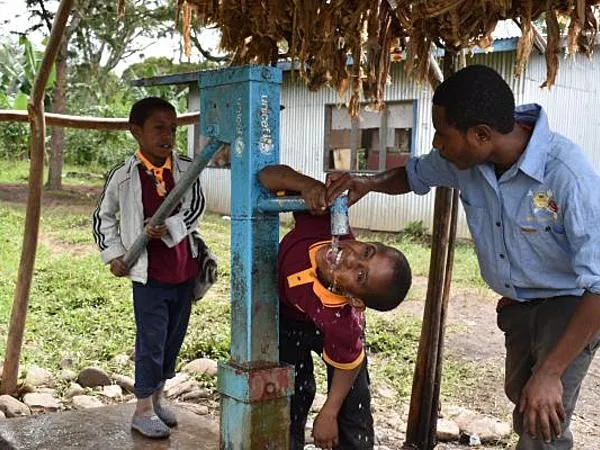
Water PNG will build a new K419 million water supply plant to meet Port Moresby's growing water demand and stability.
Bunu, a planned 50Mld (millions of litres per day) water supply project in Central, is located 23 kilometres northwest of Port Moresby.
According to a statement from Water PNG, the extension will be enough to satisfy the city's needs until 2034.
The site was recently visited by State Enterprises Minister William Duma, Treasurer Ian Ling Stuckey, and Water PNG authorities.
Bunu has been described as a potential alternative water supply to the existing Sirinumu Dam, which is located on the Sogeri plateau. PNG Dams, a subsidiary of Kumul Consolidated Holdings Ltd, owns the Sirinumu dam (KCHL).
The raw water flows in a cascading pattern to PNG Power's Rouna Hydroelectric scheme before being treated and distributed to the city by Water PNG's raw water mains.
Bunu's growth is political. For starters, as a result of PNG Power's repair programs and related matters, city residents will no longer face water shortages and problems such as water rationing and partial shutdowns.
The location is also near the confluence of the Laloki and Brown rivers, where water is plentiful even during droughts. Water PNG is mobilizing capital before going on to the deployment process, following approval from KCH earlier.
China Jiangsu International, the project's contractor, will mobilize staff, conduct a project assessment, conduct geotechnical investigations, prepare a preliminary detailed plan, and procure project materials.
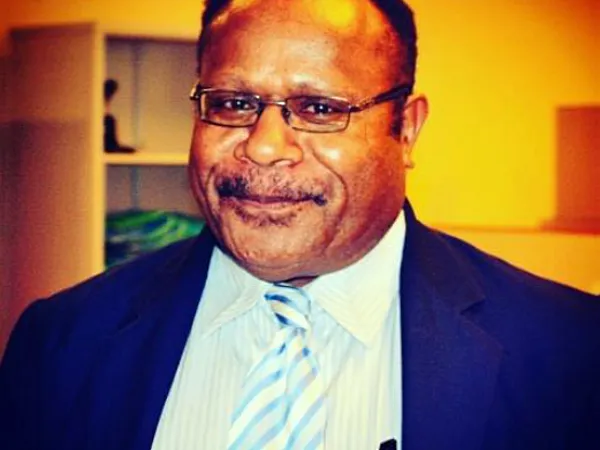
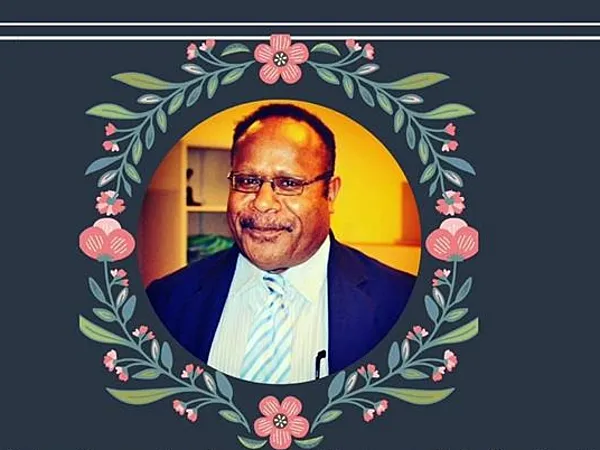
Roger Kewa Avinaga died Sunday 16th May 2021 just ten days after the passing away of his beloved wife - Priscilla Nase Avinaga. By any measure, this was a very sad and tragic occurrence for the Avinaga family, but we hope that Roger and Priscilla will rest in peace together.
Roger was born at Keakasa Village, Okapa in the Eastern Highlands Province, a mountainous area within the Highlands of Papua New Guinea north of the Gulf Province. After completion of his secondary education, Roger graduated with honours in International Relations from the University of Papua New Guinea, and subsequently completed a Master’s (LLM) in Petroleum Finance and Taxation at the University of Dundee, Scotland, United Kingdom in 2003.
Roger was a colleague and one of whom I was proud. I first met him in 1998 when he joined the newly-formed Dept. of Petroleum and Energy, when petroleum functions were split from mining. He was a young Petroleum Economics Analyst in the Petroleum Division, the core of the new Department. I had just stepped down from being the Director of the Division and had started work as an Adviser to my successor-Director funded by the World Bank. Roger worked in what we loosely called the policy area where the overall deal between the petroleum industry and government is formulated, and if managed well, constantly modified to optimise the outcomes for the Nation.
He ably took to his duties as I later reflect - always with a cheer. It was with that very same cheer that I last saw him in the Waterfront supermarket in Port Moresby several weeks ago. We had a long discussion on the petroleum policies for PNG with me grumbling about the current volatility and uncertainty of petroleum policy after decades of sound stability. As if often the case, our discussions become all the more intense, when I threw the matter of domestic utilisation of oil and gas into the dialogue, saying that we should be more proactive in encouraging the domestic use of our oil and gas in PNG for our development needs than always exporting it to other Nations. Roger patiently listened to my points as only a professional colleague could and would, and smiled: he shared with me, a passion to get the very best out of the petroleum industry of PNG and for Government to manage and regulated the companies firmly and fairly, and with competence.
In recent times, he had like me worked for the World Bank as a consultant from time to time in their Port Moresby office engaged in the economic analysis of petroleum policy options. More lately, he had gathered some fame for writing voluminous and excellently-researched articles on petroleum issues and policy for the online and print magazine - PNG Business News. After all it, was Roger who had diligently compiled the Petroleum Policy Handbook of the Government in 2005; he was the reference point and one of very few technocrats who really understood the swath, array and complex interaction of the economic and fiscal terms of petroleum exploration, development and production well.
The distinguishing feature of Roger was his ability to write and write well, and that comes only with practice as one writes more and more. He had a distinguished record of writing many speeches whilst in the Dept of Petroleum and Energy and travelled widely to deliver some of his own speeches in the days when PNG was seeking investment in the first large-scale development of natural gas. He was part of the campaign and advertisement to the world in the early 2000s that PNG as open for business and with more than ten-years of uninterrupted oil production that PNG was ready to receive investment in the development of it substantial gas reserves.
Alas, Roger will be hard to replace; his knowledge of the PNG petroleum industry and its policy framework was intimate with over twenty-years of deep involvement in its formulation and workings. I admired how he was not afraid to take up to ten-pages in PNG Business News to get his message across, not that he was verbose or rambling, but that he truly desired his lay-readers to have a proper understanding of the workings of the petroleum industry for which he applied great patience to explain every nuance of the business.
Our most sincere condolences go to his family, and I am sure that he and his wife will be most sorely missed.
For the Nation, we have lost one of our most competent petroleum professionals who had so much more to do in his new role as a feature writer for PNG Business News on petroleum business, policy and economics.
May He Rest In Peace
Prepared by Michael McWalter, OL, CS, former Director and Adviser, Petroleum Division, Dept of Petroleum and Energy
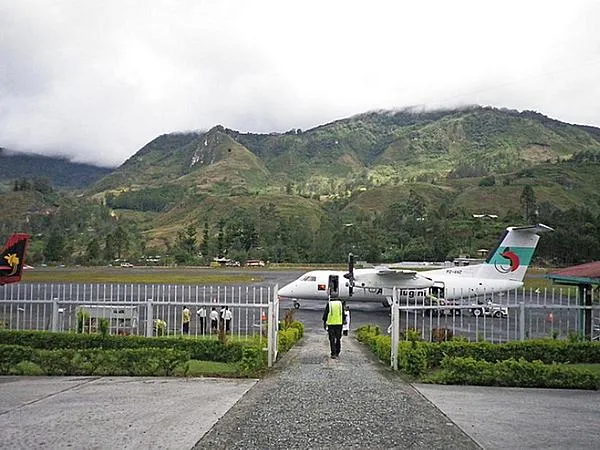
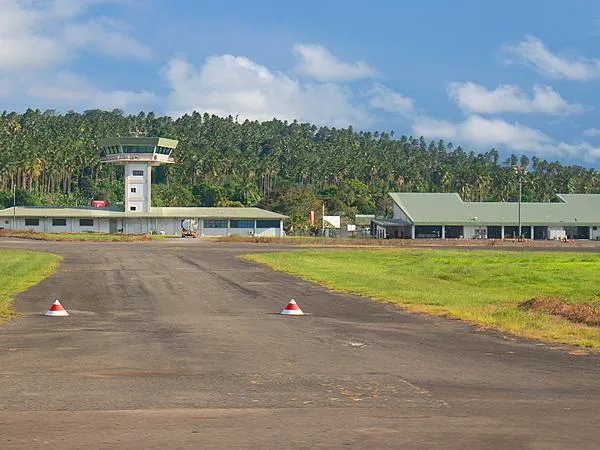
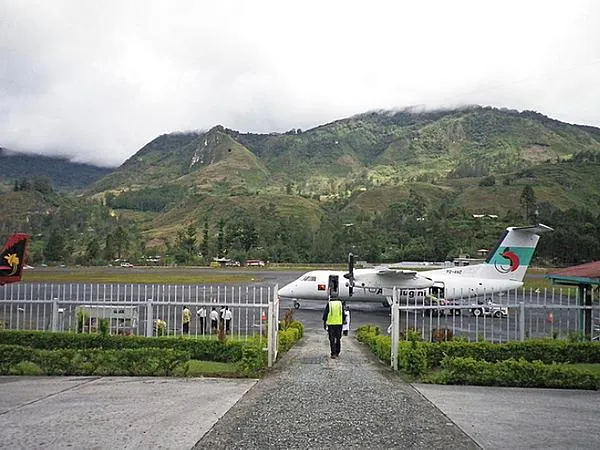
The redevelopment of the Mendi airport is underway, according to the National Airports Corporation Limited, and is 60 per cent complete.
The project is part of the Civil Aviation Development Investment Program, or CADIP, which funds a range of impact aviation programs. Following a media story, the National Airports Corporation clarified the status of the airport's growth.
According to the study, work is still going on, with 60 per cent of the physical improvements made so far.
The Aviation State Agency has stated that there are no landowner disputes and that the airport redevelopment is taking place within the designated aerodrome district.
Sinohydro Corporation Limited, the construction company, is currently addressing non-conformance problems with the consistency of materials used previously on the runway pavement.
Installation of a security fence, construction of an H65 standard house for the NAC Airport Safety Officer, construction of a tractor shed, and construction of the ASO's office are among the other projects that have been completed to date.
The new terminal building is now under renovation, with paving work scheduled to be finished in September.
The upgrade project at Mendi Airport is worth K27.7 million.
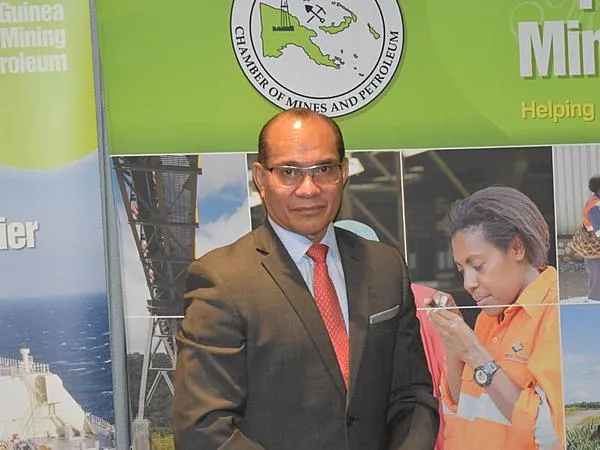
Richard Kassman was recently named President of the Papua New Guinea Chamber of Mines and Petroleum, and the PNG Extractive Industry Transparency Initiative (PNGEITI) congratulated him.
He recently took over for Gerea Aopi, who had served in the role admirably. Richard Kassman is the Director of Corporate Affairs, Total E&P PNG Limited, and was vice president of the Chamber at the time of his appointment. He is an active member of the PNGEITI Multi-Stakeholder Group (MSG) and was vice president of the Chamber at the time of his appointment.
Kassman is a member of the PNGEITI MSG, which oversees the Global Extractive Industries Transparency Initiative (EITI) implementation in Papua New Guinea.
“As we all know Kassman is a dedicated professional with active engagement in both the Government and private sector in Papua New Guinea with deep commitment within those various roles he plays,” PNGEITI Head of National Secretariat Lucas Alkan said.
“His insights and contributions to the advancement of EITI reporting in this country have resonated with great value and the PNGEITI MSG is privileged to have him on board.
“At this juncture, we acknowledge his invaluable commitment and contribution over the years since PNG commenced implementing the EITI 7 years ago. Now as elected President of the PNG Chamber of Mines and Petroleum, we look forward to a heightened working relation with regards to the role that the industry plays as the key stakeholder in implementing and maintaining PNG’s position as an EITI affiliated member country.”
Kassman's expertise, according to Alkan, will significantly enhance the work of the PNG Chamber of Mines and Petroleum in representing the EITI in PNG, as well as giving the cause more visibility by building on the momentum of the campaign, which has generated many financial year reports from the extractive sector.
ROGER KEWA AVINAGA, who supplied many valuable insights on Papua New Guinea’s resources industry as the main columnist for PNG Business News since our first issue, passed away 15 May 2021 at Port Moresby General Hospital. He had just turned 51.
Born 5 May 1970 in Keakasa Village, Okapa in the Eastern Highlands, Roger was still in mourning for his wife Priscilla Nase Avinaga, who had passed away just 10 days prior. His family said Roger was ill for a short while before his passing.
The haus krai program for Priscilla was still in progress when the Avinaga family lost Roger. They have now organized a combined haus krai at Rogen Wato Avinaga’s residence at Kevaru Place, Angau Drive in Boroko. The program will officially start at 1 p.m. on 19 May 2021, as the family urged everyone to observe COVID-19 protocols.
Roger was an accomplished corporate and government executive and board director, having worked in the oil, gas, mining and energy sectors for over 20 years. He worked for The World Bank Group as a Resource Economist/Modeller, developing his in-depth knowledge, understanding, and experience of business/commercial environment, financing, project procurement and management, economic/financial modelling, fiscal and regulatory regimes.
He acquired these skills through dealing with oil/mining companies, investors, banks/lenders, multilateral institutions, governments and key stakeholders, in exploring new business opportunities, creating partnerships, joint ventures, farm-out, project approval process and initiation of major resource projects.
Roger was highly skilled in developing investment strategies, business plans and strategies, financing proposals, economic/financial modelling and assessment of projects, negotiating project agreements/contracts, managing risks, and writing government policies. He had demonstrable understanding of different segments of the industries from the upstream exploration and development, midstream, and downstream sector.
Roger began his career with the PNG Department of Petroleum and Energy as Senior Petroleum Economist, where he worked his way to become Assistant Director-Petroleum Policy and Acting Director Petroleum Division.
After serving 12 years, he left to join state-owned company Petromin PNG Holdings in 2008 as Manager for Commercial and Strategic Planning, where he was responsible for establishing the commercial and business development division. At Petromin, Roger also held several key positions, including Head of Commercial, New Ventures and Business Development.
Roger earned his Masters of Law (LLM) in Petroleum Finance and Taxation from the University of Dundee in the United Kingdom in 2003. He graduated Bachelor of Honours (International Relations), Second Class, Upper Level at the University of PNG in 1996, and finished his Bachelor of Arts at University of PNG in 1993.
PNG Business News deeply mourns Roger’s passing. We extend our condolences to his bereaved family and request our readers to pray for strength and comfort for the Avinagas during this time. For more information, please call Frexie Maneh at 74540145 or Kevu Sevendi at 74888384.
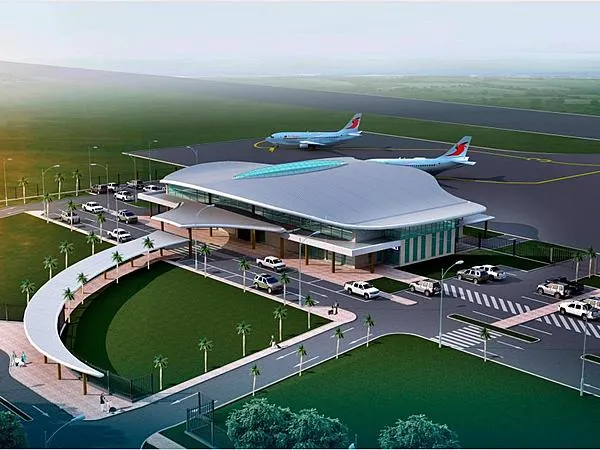
The new terminal building for Manus' Momote Airport is well underway and starting to take shape.
This project should be finished by November of this year.
The Momote Airport upgrade is part of a series of high-impact projects financed by the Asian Development Bank's multi-tranche Financing Facility (MFF) loan and the Government of PNG's counterpart funding totalling K99.6 million under Tranche 3.
The Civil Aviation Development Investment Programme (CADIP) is handled by the National Airports Corporation's project implementation team.
Allen Guo Investment Limited (AGI), a subcontractor, designed this architectural masterpiece in collaboration with China Harbour Engineering Corporation, the lead project contractor, and the NAC project team.
This new facility will have a VIP lounge, a large departure lounge with 139 seats, passenger check-in counters, an arrival lounge with luggage conveyor belts, baggage screening machines, close circuit camera TV (CCTVs), a kiosk, restrooms, and other amenities.
Should direct flights from abroad become available in the near future, it will also provide on-arrival VISA and Immigration counters to process foreign passengers.
The airport's improved aircraft runway pavement, which was reinforced and covered with an asphalt surfacing finish, complements the current terminal building.
In April 2021, the runway length was expanded from 1810 meters to a total of 2010 meters to accommodate B737 800 or equivalent capacity aircraft.
The construction of a new airport market building, which is approaching completion, as well as the installation of a water source and an airfield lighting system, are also part of the Momote Airport's modernization programs.
Finance and high taxes, according to PNG Manufacturers Council chief executive officer Chey Scovell, are two of the most pressing problems in the downstream production of PNG goods.
According to Scovell, downstream processing is a capital-intensive industry that requires a large sum of money.
He also suggested that the government consider lowering corporate and goods and services taxes.
Scovell said that good road connectivity should be a government priority, as this would allow goods to be shipped quickly and efficiently.
He said that the new government freight subsidy was unsustainable and that it was incentivizing people to rob from coffee and cocoa plantations in order to take advantage of the subsidy to export and sell their produce.
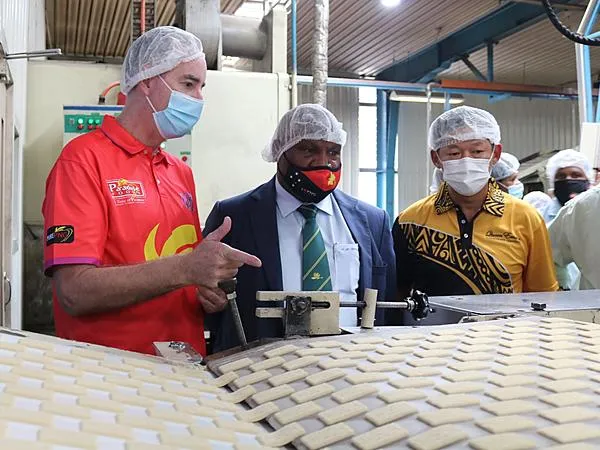
Prime Minister James Marape, who paid a visit to Paradise Foods Ltd's Queen Emma chocolate factory, urged businesses to expand into downstream manufacturing to support the economy and domestic industry.
According to Marape, the firm also imports corn for some of its goods, which he claims could be supplied locally.
“This factory needs (local) corn,” he said. “I just came out of a processing line that is importing corn. We can grow corn in PNG.”
Marape was ecstatic to see the company innovate, create opportunities, and concentrate production locally.
He said that the Queen Emma chocolate production demonstrated the country's ability to transition from selling raw materials to producing value-added goods.
“We want to go downstream to certify our local market, as well as export to economies around us,” he said. “I am happy to see an industry that has been in existence outside of political motivation and incentives. They have been at work since 1945. I am totally overwhelmed. And if there is any way that the Government can assist with fiscal support in these tough times.”
The gaming industry in Papua New Guinea has resumed regular operations, in full accordance with COVID-19.
The decision was made following discussions with the National Gaming Control Board and the National Control Centre.
Both Gaming Machine sites have reopened, and bookmaker sites will reopen next week.
Imelda Agon, the NGCB's Acting CEO, praised the move while reiterating the industry's readiness to follow COVID-19's tight guidelines.
“We are grateful to the NCC for relaxing the restrictions on the gaming industry. The reopening of the industry will see hundreds of ordinary Papua New Guineans going back to work and the return of normal business”, said Agon.
She went on to say that the COVID-19 pandemic had harmed the gaming industry.
The National Airports Corporation plans to devote more resources to the redevelopment projects at Kavieng, Tari, and Mendi airports as part of the Civil Aviation Growth Investment Program.
With the exception of three airports, all airports under the CADIP program are on a budget, according to NAC acting managing director Rex Kiponge.
Apart from Jackson Airport in Port Moresby, Kiponge claims that the majority of the country's airports are unable to handle the newly launched F100 aircraft.
“The introduction of F100 aircraft has deteriorated the condition of runways in PNG. Under CADIP, fencing and runway length deficiencies will now meet the F100 and ICAO requirements. CADIP was implemented to meet the minimum PNG Civil Aviation Rules (CARS) and the International Civil Aviation Organisation (ICAO) standards and recommended practices in all the 22 airports in the country.
“The F100 aircraft require a minimum runway length of 1900 metres –– only three airports meet this requirement.”
The F100 will be able to land at 12 airports thanks to a CADIP runway length upgrade.
Port Moresby is now the only province that meets the operating criteria for F100 planes.
Standby control, security fencing, apron parking, runway, taxiway, and apron strength, and a runway length suitable for takeoff at maximum payload are all part of the 22 airport upgrades. Kiponge recently visited the three airports and expressed his satisfaction with the development.
Contractors have already finished construction on the security fence at Kavieng Airport, and work on the runway extension is going well. Once the runway extension is complete, the contractors can begin work on the terminal.
He mentioned that the runway extension at Tari Airport is complete, and contractors are currently working on the apron, which will be finished until the runway extension is completed. Owing to the contractors' inability to obtain materials for the runway at Mendi Airport, NAC has requested that they redo the runway before moving on to the other areas.
“Despite whatever issues within NAC, I will ensure that all 22 NAC’s airports undergoing upgrading will be completed and I will put in a lot of efforts and focus to makes certain work is done well and completed,” Kiponge said.
The government is putting a lot of effort into encouraging downstream production in the region.
This was said by Prime Minister James Marape during a visit to Paradise Foods Company Limited.
“We are focused on downstream processing as far as going forward is concerned –– instead of exporting raw products,” said Marape. “We want to go downstream to satisfy our local markets as well as export to economies around us.”
PNG is fortunate, according to Marape, to have access to 60% of the world's gross domestic product (GDP) through the APEC network.
“As well as, not just the APEC network, but in the vicinity of PNG’s accessibility to markets, we have over 4 billion people from the Pacific, Northern Asia, Western Asia and Northeast Asia put together.
“So to satisfy our local markets in PNG for our 8 million-plus people, as well as the opportunity of exporting to markets closest to us like our neighbouring countries.”
Marape has stated that he supports downstream production and marketing of PNG's natural resources both locally and internationally.
“Today, I am privileged to visit an industry that has been at work since 1945, and I’d like to thank Paradise Foods Company Limited for doing a wonderful job and feeding our country.”
Marape promised that the government will help the industry and market.
With its foreign awards and recognitions, the Port Moresby Nature Park continues to place the country on the map.
The Zoo and Aquarium Association of Australasia's (ZAA) biannual Gala Awards event has Nature Park as a finalist in three different award categories.
The Zoo and Aquarium Association Awards are a recognition and appreciation of exceptional achievement accomplished as a result of our member zoos and aquariums' commitment and important efforts, as well as their positive effect on conservation and animal welfare.
The park is a finalist in exhibit design for small scale development for its Reptile Haus, the first of its kind in PNG, as well as exhibit design for large scale development for ‘Plumes of Paradise,' the park's eight aviary bird of paradise precinct complete with educational area, and finalist in the community engagement award for Snaketastic.
Michelle McGeorge, the chief executive officer of the Port Moresby Nature Park, expressed her pride in the team and park on the announcement, saying that this experience is akin to the zoo Oscars, and that being recognized alongside some of Australia and New Zealand's largest zoos is a true homage to the Nature Park's impact and professionalism.
“This is not the first time that the Nature Park has been nominated in the biannual ZAA awards, with the park actually winning two awards. In 2016, Nature Park won the innovation award for its efforts in establishing what is believed to be one of the first globally established sister zoo partnerships between a developing and developed country zoo with the park partnering with Zoos Victoria.
“We’re excited to share the above announcement with the rest of PNG, that we’re up against some of the biggest zoos in Australia and New Zealand in the Zoo and Aquariums Association (ZAA) Awards this year,” she said.
“Such is great news for Port Moresby Nature Park and Papua New Guinea as a whole for earning international recognition through environment conservation.”
The park will engage in three separate formal online presentations before a strict selection panel in the next step of the award judging process, and the winners of each division will be chosen and revealed at a formal award dinner ceremony at Taronga Zoo in Sydney in early August.
The park's mission is to encourage others to protect PNG's special biodiversity.
According to Paul Barker, executive director of the Institute of National Affairs, there are more optimistic economic signals in the wind right now.
“Commitments with Barrick on Porgera, and with Total over Papua LNG will provide some boost to business confidence, and should see restoration and operations commence at Porgera during 2021 and restored production and exports. The recent fiscal stability agreement and the new agreement between the Government and Total on project terms and timelines should see some restoration of the disbanded project team and other preparatory work, albeit that the task of financing and any construction and development remains well into the future.”
Barker also noted that some commodity prices had improved, citing some PNG extractive and agricultural products, as well as oil and gas, gold and some agricultural crops, and vegetable oils, as well as coffee, which was just beginning what seemed to be a successful harvest.
“This will provide a useful reprieve, including for the majority who depend upon the agriculture sector and will also work its way through in improved revenue to the State in due course. PNG cannot simply await improved prices for enhanced incomes,” he said.
“It needs to be able to invest and diversify its economy, build-up its human capital, both skills and work discipline and standards, stop driving prices up for businesses and the cost of living for households by disrupting markets, or signing up over-priced infrastructure projects, including for power.”
According to an economist, improving benefit-sharing agreements for resource programs necessitates a thorough understanding of the future gains from those projects as well as the conditions offered in other countries.
The government "owns the assets and is the regulator," according to Paul Barker, executive director of the Institute of National Affairs.
“So, it is in a strong position to negotiate on its own terms and benefits on behalf of other stakeholders, notably the customary landowners,” he said.
However, he cautioned the government to be wary of possible contradictions between its regulatory position and that of potential shareholders, especially on social and environmental issues.
The Wafi-Golpu in Morobe, Papua LNG, P'nyang, the Pasca A offshore oil and gas, Frieda River copper and gold, Woodlark and Porgera are only a few of the billion-kina resource ventures that have yet to get off the ground in PNG.
“It should, generally, avoid the need to commit to costly equity participation entailing major upfront commitments and heavy borrowing by the State,” Barker said.
He said the Government “clearly has more important duties to its citizens with its limited resources, notably providing basic quality infrastructure and services”.
“Equity in corporate ventures is more of a luxury when public goods are as poor as they are in PNG,” he said.
“And when the State is able to secure sound revenue through taxation and other mechanisms and benefit-sharing arrangements, so long as over-generous investment incentives have not been offered.
“Acquisition of equity should occur particularly in diverse investments overseas and at home, rather than domestic extractive projects with limited life-spans.
“And it should be made through a well-managed and accountable sovereign wealth fund, rather than from up-front borrowing – that is, from savings rather than costly commercial borrowings.
“Awareness of the realistic project returns are also crucial when recognising the potential investors negotiating position, with respect to its other global options,” Barker said.
“Papua New Guinea needs to have competitive investment conditions if it wants international (and domestic) investors to develop projects or other goods and services, but clearly it doesn’t want to be taken for a ride with unduly generous conditions, which provide inadequate benefits to the State, or the public it serves.”
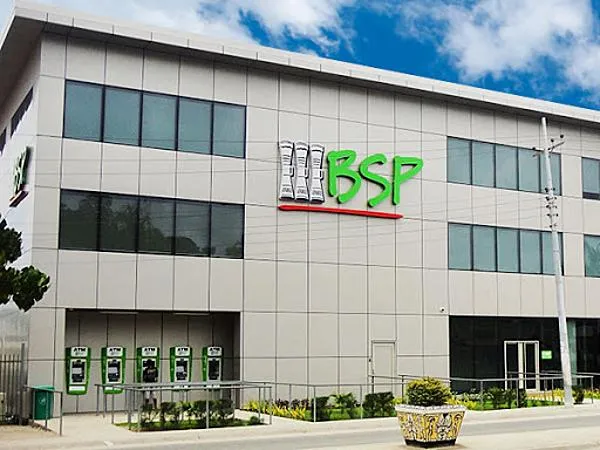
In its first quarterly Pacific economic and market (PEM) perspectives for 2021, BSP Financial Group Ltd forecasted 3.5 per cent economic growth for PNG this year.
The bank estimated that the global economy will rise at a rate of 6% in 2020, up from a predicted -3.3 per cent in 2020 when the world was struck by the Covid-19 pandemic.
The resumption of Barrick Niugini Ltd operations at the Porgera gold mine, as well as PNG LNG's forecast to expand PNG's liquefied natural gas (LNG) industry, were credited by the Pem insight for the recovery of the PNG economy.
The signing of the agreement between Barrick and the government was well-received by the business community, according to BSP Group CEO Robin Fleming.
He said that the agreement had given companies much-needed interest in the mine production restarting operation, which would bring foreign exchange into the country and improve loan and domestic economic development. Though PNG's economy is projected to recover, Pacific island countries have been hit hard by the global tourism slump, despite the virus's low prevalence.
The economies of these countries are forecast to grow at about 9% below pre-pandemic peaks.
Owing to expanded fiscal investment on infrastructure, Vanuatu's economy is expected to grow to 3.2 per cent in 2021, up 12.4 per cent from 2020.
Although the kina remained unchanged against the US dollar in the first quarter of 2021, the dollar strengthened against most other currencies as higher-than-anticipated economic and job growth raised inflationary fears and fueled optimism that the US Federal Reserve would tighten monetary policy sooner than expected.
The country's total foreign reserves fell from US$2.7 billion (K9.39 billion) at the end of December 2020 to US$2.41 billion (K8.31 billion) on March 18, 2021.
The drop in reserves was mostly due to external government debt servicing and Central Bank intervention in the foreign exchange sector to increase liquidity.
BSP's results and targets for the year were outlined in the paper, with the key target being access to the Australian stock exchange.
“If successful, we will have access to alternative source capital to fund future growth ambitions, deliver services to our customers and enhance existing shareholder liquidity,” Fleming said.
To put agriculture and fisheries into aviation, the Morobe Provincial Government has collaborated with the National Airports Corporation.
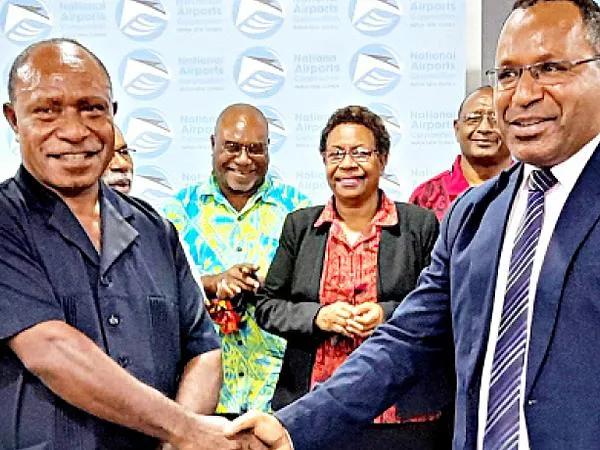
The Morobe Provincial Government has been preparing for four years. In Port Moresby, the Morobe team headed by Governor Ginson Saonu signed the Agriculture and Fisheries Partnership via Aviation with NAC acting managing director Rex Kiponge and his team.
Governor Saonu said that this is a significant initiative by MPG and that he will assist in its promotion because it will serve his people all the way down to the rural stage.
Mr Kiponge stated that NAC welcomes the collaboration with MPG to grow the Nadzab Airport into a hub for local farmers, fishermen, and small- and medium-sized businesses to carry their produce and catch to be exported.
Agriculture and Fisheries through Aviation is an MPG project to make Nadzab Airport a centre for local farmers, fishermen, and SMEs to sell their produce to other parts of the world and even foreign markets, allowing cash flow and bringing revenue back into the country.
Elizabeth Bradshaw, managing director of Morobe Resources Holdings Limited, said the team has spent over four years researching, organizing, and raising support for the project in the province, and has ticked both the pros and cons.
“This is an initiative of the Morobe Provincial Government to create an Air Cargo Hub of the Pacific at the Nadzab Airport not only for Morobe Province but for PNG.
“We have planned this for years and we are aggressive to see this become a reality.
“We have secured a partnership with some international parties who are ready to support us and we will meet with the Agriculture and Fisheries department this week to present our initiative,” she said.
According to Bradshaw, securing their relationship with NAC is the most crucial move in the process because NAC is in charge of all airports in the region, and the partnership is just the beginning of what's to come because this effort will help both MPG and NAC.
The Southern Highlands Province's Mendi Airport Redevelopment scheme has been placed on hold.
The redevelopment of the airport, which was scheduled to be completed in October this year, has been placed on hold, according to NAC acting managing director Rex Kiponge, due to the contractor not having the right materials for the runway and a disagreement among the landowners in Mendi.
According to Kiponge, he visited the project site last week to do an inspection, and NAC discovered that the materials used to build the airport's runway were not the correct materials because the contractors struggled on their end, so the contractors were advised to re-do the runway.
“I have to admit, we faced a lot of issues not only in Mendi Airport redevelopment but through all the airports under the CADIP Program. The contractors will redo the airport runway and the work on the terminal has not started as yet,” he said.
According to Kiponge, there have been several landowner disputes that the provincial government is responsible for resolving.
He said that he is eager to resolve the issues and complete the project under CADIP before the Asian Development Bank's deadline of November 24, 2021.
The Mendi Airport Redevelopment project includes upgrading the current runway pavement to accommodate Dash 8-400 (Q400) and ATR 0-70 aircraft, as well as the construction of a new terminal building and other developments such as NAC Staff quarters, a tractor shed, an engineer site office, and a powerhouse.
CADIP 1 is a sub-project funded by the Asian Development Bank's multi-tranche funding facility loans, and the ADB needs to see proper progress on all project sites completed during the availability timeframe before moving on to CADIP 2, which is scheduled for 2022-2024.
Follow on LinkedIn:
PNG Business News
Be the "First" to get our exclusive Digital Magazine & Weekly Newsletter.