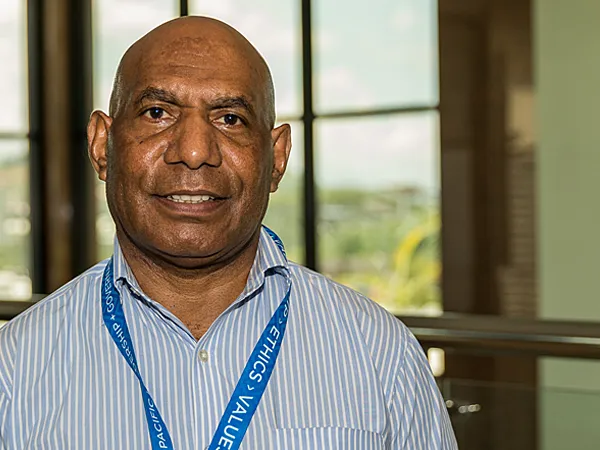
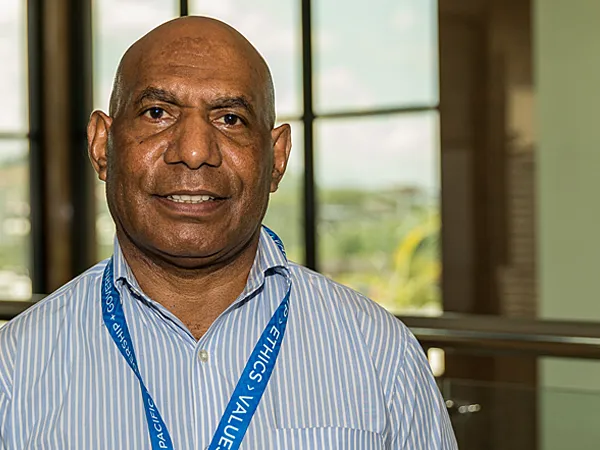
Better roads along Highland Highways means more economic potential. This, according to Papua New Guinea Puma Energy Country Manager Hulala Tokome, who said in a statement that he is already seeing businesses growing as the areas open up to more opportunities.
“We have experienced a strong entrepreneurial mindset from SMEs there along the road who are keen to develop their business skills and learn as they go,” he said. “We are proud to say that we already have a presence along Highland Highways starting in Kainantu all the way to Tari and Porgera, mainly partnering with entrepreneurial SMEs.”
In addition, Mr. Tokome said that they have a combination of Puma-owned and dealer-owned sites that operates under the same costs of the ICC pricing model that is applied through PNG.
“This is because we are supporting a lot of SMEs and other businesses from PNG who want to build their own sites in strategic locations so you can see more of these dealership sites,” he said. “But more importantly with the widening of the highways through Mt. Hagen township and the long-term plans for improving the roads, we expect to see more communities participate in the market and trade.”
He added that Puma Energy is excited to see the road infrastructure plans improving and to work with SMEs in developing quality service stations for its users.”
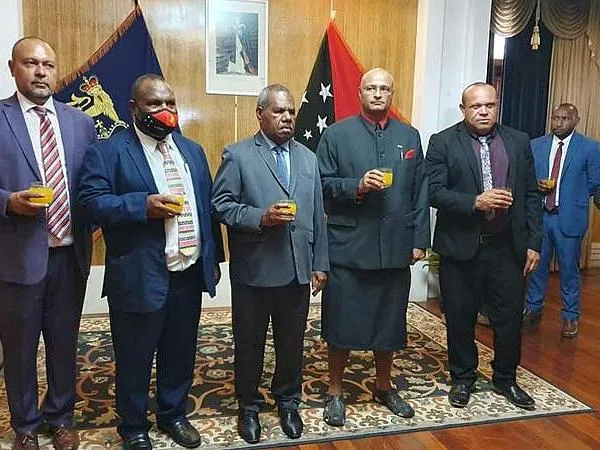
To ensure the stability of his coalition, Papua New Guinea Prime Minister James Marape has reshuffled his cabinet.
His line up includes Sam Basil, the leader of the United Labour Party and MP, who is now the new deputy prime minister and Minister for Planning and Implementation and Walter Schnaubelt who replaces Emil Tamur as Minister for Tourism, Arts and Culture.
The line up also includes Sir Puka Temu, now the Health Minister, who replaces Jelta Wong while the latter takes over his position to oversee Civil Aviation.
While Lekwa Gure is the new Minister for Labour, Davis Steven remains as Justice and Attorney General. Davis was dumped as the deputy prime minister.
Mr. Marape also takes an active role as Sir Puka’s Bougainville Affairs portfolio while Willie Onguglo holds a new position - as the Minister for Energy.
“These changes draw on the substantial capabilities within our Government,” said Mr. Marape in a news release. “They come at a critical time where our nation faces great challenges from the economic shock caused by the COVID 19 pandemic. The changes also adhere to a ratio of three to one in the allocation of ministries against party representation, and this has been a key factor in my decision making.”
The Head of Papua New Guinea Extractive Industries Transparency (PNGEITI), Mr. Lucas Alkan announced today that the country will be validated for the second time since PNG signed up to implement the EITI global best practice Standard in 2013.
The validation exercise is set to commence on the 30th of October 2020.
Mr. Alkan stated that the validation is an essential feature of the EITI implementation process.
It is intended to provide stakeholders with an impartial assessment of whether EITI implementation in a country is consistent with the provisions of the EITI Standard.
PNG underwent its first validation in 2018 in which the EITI Board granted ‘meaningful progress’ in implementing the EITI Standard. The Board commended PNG’s efforts in implementing a number of reforms to address weaknesses in government systems and in improving the level of transparency in the country’s extractive sector.
The Board recognised PNG’s efforts in ensuring appropriate multi-stakeholder oversight of EITI implementation and aligning objectives for the EITI with national priorities. It further commended the country’s efforts to produce EITI data in a timely manner and to effectively disseminate the findings of the EITI Reports to influence public debate.
The Board welcomed the government’s continued commitment to strengthening government systems by using the EITI process as a diagnostic tool to support reforms. As part of improvements of such systems, the EITI Board encouraged PNG to pursue efforts to systematically disclose data required by the EITI Standard as part of routine government and company disclosures.
The outcome of the first validation was a positive step for PNG in the EITI implementation process, and demonstrated that the EITI process can contribute to enhancing transparency and accountability in the management of resources related revenues.
In granting ‘meaningful progress’ to PNG in its efforts to implement the EITI, the Board allowed 18 months (up till 30 April 2020) for PNG to take corrective actions on the areas identified to meet the EITI global standard before a second validation was undertaken.
There were 14 areas identified as having made no progress or inadequate progress which required actions to be taken.
The 14 corrective action areas included:
public disclosure of information related to the award or transfer of mining tenements and oil and gas licenses pertaining to companies covered in the EITI Report;
ensuring a comprehensive list of state participation in the extractive industries, including terms associated with state equity and any changes in the year under review, be publicly accessible;
ensuring that complete production volume for oil and gas, and production values for each of the extractive commodities produced during the year under review be publicly accessible and disaggregated by commodity;
ensuring that export volumes and values are disclosed publicly for each mineral commodity (including oil, condensate and gas) exported in the year under review;
ensuring that the materiality threshold for selecting companies ensures that all payments that could affect the comprehensiveness of EITI reporting be included in the scope of reconciliation;
undertake a comprehensive assessment of transactions between extractives SOEs (and their subsidiaries) and mining, oil and gas companies, as well as between the extractives SOEs (including their subsidiaries) and government in its scoping for future EITI Reports;
establish whether direct subnational payments (to government entities) by extractives companies are material;
an assessment of whether the payments and revenues are subject to credible, independent audit, applying international auditing standards;
clarify which extractive revenues are recorded in the national budget;
ensure that material subnational transfers of extractives revenues are publicly disclosed, when such transfers are mandated by a national constitution, statute or other revenue sharing mechanisms such as benefit-sharing agreements;
ensure that reporting of mandatory social expenditures be disaggregated by type of payment and beneficiary, clarifying the name and function of any non-government (third-party) beneficiaries of mandatory social expenditures; and
undertake a comprehensive review of all expenditures undertaken by extractives SOEs (and their subsidiaries) that could be considered quasi-fiscal.
Mr. Alkan indicated that the onset of the Covid19 pandemic late last year and the associated lockdowns and restrictions to normal operations had severely affected our ability to prepare well by addressing the above areas before the second assessment.
He said that due to the Covid19 pandemic, the EITI Board deferred PNG’s validation from April to October 2020. A further deferment to next year would work well for us in our continued effort to take corrective actions, however this did not seem imminent.
Despite the Covid19 inflicted disruptions, he encouraged all stakeholders involved in the EITI implementation process to prepare as best as we could for the second validation.
The Head of Secretariat emphasised that failure to make considerable improvements in the above areas (in the second validation) could result in PNG being suspended from the EITI in accordance with the provisions of the EITI Standard.
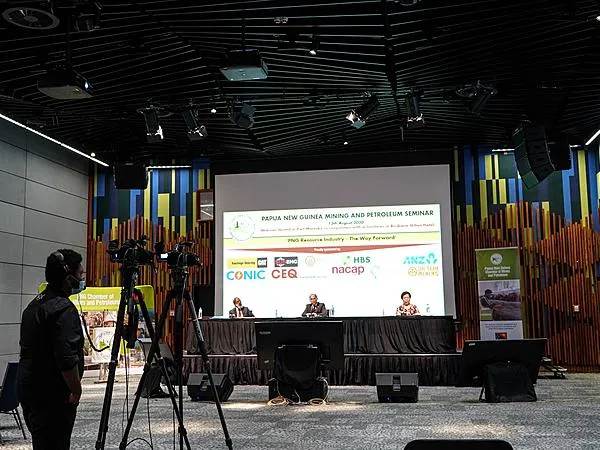
VIRTUAL ENGAGEMENT: The Chamber Webinar set up in Port Moresby at the Hilton Hotel
The Papua New Guinea Chamber of Mines and Petroleum held its first ever virtual seminar last Thursday 13 August to give an update on the resources sector, and its plans moving into the new normal.
With recent amendments having been made to both the Mining and Oil and Gas Acts, and with more proposed amendments announced by the government to the organic law on resource ownership, the webinar was also aimed at creating an avenue for both government, and industry, to reconnect and progress dialogue on these future changes in resource laws.
UNCERTAINTY: PNG Chamber of Mines and Petroleum President, Gerea Aopi voice industry’s
concern about low levels of consultation with industry.
Jointly broadcast and hosted between the Hilton Hotel in Port Moresby, and the Hilton Hotel in Brisbane, the webinar was opened by PNG Chamber of Mines and Petroleum President, Gerea Aopi.
Mr. Aopi voiced the collective concern of the industry, over the lack of consultations on changes to national resource laws.
“The position of the Chamber on legislative reforms has not changed. We welcome and encourage government to initiate reviews of policies and legislation, and the resource laws are no exception.
What is important, however, is that the consultative process with the industry must be consistent, open, and transparent. “We want to engage and stand ready to consult with the government on these legislative reforms. Fundamentally this is to be the bedrock of our partnership, a consultative partnership,” Mr. Aopi said.
STATE PERSPECTIVE: Minister for Petroleum, Kerenga Kua speaks of the government’s
motivation for pushing reforms in the mining and petroleum sector.
Minister for Petroleum and Energy, Kerenga Kua, thanked the Chamber for the invitation to speak at the forum to explain the Marape-Steven government’s motivation for the reforms in legislation.
“The main reason why the state is setting about carrying out a series of legislative reforms at the moment in mining and petroleum is because we think there are certain aspects of the legislative framework that we are working under at the moment, that is not operating to the benefit of the state and the citizens of this country, from whom we the political leaders, obtain our mandate,” Mr. Kua said.
He explained three major points upon which the government was focused.
A perceived loss of resource ownership by the state which can be mitigated by moving to a platform of production sharing. “When we sign a project agreement and give a licence, we lose our ownership to the resource, without any compensation flowing back to the state. Here we forfeit all our ownership to resources to the developer, and no compensation comes back,” Mr. Kua said.
The need for the State to “buy-back” into Projects after the exploration phase to take up an equity share in development. Mr Kua explained that the present system obligates government to borrow money to meet their interests in commercial projects. Loans that the government could use as budget financing.
As the present Debt: GDP ratio is close to the maximum permitted level, the Government does not have the capacity to borrow to participate as an equity partner.
The Minister also reassured industry stakeholders that proposed legislation currently before parliament, was only to enable the mechanisms and vehicles needed to establish and operate a production sharing regime for both mining and petroleum.
“We are going to do some structural adjustments and create the operating vehicles and agencies that will have to carry the responsibility, or share it out between them.
“The organic law that we now have sitting in Parliament, only aims to achieve that outcome, which is to create the operating vehicles and the agencies. It’s not going into other details, such as the operational side of the mining and petroleum things. That will be in the next stage when we introduce legislations later next year. So this year, the organic law that will be introduced will just create the states operating vehicles,” Mr. Kua explained.
First of regular Industry Webinar Updates
VIRTUAL CONNECTION: Chamber Council Member and Co-Chair of the webinar from
Brisbane, John Chambers.
Following the Minister’s statement a strong panel of speakers both from Port Moresby, and Brisbane provided a legal, financial and investor view of some of the changes being proposed by the Minister. As Mr. Chambers who chaired the Brisbane end of proceedings stated, “the key is to understand the Government, Industry and Investor positions better through dialogue so that a path can be navigated that enables continued investment and growth of the PNG economy for the benefit of its citizens as well as creating a stable platform for investment”.
The legal and impacts of the changes already made to the Oil and Gas and to the Mining Acts were discussed by Sarah Kuman and Rob Merriman of legal firm Allens Linklaters, who pointed out that the removal of the certainty of obtaining a Petroleum Development License after successful exploration will likely deter investment in exploration within PNG. Uncertainty created as a result of the required minimum “expected level of return” and the fact that The State is no longer strictly required to comply with its obligations under State Agreements will likely discourage further investment. Additionally, on the mining side, there is a risk that new mining lessees will not be able to exploit a discovery to its full economic extent.
On the Financial side, Mark Couchman, Director of Resources, Energy and Infrastructure at ANZ, explained what financiers look at when considering providing finance to a resource project. In addition to the commodity risk, investors need to consider construction risk, environmental approvals logistics/Infrastructure access and key areas where the project can go wrong. Additionally, does management have the expertise to fix things when they go wrong? And what is their track record and relationship with key suppliers and customers? This expands into operating risk and cost control and offtake agreements. However, although this is all to an extent within an investor’s control, risks such as political & sovereign risk, legal tenure and regulatory risk (likelihood of changes to the legal framework that may impact the financing structure & security) will impact the ability to finance a project.
Sang Ratnam, from Total PNG, showed how the multiplier effect of large projects works and impacts economic growth in a developing nation citing examples from Total’s worldwide experience on the relationship between direct activity, indirect activity, and induced activity. Of relevance is the fact that indirect and induced employment can be nine times larger than the direct employment of major projects. In Ghana, direct take from major projects makes up only one third of the economic contribution to the economy. There are possible lessons here to PNG on the value to economic growth and the potential to lower the debt to GDP ratio if large projects can move forward and have a positive impact on GDP. The key being to ensure a sound local content program is in place.
John Gooding, a retired mining executive with a global reputation, including time spent in PNG, summarised the PNG Trade and Investment policy for 2017- 2032 which is to maximise trade and investment by increasing exports, to reduce imports and to increase foreign direct investment. He explained how PNG is a resource rich but capital poor nation, and thus needs foreign direct investment to create jobs and local capacity. Unfortunately, PNG has fallen in its ranking as an investment destination in recent times as shown by the Fraser Institute falling from 41st to 54th on the list of 76 states from the 2018-2019 survey even prior to the recent changes to the legislation. This is something we all need to work together on to change if PNG is to realise its policy goals and improve the lives of its citizens. Mr Gooding pointed out that continued resource sector revenues in Australia were responsible for that nation being in a stronger position than most nations at present with the Covid19 crisis.
Mr Wapu Sonk on behalf of Kumul Petroleum Holdings and Mr. Augustine Mano from MRDC gave a brief summary of their views on the proposed changes and the need for continuing investment and to get legacy issues sorted.
KUMUL PETROLEUM: Chairman of Kumul Petroleum, Wapu Sonk, addressing the Chamber
Webinar.
LANDOWNERS: Executive Director of the Mineral Resources Development Corporation
(MRDC), Augustine Mano, speaking on behalf of resource sector landowners at the Chamber
Unfortunately, time was limited and did not enable a more detailed debate, but the Chamber intends to hold follow-up seminars to try to work to bridge the gap between Government and Investor sentiment within the Resource Sector.
“Due to COVID19, a series of planned seminars will replace the 2020 conference, and these events will be held via Webinars,” said Chamber President, Gerea Aopi.
SUMMING UP: Chamber Council Member Leon Buskens, presenting a summary of
discussions to close up the webinar.
Next Chamber Webinar in September
Petroleum Minister, Kerenga Kua, has already committed to speaking at the next webinar, which is scheduled for the first week of September.
You can register for the September Webinar: www.pngchamberminpet.com.pg or you can contact our Projects Team on Telephone +675 321 2988 / 321 3785 / 321 0546 and Email: proj3@pngchamberminpet.com.pg
Transparency mechanisms must be considered and built into project agreements and memorandum of agreement reviews.
Head of the PNG Extractive Industries Transparency Initiative (PNGEITI) National Secretariat, Lucas Alkan, said it would be interesting to see how negotiations take place as the government proceeds with preparation for negotiating the Wafi Golpu project, the Woodlark and Kainantu Gold Mines MOA reviews and other projects in the pipeline.
Alkan said the Government’s commitment to implementing EITI will not increase transparency overnight, however, it will assist the government to manage the extractive sector in a more inclusive and transparent manner.
He added that highlighting transparency will also assist in minimising public speculations and distrust towards the government.
“The EITI framework works to assist in bringing various sectors of the economy together and builds trust amongst them and creates a platform for these issues to be discussed so that solutions could be found together for better management of the sector.
“Now that PNG is an EITI implementing country, the Government should not lose traction on EITI implementation. It stands to gain from implementing EITI because of the potential governance gains associated with it.
Alkan said PNG still has a lot of work to do when it comes to citizen engagement.
“According to the World Bank’s World Governance Index 2018 edition, PNG scored very low on the ‘voice and accountability’ indicator which indicates weak performance,” he said.
“As an EITI implementing country, mining and petroleum impacted communities and civil societies have a platform to access information and constructively engage with companies and the government on resource governance issues,” Alkan said.
Source: http://www.looppng.com/business/consider-transparency-mechanisms-projects-eiti-93519
Committed to ensuring women do not lose employment as a result of FSV, BSP’s Head of Support Services, Alicia Sahib (Far Left) engaged the BCFW to review BSP’s workplace policy, ensuring it was in accord with best practice.
Did you know that Papua New Guinea’s private sector has a suite of best practice and culturally appropriate resources to help it combat the negative impact of Family and Sexual Violence (FSV)? These resources not only provide critical and compassionate support to FSV-impacted workers they also help businesses save money.
The Cost to Business
A survey conducted by the PNG Business Coalition for Women (BCFW) and World Bank revealed that 94 percent of business leaders surveyed believed their staff experienced FSV and that violence against women negatively affected their businesses. It is estimated that the equivalent of 10 percent of company payroll in PNG is lost due to FSV. One of the BCFW’s member businesses in the resources sector calculated that FSV cost it 3 million kina per year just in lost staff time!
Executive Officer of the BCFW, Evonne Kennedy, reports that “FSV hurts businesses irrespective of where it occurs … whether it’s at work, at home, or in the community.” FSV causes lower productivity amongst not only those staff who experience the violence but also staff who try to assist them, as well as the perpetrators themselves. Kennedy explains that impacted staff tend to take more days off work, their minds are often not ‘on the job’ and they may be physically impaired from working properly.
In addition to lower productivity amongst FSV-impacted staff are several increased business costs associated with additional recruitment and training, security requirements, insurance premiums, litigation, and administration.
A Policy to Help Business
The BCFW began developing resources to assist businesses reduce the damaging impact and costs of FSV in 2014. Origin Energy CEO and foundation BCFW Chair, Lesieli Taviri, recalls that this was in direct response to a plea for assistance from the PNG business community. “We [PNG business leaders] all knew we had to do something about FSV and the toll it was taking on our staff and our businesses but we just didn’t know where to start or who to turn to. With the help of international experts, as well as our own member businesses, we were able to develop our FSV Workplace Policy and associated trainings and consultancy services.” Several additional and complementary resources to assist businesses address FSV have since been developed and to date 46 PNG businesses have utilised at least one of these.
“Implementing an FSV workplace policy is paramount to a company laying the right foundations for a coordinated and systematic approach to tackling FSV” advises Kennedy.
Acting as a blueprint for companies, the policy works towards providing a course of action should employees be subjected to violence, warns perpetrators of their wrongdoings and the consequences of their behaviour and lastly works towards shifting cultural perspectives – educating peers that violence in any form is not to be tolerated.
Businesses Taking Action
BSP, Oil Search, Steamships, NCS, Nambawan Super and Hastings Deering are among the many businesses who have implemented the BCFW’s FSV policy. Although these businesses are very different from one another, the FSV policy has equal applicability and one of its strengths is that it can be adapted to suit individual business characteristics and requirements.
Indicative of this are the different measures businesses take to prevent the incidence of violence occurring as well as the various ways they support staff and respond to incidents they cannot prevent.
“BSP has shown exceptional leadership across PNG’s finance sector and indeed the broader corporate community when it comes to addressing FSV and supporting impacted staff” states Kennedy. Not only has BSP implemented an FSV policy it was also instrumental in the establishment of the private sector’s first women’s refuge and case management centre – ‘Bel Isi PNG’ – in Port Moresby in 2018. (*The Bel Isi PNG model is not just a first for PNG but also the world and something for which the PNG private sector should be commended.)
Head of Support Services at BSP, Alicia Sahib, fully embraces the importance of an FSV policy and advocates the need for such a policy to encompass leave guidance around absenteeism.
“When I first started working for BSP, as per policy, I let a female employee go due to absenteeism. This incident always remained at the back of my mind as I didn’t feel I really got to understand her ‘no show’ to work. As time passed I became aware of domestic violence suffered by employees, and to my dismay, I also learned the employee’s ‘no show’ was a result of domestic violence.”
Committed to ensuring women do not lose employment as a result of FSV, Sahib engaged the BCFW to review BSP’s workplace policy, ensuring it was in accord with best practice.
“Our FSV policy shows employees that we care. It allows employees to feel safe, to come forward, and when they do ask for help or leave, then each of our respective line managers know the appropriate steps to take.” Launched in May 2019, BSP’s FSV policy has had numerous survivor cases.
Businesses Benefit
“When you look at the data associated with BSP’s FSV policy experience, as well as the experience of our other member businesses, you quickly come to realise that a policy driven and systematic approach to addressing FSV is not only a ‘life saver’ but a ‘cost saver’ too” enthuses Kennedy. “Staff welfare and safety improves, as does productivity, while costs associated with problems like absenteeism and staff turnover decrease.”
With a suite of culturally appropriate and best practice FSV resources now readily available to businesses via the BCFW, Taviri says the question is no longer “What can we do about FSV and the negative impact it has on our staff and our business?” Instead, the question is “Why isn’t our business doing something about FSV?”
To learn more about the BCFW and how it can help your business efficiently and compassionately combat FSV visit: www.pngbcfw.org. Additional resources are available to improve the leadership and management skills of talented female staff, to prepare senior female staff for executive level positions and board representation, as well as to increase the number of female owned businesses in supply chains.
The BCFW is PNG’s ‘go to’ resource for gender equality. It is supported by the Australian Government in partnership with the Government of Papua New Guinea as part of the Pacific Women Shaping Pacific Development program.
Following is an introduction by Pacific Trade Invest’s (PTI’s) ‘Pacific Business Monitor’ survey to understand the ongoing effects of Covid-19 on the Pacific’s private sector. It is followed by a summary of the findings by PNG Business News correspondent Jason Kaut. Read to find out more, further below.
INTRODUCTION (PTI)
The COVID-19 outbreak has caused a global health emergency, and a global economic slowdown impacting millions of small and medium-sized enterprises (SMEs) around the world including the Pacific. Travel bans and restrictions on gatherings have particularly affected businesses in the Pacific, with tourism playing a major role in local economies.
Pacific Trade Invest (PTI) has commissioned Fifth Quadrant, an independent research agency, to run a fortnightly survey to understand the ongoing effects of COVID-19 on the Pacific’s private sector. The second wave of PTI’s “Pacific Business Monitor” surveys includes responses gathered from 1–7 June 2020 from 143 businesses across the Pacific Islands.
This report includes data from the top three Pacific Countries that provided responses from (Fiji, PNG and Niue), providing insights into the nuances between different Pacific countries and the effect COVID-19 is having on the private sector.
It is a long road ahead and through the fortnightly PTI Pacific Business Monitor surveys, the objective is to provide governments, donors and stakeholders with valuable data on how businesses in the Pacific are doing.
IMPACTS TO PACIFIC BUSINESSES DURING COVID-19 CRISIS: SURVEY
The level of impact COVID-19 is having on businesses is starting to decline, with fewer businesses (88%) in Survey 2 reporting a negative impact compared to 91% in Survey, though this is a very small margin and the end of the Covid-19 crisis still uncertain.
Fiji remains the most heavily affected with nearly three-quarters reporting a very negative impact.
The proportion of businesses reporting a significant decline in revenue due to COVID-19 has dropped to 66% (down from 79% in the last survey).
Meanwhile, 70% of business are confident they will survive COVID-19, but 50% don’t expect revenue to return to pre-COVID levels until 2021 or later.
Most nations are in negative unchartered waters with predictions of negative growth and recession becoming commonplace for many.
Survey 2’s 70% confidence rate includes a majority 48% who are ‘somewhat confident’ while only 22% were categorized as ‘Very confident’.
The Confidence in Business Survival after Covid-19 has however increased by five per cent – positive news all around, despite the slight increase and the challenging times under a ‘new normal’.
On the other end of the scale, 10 per cent of businesses in the Pacific are ‘Not Confident at all’’ of business survival after Covid-19.
For Papua New Guinea, 58% are confident business will survive Covid-19 crisis. Of these, 31% are very confident while 27% are skeptical. Twelve percent are not confident at all.
The Survey 2 also again looked at Business Operational Status which was categorized under four categories of Fully Operational (FO), Partly Operational (PO), Temporarily Closed )TC) and Permanently Closed (PC).
It found among Pacific businesses surveyed that 27% were FO, an increase of 1% from Survey 1 of the same businesses, while 50% were PO, a seven percent increase. TC businesses reduced from 29% in Survey 1 to 10% in Survey 2. There has been a 2% increase in businesses in the Pacific that have permanently closed doors due to Covid-19 crisis.
The Actions taken by participants to reduce cost and damage to business included the following in order of priority;
Reduced Other Operational Costs
Reduced Working hours,
Reduced Staff numbers
Reduced Staff wages
Diversified products and services
Requested Rent Relief
Pivoted the business to sell and do more online
The survey discovered that many of those surveyed pivoted their business to sell and do more online during the first wave then discovered during the second wave of surveys.
A commanding 62 percent said there are barriers preventing them from auctioning initiatives to supporting their businesses. This has risen 10% from the previous survey.
Lack of government support and stimulus has been the major barrier for PNG followed by closed borders/lockdown, lack of finance/revenue/cash flow and the last barrier cited is a lack of knowledge and skilled staff which PNG recorded a low 6%.
In line with the slightly waning negative impact on business, the proportion of businesses reporting a decline in revenue due to COVID-19 has dropped to two-thirds (down from three-quarters last wave), with Fiji remaining the most impacted of the 143 businesses surveyed across the Pacific. However, this is still a massive 90 per cent reporting a Decline in Revenue.
In Papua New Guinea, according to the survey conducted on a portion of the business community and obviously working in collaboration with local peak bodies, 62 per cent of surveyed PNG businesses have seen a massive decline in revenue while 31% saw only a slight decline.
Regionally and in PNG a massive 92 per cent of those surveyed believed Covid-19 has had a negative impact on the local economy while Confidence in Business Survival scored a respectable 70 percent across the 146 businesses surveyed in the region.
CHALLENGES AND SUPPORT NEEDED
Top 3 challenges as a result of COVID-19 remain unchanged:
» Not knowing how long the crisis will last (90%).
» Impact of closed international borders (90%).
» Poor cash flow (85%).
40% of businesses need support to access new markets (local or overseas), an increase from 35%in Survey 1.
PERSONAL IMPACTS ON BUSINESS DECISION-MAKERS
Nearly two-thirds of business decision-makers are now reporting that COVID-19 is having a negative impact on their mental health, with nearly a quarter reporting a very negative impact.
ABOUT PACIFIC TRADE INVEST
The PTI Network is an agency of the Pacific Islands Forum Secretariat and is the Pacific’s leading trade and investment promotion agency.
With offices in Australia, China and New Zealand, the PTI Network develops and promotes trade and investment across international markets.
Note:
All Respondents are Decision Makers in Small to Medium businesses across the Pacific
Responses for Survey 2, were collected 1-7 June, 2020
All surveys were completed online
The Queensland University of Technology (QUT) has a proud history of engagement with Papua New Guinea and earlier this year extended a warm welcome to 26 teachers for a three-month intensive STEM education course funded through Australia Awards PNG by the Department of Foreign Affairs and Trade.
The experienced teachers – half of whom are women – all have university degrees and come from all over PNG. They will undertake the Graduate Certificate in STEM Education, which will be delivered by QUT’s highly regarded Faculty of Education lecturers. Whilst the course was originally to be delivered over two six-week blocks at QUT Kelvin Grove campus, in Brisbane, due to covid-19 restrictions the participants returned home early. However, QUT and Australia Awards Papua New Guinea are working together to continue delivery of some aspects of the program online, and ensure the teachers can continue their Australia Awards experience during this time.
Course leader Professor Dann Mallett said the course focused on recent developments in teaching STEM subjects in schools and the use of digital technologies as tools for learning.
“All participants are high school STEM teachers and this course is designed to demonstrate the technical and communication skills to design, evaluate, and implement development that will enhance their students’ learning,” Professor Mallet said.
“Each participant has submitted a STEM project they will work on and present at the end of the course."
“Projects include water treatment, converting school waste into valuable resources and ‘STEM today, entrepreneurs tomorrow’”.
QUT international projects development manager David Kozar said the Australia Awards Scholarships aimed to develop capacity and leadership skills so that recipients can contribute to development in PNG.
“The scholarships strengthen the partnership between the Australian Government and the PNG Government and further develop the skills of PNG people to make vital contributions to their country’s economic and social development.”
The course will also include several site visits to Queensland Education schools.
Australia Awards Short Course Awards offer targeted programs tailored to develop knowledge and skills, address priority human resource development needs and build partnerships and linkages between PNG and Australian organisations, in support of PNG’s development and the PNG-Australia Partnership.
Follow on LinkedIn:
PNG Business News
Be the "First" to get our exclusive Digital Magazine & Weekly Newsletter.