Crown Hotel is introducing Crown Coffee, a locally sourced Papua New Guinean coffee brand that combines premium coffee roasting with support for rural farmers, traditional coffee-growing practices and a traceability system designed to identify the growers behind every bag.
The brand's positioning is captured in its tagline: "Coffee fit for a king."
Sourced from the Wiru Valley in Southern Highlands Province, Crown Coffee brings together individual coffee farmers and Pangia Coffee, the local roasting operation responsible for processing and preparing the beans for market.
The initiative is being introduced through Crown Hotel's hospitality operations, with plans to establish the brand across its coffee shops and gift shops, and potentially in other cafés and retail outlets as market demand develops.
The concept combines three key elements: single-farmer coffee sourcing, locally managed processing and roasting, and a tracking system that follows the coffee from the grower's farm to the finished product.
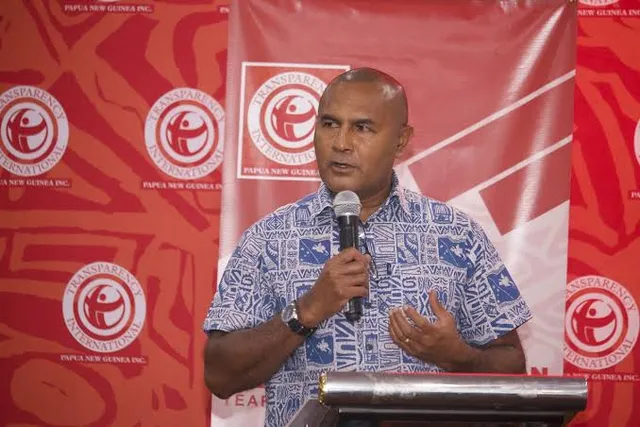
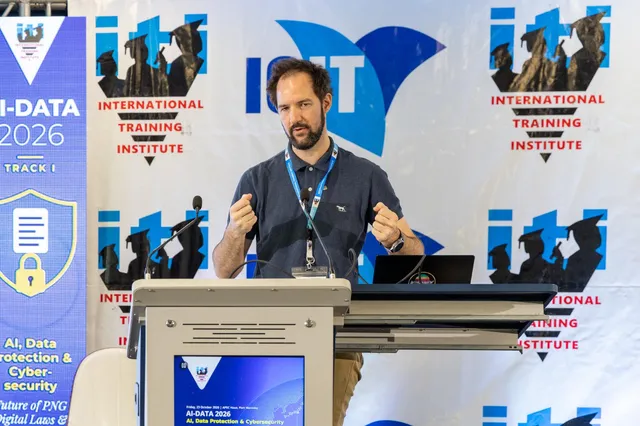
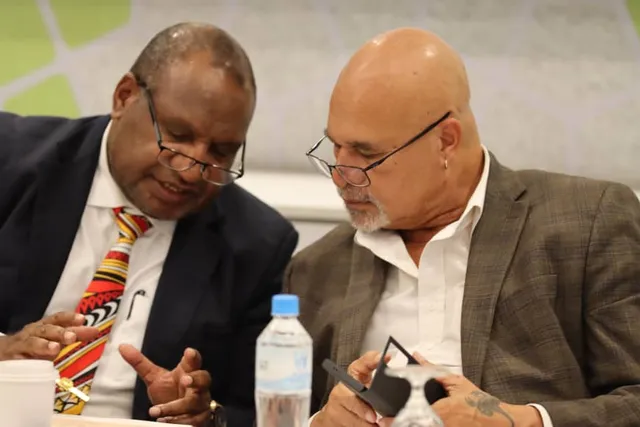
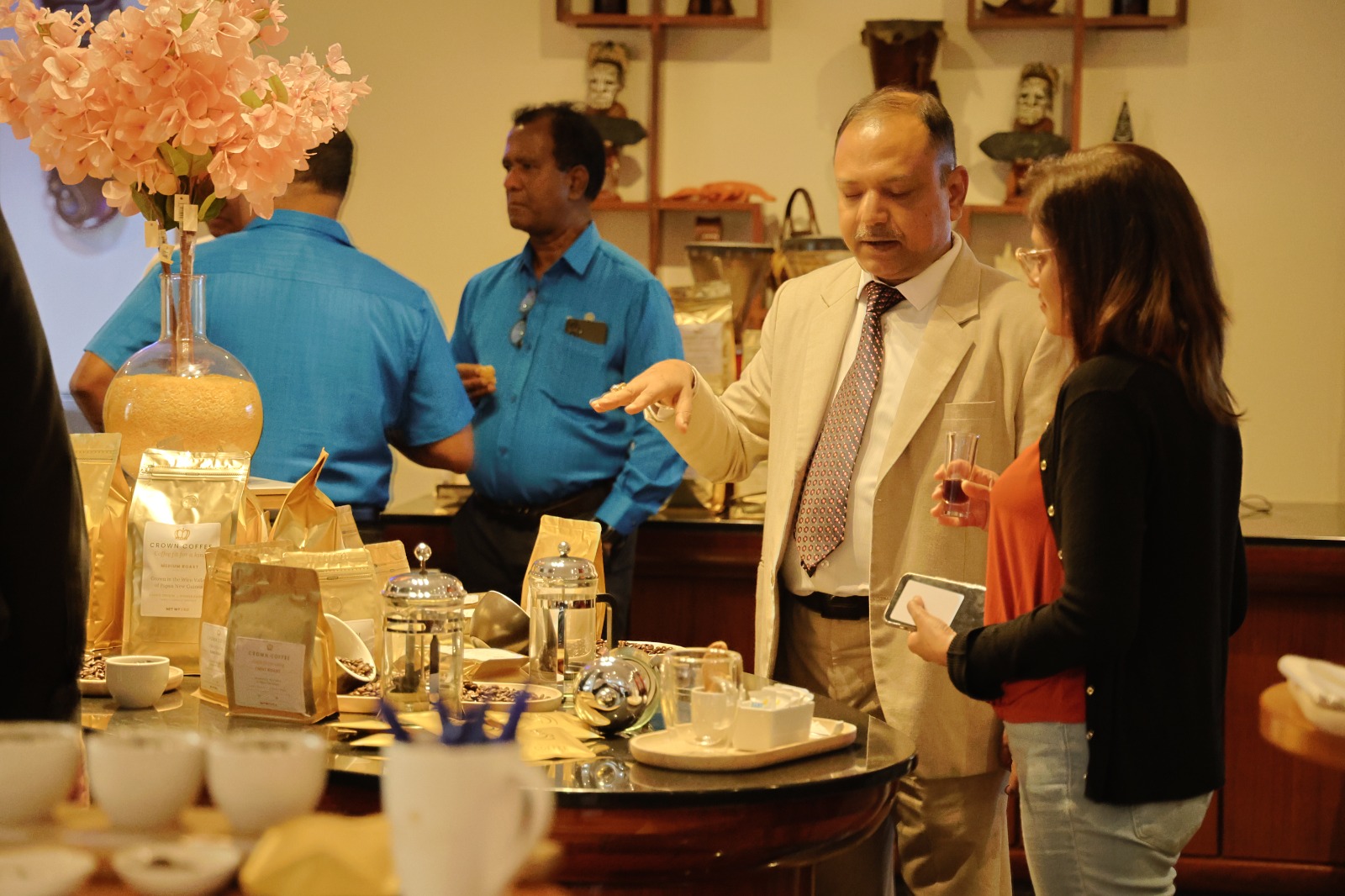
During Crown Coffee's first coffee tasting and packaging reveal, held on 9 October 2026 at Crown Hotel in Port Moresby, the hotel's executive assistant manager for food and beverage, Debasis Bera, said the brand had been developed around the concept of single-origin coffee. This would allow customers to learn more about where their coffee comes from and who produced it.
The coffee range comprises three roast profiles — light, medium and dark — each with different origins, characteristics and purposes within the product range.
While the light and medium roasts are sourced from individual farmers and kept separate throughout processing, the dark roast is blended from neighbouring farms within the Wiru Valley.
This distinction is reflected in the product labelling. The light and medium roasts are identified as single-origin, single-farmer coffee, while the dark roast carries a single-origin, single-valley description.
Bera said the different roast profiles would allow customers to explore PNG's Arabica coffee according to their preferred taste and preparation method.
"Every blend has its own nature," he said, explaining that Crown Hotel was also exploring distinctive coffee presentations and new beverage options to appeal to different consumer preferences.
Connecting consumers with the farmers behind the coffee
A major feature of Crown Coffee is its traceability system, which is designed to identify the individual farmer responsible for growing the coffee in each lot.
Unlike conventional coffee supply chains, where beans from different growers can be pooled together, Pangia Coffee purchases parchment coffee directly from individual farmers and maintains separate lot references throughout processing, hulling, roasting and packaging.
At the point of purchase, the farmer's name, village, GPS location of the coffee plot, weight of the parchment and moisture reading are recorded.
A unique lot reference is then issued and follows the coffee through each stage of production.
Each finished bag carries a sticker identifying the grower, while a QR code provides customers with additional information about the farmer, village, growing location, elevation and the dates the coffee was purchased and roasted.
The QR system is designed to operate through a mobile-friendly webpage, without requiring customers to download an application or create an account. The tracking system also records the country from which a bag is scanned, allowing Crown Hotel and Pangia Coffee to build a map showing where the coffee has travelled.
The intention is eventually to share this information with farmers so they can see the markets their coffee reaches beyond their communities.
The system also provides greater accountability throughout production, with moisture readings taken at three stages: when the parchment is purchased, after hulling and immediately before roasting. This helps the roasting operation assess the condition of the beans and determine the appropriate roasting profile.
According to Crown Hotel's production records, three farmers were supplying coffee to the operation at the time of the review, with approximately 1,000 kilograms already purchased and recorded in its tracking system.
Crown Hotel general manager Shankar Ghoshal said recognising the farmers behind the product was an important part of the brand's identity, ensuring that the people responsible for growing the coffee also received recognition in the market.
"We are promoting our farmers as well because they should be. They are the ones behind the coffee, and we shouldn't be taking the name by doing the business, but it's also them to introduce in the market. So that's the beauty of it," Ghoshal said.
A production model supporting rural farmers
The coffee supply arrangement is based on direct purchasing from farmers in the Wiru Valley, Southern Highlands Province.
According to the production model outlined by Pangia Coffee, growers pick, pulp and wash their coffee cherries before drying the parchment on raised beds in their villages.
The parchment coffee is then purchased directly from the farms, weighed and recorded before being transported to Pangia district in Ialibu-Pangia District for hulling and roasting.
The operation is designed to reduce the number of intermediaries between farmers and the roaster, allowing growers to receive better returns for their coffee.
The producer's pricing model offers between K1 and K3 more per kilogram than the alternative prices available from regional buyers at the time of purchase. The premium varies according to market conditions.
The arrangement also involves working alongside farmers to improve coffee quality through better cherry selection, fermentation and raised-bed drying techniques.
By encouraging improved production practices and purchasing higher-quality parchment directly from growers, the operation aims to strengthen the value of locally produced coffee.
The coffee is traditionally grown rather than plantation-produced. Farmers cultivate coffee trees on individual hillside plots, generally under shade, with cherries picked by hand. The brand uses the description "traditionally grown" to reflect these farming practices.
Local roasting and limited production
An important part of Crown Coffee's identity is that the coffee is roasted close to where it is grown.
Pangia Coffee handles the roasting operation in Pangia, within a few miles of the growing communities.
The arrangement keeps the major stages of production — picking, washing, drying, hulling, roasting and packaging — within a relatively small geographical area.
Production is deliberately being kept at a modest scale during the initial stages.
According to Crown Hotel's production review, the workforce has the capacity to process approximately 100 kilograms of roasted coffee each week. However, the first-year production target is 50 kilograms a week.
This will allow the business to establish the product, adjust production to Crown Hotel's requirements and assess how specialty coffee performs in the market before increasing output.
Ghoshal said Crown Hotel would initially introduce the coffee on a smaller scale, primarily serving hotel guests while also making limited retail quantities of 200–250 grams available under the Crown Coffee label.
He said the limited-production approach was intended to maintain the freshness of the coffee and create a product that customers could purchase within a defined production run.
The producer has also indicated that supply capacity needs to develop alongside market demand, rather than committing to large purchasing volumes before the supply chain is established.
Crown Coffee's records show that the business has been working with farmers to improve picking, fermentation and drying practices, with more growers expressing interest as they become aware of the purchasing prices offered.
The intention is to expand purchasing progressively as coffee quality, the roasting process and sales channels become established.
Three roast profiles and two packaging sizes
Crown Coffee's product range consists of light, medium and dark roasts, each serving a different purpose within the brand.
The light roast is a seasonal, limited-release product sourced from one farmer and one harvest. It is roasted to highlight the characteristics of the particular year's growing conditions and hillside.
Each light-roast bag is numbered by hand to identify its position within the limited production run.
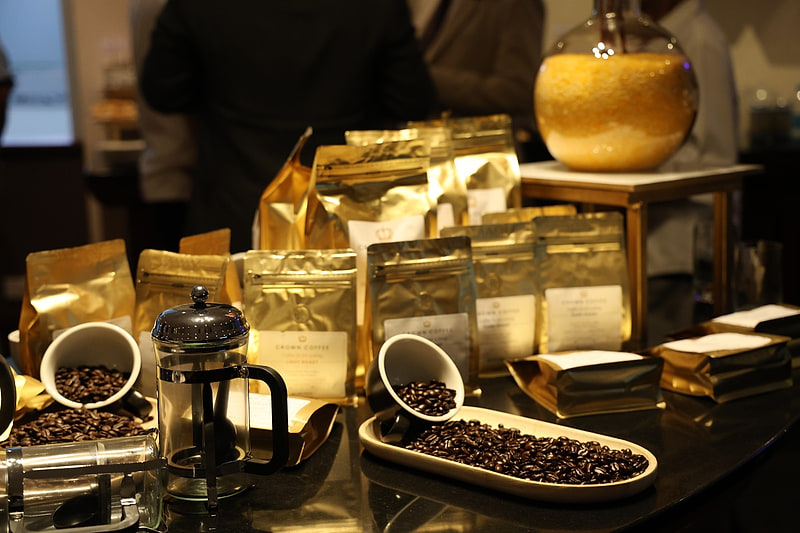
The medium roast is the flagship product and the main volume line. It is sourced from an individual farmer and maintained as a separate lot, with one-kilogram packaging intended for hotel coffee shops and 250-gram packets for gift shops and retail customers.
The dark roast is the house blend, combining coffee from neighbouring farms within the same valley. It is designed to provide a deeper flavour that retains its character in milk-based beverages. Importantly, the dark roast is identified as single-valley coffee rather than single-farmer coffee because it combines beans from multiple growers.
The product range is available in two proposed packaging sizes: 250 grams and one kilogram, depending on the roast and intended market. All products are packaged as whole-bean coffee.
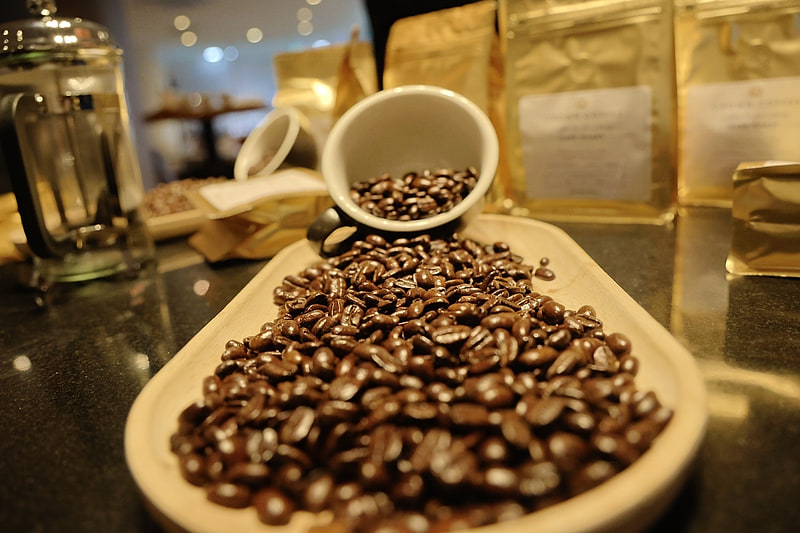
The packaging design also differentiates the three roast profiles through coloured side panels: orange for light roast, gold for medium roast and royal blue for dark roast.
The packaging review presents both black and white options, with the final selection intended to reflect brand preference rather than a technical requirement.
The light roast's hand-numbered packaging also gives customers a clearly identified limited-release product, while the medium and dark roasts are intended to remain the ongoing products within the range. Ghoshal said the limited-batch approach would allow customers to identify exactly where their packet sits within a particular production run.
"If I make 50 bags, every bag will be written 1 by 50 or 2 by 50," he added.
He explained that the numbering system, together with the farmer's name and QR code, would give customers more information about the coffee they were purchasing.
Crown Hotel looks towards wider distribution
For Crown Hotel, Crown Coffee provides an opportunity to introduce a locally sourced product to its existing hospitality customers before developing a wider distribution network.
Bera confirmed that the coffee would not be restricted to hotel guests, with plans to explore supplying other cafés and selected retail outlets as production and market demand develop.
The hotel also intends to introduce the coffee to its operations in Honiara, Solomon Islands, where the group has another hotel and a wine cellar. Ghoshal confirmed that the Honiara operation was also being considered as a market for the locally produced coffee.
However, expansion will depend on supply capacity and the level of demand established during the initial stages of the launch.
The approach provides Crown Hotel with an opportunity to develop the brand progressively, using customer feedback and sales performance to guide future production and distribution.
The production model also allows additional farmers to participate as demand grows, provided the operation can maintain its individual-farmer traceability and quality standards.
Building a coffee culture around PNG's beans
Crown Hotel's introduction of Crown Coffee also aims to encourage greater appreciation of PNG-grown Arabica coffee, including its origins, roasting profiles and preparation methods.
Ghoshal said coffee appreciation involved understanding the different characteristics of the product, including roast profiles, acidity and strength, much like wine consumers learn about grape varieties and how different wines complement food.
He said Crown Hotel wanted to help guests become more familiar with coffee and understand the different options available to them.
"It is all about the customer's choice. How they want their coffee: light, medium or dark roast. And the acidity level and how strong the coffee is," Ghoshal said.
He added that the hotel intended to develop a coffee culture within its hospitality operations, including a dedicated coffee counter where customers could learn more about the different roast profiles and the coffee they were drinking.
Customers would have opportunities to explore the different characteristics of the coffee through the hotel's hospitality operations.
For Crown Hotel and its production partner, the ambition is to establish Crown Coffee as more than another coffee product in the hospitality market. It represents an opportunity to showcase PNG's locally grown Arabica, recognise individual farmers, strengthen rural coffee production and connect agricultural communities with a wider commercial market.
Crown Coffee's distinguishing proposition is the connection between the coffee in the cup and the individual grower behind it — a story the brand intends to carry from the Southern Highlands to customers in PNG and around the world.