Bank of Papua New Guinea (BPNG) Governor Elizabeth Genia has outlined a broad financial-sector reform agenda aimed at strengthening monetary and financial stability, expanding financial inclusion and creating a more competitive and modern financial system to support investment and sustainable economic growth. Speaking at the Business Advantage PNG Investment Conference in Brisbane on 10 August 2026, Genia said stability must remain the foundation of Papua New Guinea’s economic development, as businesses, households and investors require confidence and predictability to make long-term decisions. Her address, titled “Driving Financial Sector Reform, Inclusion and Stability”, highlighted reforms across monetary policy, banking regulation, payments infrastructure, foreign exchange, financial inclusion, green finance and prudential supervision. Genia said the Bank’s statutory mandate under the Central Banking Act places price stability as its primary objective, followed by financial stability and the promotion of sustainable medium-term economic growth, particularly in the non-mineral and non-petroleum sectors. “A stable financial system allows savings to be channelled towards productive investment and supports the flow of credit through the economy, giving households and businesses greater certainty when planning for the future,” she said. On price stability, Genia said headline inflation is forecast at around 4 per cent in 2026, with underlying inflation measures expected to remain at or just below that level through 2027 and 2028. She said the convergence of headline and underlying inflation measures provides greater confidence in the medium-term inflation outlook, although the Bank remains alert to external and domestic risks. The re-emergence of the El Niño weather pattern is already affecting mining operations and domestic food production, she said, making weather-related pressures an area of close monitoring for the central bank. Genia also highlighted the impact of exchange-rate movements on inflation, noting that in recent years the exchange rate has played a stronger role than the Kina Facility Rate (KFR) as the nominal anchor for inflation. The Bank’s longer-term objective is for the KFR to become a more effective monetary-policy instrument. A key part of the reform agenda is restoring greater flexibility and convertibility in the foreign-exchange market. Genia said the Kina is now approximately 20 per cent lower against major currencies than it was in January 2023, describing the depreciation as measured and gradual, with minimal impact on inflation and broader macroeconomic stability. “As the exchange rate adjusted lower and inflows strengthened, the backlog of outstanding FX orders fell significantly,” she said. According to Genia, the reduction in the foreign-exchange backlog is one of the clearest indications that the market is moving closer to equilibrium. While PNG has not yet achieved full Kina convertibility, she said the country is moving in the right direction. The adjustment in the exchange rate also creates conditions for monetary policy to play a greater role in anchoring inflation. “If we now have more of the exchange-rate adjustment behind us than ahead of us, it creates the conditions for the nominal anchor for inflation to begin passing back from the exchange rate to the Kina Facility Rate,” Genia said. Bank of PNG targets stronger monetary-policy transmission Genia identified weak monetary-policy transmission as one of the major challenges facing the financial system. Changes in the KFR have not historically translated into corresponding movements in commercial lending and deposit rates, limiting the effectiveness of monetary policy in influencing economic activity. She said strengthening transmission through the KFR is therefore a critical next stage of reform. The Governor also pointed to limited competition in PNG’s banking market as another challenge. The recent entry of National Banking Corporation (NBC), TISA Bank and CreditBank is expected to increase competition for deposits and lending, although Genia cautioned that the new institutions will need time to build their businesses sustainably. Genia said BPNG is strengthening the regulatory and institutional foundations of the financial sector. Recent amendments to the Central Banking Act have strengthened the Bank’s governance while preserving its independence. Further reviews are also being undertaken of the Banks and Financial Institutions Act, the foreign-exchange regulatory framework and the National Payments System Act. The Bank is also strengthening prudential supervision and system-wide stress testing to identify risks not only within individual financial institutions but across the financial system. Operational resilience is another priority, including stronger risk management, information technology, cybersecurity and payments infrastructure. Genia said critical financial services must remain available during disruptions and that the infrastructure supporting transactions across the economy must be secure and resilient. BPNG has also introduced an Emergency Liquidity Assistance Policy, approved by its Board earlier this year, which allows the Bank to provide temporary liquidity support to an otherwise solvent and viable commercial bank experiencing severe short-term liquidity pressures. She said the policy forms part of broader contingency arrangements designed to protect confidence and financial stability. Financial inclusion expands Financial inclusion remains another major pillar of the Bank’s agenda under the National Financial Inclusion Strategy 2023–2027 and through the Centre for Excellence in Financial Inclusion (CEFI). The strategy focuses on expanding access to financial services, particularly through mobile and digital banking, with a strong focus on women and rural communities. Genia said more than 250,000 Papua New Guineans have received financial literacy training through CEFI programmes, including approximately 120,000 women. She said financial inclusion is ultimately about bringing more people into the formal financial system and enabling them to participate more fully in economic activity. PNG is also preparing to host the Alliance for Financial Inclusion (AFI) Global Policy Forum in Port Moresby, bringing together central bank governors, policymakers and financial-sector thought leaders from around the world. The forum will be held under the theme “Building Resilient Economies for an Inclusive Future”. Genia said hosting the international forum provides PNG with an opportunity to showcase its progress, strengthen regional cooperation and draw greater international attention to financial inclusion opportunities and challenges in the Pacific. Green finance emerges as new investment pathway Climate resilience and sustainable use of natural resources are also becoming increasingly important components of PNG’s financial-sector development. Genia said BPNG’s Inclusive Green Finance agenda is intended to help mobilise private and public capital towards investments that deliver environmental and economic benefits. A Green Finance Summit held in Port Moresby in May brought together government, development partners and the private sector to focus on moving green finance policy towards implementation. Four key components are being developed: the Inclusive Green Finance Taxonomy, Green Finance Academy, Environmental Risk Guidelines and Green Finance Facilities. The taxonomy is intended to provide clarity on what qualifies as green or sustainable investment, while the Green Finance Academy will build technical capacity within the sector. The Environmental Risk Guidelines will support better classification and reporting of green lending and help financial institutions incorporate environmental and climate risks into their risk-management systems. Green Finance Facilities, meanwhile, are intended to mobilise capital for commercially viable investments that support climate resilience. East Sepik project demonstrates economic value of conservation Genia highlighted the April Salumei Rainforest Community Conservation Project in East Sepik as an example of green finance being applied in practice. The project covers more than 600,000 hectares of rainforest that had originally been identified for commercial logging. Traditional landowners instead chose to preserve the forest and generate economic value through the carbon stored in the rainforest. Verified carbon credits generated through the project can be sold to entities seeking to offset emissions, with proceeds used to support community development initiatives, including schools, sustainable agriculture and employment. Under a new five-year development plan, further investment is expected in health and education. Genia said the project demonstrates how environmental assets can be protected while creating economic value and directing benefits back to the communities that own and protect those resources. AML/CFT reforms and FATF grey-list response The Governor also linked financial-sector reform to Papua New Guinea’s international financial-system obligations. PNG is currently responding to its placement on the Financial Action Task Force (FATF) grey list, with a review of the Anti-Money Laundering and Counter-Terrorist Financing (AML/CFT) Act forming part of the national reform programme. Genia said the focus is on implementing the agreed action plan, strengthening the effectiveness of PNG’s AML/CFT framework and demonstrating progress. For BPNG, she said the reforms are directly connected to maintaining the integrity of the domestic financial system and confidence in PNG’s links with the international financial system. BPNG is also pursuing reforms to the national payments system as financial technology and payment platforms continue to evolve. Genia said domestic and international payment systems must remain interoperable, secure and capable of accommodating new technologies. For PNG’s domestic market, she said financial institutions must be able to transact effectively with one another and the country’s national payments infrastructure must keep pace with developments in the wider payments ecosystem. Genia stressed that financial-sector reform would not produce results overnight. “Financial sector reform is not one single switch. It involves a series of measures that take time to take effect and, above all, require stability if they are to deliver meaningful results,” she said. For investors and businesses, the reform agenda points to a financial system intended to provide greater stability, stronger competition, improved access to finance and more effective monetary-policy transmission, while creating new opportunities in digital banking, green investment and the broader non-resource economy.
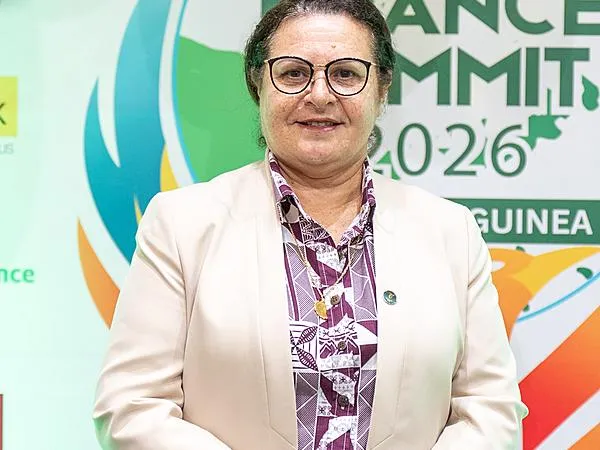
Bank of Papua New Guinea (BPNG) Governor Elizabeth Genia has outlined a broad financial-sector reform agenda aimed at strengthening monetary and financial stability, expanding financial inclusion and creating a more competitive and modern financial system to support investment and sustainable economic growth.
Speaking at the Business Advantage PNG Investment Conference in Brisbane on 10 August 2026, Genia said stability must remain the foundation of Papua New Guinea’s economic development, as businesses, households and investors require confidence and predictability to make long-term decisions.
Her address, titled “Driving Financial Sector Reform, Inclusion and Stability”, highlighted reforms across monetary policy, banking regulation, payments infrastructure, foreign exchange, financial inclusion, green finance and prudential supervision.
Genia said the Bank’s statutory mandate under the Central Banking Act places price stability as its primary objective, followed by financial stability and the promotion of sustainable medium-term economic growth, particularly in the non-mineral and non-petroleum sectors.
“A stable financial system allows savings to be channelled towards productive investment and supports the flow of credit through the economy, giving households and businesses greater certainty when planning for the future,” she said.
On price stability, Genia said headline inflation is forecast at around 4 per cent in 2026, with underlying inflation measures expected to remain at or just below that level through 2027 and 2028.
She said the convergence of headline and underlying inflation measures provides greater confidence in the medium-term inflation outlook, although the Bank remains alert to external and domestic risks.
The re-emergence of the El Niño weather pattern is already affecting mining operations and domestic food production, she said, making weather-related pressures an area of close monitoring for the central bank.
Genia also highlighted the impact of exchange-rate movements on inflation, noting that in recent years the exchange rate has played a stronger role than the Kina Facility Rate (KFR) as the nominal anchor for inflation.
The Bank’s longer-term objective is for the KFR to become a more effective monetary-policy instrument.
A key part of the reform agenda is restoring greater flexibility and convertibility in the foreign-exchange market.
Genia said the Kina is now approximately 20 per cent lower against major currencies than it was in January 2023, describing the depreciation as measured and gradual, with minimal impact on inflation and broader macroeconomic stability.
“As the exchange rate adjusted lower and inflows strengthened, the backlog of outstanding FX orders fell significantly,” she said.
According to Genia, the reduction in the foreign-exchange backlog is one of the clearest indications that the market is moving closer to equilibrium.
While PNG has not yet achieved full Kina convertibility, she said the country is moving in the right direction.
The adjustment in the exchange rate also creates conditions for monetary policy to play a greater role in anchoring inflation.
“If we now have more of the exchange-rate adjustment behind us than ahead of us, it creates the conditions for the nominal anchor for inflation to begin passing back from the exchange rate to the Kina Facility Rate,” Genia said.
Genia identified weak monetary-policy transmission as one of the major challenges facing the financial system.
Changes in the KFR have not historically translated into corresponding movements in commercial lending and deposit rates, limiting the effectiveness of monetary policy in influencing economic activity.
She said strengthening transmission through the KFR is therefore a critical next stage of reform.
The Governor also pointed to limited competition in PNG’s banking market as another challenge.
The recent entry of National Banking Corporation (NBC), TISA Bank and CreditBank is expected to increase competition for deposits and lending, although Genia cautioned that the new institutions will need time to build their businesses sustainably.
Genia said BPNG is strengthening the regulatory and institutional foundations of the financial sector.
Recent amendments to the Central Banking Act have strengthened the Bank’s governance while preserving its independence. Further reviews are also being undertaken of the Banks and Financial Institutions Act, the foreign-exchange regulatory framework and the National Payments System Act.
The Bank is also strengthening prudential supervision and system-wide stress testing to identify risks not only within individual financial institutions but across the financial system.
Operational resilience is another priority, including stronger risk management, information technology, cybersecurity and payments infrastructure.
Genia said critical financial services must remain available during disruptions and that the infrastructure supporting transactions across the economy must be secure and resilient.
BPNG has also introduced an Emergency Liquidity Assistance Policy, approved by its Board earlier this year, which allows the Bank to provide temporary liquidity support to an otherwise solvent and viable commercial bank experiencing severe short-term liquidity pressures.
She said the policy forms part of broader contingency arrangements designed to protect confidence and financial stability.
Financial inclusion remains another major pillar of the Bank’s agenda under the National Financial Inclusion Strategy 2023–2027 and through the Centre for Excellence in Financial Inclusion (CEFI).
The strategy focuses on expanding access to financial services, particularly through mobile and digital banking, with a strong focus on women and rural communities.
Genia said more than 250,000 Papua New Guineans have received financial literacy training through CEFI programmes, including approximately 120,000 women.
She said financial inclusion is ultimately about bringing more people into the formal financial system and enabling them to participate more fully in economic activity.
PNG is also preparing to host the Alliance for Financial Inclusion (AFI) Global Policy Forum in Port Moresby, bringing together central bank governors, policymakers and financial-sector thought leaders from around the world.
The forum will be held under the theme “Building Resilient Economies for an Inclusive Future”.
Genia said hosting the international forum provides PNG with an opportunity to showcase its progress, strengthen regional cooperation and draw greater international attention to financial inclusion opportunities and challenges in the Pacific.
Climate resilience and sustainable use of natural resources are also becoming increasingly important components of PNG’s financial-sector development.
Genia said BPNG’s Inclusive Green Finance agenda is intended to help mobilise private and public capital towards investments that deliver environmental and economic benefits.
A Green Finance Summit held in Port Moresby in May brought together government, development partners and the private sector to focus on moving green finance policy towards implementation.
Four key components are being developed: the Inclusive Green Finance Taxonomy, Green Finance Academy, Environmental Risk Guidelines and Green Finance Facilities.
The taxonomy is intended to provide clarity on what qualifies as green or sustainable investment, while the Green Finance Academy will build technical capacity within the sector.
The Environmental Risk Guidelines will support better classification and reporting of green lending and help financial institutions incorporate environmental and climate risks into their risk-management systems.
Green Finance Facilities, meanwhile, are intended to mobilise capital for commercially viable investments that support climate resilience.
Genia highlighted the April Salumei Rainforest Community Conservation Project in East Sepik as an example of green finance being applied in practice.
The project covers more than 600,000 hectares of rainforest that had originally been identified for commercial logging.
Traditional landowners instead chose to preserve the forest and generate economic value through the carbon stored in the rainforest.
Verified carbon credits generated through the project can be sold to entities seeking to offset emissions, with proceeds used to support community development initiatives, including schools, sustainable agriculture and employment.
Under a new five-year development plan, further investment is expected in health and education.
Genia said the project demonstrates how environmental assets can be protected while creating economic value and directing benefits back to the communities that own and protect those resources.
The Governor also linked financial-sector reform to Papua New Guinea’s international financial-system obligations.
PNG is currently responding to its placement on the Financial Action Task Force (FATF) grey list, with a review of the Anti-Money Laundering and Counter-Terrorist Financing (AML/CFT) Act forming part of the national reform programme.
Genia said the focus is on implementing the agreed action plan, strengthening the effectiveness of PNG’s AML/CFT framework and demonstrating progress.
For BPNG, she said the reforms are directly connected to maintaining the integrity of the domestic financial system and confidence in PNG’s links with the international financial system.
BPNG is also pursuing reforms to the national payments system as financial technology and payment platforms continue to evolve.
Genia said domestic and international payment systems must remain interoperable, secure and capable of accommodating new technologies.
For PNG’s domestic market, she said financial institutions must be able to transact effectively with one another and the country’s national payments infrastructure must keep pace with developments in the wider payments ecosystem.
Genia stressed that financial-sector reform would not produce results overnight.
“Financial sector reform is not one single switch. It involves a series of measures that take time to take effect and, above all, require stability if they are to deliver meaningful results,” she said.
For investors and businesses, the reform agenda points to a financial system intended to provide greater stability, stronger competition, improved access to finance and more effective monetary-policy transmission, while creating new opportunities in digital banking, green investment and the broader non-resource economy.
Papua New Guinea’s agriculture sector is being positioned at the centre of trade, investment and business development discussions, with government agencies and industry organisations coming together for the PNG Agriculture and Trade Festival 2026 in Goroka.
The festival, being held at the Goroka Showground from 28 to 30 August, is bringing together farmers, processors, government agencies, businesses and industry stakeholders as part of celebrations marking 70 years of the Highlands Farmers and Settlers Association (HFSA).
The event combines the Goroka Show, coffee and agriculture activities with business and trade opportunities, providing a platform for stakeholders to promote locally produced commodities while discussing the policy and infrastructure needed to expand market access.
The Department of International Trade and Investment is among the government agencies supporting the festival, with its sponsorship complementing its participation in important consultations on trade and business being held alongside the event.
The National Institute of Standards and Industrial Technology (NISIT) is conducting consultations on standards and quality requirements for the agriculture sector, while the National Trade Office is holding consultations on the Economic Partnership Agreement and trade opportunities with the United Arab Emirates (UAE) on 28 August.
The Investment Promotion Authority (IPA) and the Small and Medium Enterprise Corporation (SMEC) are also undertaking surveys focused on businesses and small and medium enterprises (SMEs).
The government’s involvement reflects a broader push to connect agricultural production with standards, investment, trade agreements and private-sector development.
Spice Board supports festival
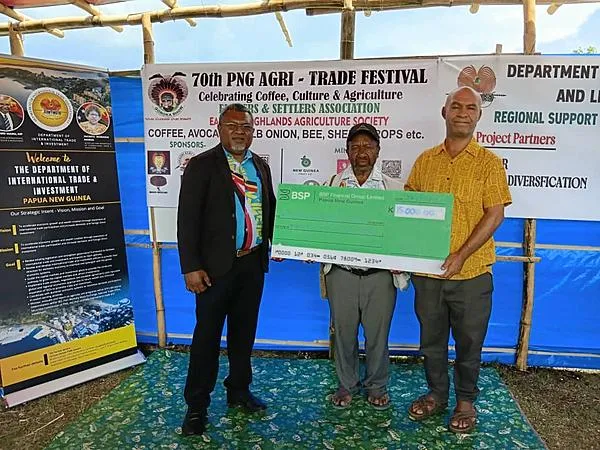
The PNG Spice Board has also backed the event with a K15,000 sponsorship, strengthening the participation of the spice industry and supporting efforts to connect farmers and processors with potential markets.
The Farmers and Settlers Association commended the Board and its management for supporting the Agriculture and Trade Festival and for establishing an exhibition at the event.
The Spice Board has brought spice processors and farmers to its stalls, giving participants an opportunity to showcase products and engage with industry stakeholders.
PNG Spice Board board member Sakarias Iko and Programme Director Baksy Poka represented the organisation and presented the K15,000 contribution to Festival Committee representative Kawage Teka.
Farmers and Settlers Association representative Jemmima Colbran thanked the Spice Board for its financial support, participation and assistance to spice exhibitors.
She also acknowledged the support of the PNG Biosecurity Authority and the Fresh Produce Development Agency, as well as the Kokonas Indastri Koporesen (KIK) and the Department of Agriculture and Livestock Highlands Regional Office for their roles in organising and facilitating the event.
Colbran said the cooperation demonstrates the importance of long-term partnerships in strengthening PNG’s agricultural sector and supporting the economy.
The partnership was highlighted as part of a relationship spanning 70 years, with stakeholders using the milestone to reinforce the need for continued cooperation between government, industry and farmers.
Nadzab international gateway proposed
The discussions around agriculture and trade have also renewed calls for improved transport connectivity, particularly for the country’s major commercial and agricultural centres outside Port Moresby.
Stakeholders have called on the Government to consider opening Nadzab Airport in Morobe Province to direct international flights, including potential services connecting Lae with international destinations and markets.
The proposal is aimed at improving the movement of people, goods and trade while reducing reliance on Jacksons International Airport in Port Moresby, which stakeholders say is already experiencing congestion.
Lae is strategically positioned as a major industrial and commercial centre and serves as a gateway to the Highlands and Momase regions, including some of PNG’s most important agricultural production areas.
Direct international connectivity through Nadzab could therefore provide economic benefits beyond passenger travel by improving access for exporters, investors, businesses and international buyers.
For agricultural producers, faster and more efficient transport links are particularly important for commodities that require reliable supply chains, quality control and access to overseas markets.
The push for Nadzab also aligns with the broader objectives of the Agriculture and Trade Festival, which is seeking to connect farmers and producers with processing, investment and trade opportunities.
Standards and quality critical to exports
The NISIT consultation on standards and quality is another important component of the festival’s business and economic focus.
As PNG seeks to increase agricultural exports and participate more strongly in international markets, producers and processors must meet the standards and quality requirements of overseas buyers.
Strengthening awareness of standards at the farmer and business level can help improve product quality, reduce barriers to trade and create greater opportunities for value-added agricultural products.
Similarly, the National Trade Office’s consultation on trade with the UAE provides an opportunity for PNG businesses to understand potential market access and the opportunities available through closer trade relationships.
The involvement of IPA and SMEC further broadens the festival’s economic focus by gathering information on businesses and SMEs and identifying the challenges facing smaller enterprises.
The festival demonstrates the interconnected nature of PNG’s economic development priorities.
Agriculture provides the production base, but farmers require infrastructure, finance, standards, processing capacity, market access and reliable transport to turn production into sustainable commercial businesses.
Government agencies, industry organisations and private businesses therefore have an important role to play in creating an environment where farmers can move into higher-value production and connect with domestic and international markets.
The presence of the Department of International Trade and Investment, NISIT, National Trade Office, IPA, SMEC, PNG Spice Board, Biosecurity Authority, FPDA, KIK and DAL at the event provides a direct link between agricultural production and the broader business and trade agenda.
The PNG Agriculture and Trade Festival 2026 will continue at the Goroka Showground on 28, 29 and 30 August, bringing together agriculture, coffee, business, trade and cultural activities as stakeholders look to strengthen the sector’s contribution to PNG’s economy.
With the country seeking to diversify its economy and increase non-resource exports, stakeholders say stronger partnerships, infrastructure and market connections will be essential to ensuring PNG’s farmers and businesses can compete both domestically and internationally.
Papua New Guinea and Solomon Islands are seeking to deepen economic cooperation, increase cross-border investment and develop stronger business-to-business partnerships as the two Melanesian neighbours work to translate longstanding political ties into economic gains.
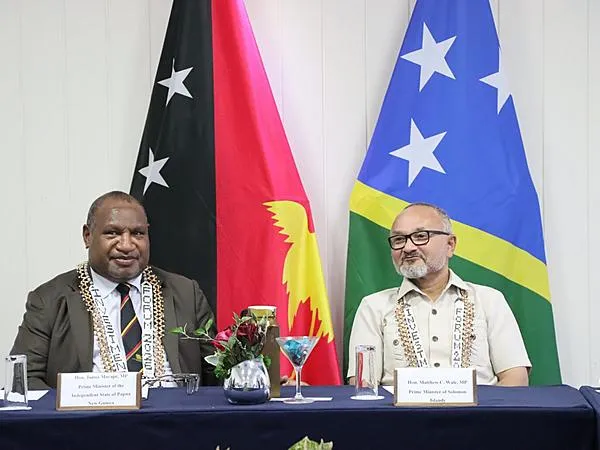
PNG Prime Minister James Marape made the call during the inaugural Papua New Guinea-Solomon Islands Business Investment Forum in Honiara, held under the theme “From Opportunity to Investment: Building the PNG-Solomon Islands Growth Corridor.”
The forum brought together government leaders, investors, business executives, financial institutions and private-sector representatives from both countries.
Marape said the forum should mark the beginning of sustained economic engagement between the two countries, with a focus on investment, trade, employment, downstream processing and greater economic independence.
“What good is political independence without economic independence?” Marape said, calling for both countries to build economies strong enough to stand on their own feet.
He said PNG and Solomon Islands were permanent neighbours whose economic interests were closely linked by geography, culture and history.
“We must construct a future that is fair and balanced, respects our people and our businesses, and allows us to walk step by step, side by side, into the future,” he said.
The forum followed Solomon Islands Prime Minister Matthew Wale’s official visit to Port Moresby in June, during which the two countries signed the Framework Agreement on Development and Economic Cooperation 2026-2030.
The agreement provides a framework for cooperation in trade and investment, mining, fisheries, agriculture, infrastructure and other areas of mutual economic interest.
Marape said the Honiara forum was intended to translate that government-level commitment into private-sector projects and partnerships.
“When Prime Minister Wale visited Port Moresby, we agreed that our relationship must produce tangible outcomes for our countries,” he said. “We have established the government framework. Now we want our private sectors to identify projects, establish partnerships and turn those opportunities into investment.”
PNG investment presence
PNG already has a significant commercial presence in Solomon Islands.
A 30-year review records 126 PNG-origin registered investments across 18 sectors, including agriculture, communications and information technology, construction, financial services, fisheries, mining, insurance, professional services, retail and wholesale, tourism and transportation.
The investments have proposed employment for more than 7,500 Solomon Islands citizens, with agriculture, professional services and fisheries among the largest employment-generating sectors.
Marape said PNG businesses had demonstrated that they could invest successfully beyond the country’s borders while creating jobs and contributing to a neighbouring economy.
“Papua New Guinean businesses have demonstrated that they can successfully invest beyond our borders while creating employment and contributing to the economy of a neighbouring Pacific country,” he said.
He encouraged Solomon Islands businesses to similarly explore opportunities in PNG.
Joint investment opportunities
Marape said the two countries had opportunities to cooperate in mining, fisheries, agriculture, energy, tourism, infrastructure, financial services, telecommunications, transport and downstream processing.
He particularly highlighted opportunities for joint ventures and partnerships between businesses in both countries.
“If we can source capacity from each other, let us source it. If we can have joint ventures amongst each other, let us have those joint ventures,” he said.
PNG businesses already operating in Solomon Islands include companies in property, finance, retail, fisheries, professional services, construction and other sectors.
Marape encouraged PNG businesses operating in Solomon Islands to develop local partnerships and support the growth of Solomon Islands-owned small and medium-sized enterprises.
“PNG businesses, as you work here, incubate a local business to be your value partner,” he said. “A good relationship, a good business venture and a good reputation is premium capital.”
Mining, fisheries opportunities
The two countries’ marine resources represent another potential area for cooperation, Marape said, particularly in fisheries.
PNG and Solomon Islands have large exclusive economic zones with significant tuna resources. Marape called for greater domestic processing and manufacturing rather than simply harvesting and exporting fish.
“We have been open for business for so long. We now want to go into partnership,” he said. “We want to step up processing of our catches in our respective countries.”
He said stronger cooperation could help the two countries build regional value chains for tuna and other marine products while creating employment and retaining more economic value domestically.
Marape also encouraged responsible investment in mining and energy, saying investors should receive reasonable returns while host countries, landowners and local businesses benefit through taxation, royalties, equity and local content.
In a separate bilateral meeting with Wale at the Heritage Park Hotel, Marape said Solomon Islands had again invited PNG investors to participate in its economy.
He said more than K1 billion of PNG investment was already present in Solomon Islands, with more than 59 PNG companies of various sizes operating there.
“We already have over K1 billion worth of Papua New Guinea investments in Solomon Islands, with more than 59 PNG companies of different sizes operating here,” Marape said.
He said the two countries could also explore joint participation in major mining projects, including arrangements that would ensure Solomon Islanders remained the principal beneficiaries of their natural resources.
Marape said PNG was prepared to consider equity structures in which Solomon Islands government entities, companies, provincial governments and landowners retained majority interests, while PNG companies contributed capital, expertise and experience.
“We are not coming here simply to take resources out. We want genuine partnerships in which Solomon Islanders remain beneficiaries of their own resources while our companies contribute capital, expertise and experience,” he said.
Economic relationship
The leaders also discussed trade and investment, border arrangements, mining, fisheries, agriculture, education, policing and security, air connectivity and other areas of bilateral cooperation.
Marape said the direct air connection between Honiara and Port Moresby would help facilitate the movement of businesses, investors and people between the two countries.
He said both governments needed to ensure that bilateral agreements translated into practical economic outcomes.
“Our political relationship is strong, our cultural and historical relationship is permanent, and now we must build the economic relationship to the same level,” Marape said.
“A stronger PNG-Solomon Islands economic corridor will strengthen both countries and contribute to a more economically resilient Melanesia and Pacific,” he said.
Marape said PNG’s economic diplomacy should also encourage domestic companies to expand internationally, rather than focusing solely on attracting foreign investment into the country.
“Papua New Guinea must also become an investor in the Pacific and, increasingly, beyond our region,” he said.
He identified banks, telecommunications companies, resource businesses, superannuation funds, agricultural companies, professional firms and SMEs as potential regional investors.
The prime minister said stronger economic integration between PNG and Solomon Islands could serve as a model for wider Melanesian and Pacific economic cooperation.
“A healthy Solomon Islands is a healthy PNG. A healthy PNG is a healthy Solomon Islands,” Marape said.
“Our strength is in economic prosperity.”
He urged businesses attending the forum to focus on practical opportunities, identify projects and establish joint ventures as the two countries seek to build a stronger economic relationship over the coming years.
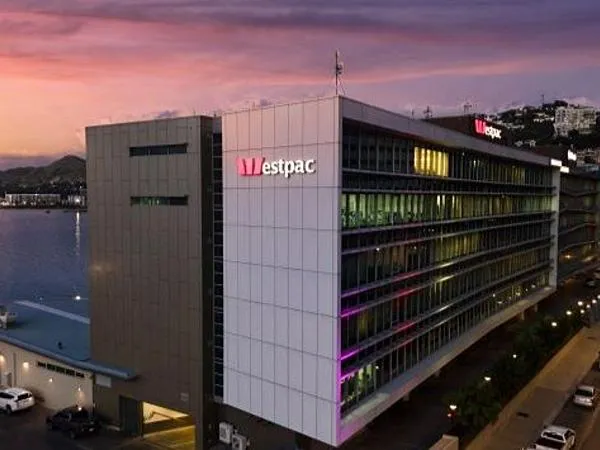
Papua New Guinea’s economy has entered the second half of 2026 in a stronger position than expected at the start of the year, supported by elevated commodity prices, increased resource-sector activity and continued economic reforms, according to Westpac’s latest WAILIS PNG Economic Update and Outlook.
The report said PNG’s macroeconomic outlook remained encouraging, with higher export earnings, stronger activity across mineral and non-mineral sectors and continued government infrastructure spending under the Connect PNG programme supporting economic growth.
Westpac Pacific Senior Economist Shamal Chand said the challenge was ensuring that stronger economic activity translated into broader benefits for households and communities.
“PNG is benefiting from stronger commodity prices, improved resource-sector activity and IMF-backed reforms,” Chand said. “The bigger task now is making sure growth supports livelihoods, service delivery and broader economic resilience.”
The report said the Bank of Papua New Guinea maintained the Kina Facility Rate at 5.0% during the period, while the kina continued to depreciate under the central bank’s crawl-like exchange rate regime.
Year to date in 2026, the kina exchange rate moved from 0.2352 to 0.2267, representing a decline of about 3.6%.
Westpac said foreign exchange conditions had improved, although remaining FX queues and central bank auctions indicated that the market had yet to fully clear.
Formal employment grew 2.4% in 2025, with mining and resources accounting for much of the increase in hiring.
However, Westpac noted that formal employment remained relatively small compared with the country’s large informal economy.
The report said this highlighted the need for better economic and household data to provide a clearer picture of livelihoods and living conditions across PNG.
Westpac’s outlook suggests that maintaining reform momentum will be important to consolidate recent economic gains and ensure stronger resource-sector activity translates into wider economic resilience and improved living standards.
The report also points to the importance of continued fiscal and monetary discipline, infrastructure investment and reforms supported by the International Monetary Fund as PNG navigates the second half of 2026.
The Autonomous Bougainville Government is strengthening the capacity of local contractors to meet government tendering, procurement and contract management requirements through a two-day conference in Buka early August.
The Local Contractors Conference, organized by the ABG Department of Infrastructure and Utilities in partnership with the Australian government, brings together local contractors, construction service providers, engineers, procurement and contract management officers, development partners, senior public servants and representatives from Papua New Guinea’s National Department of Works and Highways.
The conference focuses on helping contractors understand the department’s and ABG’s tendering and procurement processes, including compliance requirements, technical and financial capacity, reporting systems, contract management and tender procedures.
The initiative is part of broader ABG efforts to strengthen local capacity and institutional readiness as Bougainville prepares to exercise greater powers under self-government from 2027 and works toward its stated goal of independence in 2030.
Acting DIU Secretary Wilfred Hanette said the conference provides an important platform for local contractors to better understand government requirements and the standards expected in delivering publicly funded infrastructure projects.
He said it would also help contractors understand the direction of the department and reposition their businesses to participate more effectively in Bougainville’s infrastructure development as the ABG prepares for the next stages of its political development.
ABG President Ishmael Toroama officially opened the conference, welcoming the initiative as an opportunity to strengthen local contractors’ understanding of the Bougainville Tenders and Supplies Board Act 2015.
“I welcome the opportunity provided by DIU to encourage local contractors to honour the Bougainville Tenders and Supplies Board Act 2015,” Toroama said, noting that the legislation also recognizes the participation of Bougainville contractors in government procurement.
ABG Infrastructure and Utilities Minister Patrick Nisira said the conference represented an important partnership between the government and Bougainville’s local contracting industry.
“Its purpose is to help Bougainvillean businesses compete fairly, win contracts and deliver projects professionally, so that every kina invested in infrastructure brings lasting benefits to our people,” Nisira said.
He thanked contractors for attending, saying their participation demonstrated a commitment to improving their businesses, understanding government requirements and strengthening their contribution to Bougainville’s infrastructure development.
The conference is expected to strengthen the capacity and professionalism of local contractors and support greater participation by Bougainvillean businesses in government-funded infrastructure projects.
Prime Minister James Marape will travel to Honiara this week for the inaugural Papua New Guinea-Solomon Islands Investment Conference, seeking to translate the two countries' longstanding political and cultural ties into greater trade, investment and employment opportunities.
The conference will be held at Heritage Park Hotel on Aug. 19-20 under the theme "From Opportunity to Investment: Building the PNG-Solomon Islands Growth Corridor."
Marape will address the conference alongside Solomon Islands Prime Minister Matthew Wale, who will officially open the event. Government officials, investors, business executives, financial institutions and development partners from both countries are expected to attend.
Marape said the conference would seek to move bilateral economic relations beyond government cooperation toward stronger business partnerships.
"We want to move from Opportunity to actual Investment, and from Government-to-Government Cooperation into stronger Business-to-Business Partnerships," Marape said.
Papua New Guinea already has a significant commercial presence in Solomon Islands. A 30-year review identified 126 PNG-origin registered investments across 18 sectors, including agriculture, communications and information and communications technology, construction, financial services, fisheries, mining, insurance, professional services, retail and wholesale, tourism and transportation.
Marape said PNG investment in Solomon Islands had expanded from major projects in mining, telecommunications, tourism and agriculture to include finance, construction, retail, professional services, transportation and small and medium-sized enterprises.
He also encouraged Solomon Islands businesses to consider investment opportunities in PNG, saying the economic relationship should become increasingly two-way.
The conference follows Wale's official visit to Port Moresby in June, during which the two leaders signed the Framework Agreement on Development and Economic Cooperation 2026-2030.
The agreement provides a platform for closer cooperation in trade and investment, mining, fisheries, agriculture, infrastructure and other areas of mutual economic interest.
Marape said the Honiara conference would help translate the government framework into commercial projects and partnerships. Discussions are expected to focus on agriculture, fisheries, mining, energy, tourism, infrastructure, financial services, telecommunications, transport and downstream processing.
The two countries will also examine opportunities to strengthen connectivity and develop regional value chains.
"Instead of Exporting all our Raw Resources for processing elsewhere, our countries should look at where we can build Pacific value chains, add value locally and create more Employment for our people," Marape said.
The prime minister also said PNG's economic diplomacy should include supporting domestic companies seeking to expand into regional markets.
Conference organizers estimate that PNG businesses already have about K1 billion, equivalent to around SBD1.8 billion, invested in Solomon Islands.
Marape said PNG should become an investor in the Pacific as well as an attractor of foreign capital.
"Papua New Guinea must also become an Investor in the Pacific and, increasingly, beyond our Region," he said.
Marape said Solomon Islands was a natural economic partner because of the two countries' geographic proximity, established business relationships and longstanding bilateral ties.
He said stronger economic integration could eventually serve as a model for broader Melanesian and Pacific cooperation.
"A stronger PNG-Solomon Islands Economic Corridor will strengthen both countries and contribute to a more economically resilient Melanesia and Pacific," Marape said.
Marape thanked the Solomon Islands government, Solomon Islands Chamber of Commerce and Industry and Papua New Guinea-Solomon Islands Business Council for supporting the conference and urged participating PNG companies to focus on developing concrete commercial partnerships.
"Go to Honiara looking for real opportunities. Meet Solomon Islands Businesses, identify Projects and explore Joint Ventures," he said.
All Pacific Islands Forum (PIF) members are now connected to undersea telecommunications cables for the first time, marking a significant milestone for the region's digital infrastructure and opening new opportunities for trade, investment and economic participation.
Australia announced on August 7 that it had helped deliver more than 10,300 kilometres of new undersea cables across the Pacific, ensuring every PIF member has access to the global cable network.
The investment is expected to strengthen regional digital connectivity while improving the ability of governments, businesses and communities to access global markets, services and information.
Australia has committed more than A$500 million since 2018 to support undersea cable connectivity across the Pacific and Timor-Leste. The funding has supported cable projects in nine countries, including primary cable connections for Nauru, Solomon Islands, Timor-Leste, Tuvalu, Tarawa in Kiribati and Kosrae in the Federated States of Micronesia.
For Papua New Guinea, the programme has particular economic significance as Australia and its partners continue to support a second international cable connection for the country, aimed at strengthening the reliability and resilience of its telecommunications infrastructure.
Australia is delivering the investments in partnership with Japan, New Zealand and the United States, as well as Taiwan.
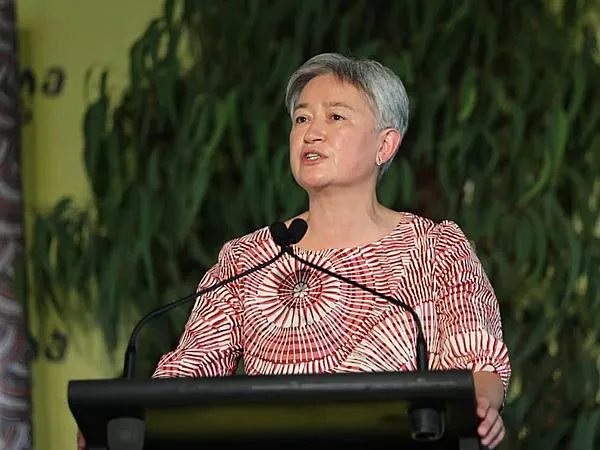
Australian Foreign Affairs Minister Penny Wong said universal connectivity across the PIF region would provide Pacific countries with infrastructure needed to participate more fully in the modern economy.
“For the first time, every Pacific Islands Forum member now has access to the digital infrastructure needed to participate fully in the modern economy, backed in with Australian support,” Wong said.
She said stronger digital connectivity would also contribute to regional resilience, economic growth and the delivery of essential services.
“A more connected Pacific is a more resilient Pacific. This infrastructure strengthens economic growth, supports essential services and will help underpin a more peaceful, stable and prosperous region,” she said.
Digital infrastructure opens economic opportunities
For Pacific businesses, improved international connectivity could reduce barriers to accessing digital markets and enable faster and more reliable communication with customers, suppliers, investors and partners outside the region.
Australia's Minister for Pacific Island Affairs Pat Conroy said improved digital infrastructure would help integrate Pacific economies and make it easier for investment to move across the region.
“Faster, more affordable and more reliable digital services will help integrate our economies, making it easier for Pacific peoples and businesses to connect, and investment to flow across the region,” Conroy said.
He said the new connections would also improve information and knowledge sharing, creating opportunities for Pacific countries to participate more fully in the global economy.
“With new connections comes greater opportunities, better information flows and knowledge sharing, supporting Pacific Island countries to fully participate in the global economy,” he said.
The infrastructure could support a growing range of economic activity across the region, including banking, digital commerce, tourism, business services and other sectors that increasingly depend on reliable international connectivity.
Focus on network resilience
The undersea cable investments are also being used to build greater redundancy into Pacific telecommunications networks.
Australia is supporting second international cable connections in Tonga, Papua New Guinea, Palau and Solomon Islands, helping reduce the economic and social risks associated with disruptions to individual cable routes.
For PNG, a second international connection is particularly important as businesses, government agencies and communities increasingly depend on telecommunications infrastructure for commercial transactions, government services, education and access to international markets.
Reliable connectivity can also strengthen business competitiveness and provide a more stable foundation for investment and participation in the digital economy.
The broader regional investment comes as Pacific economies become increasingly dependent on digital infrastructure for banking, digital commerce, government services, education, tourism and private-sector activity.
Australia said the completed regional network will help connect Pacific governments, businesses, communities and people to global networks and digital markets, creating opportunities for trade, investment, innovation and broader economic participation.
Papua New Guinea and Australia are moving to translate their new defence alliance into practical programs that could have long-term implications for PNG's workforce, infrastructure, skills development and economic activity.
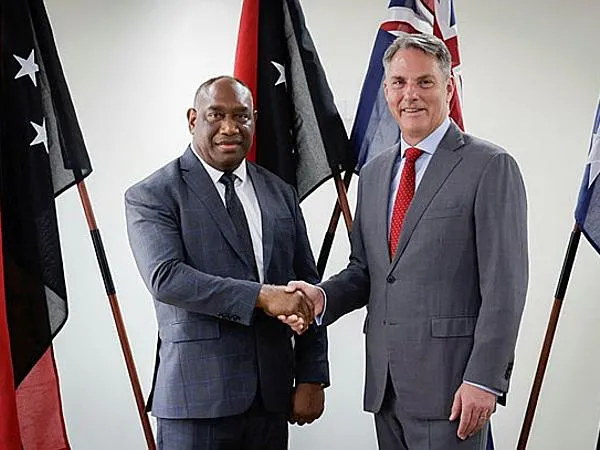
The focus emerged from a high-level meeting in Port Moresby on Aug. 16 between Australia's Deputy Prime Minister and Minister for Defence Richard Marles and PNG's newly appointed Defence Minister Elias Kapavore.
The meeting was the first ministerial engagement between the two ministers and came as both governments begin implementing the Pukpuk Treaty, which entered into force on July 8, 2026.
The treaty is PNG's first formal alliance with another country and Australia's first alliance in more than 70 years.
For PNG, one of the most significant workforce initiatives under the treaty is a planned pathway for Papua New Guinean citizens to join the Australian Defence Force.
Marles said Australia and PNG are targeting a pilot recruitment program, with the first intake expected to be well underway during the 2026-27 financial year and substantially into the recruitment process by June 30, 2027.
The initiative is expected to begin with smaller numbers before potentially expanding significantly over the next decade.
“We are looking at an initial pilot program, which will start the process of proving the recruitment pathway,” Marles said.
“It will be smaller numbers to begin with, but in time, we see this happening at scale over the next decade, where we are imagining thousands of people, thousands of Papua New Guineans are recruited into the Australian Defence Force.”
Workforce development opportunity
The proposed recruitment pathway could create a new avenue for PNG citizens to access specialised training, employment and professional development through the Australian Defence Force.
Marles said the Australian government has committed significant funding to establish the program, including funding over the next two financial years.
However, eligibility requirements and the recruitment framework are still being developed.
A joint task force involving relevant government agencies is working through the recruitment process, including eligibility, advertising, selection and training arrangements.
The two governments are expected to provide further details at a ministerial forum later this year.
Kapavore described the recruitment of Papua New Guineans into the ADF as “momentous,” saying it would further strengthen the longstanding relationship between the two countries.
He said both governments believe the first pilot program can be delivered in 2027.
The initiative could also support skills transfer and human capital development while creating new employment pathways for Papua New Guineans.
Australian investment in PNG defence infrastructure
Implementation of the treaty is also expected to sustain Australian investment in PNG defence infrastructure.
Marles said Australia would continue its infrastructure support program across PNG, building on projects already undertaken at facilities including Murray Barracks.
The two governments are continuing discussions on infrastructure priorities, while aviation and development of PNG's air wing remain areas of cooperation.
The infrastructure program could generate activity across construction, engineering, logistics, procurement and other services associated with upgrading and maintaining defence facilities.
One current example is Exercise Puk Puk 2026, where more than 100 Australian Defence Force personnel are working alongside the PNG Defence Force on infrastructure upgrades at Igam Barracks in Lae.
The exercise brings together military engineers from both countries and demonstrates the practical implementation of the alliance.
Broader economic activity
The growing operational relationship between the two defence forces is also generating activity across aviation, maritime operations, engineering and logistics.
Two PNGDF aircraft participated in Exercise Pitch Black 2026 in northern Australia last month, with more than 20 PNGDF personnel taking part.
Marles said the participation was significant because it represented PNG and Australia exercising together as allies for the first time.
Australia and PNG have also undertaken hydrographic survey operations involving HMAS Leeuwin and the PNGDF Maritime Element.
A PNGDF-led mission to transport essential health supplies to communities in West Sepik has further demonstrated the use of defence capabilities to support national development and humanitarian objectives.
These activities are building operational capability while strengthening institutional links between the two countries.
Defence partnership linked to capacity building
For PNG, the economic significance of the Pukpuk Treaty extends beyond defence operations.
The partnership is expected to support PNGDF capability building through training, infrastructure, aviation and technical cooperation.
Kapavore thanked Australia for its continued support for PNG pilots and defence infrastructure, saying the treaty would allow the two countries to enhance capabilities and build capacity together.
The development of the PNG air wing has been identified as a particular long-term challenge and priority.
Marles said Australia and PNG had discussed aviation cooperation and implementation arrangements that would make it easier for the two defence forces to operate in each other's countries.
Such arrangements could support greater movement of personnel, equipment and technical expertise between the two countries.
PNG's own recruitment remains separate
The ministers also clarified that the proposed ADF recruitment pathway should not be confused with PNG's domestic Defence Force recruitment program.
Kapavore said PNG is managing its own internal recruitment issues, with a report on the recent recruitment process being finalised and further recruitment expected to commence as early as September.
The ADF pathway is a separate arrangement under the Pukpuk Treaty that would allow eligible PNG citizens to go through an agreed process to train and ultimately join the Australian Defence Force.
Marles said the domestic PNG recruitment issues would not affect development of the Australia-PNG pathway.
The immediate priority for both governments is moving from treaty commitments to funded and operational programs.
Marles said the Australian government has provided significant funding over the next two financial years to establish the ADF recruitment initiative, while infrastructure and capability programs will continue.
The joint task force is responsible for progressing implementation arrangements and reporting to the two defence ministers.
The ministers are expected to take stock of progress at their upcoming ministerial forum later this year.
For PNG's business community, the implementation phase could create opportunities across construction, engineering, transport, aviation, logistics, training and other support services linked to defence infrastructure and capability development.
The proposed recruitment program could also have longer-term workforce implications if thousands of Papua New Guineans eventually enter the Australian Defence Force, particularly through the development of technical, leadership and specialised skills.
While the Pukpuk Treaty is fundamentally a security and defence agreement, its implementation is beginning to establish a wider economic dimension for PNG.
Infrastructure investment, skills development, employment pathways and increased demand for specialised services are among the potential economic outcomes arising from closer defence cooperation.
Marles said Australia and PNG are now entering a particularly important period in their relationship.
“With the Pukpuk Treaty now in force, we are focused on the next phase of our partnership and delivering practical outcomes that strengthen cooperation between our defence forces and advance our shared security interests,” he said.
For PNG, the challenge will be ensuring that implementation of the alliance delivers tangible national benefits, including stronger local capacity, employment opportunities, skills development and sustainable infrastructure investment.
The first major test will be establishment of the PNG-to-ADF recruitment pathway, with both governments now working towards a pilot program in 2027.
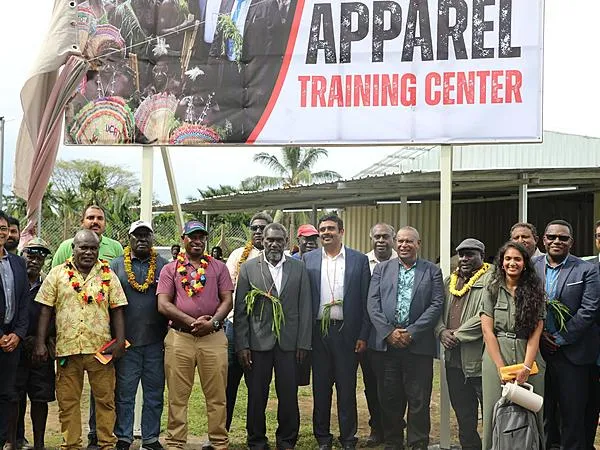
The Autonomous Bougainville Government (ABG) and Lloyds Metals and Energy Limited (LMEL) have opened an apparel training centre in Arawa, creating a new pathway for skills development and economic opportunities for women and girls across Bougainville.
ABG President Ishmael Toroama and LMEL managing director Balasubramanian Prabhakaran officially opened the Lloyds Apparel Training Centre today in the presence of Central Bougainville parliamentarians, LMEL staff, community leaders, trainees and members of the public.
The centre is a joint initiative between the ABG and LMEL and will initially train 150 women and girls from across Bougainville in apparel manufacturing.
Toroama described the initiative as a tangible outcome of the Bougainville peace process and an important step towards the region's target of achieving self-government by September 1, 2027.
"We must be matured. We must train our women. We must train our youth so that when the declaration by the President is being made for next year, you can see that empowerment," Toroama said.
He also acknowledged LMEL's investment in Bougainville and its efforts to create economic opportunities beyond the mineral sector.
Toroama said initiatives such as the apparel centre would be critical to developing Bougainville's internal revenue base as it prepares for self-government and pursues its long-term independence aspirations.
"I told [LMEL] if you believe in the terms that Bougainville stood firm and fought to become an independent sovereign nation, then I will take you on board," Toroama recalled of his first meeting with Prabhakaran.
He said the partnership reflected a shared interest in ensuring that economic opportunities generated in Bougainville benefited its people.
"The government will not be greedy" and "Lloyds Metal will not be greedy," Toroama said.
The president said Bougainville's aspirations were increasingly being supported by practical initiatives rather than remaining distant hopes.
"We are not dreaming. It's no longer a dream. Your leaders have provided this opportunity for all our younger people here in Bougainville," he said.
Prabhakaran described the opening as "a great painting of our dream into a reality" and said the centre was intended to eventually enable Bougainvilleans to own and manage apparel businesses.
"You are not working; you are owning this unit. You are going to be the owner of this mission," Prabhakaran said.
The long-term plan is to establish smaller apparel manufacturing units in communities across Bougainville, allowing women to work closer to their homes and families.
The initiative aims to eventually create opportunities for up to 2,000 people and produce uniforms and other garments for schools, hospitals and the mining sector.
"We commit to see that we will make this as a global apparel manufacturing hub of the world," Prabhakaran said.
The centre will initially focus on meeting local demand and reducing the cost of garments in Bougainville. Over time, the initiative aims to expand production and eventually export locally manufactured garments to neighbouring countries.
The first 150 trainees will undertake a three-month training programme, with trainers already in place at the facility. Commercial-scale production is expected to follow the completion of the initial training phase.
The initiative adds an economic diversification component to LMEL's engagement with Bougainville, while giving local women and young people an opportunity to develop skills that can support longer-term employment and business ownership.
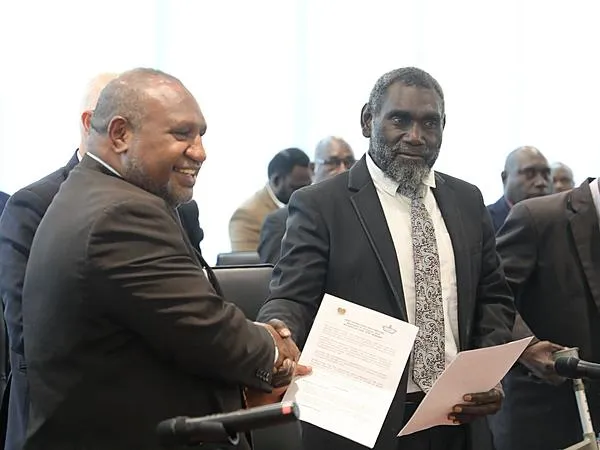
The Joint Supervisory Body (JSB) has endorsed the transfer of key revenue-raising powers from the Papua New Guinea National Government to the Autonomous Bougainville Government (ABG), with revenues generated from fisheries, mining, forestry, land and other relevant taxes to be handed over by 31 December 2026.
The resolution was adopted during the JSB meeting at Melanesian Haus in Port Moresby this week, co-chaired by Prime Minister James Marape and ABG President Ishmael Toroama.
The JSB also endorsed the ABG's proposals on taxation, revenue streams, statutory fees and related fiscal powers, as well as measures to strengthen fisheries governance and marine resource benefit-sharing.
To implement the agreement, the Chief Secretaries of both governments were directed to oversee and coordinate all technical engagements covering taxation, customs and excise, fisheries, statutory fees and other fiscal and economic matters affecting Bougainville. They have also been tasked with submitting a joint progress report at a future JSB meeting.
In his address to the meeting, Toroama described the transfer of fiscal powers as part of Bougainville's transition beyond autonomy and towards greater self-government, saying the region's political position had been shaped through extensive consultations and endorsed by its leadership.
He said Bougainville had honoured every resolution reached under the peace process, including the Bougainville Peace Agreement, the Wabag Roadmap, the Era Kone Covenant and previous JSB resolutions, and called on both governments to continue implementing the Joint Consultation Report and the Melanesian Framework in good faith.
Toroama also reaffirmed Bougainville's position that the 2019 independence referendum, in which 97.7% of voters backed independence, should remain the basis for the region's political future.
"We do not need a 'clear pathway to revisit the question' — the question has been asked, answered, and sealed in ink and blood," he said, rejecting suggestions that the referendum result could be revisited through future political processes.
He urged both governments to uphold the integrity of the Bougainville peace process, warning that any departure from jointly agreed commitments would attract international scrutiny.
"Our work today continues under the watchful, supportive eyes of our global partners," Toroama said, acknowledging the United Nations' continuing role in supporting the implementation of the post-referendum process.
The latest JSB resolution marks a significant step in expanding Bougainville's fiscal autonomy, with the transfer of revenue powers expected to strengthen the ABG's capacity to manage its own economic affairs ahead of the agreed end-2026 deadline.
Papua New Guinea's economy is expected to grow faster than the global average this year, supported by both its resource and non-resource sectors, according to the latest Westpac PNG Economic Update and Outlook, which Prime Minister James Marape said validates the government's economic reforms.
Westpac forecasts Papua New Guinea's real gross domestic product (GDP) to expand by 4.6% in 2026, following an estimated 5.5% growth in 2025, driven by stronger performance in agriculture, industry, communications, services and the country's resource sector. The projection is well above the 2.5% global growth forecast by the World Bank for 2026.
Marape said the report provides independent evidence that Papua New Guinea has remained resilient despite global economic headwinds, including geopolitical conflicts, inflation, commodity price volatility and the lingering effects of the Covid-19 pandemic.
"The independent assessment from Westpac is clear: our economy is resilient, it is growing, foreign exchange conditions are improving, our exports are earning more, and major investments are progressing," Marape said.
The prime minister said the report reflects the results of economic reforms introduced since his government took office in 2019, including fiscal consolidation, foreign exchange reforms, infrastructure investment and efforts to diversify the economy beyond its traditional reliance on oil, gas and mining.
Economy broadening beyond resources
According to Westpac, growth is no longer being driven solely by the extractive industries.
The report cited continued expansion in agriculture, manufacturing, communications and services, with increased economic activity also evident in provincial centers. The communications sector, in particular, has benefited from improved digital connectivity through the rollout of Starlink satellite internet services and the Pukpuk-1 submarine cable.
Marape said the findings support the government's strategy of building a broader economic base by promoting agriculture, fisheries, forestry, tourism, downstream processing and small and medium-sized enterprises.
"Our vision since 2019 has been to grow a broad-based economy in which agriculture, fisheries, forestry, tourism, manufacturing, downstream processing, communications and small-to-medium enterprises play a much larger role," he said.
Foreign exchange conditions improve
The report also pointed to significant improvements in Papua New Guinea's foreign exchange market, one of the country's longstanding economic challenges.
Westpac said foreign exchange availability has improved, with shorter clearing times and better market liquidity, attributing the gains partly to reforms supported by the International Monetary Fund and measures implemented by the Bank of Papua New Guinea.
Marape said addressing chronic foreign currency shortages has been one of his administration's priorities, noting that businesses had previously faced lengthy delays in accessing foreign exchange.
He said the government will continue working with the central bank, commercial banks, exporters, resource companies and development partners to further improve market liquidity and foreign exchange access.
Export earnings remain strong
Westpac said export earnings continued to strengthen, supported by stable liquefied natural gas production and higher global commodity prices.
Papua New Guinea exported about 3.73 million metric tons of LNG by May 2026, while gold exports benefited from higher international prices and stronger production. Cocoa exports also posted solid earnings, with coffee remaining an important contributor following favorable global prices.
Marape said the performance underscores the importance of supporting both large-scale resource projects and renewable agricultural industries that directly benefit rural communities.
Inflation contained despite global pressures
The report estimated annual inflation at 2.24% during the March quarter of 2026, although price pressures varied across the country.
Marape said the government remains mindful of the impact of rising living costs and pointed to its K1 billion fuel price stabilization program, which capped domestic fuel prices at March 2026 levels to cushion households and businesses from higher global fuel and freight costs linked to tensions in the Middle East.
Major projects to drive medium-term growth
Westpac identified the proposed $14 billion Papua LNG project as Papua New Guinea's most significant medium-term growth driver, with a final investment decision expected later this year.
The report also highlighted the potential contribution of the Wafi-Golpu copper-gold project and continued infrastructure investments under the Connect PNG Program, which aims to improve national transport connectivity.
Marape said these projects are expected to generate employment, attract investment, increase government revenue and strengthen foreign exchange inflows while complementing growth in agriculture, communications, construction and services.
Government cites reform progress
Marape said his administration inherited an economy burdened by fiscal pressures, foreign exchange shortages, high debt servicing costs and delayed investment projects in 2019.
Since then, the government has pursued reforms aimed at restoring macroeconomic stability, improving investor confidence, expanding infrastructure and increasing support for agriculture and small businesses, he said.
The prime minister acknowledged that challenges remain but said multiple international institutions continue to project positive economic growth for Papua New Guinea.
In addition to Westpac's 4.6% forecast, the International Monetary Fund expects the economy to grow 3.8% this year, while the Asian Development Bank projects 3.6% growth. Both institutions have also cited the country's improving macroeconomic conditions and resilience.
Looking ahead to the 2027 national elections, Marape said the government would continue pursuing disciplined fiscal management and long-term economic reforms rather than short-term political spending.
"We are not claiming that every problem has been solved," he said. "But the evidence shows that our economy is growing, our resilience is strengthening, and the future remains promising."
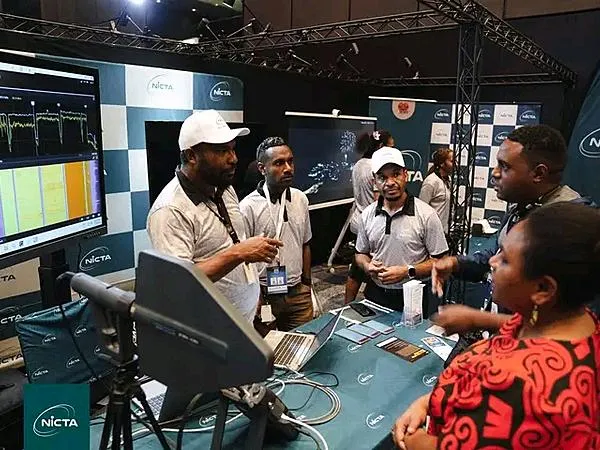
The National Information and Communications Technology Authority (NICTA) has welcomed Robert Naguri as Papua New Guinea's new minister for information and communications technology while commending outgoing minister Timothy Masiu for advancing the country's digital transformation agenda.
Speaking at the official handover ceremony at the National Broadcasting Corporation, NICTA Executive Director Warren Suti praised Masiu's leadership in strengthening Papua New Guinea's digital ecosystem and laying the foundation for a more connected and secure digital economy.
Among the achievements highlighted were the implementation of the Digital Government Act 2022, the development of the Digital Government Plan 2023–2027, the licensing of Starlink to expand internet access to remote and underserved communities, and progress on the National Cyber Security Strategy 2024.
NICTA also recognized Masiu's promotion of "meaningful connectivity," an approach that extends beyond network coverage to include affordability, digital skills, access to devices and relevant online services.
Naguri takes over the portfolio as Papua New Guinea continues to expand digital infrastructure and improve access to information and communications technology services across the country.
Suti said NICTA will work closely with the new minister to accelerate the rollout of digital services and communications infrastructure, particularly in rural, remote and geographically isolated communities.
The authority reaffirmed its commitment to keeping Universal Access and Service a national priority while promoting competition, encouraging innovation and investment, strengthening cybersecurity and supporting an enabling regulatory environment for digital growth.
"Digital connectivity is ultimately about people. It is about connecting our citizens to opportunity, empowering communities, protecting our digital future, and ensuring that no Papua New Guinean is left behind," Suti said.
The Autonomous Region of Bougainville is seeking national government support to establish a Special Economic Zone (SEZ), with International Trade and Investment Minister Richard Maru backing plans to advance the proposed Soraken Integrated Special Economic Zone.
Bougainville Regional Member and Works and Highways Minister Peter Tsiamalili met with Maru to discuss the proposal, which would be developed under Papua New Guinea's Special Economic Zone Act 2019.
Maru said he plans to visit Bougainville in August to inspect the proposed site and hold further discussions with the Bougainville government on the project's development.
"I know the Bougainville Government is keen on establishing a number of SEZs. We have to start with one and the model can be replicated as a concept in other parts of Bougainville," Maru said.
The minister outlined the requirements for securing an SEZ license and encouraged Bougainville authorities to submit a detailed proposal for National Executive Council concept approval.
He also suggested incorporating a fish cannery, an international wharf and a fuel depot into the proposed economic zone to strengthen its industrial and trade potential.
Maru invited the Bougainville government to participate in the inaugural Papua New Guinea–China Business Forum and Trade Expo in Guangzhou in October to promote the region as an investment destination and showcase opportunities within the proposed SEZ.
During the meeting, Tsiamalili also discussed the proposed sale of PNG Power Ltd. assets in Buka and Arawa as part of the utility's recovery plan.
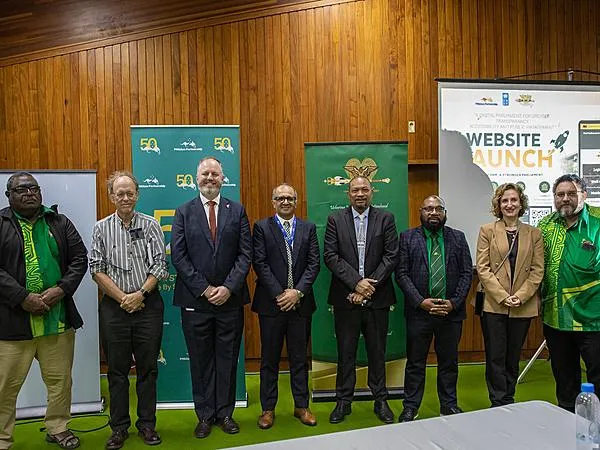
The National Parliament of Papua New Guinea has launched a new official website aimed at improving public access to parliamentary information and strengthening transparency, with support from the Australian government and the United Nations Development Programme (UNDP).
The website was developed under the Strengthening Papua New Guinea's Parliament Project, implemented by UNDP and funded by the Australian government. It provides easier public access to parliamentary business, including legislation, committee proceedings, reports and publications, and institutional information.
Speaking at the launch, Clerk of the National Parliament Kala Aufa described the website as the institution's "digital front door," saying it would strengthen transparency, public engagement and modern parliamentary governance by connecting Parliament with citizens across the country's provinces and islands.
Acting Speaker Koni Iguan said the platform reflects Parliament's commitment to making democratic processes more accessible to Papua New Guineans.
"This new website is our pledge to tear down those invisible walls and our commitment to ensuring that the House of the People is truly accessible by the people," Iguan said. "Our goal is simple: to make democracy understandable, accessible and meaningful to every single Papua New Guinean."
In addition to the website, the parliamentary strengthening project supported the development of a tracking system to monitor the implementation of committee recommendations, improving oversight and accountability.
Australian High Commission Counsellor for Subnational, Humanitarian and Accountability Craig Gillies said the initiative would help citizens better understand how Parliament functions and encourage greater public engagement.
"We hope that the website will serve as an effective public engagement tool, enabling citizens to more easily access parliamentary information and follow important committee work and decisions," Gillies said.
UNDP Deputy Resident Representative Aadil Mansoor said the initiative demonstrates the value of partnerships in strengthening democratic institutions.
"Today's launch is about more than technology; it is about strengthening democratic governance," Mansoor said. "These achievements reflect what can be accomplished through strong partnerships, and UNDP is proud to support the National Parliament in its efforts to strengthen democratic institutions."
The new website forms part of broader efforts to modernize parliamentary administration and improve transparency and accountability in Papua New Guinea's legislative processes.
Papua New Guinea is seeking to accelerate investment in its digital economy through stronger regional partnerships, expanded digital infrastructure and greater adoption of artificial intelligence (AI), with the Digital Transformation Summit 2026 (DTS26) bringing together governments, businesses, technology leaders and development partners to chart the country's next phase of economic growth.
The three-day summit, running from 20 to 22 July at the Sheraton Hotel in Port Moresby, has brought together policymakers, technology companies, development partners and regional leaders to discuss digital infrastructure, AI, cybersecurity, digital government and innovation as key drivers of economic development.
Organised by the Department of Information and Communication Technology (DICT), the summit also serves as a platform to strengthen regional cooperation and encourage investment in PNG's growing digital economy.
Digital Transformation to Drive Investment and Regional Cooperation
Opening the summit, DICT Secretary Steven Matainaho said the event is more than just a technology conference, describing it as a regional platform designed to strengthen digital cooperation, encourage innovation and unlock new economic opportunities across Papua New Guinea and the Pacific.
"This summit brings together leaders from government, industry, academia and development organisations to share ideas, strengthen partnerships and work on practical solutions that will improve digital services across our country and the Pacific," Matainaho said.
He said this year's programme combines four major regional ICT events under one umbrella—the Digital Transformation Summit, Pacific Cyber Week, the Pacific ICT Ministers Forum and the Pacific Cyber Security Operational Network (PaCSON) annual activities—creating one of the region's largest digital policy and technology gatherings.
According to Matainaho, integrating policy discussions, technical expertise, innovation and cybersecurity into a single programme reflects the growing role of digital technology in economic development, investment, trade and government service delivery.
He welcomed Prime Minister James Marape, ICT Minister Robert Naguri, ministers from Pacific Island countries, senior government officials, and representatives from Australia, the United States, the International Telecommunication Union (ITU), regional organisations, universities, development partners and the private sector.
Matainaho said regional cooperation is becoming increasingly important as Pacific nations face common challenges, including expanding digital connectivity, strengthening cybersecurity, promoting digital inclusion and preparing for emerging technologies such as AI.
He said Pacific Cyber Week will focus on enhancing regional cybersecurity cooperation, while the Pacific ICT Ministers Forum will allow ministers to discuss shared policy priorities and future collaboration. PaCSON activities will also bring together cybersecurity specialists from across the Pacific to exchange technical expertise and strengthen regional cyber resilience.
Youth participation has also become a key component of PNG's digital transformation agenda.
The summit programme opened on Sunday with the DTS26 eGames Championship, the country's largest Call of Duty: Mobile competition, featuring about 20 teams competing in front of hundreds of spectators while thousands more watched online.
Matainaho said the competition aims to encourage young Papua New Guineans to pursue careers in technology and innovation while recognising the growing economic potential of esports and the wider digital industry.
The programme also includes a national hackathon, where software developers are creating digital solutions to local challenges, and a Capture the Flag cybersecurity competition that gives students and ICT professionals an opportunity to develop practical cybersecurity skills.
Technology companies, financial institutions, telecommunications providers, universities and government agencies are also showcasing digital products, emerging technologies and public sector innovations throughout the summit.
ICT and AI Critical to PNG's Future Economic Growth
Officially opening DTS26, Prime Minister James Marape said digital technology has become one of the world's most important drivers of economic growth and national development, and that Papua New Guinea must continue investing in ICT to remain globally competitive.
He said the COVID-19 pandemic underscored the critical role digital technology plays in supporting healthcare, education, commerce, government services and communication.
"If there was any good that came out of COVID-19, it was the need and the importance of ICT as a driver of health, education, commerce, social connectivity and government work," Marape said.
Drawing on discussions at the World Economic Forum and the World Governments Summit, Marape said artificial intelligence is rapidly reshaping global economies and industries, making it essential for Papua New Guinea to prepare for the next phase of digital transformation.
He said the government is working toward making ICT a central pillar of public administration, reflecting its growing importance in improving service delivery, supporting business growth and driving long-term economic development.
Marape also highlighted significant progress in expanding digital infrastructure, revealing that broadband coverage has increased from about 40% in 2020 to around 80% in 2026 through continued investment in telecommunications networks.
He said the government is extending fiber-optic infrastructure alongside major road and infrastructure projects to improve connectivity nationwide, enabling more Papua New Guineans to access online education, healthcare, financial services, digital government platforms and business opportunities.
While greater connectivity is creating new opportunities for investment and innovation, Marape warned that increasing digitalization also brings heightened cybersecurity risks.
He said protecting government systems, businesses and citizens from cyber threats must remain a national priority as more economic and public services move online.
"The opportunities created by digital technology are enormous, but so are the risks if we fail to secure our systems and infrastructure," he said.
Marape said Papua New Guinea must continue building a trusted digital ecosystem that supports innovation while protecting businesses, public institutions and citizens from emerging cyber threats.
ICT Minister Outlines Four Pillars for Digital Economy
ICT Minister Robert Naguri, delivering his first national address since assuming the portfolio, outlined four strategic priorities that will guide Papua New Guinea's digital transformation agenda.
He said this year's summit theme, "Building Papua New Guinea's Digital Public Ecosystem on Trust, Infrastructure, Innovation and Inclusion," reflects the country's next stage of digital development.
Naguri said trust, digital infrastructure, innovation and inclusion will underpin the government's efforts to expand digital public services while creating an environment that encourages investment, technological innovation and greater private sector participation.
He said strengthening these four pillars would help improve public service delivery, expand digital access and position Papua New Guinea to compete in the rapidly evolving global digital economy.
DTS26 Expo Showcases Innovation and Regional Partnerships
Running alongside the summit at APEC Haus, the DTS26 Expo showcases emerging technologies, government digital initiatives, startup solutions and private sector innovations.
The exhibition provides businesses with opportunities to engage directly with delegates from more than 18 Pacific Island countries, alongside representatives from the International Telecommunication Union (ITU), the Asia-Pacific Telecommunity (APT), the Pacific Islands Forum (PIF) and other regional organizations, creating new opportunities for investment, technology partnerships and regional digital trade.
Throughout the three-day event, participants are attending keynote presentations, policy forums, technical workshops, innovation showcases and business exhibitions focused on artificial intelligence, cybersecurity, digital identity, digital public infrastructure and other technologies expected to shape Papua New Guinea's future digital economy.
As governments, businesses and development partners explore new opportunities for collaboration, the summit underscores Papua New Guinea's ambition to become a leading digital economy in the Pacific by expanding connectivity, embracing emerging technologies and building a trusted, inclusive and innovation-driven digital ecosystem.
Papua New Guinea's National Information and Communications Technology Authority (NICTA) has launched a new integrated regulatory database and announced progress toward the introduction of 5G services, marking key milestones in the country's digital transformation agenda.
NICTA and Universal Access Services Board Chairman Brian Riches unveiled the NICTA Integrated Database (NIDB) and provided an update on the country's 5G preparations during the opening day of the Digital Transformation Summit 2026.
Riches said the initiatives underscore NICTA's commitment to advancing Papua New Guinea's digital transformation through trusted data, modern digital infrastructure and a robust regulatory framework.
The NIDB is designed to strengthen NICTA's role as a data-driven regulator by providing a secure platform for collecting, managing and analysing information from the ICT sector. The system is expected to improve regulatory oversight, support evidence-based policymaking and enhance decision-making across the industry.
According to NICTA, the platform will serve as a single trusted source of ICT regulatory data and provide the foundation for future innovations, including advanced analytics and data-driven regulation.
Riches acknowledged support from the Economic and Social Infrastructure Program (ESIP), funded by the Australian government's Department of Foreign Affairs and Trade, as well as ICT licensees, industry stakeholders, project teams and NICTA staff involved in developing the platform.
On 5G, Riches said NICTA had completed extensive technical studies, industry consultations and public engagement as part of its review of the technology's introduction in Papua New Guinea.
He said the review process is nearing completion, with the NICTA Board expected to consider the final report and recommendations in the coming months.
"NICTA remains committed to ensuring that any future deployment of 5G is guided by transparent, evidence-based decision-making and aligns with the long-term interests of consumers, industry and the nation," Riches said.
He added that the initiatives extend beyond technology, describing them as critical building blocks for a digitally connected Papua New Guinea.
"It is about strengthening trust through data, enabling connectivity through modern infrastructure, and creating opportunities for innovation, investment and inclusion for all Papua New Guineans," he said.
The launch of the integrated database and continued work toward 5G readiness form part of NICTA's broader strategy to develop a modern, secure and future-ready digital ecosystem for Papua New Guinea.
Follow on LinkedIn:
PNG Business News
Be the "First" to get our exclusive Digital Magazine & Weekly Newsletter.