April 29, 2021

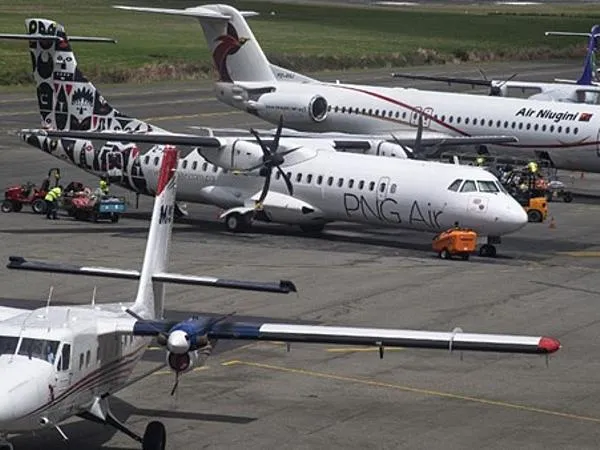
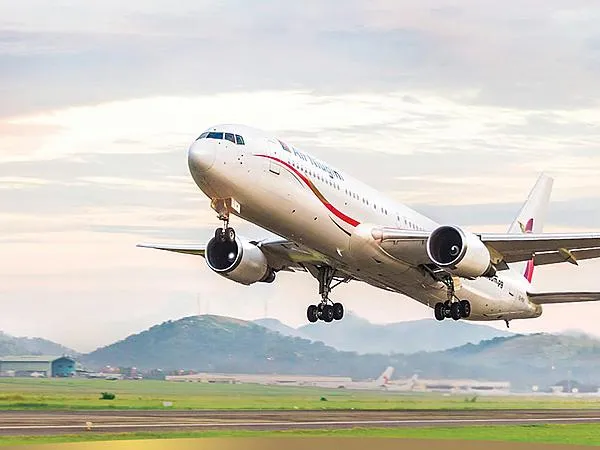
Link PNG and PNG Air have reported that they have reapplied to the ICCC for Link PNG to buy a minority stake in PNG Air.

PNG Air and Link PNG also agree that ICCC acceptance would help Papua New Guineans and visitors.

The planned joint venture between Link PNG and MRDC is focused on PNG Air being an independent airline, setting its own airfares and selling its own tickets separately from Air Niugini, according to Link PNG chairman Sir Kostas Constantinou and PNG Air chairman Augustine Mano.

In a joint statement, both chairmen emphasized the importance of PNG continuing to have two separate carriers, PNG Air and Air Niugini, as well as a competitive domestic market.

They mentioned that COVID-19 has lasted much longer than anyone predicted and is continuing to have a negative impact on both airlines; thus, while it is vital that we continue to work independently on a commercial basis, it is also critical that the airlines take advantage of this ability to reduce costs.

“World aviation has been badly damaged by COVID-19, including in our region where the Fijian government has had to issue loan guarantees for K788 million to support Fiji Airways, whilst elsewhere governments have had to pay billions of Kina to keep their airlines alive.

“We believe this move if approved, will ensure PNG’s airline industry is profitable, sustainable and competitive without having to rely on Government support. 

“Both airlines are ultimately owned by the people of PNG, either the taxpayer, contributors to superannuation or as a landowner so it is critical both airlines are viable.”

The plan is focused on Link PNG maintaining a minority share status and all commercial roles being distinct and autonomous, according to the chairmen.

  • the selling of all PNG Air airline tickets, including all pricing and yield control, as well as all personnel involved in these functions;
  • PNG Air's publicity, which includes existing sales offices as well as a separate website;
  • PNG Air's board and management will be independent; 
  • all cabin crew, sales personnel, and check-in staff will wear PNG Air uniforms; and 
  • all of PNG Air's aircraft will be painted in PNG Air livery.

Back office activities that can be handled more effectively between the two carriers, as well as more efficient fleet use, will be the main integration advantages.

“We believe there is a compelling case for creating a stronger independent PNG Air, across a wider network, as well as ensuring job security,” they stated. “We will also ensure the savings created will be passed back onto our customers through more affordable airfares; with the lower prices resulting from economies of scale and through the considerable cost efficiencies that are available.”

The idea, according to Sir Kostas and Mano, would favour airline passengers as well as ensure job protection for both airlines and the continuation of the PNG Air brand in our skies. They also stated that “With the savings, we will generate, we will be able to pass this back onto our customers through more affordable airfares.”

Before the joint venture can be finalized, both Link PNG and PNG Air will need both regulatory and shareholder approvals, including from ICCC.

April 29, 2021

The Asian Development Bank (ADB) has been thanked by the Prime Minister for its long and constructive support for PNG's development.

PNG's main multilateral financing partner, the ADB, has been active in the country's growth for 50 years.

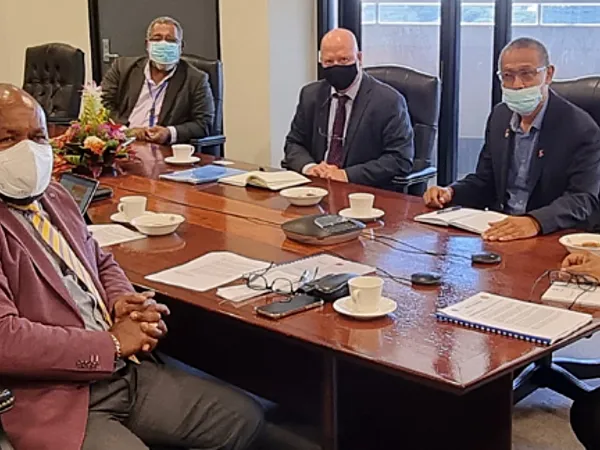
Prime Minister James Marape, Treasurer Ian Ling-Stuckey, Finance Minister John Pundari, Works Minister Michael Nali, Health Minister Jelta Wong, and Asian Development Bank Country Director David Hill met recently.

In the future, the Prime Minister demanded that ADB continue to assist the government and citizens of PNG in the transportation and health sectors, as well as in the energy and education sectors, as well as with much-needed State-Owned Enterprise reforms.

The Treasurer emphasized the importance of the ADB's friendly international assistance in dealing with the global COVID-19 pandemic.

He thanked the ADB in particular for the massive growth in project funding in recent years, which he credited to increased national budgeting and counter-part financing, as well as the $US500 million in budget assistance in 2020.

The Treasurer noted that the project loans under consideration are aimed at fostering a more prosperous and sustainable economy. The average rate of return is projected to be 12 per cent per year, with interest expenses of just 2% per year, resulting in annual growth of 10%.

The transportation and health sectors were also discussed in depth.

Minister Nali outlined the goals of the Marape administration's "Connect PNG" transportation sector plan, which is being developed by the ADB's newly approved "Transport Sector Preparatory Project" Project Readiness Facility for PNG.

The Trans-island Highway (Port Moresby to Lae), the Momase Highway (Somare Highway), and an expansion of the Highlands Highway and feeder road network west of Mt. Hagen will all be studied and designed as part of this initiative.

The project to rehabilitate and sustainably preserve 430 kilometres of the Highlands Highway, which was moving along nicely, was also discussed. There was some talk on how to improve the efficiency and quality of work of some contractors.

Minister Wong addressed the Health Services Sector Development Program, which is funded by the Asian Development Bank, as well as the COVID-19 assistance that the bank will provide in late 2020. Given the progress of these projects, Prime Minister Marape has asked the Asian Development Bank (ADB) to propose a new health-related initiative to fund the building of 15 provincial hospitals.

April 29, 2021

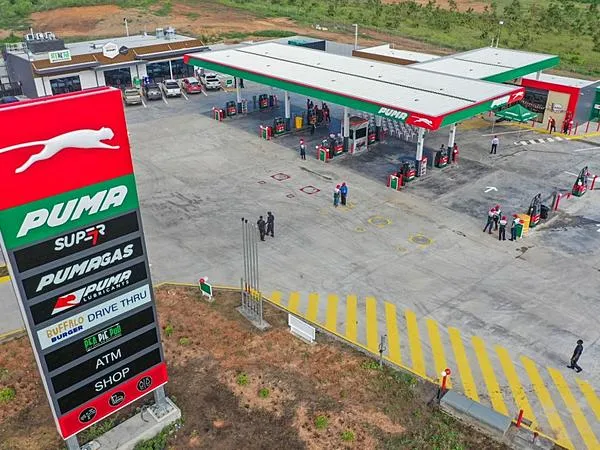
According to the Independent Consumer and Competition Commission, Trafigura Group has filed an application for approval for a potential purchase of an additional interest in Puma Energy Group (ICCC).

On a public note, Trafigura's commissioner and chief executive officer Paulus Ain stated that Trafigura was already the largest shareholder in Puma and that after the takeover, Trafigura will have a controlling interest in Puma.

Puma Energy has three wholly-owned subsidiaries operating in the country: Puma Energy Bunkering PNG Ltd, Puma Energy PNG Ltd, and Puma Energy PNG Refining Ltd.

Oil refining or refinery at Napa Napa, wholesale and retail sales of refined petroleum products, LPG and bitumen supply are among the company's activities in the region.

The ICCC, according to Ain, is requesting input and submissions from interested stakeholders and individuals who may have an interest in the proposed transaction.

“Please provide your comments on whether or not this acquisition will have any serious harm to competition in any markets in PNG,” he said.

Puma Energy Holdings Pte Ltd, Trafigura Pte Ltd, and Sonangol EP announced last Friday that they had signed a series of agreements.

Trafigura decided to buy Puma Energy's whole shareholding from Sonangol for US$600 million, according to a statement from Puma Energy (K2.065 billion).

Puma Energy and Sonangol have decided to sell their Angolan company and properties, according to the statement.

The Pumangol retail network of service stations, airport terminals, and maritime terminals, including the state-of-the-art Terminal de Combustibles da Pumangol em Luanda (TCPL) terminal in Luanda Bay, Angola, was acquired as part of this.

Puma Energy will be able to minimize the size of the rights issue to collect US$500 million (K1.72 billion) from rights already subscribed for by Trafigura and a limited number of minority owners as a result of these deals, according to the company.

The rights were being applied into a convertible instrument in which subscribers paid Puma Energy on Wednesday, and the shares would be distributed to subscribers after regulatory approvals were received.

Rene Medori, chairman of Puma Energy, said that improving and recapitalizing the company's balance sheet was a crucial strategic goal that would help stabilize the company's finances and support investment in its aggressive growth plans.

Trafigura's executive chairman and chief executive officer, Jeremy Weir, said the company was delighted to help Puma's recapitalization and the selling of its Angolan holdings to Sonangol, a long-time ally.

“This is a further demonstration of our commitment to and confidence in Puma Energy and its future prospects.”

Meanwhile, Hulala Tokome, country manager and director of Puma Energy PNG Ltd, said that the takeover would have no effect on the company's PNG operations or customers.

April 29, 2021

Negotiations between Twinza Oil Ltd and the Papua New Guinea government are likely to proceed, according to an economist, but refusing to change conditions at the last minute sends a disappointing message to international investors.

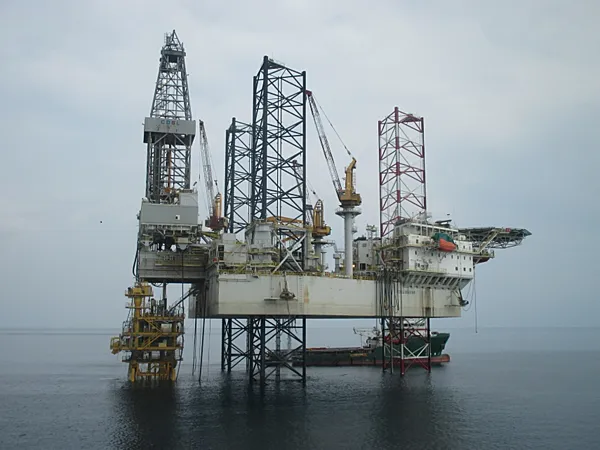
Marcel Schroder, an economist with the Asian Development Bank's macroeconomic analysis division, was referring to the government's announcement, conveyed to the company on April 16, that a 6% output levy is now needed to sign the agreement for the Pasca A gas project offshore of Gulf.

“This is four per cent higher than the production levy that was agreed as part of the comprehensive terms for Pasca A, negotiated by the State negotiating team and announced by Prime Minister James Marape last Sept 24,” he said.

In general, according to Schroder, an investor will back out if the anticipated advantages of its outside alternatives outweighed the benefits of the project under discussion. “Outside options for the investor could be projects in other countries,” he said. “Outside options for the Government are leaving the resources in the ground. A new investor may come forward if they view it as financially beneficial.”

Future investors will be worried, according to Schroder, that the government may want to renegotiate the deal after development has begun.

“They might also be concerned about this happening in other future agreements,” he said. “Since any investor requires to be compensated for higher incurred risks, this can weaken the government’s bargaining position, and, thus, negatively affect its take in future projects. Economically, it was sensible of the negotiation team to ask for early revenues from the project. These can be used for financing development projects and they will aid macroeconomic stability.”

April 26, 2021

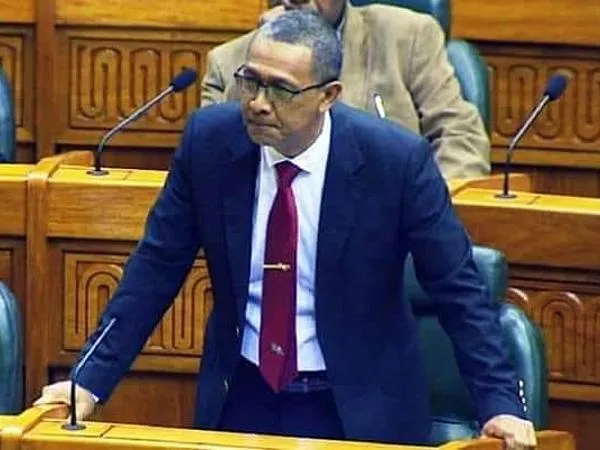
Treasurer Ian Ling Stuckey told Parliament that K5.7 billion was spent as part of an economic recovery plan on "the economic battle."

He explained that the money was not solely spending on COVID-19 and that the government had invested K2.5 billion in COVID-19 bonds and K1.5 billion in friendly international assistance.

Mr Ling-Stuckey said K600 million had been set aside, and the government had “built another K600 million on COVID-19 in 2022” into its budget projections.

On COVID-19, he said, there were two wars: a health war and an economic war. Mr Ling-Stuckey claimed that the majority of the K5.7 billion was spent on the global war as a relief package rather than a COVID-19 health program.

The elements and results of the K5.7 billion economic stimulus program, he said, included:

  • K2.5 billion COVID-19 bonds – Amid the vulnerable, once-in-a-generation challenge to capital markets, all of these bonds were successfully collected. There was a possibility that the COVID-19 economic impacts may have prevented these bond proposals, which were already included in the 2020 budget, from raising the necessary funds.
  • K1.5 billion in friendly international assistance – met. The people of Marape have faith in the government. Budget funding collections totalled K4.4 billion in 2020. Thanks to COVID-19, some of the 2020 budget funds were no longer available, most notably the loss of nearly K1 billion expected for the ADB partial credit guarantee due to poor foreign market conditions. However, we were able to receive K1.26 billion from the IMF, K877 million from the ADB in a revised COVID-19 aid program, an expansion in our ADB health package to K528 million, the completion of SOE reforms for K351 million, and agreements with Australia for a new, low-cost, longer-term loan of K1.383 billion. K1b, a valued Japanese aid, was also present. This is a benefit of more flexible, straightforward, and accountable budgeting. This has aided in the repayment of previous high-cost debts, such as the Credit Suisse loan. More critically, it has backed up existing calls to boost healthcare spending and protect the economy from COVID-19-related shocks. This funding is used to finance the whole budget;
  • K6 million credit line from BPNG, which was obtained by lowering the cash balance requirement – was surpassed, with BPNG signaling that much more was given. The declines in cash balance requirements totalled K643 million, according to BPNG.
  • K500 million in cash flow for people who lose their work due to regulatory reforms that provide for early access to superannuation. Preliminary estimates indicate that withdrawals have risen by more than 20%, with more funding expected; –
  • K5 million real budget spending – later increased to K6 million – preliminary findings show that K508 million was spent.

“In total, of the K5.2b, we exceeded the target by nearly K3b in friendly foreign support and K43m from the BPNG credit line – due to the renewed confidence in the PNG economy by our international partners.”

April 23, 2021

Passengers leaving internationally on Air Niugini will now be expected to take a 45-minute COVID-19 test prior to check-in.

The airline said in a statement that the new provision, which went into effect recently would affect all passengers flying to Australia, as well as Singapore, Hong Kong, Manila, and all other foreign destinations served by Air Niugini.

This is in addition to the previous condition, which required passengers to show a negative PCR test within three days of flight.

Air Niugini recognizes that on occasional occasions, a passenger can test negative at the initial PCR test (taken within three days of travel) but then test positive at check-in.

If a passenger tests positive at check-in, they will be unable to fly due to limitations, but Air Niugini will immediately rebook them for a later date at no cost.

Passengers checking out of hotels in Port Moresby should have a contingency plan in place in case they test positive.

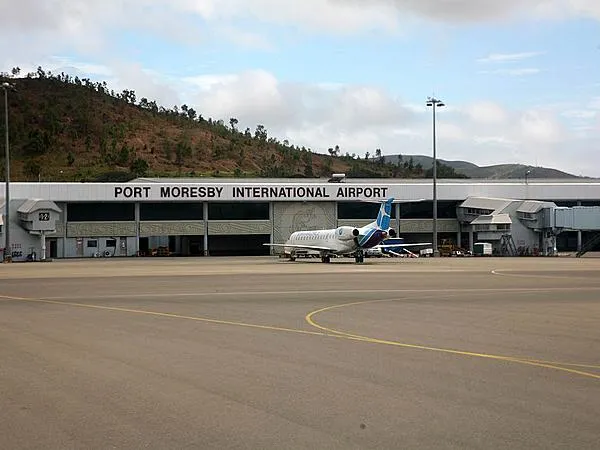
The checks will be performed for free by the International SOS in the parking lot adjacent to the international terminal (between the terminal and the plaza area).

Passengers who do not understand or read English or Tok Pisin must bring an interpreter with them to the testing, according to Air Niugini. The test requires about 45 minutes to finish, so passengers can arrive between 4 and 2 and a half hours before their scheduled flight departure.

Only passengers and workers will be allowed entry to this car park area and the international terminal for workplace health and safety reasons.

Passengers should remember to wear a mask in all airports and on all international flights.

Failure to adhere carries severe consequences. Air Niugini continues to fly six times a week to Brisbane, Sydney on Mondays, and Singapore, Hong Kong, and Manila.

Owing to international border limits, flights to other international destinations have been halted.

April 23, 2021

To combat the economic impact of the coronavirus pandemic, Treasurer Ian Ling-Stuckey is exploring additional funding for small and medium businesses.

“This latest and very severe wave of COVID-19 is having very serious impacts across all of Papua New Guinean society,” he said. “We are not only fighting it to save precious lives, but we are also trying to save businesses, jobs and the domestic economy.

“The Marape Government is taking a balanced, whole-of-society approach to protecting the nation, and values suggestions from business and commerce.”

During a recent meeting with members of Micro and Small to Medium-sized Enterprises, Ling-Stuckey said his team obtained advice on a variety of support programs, adding that MSMEs should be included in the discussion as soon as possible to ensure the government has reliable details while planning a second economic stimulus package.

In April of last year, Ling-Stuckey unveiled a K5.6 billion economic stimulus package in response to the country's first coronavirus outbreak. Although it has proven to be very successful, follow-up steps and extensions to current assistance are now being considered.

Des Yaninen, the president of the MSME Council, provided Treasury with a 15-point list of recommendations. These are some of them:

  • A recommendation that banks impose a moratorium on SME loan repayments;
  • More clarity from the NDB and the BSP on MSME funding;
  • Penalties for late filing of annual reports to the IRC and IPA will be waived.
  • Recognize the importance of keeping companies running at their best;
  • Domestic tourism interventions; 
  • Commodity boards to provide extension assistance for agricultural MSMEs;
  • Waiving provincial and municipal licensing fees; 
  • Providing benefits to landlords to enable them to extend a grace period to MSMEs who are behind on their office rent; and 
  • Ensuring transparency and consistency in MPs' use of coronavirus funds in 2020.

The MSME Council expressed gratitude to Minister Ling-Stuckey for listening to input and expressed interest in assisting the Marape Government in developing a fair package for MSMEs.

“Treasury will now consult with other stakeholders before finalising a second economic stimulus package to respond to the second COVID-19 wave,” Ling-Stuckey said.

April 21, 2021

Commodity prices are expected to remain low leading to large losses of exports for Papua New Guinea further adding to a dim global and domestic scenario amid a second wave of the covid-19 pandemic.

This is despite the fact, commodity prices for PNG’s exports recovered in the third quarter of 2020 in response to an acceleration of industry activity globally, particularly in China. However, energy prices were one-third lower in 2020 than in 2019. Metal prices fell slightly overall, although gold prices rose by a record 27 per cent year on year. Agricultural prices also recorded a modest decline.

This is according to the World Bank’s published sixth edition of PNG’s Economic Update series that was recently released titled, ‘Dealing With A Triple Crisis’.

Attributing sluggish global economic conditions owing to the second wave of the pandemic and associated lockdown measures as the main reason, the Update outlines some of the country’s economic outlook and risks.

The PNGEU says ‘export receipts from commodities will determine the external financing requirement, level of international reserves, and exchange rate developments.

It says despite falling commodity prices and an exceptionally uncertain global economic outlook, the current account balance is estimated to have recorded a surplus in 2020.

However, the size of the surplus will be significantly smaller than in 2019. As in previous years, the current account surplus will be offset by a large deficit on the capital and financial account. In a pessimistic scenario, the second wave of the pandemic may lead to a more prolonged global recession with implications for Papua New Guinea’s export revenue. In addition, failure to resolve tensions surrounding mining projects may further depress export revenue and shake investor confidence in Papua New Guinea.

These factors may lead to a balance of payments deficit, creating a requirement for additional external financing or a drawdown of reserves. Although currently above the level recommended by the IMF, foreign exchange reserves are under pressure. Against this backdrop, the Kina is expected to continue its depreciating trend. However, noting authorities’ careful management of the exchange rate, the deprecation is likely to be modest.

The Update also says that PNG’s medium-term macroeconomic outcomes remain subject to high downside risks that include external and domestic factors. For example externally, supposedly economic growth rates are below expectations with PNG’s main trading partners (Australia, China and Japan) and domestically, uncertain performance by the country’s major resource projects.

April 21, 2021

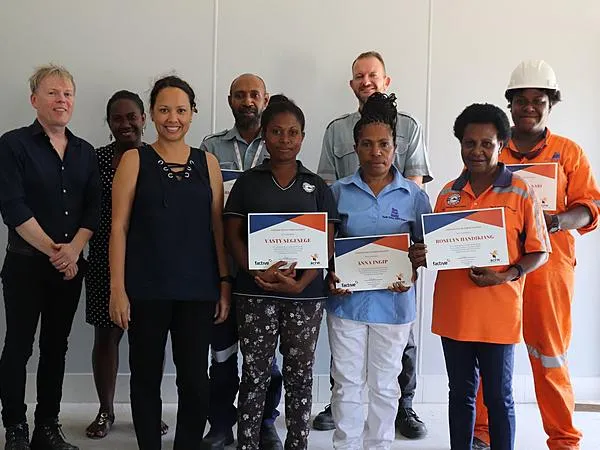
More and more women are venturing into fields predominantly held by men as PNG’s formal economy grows, hence increasing the need to widen the safety lens and address aspects of women’s safety that have typically received very little attention. The Gender Smart Safety (GSS) training program offered by the Business Coalition for Women (BCFW), is an innovative way of exploring how safety impacts on women and men differently and has helped a number of PNG businesses like New Britain Palm Oil, St Barbara, Oil Search and Pacific Towing to improve the safety of their female employees.

Pacific Towing leads gender safety in marine services

PNG owned- marine service business, Pacific Towing prides itself as a business with a gender diversified workforce, employing women in an industry that is notoriously male-dominated with gender smart safety at the heart of its operations. In the first quarter of 2019, Pacific Towing’s first GSS audit, measured the physical, emotional & occupational safety of female staff. Key findings and recommendations from the audit enabled the company to appropriately respond to ensuring safety of women in the workplace were addressed through implementation of the following activities;

  • The appointment of the Safety Manager as the GSS Taskforce Lead
  • The HR Manager attending a train the trainer on ‘Sexual Harassment and Work’ to support awareness on policy implementation of zero tolerance to sexual harassment  and ensuring new staff are informed during induction
  • Taskforce team refresher on the ‘Introduction to GSS’ and frequent practise of the audit tools
  • Toolbox talk with senior team leaders on ‘Creating Safe Spaces for Women in the Workforce’
  • Upgrading facility and signage to meet the physical, emotional and occupational safety of female employees

The GSS Policy addresses risks and safety concerns for women in their workplaces and assists businesses to:

  • Identify and respond to specific risks that impact on women in their workplaces;
  • Reduce workplace injuries for women and related costs;
  • Fulfil the duty of care for all its employees;
  • Improve employee health, safety, and wellbeing;
  • Improve women’s participation in the workplace and capacity to contribute to the business;
  • Demonstrate corporate social responsibility commitments;
  • Meet employment equity responsibilities, commitments and;
  • Stand out as an employer of choice.

Business value of implementing a GSS Policy;

  • Helps businesses develop a supportive and non-judgemental workplace in which women can discuss issues and concerns affecting their safety at work
  • Guide an employer’s responses to ensure continuous improvement in women’s safety at work
  • Ensure a sustained response to women’s safety at work
  • Ensure women are empowered through safety at work; and,
  • Facilitate a safe workplace for all employees.

“Practicing GSS is good for business. When female staff spend extra worktime strategizing about their safety, this lowers their productivity levels. Ongoing safety concern for female staff has a negative domino-effect on their health, attendance and performance resulting in high staff turnover rates, which means businesses must pay to recruit and train new employees. The level of safety a business provides for women is a measure of its commitment to gender equality” said BCFW Executive Director, Evonne Kennedy.


April 19, 2021

At its General Meeting on April 15th in Port Moresby, Kina Securities Limited (KSL) shareholders unanimously voted in favour of Kina Bank's takeover of Westpac PNG and Westpac Fiji.

CEO Greg Pawson said in a statement that the shareholders' vote of confidence was "amazing."

“We are very excited about this opportunity, and creating a stronger and more effective banking competitor for PNG and Fiji. The acquisition is perfectly aligned with our current strategy to be a dynamic and innovative full-service regional bank with a market-leading digital platform.”

Following the planned takeover, a newly branded bank will emerge, independent and distinct from Kina Bank, and it will compete directly with all commercial banks in Fiji and PNG, including Kina Bank.

“It’s a really positive story and it will be a great outcome for customers from a service and product perspective. Creating a brand-new bank means there will be more customer choice, more competition and more innovation. With the proposed acquisition we will be able to introduce fee free banking options; a new suite of world-class digital products and services; and we will be able to re-price business lending, making it more cost-effective for business customers to access funding.”

According to Pawson, there would be no reduction in rivalry or the possibility of a duopoly or market domination.

He claims that the planned transaction would position Kina to return banking to its roots on a larger scale, with improved customer support and an emphasis on lowering banking costs in both PNG and Fiji.

According to Pawson, one of the major advantages of this proposed transaction is that it would enable local investors to engage by equity raising and provide opportunities for PNG investors to be a part of an ASX/PNGX listed firm, joining many other local PNG investors including Comrade Trustee Services Limited and MRDC.

“It means everyone has the opportunity to be an active shareholder in an ASX/PNGX listed company which provides more local investment opportunities, this is important for the region,” added Pawson.

In both Fiji and PNG, regulatory approval is needed for the acquisition.

April 19, 2021

PNG DataCo Data Center is on track to open next month, according to chief executive officer Paul Komboi. He said that the data centre's planning and physical work are over, but the technological and engineering work is still ongoing.

A data centre is a set of components rather than a single thing. Servers, computing subsystems, networking switches, routers, and firewalls, as well as the cabling and physical racks used to organize and interconnect the IT devices, are all housed in data centres.

It must also have sufficient resources, such as power delivery and backup power subsystems. Electrical switching (uninterruptible power sources, standby generators, ventilation and data centre cooling systems) and network carrier access provisioning is also included.

All of this, according to Komboi, necessitates a physical building, which DataCo has already completed to house the whole array of hardware and equipment. But, due to COVID-19 travel constraints, few of the eligible expatriates who will handle much of the data centre's technological and engineering are in the nation.

According to him, the data centre will be made up of networked servers and storage that will be used by companies and other organizations to organize, manage, archive, and disseminate vast amounts of data.

“A business or operator will rely heavily upon the applications, services and data contained within the data centre, making it a focal point and critical asset for everyday operations, so it is a must that everything from physical, technical, engineering and electronic be well structured and maintained before launching.”

April 19, 2021

The economy will stay slow, according to NASFUND CEO Ian Tarutia, if the Wafi-Golpu project in Morobe and the P'nyang project in Western is further postponed.

During an online employer conference, Tarutia said that the announcement of the Porgera mine reopening had given the superfund hope.

“It is very positive news,” he said.

“We want to see members and employees of Porgera, associated contractors and associated employees linked to the mine reemployed so that they are able to sustain themselves, and the extended family members they are responsibly for.

“We also acknowledge that immediate impacts will not be felt at this time because of the lead time in relation to other formalities that have to be concluded.

“We see that employment numbers will remain static (but) there are opportunities for growth.”

Foreign exchange rationing, Tarutia said, was still a problem, especially for employers who had to buy from off-shore.

“And we are still cognizant that our employers may still be able to rationalise their workforce if things do not improve which may result in further job losses and unemployment which will have an impact on us.” According to Tarutia, the Covid-19 can no longer be used as a justification for not investing and increasing.

“Our focus for this year is to implement what we could not do last year,” he said.

“The Covid-19 is no longer an excuse not to do anything.

“It is here to stay.

“Accept it, adjust and get on with life and business. We want to conclude some of our outstanding legacy investments, and bring them to a successful closure, investments that have not performed, or underperformed.

“And we want to be progressive and bring in a new investment proposition, whether it be in infrastructure, telecommunication or shares equity.

“It is a challenge for our investment department but I am confident that they are able to find something.”

April 19, 2021

Ishmael Toroama, the President of Bougainville, argued that important industry markets are lacking in rewards.

As a result, he wanted to amend the legislation to make industries like mining, fishing, irrigation, manufacturing, and tourism more attractive to investors.

According to Toroama, rewriting the Inward Investment Act would greatly boost Bougainville's economic growth prospects.

He claimed that the present rule, which he describes as a "cut and paste" from Papua New Guinea, needs to be adapted to Bougainville's goals.

The president said that they are looking at styles from around the world that can be used in Bougainville.

The Bougainville government is looking to help grow what it refers to as the 'low hanging fruit' as part of its efforts to develop an economy.

In addition to cocoa and vanilla, the government identified alluvial gold mining, water bottling, and biodiesel as key areas for production.

According to Toroama, some of these companies employ Bougainvilleans, and the government could assist in their development through joint ventures or state-owned enterprises.

Toroama has launched many high-impact economic development projects on Bougainville since taking power in September last year, including the Bana Special Economic Zone, Tonolei Integrated Agriculture Project, and Manetai Limestone Project.

However, it is estimated that these projects will need substantial construction before being operational.

April 19, 2021

Subprojects funded by the Asian Development Bank's multi-tranche funding facility loans for the Civil Aviation Development Investment Program (CADIP) advancement are on schedule to be completed within the facility's availability span.

The multi-tranche financing facility (MFF) is one of the ADB's modalities for assisting clients with their medium to long-term investment program or schedule.

Bashirullah Khpalwan, the project team leader for the ADB-backed Civil Aviation Development Investment Program, said CADIP is a multi-tranche financing facility that has been introduced in three tranches as planned.

CADIP is scheduled to be completed on November 24, 2021.

The 21 national airports that handle the majority of the country's domestic passenger and freight traffic are the target of this investment program.

He stated that CADIP's Tranche 1 was approved on December 1, 2009, and was completed in December 2015, while Tranche 2 was approved on November 25, 2013, and has made more than 95% implementation progress and is expected to be completed in September.

Tranche 3, the MFF's final tranche, was approved on March 2, 2017, and all contracts have been awarded, with the exception of Kavieng Airport, which will be awarded in 2020.

“The Kavieng Airport is on a critical path to completion and all other sub-projects under Tranche 3 are on track for completion as well within the MFF availability period of November 24, 2021.

The executing agency for CADIP, the National Airports Corporation (NAC), has agreed with the civil works contractor in Kavieng to an accelerated schedule to complete the entire scope of the project within the availability of the MFF,” he said.

Despite the COVID-19 pandemic and its accompanying lockdown, the CADIP team and civil works contractors aim to make strides in 2020, with positive results so far. In terms of cumulative growth and milestones, CADIP Tranche 3 has proved to be one of the highest performing projects in the PARD portfolio in 2020. The investment scheme, according to Mr Khpalwan, is closely associated with the PNG Government's Development Strategic Plan 2010–2030 and National Transport Strategy, which both recognize essential air connectivity to rural areas as a national priority.