The National Capital District Commission (NCDC) has called for stronger municipal management, improved service delivery and closer cooperation with the private sector as Port Moresby enters a new phase of growth following Papua New Guinea’s 51st Independence Anniversary.
In his Independence message, NCDC City Manager Ravu Frank said Port Moresby’s role as the centre of government, commerce and international engagement placed the capital at the heart of PNG’s economic development.
He said the 51st anniversary was an opportunity to reflect on the country’s progress over five decades while shifting the focus towards implementation, reform and a more sustainable future.
“Following the historic 50th Independence Anniversary, our attention now turns to the next chapter of our national development,” he said. “The focus must now move from reflection to implementation.”
For Port Moresby, Frank said this meant strengthening the systems and processes that support the city’s economic and commercial environment. NCDC will continue to improve the efficiency of approvals and regulatory processes, strengthen accountability and enhance municipal services across the capital, he said.
Effective planning, permitting and compliance processes are particularly important for businesses and investors, whose operations depend on a predictable municipal environment.
Frank said NCDC’s goal was to build a capital city that is “clean, healthy, safe and planned”, supported by effective services, responsible development and accountable administration.
The Commission is also focused on cleaner public spaces, better management and safety of markets and communities, and building a more professional and responsive organisation.
Shared responsibility for the capital
Frank stressed that improving Port Moresby could not be achieved by NCDC alone. Businesses, residents, churches, community organisations, government agencies and development partners all have a role in maintaining an orderly, safe and well-managed city, he said.
“A well-managed city requires the cooperation of residents, businesses, churches, community organisations, government agencies and development partners,” he said.
Frank said cleanliness and safety depended on cooperation within communities, while orderly urban development required compliance with laws, regulations and planning requirements.
“Cleanliness begins with how we manage our homes, businesses and public spaces. Safety is strengthened when communities work together and respect one another. Orderly development depends on compliance with laws, regulations and planning requirements.”
The call for shared responsibility comes as Port Moresby accommodates a growing concentration of commercial, government and community activity.
For businesses, the quality of municipal administration can directly affect the operating environment through development approvals, public infrastructure, market management and the condition and safety of commercial areas. Frank said NCDC would continue to fulfil its responsibilities, but the capital’s development required “shared ownership” of the city.
Applying ResetPNG@50 to city management
Frank also highlighted the National Government’s ResetPNG@50 initiative, which provides an opportunity to examine PNG’s development experience over its first 50 years of Independence and identify areas for improvement and reform. He said NCDC was applying the same forward-looking approach to its own operations.
“Within NCDC, this means continuing to strengthen our systems, improve service delivery and build a professional and responsive organisational culture,” Frank said.
For NCDC, the focus on efficiency and accountability forms part of the broader challenge of ensuring Port Moresby can support economic activity and future investment. Frank also acknowledged the Motu Koitabu people, the traditional landowners and indigenous people of the land on which Port Moresby is established.
He reaffirmed NCDC’s commitment to preserving and promoting Motu Koitabu culture and traditions, including annual support for the Hiri Moale Festival.
As part of the 51st Independence celebrations, NCDC is also facilitating and supporting activities across Port Moresby. Frank encouraged residents and families to participate responsibly in the celebrations and mark the national anniversary in a spirit of unity, respect, pride and peace.
He said NCDC remained committed to improving its performance, strengthening municipal services and working with all sectors of the community to develop a capital capable of supporting future generations.
“As we celebrate 51 years of Independence, let us also recognise that the quality of our capital city is a shared responsibility," he said.
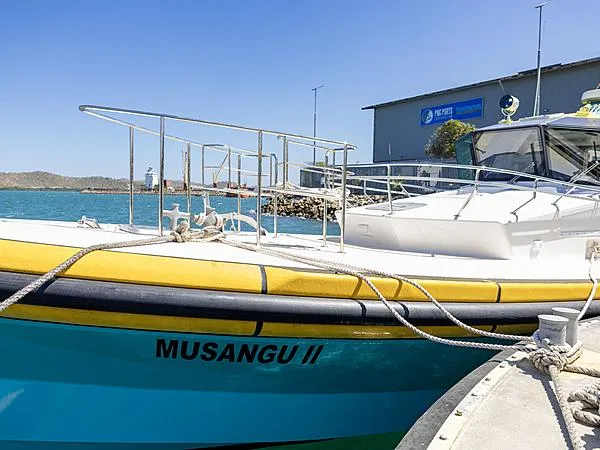
Madang Port is set to receive a new purpose-built pilot boat following the arrival of Musangu II, further strengthening Papua New Guinea’s maritime infrastructure and port operations.
The fourth of five pilot boats delivered through the Australian Infrastructure Financing Facility for the Pacific (AIFFP) is undergoing final safety and registration checks before entering service.
Australia is partnering with PNG Ports through the Ports Infrastructure Investment Programme (PIIP) to deliver coordinated port infrastructure upgrades across Papua New Guinea. The programme aims to enhance the safety, resilience and performance of the country’s ports for communities, businesses and maritime users.
Musangu II replaces an ageing pilot boat and will enhance safety by providing PNG Ports with a modern, reliable means of transferring marine pilots to and from ships calling at Madang Port.
Pilot boats play a critical role in port operations, helping vessels navigate safely through local waters. The arrival of Musangu II will strengthen these services in Madang and support the smooth movement of cargo and trade.
PNG Ports Chief Executive Officer Neil Papenfus said the vessel would help ensure PNG Ports continues to provide reliable services at Madang Port.
“PNG Ports has a responsibility to ensure our ports operate safely and efficiently for all users. The addition of Musangu II strengthens our marine pilotage capability and helps us continue providing safe and reliable services to vessels calling at Madang Port,” Papenfus said.
The new pilot boats deliver significant improvements in reliability, safety and operational performance, helping to minimise disruptions and ensure the continued safe movement of vessels through Papua New Guinea’s ports.
Another benefit of the fleet upgrade is the standardisation of pilot boats, replacing legacy vessels of varying ages, designs and capabilities. This will simplify crew training, maintenance and spare-parts management while improving operational flexibility.
All five vessels were manufactured by Norman R. Wright & Sons in Brisbane and are specifically designed to provide safe, reliable and efficient pilotage services in Papua New Guinea’s rugged operating environment.
Once final safety checks are complete, Musangu II will be transferred to Madang Port and begin service. Taubar II, the fifth and final pilot boat, is in the final stages of testing in Brisbane and is expected to arrive in Port Moresby in late September 2026.
PNG Ports Corporation Limited (PNGPCL) is Papua New Guinea’s national ports authority. It manages 15 of the country’s 23 declared ports and handles 100 per cent of the nation’s seaborne trade.
PNGPCL is a fully corporatised entity owned by the State and is the successor company to the PNG Harbours Board. Kumul Consolidated Holdings is the sole shareholder, holding shares in the corporation on behalf of the State of Papua New Guinea. The corporation’s management and operations are governed by relevant port and shipping regulations, as well as policy directives issued by the National Executive Council through the Ministry of State Enterprises.
PNG Ports Corporation Limited was officially launched on 13 November 2006. The organisation has operated under several names: Papua and New Guinea Harbours Board (1963-69), Papua New Guinea Harbours Board (1970-2002), PNG Harbours Board Limited (2002-06), and PNG Ports Corporation Limited from 2006.
PNGPCL operates and manages 15 of Papua New Guinea’s 23 declared ports: Aitape, Alotau, Buka, Daru, Kavieng, Kieta, Kimbe, Lae, Lorengau, Madang, Oro Bay, Port Moresby, Rabaul, Vanimo and Wewak. These ports handle more than 5.8 million tonnes of cargo annually, representing 100 per cent of Papua New Guinea’s seaborne trade. They also serve as the main gateways to more than 300 scattered islands.
The corporation provides berthage, wharfage, storage, pilotage, harbour management, surveillance and other port-related services. Pilotage services are supported by pilot launches stationed at PNGPCL’s main ports.
Port-related tariffs are regulated by the Independent Consumer and Competition Commission.
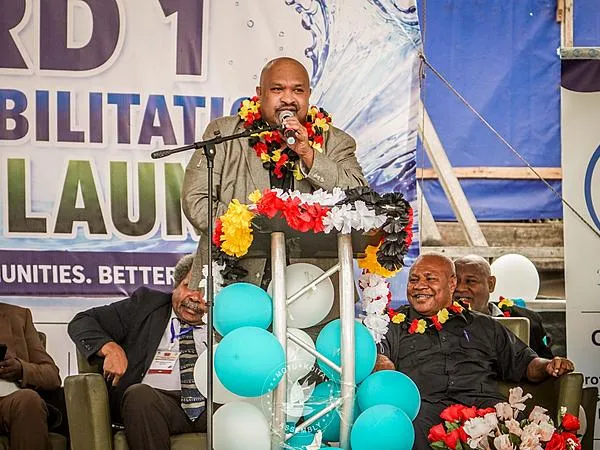
A major water infrastructure rehabilitation and expansion project is set to launch in Ward 1 of the Moresby North-West electorate in Papua New Guinea’s National Capital District, aiming to improve service reliability, reduce water losses and strengthen revenue accountability.
Moresby North-West MP Lohia Boe Samuel announced the project, which will serve communities including Hanuabada, Elevala, Gabi, Mirigini (Badihagwa), Tatana-Araira, Baruni, Koukou and Sasivaga.
The initiative follows a 2021 assessment that identified ageing infrastructure, inadequate distribution networks, water rationing and significant water losses as key challenges in the electorate.
The project will replace and upgrade ageing distribution pipelines, expand the network, and refurbish water tanks and pump stations. It is designed to meet projected demand and provide Ward 1 households with more reliable access to potable water as the population grows.
Reducing water losses, improving revenue
One of the project’s key priorities is reducing water losses in the existing system.
The affected communities are currently classified as unbilled consumers, meaning water is supplied without an effective metering and billing system. The project aims to transition these villages to a metered water supply.
Metering is expected to provide more accurate consumption data, improve billing and strengthen revenue collection. It could also support a more financially sustainable water supply system by helping service providers better understand demand and plan infrastructure investments.
The upgrade comes as communities across the National Capital District, including Moresby North-West, face growing demand for essential urban infrastructure. A reliable water supply is critical for households, businesses and community facilities, while rationing and service interruptions can impose costs on residents and economic activity.
The project will also target higher-elevation communities, where maintaining water pressure and reliable supply can be particularly challenging. Fire hydrants will be installed throughout the upgraded network, providing an added public-safety benefit and improving communities’ capacity to respond to fire emergencies.
Further upgrades planned
The Ward 1 project is expected to form part of a wider programme to improve water infrastructure across the Moresby North-West electorate.
The electorate office said Wards 7, 8, 10 and 11 would follow after the successful completion of the Ward 1 project, extending improvements in water reliability, network coverage, metering and revenue accountability to more communities.
For Moresby North-West, the investment is more than an upgrade to ageing infrastructure. It is an investment in the essential services needed to support population growth, economic activity and improved living standards in Port Moresby.
Its success will depend on delivering a reliable 24/7 water supply, reducing system losses, improving metering and billing, and establishing a sustainable model for maintaining and expanding the network as demand increases.
Suggested tags: Water Infrastructure, National Capital District, Port Moresby, Moresby North-West, Water Supply, Urban Development, Service Reliability, Water Metering, Revenue Collection, Public Infrastructure, Papua New Guinea
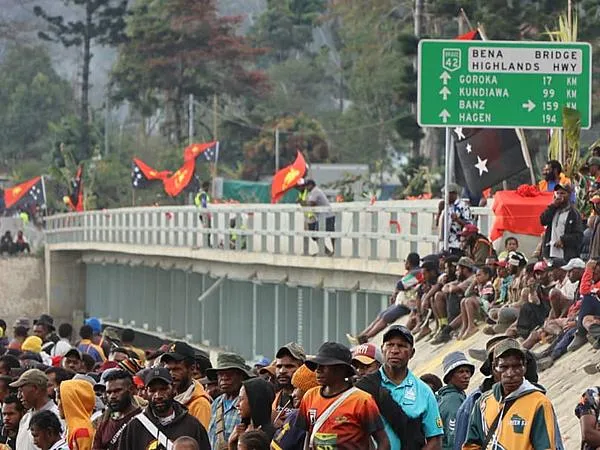
Prime Minister James Marape has challenged communities in Eastern Highlands to translate the government's multibillion-kina investment in the Highlands Highway into increased coffee production, businesses, jobs and household incomes.
Marape made the call at Bena, where he commissioned the new K20.2 million Bena Bridge and launched the Goroka Four-Lane Road Project toward Korofeigu.
He said improved roads and bridges should generate greater economic activity and help communities take advantage of better access to markets.
“This is the economic lifeline that keeps our economy growing,” Marape said. “The money we are putting into this road is not a misplaced allocation. It is the correct allocation in terms of our strategy to grow the economy.”
Marape urged communities along the highway to increase coffee and agricultural production, saying improved transport infrastructure would make it easier to market their products.
“I want you to deliver coffee bags to repay the money we are investing in building infrastructure,” he said.
He also encouraged unemployed Papua New Guineans to pursue agriculture and small and medium enterprises (SMEs) rather than wait for formal employment or government assistance.
“If you are unemployed, I point you back to SME and agriculture as an SME option,” Marape said.
He called on provincial and district leaders to use government funding to help communities become economically productive.
“Teach a man how to fish; don’t just give him fish,” he said. “Let us lead our people into self-employment activities so that this road can contribute to improving their lives and, collectively, the economy of our country.”
The K20.2 million Bena Bridge is a new 100-meter, two-lane permanent bridge replacing the former single-lane Bailey bridge.
The bridge was constructed by China Wu Yi Company Limited and funded by the Asian Development Bank (ADB) under the Sustainable Highlands Highway Investment Program.
Under Tranche 2 of the program, rehabilitation and modernization work covers 71 bridges along the Highlands Highway corridor — 35 between Nadzab and Henganofi, 19 between Henganofi and Mangiro, and 17 between Mangiro and Kagamuga.
Marape thanked the ADB, Department of Works and Highways, Department of Treasury, Department of National Planning and Monitoring, China Wu Yi, the Eastern Highlands Provincial Government, district authorities, local-level governments, development partners and communities involved in the program.
“Building modern infrastructure is part of building a modern country,” he said.
He also welcomed the construction of roadside market and sanitation facilities, urging communities to use them to capture economic opportunities created by the upgraded highway.
The Goroka Four-Lane Road Project toward Korofeigu is expected to increase road capacity as population, traffic and economic activity grow, while improving the movement of coffee, fresh produce and commercial freight.
With Papua New Guinea approaching its 51st Independence Anniversary, Marape said the country's development would require a stronger culture of work and personal responsibility.
“The drive we took over the last two days is just a symbol of ‘can do’. We can do it,” he said.
Marape also urged communities to protect new infrastructure and ensure public investment translates into increased economic activity.
“When you improve, the country improves. Together, we all grow,” he said.
Papua New Guinea has signed a K26 million, three-year agreement with TechnologyOne to advance the government's public financial management system through cloud technology and artificial intelligence.
The agreement marks the next phase of the government's digital transformation of its Integrated Financial Management System (IFMS) and was signed during PNG's 51st Independence anniversary year.
Acting Chief Secretary to the National Government Ivan Pomaleu OBE said the agreement represented a major step in modernizing how the government manages and accounts for public resources.
He said the focus was shifting from the deployment of basic software toward long-term operational sustainability, financial sovereignty and institutional capability.
The IFMS is now operating across all 22 provinces, connecting 43 national departments, 21 provincial health authorities, 89 districts, more than 313 local-level governments and 26 statutory bodies, according to the government.
The system provides a unified public finance platform with real-time financial tracking and banking capabilities across national and subnational government entities.
Pomaleu said the TechnologyOne agreement would support the Medium Term Development Plan IV (MTDP IV) 2023–2027, particularly Strategic Priority Area 7 on National Revenue and Public Finance Management and Strategic Priority Area 8 on Digital Government, National Statistics and Public Service Governance.
The modernization program is expected to strengthen internal fiscal controls, improve revenue management, reduce administrative delays and help prevent financial leakages.
A key component is TechnologyOne Plus, described as an enterprise-grade agentic artificial intelligence system governed under ISO 42001:2023 standards and a “human-in-the-loop” framework.
The system will enable public servants to interact with complex financial data through text and voice commands, including checking budget availability, tracking expenditures and streamlining approval workflows.
Pomaleu said embedding cloud technology and AI into government operations would help ensure public funds are deployed more efficiently and transparently in support of national development priorities.
He recognized Finance Secretary Samuel Penias, IFMS Board co-Secretary Andrew Oaeke, other central agency officials and the IFMS implementation team for their role in establishing the system nationwide.
He also called on public finance officers to embrace the technology as the government begins Phase 2 of its software upgrades and capacity-building programs.
The modernization is aligned with the government's target of building a K200 billion economy and improving public service delivery under MTDP IV.
The government said the investment is intended to establish a more transparent, resilient and sovereign financial management system capable of supporting Papua New Guinea's development priorities over the long term.
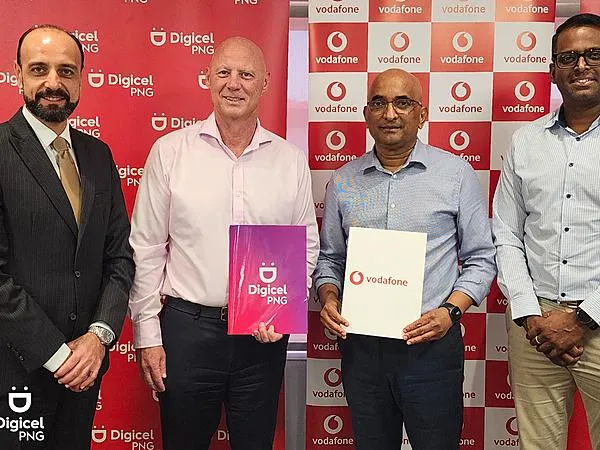
Digicel PNG and Vodafone PNG have signed a Tower Sharing Licence Agreement that will enable both telecommunications operators to share tower infrastructure across Papua New Guinea.
The Tower Sharing Licence Agreement represents a strategic infrastructure-sharing partnership aimed at achieving more efficient network expansion, resulting in improved connectivity and the delivery of greater value in mobile and broader ICT services to customers across Papua New Guinea.
Under this partnership, both operators will be able to install equipment on suitable tower sites owned by either party, subject to technical, operational, safety and commercial requirements. The framework establishes a consistent process for co-location while allowing each company to maintain independent network operations.
Digicel PNG Interim Chief Executive Officer Brett Goschen said the agreement reflects a practical and forward-looking approach to delivering connectivity across Papua New Guinea.
“Connectivity plays a critical role in Papua New Guinea’s social and economic development. This agreement is a practical step towards delivering better outcomes by overcoming the many costly challenges that mobile network operators face in delivering mobile and ICT services in PNG. By sharing existing tower infrastructure where appropriate, we can expand network reach faster, reduce duplication and costs, and maximise the value of investments already made across the country." Goschen said.
“This is a positive example of industry collaboration that benefits customers, communities and the broader telecommunications sector. We look forward to working with Vodafone PNG to help improve access to reliable connectivity for more Papua New Guineans," he added.
Vodafone PNG’s Regional Chief Executive Officer Pradeep Lal said the agreement represents an important milestone in strengthening telecommunications infrastructure and supporting the continued expansion of connectivity across Papua New Guinea.
“This partnership provides an opportunity to make greater use of existing infrastructure and support the continued expansion of mobile services across the country," Lal said.
“For Vodafone PNG, the agreement complements our ongoing investment in network coverage, capacity and customer experience," he added. "We are pleased to partner with Digicel PNG on this initiative and look forward to contributing to greater connectivity, digital inclusion and the long-term development of Papua New Guinea’s telecommunications sector.”
Digicel PNG is a leading telecommunications provider dedicated to delivering reliable mobile, broadband and digital services that connect people, empower communities and support Papua New Guinea’s growth in the digital age.
Vodafone PNG is a telecommunications provider delivering mobile voice, data, broadband and digital connectivity services to customers across Papua New Guinea. Vodafone PNG is committed to expanding access to reliable and affordable telecommunications services, investing in network coverage and capacity, and supporting Papua New Guinea’s continued digital transformation.
Santos is proud to recognise a historic milestone at the Kumul Marine Terminal (KMT), with the appointment of Jackson Jim as Team Leader, working back-to-back with Willie Mapal. This marks the first time the facility has been led entirely by Papua New Guinean nationals.
The achievement represents a significant moment in the history of one of Papua New Guinea's most important energy export facilities and reflects decades of investment in workforce development and capability building.
Located in the Gulf of Papua, the Kumul Marine Terminal is a critical piece of national energy infrastructure, serving as the primary offshore export terminal for crude oil production. Since commencing operations, the facility has played a vital role in supporting Papua New Guinea's petroleum industry and contributing to the country's economic development through safe and reliable oil exports.
Santos PNG Vice President PNG Operations, Rhys Ward, said the milestone demonstrates the strength of national talent and the company's commitment to developing Papua New Guinean leaders.
"The appointment of Jackson and Willie to lead the Kumul Marine Terminal is a proud achievement for Santos and Papua New Guinea. It reflects the dedication, professionalism and capability of our national workforce and demonstrates what can be achieved through long-term investment in people and leadership development.
"KMT is a critical asset within our operations. Seeing it fully led by Papua New Guinean nationals is a testament to the depth of talent within our workforce and our commitment to building sustainable careers for Papua New Guineans."
Santos Country Chair PNG, Leon Buskens, said the milestone reflects the company's long-standing commitment to developing Papua New Guinean talent and leadership.
"The Kumul Marine Terminal has been a cornerstone of Papua New Guinea's oil export industry for many years, and seeing it now fully led by Papua New Guinean nationals is a significant and proud achievement."
Jackson Jim, Team Leader, Kumul Marine Terminal, said he was proud to be part of the first fully Papua New Guinean leadership team at KMT, demonstrating Santos' commitment to developing local talent.
"I started with the company as an apprentice in 2007, so this is a proud moment for me personally. As PNG's petroleum industry continues to grow, I hope this achievement encourages more Papua New Guineans to see the opportunities available and pursue careers in the sector."
As Team Leader, Jackson Jim will oversee the safe and efficient operation of the terminal while continuing to champion operational excellence and workforce development. Together with Willie Mapal, the leadership team will continue to build on KMT's strong safety culture and commitment to reliable performance.
Santos congratulates Jackson, Willie and the entire KMT team on this landmark achievement and recognises their contribution to the continuing success of Papua New Guinea's oil and gas industry.
Background:
Papua New Guinea’s Independent Consumer and Competition Commission (ICCC) has launched its Corporate Plan 2026–2030, setting out the regulator’s strategic priorities for strengthening consumer protection, competition enforcement and economic regulation over the next five years.
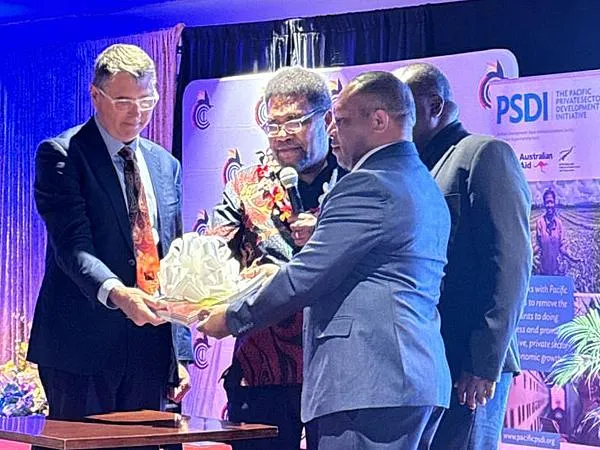
Minister for Rural and Economic Development Joseph Lelang and ICCC Commissioner and Chief Executive Officer Roy Nunts Daggy launched the plan at APEC Haus in Port Moresby on August 28, 2026.
Developed with support from the Pacific Private Sector Development Initiative (PSDI), the plan establishes the ICCC’s strategic direction around four goals that reflect its statutory responsibilities to protect consumers, promote competitive markets and regulate industries and prices where necessary.
The plan also sets an institutional objective for the ICCC to strengthen its performance and establish itself as an independent and expert economic regulator.
In the plan’s introduction, Daggy said the Corporate Plan sets out how the Commission will use “its independence, expertise, and integrity to deliver real results” for families, businesses and communities across Papua New Guinea.
Focus on women and disadvantaged consumers
The Corporate Plan places particular emphasis on improving outcomes for women consumers, women traders and disadvantaged groups.
The ICCC has committed to targeted outreach and investigator training, while also identifying opportunities within its regulatory functions to support greater participation by women in the formal economy.
The focus recognizes that effective consumer protection and competition regulation require the regulator to engage with different groups across the economy and ensure that information, enforcement and regulatory services are accessible to those who may face greater barriers to participating in formal markets.
Preparing for expanded competition and consumer powers
The five-year strategy also anticipates changes to the ICCC’s mandate under a new competition and consumer protection bill currently undergoing consultations with PSDI support.
The proposed legislation is expected to expand Papua New Guinea’s consumer protection framework through fair trading provisions covering misleading and deceptive conduct, as well as guarantees concerning the quality of consumer goods and services.
The Corporate Plan therefore commits the ICCC to preparing for the new law before it comes into force. This includes strengthening enforcement capability, developing guidance materials and expanding consumer and trader education.
The approach is intended to ensure the Commission is equipped to implement and enforce the expanded framework once the legislation is passed.
Strengthening the regulator
The Corporate Plan links the ICCC’s external regulatory responsibilities with efforts to strengthen its own institutional capability.
The Commission’s four strategic goals provide the framework for its work over the 2026–2030 period, covering its responsibilities for consumers, competition and regulated sectors while also addressing the organizational performance needed to carry out those functions effectively.
The emphasis on independence, expertise and integrity reflects the ICCC’s stated ambition to be recognized as an expert economic regulator capable of delivering practical outcomes for consumers, businesses and communities.
The launch was attended by ICCC Associate Commissioner, Non-Resident Marcus Bezzi, Associate Commissioner, Resident Jack Timi, and other officials.
The new Corporate Plan provides the ICCC with its strategic roadmap as Papua New Guinea prepares for potentially significant changes to its competition and consumer protection regime.
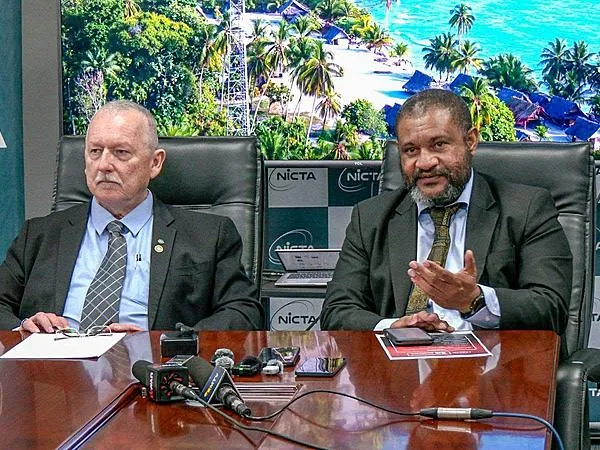
Papua New Guinea has cleared the way for 5G mobile services, with the National Information and Communications Technology Authority confirming that spectrum in the 2.6 GHz and 3.5 GHz bands is now available for licensing to qualified mobile operators.
NICTA board chairman Brian Riches said the decision marked a milestone for the country’s digital economy and followed several years of legal, technical and regulatory work by the telecommunications regulator.
The regulator said it had completed the required process for the internationally harmonised 2.6 GHz and 3.5 GHz bands, which are classified as High Demand Spectrum. Making the bands available is intended to give operators the regulatory certainty needed to plan, invest in and deploy next-generation mobile networks and services.
The move puts Papua New Guinea among more than 150 countries that had launched or soft-launched 5G networks by July 2026, according to the Global Mobile Suppliers Association.
NICTA said the decision followed detailed spectrum planning and market assessments, industry consultation, reviews of international best practice and an assessment of future demand for mobile broadband services. The licensing framework is intended to support investment and innovation while safeguarding competition.
The allocation of both bands reflects NICTA’s commitment to technological neutrality, allowing operators to deploy advanced 4G and 5G services according to their business and customer requirements.
Larger contiguous spectrum assignments are expected to improve network efficiency, reduce deployment costs and increase capacity, while enabling faster speeds, lower latency, greater reliability and improved customer experiences.
Rollout obligations
Vodafone PNG has committed to providing 5G services across the National Capital District and at least one additional city within 18 months. Its rollout targets include reaching at least 20 per cent of Papua New Guinea’s population within 36 months and at least 30 per cent within 60 months.
NICTA has also negotiated public-interest obligations requiring each mobile operator acquiring High Demand Spectrum to extend 4G coverage to 20 new sites identified under the Universal Access and Service programme.
The requirements are intended to ensure that the benefits of the new spectrum extend beyond major urban centres and help reduce the country’s digital divide.
NICTA said the High Demand Spectrum is being licensed for a fair and reasonable fee, with revenue from the licences intended to support initiatives that extend digital connectivity to underserved and unserved communities.
The approach is designed to allow the commercial development of advanced mobile services in urban areas to help fund greater connectivity opportunities in rural and remote parts of Papua New Guinea.
The regulator will independently audit rollout commitments, coverage obligations and quality-of-service requirements. Operators that fail to meet their obligations could face enforcement measures and penalties.
Boost for digital economy
NICTA said improved connectivity would support the Government’s broader digital transformation agenda, including the digitisation of public services, e-government platforms, digital education, healthcare and private-sector innovation.
For businesses, improved connectivity is expected to increase productivity, support cloud computing and digital services, facilitate electronic commerce and strengthen links with regional and global markets. For consumers, it is expected to improve access to information, education, financial services, entertainment and government services.
The rollout of 5G is therefore expected to have an impact beyond mobile phone services, supporting the wider development of Papua New Guinea’s digital economy.
For investors, NICTA said the licensing framework also demonstrates the country’s commitment to modern digital infrastructure and a stable and predictable regulatory environment.
Next phase of spectrum reform
The licensing announcement marks the beginning of a new phase for NICTA, rather than the end of the regulatory process.
The authority will work with licensed operators to facilitate deployment, monitor compliance with licence conditions, oversee spectrum utilisation and network performance, and ensure rollout commitments are achieved within agreed timeframes.
NICTA will also continue with wider spectrum reforms, including making additional High Demand Spectrum bands available where appropriate, supporting satellite and non-terrestrial network services, expanding opportunities for licence-exempt and Wi-Fi services, and keeping PNG’s spectrum management framework aligned with international best practice and future technological developments.
Riches said the licensing decision marked an important stage in Papua New Guinea’s digital development.
“Today marks an important milestone in Papua New Guinea’s digital journey,” he said, adding that NICTA remained committed to affordable, reliable and inclusive connectivity for Papua New Guineans wherever they live.
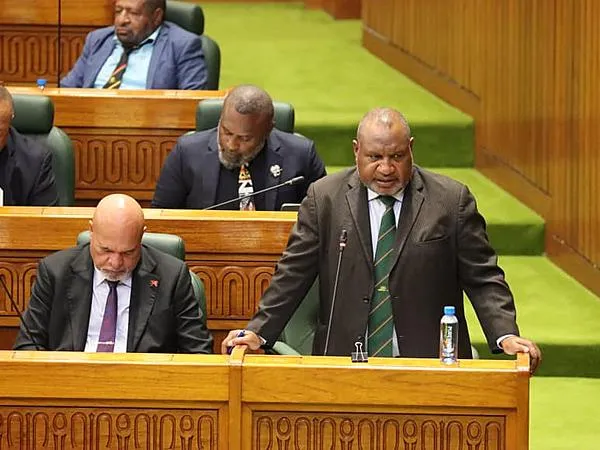
Prime Minister James Marape has outlined a long-term plan to revive PNG Power Ltd through structural reforms, provincial partnerships and partial privatisation, describing the state-owned electricity utility as being in a “terminal” financial and operational condition.
Responding in Parliament to a question from West New Britain Governor Sasindran Muthuvel, Marape said the Government had been pursuing reforms since 2023 to make PNG Power financially sustainable, improve efficiency and expand reliable electricity access nationwide.
He said the utility’s problems reflected decades of inadequate maintenance, ageing infrastructure, rising operating costs and poor revenue collection.
“PNG Power is a very sick state-owned enterprise,” Marape said. “If I were to make an example of cancer, it is in a terminal stage. It is no longer stage one, stage two or stage three. It is in stage four.”
Marape said independent reviews, including work by Deloitte, had confirmed the severity of PNG Power’s financial and operational problems.
He said routine maintenance had failed to keep pace with ageing assets built from the 1970s onwards, affecting generation, transmission, distribution and billing systems.
“In one major centre on the Highlands grid, around 80 per cent of customers do not pay for electricity. No utility can remain financially healthy under those circumstances,” he said.
Structural reform
Marape said successive governments had also kept electricity tariffs largely unchanged for years to shield consumers, despite rising costs associated with supplying power.
“There has never really been a tariff increase over many years because we wanted to help our people,” he said.
“Only recently have we allowed a modest increase, but PNG Power continues to struggle under enormous debts and liabilities.”
Despite the utility’s financial position, the Government had invested almost K1.5 billion in critical electricity infrastructure, Marape said.
The investment included the 132-kilovolt transmission line linking Edevu to Port Moresby, which has enabled an additional 54 megawatts of power to be supplied to the National Capital District.
“Our Government has continued investing in infrastructure, but the company now requires decisive structural reform to remove the parts of the business that are no longer sustainable while strengthening those that remain viable,” he said.
A key element of the reform programme would be the gradual transfer of loss-making “C centres” to capable provincial governments and other qualified operators under regulated arrangements, Marape said.
He stressed that the proposed changes should not be viewed simply as an asset sale, but as an effort to preserve electricity services, protect consumers and limit pressure for further tariff increases.
“We are looking at provinces that have the capacity to operate their own power companies under licence through the National Energy Authority, which our Government established as part of these reforms,” he said.
“We are already examining proposals involving East and West Sepik, where PNG Power could partner with provincial governments or other qualified operators.”
Provincial participation
Marape cited the operation of the Ok Tedi power subsidiary as an example of how provincial and resource-sector partnerships could support improved electricity services.
He said provinces with viable energy resources could also establish their own electricity businesses, either independently or in partnership with PNG Power.
“There is nothing wrong with provincial governments owning or partnering in power companies while PNG Power continues as a strategic partner,” he said.
Under the proposed model, more generation and distribution responsibilities could be managed at the provincial level, while PNG Power focuses on the major national grids serving Port Moresby, Lae and the Highlands, he said.
Marape said further details of the policy would be released before the Mining, Petroleum and Energy Conference later this year.
The Government's objective was to create a financially sustainable electricity sector capable of delivering reliable and affordable power while allowing provinces to participate directly in energy development, he said.
The reopening of the Apo Street Market along Somare Circuit, Waigani Road, has formalised a new operating framework for 75 informal vendors and positioned the marketplace as a model for small and informal businesses in Port Moresby, Papua New Guinea.
National Capital District Governor Powes Parkop officiated at the reopening and recognised the Apo Market Fresh Produce Association as operating under NCDC approval on August 14 this year.
Governor Parkop said the market had demonstrated that informal markets could operate successfully when supported by proper management, waste disposal and community cooperation.
“This market has earned the right to operate temporarily under NCDC approval. It has set the standard for all other street markets in Port Moresby, showing that with proper management, waste disposal, and community cooperation, informal markets can thrive and contribute positively to our city’s image,” he said.
The market’s continued operation will be subject to conditions, including maintaining cleanliness, proper waste management and payment of small daily fees to support water and waste services.
The 75 vendors have also been provided with street market kits comprising tents, tables and chairs through the Apo Market Fresh Produce Association.
From a local economic perspective, the reopening provides vendors with an organised marketplace to sell fresh produce and other locally prepared products, including roasted kaukau, cassava, taro, sweet corn, peanuts and kulau.
Governor Parkop said the initiative would benefit both vendors and residents while enhancing the reputation of Port Moresby.
The reopening was attended by Deputy City Manager Edith Laufa, Amazing Port Moresby Director Fazilah Bazari, Lady Emeline Tufi Dadae, NCDC and Amazing Port Moresby staff, vendors and community members.
Lady Dadae, who was the Guest of Honour, acknowledged the efforts of the vendors and those who supported the reopening.
The recognition of Apo Market establishes it as an example of how informal marketplaces can be organised to support local livelihoods while meeting city management requirements.
The revised Community Development Agreement (CDA) for the Hidden Valley Mining Project has been formally signed, paving the way for participating landowners and communities in Morobe Province to access benefits from the gold operation.
Mining Minister Solen Loifa signed the revised CDA on behalf of the State yesterday in Lae. The signing was witnessed by Morobe Governor Rainbo Paita, Bulolo MP Sam Basil Junior, Wau Waria MP Marsh Narawec, Acting Managing Director of the Mineral Resources Authority Harry Kore, representatives of Harmony Gold, the State team, project landowners and affected communities.
The revised agreement brings together the State, mine operator, landowners, and local- and provincial-level governments under a framework designed to distribute development benefits associated with the Hidden Valley operation.
The parties to the CDA are Nakuwi Association Inc., Bulolo Urban Local Level Government, Wau Urban Local Level Government, Watut Rural Local Level Government, Wau Rural Local Level Government, Morobe Provincial Government, the Independent State of Papua New Guinea and Morobe Consolidated Goldfields Limited, the company operating the Hidden Valley Mine under Harmony Gold.
At the Aug. 11 signing, three parties — the State, Nakuwi Association Inc. and Morobe Consolidated Goldfields Limited — formally executed the revised agreement.
The remaining five parties are expected to sign after agreement is reached on the redistribution of benefits at the provincial level.
A Provincial Executive Council (PEC) meeting is scheduled to consider the benefit-sharing arrangements, which will determine the distribution of benefits among the relevant local-level governments and the Morobe Provincial Government.
Minister Loifa said the signing represents an important step towards enabling the parties to the CDA to access the benefits provided under the agreement.
He acknowledged the efforts of the Marape-Rosso government, landowners, affected communities and the late former Morobe Governor Luther Wenge, who was described as instrumental in progressing the CDA.
The minister also recognised the support of current Governor Rainbo Paita and the Morobe Provincial Government in bringing the revised agreement to the signing stage.
The CDA is expected to provide a framework through which benefits associated with the Hidden Valley Mine can reach the communities and institutions covered by the agreement.
Loifa urged landowners and communities to use the benefits responsibly and invest them in initiatives that can improve living standards and support sustainable development.
The minister stressed that all parties must take ownership of the CDA and honour their respective commitments under the agreement.
For the Hidden Valley project, the revised CDA provides an important mechanism for strengthening the link between mining activity and local economic and community development, particularly in areas directly affected by the operation.
The agreement also places responsibility on participating parties to ensure that benefits are managed effectively and translated into sustainable outcomes for communities beyond the life of individual mining activities.
Bank of Papua New Guinea (BPNG) Governor Elizabeth Genia has outlined a broad financial-sector reform agenda aimed at strengthening monetary and financial stability, expanding financial inclusion and creating a more competitive and modern financial system to support investment and sustainable economic growth. Speaking at the Business Advantage PNG Investment Conference in Brisbane on 10 August 2026, Genia said stability must remain the foundation of Papua New Guinea’s economic development, as businesses, households and investors require confidence and predictability to make long-term decisions. Her address, titled “Driving Financial Sector Reform, Inclusion and Stability”, highlighted reforms across monetary policy, banking regulation, payments infrastructure, foreign exchange, financial inclusion, green finance and prudential supervision. Genia said the Bank’s statutory mandate under the Central Banking Act places price stability as its primary objective, followed by financial stability and the promotion of sustainable medium-term economic growth, particularly in the non-mineral and non-petroleum sectors. “A stable financial system allows savings to be channelled towards productive investment and supports the flow of credit through the economy, giving households and businesses greater certainty when planning for the future,” she said. On price stability, Genia said headline inflation is forecast at around 4 per cent in 2026, with underlying inflation measures expected to remain at or just below that level through 2027 and 2028. She said the convergence of headline and underlying inflation measures provides greater confidence in the medium-term inflation outlook, although the Bank remains alert to external and domestic risks. The re-emergence of the El Niño weather pattern is already affecting mining operations and domestic food production, she said, making weather-related pressures an area of close monitoring for the central bank. Genia also highlighted the impact of exchange-rate movements on inflation, noting that in recent years the exchange rate has played a stronger role than the Kina Facility Rate (KFR) as the nominal anchor for inflation. The Bank’s longer-term objective is for the KFR to become a more effective monetary-policy instrument. A key part of the reform agenda is restoring greater flexibility and convertibility in the foreign-exchange market. Genia said the Kina is now approximately 20 per cent lower against major currencies than it was in January 2023, describing the depreciation as measured and gradual, with minimal impact on inflation and broader macroeconomic stability. “As the exchange rate adjusted lower and inflows strengthened, the backlog of outstanding FX orders fell significantly,” she said. According to Genia, the reduction in the foreign-exchange backlog is one of the clearest indications that the market is moving closer to equilibrium. While PNG has not yet achieved full Kina convertibility, she said the country is moving in the right direction. The adjustment in the exchange rate also creates conditions for monetary policy to play a greater role in anchoring inflation. “If we now have more of the exchange-rate adjustment behind us than ahead of us, it creates the conditions for the nominal anchor for inflation to begin passing back from the exchange rate to the Kina Facility Rate,” Genia said. Bank of PNG targets stronger monetary-policy transmission Genia identified weak monetary-policy transmission as one of the major challenges facing the financial system. Changes in the KFR have not historically translated into corresponding movements in commercial lending and deposit rates, limiting the effectiveness of monetary policy in influencing economic activity. She said strengthening transmission through the KFR is therefore a critical next stage of reform. The Governor also pointed to limited competition in PNG’s banking market as another challenge. The recent entry of National Banking Corporation (NBC), TISA Bank and CreditBank is expected to increase competition for deposits and lending, although Genia cautioned that the new institutions will need time to build their businesses sustainably. Genia said BPNG is strengthening the regulatory and institutional foundations of the financial sector. Recent amendments to the Central Banking Act have strengthened the Bank’s governance while preserving its independence. Further reviews are also being undertaken of the Banks and Financial Institutions Act, the foreign-exchange regulatory framework and the National Payments System Act. The Bank is also strengthening prudential supervision and system-wide stress testing to identify risks not only within individual financial institutions but across the financial system. Operational resilience is another priority, including stronger risk management, information technology, cybersecurity and payments infrastructure. Genia said critical financial services must remain available during disruptions and that the infrastructure supporting transactions across the economy must be secure and resilient. BPNG has also introduced an Emergency Liquidity Assistance Policy, approved by its Board earlier this year, which allows the Bank to provide temporary liquidity support to an otherwise solvent and viable commercial bank experiencing severe short-term liquidity pressures. She said the policy forms part of broader contingency arrangements designed to protect confidence and financial stability. Financial inclusion expands Financial inclusion remains another major pillar of the Bank’s agenda under the National Financial Inclusion Strategy 2023–2027 and through the Centre for Excellence in Financial Inclusion (CEFI). The strategy focuses on expanding access to financial services, particularly through mobile and digital banking, with a strong focus on women and rural communities. Genia said more than 250,000 Papua New Guineans have received financial literacy training through CEFI programmes, including approximately 120,000 women. She said financial inclusion is ultimately about bringing more people into the formal financial system and enabling them to participate more fully in economic activity. PNG is also preparing to host the Alliance for Financial Inclusion (AFI) Global Policy Forum in Port Moresby, bringing together central bank governors, policymakers and financial-sector thought leaders from around the world. The forum will be held under the theme “Building Resilient Economies for an Inclusive Future”. Genia said hosting the international forum provides PNG with an opportunity to showcase its progress, strengthen regional cooperation and draw greater international attention to financial inclusion opportunities and challenges in the Pacific. Green finance emerges as new investment pathway Climate resilience and sustainable use of natural resources are also becoming increasingly important components of PNG’s financial-sector development. Genia said BPNG’s Inclusive Green Finance agenda is intended to help mobilise private and public capital towards investments that deliver environmental and economic benefits. A Green Finance Summit held in Port Moresby in May brought together government, development partners and the private sector to focus on moving green finance policy towards implementation. Four key components are being developed: the Inclusive Green Finance Taxonomy, Green Finance Academy, Environmental Risk Guidelines and Green Finance Facilities. The taxonomy is intended to provide clarity on what qualifies as green or sustainable investment, while the Green Finance Academy will build technical capacity within the sector. The Environmental Risk Guidelines will support better classification and reporting of green lending and help financial institutions incorporate environmental and climate risks into their risk-management systems. Green Finance Facilities, meanwhile, are intended to mobilise capital for commercially viable investments that support climate resilience. East Sepik project demonstrates economic value of conservation Genia highlighted the April Salumei Rainforest Community Conservation Project in East Sepik as an example of green finance being applied in practice. The project covers more than 600,000 hectares of rainforest that had originally been identified for commercial logging. Traditional landowners instead chose to preserve the forest and generate economic value through the carbon stored in the rainforest. Verified carbon credits generated through the project can be sold to entities seeking to offset emissions, with proceeds used to support community development initiatives, including schools, sustainable agriculture and employment. Under a new five-year development plan, further investment is expected in health and education. Genia said the project demonstrates how environmental assets can be protected while creating economic value and directing benefits back to the communities that own and protect those resources. AML/CFT reforms and FATF grey-list response The Governor also linked financial-sector reform to Papua New Guinea’s international financial-system obligations. PNG is currently responding to its placement on the Financial Action Task Force (FATF) grey list, with a review of the Anti-Money Laundering and Counter-Terrorist Financing (AML/CFT) Act forming part of the national reform programme. Genia said the focus is on implementing the agreed action plan, strengthening the effectiveness of PNG’s AML/CFT framework and demonstrating progress. For BPNG, she said the reforms are directly connected to maintaining the integrity of the domestic financial system and confidence in PNG’s links with the international financial system. BPNG is also pursuing reforms to the national payments system as financial technology and payment platforms continue to evolve. Genia said domestic and international payment systems must remain interoperable, secure and capable of accommodating new technologies. For PNG’s domestic market, she said financial institutions must be able to transact effectively with one another and the country’s national payments infrastructure must keep pace with developments in the wider payments ecosystem. Genia stressed that financial-sector reform would not produce results overnight. “Financial sector reform is not one single switch. It involves a series of measures that take time to take effect and, above all, require stability if they are to deliver meaningful results,” she said. For investors and businesses, the reform agenda points to a financial system intended to provide greater stability, stronger competition, improved access to finance and more effective monetary-policy transmission, while creating new opportunities in digital banking, green investment and the broader non-resource economy.
Bank of Papua New Guinea (BPNG) Governor Elizabeth Genia has outlined a broad financial-sector reform agenda aimed at strengthening monetary and financial stability, expanding financial inclusion and creating a more competitive and modern financial system to support investment and sustainable economic growth.
Speaking at the Business Advantage PNG Investment Conference in Brisbane on 10 August 2026, Genia said stability must remain the foundation of Papua New Guinea’s economic development, as businesses, households and investors require confidence and predictability to make long-term decisions.
Her address, titled “Driving Financial Sector Reform, Inclusion and Stability”, highlighted reforms across monetary policy, banking regulation, payments infrastructure, foreign exchange, financial inclusion, green finance and prudential supervision.
Genia said the Bank’s statutory mandate under the Central Banking Act places price stability as its primary objective, followed by financial stability and the promotion of sustainable medium-term economic growth, particularly in the non-mineral and non-petroleum sectors.
“A stable financial system allows savings to be channelled towards productive investment and supports the flow of credit through the economy, giving households and businesses greater certainty when planning for the future,” she said.
On price stability, Genia said headline inflation is forecast at around 4 per cent in 2026, with underlying inflation measures expected to remain at or just below that level through 2027 and 2028.
She said the convergence of headline and underlying inflation measures provides greater confidence in the medium-term inflation outlook, although the Bank remains alert to external and domestic risks.
The re-emergence of the El Niño weather pattern is already affecting mining operations and domestic food production, she said, making weather-related pressures an area of close monitoring for the central bank.
Genia also highlighted the impact of exchange-rate movements on inflation, noting that in recent years the exchange rate has played a stronger role than the Kina Facility Rate (KFR) as the nominal anchor for inflation.
The Bank’s longer-term objective is for the KFR to become a more effective monetary-policy instrument.
A key part of the reform agenda is restoring greater flexibility and convertibility in the foreign-exchange market.
Genia said the Kina is now approximately 20 per cent lower against major currencies than it was in January 2023, describing the depreciation as measured and gradual, with minimal impact on inflation and broader macroeconomic stability.
“As the exchange rate adjusted lower and inflows strengthened, the backlog of outstanding FX orders fell significantly,” she said.
According to Genia, the reduction in the foreign-exchange backlog is one of the clearest indications that the market is moving closer to equilibrium.
While PNG has not yet achieved full Kina convertibility, she said the country is moving in the right direction.
The adjustment in the exchange rate also creates conditions for monetary policy to play a greater role in anchoring inflation.
“If we now have more of the exchange-rate adjustment behind us than ahead of us, it creates the conditions for the nominal anchor for inflation to begin passing back from the exchange rate to the Kina Facility Rate,” Genia said.
Genia identified weak monetary-policy transmission as one of the major challenges facing the financial system.
Changes in the KFR have not historically translated into corresponding movements in commercial lending and deposit rates, limiting the effectiveness of monetary policy in influencing economic activity.
She said strengthening transmission through the KFR is therefore a critical next stage of reform.
The Governor also pointed to limited competition in PNG’s banking market as another challenge.
The recent entry of National Banking Corporation (NBC), TISA Bank and CreditBank is expected to increase competition for deposits and lending, although Genia cautioned that the new institutions will need time to build their businesses sustainably.
Genia said BPNG is strengthening the regulatory and institutional foundations of the financial sector.
Recent amendments to the Central Banking Act have strengthened the Bank’s governance while preserving its independence. Further reviews are also being undertaken of the Banks and Financial Institutions Act, the foreign-exchange regulatory framework and the National Payments System Act.
The Bank is also strengthening prudential supervision and system-wide stress testing to identify risks not only within individual financial institutions but across the financial system.
Operational resilience is another priority, including stronger risk management, information technology, cybersecurity and payments infrastructure.
Genia said critical financial services must remain available during disruptions and that the infrastructure supporting transactions across the economy must be secure and resilient.
BPNG has also introduced an Emergency Liquidity Assistance Policy, approved by its Board earlier this year, which allows the Bank to provide temporary liquidity support to an otherwise solvent and viable commercial bank experiencing severe short-term liquidity pressures.
She said the policy forms part of broader contingency arrangements designed to protect confidence and financial stability.
Financial inclusion remains another major pillar of the Bank’s agenda under the National Financial Inclusion Strategy 2023–2027 and through the Centre for Excellence in Financial Inclusion (CEFI).
The strategy focuses on expanding access to financial services, particularly through mobile and digital banking, with a strong focus on women and rural communities.
Genia said more than 250,000 Papua New Guineans have received financial literacy training through CEFI programmes, including approximately 120,000 women.
She said financial inclusion is ultimately about bringing more people into the formal financial system and enabling them to participate more fully in economic activity.
PNG is also preparing to host the Alliance for Financial Inclusion (AFI) Global Policy Forum in Port Moresby, bringing together central bank governors, policymakers and financial-sector thought leaders from around the world.
The forum will be held under the theme “Building Resilient Economies for an Inclusive Future”.
Genia said hosting the international forum provides PNG with an opportunity to showcase its progress, strengthen regional cooperation and draw greater international attention to financial inclusion opportunities and challenges in the Pacific.
Climate resilience and sustainable use of natural resources are also becoming increasingly important components of PNG’s financial-sector development.
Genia said BPNG’s Inclusive Green Finance agenda is intended to help mobilise private and public capital towards investments that deliver environmental and economic benefits.
A Green Finance Summit held in Port Moresby in May brought together government, development partners and the private sector to focus on moving green finance policy towards implementation.
Four key components are being developed: the Inclusive Green Finance Taxonomy, Green Finance Academy, Environmental Risk Guidelines and Green Finance Facilities.
The taxonomy is intended to provide clarity on what qualifies as green or sustainable investment, while the Green Finance Academy will build technical capacity within the sector.
The Environmental Risk Guidelines will support better classification and reporting of green lending and help financial institutions incorporate environmental and climate risks into their risk-management systems.
Green Finance Facilities, meanwhile, are intended to mobilise capital for commercially viable investments that support climate resilience.
Genia highlighted the April Salumei Rainforest Community Conservation Project in East Sepik as an example of green finance being applied in practice.
The project covers more than 600,000 hectares of rainforest that had originally been identified for commercial logging.
Traditional landowners instead chose to preserve the forest and generate economic value through the carbon stored in the rainforest.
Verified carbon credits generated through the project can be sold to entities seeking to offset emissions, with proceeds used to support community development initiatives, including schools, sustainable agriculture and employment.
Under a new five-year development plan, further investment is expected in health and education.
Genia said the project demonstrates how environmental assets can be protected while creating economic value and directing benefits back to the communities that own and protect those resources.
The Governor also linked financial-sector reform to Papua New Guinea’s international financial-system obligations.
PNG is currently responding to its placement on the Financial Action Task Force (FATF) grey list, with a review of the Anti-Money Laundering and Counter-Terrorist Financing (AML/CFT) Act forming part of the national reform programme.
Genia said the focus is on implementing the agreed action plan, strengthening the effectiveness of PNG’s AML/CFT framework and demonstrating progress.
For BPNG, she said the reforms are directly connected to maintaining the integrity of the domestic financial system and confidence in PNG’s links with the international financial system.
BPNG is also pursuing reforms to the national payments system as financial technology and payment platforms continue to evolve.
Genia said domestic and international payment systems must remain interoperable, secure and capable of accommodating new technologies.
For PNG’s domestic market, she said financial institutions must be able to transact effectively with one another and the country’s national payments infrastructure must keep pace with developments in the wider payments ecosystem.
Genia stressed that financial-sector reform would not produce results overnight.
“Financial sector reform is not one single switch. It involves a series of measures that take time to take effect and, above all, require stability if they are to deliver meaningful results,” she said.
For investors and businesses, the reform agenda points to a financial system intended to provide greater stability, stronger competition, improved access to finance and more effective monetary-policy transmission, while creating new opportunities in digital banking, green investment and the broader non-resource economy.
Papua New Guinea’s agriculture sector is being positioned at the centre of trade, investment and business development discussions, with government agencies and industry organisations coming together for the PNG Agriculture and Trade Festival 2026 in Goroka.
The festival, being held at the Goroka Showground from 28 to 30 August, is bringing together farmers, processors, government agencies, businesses and industry stakeholders as part of celebrations marking 70 years of the Highlands Farmers and Settlers Association (HFSA).
The event combines the Goroka Show, coffee and agriculture activities with business and trade opportunities, providing a platform for stakeholders to promote locally produced commodities while discussing the policy and infrastructure needed to expand market access.
The Department of International Trade and Investment is among the government agencies supporting the festival, with its sponsorship complementing its participation in important consultations on trade and business being held alongside the event.
The National Institute of Standards and Industrial Technology (NISIT) is conducting consultations on standards and quality requirements for the agriculture sector, while the National Trade Office is holding consultations on the Economic Partnership Agreement and trade opportunities with the United Arab Emirates (UAE) on 28 August.
The Investment Promotion Authority (IPA) and the Small and Medium Enterprise Corporation (SMEC) are also undertaking surveys focused on businesses and small and medium enterprises (SMEs).
The government’s involvement reflects a broader push to connect agricultural production with standards, investment, trade agreements and private-sector development.
Spice Board supports festival
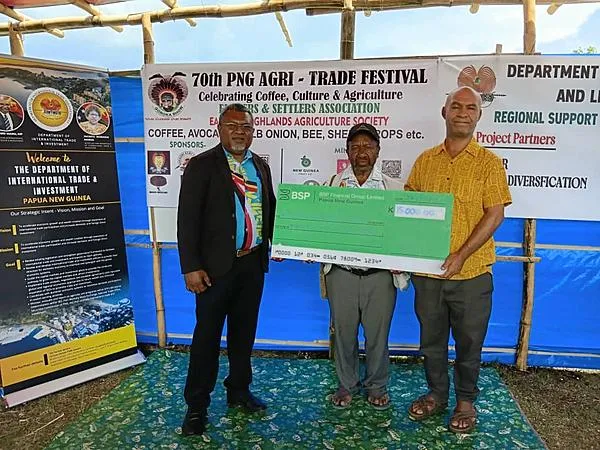
The PNG Spice Board has also backed the event with a K15,000 sponsorship, strengthening the participation of the spice industry and supporting efforts to connect farmers and processors with potential markets.
The Farmers and Settlers Association commended the Board and its management for supporting the Agriculture and Trade Festival and for establishing an exhibition at the event.
The Spice Board has brought spice processors and farmers to its stalls, giving participants an opportunity to showcase products and engage with industry stakeholders.
PNG Spice Board board member Sakarias Iko and Programme Director Baksy Poka represented the organisation and presented the K15,000 contribution to Festival Committee representative Kawage Teka.
Farmers and Settlers Association representative Jemmima Colbran thanked the Spice Board for its financial support, participation and assistance to spice exhibitors.
She also acknowledged the support of the PNG Biosecurity Authority and the Fresh Produce Development Agency, as well as the Kokonas Indastri Koporesen (KIK) and the Department of Agriculture and Livestock Highlands Regional Office for their roles in organising and facilitating the event.
Colbran said the cooperation demonstrates the importance of long-term partnerships in strengthening PNG’s agricultural sector and supporting the economy.
The partnership was highlighted as part of a relationship spanning 70 years, with stakeholders using the milestone to reinforce the need for continued cooperation between government, industry and farmers.
Nadzab international gateway proposed
The discussions around agriculture and trade have also renewed calls for improved transport connectivity, particularly for the country’s major commercial and agricultural centres outside Port Moresby.
Stakeholders have called on the Government to consider opening Nadzab Airport in Morobe Province to direct international flights, including potential services connecting Lae with international destinations and markets.
The proposal is aimed at improving the movement of people, goods and trade while reducing reliance on Jacksons International Airport in Port Moresby, which stakeholders say is already experiencing congestion.
Lae is strategically positioned as a major industrial and commercial centre and serves as a gateway to the Highlands and Momase regions, including some of PNG’s most important agricultural production areas.
Direct international connectivity through Nadzab could therefore provide economic benefits beyond passenger travel by improving access for exporters, investors, businesses and international buyers.
For agricultural producers, faster and more efficient transport links are particularly important for commodities that require reliable supply chains, quality control and access to overseas markets.
The push for Nadzab also aligns with the broader objectives of the Agriculture and Trade Festival, which is seeking to connect farmers and producers with processing, investment and trade opportunities.
Standards and quality critical to exports
The NISIT consultation on standards and quality is another important component of the festival’s business and economic focus.
As PNG seeks to increase agricultural exports and participate more strongly in international markets, producers and processors must meet the standards and quality requirements of overseas buyers.
Strengthening awareness of standards at the farmer and business level can help improve product quality, reduce barriers to trade and create greater opportunities for value-added agricultural products.
Similarly, the National Trade Office’s consultation on trade with the UAE provides an opportunity for PNG businesses to understand potential market access and the opportunities available through closer trade relationships.
The involvement of IPA and SMEC further broadens the festival’s economic focus by gathering information on businesses and SMEs and identifying the challenges facing smaller enterprises.
The festival demonstrates the interconnected nature of PNG’s economic development priorities.
Agriculture provides the production base, but farmers require infrastructure, finance, standards, processing capacity, market access and reliable transport to turn production into sustainable commercial businesses.
Government agencies, industry organisations and private businesses therefore have an important role to play in creating an environment where farmers can move into higher-value production and connect with domestic and international markets.
The presence of the Department of International Trade and Investment, NISIT, National Trade Office, IPA, SMEC, PNG Spice Board, Biosecurity Authority, FPDA, KIK and DAL at the event provides a direct link between agricultural production and the broader business and trade agenda.
The PNG Agriculture and Trade Festival 2026 will continue at the Goroka Showground on 28, 29 and 30 August, bringing together agriculture, coffee, business, trade and cultural activities as stakeholders look to strengthen the sector’s contribution to PNG’s economy.
With the country seeking to diversify its economy and increase non-resource exports, stakeholders say stronger partnerships, infrastructure and market connections will be essential to ensuring PNG’s farmers and businesses can compete both domestically and internationally.
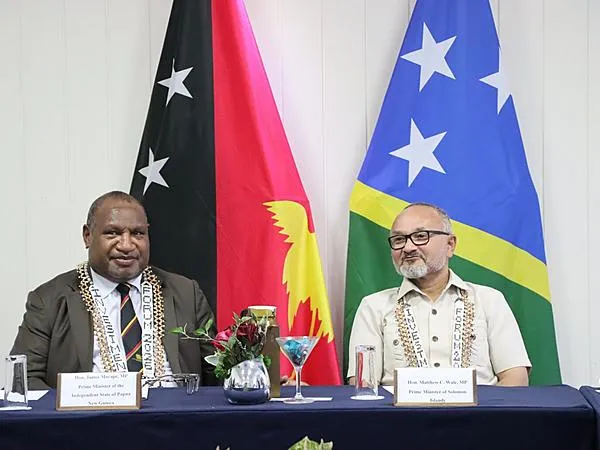
Papua New Guinea and Solomon Islands are seeking to deepen economic cooperation, increase cross-border investment and develop stronger business-to-business partnerships as the two Melanesian neighbours work to translate longstanding political ties into economic gains.
PNG Prime Minister James Marape made the call during the inaugural Papua New Guinea-Solomon Islands Business Investment Forum in Honiara, held under the theme “From Opportunity to Investment: Building the PNG-Solomon Islands Growth Corridor.”
The forum brought together government leaders, investors, business executives, financial institutions and private-sector representatives from both countries.
Marape said the forum should mark the beginning of sustained economic engagement between the two countries, with a focus on investment, trade, employment, downstream processing and greater economic independence.
“What good is political independence without economic independence?” Marape said, calling for both countries to build economies strong enough to stand on their own feet.
He said PNG and Solomon Islands were permanent neighbours whose economic interests were closely linked by geography, culture and history.
“We must construct a future that is fair and balanced, respects our people and our businesses, and allows us to walk step by step, side by side, into the future,” he said.
The forum followed Solomon Islands Prime Minister Matthew Wale’s official visit to Port Moresby in June, during which the two countries signed the Framework Agreement on Development and Economic Cooperation 2026-2030.
The agreement provides a framework for cooperation in trade and investment, mining, fisheries, agriculture, infrastructure and other areas of mutual economic interest.
Marape said the Honiara forum was intended to translate that government-level commitment into private-sector projects and partnerships.
“When Prime Minister Wale visited Port Moresby, we agreed that our relationship must produce tangible outcomes for our countries,” he said. “We have established the government framework. Now we want our private sectors to identify projects, establish partnerships and turn those opportunities into investment.”
PNG investment presence
PNG already has a significant commercial presence in Solomon Islands.
A 30-year review records 126 PNG-origin registered investments across 18 sectors, including agriculture, communications and information technology, construction, financial services, fisheries, mining, insurance, professional services, retail and wholesale, tourism and transportation.
The investments have proposed employment for more than 7,500 Solomon Islands citizens, with agriculture, professional services and fisheries among the largest employment-generating sectors.
Marape said PNG businesses had demonstrated that they could invest successfully beyond the country’s borders while creating jobs and contributing to a neighbouring economy.
“Papua New Guinean businesses have demonstrated that they can successfully invest beyond our borders while creating employment and contributing to the economy of a neighbouring Pacific country,” he said.
He encouraged Solomon Islands businesses to similarly explore opportunities in PNG.
Joint investment opportunities
Marape said the two countries had opportunities to cooperate in mining, fisheries, agriculture, energy, tourism, infrastructure, financial services, telecommunications, transport and downstream processing.
He particularly highlighted opportunities for joint ventures and partnerships between businesses in both countries.
“If we can source capacity from each other, let us source it. If we can have joint ventures amongst each other, let us have those joint ventures,” he said.
PNG businesses already operating in Solomon Islands include companies in property, finance, retail, fisheries, professional services, construction and other sectors.
Marape encouraged PNG businesses operating in Solomon Islands to develop local partnerships and support the growth of Solomon Islands-owned small and medium-sized enterprises.
“PNG businesses, as you work here, incubate a local business to be your value partner,” he said. “A good relationship, a good business venture and a good reputation is premium capital.”
Mining, fisheries opportunities
The two countries’ marine resources represent another potential area for cooperation, Marape said, particularly in fisheries.
PNG and Solomon Islands have large exclusive economic zones with significant tuna resources. Marape called for greater domestic processing and manufacturing rather than simply harvesting and exporting fish.
“We have been open for business for so long. We now want to go into partnership,” he said. “We want to step up processing of our catches in our respective countries.”
He said stronger cooperation could help the two countries build regional value chains for tuna and other marine products while creating employment and retaining more economic value domestically.
Marape also encouraged responsible investment in mining and energy, saying investors should receive reasonable returns while host countries, landowners and local businesses benefit through taxation, royalties, equity and local content.
In a separate bilateral meeting with Wale at the Heritage Park Hotel, Marape said Solomon Islands had again invited PNG investors to participate in its economy.
He said more than K1 billion of PNG investment was already present in Solomon Islands, with more than 59 PNG companies of various sizes operating there.
“We already have over K1 billion worth of Papua New Guinea investments in Solomon Islands, with more than 59 PNG companies of different sizes operating here,” Marape said.
He said the two countries could also explore joint participation in major mining projects, including arrangements that would ensure Solomon Islanders remained the principal beneficiaries of their natural resources.
Marape said PNG was prepared to consider equity structures in which Solomon Islands government entities, companies, provincial governments and landowners retained majority interests, while PNG companies contributed capital, expertise and experience.
“We are not coming here simply to take resources out. We want genuine partnerships in which Solomon Islanders remain beneficiaries of their own resources while our companies contribute capital, expertise and experience,” he said.
Economic relationship
The leaders also discussed trade and investment, border arrangements, mining, fisheries, agriculture, education, policing and security, air connectivity and other areas of bilateral cooperation.
Marape said the direct air connection between Honiara and Port Moresby would help facilitate the movement of businesses, investors and people between the two countries.
He said both governments needed to ensure that bilateral agreements translated into practical economic outcomes.
“Our political relationship is strong, our cultural and historical relationship is permanent, and now we must build the economic relationship to the same level,” Marape said.
“A stronger PNG-Solomon Islands economic corridor will strengthen both countries and contribute to a more economically resilient Melanesia and Pacific,” he said.
Marape said PNG’s economic diplomacy should also encourage domestic companies to expand internationally, rather than focusing solely on attracting foreign investment into the country.
“Papua New Guinea must also become an investor in the Pacific and, increasingly, beyond our region,” he said.
He identified banks, telecommunications companies, resource businesses, superannuation funds, agricultural companies, professional firms and SMEs as potential regional investors.
The prime minister said stronger economic integration between PNG and Solomon Islands could serve as a model for wider Melanesian and Pacific economic cooperation.
“A healthy Solomon Islands is a healthy PNG. A healthy PNG is a healthy Solomon Islands,” Marape said.
“Our strength is in economic prosperity.”
He urged businesses attending the forum to focus on practical opportunities, identify projects and establish joint ventures as the two countries seek to build a stronger economic relationship over the coming years.
Papua New Guinea’s economy has entered the second half of 2026 in a stronger position than expected at the start of the year, supported by elevated commodity prices, increased resource-sector activity and continued economic reforms, according to Westpac’s latest WAILIS PNG Economic Update and Outlook.
The report said PNG’s macroeconomic outlook remained encouraging, with higher export earnings, stronger activity across mineral and non-mineral sectors and continued government infrastructure spending under the Connect PNG programme supporting economic growth.
Westpac Pacific Senior Economist Shamal Chand said the challenge was ensuring that stronger economic activity translated into broader benefits for households and communities.
“PNG is benefiting from stronger commodity prices, improved resource-sector activity and IMF-backed reforms,” Chand said. “The bigger task now is making sure growth supports livelihoods, service delivery and broader economic resilience.”
The report said the Bank of Papua New Guinea maintained the Kina Facility Rate at 5.0% during the period, while the kina continued to depreciate under the central bank’s crawl-like exchange rate regime.
Year to date in 2026, the kina exchange rate moved from 0.2352 to 0.2267, representing a decline of about 3.6%.
Westpac said foreign exchange conditions had improved, although remaining FX queues and central bank auctions indicated that the market had yet to fully clear.
Formal employment grew 2.4% in 2025, with mining and resources accounting for much of the increase in hiring.
However, Westpac noted that formal employment remained relatively small compared with the country’s large informal economy.
The report said this highlighted the need for better economic and household data to provide a clearer picture of livelihoods and living conditions across PNG.
Westpac’s outlook suggests that maintaining reform momentum will be important to consolidate recent economic gains and ensure stronger resource-sector activity translates into wider economic resilience and improved living standards.
The report also points to the importance of continued fiscal and monetary discipline, infrastructure investment and reforms supported by the International Monetary Fund as PNG navigates the second half of 2026.
Follow on LinkedIn:
PNG Business News
Be the "First" to get our exclusive Digital Magazine & Weekly Newsletter.