September 09, 2025

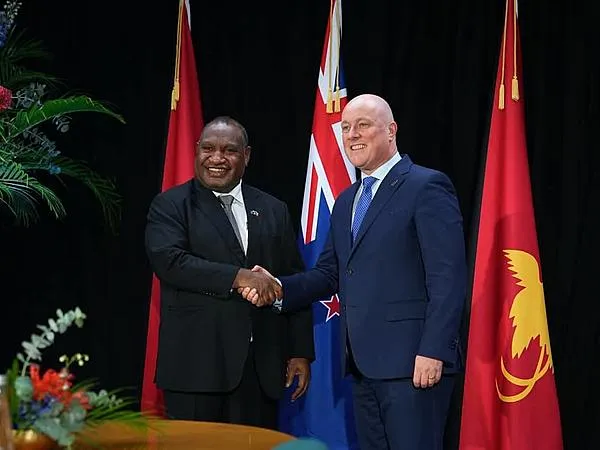
The Governments of Papua New Guinea and Solomon Islands have taken a decisive step to strengthen their economic and cultural bonds with the soft launch of the Papua New Guinea–Solomon Islands Business Council.

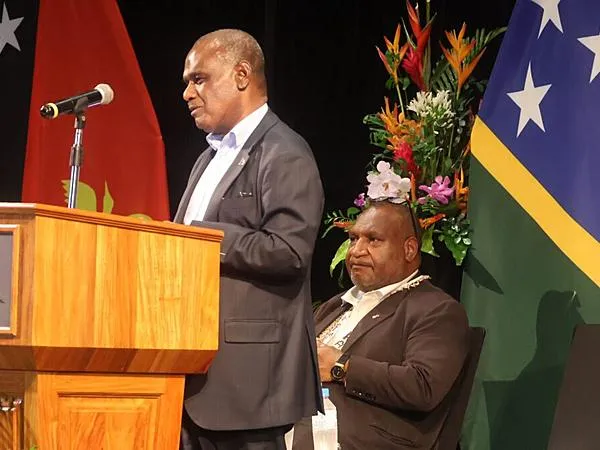
Held in Port Moresby, the event brought together leaders from government and business, with both Prime Ministers hailing the initiative as a milestone in Melanesian cooperation.

Solomon Islands Prime Minister Jeremiah Manele, MP, extended his warm congratulations to the council’s founders, describing the launch as a timely platform for deeper private-sector collaboration.

“The establishment of this Council represents a new chapter in our economic partnership. I am confident that it will grow from strength to strength and evolve into a vital mechanism for advancing mutual prosperity,” he said.

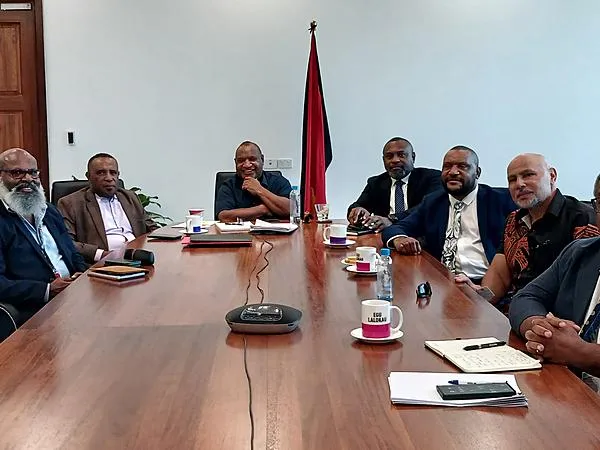
Manele underlined the council’s role as a forum for dialogue, networking and innovation, opening avenues for trade and investment. He also met with PNG business leaders during the launch, listening to their aspirations and reaffirming his government’s readiness to pursue stronger partnerships.

“As close neighbours and enduring partners, our futures are closely linked. Enhanced private sector collaboration will not only stimulate economic growth but will also reinforce the bonds of friendship and understanding that unite our peoples,” Manele said.

Courtesy call on PNG Governor-General

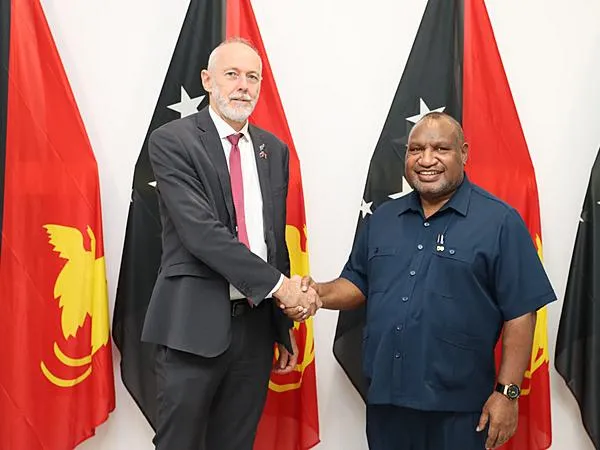
Prime Minister Manele paid a courtesy call on the Governor-General of Papua New Guinea, Grand Chief Sir Bob Dadae, at Government House.

During their brief meeting, he conveyed gratitude on behalf of the government and people of Solomon Islands for the long-standing relationship between the two Melanesian nations. He acknowledged the enduring diplomatic ties established 47 years ago on 7 July 1978, when Solomon Islands gained independence from Britain.

“On behalf of the government and people of Solomon Islands, I thank Papua New Guinea for its continued friendship and assistance, which have significantly contributed to our national development,” Manele said.

The Prime Minister noted PNG’s support in critical sectors such as business investment, education, border surveillance, police, security, and sports. Both leaders reaffirmed their commitment to enhancing “brotherly ties” rooted in shared culture, geography and history, which also laid the foundation for the Melanesian Spearhead Group (MSG) in 1988.

Manele was accompanied on the visit by former Solomon Islands Governor-General Sir Frank Kabui and Rick Hou, for Small Malaita.

‘Brothers and sisters’

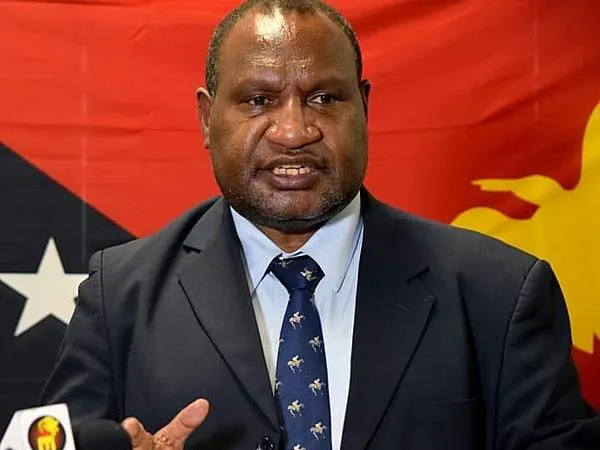
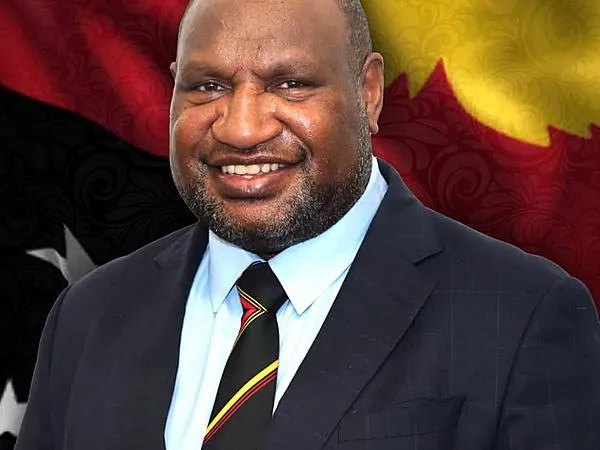
Prime Minister James Marape, welcomed Manele to Papua New Guinea, calling the visit a reaffirmation of “deep historical, cultural, and economic ties” between the two Melanesian nations.

“Sometimes, friends you can choose, but brothers and sisters you are born into. Papua New Guinea and Solomon Islands are family, and we will continue to coexist into the future,” Marape said, drawing warm applause from guests.

Marape reflected on the shared seafaring and trading traditions of both countries, saying independence in 1975 for PNG and 1978 for Solomon Islands had merely formalised an age-old connection.

He also congratulated Solomon Islands on its preparations to host the Pacific Islands Forum in Honiara this month, pledging PNG’s full support. “When Solomon Islands celebrates its 50th anniversary in 2028, Papua New Guinea will be there in full force,” he said.

From aid to trade

Looking to the future, Marape stressed the importance of shifting from aid dependency to deeper trade and economic engagement. He pointed out that more than 60 PNG businesses are already operating in Solomon Islands, spanning telecommunications, banking, oil palm and tourism.

“Papua New Guinea remains the largest foreign investor in Solomon Islands, a sign of the growing partnership,” he said.

Marape further endorsed Manele’s “Melanesian Oceans” initiative, a regional vision for sustainable use of fisheries and marine resources. “Our oceans hold some of the world’s richest tuna stocks. Together, Melanesia must shape our own destiny and ensure resources benefit our people,” he said.

Tourism and people-to-people links

Marape encouraged greater tourism exchanges, saying Solomon Islands offered experiences that complemented PNG’s own emerging industry. “Papua New Guinea is still growing in tourism, but our cousins in Solomon Islands will look after you well. They are not an extension of PNG — they are a proud nation of their own,” he said.

The Prime Minister also confirmed that Manele will return to Port Moresby next week to join PNG’s 50th Independence Anniversary celebrations, alongside more than 15 Pacific leaders travelling from Honiara after the Forum.

Closing his address, Marape cited a Melanesian proverb on fire and family unity: “We are placed at the heart of Melanesia. As leaders, we must be friends to all, enemies to none.”

Manele, before flying on to Australia, joined Marape in a charity golf event on Friday morning, rounding out a visit that was as much about personal connection as political and economic partnership.

September 08, 2025

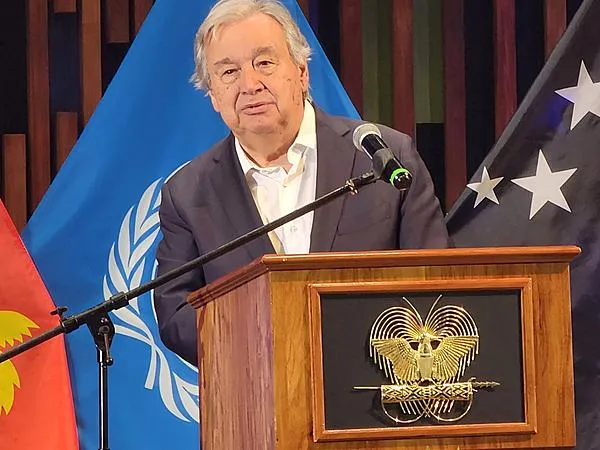
Prime Minister James Marape on 5 September farewelled United Nations Secretary-General António Guterres after a four-day visit that placed Papua New Guinea at the heart of global discussions on climate change and sustainable development.

Guterres departed from Jacksons International Airport aboard a UN flight, concluding what Marape described as a “productive and meaningful” visit. A military guard of honour lined the tarmac, while Foreign Minister Justin Tkatchenko, Chief Secretary Ivan Pomaleu and Foreign Affairs Secretary Elias Wohengu joined the Prime Minister in extending a formal send-off.

“Papua New Guinea deeply appreciates the Secretary-General’s passion and commitment in promoting the United Nations Sustainable Development Goals, including Climate Action, during his time with us,” Marape said at a joint press conference with Guterres before departure.

The UN chief’s programme was wide-ranging. He addressed PNG’s National Parliament, a rare honour for an international leader, before travelling to East Sepik Province to pay tribute to the late Grand Chief Sir Michael Somare at his memorial in Wewak.

Guterres described Somare as an “extraordinary statesman” whose advocacy on forest conservation helped shape Articles 5 and 6 of the Paris Agreement on climate change.

He then took an aerial tour of the Torricelli mountains rainforest and visited Nuku District in West Sepik, where he met communities living on the frontlines of climate change. In Mt Hagen, he engaged late into the night with UN representatives and civil society leaders overseeing development projects in the Highlands.

For Marape, the visit was not just ceremonial but a chance to align PNG firmly with the UN’s climate agenda. At a state dinner on 3 September, he assured Guterres of PNG’s unwavering support.

“Mr. Secretary-General, you have come home to a forest nation, you have come home to a marine nation,” he said. “Your address today in Parliament on Climate Resilience and Climate Justice is the correct advocacy. We stand behind you. We stand in total solidarity with you as you advocate to the Global North and G20 nations… Keep the earth’s temperature below 1.5-degree Celsius.”

Marape has emerged as one of the Pacific’s strongest voices on climate justice since taking office in 2019. He has demanded that developed countries not only cut emissions but also compensate small island states for damages caused by rising seas and extreme weather. He has also insisted that forest nations like PNG be recognised and rewarded for preserving ecosystems of immense global value.

By hosting the UN chief during its 50th independence anniversary year, PNG signalled that it sees climate diplomacy and sustainable development as defining priorities for the decades ahead.

UN chief joins Marape, Toroama for Bougainville peace talks


Guterres added his weight to Papua New Guinea’s delicate peace process with Bougainville this week, joining Marape and Autonomous Bougainville Government (ABG) President Ishmael Toroama for a trilateral meeting in Port Moresby.

The talks, held during Guterres’ four-day state visit, were described as “honest” by PNG officials and centred on the next steps of the Bougainville Peace Agreement, which guides the political future of the autonomous region. Bougainville voted overwhelmingly for independence in a 2019 referendum, but both sides agreed that the result would be subject to further consultations before a final outcome is reached by 2027.

Marape said the UN’s continued involvement was crucial. “The United Nation’s close guidance and consult going forward, as PNG and Bougainville work towards lasting solution is crucial at this stage leading to 2027,” his office said in a statement following the meeting.

The trilateral dialogue underscored the growing importance of international oversight as Bougainville’s demands for independence gather momentum. For many observers, Guterres’ presence was a reminder of the UN’s longstanding role in the peace process, dating back to its monitoring mission during the early 2000s.

Beyond symbolism, the meeting gave Toroama and Marape an opportunity to present their positions before the world’s top diplomat. While details of the talks remain confidential, both leaders are under pressure to balance Bougainville’s referendum mandate with PNG’s broader national interests.

The session came against the backdrop of Guterres’ wider tour of PNG, which was dominated by climate change advocacy and tributes to the late Grand Chief Sir Michael Somare. Yet the Bougainville dialogue added a distinctly political dimension, signalling that peace and governance remain high on the UN’s agenda in the Pacific.

For Bougainvilleans, the Secretary-General’s involvement brought international visibility to their cause. For PNG, it was a chance to demonstrate transparency in handling one of the most sensitive national issues of the post-independence era.

The meeting was also significant for its timing, coinciding with PNG’s 50th independence anniversary year. Leaders on both sides have framed the coming years as a period to settle Bougainville’s status in a way that ensures peace, stability and development for all communities.

By standing alongside Marape and Toroama, Guterres signalled the UN’s readiness to remain a trusted partner in guiding the process to its conclusion.

September 08, 2025

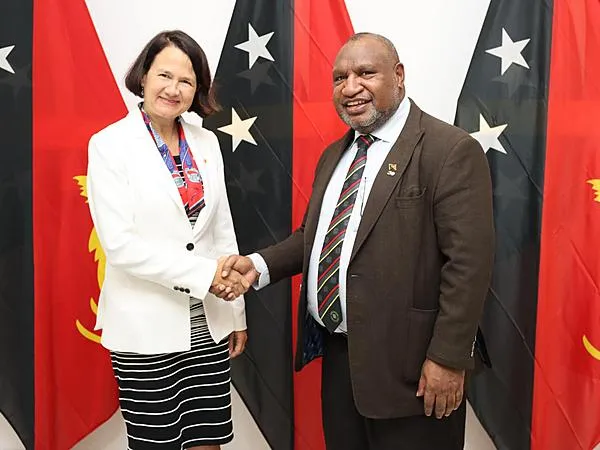
Prime Minister James Marape received a courtesy call from the United Kingdom’s Minister for the Indo-Pacific Catherine West at Melanesian House in Waigani, in a meeting that underscored both countries’ determination to strengthen ties as Papua New Guinea marks 50 years of independence.

The talks came ahead of the upcoming state visit of the Duke of Edinburgh, Prince Edward, who will officiate the formal handover of the King’s Colours and regimental colours to the Papua New Guinea Defence Force. He will also preside over the opening of the new Court complex — a highlight of PNG’s golden jubilee celebrations.

Minister West’s trip also carries a practical agenda, with the signing of two Memoranda of Understanding (MOUs) — one on Development Cooperation and another on a Shiprider Agreement. The agreements add to a growing body of cooperation, including the recently concluded Status of Force Agreement.

“Papua New Guinea always values its relations with the United Kingdom, and we thank the UK government for elevating this relationship through these latest MOUs, as well as the recently-signed Status of Force Agreement (SOFA),” Prime Minister Marape said.

He welcomed Britain’s visible role in this anniversary year, noting the participation of UK Defence personnel in Military Week events. “Our ties keep on getting stronger as seen in the participation of the UK Defence personnel in the Military Week, the program that is part of our 50th Independence anniversary celebration. This also signifies a stronger working relationship between our two defence forces which paves the way for future cooperation in the security space.”

Marape also highlighted West’s involvement with UK-backed programmes on climate change, renewable energy, nature, and forest conservation during her Port Moresby stay.

“Papua New Guinea is similarly focused on Climate Change, Climate Action and Mitigation, as we host the third largest tropical rainforest in the world and up to 7 percent of the world’s biodiversity. PNG remains steadfast and is committed to fight for Climate Justice and financing as mitigation strategy for building resilience among our local communities,” he said.

The Prime Minister appealed to the minister to carry PNG’s message further. He asked that Britain amplify the Pacific’s voice in international forums, particularly on climate finance and justice, where small island states seek stronger partnerships.

Closing the meeting, Marape said PNG’s relationship with the UK was not just about the present but about future generations: “PNG’s commitment is to embrace and continue fostering good bilateral relations with the United Kingdom going into the next 50 years of PNG’s life as a sovereign nation.”

September 05, 2025

Nambawan Super Ltd. (NSL) has expanded its Member Discount Partnership programme with the addition of two new partners, Hongland Hardware & Homecentre and Hilton Port Moresby Hotel & Residences. The fund also renewed its partnerships with Sanctuary Hotel Resort and Spa and BNBM Mt Hagen.

NSL Chief Executive Officer Paul Sayer thanked the business partners for their support in delivering tangible value and practical benefits to members, noting that these partnerships also contribute to the national and provincial economies.

“The Member Discount Program is part of NSL’s ongoing commitment to supporting Members both during their working lives and into retirement. We know that many families are feeling the impact of higher prices and the pressures of today’s economy. By growing our Discount Program, we are giving our Members meaningful ways to save. This is one of the ways we demonstrate that we care, not just for their future retirement savings, but also about the challenges they face every day,” Sayer said.

“It also reflects NSL’s commitment to adding value beyond retirement savings, ensuring that Members benefit in tangible ways today and in the future. By partnering with reputable businesses nationwide, NSL is helping Members stretch their Kina further, whether it’s saving on essential items, enjoying family experiences or accessing services that improve quality of life.”

The new and renewed discount partnerships include:

  • Hongland Hardware & Homecentre — 10% discount on all non-discounted items storewide. The business operates in East New Britain and New Ireland provinces.

  • Hilton Port Moresby Hotel & Residences — 15% discount on standard room rates, available exclusively on Fridays, Saturdays and Sundays.

  • Sanctuary Hotel Resort and Spa — 20% discount on normal room rates and 20% discount on restaurant food plans.

  • BNBM Mt Hagen — 10% to 20% discount on all hardware products.

These partnerships form part of NSL’s growing Member Discount Programme, which already includes more than 160 businesses nationwide. NSL is working to expand the initiative further into regional and provincial centres so that more members can access savings wherever they live and work.

NSL encouraged businesses across the country to consider partnering with the fund, while also reminding members to take advantage of existing discounts by presenting their valid membership cards at participating outlets.

For the full list of NSL discount partners, members can visit the NSL website. More information is available by calling 180 1599 or emailing CallCentre@nambawansuper.com.pg.
September 01, 2025

Prime Minister James Marape has assured the people of Kotidanga, one of the country’s most isolated regions bordering Gulf and Morobe provinces, that his government is committed to bringing roads, schools and essential services to their doorstep.

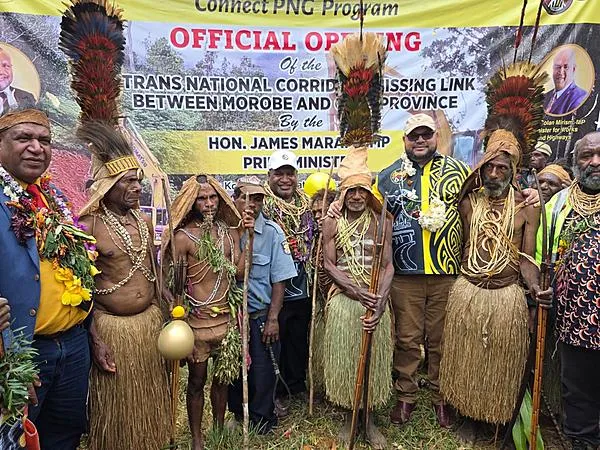
Speaking to a large gathering at the rugged frontier during the opening of the Trans National Corridor Missing Link, Marape said the new road marked a historic step in connecting communities long cut off from the rest of the nation.

“Although this is not yet a highway, one day it will be,” he said. “Step by step, kilometre by kilometre, we are opening up roads so that our people are no longer cut off. This road will one day unite the Papuan side with the Highlands, running as a true national highway.”

Marape noted that earlier leaders, including Sir Michael Somare, Sir Julius Chan, Paias Wingti, Sir Rabbie Namaliu, Bill Skate, Sir Mekere Morauta and Peter O’Neill, had all dreamt of linking remote areas but were constrained by cost.

“Each kilometre of road costs between seven to eight million kina. That is why previous governments struggled. As the economy grows, more money will come for roads like this,” he said.

The prime minister also appealed to local communities not to focus on compensation demands but to seize new opportunities the road would bring.

“Do not lose hope. When the road is here, plant more coffee. When you sell, you will make more money than compensation could ever give. Every kilometre we open will save you in transport costs and bring development closer,” he said.

He emphasised that the road was not only for farmers and traders but also for teachers, health workers and missionaries serving in remote corners of the country.

“This road is for you – our teachers, our rural health workers and our missionaries who serve tirelessly in remote communities. My government commits that no teacher, health worker or policeman in remote places like Kotidanga will be forgotten,” Marape said.

He announced that hardship allowances would be introduced for teachers and public servants serving in difficult and hard-to-reach areas. He also pledged K1 million for the Kerema District Development Authority to build school infrastructure, including dormitories, so children could remain in school safely.

“My children, remain in school. Education is your future. Stay in school. That is the greatest gift you can give yourselves and your country,” he urged.

Marape described the Kotidanga road as a symbol of the government’s determination to deliver on promises long made to neglected communities.

“We will not leave the last places behind. Step by step, we are moving forward together,” he said.

September 01, 2025

Prime Minister James Marape has welcomed the growth of Papua New Guinea’s overseas STEM (science, technology, engineering and mathematics) scholarship programme, calling it a transformative investment in the nation’s future workforce and leadership.

He said the initiative reflected his government’s vision of equipping young Papua New Guineans with world-class education, global exposure and practical skills that would drive development for decades to come.

“Our children are the true wealth of this nation. By investing in STEM education overseas, we are giving them the tools and experiences to compete with the best in the world and return to build Papua New Guinea,” Marape said.

“The future of our economy, our diplomacy, our trade and our development depends on young Papua New Guineans who are not only highly skilled, but who also understand the languages, cultures and technologies of our global partners. This programme is about positioning our nation for the next 50 years and beyond," he added.

The prime minister thanked international governments, universities and private sector partners that have supported the programme, noting contributions from the Australian Government and Kumul Petroleum Holdings Limited, which has sponsored cohorts of students studying in the United States.

He also acknowledged Education Secretary Uke Kombra and his team for their leadership in setting a long-term goal of expanding the annual intake to 1,000 students.

“It is regrettable that such a programme was not launched decades ago, but as the saying goes, it is better late than never,” Marape said. “We are now making up for lost time, ensuring that Papua New Guinea will have the global talent pool it needs to prosper in science, technology, engineering and mathematics, while also strengthening our links with nations around the world.”

The prime minister said the programme was part of a broader commitment to invest in young people, describing it as a legacy for the nation’s next half-century.

“This scholarship programme is one of the most important investments we can make for our young people and for the nation,” he said.

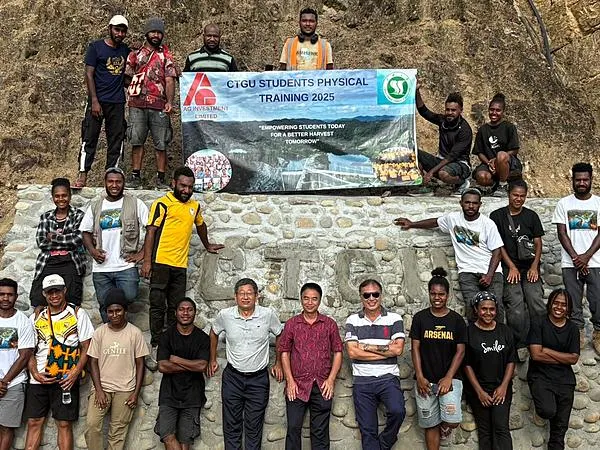
Alongside the scholarship drive, Marape also praised Edevu Hydro Power for giving 20 Papua New Guinean students studying in China the chance to gain hands-on work experience at its hydro project in Central Province. Under the guidance of managing director Allan Guo, the students spent several weeks in the rugged Koiari mountains, learning about engineering, energy production and project management before returning overseas.

Marape said such opportunities complemented the government’s efforts by ensuring students returned with not only academic qualifications but also practical understanding of the country’s needs.

“I thank Mr Allan Guo and the Edevu Hydro Power Company for going beyond words and investing directly in our young people,” Marape said. “These 20 students represent the very best of Papua New Guinea’s future. They are among the top one per cent of our school leavers, and by giving them practical training at home, we are grounding their education in the real challenges and opportunities of nation-building. This is the kind of partnership we need between government, private sector and education to raise our standards.”

He said the government’s long-term vision was to build a workforce of highly skilled professionals who would not only meet domestic needs but also innovate and lead.

“When these students graduate, we expect them to come back and contribute at the highest level, raising standards across our professions and industries,” Marape said. “They will not just be engineers or scientists like the ones we already have — they must be leaders who add value, bring innovation and change the way we build our country.”

Marape also acknowledged Education Minister Lucas Dekena, STEM advocate Clement Waine and Chinese academic partners who have worked alongside the programme. He said their support demonstrated the importance of aligning government policy, international partnerships and private sector investment.

“This is a model of partnership that I want to see replicated across other sectors — where government, private companies and our international friends come together to build a stronger future for Papua New Guinea,” he said.

September 01, 2025

Credit Corporation (PNG) Limited has outlined its transformation into a commercial bank and reported a solid financial performance for 2024, with Chief Executive Officer Danny Robinson reaffirming confidence in the Group’s future.

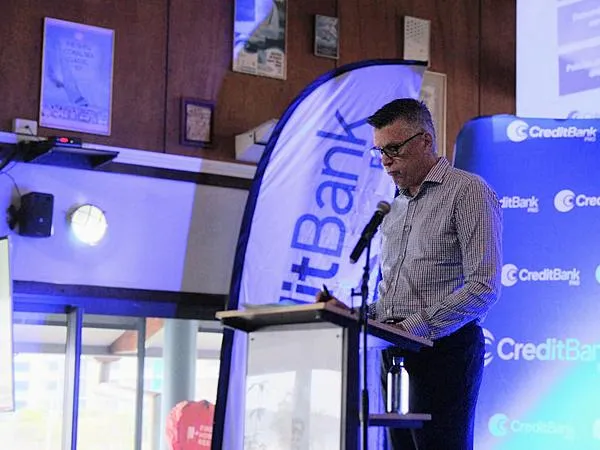
Robinson shared the company’s progress at a Port Moresby Chamber of Commerce and Industry breakfast on 27 August 2025, where he spoke about Credit Corporation’s evolution into CreditBank PNG and its digital-first strategy.

He said the Group’s five-year strategy is focused on streamlining services, expanding financial offerings and strengthening risk management.

“The region’s economic expansion is expected to continue, which supports a positive outlook for our operations,” Robinson said, noting favourable conditions across Papua New Guinea, Fiji, the Solomon Islands and Vanuatu.

Robinson acknowledged the work underpinning the transition. “I am especially grateful to everyone who has been involved in the work that has underpinned our new services – the new core banking system, a new digital banking application, enhancement of our internal processes and the upskilling of our people,” he said.

“This strong foundation will position us well for the future and we look forward to capitalising on emerging opportunities in 2025 and beyond.”

Strong 2024 Results

The updates followed the company’s Annual General Meeting in Port Moresby on 20 June 2025, where Robinson described 2024 as a turning point for the Group.

“We reported a strong financial performance which reflects our prudent investment approach and disciplined credit risk management. Combined, this ensures we maintain a strong foundation for future growth,” he said.

The launch of CreditBank PNG in August 2024 marked what Robinson called “a historic milestone in our 46-year history.” Since then, the bank has opened more than 8,000 accounts, attracting customers from all 22 provinces.

Digital services have been particularly popular. “For every new customer who opened an account in one of our branches, seven to eight new customers opened accounts online,” Robinson noted.

Small to medium enterprises, commercial clients and the emerging middle market have also embraced the new bank’s services, strengthening both new and long-standing relationships.

Financially, the Group recorded strong growth across its core businesses. Net loans increased by 20.6% year on year, while deposits rose 24.7% to K637.3 million (US$166 million). These results supported loan growth at lower lending rates.

Despite the expense-to-income ratio rising to 60.7% due to investments in infrastructure and the banking transition, shareholder returns remained strong.

“Return on equity increased to 24.4% from 14.1% in 2023. Total shareholder return for the period was 47.6%, reflecting strong investor support,” Robinson said.

People and Leadership

Robinson emphasised that employees remain central to the Group’s success. “The way our people work together and prioritise our customers distinguishes us from others in the financial services sector,” he said.

Leadership development continued through the Accelerate Performance Program, with 37 participants completing the initiative since its launch in 2021. For the first time in 2024, the programme was extended to staff in Fiji.

The Group also maintained gender balance, with women holding 56% of executive positions and 58% of senior manager and manager roles.

“We celebrate a work environment that values all of our people for their unique contributions,” Robinson said.

A major focus of 2024 was strengthening risk management, including the rollout of a new credit scoring tool to support the transition into a regulated bank.

“This strong framework will ensure that we are well-prepared for the complexities and regulations of banking,” Robinson said.

September 01, 2025

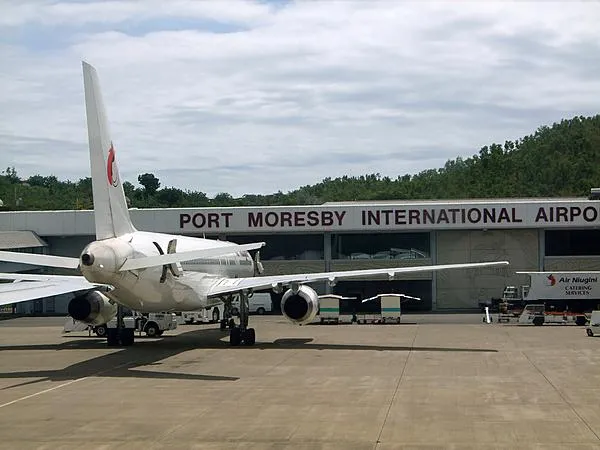
Papua New Guinea’s aviation sector is set for a sweeping transformation, with Aviation Minister Wake Goi announcing multi-billion Kina investments to modernise airports and expand their role as economic drivers.

Goi said the redevelopment programme will focus on five priorities: runway expansions, aircraft parking bays, infrastructure upgrades, terminal modernisation and the creation of a commercial “Airport City” precinct.

Runway Expansions

A central priority is the expansion of Jacksons International Airport’s runways. Goi confirmed that two additional runways will be built alongside the existing one to ensure uninterrupted flight operations.

“The need for additional runways was highlighted by a recent incident involving a Boeing 737 that experienced a tyre issue upon landing,” he explained.

The runway project, valued at 200 to 300 million Kina (USD 48–72 million), will be open to bidders. Similar upgrades are also planned for airports including Mount Hagen to accommodate larger aircraft.

Aircraft Parking Bays, Terminal Redevelopment

The extension of aircraft parking bays represents one of the largest investments, with bidding estimated at 1 to 1.5 billion Kina (USD 240–360 million). The expansion will extend the parking area toward the Helifix site and require significant earthworks, including levelling part of a mountain.

Jacksons International Airport’s infrastructure is also slated for full-scale redevelopment. Plans include a new two-storey building linking the international and domestic terminals, a 20–30 metre extension of the VIP lounge and a similar extension of the economy lounge.

“The terminals will be redesigned with check-in counters downstairs and departure gates upstairs, while the number of departure gates will increase to between 8 and 10,” Goi said.

Several outdated buildings will be relocated or rebuilt to create a more professional appearance, with facilities such as the maintenance hangar identified for relocation.

Airport City Vision

The centrepiece of the long-term vision is the development of an “Airport City,” a commercial hub expected to attract hotels, shops and services extending as far as the Gateway Hotel. Goi said the project will require 3 to 4 billion Kina (USD 720–960 million) in investment.

“The National Airports Corporation will manage this development by collecting taxes and leasing land, while land titleholders will receive a percentage return on their investment,” he explained. “As revenues grow, NAC will be able to repay investors over time.”

Investor confidence has already been signalled, with one company offering to transfer 4 billion Kina (USD 960 million) to support the Airport City development.

Economic Impact

Goi stressed that the airport upgrade programme is not only about infrastructure renewal but also about economic growth. By opening the projects to private capital, he said, the initiative is designed to strengthen PNG’s wider economy.

“These upgrades will not only increase passenger and cargo capacity but also open up opportunities in tourism, trade and property development,” Goi said.

“The Airport City concept, in particular, will attract commercial activity, create jobs and position Port Moresby as a regional hub for business and travel.”

According to Goi, the investment will modernise the country’s main gateways while creating sustainable returns for investors and long-term benefits for the national economy.

September 01, 2025

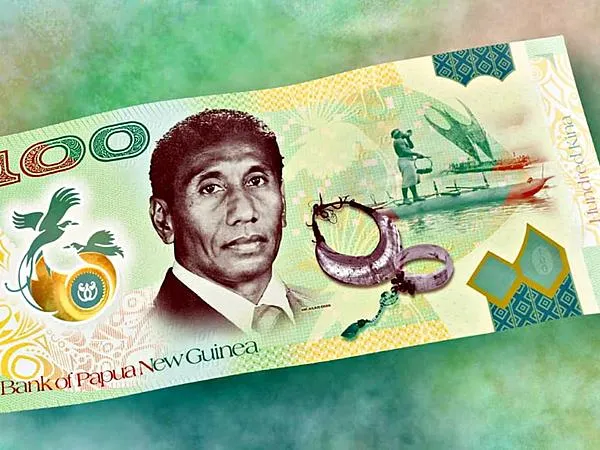
Papua New Guinea marked its 50th Anniversary of Independence and the 50th Anniversary of the Kina and Toea with the launch of a commemorative K50 banknote and 50 toea coin, while also announcing plans for a new K100 note honouring the late Sir Julius Chan to be released in 2026.

The commemorative currency was unveiled on 28 and 29 August in a series of events led by Prime Minister James Marape and Bank of Papua New Guinea (BPNG) Governor Elizabeth Genia.

Commemorative K50 Note and 50 Toea Coin

The K50 note retains the image of Parliament House and the portrait of the late Grand Chief Sir Michael Somare, with the addition of a golden 50th Anniversary emblem featuring the Raggiana bird of paradise in flight. The 50 toea coin maintains its seven-sided shape and national crest, now with a coloured inlay of the national flag.

The launch ceremony at the Stanley Hotel in Port Moresby on 29 August brought together Prime Minister Marape, Governor Genia, Foreign Affairs Minister Justin Tkatchenko, members of government, diplomats, business leaders, international partners and the families of Papua New Guinea’s founding statesmen.

In his keynote address, Prime Minister Marape said the release was a moment of national pride. “Currency is more than money, it is a symbol of identity, culture, and nationhood. For fifty years, the kina and toea have told our national story. This commemorative issue honours our journey as a sovereign nation and the resilience of our people,” Marape said.

He acknowledged the leadership of the nation’s founding fathers, particularly Sir Michael Somare and Sir Julius Chan, noting their central role in establishing the financial foundations of the new nation in 1975.

“Sir Julius embodied discipline, hard work, and humility in service to our nation. His contribution to the foundations of our economy will never be forgotten. It is fitting that his image will appear on our K100 note as a permanent reminder to future generations,” Marape added.

Sir Julius Chan Commemorative K100 Note for 2026

Governor Genia confirmed that the K100 commemorative banknote featuring Sir Julius Chan, PNG’s first Finance Minister and later Prime Minister, will be released in 2026.

“The new design celebrates our currency history and trading spirit, a fitting recognition of Sir Julius as our first Finance Minister and as a nation-builder who placed Papua New Guinea in the world,” she said.

Genia also paid tribute to the nation’s other founding leaders, including Grand Chief Sir Michael Somare and Sir Henry ToRobert, PNG’s first Central Bank Governor. “Fifty years ago, the notes and coins represented the first heartbeats of our nation. Today they are the backbone of our economy,” she said.

She reminded the public that when the kina was first introduced it was pegged at equal value to the Australian dollar and circulated alongside it until the end of 1975, with confidence in the new currency quickly growing among farmers, smallholders and businesses.

“The names themselves, kina (pearl shell) and toea (small trade shell), reflected ancient systems of value and exchange. By choosing these names, our leaders embedded culture into the heart of our economy. Every kina and toea carries our heritage into the modern economy,” Genia added.

Looking ahead

The BPNG said the commemorative K50 note and 50 toea coin officially entered circulation on 29 August 2025, while full details of the Sir Julius Chan K100 note will be released closer to its 2026 launch.

Genia reaffirmed the Central Bank’s priorities during the commemorative events.

“We will sustain price stability, manage exchange rates responsibly, and expand access to financial services to all Papua New Guineans. This is not just economic housekeeping. It is the unfinished business of independence. From now on, may every kina and toea carry our pride and our promise,” she said.

As the country prepares to celebrate its 50th Independence Anniversary in September, the commemorative notes and coins are expected to serve both as a means of exchange and as symbols of national pride.

Prime Minister Marape urged citizens to embrace them as reminders of unity and vision.

“May this currency inspire us to work harder for the prosperity of our country, as our founding fathers did fifty years ago. May God bless Papua New Guinea,” Marape said.

August 29, 2025

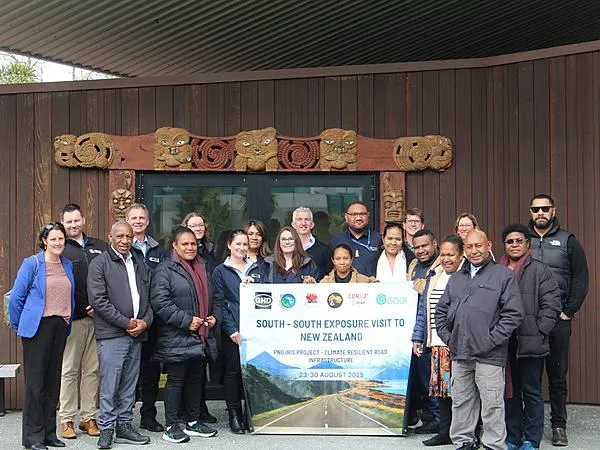
A delegation from Papua New Guinea’s Global Green Growth Institute (GGGI), Department of Works and Highways (DoWH) and Climate Change and Development Authority (CCDA) visited Aotearoa New Zealand from Saturday 23 to Saturday 30 August 2025 to learn more about climate-resilient infrastructure.

The learning exchange programme comes as Papua New Guinea (PNG) prepares to mark 50 years of independence on 16 September 2025.

Improving road transport is a priority for Papua New Guinea’s economic growth and development, with limited road connections outside the main cities of Port Moresby and Lae. Many of the country’s roads are exposed to climate-related hazards such as flooding, landslides, and sea-level rise. Overall, PNG is ranked 89th out of 139 for infrastructure in the World Bank’s Logistics Performance Index.

This visit is part of the Infrastructure for Resilient Island States programme, a global initiative funded by the Coalition for Disaster Resilient Infrastructure. The IRIS PNG programme is implemented by GGGI and DoWH with support from GHD, a global professional services company. 

During their visit to New Zealand, PNG officials learned from NZ Transport Agency Waka Kotahi, councils, the National Emergency Management Agency and mana whenua about how climate risk and resilience are embedded in infrastructure planning and investment.

The delegation visited Waikato region, including learning about the recovery from Cyclone Gabrielle to gather practical insights to help them implement PNG’s recently developed Climate Change Risk and Vulnerability Assessment Framework.

Kenneth Yamu, DoWH ESG Assistant Secretary says, “Our team comprised of DoWH, CCDA, TSSP and GGGI travelled to New Zealand for the South-South Exchange and Knowledge Exchange with town councils to visit climate resilient project sites to learn and integrate climate resilience into road infrastructure development in PNG. We want to see the DoWH construct climate resilient infrastructure by 2030 that can withstand the extreme weather patterns. This will require teamwork by improving knowledge and skills for our technical staff in DoWH to make collective and inclusive decisions that will benefit our people. 

Muhammad Ali Shaikh, Country Representative of GGGI PNG says “This exchange offers Papua New Guinea a valuable opportunity to learn directly from New Zealand’s experience in embedding climate resilience into infrastructure systems. As we prepare to mark 50 years of independence, strengthening our road networks and transport systems against climate risks is not just a technical necessity but a foundation for sustainable economic growth and community well-being. The lessons from New Zealand will help us apply our Climate Change Risk and Vulnerability Assessment Framework in a way that is practical, inclusive, and scalable across Papua New Guinea

Stephen Douglass, GHD Market Lead Environment and Communities for NZ Pacific says, “The learning exchange presented how New Zealand manages interconnected climate risks — a direct analogue for the challenges facing Papua New Guinea. It focused on community development and sits within a wider programme to build capacity for climate-resilient, context-appropriate infrastructure prioritisation, delivering lasting community benefits directly transferable to Papua New Guinea.

About GHD: 

GHD is a leading professional services company operating in the global markets of water, energy and resources, environment, property and buildings, and transportation. Committed to a vision to make water, energy, and communities sustainable for generations to come, GHD delivers advisory, digital, engineering, architecture, environmental and construction solutions to public and private sector clients. Established in 1928 and privately owned by its people, GHD’s network of 12,000+ professionals is connected across 160 offices located on five continents. www.ghd.com

About the Global Green Growth Institute (GGGI)

The Global Green Growth Institute (GGGI) was founded as a treaty-based international, inter-governmental organisation in 2012 at the United Nations Conference on Sustainable Development. GGGI supports its Member States in transitioning their economies toward a green growth model that simultaneously achieves poverty reduction, social inclusion, environmental sustainability, and economic growth. With 49 Member States and 29 Partner countries and regional integration organisations in the process of accession, GGGI delivers programs and projects in over 51 countries. These initiatives encompass developing innovative green growth solutions, technical support, capacity building, policy planning & implementation, and assistance in building a pipeline of bankable green investment projects, project financing, investments, and knowledge sharing. GGGI's work contributes to its Member States’ efforts to fulfill the Sustainable Development Goals and the Nationally Determined Contributions to the Paris Agreement.  
August 19, 2025

Papua New Guinea faces imminent placement on the Financial Action Task Force (FATF) “Grey List” by 2026, a move that Bank of Papua New Guinea Governor Elizabeth Genia says will have serious implications for investment, trade and the cost of doing business.

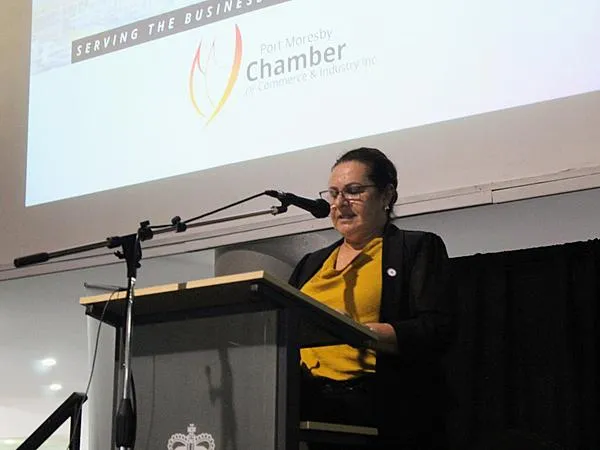
Speaking at the Port Moresby Chamber of Commerce and Industry (POMCCI) Breakfast Meeting on 6 August at the Royal Papua Yacht Club, Genia confirmed that the listing is now almost certain.

“Based on the feedback we have received, we can say with a high degree of confidence, close to 100% certainty, that Papua New Guinea will be added to the FATF Grey List in February 2026,” she said.

The decision follows a mutual evaluation by FATF in October 2023, which triggered a 12-month observation period ending in October 2025. A post-observation report will then be submitted ahead of a formal review in January 2026.

Genia admitted that “it is not something that they had hoped for” but stressed the country’s priority now was constructive and transparent engagement with the FATF.

She underlined the potential economic fallout of grey listing, warning that it would undermine investor confidence, disrupt international trade and increase the cost of doing business.

“Grey listing affects us all. Whether you are a commercial bank, a lawyer, an accountant, a real estate agent or simply sending money to your family, compliance with our Anti-Money Laundering and Counter-Terrorism Financing (AML/CTF) Act is critical to protecting the integrity of our financial system,” she said.

The risks are not limited to the financial sector. Key vulnerabilities for PNG include corruption and misuse of government funds, illegal fishing and tax offences, limited institutional capacity to prosecute money laundering and weak supervision of non-financial professions such as lawyers, accountants, real estate agents, car dealers and gold dealers.

The country also struggles with outdated risk assessments, limited asset recovery and insufficient cooperation with international jurisdictions.

To counter these threats, BPNG is co-chairing the National Coordinating Committee (NCC) with the Department of Justice and Attorney General. This body unites 22 government agencies in a national effort to respond to FATF’s findings.

In support of this, the government has brought in international expertise. Rick McDonald of McDonald Nair Consultants, Canada—one of the architects of the FATF mutual evaluation framework—has been engaged to advise PNG on strategies to exit the Grey List as quickly as possible.

The POMCCI breakfast also featured a panel discussion with senior experts, including Wilson Onea (Director of Financial Analysis and Supervision Unit at Bank of Papua New Guinea), Karen McEntee (Partner at KPMG), Leo Kamara (Head of Risk & Compliance at Credit Corporation Limited) and Herbert Williams (Managing Director at Deloitte). The panel assessed PNG’s progress, acknowledged ongoing challenges and stressed the urgency of coordinated reforms to protect businesses from the damaging effects of grey listing.

Governor Genia closed with a call for national unity in addressing the challenge.

“Our response must be informed, open and transparent. Compliance is not just for banks or regulators—it is a national responsibility. The integrity of our financial system relies on all of us.”

August 11, 2025

Prime Minister James Marape has described the official visit of New Zealand Prime Minister Christopher Luxon as a “historic and defining moment” in bilateral relations, reaffirming a shared commitment to peace, prosperity and Pacific solidarity.

The visit, from 4 to 6 August, marked a milestone in Papua New Guinea’s diplomatic history as Mr Luxon became the first New Zealand leader — and only the second foreign leader after Australia’s Anthony Albanese in 2023 — to address the National Parliament.

Welcoming his counterpart and delegation to Parliament House in Waigani, Marape called the visit a “powerful reaffirmation of a friendship rooted in integrity, trust and shared Pacific values.”

“This day, we do not just welcome a neighbour — we welcome a family member,” he said. “New Zealand stood with us in 1975 when we gained Independence and has walked alongside us for the last 50 years. This visit renews that vow of partnership and positions us to move forward together for the next 50 years.”

A friendship forged in shared history

Marape paid tribute to New Zealand’s role in PNG’s nation-building — from helping form the civil service, health and education systems to its peace-building role during the Bougainville Crisis and support after the 2001 Bougainville Peace Agreement.

This year, the two countries launched the Papua New Guinea–New Zealand Statement of Partnership 2025–2029, a strategic framework built on five pillars: political and regional collaboration; economic and trade engagement; education and labour mobility; peace and security, particularly in Bougainville; and climate action and environmental resilience.

“This partnership is not built on aid or handouts,” Marape said. “It is built on mutual respect and a shared vision for transforming lives, uplifting communities and creating opportunity for the next generation.”

Delivering on shared ambitions

Bilateral talks between the leaders focused on initiatives aligned with PNG’s 50-year development vision, including:

  • Expanding New Zealand’s Recognised Seasonal Employer (RSE) scheme to take in over 10,000 Papua New Guinean workers, with skilled labour pathways.
  • Increasing New Zealand business investment in agriculture, infrastructure and energy in PNG.
  • Boosting vocational training and youth employment.
  • Supporting peaceful dialogue and implementation of the Melanesian Agreement on Bougainville.
  • Scaling up climate resilience projects and renewable energy cooperation.

Thousands of New Zealanders currently live and work in PNG, while a growing Papua New Guinean diaspora contributes to New Zealand’s communities and economy. Marape said such people-to-people ties strengthened both nations.

“In a world of turbulence, we seek friends who lead not through might, but through right — and New Zealand is such a friend,” he said, underscoring the two nations’ role in the 2050 Strategy for the Blue Pacific Continent. “We are committed to stand together — to protect our oceans, defend our democracies and ensure no Pacific child is left behind.”

Bougainville peace: NZ’s enduring role

Luxon’s visit came just weeks after the Burnham Consultations in Canterbury, hosted by New Zealand and moderated by former governor-general Sir Jerry Mateparae, with United Nations support. The talks advanced post-referendum dialogue between the Autonomous Bougainville Government and the PNG Government.

New Zealand, a signatory witness to the Bougainville Peace Agreement, has been a consistent peace partner since hosting the first Burnham talks in 1997, facilitating neutral dialogue and deploying an unarmed Truce Monitoring Group.

In June, both sides agreed to present the 2019 referendum results — alongside the moderator’s report and bipartisan committee findings — to the PNG Parliament, a step towards deciding Bougainville’s political future.

“New Zealand’s role as a neutral facilitator and peace partner remains indispensable,” Marape said. “Their commitment at Burnham reaffirms our shared dedication to a lasting, homegrown solution.”

A golden season of diplomacy

The Luxon visit opens a historic sequence of engagements as PNG celebrates its 50th Independence Anniversary.

In early September, the country will host UN Secretary-General António Guterres for a four-day visit — the first by a UN chief in PNG’s history, and the longest stay anywhere in the Pacific. He will address Parliament before the anniversary celebrations on 16 September, which are expected to draw leaders from across the Pacific and beyond.

“This marks a historic moment that recognises PNG’s growing role in regional peace, climate action and sustainable development,” Marape said.

The Prime Minister has called on citizens to embrace the anniversary year with unity: “We are privileged to live during this milestone year. Let us come together with one heart, one mind, one nation.”
 

SME growth and trade opportunities

The New Zealand Prime Minister also attended the New Zealand Economic Support Morning Tea on 6 August, where International Trade and Investment Minister Richard Maru thanked Wellington for its support of PNG’s small and medium-sized enterprises.

Through the Business Link Pacific (BLP) programme, New Zealand provides PNG businesses — particularly women-owned and rural enterprises — with advisory services, concessional loans and grants.

Maru noted that New Zealand had also funded major market upgrades in Gordons, Kimbe and Lae, which he said directly support informal vendors and SME operators. “Markets are where most of our SMEs and mothers from the informal sector sell their products,” he said. “We want this to be replicated in the rest of the provinces and districts in the country to support our mothers and sisters.”

He outlined the PNG Government’s own commitment, which includes over K100 million annually for SME loans and new grant funding for the Women’s Microbank (Mama Bank). He also announced a National Executive Council decision to offer competitive K100,000 grants to help SMEs export to overseas markets.

Mr Maru proposed anchoring the PNG–NZ relationship in a Comprehensive Economic Partnership Agreement to support SME growth, entrepreneurship and trade, while firmly stating that PNG would not join the PACER Plus agreement.

“We are a big island nation,” he said. “We have the resources, we have the population, we have our own issues and our own national interest that must be catered for.”

Looking ahead: unity and purpose

In his Parliament address, Luxon paid tribute to PNG’s progress since Independence and affirmed New Zealand’s commitment to the shared Pacific vision. He highlighted cooperation on climate change, renewable energy and labour mobility, and said the friendship was “anchored in trust, shared history and mutual respect.”

Marape, in closing the visit, stressed that the PNG–NZ partnership was “not just transactional — it is transformational.”

“Together, we are building something that transcends politics — a legacy of peace, purpose and Pacific partnership,” he said. “May the bond between our peoples deepen. May the mountains of PNG and the shores of Aotearoa rise together. And may the next 50 years be a testament to what we can achieve — side by side, wantok to wantok,” Marape said.

July 31, 2025

Prime Minister James Marape has commended Deputy Prime Minister and Minister for Lands and Physical Planning John Rosso for spearheading historic reforms to Papua New Guinea’s land laws, describing them as essential to securing the country’s future and safeguarding landowners’ rights.

Speaking in Parliament during the tabling of amendments to six major pieces of land-related legislation, Marape underscored the significance of the reforms as PNG marks 50 years of independence. The legislation passed with strong bipartisan support and will be implemented in phases starting in 2025.

“In the face of our 50th anniversary, some of these corrective updates in our laws must be made so we may secure the future of our country,” Marape said.

“Land is our people’s greatest inheritance—our playground, our home, our heritage. Every Papua New Guinean is connected to a piece of land somewhere in this country. We must protect it. One of the greatest pains I live with is seeing Motu Koitabuans lose their land. This law secures what limited land remains and prevents further erosion. It ensures no one sells or loses their land forever," he added.

The prime minister reaffirmed his government’s commitment to digitising public services and using modern technology to improve transparency, efficiency and accountability.

“We’ve instructed the minister for finance, the minister for public services and others to ensure future recruitment, procurement and tender processes are ICT-based and assisted by AI,” he said. “We must eliminate the delays caused by walking office to office and remove personal preferences from the system.”

He also proposed forming a bipartisan committee to oversee the reform process and ensure inclusive, transparent review of the laws.

“This is not a political matter—it’s national. I thank the member for Hiri-Koiari for chairing the Lands Committee even though he sits opposite. Let’s work together to ensure our people’s rights are protected,” Marape said.

He further announced the government’s intention to allow properly registered customary land to be used as collateral—enabling citizens to access finance and unlock the value of their land.

“This is an important precursor to giving value to our people and the land they own as we celebrate 50 years of nationhood. Let’s get this done for them,” he said.

Deputy Prime Minister Rosso, who introduced the bills in Parliament, said the amendments to the Land Act 1996, Physical Planning Act 1989, Surveys Act 1969, Survey Coordination Act 1967, Land Registration Act 1981 and Valuation Act 1967 are designed to bring PNG’s land administration into the digital age.

He said each piece of legislation had specific business processes reworked to integrate ICT and improve service delivery.

“These laws have been modernised to cater for a new digital platform that will replace our outdated, cumbersome, paper-based processes,” Rosso said. “This is about ensuring land dealings, including communication with our people, are done in a timely, transparent and efficient manner.”

“The new digital system will enable us to manage, track and process land transactions with accuracy and speed. Whether it’s land registration, valuation or lease processing, we are moving into a fully electronic era,” he said.

Rosso added the reforms strike a balance between protecting customary land ownership and enabling development where necessary.

“This reform is about balance—protecting our people’s traditional ownership while allowing the state to plan, build infrastructure and develop the economy. We are not taking land away; we are protecting it and making it work for our people.”

July 29, 2025

Prime Minister James Marape has announced that the National Government has received the preliminary findings of a major Cabinet-sanctioned review into Papua New Guinea’s development since Independence, with a focus on shaping the country’s future over the next two decades.

The 50-Year National Review Committee, chaired by former Deputy Prime Minister Charles Abel and deputised by Arthur Somare, presented its initial report to Marape and members of Cabinet on 28 July. The review was initiated by the National Executive Council to take an honest and independent assessment of the country’s progress since 1975 and chart a constructive path forward.

“This review is not about apportioning blame or celebrating blindly,” Marape said. “It is about critically analysing how far we have come in 50 years — identifying our weaknesses, recognising our strengths, and setting out what must be done to move forward with clarity and purpose.”

The report examined key performance areas including:

  • Human development indicators

  • Macroeconomic trends

  • Public service delivery

  • Governance and institutional reform

  • Youth demographics and social challenges

Data and statistics were sourced from credible institutions, including the National Research Institute (NRI) — which recently completed its own comprehensive PNG 1975–2025 Review — along with inputs from the Consultative Implementation and Monitoring Council (CIMC), UNDP, the Australian National University (ANU), and other local and international agencies.

“From 1975 to 2008, our economy grew below 1 percent annually while our population expanded by over 3 percent,” Marape noted. “This mismatch has contributed to the structural difficulties we face today — with half of our population under the age of 25. It is a wake-up call.”

The report further recommends priority areas for reform, including:

  • Accelerating economic diversification

  • Improving government efficiency and accountability

  • Tackling corruption and lawlessness

  • Investing in human capital and youth opportunities

The findings will feed directly into the Government’s current development planning, particularly:

  • The final five years of the National Strategic Plan 2010–2030

  • The remaining 25 years of Vision 2050

  • The operationalisation of the Medium-Term Development Plan IV (MTDP IV)

Marape reaffirmed that the review is being conducted at arm’s length from political interference, with the committee granted full independence to assess even the performance of his own government over the past six years.

“I have instructed the committee to be critical, to be honest, and to tell us what needs fixing — not just in my government, but in the previous two governments under Sir Michael Somare and Peter O’Neill,” he said. “Not to criticise for the sake of it, but to allow us to correct course as we move forward.”

The final report will be submitted to Cabinet for consideration and then tabled in Parliament, ensuring that all elected leaders participate in shaping PNG’s next 20 years.

“We are not reinventing the wheel,” Prime Minister Marape added. “We are building on the foundation of Vision 2050, ensuring we are strategic, focused, and efficient — with an eye toward 2045, when the next generation of leaders can assess and prepare for life beyond 2050.”

July 29, 2025

Prime Minister James Marape has officially announced that Papua New Guinea will host New Zealand Prime Minister Christopher Luxon for a high-level bilateral visit, 4-6 August, 2025. The visit comes ahead of Papua New Guinea’s 50th Independence Anniversary and underscores the strong and evolving relationship between the two Pacific nations.

“This visit by Prime Minister Luxon is both symbolic and strategic,” Marape said. “He is coming personally to convey his apology that he will not be able to attend our Independence Day celebrations in September due to parliamentary commitments in New Zealand. His early visit highlights the value he places on our bilateral relationship.”

The visit builds on the outcomes of Marape’s state visit to New Zealand in March 2025 and is part of the implementation of the Papua New Guinea–New Zealand Statement of Partnership 2025–2029, which was signed earlier this year. Officials from both countries are now finalising a Joint Economic Cooperation Plan to complement the partnership and align with PNG’s Vision 2050.

Prime Minister Luxon’s three-day visit will include:

  • A ceremonial welcome
  • Bilateral meetings with the Prime Minister and senior government ministers
  • An official address to Papua New Guinea’s National Parliament on Tuesday, 5 August
  • Engagements with business, development and community stakeholders

Marape praised New Zealand as a long-standing and dependable partner in the Pacific.

“New Zealand has been a friend to PNG since the 1970s — from missionaries and public servants to direct development assistance, education opportunities and investment partnerships,” he said. “They have consistently supported our nation, including through streamlined migration and visa processes and expanded labour mobility schemes."

Prime Minister Marape also acknowledged New Zealand’s enduring role in peacebuilding, particularly in Bougainville. “They were instrumental in the Bougainville peace process, from the 1997 negotiations to the Burnham Declarations in 2000. Today, they remain involved as trusted partners as we conclude the next phase of the 2001 Bougainville Peace Agreement," he added.

As a senior member of the Pacific Islands Forum, Marape noted that New Zealand’s visit reaffirms its commitment to regional solidarity and deepens the bilateral ties as Papua New Guinea chart a new course for the next 50 years.

July 25, 2025

Port Moresby, 25 July 2025 — Prime Minister James Marape has welcomed the International Court of Justice’s (ICJ) landmark advisory opinion on climate change, delivered on 23 July, calling it a “monumental victory for climate justice” and a major step forward for Pacific nations like Papua New Guinea.

The advisory opinion, requested by the United Nations General Assembly, affirms that states have a legal obligation under international law to reduce greenhouse gas emissions. It further states that failure to act may constitute an “internationally wrongful act,” opening the door to legal accountability for climate inaction.

“This ruling reinforces what Pacific nations have long championed: a clean, healthy and sustainable environment is a fundamental human right,” said Prime Minister Marape. “It is a landmark for climate justice and for sovereign island nations like Papua New Guinea, whose very existence is under threat.”

The ICJ concluded that countries must act decisively to curb emissions from fossil fuels and reconsider policies such as exploration licences and fossil fuel subsidies. The court also suggested that nations suffering climate-related harm may be entitled to reparations, provided a causal link can be established. Although the opinion is non-binding, it carries significant legal and political weight, especially in the lead-up to COP30 in Brazil.

“This advisory opinion is a monumental victory for climate justice,” said Marape. “It vindicates the voices and sacrifices of Pacific communities standing at the frontline of sea-level rise, extreme weather and biodiversity loss.”

Prime Minister Marape also underscored PNG’s long-standing record on environmental protection and climate leadership. “Papua New Guinea has long stood against environmental harm — from rejecting deep-sea mining to championing Indigenous-led ocean reserves. This ruling empowers our efforts to safeguard our marine and forest ecosystems for future generations.”

He called on high-emitting nations to meet their international responsibilities. “We urge all nations — especially historic emitters — to honour their legal obligations and commit to urgent, equitable climate action. The era of delay and denial is over. The law is now clear.”

Following the ICJ’s opinion, Papua New Guinea intends to deepen its engagement on the global stage. The government plans to use the ruling to strengthen diplomatic pressure during climate negotiations, explore legal avenues to reinforce environmental commitments and pursue strategic partnerships for climate finance and conservation efforts.

Marape said PNG would continue to lead by example through its moratorium on environmentally destructive activities and its commitment to inclusive, sustainable development.

Prime Minister Marape has consistently taken strong positions on environmental and climate issues. He remains a vocal opponent of deep-sea mining, citing risks to fisheries, fragile ecosystems and community livelihoods. In June, he advocated for the Melanesian Ocean Reserve and Indigenous-led conservation at the UN Ocean Conference in Nice. In September 2024, he called for stronger international recognition of the threats posed by sea-level rise during the UN General Assembly’s 79th session.

Marape said the ICJ’s advisory opinion aligns legal authority with moral leadership, giving Pacific nations powerful leverage in their ongoing struggle for survival and justice.

PM Marape said this legal breakthrough now provide authoritative backing for PNG’s climate agenda, “aligning moral leadership with international law to protect our people, nation and Pacific region.”