The Bank of Papua New Guinea (BPNG) has reaffirmed its commitment to building an inclusive financial system, underscoring microfinance as a key driver of national development and economic empowerment.
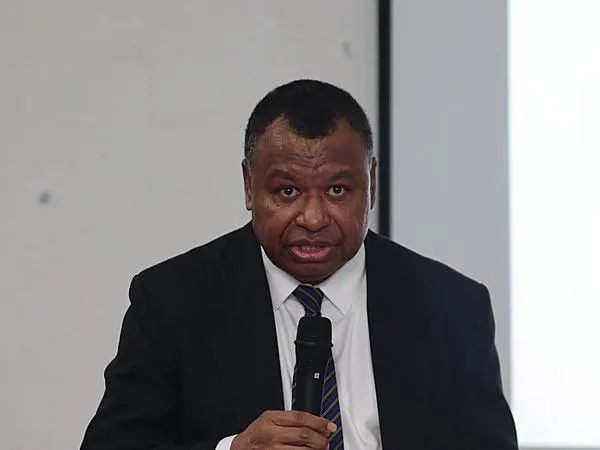
Deputy Governor of BPNG Jeffery Yabom delivered the message during his keynote address at the PNG Microfinance Diagnostic Validation Workshop on 3 September at the Crown Hotel in Port Moresby. The workshop, facilitated by the Asian Development Bank (ADB), brought together financial institutions, the Credit Guarantee Corporation, the Centre for Excellence in Financial Inclusion (CEFI), the SME Corporation and other stakeholders.
Yabom stressed that financial inclusion remains one of PNG’s greatest development priorities, noting that more than 80 percent of the population live in rural and remote areas with limited access to banking services. He described microfinance as a “lifeline” for families, enabling them to save, invest, pay for education and grow small businesses that support community development.
Reflecting on progress, he cited PNG’s commitments under the Maya Declaration on Financial Inclusion in 2013, when fewer than 20 percent of citizens had access to formal financial services.
“Today, under the National Financial Inclusion Strategy 2023–2027, there are more than 4.3 million bank accounts, a result of the combined efforts of BPNG, financial institutions, and development partners,” he said.
Despite this progress, Yabom acknowledged persistent challenges, including high costs of serving rural communities, weak governance in some microfinance institutions and limited diversity in financial products. He called on stakeholders to expand offerings such as micro-insurance, remittances and SME-focused services, while also strengthening consumer protection and regulatory oversight.
He further highlighted opportunities through digital finance, women’s economic empowerment, strategic partnerships and climate-resilient “green finance.” These, he said, would be vital in aligning financial inclusion with PNG’s Vision 2050 and medium-term development strategies.
“BPNG will continue working closely with government, the private sector, and development partners to ensure that microfinance remains sustainable, innovative, and inclusive,” Yabom assured.
Supporting these messages, ADB consultant Jagdeep Dahiya presented two analyses of the sector. He noted that although PNG’s financial system has grown since the Microfinance Expansion Project, which established CEFI, microfinance institutions still account for less than three percent of total sector assets. Services remain concentrated in urban centres, and many Papua New Guineans continue to rely heavily on informal lending.
Dahiya further observed that while deposit ownership has increased, access to credit remains limited and a widening gender gap in financial inclusion persists. He identified weak regulatory incentives, poor infrastructure, low digital literacy and high banking fees as major barriers.
Thus, he recommended reforms to strengthen policy frameworks, increase funding for microfinance institutions and foster innovation in digital finance to reach underserved communities.
The workshop concluded with open discussions and feedback, reflecting a shared commitment among stakeholders to advance inclusive finance.
As BPNG sharpens its focus, the central bank’s leadership is expected to play a decisive role in shaping policies and partnerships that will bring banking and financial services closer to every Papua New Guinean.
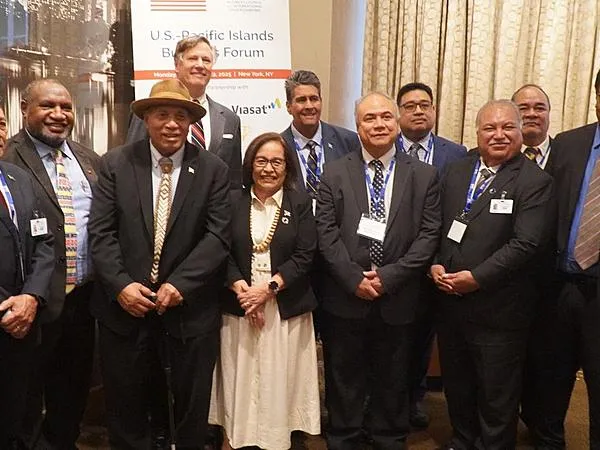
Prime Minister James Marape has appealed to the United States and its business community to deepen trade and investment ties with the Pacific, saying the region must be seen as a partner of prosperity rather than a passive recipient of aid.
Speaking at the US–Pacific Islands Business Forum on the sidelines of the United Nations General Assembly, Marape told business leaders and policymakers that Pacific nations were repositioning themselves as “big ocean nations” with untapped potential.
“We may be called small island states, but we are in fact big ocean nations,” Marape declared. “Our seas, our airspace, our forests, and our human capital are immense. The Pacific holds more than $3 billion worth of tuna and fisheries resources every year, yet our citizens remain among the lowest per capita earners in the world. This must change.”
The forum, hosted by the Business Council for International Understanding (BCIU) in partnership with Newmont, Viasat, and Atlas Air, drew attention to the Pacific’s strategic role in global trade and environmental stewardship.
Shared values
Marape took a moment to acknowledge the recognition of Papua New Guinea’s 50th Independence Anniversary and reflected on the common principles binding the Pacific and the United States.
“We are all democratic nations, we are all free market economies, and we are largely Christian nations,” he said. “These are the same values that the United States embodies and leads with globally. We congratulate the U.S. on its upcoming 250th anniversary of independence—a true testimony to the miracle of democracy and free market economy.”
His words drew nods from participants, many of whom saw parallels between America’s historical journey and the Pacific’s aspirations for economic transformation.
Moving beyond aid
Marape was firm in his message: the Pacific no longer seeks to be defined by aid dependency. Instead, he called for a shift toward trade, private sector investment, and fair partnerships.
“Aid and grant relationships are subservient; trade relationships elevate human dignity,” he stressed. “We welcome U.S. companies to invest in fisheries, green energy, tourism, downstream processing, and infrastructure. The Pacific must become a hub of prosperity, not dependency.”
US firms already in PNG
The Prime Minister also recognised American firms already shaping Papua New Guinea’s economy, including ExxonMobil, Newmont, Hilton, and Marriott.
He highlighted ExxonMobil’s liquefied natural gas (LNG) project as proof of the region’s ability to host long-term, capital-intensive ventures. The project, he noted, remains the largest single foreign direct investment in PNG since independence.
A vision for the Pacific
Marape closed his remarks with a reminder that the Pacific is not just a collection of scattered islands but a critical partner in global wellbeing.
“Our Blue Continent is more than a collection of islands—it is the world’s largest carbon sink, with oceans and forests that help sustain the planet,” he said. “Together with U.S. companies and global partners, we can build a Pacific that is prosperous, dignified, and respected.”
For Marape, the message was clear: the Pacific should be viewed not as a frontier of aid, but as a frontier of opportunity—where shared values and mutual respect can anchor lasting prosperity.
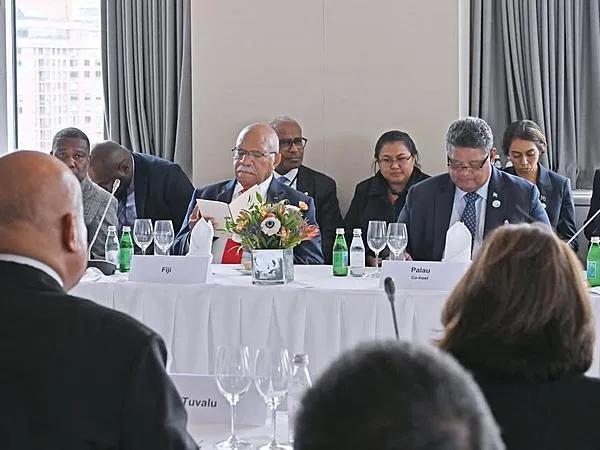
The Republic of Fiji has once again underscored the urgent need for renewed global commitment to climate action and stronger support for Small Island Developing States (SIDS).
At a high-level side event held on the margins of the 80th United Nations General Assembly (UNGA80), Prime Minister Honourable Sitiveni Rabuka stressed that climate change continues to inflict severe and disproportionate impacts on Fiji and other SIDS, forcing nations to divert scarce resources from development priorities to rebuilding and recovery efforts.
The event, co-hosted by Palau and Germany, brought together heads of government and senior policymakers to deliberate on pressing challenges at the nexus of climate change, geopolitics and development finance.
In his address, Rabuka called on G20 nations to show leadership in tackling the climate crisis.
“Together, we continue to uphold principled leadership in advocating for stronger and more urgent climate action. As we look towards COP30 in Belem, Brazil, we must remain steadfast in our commitments dating back to 1992 — to hold major emitters accountable, ensure compliance with the Kyoto Protocol and deliver ambitious Nationally Determined Contributions (NDCs).”
The Prime Minister further highlighted the need for genuine partnerships to address debt vulnerabilities, expand access to climate finance and secure recognition of the unique challenges faced by SIDS within global financial frameworks.
Concluding his remarks, Rabuka reaffirmed Fiji’s commitment to working in solidarity with the global community to advance urgent, just and effective climate action.
The event served as an important platform for leaders to exchange perspectives on international climate policy, including the recent ICJ advisory opinion, preparations for COP30 and the continuing challenges of development and climate financing for SIDS.
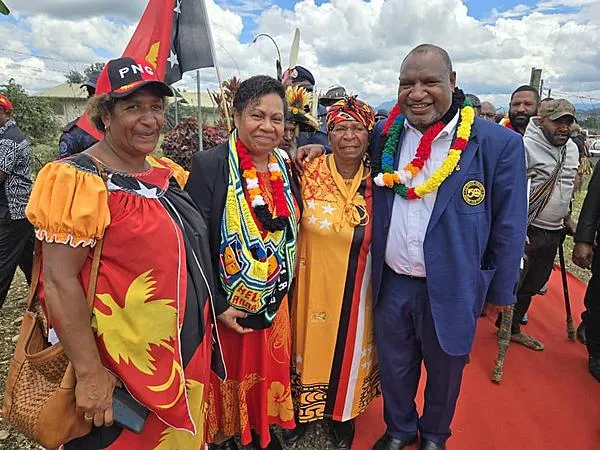
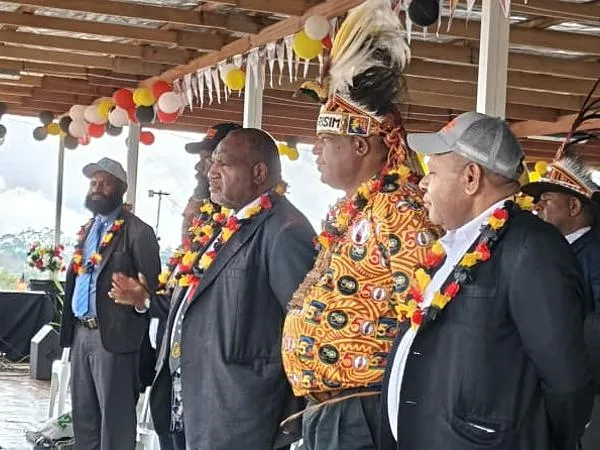
Prime Minister James Marape received a rousing and colourful welcome in his home electorate of Tari-Pori, Hela Province, as he returned from the nation’s historic 50th Independence Anniversary celebrations in Port Moresby on18 September.
Thousands gathered in traditional attire, with singsing groups and community members filling Tari with the spirit of celebration and unity.
The Prime Minister’s arrival followed the highly successful Golden Jubilee celebrations in Port Moresby and across Papua New Guinea, which showcased the nation’s unity, diversity and resilience since independence on 16 September 1975.
Speaking to the jubilant crowd, Prime Minister Marape reflected on the journey of Papua New Guinea over the last five decades and set out his vision for the future — one centred on economic independence, strong faith and quality education.
“Our political independence was delivered by Sir Michael Somare and our founding fathers in 1975,” Prime Minister Marape said. “Now, our generation’s responsibility is to deliver economic independence for Papua New Guinea. By 2030, I aim for our country to reach a K200 billion economy, K300 billion by 2035 and K500 billion by 2045. That is my task as Prime Minister and it is a responsibility I will not shy away from.”
The Prime Minister stressed that while his Government is committed to building a stronger economy and creating opportunities, the true strength of the nation lies in its people. He called on citizens across the country to embrace two vital institutions — the Church and Education.
“Today, I reminded our people in Tari that the future of Papua New Guinea rests on two pillars: God and Education,” Prime Minister Marape said. “I stand here as living proof of what faith and schooling can do. From a barefoot boy with no English in a remote corner of our country in 1975, I have been carried by God’s grace and the power of education to serve as your Prime Minister today. That is why every child must go to Church and go to School.”
The Prime Minister announced that under the Government’s Medium Term Development Plan IV, a Grade 12 Certificate will be institutionalised as the minimum benchmark of educational achievement for young people across the nation. This will ensure that every child is equipped with the knowledge and skills to participate in the modern economy and contribute positively to society.
He further called upon Provincial Governments, particularly Hela, to partner with the National Government in strengthening Churches and Schools. “Churches provide the moral values and strong character that our nation needs, while education equips our children with the skills and empowerment to live meaningful lives and build our country,” he said.
As the crowd cheered, Prime Minister Marape reassured them that the journey beyond 50 years of Independence will be one of shared responsibility. “My job is to work for economic independence, but for the rest of our people, the call is to work hard, save hard, stay united and keep faith in God. Together, we will create a prosperous Papua New Guinea,” he declared.
The atmosphere in Tari was festive, as cultural groups and families expressed pride in their Prime Minister and in the nation’s Golden Jubilee. The event was described by many as a true reflection of the “PNG spirit” — colourful, passionate and united in diversity.
As Papua New Guinea steps into its next fifty years, Prime Minister Marape’s message from Tari was clear: economic independence will be achieved only if every child is grounded in faith and education and every citizen takes ownership of the nation’s destiny.
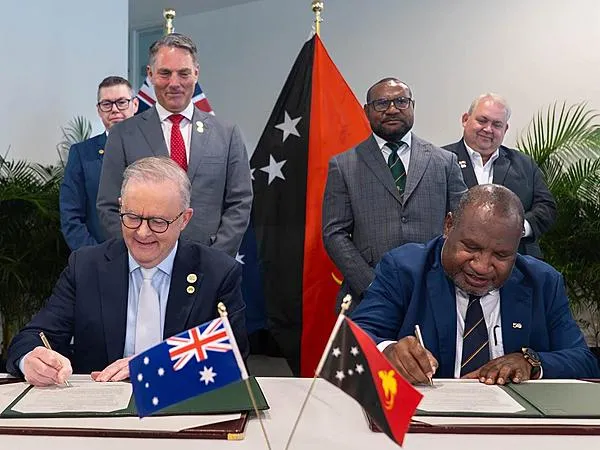
Prime Minister James Marape has announced that Papua New Guinea and Australia have agreed on the text of a Mutual Defence Treaty, elevating the two nations’ security partnership to the highest level in their shared history.
The Treaty — to be known as the Pukpuk Treaty — will be formally signed after Cabinet processes in both Port Moresby and Canberra. It was unveiled following a bilateral meeting between Prime Minister Marape and his Australian counterpart Hon. Anthony Albanese at Melanesian Haus in Waigani, a day after Papua New Guinea celebrated its 50th Independence Anniversary.
A New Chapter in Bilateral Relations
PM Marape reflected on the symbolic timing of the announcement. “Yesterday we reflected on our 50 years of democracy, freedom and sovereignty. And in our reflections we identified our strengths and weaknesses. Government from now on into the first 20 years of our nationhood must work to fix those weak spots.
“One of these weaknesses is a rundown military that is not fit to defend 10 million-plus people in 462,840 square kilometres of land and over 3 million square kilometres of ocean space. We face theft of our fisheries, unaccounted-for vessels and planes encroaching our sovereign spaces, illegal border crossings and the trafficking of guns and drugs," he said.
“And as part of our reflection, we know for certain that our defence is not in good shape. Over time, successive governments have eroded the capacity of our Defence Force. We are now giving back priority to rebuilding the Defence Force at the earliest opportunity, along with rebuilding our Police Force and Correctional Service institutions. These will be restored so that they become the frontline defenders against external security threats, the protectors of our borders and key actors in restoring internal security — ensuring that we become a stronger and more secure people going forward into the future," he added.
Today, Marapa said that PNG take the first step into the next 50 years by cementing a security alliance with its closest neighbour and partner, Australia.
The Prime Minister emphasised that the decision was rooted in history and geography. “From the womb of Australia, we were birthed into our sovereign nationhood in 1975. Australia lowered its flag with dignity and we raised ours in dignity — our friendship remains. Fifty years on, Australia has never abandoned us. This Treaty reaffirms that bond — not as subservient partners but as equals, standing side by side and walking side by side," he said.
The Core Principles of the Pukpuk Treaty
The Pukpuk Treaty will establish a mutual defence alliance, recognising that an armed attack on either Australia or Papua New Guinea would endanger the security of both nations. Its core principles include:
Mutual Defence Commitment — recognising an attack on one would be a threat to both.
Expansion and Modernisation — deepening defence ties, including a recruitment pathway for Papua New Guineans into the Australian Defence Force.
Enhanced Capability and Interoperability — greater integration of defence forces, training and operations.
Protection of Sovereignty — ensuring agreements with third parties do not compromise the Treaty.
Regional Stability — reaffirming respect for the sovereignty and independence of neighbours across the Pacific.
Marape said the Treaty was proposed by Papua New Guinea as part of its Golden Jubilee year, with Australia honouring the request.
“This is our foresight and investment in long-term security. The Treaty is not for 2025 or 2026, but for generations to come. It secures PNG, Australia and our shared region in the Indo-Pacific," he said. "Because it is a Treaty, after Cabinets on both sides have cleared it, it will then go to Parliament for ratification. That is the process. If Parliament ratifies it, then the Treaty is affirmed and it will govern the administration of those relationships going forward.”
Building Defence and Internal Security
Marape acknowledged the current limitations of PNG’s defence capacity, noting the country cannot yet fully defend its vast land and maritime domains.
“God forbid, but if there were to be a war tomorrow — if someone were to invade Papua New Guinea — as your Prime Minister, as your number one defence man to defend this country, I must be frank: I do not yet have the gears to effectively defend our nation. That is why governments establish such strategic partnerships with forces of similar ethics, values and background. This Treaty ensures we work in tandem, hand in hand, without compromising our sovereign interests but always for the mutual benefit of our shared space and region," he said.
He further outlined his vision: “To every child of Papua New Guinea: your Prime Minister’s number one duty is to defend you. That is why I have made the conscious choice to make Australia our security partner of choice. Together, we will build a Defence Force of 7,000 personnel and a Police Force of 10,000 over the next decade, supported by a modern law and justice system.”
PM Marape also drew on international examples, stressing the importance of long-term security arrangements.
“You look at Israel today — Israel has had a longstanding security agreement with the USA for over 70 years. Under such covenants, nations sustain strong relationships for their mutual protection," he said. "In today’s world of many tensions and contests, both internal and external security are big considerations for any responsible government. Such arrangements act as a buffer, ensuring we step up to secure our borders and protect our people from external threats and internal challenges. They give us security.”
He said the Treaty would also address PNG’s pressing internal security challenges, working in tandem with policing, judiciary and community law and order improvement initiatives the Government is putting in place.
An Alliance of Equals
Both leaders stressed that the Alliance is grounded in respect and trust built over five decades.
“Our Alliance will reflect our true commitment to each other and to a region that is peaceful, stable and prosperous,” PM Marape said. “It builds on the kinship of generations of our defence personnel, the sacrifices made in the cause of peace and our enduring commitment to democracy and the defence of our respective sovereignties.”
He also acknowledged Australia’s broad support for PNG’s development, including youth employment, bilateral programmes and the forthcoming inclusion of a PNG team in the National Rugby League in 2028.
“At 50 years of independence, Australia remains head and shoulders above any other partner in supporting our growth. This Treaty is not just about defence; it is about prosperity, stability and preparing our children for the next 50 years," he added.
History in the Making
Prime Minister Albanese was joined in Port Moresby by Deputy Prime Minister Richard Marles and Minister for Defence Industry and Pacific Island Affairs Pat Conroy. PM Marape described their presence as “history in the making,” symbolising Australia’s deep affinity with PNG.
“The fact that Prime Minister Albanese has effectively relocated his Cabinet to Waigani for our 50th speaks volumes. Labour was with us in 1975 and Labour is with us today as we chart a new chapter together,” PM Marape said.
He concluded by calling the Treaty a defining moment for both nations:
“The Pukpuk Treaty is a pact between brothers, neighbours and equals. It ensures that when history tests us again, Papua New Guinea and Australia will stand — side by side — ready to defend our peoples, our sovereignty and our shared future," he said.
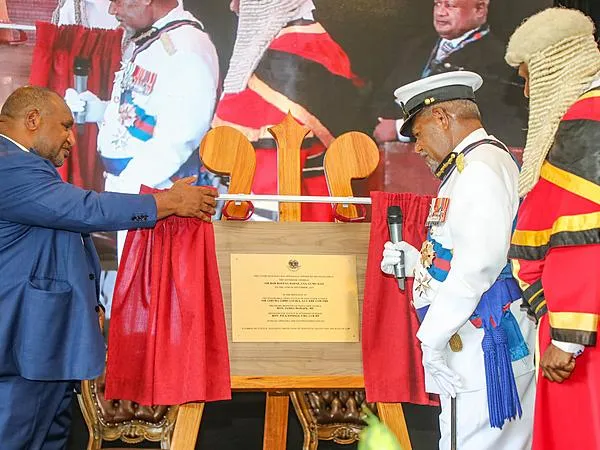
Papua New Guinea Prime Minister James Marape, alongside Governor-General Bob Dadae and Chief Justice Gibbs Salika, officially opened the new National and Supreme Court Complex at Waigani on 10 September, describing the K653 million project as a national investment in democracy and institutional stability.
Positioning the development as a cornerstone for the country’s governance and business environment, Prime Minister Marape said the new court complex represents “a national monument to justice and democracy” as PNG marks 50 years of independence.
“This building is an investment in the very core of our democracy and justice. It is a monument in our nation’s 50th year to the rule of law and the protection of our court system so that it remains independent, functional, and vital to keeping our country united,” Prime Minister Marape said.
The complex, regarded as one of the most modern judicial facilities in the southern hemisphere, was first initiated in 2016 under former Chief Justice Salamo Injia and former Prime Minister Peter O’Neill. Since 2019, the Marape Government has provided more than K400 million to complete the project. Mr Marape stressed that the funding came entirely from Papua New Guinea’s own budget.
“For the first time, we have delivered a facility of this standard, fully financed by our country. It symbolises that our nation must live under one law, with courts resourced to deliver justice free of influence or intimidation,” he said.
A Milestone for the Judiciary
Chief Justice Salika, in his keynote remarks, expressed deep humility and pride in welcoming dignitaries to what he called “one of the most important milestones in the life of our nation’s justice system.”
He paid tribute to past leaders, including prime ministers and chief justices who supported the vision of a modern judicial facility, and honoured the widows and families of PNG’s pioneering justices for their enduring contributions.
Construction of the complex began in 2017, and Chief Justice Salika emphasised that it was “funded fully, fully and completely by the people of Papua New Guinea.”
The facility features 15 modern courtrooms, advanced digital infrastructure, e-justice systems, and dedicated spaces for the National Judicial Staff Services.
“This building is not funded by local agencies or big partners. This is money from Papua New Guinea, our own money, our own people,” he said, highlighting its national significance.
The Chief Justice commended the professionalism of contractors China Railway Construction Engineering (PNG) Ltd, Peddle Thorp Australia, and local firms, who delivered the project despite supply shortages, funding pressures, and the COVID-19 pandemic. He also acknowledged engineers, artisans, and public servants whose efforts made the vision a reality.
Economic and Commercial Significance
For the business community, Marape underscored the economic importance of judicial independence. He noted that case backlogs, once around 5,000, have been reduced to 2,000, with reforms underway to modernise case management and strengthen the three-tier higher court system.
“Our economy has grown, our population has expanded, and the complexity of cases has increased. This investment ensures that disputes—whether commercial, civil, or constitutional—are resolved in a timely, impartial manner. The stability of our judiciary is the stability of our nation, and that is critical for business confidence,” he said.
Salika added that the complex symbolises PNG’s confidence in its institutions and reflects unity.
“Justice is not the privilege of a few people. It is a right of all. That is why there is no gate, no fence at the front of this community, because we know the importance of open access to justice,” he said.
He also paid special tribute to judges past and present, recalling his own 35 years on the bench and honouring colleagues who passed away during the construction period. He acknowledged the foresight of his predecessor, Sir Salamo Injia, who initiated the vision for the project.
Salika said the building should inspire future generations. “Let this complex be a heart of justice for generations to come. The rule of law is not just an idea; it is seen in reality. May this institution inspire us all to build a society that is more just, fairer, and more united,” he said.
The opening ceremony was attended by distinguished guests, including the Chief Justice of the Federal Court of Australia, regional judicial counterparts, members of the diplomatic corps, and representatives of the business community.
Prime Minister Marape cut the ribbon to mark the official opening and pledged that the court’s doors would always remain open to every Papua New Guinean and those doing business in the country.
“May this door never close to any Papua New Guinean seeking justice. This building is a symbol of who we are and what we aspire to be—a nation bound by fairness, equality, and democracy,” PM Marape added.
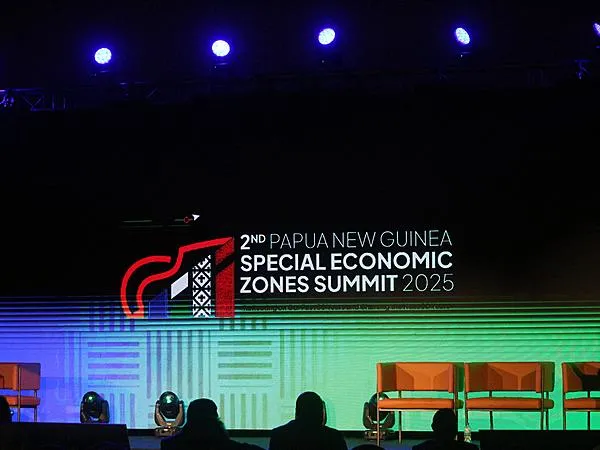
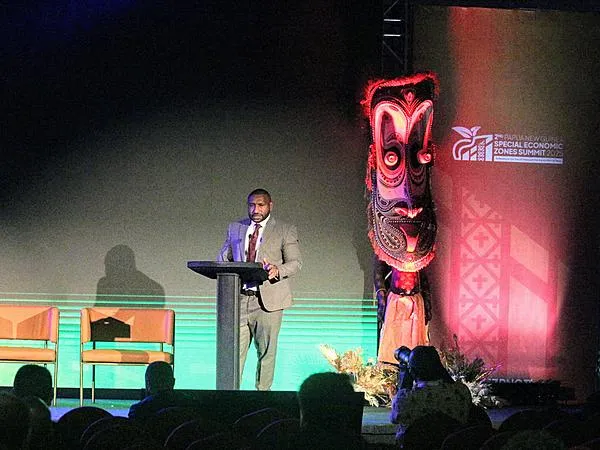
Papua New Guinea has concluded its Second Special Economic Zone (SEZ) Summit, hailed as the country’s largest international investment gathering to date, drawing over 450 delegates, including more than 100 foreign investors from Asia and the Middle East. The three-day summit, held from 1–3 September at APEC Haus in Port Moresby, has been described by organisers and officials as a turning point in positioning PNG as a competitive global investment hub.
Rebranding PNG’s Investment Image
The SEZ Summit provided a platform to rebrand PNG’s investment image. Speaking ahead of the event, Dr Lawrence Sause, Managing Director of the Special Economic Zone Authority, said the summit was designed to counter negative perceptions about PNG and demonstrate the country’s ability to attract credible global capital.
“For a long time, PNG’s reputation, due to bad press, has been that this is a place where investment will not take off. But PNG is still a great place for investment, despite all the doom and gloom,” Dr Sause emphasised.
He revealed that four SEZ projects have already been licensed, valued at K7.4 billion, including Parker Hill, the Pacific Lime and Cement Project, Sea Park, and the Central Industrial Park. These projects, he said, represent investor confidence in PNG’s future.
Record Foreign Investor Participation
Minister for International Trade and Investment Hon. Richard Maru, host of the summit, confirmed that investor participation far exceeded expectations.
“For the first time, we are getting 30 investors from China, 11 from the United Arab Emirates, and 13 from India. We also have participants from Malaysia, Indonesia, Japan, Thailand, and other countries. This is an investment seminar like no other,” Maru said.
The summit featured 50 business booths for networking and matchmaking between foreign investors and local businesses, with the government targeting USD 20 billion (approximately K70 billion) in new investments across agriculture, fisheries, forestry, mining, manufacturing, energy, transport, hospitality, and retail.
One example Maru highlighted was a planned retail complex in Port Moresby that would be “three times the size of Vision City,” underscoring the scale of projects under discussion.
UAE Signals Deeper Engagement
A notable highlight was the presence of a high-level delegation from the United Arab Emirates (UAE), which announced its intention to strengthen ties with PNG. The UAE has proposed three major agreements before the end of the year:
An Investment Promotion and Protection Agreement
An Air Service Agreement
A Comprehensive Economic Partnership Agreement
Maru also confirmed that PNG is preparing to establish a diplomatic mission in Abu Dhabi by the end of 2025, with the UAE seeking to become PNG’s first major new bilateral partner following its 50th Independence Anniversary.
Private Sector-Led Success
Remarkably, the summit was hosted without direct government financing, relying instead on K5.5 million in sponsorships from 25 private and state-linked entities, with only four government agencies contributing. Both Dr Sause and Minister Maru praised the private sector’s role, describing the event as a milestone for public-private collaboration.
“This summit is about building partnerships and attracting capital. Without investment, PNG cannot create jobs, build industries, or sustain its growing population,” Maru said.
PNG is offering competitive incentives, including 10-year tax holidays and duty-free importation of materials, modelled on successful SEZ frameworks in countries such as the Philippines, which operates 420 zones generating USD 68 billion annually.
Minister Maru said he is convinced SEZs will eventually outpace the mining and petroleum sectors in job creation and export earnings. “The potential of SEZs is unlimited. We have the raw resources. Our future as a country is going to be anchored on SEZs,” he declared.
Closing Reflections: From Talk to Action
In his closing speech, Minister Maru reflected on PNG’s economic journey since independence and the urgency of reform.
“Our economy is now valued at US$32 billion, while nations like Singapore and the UAE—once behind us—are now at US$500 billion. We must change the way we do business if we are to provide for our people and future generations,” he said.
He acknowledged delays in government processes, citing stalled agreements with the UAE, and challenged public servants to move with urgency to secure investor confidence.
Maru reaffirmed that the first four licensed SEZs will deliver K8 billion in investments and over 10,000 new jobs. Seven more applications, valued at an additional K20 billion, are already under Cabinet review.
“This is a game-changer for our country. SEZs will grow more jobs than the mining and petroleum sector. Our challenge is to move beyond talk and take decisive action,” Maru urged.
As PNG enters its 50th year of independence, the SEZ Summit has set an ambitious tone: to drive industrialisation, job creation, and economic diversification through a competitive SEZ framework. With investor enthusiasm high and private sector support evident, the government now faces the challenge of turning commitments into tangible projects.
“The talk fest must end today, and the actions must start tomorrow,” Maru concluded. “Together, we will build the new PNG economy.”
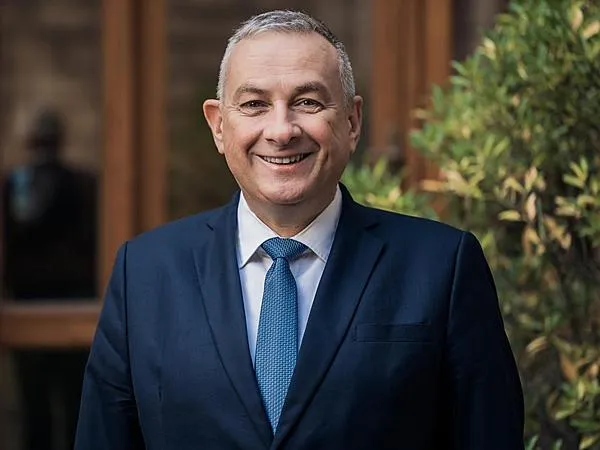
The European Union is advancing its Global Gateway strategy in Papua New Guinea (PNG), with European Commissioner for International Partnerships Jozef Síkela arriving in Port Moresby on 11 September to strengthen investment ties and development cooperation. His two-day visit concluded on 12 September with the signing of a PGK 125 million budget support programme aimed at enhancing governance, climate resilience, and infrastructure development.
Commissioner Síkela’s visit underscores the EU’s longstanding partnership with PNG, a relationship that stretches back to 1977.
The Global Gateway initiative is the EU’s flagship investment framework, designed to bridge global infrastructure and development gaps. By mobilising up to €300 billion in public and private investments between 2021 and 2027, the strategy seeks to boost clean energy, transport connectivity, digital infrastructure, and social sectors such as health, education, and research.
Commissioner Síkela’s visit to PNG follows his participation in the first EU-Pacific Business Forum in Fiji, where he announced nearly €300 million in new investments across the Pacific region, including PNG. In Port Moresby, he held high-level discussions with the PNG Government to accelerate investment opportunities under Global Gateway, particularly in transport and climate-resilient infrastructure.
Discussions built on ongoing cooperation in the water sector and the Rabaul port rehabilitation, two projects supported by the European Investment Bank during a recent mission to PNG. Their implementation is expected to allow PNG to leverage European expertise and finance to modernise infrastructure, enhance connectivity, and drive sustainable economic growth.
As part of the visit, Commissioner Síkela and PNG’s Minister for National Planning, Ano Pala, signed a €25.6 million (PGK 125 million) budget support programme focused on state-building and resilience. The funding aims to strengthen governance systems, promote sustainable forest management, address climate challenges, expand access to clean water, and improve justice delivery.
In addition, the Commissioner announced the disbursement of a final €1 million tranche under an existing governance programme, further underlining the EU’s role as a long-term development partner. Since 1977, EU-PNG cooperation has supported forestry, climate adaptation, biodiversity protection, and water and sanitation services, alongside governance and trade initiatives.
Commissioner Síkela said: “I am honoured to visit Papua New Guinea to celebrate the country’s 50th independence anniversary. The cooperation between PNG and the European Union has been an important part of these past decades. I believe that the newly signed budget support to enhance forest conservation, climate change responses, water, and governance in PNG will allow us to make our partnership even stronger under the EU’s Global Gateway investment strategy.
“Together we can create tangible benefits for local communities by boosting sustainable economic growth and strengthening their capacity to tackle climate challenges,” he added.
Beyond development aid, the EU-PNG partnership carries significant trade implications. PNG was one of the first signatories of the interim Economic Partnership Agreement, giving its exporters duty-free and quota-free access to the EU market for key products such as fisheries and agricultural goods.
Strengthening infrastructure and governance under Global Gateway is expected to further reinforce PNG’s competitiveness in global trade.
Concluding his two-day visit, Commissioner Síkela described Papua New Guinea as a “strategic partner for the European Union”, reaffirming that the partnership is anchored in trade, development, climate resilience, sustainable growth, and good governance. His bilateral meetings with Prime Minister Hon. James Marape, Foreign Minister Hon. Justin Tkatchenko, National Planning Minister Hon. Ano Pala, Treasurer Hon. Ian Ling-Stuckey, and Justice Minister & Attorney-General Hon. Pila Niningi highlighted the EU’s enduring role in advancing shared priorities under the Global Gateway strategy.
The EU remains a critical development and investment ally for PNG, offering a combination of financial support, market access, and technical expertise. With new Global Gateway-linked projects on the horizon, PNG is positioned to secure stronger infrastructure foundations and improved access to European markets, aligning with its long-term growth and diversification goals.
Papua New Guinea’s Minister for Mining Rainbo Paita has urged investors to embrace the country’s Special Economic Zone (SEZ) initiative, stressing the need for competitiveness, strong incentives, and practical reforms to attract long-term investment.
Speaking during the Second Special Economic Zone Summit at APEC Haus, Minister Paita commended the Minister for International Trade and Investment Richard Maru and his team for organising what he described as a “very successful three-day conference” from August 31 to September 3, which brought together local participants and international investors.
Paita highlighted the logistical challenges of hosting such a forum but praised the Ministry for Trade and Investment, the SEZ Authority, and supporting agencies for their support and execution of the summit.
“It takes time, resources, and planning to bring together investors from across the world. I commend Minister Maru, the Secretary, the Chairman, and the CEO of SEZ for their leadership,” he said.
Early SEZ Legislative Push
Reflecting on his own role in the early stages of the SEZ agenda, Paita revealed that he contributed personally to the drafting of the initial version of the SEZ Authority Act during his early years in Parliament.
“We did not have a lawyer at the time, so I took ideas and wrote them myself. I brought the submission to Cabinet without a policy framework, but it was passed because members believed it was important,” he said.
He acknowledged that both he and Minister Maru had faced scepticism over the country’s readiness to manage SEZs due to gaps in infrastructure, technology, and experience. However, he said determination was key: “Business is like a wheelbarrow. Nothing moves until you start pushing. Minister Maru has been pushing this initiative forward.”
Paita stressed that PNG must focus on competitive incentives rather than relying on cultural or emotional appeals to attract investment.
“The world has gone past the stage of isolation. Seventy to eighty percent of global manufacturing is done in China. If we want SEZs to succeed, we must be practical,” he stated.
He argued that investors would only commit if PNG could offer cost advantages and streamlined processes.
“We need to provide the cheapest energy, reliable water, competitive port services, and incentives that are better than what others are offering. Companies will only invest if they see profits and long-term growth,” Paita said.
Call for Strong Reforms
The minister emphasised the need to cut bureaucratic red tape and create an investor-friendly environment within SEZs. He called for one-stop-shop services, fast-tracked visa and work permit approvals, simplified registration, and strong guarantees for investors.
“Without special incentives, no one will invest. We must ensure SEZs are truly special. Why would anyone choose the districts in PNG or SEZ unless we make them competitive? Incentives and concessions must be clear, and bureaucracy stripped away so investors feel safe,” he added.
Minister Paita also appealed to the broader vision of development, urging investors to see PNG as a place where they could make a mark, not just profits. He contrasted established SEZs in Dubai or the Philippines, already crowded with investors, with the opportunity to pioneer new industries in PNG.
“If you go to Dubai, you will be one of many. But if you come to PNG, you will be creating something new—changing lives, making money, and building a story of your own,” Paita told delegates.
Strong Cabinet Support
Paita reaffirmed his commitment to the SEZ policy, assuring Minister Maru of his full backing in Cabinet and beyond.
“I support you in driving this initiative because SEZs are the only way we can attract serious foreign direct investment into PNG. The challenges are real, but the opportunities are greater,” he said.
He further encouraged investors present at the summit to take bold steps into PNG.
“We may not have the full infrastructure like others, but we have the vision, the people, and the commitment. This is the time to invest in Papua New Guinea.”
Papua New Guinea’s 50th Independence Anniversary saw an unprecedented gathering of regional and international leaders, underscoring the country’s growing diplomatic and economic significance on the global stage.
Prime Minister James Marape hosted bilateral and multilateral partners, dignitaries, investors and business leaders across a week of events in Port Moresby, describing their participation as “a testimony that Papua New Guinea does not stand alone, but as part of a strong family of nations.”
Global dignitaries join PNG’s Golden Jubilee
Among the distinguished guests were the Duke of Edinburgh, Prince Edward; Australian Prime Minister Anthony Albanese and Deputy Prime Minister Richard Marles; Indonesian Vice President Gibran Rakabuming Raka; New Zealand Deputy Prime Minister David Seymour; the prime ministers of Niue, Tuvalu, Cook Islands and Solomon Islands; United States Deputy Secretary of State Christopher Landau; Chinese Special Envoy Huang Runqiu; Japanese Foreign Minister Takuma Miyaji; French Representative Veronique Roger-Lacan; and Asian Development Bank President Masato Kanda.
The scale of participation, described as the largest gathering of leaders in PNG outside of a formal summit, highlighted the strategic value placed on the country’s political stability, natural resources and regional role in the Pacific.
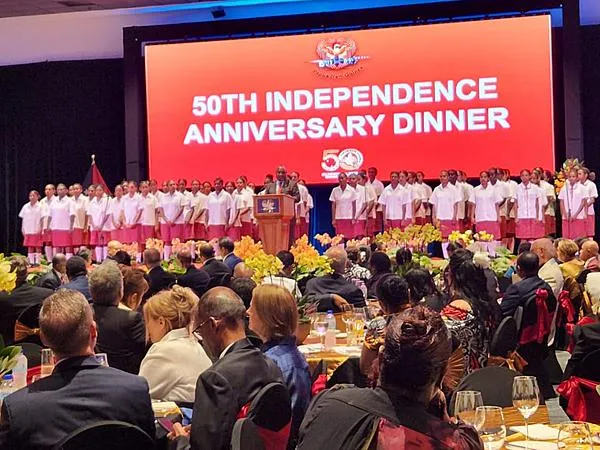
Speaking at the Independence Dinner at APEC Haus on 15 September, Marape expressed gratitude to bilateral and multilateral partners for supporting PNG since independence in 1975. He emphasised that despite doubts at the country’s founding, PNG has sustained 50 years of democracy, with 17 governments formed through parliamentary process, not conflict.
“Fifty years on, we have survived under one democracy, one national anthem, one pledge and one Constitution,” he said, crediting partners, churches, investors and communities for contributing to PNG’s growth.
Marape also appealed for ongoing support, reminding leaders of the challenges and opportunities ahead.
“Do not give up on Papua New Guinea. We ask that you continue to assist us build a country that is truly prosperous; that preserves the sanctity of our God-given land … Your help to PNG is a help to Planet Earth,” he said, noting PNG’s vast biodiversity and role as a global carbon sink.
Back-to-back bilateral meetings cement cooperation
Between 14 and 17 September, Marape held intensive rounds of bilateral discussions with global leaders, strengthening economic and strategic partnerships.
India reaffirmed support for PNG’s electoral systems, broadcasting, energy transition, small business development and pharmaceuticals.
China delivered a personal letter from President Xi Jinping, confirming commitments in trade, climate change, sustainable forestry and environmental conservation.
United States signed a framework for strategic cooperation covering defence, maritime security, law enforcement, critical minerals, trade and investment, and digital infrastructure.
Japan reaffirmed trade and technology ties through a congratulatory message from its prime minister.
Indonesia advanced cross-border cooperation, finalised arrangements for bus and coach travel, and discussed visa-on-arrival for ordinary passport holders.
France pledged support in forestry, environmental management and climate risk mitigation.
These agreements underscored PNG’s position as an increasingly attractive partner for investment and cooperation in areas ranging from energy transition to digital infrastructure.
Messages of goodwill from world leaders
PNG also received congratulatory messages from around the world. His Majesty King Charles III delivered a four-minute speech in Tok Pisin via video, recalling his role in PNG’s independence in 1975 and praising the nation’s resilience, diversity and development over five decades. UN Secretary-General Antonio Guterres, Israeli President Isaac Herzog and other global leaders also conveyed goodwill messages.
Pacific Islands Forum leaders, who had just concluded their 54th Leaders’ Meeting in Solomon Islands, joined PNG’s celebrations, further underlining regional solidarity.
For businesses and investors, PNG’s Golden Jubilee celebrated national resilience and also served as a platform for deepening economic partnerships. The strong presence of global leaders, combined with reaffirmed commitments in trade, climate resilience, technology and infrastructure, positioned PNG as a vital player in the Pacific and an emerging market of interest.
Marape assured partners that PNG would continue to safeguard democracy and its natural wealth while pursuing prosperity.
"Your presence in our country at this milestone gives significance to our journey, and your continued partnership will help shape our next 50 years,” he said.
Prime Minister of the Cook Islands Mark Brown met with Papua New Guinea’s Prime Minister James Marape on the margins of PNG’s 50th Independence celebrations on 16 September, reaffirming the strong friendship between the two nations.
Prime Minister Brown congratulated Marape and the people of Papua New Guinea on their golden jubilee, recognising PNG’s achievements in nation-building, economic growth and regional leadership.
“Our two countries are bound by more than 30 years of diplomatic relations, but also by the legacy of Cook Islands missionaries who first came to villages such as Hanuabada in the 1870s,” Brown said. “That spiritual and cultural connection continues to live on today, and it gives our modern partnership special meaning as we chart the next 50 years together.”
Marape thanked Brown for accepting the invitation to celebrate the milestone. “We in Papua New Guinea don’t easily forget – we treasure our relationships, and just like we remember the Cook Islands missionaries who came here, we will also remember your visit here today,” he said.
During the meeting, the leaders discussed opportunities to deepen cooperation, including advancing a high-level memorandum of understanding first proposed by Papua New Guinea’s High Commissioner to the Cook Islands last year. Other areas of collaboration highlighted were education, sport, health, tourism and cultural exchange. A Sister City relationship between Rarotonga and Central Province was also discussed following earlier talks with Governor Hon. Rufina Peter.
Brown acknowledged PNG’s growing regional leadership, congratulating Marape on the country’s confirmed entry into the National Rugby League in 2028 and automatic qualification for the 2026 Rugby League World Cup.
The Cook Islands delegation has taken part in a number of commemorative events for PNG’s 50th anniversary, including a combined church service where the Motu Koitabu sang hymns inspired by Imene Tuki, a tree planting ceremony at Independence Park and fellowship with the people of Hanuabada.
“From faith to sport, from government to community, our partnership is strong and enduring,” Brown said. “We look forward to continuing to walk alongside Papua New Guinea as brothers and sisters of the Pacific.”
Papua New Guinea’s Minister for Commerce and Industry, Win Bakri Daki, announced two major policies during the Department of Commerce and Industry’s Independence celebration on 1 September. The event, part of the ministry’s month-long programme marking PNG’s 50th Independence anniversary from 1 to 30 September, provided a platform for the minister to outline plans for economic growth and national empowerment.
The first policy is a Reserve Activities (RAL) initiative aimed at ensuring business opportunities suited to Papua New Guineans are reserved for them. While stressing the importance of foreign investment, he said it must be managed in a way that prioritises national interests. The second policy focuses on establishing national standards for infrastructure, including buildings, roads and car parks, to ensure safety and proper planning.
Daki outlined his commitment to empowering local communities and driving economic growth through decisive action and policy implementation. His speech emphasised gratitude, acknowledged the contributions of past leaders and set a clear direction for the future of commerce and industry.
A key focus of his address was the importance of tangible outcomes over rhetoric. He challenged public servants to be dedicated and effective, urging them to deliver results that bring visible benefits to citizens. The recently launched “Working Content Policy” was highlighted as a milestone achievement, providing a framework to promote downstream processing and manufacturing, which he described as key drivers in the government’s vision for a more self-reliant economy.
In addition to policy initiatives, Daki announced a historic move to support public servants through land ownership. He revealed that 320 land titles were being issued to staff within the Department of Commerce and its related agencies, framing it as both recognition of their service and a step towards long-term security.
Throughout his address, the minister expressed gratitude to current leaders, departmental staff and predecessors who contributed to shaping the sector. He pledged to build upon their legacy while steering new initiatives that strengthen national pride and economic growth.
Daki’s message was ultimately one of action, urging all stakeholders to work together in transforming policies into practical outcomes that safeguard opportunities for Papua New Guineans and lay the foundation for national development.
Prime Minister James Marape has recently inaugurated the Tabubil–Telefomin Highway, the first road to ever reach Telefomin District, long regarded as one of the country’s most isolated areas.
The highway, built under the Connect PNG programme and funded through the Ok Tedi Mining Ltd. (OTML) Tax Credit Scheme, was opened to scenes of celebration as thousands gathered to witness what many described as a dream come true.
In his address, Marape said the road represented more than physical infrastructure as Papua New Guinea prepares to mark 50 years of independence.
“This road is not only gravel and bitumen. It is the road to schools, hospitals, markets, electricity, internet, and business. It is about making sure that no child, no village, no district, and no province is left behind as we move into the next fifty years,” he told the cheering crowd.
He said the struggle for independence had been driven by hopes of a better future for ordinary Papua New Guineans, and that Telefomin’s long wait for road access symbolised that dream becoming reality.
Marape explained that the highway formed part of the government’s ambition to connect the entire nation by road by 2040. He urged locals to seize new opportunities in guesthouses, service stations, agriculture, and tourism, while announcing a rural credit policy to begin in 2026 to help families register land and access loans.
“We want our rural people to borrow money, build decent houses, put solar on their roofs, and start businesses. You should not have to leave your villages and become beggars in towns,” he said.
The Prime Minister commended Western Governor Taboi Awi Yoto and West Sepik Governor Tony Wouwou for their leadership, urging other leaders to prioritise projects that “change people’s lives.” He also made a heartfelt appeal to young people to avoid alcohol and drugs, reminding them the new opportunities being created were for their benefit.
“Telefomin has always been close to my heart. Each time I have come here, I have seen your struggles. Today, we open this road to tell you that you are not forgotten. Even the last places in Papua New Guinea matter to this government,” Mr. Marape said.
He added that the road would unlock prospects in agriculture, forestry, and tourism, while strengthening national unity. Concluding his speech, he called the Tabubil–Telefomin Highway a “road of hope.”
“This is not just a road. It is a message to our people that government will reach you, no matter how far you live. It is a promise that Papua New Guinea’s future will include every one of its citizens,” he said, before offering a prayer for the people and the nation.
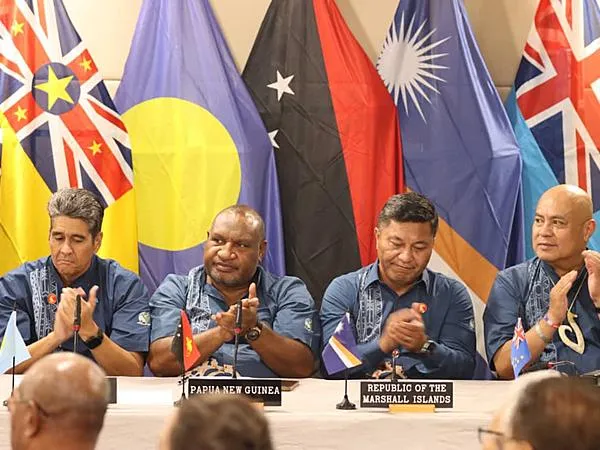
Papua New Guinea Prime Minister James Marape, MP, has called for stronger civil society engagement to ensure the Pacific’s regional architecture delivers stability, good governance and sustainable economic growth.
In his intervention statement at the 54th Pacific Islands Forum (PIF) Leaders’ Dialogue with Civil Society on 9 September in Honiara, Solomon Islands — delivered by Fisheries Minister Jelta Wong — Prime Minister Marape emphasised that the 2050 Strategy for the Blue Pacific Continent provides a roadmap for prosperity but depends on effective institutions and inclusive partnerships to succeed.
He stressed that the current review of the Pacific’s regional systems is not just an “institutional exercise” but a necessary step to make them resilient, agile and responsive to the region’s economic and social needs.
“A strategy is only as effective as the institutions and mechanisms we have to implement it,” Marape stated.
For the business community, he highlighted that a stronger regional framework would underpin investor confidence by supporting stability, strengthening governance and promoting sustainable resource management. These conditions, he noted, are important for creating an enabling environment for growth and private-sector participation.
Marape placed civil society at the centre of this effort, describing organisations as “the eyes and ears on the ground” that connect high-level policies with community realities. Their role in identifying gaps in governance, resource use and service delivery, he said, is critical to building accountability and efficiency.
He urged that civil society must go beyond feedback to become co-creators of the Pacific’s future. Deeper engagement in policy design and project implementation, Marape explained, would ensure development efforts remain culturally sensitive, community-driven and reflective of Pacific aspirations.
By working hand in hand with governments, Marape argued, civil society can help transform the Pacific’s regional architecture into a “strong and effective engine for a secure, prosperous and thriving Blue Pacific” — a foundation that businesses, investors and communities alike can rely on.
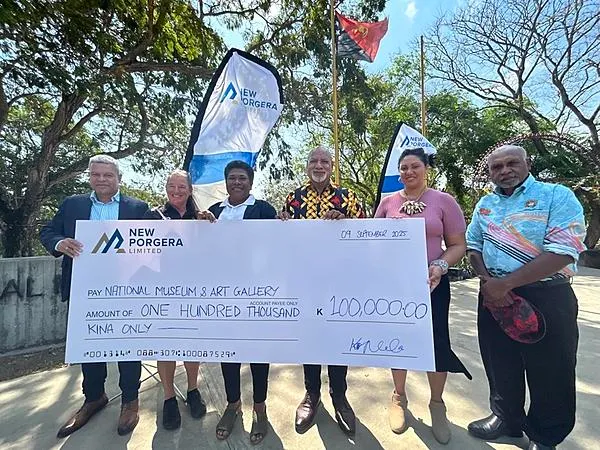
In celebration of Papua New Guinea’s 50th Independence Anniversary, New Porgera Ltd. (NPL) has pledged K100,000 (about USD 23,500–24,000) to the National Museum and Art Gallery (NMAG).
The contribution was formally handed over by NPL Country Manager Karo Maha after discussions with NMAG executives and Friends of the Museum (FoM), a non-profit group dedicated to supporting the enhancement of the museum’s Port Moresby facilities.
“As the operator of the Porgera mine, NPL values and pays tribute to the diverse cultures, traditions and history that shape our country,” Maha said. “We are proud to play a role in strengthening the National Museum’s mission of safeguarding and showcasing Papua New Guinea’s rich heritage.
“During this milestone independence celebration, when our culture is being highlighted across the nation, we felt it was the right time to give back by helping an institution that embodies our identity,” Mah said, adding that they are hopeful that the donation will meaningfully contribute to ongoing preservation efforts for the benefit of generations to come.
“Our cultural identity binds Papua New Guinea together and sets us apart globally,” he said.
The company also take this chance to extend warmest wishes for a happy Independence Anniversary, adding that 50 years of self-rule stands as a powerful testament to the endurance and spirit of the people.
“Congratulations, PNG, on reaching this golden milestone,” he said.
Accepting the donation, NMAG Board of Trustees President Terence Moka said the support will directly strengthen the museum’s conservation, education, exhibitions and cultural programming.
“This comes at a time when the eyes of the world are on Papua New Guinea as we mark our 50 years of independence,” he said.
FoM Chair Sylvia Pascoe noted that the contribution establishes NPL as the very first Champion Sponsor under the group’s “Legacy Legends” initiative.
“This distinction is reserved for those whose support lays the foundation for lasting cultural sustainability,” Pascoe said. “As our inaugural Champion, New Porgera will be permanently acknowledged across our major public campaigns, fundraising galas, publications and digital platforms.”
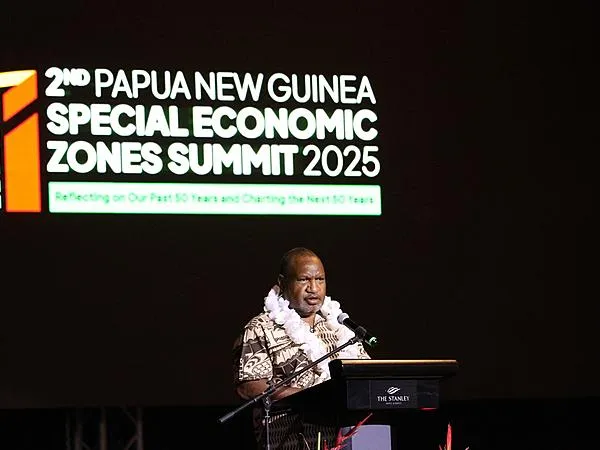
Prime Minister James Marape has reaffirmed Papua New Guinea’s commitment to investor confidence and economic diversification, telling international and local business leaders that Special Economic Zones (SEZs) will drive growth while upholding the rule of law and ensuring strong returns.
Speaking at the Second PNG SEZ Summit in Port Moresby, Marape highlighted his government’s vision to open opportunities beyond mining and petroleum. He arrived late to the event after making a symbolic road trip from remote Kotidanga in Gulf Province to Alotau and on to the capital — a journey meant to showcase new road links connecting Port Moresby to the wider country.
“For the first time in 50 years, road connections are reaching Port Moresby and linking it to Alotau and Lae,” he said. “These connections symbolise our bigger vision — connecting our economy, opening opportunities, and ensuring development reaches every part of our country.”
Growth and diversification
Since taking office in 2019, Marape said the economy has grown from K79 billion to K132 billion, with a target of K200 billion by 2035. He stressed that for the first time in decades, non-resource sectors have been growing steadily, citing SEZs as the backbone of the government’s push to encourage manufacturing, value-adding, and import replacement.
“To date, four SEZs have been licensed — Paga Hill, Pacific Cement Lime, Sea Park and Caution Bay — with more in the pipeline,” he said. “Investors who help us replace imports and save foreign exchange will always be our priority.”
Investor confidence and stability
Marape reassured investors that PNG honours agreements and maintains a safe, democratic environment for business. “We may not like every agreement signed in the past, but we do not tear up contracts. We honour them until they expire. That is the confidence investors need,” he said.
He pointed to long-term investors such as ExxonMobil and Steamships and noted that property investors in Port Moresby recover their investments in just 12 years — far quicker than in Sydney or Beijing. Judicial reforms, including an independent appeals court and international arbitration mechanisms, are also underway to further protect investors.
Green edge and future vision
Calling PNG one of the world’s largest carbon-negative countries, Marape said its 100 million metric tonnes of carbon sink capacity gives investors a “green label” advantage in environmentally conscious markets.
He outlined an ambitious vision to grow the economy to K500 billion by 2045, supported by new petroleum and mineral projects alongside agriculture, fisheries, and forestry.
“You will make more profit here than anywhere else if you work with local contractors and partners,” Marape told delegates. “Our free market economy, independent judiciary, and growing Asian markets make Papua New Guinea one of the most attractive destinations for investment.”
Marape also emphasised PNG’s growing international role, noting its participation in APEC, the Pacific Islands Forum, and its progress toward ASEAN membership. “With the United Nations Secretary-General arriving on Tuesday, it shows Papua New Guinea is not just open for business — it is a nation that matters globally,” he said.
Follow on LinkedIn:
PNG Business News
Be the "First" to get our exclusive Digital Magazine & Weekly Newsletter.