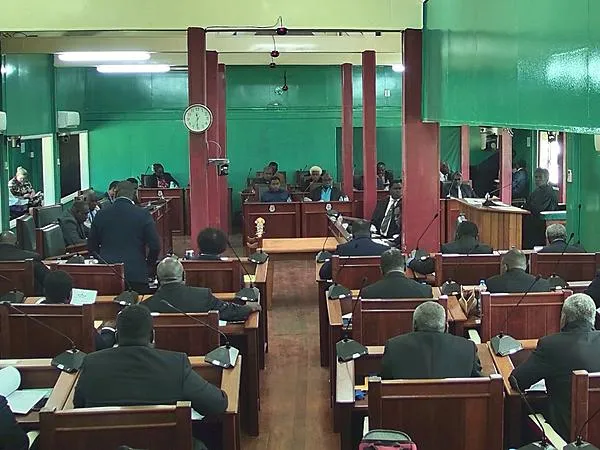
The Bougainville House of Representatives has passed the 2026 ABG Budget, a K844,090,000 (US$198.4 million) financial plan aimed at strengthening Bougainville’s institutional readiness, economic transformation, and service delivery as the region progresses towards political independence.
The Budget was tabled by the ABG Minister for Treasury and Finance, Hon. Albert Punghau, in Parliament this week and was passed unanimously by the House yesterday in its final sitting for the year.
Minister Punghau outlined that the 2026 Budget comprises K520.36 million (US$122.3 million) in National Government grants, K46.74 million (US$11.0 million) in internal revenue, and K276.9 million (US$65.1 million) in re-appropriated development funds.
Of the total K844 million (US$198.4 million) budget, the recurrent component totals K240.98 million (US$56.7 million), representing 28.55 per cent, while the development component totals K603.11 million (US$141.7 million), or 71.45 per cent.
“This structure protects core recurrent services, yet it places the main delivery burden on the development programme, so results in 2026 will be judged by completed projects and visible service improvements rather than approvals on paper,” Minister Punghau said.
Minister Punghau explained that the Budget retains the 2024 structure, which separates funding streams under the two Organic Laws – the Organic Law on Peace-Building in Bougainville 2002 and the Organic Law on Provincial and Local-Level Governments 1995.
“This clarifies which funds sit under ABG control and which funds sit under national administration, and it sets out the conditions, approval processes, and reporting and acquittal requirements for each stream,” he said.
“This strengthens compliance, improves transparency, reduces fiscal risk, and supports clear debate in this Honourable House.”
Minister Punghau said the 2026 ABG Budget is set around three fiscal priorities:
To protect frontline services and core functions, including health, education, and police services;
To deliver constituency-led development through equal K1 million (US$235,000) allocations under the Constituency Independence-Readiness Program (CIRP) guidelines endorsed by BEC, with strict controls and verified outputs; and
To strengthen fiscal self-reliance by expanding internal revenue, tightening expenditure control, and investing in infrastructure and other economic enablers to reduce reliance on delayed grant releases.
Recurrent Budget 2026
The National Government recurrent grants component for 2026 totals K205,364,500 (US$48.3 million), representing 24.33 per cent of total ABG expenditure. The allocations are distributed as follows:
Health and Education – K112,165,400 (US$26.4 million), inclusive of a new allocation of K2,039,000 (US$479,000) for the Buka General Hospital Health Function Grant
Governance and Administration – K62,784,000 (US$14.7 million)
Law and Justice – K11,292,600 (US$2.7 million)
Legislative Government – K10,637,800 (US$2.5 million)
Judicial Government – K2,629,700 (US$618,000)
Economic – K3,720,000 (US$873,000)
Social – K1,190,000 (US$280,000)
Infrastructure – K945,000 (US$222,000)
“These grants keep government operating by funding salaries, essential operating costs, and routine service delivery, and they also sustain the Legislature and the Judiciary through direct recurrent appropriations,” Minister Punghau clarified.
Development Budget 2026
The total development budget for 2026 totals K603.11 million (US$141.7 million) and includes Restoration Development Grant (RDG) arrears, RDG annual allocations, the Public Investment Program (PIP), and donor funding.
An allocation of K100 million (US$23.5 million) has been set aside for RDG arrears, directed primarily towards capital recovery and productivity through infrastructure development, economic programmes, and government and institutional strengthening.
Sectoral allocations under this component include:
Legislature – K1,600,000 (US$376,000)
Government, Public Service and Independence – K26,850,000 (US$6.3 million)
Law and Justice – K3,700,000 (US$870,000)
Health and Education – K10,800,000 (US$2.5 million)
Research, Science, Technology and Innovation – K1,500,000 (US$353,000)
Infrastructure – K34,250,000 (US$8.0 million)
Economic – K18,600,000 (US$4.4 million)
Social – K2,700,000 (US$635,000)
Under the RDG annual appropriation of K50 million (US$11.8 million), funding is distributed on a regional basis to support balanced development across Bougainville.
“This allocation is distributed across Bougainville to support balanced regional development, with the Northern Region receiving K15.4 million (US$3.6 million); the Southern Region receiving K15 million (US$3.5 million); the Central Region receiving K12 million (US$2.8 million); districts receiving K4.1 million (US$964,000); Nissan and Atolls receiving K2 million (US$470,000); and headquarters receiving K1.5 million (US$353,000) to support coordination and delivery across the regions,” Minister Punghau explained.
The passage of the 2026 ABG Budget concluded the Bougainville House of Representatives’ sitting for 2025 and sets the fiscal framework for delivery, accountability, and development priorities in the year ahead.
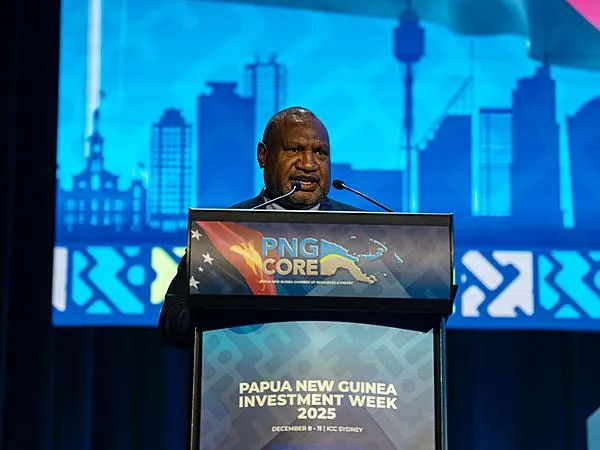
Prime Minister James Marape has called on investors to support Papua New Guinea’s transformation from a resource-dependent economy to a manufacturing and green-energy powerhouse, outlining a 20-year vision during a live Q&A session with Australian journalist Tracey Spicer at PNG Investment Week.
Looking ahead to 2040 and 2050, Marape emphasised the need for ordinary Papua New Guineans to feel the benefits of investment through the growth of local businesses and the export of finished, high-value products.
“Incubate more local business and migrate to a manufacturing-based economy,” he said. “Local produce must translate to finished products for export.”
Marape told investors that the government is working to shift PNG from “resource potential to a predictable pipeline of financeable, climate-resilient projects” capable of attracting global capital at scale.
He also confirmed PNG’s ambition to define itself internationally as a clean, green energy economy, powered by the country’s hydro resources and supported by its forests and oceans.
“Australia is moving towards closing their fossil fuel facilities. We’re looking at supplying Australia with energy harvested from PNG,” Marape said. “Our negative carbon footprint is an advantage we offer investors.”
He highlighted the potential for carbon-offset markets to become a significant revenue source, urging companies with substantial emissions to partner with PNG in conservation efforts. “Conservation dollars could become a major new revenue stream,” he said, noting that such partnerships would help keep forests standing.
To create a safer environment for investors, Marape pledged full-scale reform and expansion of police and justice institutions, aiming to strengthen governance and ensure security across the nation.
Marape projected that Papua New Guinea could surpass K200 billion GDP by 2030 and K500 billion by 2045, stressing that prosperity must be broadly shared. He said the nation must become “a prosperous, healthy and wealthy country — a blessing to investors and citizens alike.”
As the session closed, Spicer congratulated the Prime Minister on PNG’s milestones. Marape’s final message was one of partnership and shared opportunity: “There will be enough on the table for everyone who chooses to live and operate in PNG.”
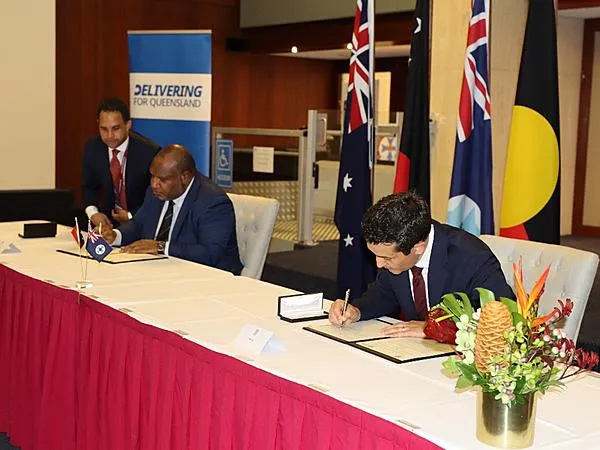
Prime Minister James Marape and Queensland Premier David Crisafulli on 10 December signed the Papua New Guinea–Queensland Memorandum of Understanding (MoU) 2025–2030 at the Queensland Parliament, establishing a framework to deepen Government-to-Government, Business-to-Business, and People-to-People ties.
The MoU provides a multi-tiered structure for collaboration across economic development, education, cultural exchange, labour mobility, security, and critical services. It also forms a key part of Papua New Guinea’s 50th Independence Anniversary celebrations.
Marape described the signing as “an important milestone in our shared history and our shared future,” highlighting the enduring connections between PNG and Queensland.
“Queensland is Papua New Guinea’s closest neighbour and one of our closest friends. Geography and history have placed us side by side, and this MoU ensures that our partnership continues to grow in depth, respect, and practical cooperation,” he said.
He also praised Queensland’s recognition of PNG’s 50th Independence Anniversary, including parliamentary acknowledgements and the lighting of Brisbane’s iconic bridges in PNG’s colours. “We could not have asked for a more meaningful tribute. Queensland honoured PNG in a way that reflects our deep friendship, and today’s MoU strengthens that bond for the next 50 years,” Marape added.
A Framework for Strategic Cooperation
The MoU establishes practical collaboration across three tiers — Government-to-Government, Business-to-Business, and People-to-People — and covers priority sectors including health, education, emergency services, agriculture, tourism, SME development, law and justice, disaster resilience, and cultural and sporting exchange.
Workforce and Skills Mobility
The MoU also addresses Queensland’s growing demand for skilled personnel in nursing, aged care, teaching, policing, emergency services, and technical sectors. Marape emphasised PNG’s readiness to contribute, noting: “PNG has a young, energetic population. If we train them to Australian standards, we can help Queensland fill its workforce shortages while strengthening our own capabilities when our citizens return home with new skills.”
Security, Defence, and Emergency Cooperation
Both leaders agreed to expand joint security initiatives and defence training, recognising that regional security is interlinked. “Security in the Torres Strait region and northern Australia is linked directly to security in PNG. What happens in PNG affects Queensland, and what happens in Queensland affects PNG. It is only natural that we strengthen our cooperation,” Marape said.
Economic and Clean Energy Partnership
The MoU also supports business-to-business collaboration, SME development, mining and resources opportunities, infrastructure partnerships, and clean energy development. Marape highlighted PNG’s potential to assist Queensland’s transition to renewable energy. “PNG is blessed with vast hydropower and renewable energy potential. Queensland’s transition presents an opportunity for us to work together for economic and environmental benefit,” he said.
Connectivity and Aviation Links
The MoU encourages expanded direct flights between PNG and Queensland to strengthen trade, tourism, labour mobility, and service delivery to Torres Strait communities.
Cultural, Educational, and Sporting Exchange
Emphasising people-to-people ties, Marape noted the importance of cultural and sporting links, particularly rugby league. “Rugby league is more than sport for our peoples — it is culture, unity and identity. Queensland’s support as PNG prepares for the NRL PNG Chiefs team is deeply appreciated,” he said.
A Shared Future
Marape reflected on historic connections between PNG and Queensland, including the 25,000 Papua New Guineans living in Queensland. “Our people lived across this region long before modern borders existed. Our children will share this region long after us. This MoU ensures that their future is shaped by cooperation, not distance,” he said.
The PNG–Queensland MoU takes effect immediately and will remain active for five years, overseen by a Joint Working Group representing both governments.
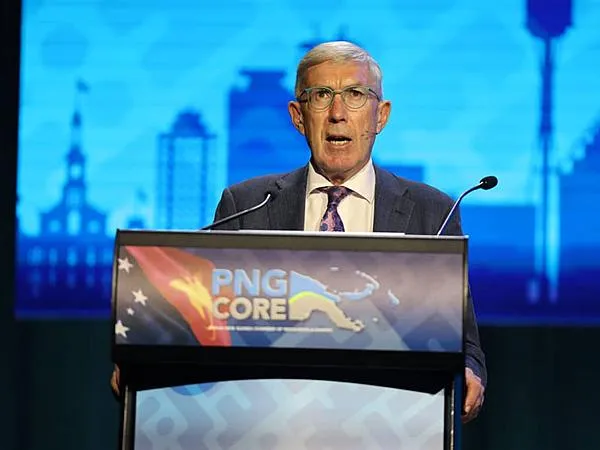
Australia’s enduring commitment to Papua New Guinea’s economic reform has been reaffirmed by Ewen McDonald, Australian High Commissioner to Papua New Guinea and Special Envoy for the Pacific and Regional Affairs. Speaking at PNG Investment Week on 9 December in Sydney, McDonald highlighted what he described as a relationship “joined at the hip,” emphasising Australia’s deep commitment to PNG’s economic progress, stability and long-term development.
McDonald said it was a great honour to join PNG Investment Week, noting that the event demonstrated PNG’s economic promise and the strength of partnerships that underpin stability and growth throughout the Pacific. He also referenced the significance of the opening of the week, marked by the historic appearance of Anthony Albanese and James Marape.
Reaffirming Australia’s long-standing support, McDonald emphasised: “You can count on Australia’s continued presence in PNG to support improved economic progress, security and regional development. Australia’s efforts create lasting benefits for investors, businesses, and communities for future generations.”
He highlighted Australia’s backing of PNG’s IMF-led economic reform programme, stating: “We have provided more than 3.1 billion in budget support to back in the program that Papua New Guinea has embarked on with the International Monetary Fund. The budget deficit has decreased from just over 8 per cent of GDP in 2020, to 1.1 per cent of GDP in the 2026 budget. And there have been major improvements in relation to foreign exchange related challenges.”
Growing Business Confidence and Investment Flow
McDonald noted Australia’s long history of commercial activity in PNG, including the presence of Australian banks since 1910. Along with other major Australian companies, he said these businesses have invested deeply in PNG’s growth and prosperity. Together, they employ an estimated 55,000 people and contribute to skills development across the country.
Investment is accelerating in multiple sectors, with McDonald stating: “Investment is accelerating in key sectors like energy, mining, agriculture, digital services, tourism, and infrastructure. And our bilateral trading relationship continues to grow.”
PNG exports to Australia grew by 56 per cent in value in the last financial year, and he said Australia is ready to help PNG diversify beyond primary commodities.
McDonald also highlighted labour mobility as a major driver of economic opportunity. In the 12 months to October 2025, PNG’s labour mobility numbers grew by 30 per cent—the fastest of any country. Australia is opening new sectors as well, including a pilot programme to recruit PNG early childhood educators.
“There are no caps or country quotas in the PALM scheme,” he added.
Investments in Education and Human Capital
McDonald outlined Australia’s new support for PNG’s education system, saying: “We announced new investments totaling more than AUD150 million in education spanning early childhood through to tertiary education and technical and vocational education and training.”
He said these investments will lay the foundation for the next generation of Papua New Guinean leaders.
He stressed the importance of education for business growth: “For business leaders, this means a growing pipeline of skilled PNG talent and a stable environment for investment which is proof that when we invest in education, we invest in PNG’s future.”
“A healthy population underpins a productive workforce, reduces the burden of preventable disease, and ensures communities can participate fully in economic life. A strong health systems give businesses confidence, knowing that essential services, emergency response capacity and disease surveillance are in place to protect both workers and supply chains,” he added.
Major Infrastructure Projects to Drive Growth
Australia’s infrastructure programme remains the largest in the region, McDonald said. The AIFFP-funded PNG Ports Infrastructure Investment Program is the largest initiative in the AIFFP portfolio, with more than AUD620 million committed to upgrading ports in Kimbe, Oro Bay, Daru, Kavieng and Lae. The Kimbe Port upgrade alone will create about 300 local construction jobs.
On telecommunications, he highlighted critical upcoming investments, noting that Australia is offering three new undersea international cable connections. These are projected to increase internet coverage in PNG by 16 per cent and could add up to PGK3.4 billion to PNG’s GDP by 2028, supporting the country’s ambition of becoming a 200-billion-kina economy by 2030.
The new Pukpuk Mutual Defence Treaty elevates PNG–Australia cooperation to match the trust and strategic weight of the relationship.
On policing, he said: “Major infrastructure projects are underway to house new recruits,” and upgrades at Bomana “will soon allow training for more than 500 recruits each year.”
The Bomana Regional Centre of Excellence is now a flagship for Pacific policing cooperation, hosting training for 11 Pacific nations.
Reflecting on PNG’s 50th independence anniversary, McDonald said the Australian campaign Yumi Stap Wantaim captures a partnership that began long before independence. He recalled Marape’s description of the two nations being “joined at the hip,” and echoed Albanese’s words: “We are mates, we are equals, we are allies.”
“There is no challenge we cannot face. And no opportunity we cannot seize. Side by side and step by step.”
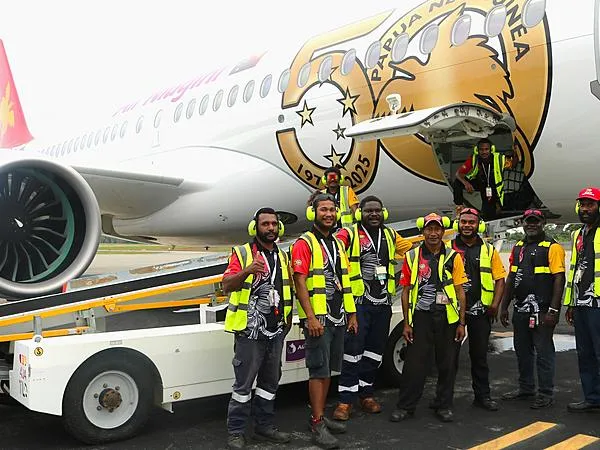
The Asian Development Bank (ADB) and Air Niugini Limited have signed a $35.8 million financing package to modernise Papua New Guinea’s national airline, boosting efficiency and safety standards. The initiative is expected to strengthen both domestic and international connectivity while supporting the country’s social and economic growth.
The package includes a $19 million loan from ADB’s capital resources and a $16.8 million loan administered by ADB through the Leading Asia’s Private Sector Infrastructure Fund 2 (LEAP 2). The funds will be used to purchase six Airbus A220-100 aircraft, replacing older planes with more reliable, fuel-efficient models.
“This project highlights ADB’s commitment to sustainable and inclusive development in PNG,” said Soon Chan Hong, Officer-in-Charge of ADB’s Papua New Guinea Resident Mission. “By supporting Air Niugini’s fleet renewal, we aim to improve the country’s connectivity, boost economic growth, and enhance air travel safety in the Pacific region.”
Air travel is essential in PNG due to the nation’s challenging terrain, which limits land transport options. Air Niugini plays a central role in linking communities both domestically and internationally. The new aircraft are expected to be about 20 percent more fuel-efficient than older models, reducing operational costs and environmental impact.
LEAP 2 is an ADB-managed fund with a $1.5 billion commitment from the Japan International Cooperation Agency. It focuses on sustainable private sector infrastructure projects that reduce carbon emissions, improve energy efficiency, and expand access to health care, education, and communication services in ADB developing member countries.
Founded in 1973, Air Niugini is a wholly state-owned enterprise, operating an extensive domestic network and international routes to Australia, Asia, and the Pacific. The airline supports PNG’s economic and social development through safe, reliable, and efficient service.
ADB, established in 1966 and owned by 69 members, is a multilateral development bank supporting inclusive, resilient, and sustainable growth across Asia and the Pacific. The bank works with partners to tackle complex challenges, develop infrastructure, and promote environmental sustainability.
The Independent State of Papua New Guinea (PNG), RD Tuna Canners Limited, and RD Corporation have reached agreement on the terms of the Project Development Agreement (PDA) for the cannery project within the new Madang Integrated Special Economic Zone (SEZ). The Letter of Agreement was signed on 9 December and witnessed by the Minister for International Trade and Investment Richard Maru at PNG Investment Week in Sydney, Australia.
“The investment is subject to final NEC and RD Board approval. This new cannery will be developed under a joint venture company, 50% owned by the State and 50% by RD, with initial expertise provided by RD to help PNG transition from being a rent collector to being an owner—initially of a cannery and later a full-scale fishing company," Maru said.
Maru said that each party will contribute K80 million to the joint venture, and RD will hold a 10-year management contract. The project is expected to create well over 5,000 direct and indirect jobs in Madang Province.
The Minister thanked all parties for their commitment, patience, and contributions toward finalising the PDA.
“I personally take this opportunity to thank the Marape-Rosso Government for providing the State funding of K80 million for this strategic investment," he said.
The Prime Minister will launch the new joint venture fish canning company early next year, and construction of the cannery will commence immediately after the launch.
"This is a critical project under our PNG Reset economic independence agenda as we move into the next 50 years, during which we can no longer export raw materials, including our fish,” he added.
He added: “This marks the beginning of a deliberate effort by our Government to invest in downstream processing so that we can replace all canned fish imports from other countries. This 300-metric-tonne cannery will serve as the anchor investment for the proposed Madang Integrated Special Economic Zone, with another eight canneries expected to follow. This is a very exciting development, and we look forward to the launch and construction of the cannery in January next year.”
Minister Maru said the Government’s long-term plan is to list Kumul Fisheries Limited on the National Stock Exchange as a public company once it proves profitable.
“The initial shareholders will be the State, through KCH, the Madang Provincial Government, and RD. Our focus is to get the company operational and profitable before opening it to public investment. We want this to become a fully fledged PNG fishing company. If we can own a mine, we can own a fish canning company. We cannot remain rent collectors all our lives,” he said.
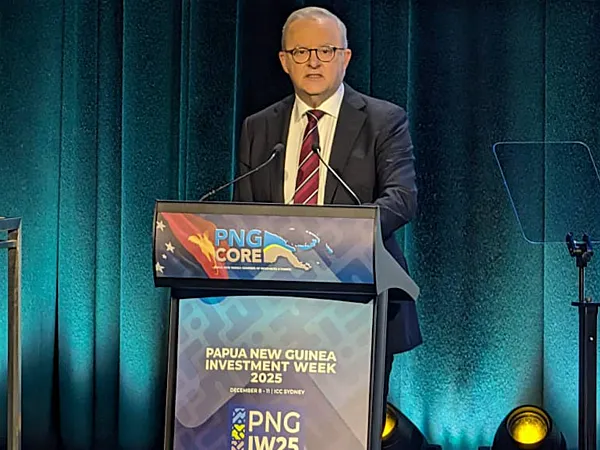
Australia’s Prime Minister, Anthony Albanese, has reaffirmed the strength, trust and long-term vision underpinning the Australia–Papua New Guinea relationship, highlighting deeper economic cooperation, shared prosperity and a historic new security alliance during his address at the PNG Investment Week Leaders’ Summit in Sydney 9 December 2025.
Speaking before leaders from business, government and regional partners, Prime Minister Albanese underscored the unique bond between the two nations, grounded in history, friendship and growing economic ties.
Before his speech, he acknowledged the Traditional Owners of the land on which the summit was held and extended a warm welcome to delegates from PNG, Australia and across the region.
“This forum is about all of us working together to find new pathways for investment and development and maximising the dynamic and growing trade relationships that do so much to benefit the people of both PNG and Australia,” Prime Minister Albanese said.
He reflected on the close personal and national ties linking the two countries. He briefly referenced the many milestones shared with PNG Prime Minister James Marape in recent years—from addressing each other’s parliaments to walking the Kokoda Track together, honouring the Second World War legacy that binds both countries.
He also recalled shared celebrations at PNG’s 50th Independence Anniversary in Port Moresby earlier this year, describing it as a powerful moment to reflect on both nations’ intertwined histories and future ambitions.
“These moments,” Albanese said, “are defined by mutual respect, deep trust, and an appreciation of the history and geography that unite our peoples," he said.
Pukpuk Treaty
A central point of his remarks was the Pukpuk Treaty, the security pact signed between Australia and PNG earlier this year. Albanese described it as Australia’s third-ever alliance, and its first in more than 70 years—an achievement he called “a historic moment”.
The treaty formalises the long-standing defence partnership between the nations.
“We are mates. We are equals,” he said, repeating Prime Minister Marape’s words that the relationship represents “equal partners… working side by side going forward into the future.”
Trade and Investment Drive Shared Prosperity
Albanese highlighted strong two-way trade, which reached $8.1 billion in goods during 2024–2025. He noted growth in PNG’s agricultural exports—particularly vanilla, coffee and cocoa—supported by new biosecurity investments and infrastructure upgrades that are improving market access.
Australia is financing several major infrastructure projects to support PNG’s economic expansion, including:
A 47 km upgrade of the Wau Highway, improving connectivity across Morobe Province
Sealing of the Kokoda Highway, undertaken jointly with PNG
More than $600 million for the upgrading of five key ports, critical for a country of more than 600 islands dependent on maritime trade
He emphasised that all these initiatives aim to strengthen local employment, supply chains and economic resilience within PNG.
“Australia is committed to remaining a proud and reciprocal economic partner of PNG. PNG’s exports to Australia continue to flourish. And while raw materials are an important feature of our trade relationship, they are by no means the whole of it," he said.
New investments to strengthen biosecurity mean PNG’s dynamic agriculture sector can continue to thrive and grow its market access. Exports of vanilla, coffee and cocoa beans to Australia are growing strongly, diversifying our trade relationship and proving that Australian markets are hungry for PNG’s exceptional produce.
“Infrastructure investments are helping local producers take their goods to port and to market by better, safer, more reliable roads,” Prime Minister Albanese added.
Supporting Climate Resilience and Human Development
Recognising climate change as an existential threat to the Pacific, Albanese reaffirmed Australia’s commitment to helping PNG access greater international climate finance. This includes support for infrastructure and agriculture designed to withstand more extreme weather patterns.
He added that Australia is investing both in physical development and in PNG’s greatest asset—its people—through improved health systems, education and skills training, and enhanced energy and communications networks.
“These are the foundations for stronger communities and stronger economies,” he said.
NRL Expansion Creates New Economic Opportunities
A particularly celebrated development is the anticipated entry of the PNG Chiefs into the NRL. Prime Minister Albanese described the move as a cultural milestone that also carries significant economic potential.
The expansion is expected to boost tourism, spur infrastructure development and generate new investment opportunities, including direct flights between Sydney and Port Moresby, which Qantas is set to resume in March 2026.
“It is all part of welcoming a country that has given so much to rugby league into a competition where they so clearly belong,” he said.
Albanese closed by urging leaders to continue building the next chapter of the relationship—one centred on regional stability, strengthened sovereignty, robust trade and sustainable development.
Invoking Prime Minister Marape’s words, he said PNG and Australia are “two houses with one fence”, benefiting from a neighbourhood that is peaceful, stable and prosperous.
“Our shared history guides us, and the opportunities of our shared future lie ahead,” he said.
Prime Minister Anthony Albanese’s speech formed a core highlight of the PNG Investment Week Leaders’ Summit, reaffirming the strategic importance of PNG–Australia cooperation at a time of growing regional and global change.
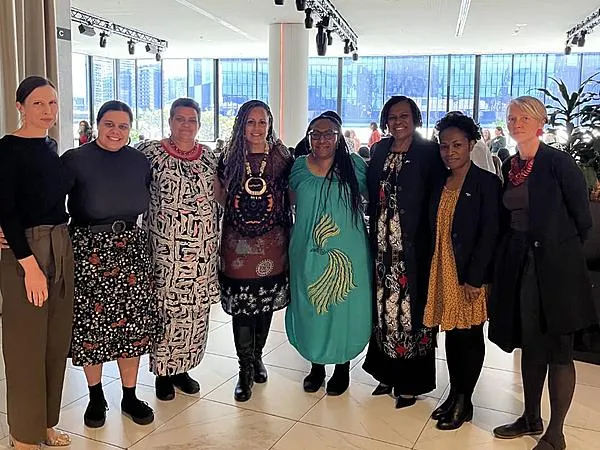
Five women entrepreneurs representing diverse sectors—from social enterprise and traditional crafts to sustainable manufacturing—have travelled from Papua New Guinea to Melbourne to participate in the 2025 World Indigenous Business Forum (WIBF).
The forum also provided an opportunity to forge new connections.
The delegation included Anne-Shirley Korave (Queenpads), Annette Sete (Maku Gifts and Lava Girl), Florence Kamel (Jaukae Bilum Products), Evelyn Mopafi (Apo Meri Social Enterprise), and Eli Webb (PNG Women’s Business Resource Centre).
The Australian Government supported the entrepreneurs to join First Nations Australian business leaders and global delegates in a week-long exchange of ideas, innovation and partnership. The delegation’s presence at WIBF highlights the vibrancy of PNG’s women-led enterprises and the strong ties between Australia’s and Papua New Guinea’s business communities.
Their visit reflects the Australian Government’s commitment to supporting micro, small and medium enterprises (MSMEs), particularly those led by women. By supporting the delegation’s participation—and through other initiatives such as the PNG SME Awards and the EmployAbility programme—Australia is helping entrepreneurs access training, mentoring and market opportunities to grow their businesses and strengthen local economies.
Over the week, the entrepreneurs showcased their products and ideas and gained knowledge and insights that will help strengthen their businesses and contribute to PNG’s thriving Micro, Small and Medium Enterprise (MSME) sector. Their programme included participation in panel discussions, networking events and site visits, including a morning tea hosted by the Australian Government’s Office for First Nations International Engagement.
Delegate Sete, founder of Maku Gifts and Lava Girl, said the forum broadened her understanding of what is possible. “It helped me realise that we can do more in terms of organising our Indigenous businesses in PNG to have a stronger voice in promoting empowerment for PNG Indigenous-owned businesses," She said.
"It has set us up to consider establishing something like the Kinaway Chamber of Commerce in Victoria," Sete added.
Evelyn Mopafi, founder of Apo Meri Social Enterprise, said she took away many new ideas from her participation.
“It provided exposure to new ideas, market trends and sustainable practices that will strengthen Apo Meri’s social and environmental impact. The experience has inspired clear next steps for collaboration, capacity building and the advancement of women-led enterprises in Papua New Guinea.”
The forum also offered a platform for PNG entrepreneurs to connect with First Nations Australian businesses, share cultural and commercial insights, and explore opportunities for collaboration. It reflects Australia’s broader approach to development—one that values locally led solutions, inclusive growth and genuine partnership.
The Ministry of International Trade and Investment will enter into a strategic partnership with the superannuation funds to raise capital for investment in Special Economic Zones and national transformational projects, including the planned acquisition of shares in Ramu Agri Industries.
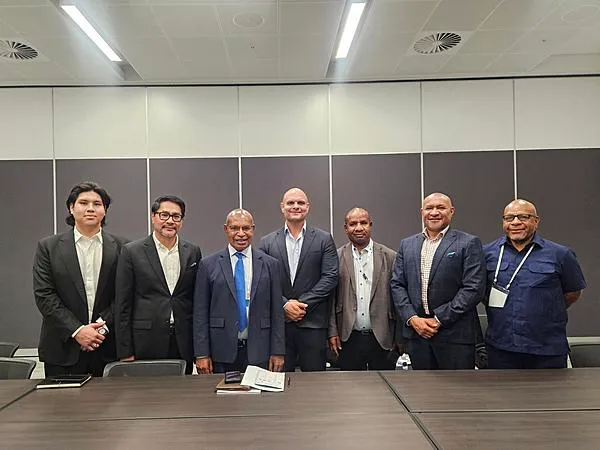
This was discussed in a meeting this morning between the Minister for International Trade and Investment, Richard Maru, and the CEO of Nasfund and Chairman of the Pacific Island Investment Forum (PIIF), Rajeev Sharma, on the margins of PNG Investment Week in Sydney.
“My Ministry will partner the superannuation industry of PNG and the Pacific by entering into a Memorandum of Understanding (MoU) with PIIF. The Marape-Rosso Government do not want only the foreign companies to benefit from tax incentives; we also want our Papua New Guinean companies to invest and when our superfunds invest, they are investing on behalf of thousands of our citizens so it is very important that we sign this MoU in January,” said Minister Maru.
Sharma said the MoU will be drafted and ready for signing in January next year to support the investment drive.
Plans to reform PNG’s capital market were also discussed during the meeting.
“We want to look at how we can provide tax incentives for companies right across the world to list on our stock market so more financial products will be offered on the market for our domestic investors. Our citizens are currently spectators in their own country. They are only getting 1.5 percent interest by investing in the commercial banks when they could be earning 10 to 15 percent in return of investment from investing in a stock market," said Minister Maru.
"We also want to rebrand, rename and list the Pacific Balanced Fund to reflect PNG ownership for massive funding drive in the new year. We will host a Capital Market Summit in PNG next year where we will discuss this and also learn from other countries like India where everybody is involved buying and selling on the stock market,” he added.
The Minister for International Trade and Investment, Richard Maru, has welcomed the decision of Swedish company Epiroc to pursue a potential long-term investment in Papua New Guinea (PNG), with a particular focus on the mining sector, downstream processing, and developing and upskilling PNG’s engineering workforce.
The Minister met with Epiroc’s Business Development Manager, Kent Howlett, and Business Sweden’s Trade Commissioner to Australia, New Zealand and the Pacific Islands, Martin Ekberg, on the margins of PNG Investment Week in Sydney this morning.
“Epiroc provides equipment, tools, and services for the mining, infrastructure, and natural resources industries. They develop and sell a range of products including drill rigs, rock excavation and construction equipment, and underground loaders. They operate globally, serving customers in around 150 countries and operating in 36 countries. We welcome their plan to establish their operations in PNG. Our Government will go all out to support them,” said Minister Maru.
The Minister encouraged Epiroc to consider establishing its operations—including storage, warehousing, and training facilities—at the proposed Lae Port Special Economic Zone in Morobe Province.
“Epiroc is currently supplying and supporting the mining sector in PNG by providing equipment, service, and automation/digital solutions through its Australian operations. They want to move the bulk of their Australian operations to PNG so they can continue to supply and support our major operators including OK Tedi, K92 Mine, Porgera, Harmony and Newmont out of PNG instead of from Australia. This will create employment opportunities for our citizens and skill transfer through partnerships with National Polytechnic Institute of PNG and the PNG University of Technology. I have encouraged them to also consider entering into a Joint Venture with all the mining landowner companies so their operations will also benefit the landowners,” said Minister Maru.
Epiroc will formally submit a letter to the Government of PNG confirming its intention to invest. It was also agreed during the meeting that a high-level dialogue will be held between the Governments of Sweden and PNG to establish a Government-to-Government relationship and discuss investment opportunities for Swedish investors, scholarship opportunities for PNG students—particularly in engineering—and the possibility of a Comprehensive Economic Partnership Agreement between the two countries.
MiBank, PNG's largest microbank, is proud to announce a groundbreaking partnership with Digicel PNG Ltd, PNG’s leading telecommunications, ICT, and mobile financial service provider.
The partnership between MiBank and Digicel Financial Services Limited (DFSL) marks the first-of-its-kind collaboration in PNG, enabling customers to transfer funds instantly between their MiBank accounts and Digicel Cellmoni wallets.
As part of Digicel Cellmoni’s commitment to expanding interoperability and offering customers more convenient options to load funds, MiBank has joined forces with DFSL to deliver a seamless experience. Customers can now move money from their bank account to their CellMoni wallet and vice versa in real time.
The official signing ceremony took place at Digicel headquarters in Port Moresby today, attended by senior executives from both organizations, including Thompson Sakyi, Managing Director of Digicel Financial Services Limited; Christian Reyes, Chief Financial Officer of MiBank; and Steven Nori, Head of IT.
With this partnership: • MiBank customers can transfer funds from their MiBank account to a CellMoni wallet using the USSD short code 678# or the MiBank Mobile App (MiCash App). • Once completed, funds are instantly credited to the customer’s Digicel Cellmoni wallet. • The reverse transfer from a CellMoni wallet to a MiBank account has been available since 2021; this new feature complements the existing service for full two-way interoperability.
Thompson Sakyi, Managing Director of DFSL, stated: “Digicel CellMoni continues to expand its footprint across Papua New Guinea, delivering mobile financial services that offer convenience and security to individuals and businesses. This partnership—the first between a mobile network operator and a regulated financial institution in PNG—marks a major step toward enhancing financial inclusion and revolutionizing fintech services in PNG.”
Christian Reyes, MiBank’s CFO, added: “This collaboration between Digicel and MiBank combines digital technology with customer-focused service delivery mechanisms, drawing from our extensive network experience. It demonstrates both institutions’ deep understanding of PNG’s market needs. Together, we aim to provide more accessible, affordable, and reliable financial services in the future.”
Reyes also noted that the technical integration between both institutions paves the way for a broader range of value-added financial services and digital products soon to hit the market, tailored for the use and benefit of PNG citizens and the growing number of MSMEs seeking access to innovative financial products.
Digicel CellMoni and MiBank express gratitude to the Bank of Papua New Guinea for creating and fostering an enabling environment that supports innovation, drives digital transformation in the financial industry, and promotes financial inclusion across PNG.
PNGX Group and MUFG Pension & Market Services announced that they have reached agreement for PNGX Group to acquire PNG Registries from MUFG Corporate Markets, a division of MUFG Pension & Market Services. The transaction is subject to clearance by the ICCC.
The proposed acquisition represents a significant milestone in the strategic development of the country’s financial infrastructure and capital markets. If cleared, the transaction will see PNG Registries become part of PNGX Group, combining strengths and capabilities to better serve customers and support long-term market growth.
“This is a transformative opportunity for both organizations and for the capital markets as a whole,” said David Lawrence, Chairman of PNGX Group. “If cleared, the integration of PNG Registries into our group will not only enhance our service offering but also help drive innovation and efficiency in financial market operations.”
“PNG Registries has been an integral part of our business and operations since 2007. We would like to thank all of our clients for their partnership and support during this time, and sincerely thank our people, whose dedication and commitment is second to none. This opportunity presents the right time to pass the business into new ownership, and we are confident that PNGX Group will take the business to its next phase of growth,” said Lysa McKenna, CEO of MUFG Corporate Markets.
PNG Registries is a key provider of securities registry services, and the proposed acquisition will strengthen the foundation for capital market modernization.
Part of a Broader Market Development Strategy
The acquisition is aligned with broader national efforts to strengthen the capital market ecosystem. In due course, it is expected to support the end-to-end automation of trading, settlement, and registration processes, enabling a more modern, transparent, and efficient market platform. This development is intended to enhance liquidity and facilitate broader market participation.
Continuity for Customers
Until regulatory clearance is obtained, PNG Registries and PNGX Group will continue to operate as separate businesses. There will be no changes to services or operations in the interim. Customers and partners of both companies have been notified and will be kept informed as the process progresses.
MUFG Pension & Market Services and PNGX Group are committed to a smooth and transparent transition, with a focus on continuity and customer service.
PNGX Group is a diversifying business services company based in Port Moresby.
PNGX Markets Limited (PNGX Markets), a wholly owned subsidiary of PNGX Group, is the operator of Papua New Guinea’s national stock exchange and is responsible for providing an orderly and fair market in relation to securities traded through its facilities, and for acting in the public interest, having regard to the need for investor protection. PNGX Markets is regulated and licensed by the Papua New Guinea Securities Commission. PNGX Markets is the National Numbering Agency for Papua New Guinea.
MUFG Pension & Market Services is a member of MUFG, a global financial group. We are a global, digitally enabled business that empowers a brighter future by connecting millions of people with their assets – safely, securely, and responsibly.
Through our two market-leading businesses, MUFG Retirement Solutions and MUFG Corporate Markets, we partner with a diversified portfolio of global clients to provide robust, efficient, and scalable services, purpose-built solutions, and modern technology platforms that deliver world-class outcomes and experiences.
We help manage regulatory complexity, improve data management, and connect people with their assets through exceptional user experience that leverages the expertise of our people combined with scalable technology, digital connectivity, and data insights.
PNG Registries is a wholly owned subsidiary of MUFG Pension & Market Services and is the leading provider of integrated registry services for companies listed on Papua New Guinea’s national stock exchange.
PNG Registries provides clients with a comprehensive registry offering, which includes shareholder management, stakeholder engagement, dividend and meeting services, as well as specialist offerings such as corporate action services.
Prime Minister James Marape has outlined the Economic Transformation and Implementation Pillars of the PNG Reset@50 Roadmap, describing them as “the engine room of growth, jobs, and national productivity for the next 20 years.”
The roadmap sets a vision for Papua New Guinea’s economic and social development through evidence-based governance, private sector-led growth, land reform, public service efficiency, and strengthened project delivery systems.
Driving Evidence-Based Governance and Digital Identity
Prime Minister Marape stressed that progress requires decisions grounded in data rather than sentiment. “For too long, we have made decisions based on feelings. The Roadmap insists on evidence, cost-benefit analysis, and measurable outcomes,” he said.
The government plans to enforce mandatory evidence-based Cabinet submissions, strengthen the Parliamentary Budget Office, establish independent extractive and infrastructure advisory councils, and provide public access to national statistics.
A key focus is completing a universal National Identification (NID) system integrated across government, enabling inclusive finance, social protection, and secure identification.
Enshrining Private Sector–Led, Government-Facilitated Growth
The Prime Minister reiterated that private sector-led growth must remain the foundation of PNG’s economy. “Government must facilitate, not suffocate, Private Sector growth. The Roadmap reinforces this principle as official Policy,” PM Marape said.
Planned measures include a national policy confirming the private sector as the engine of growth, major regulatory reforms to reduce red tape, accelerated resource projects with strong environmental safeguards, state-owned enterprise reform, modernisation of agriculture, and regional visa access for PNG citizens.
Land Reforms to Unlock Housing and Agriculture
Land reform is another key pillar, focusing on freeing up land for development through voluntary and respectful customary land registration systems.
“Land is our greatest blessing. But unused land is not productive land. With voluntary best-practice land reforms, we will unlock land for Housing, Agriculture, and SMEs while respecting customary ownership,” PM Marape said.
Reforming the Public Service
The roadmap identifies unproductive bureaucracy, duplication, and payroll abuses as major obstacles. PM Marape revealed that the government has already begun payroll cleansing, uncovering more than 4,000 unattached employees.
“This is just the beginning. A whole-of-Government functional audit will remove duplication, improve integrity, and link pay to performance,” he said.
Building a Strong Delivery System
To ensure reforms are implemented effectively, the government plans to establish a centralised Project Management Unit and fully activate the National Monitoring and Coordination Authority.
“Monitoring and delivery have been the greatest weaknesses of successive Governments. It ends now. Every Kina spent must hit the development target,” PM Marape said.
A Nation Positioned for Growth
PM Marape concluded by emphasising PNG’s long-term economic ambitions. The nation is targeting a K200 billion economy by 2029–2030 and aims to become “a prosperous, wise, and wealthy society by 2050.”
“Reset@50 is our chance to reboot governance, transform services, expand the economy, and build the richest Black Christian nation on earth,” he said.
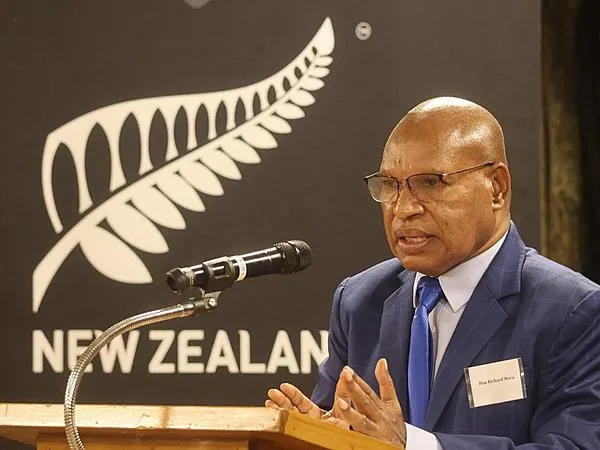
There is significant potential for Papua New Guinea (PNG) and New Zealand (NZ) to deepen their trade and investment relationship, Minister for International Trade and Investment Richard Maru said, addressing a delegation from the New Zealand-PNG Business Council.
“In terms of trade, PNG’s exports to NZ are valued at US$15 million, while NZ’s exports of goods to PNG stand at US$150 million. We have no issue with this trade imbalance favoring NZ on a ratio of 1:10. However, we need NZ’s support through aid for trade to train our people to meet their strict biosecurity requirements, so we can export more into the NZ market,” Maru said.
The New Zealand-PNG Business Council is currently in PNG to explore potential partnerships, secure new business opportunities, and strengthen economic ties between the two nations.
He expressed concern over the lack of New Zealand investment in PNG over the past 50 years.
“Despite our government’s efforts to attract NZ investments, traction has been minimal. There are numerous opportunities for NZ investors, including in the chicken and dairy industries, which would support our agenda for downstream processing, boosting exports, and replacing imports," Maru said.
"New Zealand has been a long-standing friend, and we are committed to supporting their investments in PNG. Meanwhile, Australia remains our largest investor with over AU$27 billion and is very proactive. It is up to NZ whether they want to remain a marginal player in our economy or become a major one," the minister said.
Minister Maru highlighted that the present moment is ideal for investment in PNG, citing the upcoming Papua LNG project, the Wafi-Golpu mine, and approximately ten new mining and petroleum projects in the pipeline.
“We are poised to become one of the most dynamic economies in the region, with 5 percent economic growth expected next year, which could be sustained over the next 20 to 30 years. Despite our challenges, PNG is a prime investment destination, as demonstrated by world-leading companies such as Newmont, Santos, and ExxonMobil investing here,” he added.
On trade agreements, Minister Maru emphasized that PNG has opted not to join regional deals like PACER Plus. Instead, the country seeks a Comprehensive Economic Partnership Agreement (CEPA) with New Zealand.
“The offer is on the table. This is the path our countries must take if we are serious about our future relationship. We already have a CEPA with the European Union, and in the coming months, we aim to sign our second CEPA with the United Arab Emirates, which NZ recently concluded a CEPA with. We have also proposed CEPAs with Japan and South Korea, and I plan to discuss one with India during my visit next week. Our goal is to partner with countries that will support economic growth and prosperity, as outlined in our new Foreign Policy,” he said.
Minister Maru also highlighted gaps in connectivity and sporting exchanges between PNG and NZ.
“How can business-to-business relationships grow when there are no weekly flights between our countries? This is an issue both governments must address,” he noted.
He concluded with a call for stronger engagement. “Our trade and investment relationship has not grown substantially over the past 50 years. I strongly urge the NZ Government to enter into CEPA negotiations with PNG next year if they are serious about deepening economic ties. It is time to take stock of our relationship, and I look forward to seeing NZ adopt a more aggressive approach to investing in PNG and finalizing a CEPA as soon as possible.”
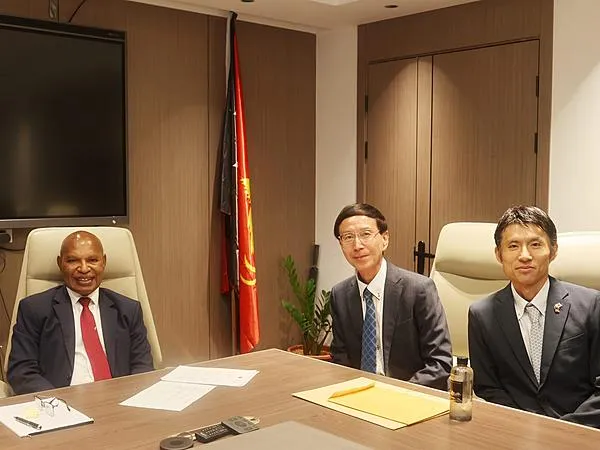
Japan is the first country in 50 years to receive visa-on-arrival privileges for all its passport holders entering Papua New Guinea (PNG), according to Minister for International Trade and Investment Richard Maru.
“This is a very historic and one of the best decisions by the Marape-Rosso Government in terms of its bilateral, security, and trade and investment relationship with Japan. It reflects the Government’s commitment to our partnership and friendship with Japan over the last 50 years, and importantly our considered opinion that Japanese travellers do not possess a security threat to PNG,” Maru said.
During a meeting with Maru, Japanese Ambassador to PNG Hisanobu Mochizuki said the announcement had generated “joy and excitement” across Japan’s tourism and business sectors. He added that Japan is eager for Air Niugini to resume direct flights between Port Moresby and Narita to enable more Japanese visitors from a range of sectors to travel to PNG.
As part of broader cooperation efforts, Ambassador Mochizuki confirmed that work has begun on the scoping and design of the new Tokua International Airport in East New Britain (ENB) Province. He said the facility’s design “will not be any less than the Tomodachi International Airport in Morobe Province.”
“It will be something that PNG will be very proud of and another flagship project for Japan in PNG that will further enhance the relationship between our two countries,” he said.
Maru emphasized that ENB holds deep historical significance for the Japanese people due to its cemeteries, caves, war relics and memorials from World War II. He credited Prime Minister James Marape for securing Japan’s development aid commitment to Tokua International Airport during high-level talks.
“I want to commend Prime Minister James Marape for pushing for development aid funding from Japan for the new Tokua International Airport at the Prime Minister-to-Prime Minister level while myself and the Minister for Foreign Affairs and our colleagues did our part at the Ministerial level. This project will be a major transformational project for ENB Province and the New Guinea Islands Region and I cannot wait to see this project start,” said Minister Maru.
Looking ahead, Maru invited Ambassador Mochizuki to encourage greater Japanese private-sector investment across PNG’s resource and non-resource industries. He also reiterated PNG’s position on international tax arrangements.
“PNG as a Sovereign State has made the decision not to enter into any more Double Tax Treaties with any country. I want to appeal to Japan and other countries to respect this decision. However, there are many other ways that Japanese companies could benefit and that is through incentives like 10-year tax holidays and duty-free market access for their tradeable goods. We are happy to support them and we will go all out to help Japanese investors to invest in tourism, agriculture, manufacturing, forestry, fisheries and other non-resource sectors as well as the resource sector in PNG,” said Minister Maru.
Maru added that the two nations’ longstanding ties provide a strong foundation for deeper cooperation.
“All in all, PNG has enjoyed the very good 50-year friendship with Japan who is our second biggest aid donor and we want to elevate that relationship and anchor it on trade and investment by entering into a Comprehensive Economic Partnership Agreement with Japan as soon as practical. I plan to visit the new Japanese Trade Minister to continue this discussion in March next year as soon as the new Government settle into office,” he said.
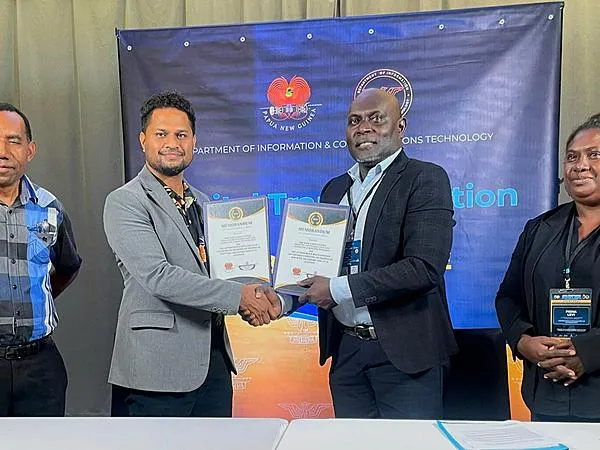
The Autonomous Bougainville Government (ABG) and the Government of Papua New Guinea’s Department of Information and Communication Technology (DICT) on 27 November formally signed a Memorandum of Understanding (MoU) to advance digital development in Bougainville.
The signing took place at the conclusion of the four-day Digital Transformation Summit hosted by the National DICT at the Stanley Hotel in Port Moresby this week.
Speaking at the ceremony, ABG Chief Secretary Kearnneth Nanei said the MoU formalises a collaborative framework between the two governments to advance ICT development in Bougainville. He highlighted the critical role of ICT in the region’s governance, development transition, and long-term readiness.
“As Bougainville progresses its political aspirations, the ABG is also confronted with a rapidly evolving policy environment where the need for real-time data, integrated digital systems and efficient public service delivery is central to effective governance,” he said. “Within this context, ICT is no longer a support function but a critical enabler across all sectors.”
The MoU outlines several joint areas of cooperation, including:
A comprehensive audit of Bougainville’s ICT sector and development of the Bougainville ICT Sector Development Programme
Technical assistance to develop ICT and broadcasting policies and legislation
Training, capacity building, and opportunities for joint research
Cooperation in facilitating international ICT-related agreements and investment opportunities
Nanei reaffirmed Bougainville’s determination to build a modern and resilient digital ecosystem.
“This MoU provides us with a platform to work together with the National Department of ICT and partners to share expertise, and align our efforts to ensure that Bougainville builds a modern, secure, and resilient ICT ecosystem,” he said.
Secretary for the National Department of ICT, Steven Matainaho, emphasised DICT’s responsibility under the Bougainville Peace Agreement, noting that the MoU reflects the department’s continued commitment to supporting Bougainville’s development.
“For us at Department of ICT we have been called on under the Peace Agreement and all the consequential meetings that have taken place to work towards empowering ABG and implementing all efforts and so this MOU is part of our commitment to that,” he said.
He added that DICT’s support will align closely with ABG’s priorities and uphold principles of mutual cooperation. “We will be guided by ABG and our counterpart department as to how we can provide that support… consistent with the MOU we have the objectives highlighted in here which relate to promoting equality and reciprocity… capacity building where we can and not just capacity building but sharing resources.”
Secretary Matainaho also stressed that innovation would be central to the collaboration and reiterated DICT’s commitment to translating the partnership into actionable outcomes.
“At the department we are big on fostering innovation… We want to reaffirm our support to this partnership and our support to Bougainville and this MOU marks that milestone for us to translate some of our areas of cooperation into workplanning and implementation," he said.
Nanei commended both teams for their efforts in finalising the MoU and reaffirmed the ABG’s commitment to strengthening Bougainville’s digital foundations, improving public service delivery, and enhancing efficiency. He added that the MoU positions Bougainville to build a future-ready ICT framework by drawing on lessons learned from PNG’s wider digital reform experience.
Follow on LinkedIn:
PNG Business News
Be the "First" to get our exclusive Digital Magazine & Weekly Newsletter.