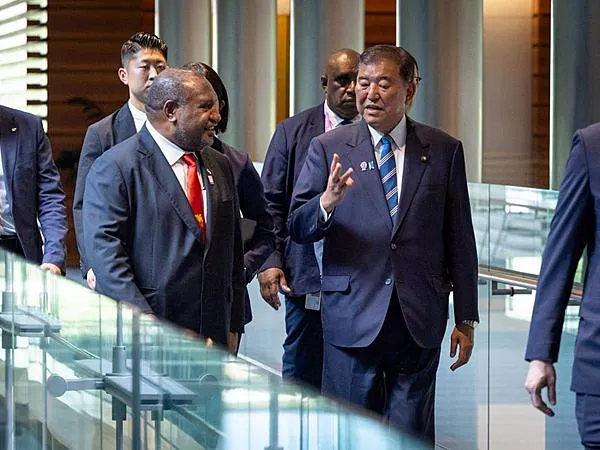
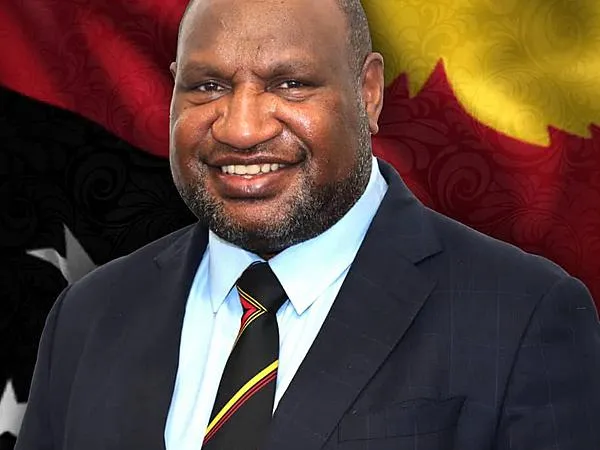
Prime Minister Hon. James Marape has successfully concluded a high-level visit to Japan, marking a milestone in Papua New Guinea–Japan relations as both nations celebrate 50 years of diplomatic partnership.
The visit, which included key engagements in Osaka and Tokyo, showcased deepening cooperation in trade, investment, fisheries, energy, education and infrastructure — and reaffirmed Japan’s role as one of PNG’s most enduring and strategic partners.
On 22 July, Prime Minister Marape became the first Head of Government to formally congratulate the re-elected Prime Minister of Japan, His Excellency Shigeru Ishiba. The two leaders met at the Japanese Prime Minister’s office in Tokyo for a highly productive bilateral dialogue centred on strengthening ties in trade, investment and development.
The leaders discussed the strategic direction of PNG–Japan relations for the next 50 years, reaffirming mutual respect and shared aspirations for peace, prosperity and regional cooperation. The meeting built on the legacy of five decades of partnership with both Prime Ministers pledging to elevate economic and technical cooperation to a new level.
“It was a great honour to be the first national leader to personally congratulate Prime Minister Ishiba on his re-election. Japan is one of Papua New Guinea’s most trusted and enduring partners — a friend who stood with us before and after Independence,” said Prime Minister Marape.
Prime Minister Marape expressed PNG’s appreciation for Japan’s ongoing support, including:
During the bilateral meeting, Prime Minister Marape proposed the establishment of a new framework to reset and elevate the economic relationship between the two countries. He formally suggested a Comprehensive Economic Partnership Agreement (CEPA) to govern trade and investment between PNG and Japan over the next 50 years.
“We proposed a fresh framework — a CEPA — that would institutionalise the next chapter of our bilateral relations,” PM Marape stated. “Our aim is to reset and expand trade, create more investment opportunities and improve market access.”
Prime Minister Marape noted that while Papua New Guinea exported more than K6 billion worth of goods to Japan last year, imports from Japan totalled less than K1 billion — highlighting a significant trade imbalance in PNG’s favour. Japan currently purchases approximately 40% of PNG’s LNG, 51% of its minerals and over 50% of its seafood exports.
“The Japanese Prime Minister asked us to continue supplying minerals, energy and food — with a particular interest in rice,” PM Marape said. “We also proposed a tariff-free trade arrangement with Japan. Our respective officials will now begin reviewing these proposals ahead of formalising a long-term agreement.
“We are grateful for Japan’s consistent partnership — from infrastructure to education, fisheries to finance. Our talks were frank, forward-looking and built on the mutual belief that we can achieve more by working together,” he added.
PM Marape Courts Japanese Investors
In addition to high-level government meetings, Prime Minister Marape also met with leading Japanese private sector stakeholders across agriculture, manufacturing, forestry, banking and mining, reinforcing Papua New Guinea’s position as an attractive investment destination.
“We are opening our doors wide to Japanese investors — not just in resources but in agriculture, tourism and clean energy. Our reforms are creating a more stable and transparent environment for long-term partnerships,” he said.
Japan has remained a consistent partner to Papua New Guinea since the opening of its JICA office in 1974 and the formalisation of diplomatic ties in 1975. Japan’s bilateral investment has exceeded K6 billion with ongoing trade in minerals (notably from Ok Tedi), liquefied natural gas, cocoa, coffee and up to 30% of PNG’s seafood exports.
PNG Showcases Culture and Progress in Osaka
In Osaka, Prime Minister Marape officiated Papua New Guinea National Day at the 2025 World Expo, commemorating 50 years of PNG–Japan diplomatic ties. He called for enhanced collaboration in innovation, tourism, cultural exchange and sustainable development while showcasing PNG’s cultural identity and emerging economy.
“This Expo is more than an exhibition — it’s a platform to show the world who we are and the values we stand for. Japan has given us this wonderful opportunity and we are here to strengthen a friendship that has lasted half a century,” he said.
Tokyo Engagements Drive Economic Transformation
In Tokyo, Prime Minister Marape held several key bilateral meetings:
“These engagements are part of our broader economic transformation. We want Japanese companies to be at the forefront of new investment in PNG — from LNG and gold to battery tech and carbon-free energy,” said PM Marape.
Fisheries Sector to Benefit from Major New Projects
Multiple fisheries agreements and investments were announced during the visit:
“Our fisheries sector is poised for transformation. These new partnerships — from college upgrades to private investment — will help us build a world-class seafood industry,” said Prime Minister Marape.
PNG Presents Itself as Trusted Investment Destination
Speaking at the PNG Mining Seminar in Tokyo, themed “Investing in Impact”, Prime Minister Marape assured Japanese investors that PNG offers a stable, resource-rich and democratic business environment with a strong track record of delivering on international contracts.
He highlighted opportunities in:
“We’ve never failed to deliver on our mining and energy contracts — and we never will. PNG is a trusted partner and our resources will be there for the long haul,” he said.
Prime Minister Marape’s visit not only celebrated 50 years of PNG–Japan relations but also charted the course for the next 50 years of collaboration. With over K6 billion in past investments, rising trade volumes and expanding people-to-people ties, Japan remains a foundational partner in PNG’s journey toward becoming a K200 billion economy by 2030.
“Our partnership with Japan is built on trust and mutual respect. As we celebrate 50 years of friendship, we are planting seeds for the next 50 years — a future of prosperity, sustainability and shared progress,” PM Marape concluded.
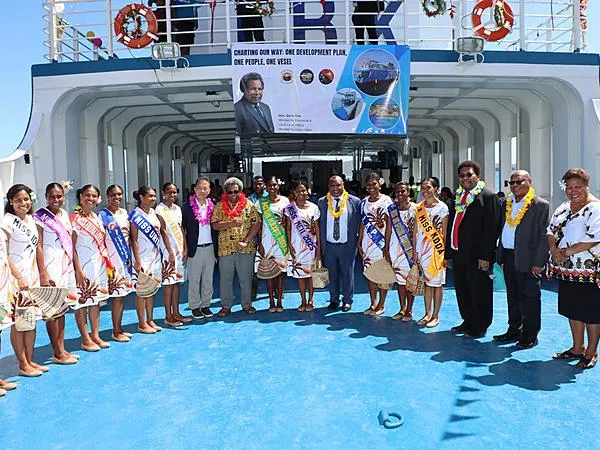
Port Moresby, Papua New Guinea — Prime Minister James Marape on Tuesday officially commissioned the MV IBK, a new landing craft barge representing the people of Ihu, Baimuru and Kikori, and launched the Kikori District Five-Year Development Plan at a ceremony held at Fairfax Wharf.
Under the theme “Charting our way: one development plan, one people, one vessel,” the event marked a significant milestone in Gulf Province’s development journey. The MV IBK is expected to enhance connectivity and economic participation for coastal communities by linking them to markets, services and opportunities across the Southern Region and Papua New Guinea.
“This vessel is more than transport — it is an economic engine and a symbol of unity,” Marape said during his address. “It will sail far and touch every life along the waters of Kikori and beyond.”
The prime minister emphasised that the vessel will support local enterprise, including the transport of sago, crab, fish and other produce to urban markets. He highlighted the exemplary success of Kikori entrepreneur Ella Dodobai, who has built a thriving business selling coastal products in the Highlands and Port Moresby.
The launch of the Kikori District Five-Year Development Plan outlines strategic infrastructure priorities, including jetties in Turama and Kikori, road upgrades and improved airstrips. Marape reaffirmed the importance of District Development Authorities (DDAs) in tailoring solutions to local needs.
“Development must be fit for purpose,” he said. “Where roads are needed, we build roads. Where boats are needed, we commission vessels. This is how we ensure no district is left behind.”
The prime minister also addressed national economic progress, noting that over the past six years, districts have received between K70 million and K80 million (approx. US$18.9 million to US$21.6 million) from Waigani, the national government. He reiterated the government’s commitment to the Kina-for-Kina policy, which rewards districts that actively implement their development plans.
Gulf Fisheries Services was acknowledged as a key private sector partner in operating MV IBK across the South-West Papuan region. Marape also assured the public that work on the Kerema–Kikori road, supported by Chinese funding, would resume soon.
Looking ahead, the prime minister shared his vision for integrated infrastructure connecting Kikori to the Highlands and South Fly, enabling broader participation in the formal economy and unlocking future LNG projects.
“At 50 years of Independence, we must speak well of our country, work hard and hold leaders accountable,” Marape concluded. “MV IBK and Kikori’s development plan are steps toward a more inclusive and prosperous Papua New Guinea.”
BUKA — The Bougainville Executive Council (BEC) has officially endorsed a 20-year Bougainville Transport Master Plan, setting a clear path for the region’s future infrastructure development and reaffirming its long-term commitment to reliable, inclusive and climate-resilient growth.
As part of the endorsement, the BEC also approved the renaming of the Department of Technical Services to the Department of Infrastructure and Utilities (DIU) — a strategic move aimed at strengthening the Department’s mandate.
ABG Chief Secretary Kearnneth Nanei said the new name signals “a strategic realignment to better position the Department to lead the implementation of the Transport Master Plan towards nation-building.”
Speaking about the Plan’s vision, Mr Nanei said, “This Master Plan brings together our goals and aspirations for transport in Bougainville and sets a clear direction for meeting both current and future needs.”
The Transport Master Plan outlines a two-decade strategy to rehabilitate, improve and expand Bougainville’s transport network. It builds on existing and committed projects while addressing critical issues such as funding constraints, aging infrastructure and weak inter-agency coordination. The region’s vulnerability to natural hazards — including volcanic eruptions, earthquakes and floods — is also a key consideration.
“This integrated approach ensures that both existing projects and new developments work together to build a transport system that is reliable, efficient and sustainable for our people,” Mr Nanei said.
Acting Secretary for the Department of Infrastructure and Utilities, Fiona Levi, said the Plan would be implemented in four stages over 20 years with a strong emphasis on improving access, enabling economic growth and building disaster resilience.
“The Plan will be implemented in four stages over 20 years with a strong focus on improving access and connectivity, enabling economic growth and strengthening climate resilience and disaster preparedness,” Ms Levi said.
She added, “A robust prioritisation process — using multi-criteria analysis — has been built into the Plan to ensure maximum impact from investments in terms of connectivity, resilience and economic return.”
Describing the Plan as a foundational development tool, Ms Levi said, “The Bougainville Transport Master Plan is a critical enabler of our development ambitions, providing a framework for working strategically with the National Government and development partners.”
The Plan aligns with Bougainville Vision 2052, the region’s long-term development strategy. Following the launch of the Vision, all government sectors were tasked with formulating long-term plans to help realise its goals.
Mr Nanei acknowledged the shared effort behind the Plan’s formulation. “I want to sincerely thank all stakeholders — the Department of Infrastructure and Utilities, other government agencies and our development partners who contributed to the development of this critical master plan. Your collaboration has made this possible,” he said.
The endorsement of the Bougainville Transport Master Plan, he added, “reflects the Executive Government’s commitment to responsible long-term infrastructure investment and economic development for the people of Bougainville.”
The European Union Ambassador to Papua New Guinea Jacques Fradin reaffirmed the EU’s long-term commitment to PNG, emphasising innovation, climate action and deepening trade and development partnerships under a transformative “global gateway” approach.
The European Union (EU) has been a long-standing partner of PNG since independence, strengthening ties through trade, development aid, green diplomacy and shared interests. In recent years, this relationship has evolved to a more political and strategic level, marked by high-level political dialogues.
Fradin stressed the EU stands as a “reliable and concrete partner” in PNG’s next chapter of growth as the nation prepares to mark its 50th year of independence on 16 September.
“When it comes to our involvement in the country, we are here for the long haul and will continue delivering concrete programmes and projects,” Fradin said in an exclusive interview with PNG Business News.
“The PNG government has laid out a clear vision for how it will develop in the next 50 years and within this vision, the EU stands ready to support the country’s goals,” he added.
Moving beyond symbolic commitments, the ambassador emphasised a practical and sustained approach to engagement with PNG. “We will not change in terms of what we concretely deliver through projects and programmes, but we will adapt to the way we do business.
“Global gateway is simply about connecting with PNG’s reality and delivering support based on what the country actually needs,” the Ambassador said.
Shaping a New Model of Cooperation
Global gateway is the EU strategy to boost smart, clean and secure connections in the digital, energy and transport sectors, and to strengthen health, education and research systems across the world. It brings together the EU, its member states and their financial and development institutions to mobilise the private sector to leverage investments promoting sustainable growth.
To this end, the EU is providing significant grant contributions to complement bank loans that will be extended to the PNG government.
Two new projects under the global gateway banner are currently in development, expected to be signed in 2025 if agreements can be reached on the loan component. These are:
These projects reflect the EU’s broader ambition to scale up investment in infrastructure, energy, agriculture and climate initiatives by blending EU grants with loans from the European Investment Bank, Agence Française de Développement (AFD), and potentially the Asian Development Bank. This approach is projected to unlock tens of millions of euros in investments.
“That is how we are going to transform the EU business and development model in PNG over the next 10 years,” Fradin said.
A Trade Partnership Anchored in Access and Growth
A cornerstone of EU-PNG trade is the Interim Economic Partnership Agreement (iEPA), ratified in 2011. The iEPA grants duty-free and quota-free access to the EU market—a single market of 447 million people with a GDP of over USD 20 trillion (PGK 81 trillion)—for all PNG exports.
In 2024, this trade relationship continued to deepen. The total trade between the EU and PNG reached EUR 1.074 billion, marking a 9% increase from 2023. In fact, the trade balance continues to favour PNG. The EU imports from PNG in 2024 comprised:
On the other hand, PNG imports mainly machinery and appliances (48%), food, beverages and tobacco (13%), and transport equipment (10%) from the EU. Currently, the EU ranks as PNG’s fourth-largest export destination, with about 60% of PNG’s coffee exports going to Europe.
Expanding Climate Cooperation and Green Energy Prospects
The partnership extends beyond trade. The Ambassador highlighted several areas of cooperation under the Forest, Climate Change and Biodiversity (FCCB) programme.
“We are focusing on climate change and biodiversity in collaboration with the PNG Government and agencies. It’s one of our flagship projects. This will continue for the next three years,” he said.
The EU is also exploring future opportunities, particularly in the green energy space. A renewable energy programme is under development, though it remains in the early stages and has yet to be formally announced.
According to Ambassador Fradin, PNG’s geographic and demographic significance—as the Pacific’s largest country in both land mass and population—gives it strategic importance as a “gateway to Asia and the Pacific.”
Boosting Regional Integration Through Trade Agreements
The EU-Pacific interim Economic Partnership Agreement (iEPA), implemented by PNG and three other Pacific countries (Fiji, Samoa and Solomon Islands), serves as a key framework for regional trade cooperation. Its global sourcing provision allows processed fish to be exported duty-free to the EU, regardless of origin, significantly benefitting PNG’s tuna canning industry.
The iEPA also encourages dialogue on trade barriers, health and safety standards and customs cooperation. The 10th EU-Pacific Trade Committee meeting was held in Brussels in February 2025, with senior officials from PNG and prospective members such as Niue, Tonga and Tuvalu in attendance.
To support this regional vision, the EU has committed EUR 37 million (PGK 165 million) to initiatives including:
Bilateral support also includes efforts to enhance PNG’s National Trade Office and trade-related infrastructure.
At the community level, the EU-STREIT Programme or the Support to Rural Entrepreneurship, Investment, and Trade is making an impact in East and West Sepik by strengthening cacao, vanilla and fisheries value chains, and investing in sustainable transport and energy infrastructure.
Tackling Sustainability and Compliance
The EU’s Deforestation-Free Products Regulation, in effect since 29 June 2023, will be fully enforced by 30 December 2025 (for medium/large companies) and 30 June 2026 (for small businesses). Covering palm oil, cocoa and coffee—key PNG exports—it requires traceability and quality, enabling products to fetch better prices in EU markets.
The EU is actively supporting PNG producers through the EU-STREIT and FCCB programmes to help them meet compliance requirements.
Growing Investment and Economic Presence in PNG
European interest in PNG is growing, with investment stock rising from EUR 179 million in 2013 to EUR 1.856 billion in 2023. EU firms are active in sectors including LNG, aviation, telecoms and manufacturing.
Leading investors such as the Netherlands, France and Italy continue to play a key role. The upcoming EU-Pacific Business Forum in Fiji this September is expected to see active participation from PNG.
However, the Ambassador noted concerns about PNG’s possible grey-listing by the Financial Action Task Force (FATF) due to anti-money laundering deficiencies.
While this poses a risk to investor confidence, the EU welcomed Prime Minister Marape’s public commitment to address the issue and reaffirmed its offer of technical support.
Building a Green PNG Brand in Europe
The Ambassador believes that PNG is well-positioned to develop a green trade identity in Europe by focusing on sustainable, high-quality exports such as coffee, cocoa, vanilla and tuna.
“About 60% of PNG’s coffee already goes to Europe and while we’re not your biggest cocoa buyer, we do import and we can do more,” he said.
Stricter EU import standards—such as the Deforestation Regulation—present both a challenge and an opportunity, banning products grown on recently deforested land. The EU is working with PNG’s Chamber of Commerce and relevant trade offices to ensure compliance.
“We are not imposing a standard. If PNG wants to export to the EU, then we simply ask for the value chain to be reliable and the importer will be held responsible for the product they do export. The price we offer is higher, which is a win-win situation.”
Responsible Mining and Critical Raw Materials
The EU is also interested in PNG’s critical raw materials (CRMs), with over EUR 959 million in goods imported from PNG in 2024—95% of which were primary products.
Ambassador Fradin confirmed the EU imported nearly EUR 600 million in raw materials last year and stressed the importance of applying Environment, Social and Governance (ESG) standards in the sector.
“Exploit but not destroy. Process but not damage. Trade, but not bad trading,” he said.
The EU is closely following legislative developments in PNG, encouraging policies that promote responsible mining and local value addition.
Investing in PNG’s Greatest Resource: Its People
Beyond trade and investment, the Ambassador turned his attention to human capital development and the importance of preparing PNG’s youth for the future.
“By 2050, PNG’s population will have doubled. Half the population will be under 25,” he said. “If you want to be efficient in the next 25 years, you need to start after the jubilee—or better yet, yesterday.”
“PNG has a brilliant future. The population knows it, officials know it and all the challenges are known. Now, it’s a common endeavour to make the next 25 years the rising of PNG in the region.”
Fradin said the EU looked forward to PNG’s 50th independence anniversary and remained committed to strengthening their long-term partnership.
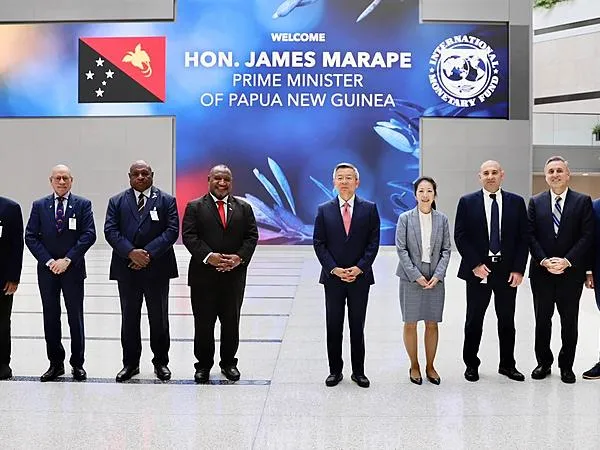
Prime Minister James Marape used his high-level engagement with the International Monetary Fund (IMF) in Washington, D.C. to call for the creation of a tailored support facility for Small Island Developing States (SIDS), particularly fellow Pacific Island nations.
Speaking directly to IMF Deputy Managing Director Mr Bo Li and his senior leadership team, Prime Minister Marape strongly advocated for the economic and climate vulnerabilities faced by SIDS to be addressed through targeted concessional financing, grants and technical assistance.
“Many of our small island neighbours are innocent victims of global events—whether it’s the economic fallout from man-made disasters like the Russia–Ukraine war or natural disasters such as rising sea levels and extreme weather caused by climate change,” Prime Minister Marape said.
“These countries have negligible carbon footprints yet they bear the brunt of climate change, imported inflation and external shocks they did not create. Unlike large economies that can absorb global turbulence, these small nations face existential economic risks.”
Call for a Dedicated IMF Programme for SIDS
Prime Minister Marape proposed that the IMF consider establishing a dedicated programme specifically designed for small island states—offering grant-based and soft-concessional financial support for economic resilience, food and fuel security and climate adaptation measures.
“This is not just about economics. It’s about fairness and survival,” the Prime Minister said.
“Small island states are being disproportionately punished for problems they did not cause. The global community has a responsibility to ensure they are not left behind.” He noted that while the Pacific Islands contribute little to global emissions, they possess some of the largest carbon sinks in the form of forests and oceans yet receive minimal compensation or support for their stewardship.
IMF Leadership Acknowledges the Concern
IMF Deputy Managing Director Mr Bo Li acknowledged Prime Minister Marape’s concerns and highlighted the importance of the Pacific Islands Forum, which he is expected to attend in Honiara, Solomon Islands in September 2025. While no immediate commitments were made, Mr Li confirmed that the IMF is exploring ways to better tailor its support for vulnerable island economies.
Prime Minister Marape emphasised the importance of raising these issues at the highest levels of global leadership, saying, “It is at leadership level that these ideas must be proposed—because that is where decisions that affect our region’s future are ultimately made.”
He concluded by affirming that Papua New Guinea, as the largest economy in the Pacific Islands Forum, would continue to be a voice for regional solidarity and push for structural change in global financing frameworks to reflect the specific needs of Pacific nations.
Washington, D.C., USA, 11 July 2025 – Prime Minister Hon. James Marape has reiterated Papua New Guinea’s unwavering commitment to macroeconomic stability, fiscal reform, and debt sustainability during a high-level meeting with the International Monetary Fund (IMF) in Washington, D.C.
The meeting was held at the IMF Headquarters with Deputy Managing Director Mr Bo Li, who directly oversees Papua New Guinea’s economic programme within the Fund.
The Prime Minister was warmly welcomed by Mr Li and his senior economic advisory team, underscoring the close relationship between Papua New Guinea and the IMF. The discussion was described as open, constructive, and far-reaching, with both parties reaffirming their shared commitment to advancing PNG’s economic transformation.
Strategic Engagement with IMF a Deliberate Policy Shift
Speaking after the meeting, Prime Minister Marape emphasised that the engagement with the IMF was a deliberate and considered policy decision taken by his government in 2019, shortly after assuming office.
“We made a conscious decision to invite the IMF back into Papua New Guinea after years of ad hoc and unsustainable fiscal practices,” Prime Minister Marape said. “Our goal has always been to place the country on a disciplined and transparent economic path, reduce reliance on commercial loans, and align ourselves with credible multilateral institutions that promote good governance and long-term development.”
He noted that, unlike previous reliance on high-interest commercial loans and short-term financing arrangements, the partnership with the IMF, World Bank and Asian Development Bank is based on mutual respect and shared responsibility. These institutions, the Prime Minister said, are not peripheral advisers but internationally mandated agencies with a proven track record of supporting economic reform globally.
Progress on Home-Grown Reform Agenda
The meeting acknowledged the significant strides made by Papua New Guinea since 2020 in implementing a comprehensive home-grown reform agenda. Central to this agenda is a 33-point reform programme initiated by the Government with input and support from the Treasury, Bank of Papua New Guinea, and the IMF.
The Prime Minister confirmed that most of the reforms have been successfully implemented, with only a few remaining outstanding. He assured Mr Li that these would be addressed in the coming months.
“Papua New Guinea’s reform journey is not dictated by the IMF. These are reforms we initiated ourselves, recognising that our economy needed structural change,” said Prime Minister Marape. “These reforms are not only necessary—they are urgent. We must take ownership of our future and lay a foundation for the next 50 years.”
Debt Reduction and Budget Balance in Sight
The Prime Minister reiterated his government’s firm commitment to achieving a balanced national budget by 2027.
He said that from 2028, PNG will embark on an aggressive debt repayment path, anchored by the implementation of the Sovereign Wealth Fund, which is expected to be fully operational by that time.
“If we stick to our fiscal consolidation path, eliminate wastage, and grow our revenue base, we will be in a position to repay our debts and reduce our debt-to-GDP ratio to sustainable levels—targeting 30 percent or lower,” Prime Minister Marape stated.
He highlighted that by 2033, the government aims to eliminate all public debt accumulated since Independence in 1975, marking a historic milestone for the country.
Strong Economic Outlook Amid Global Uncertainty
According to IMF projections shared during the meeting, Papua New Guinea’s economy is expected to grow by 4.7 percent in 2025, a rate higher than the global average (3.7 percent) and outperforming the majority of Pacific Island Forum and ASEAN economies. The IMF attributed this growth to prudent fiscal management, the recovery of non-resource sectors, and consistent reform momentum.
Prime Minister Marape noted that the country has experienced four consecutive years of non-resource sector growth—driven by agriculture, fisheries, forestry, and small-scale enterprise—proving that the economy is beginning to diversify beyond extractive industries.
“For the first time in our post-Independence history, we are seeing consistent growth from sectors that benefit our rural population. This is no accident—it is the result of targeted investment and reform,” the Prime Minister said.
Diversification, Innovation, and Digital Government
In the meeting, Prime Minister Marape also pitched new areas of IMF technical assistance, including support for:
“These initiatives will not only help us modernise government, but also attract private investment and ensure efficient delivery of public services,” he said.
IMF Commends PNG’s Reform Commitment
The IMF welcomed Papua New Guinea’s clarity of vision and fiscal discipline, acknowledging the country’s success in clearing its foreign exchange backlog, stabilising the kina, and improving macroeconomic management.
They also advised that the government consider incentives for exporters to repatriate foreign currency earnings, which would help further stabilise the balance of payments.
In their closing remarks, the IMF commended Prime Minister Marape and his government for staying the course in the face of challenges, including the COVID-19 pandemic and global economic volatility. “This was a deeply encouraging conversation,” Prime Minister Marape concluded.
“Papua New Guinea is firmly on the right path. We have come a long way since 2019. There is more work to do, but with discipline, we will emerge stronger, more resilient, and more prosperous.”
Prime Minister Marape concluded his official engagements in Washington, D.C., and is now returning to Papua New Guinea.
Prime Minister James Marape held a series of meetings with senior US officials on 10 July, reinforcing strategic ties between Papua New Guinea and the United States in areas including trade, investment, security and fisheries cooperation.
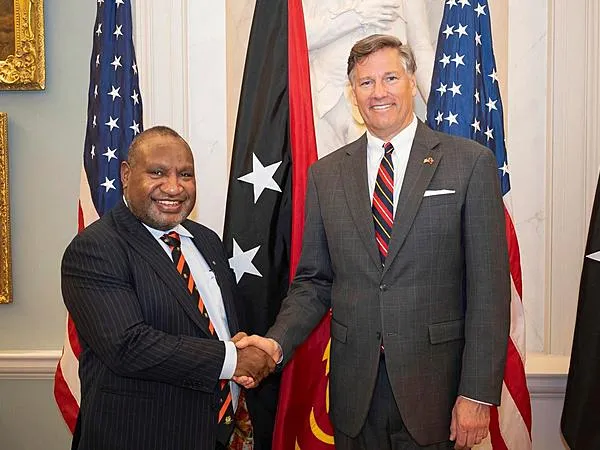
He engaged with representatives from the Pentagon, US Border Protection and the US Coast Guard, culminating in a key meeting with US Deputy Secretary of State Christopher Landau, who offered apologies on behalf of Secretary of State Marco Rubio, then attending the ASEAN Foreign Ministers’ meeting in Kuala Lumpur. Deputy Secretary Landau also confirmed that he will represent the United States at Papua New Guinea’s 50th anniversary celebrations in September.
“The discussions were highly productive,” said Marape. “The US administration under President Donald Trump is shifting its focus from traditional aid to trade and investment partnerships — a direction that aligns with Papua New Guinea’s development agenda.”
He welcomed the continued presence of American firms such as Newmont, ExxonMobil and Hilton, and called for further US investment in fisheries, energy, hospitality and manufacturing. He also emphasised US involvement in the fisheries sector through regional partnerships led by the Forum Fisheries Agency and the East New Britain Initiative, which offers land for joint Pacific fisheries ventures.
Marape reaffirmed PNG’s national moratorium on deep‑sea mining, emphasising: “Our waters are breeding grounds for tuna, and we are committed to environmental stewardship. Until comprehensive marine ecological studies are completed, no deep‑sea mining activity will proceed.”
He also underscored growing benefits from the Defence Cooperation Agreement between PNG and the US, noting that plans are already underway for a fuel‑storage facility to enhance energy security and ensure supply reliability during emergencies. “We are seeing real progress through this agreement,” Marape said. “Defence cooperation is not only strengthening our military’s capacity but also improving operational readiness, infrastructure and surveillance across the board.”
Discussions with the US Coast Guard and Pentagon officials emphasised enhancing joint maritime patrols to counter illegal fishing, transnational crime and illicit trade—including unauthorised arms, drugs and other contraband. “There was strong consensus at all my meetings on the need to deepen security cooperation to protect Papua New Guinea’s territorial waters, deter illegal activities, and prevent the movement of illicit substances in and out of our country,” he added. “We are committed to working closely with the US Navy and our regional partners to strengthen maritime security.”
That evening, Marape met with senior executives of Newmont Mining, formally presenting PNG’s response to the company’s proposals for the Wafi‑Golpu project. He said: “I invited Newmont and the full State Negotiating Team to convene in PNG for a dedicated, week‑long negotiation process. Together, we aim to resolve all outstanding matters and finalise a joint‑venture agreement that will unlock long‑term benefits for our people and our economy.”
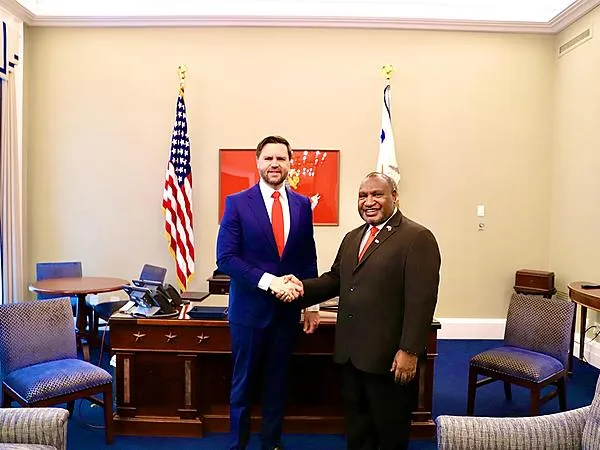
Prime Minister James Marape has announced a landmark development in Papua New Guinea–United States relations, following a historic first-ever bilateral meeting at the White House between a sitting Papua New Guinean Prime Minister and a US Vice President.
This milestone meeting, held during Prime Minister Marape’s official visit to Washington D.C., took place at the White House with US Vice President J.D. Vance, signalling a significant elevation in bilateral ties between the two nations.
“This is the first time in 50 years that a Papua New Guinean Prime Minister has held a formal bilateral meeting at the White House,” Prime Minister Marape said. “The engagement was warm, respectful, and constructive, demonstrating the United States’ sincere interest in strengthening its ties with Papua New Guinea.”
During the discussions, the United States Government confirmed it will send a high-level delegation to attend Papua New Guinea’s 50th Independence Anniversary celebrations in September 2025. This delegation will be led by Deputy Secretary of State Christopher Landau, reflecting the importance the US places on its relationship with PNG.
Prime Minister Marape and Vice President Vance also discussed shared democratic values, mutual interests in the Indo-Pacific, and opportunities for expanded cooperation in trade, security, and economic development.
“The United States is the greatest democracy, the strongest free-market economy, and the leading Christian nation,” Prime Minister Marape said. “Papua New Guinea, too, is a robust democracy, a free-market economy, and a nation founded on strong Christian values. These shared beliefs continue to guide our alignment on many regional and global issues.”
He added that both governments had agreed to continue technical-level engagements to prepare for a potential full bilateral meeting between President Donald Trump and Prime Minister Marape at a later date, when both the White House and Waigani are ready.
“Our officials will begin preparatory work on specific areas of bilateral cooperation, including trade, security, development, and investment,” he said. “We hope to formalise this growing relationship through a future meeting between the President of the United States and the Prime Minister of Papua New Guinea.”
During the meeting, Prime Minister Marape also acknowledged and thanked major US companies operating in Papua New Guinea—ExxonMobil, Barrick Gold, Newmont Corporation, Hilton, Marriott, and others—for their long-standing contributions to the country’s economy.
“I also took the opportunity to invite more US companies in manufacturing, agriculture, fisheries, and sustainable forestry to explore investment opportunities in Papua New Guinea,” he added. “Our economy is open for business, and we welcome responsible partners who share our vision for sustainable growth.”
The bilateral engagement caps off a series of high-level meetings during Prime Minister Marape’s visit to the United States, which included strategic dialogues with US defence, trade, and development agencies.
“This visit marks the beginning of a new era in PNG–US relations,” Prime Minister Marape concluded. “As we mark 50 years of Independence, we are repositioning ourselves on the global stage and fine-tuning our relationships with all partner nations — including this great United States of America.”
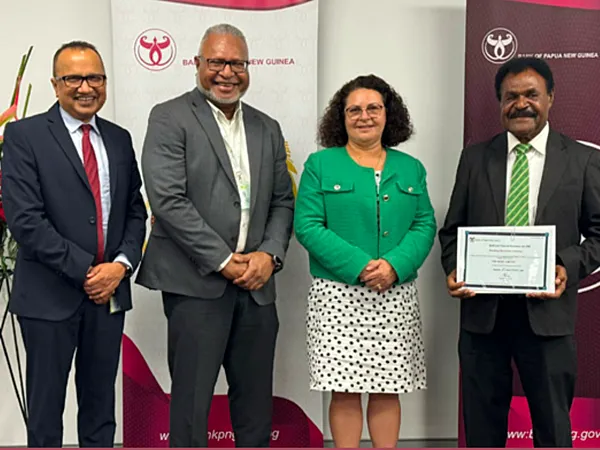
The Bank of Papua New Guinea (BPNG) has submitted its 2024 Annual Report and Financial Statements to the Minister for Treasury, in accordance with the Central Banking (Amendment) Act of 2024. The report captures a pivotal year marked by structural reform, digital innovation, monetary tightening, and renewed focus on institutional integrity.
The timely submission of the report reflects the Bank’s commitment to transparency, discipline and legal compliance. It outlines the central bank’s operational performance, policy direction and audited financial results for the year ending 31 December 2024.
“Publishing our Annual Report is more than a legal obligation. It is an important mechanism for communicating the work of the Bank and being accountable to the people of Papua New Guinea,” Governor Elizabeth Genia said.
The Bank recorded a net operating profit of K242.2 million (approx. US$65 million), a significant increase from K44.2 million (approx. US$11.8 million) in 2023. Operating income rose to K770.1 million (approx. US$207 million), largely due to stronger returns from foreign currency investments, while total expenditure was contained at K527.9 million (approx. US$142 million). The distributable profit remains under Retained Earnings, pending a decision by the Board.
In a separate press release, the Bank confirmed a dividend payment of K48.5 million (approx. US$13.1 million) to the National Government as part of its reporting process. This transfer reflects the allocation of distributable profit from the net operating profit of K242.2 million (approx. US$65 million), in accordance with statutory requirements following independent audit and review.
The process is consistent with international central banking and accounting standards, and forms part of the Bank’s annual financial cycle, the bank said.
Under the amended Central Banking Act, 80 percent of distributable profit is retained in the General Reserve Account until minimum capital thresholds are met. The Bank also recorded K837.8 million (approx. US$225 million) in unrealised gains transferred to the Unrealised Profits Reserve, and K114.1 million (approx. US$30.6 million) to the Gold Reserve, in line with international accounting standards. No funds were transferred to the General or Building Reserve accounts in 2024.
A major development during the year was the passage of the Central Banking (Amendment) Act 2024, which followed Phase II of the Independent Advisory Group (IAG) review. The legislation restructured the Bank’s governance and formally established a new Monetary Policy Committee (MPC), which will take over responsibility for setting monetary policy from 2025.
Throughout 2024, the Bank maintained a tightening monetary stance to address foreign exchange imbalances, contain inflation, and absorb excess domestic liquidity. Key reforms under an IMF-supported programme included the implementation of an interest rate corridor, adjustments to the cash reserve requirement (CRR), and the launch of weekly foreign exchange auctions.
By year-end, BPNG had conducted 26 foreign exchange auctions totalling more than US$1 billion, significantly reducing order backlogs and enhancing transparency. The kina depreciated by 6.8 percent against the US dollar during the year, under a managed "crawling peg" strategy intended to restore currency convertibility while managing inflation risks.
Despite currency depreciation, inflation remained contained. The trimmed mean inflation rate rose by just 3.3 percent over the year. However, the Bank noted that deposit and lending rates in the private sector were largely unresponsive to policy adjustments — highlighting continued weaknesses in the interest rate transmission mechanism.
Institutional reforms progressed in parallel. A new executive structure, aligned with the Bank’s Vision 2050 strategy, was approved by the Board. Each executive position is now explicitly linked to strategic priorities and key performance indicators.
Board Chair David Toua OBE commended the Bank’s operational discipline and ethics reforms. He acknowledged the dismissal of a number of staff involved in the manipulation of employee benefits, calling the swift action essential for maintaining the Bank’s credibility. “Ethics is equally vital to governance,” Mr Toua said. “The integrity of BPNG must be beyond reproach.”
The Bank also continued to expand financial inclusion and digital innovation. It issued commercial banking licences to three new institutions: TISA Bank, Credit Bank PNG, and the state-owned National Banking Corporation (formerly People’s Micro Bank). These approvals marked the most significant expansion of PNG’s banking sector in years.
In March 2024, the Bank launched the Green Finance Centre in partnership with the Global Green Growth Institute (GGGI), the New Zealand Ministry of Foreign Affairs and Trade, and other development partners. The Centre supports the implementation of the Inclusive Green Finance Policy and aligns with PNG’s Third National Financial Inclusion Strategy.
The Bank also completed major technological upgrades, including enhancements to the Kina Automated Transfer System (KATS), expansion of mobile and digital payment services, and support for fintech development under its Regulatory Sandbox framework.
Regionally, BPNG maintained strong partnerships through forums such as the South East Asian Central Banks (SEACEN) group and the Pacific Islands Central Bank Supervisory College. It also contributed to PNG’s second Mutual Evaluation under the Asia Pacific Group on Money Laundering, which identified critical reforms needed to avoid grey-listing by the Financial Action Task Force (FATF).
Governor Genia reaffirmed the Bank’s long-term focus on inclusive growth, financial soundness, and institutional renewal. “None of this progress would be possible without the tireless work of our staff, the strategic guidance of the Board and the trust of the people of Papua New Guinea,” she said.
With the Monetary Policy Committee set to assume policy-making duties in 2025, and Vision 2050 implementation gaining momentum, the Bank of Papua New Guinea enters the new fiscal year with stronger financial, operational, and governance foundations, the report added.
Papua New Guinea must stop crafting “a rulebook for every project” and instead focus on building reliable, trade-enabling infrastructure to underpin a strong and inclusive economy, said Chey Scovell, Vice President of the Port Moresby Chamber of Commerce and Industry (POMCCI).
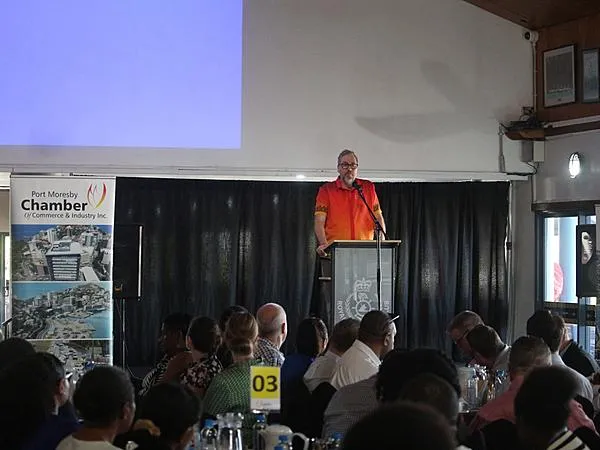
Speaking at a POMCCI-hosted breakfast forum on Thursday, 3 July, at the Royal Papua Yacht Club, Scovell delivered the keynote address during a panel discussion themed: “Trade, Tariffs and Trumpets – NTBs, WTO and WTF: (Re)positioning PNG.” He was joined by Frazer Murray of the National Trade Office and Paul Barker of the Institute of National Affairs.
In an exclusive interview with PNG Business News following the event, Scovell offered a frank assessment of PNG’s current trade environment, raising concerns about inconsistent policies, infrastructure gaps and the unsustainable use of Special Economic Zones (SEZs).
“The overarching problem for PNG is that the rulebook for Papua New Guinea is not conducive for trade and investment,” Scovell said.
“We had nearly 100 people here today, and nobody could identify a single investment of any significance that could happen in PNG without having their own rulebook,” he stressed.
A promise or pitfall?
While acknowledging that SEZs could be attractive to investors by offering benefits such as stable power, reduced security costs and tax breaks, Scovell warned that making too much of the economy dependent on these zones was unrealistic and inequitable.
“It is not really realistic to have the whole country as a tax-free zone. The government needs revenue,” he said. “My concern is, what about everybody outside of that zone?”
Rather than isolating incentives to certain areas, he argued, PNG should focus on creating a national environment where micro-enterprises and major investors alike can thrive under a consistent and fair framework “without needing special exemptions.”
From policy to practicality
Shifting from policy debates to practical needs, Scovell emphasised the importance of foundational infrastructure – such as roads, ports, electricity, water and ICT – as essential enablers of trade and economic activity.
“We are spending billions on PNG Connect, and it’s kind of a starting point, but it’s very important to make sure that that infrastructure is targeting everyone, from a farmer to the market,” he said.
Without such basics, he argued, promising industries—such as cocoa processing and chocolate manufacturing—will struggle to scale or export products competitively.
Asked about addressing non-tariff barriers (NTBs), Scovell stressed the need for strategically located facilities to meet international sanitary and phytosanitary (SPS) standards, particularly for agricultural exports.
“We do not have wholesale buying and co-ops where farmers can bring produce to a facility and have it sorted, graded, and treated,” he explained. “We really need facilities like that in key strategic locations.”
These, he said, would allow PNG to meet foreign SPS requirements while maintaining robust domestic biosecurity, something brought into sharp focus by recent poultry shortages following temporary import bans due to disease outbreaks in Australia and New Zealand.
“Poultry farming in PNG is a really important thing, particularly in the subsistence area. Maintaining those biosecurity standards is really important, not just for protecting the industry but also to enable our exports,” the executive said.
Time for realism
Scovell also delivered a direct challenge to economic policymakers and advisers, urging them to root their strategies in facts, not convenient assumptions.
“It’s unimaginable that our Treasury officials and the UN-funded advisors think that the only reason imports declined and prices changed was because the government put a couple of tariffs in 2017 and 2018,” he said.
“The global financial crisis, the pandemic, the geopolitical tensions, our foreign currency shortage… that’s what reduced imports. That is what increased prices, and not only in PNG but around the world.”
He urged leaders to move away from narrow economic narratives and begin aligning trade strategy with PNG’s constitutional goals and directive principles.
The POMCCI breakfast forum underscored that while tariffs and SEZs may have a role to play, PNG’s long-term development depends on consistent legal frameworks and inclusive infrastructure that enables broad-based participation.
“Let’s get a rulebook that’s conducive for all sorts of activity,” Scovell said.
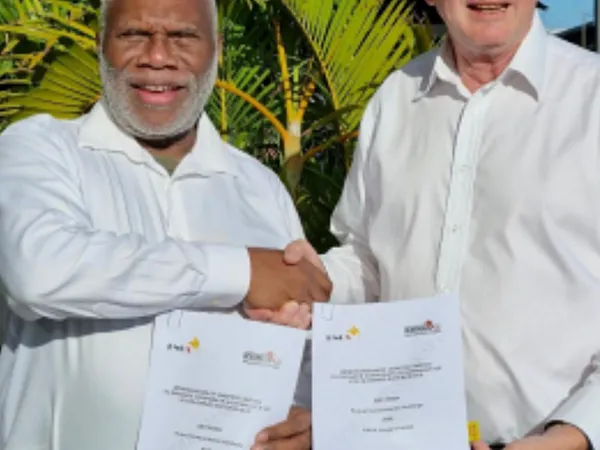
Kumul Consolidated Holdings (KCH), the trustee shareholder of the country’s state-owned enterprises (SOE), and PNGX Group Limited (PNGX Group), the holding company of PNGX Markets Limited, operator of Papua New Guinea’s national stock exchange, have signed a memorandum of understanding (MOU) aimed at improving SOE governance and unlocking new investment potential.
The MOU outlines a strategic collaboration between the two institutions to apply the PNGX Corporate Governance Code as a benchmark for SOE governance practices. The objective is to enhance governance, increase transparency, attract private sector investment, and support the long-term sustainability of both Papua New Guinea’s SOEs and its capital markets.
To achieve these goals, PNGX Group and KCH will work together to promote understanding of the PNGX Corporate Governance Code, support the development of a tailored governance code for SOEs, and raise awareness of the PNGX Listing Rules and the responsibilities of listed companies.
The partnership will also explore pathways for listing eligible SOEs on the exchange and seek to expand investment opportunities in SOEs for both domestic and international investors.
The initiative aligns with Prime Minister James Marape’s renewed commitment on 10 February 2025 to reform SOEs to operate more efficiently and contribute to economic growth and improved service delivery.
“Corporate governance is the foundation of public confidence in SOEs. Working with PNGX will help develop governance standards and disclosures that build that confidence,” said Prof. David Kavanamur, managing director of KCH.
For his part, PNGX Group chairman David Lawrence said that the bourse’s strategic partnership with KCH reflects a shared vision of building robust, transparent and inclusive capital markets in Papua New Guinea.
“PNGX Group welcomes the opportunity to work with KCH on this important issue. Twenty-six years ago, PNGX was established with the vision of listing SOEs. This work brings that vision closer to reality and opens up potential new investment opportunities for Papua New Guineans,” Lawrence said.
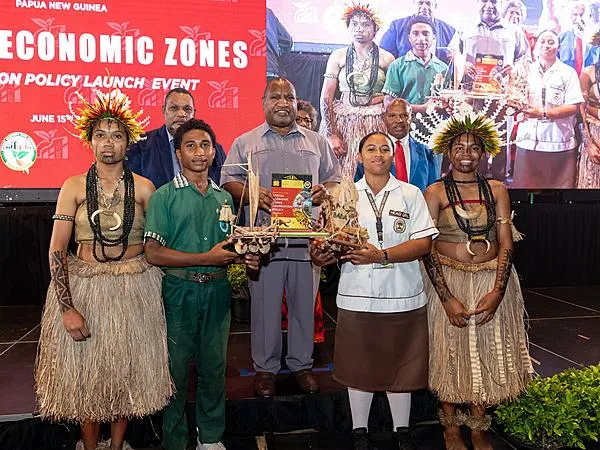
15 June marked a significant milestone for Papua New Guinea as the government officially launched the Special Economic Zones (SEZ) Foundation Policy 2025–2032 during a high-profile ceremony at APEC Haus in Port Moresby—an event hailed by national leaders as a transformative moment in the country’s economic journey.
Hosted by the Ministry of International Trade and Investment in collaboration with the PNG Special Economic Zone Authority, the event brought together national leaders, investors and international partners to witness the country’s renewed commitment to industrialisation, job creation and economic independence.
The policy aims to establish SEZs as the primary vehicle for economic growth and transformation in PNG, enabling sustainable development, large-scale job creation and the elevation of the country to a competitive middle-income economy by 2032.
This vision aligns with PNG’s national development goals, focusing on economic diversification, regional development and the reduction of poverty and inequality—ultimately steering the nation towards economic independence.
A Vision Anchored in Self-Reliance and Reform
In his keynote address, Prime Minister James Marape emphasised the country’s longstanding quest for economic self-reliance and sustainability since independence. He reaffirmed the government’s commitment to providing enabling infrastructure, taking up state equity and collaborating with development partners and stakeholders in the establishment and success of SEZs.
“I urge all key stakeholders and Papua New Guineans to effectively support this policy,” Marape said, adding that the government places a high priority on SEZ development across the country as a practical means to drive economic diversification, industrialisation and rural development.
He also highlighted the competitive incentives to be provided by the government to attract multi-million kina investments into the zones.
For his part, Minister for International Trade and Investment Richard Maru described the SEZ Foundation Policy as “the most important policy since Independence.”
“Our greatest policy failure since 1975 has been our over-reliance on the mining and petroleum sectors and the export of raw materials. That era is over,” Maru said.
Diversification and Investment at the Forefront
He noted that PNG—often referred to as the last frontier of industrialisation due to its vast natural resources—is now committed to unlocking its full economic potential through diversification. This includes tapping into downstream manufacturing, fisheries, forestry, large-scale agriculture, tourism and other non-extractive industries.
“With special economic zones as our vehicle, we will chart a bold new course toward economic independence within the next 20 years,” he added.
Maru cited the Philippines as a successful case study, noting that the country started developing SEZs 50 years ago and now boasts 420 SEZs, four million jobs and annual exports valued at USD 68 billion. “PNG missed the opportunity, but now we begin the reset,” he said.
The minister projected that the PNG’s special economic zone policy could generate over one million jobs, attract billions in investments and transition PNG’s economy beyond its traditional reliance on extractive industries.
Population Growth Drives Urgency for Change
The rapid growth of PNG’s population further underscores the urgency of the SEZ strategy. According to the Department of National Planning and Monitoring, the country’s population is growing at a rate of 4.8% per annum. From just 2 million at independence, it has surged to over 11 million in under five decades. This demographic trend has intensified development challenges, necessitating innovative and large-scale economic interventions.
Recognising this opportunity, the Marape-Rosso government has positioned SEZs as a cornerstone of its economic agenda. Leveraging PNG’s youthful and expanding population as a competitive asset, the government, through the Ministry of International Trade and Investment, is driving the SEZ initiative as a series of high-impact national projects.
These zones are expected to aggressively promote industrialisation, expand economic diversity and accelerate development at a scale not experienced since independence.
To date, the Marape-Rosso Government has already secured K7 billion in investments across three SEZs. “With seven more licences to be issued, our trajectory is exponential,” Maru said.
Learning from the Past, Building for the Future
Secretary Jacinta Warakai-Manua of the Department of International Trade and Investment (DITI) said the policy would serve as a guide for all stakeholders – whether government agencies, private investors or local communities – to ensure collective support for the government’s Special Economic Zone Development Program agenda through a coherent and well-coordinated approach, and to ensure the benefits of SEZs are fairly distributed across the country.
The DITI as the policy arm of the Ministry will provide policy oversight, as well as the coordination and monitoring in collaboration with the SEZ Authority and other key stakeholders.
To ensure clarity and consistency, the policy is structured in an “SEZ-specific format” that aligns with international best practice, as seen in SEZ policies across Asia, Europe and Africa, Warakai-Manua explained during her speech.
This globally recognised approach, according to the DITI secretary, not only strengthens the credibility of the policy but also enhances its adaptability for international investors and development partners.
Moreover, the order of presentation within the policy has been deliberately aligned with the corresponding sections of the already enacted SEZA Act 2019, making it easier for stakeholders to reference and align regulatory provisions between policy and legislation, the official added.
Special economic zone is not a new concept to PNG, with similar concepts already existing for about 30 years. This includes the Malahang SEZ in Lae in 1993 and Ulaveo SEZ in East New Britain, and the Free Trade Zone in Vanimo, the Pacific Marine Industrial Zone (PMIZ) in Madang, and the recently launched Konebada Petroleum Park.
PNG has also allowed the development of the Tourism SEZ by Paga Hill Development Estate, and the Manus SEZ and the Gazelle Aoro Industrial SEZ in East New Britain Province established by legislation. However, PNG failed to deliver on the projects, except for the Malahang SEZ, according to Minister Maru.
“We must learn from our past mistakes and develop a new policy and regulatory framework to anchor SEZ development in our country based on world-class models that are very successful,” Maru said.
Maru, sharing his recent visit to Indonesia, highlighted the economic potential of SEZs, particularly in the extractive industries and the fishing sector. He said that plans are underway to replicate this through the PMIZ in Madang, which will soon be rebranded as the Integrated Energy SEZ.
“PMIZ aims to host up to 10 canneries and employ 100,000 Papua New Guineans,” he said, adding that a single nickel-processing SEZ in Indonesia supports 80,000 workers.
The launching event concluded with renewed commitment from all sectors of government and stakeholders to fully implement the policy, overcome bottlenecks and drive inclusive economic growth.
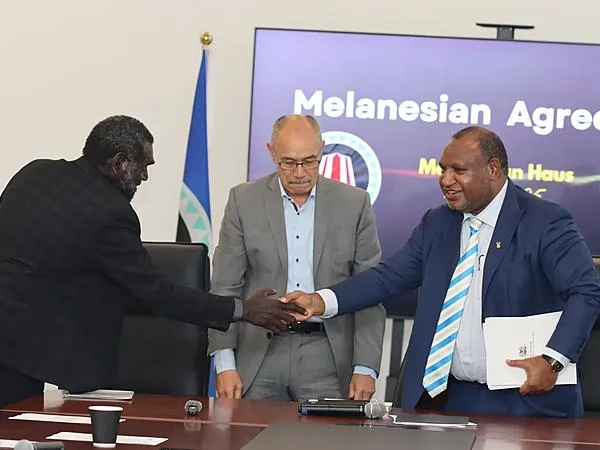
Prime Minister Hon. James Marape and Autonomous Bougainville Government President His Excellency Ishmael Toroama today signed the landmark Melanesian Agreement in Port Moresby, charting a peaceful and legally defined course for the next phase of the Bougainville peace process.
The ceremony was witnessed by Moderator Sir Jerry Mateparae, ministers from both governments, members of the bipartisan Parliamentary Committee on Bougainville, senior public servants, and international partners including the United Nations and foreign diplomatic missions.
PM Marape: We Honour the Law and Respect Bougainville’s Voice
Prime Minister Marape reaffirmed the National Government’s total adherence to the constitutional process, stating that the Bougainville issue must proceed according to the provisions of the 2001 Bougainville Peace Agreement, now enshrined in Part XIV of the Constitution.
He acknowledged the 97.7% referendum result as clear and decisive, but emphasised that the outcome must still pass through the legal pathway: “The people of Bougainville have expressed their will through the referendum, and we fully respect that. However, our Constitution outlines a clear process—we must conduct consultations and present the outcome to Parliament, which holds final decision-making authority. As Prime Minister, I cannot bypass or override that process.”
Agreement Grounded in Partnership, Not Separation
The Melanesian Agreement provides a framework for the two governments to finalise consultations and prepare a report for submission to Parliament. Prime Minister Marape described it as a collaborative and conditional document that continues the journey, rather than ends it.
“This is not an agreement to divide us—it is a roadmap to guide us through the remaining stages, grounded in constitutional integrity and mutual understanding. Our ultimate goal is to reach a destination that respects Bougainville’s aspirations while preserving the legal foundation of our nation.”
Melanesian Spirit of Dialogue and Shared Heritage
Drawing on the deep historical bonds between Papua New Guinea and Bougainville, Prime Minister Marape reflected on the ancestral unity of Melanesian peoples long before the creation of the modern nation in 1975:
“Before there was a constitution—before there was a country called Papua New Guinea— there were Melanesian people living in this part of the earth. We lived on the mainland, on the islands, and in the Pacific. The Melanesian concept of people is inherent—we were already sovereign in our own way.”
He stressed that Papua New Guineans and Bougainvilleans are “people of the same stock,” and that the constitutional process must reflect both modern governance and traditional values:
“We don’t have to fear the past or the future. Let’s jointly work together. The constitutional process is clear. Respect for the authority of our Constitution is paramount.”
Acknowledging Bougainville’s Sacrifice and Commitment
Prime Minister Marape thanked the people of Bougainville for honouring the constitutional process, and made special mention of Bougainville’s historical relationship with Papua New Guinea:
“I want to say thank you to President Toroama and the people of Bougainville for respecting the Constitution of our country. The Melanesian Agreement we signed today acknowledges our shared responsibility to walk this path together, with mutual respect and in the spirit of Melanesian brotherhood.”
He reminded the people of Bougainville of PNG’s long-standing commitment, citing a pivotal moment in 1997 when members of the PNG Defence Force, including now-Minister Hon. Belden Namah, opposed the Sandline operation as an act of solidarity with Bougainville:
“Our soldiers cared for you. That was a clear statement from Papua New Guinea—that we care.”
Economic Empowerment and Self-Determination
Prime Minister Marape reaffirmed the government’s commitment to empowering Bougainville economically, referencing recent decisions to transfer full shareholding in key resource projects to the Bougainville Government: “Giving back Panguna to you means you decide your own destiny. That is the highest form of acknowledgement from your brothers and sisters in the rest of the country.”
He pledged support for Bougainville’s sustainable development across agriculture, fisheries, forestry, and infrastructure:
“We are here to empower you so your people can prosper. Let us prepare Bougainville not just for political settlement, but for a thriving future.”
Tribute to President Toroama and Sir Jerry Mateparae
Prime Minister Marape acknowledged President Toroama’s pivotal role in the peace process—from being a signatory to the original 2001 Peace Agreement to now leading Bougainville through this crucial chapter:
“Your leadership at this crucial time is no accident. You bring historical wisdom and strength to a very delicate and important process.”
He also paid tribute to Sir Jerry Mateparae for his longstanding role as moderator: “Sir Jerry has been with us since 1997. His calm leadership and presence have helped us maintain focus and discipline throughout this journey. We deeply appreciate his service to both Bougainville and PNG.”
A Shared Future Ahead
Looking ahead to the submission of the final consultation report by June 30, Prime Minister Marape assured both Bougainvilleans and Papua New Guineans that the journey would continue in peace, unity, and trust:
“Let no one fear. We remain united in purpose. As one people, we are navigating this process together—with humility, with care, and with faith in our Constitution and in each other.”
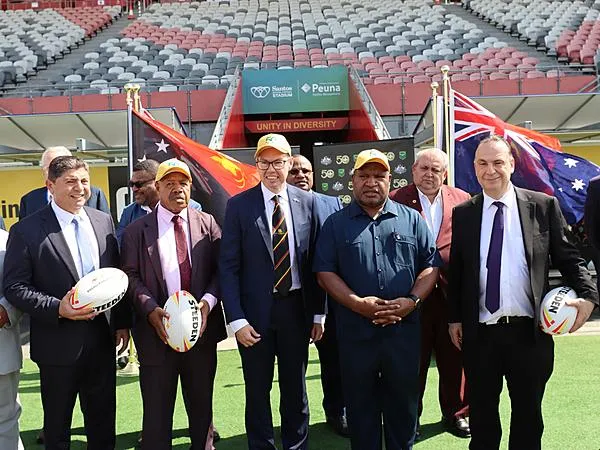
Prime Minister Hon. James Marape has officially unveiled the inaugural board of Papua New Guinea’s National Rugby League (NRL) team and launched a national competition to name the team and compose its theme song, declaring the moment as “historic for sport and nation.”
The announcement was made during a packed press conference held at the Santos National Football Stadium, attended by dignitaries from both Papua New Guinea and Australia, executives from the National Rugby League, and media personnel.
“This is more than just sport—it’s our national unification project,” Prime Minister Marape told the gathering, drawing applause as he invoked Nelson Mandela’s use of rugby to unite South Africa. “One team, one people, one nation—that is the vision behind our NRL team.”
He was joined by Australia’s Minister for the Pacific, Hon. Pat Conroy, who praised the initiative as “visionary” and likened it to the iconic 1975 partnership between Grand Chief Sir Michael Somare and former Australian Prime Minister Gough Whitlam.
“This team has been talked about for decades,” said Minister Conroy. “But it’s only through the leadership and vision of Prime Minister Marape, and the support of Prime Minister Albanese, that it’s becoming a reality. It’s about jobs, tourism, unity and pride—this will go down in history.”
Board Unveiled to Lead PNG’s Entry into NRL
Prime Minister Marape formally announced the members of the inaugural PNG NRL Team Board, emphasising their combined experience in business, sport, and leadership:
• Mr Ray Dib – Chairman, former Canterbury-Bankstown Chairman and respected rugby league administrator
• Ms Lorna McPherson – Long-time rugby league official and community leader
• Mr Stan Joyce – Former SP Brewery Managing Director and rugby supporter
• Mr Richard Pegum – Chairman of Mayur Resources and financial expert
• Mr Ian Tarutia – Leading voice in the PNG private sector
• Mr Wapu Sonk – Managing Director of Kumul Petroleum and Chair of the PNG NRL Bid Team
• Mr Marcus Bai – Former Kumuls captain and one of PNG’s most celebrated rugby league players
“The two governments will support from the sidelines, but will not interfere,” Prime Minister Marape stressed. “This is a sports business, and it must be run professionally.”
He credited the efforts of the bid team, including Wapu Sonk, Ian Tarutia, Lorna McPherson, and others who had worked tirelessly to bring the franchise to this stage.
Naming and Theme Song Competition Launched
Prime Minister Marape also launched a nationwide team naming and theme song competition, calling on the country to unite behind the identity of the new team.
“The name must unite us, tell our story, and reflect our past, present and future,” he said. “It must also resonate with our Australian friends—it must become every Aussie’s second team.”
He tasked the newly formed board, especially Ms Lorna McPherson, to lead the engagement campaign on social media and in communities.
“We are a democracy. The name must have the support of 60 to 70 per cent of our population,” Prime Minister Marape added.
Reflecting on PNG’s shared history with Australia, the Prime Minister recalled an emotional moment from his 2024 Kokoda Trail trek with Prime Minister Albanese. He shared a conversation with a local chief at Isurava, who explained why his people chose to support the Australians during WWII.
“He told me, ‘We had no choice but to defend our territory.’ That story remains with me. It reminds us of where we come from and why we must build a future together.”
Australian Government: Jobs, Unity, and a Shared Legacy
Minister Conroy confirmed that the Australian Government will invest over A$600 million into PNG rugby league, infrastructure, and franchise development over the next 10 years.
“This is not just sport—it’s economic development and national building,” he said. “We expect over 5,000 Papua New Guineans to be employed directly through this initiative, from stadium upgrades to managing the team.”
He said thousands of Australians would travel to Port Moresby every year to watch games, boosting the tourism sector and people-to-people ties.
“This team will not just compete. It will dominate. It will make Penrith look like minnows,” Conroy joked to loud applause, referencing the strength of PNG’s player base and fan passion. “The names Marape and Albanese will be remembered in history, just like Somare and Whitlam.”
Infrastructure and Road Connectivity
Prime Minister Marape revealed that infrastructure planning is already underway to support game-day logistics. Roads from the Highlands, Morobe and Alotau into Port Moresby will be upgraded to allow easy access to the stadium.
“By 2028, fans will drive in, watch the game, and return home. We are building not just a team, but a nation,” he said.
The Santos National Football Stadium will host the team in its early years, with the Sir Hubert Murray Stadium set to become the permanent home.
Prime Minister Hon. James Marape has restated his government’s strong and clear commitment to small and medium enterprises (SMEs), describing them as the “heartbeat of Papua New Guinea’s economic future”, and central to national efforts to grow the economy to K200 billion.
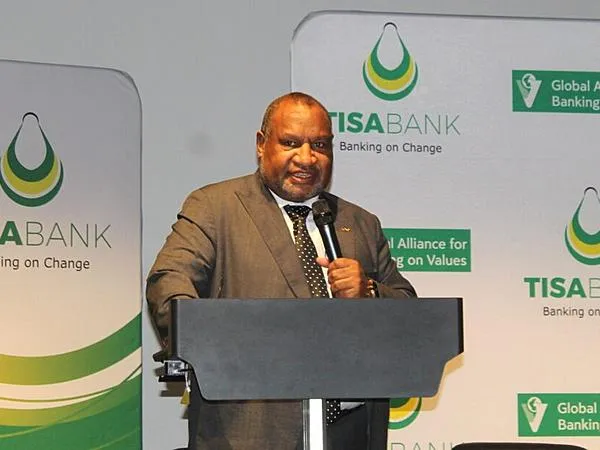
Speaking during the 7th TISA Bank SME Breakfast and Awards Launch in Port Moresby, Prime Minister Marape paid tribute to local entrepreneurs, financial institutions, and stakeholders for driving the SME sector; while outlining key reforms and policies his government has implemented over the past six years to support inclusive, sustainable growth.
“This time in our country’s history calls for Papua New Guineans to believe that they can – not that they cannot. The SME space belongs to those who are willing to work, innovate, and grow,” Prime Minister Marape told a packed audience of entrepreneurs, bankers, government officials, and development partners.
Turning Crisis into Reform and Recovery
Recalling the economic challenges his Government inherited in 2019 — including high commercial debt, a slowing economy, and declining business confidence — Prime Minister Marape said bold decisions had to be taken to stabilise public finances and steer the economy back towards growth.
“We inherited an economy worth K79.6 billion. By 2025, we are pushing beyond K130 billion. Despite COVID-19, global disruptions, and internal challenges, we turned crisis into opportunity by restructuring debt, injecting capital into the economy, and supporting businesses.”
He credited concessional support from key development partners — including the World Bank, International Monetary Fund (IMF), Asian Development Bank (ADB), and bilateral partners such as Australia and Japan — for enabling the Government to refinance expensive debt, including the Credit Suisse loans, and redirect funding into priority infrastructure and social services.
A standout example was a K940 million loan from Japan at an ultra-low 0.01% interest rate, which replaced commercial borrowings with an 8.8% interest rate.
SMEs at the Heart of Growth
The Prime Minister highlighted SMEs as a critical driver of job creation, innovation, and inclusive economic participation.
“That’s why we’re serious about SME support — because these are the people creating jobs, producing exports, and building a future.”
Pro-PNG Economic Reforms and Support Mechanisms
PM Marape outlined a series of key policy reforms and support mechanisms aimed at fostering SME growth and strengthening the overall business environment:
• SME Credit Guarantee Scheme – Assisting entrepreneurs to access credit without traditional collateral.
• State Equity Participation – Supporting import replacement sectors such as rice, beef, and fishing, through strategic co-investment by Government.
• Price and Freight Support Programme – Providing support to farmers and rural SMEs during periods of low global prices and high logistics costs.
• Export Licensing Reforms – Prioritising Papua New Guinean-owned exporters who repatriate foreign earnings, and ensuring licence holders bring value back to the country.
• Zero Tax Threshold – Individuals earning below K20,000 are now fully exempt from personal income tax, putting more money into household consumption.
• GST Removal on Basic Goods – Tax exemption on 13 essential household items to reduce the cost of living and stimulate domestic demand.
Reforming the Foundations: Central Bank, Judiciary, Land, and Anti-Corruption
The Prime Minister also highlighted deeper reforms aimed at building investor confidence and reducing bureaucratic barriers:
• Central Bank Reform – Establishment of a new oversight board, introduction of multi-currency convertibility (notably between PNG Kina and Chinese Yuan), and licensing of new banks to improve competition and access to finance.
• Judiciary Expansion – Doubling the number of national judges from 40 to 80 (eventually to 200), establishment of a dedicated Court of Appeal, and integration of international judges to improve investor confidence and strengthen commercial arbitration.
• Land Reform and Registration – Enabling customary landowners to formally register their land, use it as collateral, and access credit for SMEs and housing development along major highways and economic corridors.
• ICAC Establishment – Activation of the Independent Commission Against Corruption to seal economic “sinkholes” and ensure public funds support honest enterprise and national development.
Investing in Human Capital: Education, Labour, and Productivity
PM Marape reaffirmed his government’s focus on building a skilled and productive workforce through education reform and targeted labour mobility programmes:
• 100,000 School Dropouts Re-Enrolled – Through flexible and open learning initiatives.
• Labour Mobility Scheme Expansion – In partnership with the Australian Government to place skilled Papua New Guineans in overseas employment opportunities with long-term career potential.
• One Million Families into the Cash Economy – Mobilising rural households through agriculture, SME ventures, and targeted financial literacy and entrepreneurship training.
A Call to Action: Owning the Next 50 Years
Marking Papua New Guinea’s 50th anniversary of independence, Prime Minister Marape urged every Papua New Guinean to rise above cynicism and take ownership of the country’s development: “The harvest is plentiful — but the workers are few. Let us stop waiting and start doing. Let us stop asking what the country can do for us, and ask what we can do for our country.”
He concluded by thanking TISA Bank and the nation’s teachers: “To TISA Bank — go out and find the million unbanked families. Support them, empower them, and help grow this country.
“To our teachers — you have shaped generations of leaders. The PNG of today and tomorrow owes much to you.”
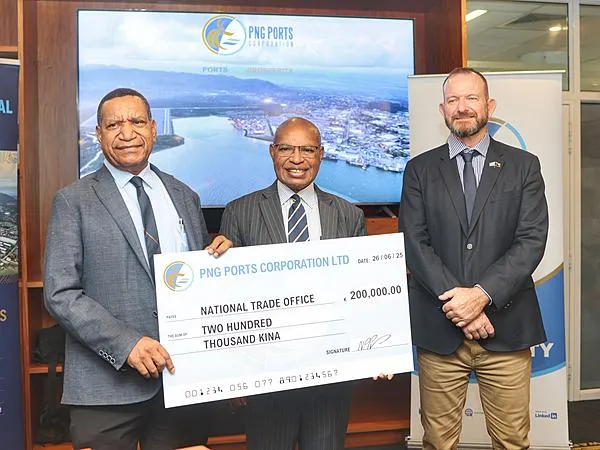
The PNG Ports Corporation (PNG Ports) has presented a cheque of K200,000 to take up Gold Sponsorship for the upcoming 2nd Papua New Guinea Special Economic Summit that will be hosted at the APEC Haus in Port Moresby from August 31st- September 3rd, 2025.
The Minister for International Trade and Investment, Hon. Richard Maru, thanked the Chairman of the PNG Ports Board, Mr. Harvey Nii, Managing Director, Mr. Neil Papenfus, the Board and Management of PNG Ports and the Minister for State Enterprises, Hon. William Duma, for their support towards this very important Summit.
PNG Ports owns and manages 15 out of the 23 declared ports in the country with the Port of Lae being the largest port in the country and the busiest and the most economical port of the PNG Ports.
Minister Maru said: “My Ministry and Department are very happy to work with the PNG Ports to grow their business because bulk of our trade is done using ports. PNG Ports is the most important entity which we must continue to support and make important strategic decisions for the business must grow and be more efficient into the future. We look forward to receiving their Submission for the proposed Lae Port Industrial Park so we can take it to the NEC next week to be processed and approved, and the SEZ Authority will grant them license subject to PNG Ports meeting all the regulatory requirements. We are ready to provide PNG Ports all fiscal incentives provided they have all the utilities including water supply, sewerage system, and reliable power supply which is a very important factor that will attract investors to be located within their proposed SEZ. There are already two major investors who are keen to be located within this proposed SEZ and we are also looking at the possibility of establishing a downstream processing facility, specifically a copper smelter within this SEZ.”
Minister Maru also encouraged PNG Ports to consider becoming a partner to build a new international wharf in the proposed Madang Integrated SEZ.
“With the plan to have 10 new fish canneries in the proposed Madang Integrated SEZ and with the new road being built from Baiyer in Mt. Hagen to Madang, the proposed international wharf will be an alternative to Lae Port to service the Highlands because of the proximity. We are hoping that the PNG Ports can be a partner in this so instead of two ports competing in Madang, we can have only one international wharf,” said Minister Maru.
Minister Maru further stated: “In West Sepik, the pipeline for the Freida Mine will go into Vanimo Port and the proposed Vanimo Free Trade Zone will be a major manufacturing hub with manufactured goods for export especially into Indonesia and Asia. We also have more oil palm coming into Vanimo port for export. In East Sepik, we already have 20,000 hectares of palm and we plan to go into major oil palm development in the proposed Sepik Plains SEZ. With this development, we are of the view that both Wewak and Vanimo should have international ports because there will be huge increase in the volumes of cargo into the future. We must be visionary and not just look at the short-term rehabilitation of the existing ports that are unsuitable to cater for large volumes of cargo.”
Follow on LinkedIn:
PNG Business News
Be the "First" to get our exclusive Digital Magazine & Weekly Newsletter.