February 24, 2026

OFC Tech Solutions welcomes Colin Edgar, a representative of its global partner Enghouse Interactive, for a strategic partner visit aimed at strengthening enterprise communication and customer experience solutions across Papua New Guinea.

The visit reinforces the growing collaboration between Enghouse Interactive and OFC Tech Solutions, focused on delivering secure, scalable and IP-based communication platforms tailored to local organisations.

During the visit, both teams will conduct enterprise customer meetings, strategic discussions and collaborative interviews to explore how advanced customer engagement and unified communications technologies can support PNG’s evolving digital landscape.

“This visit demonstrates our shared commitment to long-term growth in Papua New Guinea,” said Edgar, Channel Manager at Enghouse. “By combining Enghouse’s global expertise with OFC’s local presence and technical capability, we are well positioned to deliver future-ready solutions to enterprise organisations.”

Enghouse Interactive is recognised globally for its customer experience, contact centre and unified communications technologies. Through this partnership, OFC Tech Solutions continues to expand its portfolio of enterprise-grade communication platforms designed to enhance operational efficiency and customer engagement.

The visit will conclude with strategic planning sessions focused on innovation, scalability and expanding enterprise adoption throughout Papua New Guinea.

For more information about OFC Tech Solutions and its enterprise communication offerings, visit https://www.ofc.com.pg/

February 23, 2026

The Papua New Guinea Chamber of Resources & Energy (PNG CORE) has welcomed the inaugural meeting of the National Petroleum Authority (NPA) board, held in Port Moresby, describing it as an important step toward strengthening governance in the country’s petroleum sector.

PNG CORE interim executive director Philip Samar commended the new leadership team led by Petroleum Minister Jimmy Maladina and board chairman Hubert Namani, saying the early convening of the board signals a commitment to establishing a sound governance framework for the Authority.

“Regular board meetings are central to good governance. They provide clear oversight, ensure accountability and support transparent and informed decision-making,” Samar said.

He noted that in Papua New Guinea’s petroleum and energy sector — where projects typically require substantial long-term capital investment — regulatory stability and institutional strength are essential to maintaining investor confidence.

“For Papua New Guinea’s petroleum and energy sector, where projects require significant long-term capital investment, strong governance and regulatory stability are critical to maintaining investor confidence,” Samar said. “An active and engaged board is essential in setting strategic direction, monitoring performance and managing risks in the best interests of stakeholders and the country.”

Samar also encouraged other regulatory agencies across the industry to adopt independent board structures to reinforce accountability, enhance investor trust and improve sector outcomes.

PNG CORE said it looks forward to constructive engagement with the NPA board and management to advance policy alignment, strengthen regulatory clarity and support the responsible development of Papua New Guinea’s petroleum resources.

The chamber reiterated its commitment to initiatives that promote stronger governance, improved transparency and long-term sustainable growth across the extractive industry.

February 23, 2026

Nambawan Super Limited (NSL) has received a K50 million payment from the State toward outstanding rental arrears for several properties occupied by government agencies, marking what the fund described as a critical step in resolving a two-year debt.

In a statement, NSL said the payment followed constructive discussions with the Government through the Department of Treasury, culminating in agreement on a formal Memorandum of Agreement (MOA) that sets out a structured repayment plan.

Under the arrangement, the State will repay the remaining balance through monthly instalments of K10 million. Of this amount, K5 million per month will be applied to arrears from previous years, while another K5 million will cover current rental obligations.

NSL said it agreed to the structure in good faith to support the State’s cash flow management while ensuring that outstanding obligations are cleared.

The superannuation fund said it looks forward to receiving the signed MOA, which provides for the settlement of the remaining K67 million over 12 months.

NSL thanked the Government for its commitment to addressing the issue, saying the payment and repayment schedule represent a positive shift toward financial accountability and the restoration of a stable landlord-tenant relationship.

The fund stressed that timely settlement of arrears and consistency in future payments are essential to safeguarding its income streams and delivering appropriate returns to members, many of whom are employees of the same government departments occupying NSL-owned buildings.

State agencies currently occupying NSL properties include the Internal Revenue Commission at Revenue Haus; the Department of Education at Vulupindi Haus; the Department of Lands and Physical Planning at Eda Tano Haus; the Department of Health and the Department of Higher Education at AOPI Centre; and the Ombudsman Commission, Independent Consumer and Competition Commission, and Auditor General’s Office at NSL Haus in Lae.

February 23, 2026

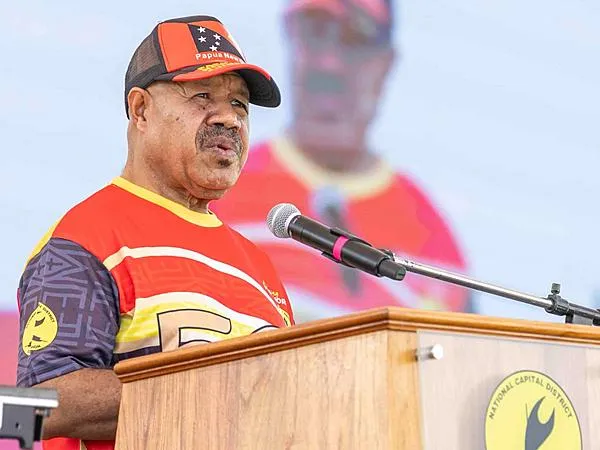
National Capital District Governor Powes Parkop has urged the government to treat Papua New Guinea’s recent placement on the Financial Action Task Force (FATF) grey list as a catalyst for economic reform, calling for stronger import substitution policies and reduced reliance on unprocessed mineral exports.

PNG was placed on the FATF list of Jurisdictions Under Increased Monitoring on Feb. 13, alongside Kuwait. More than 20 countries are currently subject to increased monitoring.

Parkop said the designation should prompt deeper structural reforms rather than political alarm.

“The more we depend on imports and export only crude or raw materials, the more vulnerable our economy becomes to manipulation and control by bigger economies, especially those in the G7,” he said.

He also argued that PNG must reduce its dependence on external borrowing to plug fiscal deficits, particularly from the International Monetary Fund.

The grey listing has sparked debate over financial governance and economic management, with the parliamentary opposition criticising the government’s handling of the economy.

Parkop, however, rejected suggestions that the designation reflects failures in monetary or fiscal policy.

“It’s not the first time for PNG to be grey listed. In 2015 we were placed on the list and were able to exit relatively quickly,” he said.

He maintained that the current listing is unrelated to how the government and the treasurer are managing monetary or fiscal policy.

“The opposition has been making a big hue and cry over the grey list when this has nothing to do with how our government and treasurer are managing our monetary policies, fiscal policies or the economy generally,” he said.

Parkop clarified that the listing relates specifically to “strategic deficiencies in combating money laundering and terrorist financing”, not broader economic mismanagement.

According to him, the designation signals increased monitoring and highlights weaknesses in enforcement, inter-agency coordination and supervision of financial institutions in relation to anti-money laundering and counter-terrorist financing measures.

“The public needs to understand this. We cannot allow the opposition to mislead people into thinking the government has committed some cardinal sin in the economy or financial system resulting in this grey listing,” he said. “Yes, there are issues in the management of the economy, but these are not the causes of the grey listing.”

Parkop said resolving the matter is achievable through improved institutional coordination. He urged the central bank and the Internal Revenue Commission to strengthen compliance, supervision and enforcement measures.

“It just needs us to ramp up inter-agency coordination. It’s absolutely doable,” he said.

At the same time, he cautioned against what he described as excessive regulatory prescriptions from international financial institutions, particularly the IMF.

“We brought this on ourselves. I keep warning the government not to allow the IMF to over-prescribe regulations to us. We are a small, vulnerable economy. Over-regulation — whether to prevent money laundering, terrorist financing or otherwise — will hurt our economy, especially the financial sector,” he said.

Parkop argued that heavy compliance burdens risk pushing some transactions into informal channels.

“Over-regulation is actually promoting money laundering, as people, including corporates, tired of all the regulations are banking and trading via the black market,” he claimed.

His remarks come amid ongoing exchanges between the government and opposition over the implications of the FATF decision.

Parkop said that while compliance gaps in anti-money laundering and counter-terrorist financing frameworks must be addressed, the issue remains technical and administrative in nature.

“With coordinated action by key institutions, we can meet the FATF requirements and exit the grey list, as we have done before,” he said.

February 23, 2026

Papua New Guinea has been placed on the Financial Action Task Force’s list of Jurisdictions Under Increased Monitoring, commonly known as the “grey list”, following the FATF plenary in Mexico City on 13 February.

The designation subjects PNG to enhanced monitoring by the global financial crime watchdog over weaknesses in its anti-money laundering, counter-terrorist financing and counter-proliferation financing (AML/CFT/CPF) regime.

The decision was confirmed in a joint statement issued Feb. 17 by Eric Kwa, secretary of the Department of Justice and Attorney General, and Elizabeth Genia, governor of the Bank of Papua New Guinea. Both serve as co-chairs of the National Coordinating Committee on AML/CFT/CPF.

Officials moved to reassure the business and financial community that the listing relates to the effectiveness of PNG’s legal and enforcement frameworks, not the prudential soundness of its banking system.

Government endorses action plan

PNG has agreed to implement a structured action plan developed through the FATF process. The plan sets out benchmarks and timelines aimed at strengthening the effectiveness of the country’s AML/CFT/CPF systems.

Prime Minister James Marape conveyed the government’s commitment at the highest political level, and the National Executive Council has directed all 23 agencies represented on the NCC to prioritise implementation.

The NCC comprises enforcement bodies, supervisory authorities, intelligence units, prosecutors and policy agencies. Officials said grey-listing requires a coordinated national response.

“Grey-listing is not a matter for one institution — it requires a coordinated national response across all responsible agencies,” the central bank said. Genia said the focus now shifts to execution.

“The action plan provides PNG with a clear roadmap and defined reporting cycles,” she said. “Our responsibility is disciplined implementation, measurable outcomes and regular progress updates to the FATF.”

PNG is scheduled to submit its first progress report in September 2026, in line with FATF reporting cycles. While monitoring follows set timelines, authorities said the objective is to demonstrate sufficient progress to move towards removal from increased monitoring within, or ahead of, the established deadlines.

Kwa underscored the importance of inter-agency coordination.

“The NCC mechanism ensures that investigative bodies, supervisors and policy agencies work in concert. Their collaboration is already delivering results,” he said.

Early enforcement activity

Implementation of the action plan has already begun, according to the statement. Authorities cited recent asset freezes and arrests as evidence of strengthened cooperation among NCC agencies, including through the ARROW referral pathway.

Officials indicated that businesses can expect increased enforcement activity and heightened regulatory scrutiny as agencies intensify compliance efforts under the action plan framework.

For the business and investment community, authorities sought to draw a clear distinction between FATF monitoring and financial sector stability.

PNG’s financial institutions, including commercial banks and the central bank, continue to operate under prudential frameworks aligned with international standards. Authorities said correspondent banking relationships and access to the international financial system remain stable.

The FATF process assesses the effectiveness of a country’s legal, supervisory and enforcement systems in combating financial crime. It does not evaluate the solvency, liquidity or capital adequacy of the banking sector.

Political and international backing

The NCC co-chairs said the government has provided full political and financial backing, noting that FATF places significant weight on demonstrated political commitment to reform.

They said agencies have been assured of the funding, policy direction and legislative support required to meet FATF timelines.

International partners have also indicated their readiness to assist PNG. Support was signalled during the Mexico City plenary and in discussions with multilateral partners in Washington. The NCC will coordinate external technical assistance to align with the requirements of the action plan.

While the increased monitoring designation may bring heightened scrutiny, officials stressed that the process is structured, time-bound and focused on measurable reforms, with the government’s stated objective being accelerated progress towards removal from the grey list.

February 23, 2026

The Minister for Works and Highways, Peter Tsiamalili Jr, has called for stronger accountability, tighter financial management and engineering excellence as the Department of Works and Highways convened its 2025 final quarter budget review in Lae.

The three-day review, held at the Lae International Hotel in Morobe Province on Tuesday, Feb. 17, aims to consolidate departmental performance, strengthen accountability mechanisms and set the strategic direction for infrastructure delivery in 2026 under the Connect PNG and National Road Network agenda.

Addressing senior management, regional and provincial works managers and departmental staff, Tsiamalili described the meeting as a critical national exercise.

“This meeting is of national importance. It is not merely an administrative requirement. It is a moment of accountability, reflection and strategic alignment as we close the 2025 financial year and prepare for 2026,” he said.

He commended officers for their efforts throughout 2025, noting the challenging operating environment marked by extreme weather events, landslides, flooding, ageing infrastructure backlogs, procurement pressures and growing public demand for reliable connectivity.

The minister cited progress in national road connectivity, including completion of major missing links such as the Magi Highway connection between Port Moresby and Milne Bay, the Kerema-to-Lae Trans-National Highway missing link, and the Tabubil-to-Telefomin link in the Trans-Fly and Sandaun border corridors.

He also paid tribute to the late former minister, Solan Mirisim, for his leadership from 2022 to 2025 in advancing the government’s infrastructure agenda.

“Our roads and bridges are not just engineering assets — they are the lifelines of our nation,” Tsiamalili said.

Public funds and discipline

Setting the theme for discussions — “Connecting the Unconnected and Reaching the Unreached under the Connect PNG Program and Preserving the Road Network through Sustainable Maintenance” — the minister stressed that public funds must be managed with discipline and integrity.

“Every kina we spend belongs to the people of Papua New Guinea,” he said. “Public resources are entrusted to us through Parliament and government.”

He directed senior, regional and provincial managers to enforce strict discipline in budget execution, expenditure control, reporting compliance and value-for-money delivery. He warned against wasteful spending, inflated costs, unnecessary contract variations, weak project controls and poor accountability.

“The people deserve results — not leakage,” he said.

Zero tolerance for malpractice

Tsiamalili declared a zero-tolerance stance on unethical conduct within the department, warning there was no place for abuse of office, unethical engineering practices, substandard construction, negligent supervision or corrupt contract management.

“Poor engineering is not just a technical failure. It is a national cost and a national loss,” he said, adding that recurring collapses, repeated repairs and wasted budgets erode public trust.

He reminded engineers of their professional obligation to safeguard public safety and the national interest.

Alignment with national priorities

The minister reaffirmed that infrastructure delivery must align with the National Road Network Strategy, the government’s Connect PNG Economic Road Development Program, the Connect PNG Phase 1 implementation plan (2020–2027), and the national road maintenance plan.

He described Connect PNG as the government’s flagship initiative to link districts, provinces and economic corridors, unlocking agriculture, trade, health and education access, as well as promoting national unity and inclusive economic development.

“Prioritise projects that align with the approved national agenda of connecting the unconnected and reaching the unreached,” he said. “Avoid fragmented spending. Avoid politically convenient diversions. Focus on roads and bridges that matter to national connectivity and economic transformation.”

Tsiamalili also emphasised strict compliance with the Public Service Management Act, General Orders, the Public Finance Management Act, the Appropriations Act and the Connect PNG Act.

“Every expenditure must be lawful, appropriated, justified, transparent and auditable,” he said.

Innovation and service

Acknowledging recurring challenges such as flooding, bridge failures, landslides and climate impacts, the minister called for greater innovation, including climate-resilient designs, improved maintenance regimes and stronger asset management systems.

“We cannot continue solving tomorrow’s problems with yesterday’s approaches,” he said.

He proposed establishing a Public Works Training and Research Institute to strengthen applied research and develop long-term solutions to infrastructure challenges.

In closing, Tsiamalili reminded officers that public service is a national calling.

“This department is not about contracts. It is about service,” he said, urging staff to uphold integrity, duty and accountability as the department finalises its 2025 financial year and prepares for 2026.

“The future of our infrastructure depends on what we do now,” he said.

February 18, 2026

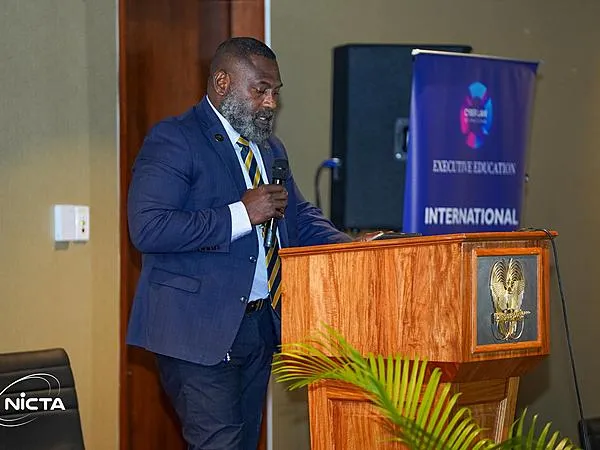
Acting Minister for Information and Communications Technology Peter Tsiamalili Jr. formally closed a week-long programme on international cyber law and cybercrime cooperation, calling it a pivotal step in Papua New Guinea’s digital development pathway.

The workshop, held at APEC Haus from 9 to 13 February, brought together government agencies, international experts, and partners to strengthen PNG’s national capability in cyberspace. In his closing remarks, Minister Tsiamalili emphasised that protecting essential systems, maintaining trust, and responding credibly to cyber incidents is now “mandatory, not optional” for the country.

“The Government is very clear on what it wants to achieve,” he said, reflecting on PNG’s realignment of priorities since its 50th anniversary last year. He noted that the ICT sector has become an integral part of every government function and operation.

Minister Tsiamalili highlighted PNG’s recent international commitments, including Parliament’s ratification of the Budapest Convention on Cybercrime in November 2025. He noted that the country is now set to deposit its instrument of accession. PNG also signed the Hanoi Convention, informally known as the United Nations Convention Against Cybercrime, in October 2025 in Hanoi, Viet Nam, and has taken deliberate steps to align national policies with trusted international frameworks.

“These actions reflect PNG’s intent to build a lawful, credible, and cooperative national posture, supported by real institutional capability,” Minister Tsiamalili said.

He underscored PNG’s regional leadership, citing the 2023 Lagatoi Declaration as evidence of Pacific Island Forum countries’ shared understanding that cooperation is essential to protecting citizens and growing digital economies. Accession to the Budapest Convention, he added, will strengthen collaboration with State Parties in the Pacific and globally on lawful data requests, timely assistance, and coordinated responses to cybercrime.

During the week-long programme, participants completed the course International Law Applicable in Cyberspace, which focused on implementing the Budapest Convention. International faculty from Cyber Law International, including Ms Liis Vihul, Professor Marko Milanovic, and Mr Alexander Seger, guided PNG officials through legal principles, enforcement realities, and cross-border cooperation.

Closing the programme, Minister Tsiamalili stressed immediate follow-through. “The task now is execution: coordinated institutions, clear mandates, lawful powers, safeguards that protect rights, and trained officers who can act quickly and correctly. Let us translate this week’s learning into a national work programme with clear responsibilities and timelines.”

He said PNG’s accession to the Budapest and Hanoi Conventions marks a major national step, aligning institutions with trusted international standards for tracking cybercrime and enabling lawful cooperation on electronic evidence.

The programme was co-organised by the Government of Papua New Guinea through NICTA and facilitated by the Australian Government through Australian AID.

February 16, 2026

Preparations are underway for the launch of the From Here to There: The Cost of Government Administration and Services in Bougainville report, following high-level discussions with the National Economic and Fiscal Commission (NEFC) and Autonomous Bougainville Government (ABG) officials earlier this month.

The study represents the most comprehensive cost of service assessment undertaken for Bougainville and is expected to inform ongoing fiscal planning, service delivery discussions, and the progressive transfer of functions and powers.

The engagement brought together officials from the ABG Department of Treasury and Finance, the Department of the President, the Bougainville Executive Council (BEC) – Strategic Planning and Policy Division – and the NEFC Policy Team. Discussions reviewed the report’s findings and outlined implementation priorities ahead of its official release.

Evidence-Based Fiscal Planning

ABG Deputy Secretary for Strategic Planning and Policy, Steven Kolova, said the report provides a critical foundation for forward planning.

“Understanding the true cost of government services is fundamental to informed planning. This report will support our budgeting processes, strengthen engagement with the National Government, and guide discussions with development partners as Bougainville advances its future priorities,” Kolova said.

The Cost of Service survey originated from a Joint Supervisory Meeting held in Arawa in 2021, where leaders highlighted the importance of progressing towards a consolidated “one-line budget” arrangement for Bougainville. The NEFC was subsequently mandated to undertake a detailed costing study to support fiscal transparency and the progressive transfer of functions and powers.

Comprehensive Multi-Year Assessment

The multi-year exercise included budget analysis, field visits across Bougainville, consultations with national agencies, geographic information system (GIS) mapping, surveys, and the development of a tailored costing model reflecting Bougainville’s unique context.

Finalised in November 2024, the study adopts a whole-of-government approach to analysing the cost of administering Bougainville. It assesses service delivery across key sectors, including governance and central administration, law and justice, infrastructure, economic development, and social sectors such as health and education.

The report notes that the true cost of administering Bougainville extends beyond the ABG’s annual budget, with many service delivery costs remaining embedded within national agency allocations. As Bougainville assumes greater responsibilities, these costs will require clearer identification and structured transfer arrangements.

International comparisons with other small island states in the Pacific provide useful benchmarks for governance costs in similar geographic and demographic settings.

Supporting Fiscal Transparency

NEFC Policy Director Eric Kumasan said the study provides a clearer understanding of Bougainville’s fiscal landscape.

“This study provides an important evidence base to support ongoing discussions on service delivery and fiscal planning. It gives Bougainville a clearer picture of where it stands financially and what is required moving forward,” Kumasan said.

The report recommends continued functional analysis, sector-specific costing exercises, and peer learning with comparable Pacific jurisdictions to support Bougainville’s long-term planning.

Participants also acknowledged the legacy of the late Patrick Kennedy Painap, former Chairman and CEO of the NEFC, who championed the From Here to There study from its inception.

ABG Secretary for Finance and Treasury, Joshua Tauko, conveyed the government’s appreciation.

“The Autonomous Bougainville Government acknowledges with great respect the core role played by the late Patrick Kennedy Painap in progressing this important body of work. His commitment to evidence-based fiscal planning and his dedication to Bougainville will not be forgotten,” Tauko said.

The From Here to There report arrives at a crucial time as Bougainville continues its institutional development and preparations for future governance arrangements. The collaboration between the ABG and NEFC reflects a shared commitment to evidence-based planning, partnership, and responsible fiscal management.

February 16, 2026

TISA Bank Limited is proud to announce the appointment of Luke Kaul as acting Chief Executive Officer, effective 16 February 2026. Endorsed by the TISA Bank Board, this strategic appointment ensures strong leadership and continuity as the Bank continues to expand its presence in Papua New Guinea’s financial sector.

Kaul, a seasoned industry veteran, brings over a decade of leadership experience to the role. His extensive background spans retail banking, lending, and risk and compliance, with a career distinguished by operational scaling and the development of high-performing, cross-functional teams.

Since 2018, Kaul has served as Group Chief Operating Officer of TISA Group, playing a fundamental role in the Group’s expansion. He has been instrumental in overseeing group-wide operations, executing core strategies, and building institutional capacity that underpins the Bank’s current success.

TISA Bank Chairman Moses Koiri highlighted the significance of the appointment for both customers and stakeholders:

"Luke has a deep and comprehensive understanding of the financial sector," said Koiri. "With his strategic leadership at the helm, we are confident this appointment will ensure continuity, stability, and effective oversight as we pursue our long-term strategic objectives."

The appointment is subject to a fit-and-proper assessment by the Bank of Papua New Guinea. Kaul will serve in the interim while the Board conducts a formal, comprehensive recruitment process for a permanent Chief Executive Officer.

Under Kaul’s leadership, TISA Bank remains committed to delivering modern, phygital banking services and exceptional value to the people of Papua New Guinea.

The Bank also acknowledges the contributions of its former CEO, Sunil Pokharel, and wishes him well in his future endeavours.

February 16, 2026

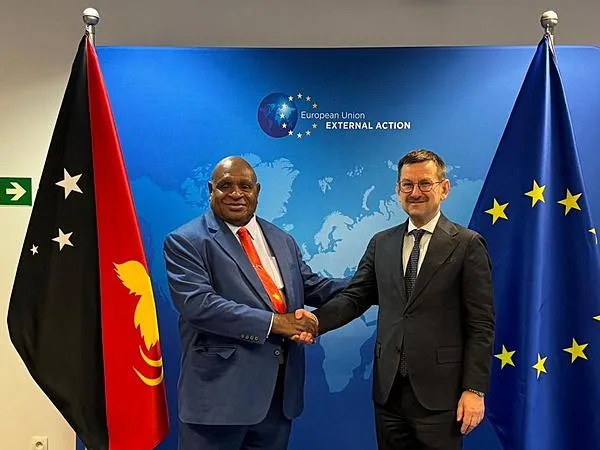
The European Union (EU) and Papua New Guinea (PNG) held their first “Partnership Dialogue” under Article 3 of the new Partnership Agreement between the Organisation of African, Caribbean and Pacific States and the EU (the “Samoa Agreement”) on 12 February in Brussels.

The dialogue provided an opportunity for both sides to review bilateral cooperation since the last Political Dialogue under the former Cotonou Agreement, which took place in February 2023 in Port Moresby, and to update each other on key developments.

Both parties reaffirmed their firm commitment to deepening and strengthening their partnership while upholding the rules-based international order, with the United Nations at its core. They emphasised the need for effective and inclusive multilateralism, particularly in addressing challenges related to climate change, economic uncertainties, and regional security.

The participants also highlighted the importance of responding to the consequences of Russia’s war of aggression against Ukraine and stressed the need to safeguard economic security while pursuing an ambitious green and resilient transition both nationally and globally.

The dialogue further reflected the shared values of the EU and PNG, including the rule of law, democracy, and human rights. PNG presented recent progress in good governance and the protection of human rights.

Key areas of partnership were reviewed at both bilateral and multilateral levels, including implementation of development programmes under the Global Europe Instrument (NDICI) and prospects under the EU’s Global Gateway strategy. Discussions also focused on global issues of strategic importance, such as climate change, environmental protection, and ocean governance, including fisheries management.

On trade, the EU and PNG exchanged updates on the interim Economic Partnership Agreement (iEPA) concluded between the EU and several Pacific Island countries, noting the benefits it continues to deliver for both sides.

The Partnership Dialogue was co-chaired by Mr Erik Kurzweil, Managing Director for Asia and the Pacific, European External Action Service (EEAS), and Elias Rahuromo Wohengu, Secretary for Foreign Affairs of PNG.

February 16, 2026

The Bank of Papua New Guinea (BPNG) officially announced on 2 February the appointment of Sir Robert Igara, KBE, CMG, as chairman of its Board of Directors, effective December 23, 2025.

BPNG Governor Elizabeth Genia welcomed the appointment in a statement, describing Sir Robert’s experience and leadership as significant assets to the institution.

“We are privileged to welcome Sir Robert as chair. His extensive experience within the public sector and his deep understanding of our legislative framework are invaluable assets as BPNG continues its modernisation journey,” Genia said.

She added that she looks forward to working closely with Sir Robert, Mr Baker and the Board to ensure the Bank remains a robust, transparent and effective institution serving the people of Papua New Guinea through 2026 and beyond.

Sir Robert succeeds David Toua, OBE, whose term concluded in late 2025. The Bank expressed its sincere appreciation to Mr Toua for his leadership and contributions during his tenure as chairman.

According to BPNG, Sir Robert brings more than 40 years of experience in senior public service, diplomacy and financial governance. He is a former Chief Secretary to the Government and has also served in distinguished diplomatic postings in Canberra and Suva.

He has a strong understanding of the Bank’s regulatory environment, having chaired the Independent Advisory Group that oversaw the 2021 and 2024 amendments to the Central Banking Act.

In addition to his role at BPNG, Sir Robert serves as Chancellor and Chairman of the Council of the University of Papua New Guinea and holds several key leadership positions within the PNG business community. He has been a member of the BPNG Board since early 2025 and previously served on the Board in 2005.

Sir Robert holds academic qualifications in Economics, International Law and Business Administration, and is a member of the Australian Institute of Company Directors.

His appointment underscores the central bank’s continued commitment to strong governance and strategic oversight. His leadership is expected to support policies that foster economic growth, strengthen investor confidence and ensure the country’s banking sector continues to play a pivotal role in broader business and economic development.

February 16, 2026

Port Moresby’s long-term transformation agenda has received high-level endorsement, with Papua New Guinea’s Governor-General, Sir Bob Dadae, backing the Amazing Port Moresby Vision 2030 as a national priority — reinforcing the capital’s strategic role as the “Gateway to PNG.”

National Capital District Governor Powes Parkop confirmed the endorsement following an official audience on February 12, describing the meeting with the Head of State’s representative as both symbolic and significant for the city’s development.

“I had the distinct honour of an audience with the Governor-General of Papua New Guinea, His Excellency Sir Bob Dadae,” Governor Parkop stated.

According to Governor Parkop, the Governor-General initiated the meeting to acknowledge the progress made in reshaping the capital and to encourage continued commitment to the long-term vision.

“His Excellency graciously requested the meeting to personally convey his appreciation for the ongoing transformation of our capital city and to encourage us to remain steadfast in our mission to lift Port Moresby to its full potential,” he said.

The endorsement further strengthens Port Moresby’s position as the country’s primary economic hub and international entry point. Under Vision 2030, the capital is being rebranded and repositioned as the gateway to Papua New Guinea — a city where tourists feel welcomed, investors find opportunity and businesses can grow in a stable and enabling environment.

Governor Parkop underscored the weight of the Governor-General’s support in advancing the reform and development agenda.

“As the Representative of the Head of State, his words of encouragement carry deep meaning not just for me, but for our entire city,” he said.

He also revealed that Sir Bob Dadae expressed clear backing for the long-term blueprint guiding the capital’s urban renewal, infrastructure upgrades, social programmes and governance reforms.

“His Excellency expressed his strong support for the Amazing Port Moresby Vision 2030, acknowledging the significant progress made under this vision while recognising the many challenges that remain. He encouraged us to continue drawing wisdom from God and strength from our ancestors as we work to build a city that is safe, liveable, productive and proud of its identity,” Governor Parkop said.

From a business perspective, the Vision 2030 framework aims to improve urban management, strengthen public safety, enhance cleanliness and modernise infrastructure — key factors influencing investor confidence and tourism growth. A safe, clean and liveable capital is widely regarded as critical to attracting domestic and foreign investment, particularly as Papua New Guinea approaches major national milestones.

Governor Parkop emphasised that the Governor-General’s endorsement elevates the city’s transformation beyond municipal planning into the realm of national development strategy.

“The endorsement of the Governor-General affirms that the transformation of Port Moresby is not merely a local ambition — it is a national priority. Our city must reflect the best of Papua New Guinea: unity in diversity, resilience, peace and opportunity,” he said.

The capital’s strategic importance is further underscored as the nation prepares to mark another year of Independence. Port Moresby has taken centre stage in the PNG50 commemorations, positioning itself as the face of the country to the region and the world.

Governor Parkop confirmed that the Governor-General will play a key role in the upcoming celebrations.

“I am pleased to confirm that His Excellency will join us this Sunday as we launch the Amazing Port Moresby PNG50 celebrations, marking an important chapter in our journey as the nation commemorates its 50th year of Independence,” he said.

The Amazing Port Moresby PNG50 celebrations will be launched on Sunday, 15 February, as a free public event. An open invitation has been extended to all citizens, businesses and sectors across the country to participate in what organisers describe as a united national celebration.

The meeting with the Governor-General also included a personal note, reflecting values of unity and peace that align with the broader city vision.

“We also shared a personal moment of joy as His Excellency and Madam Dadae welcomed a baby boy on 17 January 2026. They have named him Lumbe, meaning ‘Peace’ in the Kabwum language — a powerful reminder of the values we seek to embed in our city and our nation,” Governor Parkop added.

As Port Moresby advances its urban transformation agenda, the focus remains on strengthening its identity as a modern Pacific capital — clean, safe, investment-ready and culturally grounded. The Vision 2030 strategy seeks to ensure that, as the first point of contact for visitors and investors, the city projects confidence, stability and opportunity.

“With unity, faith and determination, we will continue to transform our capital — one street, one suburb, one village and one community at a time.One People. One City. One Future.”

February 13, 2026

Remington Group is excited to be the first tech company in PNG to launch an e-commerce website, strengthening its commitment to providing Papua New Guineans with reliable, high-quality, and locally supported technology solutions.

The online store builds on the success of the recently opened Remington Hi-Tek flagship showrooms in Port Moresby and Lae, extending the same level of product quality, customer service, and after-sales support to customers nationwide.

The platform offers a carefully selected range of smartphones, laptops, TVs, accessories, and smart devices from reputable global brands, all backed by Remington’s established local warranty and technical support services.

With more than 77 years of operating in Papua New Guinea, Remington Group continues to invest in initiatives that support the country’s digital growth. The launch of the Remington Hi-Tek e-commerce platform reflects the Group’s strategic focus on improving access to technology for households, businesses, educational institutions, and organisations across PNG.

“Our customers want dependable technology, transparent pricing, and local support they can rely on,” said Justin Kieseker, CEO of Remington Group. “The launch of the Remington Hi-Tek e-commerce platform ensures that Papua New Guineans, regardless of location, can access genuine, high-quality products with the assurance of local service and support. This is an important step in supporting PNG’s digital development.”

Through the new e-commerce platform, customers will benefit from:

  • A secure and easy-to-navigate online shopping experience

  • Genuine, brand-new products from trusted manufacturers

  • Nationwide delivery options

  • Local warranties and professional after-sales support

  • Competitive pricing for both individual and corporate customers

The Remington Hi-Tek e-commerce store is now live, with additional features and an expanded product range to be introduced over time.

Visit: www.remingtonhitek.com.pg
February 11, 2026

The Investment Promotion Authority (IPA), in collaboration with the Business Council of Papua New Guinea (BCPNG) and the PNG Diaspora Business Council of Australia (PNGDBCA), has welcomed a three-day visit to Papua New Guinea by a 35-member PNG-Australia Diaspora Trade and Investment Delegation.

The delegation, comprising Papua New Guinean professionals, business owners, and industry leaders based in Australia, participated in a Trade and Investment Conference held from 1–3 February 2026 at the Hilton Hotel in Port Moresby.

The delegation’s visit, facilitated by IPA and BCPNG, aimed to create structured pathways for trade, investment, and skills transfer between PNG and its diaspora community in Australia. 

PNG Business Council President Susil Nelson in her keynote address highlighted the importance of the initiative as a platform for trade, skills transfer, and service development.

She further described the initiative as an avenue for “brain gain,” noting the willingness of Papua New Guineans in Australia to contribute to the country’s growth across skills development, social services, health, education, business, and trade.

The PNGDBCA, a first-of-its-kind diaspora-led business council, has been developed with the full backing of the BCPNG and aligns closely with bilateral Australia-PNG economic priorities. The visiting diaspora delegation represented five key business sectors including; Professional Services, Consulting & Education, Real Estate, Construction & Engineering, Manufacturing, Trade & Logistics, Retail, Fashion & Personal Care, Tourism, Media & Creative Industries. 

The delegation’s engagement represents a unique strategic opportunity to advance two-way trade, investment, and sustainable economic development between both countries.

This initiative, currently in its incubation phase under the BCPNG, also marks the first structured trade and investment mission led by the PNG diaspora which is strengthening diaspora-led economic cooperation and people-to-people trade.

During their visit, delegates engaged directly with senior government representatives, private sector partners, and development institutions. The program included high-level interactions such as the Prime Minister’s Business Leaders Breakfast, official briefings with IPA, trade and investment roundtables with government and industry leaders, sector-specific business matching sessions, site visits, industry engagements, and formal networking events.

Key government agencies participating in the program included the Investment Promotion Authority (IPA), Internal Revenue Commission (IRC), Australian High Commission to PNG, National Fisheries Authority, Trade Commission Office, PNG Business Council, and other regulatory bodies and dignitaries.

The PNGDBCA delegation included a broad spectrum of Papua New Guinean-owned businesses in Australia which includes Franchise Ecosystem PNG, Allen Export Pty Ltd,Orange Guide, Impact Media PNG, Aviation Labour Group Talent, Winter Recruitment & Visa Services, Ruthz Management Solutions, Malana (Aust) Pty Ltd (Trustee for the Malana Family Trust),Amyblu Island Essential, Strategise PNG Ltd, Supa Insulation, Realcrete Australia Pty Ltd, Wantok Solution Pty Ltd, Ephana Enterprise Ltd, Wantok Travel Services, Maureen Sause (Certified Coach), Bopy’s Clothing & Beige Petroleum Ltd, 333 Solutions, BushMahn 4WD, Strike Group Australia Pty Ltd, JOJEM RESOURCES Pty Ltd, Midire & Co, Australia Sepik Foundation Limited, Onstech Pty Ltd, Kalakai Collective, AIATSIS, ASL Downunder, Yarap and  TommyWaiherTrans Co.

IPA’s Director of Investor Servicing and Promotions Peter Daroa presented on the agency’s mandate, current investment trends, challenges, and growth opportunities. He highlighted key business environment issues including law and order, unemployment, inflation, and accessibility constraints.

Daroa also emphasised that these challenges represent priority investment areas, particularly in security and surveillance solutions, labour mobility programs, and export expansion.

Daroa noted that the PNG diaspora population in three key countries which are Australia (29,995 - by birth, 22,664 -by ancestry), the United Kingdom (1,536), and the United States (1,453) is estimated at approximately 33,000 people, a relatively small figure compared to other Pacific nations:

Delegates shared insights on their businesses and experiences in engaging with PNG. The conference underscored the growing commitment of the PNG diaspora community in Australia to reconnect economically with their homeland, through both dialogue and through actionable partnerships, investment, and collaboration.

February 10, 2026

OFC Tech Solutions, a Remington Group company, announces a strategic partnership with Alcatel-Lucent Enterprise, a leading provider of secure networking and communication solutions that enable organisations and industries to accelerate their operational efficiencies and competitiveness. This collaboration is set to modernise enterprise-grade networking and cloud-based communication systems across Papua New Guinea.

The partnership arrives at a critical juncture for the local market. As legacy hardware providers begin to phase out traditional PABX systems, many organisations face the risk of aging infrastructure and limited support. Through this collaboration, OFC Tech Solutions and ALE provide a seamless, secure, and scalable migration path to modern IP-based and hybrid-cloud platforms.

"We are thrilled to welcome OFC Tech Solutions to our partner ecosystem. Their deep local knowledge and the Remington Group’s legacy of service excellence make them the ideal partner to drive digital transformation in Papua New Guinea," said Dinesh Divakar, Country Leader, ANZ, Alcatel-Lucent Enterprise. "Together, we are ensuring that PNG businesses don't just 'replace' their systems but 'evolve' them with secure, resilient, and future-ready communications solutions. This enables customers to modernise their communications infrastructure with confidence while ensuring long-term support and scalability.”

OFC Tech Solutions is a leading ICT services provider in Papua New Guinea and a key business unit of the Remington Group. The company delivers enterprise technology solutions, including IT infrastructure, networking, communications systems, and managed services, supporting government, corporate, and institutional clients across the country.

Commenting on the partnership, Asanka Dias, General Manager of OFC Tech Solutions, said the decision was driven by a focus on practical value for customers.

“This is an exciting time for OFC Tech Solutions as we continue to support and bring added value to our customers through technology. Partnering with Alcatel-Lucent Enterprise allows us to offer a reliable, globally proven solution that helps organisations upgrade their systems, improve efficiency, and plan confidently for the future.”

The introduction of the Alcatel-Lucent OmniPCX® Enterprise Communication Server further strengthens OFC Tech Solutions’ enterprise communications portfolio and reinforces the Remington Group’s commitment to delivering world-class technology solutions supported by strong local expertise.


Alcatel-Lucent Enterprise provides secure networking and communication solutions that enable organizations and industries to accelerate their operational efficiencies and competitiveness — in the Cloud, On Premises, or Hybrid.

All solutions have built-in security, a limited environmental impact, and full compliance with data protection requirements for organizations and individuals at both the national sovereignty and international industry levels.

Alcatel-Lucent Enterprise focuses on three pillars: Environmental Sustainability, Social Responsibility, and Corporate Governance, providing technology solutions for the good of the environment, people, and business.

Over 100 years of innovation have made the company a trusted advisor to more than a million customers worldwide. With headquarters in France and 3,400 business partners globally, Alcatel-Lucent Enterprise achieves effective global reach with a local focus.

February 09, 2026

Prime Minister James Marape has confirmed that Papua New Guinea will host the Asia-Pacific Economic Cooperation (APEC) Leaders’ Meeting in 2033, marking the country’s second time hosting the prestigious regional forum following APEC 2018.

Speaking from Dubai, Prime Minister Marape said the confirmation provides PNG with seven years of preparation and described the opportunity as a defining moment to showcase a stronger, more mature, and competitive nation to the global community.

“Papua New Guinea has once again been entrusted with hosting APEC, fifteen years after we successfully hosted APEC 2018,” he said. “This time, we want APEC 2033 to be bigger, better, and more reflective of a nation that has matured economically, fiscally, and democratically.”

The Prime Minister said the government formally expressed interest in hosting APEC again, building on the foundations laid in 2018 and positioning the country to present a compelling national story ahead of its 60th Independence Anniversary in 2035.

His engagements in Dubai form part of broader efforts to strengthen PNG’s global economic and diplomatic connectivity ahead of APEC 2033, including the establishment of PNG’s Ambassador to Dubai, Frank Assi, and the mobilisation of new trade linkages between the Middle East, Europe, and the Asia-Pacific.

“Papua New Guinea occupies a unique strategic position at the confluence of the Pacific Island countries, ASEAN, and APEC. We intend to link the Middle East with the Far East through our diplomatic presence in Dubai, alongside missions in Israel and Europe, opening markets, financing opportunities, and trade pathways for our producers,” he said.

Stronger Economy, Balanced Budget, Debt Repayment

Prime Minister Marape said APEC 2033 is expected to coincide with significant national milestones, including full repayment of PNG’s sovereign debt and achievement of major economic targets.

“By 2033, our economy will be much stronger. We expect to have passed our K200 billion economy target, fully repaid our sovereign debts, and established ourselves as a reliable trading partner in a robust free-market economy and solid democracy,” he said.

The Prime Minister noted that the government is on track to deliver a balanced budget next year, following consistent fiscal consolidation, reduced deficits, and steady economic growth averaging around four percent in recent years.

“This is not coincidence. It is discipline. If we stay the course, APEC 2033 will be held at a time when PNG can confidently tell the world that we are stable, reliable, open for business, and ready to trade,” he said.

Early Preparations to Begin in 2026

Prime Minister Marape announced the establishment of a national APEC 2033 preparation committee this year, stressing that early planning is essential for a successful event.

“Six to seven years is not a long time for an event of this magnitude. Preparation is not just about infrastructure; it is about city planning, safety, transport systems, airports, hospitality, and how we present ourselves as a nation,” he said.

Planning will align with broader national initiatives, including urban renewal, airport expansion, public safety improvements, and lifestyle adjustments to support sustained international engagement.

Jacksons Airport, Aviation Links, and Regional Hosting Options

The Prime Minister confirmed that expansion of Jacksons International Airport will be central to APEC preparations, alongside consideration of hosting selected events outside Port Moresby.

“Opening direct links to global hubs such as Dubai is part of opening our economy and positioning PNG as a serious trading nation,” he said.

“We are also exploring spreading some APEC activities to centres such as Lae, Kokopo, Madang, Alotau, Goroka, Mt Hagen, Kimbe, and Manus, allowing more Papua New Guineans to participate and benefit.”

Showcasing PNG’s Maturity and Investment Story

APEC 2033 will provide a platform to present PNG as a mature exporting nation, supplying global markets with rare earth minerals, oil and gas, agricultural products, and fisheries amid rising global demand.

“By then, projects such as Papua LNG and Wafi-Golpu will be well established, other mining operations will be running, and we will be more mature as an exporter and trading nation,” Prime Minister Marape said.

He noted engagement with potential partners from the UAE, which has global expertise in airports, ports, and logistics, including through public-private partnerships.

“We are exploring partnerships to support airport upgrades, seaport hub development, and trade-enabling infrastructure to strengthen our role in global commerce,” he said.

A National Story to the World

Prime Minister Marape said APEC 2033 will allow PNG to tell a powerful national story of a country that has stabilized, reformed, and emerged stronger.

“Few nations have maintained democracy for over fifty years while undertaking deep economic reform. As we prepare for APEC 2033, we do so with confidence, discipline, and a clear vision — to present PNG as a modern, prosperous, and globally connected trading nation,” he said.