


March 23, 2026

TISA Bank Limited and Crown Hotel Port Moresby have formalised a new strategic partnership with the signing of a Memorandum of Understanding (MOU) aimed at delivering exclusive hospitality discounts and enhanced digital payment services to TISA Bank customers and TISA Group employees.

Under the two-year agreement, Crown Hotel will offer substantial discounts across accommodation, dining, conferencing, and leisure services to eligible TISA Bank customers and employees. The partnership also includes the integration of TISA Bank’s digital payment channels within the hotel, including Visa Debit Card payments, QR Scan-to-Pay, and the Yumi Pei Wallet.

The agreement solidifies a commitment to enhancing the customer experience by merging Crown Hotel’s premier hospitality services with TISA Bank’s innovative financial technology. Eligible TISA Bank customers and group employees will now enjoy a 10–20% discount on various services, including accommodation, dining, conferencing, and leisure services at the hotel.

A key feature of the partnership is the integration of TISA Bank’s digital payment ecosystem within the hotel. Guests can now make secure and convenient cashless payments using TISA Bank’s Visa Debit Card, QR Scan-to-Pay, or the Yumi Pei Wallet, streamlining the customer experience.

Following the signing, Mr Shankar Ghoshal, General Manager of Crown Hotel Port Moresby, expressed his enthusiasm for the collaboration.

Mr Kumaresh Chithravelu, Acting Deputy CEO of TISA Bank, highlighted the broader vision behind the agreement.

“This partnership reflects our commitment to delivering meaningful value to both our customers and employees. By combining exclusive hospitality benefits with secure and accessible digital payment channels, we are extending the reach of TISA Bank’s services into everyday experiences.”

The MOU is part of TISA Bank’s strategy to promote digital banking and a cashless economy, and reinforces both organisations’ commitment to customer experience, digital innovation, and secure service delivery.

March 19, 2026

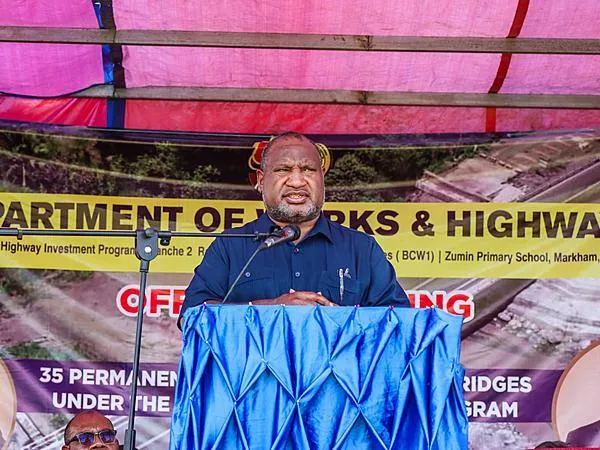
Prime Minister James Marape on 9 March 2026 officially opened 35 newly constructed permanent bridges along the Highlands Highway, describing the country’s most important transport corridor as the backbone of Papua New Guinea’s economy.

The ribbon-cutting ceremony took place at Zumim Bridge in Markham District, marking the completion of the first major phase of bridge reconstruction under the Asian Development Bank (ADB)-funded Sustainable Highlands Highway Investment Programme (SHHIP) Tranche 2.

The new dual-lane concrete bridges replace ageing Bailey bridges that had served the highway for decades but had deteriorated under increasing traffic loads and heavy freight movement along the critical corridor linking the Highlands region to Lae Port.

Prime Minister Marape said the Highlands Highway carries nearly 80 percent of Papua New Guinea’s economic activity, making continued government investment in its maintenance and modernization a national priority.

“This highway sustains the country. It carries the bulk of our economy from the Highlands to the port of Lae and to the rest of the world. It is worth reinvesting billions of kina into this national asset,” he said.

Joining the prime minister at the ceremony were Minister for Works and Highways Hon. Peter Tsiamalili Jr, Deputy Prime Minister Hon. John Rosso, Morobe Governor Hon. Rainbo Paita, Agriculture Minister Hon. John Boito, Markham MP Hon. Koni Iguan, representatives of the Asian Development Bank, and local leaders.

Prime Minister Marape acknowledged that the initial Highlands Highway restoration programme was secured under the previous government with approximately K1 billion in funding supported by ADB, but said the Marape–Rosso government expanded the program significantly, committing an additional K2 billion for bridge replacements, road reinforcement, and other critical upgrades along the corridor.

“In total, close to K3 billion has now been invested in rebuilding this highway, which is the economic spine of our nation,” he said.

He added that within the next six months, the highway corridor from Lae to Mount Hagen is expected to operate with modern bridge infrastructure and significantly improved road conditions.

Minister for Works and Highways Peter Tsiamalili Jr emphasized the national importance of the highway, stating that it connects close to five million people, nearly half of Papua New Guinea’s population, and carries the majority of the country’s exports.

“This highway links close to five million people. About 40 to 50 percent of the country uses this road, and nearly 80 percent of our exports travel along this corridor,” he said.

Tsiamalili also urged communities along the highway to take responsibility for protecting national infrastructure and ensuring development benefits local populations.

“There is both good and bad when development comes, and most of the bad comes from us men. It is time for us to change our mindset, protect this development, and look after our mothers and women in our communities,” he said.

Secretary for Works Gibson Holemba provided a technical overview of the project, explaining that the Nadzab to Henganofi section of the Highlands Highway spans approximately 202 kilometers and includes 35 bridges with a combined length of 1,773 meters. The project also delivered 45 roadside bus stops to improve accessibility and safety for communities along the corridor.

Holemba said the broader bridge reconstruction programme covers three sections of the Highlands Highway, including 19 bridges between Henganofi and Mangiro, and 17 bridges between Mangiro and the Kagamuga Airport Junction in Mount Hagen.

He added that through improved project management and contract savings of nearly K200 million, the Department of Works was able to include six additional bridges, increasing the total number of bridges to 77 across the project.

The opening of Zumim Bridge symbolically marks the completion of the first 35 bridges under the SHHIP programme, while construction and upgrades continue on the remaining bridges along the Highlands Highway.

Government leaders at the ceremony said the upgrades form part of the broader Connect PNG Programme, aimed at strengthening national transport infrastructure, improving economic connectivity, and supporting long-term development across Papua New Guinea.

March 16, 2026

PacSuper, Papua New Guinea’s oldest private-sector superannuation fund, has officially launched the country’s first fully digital Employer Portal, marking a major milestone in the ongoing modernisation of superannuation administration across Papua New Guinea.

The Employer Portal builds on PacSuper’s implementation of PRIMS, a new administration system introduced in 2025, alongside the launch of the PacSuper Member Portal. Together, these initiatives form a modern digital ecosystem designed to strengthen transparency, governance and retirement outcomes across Papua New Guinea.

PRIMS is the only superannuation administration system based in Papua New Guinea. While many funds rely on outsourced platforms hosted offshore, PacSuper has invested in a system designed specifically for the PNG market, strengthening control, reliability and service capability for members and employers.

PacSuper Chief Executive Officer Chris Hagan said the launch reflects PacSuper’s commitment to strengthening superannuation administration across the country.

“Following the introduction of our new PRIMS administration system and Member Portal last August, the Employer Portal represents the next step in modernising how superannuation is administered in Papua New Guinea,” Mr Hagan said.

“The system gives employers a clearer, more efficient way to manage contributions and engage with the Fund, while strengthening transparency and protection for members’ retirement savings.”

The Employer Portal delivers enhanced capability across four key areas:

Industry leadership
As the first fully digital employer experience introduced in Papua New Guinea’s superannuation sector, the portal represents an important step in lifting standards of transparency and accountability.

Employer service and interaction
Employers can now manage employee-related interactions more efficiently, including handling enquiries, completing required forms and following up on requests directly through a digital platform.

Improved contribution accuracy
Employers now have real-time visibility of contribution submissions and allocations, helping reduce reconciliation errors and improve reporting accuracy.

Operational efficiency and governance
Secure access controls, digital submission and auditable processing reduce manual handling while strengthening compliance and governance across the superannuation system.

These developments reflect PacSuper’s ongoing commitment to its members and employers, and to strengthening the future of superannuation in Papua New Guinea through continued investment in modern technology, local capability and improved retirement outcomes.

PacSuper is Papua New Guinea’s oldest private-sector superannuation fund, dedicated to making superannuation simpler, more efficient and more effective. Formerly the AON Master Trust, the fund rebranded as PacSuper in April 2024.

Committed to delivering better retirement outcomes, PacSuper is the only fund in PNG offering members the flexibility of multiple currency choices. With a strong focus on prudent risk management, PacSuper aims to ensure stability and security in an evolving financial landscape.

March 16, 2026

Bank of Papua New Guinea (BPNG) Governor Elizabeth Genia has assured the business community that Papua New Guinea’s recent placement on the Financial Action Task Force (FATF) grey list does not mean the country is unsafe for investment or business operations.

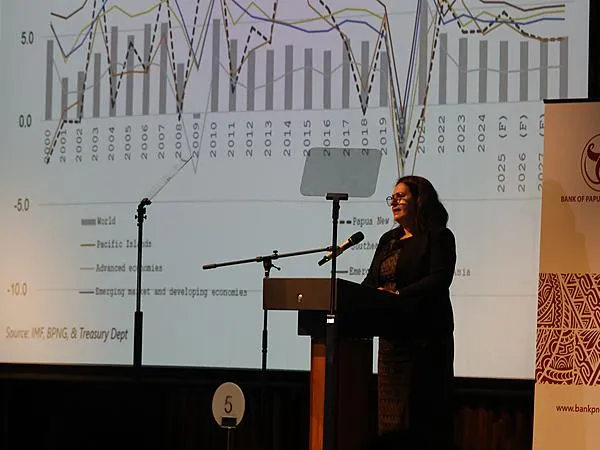
Governor Genia made the remarks during a BPNG business breakfast meeting held on Monday, March 9, where she presented the Bank’s March 2026 Outlook on the Economy, Inflation and Monetary Policy.

The Governor outlined recent economic developments, the outlook for inflation and the latest decisions of the Monetary Policy Committee (MPC), noting that Papua New Guinea’s economy continues to show resilience despite increasing global uncertainty.

Addressing concerns about Papua New Guinea’s placement on the FATF grey list, Governor Genia said reforms are already underway to strengthen the country’s anti-money laundering and counter-terrorism financing framework.

“Grey listing does not mean Papua New Guinea is sanctioned or unsafe to do business,” she said.

Governor Genia said the country continues to record steady economic growth with moderate inflation, although global developments are contributing to a more uncertain international environment.

Domestic economic growth for 2025 has been revised upward to 5.3 percent, largely reflecting stronger production in the liquefied natural gas (LNG) and mineral sectors.

“For 2026, growth is projected to moderate to around 3.0 percent, representing a return to a more sustainable pace of expansion following the strong rebound in 2025,” she said.

Global uncertainty and energy prices

The Governor also highlighted emerging geopolitical risks that could influence global and domestic economic conditions.

Governor Genia said the recent escalation of conflict in the Middle East has introduced significant uncertainty into the global economic outlook. Disruptions to maritime transport through the Strait of Hormuz have contributed to higher global energy prices.

“Higher energy prices would feed directly into global inflation at a time when central banks in many advanced economies have only recently brought inflation back towards target,” Governor Genia said.

According to BPNG data, annual headline inflation stood at 4.1 percent in the December quarter.

Core inflation measures remained lower, with the trimmed mean at 1.8 percent and exclusion-based inflation at 0.7 percent.

The Bank projects headline inflation of around 4 percent in 2026, while core inflation is expected to remain within the 2.5 to 3 percent range over the medium term.

Monetary policy position

The Monetary Policy Committee assessed current economic conditions and determined that existing policy settings remain appropriate.

“Overall, the Committee judged that the current monetary policy settings are consistent with a broadly neutral stance and remain appropriate given contained underlying inflation and steady economic activity,” Governor Genia said.

Despite global uncertainties and the FATF grey listing, Governor Genia said Papua New Guinea enters this period of heightened global uncertainty from a position of relative resilience.

“Inflation remains contained, our reserves are adequate, and the financial system is stable. The Bank will continue to monitor developments closely and adjust policy settings if required to maintain price stability,” she added.

BPNG also reaffirmed its commitment to independence, transparency and continued engagement with the private sector and development partners.

March 12, 2026

Porgera, Enga Province: Reigning Miss Bird of Paradise PNG Iampela Popena joined women from local communities and the Porgera mine workforce to celebrate International Women’s Day (IWD), bringing a message of leadership, empowerment and equal opportunity.

Popena arrived in Porgera on March 7, 2026, accompanied by Anna Bais, chairlady of the Miss Bird of Paradise organisation, which supports young Papua New Guinean women participating in the Miss Pacific Islands pageant. Both organisations promote women’s leadership while highlighting intelligence, cultural identity and community engagement.

During the visit, Popena and Bais toured the Porgera mine operated by New Porgera Limited (NPL). Guided by NPL employees, the pair viewed the scale of the mining operation through a helicopter tour over the site and visits to key operational and administrative areas.

Popena also joined one of the mine’s female truck operators, Sharon Umange, in the cab of one of the world’s largest haulage trucks, giving her a close look at daily operations at the mine.

Prior to the site tour, Popena attended the launch of the NPL Women’s Community Development Committee, where she served as guest of honour. The initiative, organised by NPL’s Corporate Social Responsibility (CSR) department, aims to strengthen families and communities in the Porgera–Paiela district through the leadership of local women.

The launch event, held as part of IWD celebrations, was attended by NPL General Manager James McTiernan, Sustainability Manager Fiorenzo Guarino, mine employees and community representatives, including Tawa Kina, president of the Porgera Rural Local Level Government.

In her keynote address, Popena encouraged women to seize opportunities and use their talents to contribute meaningfully to the country’s development.

“Women are strong. Families are strong because of women. Now, they are stepping into businesses, stepping into leadership. I’d like to commend you all for stepping out to be a voice of your people in the communities. Thank you also to the men for your support,” she said.

Popena also shared her journey through the Miss Bird of Paradise PNG pageant, describing it as a platform that nurtures emerging female leaders.

She urged communities to continue supporting both young women and men, emphasising that everyone has a role to play in national development.

The visit of Popena — the youngest entrant to hold the Miss Bird of Paradise title — and Bais, a former secretary of Papua New Guinea’s Department of Community Affairs and Religion, added energy to the celebrations.

Their presence reinforced the importance of women’s empowerment, leadership and active participation in community and national development.

March 11, 2026

TISA Bank Limited, a homegrown 100% Papua New Guinean financial institution, has emerged as a modern, values-driven alternative in the commercial banking sector after receiving its banking licence in 2024 — the year of the country’s 50th anniversary of independence.

In an exclusive interview with PNG Business News, TISA Group Chief Executive Officer Mr Michael Koisen OBE ML reflected on the institution’s rapid evolution, outlining how the bank is combining digital innovation, financial inclusion and ethical banking to reshape access to finance across the country.

He said 2025 represented a period of “transition and trust” as the group consolidated its operations following the approval of its banking licence in 2024.

“In 2025, TISA Bank did not just operate — we evolved,” Mr Koisen said, describing the year as a turning point following the bank’s successful launch as a licensed commercial institution.

Group CEO Mr Koisen remains confident that TISA Bank’s value-driven approach provides a strong foundation for long-term growth.

“Our vision is to be the heartbeat of PNG’s economy — a bank that listens, innovates and grows alongside every citizen,” he said. “We don’t just see customers; we see the architects of our nation’s next 50 years.”

“Since Papua New Guinea gained independence, TISA Bank has emerged as a homegrown financial institution proving that a bank deeply rooted in its people can still compete successfully with mainstream banks.”

TISA in PNG is the largest savings and loan society and credit union in the Pacific. Born from a teachers’ savings movement that began more than five decades ago in 1972, the financial institution has evolved with ambitious plans to expand financial access, modernise banking services and retain national wealth within the country.

“What began as a small savings group for teachers has evolved into a modern financial institution that seeks to balance commercial performance with national development goals,” Mr Koisen said.

Mr Koisen clarified that while he serves as Group CEO of TISA Group, the organisation’s structure includes several subsidiaries beyond the bank.

“TISA Group owns TISA Bank. We also own an insurance company that has recently been renamed TISA Insurance Group, with operations across Fiji, Tonga, Vanuatu, Solomon Islands and PNG. In addition, we have property investments, an equity portfolio and a security business.”

He added: “We have consistently paid our members a 7% bonus for more than 15 years. We have never dropped below that percentage.”

According to Mr Koisen, the bank’s philosophy is built around what it calls “values-based banking”, an approach reinforced by its membership in the Global Alliance for Banking on Values (GABV), a global network promoting financial institutions that prioritise community well-being and sustainable economic development.

This model reflects the bank’s commitment to ensuring profits remain within PNG, supporting national development rather than being exported overseas.

Strong Financial Performance in a Transitional Year

TISA recorded strong financial performance in 2025. Total group assets reached K1.39 billion, representing a 22% increase and signalling growing public confidence in the institution.

Even during this expansion phase, the bank maintained its commitment to members by distributing approximately K24.5 million in bonus interest, representing a 7% return to more than 80,000 members.

For Mr Koisen, the distribution reflects the bank’s continued commitment to its cooperative heritage.

“We are not just a financial institution; we are a partner in progress. We believe that empowering our people means unlocking prosperity for our nation,” he said.

Digital Transformation as a Growth Engine

A central pillar of TISA Bank’s growth strategy is its investment in modern digital infrastructure.

Rather than adapting outdated legacy systems, the bank adopted a digital-first architecture built around the Oracle FLEXCUBE 14.7 core banking platform. This system allows real-time transaction processing, automated back-office operations and enhanced data security.

The platform’s API-first architecture also enables integration with external systems, including government digital platforms and payroll systems such as ALESCO, which was successfully integrated in March 2025. The integration allows thousands of public servants to receive their salaries directly into TISA accounts, simplifying financial management for the workforce.

The new digital platform has driven a triple-digit increase in “new-to-bank” accounts, largely due to the convenience of mobile and internet banking services.

Pacific-First Innovation in Banking Technology

Building on its digital transformation strategy, TISA Bank has introduced several innovations designed to increase accessibility for customers across the Pacific region.

Among the most notable is voice-activated banking integrated with Siri technology, enabling customers to perform basic banking functions using voice commands.

The initiative represents a regional first and is particularly significant in a country where literacy levels and digital familiarity vary widely.

“We are the only bank in the South Pacific that allows you to talk to your bank using voice technology through your iPhone. You can tell the app to transfer money and it will complete the transaction for you,” Mr Koisen said.

The bank has also introduced the Yumi Pei digital wallet, designed to support QR payments and instant transfers while reducing PNG’s heavy reliance on physical cash.

In January 2026, the bank further expanded its digital offering with the launch of a vertical Visa debit card featuring modern security design and 3D Secure technology for safer online and international transactions.

While technological innovation remains central to TISA’s strategy, financial inclusion continues to be the institution’s primary mission.

Approximately 75% of PNG’s population remains outside the formal banking system, presenting both a national challenge and a major opportunity for financial institutions.

To address this gap, TISA has introduced an agency banking model that shifts away from expensive brick-and-mortar infrastructure.

Through partnerships with local trade stores and small businesses, the bank is establishing community-based agents capable of providing basic banking services such as deposits and withdrawals within rural villages.

This model allows customers to access financial services without travelling long distances to urban centres.

Complementing the agency network is biometric onboarding technology, which allows customers to open accounts using fingerprint or facial recognition verification. The system enables individuals with limited identification documents to register using community references from village magistrates or pastors.

Supporting Small Businesses and the Real Economy

Beyond retail banking, TISA Bank has also positioned itself as a key partner for Papua New Guinea’s small and medium enterprise sector.

Recognising SMEs as the “heartbeat of the economy,” the bank became the naming rights sponsor of the PNG SME Business Breakfast, committing K300,000 to initiatives supporting entrepreneurship and local business growth.

Through this initiative, the bank has supported credit guarantee programs that allow local businesses to secure financing when traditional lending options may be unavailable.

TISA also maintains deep ties with public servants and educators — communities closely connected to the organisation’s origins.

Expanding a Nationwide Banking Network

Alongside digital innovation, TISA Bank is rapidly expanding its physical presence across PNG.

As of early 2026, the bank operates five full commercial branches located in Port Moresby (Waigani), home to the flagship TISA Ruma headquarters; Lae in Morobe Province; Kokopo in East New Britain; Wewak in East Sepik; and Alotau in Milne Bay Province.

The Alotau branch, opened on January 8, 2026, represents the newest addition and supports Milne Bay’s push toward city status.

The bank continues to operate between 17 and 18 provincial service centres originally established under the Teachers Savings and Loan Society. These centres are progressively being upgraded into full commercial banking facilities.

By 2027, the bank aims to expand to 20 full-service commercial branches across 18 provinces, with Mt Hagen, Wabag, Kavieng and Madang among the next targeted locations.

To complement branch expansion, the bank has already deployed more than 50 agency banking partners, with plans to scale the network into the hundreds nationwide.

Strengthening Risk Management and Cybersecurity

Operating as a licensed commercial bank requires strict compliance with regulatory standards set by the country’s central bank, the Bank of Papua New Guinea.

TISA has adopted a “secure-by-design” philosophy, integrating cybersecurity and compliance systems directly into its digital infrastructure.

These include automated anti-money laundering and counter-terrorism financing monitoring systems that analyse transaction patterns and flag suspicious activity in real time.

The bank’s cloud-based infrastructure, hosted through Oracle Cloud, provides enterprise-level security, including encrypted data storage, continuous threat monitoring and disaster recovery systems designed to maintain services even during infrastructure disruptions.

Embedding ESG and Ethical Banking Principles

Ethical banking is another defining feature of TISA’s corporate identity.

As the first financial institution in the South Pacific to join the Global Alliance for Banking on Values, TISA integrates environmental, social and governance considerations into its decision-making processes.

“For TISA, ESG is not a compliance checklist — it is our DNA,” Mr Koisen said.

“We believe that banking can be a powerful force for good in overcoming social inequality and the climate emergency.”

The bank prioritises lending to sectors that directly contribute to the real economy, including agriculture and small-scale manufacturing.

Loans tailored for vanilla, cocoa and coffee farmers help support rural livelihoods while promoting sustainable land-use practices.

The bank also avoids financing projects that disregard community land rights or create significant environmental harm.

Investing in Local Talent

As a fully PNG-owned institution, TISA places strong emphasis on developing local leadership.

Mr Koisen said the bank is investing in staff training to build both technical expertise and a strong service culture.

“We want bankers who not only understand transactions but who genuinely care about improving the lives of Papua New Guineans,” he added.

The appointment of Luke Kaul as Acting Chief Executive Officer in February 2026, following his tenure as Group Chief Operating Officer since 2018, reflects the bank’s commitment to leadership continuity during its expansion phase.

TISA is also investing heavily in workforce development, training staff at its Waigani headquarters to manage complex digital banking systems and developing specialised roles such as market risk managers and digital compliance officers.

Partnerships with organisations such as CPA PNG support professional development among accounting and finance staff.

Looking Ahead

TISA Bank is now entering what leadership describes as a “scale and sophistication” phase.

The bank aims to balance its portfolio by shifting toward a 70% corporate and SME lending mix and 30% retail banking, while expanding into trade finance and foreign exchange services.

This strategy aligns with major economic developments expected in PNG, including large-scale resource projects such as Papua LNG and Pasca A, which could generate opportunities for local contractors and landowners.

However, the bank must also navigate emerging challenges, including regulatory scrutiny linked to PNG’s placement on the Financial Action Task Force grey list in February 2026, as well as infrastructure and skills gaps in rural areas.

Mr Koisen offered a word of advice.

“Banking is not a 100-metre sprint. The journey for us is a marathon because we want to do things properly and do them well. There is a saying: ‘speed kills’. While speed may be important for some, it can also be dangerous. Assess properly, make decisions and build robust systems that will stand the test of time.”

He told PNG Business News that the establishment of new banks in PNG would ultimately improve services across the country.

“For many years we only had four banks and customer service was often below par. With new banks entering the market, competition will drive improvements,” he said.

“One of my tasks is to give people services that are better than what they have been receiving for many years.”

According to Mr Koisen and the bank’s media management division, TISA Bank’s social media platforms have also played an important role in customer engagement and feedback over the years, helping strengthen the bank’s services and ensure accessibility for all customers — including farmers in rural communities.

He added that TISA Bank aims to position itself as an agile and customer-focused alternative.

“We are different. We are values-based, we are Papua New Guinean-owned, and our purpose is to empower our people financially.”

For TISA Bank, the mission is clear: to combine modern banking technology with community-focused values and ensure financial opportunity reaches every corner of Papua New Guinea.

March 11, 2026

Nambawan Super Limited (NSL) has announced strong financial results for the year ending 31 December 2025, with the Fund’s current Net Asset Value now totalling K13 billion (US$3.51 billion), reflecting continued growth despite a challenging global and domestic economic environment.

The results were approved by the Nambawan Super Trustee Board and released today to Members and stakeholders.

Chairman of Nambawan Super Richard Sinamoi said the Fund remained focused on its core responsibility of protecting and growing the retirement savings of its Members despite ongoing economic pressures, including global inflation, geopolitical tensions, and local business challenges such as law and order issues, access to foreign currency and unreliable utilities.

“Nambawan Super has continued to deliver strong outcomes for our Members through disciplined investment management, prudent governance and the dedication of our Board, Management and staff,” Sinamoi said.

Strong growth and investment performance

Based on the performance in 2025, Nambawan Super announced an annual interest crediting rate of 12%, up from 10.5% in 2024.

The Membership increased by 4.1 percent to 245,514 Members, with more than 9,600 new Members joining during 2025.

Supporting Papua New Guinea’s economy

Nambawan Super continues to play a major role in supporting national economic development.

During 2025:

• K5.6 billion (US$1.51 billion) was invested in Treasury Bills supporting the Government’s fiscal program
• K9.7 billion (US$2.62 billion) remained invested within Papua New Guinea’s domestic economy
• K3.3 billion (US$891 million) was invested offshore to diversify risk and strengthen returns
• The Fund paid K88 million (US$23.8 million) in taxes and K3.3 million (US$891,000) in regulatory levies
• K958 million (US$259 million) flowed directly into the economy through Member benefit payments and operations

These contributions demonstrate the Fund’s role not only as one of PNG’s largest institutional investors but also as a key partner in supporting economic stability and growth.

Government obligations remain outstanding

Nambawan Super acknowledged and thanked the Government for demonstrating commitment towards meeting its obligations. The Fund also highlighted ongoing concerns about outstanding State obligations and the impact it has on superannuation Members.

In 2025, Nambawan Super received a payment of K52 million (US$14 million) towards Unfunded Liabilities and K50 million (US$13.5 million) towards Rental Arrears earlier this year.

However, approximately K2 billion (US$540 million) remains outstanding, in Unfunded Liabilities, including K204 million (US$55 million) owed to retired Members awaiting payment. In addition, more than K80 million (US$21.6 million) in rental arrears remains unpaid for properties occupied by Government departments.

The Chairman said that NSL remains committed to working collaboratively with the State to ensure that all financial obligations are met. Timely settlement of these arrears and consistency in future payments are crucial to maintaining the Fund’s income streams and ensuring that Members receive appropriate returns on their investments.

“As stewards of our Members’ retirement savings, we continue to engage with the State and urge the Government to provide a clear and accelerated roadmap for repayment,” he added.

New CEO joins Nambawan Super

The announcement also marked the first financial results presentation by newly appointed Chief Executive Officer Lachlan Baird, who brings more than 30 years of experience in financial services and superannuation leadership.

Baird said the Fund’s strong performance was driven by growth in domestic and international equities, improved yields from State securities, and favourable foreign exchange movements.

“Nambawan Super maintains a balanced investment strategy with approximately 75 percent of investments held locally and 25 percent offshore,” he said. “This diversified approach allows us to grow Members’ funds while managing risk over the long term.”

Delivering value to Members

In 2025, the Fund received K933 million (US$252 million) in Member contributions and paid out K716 million (US$193 million) in Member benefits.

Key benefit payments included:

• K410 million (US$111 million) in retirement benefits paid to 4,595 Members
• K115 million (US$31 million) in housing advances assisting 5,536 Members
• K72 million (US$19 million) in Retirement Savings Account withdrawals
• K40 million (US$10.8 million) paid to beneficiaries of deceased Members
• K23 million (US$6.2 million) in unemployment benefits

Apart from investment returns, the other key part of NSL’s mandate is to provide the best possible service to Members.

The Fund reported strong Member service performance, including 89 percent Member satisfaction and an improved Net Promoter Score of 39, alongside growing use of digital services such as the Mobile App and ‘Supertext’ balance checks.

Baird emphasised that, “Educating and empowering Members remains a key focus area for Nambawan Super in 2026 and onwards. A total of 8,700 Members around the country attended the Financial Literacy Training in 2025, through the Fund’s Education program.”

“Financial Literacy will continue to be a priority as part of our mandate to help Members achieve their best retirement outcomes.”

Looking ahead

Despite ongoing global and domestic uncertainties, including Papua New Guinea’s recent Financial Action Task Force grey listing, the Fund emphasised that Member savings remain safe and secure.

In closing, Sinamoi stated, “Nambawan Super remains financially strong and fully compliant with both local and international standards.”

“Our governance, regulatory oversight and investment frameworks are aligned with international best practice, and Members can be confident their retirement savings are protected," he added.

As the operating environment continues to evolve, Sinamoi said that the Board is working closely with Management to review and revise the Fund’s three-year Strategic Plan in 2026, centred on Visionary Leadership, Investment Excellence, Operational Effectiveness, and Reputational Confidence.

"This approach ensures the Fund remains resilient, accountable, and well positioned to deliver strong outcomes for Members in the years ahead," he said.

The Fund will provide further updates and outlook discussions at its upcoming Employer Conference in April 2026.

March 06, 2026

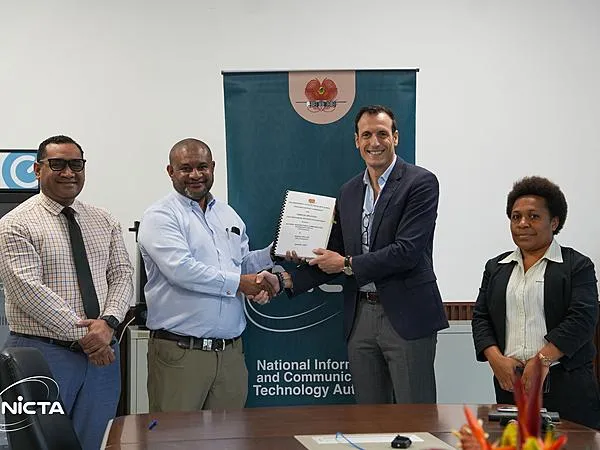
The National Information and Communications Technology Authority (NICTA) has signed a contract with Digicel (PNG) Limited to deliver the Connect the Schools Project (NPC 2023-21 – Fixed Broadband Services).

The signing ceremony was held in Port Moresby and attended by representatives from NICTA, the National Procurement Commission (NPC) and Digicel PNG.

The project highlights NICTA’s commitment to leveraging information and communications technology (ICT) for national development by transforming education through reliable broadband connectivity. It aligns with the Government’s policy objective of expanding broadband access to underserved educational institutions while supporting broader digital economy and education goals.

Funded through the Universal Access and Service Fund at PGK 1.4 million, the project will be delivered over a 24-month period. The initiative will provide fixed broadband internet, equipment and software to seven selected schools across Papua New Guinea.

The schools that will benefit from the project are:

  1. Malala Secondary School

  2. Kerowagi Secondary School

  3. Popondetta Secondary School

  4. Cameron Secondary School

  5. Manus Secondary School

  6. Hoskins Girls TVET

  7. Asitavi Secondary School

The project will provide students, teachers and surrounding communities with high-speed connectivity for e-learning, online resources and digital skills development, supporting government efforts to expand digital education services, particularly in rural and remote areas.

Digicel (PNG) Limited has also committed an additional K140,000 (K20,000 per school) to support sustainability beyond the initial contract period.

Speaking at the signing ceremony, NICTA Acting Chief Executive Officer Polume Lume said the project represents an important step towards strengthening digital education in Papua New Guinea.

“This contract is more than an agreement — it is an incentive for a sustainable digital education environment that will empower our students, teachers and communities,” Mr Lume said.

He also acknowledged the contribution of project partners.

“I thank Digicel (PNG) Limited, the National Procurement Commission, and all stakeholders for their dedication throughout the process. Let us work together to build a brighter, fully connected future for our schools and our nation.”

The Connect the Schools Project supports the National Government’s Digital Transformation Agenda and is expected to contribute to long-term social and economic growth by promoting inclusive education and a digitally empowered population.

March 03, 2026

Papua New Guinea’s economy is forecast to expand by 4.6 percent in 2026, with prospects shaped by its recent grey listing by the Financial Action Task Force (FATF) and the anticipated Final Investment Decision (FID) on the US$13–14 billion Papua LNG project later this year, according to Westpac’s Westpac Wailis: PNG Economic Update and Outlook (February 2026).

Westpac upgraded its 2025 growth estimate to 5.5 percent from 4.7 percent, citing strong performance in mining, industry and services. The official 2024 growth estimate of 3.9 percent was below Westpac’s projection.

Mining and exports drive 2025 rebound

The report said 2025 was marked by robust mining output amid favourable global commodity prices. Elevated gold and copper prices, the restart of the Porgera gold mine and a standout year at Ok Tedi underpinned strong outcomes in the resource sector.

Porgera delivered 376,000 ounces of gold in 2025, contributing around 1 percent of GDP and declaring K1.7 billion in dividends while paying K986 million in taxes. Ok Tedi produced 106,000 tonnes of copper and 298,000 ounces of gold, generating K9.3 billion in revenue and more than K1 billion in dividends.

PNG LNG operated above nameplate capacity in 2025, exporting more than 8.3 million tonnes of LNG, up 8.4 percent year on year, and has fully repaid its project finance debt, boosting the state’s future dividend and tax flows.

Agriculture also benefited. Coffee exports exceeded 1.5 million bags in 2025, lifting rural incomes. Palm oil output is projected to rise to 727,300 tonnes in 2026 from 696,800 tonnes in 2025, while cocoa exports are forecast at 51,200 tonnes in 2026.

Inflation easing but uneven

Headline inflation slowed to 4.1 percent year on year in the December 2025 quarter from 4.7 percent in September, while underlying inflation eased sharply to 0.8 percent. Betel nut prices, up 29 percent year on year in the fourth quarter, remained the largest source of volatility in the consumer price index.

Price pressures are uneven. Inflation in Port Moresby and Lae stood at 0.5 percent and 1.6 percent respectively, while the Goroka-Hagen-Madang region recorded 17.4 percent and the Alotau-Kimbe-Kokopo/Rabaul region 13.6 percent.

Westpac said inflation is now broadly within the 3–4 percent range, allowing Bank PNG to maintain a stable policy stance.

Fiscal consolidation strengthens

The 2026 National Budget sets record expenditure of K30.9 billion against projected revenue of K29.3 billion, with the deficit targeted at 1.1 percent of GDP — down sharply from 8.9 percent in 2020. The debt-to-GDP ratio is projected to fall to 45.5 percent in 2026 from 48.4 percent in 2025.

International reserves cover more than seven months of imports, and foreign exchange backlogs have largely cleared. The kina has depreciated gradually under a managed crawling peg, with the PGK/USD at 0.2327 in January 2026 and forecast to bottom at 0.2150 in late 2026 or early 2027 before appreciating.

A Treasury Bills auction in February was oversubscribed, with bids of K650.48 million against K270 million on offer, reflecting strong demand for government securities.

Grey listing impact seen as contained

Westpac expects the impact of FATF grey listing to be limited and contained, noting that authorities have introduced an 18-point action plan backed by a K10 million allocation to strengthen anti-money-laundering controls. Business leaders remain cautiously optimistic, viewing the development as a catalyst for reform.

Papua LNG could reshape growth path

Under Westpac’s baseline scenario without Papua LNG FID, growth moderates to 4.2 percent in 2027 and 4.0 percent in 2028, stabilising around 3.9–4.1 percent over the longer term.

However, if the US$14 billion Papua LNG project proceeds, the construction phase — modelled over five years — could lift annual GDP growth by 2.5 to 3.4 percentage points, pushing growth to between 6.7 percent and 7.3 percent during peak years. Once production begins, mining growth could rise from a baseline of 1.6 percent to 7.6 percent, lifting overall GDP growth to about 6.1 percent in 2032.

The project is projected to produce 5.6 million tonnes per annum, generating estimated annual revenues of US$2.7 billion at an assumed average price of US$9.91 per MMBtu.

Taken together, Papua LNG could lift PNG’s growth trajectory from a 4 percent baseline to a 6–8 percent range during peak years, making it the most consequential driver of economic expansion over the coming decade.

Despite structural challenges and external headwinds — including commodity price volatility and potential global LNG oversupply — Westpac concludes PNG enters 2026 with solid growth momentum, improving fiscal metrics and a strong pipeline of resource projects.

March 02, 2026

Papua New Guinea’s digital transformation and artificial intelligence (AI) agenda took centre stage as the government marked Safer Internet Day 2026 in February, with Acting Information and Communications Technology Minister Peter L. Tsiamalili Jr. reaffirming ICT and AI as critical drivers of economic growth and public sector reform.

In a press statement, the minister described digital transformation as a core pillar of the country’s long-term development strategy, linking safer internet practices to broader governance, innovation and service delivery reforms.

“As Acting Minister for Information and Communications Technology, I reaffirm the Prime Minister’s declaration during the Digital Transformation Summit 2025 for Papua New Guinea to fully embrace digital transformation — that Information and Communications Technology (ICT) and Artificial Intelligence (AI) will drive the nation’s next 50 years of development, growth and public sector reform,” Tsiamalili said.

Reset@50 and Digital Government Plan 2023–2027

Tsiamalili said the government’s Reset@50 agenda provides a roadmap for leveraging technology to improve accountability and efficiency across all levels of government.

“The Government’s Reset@50 agenda sets the pathway toward ensuring accountability, transparency and impact by leveraging AI to help PNG leapfrog traditional capacity constraints and deliver more efficient, evidence-driven governance across all levels of government,” he said.

He also highlighted the Digital Government Plan 2023–2027 as a comprehensive strategy to modernise public sector services through digital transformation.

For the business community, the policy direction signals increased digitisation of government services, data-driven governance and expanded use of AI — reforms expected to reshape regulatory processes, compliance systems and public service delivery.

This year’s Safer Internet Day theme, “Smart tech, safe choices – Exploring the safe and responsible use of AI,” reflects growing attention to the governance of emerging technologies.

Balancing innovation and risk

Tsiamalili emphasised the government’s regulatory role in balancing innovation with risk management.

“It is the duty of the Government to protect, promote, monitor and set guidelines to create an enabling environment for all users to be responsible while using social media for developmental purposes, and to guard against cyber threats to ensure national security,” he said.

Rising social media use and associated risks

The minister noted the rapid growth in social media usage in Papua New Guinea and its increasing role in communication, commerce and public engagement.

“Social media has become an integral part of communication, information dissemination and public engagement. In recent times, Papua New Guinea’s social media accessibility rate has increased significantly,” he said.

Platforms including Facebook, Instagram, TikTok and LinkedIn now play a key role in connecting individuals and businesses and facilitating access to government services.

However, he cautioned that the rapid evolution of social media — including the integration of AI — has introduced risks such as privacy breaches, misinformation, online harassment, hate speech, data security threats and platform abuse.

For businesses operating in the digital space, these developments point to tightening compliance expectations around data protection, cybersecurity and responsible AI deployment.

PNG Social Media Policy 2025

In response to these challenges, the Marape–Rosso government has introduced policy measures to strengthen digital governance.

“To address these challenges, the Marape–Rosso Government has taken proactive steps through the Papua New Guinea Social Media Policy 2025. The goal of this policy is to promote safe use of social media platforms while maintaining our cultural and Christian values as we continue to adapt to technological advancements,” Tsiamalili said.

He called for shared responsibility across sectors.

“I encourage all Papua New Guineans to take ownership of this policy and be accountable so that we can create a safe social media environment. Let us work together to embrace technological advancement and contribute positively to the development of our country,” he said.

The Safer Internet Day commemoration was led by the Ministry of Information and Communications Technology in partnership with the Department of Information and Communications Technology, the National Information and Communications Technology Authority and the National Broadcasting Corporation.

“In commemorating Safer Internet Day, the Government of PNG acknowledges the importance of collective responsibility in building a safer and more responsible digital Papua New Guinea,” Tsiamalili said.

He also commended the government’s support for ICT sector reforms, referencing the Pacific ICT Ministers’ Dialogue and endorsement of the Lagatoi Declaration as important milestones in PNG’s digital trajectory.

“I commend the Government for its leadership in supporting ICT sector reform and advancing key digital programmes to better serve Papua New Guineans,” he said.

As PNG advances its digital government agenda, greater integration of AI, stronger social media governance and an increased focus on cybersecurity are expected to have far-reaching implications for businesses, investors and the broader economy.

March 02, 2026

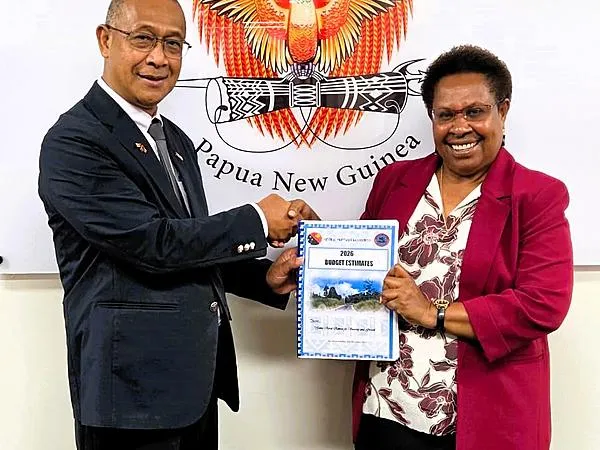
Central Province has unveiled a K345 million (approximately US$93.2 million) 2026 budget aimed at accelerating rural economic growth, strengthening governance and improving financial independence, with significant allocations for security, infrastructure, skills development and local enterprise.

The budget was formally presented to Treasurer Ian Ling-Stuckey on 25 February 2026 by Governor Rufina Peter, accompanied by acting provincial administrator Bala Kapa, finance and administration adviser Tony Gamata and provincial finance manager Walis Imbal.

At the centre of the fiscal plan is a strategy to expand development into remote communities while reinforcing law and order as a foundation for economic activity. The province has allocated K12 million (about US$3.24 million) for development initiatives, including market and church-related infrastructure, and K24 million (around US$6.48 million) to strengthen security, policing and community safety.

The 2026 budget carries the theme, “Going Rural Remote for Security and Growth,” reflecting a deliberate effort to redirect investment beyond urban centres into rural districts where economic participation remains limited.

“This budget underscores our priority to connect remote communities, create sustainable jobs and build financial resilience for our people,” Peter said.

A major component of the spending plan focuses on human capital development. The province has allocated K21.5 million (approximately US$5.81 million) for education, skills development and vocational training programmes, including in Rigo District and surrounding areas. The investment is expected to strengthen workforce readiness and support the growth of small and medium-sized enterprises.

Infrastructure development also features prominently. A total of K20.4 million (about US$5.51 million) has been committed to growth centre infrastructure in Koiari LLG, Rigo North LLG, Kuni LLG, Amazon Bay LLG and the three least developed LLGs of Goilala District — Woitape, Guari and Tapini. The projects are designed to improve connectivity, stimulate trade and create enabling conditions for private sector participation.

Peter thanked the national government for K25 million (approximately US$6.75 million) in Public Investment Program funding for Central Provincial Hospital and called for the full release of the funds, stating that the Provincial Executive Council would provide oversight.

Among other major projects highlighted were the proposed Central Province Police Headquarters and Barracks at Bautama, for which the Provincial Executive Council has allocated eight hectares of land, and development of the Seat of Government at Sabusa to strengthen administrative coordination.

Ling-Stuckey commended Peter and her administration for presenting a budget focused on governance, service delivery and rural expansion.

During the presentation, Peter raised concerns about outstanding national government commitments, particularly funding for the Edevu Road project pledged by Prime Minister James Marape. She said K5 million (about US$1.35 million) of the K10 million (approximately US$2.7 million) commitment was delivered in 2025, while the remaining K5 million remains outstanding despite the project being incorporated into provincial plans for this year.

Ling-Stuckey acknowledged the concern and said the matter would be addressed.

“This concern is noted and I have asked my office to take note of your concern and to commit to the outstanding,” he said.

Peter also raised outstanding commitments, including K27 million (approximately US$7.29 million) for the 36-kilometre Rigo ring road. The treasurer said the Central Provincial Government could submit a formal letter to his office to progress the matter.

The 2026 budget presentation signals Central Province’s intention to drive development deeper into rural areas while strengthening governance, infrastructure and security to support sustainable growth and long-term economic confidence.

March 02, 2026

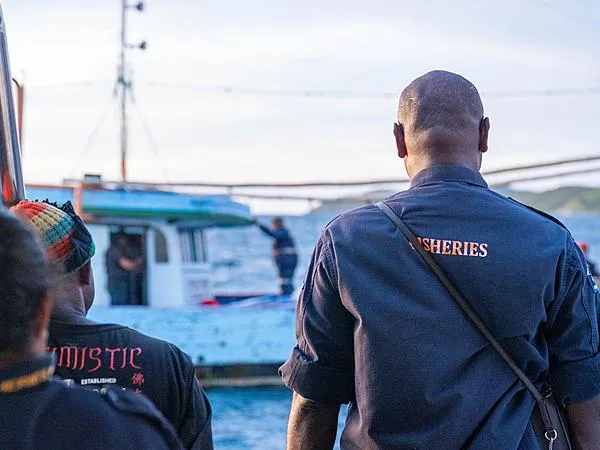
A K120 million (approximately US$32.4 million) redevelopment of the National Fisheries College’s waterfront training facilities has entered the implementation phase, marking a major investment in Papua New Guinea’s fisheries value chain and long-term revenue diversification strategy.

The National Fisheries Authority confirmed that the shorebase training facilities contract, valued at K92 million (about US$24.8 million), was signed on 19 February 2026 at the Papua New Guinea Embassy in Tokyo between the authority and Dai Nippon Construction. The signing was witnessed by the secretary for the Department of National Planning and Monitoring, Koney Samuel. Construction of the shore-based facilities is expected to be completed in the first quarter of 2028.

The redevelopment forms part of the Project for the Improvement of Facilities and Training Equipment of the National Fisheries College, conceived more than three years ago and now progressing into full delivery. The broader initiative includes procurement and construction of a modern training vessel alongside new waterfront infrastructure to support advanced fisheries training.

Japan is providing grant assistance valued at 3,255,000,000 yen (approximately K90.37 million, or about US$24.4 million), formalised under an Exchange of Notes and Grant Agreement executed on 20 June 2025. Combined with the Papua New Guinea government’s contribution, the total project value stands at K120 million. The initiative builds on a bilateral partnership dating back to 1974, when Japan supported construction of the college’s students auditorium under its overseas development assistance programme.

The redevelopment aligns with the government’s policy direction to broaden the fisheries sector beyond its traditional reliance on tuna. By strengthening domestic training capacity and expanding technical expertise in areas such as bottom fishing and longline operations, the project is expected to increase local participation across the fisheries value chain — from harvesting to processing and downstream activities — while enhancing direct revenue generation for the state.

The training vessel component remains under procurement, with the contractor announcement expected soon. Construction and delivery are projected over a three-year period, with completion anticipated in 2029. Arrangements for the vessel are expected to be finalised later this year.

NFA managing director Justin Ilakini described the project as a critical step in repositioning the National Fisheries College as a higher-level learning institution capable of supporting both national workforce development and growing regional training demand.

“This project represents a transformational investment in the future of fisheries education and workforce development in Papua New Guinea. Through modern facilities, expanded practical training and strengthened international partnership, the National Fisheries College will be positioned to serve as a leading regional centre of excellence in fisheries training,” Ilakini said.

For Papua New Guinea’s fisheries industry — one of the country’s key renewable resource sectors — the redevelopment signals a shift towards capacity building, skills localisation and industry diversification. By investing in infrastructure and technical training, the government and its development partners aim to lay the foundation for a more resilient, competitive and domestically driven fisheries economy.

The Department of National Planning and Monitoring is working alongside the National Fisheries Authority to ensure all state obligation requirements are met to facilitate smooth project implementation. A groundbreaking ceremony is anticipated later this year, subject to scheduling arrangements.

March 02, 2026

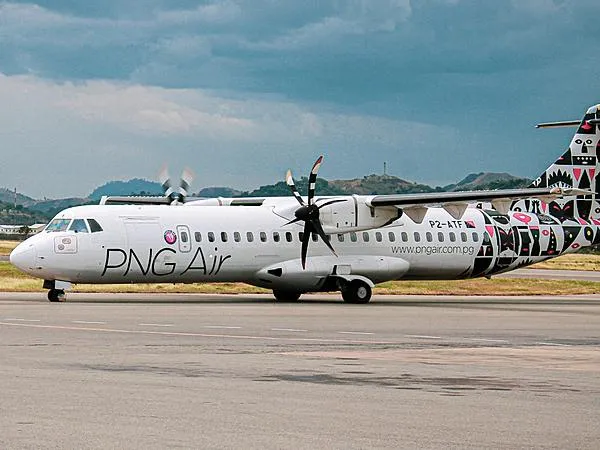
PNG Air advises the general public that all flights to and from Wewak have been cancelled until further notice following a serious break and enter incident at Boram Airport, Wewak.

The incident resulted in significant damage to terminal facilities, including the destruction of critical infrastructure and the loss of valuable computer equipment and essential office systems. As a consequence, safe and secure operating conditions cannot currently be guaranteed.

PNG Air deeply regrets the inconvenience this suspension will cause to passengers, business partners and the broader community. However, the safety and security of our passengers, staff and aircraft remain our highest priority.

Flight Schedule Adjustments

Effective immediately and until further notice:

  • All flights scheduled to operate to Wewak are cancelled.

  • Flights that normally overfly Wewak will now operate directly to Vanimo.

  • Services previously operating Port Moresby – Mount Hagen – Wewak will now terminate at Mount Hagen.

Passengers holding bookings to or from Wewak are advised to contact PNG Air sales offices or their travel agents for rebooking or refund arrangements.

PNG Air is working closely with airport authorities and relevant stakeholders to assess the situation and determine when services can safely resume. Updates will be provided as more information becomes available.

We thank the travelling public for their understanding and patience during this time.

For media enquiries, please contact:
Media Relations – Ms Kimberly Bernard and Ms Wendy Igara
Email:
media.relations@pngair.com.pg

February 25, 2026

Pacific Towing (PacTow), a leading provider of marine services in the Pacific region, has significantly enhanced its towage capability in the Solomon Islands with the return of Tug Kavachi following a major dry-docking and refurbishment program in Singapore valued at SBD 8 million.

Tug Kavachi, a Solomon Islands-flagged vessel managed and operated by a full Solomon Islander crew, has resumed service at the Port of Honiara, joining the powerful ASD tug Pacific Salvor. Together, the two tugs provide a combined bollard pull of 90 tonnes — Pacific Salvor at 50 tonnes and Kavachi at 40 tonnes — enabling PacTow to perform two-tug harbour movements in Honiara for the first time.

This increased capacity allows the port to safely manoeuvre larger and more complex vessel arrivals and departures, supporting operational reliability while strengthening the Solomon Islands’ maritime infrastructure. In addition to servicing Honiara, PacTow now has the capability to service Noro Port via mobilisation.

PacTow General Manager Gerard Kasnari said the return of Kavachi marks a significant milestone in PacTow’s long-term commitment to safe and reliable harbour towage operations in the Solomon Islands.

“PacTow is now well positioned to support the growing volume and size of vessels calling into the port. This upgrade not only strengthens port operations but also contributes to the broader development of maritime infrastructure in the Solomon Islands,” he said.

“Investing in Kavachi’s extensive dry-docking and ensuring she continues to be crewed by Solomon Islanders reflects our commitment to maritime safety, reliability, and localisation,” Kasnari added.

Having served the Solomon Islands for more than a decade, PacTow is committed to developing local talent. In 2025, PacTow awarded maritime cadetship scholarships to four Solomon Islanders, who are currently enrolled at Fiji National University’s Pacific Centre for Maritime Studies (PCMS) as part of their cadetship programme.

Pacific Towing, part of Steamships Limited’s Logistics Division, is Melanesia’s largest marine services business. Employing over 250 staff and owning a fleet of 20 vessels, the business provides a broad spectrum of marine services, including towage, salvage, emergency response, commercial diving, and life raft services.

PacTow operates in Papua New Guinea, the Solomon Islands, Fiji, and the broader Asia-Pacific region. Its operations are underpinned by a strong commitment to safety, reliability, and local capability development.

To learn more about PacTow: www.pacifictowingmarineservices.com