
May 20, 2024

Recognizing the paramount importance of human rights, both for Papua New Guineans and those engaging in business, investment, and other activities within the country, the PNG Government, through the Department of Justice & Attorney General (DJAG), is spearheading efforts to establish a National Human Rights Institution (NHRI).

With financial backing from the European Union (EU) and in collaboration with DJAG's Human Rights Secretariat, a team of experts is actively supporting the setup of the NHRI.

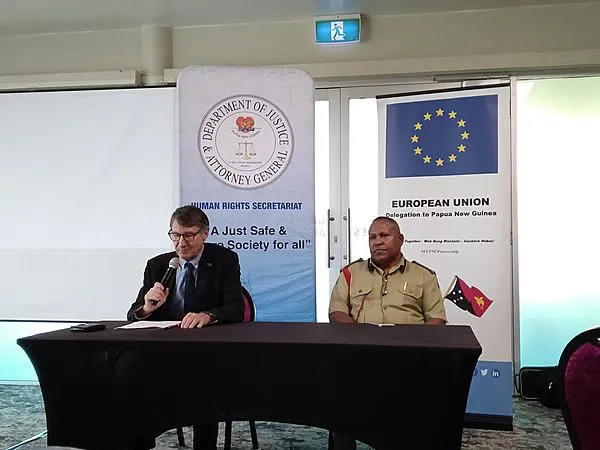
At an Inception Workshop for advancing the establishment of the NHRI, European Union Ambassador Jacques Fradin, Head of Delegation to PNG, expressed profound enthusiasm to EU’s support towards the establishment of a Human Rights Institution.

He highlighted the extensive groundwork laid over the past two decades, emphasizing the collaborative efforts with key government departments.

H.E. Fradin conveyed the EU's honor in receiving the request for assistance from the Department of Justice and Attorney General, marking a significant milestone in the EU-PNG Partnership for Good Governance.

The commitment of 4 million kina in funding underscores the EU's dedication to fostering human rights and democracy globally, aligning with the Universal Period of EU Recommendation.

Acknowledging the complexities ahead, H.E. Fradin outlined the threefold support from the EU:

  • finalizing the organic law of the Human Rights Commission,
  • developing an institutional structure for sustainability,
  • and crafting a National Human Rights Policy with an implementation plan.

He stressed the importance of adherence to international standards, ensuring the commission's independence and effectiveness.

In April 2024, the PNG Government through DJAG, The Human Rights Secretariat and the European Union commenced the project to supports the establishment of a Human Rights Commission.

This inception workshop was held on 14th May to plan the execution of the NHRI’s establishment, as it brought together key Government stakeholders and representatives of Civil Society Organization (CSO) groups to discuss crucial issues around the NHRI.

The deployment of a team of experts to the Department of Justice Human Rights Secretariat marked the inception phase's commencement, with consultations ongoing with government stakeholders and civil society representatives.

PNG stands as a growing business and investment hub in the Pacific, with a current population of 10,491,934 as of May 17, 2024, according to the latest United Nations data. The Worldometer elaboration of the latest United Nations data 1:

  • Papua New Guinea 2023 population is estimated at 10,329,931 people at mid-year.
  • Papua New Guinea population is equivalent to 0.13% of the total world population.
  • Papua New Guinea ranks number 92 in the list of countries (and dependencies) by population.
  • The population density in Papua New Guinea is 23 per Km2 (59 people per mi2).
  • The total land area is 452,860 Km2 (174,850 sq. miles)
  • 12.3 % of the population is urban (1,271,933 people in 2023)
  • The median age in Papua New Guinea is 22.2 years.


PNG's significance lies not only in its abundant natural resources but also in its allure for investment and tourism, drawing in a considerable number of people from various backgrounds.

Ambassador Fradin expressed confidence in the project's success, attributing it to the strong national commitment and leadership of the Department of Justice and Attorney General.

Throughout his speech in Port Moresby, H.E. Fradin emphasized collaboration and gratitude, recognizing the contributions of the Department of Justice, Attorney General, Civil Society Organizations, and the deployed team of experts.

He reiterated the EU's sustained support, spanning over a year, with the expectation that it will yield the desired outcomes for Papua New Guinea's human rights landscape.

“As the European ambassador speaking on behalf of the European Union, I hope that the necessary constitutional amendment bill and the organic law will soon become a reality, leading to an independent Human Rights Commission that meets the international standards. Of course, this will take time. This is paved with many difficulties, but as I said in the beginning, this is also paved with good intentions, coordination and our support can only go right,” the envoy added.

“I am confident that your support and the establishment of this Human Rights Commission will be successful, due to the strong national commitment and the Department of Justice, Attorney General's leadership. I extend my gratitude to the Department of Justice, Attorney General, for the great cooperation under the EU-PNG Good Governance Project, to the Civil Society Organization, and also, now I am naming them, to the team of experts that we have been deploying. They are very good, I think.”

The EU's commitment, coupled with the dedication of local stakeholders, sets a promising way forward for the establishment of a robust Human Rights Commission and Policy in the nation.

“It's a long endeavor. It comprises a lot of different interpretations, but at the end, as it's handled by the Department of Justice, it has a meaning, and the way forward, to be approved, is a beautiful one, and I believe in it.” H.E. Fradin reiterated.

Members from the DJAG, Department of Foreign Affairs, Constitutional and Law Reform Commission (CLRC), Department of Personal Management (DPM), Ombudsman Commission of PNG, Independent Commission Against Corruption, Department of Education, and the Department of Health joined the workshop.

Also present were the PNG Police, Department of National Planning and Monitoring (DNPM), National Judicial Staff Services ((NJSS), Department of Provincial and Local Level Government, First Legislative Counsel, and selected members of Civil Society Organizations (CSOs) and Faith-Based Organizations (FBOs).

The inception phase allows the Government and the experts tasked with overseeing the support towards a NHRI identify and discuss crucial human rights issues around a national institution and identify issues to consult with key stakeholders.

The Inception Workshop gave a clear understanding of;

  • A Paris Principle complaint NHRI
  • A proposed model NHRI for PNG
  • Challenges and opportunities in the establishment of a NHRI

Public consultation will be held following the inception phase.

May 20, 2024

The Internal Revenue Commission (IRC) unveiled its revamped debt allotment letters, signaling a significant step towards clearer communication with taxpayers and tax agents.

This is in line with IRC’s desire to communicate with taxpayers and tax agents through one of their projects part of the broader Taxpayer Services Strategy to foster voluntary compliance.

IRC wants to make sure they are as clear as possible, with all their interactions, so that taxpayers and tax agents understand their obligations and the consequences of non-compliance. By delivering messages clearly, there is less room for misunderstanding.

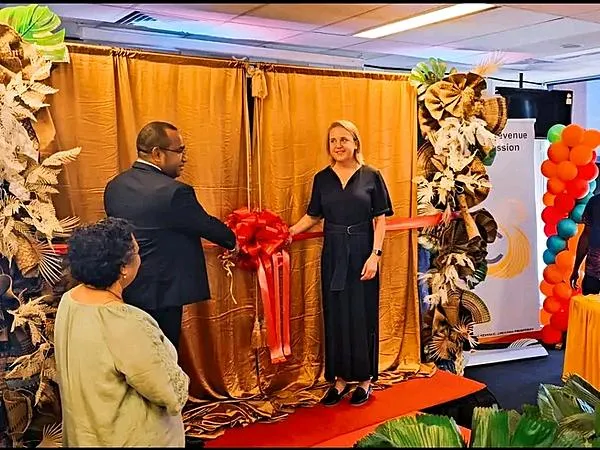
The launch event, was held on May 15th, at the Revenue Haus - Downtown, Port Moresby, attended by prominent figures from both the IRC and Australian Taxation Office (ATO) coming together to celebrate the culmination of months of diligent work. ATO has supported IRC in this important work.

These new letters convey the same messages and have the same demands as the old letters – the content is not new, the look and feel is.

Commissioner of Taxation, Mr. Samuel Loi, said, “The launching of the Letters achieves the 2023 IRC corporate plan to make voluntary compliance easier for our taxpayers or foster voluntary compliance, which is one of the pillars in the IRC’s Corporate Plan.

“Under the Taxpayer Services Strategy, the New Improved Letters Project developed by the Debt Collection Operations Team with the assistance of our ATO partners has made it simple and easy for Taxpayers to understand.”

This batch of letters includes:

  • lodgment and payment reminders and requests,
  • garnishee notices
  • departure prohibition orders
  • payment agreement notifications
  • certificate of compliance communications
  • GST and SWT application notifications
  •  and audit notifications.

Despite their modern appearance, these letters retain the IRC logo. Recipients are advised to note that these letters are legitimate communications from the IRC, not scams. The importance to read and understand the requirements outlined in the letter and take necessary actions promptly is adviced.

IRC Commissioner General Mr Sam Koim OBE, in his address, underscored the importance of providing comprehensive information to taxpayers, emphasizing the need for clear reasoning behind adverse decisions.

“When I came to the IRC and I saw a couple of letters that were written, generic ones that were sent to text phase, text phase were constantly asking why am I sending this letter. Sometimes they told me and I tried to even make a sense out of it.”

“If you are taking an adverse decision against the text phase, you've got to give the reasons. And then also cite where they have defaulted and the law that was breached. So, insufficient information was provided and that's where this project is initiated to at least draft templates for clear information.”

Koim also highlighted the IRC's commitment to supporting taxpayers in financial distress, emphasizing the availability of structured payment plans tailored to individual cash flows. This proactive approach aims to alleviate the burden on taxpayers and encourage compliance.

He added, “We encourage tax agents to talk to your taxpayers about the new letters. They need to take notice of the requirements in the letters and take action accordingly.”

Commissioner General Sam Koim, underlined this commitment, highlighting the significant role of the new letters in facilitating easier understanding of tax obligations.

IRC DCOD Director, Mrs. Kaia Fabila, delivering the keynote speech, reiterated the overarching objective of the project to foster voluntary compliance through enhanced clarity and transparency.

She emphasized that while the content of the letters remains consistent with previous versions, the redesigned format aims to improve readability and comprehension.

The project's success owes much to the collaborative efforts of internal and external stakeholders, including feedback from tax agents.

“There has been a lot involved in this project to get to where we are today. The entire debt and lodgment suite of letters has been reviewed and rewritten. There has been internal and external stakeholder management, and thank you to the tax agents in the room who have provided feedback.” Ms. Fabila reiterated.

Moreover, the incorporation of plain English and an active voice, coupled with color-coded themes for different types of correspondence, further enhances the user experience and have a much better use of formatting and space, all leading to greater taxpayer and tax agent understanding of their obligation.

Colour coding themes corresponds as follows:

  • Green themed letters for general or positive correspondence
  • Orange themed letters for early collections correspondence
  • Red themed letters for firmer action correspondence

“I am excited to see the impact that these new, improved debt and lodgement letters will have on our organization and our wider community,” she added.

A significant aspect of the overhaul is the reduction in the number of templates, from 54 debts and lodgement templates to approximately 33 templates, achieved through the implementation of variable-based templates. This streamlining not only simplifies the process for taxpayers but also enhances efficiency for IRC staff.

The launch ceremony culminated in the unveiling of the new letters, symbolizing a significant milestone in the IRC's journey towards modernization and efficiency. With the renewed collaboration between IRC and ATO, as underscored by a recent memorandum of understanding, stakeholders can look forward to further advancements in taxpayer services.

As the IRC embraces its new look and branding, marked by user-centric communication and streamlined processes, it reaffirms its commitment to becoming a robust and efficient tax administration. The launch of the new debt allotment letters indicates a new era of clarity, transparency, and cooperation in tax compliance.

May 20, 2024

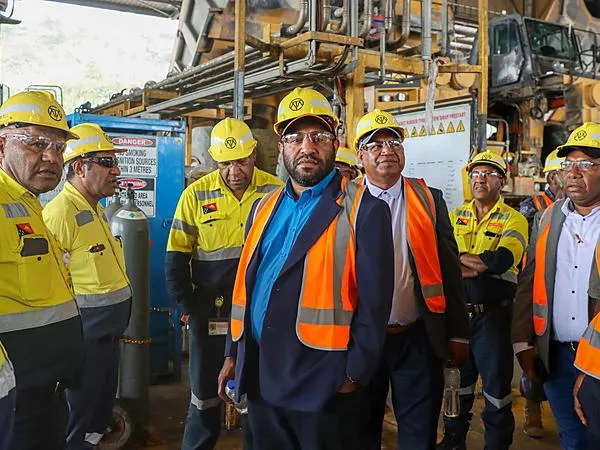
Ok Tedi Mining Limited hosted the Minister for Mining and Member for Kundiawa Gembogl, Hon. Dilu Muguwa on his first official visit to the mine along with the Minister for Works and Highways and Member for Telefomin Hon. Solan Mirisim on Monday, 13th May.

The visit provided the ministers an opportunity to gain a better understanding of the mine, appreciate the challenges faced by the company and see how the government can support the mine to continue its operations.

“The government is proud of what the OTML Board of Management, the Management Team and the employees are doing. OTML recently renewed its Special Mining Lease (1), and my visit here is to find out plans for mine-life extension and continuity and see how we can support the company in ensuring the mine continues to operate for the benefit of the country,” said Minister Muguwa.

“Ok Tedi Mining Limited is a 100 percent nationally owned company and as the Minister for Mining matters in the country – it is important that I visit this state-owned mine and see what the company is doing before I go to other mines in the country,” he said.

The ministers had a briefing with OTML’s Executive Leadership team before they were taken on a tour of the mine site and mill operations.

The delegation saw firsthand the daily operations of the mine and its continuous improvement efforts.

Acting Managing Director and Chief Executive Officer Alan Bong when speaking during the visit emphasised the importance of OTML’s contribution to the country saying; “Ok Tedi is a proud 100% nationally owned mining company and is a great asset for the country.

Our production and safety performance this year has been exceptional thanks to our people and we will continue to move forward aligning with our vision to mine responsibly so that we can continue to deliver to our stakeholders and leave a lasting sustainable legacy for our people.”

The ministers were impressed with the level of knowledge and technology being applied onsite to safely and effectively operate the mine and mill. The ministers vowed to support the board and management of OTML to continue mining to 2050 and beyond as the immediate region and country as a whole depend on OTML’s success.

May 20, 2024

The Minister for International Trade and Investment, Hon. Richard Maru recently announced that Cocoland Sugar Development Limited in Abau, Central Province, will be developed as a Special Economic Zone (SEZ). Minister Maru made this announcement in his meeting with the management team from Yaosoeng Sugar and Cane Consultant Company Limited (a Thai company) and the Abau MP, Hon. Sir Puka Temu.

The proposal is for a 40, 000-hectare sugar farm, a processing mill, and a power plant. This follows a very successful trial in Abau on the proposed sugar farm land. The plantation will produce 3 million tonnes of sugar every year with the target market to be PNG and other countries, especially Indonesia. The project is expected to create over 20, 000 jobs for Papua New Guineans.

“PNG is still importing sugar from Thailand despite the presence of Ramu Sugar in PNG, so we need another large-scale sugar project which will also be good for price competition,” said Minister Maru.

Minister Maru said this project will be developed as an SEZ and has the highest Government priority.

“We want to open a Diplomatic Mission in Thailand and having this project here in PNG gives us one reason why we should be in Thailand. We want to see more Thai companies coming and investing in PNG because there is a lot we can learn from them, and we can get more investments from Thailand. If we cannot get this project across the line then we will not have confidence from Thailand investors to come and invest in PNG, especially in large-scale agriculture projects. This project is important; it is an anchor investment for us because it affirms that our Government’s decision to open a Diplomatic Mission in Thailand is a very sound decision,” said Minister Maru.

Minister Maru further added: “I will be visiting Abau to see the project site before taking a Submission to the Cabinet to get their approval. This is very critical because once we have the approval, we can negotiate and sign a State Agreement between the State and the developer. The developer is keen to develop the large-scale sugar mill which will take over 2 years to construct with the sugarcane farm to cost USD126.01 million and the sugar mill and the power plant to cost USD295.01 million- a total of USD421.03 million. The investor is happy to fund the project itself or to partner the Government and other partners and wants to commence construction of the mill and the sugar estate this year.”

May 20, 2024

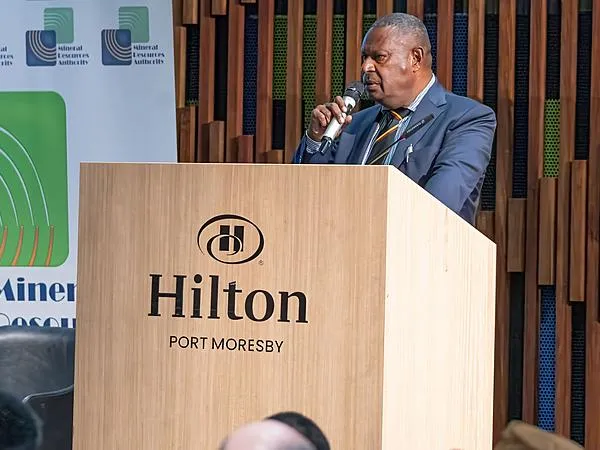
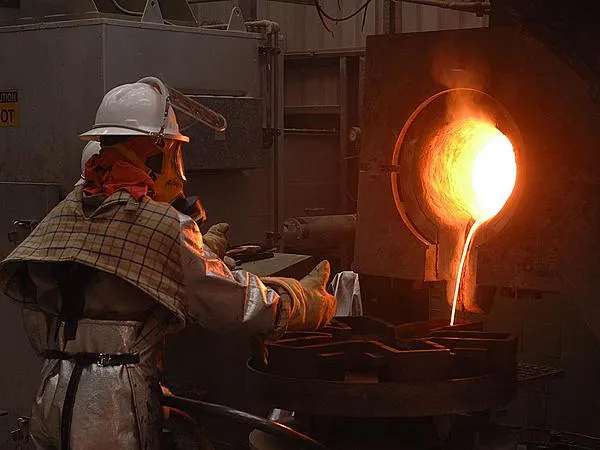
The Papua New Guinea Extractive Industries Transparency Initiative (PNGEITI) has endorsed the government's decision to delay the passage of the Gold Corporation Bill and seek wider stakeholder consultation.

At a recent consultative workshop on Wednesday, 15th April 2024, Mining Minister Muguwa Dilu announced that all stakeholders would have the opportunity to provide recommendations for amending the Gold Corporation Bill.

Over the next six months, stakeholders are expected to submit their recommendations for possible amendments before the bill reaches parliament.

PNGEITI Executive Director Lucas Alkan emphasised the need for transparency throughout the discussions and recommendations by both the government and stakeholders leading up to the amendment and passage of the bill.

"This is an important bill as it will underpin the growth of the economy by allowing PNG to have its own gold refinery and move into downstream processing of natural resources to finished products ready for export," said Mr Alkan.

"We commend the government for not rushing to pass this bill and for seeking stakeholder views. However, we call for transparency in all discussions and recommendations concerning the amendment of this bill," he added.

"PNGEITI plays a crucial role in promoting good governance in the country’s extractive sector, and we wish to see all discussions and recommendations conducted transparently," said Mr Alkan.

Mr Alkan also called on the government to disclose the details of its deal with a Singaporean company, Refinery Holdings Pte Limited.

He emphasised that the interests of the mines, the government, and all concerned parties must be considered in the proposed amendments to the bill.

May 20, 2024

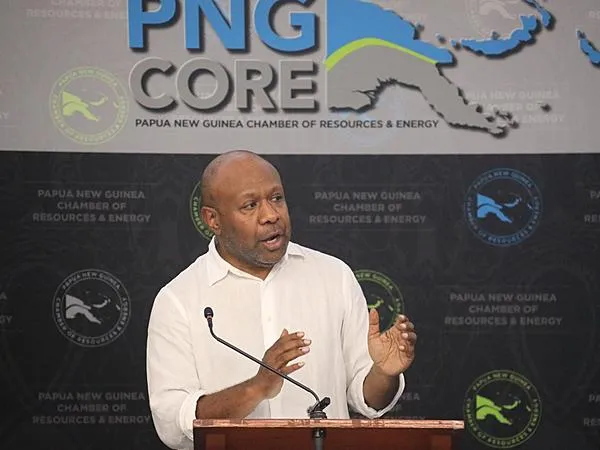
PNG Chamber of Resources and Energy (PNG CORE) President Anthony Smaré has called for theState to conduct a 6-month extensive consultation nationally with all impacted stakeholders on the NGC Bill given its extremely negative consequences, in a letter delivered to the Minister of Mining and copied to Prime Minister Hon. James Marape and Deputy Prime Minister Hon. John Rosso.

“The NGC Bill is extremely complex with 966 clauses and is the longest legislation that the PNG Parliament has ever attempted to pass. It impacts over 26 important existing laws as it vests control of PNG’s monetary policy, gold industry and banking industry in the hands of a foreign controlled entity with limited capacity, capability, or resourcing in any of the sectors it impacts.

“To date, there has been a lack of detailed public statements explaining the benefits of each clause of the NGC Bill to Papua New Guineans. This has made it extremely challenging for stakeholders to provide informed feedback. Even the Department of Mineral Policy does not intend in its proposed consultation on 15 May 2024 to provide any significant presentation on the NGC Bill and their proposed four-hour consultation is woefully inadequate.

“We thus question the intent and sincerity of the consultation being held by the Department in holding this meeting. We believe that a more extensive and comprehensive awareness campaign is necessary before soliciting feedback. Such a campaign must include a detailed explanation of the utility and purpose of each of the 966 clauses in the Bill,” Smaré said.

“This would ensure that all stakeholders, including impacted provincial governments, business peak bodies, banks, SMEs, international donors, the Autonomous Bougainville Government, and all other parties with an interest in maintaining a stable PNG economy, are fully informed and able to contribute effectively to the consultation process. We also believe it is critical that all the Government departments and agencies responsible for the 26 Acts that are being over-ridden by the proposed NGB bill are also provided an opportunity to be heard.

Therefore, we request that the Government conduct a six-month national awareness and consultation program. This would allow ample time for the legislation to be explained in full, and for everyone around the country to present their views. We believe this approach would lead to more informed and constructive feedback, ultimately resulting in an outcome that best serves the interests of Papua New Guineans,” he added.

“Banks, business peak bodies, SMEs, international donors, and all other parties that have an interest in maintaining a stable PNG economy should be given the right to present their views. All of us that have an investment in our economy should be given an opportunity to provide feedback.”

May 20, 2024

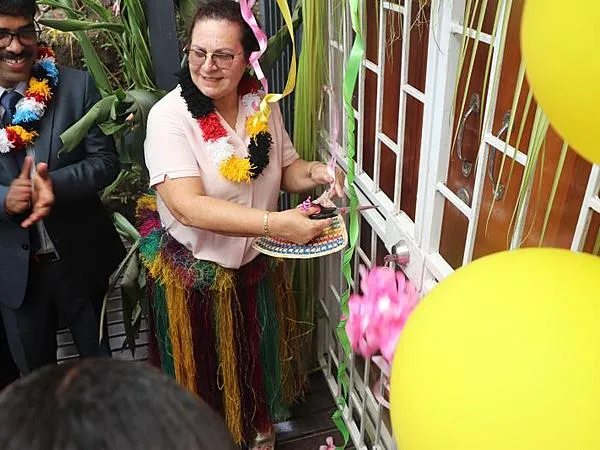
Governor of the Bank of Papua New Guinea Ms. Elizabeth Genia officially opened the Women’s Micro Bank (WMB) Branch in Kerema (Tuesday May 07), making it the fifth WMB branch to be operating in Papua New Guinea.

“Today’s official opening of its fifth branch celebrates another achievement in a long line of achievements we have seen for women’s microbank. I am sure your highly esteemed founder, the late Janet Sape, would have been extremely proud of the organization affectionately known as Mama Bank, now one of the top 50 companies for women in APEC countries and well regarded as a financial services innovator,” Ms. Genia told the people of Kerema town who turned up in hundreds to witness the important occasion.

Ms. Genia stated that WMB has become a key driver of financial inclusion and financial inclusion was originally a BPNG led innovation but is now a national strategic priority.

She applauded women’s micro bank services in addressing several financial inclusion objectives, particularly highlighting depositing taking and lending opportunities to the 85% of the population who are still unbanked.

“Opening of the Kerema branch is another way Women’s Microbank has made a commitment to encouraging people to access financial services.”

“I understand the Kerema branch will enable the people of the district, particularly the women, to take advantage of services such as the MSC credit scheme, financial literacy training, as well as basics, including deposit takings and loans. The branch will provide a practical and desirable alternative to the risks of holding cash, informal money lending and money scams, all of which stop people from building a comfortable standard of living.”

“Today’s official opening gives members of the community the opportunity to take significant steps forward towards building the financial security and financial independence,” the BPNG Governor said.

Coinciding with the opening, was also the launching of the Kerema District SME Policy which was officially launched by Papua New Guinea Prime Minister Honourable James Marape.

The Prime Minister committed three million kina towards the WMB Kerema branch as part of the Government’s partnership with KDDA in assisting to create a credit lending facility where Gulf women especially mothers in SME can benefit.

“Get into productive micro to small medium enterprises and do well for yourself. By doing well for yourself, you will be preparing your children well for the future,” the prime minister encouraged women from Gulf province.

Kerema Open MP Honourable Thomas Opa also committed two million kina towards the WMB Kerema branch and also became the first customer to open an account with the branch.

Mr. Opa emphasised that empowering women in Gulf province was a big challenge but was positive that with the setting up of a WNB (mama) branch in his province and assistance from the government with seed capital to fund lending credit facilities, he was confident mothers and young girls will take advantage of the opportunity and use the facilities wisely to venture in various business opportunities and empower themselves financially.

Other important delegates who witnessed the SME Policy Launching and WMB opening included, Kerema Open MP and Vice Minister for Petroleum and Energy Honourable Thomas Opa, Wapenamanda Open MP and Vice Minister for Works and Highways Honourable Mikki Kaeok, Moresby North West Open MP Lohia Boe Samuel, BPNG Assistant Governor George Awap, WMB CEO Gunanidhi Das, CEFI Executive Director Saliya Ranasinghe and members of the Kerema District Development Authority and the Gulf Provincial Executive Council.

May 20, 2024

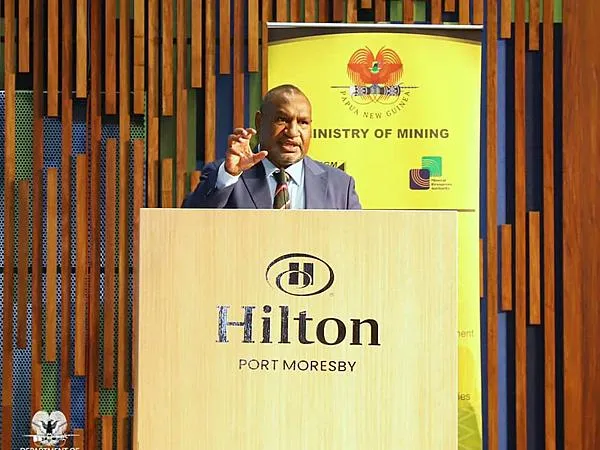
Prime Minister Hon. James Marape recently spoke at the Consultation Workshop on the National Gold Corporation Bill 2024, organised by the Ministry of Mining. The Prime Minister highlighted the government’s commitment to maintaining steadfast goals for downstream processing of gold and other resources in Papua New Guinea.

“We have been exporting our natural resources overseas and then buying the finished products again, thus importing them back into our nation. We have also been unfairly benefitting from most of our resource projects before I took office in 2019. My government has been committed to change this with Porgera and few other examples already in place. We want to turn things around by establishing refineries for the benefit of Papua New Guinea. And in this case, through this Bill, we want to have a gold refinery to enable downstream processing of our gold,” Prime Minister Marape explained.

“Establishing a gold refinery locally will permit us as a nation to take stock and manage our resources better and contribute far better economically to our Gross Domestic Product, compared to what it is now, thus promote economic growth and sustainability locally like never before. We do not have to grow our economy from outside; it can be grown from within. Many developed countries present in the world today are where they are because they initiated change for economic prosperity like this which they are enjoying now. Change and reform for the better comes with challenges and opposition, and we welcome that,” he stated further.

Prime Minister Marape clarified to the consultation participants, including industry professionals, representatives from various sectors of government and the private sector, as well as ordinary citizens, that his government is committed to improving the country’s future through effective legal and policy reforms. He assured that the National Gold Corporation Bill 2024 is designed to benefit PNG without negatively impacting existing mining businesses or their contracts. “This Bill in no way intends to disarm mining businesses of their contracts, or deter investors on their return upon investment. In fact, this Government wants to add value to the mining industry of the country. We will give you an option to refine your golds locally and if you so wish sell your gold at world market price locally,” the Prime Minister clarified.

He also encouraged open dialogue and input on the bill: “We are open to views and advice from industry professionals or the general public on this Bill, and that is why we are having this consultation. We have made our stance and intention on the Bill clear for the benefit of Papua New Guinea. But if you have other views on this, you are free to tell us where we can improve things so that this Bill is properly presented in Parliament, where everyone knows what it will bring about into the future,” Prime Minister Marape concluded.

May 20, 2024

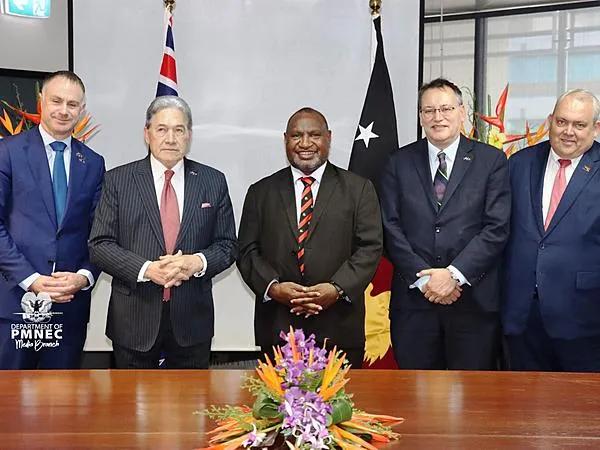
New Zealand and Papua New Guinea have agreed to strengthen bilateral relations following a meeting between New Zealand’s Deputy Prime Minister and Foreign Affairs Minister, Hon. Winston Peters, and Papua New Guinea’s Prime Minister, Hon. James Marape, in Port Moresby on Monday, May 13, 2024.

Prime Minister Marape recognised New Zealand as a steadfast development partner since 1975 and noted the positive state of current bilateral relations. He expressed optimism about expanding cooperation in business, trade, and investment, particularly in agriculture and energy sectors, emphasising the principles of a free-market economy.

Highlighting the economic benefits of the Recognised Seasonal Employer (RSE) Programme, especially for New Zealand’s Hawkes Bay Region, Prime Minister Marape requested an increase in the quota for PNG workers. “I note that PNG seasonal workers are very efficient and call for the increase in PNG’s quota,” stated Prime Minister Marape.

He also extended his gratitude to New Zealand for its prompt support during the COVID-19 pandemic, remarking, “The New Zealand government was one of the first to respond to the COVID-19 crisis in PNG, and I express my appreciation and thanks.”

Prime Minister Marape commended New Zealand’s involvement in the Fred Hollows Foundation’s eye care initiatives at Port Moresby General Hospital and lauded New Zealand’s efforts in mediating the Bougainville peace process. He provided an update on the Bougainville Referendum, emphasising its non-binding nature and the forthcoming discussions in the National Parliament.

In his dialogue with Deputy Prime Minister Peters, Prime Minister Marape stressed the importance of tertiary and technical education for development goals in PNG and other Pacific Island Countries. He proposed exploring partnerships for open campuses of New Zealand’s tertiary institutions in PNG.

Acknowledging ongoing military cooperation, Prime Minister Marape thanked the New Zealand Government for supporting the establishment of the Kumul Leadership Centre at Murray Barracks in April 2022.

On key regional issues, Prime Minister Marape urged continued commitment from both nations as members of the Pacific Islands Forum (PIF) to the 2050 Strategy for the Blue Pacific Continent, focusing on sustainable development and environmental conservation.

In addressing sea level rise and other environmental threats, Prime Minister Marape proposed that New Zealand consider cooperating with PNG on land reclamation projects for at-risk Pacific islands, offering an alternative to relocation.

May 20, 2024

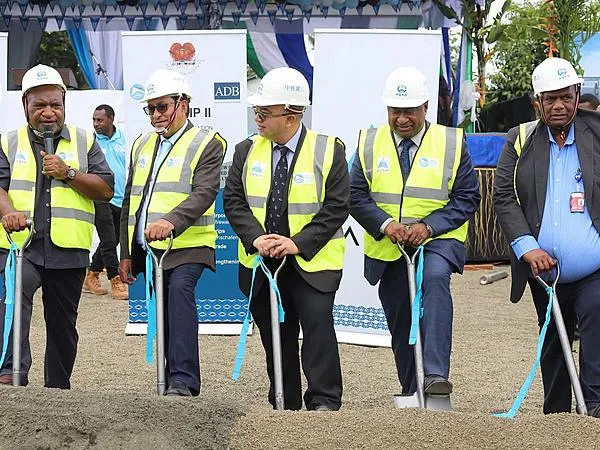
Prime Minister Hon. James Marape on Friday, May 10, 2024, lauded the National Airports Corporation (NAC) and the Civil Aviation Development Investment Project (CADIP) for their significant role in constructing the new K76.8 million Gurney Airport in Alotau, Milne Bay Province. He expressed his commendations during the groundbreaking ceremony held in Alotau, highlighting the initiative as a crucial component of the Government’s Connect PNG initiative.

In partnership with the Asian Development Bank (ADB), the upgrade of provincial airport terminals under CADIP represents a strategic element in the nation’s infrastructure development aimed at bolstering economic growth and tourism. Since its initiation in 2010 with CADIP1, the project has facilitated the enhancement of numerous airports across the country, accumulating investments totaling up to K1.6 billion.

The project, expected to complete within 26 months, aims to enhance travel time, cargo and passenger handling services, and overall facilities for travellers. This initiative not only supports improved operational efficiencies but also fosters economic growth and tourism development throughout the region.

Prime Minister Marape extended his gratitude to the ADB for their enduring support and underscored the importance of infrastructure in improving the livelihoods of Papua New Guineans. “Upgrading airport terminals, enhancing safety and security, and generating job opportunities are pivotal for the holistic development of the region,” stated Prime Minister Marape.

He also remarked on the promising prospects for tourism in Milne Bay and encouraged local leaders to prioritise this sector. The collaboration among the National Airports Corporation, various investors, and the ADB exemplifies a unified commitment to advancing transportation and connectivity within Papua New Guinea.

Alotau’s Gurney Airport proudly stands as the first recipient under the second phase of CADIP, denoted as CADIP 2.

“The diligent efforts by our investors compel us to rise to the occasion, ensuring we match their commitment to delivering 21st-century infrastructure,” added Prime Minister Marape.

May 20, 2024

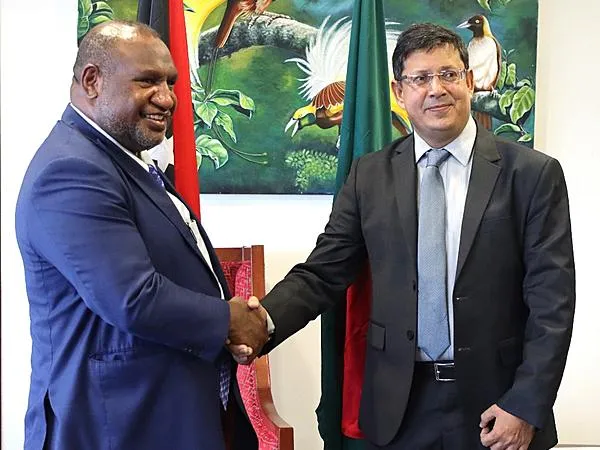
Prime Minister Hon. James Marape on Thursday, May 16, 2024, extended a warm welcome to the High Commissioner of the People’s Republic of Bangladesh to Papua New Guinea, H.E. Mr. Tarukil Islam, upon his maiden visit to PNG.

Prime Minister Marape, in meeting him at Sir Manasupe Haus, congratulated High Commissioner Islam upon his new appointment and affirmed the PNG Government’s eagerness to work closely with him to further strengthen the cordial relations between the two countries.

“A warm welcome to you, High Commissioner Islam. This meeting is important for us as since our diplomatic ties were forged in 1982, our relations have been friendly, and so we need to strengthen this through greater cooperation activities between us. I hope you will further strengthen the efforts of your predecessor to consolidate in a practical way the relations between our two nations,” said Prime Minister Marape.

“Our government’s intention is to explore mutual areas of cooperation to strengthen the bilateral relations between us. I am glad to say that our relations have been strong in recent years in the areas of employment and business investment, where a good number of Bangladeshi workers came and worked here in the ExxonMobil-led PNG LNG Project, particularly during the construction phase, and the number continues. There are also notable Bangladeshi businesses operating in PNG, especially in the service sector, which have provided job opportunities for Papua New Guineans. And so, there is enormous potential in enhancing this through greater cooperation in the economic sectors of both of our countries. There is also potential for us to strengthen our trade relations,” said Prime Minister Marape.

Prime Minister Marape also pointed out and encouraged the need for regular and increased exchanges of high-level visits between political leaders and senior officials of both countries, which would positively contribute towards promoting goodwill, better understanding, and cooperation between the two countries.

“My government is prepared to provide land for you to establish your High Commission office here to enable closer and greater cooperation between us, and I hope we will do the same in your country. This can be from an economic point of view where I specifically note your thriving textile industry in which I invite investors from Bangladesh here in this space.

“There are great opportunities here for your businesses not just in textile but also in agriculture, mining and petroleum, forestry, and fisheries on a joint venture basis with local entrepreneurs,” he added.

Prime Minister Marape emphasised his government’s plans to strengthen relations with countries located directly west of Papua New Guinea in the South-East Asian region, in which Bangladesh is also included.

High Commissioner Islam expressed his gratitude for Prime Minister Marape’s warm welcome. He welcomed the proposition by the PNG Government on regular dialogue and exchange visits between the two countries’ Governments to enhance relations between them.

He also highlighted Bangladesh’s key areas of focus in the economic sector, which the country can assist PNG with. These include agriculture, information technology, education, and training. During the discussions with Prime Minister Marape, High Commissioner Islam mentioned their need for LNG Gas, which PNG can supply through its hydrocarbon potential, given that Bangladesh can produce ships which can load LNG Gas for their use in industry and residential areas.

The courtesy call was witnessed by Foreign Affairs Minister Hon. Justin Tkatchenko and officials from both countries’ diplomatic offices.

May 16, 2024

PNG has a chronic shortage of suitably experienced and qualified seafarers, especially higher-ranking officers.  The current shortfall is estimated at 30 percent and is predicted to worsen as vessel traffic increases to meet the logistics requirements of the imminent Papua LNG construction phase. 

The shortage of seafarers in PNG is both a ‘supply’ and a ‘demand’ problem.  In terms of supply, not only is PNG not training and developing as many seafarers as the country requires, but a substantial number of its older, experienced seafarers have retired.  Additionally, some of PNG’s very best seafaring professionals have secured employment with international maritime operations, further draining the available pool of qualified seafarers.

The demand for PNG seafarers has grown because of the increase in vessels required to service PNG’s communities and businesses, especially its major resource developers.  More crew are needed to operate the larger volume of vessels and demand will peak in the next couple of years given that sea and river transport is the primary freight mode for the construction phase of the Total led Papua LNG project.  Strong demand will continue beyond this peak given further developments on the horizon such as the Wafi-Golpu gold mine in the country’s north and expansion of the P’nyang LNG project.

The Papua LNG development is the first maritime-supported resource development of its scale since the construction of the Ok Tedi mine in the 1980’s.  The equivalent development of the PNG LNG project’s facilities required a land transport fleet of more than 600 trucks to deliver over 26,000 loads of cargo. 

The current 30 percent shortfall of adequately qualified and experienced seafarers will likely grow to around 50 percent as the number of vessels servicing the Papua LNG construction phase increases.

It's not just senior officers that PNG lacks but seafarers with specific technical skillsets such as those required for vessels that service the nation’s growing oil and gas sector.  Offshore vessels currently being contracted to LNG projects (and potentially in the future to offshore projects such as Twinza’s Pasca A in the Gulf of Papua) are required to comply with the stringent operational requirements of the Oil Companies International Marine Forum (OCIMF).  Compliance for PNG operators will be increasingly challenging without appropriately skilled crew.

The training and development of PNG seafarers for the oil and gas sector is currently limited by the absence of specific technical training programmes– both theoretical and practical.  No PNG institution offers the necessary course work and very few (if any) offshore operators provide crucial ‘at sea’ training to PNG’s young seafarers. 

Given that PNG shippers need seafarers who have specialist technical skills in order to win contracts with oil and gas companies; and oil and gas companies in turn need shipping services, it makes sense that shippers and developers work together to grow and upskill the required workforce.

May 15, 2024

The President of the Papua New Guinea Chamber of Resources and Energy (PNG CORE), Anthony Smare, recently gave a comprehensive presentation on the "catastrophic impact" of the proposed National Gold Bill 2022 in an Information Session held on Thursday, 9th of May, 2024 at the University of Papua New Guinea (New Lecture Theatre). 

Mr Smare emphasised how the bill would be "destructive" to the economy and legislation of Papua New Guinea if passed on the floor of Parliament on the 29th of May, 2024.

"This 500-plus pages of Gold Bill is quite astonishing. I don't think a politician would have time to read through this comprehensive bill that I think is highly dubious and not grounded in any realistic understanding of the refining industry or gold industry in PNG," he said.

"Anybody with any experience in the gold business knows that gold refining is a very difficult business model with razor-thin margins, and it requires significant volumes to carve out any meaningful profit. Any gold expert would know this, and PNG is lucky to have many of its local gold industry experts who could have been consulted at any time to verify numbers." 

"Based on the numbers they have shared, it appears that the promoters of the proposed Gold Corporation are effectively claiming that they will make nearly three times the profit of Australia's largest refinery and mint, despite processing 8 percent of the volume of the Australian refinery," said Mr Smare.

Here are the key concerns of PNG CORE regarding the bill:

  • The bill creates a National Gold Corporation, National Gold Bank, and National Gold Mint to be majority owned by a foreign company, but taking key powers from the Bank of Papua New Guinea and the MRA, including holding the country's gold reserves, the sovereign right to issue legal tender and regulation of gold exports. The issuing of national currency is a sovereign right usually reserved to the country's central bank, but for the first time, the bill proposes to also give this right to a Singaporean-based company.
  • No obligation to refine in PNG: Despite the bill providing extraordinary regulatory monopoly powers over PNG's Gold sector to entities controlled by foreign companies, the likely catastrophic impact on PNG's gold sector, the erosion of the mandate of the state agencies such as the Bank of Papua New Guinea and the Mineral Resource Authority, and the unlimited unconditional state guarantee provided by the State, PNG CORE is shocked to note that the bill does not require the proponents of the National Gold Corporation to build a gold refinery in PNG and allows it to send gold overseas to be refined and processed if it so wishes.
  • Impact on existing and future mines: The bill seeks to override existing project agreements for PNG's existing mines, which will jeopardize existing financial arrangements for these projects and undermine viability and investor and financing confidence in current proposed new mines.
  • * Broad Application: The bill's extension to encompass all precious metals, not just gold, introduces a layer of complexity and broad impact that could have unforeseen consequences across the mining sector.
  • Statutory Monopoly Concerns: The Bill's attempt to establish a statutory monopoly in a global context of oversupply and minimal refining costs is fundamentally flawed. Such a strategy, especially if enforced by statutory compulsion, poses grave risks to the stability and sustainability of the gold sector in PNG.
  • Excessive Powers and Marginalisation of State Agencies: The extraordinary powers granted to the National Gold Corporation and related entities risk duplicating and overshadowing the roles of established state agencies. The introduction of a 'Gold Police' with sweeping powers to search, seize, and detain Papua New Guineans raises alarms over potential overreach and abuse, which can be done at the request of the foreign company.
  • Unprecedented State Guarantee: The bill's provision for an unconditional state guarantee to be provided for the obligations of the foreign-owned National Gold Corporation, National Gold Mint, and National Gold Bank is unparalleled and raises concerns about the implications for PNG's fiscal responsibility and international reputation.
  • Transparency and Accountability Issues: The lack of detailed information on the administrative structure, governance, capital resources, and relevant experience and shareholders of the foreign owner of the National Gold Corporation undermines transparency and accountability, essential for the fair and effective management of national resources.

Given these concerns, PNG Core urged the National Government to engage in transparency with the industry and not to progress this Bill to Parliament, Smare said.

May 15, 2024

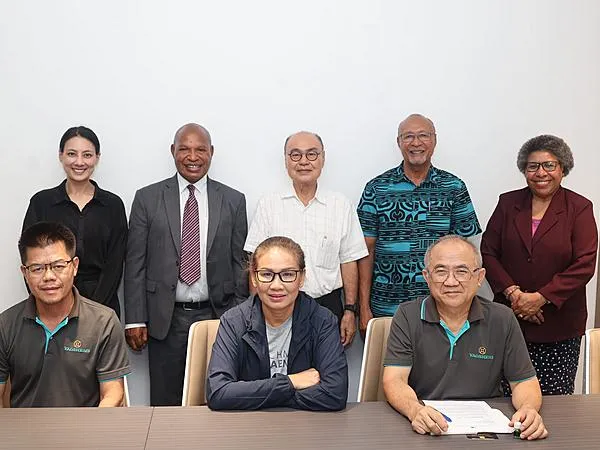
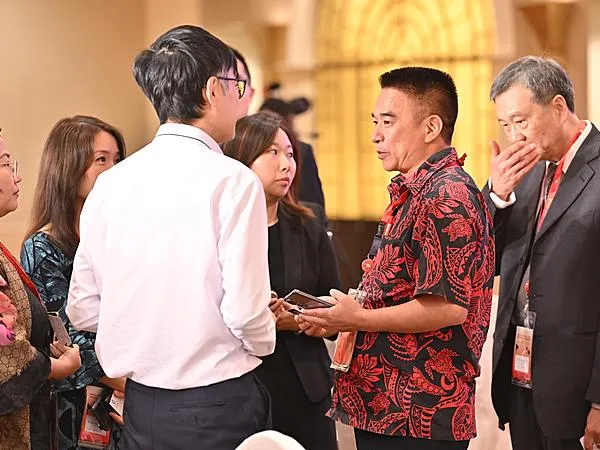
The Papua New Guinea Chamber of Resources & Energy (PNG CORE) is pleased to announce the establishment its Asia Pacific Sub-Committee, an innovative step forward in promoting diversity, inclusion, investments and strengthened relations within the resources and energy sector between PNG and the economies of Asia.

This groundbreaking initiative aims to foster increased representation and participation of Asian companies in PNG and PNG businesses in Asia. By doing so, the PNG CORE seeks to unlock a shared growth trajectory, leveraging the critical role of Asia in the global economy and its growing interest in natural resources and energy.

The formation of the Asia-Pacific Sub-Committee offers a strategic enhancement to our existing framework, targeting the underrepresented sector of Asian enterprises in our membership. It sets out to be a dedicated platform for engagement, collaboration, and advocacy, driving mutual growth and technological and knowledge exchanges within this crucial sector.

The primary objective is to create a bridge for increased market participation, investment flows, and policy support conducive to the growth of both Asian and PNG companies. The Sub-Committee will advocate for beneficial policies, facilitate direct investments, and support technology and trade opportunities, enhancing global perspectives and diversity within the resources and energy sector.

The Asia-Pacific Sub-Committee will be led by a chairperson elected from among its members, representing diverse companies operating in Asia and PNG. A secretariat provided by PNGCORE will offer administrative support. The Sub-Committee's role encompasses advocacy, networking, information dissemination, and policy development—all aimed at fostering a collaborative and prosperous relationship between Asia and PNG.

We invite all relevant stakeholders, companies, and interested parties to join us in this exciting venture. Together, we can shape a collaborative and innovative future that captures the immense opportunities presented by the Asia and PNG markets.

The Papua New Guinea Chamber of Resources & Energy is a leading organization dedicated to advancing the resources and energy sectors in Papua New Guinea. Through advocacy, networking, and collaboration, PNGCORE aims to enhance the contributions of these sectors to the national economy and sustainable development.

May 13, 2024

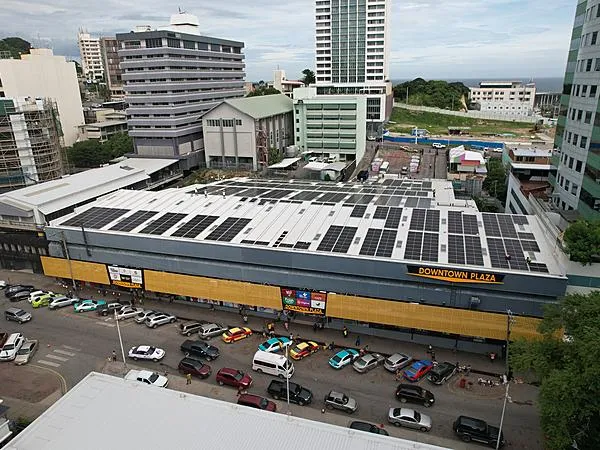
Steamships is pleased to share its sustainability initiative of the installation of solar panels on top of Downtown Plaza, located in the capital’s Central Business District.

The project marks a significant step towards the company’s dedication to utilising renewable energy sources and reducing its carbon footprint. Installing solar panels highlight the company’s broader efforts to improve the environmental sustainability of Downtown Plaza but also represent a vital step towards a more environmentally conscious future.

Leading the solar panel project, Pacific Palms Property (PPP) is working in collaboration with PNG Power Limited (PPL) on the pioneering PPL Solar Pilot Programme. Other key stakeholders include Astra Solar Limited and YZ Consulting.

Upon completion, the energy produced by the panels will supplement the existing power supply. While the panels harness electricity from sunlight, the traditional power grid will remain accessible to provide a reliable energy source for Downtown Plaza.

“Steamships and its businesses commend PNG Power’s pilot initiative to implement renewable energy solutions. Steamships have made a long-term commitment to reducing our carbon footprint, adopting best practices with an aim to achieve net zero emissions by 2050.” said Steamships MD Rupert Bray.

“With mutual dedication to explore renewable energy, we hope to continue working with PPL, and as leading business houses, embrace sustainable power solutions within PNG”

Downtown Plaza serves as the model project for an initiative that ensures our buildings are more resilient during adverse conditions. This endeavour not only prioritises resilience but also extends a helping hand to tenants striving to meet their Environmental, Social, and Governance (ESG) targets.

This public and private sector collaboration shows a shared commitment to deploy technologies that not only advance infrastructure but also foster the development of Papua New Guinea as a whole. As this initiative gains traction, its impact is poised to expand far beyond Downtown Plaza, offering a blueprint for progress and sustainability.

The project highlights the businesses strong commitment to environmental stewardship and paves the way for additional initiatives aimed at enhancing the sustainability of PPP assets. Recent sustainability efforts include the Steamships Corporate Office, @345, which obtained the Excellence in Design for Greater Efficiencies (EDGE) certification, establishing it as the first “green” commercial building in PNG and the Pacific. The solar project is due for completion Q4, 2024.
May 13, 2024

The International Monetary Fund (IMF) Country Head, Mr. Sohrab Rafiq, recently gave an update on the multinational lender’s program with the Papua New Guinea government.

Mr. Rafiq highlighted the progress made in the IMF program, with successful completion of the first and second review missions, and underlined the importance of the IMF's concessional financing, offering affordable options for the PNG government.

Mr Rafiq’s presentation addressed the government's fiscal position, noting a decline in the fiscal deficit post-COVID, with projections indicating a return to a balanced budget by 2027, provided government implements policies effectively.

He also discussed foreign exchange (FX) issues, emphasizing evidence-based policymaking to guide advice on the exchange rate and FX matters.

“Based on 2023 actual fiscal numbers, the fiscal deficit now of the government of PNG is back where it was pre-COVID. Based on current projections and based on discussions that we've had on the policies that are in the pipeline, on the revenue-generating capacity of the government, on the spending, and so on, the fiscal deficit is projected to narrow over the coming years,” Mr. Rafiq said.

“Assuming that the policies are implemented and assuming that there's no large economic shock, by 2027 the government should be running a balanced budget, which is quite an achievement,” he added.

Mr. Rafiq also tackled head-on the misconceptions surrounding PNG’s debt situation in the media.

He addressed the prevalent notion that PNG's debt is alarmingly high, stating: "When compared with regional peers, PNG's debt is broadly in line and not exceptionally high. In fact, it's lower than countries like Fiji, Mongolia, and Malaysia, all of which are significant commodity exporters."

The Port Moresby Chamber of Commerce and Industry (POMCCI) hosted the Business Breakfast where the updates were shared, on May 10th at the Royal Papua Yacht Club, which also included commentary from Mr. Marcel Schroeder, PNG Country Economist of the Asian Development Bank.

Clarifying IMF's role and financing, Mr Rafiq said contrary to misconceptions, the Fund’s role is to advise and support the PNG government, not to undermine sovereignty. The IMF provides concessional financing at low interest rates to assist in fiscal management, he noted.

He also underscored the successful completion of the first two reviews of the IMF program in PNG, attributing it to the government's commitment to reform.

“The IMF is only here to advise and support the government. The ownership of the government, the ownership of the reform agenda belongs to the government.

Mr. Rafiq acknowledged the challenges of foreign exchange shortages and overvalued exchange rates in PNG. He explained the economic implications, such as reduced GDP growth and declining per capita income, citing empirical evidence from other countries.

He stressed the need for investment and highlighted the IMF's role in providing policy advice and financing to address these challenges.

“The kina has been depreciated against the US dollar, which is true. Whenever you are sort of looking at the exchanges, you need to look at what is your initial condition. Where are you starting? Where are we today? I don't think that's a controversial statement to make.”

“Now, what that means is that there's a persistent, more accumulation in the exchange rate because of the persistent mismatch of supply and demand for foreign currency. Because of this mismatch exists, the central bank, will have to come into the market and make interventions and try and enforce policies.”


Mr Rafiq reiterated, “There is not a single example of a country (in Asia-Pacific) that has diversified its economy with a normal value exchange. That's just a matter of historical record.”

Within the IMF, comprising 190 countries and in comparison, PNG is not the only country going through currency deficit and foreign exchange issues, he said.

“That's just empirical data. Now, with a normal value exchange rate, there's a mismatch of supply and demand in the foreign exchange market. The central bank has to intervene to try and clear that mismatch.

“Of course, unless you're an oil-rich dollar country that has trillions of dollars in foreign exchange and you can go on to intervene in the market at any rate and clear the market at any rate, unless you're a country like that, BPNG has to manage its foreign exchange reserves. And it can only intervene at the level that is sustainable for its balance and for its level of foreign exchange. And that's what produces the effects.”

Mr. Rafiq outlined the importance of gradual adjustments in the exchange rate to align with market levels, emphasizing the need for sustainable reforms. He reassured stakeholders that the IMF stands ready to support PNG in reversing economic challenges and promoting growth.

“If this country's average growth rate had been maintained at its pre-2014 level, the economy of PNG would be billions of dollars bigger than what it is today. Billions of dollars bigger than what it is today. Now, some of you may argue it's entirely coincidence that the declining of PNG's average GDP growth happens when the FX shortage has begun.”

“I've heard some people say this, that it's entirely coincidental. But if you look at the patterns in the data, it's an incredible coincidence that PNG's GDP growth began declining when the FX shortage began.”

Mr. Rafiq highlighted persistent supply-demand imbalances leading to FX interventions by the central bank. He stressed the need for a realistic exchange rate, citing examples from the Asia-Pacific region.

“And that's the cost that the FX shortages, which is the result of an overvalued exchange rate, that is the cost that's being imposed on this country. Now, based on current trends, if we assume this level of GDP growth, and we assume overvalued exchange rates, and we assume population growth of 3.5%, what it suggests is that this country is going to continue to get poorer."

Mr Rafiq added, “There's no investment. This is a cross-country comparison chart on foreign direct investment. There's only one country on this list that has had a persistently overvalued exchange rate and FX shortages. So no investment, very low levels of growth, declining per capita GDP.

“As I said, there's no example in the world of a country having diversified its economy with a normal market exchange rate, and you see that in the data for PNG as well.”

He also commented on IMF’s dedication to fostering global monetary cooperation, ensuring financial stability, facilitating international trade, promoting employment and sustainable economic growth, and reducing poverty worldwide.

Mr. Sohrab Rafiq emphasized the IMF's role in engaging with various stakeholders, including the business community and NGOs.

He further explained the method used by the IMF to gauge fiscal sustainability, the debt-to-GDP ratio, noting, "Despite an upward trend in recent years, projections indicate stabilization, contrary to media portrayals. This marks a significant departure from the pre-COVID era's sliding debt trajectory."

Attributing this stabilization to the government's reform agenda supported by the IMF, Mr Rafiq highlighted the Fund’s role in providing technical assistance on finance and expenditure policies.

He emphasized the concessional financing provided by the IMF, by which the arrangement for the current three-year program, the interest rate on PNG financing is 2.8% with an interest rate of 2.8% and a five-year grace period, contrasting it with the considerably higher rates in international capital markets.

"This concessional financing affords the government breathing room to implement reforms gradually, thereby avoiding undue strain on the economy," Mr. Rafiq stated.

He underscored the importance of IMF financing in bolstering foreign exchange reserves and attracting other sources of multilateral financial assistance.

May 13, 2024

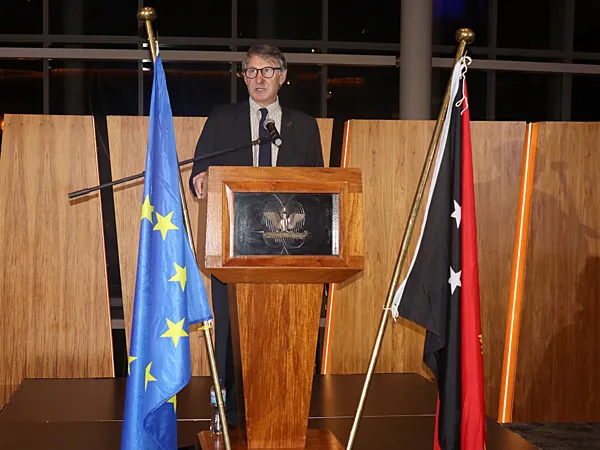
On Europe Day, the European Union Ambassador to Papua New Guinea, His Excellency Jacques Fradin, delivered a passionate speech emphasizing the significance of the day and the enduring partnership between the EU and PNG.

Ambassador Fradin said, “Some might wonder what is the 9th of May celebration all about?  It’s not an independence day, nor a victory, it is about a political declaration considered as the founding vision for the European Union.”

The day commemorates a pivotal moment in European history when French Foreign Minister Robert Schuman proposed a visionary cooperation initiative in 1950. This proposal laid the groundwork for the European Union by uniting former adversaries France and Germany under a common authority to manage coal and steel production, thus fostering economic integration and, ultimately, peace.

Ambassador Fradin highlighted the EU's role as an alliance for peace, stability, prosperity, and freedom. In a world facing global challenges, such as the ongoing conflict in Ukraine and crises in the Middle East, the EU and PNG stand as close partners in upholding the multilateral order and international law, he said.

The EU Day Reception was held at APEC Haus in Port Moresby. The Head of Delegation of the EU to PNG joined diplomatic staff from various embassies in PNG, the French Embassy, representatives from PNG's government, local business leaders, and civil society organizations working on EU-PNG relations joined the event.

Academics and researchers specializing in EU-Pacific relations, expatriates, members of the local diplomatic community from other countries, invited guests from international organizations operating in PNG, stakeholders, partners and media representatives covering diplomatic events were also present.

Since the establishment of the EU Delegation in Port Moresby in 1977, the EU has supported PNG's nation-building journey across various sectors, including economic development, education, and governance.

Ambassador Fradin emphasized the EU's commitment to PNG's immense potential and its people's rich culture, pledging continued support and collaboration.

Acknowledging PNG's leadership in global climate negotiations, the ambassador highlighted EU initiatives supporting climate action and rural entrepreneurship in PNG.

“While we are proud of the results achieved until now, we are not static. As such, we are currently designing a new programme, which will provide direct support to the PNG national budget and will reward the reaching of policy targets for water, forest and energy infrastructure, included in the PNG Medium-Term Development Plan IV,” he said.

“In particular, the EU recognises and commends the leadership role of PNG in global climate negotiations. We are aiming towards longer-term solutions to address Climate Change and its effects.

“In this context, we have launched in October 2023, with the Prime Minister James Marape, the Forestry-Climate Change-Biodiversity programme in PNG, which is supporting the preservation of forests and biodiversity, decarbonisation of energy production and providing economic opportunities for forest-dependent communities. It is one of the biggest EU action in the world on climate change,” he added.

The ambassador also underscored ongoing efforts to advance good governance, human rights, and gender equality, including the deployment of projects addressing gender-based violence.

“Meanwhile, we continue to support rural entrepreneurship in the country, through the EU STREIT Programme, the biggest EU project in the Pacific, as well as the water and sanitation priorities, through our own WASH interventions.”

The EU-Pacific Economic Partnership Agreement, implemented in PNG since 2009, has been instrumental in enhancing trade relations, particularly in the fisheries sector.

Ambassador Fradin expressed the EU's intent to broaden the agreement's scope to other priority value chains, such as cocoa, coffee, coconut, and vanilla, to attract European investors.

Despite challenges in promoting European investments, the ambassador commended the collaboration with France and European companies operating in PNG, emphasizing the need to address remaining challenges while deepening partnerships.

Ambassador Fradin expressed confidence in the EU-PNG partnership's continued growth and its contribution to a more peaceful and prosperous future.

As PNG prepares to celebrate its Golden Jubilee, the EU remains committed to supporting the country's development journey and ensuring its rightful place in the global community, he said.

“I also want to underline the excellent cooperation we have with the PNG Government and its agencies, the civil society actors and the business community. Together, we can make a change for a brighter future.

“The partnership between the EU and PNG is built on shared challenges, as well as on seizing new opportunities for cooperation, and we look forward to consolidate our current actions and enhance our partnership to new areas of common interest,” Ambassador Fradin added.

An exemplary support through provisions of funding is the recent EU provision of emergency funding on April 25th through the “Emergency Toolbox” to assist in unforeseen crises, such as earthquakes and flooding in PNG.

Through the European Civil Protection and Humanitarian Aid Operations (ECHO), the EU has made available PGK 807,000 (Euro 200,000) for immediate emergency assistance to people affected by disasters in the East Sepik and Highlands provinces in PNG.

The funding, channeled through the International Organization for Migration (IOM), provides shelter materials, essential items, clean water, and hygiene products for affected communities.

“Over the past weeks, floods and earthquakes have cost lives and left a trail of destruction in PNG. The European Union’s humanitarian assistance will support the delivery of essential aid to address the urgent needs of the most vulnerable communities in the hardest-hit areas,” Ambassador Fradin said.

May 13, 2024

Prime Minister Hon. James Marape praised the efforts of PNG Customs in Port Moresby for their significant achievements in combating the importation of counterfeit goods into Papua New Guinea from 36 per cent to 4 per cent.

“This has been made possible by increased government investments in border surveillance and fighting illicit trade,” he said.

During a meeting with PNG Customs Chief Commissioner David Towe and representatives from British American Tobacco (BAT) PNG, discussions centered around excise tax enforcement and the penalisation of businesses not complying with customs regulations.

“Whilst I am greatly concerned about continued activities relating to directly importing or aiding in the import and distribution of counterfeit goods in Papua New Guinea, I would like to commend Customs Chief Commissioner David Towe and his team at PNG Customs for putting in place stricter mechanisms and processes with regards to trade at our borders, which is resulting in the identification of illegal trade and smuggling of goods,” Prime Minister Marape said.

The Prime Minister also acknowledged the role of PNG Customs in generating significant revenue for the government over the past few years and emphasised the necessity of stringent measures to curb illegal imports.

He highlighted the critical situation of illicit cigarette trafficking and related goods which were part of the discussions with BAT PNG.

Chief Commissioner Towe outlined the challenges in distinguishing between counterfeit and genuine products, noting that illicit goods often mimic the appearance of real items and are sold at comparable prices. He confirmed ongoing cooperation with the Royal PNG Constabulary to address these challenges.

May 13, 2024

In a significant endorsement of local governance, Prime Minister Hon. James Marape has praised the Mendi-Munihu District for its proactive approach to development, highlighted by the creation of the Mendi-Munihu District Five-Year Development Plan 2023-2027.

Speaking before a large gathering at the Momei Oval in Mendi on Thursday, May 2, 2024, the Prime Minister underscored the alignment of the district’s plan with the national Medium-Term Development Plan IV (MTDP IV) 2023-2027.

“The plan aligns well with our national objectives, and in support, an additional K7 million will be provided to kick-start its implementation,” said Prime Minister Marape.

The event saw the presence of notable figures including Southern Highlands Governor Hon. William Powi, Defence Minister and Nipa-Kutubu MP Hon. Dr. Billy Joseph, Higher Education Minister Hon. Don Polye, Hela Governor Hon. Philip Undialu, and other senior leaders. Secretary for National Planning, Koni Samuel, was also in attendance.

Prime Minister Marape reiterated the national government’s commitment to supporting Mendi- Munihu and all other districts in their development endeavors. He highlighted the substantial future investment plans, with more than K100 million earmarked for each district over the four- year period from 2024 to 2027.

“I appeal to the district administration, ward councillors and others to adhere strictly to this plan when you make submissions for funding,” he stated.

Additionally, the Prime Minister made a strong appeal to the local community to resolve tribal conflicts and political differences, emphasising the need for peace and unity for the betterment of Mendi. He lamented the past disruptions caused by local conflicts, such as the prolonged closure of Mendi Airport and the destruction of judicial buildings.

“The closure and destruction were not the actions of our governor or other leaders, but by the very people who are now suffering the most. It is essential that we stop such behaviour and embrace change,” Prime Minister Marape urged.

May 13, 2024

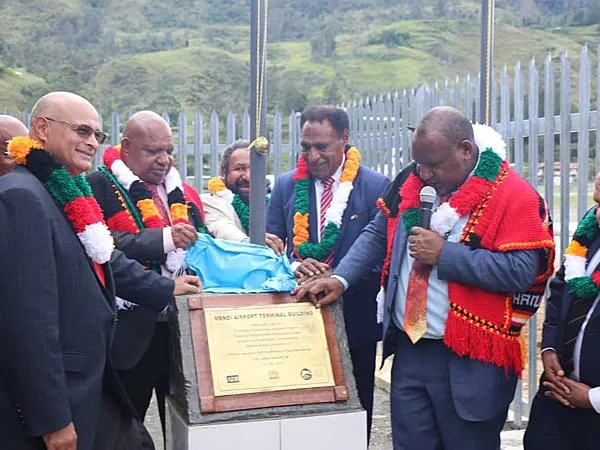
Prime Minister Hon. James Marape has called on the residents of Mendi-Munihu and the Southern Highlands to responsibly maintain the newly reopened K41 million Mendi Airport.

His appeal came during the inauguration ceremony held recently, marking a significant milestone facilitated by the Asian Development Bank’s Civil Aviation Development Investment Programme (CADIP).

Mendi Airport, which had been out of operation since 2018 following the torching of an Air Niugini Dash-8 aircraft, now features a modern terminal, secure fencing, a paved runway, and a standby generator.

The reopening was celebrated with the arrival of three PNG Air planes, one of which carried Prime Minister Marape and a delegation of ministers.

“It was emotional to see planes landing again at Mendi Airport after six years of closure,” stated Prime Minister Marape.

He emphasised the inherent goodness and law-abiding nature of the Mendi community, while condemning the few who have historically disrupted peace for political gains.

“We must stop this mentality now and allow peace and normalcy to return to Mendi, enabling air transport to thrive once more,” he urged.

The event also highlighted the communal spirit and resilience of the Southern Highlands people, with Prime Minister Marape expressing his admiration for their warm welcome.

“The unity displayed by the elders and young leaders of Southern Highlands, setting aside differences for regional betterment, truly warms my heart,” he remarked.

Prime Minister Marape also reflected on the setbacks the region has faced since the 2018 incidents, stressing the importance of maintaining Mendi’s appeal as a business and tourist destination.

With the Unity Games scheduled to be held in Mendi in 2025, he sees this as an opportunity to showcase the region’s potential.

Governor Hon. William Powi was commended for his efforts in ensuring the airport’s reopening.

“We must restore Mendi town to its former glory. I appeal to everyone to care diligently for this new airport and its facilities,” Prime Minister  Marape said.

May 13, 2024

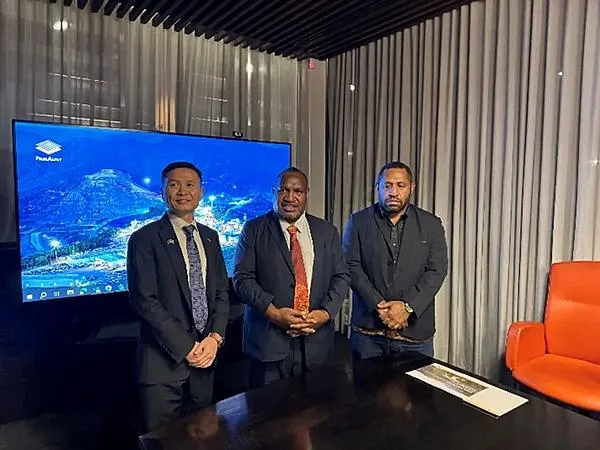
A PanAust delegation of seven met with Papua New Guinea Prime Minister the Honourable James Marape to discuss the nation-building Sepik Development Project that includes the Frieda River Copper-Gold Project and Frieda River Hydroelectric Power Project, amongst a multitude of other infrastructure projects that will enable the economic transformation of the north-western border region of Papua New Guinea.

In meetings with Honourable Prime Minister James Marape in Port Moresby last week, PanAust took the opportunity to elaborate on key aspects of the Project including its enormous economic impact, its job creation potential, the need to minimise environmental risks, and how it would have a catalytic impact on Papua New Guinea’s regional and national growth.

During the meeting, PanAust Managing Director and CEO Daling Zheng reiterated the company’s pledge to prioritise local hiring and procurement, ensuring that the benefits of the Project would be felt across the entire supply chain and within project impact areas and nearby communities.

He also emphasised Frieda River and PanAust’s dedication to environmental stewardship and ongoing community engagement, highlighting the company’s intention to operate in accordance with the highest environmental standards.

“On behalf of our shareholder Guangdong Rising Holding Group, I would like to say how grateful we are for being given the opportunity to engage in constructive dialogue with the Prime Minister and the Government of Papua New Guinea.  As discussions progress, I want to restate that we remain steadfast in our commitment to fulfilling regulatory requirements and engaging in meaningful discussions with government stakeholders and local communities.

“The Sepik Development Project represents not only a significant investment in Papua New Guinea’s natural resource development history for us, but also a commitment to helping foster long-term growth and prosperity in the country. We believe that by working hand in glove with the government and local stakeholders we can unlock the full potential of this Project and create lasting positive change for generations to come,” Mr Zheng said.

Prime Minister Marape expressed his support acknowledging the Project’s potential to stimulate development of remote rural communities especially in the two Sepik Provinces.

“The project represents a significant opportunity to harness our natural resources responsibly and create lasting benefits for the people of Papua New Guinea.

“The broader Sepik Development Project has the potential to become a cornerstone of Papua New Guinea’s economic development strategy, attracting further investment in our northern region and bolstering our position in the global economy,” Prime Minister Marape said.

Frieda River Limited and PanAust remain dedicated to continuing to work collaboratively and transparently with the Papua New Guinea Government and the impacted and affected communities to ensure the Project’s success whilst upholding the highest levels of social responsibility, corporate governance, and sustainability.

May 13, 2024

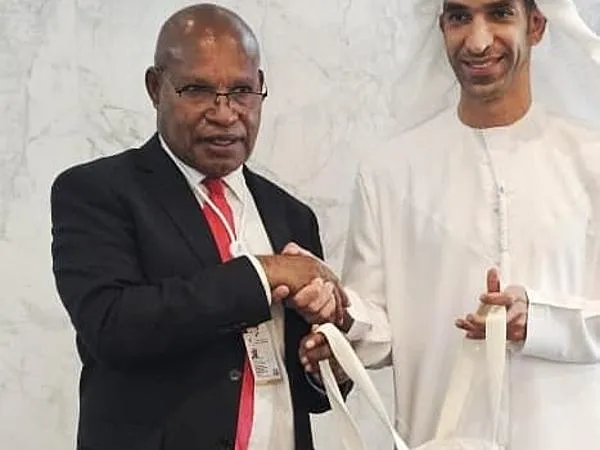
The Minister for International Trade and Investment, Hon. Richard Maru expressed great satisfaction with the outcome of his bilateral meeting with the Minister for Foreign Trade of the United Arab Emirates (UAE), His Excellency Dr. Thani bin Ahmed Al Zeyoudi. The bilateral meeting was held on the margins of the Annual Investment Meeting (AIM) Congress, which is being hosted in Abu Dhabi, UAE from May 7-9, 2024.

Minister Maru is attending the 13th Edition of the AIM Congress upon invitation by his colleague Minister, His Excellency, Dr. Zeyoudi. The conference attracted 175 countries and 12,000 plus participants ranging from both public and private sectors.

Whilst expressing satisfaction on the general outcome of the AIM Congress which he participated in through penal discussions, Minister Maru said his discussion with his counterpart Trade Minister of the UAE for deeper trade and economic relations between the two countries was a good outcome for the country.

Minister Maru said: “The UAE private sector is interested in expanding and deepening the bilateral trade and investment opportunities between the UAE and Papua New Guinea (PNG), however, the UAE Trade Minister in our bilateral meeting said that trade and investment relationship between our two countries can only happen following the negotiation of four important agreements.”

Dr. Zeyoudi proposed that the following agreements be negotiated and formalized between PNG and the UAE:

1. Investment Promotion and Protection Agreement (IPPA);

2. Double Taxation Agreement;

3. Air Services Agreement; and

4. A Comprehensive Economic Partnership Agreement (CEPA)

Both Ministers agreed for both countries to work towards signing at least three agreements which are IPPA, the Double Tax Agreement, and the Air Services Agreement before December 2024.

“Investment Promotion Authority (IPA) will work on the IPPA, International Revenue Commission (IRC) will work on the Double Tax Agreement, the Department of Transport and Civil Aviation will work on the Air Service Agreement between PNG and the UAE, and the Department of Foreign Affairs will play the coordinating role. The UAE already have Comprehensive Economic Partnership Agreements with other countries like the Philippines and Malaysia and they are willing to share with us their template for us to use to begin the negotiations leading to the signing of the CEPA,” said Minister Maru.

“Whilst NEC has approved to open a diplomatic mission in Abu Dhabi, this will be fruitless when we do not have a trade and investment relationship between our two countries to enable foreign direct investment coming into PNG from UAE and our exports going to the UAE market. I want to call on the Department of Foreign Affairs to take the lead in working closely with the relevant agencies and their Ministers to have the three agreements negotiated and formalized before the end this year. There are already 22 UAE companies who have registered their interest to invest in PNG and to trade with PNG as a result of connections made during the Expo in Dubai in 2022. However, these companies cannot progress their interest without these critical agreements in place, hence, the UAE Government is keen to have these agreements signed and in place by December 2024,” said Minister Maru.

Minister Maru further stated: “The GDP of UAE was over USD700 billion by the end of 2023 whilst PNG’s was USD39 billion. As a mainstay to the economy, oil exports now account for about 30 percent of total GDP with the UAE diversifying its economy by launching a diversification and liberalization program to reduce reliance on oil and transform its economy from a conventional, labor-intensive economy to one based on knowledge, technology, and skilled labor. The federal and individual Emirate Governments have invested heavily in sectors such as aluminum production, tourism, aviation, re-export commerce, and telecommunications. They have also invested heavily in security making UAE one of the safest countries in the world with over 80 per cent of the total population being expatriates.”

“The UAE is looking at diversifying their investment globally and PNG needs to take the opportunity to attract UAE investments, particularly in the non-extractive sector. Trade between the two countries has the potential to expand with the UAE particularly interested to invest in the sectors of manufacturing, fisheries, forestry, and agriculture, and also in health technology, and green energy projects like solar. However, the UAE investors must feel secure and there must be maximum return for their investments, hence, the agreements proposed by the UAE Trade Minister must be negotiated and agreed on to give confidence to the investors. The UAE is an economic leader in the Arab countries and PNG’s exports to the UAE market will be a steppingstone into the Arab market as the UAE offers an access point to the global markets and has effective supply and value chain networks,” said Minister Maru.

Minister Maru added: “The UAE is willing to enter into a relationship with PNG anchored on trade and investment; the onus is now on us to show our commitment by fast tracking the negotiations on the four agreements proposed by the UAE Trade Minister which will set the foundation for us to open our diplomatic mission in Abu Dhabi.”

Dr. Zeyoudi said upon the formalization of the proposed four agreements, he would lead a delegation of private sector representatives to PNG.

“I therefore look forward to the exchange of drafts and signing of these agreements before the end of the year,” said Minister Maru.

May 13, 2024

Prime Minister Hon. James Marape recently praised the economic opportunities the Papua LNG Project and the Wildebeest LNG Project are set to bring, as both natural gas projects underline the potential for business growth and development in the region.

PM Marape called on the residents of Gulf Province to prepare to supply goods and services to the forthcoming projects, emphasizing the substantial business implications and potential opportunities for investors.

He said the focus will be on local agriculture and fisheries for food supplies, forestry for timber, and tourism to accommodate the surge of workers and visitors expected, as these presented lucrative prospects for entrepreneurial ventures and investment.

During the inauguration of the Kerema District SME and Women’s Micro Bank branch on 7th May, Prime Minister Marape announced a funding of K3 million to initiate the SME project and an additional K10 million granted to the Kerema District Development Authority (DDA) to enhance the Kerema Airport, signaling government support for private sector engagement and investment.

The Prime Minister underscored the critical role of local businesses in driving economic prosperity and job creation.

Also present were Bank of PNG Governor Ms. Elizabeth Genia and her staff, Gulf Deputy Governor Hon. Morris Taudevin, Vice-Minister for Works and Highways Hon. Miki Kaeok, and other provincial and community leaders.

Prime Minister Marape disclosed the Cabinet’s decision to appoint Augustine Mano, the Managing Director of the Mineral Resources Development Company, as the Chairman of the Gulf Provincial Health Authority (PHA).

“Papua LNG will materialize in the next two to three years,” stated PM Marape, highlighting the timeline for investment realization and urging investors to position themselves strategically to capitalize on early-stage opportunities.

He outlined the construction phases from 2026 through 2028, expressing eagerness for ExxonMobil to expand exploration at Wildebeest, which is located just north of Kerema and is potentially the largest LNG resource in the nation.

The Prime Minister called upon Gulf Governor Hon. Chris Haiveta, Kerema MP Hon. Thomas Opa, and Kikori MP Hon. Soroi Eoe to begin provincial developments in anticipation of these transformative projects.

“I envisage food from our Gulf being directly supplied to these projects,” he said.

He also noted ongoing discussions with Governor Haiveta on developing ports in strategic locations like Kerema, Ihu, Paia, and Kikori to bolster logistics, presenting potential investment opportunities in port infrastructure and associated services.

Prime Minister Marape also remarked on recent Cabinet approvals, including a contract over K150 million to pave the section from Laloki River to Brown River along the Hiritano Highway, an important   connection for the region.

“The Hiritano Highway is more than a roadway; it is an economic lifeline linking Central, Gulf, and Morobe to the heart of the country and pivotal LNG projects,” he said.

Prime Minister Marape reassured the people of Kerema and the broader Gulf community of their integral role in this national development, stating, “You are not forgotten,” and highlighting the government's commitment to inclusive growth and equitable distribution of opportunities across all regions.

The Prime Minister emphasized their support for both mothers and men to venture into MSMEs, thereby contributing to the growth of the local economy and fostering entrepreneurship and business innovation.