
April 29, 2024

The resources and energy industry sustains the PNG economy, providing economic opportunities and social benefits to millions of Papua New Guinean stakeholders, in addition to contributing over 80% of PNG’s exports and over 25% of PNG’s GDP. It is appropriate that there be an annual event to bring all stakeholders together to celebrate the gains, share the learnings and discuss how to maximize the benefits of the development for all stakeholders. Accordingly, the Papua New Guinea Chamber of Resources & Energy (PNG CORE) is staging the inaugural PNG Resources Week in the first week of July in 2024.

PNG Resources Week will bring all stakeholders together in PNG in a series of events from 1 to 4 July 2024;

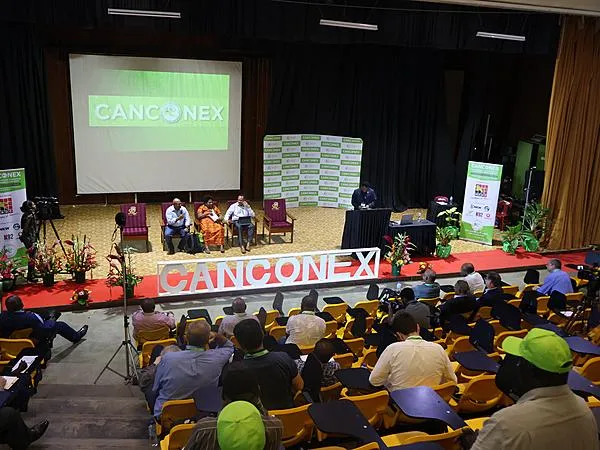
  • the second PNG National Community Affairs and National Content Conference & Expo (CANCONEX) to be held over 3 days 1 - 3 July,
  • a PNG Resources Career Fair 3 - 4 July,
  • the inaugural PNG Resources Summit 4 July, and
  • the Resources Summit Dinner 4 July The University of PNG will be the venue for CANCONEX and the PNG Resources Summit from 1 to 4 July 2024.

The PNG Resources Summit Dinner will be held at the Hilton Hotel on the evening of 4 July 2024.

In making the announcement, PNG CORE President Mr. Anthony Smaré stated;

“We know that the resources sector is the engine that drives the PNG economy, and it impacts the lives of millions of our people. To build on our conferences and events, it is critical that we run an annual domestic event that showcases the common good that is being achieved by the industry in PNG; that gathers the entire community of stakeholders (developers, regulators, landowners, contractors and impacted communities) to honestly share learnings and opportunities for the sustainable development of the PNG energy and resources sector to the benefit of all stakeholders.

“This is why we are excited to stage the first PNG Resources Week, feature 3 landmark events – CANCONEX 2024, Resources Career Fair, and the PNG Resources Summit and Dinner. We are also proud to stage it not at hotel, but at a seat of learning, University of Papua New Guinea, to bring the industry closer to the next generation that will power the next 20 years of development.”

Description of each event:

About CANCONEX 2024

CANCONEX is the National Community Affairs & National Content Conference & Expo. CANCONEX 2024 follows on from its inception with CANCONEX 2023 last year at PNG University of Technology in Lae, where over 800 delegates attended comprising executives from developers, explorers, business, government, suppliers and contractors, and a large representation from project area landowners and landowner companies from all of PNG’s energy and resource projects. Apart from discussion on community affairs, local content, business development, social programs and gender development, CANCONEX 2023 also featured Bougainvillean leaders on the lessons of Panguna’s closure.

This year’s event is poised to draw over two thousand attendees, including key figures in business and representatives from landowning communities across major project areas with concurrent streams of presentations on all issues and shared experiences associated with resource development in PNG. There will also be an expo with resource companies, landowner companies and other service companies to the energy and resources sector exhibiting.

About PNG Resources Summit

For the first time, the PNG Resources Summit will be held, as a PNG-based resources update on the resources sector, featuring presentations by senior executives providing an update on all the major resource and energy projects in PNG. The Summit will close with a gala dinner in the evening at the Hilton Hotel.

April 24, 2024

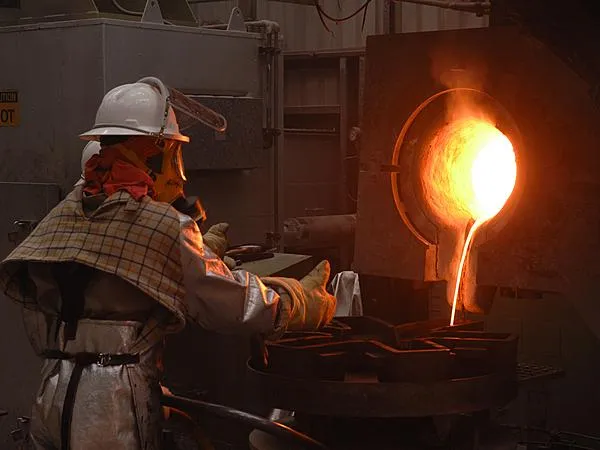
Ok Tedi Mining Limited (OTML) is proud to announce a record production result for the first quarter of 2024, with an achievement of 26,114 dry metric tonnes (dmt) of copper (Cu), marking a substantial increase of 61% compared to the same period last year which was 16,265 dmt.

This record production has been complemented with a safe start to the year with a Lost Time Injury Frequency Rate (LTIFR) of zero (0) and Total Recordable Injury Frequency Rate (TRIFR) of 0.22 compared to 2023 with LTIFR and TRIFR recorded at 0.21 and 0.63 respectively. Unlike in the past, the strong production results this time was achieved with all environmental KPIs at the Mine, Mill and Bige dredging site being fully met.

This performance is a testament to the Company’s commitment to responsibly enhancing production, implementing strategic business improvements, and optimizing operational efficiency across the entire production chain, from mine and mill to the port.

These results are driven by OTMLs ‘restore, reset, and reinvigorate' strategy, launched in 2023 to revitalize our business operations.

Importantly, the Company remains committed to fulfilling our environmental, legal, and social obligations, consistent with its vision to maintaining positive relationships with the communities impacted by our operations, and thereby securing the social license to continue to operate, which is vital for our ongoing success.

Looking ahead, with the approval for the Mine Life Extension in principle up to 2050 by the OTML Board, the Company is poised for sustainable growth well into the future.

OTML is actively pursuing strategic growth projects aligned with our current Strategic Business Plan, which are progressing successfully and anticipated to generate K30 billion in social benefits over the next 27 years, including taxes, royalties, and dividend payments.

Our record production in the first quarter of 2024 underscores our commitment to excellence, innovation, and responsible mining practices, which are pillars of our Vision 2023.

We remain focused on driving value for our stakeholders while contributing to the sustainable development of our communities and the broader PNG economy.

April 22, 2024

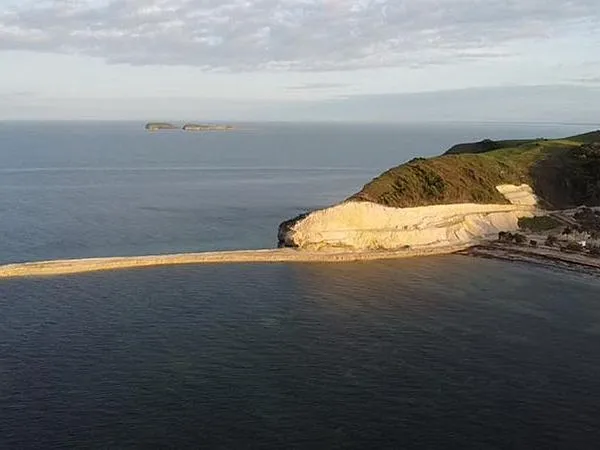
Mayur Resources Limited is pleased to confirm that it has executed definitive debt financing agreements with Appian Capital Advisory LLP (Appian) for a total of approximately US$115 million. This financing, combined with Vision Blue Resources’ (Vision Blue) proposed equity investment into the project of US$40 million announced in November 2023, would see the Central Lime Project (CLP) fully funded. The funding would be used to cover construction costs to achieve an annual base case nameplate production capacity of 400,000 tonnes(a), along with an allocation for expected further expansion. First quicklime production is expected to begin 18 months after financial close.

Key Points:

  • • US$155 million (A$235 million) secured through a combination of debt and equity comprising:
    • Approximately US$115 million senior secured loan and royalty financing arrangement from Appian, a leading metals and mining private equity and credit investor, comprising US$70 million to achieve CLP base case nameplate capacity, a US$22.2 million over-run facility and US$22.2 million for expansion beyond base case capacity.
    • US$40 million in previously announced proposed equity funding from Vision Blue, a clean energy battery metals transition investment vehicle led by Sir Mick Davis, in exchange for a 49% equity stake in the CLP (with Mayur retaining a 51% majority stake).
  • In Q2 CY24, Mayur will work to complete remaining conditions precedent to the debt and equity funding on items including but not limited to, product offtake, appointing construction contractors and finalisation of project documentation with, and approvals from, the PNG Government. Assuming satisfaction of the conditions precedent, financial close would be announced.
  • The debt and equity would provide 100% of the funding required to complete the base case construction works, implement onsite carbon reduction initiatives and enter commercial production, with Mayur’s share of annual EBITDA from the base case expected to be US$12.8 million (A$19.4 million)(a). Additionally, US$22.2 million of Appian funding is earmarked to contribute to a potential expansion which could double production capacity and associated EBITDA through construction of additional kilns on the CLP project site.
  • Post financial close, it is expected to take 18 months until first quicklime production begins. Additionally, the project is set to generate cash flow ahead of construction completion through the sale of unprocessed limestone, with discussions currently underway.
  • The CLP aims to cornerstone the first downstream manufacturing processing hub in PNG, generating hundreds of new jobs and with the potential to be a major displacer of PNG’s imported lime products.
  • Mayur will be the closest source of quicklime, hydrated lime, and crushed limestone to Australia, enhancing the resilience of the supply chain of these critical materials while reducing logistics cost and carbon footprint.
  • The CLP is strategically located within Mayur’s unique Single Factory Special Economic Zone in Port Moresby’s North-Western Growth Corridor, including the US$19 billion PNG LNG facility, the US$10+ billion Papua LNG development and Kumul Petroleum Fabrication Facility.
  • Upon financial close, Mayur, as the parent company, will receive a reimbursement from the CLP project joint venture company for the early construction costs incurred for wharf development.

Mayur’s Managing Director, Paul Mulder commented:

“Today marks the key funding milestone in delivering the CLP, which will be a transformative development for Papua New Guinea’s Landowners, Central Province and the broader manufacturing sector. Hundreds of new jobs, support service businesses, electricity, roads, education/health facilities are all part of the benefits that will be created for Landowners, whom to date, have lacked such basic services and have been negatively impacted by isolation. As the nation’s inaugural industrial downstream manufacturing processing hub, the CLP will also materially contribute to the clean energy transition by providing a key input to the processing of energy transition metals in the region.”

“The project has successfully attracted finance from both Appian and Vision Blue, bringing both debt and equity to the table in a first for PNG. This investment sets the foundation to showcase PNG’s vast potential for small to medium manufacturing projects connected to its natural resources.”

“The support provided by the PNG Marape-Rosso Government is a testament to their commitment to supporting downstream processing and assisting in attracting such reputable investment funds into PNG’s first Single Factory Special Economic Zone. Such support now sets the scene for PNG to compete with the hundreds of billions of dollars already invested into Southeast Asian Special Economic Zones.”

Appian Capital Advisory CEO & Founder, Michael W. Scherb commented:

“Appian is excited to partner with Mayur and Vision Blue on the Central Lime Project in Papua New Guinea. CLP is a leading asset, set to produce low-cost lime products for metal processing, strategically located close to end markets in Australia and Asia. The project will also play a pivotal role in highlighting foreign direct investment in PNG, supporting the country’s growing industrial sector. This collaboration showcases the ongoing success of Appian's dedicated credit and royalties offering, highlighting the significant value our team brings to the delivery of mining assets globally.”

Construction Activities

Construction of the CLP commenced in mid-2023 with primary activities to date being the wharf infrastructure. Commencing the wharf infrastructure early has allowed Mayur to optimise construction logistics and shorten the project’s development schedule. Additionally, the Company expects to generate early revenues through the sale of raw limestone aggregate from this wharf during construction of the kilns.

As Mayur has funded this construction to date, the Company will receive a reimbursement from the CLP project joint venture company. This reimbursement will add to Mayur’s working capital at the parent level.

Significant Lime Resource and Future Expansion Potential

Mayur has previously reported JORC Mineral Resource Estimates of 382Mt of limestone – all within the Mining Lease of the CLP(b). The original ‘base case’ definitive feasibility study used only 30Mt of this total resource, presenting extraordinary upside potential for Mayur and warranting future investment towards increasing the number of kilns at the Project beyond the two initially modelled, which has the potential to scale annual EBITDAs linearly with the number of kilns.

Further Disclosures

Further disclosure of the terms of the definitive financial agreement with Appian are set out in Annexure A. The terms of the agreements with Vision Blue were disclosed on 14 August 2023 and were finalised by way of definitive transaction documents on 6 November 2023. The Company notes that it has also provided details of the financing in converted A$ terms, but re-iterates the financing from both Appian and Vision Blue is expressed in US$ terms in the definitive agreements, and will be funded by both parties in US$ terms. The exchange rate used in these calculations is 0.66 AUD/USD.

April 22, 2024

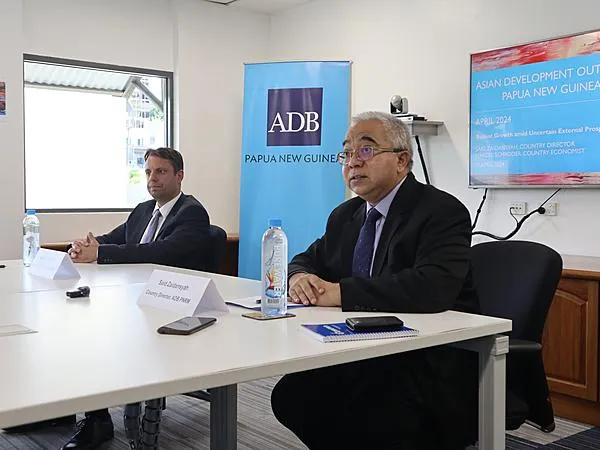
The Asian Development Bank (ADB) reaffirmed its strong, long-term partnership with the Government of Papua New Guinea (PNG) during the wrap-up meeting of ADB’s Country Programming Mission. 

At the meeting co-chaired by ADB Country Director for PNG Said Zaidansyah, Department of National Planning and Monitoring Secretary Koney Samuel, and Department of Treasury Secretary Andrew Oaeke, ADB and the Government of PNG discussed the strategic priorities for the bank’s support for the country.

“As the biggest multilateral development partner of PNG, ADB will continue to support diversified, sustained, and inclusive growth in the country,” said Mr. Zaidansyah. “ADB’s support is aligned to PNG’s Medium Term Development Plan IV, 2023−2027, taking into consideration the International Monetary Fund program’s lending limit, portfolio performance of active ADB projects, and the capacity of our executing and implementing agencies.”

ADB’s active program in PNG currently stands at $1.38 billion. The largest sectors ADB is supporting are transport (roads and civil aviation) with 60% and energy with 20% in response to the large infrastructure gap in PNG. The human and social development sector as well as building resilience to climate also form part of ADB’s active portfolio. ADB is also actively working on public sector management including state-owned enterprise reforms.

While ADB’s indicative country assistance pipeline for PNG for 2024–2027 will continue to focus on transport infrastructure, public sector management, energy, and education, it will also provide new emphasis on water, sanitation, hygiene, agriculture, and financial inclusion. The pipeline strongly supports climate change mitigation and gender equity. Planned transport, energy, and water projects aim to facilitate significant economic opportunities and access to services.

April 22, 2024

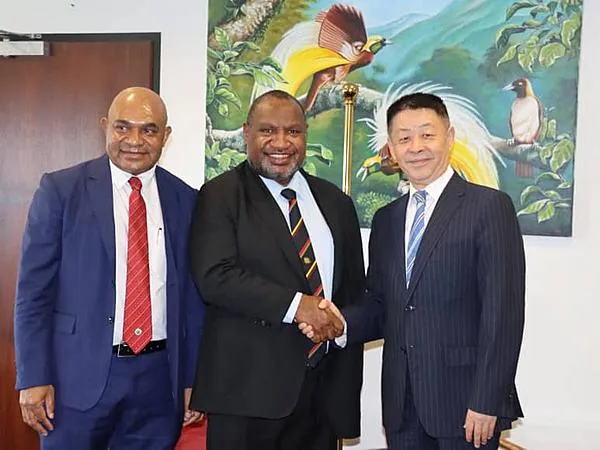
Prime Minister Hon. James Marape announced that Papua New Guinea continues to be a prime destination for business ventures, highlighted by PetroChina International Co. Ltd’s recent entry into the nation’s hydrocarbon industry.

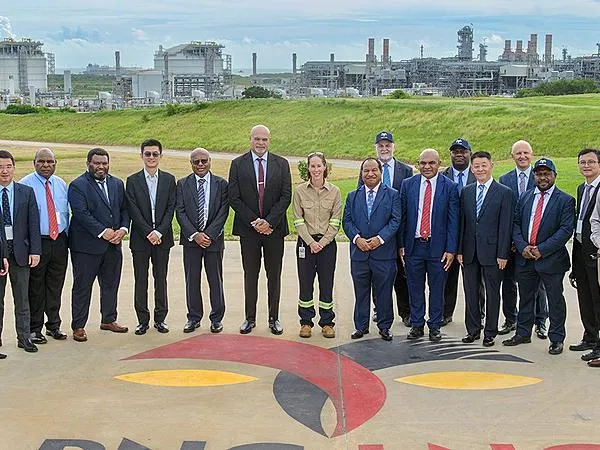
On a historically significant day for the oil and gas sector on Wednesday, April 17, 2024, Prime Minister Marape officially welcomed PetroChina into Papua New Guinea. This event coincided with the loading of the first LNG cargo onto the tanker ship Wudang, which berthed at the PNG LNG Plant wharf at Caution Bay, just outside Port Moresby.

“PetroChina International Co. Ltd, the largest oil and gas producer in the Asian continent and a top 50 company globally, joins sector giants already operating in the country, such as Exxon Mobil, Total, and Santos. Papua New Guinea is so blessed to have them,” said Prime Minister Marape.

He emphasised the significance of PetroChina’s entry into the PNG hydrocarbon market as a milestone achievement, partnering with the national oil and gas company, Kumul Petroleum Holdings Ltd (KPHL).

KPHL Managing Director Wapu Sonk highlighted a landmark achievement: “This is the first time for KPHL to market our equity share of LNG production from the PNG LNG Project that is above the long-term Sales Purchase Agreement volumes.

“Kumul Petroleum has a 16.77 percent share in the PNG LNG Project, entitling us to sell approximately 14 LNG cargoes over the next four years. Additionally, once we conclude the acquisition of an extra 2.6 percent of the PNG LNG Project, this will provide us with more LNG to sell on the spot market.”

He further noted, “Kumul Petroleum directly selling its share of the PNG LNG Project production is a significant achievement for the company and the country. We are currently in talks with other potential buyers who will be purchasing LNG shipments from us in the future.”

The announcement also included that for the first time, KPHL is marketing LNG on the ‘spot’ market from its share of product from the PNG LNG Project, not committed to long-term sales agreements. This deal was confirmed last month to sell 144,000 cubic meters of LNG on FOB terms to PetroChina after a tender process held in February.

Prime Minister Marape recalled his meeting with PetroChina executives on March 24, 2024, in Singapore, discussing this petroleum deal, which has now successfully materialised for PNG. He noted that with major hydrocarbon projects like Papua LNG, P’nyang, and PNG LNG, the country potentially has up to 25 trillion cubic feet (tcf) of resources to harvest.

“Having these global giant companies in the petroleum sector in our country demonstrates huge potential for more investment in this space into the future,” he said.

“PNG is not only going to be involved in the upstream process but eventually in the downstream arena, which will open up even more opportunities.”

He extended his thanks to KPHL, State Enterprises Minister Hon. William Duma, Petroleum Minister Hon. Jimmy Maladina, and others involved in the significant progress discussions and implementation of petroleum-related agreements for the benefit of the country.

April 22, 2024

The Port Moresby Chamber of Commerce and Industry Inc. (POMCCI) recently organized a ‘Meet and Greet Networking Event’ with Australia’s new High Commissioner to Papua New Guinea, His Excellency John Feakes.

The event took place on Tuesday, 16th April, at the Holiday Inn in Port Moresby, drawing participants from the Australia Trade and Investment Commission, the business sector, industrial stakeholders, and partners.

Esteemed for his distinguished career with the Department of Foreign Affairs and Trade, Mr. Feakes brings a wealth of international experience, having previously served as Australia’s High Commissioner to Fiji, Kenya, and as Deputy High Commissioner and Counsellor in Papua New Guinea.

His diplomatic endeavors have extended to the United States of America and the Philippines, where he played a pivotal role in advancing Australia’s diplomatic interests.

In an exclusive interview, His Excellency Feakes expressed his gratitude for the opportunity to engage with the dynamic members of the Port Moresby business community. He commended the Port Moresby Chamber of Commerce and Industry for hosting the event and expressed hope for continued engagements in the future.

“It was fantastic to meet so many of the dynamic members of the Port Moresby business community. I am very grateful to the Chamber for hosting the event, which I hope is the first of many,” he added.

His appointment as Australia’s High Commissioner to Papua New Guinea underscores the enduring relationship, deep-rooted ties, and mutual respect shared by the two nations, exemplified by their comprehensive strategic and economic partnership.

Mr Feakes’ presence marked another successful network connection hosted by POMCCI. Attendees engaged in conversations, exchanged business cards, and shared insights and experiences.

April 22, 2024

Business for Health (B4H) is leading the battle against tuberculosis or TB, urging all businesses in Papua New Guinea to join their campaign this year.

The renewed commitment to ending the disease marked on TB Day continues, as the group released updates to TB learning resources and maintained conversations through radio, theatre, and storytelling, with short stories based on real success stories, which are available for sharing.

Collaborating with PNG FM Radio, B4H launched an "End TB" radio campaign to educate audiences and combat stigma over the disease, as it crafted messages to encourage early detection and highlight free testing and treatment services.

Dr. Ann Clarke, B4H founder, explains: “Our partnership with PNG FM is crucial in promoting the message that TB, although it is the leading infectious disease killer in the country, is curable. With accurate information, support from loved ones, and access to free effective treatment, the disease can be managed, and people can be cured.”

“The new messages build on our previous ‘cover your cough’ disease prevention message generously supported by PNG FM,” Dr. Clarke added.

Part of the B4H campaign includes a 3-day workshop for businesses to participate in, dedicated to combating TB especially in the workplace and among workforce families.

Ms. Rosemary Botong, the General Manager of PNG FM, reiterated the significance of supporting B4H in the nationwide awareness on TB at an event hosted by SP Brewery on the 10th of April.

“With the National Department of Health reporting over 5,000 deaths and more than 44,000 new cases of TB last year, including drug-resistant strains and TB/HIV co-infections, we cannot overlook this significant social issue. Notably, children make up a quarter of all new cases,” Ms. Botong said.

“Radio, with its profound penetration into the daily lives of people across all demographics in Papua New Guinea, serves as a powerful medium for this critical health messaging,” she added.

The creative teams from B4H and PNG FM have crafted six messages based on true stories, including children affected by TB.

“By broadcasting messages that emphasize treatment success and the accessibility of free services, we’re not just spreading knowledge; we’re extending a lifeline to those in need,” Ms. Botong added.

Ms. Teresa Koratsi, TB case coordinator at B4H, said two of her children and B4H staff are featured in the radio campaign.

The partnership emphasizes TB's curability with accurate information and support, as the campaign aligns with the national anti-tuberculosis program and aims to save lives, reduce workforce productivity costs, and improve overall social and economic health.

Listeners are directed to the Businesses for Health website for TB clinic information and encouraged to use the Telikom TB toll-free information line at 7676 2482.

While the challenge ahead is formidable, Dr. Clarke stressed that it is not impossible to overcome.

“With persistent calls for accountability and collective action from the business and private sector, B4H and businesses can build a more productive workforce and ultimately eradicate TB in PNG,” she said.

In 2024, tuberculosis remains PNG's leading cause of death from an infectious disease. Therefore, B4H is appealing to the private sector and businesses for ongoing support.

Since its establishment in 2017, the Businesses for Health: TB and HIV project has made significant strides in mitigating the impact of these diseases through workplace education efforts. Despite the increasing burden of TB on PNG's economy, the effort has preserved lives and jobs.

However, the reality on the ground falls short of B4H’s ambitions, with an expected 5,000 TB deaths and at least 40,000 new TB cases this year alone, Dr. Clarke noted.

“We celebrate the ongoing support from many businesses in PNG's private sector. Together, we've led awareness campaigns and saved lives despite setbacks caused by COVID-19 and nationwide social and economic challenges,” she said.

Through the B4H "End TB" radio campaign, TB messages are broadcast across PNG in both English and Tok Pidgin, engaging communities and encouraging early detection and treatment.

“Together, #YesWeCanEndTB. Let's continue our efforts to cover your cough and prevent the spread of TB, saving lives and building a healthier future for all,” Dr. Clarke added.

Here's how businesses can get involved, per Dr. Clarke:

1. Invest in B4H workplace TB training to cultivate a health-seeking culture and implement comprehensive TB management programs within your business. Sign up now for workshops in June and September by emailing lorrie@businesses4health.com.

2. Partner with B4H to amplify efforts in ending TB. Whether through financial support, in-kind contributions, or expertise sharing, your involvement is crucial in improving access to TB information and services. Contact annmclarke@businesses4health.com to get involved.

3. Leverage your influence to advocate for improved healthcare policies and infrastructure. Encourage government action to address the root causes of TB, such as poverty and inadequate housing. Reach out to your MP, the PM, and Health Minister to drive sustainable change.
April 22, 2024

Port Moresby, the dynamic capital of Papua New Guinea, is set for a remarkable transformation into a premier destination for Chinese tourists, following a milestone collaboration between local and national tourism industries, business sectors, and a strategic partnership with Guangdong Province.

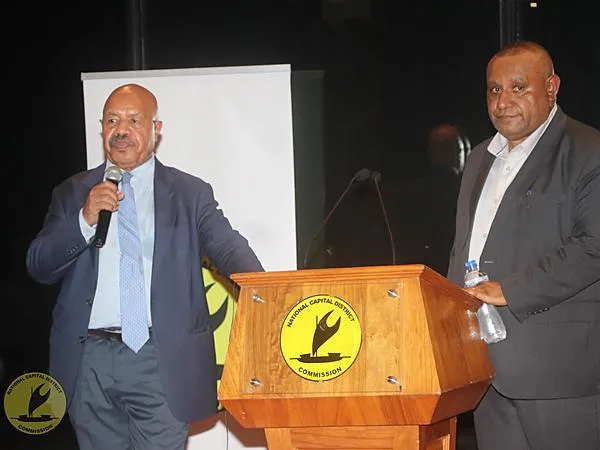
Together, they envision “Amazing Port Moresby” as a pivotal hub for tourism and business, fostering sustainable growth and global connectivity, National Capital District (NCD) Governor, Honorable Powes Parkop, said during a recent pre-cocktail reception at the APEC House in Port Moresby.

This event, hosted by Governor Parkop and the PNG Tourism Promotion Authority (TPA) on April 17, served to guide stakeholders toward a brighter future for tourism in the city. It also set the stage for the upcoming "China Ready Workshop," scheduled for April 25, at the APEC House from 8 am to 5 pm.

The pre-cocktail reception provided industry stakeholders a chance to engage in discussions vital to the future of tourism in Port Moresby. It aimed to facilitate networking and dialogue among stakeholders from various sectors of the tourism industry and business sector.

Attendees had the chance to connect with key players and exchange insights on strategies to prepare Port Moresby for the rapidly growing Chinese tourism market.

In his speech, Governor Parkop said: “Today’s pre-cocktail reception underscores our commitment to ensuring that Port Moresby is ready to welcome Chinese travelers with open arms.”

“The China Ready Workshop represents a crucial step in our journey to prepare Port Moresby for the burgeoning Chinese tourism market. This initiative underscores our commitment to fostering economic prosperity and forging enduring partnerships for the benefit of our city and our people,” he added.

Governor Parkop emphasized that the event, attended by various stakeholders, demonstrates a commitment to fostering relationships with the Chinese tourism market.

“The China Ready Workshop represents a pivotal milestone in our endeavor to ready Port Moresby for the burgeoning China tourism market. This initiative underscores our commitment to nurturing economic prosperity and forging enduring partnerships for the benefit of our people,” he said.

Governor Parkop highlighted that NCDC and PNGTPA have been actively driving the China Ready project, recognizing its significant potential.

He affirmed NCDC's commitment to becoming China Ready by supporting its tourism office and allocating funds from this year's budget to support its tourism initiatives.

The NCD Governor emphasized that PNG boasts numerous tourist attractions, including diverse tribes, music, and traditions, making it a compelling destination compared to other Pacific Island nations and other countries.

“We are very grateful for this partnership. And the National Government I believe, is supporting seriously.  PNG, we are a great tourist destination. PNG is a great idea for a tourist destination -- from the mountains to the coast, to the islands, to the rivers. And for us here in Port Moresby, thousands of tribes and villages in one destination, and this is what Port Moresby can offer.”

“We have the potential to attract tourists from all corners, but it hinges on everyone in Port Moresby and the country. Preparedness is key; if we demonstrate readiness and preparation, tourists will come,” Governor Parkop remarked.

Mr. Eric Mossman Uvovo, Chief Executive Officer of the PNGTPA, echoed Governor Parkop's sentiments, stressing the workshop's importance and calling upon stakeholders to unite in their quest to create an extraordinary future for tourism in Port Moresby.

Mr Uvovo stated: “The workshop marks a crucial juncture in our efforts to tap into the vast potential of the Chinese tourism market. Through informative sessions and interactive discussions, stakeholders will gain valuable insights into preparing and promoting Port Moresby as a top destination.”

“Let us join forces to pave the way for an extraordinary future for tourism in Port Moresby,” he added.

The China Ready Workshop

The China Ready Workshop is an initiative spearheaded by the NCD Governor and PNG TPA since July 2023 and aims to position Port Moresby as a premier destination for Chinese tourists.

Through a comprehensive approach encompassing cultural enrichment, infrastructure enhancement, and targeted promotional campaigns, efforts are being made to elevate Port Moresby as the Chinese travelers’ choice.

The workshop will delve into key topics such as market updates, post-COVID-19 traveler insights, and effective strategies for attracting Chinese tourists and businesses to Port Moresby.

Certified participants will not only gain a Certificate of Completion but also an identification number for 12 months of continuing education. These preparations are instrumental in realizing the vision of making Amazing Port Moresby a premier tourist destination, particularly for Chinese visitors.

April 22, 2024

PNG Minister for Mining Hon. Muguwa Dilu’s online participation in the recent launch of the Multilateral Minerals Security Partnership (MSP) Forum reflects PNG's eagerness to explore collaborative opportunities within the global mining community and potentially become a member of the Forum.

This inaugural event held on the 9th of April, in Leuven, Belgium has drawn attention from global stakeholders, including PNG, highlighting the country’s commitment to fostering international cooperation in the mining sector for sustainable development.

The MSP Forum is a multilateral cooperation platform within the framework of the Partnership, aimed at bringing together raw materials producing and consuming countries at various stages of development.

The Forum focuses on advancing and accelerating individual projects and promoting policies that contribute to resilient value chains and bring local value-addition.

Additionally, the Forum will be a platform for strengthened cooperation and policy dialogue with resource-producing countries. It will serve to support and accelerate mining projects and promote a policy dialogue to address the challenge of a secure, sustainable supply of critical raw materials for the green and digital transitions.

According to the MSP Forum, the policy dialogue will implement the objectives of the Critical Raw Material (CRM) Club proposed by European Commission President Ursula von der Leyen.

The idea is to create a dialogue between reliable partners to address the challenge of CRM supply and to assist resource-producing countries in their ambition to industrialize, building on those assets.

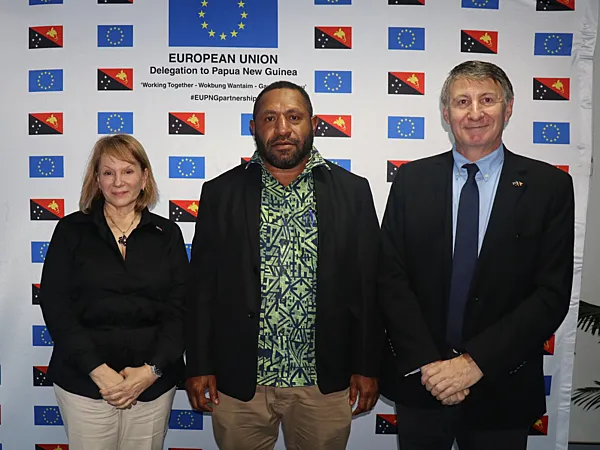
It was attended by 33 government representatives from prospective MSP members, including Minister Dilu, the US Ambassador to PNG Ann Marie Yastishock, and the EU Ambassador to PNG Jacques Fradin, who hosted them at the EU Delegation PNG office.

The MSP Forum, co-chaired by the European Union and the United States, signifies a collaborative effort to promote resilient value chains within the mineral sector.

With opening remarks from Mr. Valdis Dombrovskis, Executive Vice President of the European Commission, and Mr. Anthony Blinken, US Secretary of State, the event underscored the importance of international cooperation in shaping the future of mining practices.

Minister Dilu said the forum presents a unique platform for PNG to engage with international partners and contribute to sustainable mining practices in the country. The EU Delegation to PNG and the US Embassy in Port Moresby expressed readiness to assist PNG in becoming a member of the MSP Forum.

April 22, 2024

Papua New Guinea recently took a step further in addressing gun-related issues in the country through a state workshop supported by the United Nations (UN).

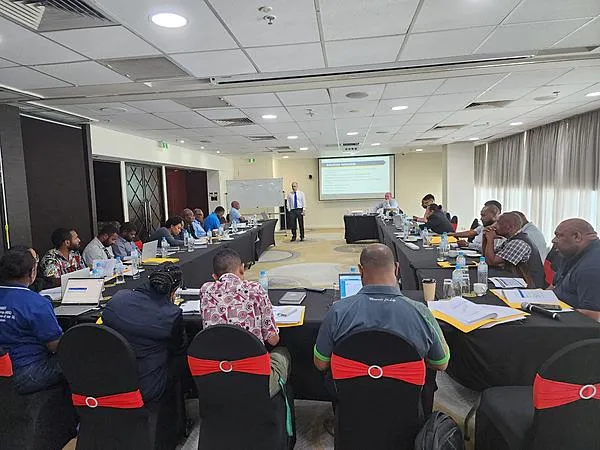
Gun-related violence poses a significant threat to business operations, mostly in PNG’s provinces. To tackle this, a three-day National Workshop on Coordination Mechanism and Comprehensive National Strategy on Small Arms Control was convened from April 15th to 17th at the Apec House in Port Moresby.

Co-sponsored by the Department of the Prime Minister and National Executive Council (NEC) and the United Nations Regional Centre for Peace and Disarmament (UNCPRD), the workshop was organized under the Saving Lives Entity (SALIENT) Initiative.

This initiative is jointly implemented in PNG by the UN Resident Coordinator's Office, UNRCPD, United Nations Development Program (UNDP) PNG, the European Union (EU) and United Nations Population Fund (UNFPA) PNG.

The primary aim of the workshop was to develop a National Strategy to combat the proliferation of illegal firearms in PNG. The workshop was a result of data collection on reducing illegal arms buildup around the country.

PNG Foreign Affairs Minister Hon. Justin Tkatchenko MP emphasized the need immediate for action during his remarks at the workshop's opening on April 15th.

Representing Prime Minister Hon. James Marape MP, Minister Tkatchenko highlighted the government's political will to address the issue, citing concerns over political sponsorship of weapons.

Minister Tkatchenko said: "It is the big issue that we must all address together. If we're all thinking about the good of our country, then these political issues must come to a compromise."

He also emphasized the role of the UN in providing comprehensive data and recommendations to effectively reduce gun violence.

Minister Tkatchenko expressed gratitude to the UN Regional Centre for Peace and Disarmament in Asia and the Pacific, the UN Country Team in Papua New Guinea, and the European Union for their support of the workshop.

“From these discussions and data collected on the ground, the UN organization will give us a full detailed report of their findings as well as recommendations for how we can best achieve effective reduction of gun violence. It’s not hard, we do not need to be rocket scientists to work out how to remove guns from the provinces,” he said.

The Minister noted that implementing recommendations from the 2005 report by Retired Major-General Jerry Singirok could significantly contribute to this effort.

“If you read through it, it's only for our government to implement a lot of those recommendations which will help our police implement the removal of small arms and firearms throughout Papua New Guinea,” he said.

Minister Tkatchenko also highlighted the prevalence of minor gun issues, primarily from homemade guns, in his electorate in Moresby South, often linked to abuse of drugs-related crime.

“But we need to make a decision, we need to get an outcome and not talk about it anymore,” he said.

Extensive report by Singirok in 2005

In his report, Major General Singirok explores various aspects of illegal gun use, sources of firearms, and administration and control. He advocates for a collaborative approach between the state and society in addressing gun control issues.

His report draws from different sources, including personal experience. Further in, Major General Singirok calls for a collaborative approach to gun control between state and society.

Link:  https://dpa.bellschool.anu.edu.au/sites/default/files/publications/attachments/2015-12/05_05_dp_singirok_0.pdf 

April 22, 2024

The recent signing of the Protocol on coffee exports to China during the official visit of His Excellency Wang Yi, the Minister for Foreign Affairs for China, marks a significant milestone for Papua New Guinea's coffee industry and agriculture sector.

The momentous occasion on the 21st of April signifies an historic moment in the relationship between PNG and the People's Republic of China, as the phytosanitary protocols were signed to open the Chinese market to PNG's unroasted coffee beans.

It reflects years of negotiation efforts by PNG Prime Minister Hon. James Marape and Minister for Foreign Affairs, Hon. Justin Tkatchencko, aimed at bridging the gap between the two nations' systems.

Traditionally, PNG's coffee has been primarily traded with Western societies, with Asia serving as the shipment port.

However, with the efforts from Prime Minister Marape to promote and develop the agriculture sector, the Memorandum of Understanding (MOU) with China heralds a promising future of trade and economic partnership between the two nations.

PNG boasts a global reputation for its distinct coffee, with exports reaching over 34 countries worldwide.

Despite producing less than 1 million green bean bags annually, PNG’s presence in various markets underscores the unique position its coffee holds among enthusiasts globally.

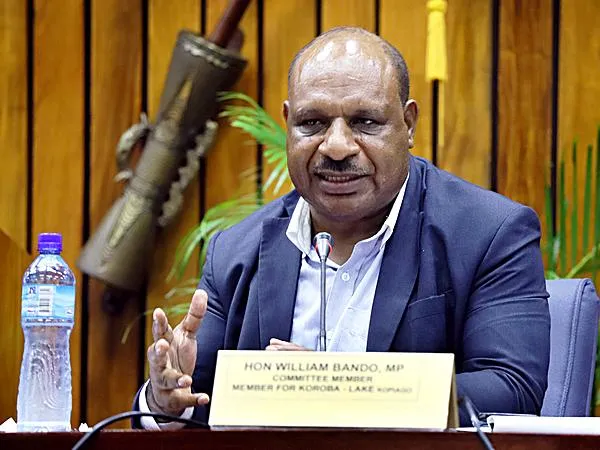
PNG Minister for Coffee, Hon. William Bando, CPA, LM, MP, in a recent statement, assured his Ministry’s commitment in supporting the coffee industry.

“My Ministry will work to enhance the entire coffee value chain, from farm to cup, by investing in infrastructure, technology, and capacity-building initiatives that improve productivity, quality, and market access for coffee farmers,” Hon. Bando said.

From 2021 to 2023, PNG has witnessed remarkable growth in its coffee export sector, particularly in exporting to China. The cumulative value of coffee exported saw over 50,651 bags (3,039 tonnes) shipped to China, bringing in an impressive K42,104,493 -- reflecting the dedication of local farmers and exporters.

“This achievement is a testament to the hard work of our local farmers and exporters, where 58% out of the 32 registered exporters have ventured into the Chinese market, diversifying and expanding their horizons,” Minister Bando said.

The surge in exports to China, reaching 35,020 bags (2,101 tonnes) in 2023 alone, demonstrates the increasing demand for PNG coffee in China, attributed to the unique taste and high quality of PNG coffee, making it a preferred choice among the Chinese.

Minister Bando confirmed that the figures presented relates to PNG coffee entering China, not directly but through different ports such as Hong Kong, Malaysia, or Singapore, as PNG had no protocols for direct entry of coffee. It will be another chapter when coffee can be now shipped direct to China.

He stated the challenges the PNG coffee industry faces, adding: “The signing opens up market for our products, but it is a challenge to our coffee industry to produce more as direct exports will obviously mean more direct sourcing of PNG Coffee.”

“Further, we can expand our roast and ground coffee trade with the direct flights between PNG and China that is expected to be three flights weekly. We need to put more roast beans and ground coffee on these flights to China apart from the unroasted or green bean exports on ships.”

He said efforts will be directed towards enhancing the entire coffee value chain, from farm to cup, through investment in infrastructure, technology, and capacity-building initiatives. Research and innovation will play a crucial role in driving growth and competitiveness in the coffee sector, the minister added.

PNG also seeks to explore trading opportunities with China for other commodities such as cocoa, rubber, coconut, copra, tea, and oil palm, emphasizing the commitment to agricultural development.

However, the minister said the success of this agreement hinges on the continued dedication of farmers, growers, and industry stakeholders to increase production and productivity while maintaining the unique taste and preferences that distinguish Papua New Guinea coffee on the global stage.

Hon. Bando added: “My appeal to all Coffee Industry Corporation Board and staff and Agriculture Officers throughout PNG to get moving on the ground to motivate, encourage and point our producers to getting our hands dirty and this will create employment and income earning opportunities and in moving our industry forward as well as our economy.  We must produce more coffee and process at affordable costs for our own consumption and to sell to the world that unique PNG brand.”

April 18, 2024

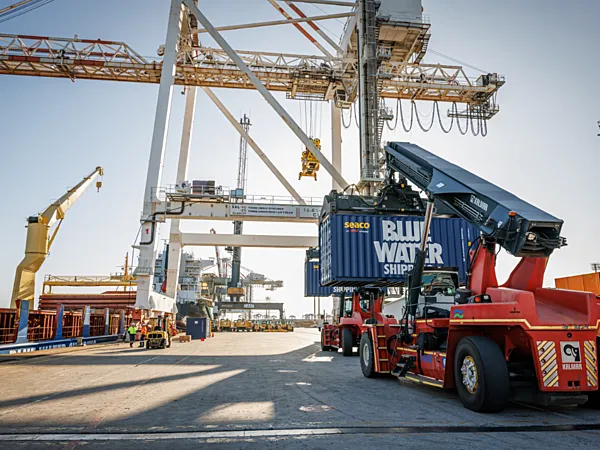
Blue Water is thrilled to announce the opening of bookings for its highly anticipated Less than Container Load (LCL) Consolidation Services, facilitating seamless connectivity between Australia and Papua New Guinea. This innovative service heralds a new era in cargo shipping, promising efficiency, and reliability.

Blue Water's LCL Consolidation Services offer an end-to-end solution, ensuring a consistently high standard of service throughout the shipping process. Specifically tailored for industries with regular shipments, companies prioritising service excellence, and those deeply integrated into global supply chain networks, this groundbreaking service is set to redefine cargo logistics.

Clients spanning various sectors can now confidently book Blue Water's LCL Consolidation, guaranteeing a reliable, efficient, and customised shipping solution tailored to their unique needs. From the initial cargo collection point to the final delivery destination, Blue Water assures a top-tier shipping experience.

Enhanced Shipping Experience

Sean Adams, General Manager of Blue Water Papua New Guinea, emphasizes, "At Blue Water, our commitment is to redefine shipping logistics by providing innovative solutions that simplify and enhance the shipping experience for our clients."

Designed to optimise the transportation of smaller cargo loads, Blue Water's LCL Consolidation Services offer cost-effective and reliable solutions for businesses of all sizes. By consolidating multiple smaller shipments into one container, Blue Water aims to streamline the shipping process, reduce costs, and minimize environmental impact.

This announcement marks a significant stride forward in Blue Water's mission to continually enhance its services and meet the evolving needs of the shipping industry. For booking inquiries and additional information, please contact BWS_PNGFAKBookings@bws.dk.

April 18, 2024

PNG CORE President Anthony Smaré said recently that PNG benefits from one of the strongest gold production monitoring regimes in the world and PNG should feel proud of its current regime in place.

“PNG's mining industry adheres to a very rigorous standard and comprehensive scrutiny by government agencies to ensure transparency and accountability in gold production and all of PNG's operating mines have been compliant to those reporting standards and scrutiny. PNG's regime is stronger than in Australia, Canada and the United States of America.”

All gold produced by PNG gold mines are subject to the scrutiny of government agencies including the Mineral Resources Authority, Bank of Papua New Guinea, Internal Revenue Commission, PNG Customs and PNGEITI.

Mines submit a monthly Mineral Return Form 25 stating details of minerals mined, commodity produced, clearance on each export shipment is sought from both the IRC and Central Bank and upon receipt of clearance by the Central Bank, PNG Customs then completes its customs declaration forms confirming consignment details prior to shipment for exports out of country.

As of 2020, MRA uses a live data monitoring digital platform which enables the authority and the government real-time information on mineral data and operations of all major mines in operation in the country. Australia, Canada, and the US do not have this level of supervision. The mines pay MRA over K50m in levies each year to ensure that the MRA is funded to implement its regulatory role.

In addition to the extensive government oversight, the industry also subjects itself to several independent verifications of gold quality and quantity through various third-party professional service providers such as assayers and stock exchange requirements. All gold producers are required by law to provide audited annual company production and financial reports to the stock markets on which they are listed in countries like Australia, Canada, the US, and China and to their shareholders and home regulators. Any inaccurate reporting of revenue or gold production exposes these companies and their officers to significant civil and criminal liability in those countries as well.

Considering recent unfounded comments against the mining industry on gold theft and malpractices by certain leaders, PNG CORE has formally written to Prime Minister Marape to express its disappointment over those comments and asking for evidence of any noncompliance to be presented.

"The industry is very concerned about these unfounded allegations of misreporting of gold production by PNG mines made by some individuals. If evidence of such misconduct exists, bring it forward so that those in breach are dealt with accordingly under PNG law. In the absence of such evidence, any allegation of industry malpractice regarding gold production and exports should be considered a false narrative designed to lay the ground for dangerous proposals like the flawed National Gold Corporation proposal and its foreign promoters to garner political support and be passed to the detriment of the country. The industry will look to legal action against anyone propagating this false narrative without substantiation."

PNG CORE remain committed to working collaboratively with government agencies and relevant stakeholders to address any concerns and ensure that reporting processes continue to meet the highest standards of integrity and accuracy.

April 18, 2024

The Papua New Guinea Chamber of Resources & (PNG CORE) reaffirms its dedication to transparent resource governance by actively participating in the Extractive Industries Transparency Initiative (EITI) process.

EITI serves as a crucial mechanism for enhancing accountability and promoting responsible management of natural resources worldwide.

PNG CORE recognizes the importance of Multi-Stakeholder Group (MSG) in driving forward the EITI process.

Comprising representatives from government, industry, and civil society, MSGs promote inclusive decision-making and facilitate dialogue to enhance transparency and accountability in the extractive sector. PNGEITI MSG - Government Agencies include the following: Department of Treasury, Department of Finance, Department of Petroleum and Energy, National Planning and Monitoring, Prime Minister & NEC, Internal Revenue Commission and Mineral Resources Authority to name a few.

In line with EITI objectives, CORE and its member organizations are committed to:

  1. Transparent Reporting: Providing accurate and comprehensive data on production figures, revenue flows, payments, and contracts related to the extractive industries. Transparent reporting ensures that stakeholders have access to reliable information to make informed decisions and hold stakeholders accountable e.g. Mining production and export data is captured in the report for all reporting entities in PNG.
  2. Tax Transparency: Disclosing taxes, royalties, and other payments made to the government, thereby enhancing fiscal transparency and accountability. Transparent reporting on taxes paid ensures that the public can scrutinize government revenue from the extractive sector and hold authorities accountable for their management e.g., Government entities in the scope of reporting include Mineral Resources Authority who are responsible for collecting Production levy, Royalties and Licence fees, meanwhile Department of Petroleum and Energy is responsible for collecting Development levy, Royalties and License fees.

CORE recognizes that transparent resource governance is essential for promoting sustainable development and fostering trust among stakeholders. By actively participating in the EITI process and embracing transparent reporting practices, we demonstrate our commitment to responsible resource management and good governance in Papua New Guinea's extractive industries.

April 18, 2024

In Part I, we read about the signs of oil and gas throughout Papua New Guinea that enticed many oilmen to look for large oil and gas fields over many decades, and we read about the first commercial oil discovery at the Iagifu 2-X well and how the Kutubu field was successfully developed.  We now pick up the story where subsequent exploration wells found mainly gas fields rather than oil fields. 


When Papua New Guinea realised that its petroleum endowment was not so full of oil, but was comprised substantially of natural gas resources, it was recognised that gas would be difficult to develop in the absence of any domestic gas demand from households, commerce, or industry, and all the more so being remote from the gas markets of other nations.

So, in 1992, the Government through the newly-established Petroleum Branch, commissioned a study on all the discovered oil and gas fields of Papua New Guinea.  This work was conducted by the US firm, Scientific Software Intercom in collaboration with the officers of the Petroleum Branch and sought to assess the extent of the petroleum resources and reserves to proper and systematic standards of reserve reporting then published by the Society of Petroleum Engineers.

Based on summations of the reserves, an economic study was undertaken applying the then prevailing Papua New Guinea petroleum fiscal regime. The results were presented to the National Executive Council (the Cabinet) showing that if the production from the gas fields discovered to date were aggregated, there could conceivably be a commercially viable gas development based on the export of Liquefied Natural Gas (LNG) to East Asian markets, but more work would be needed to obtain better quantification of the gas field development costs and the construction costs of a LNG plant and export facilities.

The Government liked the idea of gas development and embarked on examining its policies for such and began fostering the notion of gas development. Economic and policy studies were conducted and extensive discussions between gas field owners and promoters ensued.

In 1995, the Government tabled a White Paper on Natural Gas Policy before the Papua New Guinea Parliament. The policy laid down the regulatory and fiscal terms that the Government was willing to consider for the encouragement of investment in gas development.  Key features were the introduction of Petroleum Retention Licences (PRLs) to allow the companies to keep their discoveries beyond the period of tenure provided by a normal Petroleum Prospecting Licence.  This would be allowed in consideration of an acceptable programme of gas field appraisal and delineation, conduct of commercial studies and development promotion by the licensees. So long as a field was currently not commercially viable, the PRLs would allow retention for up to 15 years. 

The gas policy also introduced a single ring-fence for the field development, gas pipeline infrastructure, LNG Plant and marine facilities. And based on considerable economic modelling, the Government landed on a concept of 50/50 sharing of the net value between the developer and the Government. The income tax rate for gas operations was set to 30% of net profits and the State decided it would keep its right to take up to 22.5% equity in the entirety of any development, including the LNG plant and associated facilities. Royalty rates were left at 2% of the wellhead value. 

With the foundations for the gas development defined by the revised gas regulatory and fiscal regime, Exxon and BP pursued their LNG development plans based on the large Hides gas field with notions of taking the gas to the Papua New Guinea north-coast and a deep water plant site at Madang.  However, these plans faltered due to the Asian financial crisis in 1997 and the consequent sudden reduction in East Asian LNG demand and the terrible tsunami that occurred in 1998 at Aitape on the north coast.   An account of the tsunami was made by Prof. Hugh Davies of the University of Papua New Guinea in his book Aitape Story published in 2007. He attributed the devastating waves to movement on a sea floor fissure arising from a 7.0 magnitude earthquake. That movement caused a slump of seabed bottom sediment which would have generated the wave.  

The tsunami demonstrated that whilst placing any LNG facilities nearer to markets, any north coast-located LNG facility would have to be built to much more exacting standards to cater for the additional seismic risk, as compared to the south coast. The Petroleum Division, mindful of the seismic hazards of the New Guinea part of Papua New Guinea, had earlier commissioned a Papua New Guinea Seismic Hazard Study, prepared by Dr Horst Letz, a renowned seismologist, which was completed around the time of the tsunami. It clearly defined the risk and indicated that a southern coast location for a LNG plant and facilities would be preferable.

The story of the tragic Aitape tsunami and its aftermath are told by Prof Hugh Davies in his 2007 book: the Aitape Story.   

When the amendments to the Petroleum Act were being prepared for gas development pursuant to the 1995 Gas Policy, the results of policy studies on landowner benefits (both royalty and equity sharing), strategic access to pipelines and processing facilities and elementary domestic gas business provisions became available, and an effort was made to incorporate these matters into the amendments.

The Government was intent in providing statutorily defined benefits to communities hosting any future oil and gas development together with a proper process of consultation and liaison with communities. For such benefits, the Government devised the idea of a separate Development Agreement between the community parties and the State, which would be agreed in a formally convened Development Forum after proper research had been made as to land matters through the conduct of social mapping and landowner identification studies carried out by the licensees.

Significant and specific political lobbying arose from the Southern Highlands Province (home to the major oil and gas fields) for the Government to consider making a separate Gas Act for gas operations. In the resulting compromise, the Government agreed at the political level to introduce some of the reforms suggested by the Province, but only if the Act would remain intact, though it was now agreed that the new Act would be rebranded as the Oil and Gas Act, whilst still referring to petroleum for the most part.

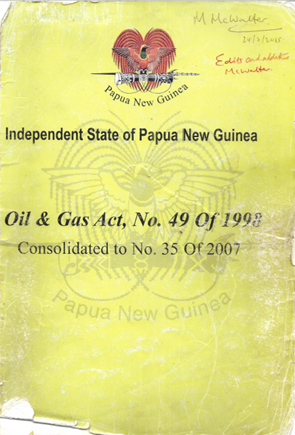
Thus, the Oil and Gas Act, No 49 of 1998 was born. It represented a major restatement of the former Petroleum Act, covered much new ground and paved the way for improved participation by communities and their sharing in benefits.

The cover of the Oil and Gas Act, 1998 consolidated to 2007, though there have been many more amendments since. This copy is battered and torn due to extensive use by the writer! 

Later, BP withdrew from Papua New Guinea and took their ideas about Papua New Guinea LNG development to West Papua in Indonesia where they successfully launched the Tangguh LNG Project.  Then, Chevron, realising that they were handling increasing volumes of associated gas in their operation of the Kutubu oil fields, re-injecting as much as 400 million standard cubic feet of gas per day bought out the commercial notions that the International Petroleum Corporation (the early Lundin company) had about developing their offshore Pandora gas field in the Gulf of Papua, and sending that gas to Townsville in Queensland, Australia to supply a 200-megawatt power plant.

A period followed when all development notions were focused on transmitting gas to Australia from the producing oil fields, plus the undeveloped gas fields. With Kutubu oil production declining, Chevron departed the venture, selling its Papua New Guinea interests to Oil Search and over the course of several years, the schemes waxed and waned.

The Papua New Guinea Gas Project, alias Papua New Guinea Gas to Queensland Project or Gas to Australia Project ended up with over 4,300 kilometres of trunk gas pipelines and lateral pipelines hanging off the Papua New Guinea gas sources. Most of that infrastructure was in the north-eastern quadrant of Australia and was to be expensed against the supply of gas to a wide and quixotic range of Australian gas customers. 

With low gas prices, high steel prices and the emergence of coal seam methane development notions in Australia, finally it was realised that Papua New Guinea might end up giving its gas away for nothing and that the only value For Papua New Guinea might remain in the natural gas condensates extracted in Papua New Guinea. The Papua New Guinea Gas Project for the supply of gas to Australia thus failed.

An abrupt turn was made to change all the development ideas toward supplying a LNG plant to be located on the Papuan South coast and an effort made to market the gas as LNG to East Asian markets. The dependence on external infrastructure and specific gas demands in Australia was also not seen as either politically attractive or sustainable. Thus, was born the Papua New Guinea LNG Project, more familiarly known as the PNG LNG Project.

PNG LNG has many factors in its favour as a distinct source for LNG for supply to East Asian markets. Papua New Guinea is a non-aligned Christian nation; it is not an Islamic nation. Papua New Guinea is desirous of investment and keen for development based on commercial oriented fiscal terms. Papua New Guinea as a nation has open-ocean access from its shores to customers and does not rely on any strategic straits. It has a Westminster-style Government and observes the principles of law and contract.

Papua New Guinea is favourably positioned to supply the Australasian region, but can reach out to serve Asian, Pacific and American markets.  With diminishing oil production and the absence of new oil finds, Papua New Guinea’s explorers needed to capitalise on prior exploration investments that failed to find oil. Gas in the new century was no longer a hindrance and could be profitably developed even extending the life of the oil fields.

The PNG LNG project was projected to export LNG at a heating value of 1,135 BTU/SCF gas and the liquids were forecast to sell at US$ 60/barrel. Anticipated LNG prices were:  US$ 8.07 per MSCF: equivalent to US$ 10.20 per MMBTU, or US$ 9.69/GJ.

The original plant design was upgraded early on from.6.3 million tonnes per annum to 6.9 million tonnes per annum for production over a 30-year period.  Gross income was estimated to be ~ US$ 74.3 billion. Even at US$ 50/barrel oil, the project was still forecast to yield US$ 61.9 billion in LNG sales. The gas is rich in natural gas liquids, so at just 20 BO/MMSCF, some 210 million barrels of natural gas liquids were forecast to yield an additional US$ 12 billion of sales revenue.

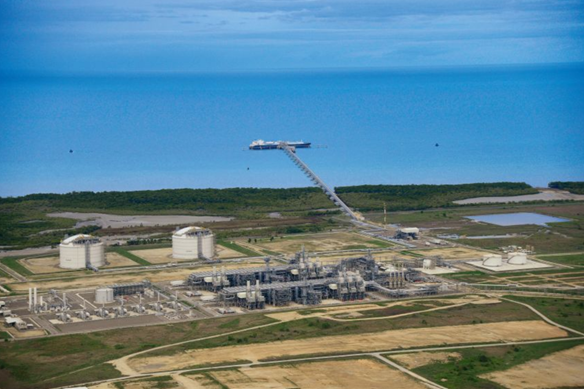
The PNG LNG Project at Caution Bay about 20 kilometres north-west of Port Moresby

And so, in May 2014, Papua New Guinea became an LNG exporter, and is now producing about 8+ mta LNG per annum to customers in China, Japan and Taiwan - well above the original nameplate capacity of the LNG Plant. It got there because of fine operatorship on the part of ExxonMobil of a coherent joint venture. ExxonMobil was able to market the gas to top quality customers and obtain superior project financing.

The only major disappointment has been the collapse several times in the crude oil prices below projections, and hence the LNG prices due to the indexing with crude oil. For the first year, some elevated prices were obtained, but clearly the fall of crude oil below US$ 30 per barrel in 2015 hurt the project economics, as did the see-sawing of prices in the aftermath of the Covid pandemic when prices plummeted to less than US$ 3 per MMBTU only to soar to over US$ 60 per MMBTU later.  The markets have calmed down now. 

Access to lands for the project development came with resounding landowner consent after an enormous development forums were held at project level in Kokopo in New Britain and at licence level in each licence area. During the forums, the sharing of the benefit streams of the 2% royalty, 2% free equity from the State, 2% development levy, and other project grants including business development grants and infrastructure grants were discussed.

Oddly, whilst some grants have been paid, some of the royalties and equity benefits have yet to be distributed due to some remaining uncertainties about landownership, and/or challenges based on rivalry. But notwithstanding this situation, the landowners have been extremely patient and have remained stoical. Indeed, the landowners have negotiated with the Government for the vendor financing of additional equity in the PNG LNG Project of about 4.2% that was promised to them in the main development forum in Kokopo. These equity holdings will be most valuable once the project finance has been paid down. The fact that the landowners see that value, needs to be recognised.  

What is next? There are plans for additional LNG trains being added to the existing location for further LNG output.   

In 2008, a significant gas discovery was made at the Elk-4 well of InterOil Ltd drilled in the Gulf Province. This was appraised by further drilling and the reservoir intersected in this well shown to be part of a much larger and better-quality reservoir by the drilling of the nearby Antelope 1 well.  Gas reserves of this field are estimated to be about 6.2 TCF (equivalent to about 1.2 billion barrels of oil). InterOil was a small entrepreneurial company with little experience, and whilst they tried to consider developing what became known as the Elk-Antelope gas field, they eventually sold down their assets to major international companies – Total of France and ExxonMobil of the USA, and to Papua New Guinea’s local oil and gas company – Oil Search, which merged with Santos in December 2021 in a $22 billion deal.

The Antelope 2 appraisal well was tested by then licensee and operator, InterOil Ltd at a record, if not astonishingly, high gas flow rate of 705 million standard cubic feet of gas per day in 2009 (after PNG BN).

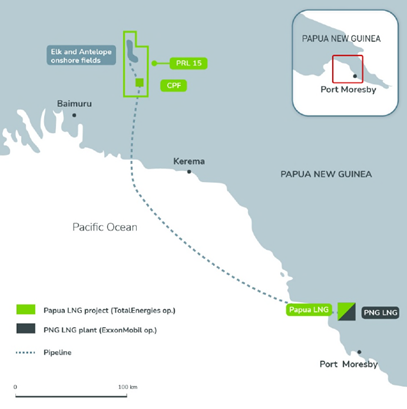
Total, now rebranded as TotalEnergies, is the operator of the Papua LNG Project which seeks to develop this gas field separately, but in synergy with the PNG LNG Project.  After considerable delays, finalising a Gas Agreement with the State, they agreed upon outstanding issues and are now very much resolved to proceed with the project. TotalEnergies, as operator, submitted their application for the licences required for the Papua LNG Project on 28th May 2023. 

The Papua LNG Project will develop the Elk-Antelope gas field and transmit the gas by a new pipeline to the Caution Bay site occupied by ExxonMobil. There Total will have four new electric driven LNG processing trains built, each of 1 million tonnes per year capacity next to the current trains of the PNG LNG Project. It is planned to place the remaining gas through ullage within the existing LNG plant of the PNG LNG Project, owned and operated by ExxonMobil and its partners. The condensate would be exported through the Caution Bay site at a separate loading facility, whilst some existing facilities of ExxonMobil will be utilised such as the site utilities, camps and the jetty, and some will be upgraded for consequent greater use. The Papua LNG Project aims to produce about 6 million tonnes LNG per annum (mta).

The Papua LNG Project will produced gas from the Elk and Antelope gas field and transport it to liquefaction plant adjacent to the PNG LNG Project liquefaction plant (after TotalEnergies).

The FEED (Front End Engineering and Design) work for the upstream field facilities started in July 2022 and was awarded to French firm Technip Energies NV. The FEED work for the downstream LNG plant started in March 2023 and was award together with the Engineering, Procurement and Construction (EPC) contract to JGC Corporation in partnership with Hyundai Engineering & Construction Co., Ltd.

TotalEnergies has publicly confirmed that the project remains on track for a Final Investment Decision (FID) in 2024 with the first LNG production anticipated in late 2028/early 2029. The project is estimated to cost about US$12 billion and it is expected to expand Papua New Guinea’s GDP by 50%, or so. At present, there has been no announcement of project financing or LNG sales and purchase agreements that might underpin the project, though TotalEnergies remains confident, and perhaps a little, but appropriately, tight-lipped on such matters! 

The shareholders in the project are TotalEnergies (operator) with a 40.1% stake; ExxonMobil (following the acquisition of InterOil in Feb. 2017) holding 37.1%; Santos Ltd. (following the acquisition of Oil Search Ltd in Dec. 2021) with 22.8%; while the Papua New Guinea government retains the option to exercise a back-in right for up to a 22.5% interest at the time of the grant of the project licences.

In an innovation of a kind, the development of the P’nyang LNG Project for which the Government has negotiated, agreed and signed a Gas Agreement with the companies is now planned to take place after the construction of the Papua LNG Project starting in 2028, and again lasting for about four years.

This project will not involve the building of any new liquefaction facilities, but will rather transmit its produced gas to the nearest trunk gas pipeline of the PNG LNG Project. The gas will then be transported by the PNG LNG Project for a commercially agreed tariff and delivered to the PNG LNG Project LNG plant where it will be tolled through the facilities and exported. 

The P’nyang gas will therefore be what is known as “back-fill” gas for the PNG LNG Project LNG plant when it has already depleted and processed the gas from its project dedicated gas fields. P’nyang gas will therefore optimise gas throughput of the PNG LNG Project pipeline and facilities extending their life and making further income both for the companies and the Government. This obviates the need for new facilities and represents a significant capital saving. 

The P’nyang LNG Project is estimated to cost about US$ 9 billion and seeks to develop about 4.4 TCF of gas reserves (about 860 million barrels of oil equivalent) and should extend the useful life of the PNG LNG Project facilities by about 10 years to around 2046.

Gas Agreement for the P’nyang gas field development is signed 23 February 2022

Gas development beyond what is described above depends on linking other discovered gas fields that are smaller and more remote to the infrastructure and the development of yet-to-be- discovered gas fields. Exploration density in Papua New Guinea is very low due to limited infrastructure and access to petroliferous areas, so one can reasonably anticipate that if exploration drilling is encouraged significantly more gas reserves might be identified.

With the combined processing capacity of the ExxonMobil-led PNG LNG Project (8.3 million tonnes per year) and the TotalEnergies-led Papua LNG Project (4 million tonnes per year), there will be an aggregate capacity to process 13.7 million tonnes of LNG per year (equivalent to about 300,000 barrels of oil per day).

Some have dared to talk that a LNG output of 20 million tonnes per annum is possible for Papua New Guinea in the foreseeable future. However, a few hurdles remain, primary amongst which is a lack of new wildcat drilling to find new gas fields, perhaps due to uncertain and undefined petroleum sector policy.

Papua New Guinea can still be successful in producing oil and gas well into the future, but it has to learn that it takes more than oil and gas reserves to create a viable and sustainable production industry.  A review of its past successes should indicate what it needs to do. It has the natural gas resources in volumes enough to keep the current and planned trains filled, and perhaps more trains, but it must continue to be proactive in all aspects of gas development planning, promotion and participation. Importantly, the promised benefits to landowner in particular and to the wider public need to be delivered by the Government.   

Any lapse into baseless self-indulgent or impractical schemes could readily spoil what is essential a very good framework for continued gas development investment, notwithstanding the plans to change the regime structure to one of production sharing.  The future of PNG’s gas industry is firmly in the hands of the Government with excellent operators to assist it.

April 15, 2024

This decline is expected to persist due to lingering effects of January's civil unrest, resulting in continued pressure on business revenues and employment levels in the non-mineral private sector in the first half of 2024.

The Bank's forecast for PNG's domestic growth in 2023 is a modest real GDP growth of 1.4 percent, a significant drop from the 5.2 percent recorded in 2022.

Ongoing challenges such as foreign currency shortages, transportation costs, law enforcement issues, and unreliable power sources remain major concerns for businesses, prompting cost-cutting measures and exploration of cheaper alternatives.

Looking ahead, the Bank anticipates a boost in economic activity, with projected real GDP growth of 4.5 percent in 2025, supported by various factors including full-year production at New Porgera and increased activity in the mineral sector, including a recovery in the retail and wholesale sectors and some pickup in activities associated with pre-final investment decision spending by new resource projects.

In 2026, growth is projected to be around 3.6 percent, supported by increased activity in the mineral sector along with positive flow-on effects from increased exploration activities and capital investment.

Risks to the domestic economic growth outlook are considered balanced, with downside risks including tighter monetary policies from major economies, geopolitical conflicts, and climate change-related events.

Globally, the IMF's World Economic Outlook indicates a slight decrease in real global GDP growth to 3.1 percent in 2023, primarily due to factors such as Central Banks tightening monetary policies, geopolitical conflicts, and the withdrawal of COVID-related fiscal support.

However, global growth is expected to remain relatively strong in 2024 and 2025, driven by a strong US economy and major emerging markets.

Inflation globally is forecasted to decrease, with headline inflation projected to decline to 5.8 percent in 2024 and further to 4.4 percent in 2025.

Regarding PNG's Balance of Payments, the country has experienced large current account surpluses driven by the mineral sector and exports of LNG, copper, and gold.

However, there is a structural issue with a deficit of foreign currency inflows into PNG's domestic FX market, despite significant interventions from the BPNG.

Inflation in PNG is expected to increase in 2024 due to continued depreciation of the Kina against the US Dollar, with the CPI projected to reach 5 percent and remain elevated throughout 2025 before easing in 2026. Supply side disruptions and geopolitical conflicts pose risks to the medium-term inflation outlook.

The issue of excess liquidity in the banking system has been addressed through the introduction of liquidity management instruments by the BPNG, like the Fixed Rate Full Allotment (FRFA) 7-Day Central Bank Bill auction and lowering the Kina Facility Rate to 2.0 percent to support businesses after the civil unrest.

The BPNG will adopt a tightening bias in the coming months to manage inflationary pressures, including increases to the Cash Reserve Ratio and the possibility of longer-dated FRFA Central Bank Bill auctions.

Downside risks include a tighter-than-anticipated monetary policy stance from the Central Banks of the major economies, prolonged geo-political conflict in the Middle East, and climate change-related weather events.

Balance of Payments and Inflation

PNG has experienced significant current account surpluses driven by the mineral sector and LNG, copper, and gold exports. However, structural issues persist, including a deficit of foreign currency inflows into the domestic (Foreign Exchange) FX market.

In 2023, commercial foreign currency inflows into PNG’s domestic FX market amounted to USD 5.5 billion against outflows of USD 7.2 billion. BPNG intervened with a record level of USD 1.6 billion to ease pressure on businesses and international reserves.

Inflation remained below 2.2 percent in 2023 but is expected to increase to 5 percent in 2024 and remain elevated throughout 2025, mainly due to the depreciation of the Kina against the US Dollar.

Monetary Policy Stance and Broad Money

BPNG adjusted its monetary policy stance in response to economic conditions, lowering the Kina Facility Rate (KFR) to 2.0 percent in February 2024 to support businesses after January's civil unrest.

Looking ahead, BPNG will adopt a tightening bias to address inflationary pressures, considering measures such as increases to the Cash Reserve Ratio (CRR) and the KFR.

Future Outlook

BPNG continues to address structural issues in the foreign exchange market and collaborate with the government and international partners, including the IMF, to enact necessary reforms. While challenges lie ahead, BPNG remains committed to promoting sustainable economic growth and stability.

Governor Genia, during the launch of the Central Bank’s Monetary Policy Statement on the 4th April in Port Moresby-PNG, emphasized the importance of addressing challenges and implementing effective policy measures to achieve desired outcomes and ensure a stable environment for businesses and economic growth.

Ms. Genia said, “We are continuing to work through the IMF Program along with the government and that is progressing well. The technical assistance we have received at the BPNG in working with the IMF has been of great benefit to us and we look forward to the IMF’s next mission to PNG which is later this month.”

The PNG government has already enacted several amendments to the Central Banking Act in December 2021 following on from the recommendations from Phase 1 of the Independent Advisory Group’s report. Further amendments to the Central Banking Act are expected very soon following the release of the IAG’s Phase 2 Report in late November last year.

“We have new Board appointments, very recently announced, and I am delighted to say we have a full Board with nine members now appointed. There is a wealth of experience being brought to the BPNG through those Board appointments and they will make a significant contribution to the BPNG and to PNG’s economy.

“There are some challenges ahead of us but nothing that can’t be addressed and overcome. The measures we are introducing, with the exchange rate and the overall monetary policy framework will take time to achieve their desired outcomes,” she added.

The BPNG will adopt a tightening bias in the coming months to manage inflationary pressures, including increases to the Cash Reserve Ratio and the possibility of longer-dated FRFA Central Bank Bill auctions, Governor Genia said.

April 15, 2024

Bank of Papua New Guinea (BPNG) Governor, Ms. Elizabeth Genia, recently gave key insights into the nation's economic challenges against the backdrop of global economic projections.

The Central Bank chief focused on the resilience of Papua New Guinea's private sector amid formidable challenges and crucial strategic shifts in policy.

The private sector emerged as the linchpin of PNG's economic strength, as its resilience was deemed vital amidst trying times.

Governor Genia underscored the critical role businesses play, particularly in light of external economic challenges. With challenges both within and beyond BPNG’s control, the crucial proactive measures become evident to address, she said.

Ms. Genia said: “The private sector is the driver of growth in Papua New Guinea, and your resilience through these challenging times is critical to PNG and to PNG’s economic wellbeing.

“The resilience of businesses and of households, in light of the significant economic challenges we are facing, is being tested.

“Some of these challenges are caused by external factors outside of our control. Those factors within our control are the focus of our work at the Bank of Papua New Guinea,” she added.

The March 2024 Monetary Policy Statement (MPS) laid bare a comprehensive assessment of both global and domestic economic dynamics.

Globally, while the International Monetary Fund (IMF) projects modest growth, with estimates of 3.1% in 2024 and 3.2% in 2025, driven chiefly by a robust US economy, challenges persist.

These growth projections, though positive, remain below pre-COVID averages.

Domestically, the economic landscape reflects a mixed picture. Amidst forecasts of modest GDP growth, structural challenges such as foreign currency shortages and transportation costs emerge large.

However, lingering effects of civil unrest and subdued consumer spending underlines the complexity of the challenges at hand.

Governor Genia's articulation of the monetary policy stance underscores a nuanced approach tailored to PNG's unique challenges. Measures such as liquidity management instruments and adjustments to policy rates reflect a commitment to navigating economic challenges while fostering stability.

PNG stands at a pivotal economic position, poised between challenges and opportunities. By harnessing the spirit of innovation and collaboration, the nation can chart a course towards sustained economic growth and resilience. Governor Genia's statement emphasized taking challenges head-on, ensuring a stable environment for businesses to thrive.

“Over the next six months, we will need to make some tough policy decisions, and in doing so, we will feel some pain, in the short term, for what we are working towards in the longer term.

“Many of the challenges we have faced in the past have been left unaddressed in the hope they would somehow resolve themselves without the need for difficult decisions,” she said, emphasizing BPNG’s work through the IMF Program along with the government.

“The technical assistance we have received at the BPNG in working with the IMF has been of great benefit to us and we look forward to the IMF’s next mission to PNG which is later this month.”

“There are some challenges ahead of us but nothing that can’t be addressed and overcome. The measures we are introducing, with the exchange rate and the overall monetary policy framework will take time to achieve their desired outcomes.”

April 14, 2024

In the ever-evolving development sectors of sustainable energy, mastering the installation of solar energy systems is both a skill and a necessity. With advancements and innovations occurring at a rapid pace, being informed with developments are crucial for companies in the electrical and solar industry.

The Sustainable Energy Industry Association Papua New Guinea (SEAP) recently hosted a pivotal workshop in partnership with the Sustainable Energy Industry Association of Pacific Islands (SEIAPI) and the United States Agency for International Development PNG Electrification Project (USAID-PEP).

Held on the 5th of April at the USAID-PEP office in Port Moresby, the event titled “SEIAPI/SEAP/USAID-PEP Solar Standards Workshop” brought together 60 participants from solar and electrical companies, government agencies, international donor organizations, and academia.

The USAID-PEP Chief of Party Bruce Corbet highlighted the importance of mini-grids and small-scale electrification in achieving PNG’s electrification goals.

Mr Corbet said, “This is one of the steps we are taking as more people join. And it is really important, this message, ‘that mini-grids and small-scale electrification is a fundamental part of electrifying Papua New Guinea’ and achieving the government’s goal of that 70% access target by 2030.”

He emphasized the necessity of partnerships and capacity development for such initiative.

USAID-PEP seeks to enable the creation of PNG’s mini-grid development industry. The workshop is for capacity development, including an opportunity to network with potential partners in the industry.

The workshop lasted 1 hour and 30 minutes and participants were immersed with information and knowledge, guided by a “Standards Presentation,” followed by a question-and-answer session and a few minutes of industrial networking.

The workshop, held both in person and online by Zoom, served as a platform of knowledge and collaboration, shedding light on solar energy installation.

SEIAPI Executive Officer, Geoff Stapleton, a distinguished pioneer of the Australian solar industry, led the workshop with commendable expertise and insight.

In collaboration with SEAP and USAID-PEP teams, Stapleton’s presentation delved deep into the topics such as design and product standards, solar energy standards, safety practices, and installation techniques.

The presentation focused on critical standards and guidelines regarding solar photovoltaic (PV) systems, with a specific focus on design, installation, and product standards.

Stapleton also provided a comprehensive overview of essential standards. From AS 4509.1:2009 to AS/NZS 4777.1:2016, each standard was explained with a visual guide, emphasizing its significance and implications for solar designers and installers.

Stapleton’s pivotal role in the development and refinement of solar industry standards was evident, showcasing his expertise and commitment to ensuring installation practices and safety measures are carried out during installation based on both specification and requirements.

The workshop's agenda covered a broad spectrum of topics, ranging from stand-alone power systems to grid connection requirements.

Attendees also participated in the presentation by discussion, which they gained insights into system designed complexity, safety requirements for PV (photovoltaic) arrays or solar arrays, and electrical installations involving battery systems.

Moreover, the presentation highlighted the inter-relation between various standards, emphasizing their collective role in ensuring the safety and effectiveness of solar energy systems.

One of the workshop's key takeaways was the importance of compliance with industry standards. With safety being a paramount concern, adherence to standards such as AS/NZS 5033:2021 and AS/NZS 5139:2019 is imperative for companies operating in the electrical and solar industry.

In addition, the workshop underscored the critical role of training and recognition schemes in fostering a culture of excellence and professionalism within the industry, especially in an industry where precision and compliance are paramount.

April 14, 2024

In a significant move aimed at uplifting rural economies, the Coffee Industry Corporation Limited’s (CIC’s) Strategic Business Plan for 2020-2024 aims to hike production of coffee by 10 percent and improve the quality of coffee beans by 20 percent.

The CIC SBP focuses on enhancing the livelihoods of coffee farmers, boosting their income, and raising their production, aligning with PNG’s Vision 2050, ‘Take Back the Economy’, with special focus on agriculture.

This initiative seeks to empower coffee growers, particularly in rural PNG areas like Wabag District in Enga Province, to enhance their production and ultimately improve their living standards sustainably.

Established in 2017, Wabag District Coffee Grower Cooperative Society (WDCGCS) was registered into SME business through coffee (parchment) purchase and marketing. It sought to help rural farmers and coffee growers to sell their produce at convenient, affordable prices at the community-village level.

WDCGCS supports raising coffee production to generate higher cash incomes into the rural population at the community household level.

Initiating Progress

The WDCGCS has taken proactive measures to foster coffee cultivation in the region. It includes the establishment of a semi-improved coffee nursery dedicated to raising quality coffee seedlings.

These seedlings are then distributed among coffee growers across Wabag District, with the aim of supporting planting efforts and boosting coffee production over the next 3-5 years.

During an interview with PNG Business News, WDCGCS Chairman Mr Kandes Nyia shared the cooperative’s aim to promote coffee, provide quality coffee using modern machines, and secure quality markets for Wabag District coffee growers.

“By this year, we aim to market quality coffee from Wabag District. More coffee planted means more income for our people,” he added.

“Coffee will help the people in Wabag District raise their standard of living, by providing an income and at the same time providing youth empowerment opportunities.”

He emphasized that coffee also plays a role in that its trees prevent soil erosion and improve soil fertility.

“People must be motivated to work the land providing garden tools, equipment and agricultural equipment to work,” Mr Nyia added.

He said such initiatives must get support from agencies, business sectors, and the government, which will help communities develop and participate in projects for the development of rural areas in PNG.

Proposed Projects

To further amplify their impact, WDCGCS is proposing two key project components:

  1. Expansion of Coffee Rehabilitation/Nursery Projects: This involves the establishment of three new coffee rehabilitation/nursery projects, encompassing new coffee planting and management, rehabilitation of existing coffee gardens, and streamlined coffee buying and marketing processes.
  2. Creation of a New Coffee Market: The cooperative aims to introduce a modern coffee market equipped with a main coffee warehouse to serve as a centralized hub for rural coffee growers, providing them with a secure and convenient platform to conduct trading activities at fair and competitive prices.

Community Support and Funding

The initial stages of these projects have been made possible through support and funding from various sources, including the Wabag District Services Improvement Program (DSIP) funds, which underlines a collective commitment to realizing long-term development goals and fosters sustainable livelihoods within the community.

WDCGCS act as the coffee buying and marketing agent, and its service providers as indirect beneficiaries in the value chain. The project is currently progressing to grow another 50,000 coffee seedlings, which is the required package through its DSIP funding volume. This would supply another 200 growers into the next phase of planting, the cooperative said.

The project has established a foundation to buy more coffee seedlings and a technical framework to support coffee production and management, and to promote high-quality and quantity coffee production for high incomes in both the urban and rural household population. 

Vision and Impact

Since its establishment in 2017, WDCGCS has been dedicated to promoting coffee development in Wabag District. Its objectives encompass not only raising coffee production but also promoting quality cultivation practices, engaging unemployed youth in agriculture, and providing a strong marketing avenue for local coffee beans.

Empowering Communities

Operating across 20 Local Level Government (LLG) areas within Wabag District, WDCGCS actively involves over 200 registered farmers, including 150 males and 50 females, with a special focus on engaging youth in coffee cultivation.

By strategically establishing its headquarters in Birip village, WDCGCS has positioned itself as a pivotal player in the region's coffee industry, catering to the needs of both growers and consumers alike.

Addressing Challenges

Despite the region's rich coffee-growing potential, challenges such as inadequate market infrastructure and safety concerns have persisted. The absence of a modern market facility has not only hindered economic growth but also posed risks to farmers' safety and well-being.

Through the proposed initiatives, WDCGCS aims to mitigate these challenges by establishing modern market facilities equipped with essential amenities and safety measures.

Looking Ahead:

As WDCGCS continues to expand its operations, its focus remains steadfast on enhancing coffee production, promoting sustainable rural development, and improving the overall quality of life for coffee growers in Wabag District.

With ongoing support from government entities and funding agencies, the cooperative is confident with realizing its vision of establishing Wabag coffee as a premium brand on the global market.

Appreciate the process

The ‘coffee seed to coffee in the cup’ mantra is a long process many often do not appreciate and consider. In PNG, the coffee process is usually done manually and often takes 3-4 years for the coffee to reach the target market.

The manual process takes longer and includes planting seedlings, to harvesting the cherries either strip picked or selectively picked, and the method of processing the cherries to prevent fruit from being spoilt is done either by dry method or wet method.

The coffee beans are then dried and milled and brought to the markets for sale. Exporting, testing, roasting the coffee, and grinding or brewing coffee are the final stages for consumption.

PNG’s coffee industry is gaining recognition for its distinctive and unique flavors from the coffee beans grown in the Highlands region of PNG. Indeed, the manual process often used in PNG reflects the time, effort, and patience in bringing out quality in the coffee beans. Thus WDCGCS’s aim is to export their own coffee around the world.

April 14, 2024

The Member for Vanimo Green, Hon. Belden Namah is seeking the support of the National Government to assist his District to develop the much talked about Vanimo Free Trade Zone (FTZ). The Vanimo FTZ has been on the drawing board over the last 20 years after been initiated by the former Sandaun Governor, Late John Tekwie.

In response to Hon. Namah’s formal request, the Minister for International Trade and Investment who is responsible for Special Economic Zones (SEZs), Hon. Richard Maru said: “The Marape-Rosso Government will support Hon. Namah and all Members of Parliament, Governors, and Ministers who want to develop SEZs in their districts or provinces. However, they must take the initiative and ensure that all the prerequisites to attract investors are there.”

Minister Maru further stated that the proposed Vanimo FTZ will need the following enablers that must be in place to attract locators to invest in the zone:

1. An international wharf

2. An international airport

3. Cheap and reliable electricity

4. Water and sewerage systems

5. No less than 300 hectares of land for the development of an export processing zone in Vanimo

6. A functional and efficient border post at Wutung with scanning machines etc for PNG Customs Service to do their work to process PNG exports going into Indonesia

“Without land, cheap and reliable electricity, and a water supply system, it will be difficult to develop the proposed Vanimo FTZ. It is up to Hon. Namah to attend to all the enablers I have outlined to him before our Government can assist him and the Sandaun Provincial Government to develop the Vanimo FTZ,” said Minister Maru.

Minister Maru assured Hon. Namah of total Government support for Vanimo to be a hub for manufacturing and exporting to the vast Asia markets starting with Indonesia which has over 270 million people.

April 14, 2024

Ok Tedi Mining Limited (OTML) recently presented K100, 000 to the Ok Tedi Women’s Network (OWN) to support a fundraiser to purchase cervical cancer-screening equipment.

The funding was presented during a Gala Fundraising Dinner organized under the patronage of OTML Managing Director and Chief Executive Officer, Kedi Ilimbit. The event drew support from business partners and the local communities, who purchased tables and donated cash. Other initiatives and in-kind contributions also bolstered the fundraising.

A total of K168, 000 was raised for the acquisition of a thermal coagulator gun, GenXpert cartridges and accessories, which are vital in aiding early detection and prevention of cervical cancer. The fundraiser was held in consultation with OTML’s Health Services and Tabubil Hospital.
OWN Chairperson, Jessica Bablis, expressed pride in working for a company that not only provides a platform to address women’s issues but also support initiatives proposed by its female workforce.

“Cervical cancer is the second most frequent cancer among PNG women and 1, 400 women in PNG die from it every year. This equipment will contribute to the reduction in cervical cancer cases in Western Province and PNG, which is an amazing breakthrough. I thank all OTML and Business Partner employees for their support of our Pinktober fundraiser and most of all OTML MD Kedi Ilimbit for his visionary leadership to fundraise for something that will positively impact and improve the lives of many people in our host communities,” said Ms Bablis.

Over the years OWN has spearheaded various initiatives during the global cancer awareness months of October and November, commonly known as “Pinktober” and “Movember.”

Since 2019, with the support of the workforce, OWN have donned pink high visibility shirts during Pinktober to spotlight cancers impacting women. This evolved to include Movember, with the incorporation of blue high visibility attire to spotlight cancers impacting men. OWN members have also fundraised to support colleagues battling cancer.

In 2023 the group also acquired and delivered an incubator to the Tabubil Hospital for premature babies encountering complications after birth.

Mr. Ilimibit commended OWN for their tireless efforts in advocating for awareness on cancers for both men and women, and engaging in fundraising drives to invest in improved health services.

“OWN has demonstrated their unwavering support for the well-being of our community. They embody the spirit of compassion and solidarity, and remind us of the impact that can be made when we come together for a common cause. Their contributions will make a lasting difference in the lives of many of our people in the community,’ said Mr Ilimbit.

April 14, 2024

Qantas has announced the launch of a new direct connection between Sydney and Port Moresby. The national carrier inaugurated its maiden service on 2 April, marking its first commercial passenger flight between the two cities in over five decades.

Operating twice a week, the new service will be facilitated by Qantas’ Boeing 737 aircraft, effectively adding over 36,000 seats annually to the route. This addition complements Qantas’ existing daily Brisbane-Port Moresby service, aiming to meet the increasing demand for travel between the two nations, particularly from the business community.

Cam Wallace, Qantas International CEO, underscored the significance of the new route in strengthening the longstanding ties between Australia and Papua New Guinea. “These flights will meet the growing demand from the business community for travel between Australia and Papua New Guinea,” Mr. Wallace said. He also highlighted the time-saving benefits of the Sydney service, estimating a reduction of at least three hours in travel time on a return trip by bypassing the previous stopover in Brisbane.

The launch of the Sydney-Port Moresby route is part of Qantas’ broader strategy to expand its international network out of Sydney and bolster business and trade relations between Australia and Papua New Guinea. Customers travelling between the two countries will enjoy seamless connections with Qantas’ domestic flight routes and international network, ensuring convenient travel options.

Fares for the new route are available for booking on qantas.com or through authorised travel agents. Additionally, Qantas customers and Frequent Flyers will have the opportunity to earn and redeem Qantas Points on these flights, while also enjoying premium services such as complimentary food and beverages, checked baggage allowance, and access to the airport lounge in Sydney.

Qantas commenced operations in Papua New Guinea in the 1940s, initially deploying two light aircraft stationed in Lae for local operations. The airline later introduced its four-engine DC4 Skymaster aircraft on the Sydney-Port Moresby-Lae route in 1950. In 1959, Port Moresby served as a refuelling point for Qantas flights to Hong Kong. The reintroduction of direct flights between Sydney and Port Moresby reflects a continuation of Qantas’ historical presence and commitment to facilitating connectivity between Australia and Papua New Guinea.

April 14, 2024

In commemoration of World Health Day on April 7th, the Papua New Guinea Chamber of Resources and Energy (PNG CORE) reaffirms our unwavering commitment to promoting health and well-being within our nation. World Health Day serves as a poignant reminder of the critical importance of prioritizing health at both individual and societal levels. This year’s theme, “My Health, My Right”, underscores the need for collective action to address pressing health challenges and foster a healthier future for all. This year’s theme was chosen to champion the right of everyone, everywhere to have access to quality health services, education, and information, as well as safe drinking water, clean air, good nutrition, quality housing, decent working and environmental conditions, and freedom from discrimination.

In alignment with the objectives of World Health Day, the industries who form the membership of PNG CORE remain steadfast in our dedication to upholding the highest standards of health and safety practices. Our member organizations recognize that the well-being of our workforce, communities, and environment are paramount to sustainable development and prosperity.

PNG CORE’s member organizations actively contribute to health and well-being initiatives across PNG, which include:

• Healthcare Access Initiatives: Several member companies have implemented programs aimed at improving access to healthcare services for remote and underserved communities. These initiatives include mobile health clinics, telemedicine services, and partnerships with local healthcare providers to deliver essential medical care and health education.

• Community Health Promotion: PNG CORE members engage in community health promotion activities, such as awareness campaigns on preventive measures for infectious diseases, hygiene education, and vaccination drives. These efforts are essential for empowering communities to take proactive steps in safeguarding their health and well-being.

• Employee Wellness Programs: PNG CORE member organizations prioritize the health and safety of their workforce through comprehensive wellness programs and occupational health initiatives. These programs encompass regular health screenings, fitness activities, mental health support services, and ergonomic assessments to ensure a safe and healthy work environment.

Amidst the ongoing global health crisis, PNG CORE acknowledges the indispensable role played by healthcare professionals and frontline workers in safeguarding public health and mitigating the spread of infectious diseases. We extend our heartfelt appreciation and solidarity to these courageous individuals who continue to demonstrate resilience and selflessness in the face of adversity.

Furthermore, PNG CORE recognizes the interconnectedness between health and the environment. As stewards of Papua New Guinea’s rich natural resources, we are committed to sustainable practices that promote environmental stewardship and contribute to healthier ecosystems for present and future generations.

As we commemorate World Health Day, PNG CORE reaffirms its commitment to collaboration and partnership with government agencies, civil society organizations, and other stakeholders to advance health and well-being initiatives across Papua New Guinea. Together, let us seize this opportunity to reaffirm our collective resolve in building a healthier, more resilient future for Papua New Guinea.