

July 04, 2024

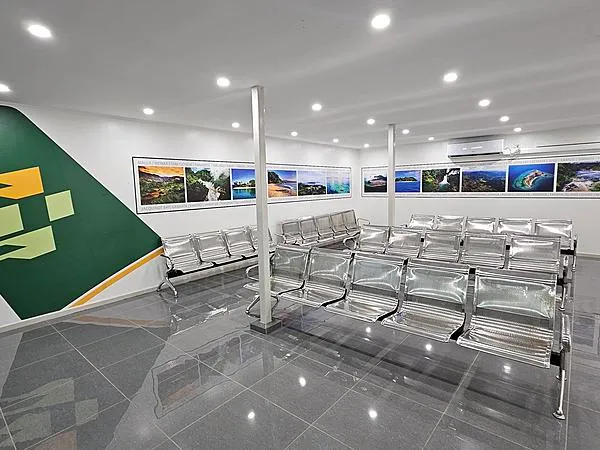
Often referred to as PNG’s premier charter airline, Tropicair recently completed a major upgrade of its terminal at Jackson’s Airport.

Tropicair CEO, Ivona Kadlec, explains why.

“In 2023 Tropicair commemorated 25 years of operation in PNG.  As the airline has grown over that time, so too have the number of passengers and clients. Thus, there was a need to provide more space for waiting passengers, especially in the peak morning times.

“Whilst expanding the space, we took the opportunity to totally upgrade the terminal and modernise it, to make it a bright, fresh, pleasant place for passengers to wait for their flights.

“Our passengers and clients now get to enjoy a spacious public terminal, with more seating in a bright, appealing environment decorated with not only reference to PNG’s aviation history, but also to the beauty of the country we operate in.

“There is a new VIP lounge with hot and cold drink facilities and screen for viewing programs. Additionally, passengers now can choose to wait in our new under cover outdoor seating in an attractive garden setting. 

“For convenience, passengers can be picked up and dropped off just a few metres from the terminal in Tropicair’s secure car park. They also get to enjoy the benefits of a terminal where all the operations of the airline are close at hand and questions and issues can be addressed directly by Tropicair personnel responsible for the various aspects of the operation.”

Driven by the vision of founder and MD Tony Honey, Tropicair commenced charter operations in 1998 with a single aircraft and has since expanded in size and scope to offer a modern, well-maintained jet and turbine powered aircraft fleet, delivering passengers and freight to destinations both countrywide and internationally.

The fleet consists of one Cessna Citation CJ3 jet aircraft; four Beechcraft Super King Air B200s; two Cessna C208B Caravans; and three De Havilland DHC6 Twin Otters, with further plans for future expansion.

More than just a charter airline, Tropicair offers a wide range of services including aero-medical operations, secure transport movements, surveillance flights; government, VIP and private charters; and resource company requirements covering both passenger and freight services. 

The scope of its operations cover the whole of PNG as well as within the broader region to Australia, other Pacific Nations and into SE Asia.

Tropicair also provides a valuable community service that helps connect Papua New Guineans by offering Fares & Freight services to the Gulf and Western Provinces, as well as to Tufi in Oro Province. 

 “Flight safety is our company culture” says Ms Kadlec. “We are CASA PNG and CASA Australia compliant.  Our safety record in the PNG aviation industry is exemplary and we hold BARS accreditation at the much-coveted Gold status.

“We pride ourselves on the quality of our aircraft and the depth of knowledge and training that our maintenance and flight crews possess.”

July 04, 2024

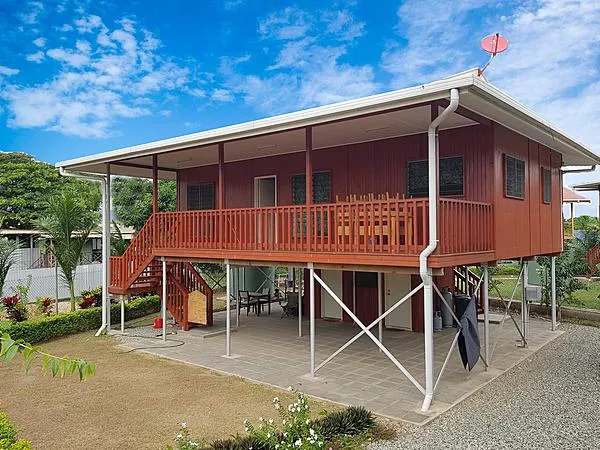
NiuHomes, from PNG Forest Products, manufacture premium designed, quality kit homes in ranges to suit every budget and lifestyle in Papua New Guinea.

Perfect for those starting out on a tight budget, the Baset Range starts at only K69,550 and provides low-cost 3 & 4 BR kit homes that are designed to lock-up stage, with no internal fixtures or fittings apart from flooring and wall frames. 

This allows you to complete the inside of the house within your own timeframe and budget, making it truly your home.

With 2, 3 & 4 BR options, the Residential and Suburban ranges are complete kit homes with a huge range of quality inclusions, right down to the kitchen sink.

In fact, many models have everything you need including electrical wiring & fittings; full plumbing kit including toilet and shower; ceramic tiles; joinery kit; ceiling fans; even paint… all included in the price of the kit home! Prices range from K92,300 to K362,000.

The Contemporary Range sets a new standard in modern kit home designs with the Komoa and Pacifica models.

Their sleek, modern designs uniquely complement the PNG urban landscape whilst providing spacious, elegantly comfortable homes for the extended family. The Komoa starts at K295,000 while the top-of-the-range Pacifica is K583,000.

For village living, the Haus Ples range offers a choice of high-set and low-set kit homes that start from a K70,000 for a 2-bedroom Lewa model, up to K102,700 for the 3-bedroom, split-level Namo with bathroom, laundry and kitchen. All prices stated are ex-GST and ex-Lae.

And that’s not all!  PNGFP also produce a quality range of kit buildings for Education, Health, Administration and the Resource Sector.

When it comes to quality, NiuHomes are PNG's only preservative pressure treated kit-buildings engineered to the most stringent PNG and Australian building code standards.  All timber is randomly and rigorously tested in Australia and the Timber Training Institute in Lae to ensure compliance with the relevant Australian and PNG building standards.

PNGFP’s ability to produce pressure-treated timber at their certified and international standard compliant plant in Bulolo, ensures quality, durable kit-homes that are protected from termites, rotting and fungal decay.

July 04, 2024

EDITOR’S NOTE: Ossberger, the German hydro-industry experts, has provided PNG Business News with this feature story that originally came out in Zek Hydro magazine’s May 2024 issue. Ossberger has supplied and installed 19 mini-hydropower turbines throughout PNG, mostly in rural districts, since the 1960s. The company likewise provided the hydropower systems for PNG Power's Hargy 1 & Hargy 2. It believes the technology featured in this story applies to the country as well.

The South African farmer Michael Vermaak has become a loyal and regular customer for Ossberger, the German hydro-industry experts. Since 2008, three small hydropower plants have been built on the expansive Klipfontein farm in the village of Cookhouse. All three have been equipped with comprehensive Ossberger electromechanical packages. The latest plant went online for the first time in September 2023 with another one of Ossberger’s high-performance technology packages – including a crossflow turbine with a bottleneck capacity of 412 kW, and all the electrical fittings and control equipment. Furthermore, at the oldest plant all the control technology was updated. Resultantly, all three power plants can now operate as island solutions or in parallel grid operation – and each one is equipped with black-start capabilities.

Anyone in South Africa self-sufficient enough to meet their own electricity needs with a proprietary power plant can count themselves very lucky. So-called ‘load-shedding’ is part of everyday life for around 60 million inhabitants in the southernmost country on the African continent. Power cuts can last up to twelve hours, with entire regions and cities being taken offgrid. According to ESKOM, the state-owned energy supplier, South Africa’s power supply would collapse completely without loadshedding. Corroborative media reports suggest that a major reason for the problematic situation is the generally desolate state of the country’s energy infrastructure, resulting from decades of mismanagement and corruption.

KLIPFONTEIN FARM IS SELF-SUFFICIENT

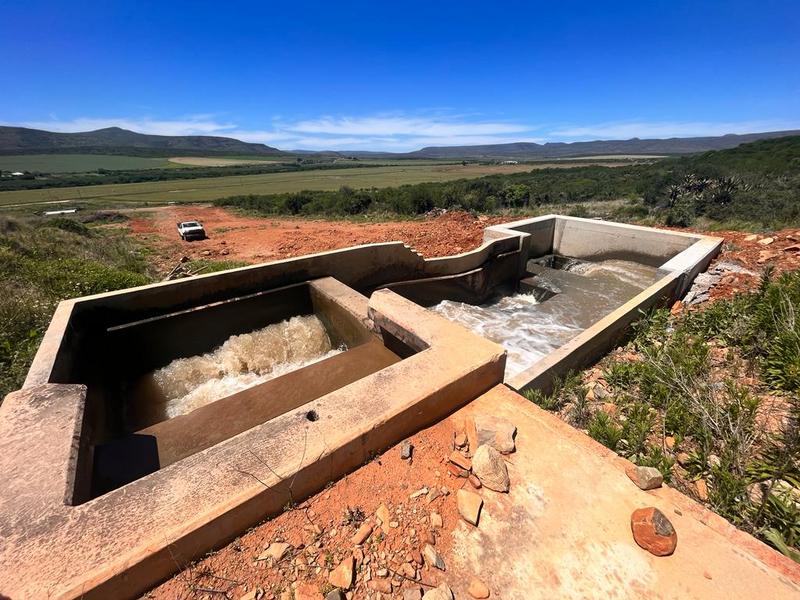
Having taken matters into his own hands in 2008, building a small hydropower plant on his extensive Klipfontein Farm property in the village of Cookhouse, Eastern Cape Province, the nationwide energy supply problem is no longer a cause for concern for Michael Vermaak. The plant utilises the hydro-energetic potential of an irrigation canal branching off from the local Fish River, and supplies water to a number of farms. Acquisition of additional properties enabled the operator to expand his farm and led to increased demand for energy. In response, in 2018 a second hydropower plant was built and commissioned, and in September 2023 a third plant went into operation.

OSSBERGER SUPPLIES RELIABLE SOLUTIONS

Ossberger crossflow turbines have been in use worldwide for over 100 years and the expertise of these German industry specialists was the operator’s first choice from the first plant on; and for the full range of technical hydropower plant infrastructure – machine sets, hydraulic steel structures, electrical fittings and control technology. Christian Habermann, Ossberger’s Technical Director explained: “Generally, South Africa is a favourable market for us, and in our experience, Ossberger turbines are particularly appreciated by operators of systems on irrigation channels as on Klipfontein Farm. The objective for a basic crossflow turbine is not to harvest the last possible percentage point of its efficiency potential, but to deliver electricity reliably and uncomplicatedly. This is the core characteristic of our solutions and, ultimately, something our customers consider to be particularly important.”

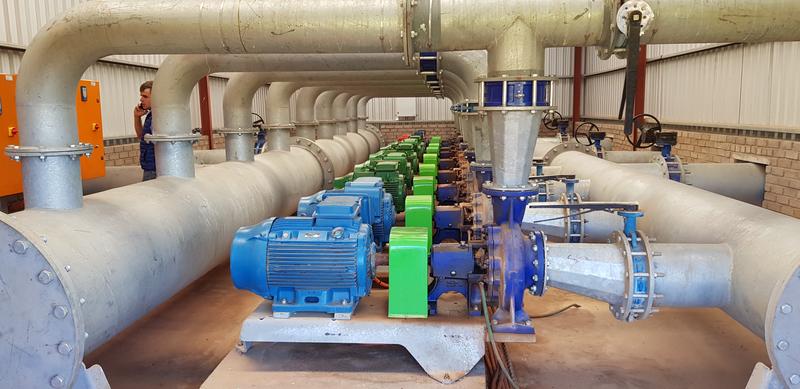
A maximum of 2,500 l/s of expansion water for the new power station is discharged at the inlet area of the irrigation canal, and channelled to the underground machine room via a penstock.


The small hydropower plants in Cookhouse generate electricity for energy-intensive agriculture, and to feed into the public grid. A significant proportion of the electricity generated is directed to a pumping station with several variable-speed pumps. The station is used mainly during the night to fill a reservoir excavated from a hillside for the irrigation of surrounding farmland.


The small hydropower plants in Cookhouse generate electricity for energy-intensive agriculture, and to feed into the public grid. A significant proportion of the electricity generated is directed to a pumping station with several variable-speed pumps. The station is used mainly during the night to fill a reservoir excavated from a hillside for the irrigation of surrounding farmland.

The pump station receives electricity from the small hydropower plants and is equipped with a whole battery of variable-speed water pumps to fill the reservoir.


MULTI-MODAL OPERATING EQUIPMENT

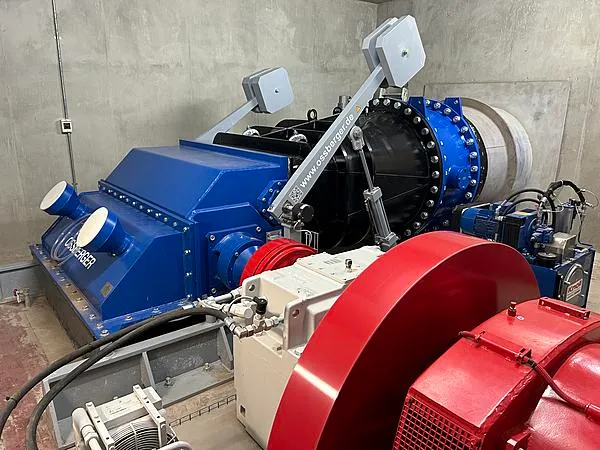
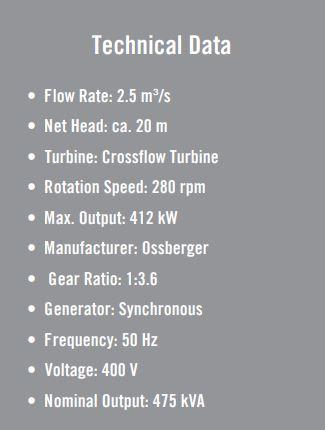
The first plant, built in 2008, was designed purely for island operation. Now, however, all three power plants can operate in island and grid-parallel modes, and all have black-start capabilities. Ossberger’s scope of delivery for the latest hydropower plant in Klipfontein consisted of the crossflow turbine, gearbox and synchronous generator, the flywheel, the butterfly valve and all electrical and I&C equipment. The horizontally-fed crossflow turbine is designed to achieve a discharge water volume of 2.5 m³/s with a net head of around 20 m, for a bottleneck output of 412 kW under full load conditions. Drive water for the turbine is provided via an underground penstock pipeline connected to a newly-built inlet on the irrigation canal. No separate screen cleaning machine was installed at the inlet area. However, Christian Habermann explained that, if required, such a machine could be retrofitted without great effort. After driving the turbine, the headrace water is returned to the diversion channel and, after a short distance, flows into the Fish River. Plant construction took around a year and was completed in autumn 2023. The operator and several local companies played an active role in the plant construction phase. The machine building is completely subterranean, and assembly of the electromechanical equipment and cabling laying were tasks conducted by local labour teams. Ultimately, the power plant was commissioned in September 2023 under the supervision of an Ossberger technician.

THREE IS THE MAGIC NUMBER

Operation of the state-of-the-art system is fully automatic. The control system can be accessed using touch panels installed in the machine buildings, or accessed online via smartphones and PCs. As well as being experts in the construction of turbines, the German all-rounders at Ossberger demonstrated their hydropower expertise by providing the full scope of control technology for the plant network. “In the course of order implementation it was also necessary to modernise the electrical engineering in the oldest power plant. As a result, all three plants can now generate electricity individually, or combine automatically to form a completely synchronised network, depending on the current requirements”, Ossberger’s Area Sales Manager Markus Sauerbeck told us. Christian Habermann summarised: “The entire project went very smoothly, and coordination and communication were flawless. It was definitely of benefit to be familiar with each other from previous projects, and to be able to form a well-oiled team. We are certainly in a good position to implement further projects in the field of agricultural or municipal irrigation systems. The Cookhouse project is a good example of how an existing irrigation channel can now be used three times to generate clean electricity.”

July 03, 2024

Lae Biscuit Company announces Brisbane based & East New Britain brought up professional basketball player Christian Pang as its newest brand ambassador under the company’s energy drink brand “PAWA”.

Inline with Lae Biscuit Co. Ltd.’s core value of Passion that speaks highly of exercising pride in our brands and our history while promoting a positive, energetic and optimistic work environment, the move to partner with Christian adds value to the continued growth & success of the business.

Christian, a professional basketball player who forged his own path in the sports industry bringing his experience & unique talent to tell an inspiring story of following his passion in the face of adversity. Despite missing out on being part of the Papua New Guinea 5x5 team at three Pacific Games in 2015, 2019 & 2023, His passion for basketball & deep ties from his parents who have lived in PNG all their lives, continue to drive him to chase his dream of representing PNG one day and his desire to give back and contribute towards developing the basketball code and communities in PNG remains a focus for him.

“This partnership is a highlight and I’m honoured to be sponsored by PAWA. Lae Biscuit Co. Ltd under its PAWA energy drink brand is reaching communities through various sporting platforms which is something I want to be part of. Being a brand ambassador of a local PNG MADE brand that is making a difference by giving back to the communities has always been a dream. The PAWA Energy drink is a great product and I love what the brand stands for, making PAWA choices for a better self, career and future. I’m excited to get to work with PAWA to inspire the next generation”, said Pang.

Christian has previously run free basketball clinics in Port Moresby. His passion & drive for basketball has led him to contribute to the basketball code through his free clinics to encourage young Papua New Guineans to make good choices, take pride and showcase their talents through basketball. Lae Biscuit Co. Ltd have supported his clinics by providing free SNAX biscuits, noodles and PAWA drinks for clinic attendees. He believes with this continued support we can make a difference in our communities especially to the PNG youths.

“We are excited and happy to welcome Christian Pang, “said John Chow, Business Director for Lae Biscuits Co. Ltd. Christian has created a distinguished career as an ambitious individual that captures a positive, energetic spirit which combines well with his passion as a Papua New Guinean. We admire & recognize his drive & contributions towards the basketball code and have absolute confidence in him representing the PAWA brand.

We look forward to this collaboration and are excited to work with him on and off the courts in bringing the “PAWA” brand story alive to #FEELTHEPAWA

July 03, 2024

Mr. Chris Daniells officially assumed the role of Managing Director of Steamships Trading Company Ltd. (Steamships) on Monday 1st July 2024. He takes over from outgoing Managing Director, Mr. Rupert Bray, in a planned succession move.

This is not his first time in PNG, as early in his career, Mr. Daniells worked for Steamships Shipping Agencies as National Marketing Manager between 1998-1999.

“There has been a considerable development and change since I was in Port Moresby in the late 90’s,” said Daniells, “I’m looking forward to continuing Steamships’ tradition of supporting PNG, investing in long-term commitments, and building sustainable and rewarding partnerships as we enter a new period of growth for the economy and the country.  These are exciting times for PNG and Steamships is very much at the centre of them.”

Mr. Daniells becomes the 17th Managing Director of Steamships, and has been with the Company since September 2023, in the role of Chief Operating Officer. Previously, he held the position of Chief Commercial Officer for Singapore based Swire Shipping and Managing Director of Swire Projects.  Over the last 25-years' he has held various senior executive roles in different industries across Australia, Papua New Guinea, Hong Kong, Europe and Singapore.

The team at Steamships wish Mr. Bray well in his new role as Executive Director Senior of Swire Coca-Cola in Hong Kong.

“We have a strong team, and an exciting road ahead. Rupert’s six years in Steamships has established a strong foundation for the growth of the company and his support during the transition has been invaluable. I wish him all the best in this next phase in his career.”

The group also farewelled Finance Director & Company Secretary, Michael Scantlebury, who retiremed after nine-years with Steamships. He is replaced by Alessandro Mistroni who joined Steamships in 2023 as Corporate Finance Manager.

July 01, 2024

It is anticipated that following the endorsement of the National Agritourism Policy, the parties will work together to facilitate investment in the agritourism sector. This includes the development and marketing of existing agritourism products to create niche markets and attract tourists.

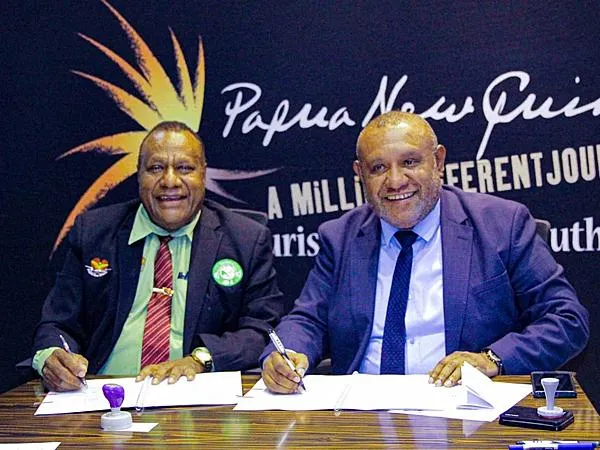
The Secretary for the Department of Agriculture and Livestock, Dr. Sergie Bang, has hailed the recent Memorandum of Understanding (MOU) with the Papua New Guinea Tourism Promotion Authority (TPA) as a significant milestone for the agriculture sector. He emphasized that the collaboration aligns with the newly launched National Agriculture Sector Plan 2024-2033, which aims to transform subsistence farming into commercial farming and entrepreneurship. 

Dr. Bang noted that agritourism development will play a crucial role in achieving these objectives by providing additional revenue for farm owners and strengthening self-sustaining, resilient communities.

During the event, Dr. Bang highlighted the shared commitment to facilitating regional consultations and comprehensive stakeholder engagement in the policy formulation process. By collaborating with relevant agencies, the partnership aims to efficiently achieve the MOU’s objectives and drive the transformation of the agriculture sector to empower healthy and prosperous agricultural communities.

The MOU is set for an initial period of three years, setting the stage for a path to harness Papua New Guinea’s agricultural potential to boost tourism. Through this partnership, both TPA and DAL are committed to developing a vibrant agritourism sector that will contribute significantly to the country’s economic development.

July 01, 2024

by Rishabh Mukerjee, Helmtrude Sikas Iha and Damaris Warambukia

Coffee is one of the most important smallholder cash crops in Papua New Guinea. It accounted for US$156 million of export earnings, 13% of agricultural export revenues, and 1.4% of total export revenues in PNG in 2021. According to the PNG Rural Household Survey 2023, approximately 55% of sampled households in the highlands produce coffee.

During March and April 2024, the International Food Policy Research Institute (IFPRI) collaborated with the University of Goroka (UoG) to conduct gender-differentiated focus group discussions with coffee producers in Simbu and Eastern Highlands provinces to better understand the challenges and opportunities associated with coffee production and marketing in PNG. We completed 24 focus groups, each with 10 community members, discussing production, input usage, sales volume, production shocks, pest control, labour needs and market access.

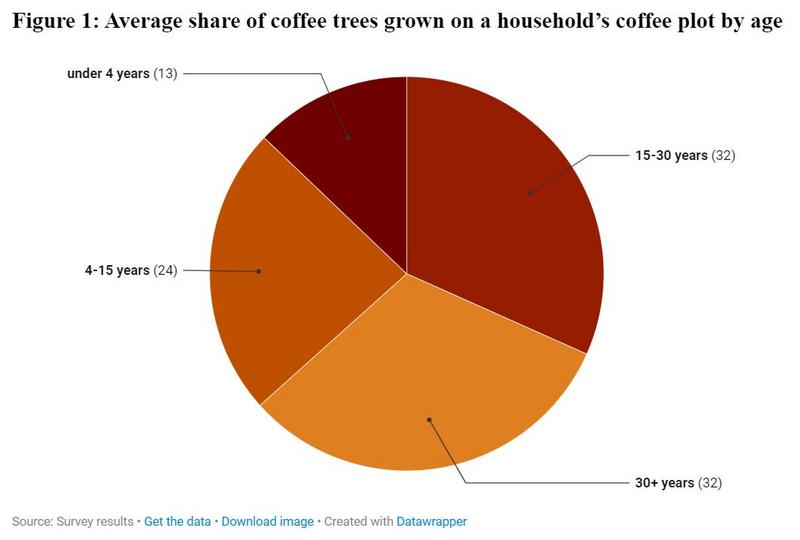
Sampled communities varied with respect to coffee-production scale, pest management, and marketing channels. On average, households reported owning two to three coffee gardens, with most trees aged 15 years or older. To calculate an approximate range of coffee yield per hectare, we asked producers to estimate the coffee yields of different-aged trees by drawing a line on the coffee-bean bags used to transport output to processors in town. Additionally, we asked focus groups to estimate the share of trees, by age, that are grown on an average household’s coffee block. Furthermore, we measured seven coffee blocks in seven different villages to count the number of trees by age category per one hectare area.

According to respondents, within a coffee block, a quarter of trees were aged between four and 15 years and equivalent shares were reported for trees aged between 15 and 30 years and above 30 years, respectively (Figure 1). Based on the dimensions and tree count of the selected blocks, we estimate that 3,000 to 4,000 coffee trees are grown per hectare of land. There are three harvest cycles for coffee within the focus group areas. For example, for trees aged from four to 15 years, the first harvest is the largest and constitutes about 50% of the overall yield, while the second and third harvests make up 30% and 20% respectively.
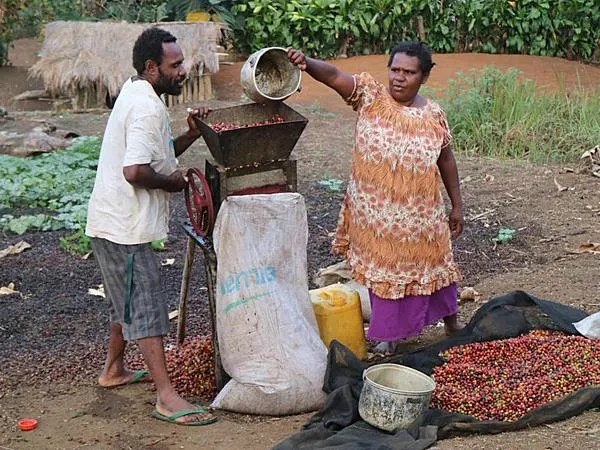
Given this, we measured the second-harvest yield of an average coffee tree (non-dwarf) in the Kofena community by picking and weighing the ripe cherries from three trees of different ages. For trees aged between 15 and 30 years, the second harvest yielded 0.63 kilograms of ripe red cherries. For the older trees (aged 30+ years) and younger trees (age four to 15 years) the weighed yield was 0.18 kilograms and 0.12 kilograms respectively. By considering the share estimates of first and third harvest for different-aged trees, along with the measured yield from the second harvest, we calculated the weight of red cherries harvested from each age category of coffee tree.

Using the conversion formula provided by World Bank 1986 and the PNG Coffee Industry Corporation (CIC) Handbook, approximately one kilogram of ripe red cherry yields 0.21 kgs of dry parchment (partially processed coffee beans). Based on the estimated red cherry yield, approximately 417 to 560 kilograms of dry parchment can be harvested per hectare in the focus group study area. Similar results were reported in the 2017 ACIAR report on coffee-based farming systems in the highlands of PNG, indicating that households in Bena and other Eastern Highlands Province districts produced an average of 522 kilograms and 386 kilograms of dry parchment per hectare per year respectively.

Compared to other countries such as Colombia and Indonesia (the second and eleventh largest producers of Arabica coffee, respectively), the estimated PNG parchment yield per hectare is substantially lower. For example, Colombia and Indonesia produce an average of 1,080 kgs (USDA 2023) and 937 kgs (USDA 2020) of dry parchment per hectare.

We identify low coffee yield as a significant challenge in the PNG highlands which is further exacerbated by pest infestations, particularly from Coffee Berry Borer (CBB), a small species of beetle that lives, feeds, and breeds inside coffee berries. Over three-quarters of the sample communities reported losing more than half of their harvest to berry borer infestations last season.

Lack of market access and price inconsistency pose another challenge for coffee producers. During the last harvest season (March to June 2023), dry coffee prices ranged between 3.5 and 7.0 PGK (US$0.90-1.81) per kilogram, with the highest price being paid at the onset and end of the season when coffee bean supply is relatively low. Most growers received a standard price per kilogram for their output irrespective of quality. However, communities associated with coffee associations or located near coffee processors benefited from extension services to improve output quality and negotiate quality premiums (an extra two or three PGK per kilogram) for their harvest. Furthermore, an overall low adoption of coffee certification in our sample suggests an important unrealised potential for achieving higher premium market values.

To overcome these production challenges, efforts should be directed towards improving yield and quality through improved farm practices and integrated pest management strategies. Having access to cost effective pest control solutions and guidance on the correct usage of fertilisers, soil management, and proper pruning practices are some crucial steps to boost production and control CBB attacks.

Establishing and providing financial support to coffee associations can strengthen market ties, enabling farmers to negotiate better prices. Encouraging direct contracts with international buyers could provide profitable market opportunities and financial incentives to ensure quality output, as seen in one village in our sample that directly supplied green beans to a US coffee roaster and received an average 11-13 PGK per kg.

While the Coffee Industry Corporation (CIC) and exporters like PNG Coffee Roasters and Monpi Coffee offer extension certification and provide support to coffee associations in accessing domestic and global markets, an additional opportunity to increase market value for PNG coffee is to identify areas where organic coffee certification can be ascertained. However, price premiums on organic coffee production must be built into a transparent production, grading, and marketing system that incentivises and rewards producers for high quality output.


The authors acknowledge Harry Gimiseve and Wendy Safi for assisting the team with focus groups; their contributions were essential for our improved understanding of coffee-farming communities.


This article appeared first on Devpolicy Blog (devpolicy.org), from the Development Policy Centre at The Australian National University.

Rishabh Mukerjee is a Research Analyst at the International Food Policy Research Institute.

Helmtrude Sikas Iha is a Consultant and Program Coordinator for the International Food Policy Research Institute in PNG, based in Port Moresby.

Damaris Warambukia is an Administrative Officer at the University of Goroka’s Center for Social and Creative Media Division (CSCM).


Disclosure

Funding for this work was provided by the Australian Department of Foreign Affairs and Trade and the Australian Centre for International Agricultural Research. This research has not yet been peer-reviewed and any views expressed in this post are not necessarily endorsed by IFPRI.

July 01, 2024

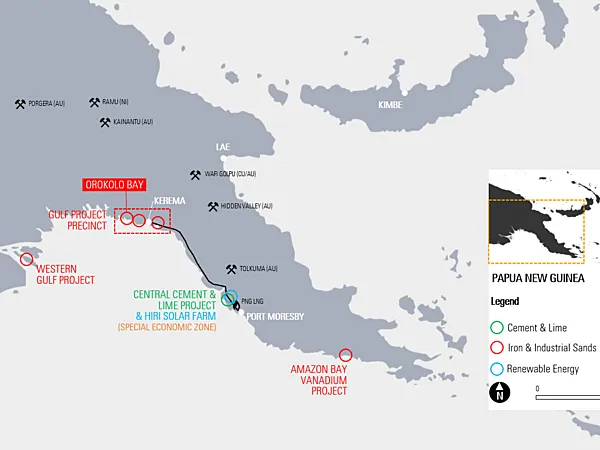
MRL is pleased to announce the signing of a Non-Binding Exclusive Term Sheet (“Term Sheet”) with S&F Investment Advisors Ltd and ACAM LP (the "Investor"), for a proposed USD $50 million investment in MRL and its 100% owned MRCL subsidiary (the “Proposed Transaction”).

Additionally, the Company is also pleased to announce an AUD $5 million placement to existing sophisticated investors to fund Stage 2 and part of Stage 3 wharf facilities for MRL’s CLP, located in the Central Province of PNG. This will provide the CLP with commercial scale wharf infrastructure, enabling opportunity for early cashflow opportunities in calendar year 2024 from raw limestone production.

Richard Pegum, Chairman of Mayur Resources, said: “We are extremely pleased to have entered this arrangement with ACAM LP, which represents a transformational investment for MRL. ACAM LP’s proposed investment will enable MRL to push ahead with our mission of developing mineral projects that deliver higher quality, lower cost, inputs for the mining and construction industries.”

“The AUD $5 million share placement with existing sophisticated investors will be integral to our CLP, ensuring that the early construction works can continue for the benefit of the ongoing development of the project with the aim of producing early cash flow revenues in late 2024.”

“The work completed by S&F Investment Advisors to date, including a site visit and the commencement of discussions with our debt financier, Appian, further gives me confidence in their ability to swiftly go through their final confirmatory phase.”

USD $50 MILLION INVESTMENT FROM ACAM LP

The proposed USD $50 million (minus capital raising fees) has been earmarked to fully replace Vision Blue’s funding for the CLP and retire debt at the parent company level.

Key Terms of the Term Sheet:

  • From the proposed USD $50 million investment, funds are to be allocated between MRL and its 100% owned subsidiary MRCL, with ACAM LP or an affiliate becoming a “substantial shareholder” in MRL at completion.
  • USD $40 million equity is to be made available alongside the contemplated announced Appian Capital Advisory LLP (“Appian”) USD $70m base debt facility (“Debt Facility”). The debt facility is subject to conditions precedent on items including, but not limited to, the project’s complementary equity funding meeting Appian’s commercial requirements, product offtake, and finalization of project documentation with the PNG Government.
  • Retire AUD $9.2m of MRL debt (currently repayable in November 2024).
  • The capital allocation of the proposed USD $50 million and associated percentage equity ownership split in MRL and MRCL shall be agreed between the Investor and MRL prior to the closing of definitive transaction documents (“DTD”). Subject to the allocation of equity between MRL and MRCL, shareholder approval may be required for the quantum relating to MRL.
  • Shares to be issued as new shares, ranking pari-passu with existing shares.
  • Investor entitled to hold Board of Director positions on the MRL and MRCL Boards, to be determined prior to the closing of DTD’s. o
  • Investor has the first and last right of refusal at the subsidiary project level as the primary equity capital partner covering CLP phase 1, CLP’s expansions, the clinker and cement works, and other current and future projects within Mayur's portfolio in PNG.
  • The Term Sheet is non-binding save for terms related to exclusivity, costs and confidentiality.
  • The closing of the transaction is subject to conditions precedent including due diligence, the negotiation and execution of legally binding documentation, and agreement with Appian on revisions to the Appian Debt Facility acceptable to the Investor and Appian, including for ACAM to replace Vision Blue as the cornerstone equity provider.
  • ACAM has been granted a 6-week period of exclusivity in which to close the transaction / enter into definitive legally binding documentation.

Ross McCormick of S&F Investment Advisors said: “We and ACAM are pleased to have entered into this non-binding Exclusive Term Sheet with the Company following a period of due diligence and productive discussions with key PNG Ministerial and Government Agency heads in Port Moresby. The PNG Government re-enforced that MRL’s long-term commitment to downstream processing and export manufacturing is highly welcome and supported by the PNG Government. Our site visit to the CLP provided firsthand insights into MRL's potential to become a world-class building materials supplier.”

AUD $5 MILLION PLACEMENT TO FUND WHARF FACILITIES AT PNG CENTRAL LIME PROJECT

Mayur has also completed an AUD $5 million placement to existing sophisticated investors (the Placement).

Proceeds from the Placement will be used to prioritise Stage 2 and part of Stage 3 wharf facilities for the CLP, with the Company targeting early cash flow revenues from the sale of limestone and other raw products in late calendar 2024.

The Placement will be completed through the issuance of 25,000,000 CDI’s / shares* at an issue price of $0.20 per share, which is consistent with the Company’s 60 trading daw VWAP.

The issuance of 9,000,000 CDI’s / shares* will occur within the Company’s existing ASX Listing Rule 7.1 placement capacity. Settlement of this portion of the Placement is anticipated to occur on 26 June 2024.

The balance of the Placement shares (comprising 16,000,000 CDI’s / shares*) will be subject to the approval of MRL shareholders at a General Meeting of Shareholders, which is anticipated to be held in late July 2024. A date for this meeting will be announced shortly.

The existing sophisticated investors who participated in this Placement approached MRL to invest at this time, to ensure that key development workstreams in relation to Stage 2 and part of Stage 3 wharf facilities (as detailed above) and other civil and related works are able to continue in alignment with the Company’s timeline, for the benefit of the ongoing development of the project and with the objective of producing early cash flow revenues.

ADVISORS

The Company has appointed Tamesis Partners LLP (“Tamesis”) as its financial advisor in relation to the proposed transaction. This appointment is in line with customary terms for an appointment of this nature. Tamesis will receive 5% of all equity funds raised.

NEXT STEPS

Over the next 6-week period (being until 6 August 2024), final documentation and confirmatory due diligence shall be conducted on an exclusive basis, where it is anticipated that final documentation will be executed, and funding drawn.

July 01, 2024

The Prime Minister of Papua New Guinea James Marape officially launched the Five-Year Development Plan for Central Bougainville in Arawa Town yesterday.

Present at the launching was the President of Bougainville Ishmael Toroama, Regional Member for Bougainville Peter Tsiamalili Jnr and cabinet Ministers from both the National Government and the Autonomous Bougainville Government.

The Five-Year Plan (2023 – 2027), is an initiative of the Member for Central Bougainville Fr. Simon Dumarinu to improving service delivery and promoting self-reliance in the electorate.

The plan is themed Paving the Way Forward for Socio-Economic Development through empowering service delivery.

Fr. Dumarinu said that the plan will focus primarily on improving economic development, infrastructure, education, healthcare and governance.

“This plan is an effort by the Member for Central Bougainville to prepare our people to be Independence Ready,” Fr. Dumarinu said.

“It is aligned with the strategic development plans of the Autonomous Bougainville Government and the National Government,” Fr. Dumarinu.

Bougainville President Ishmael Toroama said that the plan is essential to the raising the standard of living of the people of Central Bougainville through economic development and sustainable development.

President Toroama added that this plan will enable the people to partake in the development process in Central Bougainville.

President Toroama also expressed his gratitude to the Prime Minister James Marape for his continued commitment to the people and government of Bougainville.

In launching the Central Bougainville Five Year Development Plan the Prime Minister James Marape urged greater collaboration between the ABG and National Government to implement the plan.

Prime Minister Marape said that he was grateful to see a lot of development and progress in Central Bougainville.

“I thank the ABG leadership under President Toroama and the Member for Central Bougainville Fr. Simon Dumarinu for encouraging development in Central Bougainville and the rest of the region,” Prime Minister Marape said.

“The National Government remains committed to ensuring our people receive the best services the country can offer to our people and this plan along with strategic plans of both governments is the blueprint for development in Central Bougainville,” he added. 

July 01, 2024

Great Pacific Gold Corp. (GPAC) is pleased to provide an update on its portfolio of gold-copper assets within Papua New Guinea (“PNG”) consisting of four projects totalling approximately 2500 sq km.

Arau Project

The Arau Project consists of two exploration licenses, located in the Kainantu region, and includes the Mt. Victor Prospect, where previous drilling found a multiple phase intrusion complex hosting copper and gold mineralization.

Over the several weeks, GPAC field crews comprised of mainly local community members as employees and contractors, have been completing road access rehabilitation and drill pad construction. Seven drill pads are now completed, in support of an upcoming reverse circulation drill program. Drilling is expected to commence in the first week of July and will seek to confirm copper-gold porphyry mineralization underneath the skarn mineralization at the project. Previous drilling at Mt Victor was aimed at establishing the gold resource associated with the outcropping skarn mineralization. A program of around 2000 meters of drilling is expected.

As part of the Arau project, in the southern exploration licence, EL2715, an initial extensive soil sampling program has recently been completed, which followed up on previously generated copper-gold geochemical data of stream sediment anomalous drainages and ridge and spur soil sampling programs. The area is underlain by the highly prospective Elandora porphyry unit, which is known to host copper porphyry and epithermal gold mineralization. Assays for this program will be received in the coming weeks.

Kesar Creek Project

The Kesar Creek Project consists of one exploration license, EL 2711, and is north-west of and contiguous with the K92 Mining Inc. tenements.

Last month, GPAC reported excellent results from the company’s initial soil sampling and rock chip sampling program. Thirty-two rock chip samples were taken from outcrop and artisanal underground works and returned high-grade assays including 244 g/t Au (underground working), 116 g/t Au (outcrop), 36.5 g/t Au (float) and 33.4 g/t Au (underground working). Of the 32 samples, 19 samples were above one g/t Au.

Additional to the rock chip sampling, a soil sampling program principally targeted the West and Central vein zones at Kesar Creek. In total, the 332 soil samples returned numerous significant gold grades over a strike length of 5.5 km including a high-grade assay of 20.9 g/t Au.

The initial first-pass soil program used a 200-metre-by-100-metre or 50-metre grid and was very broadly based to cover most of the known prospective ground and to get an indication of the location of the most prospective larger structures.

Over the past week, GPAC has recommenced work at Kesar Creek, tightening the soil program around key target areas to prepare for an initial phase drilling program as well as extending the grid coverage to the northeast to include the artisanal mining area where the 244 g/t Au rock chip was taken.

Wild Dog

The Wild Dog Project consists of two granted exploration licenses, EL 2516 and EL 2761, located on the island of New Britain and about 50 km southwest of Rabaul and Kokopo, PNG. The most recent of the two licenses, EL 2516 was granted on April 22, 2024.

Recently, GPAC announced the engagement of Tetra Tech Coffey to carry out environmental assessment and monitoring work at the project and is now finalizing contracts for road rehabilitation work. The road rehabilitation work not only will be supportive of GPAC’s exploration program but is also very important to the local community as it opens up a crucial access route for the region.

Chief Operating Officer and Director, Rex Motton states, “While much of the recent news flow from GPAC has been related to drilling at our high-grade Comet Discovery in Victoria, Australia, we have been exceptionally busy on multiple fronts in PNG in preparation for upcoming drill programs. The PNG portfolio hosts multiple opportunities for significant high-grade epithermal vein and porphyry-style discoveries.”

About GPAC

Great Pacific Gold has a portfolio of high-grade gold projects in Papua New Guinea (“PNG”) and Australia.

In PNG, Great Pacific Gold recently assembled a 2500 sq. km mineral exploration land package in PNG. The land package comprises of exploration licenses (EL). It includes both early-stage and advanced-stage exploration targets with high-grade epithermal vein and porphyry-style mineralization present.

The Arau Project consists of two exploration licenses, located in the Kainantu region, and includes the Mt. Victor Prospect, where previous drilling found a multiple phase intrusion complex hosting copper and gold mineralization.

The Wild Dog Project consists of two granted exploration licenses, EL 2761 and 2516, located on the island of New Britain and about 50 km southwest of Rabaul and Kokopo, PNG.

The Kesar Creek Project consists of one exploration license, EL 2711, and is contiguous with the K92 Mining Inc. tenements.

The Tinga Valley Project consists of one exploration license, EL 2720. The OK Tedi Copper Gold Mine is 140km to the northwest along the same belt is a superb geological comparison to the Tinga Valley Property.

In Australia, Great Pacific Gold began with two, 100% owned, high-grade gold projects called the Lauriston and Golden Mountain Projects, and has since acquired a large area of granted and application tenements containing further epizonal (low-temperature) high-grade gold mineralization and associated intrusion-related gold mineralization all in the state of Victoria, Australia. The Great Pacific Gold land package, assembled over a multi-year period, notably includes the Lauriston Project which is a 535 sq. km property immediately to the south of and within the same geological framework that hosts Agnico Eagle Mines Ltd’s Fosterville Gold Mine and associated exploration tenements. The Golden Mountain Project is an intrusion-related gold project on the edge of the Strathbogie granite and occurs at the northern end of the Walhalla Gold Belt. The acquired projects include the epizonal gold Providence Project containing the Reedy Creek goldfield which adjoins the Southern Cross Gold’s Sunday Creek exploration project and a large group of recently consolidated granted tenements called the Walhalla Gold Belt Project , which contain a variety of epizonal and intrusion related style gold mineralization. Additionally, Great Pacific Gold has another gold-focused project called the Moormbool Project which has epizonal style gold mineralization and associated potential intrusion-related gold mineralization, as well as the Beechworth Project occurs in the northeast of the state and contains intrusion related and mesozonal gold mineralization.

All GPAC’s properties in Australia are 100% owned and have had historical gold production from hard rock sources despite limited modern exploration and drilling.

July 01, 2024

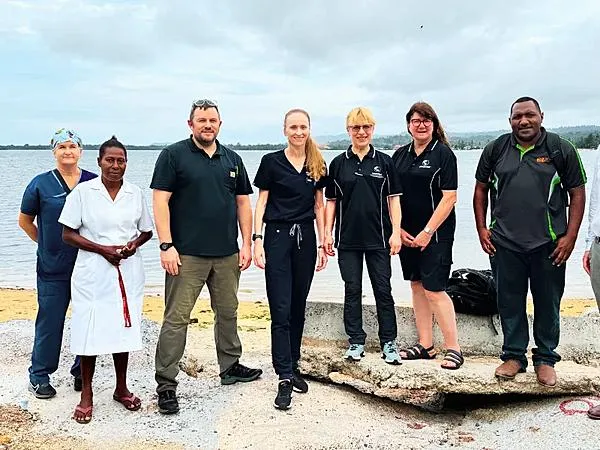
A PanAust sponsored specialist medical team arranged by Interplast Australia has flown into Papua New Guinea to perform up to 40 specialist and reconstructive surgeries in the East Sepik Province.

The visit aims to provide life-changing surgeries at no cost to disadvantaged communities and is part of PanAust subsidiary, Frieda River Limited’s, ongoing commitment to improving healthcare access and outcomes in landowner communities.

The five-person team, comprising experienced surgeons, nurses and an anaesthetist, will be conducting consultations and a variety of essential procedures in one of Papua New Guinea’s remotest hospitals. The operations are critical for enhancing the quality of life and restoring functionality for individuals who have limited or no access to surgical care. This time, the visit will include a number of patients who were treated by Interplast in 2017 being supported to travel from the West Sepik Province to Wewak, for follow up and additional surgery if required.

The medical team will work alongside local medical and nursing personnel at Wewak’s Great Chief Somare Memorial Hospital (formerly known as Boram General Hospital) to deliver approximately 30-40 plastic and reconstructive surgeries including cleft lip and palate repairs, surgery to reconstruct injuries from burns, and surgery for other congenital and acquired conditions.

Frieda River Project Director Phil McCormack said that the surgeries offered hope and healing to those who need it most.

“We know how difficult it is for remote communities to access specialist healthcare and I’ve witnessed first-hand how transformative the surgeries can be for patients and their families.

“It’s a powerful reminder of how we can deliver immediate change in a way that benefits local communities and provincial governments,” he said. “PanAust and Frieda River Limited are proud to be able to offer these surgeries to the people of Papua New Guinea and to continue a long-standing partnership with Interplast.”

This visit, scheduled to last for a week, is a collaborative effort with local hospitals, healthcare providers and provincial governments to ensure that measurable impact is delivered in the area.

In addition to performing surgeries, Interplast’s team will engage in knowledge exchange and training sessions with local medical staff to enhance their capacity to deliver procedures independently in the future, and better their pre and post operative surgery care.

“Although we don’t have an operational site, by working together with Interplast, we can ensure that the benefits of our presence here extends far beyond the duration of our stay, fostering long-term improvements in medical care and supporting the communities near our project site,” Mr McCormack said.

Interplast’s Director of International Programs Jess Hill said “Interplast is thrilled to have a specialist volunteer Australian plastic and reconstructive surgical team returning to Wewak, thanks to the support of PanAust. The team includes two of the plastic surgery team from Port Moresby joining the visit for the week, as part of their own professional development, further enhancing the long term, sustainable impacts of our work.

“Our thanks to the team at the Great Chief Somare Memorial Hospital and the East Sepik Provincial Health Authority for hosting this visit, and for arranging for patients from the communities in East and West Sepik to access much needed specialised reconstructive surgical care which would not otherwise be available in Wewak.’’

Since 2012, more than 250 people in the Asia Pacific have received life-changing clinical care, more than 50 clinicians have received clinical training opportunities, and hospital and health systems in two countries have benefitted from PanAust and Interplast’s support.

July 01, 2024

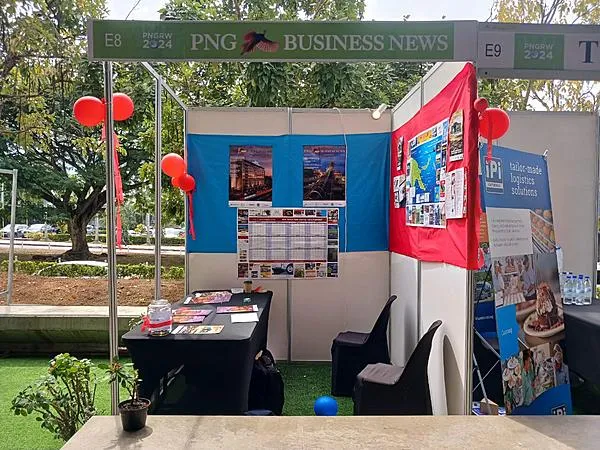
PNG Business News is excited to announce our participation in Papua New Guinea's largest event, “PNG Resource Week,” themed “Building on Our Legacy: PNG Resource and Energy,” starting today until July 4.

Join us at this significant event to engage with stakeholders, learn from industry experts, and celebrate the contributions of the resources sector and allied industries to our economy and society.

The PNG Business News booth is located at the University of Papua New Guinea (UPNG) for the PNG Core Expo on July 1-3, and at the Stanley Hostel for the Industrial Mining Forum, a premier networking event for industry professionals to network and discuss the latest sector developments on July 3-4.

Visit our booth to explore opportunities to promote your business online and in our quarterly magazine. It is also an excellent opportunity to stay updated on the latest business developments.

Hosted by the PNG Chamber of Resources and Energy (PNG CORE), PNG Resources Week shines a spotlight on National Content and its pivotal role in shaping PNG's future. Attendees include more than 800 representatives from government and policymakers, businesses, landowner companies, and various landowner groups from project areas.

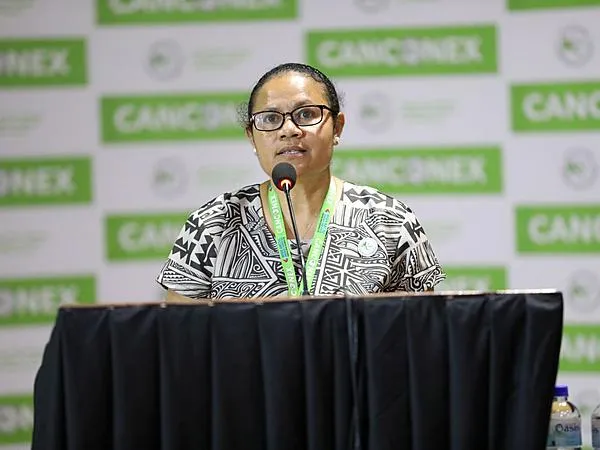
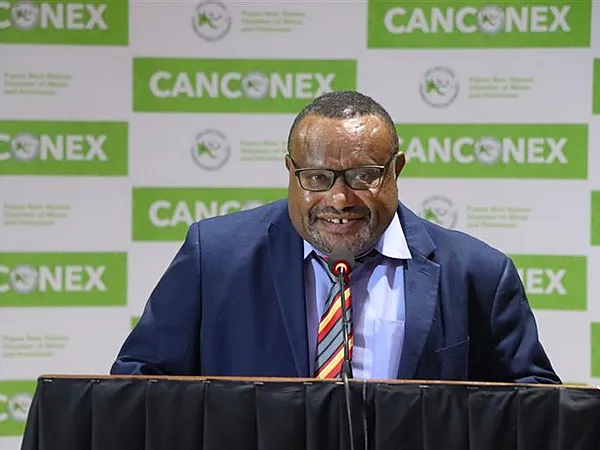
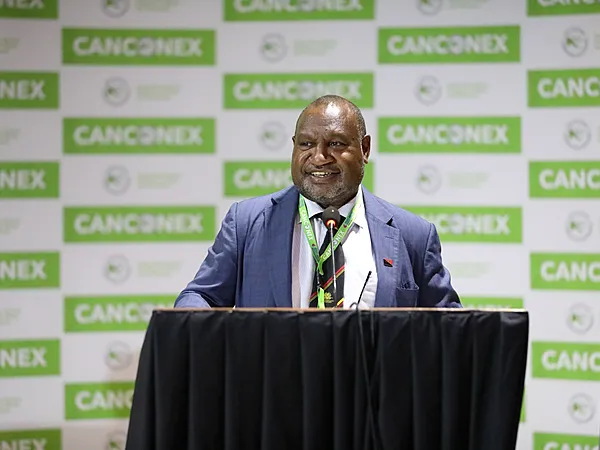
The week kicks off with PNG Core's CANCONEX Agenda at UPNG, featuring 80 speakers and focusing on enhancing the energy and resources industries' impact on the nation. Key topics include disaster response, healthcare, education, mine closure planning, and investment programs.

Other Day One themes are:

  • Key industry regulator update on Government Policies that Impact on Community Affairs
  • Benefits Sharing Structures
  • National Content – Suppliers Development (LANCO Success Stories)
  • Mine Closure Planning – Misima Experience
  • Regulators National Content Update
  • Community Investment Programs

Day Two themes:

  • Disaster Response - Learning from Experience
  • Artisanal and Small-Scale Mining
  • Lessons from Land Owner Identification
  • Finance in Resource's and Energy (FIRE) - Access to Finance
  • Women in Resources and Energy (WIRE)
  • Porgera Lessons from Closure and Opening
  • Panguna – Lessons and Eye to the Future

Day Three themes:

  • Impact in Health
  • Impact in Education
  • Impact in Agriculture
  • SME Development
  • Workforce Development
  • Entrepreneurship & Workforce Development – The PNGLNG Experience
  • Entrepreneurship & Workforce Development – Lessons for the Next Major Project

Also featured is the PNG Industrial and Mining Resources Exhibition and Conference (PNG Expo) from July 3-4, which promotes the latest innovations in mining equipment and technology.

The PNG Expo, sponsored by Hastings Deering and Islands Petroleum, will host over 100 equipment displays and stands. The packed conference schedule will feature key decision-makers from local and international markets discussing sector advancements. This event brings together government representatives, industry leaders, international experts, and stakeholders.

June 28, 2024

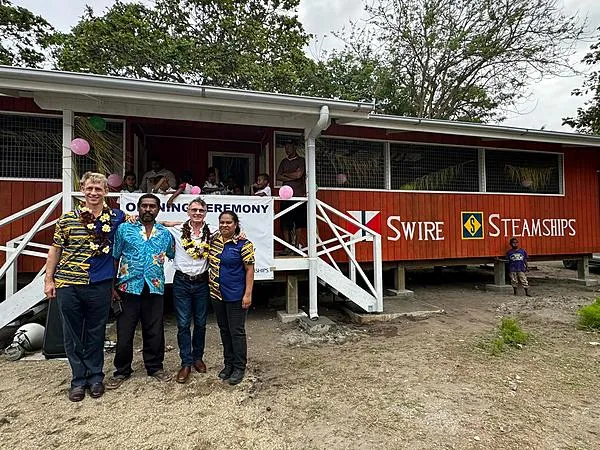
Hula Village, Central Province – John Swire & Sons, Steamships and the Embassy of the Federal Republic of Germany are thrilled to announce the successful completion and official opening of the redevelopment project at Vula’a Elementary School in Hula, Central Province, Papua New Guinea.

The brand-new classroom was formally presented to the school community in a small ceremony at the school grounds attended by students, parents, teachers, and villagers of Hula as well as representatives from the Central Province Education Authority.

Addressing the audience, Managing Director of Steamships, Rupert Bray said, "We extend heartfelt gratitude to our partners at the Embassy of the Federal Republic of Germany for their shared vision and generous support. For us, this project symbolizes more than a building; it embodies our collective belief in the transformative power of education. We encourage everyone to take ownership of this facility, ensuring its maintenance for future generations."

The overall investment in this project amounts to approximately PGK 215,000, with Financial Support for Micro Projects Grant from the German Embassy, totaling EUR 25,000 (PGK 97,169), and a contribution of PGK 118,000 from Steamships, covering a rural double classroom kit with a teacher's office space in between, complete with blackboards, pinboards, freight, cartage, and building contractor costs.

H.E. Beate Grzeski, Ambassador of the Federal Republic of Germany in Canberra, expressed, "The German Embassy is proud to contribute to this impactful community-building initiative, which underscores our commitment to sustainable development in Papua New Guinea, ensuring equitable access to quality education for the youth of Hula."

The completion of this redevelopment project not only provides essential infrastructure but also instills a sense of pride and enthusiasm among the students, educators, and community members involved in its construction. The upgraded facilities are expected to enhance attendance and foster greater engagement, enriching the educational experience for all and contributing to the achievement of national education goals.

The German Embassy Canberra and Steamships remain dedicated to the ongoing success of this initiative and eagerly anticipate the transformative impact it will have on Vula’a Rivilina Elementary School and its community.

June 26, 2024

The PNG Chamber of Resources and Energy (PNG CORE) is set to host the second Community Affairs and National Content Expo (CANCONEX 2024) as part of the inaugural PNG Resources Week.

The event, scheduled from July 1-4 at the University of Papua New Guinea, will focus on the rapidly growing initiative of National Content.

National Content refers to the participation of locally owned community businesses and investments, including workforce, in mining and oil and gas resource projects. It has become a global agenda and is now one of the fastest-growing initiatives.

In response to the growth and contributions of the resources sector, the national government has introduced several initiatives, including policies related to national content. These aim to harness the full potential of the resource sector to overcome development hurdles and transform PNG into a middle-income economy by 2030.

Gretel Orake, PNG CORE Manager of Policy & Analysis, emphasized the importance of National Content.

“As the industry peak body representing the interests of the resources and energy sectors, PNG CORE recognizes National Content as pivotal for the sustainable development and prosperity of PNG.”

“Therefore, we have prioritized National Content as a key agenda for discussion in the CANCONEX. This session will bring together participants from government, industry, and wider stakeholders, including international experts, to discuss National Content initiatives for PNG.”

In addition to the discussions, PNG CORE will present its Policy Statement on National Content - this statement represents a strategic approach by the industry to ensure alignment in government policies and global reporting initiatives. It reflects a concerted effort to foster inclusive growth and long-term economic resilience for the country.

The upcoming PNG Resources Week promises to be a significant event, shedding light on the importance of National Content and its role in shaping PNG’s future.

June 25, 2024

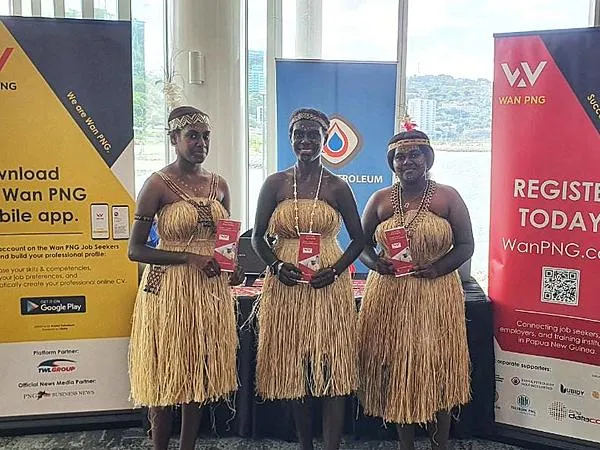
Wan PNG is introducing a significant upgrade to its platform with the implementation of an AI-driven Skills Engine. This feature aims to streamline the process of skill management for users, offering a curated database of over 13,000 skills linked to over 3,500 occupations. The primary goal is to provide a more efficient and intelligent method for both job seekers and employers to navigate skill profiles on the platform.

Key Features of the AI-Powered Skills Engine

  1. Curated Skills Database

Users will now have access to a comprehensive database of skills, eliminating the need for manual entry through free text. This curated database encompasses a wide range of skills relevant to various occupations.

  1. Occupation-Linked Suggestions

A notable enhancement is the linkage between skills and occupations. When users add work experience based on a specific occupation, the AI engine suggests relevant skills associated with that occupation. This feature aims to improve the accuracy of skill representation for users.

Implications for Job Seekers

For job seekers, this update offers a more systematic approach to building profiles. The AI engine provides a detailed list of skills and recommends those most relevant to specific occupations. This empowers job seekers to present their profiles more strategically.

Benefits for Employers

Employers stand to benefit from a more efficient talent acquisition process. The alignment of skills with occupations allows for easier identification of candidates whose skill sets closely match the requirements of a particular role.

Platform Intelligence

The AI-driven Skills Engine signifies Wan PNG's commitment to staying technologically current. The platform aims to serve as a more intelligent ecosystem, adapting to the evolving demands of the job market.

Looking Forward

While celebrating this upgrade, Wan PNG acknowledges that it is part of an ongoing commitment to improvement. The platform seeks to remain at the forefront of technological advancements, with a focus on empowering Papua New Guineans on their professional journeys.

In the realm of skill management, Wan PNG's AI-powered Skills Engine represents a practical step toward efficiency and accuracy. The platform aims to provide a more intelligent and accessible tool for users to navigate the intricacies of skill representation, contributing to a more informed and strategic job market in Papua New Guinea.

June 24, 2024

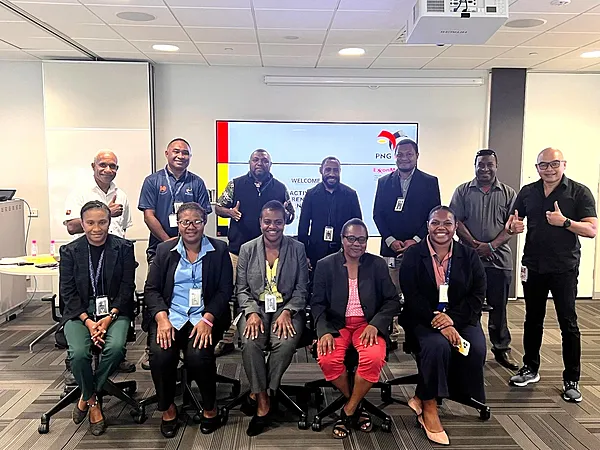
The staff of PNG Extractive Industries Transparency Initiative (PNGEITI) attended a one day workshop hosted by ExxonMobil’s Government Relations team.

It was an information sharing session aimed to shed light on various aspects of the PNG LNG project, particularly its benefits that will have a positive and long lasting impact on the country.

ExxonMobil PNG, the developer of the PNGLNG is a member of the PNGEITI Multi-Stakeholder Group. The company plays a pivotal role as a reporting entity, providing crucial information and data for the PNGEITI’s annual country reports. The EITI reports serve as vital source for the government and the citizens in promoting transparency and fostering public trust by disclosing revenue payments, and other relevant information related to mining, oil and gas sectors.

The workshop covered an array of topics, including updates on the PNG LNG Project, revenue distribution to the State, the Infrastructure Tax Credit scheme, and National Content initiatives such as workforce and supplier development, along with corporate social responsibility efforts in community investment.

During the session, Jonathan Omae, Government Relations Advisor and workshop facilitator, underscored the diverse array of benefits stemming from the LNG project. He highlighted both direct and indirect opportunities, citing royalty payments, dividends, equity entitlements, and development levies as direct benefits. Additionally, Omae emphasized indirect benefits such as employment, training, business opportunities, and infrastructure development such as roads, clinics, and schools.

However, questions were raised regarding the distribution of payments to provincial governments and their subsequent impact on local communities. Diclah Taureka, PNGEITI Director of Projects and Procurement, queried the transparency and efficacy of this process, and if the company is providing data and information as required for the EITI reports. 

In response, Omae clarified that payments are distributed as per the Umbrella Benefits Sharing Agreement (UBSA), an agreement between the State, landowners, and the local government.  The agreement, a prerequisite under the Oil and Gas Act, outlines a framework for fair benefit distribution. Omae added that unlike other revenue streams, the company pays development levies directly to the provincial governments. He emphasized that ExxonMobil adheres strictly to this agreement, leaving the allocation decisions and reporting to the provincial governments.

Echoing similar concerns, Dickson Sorariba, PNGEITI Director of Communications and Stakeholder Engagement, queried if the benefits trickle down to the local communities. He highlighted instances where communities voiced grievances over inadequate benefit sharing and lack of tangible development in the impacted areas such as Gulf and Western provinces.

PNGEITI currently reports at the national level, with discussions ongoing regarding subnational reporting. In the interim, stakeholders in the sector should continue to advocate for a more equitable distribution process, one that ensures clear criteria on revenue distribution, and transparent decision-making, that is accessible to the public.

The challenge now lies with industry stakeholders and impacted communities to advocate for change and ensure that revenue from not only the PNGLNG Project but other extractive projects is distributed fairly and transparently to benefit all stakeholders, particularly the communities in the provinces directly impacted by the project.

June 24, 2024

Benefits sharing will be a subject of discussion at CANCONEX, during the Inaugural PNG Resources Week to be held at the beginning of July. What benefits are derived from projects, where they are applied, and how they are applied, are all questions that many are still yet to fully understand.

To shine the light on this area, a specific session on benefit sharing structures will be presented on Day 1 of PNG Resources Week at CANCONEX, featuring ExxonMobil PNG (EMPNG), Mineral Resources Development Company (MRDC), Kumul Petroleum Holdings Limited (KPHL) and Newmont Corporation, with each organization providing an insight into how benefit sharing is implemented through their respective projects and organizations.

EMPNG, operator of the PNG LNG Project will be providing an overview of benefits to the State over the last 10years since first its LNG shipment. This will include a break-down of how proceeds derived from the sale of LNG is distributed to all stakeholders, particularly at the community level, as well as the initiatives the project has initiated to ensure communities are self-sustaining, now and into the future.

Similarly, MRDC and KPHL will also provide an overview of their Benefit Sharing and Management Structures, outlining how its benefit sharing activities are implemented for communities across the length and breadth of communities where it holds the State’s equity. Their presentations will also highlight initiatives both organizations have taken to ensure that remains relevant to the ever-changing business environment.

Participants will also hear from Newmont Corporation, operators of the Lihir Gold Project, who have over the years had a successful benefit sharing structure, that has enabled Lihir Landowner organizations to expand and diversify their operations not only in New Ireland Province, but to other parts of Papua New Guinea, and abroad. Insights into how benefit sharing structures are tailored to suit community and landowner requirements will be learnings that attendees to PNG Resources Week will benefit greatly from.

All four organizations are leaders within their respective industries, and the presentations will provide attendees a deeper appreciation of the efforts that the resources sector’s activities in line with benefit sharing arrangements.

With just over a week to go, and with tickets nearly sold out, PNG CORE encourages all stakeholders within the resources industry and PNG’s business community to register your attendance for CANCONEX (1st to 3rd July, UPNG), the expo booths, the PNG Resources Summit (4th July, Hilton) or the PNG Resources Gala Dinner (4th July, Hilton) today via www.pngresourcesweek.com or email events@pngcore.org to ensure that you don’t miss out on the learnings from PNG Resources week.

June 24, 2024

Prime Minister Hon. James Marape has confirmed that he will be open the inaugural PNG Resources Week on 1 July 2024 by presenting the National Content address at the CANCONEX at UPNG. Additionally, PM Marape will close PNG Resources Week by speaking at the PNG Resources Week Gala Dinner on 4 July 2024 at the Hilton Hotel. The inaugural PNG Resources Week (“PRW24”) will incorporate the Community Affairs and National Content Conference and Expo (“CANCONEX”), PNG Resources Career Fair, PNG Resources Summit, and the PNG Resources Week Gala Dinner. PNG CORE President Anthony Smaré thanked the Prime Minister for accepting the invitation to be a part of this important national event.

“We are delighted that Prime Minister Marape has accepted our invitation to open the inaugural PNG Resources Week. He will be the guest of honour at CANCONEX 2024, the PNG Resources Summit, and the PNG Resources Week Gala Dinner. At CANCONEX 2023 in Lae, PM Marape delivered an outstanding speech challenging PNG lands and landowners to take up the opportunities presented by the new resource projects and reopening of Porgera – we look forward to his speech opening PRW24. PM Marape’s engagement with the resources sector and its stakeholders are important for building confidence in our sector from both investors and local stakeholders.”

“We are pleased that over the last 12months, Government has made progress in dealing several of these issues, among them, National Content and its implications for the resources sector. The Prime Minister will be provided an update on what the industry and its stakeholders, including landcos and landowner groups, have done as well in these areas, so that our efforts complement the efforts by Government.”

“The Prime Minister will lead a high-level delegation, which includes Mining and Petroleum Ministers and Governors and MPs for resource provinces who will interact with industry, PNG business community, SMEs and landowners at PNG Resources Week. This is part of our efforts to provide a domestic platform for more engagement between all stakeholders in the resources sector.”

“We also have a strong delegation from AROB led by President Ishmael Toroama, who will also deliver a highly anticipated address regarding the lessons of Panguna and the road ahead.”

“PNG Resources Week is a must-attend event as PNG’s flagship domestic event especially for stakeholders in the resources sector and the PNG business community. It will complement PNG CORE’s flagship international investment promotion events – the annual PNG Energy & Resources Investment Conference in Sydney in December 2024 and the PNG Asia Investment Conference in Hong Kong / China in March 2025.

With over 90% of tickets sold, and additional tickets made available, PNG CORE encourages all stakeholders within the resources industry to register your attendance today via www.pngresourcesweek.com or email events@pngcore.org to ensure that you don’t miss out networking, business and learning opportunities from PNG Resources week.

June 24, 2024

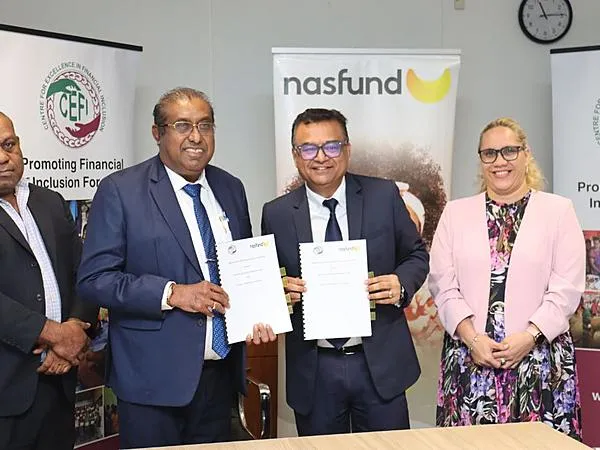
The National Superannuation Fund (Nafsund) Limited signed a Memorandum of Understanding (MoU) with the Centre for Excellence in Financial Inclusion (CEFI) on June 21, 2024.

This MoU is a three year partnership between Nasfund and CEFI that enables both organizations to work together in enhancing superannuation awareness with CEFI’s Financial Inclusion Activities.

CEFI’s collaboration with Nasfund is important as this will advance superannuation awareness within CEFI’s Financial Literacy Training Program and assist CEFI also in incorporating superannuation into schools curriculum activities plus supporting Provincial Government Engagement Programs.The main activities during the three year partnership will include;

  • Advancing superannuation awareness within CEFI’s Financial Literacy Training Program by jointly producing 3-5 minutes financial literacy and superannuation videos for awareness purposes to promote financial inclusion in Papua New Guinea
  • Assist CEFI with the integration of superannuation into Financial Education for schools Curriculum Project through the department of Education, Curriculum Development Division.
  • And support CEFI by participating in the Provincial Government Engagement Program involving conducting awareness behind the rationale of superannuation to the Provincial Steering Committee Members and collaboratively organizing Savings for Young Mind campaigns via superannuation across designated schools in the provinces.

CEFI’s Executive Director Mr. Saliya Ranasinghe when commenting on the MoU stated that the partnership between the two organizations is important as it highlights their commitment to expand financial inclusion awareness in Papua New Guinea.

Mr. Ranasinghe further elaborated that CEFI through this partnership with Nasfund will now be able to offer Papua New Guineans financial literacy and superannuation awareness   through the activities outlined in the MoU.

“Financial literacy education plays a very important role as it’s brings new knowledge and changes people’s attitude.”

“We hope that this initiative will change the lives of Papua New Guineans to have a better understanding of superannuation and the importance of savings,” Mr. Ranasinghe said.

Nasfund CEO Rajeev Sharma said “Nasfund is proud to announce a series of strategic initiatives aimed at enhancing superannuation education and financial literacy among Papua New Guineans. As part of its commitment to fostering a culture of savings and retirement planning, Nasfund is rolling out three key programs: the School Superannuation Program, the Superannuation Literacy Program, and the long-standing Shopfloor Program.”

Nasfund’s strategic Key Performance Indicators prioritizes superannuation education and inclusion, focusing on the youth through the School Superannuation Program. This initiative targets school children and young people, educating them on the importance of saving and retirement planning from an early age. With the backdrop of high inflation and increasing life expectancy, instilling a savings culture among the youth is critical for ensuring a secure financial future.

Complementing the School Superannuation Program, Nasfund runs the Superannuation Literacy Program for its members and prospective members. This program is designed to deepen understanding of superannuation, providing guidance on effective budgeting and the benefits of maximizing voluntary contributions. “Developed with insights from staff training at the Centre for Excellence in Financial Inclusion (CEFI) in 2022, the program integrates comprehensive modules on savings and budgeting, ensuring that participants are well-equipped to boost their superannuation, “said CEO Sharma.

For over 20 years, Nasfund has been actively engaging with its members and contributing employers through the Shopfloor Program. This program involves regular visits to workplaces, creating awareness about superannuation and Nasfund’s range of products and services. The continuous engagement through the Shopfloor Program underscores Nasfund’s dedication to ensuring that its members are well-informed about their retirement options.

At the core of Nasfund’s initiative is the belief that information is crucial. By educating its members today, Nasfund aims to ensure they are “Ready for Tomorrow” with a well-secured retirement. Through its comprehensive educational programs, Nasfund is empowering members with the knowledge and tools necessary to make informed decisions about their financial future.

June 24, 2024

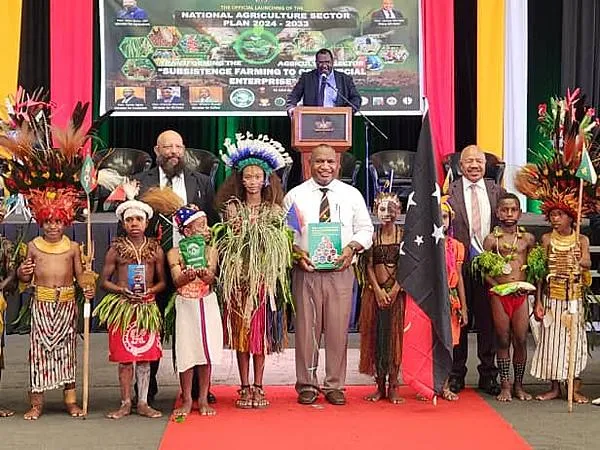
Prime Minister Hon. James Marape recently launched the National Agriculture Sector Plan (NASP) 2024 – 2033.

In so doing, PM Marape tasked the Agriculture Sector to utilize the Plan to con-tribute K30 billion to the economy by 2033 and also contribute to the 1 million job creation target by the same year.

In a ceremony at Sir John Guise Indoor Complex attended by members of the Agriculture sector from both the Public Service and business community, Prime Minister Marape stood at the podium and watched as children – all dressed in traditional attire marking the 21 provinces and the special region of Bougainville – walked up to him carrying a sample of an agriculture commodity with the printed NASP and the National Agriculture & Livestock Implementation Plan 2024 – 2033.

The children’s activity was a symbolic representation of the inclusivity and hope imbedded in the plan to drive agriculture across the country and economically empower rural Papua New Guineans in agribusiness and agriculture-related ventures.

Prime Minister Marape said, “Agriculture is the core policy of my party, Pangu. It is a sleeping economic giant that has my government’s undivided support to unlock this real treasure of the county.

“When I advocated for Papua New Guinea to become the Richest Black Christian, I knew we have all the fundamentals needed to make it happen.

“We have land which we still own; we can easily make the switch from subsistence to commercial agriculture; and the government is there to work with the Private Sector to find markets for our people. This plan captures my government’s vision for an agriculture-based economy.

“I am delighted that 85 percent of the population will gain more benefits from NASP investments. It has created a platform for the local, district, provincial and national governments, private investors and foreign direct investors to venture into strategic partnership with landowners and other stakeholders for development of large-scale commercial agriculture and downstream processing space.

“This ensures active participation in the economic development by everyone where no one is left behind, from where we will secure financial, nutritional and food security for PNG,” said Prime Minister Marape.

The new NASP replaces the old Agriculture Development Plan 2007 – 2016, which expired seven years ago and was needing to be a lot more developed to capture the current government’s focus.

The Plan is aligned to the strategic goals of Vision 2050, PNG DSP 2010-2030 and the latest Medium Term Development Plan IV 2023-27, which prioritizes Agriculture Commercialization and Livestock Development as the cornerstone for sustainable socio-economic development of the country.

The targets to be delivered include Improved Food Supply/Security, increased income-earning opportunities for people, import replacement, improvement in the performance of the Agriculture Sector, creation of employment opportunities for all, and improvement in the quality of life.

NASP’s development came from a series of consultative workshops carried out in each of the four regions as well as meetings with heads of the commodity boards and development partners.

June 24, 2024

Prime Minister Hon. James Marape has strongly urged the Treasury, Finance, and National Planning departments to strategically and effectively deliver on key government priority areas for Papua New Guinea’s economic development. He said politicians will come and go but public service will remain, so they must work to achieve results.

Speaking today at a government executive meeting involving departmental secretaries and other senior public servants from the National Planning, Finance, and Treasury departments, as well as the Chief Secretary to Government and Department of Prime Minister & NEC senior staff, Prime Minister Marape stressed that while the departments have been reporting on relevant issues and problems, he challenged them to devise solutions for the future.

Prime Minister Marape emphasised that the three key Departments of National Planning, Treasury, and Finance, in collaboration with the Department of Prime Minister and NEC, form the core of the “engine room” driving change for PNG’s economic transformation. As the country prepares to celebrate 50 years of Independence next year and looks ahead to the next 50 years, he urged these departments to function effectively and cohesively to achieve economic independence.

The Prime Minister stated: “These key government departments need to be functioning effectively and in cohesion to achieve goals for economic independence of our country. We need to clearly know how we have fared with implementation of the government budgets over the last five years, key performance indicators, how the money has been substantially spent with the respective projects in the provinces and districts, and how best we can improve so that we transform our economy as per the Government’s vision and guidelines that have been set through Medium-Term Development Plan IV and other priorities of this Pangu-led government.

“We inherited a struggling and fragile economy in 2019. And we are trying our best on the political front to set the right path for the country for the next 50 years. And our public service machinery responsible for the economic development of our nation must deliver nothing less than quality.”

He reiterated the importance of learning from countries like South Korea, which transformed from one of the poorest countries in the world to the 11th biggest economy, with a GDP per capita of over US$33,000. In contrast, PNG, which had a higher GDP per capita than South Korea in 1975 when it gained independence, now has a GDP per capita of just about US$4,000.

“If South Korea can transform its economy in a short span of time, with very limited land and other natural resources, Papua New Guinea has enormous potential to do a whole lot better given the resources that we have,” Prime Minister Marape said.

“The key is in our effective delivery of key performance areas for our economy through coherent collaboration and with a transformation-driven mindset and approach. There is a lot for us to do. So, let’s get down to business and not be distracted by the political situations that seem to be surfacing every now and then. We must deliver for our people.”

June 24, 2024

Prime Minister Hon.James Marape recently thanked the Asian Development Bank (ADB) for its continuous assistance to Papua New Guinea since 1971.

He made this statement during a meeting with ADB Vice-President Scott Morris in Port Moresby. Mr. Morris is in PNG to discuss ADB’s assistance programme with various stakeholders, including high-level government officials and civil society, and to visit project sites.

Mr. Morris was accompanied by ADB Country Director of PNG Said Zaidansyah and Country Operations Head Soon Chan Hong, while Prime Minister Marape was accompanied by Chief Secretary Ivan Pomaleu.

PNG joined ADB in 1971. As of 2023, ADB had committed 271 public sector loans, grants, and technical assistance totalling US$4.7 billion (K16.29 billion) to PNG. ADB’s current sovereign portfolio includes 11 projects worth US$1.39 billion (K4.82 billion).

ADB’s current assistance programme in PNG focuses on improving transport infrastructure, with priority on roads and civil aviation; building resilience to climate change; strengthening public sector management; and expanding access to energy, health, and education services. Moving forward, ADB’s support to PNG will also emphasise investments in water, sanitation, hygiene, agriculture, and financial inclusion.

“I thank ADB for its continuous assistance to PNG over the years,” Prime Minister Marape said.

“ADB has been good to us every step of the way and has supported us with various projects such as the highly-successful Civil Aviation Development Investment Programme (CADIP), higher education, road infrastructure, and many more.

“These projects include the Highlands Highway from Nadzab in Morobe to Kagamuga in Western Highlands, airport developments in Kavieng, Manus, Alotau, Wapenamenda, Madang, Mendi and Tari, interventions into PNG Power Ltd and Air Niugini, and many more.

“Our portfolio with ADB is much higher than other countries in the region.

“We welcome the continuation and improvement of ADB-supported projects throughout PNG as we work towards becoming a middle-income earning nation at the very earliest.”

Mr. Morris told Prime Minister Marape that ADB is looking into diversifying its portfolio in PNG, including in the agriculture sector.

Prime Minister Marape said PNG, with the development of several resource projects in the country over the next 10-15 years, will need assistance from ADB during this time to bridge the gap.

“This time around, possibly 10 years from today, our country’s economy will be far better than now,” he said.

“We have several major resource projects on the way which will bring in substantial revenue into the country.”

Mr. Morris, who is responsible for ADB’s operations in East  Asia, Southeast Asia, and the Pacific, will also meet Treasurer Hon. Ian Ling Stuckey, Minister of National Planning Hon. Ano Pala, Minister for Works and Highways Hon. Solan Mirisim, and other government officials and development partners.

Discussions will focus on ADB’s strategic priorities for support in the country and opportunities to strengthen ADB’s country partnership strategy for PNG.

June 24, 2024

In Papua New Guinea, educational dynamics are evolving, led by Dianne Meli, the Founder and Director of TIPS For Kids. Established when Meli was age 26, TIPS For Kids started as a tutoring service for early childhood and grew into a registered homeschool, a first in PNG.TIPS stands for Tailored Individual Programs Supporting Children in Need, with a mission to bridge education gaps and a vision to provide tailored programs for children.

Its services are:

  • Full-time homeschooling for grades 1-10, operating as a private school with full-time services at clients' homes on weekdays, with recess, lunch breaks, and holidays. Each family gets a dedicated teacher for personalized attention, with multi-grade teaching for families with children in different grades.
  • Uses the ACE PACE Curriculum, recognized internationally and recommended for homeschooling.
  • Tutoring Services: Sessions offered during holidays and Sundays for early childhood to Grade 8, with secondary support upon request. Individual tutoring at home is also available.
  • PACE Order Services: Facilitating purchase orders for the ACE PACE Curriculum, empowering parents in their children's education.

Dianne's personal journey influenced the founding of TIPS For Kids. Homeschooled herself under the ACE PACE Curriculum, she saw the need to extend similar opportunities to others. Working in Port Moresby schools and witnessing gaps in education post-Covid-19, she aimed to redefine the education system by providing tailored support for struggling children.

Her vision for TIPS For Kids focuses on personalized educational experiences, changing traditional schooling paradigms in Port Moresby.

“During my experiences working in the classroom assisting teachers in Port Moresby, I noticed a small but growing number of struggling children,” she says.

These were children “who need more time to master a concept, a subject, a topic, children who are slow and learn individually, children who cannot progress collectively at the same speed with other children in the classroom or together in a group.”

“I recognized these children have a need; they need a teaching program that must be tailored to meet their needs. I decided that I want to use my experiences and my education and start a school that will help these children in need.”

“When I see these children struggling, I remember my own struggles, and I want to help them,” Dianne says.