Category:



IPA Announces 2024 Regulators Summit
The countdown is on for The 2024 Regulators Summit from 30th to 31st July at Stanley Hotel in Port Moresby, Papua New Guinea, with the theme, “Interoperability: Connect and Co-create.”
The Investment Promotion Authority of PNG and the Department of Information, Communication and Technology informed business houses, key stakeholders, regulatory agencies, government departments, development partners, foreign missions, legal and accounting firms, private sector networks, and peak bodies on the hosting of the Summit.
In a press briefing at the IPA headquarters, the two agencies said they value inputs from private sector and industry bodies at this significant event through feedback and critiques on how regulations are affecting the country’s business environment.
The outcomes and appropriate recommendations from the Summit will be presented to the Government and relevant agencies.
The Summit will center on enhancing cooperation among regulatory agencies and improving the regulatory environment for businesses.
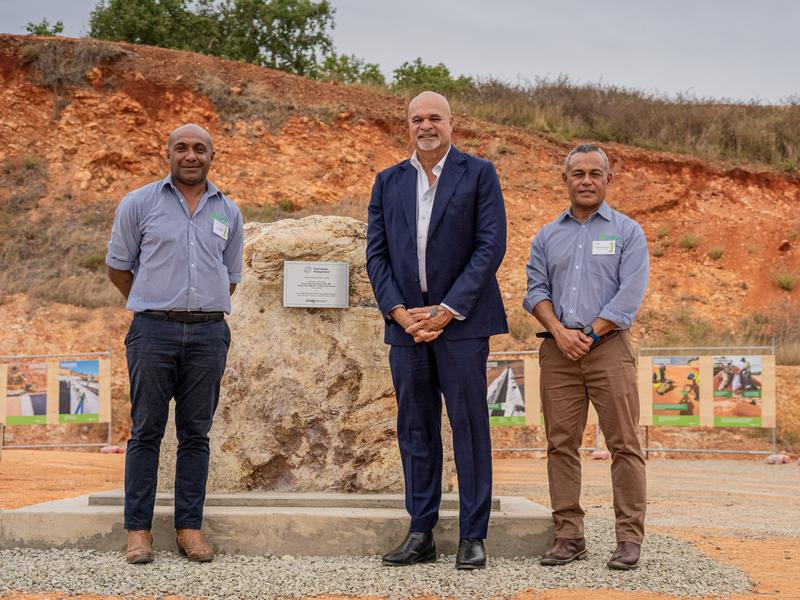
IPA Managing Director Mr. Clarence M. Hoot explained: “We will be concentrating on how agencies can work together more effectively to streamline regulatory processes and support business growth.”
Mr. Hoot expressed IPA’s enthusiasm for hosting the summit, stating: “We are excited to invite both local and international stakeholders to this year’s Regulator Summit.”
“Our aim is to create a platform where regulators and the private sector can come together to discuss regulatory frameworks and their impact on business operations.”
The 2024 Summit will follow the success of the first Regulator Summit held in 2019.
Reflecting on the inaugural event, Mr. Hoot noted: “In 2019, we were encouraged by the strong interest from government regulators and private sector representatives. The summit demonstrated the need for ongoing dialogue between these two crucial groups.”
The event will feature a diverse range of international speakers, including representatives from the World Bank, the International Finance Corporation (IFC), and Professor Chan from the University of New South Wales.
International experts, development partners, key regulatory agencies, and the academia will also speak at the Summit. These experts will share global best practices and discuss how other economies handle regulatory challenges.
“We are bringing in experts from around the world to provide insights on successful regulatory practices and to help us benchmark against international standards,” said Mr. Hoot.
The summit will include sessions with local regulatory agencies and private sector practitioners.
Mr. Hoot emphasized: “We will facilitate discussions where businesses can raise concerns and offer practical criticisms aimed at improving the regulatory framework.”
“This is not just about talking but also about finding actionable solutions,” he added.
“Our goal is to move beyond mere discussions and to produce a set of recommendations that can be presented to the National Executive Council for further action.”
“We are pleased to partner with DICT on this initiative, as their expertise in information technology is crucial for achieving our goal of regulatory interoperability.”
Mr. Kamis Yalakun, Manager of the Investment Promotion Unit, also stated the importance of having international expert speakers presenting on the best models that other world economies are using to automate their system compared to PNG.
According to a country diagnosis study in 2013 on doing business and trading across borders, most of the PNG government system regulations are not streamlined, leading to the state losing millions in revenue.
The IPA also plans to manage attendance through a registration process to ensure the participation of the most relevant stakeholders.
“While the event is open to all interested parties, we will be controlling registrations to maintain a focused, productive environment,” explained Mr. Yalakun.
Government agencies and regulators attending the summit include PNG Customs, Internal Revenue Commission (IRC), NAQIA, PNG Ports, National Capital District Commission (NCDC), BPNG and other regulatory agencies.
Mr. Hoot said: “As we go through these challenging economic times, it is vital that we harness these opportunities for dialogue and cooperation. The outcomes of this summit will have far-reaching benefits for both the government and the business community.”
Participation in this event is strictly by registration and confirmation from IPA. Registration details are available through the IPA’s website, and inquiries can be directed to the designated contacts for the summit.
For more information, please visit the Investment Promotion Authority’s official website or contact the event coordinators listed below:
- Mr Kamis Yalakun, Email: kyalakun@ipa.gov.pg
- Ms Dorothy Mokoko, Email: dmokoko@ipa.gov.pg
- Ms Beverly Piawu, Email: beverlyp@ipa.gov.pg
Peopleconnexion Launches the 2024/25 Salary Guide for Papua New Guinea
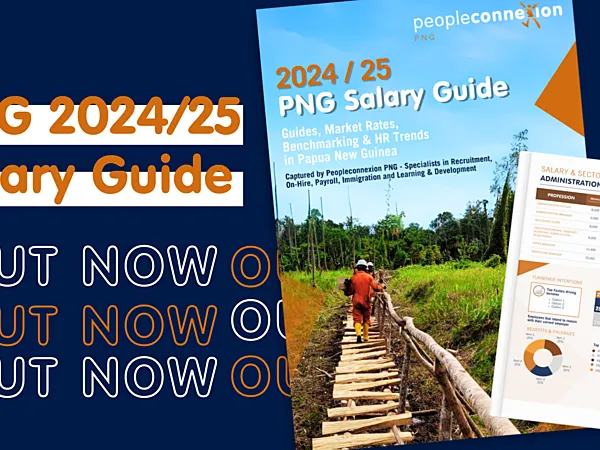
Peopleconnexion PNG is excited to announce the release of our highly-anticipated Salary Guide for 2024/25. Every two-years, Peopleconnexion PNG collects salary and remuneration data, specifically tailored for the unique employment landscape and market in Papua New Guinea.
As recruitment & HR specialists in Papua New Guinea (PNG), we found the most common question among clients and employers was ‘can you provide me with guidance on salaries?’. So, since 2014, Peopleconnexion PNG have sold hundreds of copies of the Salary Guide, as a go-to resource to support businesses and employers in making strategic, fair and competitive compensation decisions.
The Peopleconnexion Salary Guide offers a wealth of industry-specific salary data and insights, making it an essential resource for organisations looking to understand, and align, compensation strategies with real, actionable insights drawn from a large and representative data set of professionals and employers across leading industries in Papua New Guinea.
With the contrasting market conditions and the evolving demands of the workforce in PNG, it is essential for employers to stay informed about salary benchmarks and industry standards to make strategic decisions. Our cultural diversity, coupled with abundant natural resources, continues to lure investors to our doorstep. In addition, the ebbs and flows of national progress in our key green and brown field export sectors have meant the general sectors have had to be more deliberate in their organisational design, building resilience and adaptability to produce improved sustainable outcomes. The days of neglecting the workforce and not investing in them are well behind us, and as we look to the future, we are confident that this publication serves as a critical tool for fostering transparency and fairness in compensation practices, ultimately contributing to the sustained growth and development of our businesses and workforce.
Managing Director, Kristine Berry has emphasised the value of the Guide: "Our Salary Guide is a result of extensive research and the valuable contributions of numerous businesses across PNG. It is designed to be a practical tool for HR professionals, executives, and directors, enabling them to make data-driven decisions that enhance their organisation's competitive edge".
We take great pride in our rigorous data collection process, which ensures the most accurate and representative salary benchmarks. Every year, we strive to enhance our methodologies and expand the scale and scope of the data we collect. This edition has been developed by collating over 8,500 data points, including more than 3,000 responses from the PNG Salary Survey, completed by both local and expatriate professionals. We also gathered data from over 25 companies, representing over 5,000 employees in PNG. These clients provided insights on salaries, hiring intentions, benefits, remuneration packages, and general recruitment and HR trends.
Additionally, Peopleconnexion PNG has leveraged on our Contractor and Placement database, including data and roles from over 500 professionals' salaries in 2024.
Here's what our 2024/25 Salary Survey offers employers:
- Strategic Decision-Making: Informed budgeting and competitive positioning using industry salary data from over 200 positions across 25 key/major industries in PNG.
- Employee Retention data: Tailor competitive packages to specific roles, to combat turnover by understanding general employee retention trends.
- Performance Improvement: Boost motivation and productivity through fair compensation and effective talent management.
- Organisational Planning: Using salary data for future planning, including expansions and restructuring.
To learn more about the 2024/25 PNG Salary Guide or request an invoice, visit the Peopleconnexion website at: https://www.peopleconnexion.com/png-salary-guide-2024-25/
About Peopleconnexion:
Peopleconnexion is a trusted provider of Talent Management Solutions to our clients across PNG and the wider APAC region. Committed to connecting businesses with top talent, Peopleconnexion offers a range of services including executive search, recruitment, contracting/labour-hire, payroll, training and development and HR consulting.















Pacific trade survey reveals resurgence of exports
Earlier this year, Pacific Trade Invest (PTI) Australia invited exporters across the Pacific to participate in the Pacific Islands Export Survey 2024. The survey, conducted biennially, provides crucial insights into the activities, challenges, and opportunities faced by Pacific exporters, informing regional policy development and trade strategies. PTI Australia is a key agency dedicated to promoting trade and investment in the Pacific Islands, supporting economic development, and enhancing the international competitiveness of Pacific businesses.
The Pacific Islands Export Survey 2024 highlights the significant strides made by Pacific exporters in recovering from the economic impacts of the COVID-19 pandemic. Export revenue has surged back to pre-pandemic levels, with 49 per cent of businesses reporting increased revenue in 2024, compared to just 24 per cent in 2022. This resurgence in export activity has fostered a high level of optimism, with 78 per cent of respondents expecting further revenue increases over the next 12 months. This marks the highest confidence level since the survey began a decade ago.
Innovation and Support
To sustain growth, Pacific businesses are focusing on process improvements and efficiencies. This year, 40 per cent of businesses reported initiatives aimed at encouraging innovation through staff training and hiring, a significant increase from 23 per cent in 2022. Additionally, one-third of businesses have sought assistance from Pacific Trade Invest, a trend that has been steadily rising over the past four years. The survey underscores the importance of support and collaboration in enhancing the capabilities of Pacific exporters.
Digital Transformation and Market Dynamics
Digital marketing has emerged as a crucial strategy for Pacific exporters, with 76 per cent generating revenue through online channels. The proportion of businesses reporting increased online revenue has risen to 42 per cent, up from 24 per cent in 2022, driven primarily by easier access to digital devices. Despite this progress, the full potential of digital tools remains untapped, and there is a strong appetite for further training to maximize online revenue opportunities.
Internationally, Australia and New Zealand remain key export destinations, with exports to North America and Europe also returning to pre-pandemic levels. However, the enthusiasm for expanding into new markets has slightly diminished, with 71 per cent of businesses planning market expansions within the next three years, compared to 86 per cent in 2016. This decline may be attributed to persistent export barriers, such as logistics costs and access to finance.
Climate Impact and Barriers
The survey highlights the significant challenges posed by climate change and extreme weather events, with 72 per cent of businesses affected in the past year. The impacts of severe weather have increased, disrupting operations and causing damage to products and property. The agriculture and tourism sectors are particularly vulnerable, with weather events leading to business closures and increased insurance premiums.
Access to finance remains a critical barrier, with 65 per cent of exporters finding it difficult to obtain funding, the highest level since the survey began. The agriculture sector is most affected, with 76 per cent of respondents citing finance as a significant barrier. Limited financial track records and a lack of bank flexibility are major contributing factors.
Logistics and labour issues also continue to impede export activities. While these challenges have returned to pre-pandemic levels, they still represent significant obstacles, particularly for the agriculture and manufacturing sectors. The need for shipping route support has increased, with a notable rise in demand for assistance with inter-Pacific trade routes.
The insights from this survey will be instrumental in shaping policies and strategies to support the continued development of the Pacific’s export sector.
Click here to download the survey.