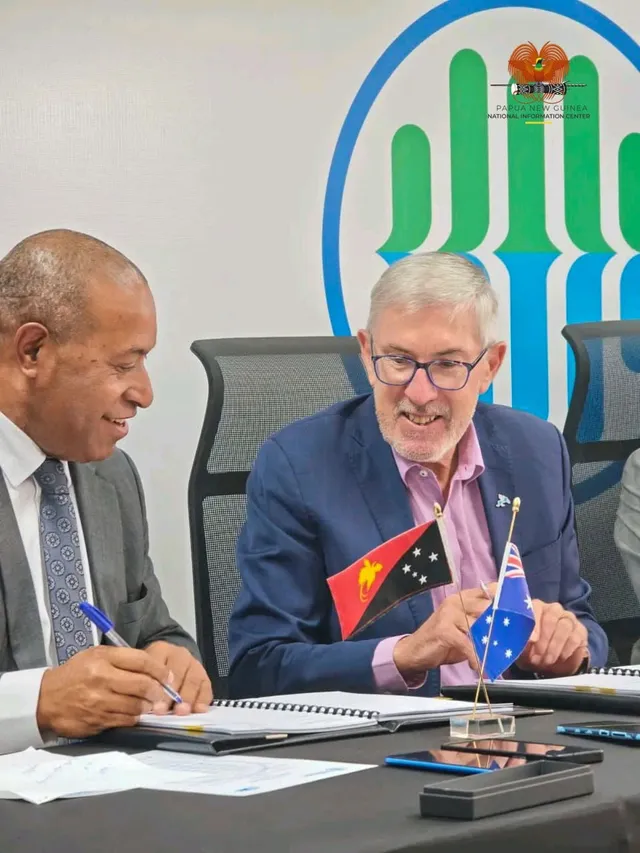
Telikom Ltd. has secured a K27.2 million grant from the Australian Infrastructure Financing Facility for the Pacific (AIFFP) to modernize its internal business systems and strengthen its capacity to deliver digital services across Papua New Guinea.
The grant agreement was signed at Telikom Rumana in Port Moresby on Monday, October 12, as the state-owned telecommunications provider advances its digital transformation program.
Telikom said the funding would support improvements to its business systems and operations, helping the company become more efficient and better equipped to meet customers' needs.
The investment forms part of a broader transformation program that includes improving connectivity, developing cloud data center capabilities and expanding access to digital services.
Telikom Chief Executive Officer Amos Tepi, OBE, reaffirmed the company's commitment to improving operational efficiency and building a more customer-focused telecommunications provider.
Expanding digital services
Telikom is also pursuing developments in digital financial services, artificial intelligence, cloud data centers and Starlink satellite connectivity as part of its broader digital ambitions.
Cloud data centers can support the storage, management and processing of digital information, while artificial intelligence offers opportunities to automate business processes and improve service delivery.
Satellite internet services could also help extend connectivity to remote communities where conventional telecommunications infrastructure is difficult or expensive to establish.
Expanding reliable telecommunications services is particularly important for PNG, where geographical challenges can limit access to communication networks. Improved connectivity can support government agencies delivering online services and exchanging information, while enabling businesses to adopt digital payments and online platforms.
The grant is intended to strengthen Telikom's internal systems and operational capacity, providing a foundation for the company to support future digital services as the country develops its digital economy.
Australia-PNG cooperation
The funding agreement also reflects cooperation between Australia and PNG in developing telecommunications infrastructure and digital services.
Telikom acknowledged the support of the Australian government, the Australian High Commission, the PNG government and Kumul Consolidated Holdings in securing the grant.
The next stage will involve implementing the planned improvements using the funding, with the company seeking to strengthen its operations and improve services for customers nationwide.
The Asian Development Bank (ADB) and the Australian government have committed $12.85 million to the fifth phase of the Pacific Private Sector Development Initiative (PSDI), continuing efforts to improve the business and investment environment across the region.
The initiative will help governments in ADB’s 14 Pacific developing member countries modernize business, investment and financial sector regulations, strengthen institutions and expand access to finance for micro, small and medium-sized enterprises.
Since its launch in 2007, PSDI has supported more than 500 reforms, including improvements to business laws, online business registries, secured transactions frameworks and capital markets. It has also supported reforms to strengthen state-owned enterprises and increase women’s representation in senior executive and board positions.
ADB Pacific Department Regional Head for Private Sector Development Haroun Khawaja said the new funding would sustain efforts to modernize business regulations and strengthen institutions, digital systems and financing mechanisms for small enterprises and women entrepreneurs.
ADB also cited its long-standing partnership with Australia as central to the initiative’s work since 2007.
Pacific economies face high business costs, limited access to finance and small, geographically dispersed markets. Exposure to climate-related disasters and regulatory frameworks that have not kept pace with changing business needs also constrain investment and job creation.
PSDI Phase V will support reforms to business and financial regulations, strengthen business registries and state-owned enterprises, and develop financing approaches for smaller businesses.
The program will also promote women’s economic empowerment through improved data, systems and institutional support, while producing research and outreach materials to encourage reform.
New priorities include climate and disaster resilience, digital government, anti-money laundering and countering the financing of terrorism, and disability inclusion.
The latest phase is funded by $3 million from ADB’s Technical Assistance Special Fund and $9.85 million in Australian government cofinancing.
Across its four previous phases, PSDI received $76.2 million from Australia, $8.9 million from New Zealand and $11.1 million from ADB.
ADB is a multilateral development bank established in 1966 to support sustainable, inclusive and resilient growth across Asia and the Pacific. It is owned by 69 members, including 50 from the region.
Tags: Asian Development Bank. Government of Australia. Pacific Private Sector Development Initiative. Haroun Khawaja. Pacific developing member countries. New Zealand government.
Japan and Papua New Guinea have formalised grant assistance for a landslide-prone section of the Kokopo-Rabaul Coastal Trunk Road and a scholarship program for PNG public servants, strengthening bilateral development cooperation between the two countries.
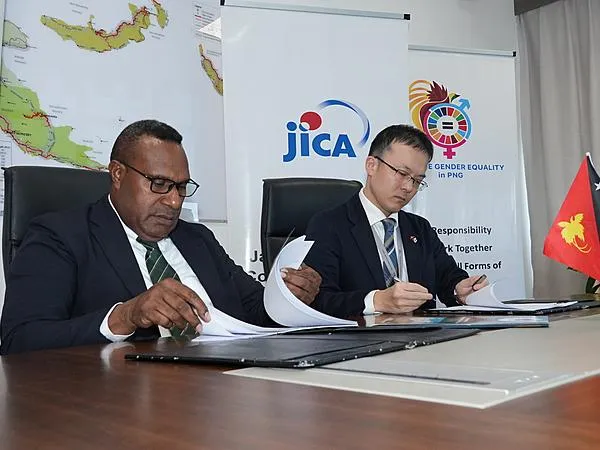
The projects were formalised on Sept. 18 through the signing of an Exchange of Note and Grant Agreement between the PNG government and Japan, with implementation to be supported by the Japan International Cooperation Agency (JICA) under Japan’s official development assistance program.
The projects — the Project for Landslide Risk Reduction on the Kokopo-Rabaul Coastal Trunk Road and the Project for Human Resource Development Scholarship (JDS) — were requested by the PNG government to support the country’s socio-economic development priorities under the Medium Term Development Plan IV.
Foreign Affairs Minister Justin Tkatchenko and Japanese Ambassador to PNG Mochizuki Hisanobu officiated the Exchange of Note.
The Grant Agreement was signed by Koney Samuel, secretary of the Department of National Planning and Monitoring, and Shirouzu Kenichi, chief representative of the JICA PNG Office.
Protecting key East New Britain corridor
The road project will target a 2.4-kilometre landslide-prone section of the Kokopo-Rabaul Coastal Trunk Road in East New Britain.
The Department of Works and Highways is the government executing agency.
JICA said landslides along the corridor have regularly disrupted transport, livelihoods and access to essential services.
The project will introduce sediment ponds, bridges and drainage systems, together with slope protection works, to reduce landslide risks and improve the reliability of the road.
The Kokopo-Rabaul corridor connects communities, businesses and markets across East New Britain. Reducing the risk of road closures is expected to improve the movement of people and goods, strengthen logistics and supply chains and maintain access to essential services.
The project is also intended to improve the corridor’s resilience to climate-related risks and support economic activity in the province.
Building public-sector capacity
The second grant will support the Human Resource Development Scholarship (JDS), which provides PNG public servants with scholarships to pursue master's degrees at universities in Japan.
The program is jointly implemented by the Department of National Planning and Monitoring and the Department of Personnel Management, with the Department of Foreign Affairs and the Embassy of Japan also involved in coordination.
JICA said the program aims to strengthen institutional capacity by developing public-sector professionals and future leaders who can contribute to PNG’s socio-economic development.
Since JDS was introduced in PNG in 2024, 22 public servants have been supported to undertake studies in Japan.
Applications for the 2027 intake opened in September 2026.
JDS is one of five scholarship programs JICA implements annually in PNG, aimed at strengthening the qualifications and skills of public servants while providing exposure to Japan’s development experience.
JICA said qualified women are encouraged to apply as part of its focus on gender equality and women’s empowerment.
The two projects add to more than five decades of development cooperation between Japan and PNG, with the latest grants combining infrastructure investment in a critical transport corridor with long-term investment in public-sector skills.
The Bank of Papua New Guinea and 15 financial institutions have signed the PNG Empower Finance Code, committing to identify and reduce the ways financial products and services can be used to control, exploit or harm customers.
The voluntary Code was signed on the margins of last week's Alliance for Financial Inclusion Global Policy Forum in Port Moresby, which brought together central bankers and financial regulators from 79 countries.
BPNG Governor Elizabeth Genia said financial abuse can undermine financial inclusion, economic participation and confidence in the financial system.
“A person is not genuinely financially included if access to financial services makes them more vulnerable,” Genia said.
Financial abuse can include taking control of another person's income, creating debt in their name, restricting access to money, misusing passwords or accounts, or using financial services to intimidate or control another person.
The Code was co-designed with the financial sector through the PNG Empower Finance Community of Practice, established by BPNG in May 2026 with support from the International Finance Corporation, Australian Department of Foreign Affairs and Trade's PNG Women Lead, and the Centre for Excellence in Financial Inclusion.
The initiative brings together banks, savings and loan societies, finance companies, superannuation funds and payment service providers.
Signatories have committed to four areas: working together to identify and address risks; building financial capability and awareness; promoting safer financial services; and learning from experience and reporting progress.
The Code does not create new legal or regulatory obligations. Instead, participating institutions will join the Community of Practice, increase staff awareness, assess how their products and systems could be misused and implement practical improvements.
Genia said BPNG was, to its knowledge, the first central bank or financial regulator globally to bring financial institutions together to co-design a voluntary industry code specifically addressing financial abuse.
The Code was presented to central bankers and regulators attending the AFI forum, with Genia encouraging other countries, including Pacific neighbours, to consider similar approaches.
CEFI is developing financial-abuse training for participating institutions, with the aim of progressively incorporating awareness of financial abuse into broader financial education programmes.
“Signing the Code does not mean that every organisation is expected to already have all the answers,” Genia said. “It means they are committing to learn, identify risks and make practical improvements.”
Westpac PNG has signed the PNG Empower Finance Code, becoming a founding signatory to the voluntary, principles-based code aimed at strengthening the financial sector’s prevention of and response to financial abuse.
Signed at a ceremony in Port Moresby, the code reflects a shared commitment among participating financial institutions to improve financial capability, promote safer financial services, support consumer protection and strengthen coordinated responses across Papua New Guinea’s financial sector.
The Empower Finance Code was developed through the Bank of Papua New Guinea’s Empower Finance Kibung, a community of practice that brings together banks and financial institutions to build a shared understanding of financial abuse, distinguish it from fraud and scams, and support practical action to reduce the misuse of financial products and services.
Westpac PNG Chief Executive Andrew Cairns said signing the code marked an important step in the bank’s ongoing commitment to helping customers and communities bank safely and confidently.
“Financial abuse can limit a person’s independence and cause significant harm within families and communities. As a bank, we have an important role to play in recognising how financial products and services can be misused, strengthening safeguards, and supporting our customers with genuine care and practical help,” Cairns said.
“By becoming a founding signatory to the PNG Empower Finance Code, Westpac PNG is reinforcing our commitment to financial inclusion and consumer protection. We look forward to continuing to work with the Bank of Papua New Guinea and industry peers to share learnings and contribute to safer banking experiences for our customers.”
The code sets out four commitments for signatories, intended to support ongoing improvements in awareness, staff capability, customer support, internal policy development and sector-wide cooperation.
Westpac PNG said its signing of the code aligns with its broader focus on helping create a more inclusive and financially confident Papua New Guinea, where customers can access banking services and support that are safe, fair and responsive to their needs.
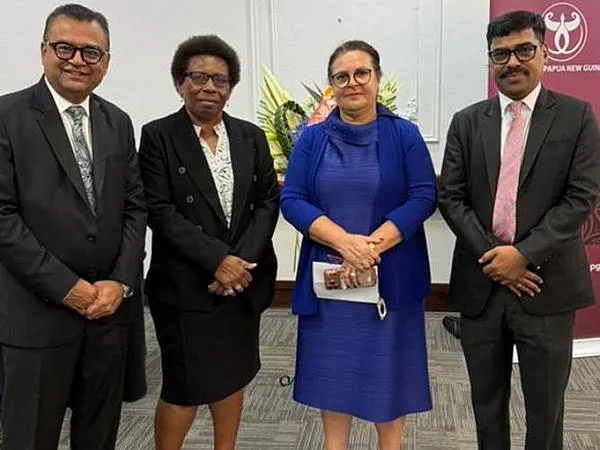
The National Superannuation Fund (Nasfund) has signed the PNG Empower Finance Code alongside the Bank of Papua New Guinea (BPNG) and 14 other financial-sector institutions, establishing a unified industry approach to combating financial abuse, coercion and product misuse in Papua New Guinea.
The code was signed at the Crown Hotel in Port Moresby, marking a coordinated effort by the financial sector to address domestic and family-related financial abuse as a systemic financial risk.
The framework is described as the first central bank-led initiative globally in which a regulator and commercial financial institutions have co-designed a voluntary industry code to address financial abuse.
For workers across Papua New Guinea, superannuation balances can represent their largest accumulated financial asset, making members particularly vulnerable when life events, unemployment claims or retirement payouts occur.
Speaking at the signing ceremony, Nasfund Chief Executive Officer Rajeev Sharma warned that rapid digital transformation, while improving convenience and access, has also created new vulnerabilities that the financial sector must address.
“Years ago, transactions required personal visits to branches and physical signatures, which naturally made impersonation difficult. Today, member interactions take place across mobile channels, emails and self-service portals. While this delivers speed, it also creates faceless interactions,” Sharma said.
He said digital channels can create opportunities for unauthorised parties to pressure vulnerable contributors, intercept one-time passwords or redirect payout accounts.
“Modernisation cannot come at the cost of personal safety,” he said.
Sharma also highlighted the risk of financial abuse within families, noting that cultural expectations around supporting relatives can sometimes blur the line between family assistance and coercion.
“In Papua New Guinea, looking after family is second nature, but there is a clear boundary between cultural care under the wantok system and being coerced out of your life savings,” he said.
He added that some members may experience persistent financial pressure without recognising it as financial abuse.
Sharma said Nasfund’s fiduciary responsibility extends beyond managing members’ savings and delivering investment returns to ensuring members retain control over their funds.
“Our fiduciary duty goes far beyond posting annual interest; it extends to ensuring that our members genuinely retain control over their own money,” he said.
He said the financial sector’s decision to work collectively under the leadership of BPNG Governor Elizabeth Genia would help close gaps that allow coerced funds to move between institutions undetected.
“No single institution can stamp out financial exploitation in isolation,” Sharma said.
The signing positions Nasfund alongside BPNG and other financial-sector participants in developing a coordinated response to financial abuse, while recognising the growing risks associated with digital financial services.
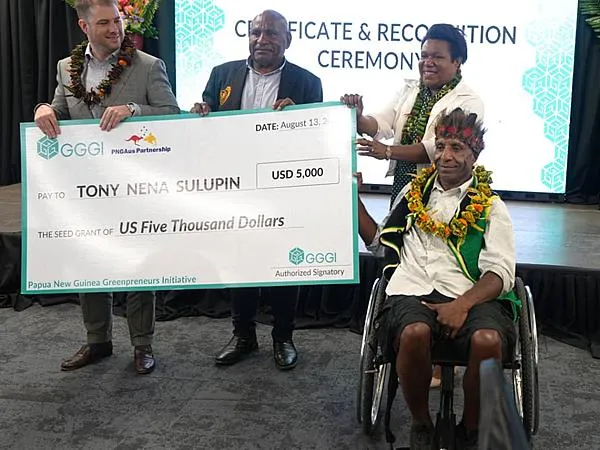
Eleven Papua New Guinean small and medium-sized enterprises (SMEs) have each received about K22,000 in seed funding to develop innovative, climate-resilient business solutions, providing a boost to the country’s emerging green economy.
The funding was awarded under the PNG Greenpreneurs initiative, supported by the Australian government through the PNG Climate Finance Initiative for Resilience and Sustainable Transition (Climate FIRST) program.
The initiative is designed to help local entrepreneurs turn climate-focused ideas into viable businesses while building their capacity to attract investment, create economic opportunities and strengthen PNG’s climate resilience.
Before receiving the funding, participants completed an intensive capacity-building program covering business development, coaching, mentorship, business planning, pitch preparation and investor readiness.
The Australian High Commission said the program demonstrated the potential of Papua New Guinean entrepreneurs to use innovation and business development to address climate challenges while creating new economic opportunities for communities.
The seed funding is particularly significant for SMEs, which often face challenges accessing the early-stage capital needed to develop products, test business models and expand operations.
Through Climate FIRST, Australia is partnering with the PNG government to strengthen local SMEs’ capacity to build resilience to climate change, reduce emissions and unlock sustainable, low-carbon investment opportunities.
The program also seeks to strengthen the broader SME ecosystem by equipping entrepreneurs with the skills and knowledge needed to develop commercially sustainable businesses and become more investment-ready.
The funding awards were announced during the PNG Greenpreneurs Graduation, which celebrated 175 Greenpreneurs from seven provinces who completed the climate entrepreneurship development program.
The graduation highlighted the growing role of entrepreneurship and private-sector innovation in supporting PNG’s economic development, particularly in emerging areas such as climate adaptation, sustainable production and low-carbon business.
For the participating SMEs, the seed funding provides an opportunity to move from business concepts and early-stage ideas toward implementation and commercialisation.
The Australian High Commission said the program reaffirmed Australia’s commitment to supporting inclusive and sustainable economic growth in PNG while strengthening the ability of local businesses and communities to respond to climate change.
As PNG continues to explore opportunities for sustainable economic growth, initiatives such as Greenpreneurs are creating pathways for local SMEs to participate in the emerging green economy and potentially attract further investment into climate-focused businesses.
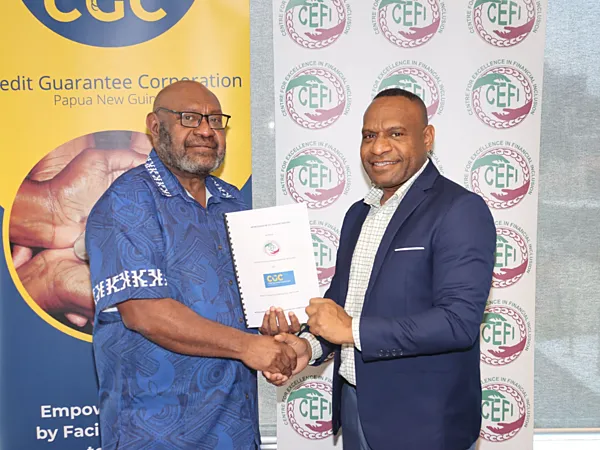
The Centre for Excellence in Financial Inclusion (CEFI) and Credit Guarantee Corporation PNG (CGC) have signed a memorandum of understanding to strengthen financial literacy, business capability and access to finance for micro, small and medium-sized enterprises across Papua New Guinea.
The agreement formalizes an existing partnership between the two organisations and establishes a framework for joint financial literacy programmes, entrepreneurship training, business development support and referrals to financial institutions participating in CGC’s credit guarantee programme.
CEFI and CGC will collaborate on financial literacy and capacity-building initiatives covering entrepreneurship, banking and financial management, while raising awareness of their respective roles in expanding access to finance and financial inclusion.
A key element of the partnership will be a referral pathway for startup businesses seeking finance.
CEFI Acting Executive Director Peter Samuel said the growing number of MSMEs accessing financial services made it important to ensure business owners had the skills to manage their finances effectively.
“As CGC’s portfolio continues to grow, so too does the number of MSMEs participating in the market,” Samuel said.
He said greater access to finance did not necessarily mean that beneficiaries had the knowledge required to manage their businesses successfully.
“Our objective is to ensure that recipients of guaranteed facilities are equipped with the knowledge and skills needed to manage their businesses effectively, maintain proper financial records and avoid the risks associated with poor financial management,” he said.
Samuel said CEFI would complement CGC’s credit guarantee facilities with practical capacity-building programmes, including its Business Essential Skills Module, Digital Financial Literacy Module and financial literacy programmes covering budgeting and savings.
He said combining access to finance with business incubation and financial education would provide entrepreneurs with stronger support to establish sustainable businesses.
“The government continues to emphasise the importance of supporting MSMEs. However, support must go beyond financing alone,” Samuel said.
“We also need clear pathways that provide incubation, capacity building and business acceleration programmes to help MSMEs become sustainable and contribute meaningfully to economic growth.”
CGC Chief Executive Officer Dominic Sikakau said the agreement formalised a partnership that had already supported several initiatives.
“We have already collaborated on a range of initiatives, so today’s memorandum of understanding simply formalises a relationship that has existed for quite some time,” Sikakau said.
He said loan defaults remained a key challenge for CGC’s guarantee programme and were often linked to gaps in business knowledge and financial management skills.
“Through our partnership with CEFI, we hope to strengthen the capacity of MSMEs by equipping them with the knowledge and skills to manage their finances effectively, build sustainable businesses and ultimately reduce the risk of default,” he said.
Sikakau also highlighted CGC’s Loan Referral Platform, which allows MSMEs to submit loan applications online to participating financial institutions.
He said integrating the platform into CEFI’s financial literacy programmes could improve awareness and accessibility, particularly among entrepreneurs in rural and remote areas.
The organisations said the partnership would help create stronger pathways for entrepreneurs, reduce barriers to finance and support private-sector growth, financial inclusion and socioeconomic development in Papua New Guinea.
Papua New Guinea has secured approval for a major biodiversity conservation project under the Global Biodiversity Framework Fund (GBFF), a move expected to strengthen community-led conservation efforts and support the country's commitments under the Kunming-Montreal Global Biodiversity Framework.
The project, titled "Empowering Indigenous Peoples and Local Communities for sustainable management and conservation of 700,000 hectares of critical ecosystems in three Highland provinces in Papua New Guinea," will be implemented by the Conservation and Environment Protection Authority (CEPA) in partnership with the Food and Agriculture Organization of the United Nations (FAO).
The initiative will support Indigenous Peoples and Local Communities (IPLCs) across Enga, Chimbu and Jiwaka provinces in conserving critical ecosystems while promoting sustainable livelihoods and strengthening customary stewardship systems.
The project contributes to Papua New Guinea's efforts to meet global biodiversity targets, including the international goal of conserving at least 30 per cent of the world's land and sea areas by 2030.
Papua New Guinea is recognised as one of the world's 17 megadiverse countries, with forests covering about 78 per cent of its land area and hosting species found nowhere else on Earth, including tree kangaroos, long-beaked echidnas and rare birds-of-paradise.
Approximately 97 per cent of the country's land remains under customary ownership, placing Indigenous communities at the forefront of conservation efforts.
According to CEPA Managing Director Jude Tukuliya, the project underscores the importance of protecting biodiversity and forest ecosystems that communities have relied on for generations.
He said Indigenous Peoples and local communities continue to play a crucial role in safeguarding the country's biodiversity and that conservation efforts must integrate traditional knowledge with modern management approaches while supporting economic opportunities for local people.
FAO Representative in Papua New Guinea Dr Kachen Wongsathapornchai said conservation initiatives are most effective when they provide tangible benefits to communities.
"Protecting biodiversity and sustaining livelihoods go hand in hand. By advancing biodiversity-positive production, we make environmental protection a driver of stronger food systems and rural economies," he said.
The project aims to improve the management of more than 272,000 hectares of protected areas and community conservation landscapes, restore 5,000 hectares of degraded ecosystems and promote biodiversity-friendly agricultural practices across 7,000 hectares of farmland.
It will also support the recognition of Other Effective Area-Based Conservation Measures (OECMs), develop sustainable financing mechanisms and deliver direct benefits to at least 20,000 people, with women expected to comprise half of all beneficiaries.
Project proponents said the initiative would help establish ecological corridors across the Highlands, enabling species to adapt to climate change while encouraging collaboration among communities through shared stewardship of natural resources.
The project also seeks to reduce pressure on forests and other ecosystems by supporting economic activities such as agroforestry, organic agriculture, ecotourism and market access for biodiversity-friendly products.
Officials said the approval highlights Papua New Guinea's growing role in community-led conservation and demonstrates how Indigenous stewardship can contribute to addressing global biodiversity challenges while creating sustainable development opportunities for local communities.
The New Ireland Provincial Government has committed K1.5 million to support women entrepreneurs and expand financial inclusion across the province through a new partnership with Women's Micro Bank Limited under the Empowering Mama Bilas Peles Program.
The funding commitment was announced by New Ireland Governor Byron Chan during the program's official launch at Sir Julius Chan Stadium in Kavieng on May 25, 2026. A Memorandum of Agreement (MOA) was also signed between the New Ireland Provincial Government, the New Ireland Development Corporation (NIDC) and Women's Micro Bank Limited.
The initiative aims to strengthen women's participation in the provincial economy by improving access to banking services, business financing, entrepreneurship opportunities and financial literacy programs, particularly in rural communities.
Chan described the program as a strategic investment in inclusive economic growth, emphasizing the vital role women play in the economic and social development of New Ireland.
"Women are the backbone of our families, our communities, and our economy. When we invest in our mothers and empower them economically, we are investing in the future of New Ireland," he said.
The governor said the K1.5 million allocation would serve as a guarantee facility through Women's Micro Bank, helping women entrepreneurs, small business operators and grassroots economic initiatives gain greater access to financial support.
According to Chan, the program aligns with the provincial government's broader development agenda of creating economic opportunities at the community level while ensuring rural populations are not excluded from financial services and business development programs.
"For too long many women in our rural communities have lacked proper access to banking and financial services. Through this partnership, we are opening doors for our mothers and women to save money, start businesses, and improve the quality of life for their families," he said.
Beyond expanding access to finance, the initiative seeks to encourage entrepreneurship and leadership among women while leveraging New Ireland's cultural heritage as a source of economic opportunity.
Chan said the "Bilas Peles" concept creates pathways for women to generate income through traditional crafts, cultural products and tourism-related activities, allowing communities to benefit economically from their cultural assets.
"Our culture is our identity, and our people should benefit from it economically. This initiative allows our women to proudly showcase New Ireland culture while building livelihoods and contributing meaningfully to the provincial economy," he said.
Women's Micro Bank Chief Executive Officer Gunanidhi Das welcomed the partnership, describing it as an important step toward expanding financial services to underserved communities and supporting the growth of women-owned enterprises.
Das said the collaboration would help improve household livelihoods by promoting savings, entrepreneurship and access to affordable banking services.
He added that greater financial inclusion remains a key driver of small business growth and economic participation, particularly for women operating in the informal sector.
The agreement establishes a long-term framework for cooperation between the provincial government, NIDC and Women's Micro Bank to deliver financial empowerment initiatives and community-based development programs throughout New Ireland.
The Empowering Mama Bilas Peles Program is expected to support the growth of women-led enterprises, improve financial literacy and create sustainable income-generating opportunities, reinforcing the province's efforts to build a more inclusive and diversified local economy.
The launch was attended by provincial leaders, women entrepreneurs, business representatives and community stakeholders, including Women's Micro Bank Operational Manager Rex Noga. The event concluded with the signing of the MOA, cultural performances and presentations by local women's groups showcasing New Ireland's cultural heritage.
France has strengthened its support for Papua New Guinea's green economy with a EUR15 million (approximately K75 million) commitment aimed at expanding green lending for small and medium-sized enterprises (SMEs), renewable energy projects, sustainable agriculture and other environmentally responsible investments.
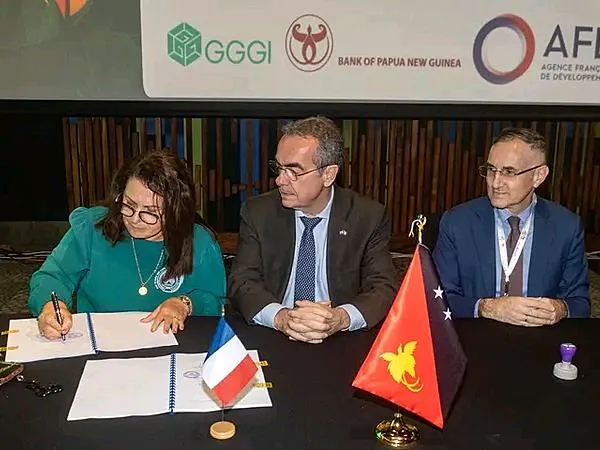
The commitment was formalised on May 27 during the 2026 Green Finance Summit at the Hilton Hotel in Port Moresby through the signing of a Letter of Intent between the Agence Française de Développement (AFD), the Bank of Papua New Guinea (BPNG) and the Global Green Growth Institute (GGGI).
The agreement marks a significant step in PNG's efforts to expand climate-resilient financing and mobilise private-sector investment for sustainable development.
French Ambassador to PNG Pierre Fournier and AFD Country Representative Benoît Chassatte joined BPNG Governor Elizabeth Genia and GGGI Country Representative for PNG, Solomon Islands and Vanuatu Muhammad Ali Shaikh in formalising the partnership.
In addition to the Letter of Intent, AFD and BPNG signed a financing agreement for the Green Guarantee Facility, further strengthening the country's green finance framework.
The EUR15 million investment will be channelled through PNG's Green Finance Facilities — the Green Refinancing Facility and the Green Guarantee Facility — to increase lending for environmentally sustainable projects through participating financial institutions.
The funding is expected to unlock additional private-sector investment in renewable energy, energy-efficient buildings, sustainable agriculture, organic produce processing and retail, while supporting businesses seeking to adopt more sustainable practices.
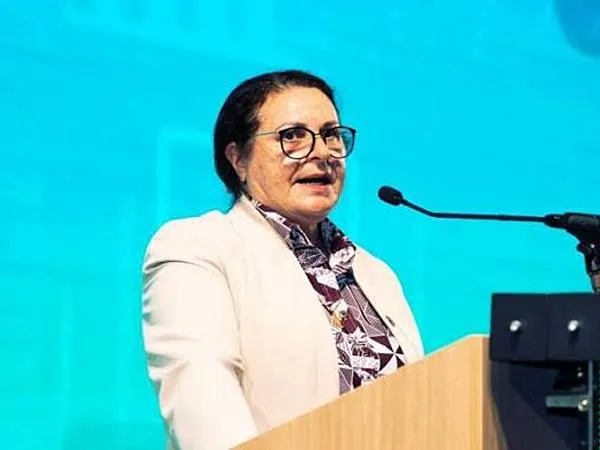
Speaking at the summit, Genia said the agreement reflects the growing urgency of addressing climate risks while ensuring financial inclusion remains central to PNG's green finance agenda.
"We must be ambitious and we must also act with urgency. The need to build climate resilience is no longer a future challenge; it is an urgent reality affecting our communities today," she said.
"Financial inclusion must remain at the heart of this agenda, ensuring that green finance supports our rural communities, SMEs, women-led enterprises, and all Papua New Guineans striving to build a more resilient future."
Under the agreement, AFD, BPNG and GGGI will work with the Green Finance Centre to identify and develop a pipeline of green loans aligned with Papua New Guinea's Inclusive Green Finance Taxonomy.
The partnership will also explore additional financing opportunities from development partners to complement AFD's investment and support the long-term sustainability of the facilities.
With continued support from the central bank, the Green Finance Centre is expected to play a key role in advancing the facilities, coordinating implementation and facilitating any required government approvals.
AFD will also explore opportunities to expand the facilities, while GGGI will continue providing technical assistance, implementation oversight and institutional capacity-building support.
Shaikh described the agreements as the culmination of years of collaborative technical work and an important step in advancing PNG's long-term green growth ambitions.
"I would also like to acknowledge the Financing Agreement signed today for the Green Guarantee Facility between the Bank of PNG and AFD, and the Letter of Intent between the Bank of PNG, AFD and GGGI on additional funding into the green finance facilities," he said.
"These are partnerships built on years of careful technical work, and they will support PNG's green growth for years to come."
Chassatte said AFD was proud to support the implementation of PNG's green finance roadmap and the progress achieved by the central bank and its partners.
"AFD feels privileged to be a special partner to accompany and support BPNG in implementing the green finance roadmap," he said.
"We are proud of BPNG's accomplishments as we are about to harvest the fruits of unwavering efforts. These have led to the establishment of the Green Financing Facilities and, shortly, to the first green investments being financed through the facilities. We will soon be celebrating the success of this team effort."
The Letter of Intent will remain in effect for an initial two-year period, providing a framework for continued collaboration, knowledge sharing, resource mobilisation and coordinated action to advance green finance and climate-resilient development in Papua New Guinea.
The signing underscores the shared commitment of BPNG, AFD and GGGI to drive inclusive economic growth, strengthen climate resilience and support a greener future for PNG, while highlighting the growing momentum behind green finance initiatives across the country.
Bank of Papua New Guinea (BPNG) Governor Elizabeth Genia called for urgent action to translate green finance policies into investment, warning that climate change is already affecting communities across Papua New Guinea.
Speaking at the opening of the 2026 Green Finance Summit in Port Moresby on May 27, Genia said the country must move beyond discussion and focus on implementing solutions that strengthen climate resilience, support sustainable development and mobilise private-sector investment.
The two-day summit, attended by Prime Minister James Marape, government ministers, representatives of Pacific central banks, financial-sector leaders, development partners and business stakeholders, marked the second national gathering dedicated to advancing green finance in Papua New Guinea.
She noted that the inaugural summit in 2025 focused on laying the foundations for green finance through policy development, partnerships and institutional frameworks.
"This year, we move the conversation forward. 2026 is not about introducing ideas; it is about implementation," she said.
"How do we make green finance something real, tangible and workable here in Papua New Guinea?"
Genia stressed that the need for climate resilience is no longer a future concern but an immediate reality affecting communities across the country.
She pointed to the devastation caused by Tropical Cyclone Maila, which struck Milne Bay and Bougainville in April, displacing families, damaging critical infrastructure and claiming 22 lives.
Maila was the 11th tropical cyclone recorded in the region this season, underscoring the growing frequency and severity of climate-related events.
At the same time, PNG is monitoring the emergence of an El Niño weather pattern that could place additional strain on communities, agriculture and natural resources.
"These challenges will continue. We know that Papua New Guinea is uniquely exposed to these environmental realities," Genia said.
She noted that inclusive green finance — the mobilisation of capital towards sustainable and inclusive investments — can play a critical role in helping the country build resilience against climate-related risks.
Green finance facilities near completion
Genia outlined progress made over the past year through the work of the BPNG Green Finance Centre, which has been developing the financial infrastructure needed to support PNG's transition to a more sustainable economy.
A key initiative announced at the first summit was the establishment of Green Finance Facilities aimed at directing funding towards environmentally sustainable projects.
According to Genia, these facilities are now nearing completion and undergoing final testing before being rolled out nationwide.
The central bank has also worked with the National Energy Authority to operationalise a third Renewable Energy Facility, further expanding support for clean-energy investments.
The summit also saw the launch of several initiatives aimed at accelerating green finance implementation.
These include the launch of the Inclusive Green Finance Taxonomy Version 2, which provides clearer guidance for green lending while helping PNG's banking sector align with international financial markets.
The central bank also introduced new Environmental and Social Risk Management Guidelines to help financial institutions integrate sustainability considerations into everyday lending decisions.
In addition, new Green Loan Reporting Standards were launched to improve transparency and enable more effective tracking of green investment outcomes.
Another significant initiative is the establishment of the Green Finance Academy, which will provide technical training and capacity-building support for financial institutions, government agencies and private-sector stakeholders involved in sustainable finance.
Later this year, the central bank plans to launch a National Centralised Climate Investment Database to consolidate information on climate-sensitive projects funded by development partners and private investors.
Genia said the initiatives represent important progress but cautioned that frameworks alone would not generate investment.
"Policies alone do not support a small business adapting to climate pressures," she said.
"Guidelines do not create investment unless institutions are prepared to act."
K55 billion investment needed by 2030
Genia highlighted the critical role of the financial sector in directing investment towards sustainable development priorities.
She said banks and financial institutions are central to the transition because they determine where capital flows, how risks are assessed and who gains access to financing.
Papua New Guinea will require substantial investment in energy, infrastructure, agriculture and sustainable enterprise over the coming years.
Citing estimates from the International Finance Corporation, Genia said PNG will need approximately K55 billion to meet its climate and development commitments by 2030.
She said government and development partners cannot meet the financing requirement alone.
"The private sector must be part of the solution," she said.
For commercial banks, she described green finance as a significant business opportunity but stressed that sustainability considerations must become part of mainstream financial decision-making rather than remain a niche topic among specialists.
She also acknowledged the challenges facing financial institutions as they adapt to new reporting requirements, develop technical expertise and assess the commercial viability of green investments.
"No market gets this perfect from day one," she said.
"What matters is that our progress is practical, proportionate and credible, and our focus is on building systems that genuinely work in the Papua New Guinean context."
Financial inclusion must remain central
Genia said green finance must support inclusive economic growth rather than benefit only large institutions or well-connected projects.
The agenda, she said, must serve ordinary Papua New Guineans, particularly those in rural communities and climate-vulnerable sectors.
She called for greater support for agriculture, small and medium-sized enterprises (SMEs), women-led businesses and enterprises investing in sustainability and efficiency improvements.
"It must support our rural communities. It must support agriculture. It must support SMEs, which are the backbone of employment and income generation," she said.
"It must empower women-led enterprises, which we know are among our most resilient businesses."
She added that many businesses may not explicitly identify themselves as "green" enterprises but are nonetheless making investments that improve resilience, efficiency and sustainability.
International partners support PNG's green transition
Genia credited international development partners with supporting the country's green finance agenda through technical assistance and financing.
She acknowledged contributions from the International Monetary Fund, World Bank, Asian Development Bank and the governments of Australia, New Zealand and the Republic of Korea.
She also thanked the French Development Agency (AFD), the International Finance Corporation and the Global Green Growth Institute for working directly with the Green Finance Centre to strengthen PNG's sustainable finance framework.
Genia encouraged summit participants to engage in open and practical discussions focused on developing workable solutions and partnerships.
She said success would ultimately be measured not by the number of policies produced, but by the quality of investment decisions and the resilience of the country's financial system.
"The Bank of PNG remains fully committed to supporting this journey," she said.
"Financial resilience, sustainable growth and sound risk management are core central banking concerns."
"We cannot achieve our mandate of long-term price stability without building economic and financial resilience."
Genia officially declared the 2026 Green Finance Summit open, calling on stakeholders across government, business and the financial sector to work together to turn green finance ambitions into tangible outcomes for PNG's future.
The summit featured keynote presentations, panel discussions and interactive workshops aimed at unlocking green finance opportunities, accelerating climate-resilient investment and advancing practical action on green growth in Papua New Guinea.
END ...///
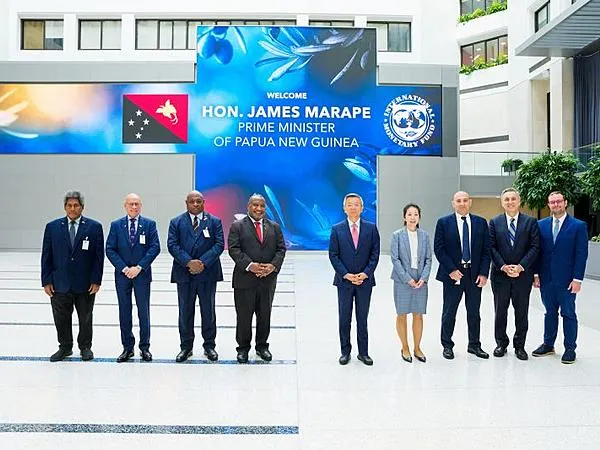
Papua New Guinea will gain access to approximately $163 million in new financing after the Executive Board of the International Monetary Fund approved reviews of the country's lending arrangements under its ongoing economic reform programme.
The IMF said completion of the sixth review of Papua New Guinea's Extended Fund Facility and Extended Credit Facility arrangements will provide immediate access to about $82 million. The completion of the third review under the Resilience and Sustainability Facility will make a further $81 million available.
The EFF and ECF programmes were approved in 2023 to help Papua New Guinea address a prolonged balance-of-payments problem that has contributed to foreign exchange shortages and constrained economic activity.
Meanwhile, the 24-month Resilience and Sustainability Facility, approved in 2024 with funding of SDR 197.4 million, is designed to address climate-related risks to balance-of-payments stability and strengthen the country's long-term economic resilience.
The IMF said Papua New Guinea met all quantitative performance criteria and indicative targets through the end of December 2025, as well as all indicative targets through the end of March 2026 under the EFF and ECF arrangements.
All six structural benchmarks scheduled under the programme were also achieved, although some measures were implemented later than originally planned.
The latest disbursement comes as Papua New Guinea continues to implement a broad programme of economic reforms aimed at improving fiscal management, strengthening macroeconomic stability and supporting sustainable growth.
According to the IMF, the country's economy has remained resilient despite external pressures and domestic challenges, with growth supported by both the resource and non-resource sectors.
The institution noted progress in fiscal consolidation efforts and reforms designed to improve the functioning of the foreign exchange market, while emphasizing the importance of continued implementation of the reform agenda.
The IMF projects Papua New Guinea's economic growth will moderate to 3.8% in 2026 from an estimated 5.6% in 2025. Headline inflation is expected to increase modestly to 4.8% in 2026, with higher import costs partly offset by the extension of goods and services tax relief measures through the end of the year.
The additional funding is expected to support government efforts to address foreign exchange shortages, strengthen public finances and bolster foreign reserves.
Business groups have long identified access to foreign currency as a key constraint on investment and private-sector activity, particularly for companies dependent on imported goods and equipment.
The funding also comes as Papua New Guinea seeks to attract new investment into strategic sectors including mining, energy, agriculture, infrastructure and digital connectivity.
The IMF said continued reforms will be important to maintaining economic momentum, strengthening resilience against future shocks and supporting inclusive growth. It also highlighted the need for ongoing improvements in governance, public institutions and economic management.
The latest disbursement is expected to provide additional confidence to investors and development partners as Papua New Guinea advances major resource and infrastructure projects and pursues broader economic reforms.
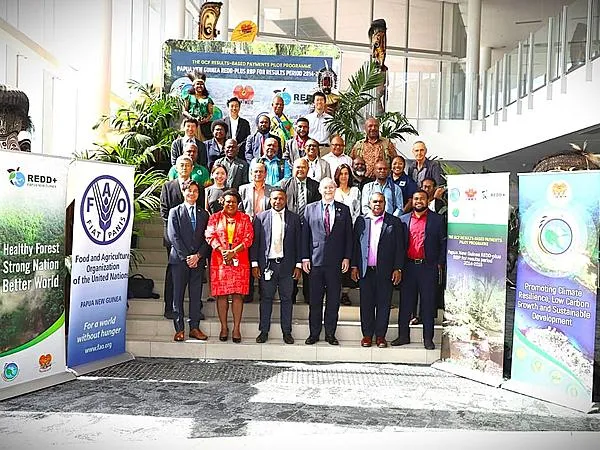
Papua New Guinea has launched a $63.4 million climate finance project aimed at protecting its forests while supporting sustainable livelihoods for communities across the country.
Funded by the Green Climate Fund, the results-based payments program recognizes Papua New Guinea's verified reduction of 17 million tonnes of carbon dioxide equivalent between 2014 and 2016 under the REDD+ framework.
The initiative was officially launched at APEC Haus in Port Moresby and is expected to channel a significant share of climate finance directly to local communities while strengthening sustainable forest management and conservation efforts.
Papua New Guinea, which has approximately 78% forest cover, is regarded as one of the world's most forest-rich nations. Its forests play an important role in biodiversity conservation and carbon storage, making them critical to global climate mitigation efforts.
A key feature of the project is its focus on community development. According to project officials, 60% of the funding will be directed toward livelihood activities, including sustainable agriculture, forest conservation and other low-emission development initiatives.
Ronald Meketa, chairman of the National Climate Change Board, said the funding must deliver tangible benefits to communities.
"Our communities will see and feel the benefits of this funding," Meketa said during the launch.
"Too often, large amounts of climate finance are discussed globally, but very little reaches the people on the ground. Papua New Guinea cannot afford that anymore. The hard reset starts today. This programme must become a model of delivery, accountability and visible results."
Debra Sungi, acting managing director of the Climate Change and Development Authority, said the project marks the culmination of years of technical work and coordination among government agencies, provinces, landowners and development partners.
"This represents many years of consultations, technical assistance, and coordination across government, provinces, landowners, and development partners," Sungi said.
"Today, we move from discussion and planning to on-the-ground delivery."
The project will be implemented by the Food and Agriculture Organization of the United Nations in partnership with the Climate Change and Development Authority and other national stakeholders. It will also support implementation of Papua New Guinea's National REDD+ Strategy 2017–2027 while strengthening coordination, monitoring and reporting systems.
FAO Head of Office in Papua New Guinea, Kachen Wongsathapornchai, said the launch marks Papua New Guinea's transition from REDD+ readiness to large-scale implementation.
"Papua New Guinea has played an important role in shaping global forest and climate systems, and now stands among the few countries ready to operationalise results-based finance at scale," he said.
Meanwhile, Shalini Bahuguna, said the project demonstrates how climate action can generate broader development outcomes.
"Papua New Guinea is demonstrating how climate ambition can translate into real development outcomes," Bahuguna said.
The initiative reinforces Papua New Guinea's position in global climate action efforts while providing new opportunities for rural communities to benefit from sustainable development and forest conservation activities.
France has reaffirmed its long-term economic, environmental and security commitment to the Pacific, outlining major investments and regional partnerships aimed at strengthening ocean governance, fisheries protection and the blue economy during the opening of the Melanesian Ocean Summit, held from May 11-14 in Port Moresby.
Speaking at APEC Haus on May 12, French Ambassador to Papua New Guinea, His Excellency Pierre Fournier, said France viewed ocean preservation as central to global economic stability, livelihoods and regional prosperity.
Addressing Pacific leaders, diplomats and delegates at the summit, Ambassador Fournier linked France’s Pacific engagement to outcomes from the Third United Nations Ocean Conference (UNOC3), held in Nice in June 2025, which France co-hosted alongside Costa Rica.
He said the conference resulted in the “Nice Ocean Action Plan,” a political declaration backed by voluntary commitments from governments and stakeholders aimed at improving ocean protection and sustainability.
“With the biggest ocean, the Pacific has the biggest impact on the implementation of this outcome,” Ambassador Fournier said.
He also highlighted international efforts to reverse ocean degradation, including commitments to protect at least 30% of the world’s oceans by 2030 and support for the High Seas Treaty, also known as the Biodiversity Beyond National Jurisdiction (BBNJ) Agreement.
According to the ambassador, the treaty would play a major role in supporting regional ocean corridor initiatives currently being promoted across the Pacific.
Blue Economy Financing a Key Focus
Ambassador Fournier said financing remained one of the biggest challenges in ocean protection, noting that Sustainable Development Goal 14 — focused on life below water — remained the least funded of all UN Sustainable Development Goals.
He said the Blue Economy and Finance Forum held in Monaco helped accelerate practical financing solutions for ocean conservation and sustainable marine development.
The ambassador also referenced recommendations from the “One Ocean Science Congress,” which brought together 2,000 international scientists ahead of the UN Ocean Conference. Their recommendations, now incorporated into the Nice Ocean Action Plan, included improving scientific knowledge of the deep sea.
France’s Economic Footprint in the Pacific
France also outlined the scale of its economic presence in the Pacific through its territories of New Caledonia, French Polynesia and Wallis and Futuna, which collectively manage an exclusive economic zone covering 6.5 million square kilometres.
Ambassador Fournier said France spends an average of 5 billion euros annually in the Pacific through these territories, contributing to regional ocean protection and support for Pacific regional organisations.
He said France’s management of its Pacific territories positioned the country as a major contributor to the region’s sustainability, prosperity and security.
The ambassador added that France continued to support conservation, fisheries management and maritime cooperation through active participation in regional organisations.
Fisheries Surveillance and Maritime Security
France also detailed its operational support for Pacific fisheries monitoring and maritime security.
Ambassador Fournier said France supports the Pacific Islands Forum Fisheries Agency (FFA) through the deployment of navy vessels and patrol aircraft in regional operations, representing approximately 130 days at sea and 50 flight hours annually at a cost of 2 million euros per year.
He said French armed forces in the Pacific also organise the large-scale humanitarian assistance and disaster relief exercise “Croix du Sud” every two years.
The most recent exercise involved 2,000 personnel from 19 countries and territories across the Pacific, with operations extending from New Caledonia to Wallis and Futuna.
France also highlighted the role of Maritime Information Fusion Centres in New Caledonia and French Polynesia, which provide maritime monitoring and operational intelligence support throughout the Pacific.
Marine Protection and Resource Policies
Ambassador Fournier described France’s marine conservation initiatives in the Pacific as “exemplary,” highlighting major marine protected areas and resource management policies.
He said French Polynesia declared its entire 5 million square kilometre exclusive economic zone a marine protected area during the UN Ocean Conference in Nice, while Wallis and Futuna is pursuing a similar initiative.
In New Caledonia, the Coral Sea Natural Park — established in 2014 — covers the territory’s entire 1.3 million square kilometre EEZ and includes high-protection nature reserve zones covering 10% of the area.
The ambassador also pointed to New Caledonia’s adoption in April 2025 of a 50-year moratorium on the exploration and exploitation of mineral resources on its continental shelf.
Regional Partnerships and Security Cooperation
France said its regional strategy would continue to focus on strengthening Pacific territories, expanding sovereignty partnerships and supporting regional multilateralism.
Ambassador Fournier said France was also contributing to European Union capacity-building initiatives, including the CRIMARIO III Indo-Pacific maritime security project.
He noted that French maritime and air surveillance assets support broader Pacific efforts against transnational crime, including drug trafficking.
The ambassador cited recent seizures involving New Zealand, Australian and French authorities in New Caledonia, including 2.5 tonnes of drugs and 76 tonnes of cigarettes intercepted during separate operations.
Ambassador Fournier commended Papua New Guinea for convening the Melanesian Ocean Summit, saying the initiative enabled Melanesian countries and regional partners to unite around shared ocean priorities.
He also reaffirmed France’s diplomatic and strategic relationship with Papua New Guinea, referencing PNG’s foreign policy white paper, which described France as both a friend and neighbour.
“We share the same vision; we share the same values. You can count on us,” Ambassador Fournier said.
BSP PNG | BSP says small and medium-sized enterprises (SMEs) need to build capability to take full advantage of the opportunities that will be created through the coming super-cycle of PNG resource projects.
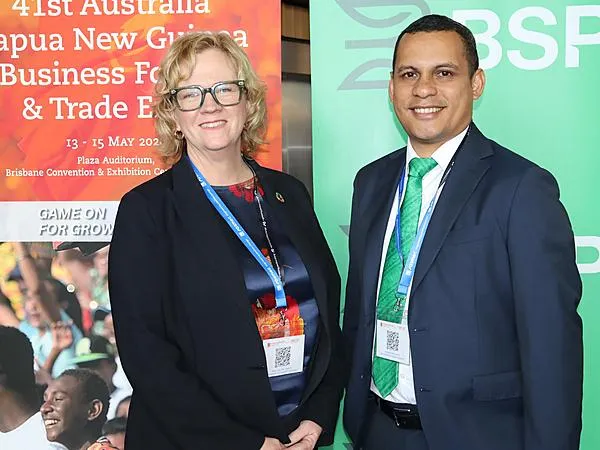
Speaking at the 41st Australia Papua New Guinea Business Forum Conference in Brisbane, BSP Head of Business Banking Raymond Logona said building capability was essential for PNG businesses to maximise the benefits arising from the country’s next wave of major resource developments.
“We know that in the next decade there will be major opportunities for PNG businesses as major projects are developed, such as the Papua LNG Project, the Wafi-Golpu Project, the Frieda River Copper-Gold Project, and energy projects in Bougainville and Port Moresby.
“Together, these projects present a super-cycle of opportunity for small and medium-sized enterprises in PNG. However, to take full advantage, businesses need to start working now on their business strategies and the capabilities required to support these major investments.
“BSP has recognised the opportunity to support our business customers. We launched our dedicated Business Bank last year and are investing K1.2 billion in a multi-year programme to modernise the BSP Group for growth.
“This includes upgrading our technology and digital channels and creating world-class products and services to support the growth of small and medium-sized enterprises.
“We are also investing through our partnership with Australian Business Volunteers (ABV) to deliver the YES GROW programme, which is designed to build capability among our SME customers so they can use new digital tools, manage cash flow, and make better use of finance to prepare for growth opportunities.
“For example, through our partnership with ABV, we currently have a YES GROW Business Development Programme workshop underway in Lae, with 18 local PNG SMEs from the agriculture, construction, electrical, transport, and retail sectors attending.
“This group joins more than 600 small businesses across PNG and the South Pacific that have strengthened their capability through the programme’s intensive training and personalised coaching.
“These skills are vital for businesses seeking to take advantage of the opportunities being created by PNG’s continued economic growth and the coming super-cycle of resource and infrastructure projects,” Logona added.
Logona was joined by ABV Chief Executive Officer Liz Mackinlay, who highlighted the achievements of the partnership.
“ABV is proud to be partnering with BSP to help SMEs transform their enterprises for sustainable growth, positively impacting the wider economy and supporting their families and communities into the future. We look forward to bringing the YES GROW Programme to Bougainville later this year,” Mackinlay said.
Since its inception in 2018, BSP’s partnership with Australian Business Volunteers has provided intensive, practical training and personalised mentoring to more than 600 small businesses in the South Pacific, including 400 in Papua New Guinea across 19 sectors.
According to BSP, investing in the YES GROW initiative is a strategic response to the operational challenges facing small business owners and the local economy.
The YES GROW model, co-designed by ABV and BSP, is specifically tailored to address the realities of the PNG market, including foreign exchange (FX) pressures, rising costs, and infrastructure constraints.
Participants emerge from the programme with an advanced understanding of commercial requirements, improving their ability to navigate economic challenges, manage operations successfully, and achieve long-term business goals.
BSP is the Magic Diamond sponsor of the Forum Registration Desk at the 41st Australia Papua New Guinea Business Forum, which was held in Brisbane from Wednesday, 13 May, to Friday, 15 May 2026.
Follow on LinkedIn:
PNG Business News
Be the "First" to get our exclusive Digital Magazine & Weekly Newsletter.