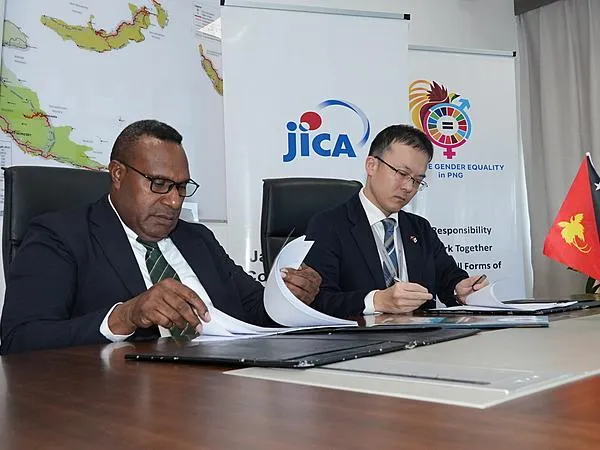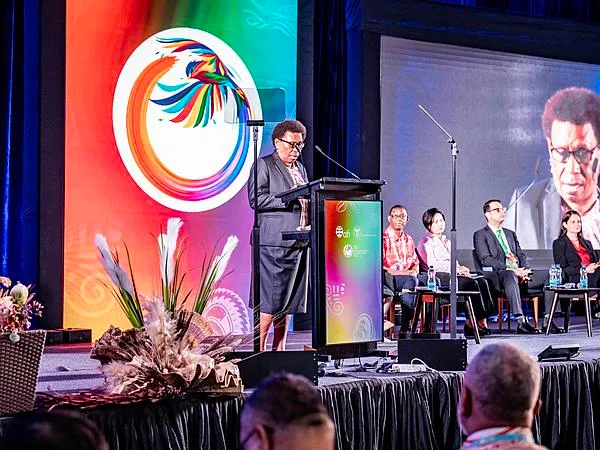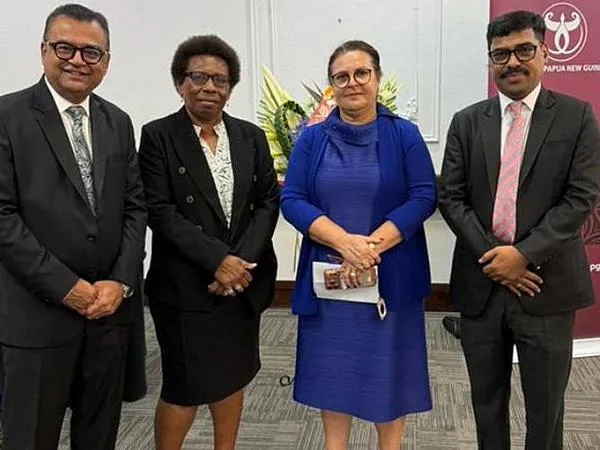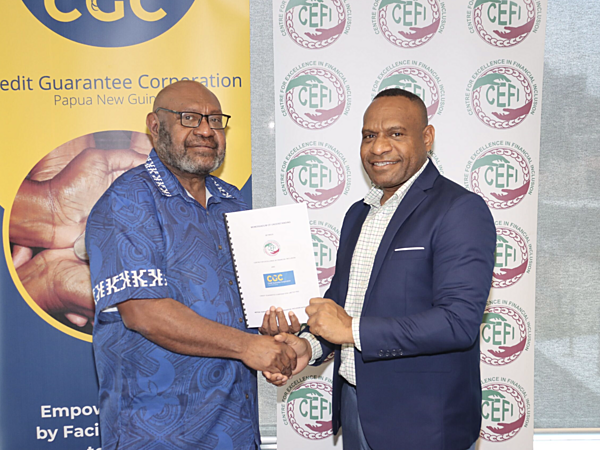
The Centre for Excellence in Financial Inclusion (CEFI) and Credit Guarantee Corporation PNG (CGC) have signed a memorandum of understanding to strengthen financial literacy, business capability and access to finance for micro, small and medium-sized enterprises across Papua New Guinea.
The agreement formalizes an existing partnership between the two organisations and establishes a framework for joint financial literacy programmes, entrepreneurship training, business development support and referrals to financial institutions participating in CGC’s credit guarantee programme.
CEFI and CGC will collaborate on financial literacy and capacity-building initiatives covering entrepreneurship, banking and financial management, while raising awareness of their respective roles in expanding access to finance and financial inclusion.
A key element of the partnership will be a referral pathway for startup businesses seeking finance.
CEFI Acting Executive Director Peter Samuel said the growing number of MSMEs accessing financial services made it important to ensure business owners had the skills to manage their finances effectively.
“As CGC’s portfolio continues to grow, so too does the number of MSMEs participating in the market,” Samuel said.
He said greater access to finance did not necessarily mean that beneficiaries had the knowledge required to manage their businesses successfully.
“Our objective is to ensure that recipients of guaranteed facilities are equipped with the knowledge and skills needed to manage their businesses effectively, maintain proper financial records and avoid the risks associated with poor financial management,” he said.
Samuel said CEFI would complement CGC’s credit guarantee facilities with practical capacity-building programmes, including its Business Essential Skills Module, Digital Financial Literacy Module and financial literacy programmes covering budgeting and savings.
He said combining access to finance with business incubation and financial education would provide entrepreneurs with stronger support to establish sustainable businesses.
“The government continues to emphasise the importance of supporting MSMEs. However, support must go beyond financing alone,” Samuel said.
“We also need clear pathways that provide incubation, capacity building and business acceleration programmes to help MSMEs become sustainable and contribute meaningfully to economic growth.”
CGC Chief Executive Officer Dominic Sikakau said the agreement formalised a partnership that had already supported several initiatives.
“We have already collaborated on a range of initiatives, so today’s memorandum of understanding simply formalises a relationship that has existed for quite some time,” Sikakau said.
He said loan defaults remained a key challenge for CGC’s guarantee programme and were often linked to gaps in business knowledge and financial management skills.
“Through our partnership with CEFI, we hope to strengthen the capacity of MSMEs by equipping them with the knowledge and skills to manage their finances effectively, build sustainable businesses and ultimately reduce the risk of default,” he said.
Sikakau also highlighted CGC’s Loan Referral Platform, which allows MSMEs to submit loan applications online to participating financial institutions.
He said integrating the platform into CEFI’s financial literacy programmes could improve awareness and accessibility, particularly among entrepreneurs in rural and remote areas.
The organisations said the partnership would help create stronger pathways for entrepreneurs, reduce barriers to finance and support private-sector growth, financial inclusion and socioeconomic development in Papua New Guinea.