


September 17, 2025

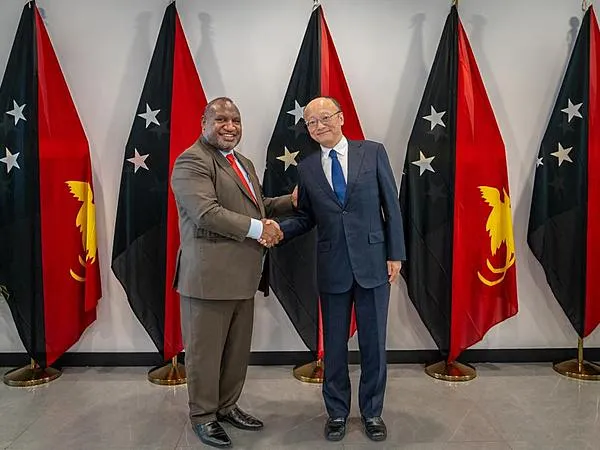
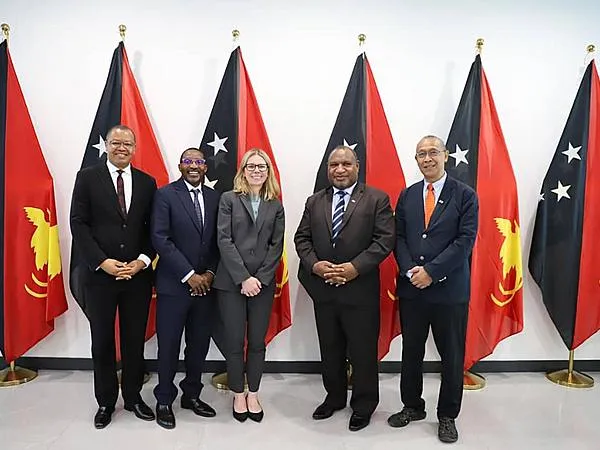
Asian Development Bank (ADB) President Masato Kanda met with Papua New Guinea (PNG) Prime Minister James Marape to mark the country’s 50th anniversary of independence and reaffirm ADB’s role in driving connectivity and inclusive growth. He will also meet with Treasurer Ian Ling-Stuckey and other senior officials.

During the meeting, Kanda highlighted ADB’s $2.14 billion investment pipeline for 2025–2028, focused on improving transport links, expanding skills training, and fostering private sector growth.

“ADB’s partnership with Papua New Guinea demonstrates how strategic investments transform lives,” said Kanda. “Our active sovereign portfolio has grown over three-fold since 2010, and we will continue to expand opportunities for a brighter future in Papua New Guinea.”

ADB is PNG’s largest multilateral development partner, supporting projects that deliver measurable results. Its investments in PNG’s road network and civil aviation have lowered transport costs, reduced travel times, improved safe movement, and increased connectivity, thereby giving people better access to markets and services.

Recent projects include the upgrading of 430 kilometres of roads and the reconstruction and rehabilitation of 71 ageing bridges along the Highlands Highway to enable year-round trade. In addition, ADB has upgraded 18 national airports to ensure compliance with international safety and operational standards.

ADB’s investments in PNG complement its broader Pacific strategy, where improved transportation and skills development strengthen economic ties and resilience across island nations facing similar development challenges.

Following the meetings, Kanda will tour Port Moresby Technical College to observe firsthand how ADB’s education investments, which can produce 7,000 graduates annually, are equipping skilled workers for PNG’s growing economy. He will then visit the Laloki Bridge, a flood-resilient structure that improves access to markets and social services.

Kanda commended PNG’s progress on economic reforms, highlighting the reduction of the fiscal deficit from 8.9% in 2020 to 3.9% in 2024. ADB is preparing its 2026–2030 country partnership strategy to strengthen connectivity and expand into new sectors such as agriculture and urban water supply.

ADB is a leading multilateral development bank supporting inclusive, resilient, and sustainable growth across Asia and the Pacific. Working with its members and partners to address complex challenges, ADB harnesses innovative financial tools and strategic partnerships to transform lives, build quality infrastructure, and safeguard the environment. Founded in 1966, ADB is owned by 69 members, including 50 from the region.

September 12, 2025

The Bank of Papua New Guinea’s Monetary Policy Committee (MPC) has announced key policy adjustments aimed at reinforcing price stability and strengthening the role of the exchange rate as the nominal anchor for monetary policy.

In its 2 September meeting, the Committee increased the Kina Facility Rate (KFR) from 4.0% to 5.0% and lowered the Cash Reserve Requirement (CRR) from 10.0% to 9.0%. It also agreed to maintain the crawl-like arrangement of the Kina while widening the margin between the KFR and the Bank’s overnight repo and reverse repo facilities to 2.0%. These measures are expected to improve liquidity management in the banking system, with the MPC signalling that further CRR adjustments may follow.

Inflationary pressures have eased in recent months. Headline inflation fell to 3.6% in June 2025, down from 5.3% in March. Core inflation remained steady, with the trimmed mean at 3.1% and the exclusion-based measure at 3.3%. The MPC highlighted the continued depreciation of the Kina and its influence on prices, stressing that the KFR increase is intended to support the currency and maintain price stability.

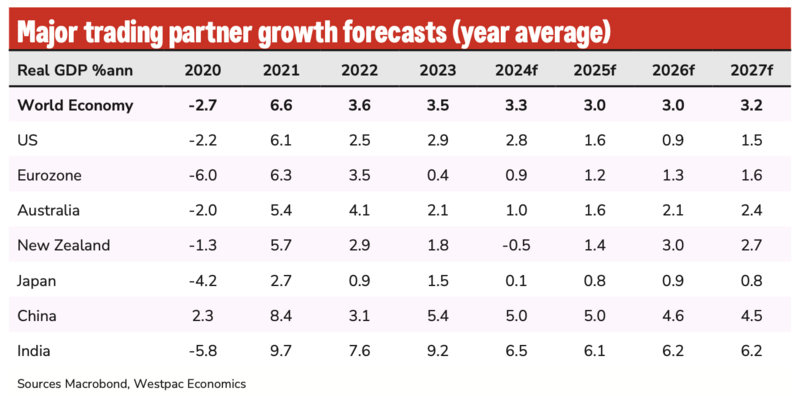
Globally, growth is projected at 3.0% in 2025, supported by stronger activity in both advanced and emerging markets. However, risks remain, including geopolitical tensions and uncertainty linked to US tariffs. Domestically, Papua New Guinea’s economy is expected to grow by about 4.3% this year, driven by both the mineral and non-mineral sectors. Strong production of coffee, cocoa and palm oil is forecast to support growth, alongside the anticipated launch of major resource projects.

Business confidence has shown signs of recovery, largely reflecting improvements in the foreign exchange market. Nonetheless, firms continue to face rising input costs and structural challenges. The MPC noted that international reserves remain above the Net International Reserves (NIR) floor under the IMF programme. Improved foreign exchange inflows, a more stable FX market and the start of interbank FX trading have all contributed to better liquidity conditions, though continued progress will depend on steady inflows and careful management of interventions.

The Committee emphasised the importance of a more effective monetary policy transmission mechanism in achieving the Bank’s price stability objective. While CRR adjustments have influenced liquidity and government securities yields, the KFR has had limited impact on lending and deposit rates. Strengthening the interbank market and encouraging greater competition from new entrants, the MPC said, will be essential to ensure policy signals reach the broader financial system and the wider economy.

September 08, 2025

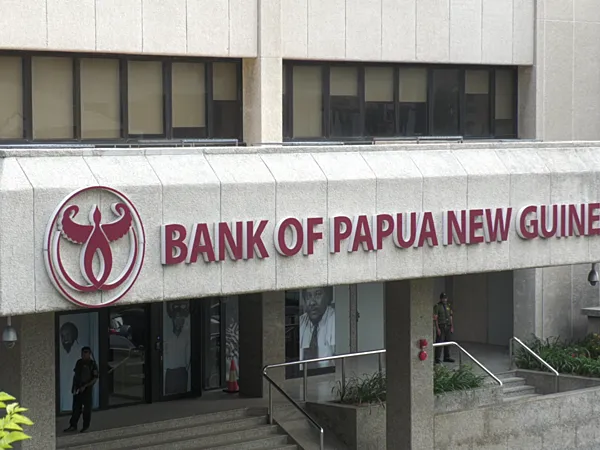
The Bank of Papua New Guinea (BPNG) has raised its benchmark interest rate to 5.0 percent while easing banking reserve requirements, in a move designed to strengthen the kina, manage inflation, and keep credit flowing across the economy.

At its September meeting, the Monetary Policy Committee (MPC) lifted the Kina Facility Rate (KFR) from 4.0 percent to 5.0 percent, while reducing the Cash Reserve Requirement (CRR) for commercial banks from 10.0 percent to 9.0 percent. The MPC also widened the margin on the central bank’s repo and reverse repo facilities to 2.0 percent.

The bank said the combined measures were intended to reinforce the kina’s role as the anchor for price stability, while addressing uneven liquidity distribution in the financial system.

Inflation moderates

Headline inflation eased to 3.6 percent in June, down from 5.3 percent in March, with core inflation stable at 3.1 to 3.3 percent. The MPC said the decision to raise the KFR would help curb further inflationary pressure caused by the kina’s gradual depreciation under the crawl-like exchange rate arrangement.

The central bank expects inflation to remain contained within the 3.0 to 4.0 percent range over the medium term, although risks remain from global trade tensions, volatile commodity prices, and structural constraints at home.

Growth outlook

Domestic growth for 2025 is projected at 4.3 percent, driven by mining and agriculture. High output of coffee, cocoa, and palm oil is expected to support foreign exchange inflows, while major resource projects, including Papua LNG, are set to further lift growth in the near term.

Treasury officials told the committee that non-resource GDP growth would reach 4.7 percent in 2025, slightly lower than earlier estimates. Business confidence has improved thanks to greater access to foreign exchange, although firms continue to face higher input costs and logistical challenges.

Exchange rate stability

The MPC reaffirmed its commitment to the kina’s crawl-like arrangement, noting that the currency had depreciated by 3.4 percent against the US dollar and 6.7 percent against the trade-weighted index since March. While this has reduced the kina’s overvaluation, it has also contributed to price pressures.

Foreign reserves remain above the International Monetary Fund’s adequacy benchmark, supported by strong export inflows, LNG tax receipts, and reduced central bank interventions. As at June, reserves stood at US$3.35 billion, enough to cover nearly seven months of imports.

The committee noted improvements in the foreign exchange market, with interbank trading resuming for the first time since 2013 and outstanding FX orders falling by half to K308 million by August.

Transmission challenges

The MPC acknowledged that while adjustments to the CRR have effectively influenced liquidity and government bond yields, the KFR has shown limited impact on commercial lending and deposit rates. Strengthening transmission through deeper interbank activity and increased competition in banking remains a priority.

To address imbalances, the CRR framework will continue under a monthly averaging system, aimed at improving transparency and implementation.

Global and domestic risks

The MPC noted that global growth is expected at 3.0 percent this year, supported by stronger demand in advanced and emerging markets. However, geopolitical tensions and uncertainty around US tariffs remain risks, particularly through PNG’s key trading partners in Asia and Australia.

Simulation exercises presented to the committee showed PNG is more vulnerable to export volume shocks than to commodity price movements.

Domestically, risks to the outlook include weaker commodity prices, natural disasters, and delays to major projects, although upside potential exists if Papua LNG activity accelerates earlier than planned.

Policy focus

The central bank stressed its focus on maintaining price stability while supporting conditions for growth. The committee said its latest measures were designed to align interest rates with the exchange rate anchor, ease liquidity distribution issues, and strengthen the operational framework for monetary policy.

The meeting also finalised and approved the MPC’s charter, underlining its independence in pursuing monetary stability.

August 28, 2025

Papua New Guinea Minister for International Trade and Investment Richard Maru has announced that the National Executive Council has approved a decision to support small and medium enterprises with grant funding of K100,000 (US$ 24,530) per company.

He said the grant was designed to help SMEs export products to overseas markets and would be delivered through a competitive bidding process.

“More details will be announced soon. Our Government is ready to drive the growth of the SME sector,” Maru said.

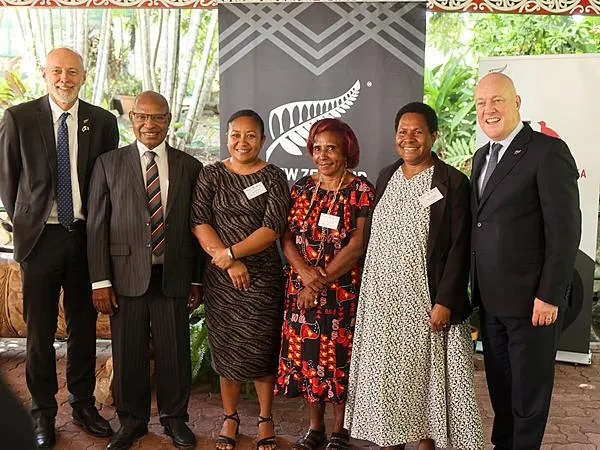
The announcement was made during the New Zealand Economic Support Morning Tea on August 6, where Maru also acknowledged New Zealand for its long-standing support to Papua New Guinea.

New Zealand Prime Minister Christopher Luxon attended the event and met local entrepreneurs supported under the Business Link Pacific Program. The program provides access to business advisory services, concessional lending and grants, with a particular focus on women-owned enterprises and rural businesses.

Maru highlighted New Zealand’s broader contributions to PNG, including financial assistance to upgrade the Gordons, Kimbe and Lae markets.

“Markets are where most of our SMEs and mothers from the informal sector sell their products and we want this to be replicated in the rest of the provinces and districts in the country to support our mothers and sisters,” he said.

He said the PNG Government has consistently provided over K100 million (US$24.53 million) annually for the past seven years to support SME loans, alongside new grant funding assistance for the Women’s Microbank (Mama Bank).

“At the moment we have about 50,000 registered formal SMEs. There is scope for more. We need to identify them, train them, encourage them, create business opportunities for them, and create an environment where they can operate and thrive in,” Maru said.

He also called for PNG and New Zealand to elevate ties by pursuing a Comprehensive Economic Partnership Agreement. He said one of the key areas should be how New Zealand can help PNG expand its SME sector and connect entrepreneurs to markets abroad.

At the same time, Maru reaffirmed PNG’s position on PACER Plus, stating: “We are a big island nation. We have the resources, we have the population, we have our own issues and our own national interest that must be catered for.”

Reflecting on the 50-year relationship between PNG and New Zealand, Maru said both countries must now anchor the partnership in practical outcomes.

“As we take a stock take our last 50 years, there is so much to be done and we need partners like New Zealand to help us unleash the potential that we have always had as a country. We need genuine partners like New Zealand who will help us to build industries, grow our businesses and create employment,” he said

August 08, 2025

PacSuper had announced the appointment of Chris Hagan as Chief Executive Officer, effective 1 June 2025, succeeding Eric Kramer, who has resigned from the role after leading the organisation through a period of significant change and transition.

Mr Hagan returns to PacSuper with deep superannuation experience, having previously served as CEO of the fund during its time as the Aon Master Trust, giving him unique insight into its heritage and future potential.

Most recently with National Finance, Mr Hagan has held senior roles across the sector in Papua New Guinea, including at JMP Securities and as CEO of the Association of Superannuation Funds of Papua New Guinea.

With nearly three decades of leadership across investment advisory, trustee services, fund administration, fixed income and investment strategy, compliance, governance, and corporate leadership, Mr Hagan is well-positioned to lead PacSuper’s continued evolution and growth on behalf of its members.

Jason McIlvena, Chairman of PacSuper, said: “Chris brings a unique blend of institutional insight, operational experience, and deep knowledge of the superannuation landscape in PNG.”

“We’re pleased to welcome him back to PacSuper at a time of renewed focus and momentum. His understanding of the local market, proven leadership, and strong track record in the superannuation and investment industry make him the right choice to lead us forward.”

The Board also acknowledged the contribution of outgoing CEO Eric Kramer, who has held the role since early 2024, during which time he successfully steered the fund through the transition from Aon to PacSuper.

“We thank Eric for his leadership and commitment during such a pivotal time and wish him all the best in his future endeavours,” McIlvena said.

July 25, 2025

Port Moresby, 24 July 2025 – Prime Minister James Marape today welcomed Anna Bjerde, managing director for Operations at the World Bank, to Papua New Guinea for high-level discussions on the country’s development progress, fiscal reform and enhanced partnership with the World Bank Group.

Bjerde, who was accompanied by senior World Bank leadership, commended Papua New Guinea’s positive economic trajectory and acknowledged the Marape Government’s commitment to fiscal consolidation and economic reform.

During the meeting, Marape highlighted the significant upscaling of World Bank support to Papua New Guinea — from US$475 million in 2023 to US$709 million in 2025. This increase reflects growing international confidence in PNG’s reform agenda and underscores the country’s strategic importance in the Pacific region.

The Prime Minister acknowledged the World Bank’s crucial assistance in key sectors such as energy, education, youth employment, rural service delivery and human capital development. Among the flagship projects discussed were:

  • A US$204 million renewable energy project supporting clean and green energy access
  • A US$160 million education sector project to strengthen learning outcomes and expand access
  • A US$100 million second phase of the Rural Service Delivery Project to improve basic services in remote areas
  • Ongoing urban and youth-focused programmes in Lae, NCD and other urban centres

“These investments are not just about infrastructure — they are about improving lives, creating jobs and lifting our people out of poverty,” Marape said.

Marape reaffirmed his government’s target to return to a balanced budget by 2027 — the first since 2010. He noted that over the past five years, the national budget deficit has been reduced by approximately K1 billion each year, and that this trend will continue into 2026.

“We are charting a bold path to economic independence. After 2027, our focus will shift from borrowing to aggressive debt repayment, and by 2033–2035, we aim to be debt-free. By 2045, we want to be a net contributor to the World Bank and IMF, not just a borrower,” the prime minister said.

He also briefed Bjerde on the Government’s economic vision, which he previously shared with the IMF’s Deputy Managing Director in Washington, reaffirming PNG’s commitment to grow the economy through trade rather than aid.

For her part, Bjerde welcomed Papua New Guinea’s ambitions and acknowledged the Government’s progress. She also commended the country’s strong fiscal direction and pledged the World Bank’s continued support, including in debt restructuring and climate resilience efforts.

She also expressed interest in supporting the Government’s broader goals of labour mobility, education partnerships and poverty alleviation, while reaffirming the World Bank’s readiness to collaborate on clean energy expansion and environmental protection.

Marape expressed appreciation for the World Bank’s growing engagement in Papua New Guinea and extended an invitation to host the President of the World Bank in a future visit. He stressed that partnerships must be grounded in long-term impact, not short-term relief.

“Our ambition is clear: to grow our economy, create more opportunities for our young people, protect our environment and become a stronger, more independent nation that contributes to the global development community,” he said.

July 24, 2025

Economic growth in Pacific island nations is expected to hold steady this year but slow slightly in 2026, according to the Asian Development Bank’s latest Asian Development Outlook (ADO) released 23 July, 2025.

The ADB maintained its 2025 growth projection for the Pacific at 3.9 percent, while the 2026 forecast has been adjusted downward to 3.5 percent. The moderation reflects persistent challenges across the subregion, including limited capacity to scale up tourism, constraints in implementing public infrastructure, vulnerability to disasters, fiscal pressures and a high risk of debt distress.

The outlook is heavily influenced by Papua New Guinea and Fiji, the Pacific’s two largest economies. Growth forecasts for both countries remain unchanged.

Inflation across the Pacific is expected to average 3.4 percent in 2025 and 3.7 percent in 2026, broadly in line with international commodity price trends. However, the regional average conceals diverging movements among smaller island states.

In FY2025, inflation is projected to be lower in Samoa, while Palau and the Marshall Islands are expected to see higher inflation due to domestic price trends. For FY2026, inflation is forecast to rise in Palau, while Samoa and the Marshall Islands may see lower rates.

ADB cautioned that volatile fuel prices, geopolitical tensions and supply chain disruptions remain key risks that could complicate inflation management across the Pacific.

The Pacific’s growth outlook contrasts with broader trends across developing Asia, where the ADB has cut regional growth forecasts due to rising global trade tensions, U.S. tariffs and weakening demand from major economies such as China and India.

Still, the ADB urged governments across Asia and the Pacific to strengthen economic fundamentals and support open trade to drive long-term investment and employment.

Founded in 1966, ADB works across Asia and the Pacific to support inclusive, resilient and sustainable development. It is owned by 69 members, including 50 from the region.

July 23, 2025

BUKA — The Autonomous Bougainville Government, through the Department of Treasury and Finance, is modernising its public finance systems with a new contract signed with FreeBalance Inc. to implement a financial management platform aimed at improving transparency, accountability and service delivery.

The contract was formally signed last week by Kearnneth Nanei, chief secretary of the Bougainville Public Service and Chairman of the Bougainville Supply and Tenders Board, and Ferdinand Gamboa, global sales director for Asia and Pacific at FreeBalance Inc.

The signing was witnessed by Joshua Tauko, secretary for Treasury and Finance, Fiona Levi, acting secretary for Technical Services, and Aldo Sagastume, vice president for Public Finance Management at FreeBalance.

The procurement of the FreeBalance Accountability Suite was endorsed by the Bougainville Executive Council in March 2025 and later granted a Certificate of Compliance by the National Department of Information and Communication Technology in June, confirming that the system meets national digital government standards.

The total value of the contract is USD4.19 million, spread across a three-year period, and includes:

  • System installation and implementation
  • Capacity building through the FreeBalance Academy
  • One year of Hypercare support
  • Participation in the FreeBalance Lead, Assist and Guide (FLAG) Programme

The project will officially begin in August 2025 and is a key part of the ABG’s financial reform agenda to decentralise services and improve financial controls at all levels of government.

“This marks the beginning of a transformational journey in Bougainville’s financial management architecture,” said Chief Secretary Nanei. “It is not a destination but a gateway to more transparent, efficient and accountable government.”

FreeBalance reaffirmed its commitment to supporting Bougainville’s digital transformation. Implementation will be conducted through both onsite and remote support to ensure uninterrupted progress regardless of travel or operational constraints.

The Department of Treasury and Finance will lead the project in partnership with FreeBalance, the National Department of Finance and other relevant stakeholders. The initiative is designed to strengthen institutional governance and advance Bougainville’s readiness for independence by building robust and self-reliant financial systems.

July 21, 2025

The PNGX Group Limited, operator of Papua New Guinea’s national stock exchange, has welcomed the strong support of Minister for State Enterprises William Duma for expanding public participation in the local capital markets through the recent sale of BSP Financial Group Limited (BSP) shares.

Minister Duma confirmed that only Papua New Guinean citizens and institutions had purchased the BSP shares previously held by Motor Vehicle Insurance Limited (MVIL) — a move he described as "properly timed and grounded in economic prudence."

“Ownership of these shares in BSP remains within our country, giving the opportunity for everyday Papua New Guineans to own part of BSP,” he said.

In a public statement on 16 July, PNGX said it commends the Minister’s support for investment through PNGX, which is “essential for building a vibrant and inclusive financial ecosystem.”

The group also noted that the approach promotes transparency, strengthens corporate governance, and empowers locals to participate in nation-building through shared economic growth.

The proceeds from the sale, according to Minister Duma, will be reinvested into improving key State-Owned Enterprises (SOEs), especially PNG Power Ltd and Water PNG Ltd, with a focus on enhancing infrastructure and services in Port Moresby and Lae.

“The sale has provided much-needed funding to enhance State-Owned Enterprises as part of reforms to modernise technology and service delivery without having to rely upon allocations from the National Budget and expensive borrowings from banks,” Minister Duma explained.

A prudent sale for national development

The share sale, conducted through JMP Securities Limited, one of the country’s licensed stockbrokers, attracted over 50 Papua New Guinean investors, including individuals, companies and superannuation funds. Duma dismissed speculation about foreign involvement, particularly claims made on social media, saying: “Our people should not be influenced by misleading and baseless allegations.”

Duma also confirmed that Kumul Consolidated Holdings (KCH), the state’s asset manager, will retain a stake of over 18 percent in BSP “to maintain its voice in strategic matters where necessary, while stepping back from material ownership.”

“This divestment is about responsible economic management. It is about transforming state assets into development capital and creating room for the private sector to lead in areas where it has comparative advantage,” he said.

Strategic goals driving the divestment

Minister Duma outlined four key objectives behind the sale:

  1. Fiscal Consolidation – To reduce pressure on the national budget by financing upgrades to critical services such as electricity and water through the proceeds of the sale rather than loans.
  2. Portfolio Rebalancing – KCH is reducing overexposure to single commercial investments, ensuring better risk management of public funds.
  3. Market Development – The divestment promotes broader ownership of BSP shares among citizens and institutions and supports the long-term development of PNG’s capital market through PNGX. KCH recently signed a partnership with PNGX to help SOEs meet Corporate Governance Code requirements in preparation for future partial privatisations.
  4. Refocusing on Core Functions – The state will concentrate on providing essential services rather than acting as a commercial investor. “Divesting from non-core assets enables us to refocus resources on service delivery and nation-building in priority areas,” the minister said.

He added that reallocating capital from investments like BSP into infrastructure helps “push the production possibility frontier and make gains for the state in terms of Total Factor Productivity (TFP) growth.”

PNGX reaffirms support

For its part, PNGX reaffirmed its commitment to facilitating responsible investment and building a resilient market for PNG’s future.

“We welcome the acknowledgement that the private sector is well positioned to drive innovation, efficiency and ensure long-term value creation. A strong private sector, enabled by a functioning capital market on PNGX, is key to unlocking economic growth and long-term national prosperity,” it said.

With the government’s clear policy direction and the capital markets maturing, experts believe that the stage is set for more citizens and institutions to become active participants in PNG’s economic transformation.

July 07, 2025

Westpac Banking Corp. has lowered Papua New Guinea’s economic growth forecast for 2025 from 5.1 percent to 4.7 percent, attributing the revision to a stronger-than-expected 2024 base. But despite the downgrade, the Australian bank remains broadly upbeat about the country’s economic trajectory, underpinned by sound fundamentals, improving liquidity and resilience in key sectors.

In its latest PNG Economic Update, released 7 July, Westpac pointed to notable developments across various sectors that have shaped its forecast adjustments. These include a strong first half of the year, significant improvements in foreign exchange (FX) market liquidity, supportive commodity prices and continued progress on fiscal reforms. Analysts say these factors have bolstered sentiment across both the private and public sectors.

“The fact PNG can grow at a pace comparable to China, without a major resources project, suggests the country has the fundamentals to build its self-sufficiency,” the report stated.

Growth backed by resources, agriculture

Westpac revised its estimate for 2024 economic growth upward to 4.3 percent, up from 3.7 percent. The change was driven by revised government data showing stronger output in petroleum and gas, particularly from the Angore project and better-than-expected performance in the mining sector. While the 2025 growth forecast has been lowered to 4.7 percent, this is mainly due to statistical base effects rather than weakening activity on the ground.

The agricultural sector continues to benefit from elevated global prices, especially for coffee, cocoa and vanilla. The first air shipment of Morobe-grown specialty coffee to Dubai in June marked a milestone for PNG’s agri-export ambitions. The shipment, organised by AFIA PNG, was hailed as a turning point in showcasing PNG’s potential to compete in premium global markets. Prime Minister James Marape described the export as a “landmark for PNG’s economy” and reaffirmed support for smallholder farmers.

Marape said this model would soon be applied to other commodities such as vanilla, cocoa and oil palm. He pledged that earnings from agricultural exports would be reinvested in infrastructure, market access and price stability. “We are building a new economy from the ground up,” he said during a recent address in Port Moresby. The government’s National Agriculture Sector Plan, focused on commercialisation and traceability, is central to this vision.
Inflation Still Uneven, Regionally Split

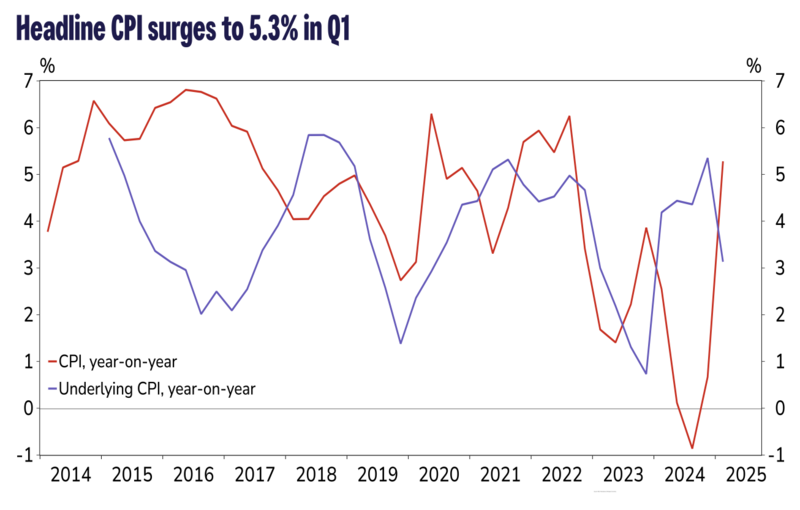
Headline inflation remains volatile, despite easing underlying pressures. According to Westpac, underlying inflation dropped to 3.1 percent in March 2025 from 5.4 percent the previous quarter. However, headline CPI rose 5.3 percent year-on-year, fuelled by sharp increases in betel nut prices and broader costs in food and beverages, transport and communication services.

Price pressures remain uneven across regions. The Goroka–Hagen–Madang corridor reported headline inflation of 8.4 percent, significantly above Port Moresby’s 5.1 percent and Lae’s 1.7 percent. The sharp spike in the Highlands was attributed to localised supply issues, transport disruptions and seasonal factors. The report notes that Lae has now emerged from the deflationary trend it experienced throughout 2024.

Westpac said telecommunications and competition in digital services helped contain cost increases in urban areas. However, continued depreciation of the kina remains a key inflationary risk. As commodity-driven revenues rise, analysts stress the need for stronger monetary coordination to avoid a sustained cost-of-living crisis, especially in rural areas.
Budget Discipline Begins to Show

The government’s 2024 Final Budget Outcome (FBO) presents a cautiously optimistic picture of public finances. Total revenue increased by 5.1 percent to K20.83 billion (US$5.14 billion), while expenditure was contained at K24.76 billion (US$6.11 billion). As a result, the budget deficit narrowed to K3.93 billion (US$971 million), equivalent to 3.2 percent of GDP. This marks a notable improvement from 4.3 percent the previous year.

Much of the fiscal improvement came from higher-than-expected collections of personal income and mining taxes, buoyed by strong earnings in the resources sector. However, corporate tax receipts and GST collections underperformed due to disruptions from fuel shortages and January unrest. Donor support from Australia, ADB and the IMF also helped ease cash flow pressures during the first half of the year.

Debt sustainability has improved, with total public debt standing at K60.48 billion (US$14.93 billion), or 49.4 percent of GDP. This remains within the government’s medium-term debt strategy. Officials have prioritised concessional borrowing, shifting away from high-interest domestic debt. Reforms including payroll verification, trust fund drawdowns and the adoption of a Single Treasury Account are seen as critical to improving budget transparency and discipline.

“We are seeing steady progress in fiscal consolidation, service delivery and growth-oriented investment,” Westpac’s analysts wrote.

FX Liquidity Improves, Investor Appetite Grows

Papua New Guinea’s FX market has shown dramatic improvement in recent months. Orders for essential imports, once subject to weeks of delays, are now being processed and filled within the same day under current guidelines. This turnaround has injected momentum into the retail and wholesale trade sectors and reduced pressure on businesses dependent on imported goods.

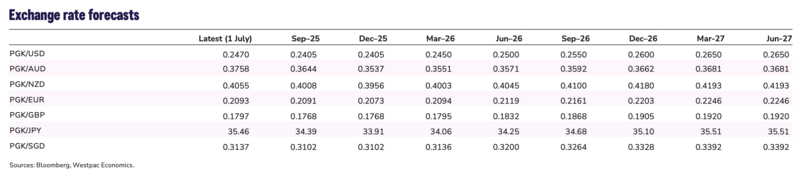
The Bank of Papua New Guinea conducted four FX auctions in May, injecting K165.3 million (US$40.8 million) into the system. This helped stabilise supply and meet trade-related demand. The kina–US dollar exchange rate eased from 0.2452 to 0.2438 in May, and Westpac expects it to weaken further to 0.2402 in the third quarter. A meaningful recovery in the currency is not anticipated until 2026.

Domestic capital markets also showed signs of investor confidence. In a May auction, the 9-year government bond attracted K40 million (US$9.88 million) in bids—double its K20 million (US$4.94 million) offer—at a weighted average yield of 9.46 percent. The longer tenor indicates growing appetite for stable, long-term returns as PNG’s macroeconomic picture improves.
Major Investments Signal Confidence

Kumul Consolidated Holdings is doubling down on local industrial capacity. It committed K200,000 (US$49,400) to sponsor the second Papua New Guinea Special Economic Zone (SEZ) Summit and confirmed a K160 million (US$39.5 million) tuna cannery will open this month. The facility is expected to create hundreds of jobs and support the government’s ambition to process all fish domestically.

Meanwhile, K92 Mining continues to expand its footprint, reporting a 134 percent increase in financial contributions to PNG. The company paid US$62.6 million in taxes and royalties, supported nearly 1,800 jobs and spent over US$96 million on local procurement. It also recorded more than 643 days without a lost-time injury, reflecting its focus on worker safety and community engagement.

Prime Minister Marape has also announced the partial privatisation of PNG Power Ltd, signalling a shift in strategy to attract private capital into underperforming state-owned enterprises. Marape said PNG’s energy potential—especially in hydro, solar and geothermal—could power exports to regional markets like Indonesia and northern Australia. “We are unlocking our energy for growth and trade,” he said.

Outlook: Stable, But Watch the Risks

Despite growing optimism, analysts warn that global headwinds remain. Westpac flagged persistent uncertainty surrounding US tariff policy and recent geopolitical flare-ups, including conflict between Iran and Israel, which briefly pushed up oil prices. Although markets have stabilised, any deterioration in global trade conditions could spill over into PNG through energy and import costs.

That said, domestic fundamentals remain strong. Imports are now growing at an annualised pace of 4 percent, indicating rising confidence and improved capacity to meet consumer demand. FX constraints that once stifled trade and investment are easing, creating new opportunities for business expansion and job creation.

Without the boost of a new large-scale resource project, PNG’s growth this year will come largely from internal drivers—household consumption, agriculture and services. That, according to Westpac, is a promising sign of resilience. “With improving fundamentals, PNG continues to grow,” the report said.
June 29, 2025

Kundu Finance, one of Papua New Guinea’s newest but fastest growing financial institutions, is setting a new standard in responsible lending, one that blends cultural identity, innovation, and a people-first approach.

Recognizing the daily demands of the modern workforce, Kundu Finance offers online loan applications that allow clients to apply from anywhere even during working hours. This digital convenience removes the need to visit a branch, making the process faster and more efficient. It's especially helpful for employees and their Human Resource teams, as it reduces disruption to business operations and enables financial support without leaving the workplace.

In a country crowded with financial institutions, Kundu Finance stands apart with a philosophy deeply rooted in PNG culture and community responsibility. What makes them unique? Their focus on responsible lending, a value that informs everything from client relationships to loan approvals.

Kundu offers accessible and reliable financial services, even while you're at work. This saves time and the cost of travel to Port Moresby for those in other provinces. Kundu Finance aims to reach workforces in Mining, Petroleum, Agriculture, Education, Health, Business, and the Public Sector across PNG.

In an exclusive interview with PNG Business News, CEO Benjamin Wong shared,

“Our goal is simple: help people within their means. We are not here to burden them with large debts. We want them to grow with us.”

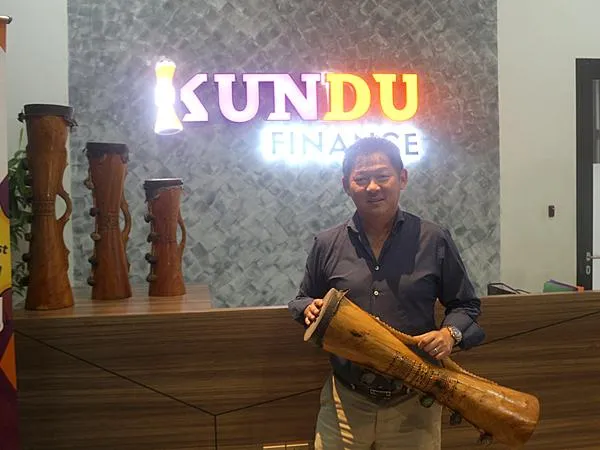
The "Kundu" in Kundu Finance is more than just a name, it is a symbol of PNG’s identity and tradition. The kundu drum, an iconic instrument used in storytelling and cultural expression, lies at the heart of the company’s brand.

“Our slogan is ‘Our Drumbeat, Our Stories, Our Future…’ It reflects the stories of our clients, our journey, and our future with Papua New Guinea. We are not just a financial institution, we are part of the community,” Mr Wong explained.

“Our vision is to be an innovative financial service provider with a strong sense of community responsibility. Every decision, from how much to lend, to how we advise, is based on transparency and empathy.”

Changing Lives, One Client at a Time

Kundu Finance is not just processing loans, it is /transforming lives. Mr. Wong  shared stories that illustrate the company is unique, client-first approach:

  • A truck driver, already in debt, applied for a second loan to build a home on customary land. Instead of approving the loan blindly, Kundu advised him to wait, recognizing that additional debt would strain his income.

“We didn’t make money off him that day, but we gained a long-term client who trusts us.”

  • A health worker from Western Province, stranded in Port Moresby due to medical reasons, approached Kundu for assistance to return home.

“We saw the urgency and helped her. To this day, she visits our office just to say hello. That is a connection money cannot buy.”

  • An education officer, misled by high-interest loans from other lenders, was guided by Kundu to repay faster and save on interest.

“No one had ever explained it to him before. He walked away financially smarter—and loyal.”

  • A public servant with a poor credit history and school fee obligations was coached to borrow a realistic amount.

“Now he has repaid part of his loan and is proud of being a responsible borrower,” Mr Wong added, beaming.

Rapid Growth and Technological Edge

Though incorporated in 2018, Kundu Finance officially began operations in late 2024. In less than a year, it has amassed over 2,000 clients, an impressive feat for a new entrant. Its rapid growth reflects the power of word-of-mouth and client satisfaction.

Kundu Finance is also the first in PNG to operate a cloud-based loan management system, hosted on Microsoft Azure. This ensures speed, security, and scalability.

“We chose the cloud for its top-tier security and flexibility. Cyber threats in PNG are real, so protecting our clients' data is non-negotiable.”

The cloud also enables efficient nationwide service delivery, positioning Kundu well for national expansion.

Speed, Service & Security

With a tiered client approach and a streamlined process, Kundu offers fast loan approvals.

“We can’t always promise 24-hour turnaround, but for priority clients especially in government departments and corporate payroll systems, we strive for same-day disbursements,” Mr Wong confirmed.

The company partners with employers to process salary-deducted loan repayments, simplifying access for employees. We encourage HR departments to work with us to make financing easier and more efficient for their staff.

Financial Literacy at the Core

Unlike many lenders, Kundu treats financial literacy as a core responsibility.

“Why do we run financial literacy programs? Because financially literate clients are better clients. We teach them to plan, manage debt, and borrow responsibly. We want to create a financially strong PNG not just grow our loan book.”

This educational approach will inform future products, such as savings accounts, asset financing, and housing loans.

The Road Ahead

Currently operating from Port Moresby, Kundu is preparing to open a back-office sales and finance center in Waigani and plans to open a branch in another province by early next year.

Over the next three to five years, Kundu plans a gradual national rollout, prioritizing areas with the strongest demand.

“Our biggest challenge is unrealistic borrowing expectations. Many want more than they can repay. Changing that mindset takes time and trust.”

Still, the CEO’s proudest achievement is his team.

“The proudest thing? Building a team that shows up every day with integrity and care. We call it the Kundu way.”

Mr. Wong ended his interview saying,

“I treat everyone with respect staff, clients, partners regardless of background or title. We are building something not just about money, but about people. Something that lasts.”


Kundu Finance is more than a lender. It is a movement with cultural roots, innovative technology, and a deep focus on client wellbeing.

A new beat in PNG’s financial rhythm.

June 29, 2025

For six decades, the PNG Institute of Banking & Business Management (IBBM) has stood at the forefront of professional development and business education in Papua New Guinea.

From the institution’s humble beginnings to becoming the nation’s premiere leadership and training institution, IBBM has continuously evolved to meet the needs of PNG’s people, industries, and the economy.

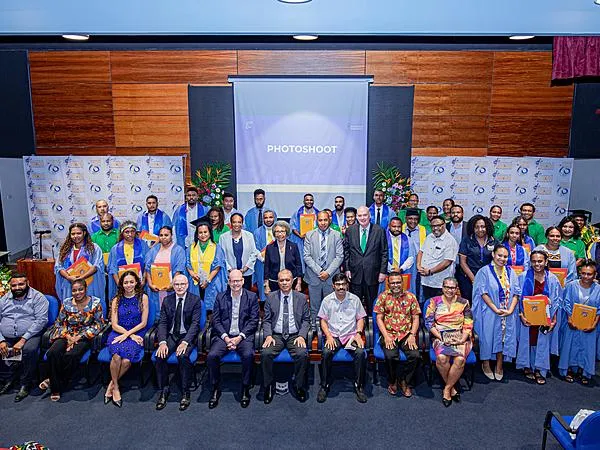
IBBM celebrated this milestone alongside their 71st graduation ceremony on 30th May 2025. CEO Ms Susil Nelson Kongoi said during her speech: “This Diamond Jubilee is more than a celebration of longevity – it is reaffirmation of our commitment to shaping future-ready leaders and contributing meaningfully to the nation’s progress.”

With Papua New Guinea celebrating its 50 years of independence, institutions like IBBM have been producing leaders that have shaped PNG’s last 50 years and are now ready for the next 50 years.

The keynote address by Ms. Winnie Kiap CBE highlighted the need for quality education in shaping Papua New Guinea’s future.

“The foundation of every state is the education of its youth -- so as an aspect of statecraft, education is an old craft. It is for us to acknowledge its relevance to life and progress and that is what IBBM is doing - empowering agents of good governance, justice and progress,” Ms Kiap said.

She reminded the audience that the root of PNG’s strength “lies in knowledge, unity and the unshakable belief that education is a nation-building force.”

The inspirational address by IBBM’s MBA Alumni, Mr Amos Tepi, the CEO of Telikom PNG, also echoed the nation building sentiments with embracing the institution’s legacy.

“A nation disconnected from its roots becomes a stranger to itself. But people who embrace their legacy stand tall, not just at a global stage but in their own souls,” he said.

This challenged the graduands that to become future leaders every young person should learn their history, speak their languages, and know the names of those who made it possible for them to sit here today.

His call to action was that “the future does not belong to those who complain but to those who build,” encouraging the next generation of nation builders for PNG’s next 50 years.

IBBM celebrated the graduation of 40 students in the Class of 2024, marking achievements across a range of business and leadership programs.

Graduands earned qualifications in the Master of Business Administration, Graduate Certificate in Business Administration, Bachelor of Business, Bachelor of Business Information Systems, Diploma of Business, Diploma of Project Management, Certificate IV in Leadership & Management, and the Certificate in Professional Banking Fundamentals.

These programs are delivered in collaboration with Torrens University Australia, Lyons College, and the Financial Services Institute of Australasia, reflecting IBBM’s commitment to providing internationally benchmarked education that empowers Papua New Guineans to lead, innovate, and drive national progress.

Mrs. Davara Roga, from the Bank of South Pacific Financial Group, was named the 2024 Chairperson’s Medal recipient in recognition of her exceptional academic achievement in the MBA program.

In her acceptance speech, she credited the program’s flexibility for her success, stating: “The program’s structure—eight core subjects like Strategic Management, Dynamic Leadership, and Financial Management, paired with relevant electives—was both comprehensive and future-focused.”

“Its flexible delivery made it possible for working professionals like myself to stay committed, despite life’s many demands,” she said, as her story exemplified the power of accessible, professionally aligned education.

Ms. Deborah Puka, recipient of the Dux Award for the Bachelor of Business program, reflected on the transformational impact of her studies, stating that the course significantly enhanced her skills in job readiness, report writing, time management, adaptability, and flexibility.

“It pushed me out of my comfort zone, and I am truly grateful,” she shared, as her journey was a powerful testament to how quality education not only builds individual capacity but also equips future leaders to actively contribute to nation-building.

As PNG continues to grow, so does IBBM. The institution is committed to nation-building by providing quality higher education, corporate training, and supporting local content through our Enterprise Centre’s supplier management portal.

As it celebrates 60 years of service aloongside PNG’s golden jubilee of independence, IBBM embraces its legacy and look forward to shaping the next 50 years.

May 26, 2025

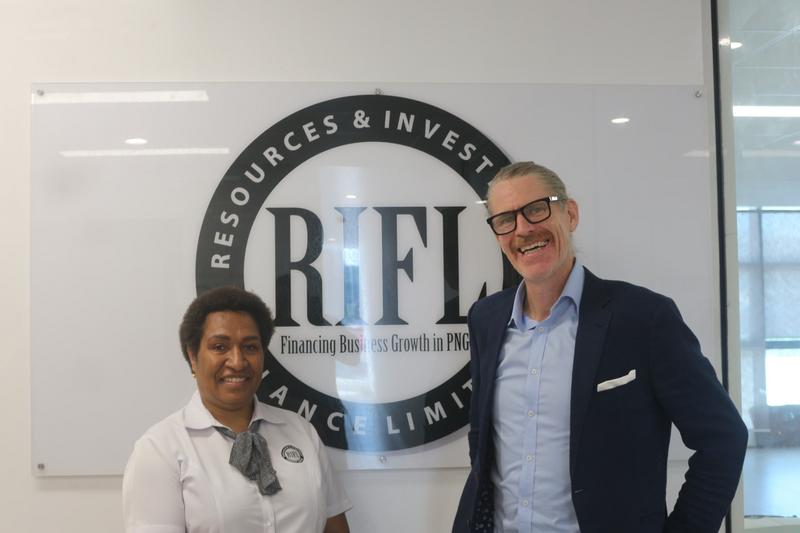
Resources & Investment Finance Limited (RIFL) has gained a strong reputation for its fast and flexible finance solutions. RIFL’s new General Manager - Business Development, Russell Evans, has set his eyes on smarter, sustainable finance to empower businesses in Papua New Guinea (PNG).

In an exclusive interview with PNG Business News, Evans shared his vision for driving inclusive financial growth, digital innovation, and ethical lending to unlock economic potential across the country. This core strength is set to evolve further with technological investment and a deeper client-centric approach as customer-centric service -- and is at the heart of RIFL’s promise.

RIFL services range from providing equipment finance for commercial and consumer purposes, including motor vehicles, trucks and earth moving machinery, mining and construction equipment. It also specializes in funding technology assets like information technology and office equipment, software, and telecommunications. The focus is on four core financial aspects:

  • Asset Finance
  • Insurance Funding
  • Financial Leasing
  • Personal Loans

“RIFL are looking into web-based solutions for even quicker turnarounds,” Evans explained. 

“We are taking more time to understand and work with our clients to build long-term relationships and being the preferred supplier of choice. In turn, this will help us provide quick, bespoke financial solutions.  But as our greatest asset is our staff, we continue to invest in continual training and a continuous improvement model.”

Client Relationship a Priority

He emphasised the importance of face-to-face engagement with a clear commitment to client relationships, which involves taking the time to understand clients’ needs and work with them to create tailored solutions.

“While the lending process is regulated and often document-heavy, once we have the required paperwork, things move quickly and we pride ourselves on becoming a true extension of our clients' businesses,” Evans explained. 

“Email communication cannot equal the value of meeting clients in person. We pride ourselves on becoming a true extension of our clients' businesses.”

As the financial services industry undergoes rapid digital transformation, Evans is careful not to lose the human element.

“My focus is on striking the right balance between efficient digital solutions and the personal touch, because sometimes, you just need to speak to someone.”

Evans assumed the General Manager role at a time when financial services are being transformed by technology as he shares the digital strategies he sees as priorities for RIFL.

“Peter Boutcher has done an incredible job leading RIFL to this point, and I’m excited to build on that foundation by leveraging my skills to enhance our digital customer experience. My focus is on striking the right balance between efficient digital solutions and the personal touch because sometimes, you just need to speak to someone. At RIFL, we guarantee that when you call, our team will answer with enthusiasm and be ready to help.”


Evans, a finance executive and CPA, joined RIFL with a conviction that finance should be a tool for empowerment.

“Through my career in finance, I have always had a passion for making companies perform better, and RIFL offers solutions to solve cashflow limitations through finance. 

“RIFL allows companies to take advantage of opportunities with our quick turnaround and truly making a positive difference in helping companies through our financial solutions.”

As RIFL expands in asset finance, a close watch is set on digital transformation, diverse industries, and the rise of green financing. Evans said PNG is the land of opportunity, therefore RIFL is investing in automation and analytics to enhance decision-making and customer experience.

“By being open to all industries we aim to stay agile and competitive. Our goal is to offer smarter, faster, and more sustainable finance solutions for both commercial and consumer markets,” he added.

Supporting SMEs

Access to credit remains a barrier for many small and medium enterprises (SMEs) in PNG, a challenge that Evans says RIFL is uniquely positioned to tackle.

“That is exactly where RIFL can make a real difference. We understand that every business has a story, and sometimes it’s not about ticking every box, but about taking the time to listen,” he said.

“Our role is to provide practical, well-structured solutions that help SMEs grow, without making the process feel burdensome. When we back a small business, we back it with intent and we work hard to be the finance partner that genuinely understands local needs.”

Evans is passionate about nurturing economic inclusivity, commenting on the importance of RIFL contributing to the nation’s development.

“I’m not here to make a few people rich; I want to help bring up the middle class and help PNG turn from a developing country to a thriving one,” he added.

Balancing Lending and Investment Services

RIFL’s dual offering of lending and investment solutions allows for holistic financial growth, which is a balance Evans believes more PNG businesses can tap into.

“As a CPA, one of my biggest frustrations is seeing businesses leave cash sitting in the bank earning just 1%, when that money could be working harder in a RIFL term deposit earning up to 6%.”

“Our focus is on helping clients realise that cash is an asset just like a truck or excavator, it should be generating returns. Balancing lending and investment is about education and opportunity, and we’re here to show our clients how they can grow both sides of their balance sheet with us.”

“Cash is an asset, it should be generating returns.”

Evans says the key lies in education and opportunity, and RIFL is here to show how clients can grow both sides of their balance sheet.

He also spoke of the ethical lending and leadership in uncertain times. As financial institutions face greater scrutiny, Evans underscores RIFL’s commitment to ethical practices.

He said: “Growth means nothing if it comes at the cost of integrity. Ethical lending is not just a buzzword, is about making sure finance actually helps and not hinders, a client’s progress.”

“We are not here to push loans, we are here to build long-term relationships based on trust, transparency, and doing what’s right for the customer.”

When it comes to leadership, as the General Manger, Evans leans on three guiding principles: clarity, consistency, and empathy. 

“In a sector like finance, where uncertainty is part of the game you need to make decisions quickly, but always with purpose,” he said.

“I believe in being upfront with my team, backing them when it counts, and staying calm under pressure. If we can lead with integrity and keep the bigger picture in mind, even tough calls become easier to make.”

Evans’ connection to PNG goes beyond boardrooms. Recalling his time in the cocoa industry, he shared a poignant reflection: “From my previous role at Elliven in Cocoa, some of the most memorable and meaningful conversations I had were not in boardrooms or over email. They were in plantations scattered around your beautiful country, sitting under the shade of a Gliricidia tree, talking cocoa with local farmers. Those moments reminded me that life isn’t just about making money or chasing success.”

“One of the truly special things about the people of PNG is their ability to find happiness and joy, even with what many expatriates might see as very little. It has taught me that wealth means nothing unless it’s earned honestly, with good intentions, and in a way that uplifts those around you.”

For Evans, RIFL is not just a finance company, it’s a platform to build a more equitable and vibrant economy.

“RIFL gives me the opportunity to fulfil my motivation to help grow the middle class and create a thriving PNG,” he said.

More information on RIFL can be accessed on the RIFL LinkedIn Page and the RIFL Website.

May 19, 2025

PNGX Group Limited (PNGX Group), holding company of Papua New Guinea’s national stock exchange, is pleased to announce the appointment of Mr. Samson Korawali to the Board of PNGX Group.

Mr Korawali is a seasoned technology professional with over 18 years of global experience specializing in delivering innovative solutions across diverse industries in the Asia Pacific and North American regions.

Mr Korawali is the CEO/CTO of SNS Tech Pty Ltd, a leading technology services provider in Papua New Guinea. He has served as Chief Developer for the Department of ICT, successfully delivering the eGov portal & Digital ID, and pioneered the integration of Xero’s accounting platform with Kina Bank.

Mr Korawali is also the Founder & CEO of Reelae Pty Ltd, a locally developed online learning platform based in PNG and Australia.

PNGX Group Chairman, Mr David Lawrence, welcomed the appointment of Mr Korawali to the Board. “Mr Korawali brings a wealth of experience to the PNGX Group. The PNGX business is heavily reliant on technology and innovation to develop the capital market in Papua New Guinea. The commercial and technology perspectives which Mr Korawali brings will help us develop faster and more sustainably both in Papua New Guinea and the region” he said.

Mr Korawali said “I’m excited about the opportunity to join PNGX Group. Being passionate about leveraging technology to drive business growth and efficiency I’m looking forward to contributing to the development of the stock exchange in Papua New Guinea”.

May 05, 2025

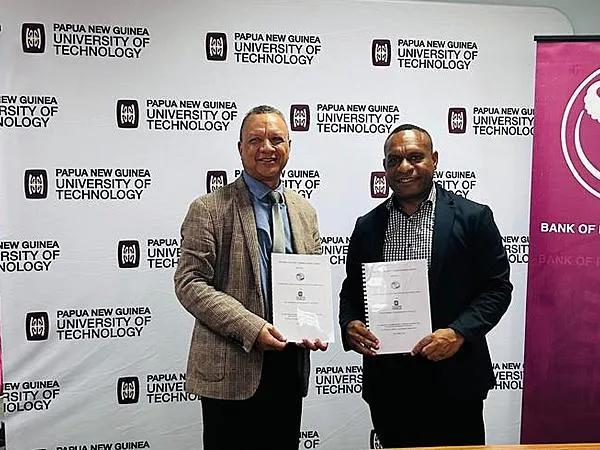
On April 23, 2025, The Centre for Excellence in Financial Inclusion (CEFI) and the Papua New Guinea University of Technology (Unitech) formally signed a Memorandum of Understanding (MoU) to establish a Fintech Incubation Centre at Unitech’s campus in Lae.

The new Fintech hub will play an important role in supporting the development and growth of financial technology startups. It will provide mentorship, funding, networking opportunities, and access to industry expertise. The initiative aims to foster innovation within the financial services sector by assisting entrepreneurs to refine their business models, develop products, and navigate regulatory requirements. Furthermore, the hub will facilitate collaboration between fintech startups, the Bank of Papua New Guinea’s regulatory sandbox, and established financial institutions, thereby promoting the integration of new technologies into traditional banking and finance systems.

The overall objective is to accelerate the growth of fintech entrepreneurs and to enhance the broader ecosystem of financial payments and service systems, ultimately expanding financial inclusion across Papua New Guinea.

Unitech Vice-Chancellor, Professor Ora Renagi OL, stated that “learning transforms living standards.” He emphasized that this initiative would empower young IT professionals to develop innovative solutions capable of enhancing a wide range of industries throughout the country.

Professor Renagi further elaborated that the University’s focus on teaching and research, as well as its five-year strategic plan, identifies the establishment of centres for innovation and incubation as a priority. He described the partnership with CEFI to establish the Fintech Incubation Centre as both timely and supportive.

CEFI Acting Executive Director, Mr Peter Samuel, reiterated CEFI’s commitment to advancing financial inclusion by embracing innovation and technology. He noted that the partnership would not only improve financial services but would also create opportunities for students to become self-employed and contribute meaningfully to economic development.

Mr Samuel also highlighted that fintech solutions developed through the Centre would be tested in the Bank of Papua New Guinea’s regulatory sandbox prior to their broader market introduction, ensuring compliance, safety, and effectiveness.

Following the MoU signing, attendees visited the proposed site for the Fintech Incubation Centre, marking a significant step towards realising this transformative vision.

Supporting this initiative are the PNG ICT Cluster and the National Information and Communications Technology Authority (NICTA). Key stakeholders are eager to collaborate to bring transformative changes to the financial services landscape, ensuring that financial systems become more efficient, inclusive, and accessible to individuals in both urban and rural areas.

April 29, 2025

In a region where digital transformation is both a challenge and an opportunity, global payments leader Visa is actively working to bridge the financial gap through inclusive innovation.

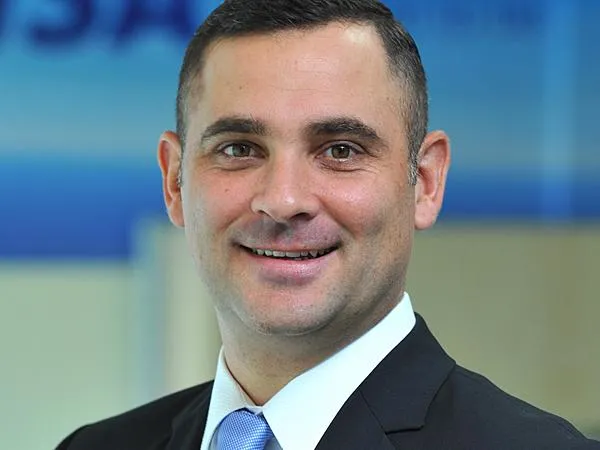
In the recent Innovation PNG Conference 2025 in Port Moresby, Visa Country Manager for New Zealand and the Pacific Islands Anthony Watson revealed an ambitious 2030 vision to drive further economic growth in Papua New Guinea.

The vision, Watson said, complements the PNG Government’s goal to connect 70 percent of the population to the internet by 2030.

Visa “supports economic growth in mining, agricultural, forestry and fishing sectors which rely on foreign trade,” he said.

“These are the sectors PNG has a strong reliance on in foreign trade. Therefore, by offering a secure digital payment solution that is reliable and fast to move funds between consumers, businesses and government agencies, Visa supports PNG in foreign trade,” he added.

Visa plans to introduce new, low-cost, mobile-based services that help sellers get paid quickly and safely, secure eCommerce services, and enable international money movement for foreign trade services.

To support this vision, strong fraud protection will be critical. In a media release, Visa revealed global investments of over $10 billion over the last five years into technology and innovation to reduce fraud and increase network security.

“This advanced technology, including AI-driven fraud prevention tools, will be critical in protecting PNG consumers against sophisticated threats,” it said.

In an exclusive interview with PNG Business News, Watson shared his strategic vision for Papua New Guinea and the broader Pacific market, painting a compelling picture of a region on the cusp of rapid financial evolution.

Anthony has been with Visa for 15 years, starting in Melbourne, Australia back in 2009. He has held senior roles across Client Services, Product, Sales and Strategy working in several countries in Asia Pacific.

With a background in product development, risk, and digital business operations, Watson has a passion for supporting tech entrepreneurs in developing new businesses models that help support growth in digital commerce and access to financial services.

Visa continues to explore opportunities and partnerships in PNG and the wider Pacific region, the Country Manager said.

“The message is clear: a collaborative, forward-thinking, and inclusive digital payments ecosystem is not just a vision, it’s a mission in motion,” he added.

“My role as Country Manager is to develop and execute the market strategies we have. I’m also in charge of our business operations and provide leadership to our team across the markets in which we operate.”

Watson acknowledged the complexity and opportunity in the local market.

“Visa operates in over 200 countries globally. So, we are a very inclusive organisation, taking the needs and considerations of local markets into the types of products and solutions that we've developed,” he said, while highlighting PNG’s unique geographic diversity and the variety of communities that necessitates tailored approaches.

“Our observations have been, there has been a growing population adopting more of mobile technologies, meaning e-wallets become quite interesting. The adoption of internet banking has been strong,” he said, emphasizing the need for small businesses to move away from cash handling.

“Businesses really need to look and see the trends that are occurring globally are moving much more to digital capabilities, including online. Even just the fundamental face-to-face transaction... being able to transact digitally is going to be really important, as we think about the behaviours that are shifting as the younger generation starts to come through.”

Innovation, FinTech, and the PNG Payments Ecosystem

On the role of innovation and financial technology (FinTech) start-ups in PNG’s evolving payments landscape, “there is so much opportunity,” Watson said.

“Particularly as we start to see more of the new technology that's out there converging with payments. That creates an interesting dynamic for start-ups, FinTechs, or young entrepreneurs who are looking at opportunities across the country to solve some fundamental challenges,” he said.

These opportunities extend beyond just small business support, Watson pointed out. He expressed optimism for the FinTech landscape in PNG, but acknowledged that challenges remain.

“It cuts across new consumer experiences, local governments; what they’re doing in terms of disbursements and collections, and even large opportunities like cross-border payments.

“There’s still a lot of work to be done. But being able to pick up those global trends and apply them in a relevant local context is going to be important,” he added.

Mobile and Digital Identity: The Future of Payments

Asked what innovations in the digital payment space excite him the most, Watson didn’t hesitate to answer: “First would be mobile.”

“I’m very excited when we think about PNG’s growth and adoption that’s occurring across mobile infrastructure. I can see an enormous adoption starting to occur over the next decade, particularly on smartphone infrastructure.”

He also highlighted the potential of a digital identity as a “transformative element” and emphasized the need to support small and micro-businesses.

“Where we start to look at digital identity becoming an underlying credential that payments link to for authentication, online shopping, and a bunch of different use cases, that certainly excites me,” he said.

“Solving for the small merchant challenge, how they can collect funds efficiently using low-cost technology, particularly mobile-oriented, is critically important. We have several solutions already deployed globally that we believe are very relevant to the local market context.”

PNG’s Place in the Global Digital Payments Landscape

With experience leading Visa operations in multiple countries, Watson was asked how PNG compares in terms of digital payment evolution.

“Firstly, it’s really difficult to always compare one country specifically to others... They’re all vastly different,” he explained. “But I also see a lot of similarities.”

“Sometimes we overestimate what we can achieve in 12 months, yet we underestimate what we can achieve in 5 to 10. That is an important context when we think about PNG.

“It’s not just about looking at the near-term opportunities; it’s a bit of a marathon. The type of solutions we bring into the market must reflect that.”

Cybersecurity was another major focus

“Fraud, scams, and cyber security are really top of mind. That’s globally, of course, but certainly applies across the Pacific Islands as well. We're using available technology, particularly AI, to help protect consumers, businesses, and governments,” he said.

Finally, he spoke about reinventing the consumer experience.

“There’s such a great opportunity for us to redevelop and rethink the consumer experience across PNG. I think there’s going to be a lot we can do in terms of new experiences and value propositions.”

Watson stressed the importance of constructive regulation in collaboration with regulators and financial institutions in Visa’s engagement to support an inclusive ecosystem.

“Visa as an organisation is in favor of regulation. When it is done correctly and applied in the local market, it creates a nice set of guardrails that allows the industry to move fast,” he said.

“Foreign investors, tech companies, and FinTechs welcome regulation because it provides certainty on what they can expect.”

He added that good regulation leads to positive outcomes.

“We want principle-based outcomes. We need to ensure that it’s not bad regulation that creates a productivity drag on the economy.”

“The role that Visa plays across the country in terms of economic growth is vital, and infrastructure is key to achieving those outcomes. We welcome further engagement with government in support of what they are trying to achieve.”