Papua New Guinea (PNG) faces significant challenges in addressing money laundering (ML) and asset recovery.
According to the Financial Action Task Force (FATF) Mutual Evaluation Report (MER) published in November 2024, the country lacks skilled personnel, institutional resources, and prioritization to tackle these issues effectively.
Consequently, PNG has until October 2025 to implement the FATF recommendations or risk being grey-listed, a designation that could harm its economy and international reputation.
Anti-Money Laundering Taskforce established
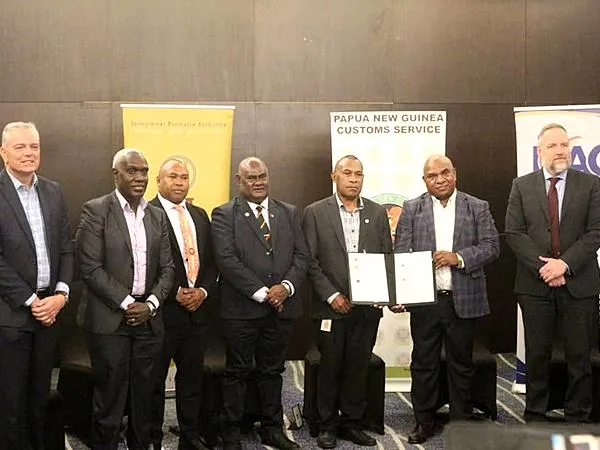
In response, the Independent Commission Against Corruption (ICAC) has collaborated with key government departments and the Bank of PNG to form the Anti-Money Laundering Joint Taskforce (AMLJTF).
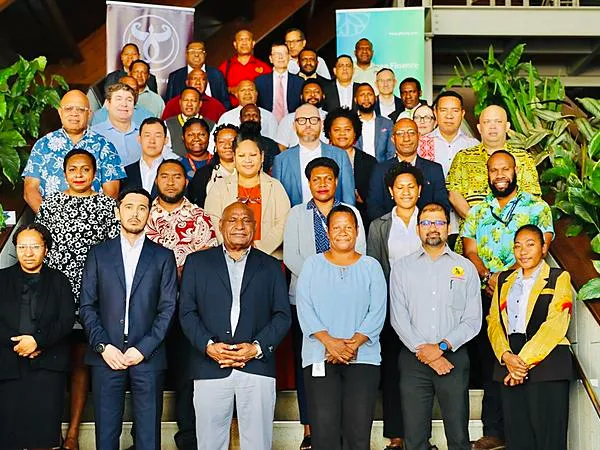
The taskforce aims to enhance coordination and effectiveness in combating ML and recovering assets. The initiative, formalized during a signing ceremony on December 18, 2024, at the Stanley Hotel in Port Moresby, is a critical step in aligning PNG’s efforts with FATF’s global standards.
Money laundering poses a significant threat to PNG, exacerbated by corruption and transnational organized crime. The AMLJTF brings together government and private sector expertise to address these risks, improve compliance, and achieve meaningful outcomes by 2025.
Baulch’s Call for Action
At the signing ceremony, ICAC’s Deputy Commissioner of Operations, Daniel Baulch, emphasized the urgency of reinforcing PNG’s commitment to the AMLJTF. He warned that grey-listing would severely damage PNG’s economy, deter foreign investment, and tarnish its international standing.
Baulch outlined the taskforce’s objectives:
Achieving these goals would bolster PNG’s reputation, attract investment, and create a transparent financial system, Baulch said.
He emphasized that the AMLJTF was established to create a coordinated and effective response to asset recovery and money laundering, pointing out that PNG is particularly exposed to financial crimes, and tackling these threats is essential for the country’s economic stability and national security. Their inter-agency collaboration ensures a comprehensive approach to combating money laundering, he said.
Customs Chief Urges Collaboration
David Towe, Chief Commissioner of PNG Customs Services, praised the establishment of the AMLJTF and stressed the need for inter-agency collaboration.
He highlighted the country’s vulnerability to grey-listing and the adverse effects on its economy, including restricted trade and higher transaction costs.
"We have the report from the FNCF, and we are at risk of being re-listed. Being re-listed is very bad for us, especially for the financial integrity of our country," Towe said.
"The impact of being re-listed is serious, and that calls for action," he added.
To address these challenges, Towe announced the formation of a dedicated Customs team to implement FATF recommendations.
"In public meetings, we tend to work in silos, and most times we don't get to deliver results. I want to encourage every one of us, the members of the FNCF and other law enforcement agencies, for us to work together on this," he said.
He urged other agencies to adopt a collaborative approach, citing past successes achieved through partnerships with public and private sector entities.
Implications of Grey-Listing
Failing to meet FATF standards could have severe repercussions for PNG, Baulch said:
Strengthening National Commitment
Baulch stressed the importance of complying with international anti-money laundering standards. He called for enhanced collaboration among regulatory and law enforcement agencies to ensure swift investigations and asset recovery.
“By working together through the AMLJTF, PNG can secure a prosperous and stable future for its people,” Baulch said.
He reaffirmed ICAC’s commitment to supporting the taskforce and urged all stakeholders to intensify their efforts against financial crimes.
AMLJTF Membership and Reporting
The following agencies have joined the AMLJTF:
Additional agencies, including the Office of the Public Prosecutor (OPP), Royal Papua New Guinea Constabulary (RPNGC), Department of Justice and Attorney General (DJAG), and Internal Revenue Commission (IRC), will join in 2025.
The AMLJTF will report to the Asset Recovery and Money Laundering Operations Committee (ARMLOC), comprising RPNGC, FASU, OPP, and ICAC. ARMLOC’s mission includes coordinating intelligence, investigations, and prosecutions related to ML and asset recovery.
The committee will meet monthly and support the Strategic Implementation Plan (SIP) agreed upon by the National Coordinating Committee (NCC) and the Asia Pacific Group Secretariat.
The AMLJTF’s establishment marks PNG’s commitment to addressing money laundering and corruption. By fostering collaboration and adhering to FATF standards, the taskforce aims to safeguard PNG’s economic stability and global reputation.
“Let us work together to uphold the rule of law, enhance our global standing, and build a safer, more prosperous Papua New Guinea,” Baulch concluded.
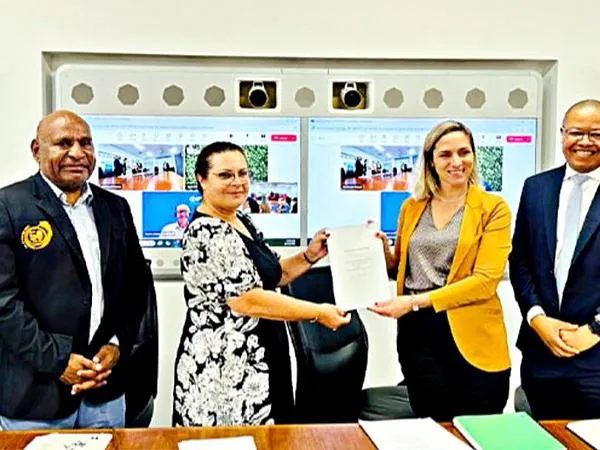
Bank of Papua New Guinea (BPNG), on behalf of the Green Finance Centre (GFC), has signed a significant memorandum of understanding (MoU) with the International Finance Corporation (IFC) and the Securities Commission of Papua New Guinea (SCPNG) for establishing the foundations of a thematic bond market in PNG and developing the next version of BPNG’s Inclusive Green Finance Taxonomy (Green Taxonomy).
Under this collaboration IFC will provide technical support to the GFC in developing the next version of the Green Taxonomy, initially prioritizing five specific sectors.
The Green Taxonomy aims to provide clarity in defining what constitutes an investment green and sustainable.
Additionally, under the MoU, GFC will coordinate with IFC to support SCPNG in establishing a Thematic Bond Framework for the capital markets of PNG. The thematic bond framework will be tailored to support green, social, sustainability, and sustainability-linked (GSS+) bonds that aligns to the Green Taxonomy.
It is expected to attract investors who are committed to sustainable finance, accelerating essential climate-focused projects in order to create a resilient PNG economy.
PNG aims to reduce its greenhouse gas emissions by 50% by 2030 and achieve carbon neutrality by 2050. Over US$1 billion will be required over the next 10 years to meet PNG’s Nationally Determined Contributions (NDC).
Governor of BPNG, Elizabeth Genia, highlighted the significance of this MoU, saying: “This partnership with IFC and the Securities Commission represents a critical milestone in our journey towards a climate-resilient and inclusive financial system.
“With such collaboration, we are positioning PNG as a leader in sustainable finance within the region. Together, we are building a future-ready financial sector that will support our country’s climate and development goals.”
Present at the MoU signing ceremony was PNG’s Country Manager for The World Bank Group, Khwima Nthara who provided his assurance to the Governor of BPNG in his remarks by saying: “You can count on our continued commitment and partnership.
“We’re also honoured that Elvira Morella, is signing the MoU on behalf of IFC and chose PNG for her first country visit in her new capacity as Manager, Country Advisory and Economics for East Asia and Pacific. This highlights just how important PNG is to the IFC and the World Bank Group.”
By developing a sustainable capital market, the initiative will open pathways for private sector investments into projects that benefit local communities, promote sustainable development at grassroot levels, create green jobs and reduce PNG’s carbon footprint.
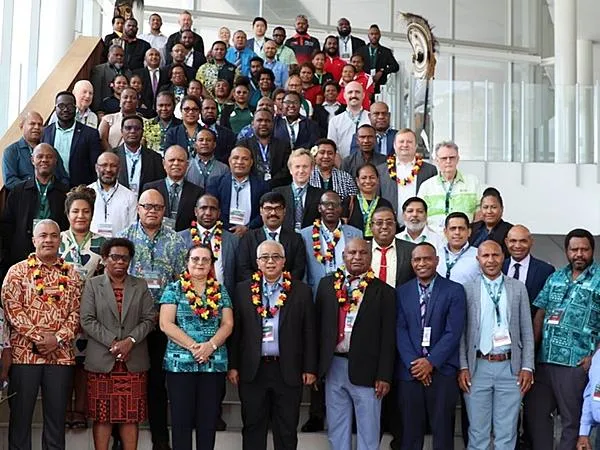
The Bank of Papua New Guinea (BPNG) and the Centre for Excellence in Financial Inclusion (CEFI) successfully hosted its inaugural Financial Inclusion Policy Forum and Excellence Awards on Friday November 22 at the APEC Haus in Port Moresby.
Speakers at the forum included Governor of the Bank of Papua New Guinea (BPNG) Ms. Elizabeth Genia, BPNG Assistant Governor, Financial System and Stability Group, Mr. George Awap, CEFI Executive Director Mr, Saliya Ranasinghe, Alliance for Financial Inclusion (AFI) Director of Policy Programs and Implementation, Dr. Eliki Bolewata, Asian Development Bank Country Director Mr. Said Zaidansyah and Deputy Secretary of the National Planning and Monitoring Department Mr. Michael Kumung.
Other speakers included representatives from international development partners, PNG government departments heads and senior officials, partner financial institutions, members of NGOs and other stakeholders.
Governor of the Bank of Papua New Guinea Ms. Elizabeth Genia, who is also chair of CEFI’s Board, in her opening keynote address at the forum stated that the inaugural financial inclusion policy forum marked a significant step in the country’s journey towards building an inclusive, resilient and equitable financial system for all Papua New Guineans.
“The forum is not just an opportunity to discuss theoretical causes and effects. Yes it is of real value to learn from the past achievements and to set future goals.”
“Today is also a wonderful opportunity to exchange ideas, to share best practices, to network and forge new alliances, however we must remember, first and foremost, that we are talking about real people.”
“Financial Inclusion is not just about numbers. It’s about real lives. Real families. Real communities. It’s about empowering a mother to save her child’s education. It’s about enabling a farmer to invest in better tools. It’s about providing a way for small business owner to expand their operations.”
“Our responsibility is to ensure every Papua New Guinea has the opportunity to participate in and contribute towards and benefit from the nation’s growing economy,” stated the Governor.
Alliance for Financial Inclusion Director of Policy Programs and Implementation, Dr. Eliki Bolewata, thanked BPNG’s support to AFI’s network over the last 15 years.
“We appreciate the Bank’s contribution greatly and I look forward to our continued collaboration,” stated Dr. Bolewata.
Dr. Bolewata also stated that AFI was pleased to support PNG in developing ground breaking inclusive green finance policy which was launched in 2023.
“Now we stand ready to support the work of the Green Finance Centre which is bringing that policy to life. We have already learned a lot from Papua New Guinea’s inclusive approach to greening its financial system, and we look forward to following the next stage of the journey,” Dr. Blewata added.
Further the forum break up for panel discussion, the panels was made up of field experts, who shared skills and knowledge on range of topics, the Technology Innovation, Green Finance, Inclusive Gender Finance to decentralized approach for Financial Inclusion – Provincial Government Engagement as well as the progress of the PNG’s Financial Inclusion Strategy 2023-2027.
The forum concluded with the Excellence Awards ceremony celebrating achievements in seven categories, Financial Inclusion and Deepening Award, Financial Innovation Award, the Inclusive Green Finance Award, Financial Inclusion Media Contribution Award, Financial Inclusion Advocate Award, and the Provincial Engagement Award.
Winners from each categories were judged by a panel of independent judges from the University of Papua New Guinea, PNG National Research University, IBS University and the Bank of Papua New Guinea.
Micro banks, MiBank and Women’s Micro Bank were recognized for their outstanding achievements in the field of financial innovation, Bank South Pacific was awarded the Financial Inclusion and Deepening Award while ANZ took out the Inclusive Green Finance Award and locally owned newspaper company Sunday Bulletin was awarded the Financial Inclusion Media Contribution Award.
Provincial governments from Milne Bay and West New Britain were joint winners of the Provincial Government Engagement Award and the Financial Inclusion Advocate Award winner was Lilly Namuru – Shualink PNG Limited, Milne Bay Province.
The Bank of Papua New Guinea and CEFI have partnered to provide sponsorship for the Financial Inclusion and Deepening Award, the Financial Innovation Award, and the Inclusive Green Finance Award.
The winners of these three awards will be sponsored to attend and participate in the Alliance for Financial Inclusion Global Policy Forum in Namibia in 2025.
“This valuable sponsorship will give the winners the opportunity to meet, network, learn from and share ideas with financial inclusion participants in other countries. We also anticipate that such sponsorship opportunities will provide a strong incentive into the future for other local financial institutions to adopt and model best practices, as well as to drive financial inclusion activities in Papua New Guinea,” the BPNG Governor stated during her congratulatory remarks to the award winners.
“You are actually our outstanding ambassadors and the true champions for financial inclusion principles and practices, and are true champions for Papua New Guineans who are yet to have fair and reasonable access to financial services,” said Ms. Genia told the award recipients.
The Governor concluded by thanking CEFI for organizing and hosting the inspiring policy forum and excellence awards.
Teachers Savings and Loan Society (TISA), headquartered in Port Moresby, is the largest savings and loan society in Papua New Guinea (PNG) and the South Pacific excluding Australia and New Zealand.
Established in 1972, TISA began with a simple yet impactful mission: to provide registered teachers of the Department of Education a safe space to save and help one another during financial hardships.
In its earliest years, the Society had about 3,000 members and a total turnover of 2 million kina per annum.
Over the decades, TISA has transformed significantly in size, books, and influence under the leadership of Group CEO Michael Koisen, who has been at the helm for over 20 years.
Under Michael’s leadership, TISA has transformed from a small local credit union into a key player in PNG’s financial landscape.
Today, it serves over 85,000 members across the public and private sectors, with branches in 17 provinces.
As a group entity, it has diversified its portfolio to include banking, real estate and properties and insurance.
At the heart of TISA’s remarkable growth is its Group CEO, Michael Koisen, who joined the company in 2002, at a time when the organisation was under statutory management, and its books were far from healthy.
With a deep personal commitment to the organisation’s core purpose of improving the lives of ordinary Papua New Guineans, Michael stepped up to the challenge.
He saw an opportunity not only to restore TISA’s financial health, but to build a legacy of service and empowerment for its members.
“I’ve always believed that TISA’s mission isn’t just about financial transactions -- it’s about improving the quality of life for everyday Papua New Guineans,” Michael reflects.
“This is a place where everyday mums and dads - teachers, police officers, solders, nurses, and workers from all walks of life - who need financial support to help them live better lives sort help. That’s why I took on the challenge. I knew it was a huge task, but I felt it was the right thing to do.”
Before stepping in as CEO, Michael had already worked in various capacities within the organisation, gaining invaluable experience in operations, management, and governance.
This experience gave him the insight and understanding needed to lead TISA out of its most difficult period restoring stability and paving the way for future growth.
Under Michael’s leadership, TISA not only survived but thrived.
One of its milestones came when it became the first savings and loan society in the Pacific to offer its members a debit card, the YumiCard. This innovative step made it easier for members to access their funds and manage their finances more effectively.
In another first, TISA transitioned into a commercial bank - TISA Bank in August this year - making it the first homegrown bank in PNG.
TISA Bank now offers a wide range of tailored banking solutions and digital services, further extending its reach and ensuring more Papua New Guineans can access the financial support they need.
Despite these successes, Michael is quick to point out that TISA’s rise has always been about more than just profit.
“Our core belief at TISA has always been service over profit,” Michael says.
“We are focused on making a real difference in the lives of our members, not just on financial returns. We believe that when we prioritise people, everything else will follow. Our members trust us because we stayed true to that purpose.”
This commitment to TISA’s purpose is at the core of Michael’s leadership.
In 2023, under his leadership, TISA become a member of the Global Alliance for Banking on Values (GABV), a network of banks committed to creating positive social and environmental impact through responsible banking.
For Michael, joining GABV was a natural next step for the business.
"Being part of this network aligns with our values and mission," he says.
"We believe that banking should be more than just transactions; it should be a tool for change. Our mission has always been to serve our members and the communities we operate in."
Michael’s vision for TISA goes beyond financial success; it’s about creating a lasting, positive impact on the lives of ordinary Papua New Guineans.
“Profit is essential for sustainability, but it’s never been my primary driver,” he explains.
“I’m committed to understanding the needs of our members and customers and delivering solutions that improve their financial well-being. At the end of the day, it’s about making a difference in people’s lives.”
Michael hopes TISA’s story will not only inspire other financial institutions in PNG to embrace a similar values-based approach to banking but also encourage greater partnerships between TISA and other financial intuitions to promote ethical and responsible banking.
"We have the power to create a banking system in PNG that serves everyone and our businesses - that’s responsible, and that’s focused on long-term social and environmental impact and financial inclusion."
For Michael, leading TISA is more than a job - it’s a calling.
As TISA continues to grow and evolve, his vision remains focused on empowering Papua New Guineans and helping them transform their lives through better access to banking and financial services.
"TISA is a household PNG brand. We are from here and PNG is home," he says.
"We’re here for the long haul. We are not going anywhere. For TISA, we are building a bank, a business, and a legacy that will benefit all Papua New Guineans for generations to come.”
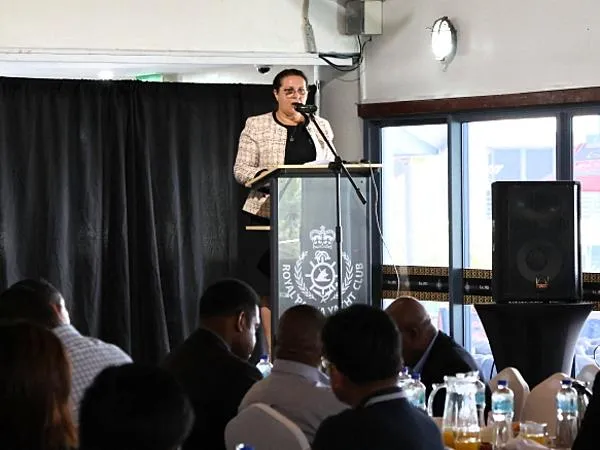
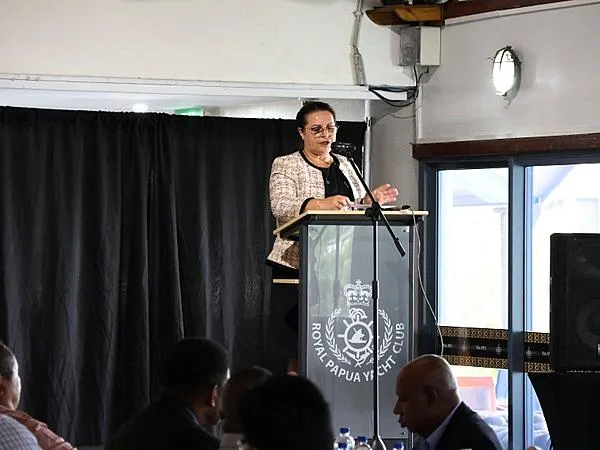
The Bank of Papua New Guinea (BPNG) Governor Elizabeth Genia addressed recent significant legislative changes to the Central Banking Act during the recent September 2024 Monetary Policy Statement presentation at the Royal Papua Yacht Club.
The amendments, passed by Parliament in September, pave the way for the establishment of a new Monetary Policy Committee (MPC) aimed at enhancing the independence and transparency of monetary policy in PNG.
“This is the last Monetary Policy Statement from the Bank of Papua New Guinea under the current governance structure,” Governor Genia stated.
“The recently passed amendments include a provision for the establishment of a new Monetary Policy Committee, comprising myself as Governor, our Deputy Governor, and three appointees who are not members of the Bank of Papua New Guinea Board.”
The new committee’s formation marks a critical step in strengthening the independence of monetary policy decision-making, Genia said.
With only the Governor and Deputy Governor sitting on both the MPC and the Bank’s Board, the committee’s membership will be determined by the Head of State, based on advice from the National Executive Committee and the Treasurer.
The appointment of the three additional committee members is expected to progress smoothly, with the aim of having the new MPC operational as soon as practicable.
“This change will facilitate more robust discussions and decision-making processes in our monetary policy framework,” she noted.
An essential aspect of the legislative amendments mandates the MPC to publish a statement following each meeting, detailing individual votes and the rationale behind decisions.
“This will add transparency to the process of setting monetary policy and provide greater insight into the considerations behind our decisions,” Governor Genia explained.
Moreover, the recent changes clarify the objectives of the BPNG, placing price stability as the primary and overarching goal.
“Our secondary objectives are to ensure financial stability; promote sustainable medium term economic growth, especially in the non-mineral and non-petroleum sector; and to promote the development of Papua New Guinea’s financial system,” Governor Genia said.
Bank of Papua New Guinea (BPNG) Governor Elizabeth Genia recently outlined the September 2024 Monetary Policy Statement, amid the ongoing economic challenges and the central bank's strategies to stabilize the nation's economy.
The presentation took place on October 7th at the Royal Papua Yacht Club in Port Moresby.
Reflecting on the previous March Monetary Policy Statement, Governor Genia noted the persistent inflationary pressures that necessitated tough monetary decisions.
At that time, the Kina Facility Rate (KFR) was at a historic low of 2.0%. However, she reported that the central bank has since adopted a tightening stance, raising the KFR to 4.0% in September amid the need for price stability.
"We are maintaining our headline inflation projection at 5.0% for 2024, with underlying measures at 5.5%," Governor Genia stated.
While headline inflation has decreased to 0.1% in mid-2024, core inflation measures indicate persistent pressures, particularly from domestic goods.
"A tighter monetary policy stance is necessary to manage these inflation risks," she added, referencing potential global commodity price shocks.
The recent adjustments, including increasing the Cash Reserve Requirement from 10% to 12%, were aimed at tightening liquidity in the banking system. This resulted in rising yields on Treasury Bills and a notable steepening of the yield curve for the first time in years.
These measures help enhance the effectiveness of the monetary policy transmission mechanism, Governor Genia explained.
“The Kina Facility Rate was increased to 2.5% in May, accompanied with an increase in the Cash Reserve Requirement from 10% to 11% of all deposits held with the commercial banks. These complementary measures were designed to absorb some of excess liquidity from the banking system and to assist in strengthening the monetary policy transmission mechanism.”
“In further addressing the long-standing issue of the excess of liquidity in the financial system, the Cash Reserve Requirement was further increased to 12% in June.”
“The more recent increases in the KFR to 3.0% in August and to 4.0% in September helped alleviate some of the pressure on the steepening in the yield curve while aligning our overnight policy rate with those of our major trading partners,” she added.
Genia observed that wholesale interest rates on government securities have returned to pre-COVID levels. However, commercial banks have been slower to adjust their deposit rates, with indicator lending rates ranging from 7.20% to 11.70%.
"The excess liquidity remains a challenge, but we are exploring various policy options to address this," she noted.
Domestic Economic Outlook
On the broader economic outlook, Governor Genia expressed cautious optimism, noting that construction activity and higher agricultural prices, particularly for cocoa and coffee, are contributing to this growth.
“It has been a very difficult year for businesses in PNG. We do, however, believe the worst is behind us. We expect growth for 2024 to land at around 3 percent, driven mainly by the mineral sector, and while the non-mineral sector has experienced a slower expansion, it has been driven by construction activity and higher prices for some agricultural exports, notably cocoa and coffee. Government spending, particularly on construction, has also supported growth this year.”
Genia continued with PNG’s growth forecast for 2025 and 2026 of around 4.3 percent and 3.7 percent, respectively, reflecting increased capacity and full year production from the Porgera gold mine and construction activity in other resource projects.
“The prices of PNG’s agricultural exports remain high, but most are easing from their 2022 peaks. Gold and copper remain strong, while other metals are easing. Oil and gas prices have come down from COVID pandemic highs as supply increases, helping to moderate global inflationary pressures but potentially reducing profitability for PNG’s extractive industries,” she added.
Foreign Exchange:
Governor Genia also said the difficulties in sourcing foreign currency “remain a significant concern."
The introduction of a crawl-like exchange rate arrangement and a weekly foreign exchange auction aim to improve access to FX liquidity. Despite net outflows in the foreign exchange market, she reported that interventions by the Bank have gradually improved the situation.
“We also introduced a weekly Foreign Exchange Auction in May 2024, to provide more frequent and predictable access to FX liquidity – providing increased transparency to the market with those intervention funds used for essential orders only.”
Genia said even though progress has been slow, she was pleased to report these reforms have had a positive impact.
“Access to foreign exchange has very gradually improved, and, while outstanding orders remain high, the extent of the Bank’s intervention with its foreign reserves means there is more foreign currency available in the market, though the excess of demand for foreign currency over that actually available, remains high.”
"Over the eight months to August, inflows into PNG’s domestic FX market amounted to PGK12.8 (or US$3.4) billion, while total outflow was PGK17.4 (or US$4.6) billion. As a result, there was a net outflow of K4.6 (or US$1.2) billion which was primarily met by BPNG’s intervention of K3.8 (or US$1.0) billion.
“We are currently intervening in the domestic foreign exchange market with US$125.0 million each month and we will continue to support the market, with that level of intervention, for as long as is needed.”
Legislative changes to Central Bank Act:
Genia also noted recent legislative changes to the Central Banking Act, which will see the establishment of a new Monetary Policy Committee. This committee “will enhance the independence of monetary policy decisions and require transparency in its operations.”
"We are in a period of transformational change," Governor Genia affirmed, underscoring the need for coordinated efforts between the government and private sector to address structural challenges hindering business growth.
She acknowledged the difficult landscape businesses are navigating but expressed hope for improvement in the second half of the year, driven by various sectors.
"Our focus is on ensuring these reforms are implemented effectively, allowing businesses to access foreign currency and contributing to long-term prosperity for all Papua New Guineans."
BPNG Business Sentiment Survey:
The Bank’s Business Sentiment Survey, conducted in July 2024, suggested that firms are operating in a very high-cost environment which is adversely impacting on their operations.
Governor Genia said: “Prices are expected to remain high while efforts are being made to source cheaper alternatives to manage costs and increase revenue and profit margins.
“It has been a very difficult year but we are expecting further improvement in the second half driven by higher activity in construction, agriculture, wholesale and retail, finance and insurance, and mining sectors.”
She added: “The challenges you face are not unique to PNG; but they are made more difficult by our domestic barriers to business, including excessive red tape and poor infrastructure.”
Attendees included government representatives, CEOs of financial institutions, and members of the diplomatic corps.
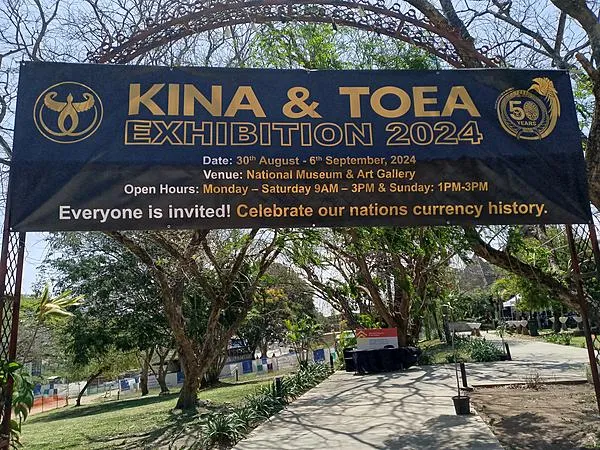
The Bank of Papua New Guinea (BPNG) officially launched the Kina and Toea Exhibition, a display celebrating the nation's rich economic history and the 50th anniversary of Papua New Guinea’s currency. This event, held as part of the Bank’s 50th anniversary celebrations, coincides with the upcoming 50th anniversary of PNG's independence in 2025.
The Kina and Toea Exhibition was launched on 29 August and continued from 30 August to 6 September 2024 at the National Museum & Art Gallery in Port Moresby. The exhibition provided an opportunity to explore the fascinating history of PNG currency and its unique place in the nation's development. Displaying cultural richness and diversity, attendees were reminded of the significance of currency as a reflection of PNG identity, values, and traditions.
The Assistant Governor of Corporate Affairs, Mr Ron Sikar, gave the opening speech and officially declared the exhibition open on behalf of the Governor of BPNG, Elizabeth Genia, in her absence. In Governor Genia’s speech, she emphasised the exhibition’s importance in reflecting on the nation's economic development and its roots in the introduction of the Kina and Toea, which have become not only economic instruments but also national emblems of independence and unity.
"It is an honour to stand before you today as we open the Kina and Toea Exhibition, a showcase of our nation's rich and evolving economic history as part of the Bank’s 50th anniversary celebrations," Governor Genia said. She highlighted that the event is particularly significant as it precedes the 50th anniversary of both the country's currency and the nation itself.
Governor Genia also introduced the Bank’s Vision 2050, launched in line with the anniversary celebrations. "The Bank’s Vision 2050 speaks of ‘economic opportunities for all Papua New Guineans,’ which at its core is about the transformation of the economy in the next two decades. This vision is a continuation of the development process first initiated some 50 years ago in preparation for PNG’s independence in 1975."
The Governor’s speech traced the historical journey of currency in PNG, starting with shell money used by the nation’s forefathers. Shells, particularly the Kina and Toea, were not only mediums of trade but also symbols of wealth, social status, and cultural practices. "Deeply embedded in our traditions and cultural practices, shell money also represented social status, and it was used in marriages, deaths, and other significant ceremonies and events," Genia explained.
The arrival of colonisers marked a turning point in the country's economic history, leading to the introduction of contemporary currencies on 19 April 1975. "These contemporary currencies served as both economic instruments and national emblems of our independence and unity as a nation," Genia noted.
She provided insights into the cultural significance of the Kina and Toea, explaining that the word "Kina" is found in both the Pidgin and Kuanua languages and describes the priceless pearl shell extensively traded in PNG's Highlands and Coastal regions. Similarly, "Toea" refers to a valuable type of shell used in trade and traditional bride price ceremonies in the Motuan Coastal villages.
Governor Genia expressed the Bank’s ongoing commitment to maintaining trust and confidence in physical currency, even as global trends shift towards digital currencies and electronic payments. "This exhibition provides a unique opportunity to reflect and appreciate how far we have come and to consider how we can continue to honour our heritage while embracing the future," she said.
The exhibition was designed to take attendees on a journey through PNG's history, showcasing images of rare artefacts, coins, and notes that have shaped the country’s economy.
The launch was attended by distinguished guests, partners, stakeholders, the staff and management of BPNG, and the media.
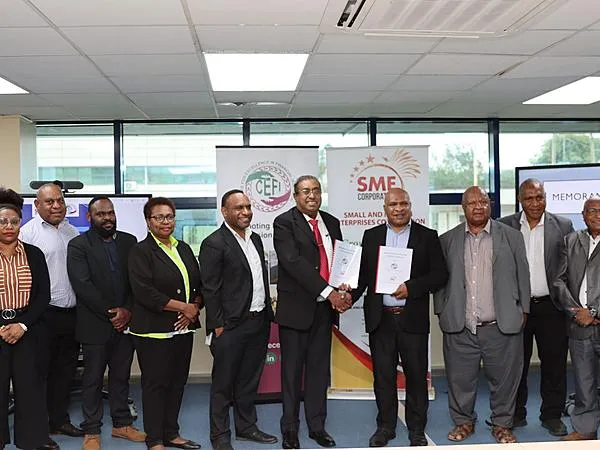
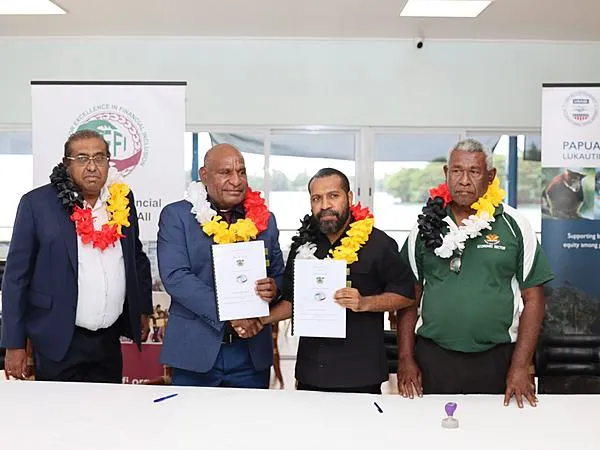
The Centre for Excellence in Financial Inclusion (CEFI) and the SME Corporation (SMEC) will work in partnership together in advancing financial inclusion in Papua New Guinea following a Memorandum of Understanding (MoU).
CEFI Executive Director Mr. Saliya Ranasigne and SMEC Managing Director Mr. Petrus Ralda signed a MoU on Tuesday August 13 at the SMEC Head Office in Port Moresby.
The MoU which will run for three years will see both organizations advancing financial inclusion and fostering the growth of Micro Small and Medium Enterprises across the nation of Papua New Guinea.
Mr. Ranasinghe in his opening remarks stated the partnership between CEFI and SMEC is important as both share the same goals in building and developing skills through their business skills training and financial literacy training respectively.
“We strongly believe that development of MSME sector definitely be the engine of growth of this country in the future. And we really appreciate the contribution made by SME Corporation for driving the Micro, Small and Medium Enterprise.”
“As two national entities, this particular partnership will definitely drive policy influence where we can definitely change the mindset of building this faculty.”
“We are looking forward to this partnership as it will bring a new dimension for Micro Small and Medium enterprise development in PNG and to contribute to a much more prosperous future and a better standard of living for all of the people in this country and also for a better future for the next generation,” Mr. Ranasinghe.
In response SMEC Managing Director Petrus Ralda stated through the MoU, SMEC and CEFI can share resources and will be able to integrate the components of programs host by CEFI and the programs host by SMEC and be able to support the MSME sector throughout the country.
“We have to work together, go back to the basics, see the changes, do the integrations, and then work together, and share resources so that we can be able to achieve our objectives and make a lot of impact at the end of the year.”
“Access to finance is a very key component of MSME development, one of the key constraints in SME policy implementation. Working together like this with your network, with the CEFI’s cooperation network, we can be able to work together, CEFI can achieve its objectives, and SMEC can achieve its objectives, and we can be able to work together and support MSME sector going forward,” concluded Mr. Ralda.
Some of the compelling reasons for this partnership highlighted in the MoU include; complementary objectives, integrated support ecosystem, capacity building, policy advocacy, regional reach and innovation and technology.
According to the MoU, the partnership between CEFI and SMEC has the potential to catalyze inclusive growth, empower MSMEs and contribute to the socioeconomic development of Papua New Guinea, by combing their strengths and resources, they can create a synergistic impact that benefits both MSME sector and the broader economy.
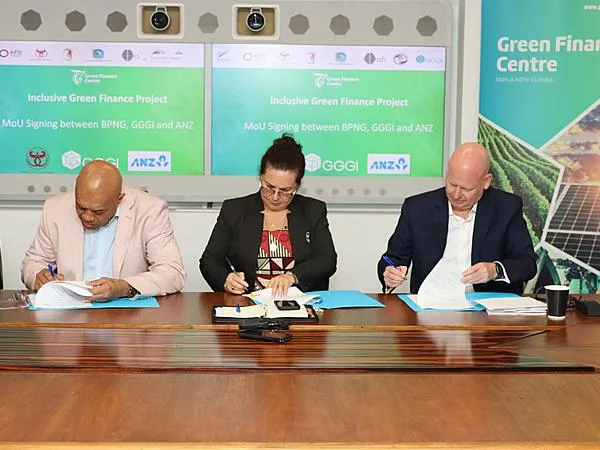
The Bank of Papua New Guinea (BPNG), Australia and New Zealand Banking Corporation (PNG) Ltd (“ANZ”) and the Global Green Growth Institute (GGGI) have signed a Memorandum of Understanding (MoU) to integrate and reinforce the Inclusive Green Finance Policy (IGFP) into ANZ’s operations and services.
The MoU establishes a framework for cooperation and collaboration between the parties to support Papua New Guinea’s IGFP. This collaboration leverages ANZ’s comparative advantages, ensuring complementarity and mutual reinforcement among all parties. Under the MoU, ANZ will pilot the inclusive green taxonomy through green loans.
ANZ is the fourth financial institution to join this initiative, following the Bank of South Pacific (BSP), Nationwide Micro Bank (MiBank), and Women’s Micro Bank Ltd (Mama Bank), who signed similar MoUs with GGGI and BPNG earlier this year.
Funded by the New Zealand Ministry of Foreign Affairs and Trade (NZ-MFAT) through the “Low-Emissions Carbon Reduction Development” Program, the Green Finance Centre will provide policy advisory services, technical assistance, knowledge-sharing, and capacity-building activities to all four financial institutions. GGGI is providing all technical and administrative support to GFC who is guided by the IGFP Steering Committee chaired by BPNG.
As part of the MoU, GFC will conduct a needs assessment on ANZ to shape the development of green loan products aligned with the taxonomy. GFC and ANZ will also hold periodic consultations to review the planning, implementation, and outcomes of their cooperation, identifying opportunities for enhancing collaboration.
In anticipation of the Agence Française de Développement (AFD) funded program “Greening the Pacific Financial System” (GPFS), GFC will establish and capitalize the Green Refinancing Facility (GRF) with 1.8 million Euros in Papua New Guinea. Financial institutions aligned with the IGFP and the MoUs will qualify to access the GRF.
BPNG Governor Mrs. Elizabeth Genia expressed her excitement and gratitude at the MoU signing event, noting ANZ’s commitment to developing green products aligned with the Green Taxonomy. She also thanked GGGI for its guidance and support in coordinating with ANZ to implement the MoU.
ANZ CEO Mr. Lachlan Halstead remarked on his enthusiasm for signing the MoU and participating in this important initiative. He emphasized that such initiatives align with ANZ’s goal of developing social and sustainable loan products in the PNG market. Given PNG’s developing economy, these initiatives are essential, he added.
GGGI PNG and Solomon Islands Country Representative Mr. Sakiusa Tuisolia highlighted the significance of the MoU signing with ANZ, noting ANZ’s long-standing presence in PNG for over 100 years. Mr. Tuisolia stressed that despite international efforts to combat climate change in PNG, more support, funding, and resources from the domestic private sector are necessary. Financial institutions like ANZ play a critical role in this endeavor.
Credit Corporation (PNG) Limited has achieved a long-held dream of its founding directors by evolving into a fully-fledged bank, a milestone celebrated by Chairman Dr. Albert Mellam during the official licensing event by the Bank of Papua New Guinea (BPNG).
The transition to CreditBank PNG marks a pivotal moment in the company’s history, reflecting its vision to become one of the leading financial service groups in the South Pacific.
Dr. Mellam remarked: "Today, that dream is realized. Becoming Papua New Guinea's newest homegrown bank reflects our clear vision to be recognized as one of the leading financial service groups in the South Pacific.”
At the milestone event in Port Moresby in early August, Dr. Mellam expressed deep gratitude to BPNG for its support throughout the licensing process. "On behalf of the Board, management, staff of Credit Corp, and its shareholders, I want to say thank you," he stated.
CreditBank PNG is set to offer a comprehensive range of banking services, including transaction accounts, savings, and deposit products, facilitated through new internet banking and mobile platforms.
The bank aims to cater to customers in the small to medium enterprise (SME), commercial, and emerging middle market segments.
"Customers in these segments want to partner with a financial service provider who delivers exceptional service and innovative products," Dr. Mellam noted.
With over 45 years of experience in PNG’s financial sector, Credit Corporation is well positioned to meet the evolving needs of its customers.
The transition to banking will allow CreditBank PNG to expand beyond its established equipment finance offerings, introducing new services that support the growth of businesses across the country.
The journey to becoming a commercial bank involved a comprehensive project, including the implementation of a new core banking system, a web-based banking application, and significant enhancements to internal processes.
The project also focused on upskilling staff to ensure they are equipped to manage banking operations. "Our new core banking system was launched in a controlled production environment in just seven months, on time and within budget," Dr. Mellam said.
The successful pilot phase, with positive feedback from staff, helped refine the services to be competitive and user-friendly.
Dr. Mellam thanked the project team, BPNG staff, and business partners who played crucial roles in testing the Kina automated transfer system for inter-bank payments. He also acknowledged the licensing, supervision, and payments teams at BPNG for their invaluable support.
As CreditBank PNG embarks on this new chapter, Dr. Mellam reaffirmed the company's commitment to providing robust and innovative banking services, contributing to the growth of PNG's financial sector.
"We are very proud to receive this license as Papua New Guinea's newest bank and excited about the opportunities it will create for us and our customers,” he added.
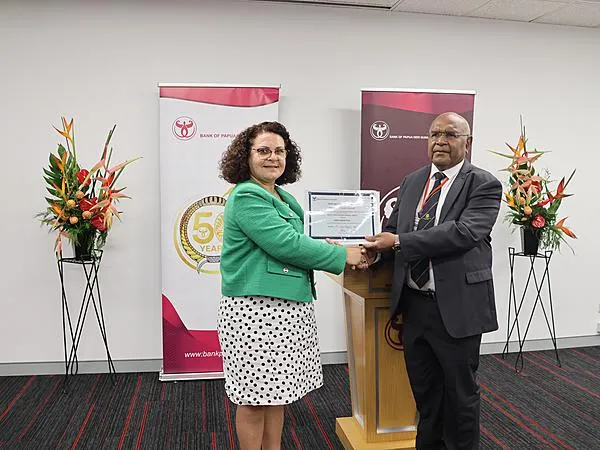
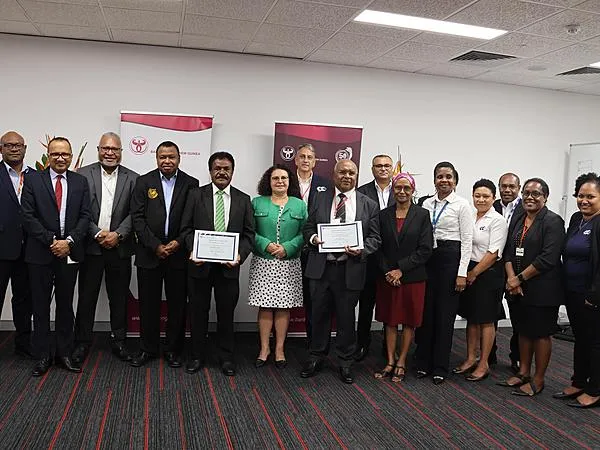
August 5th marked a historic moment for Papua New Guinea's financial sector as the Bank of Papua New Guinea (BPNG) issued commercial banking licenses to TISA Bank Limited and Credit Bank PNG Limited.
This event, held at the BPNG headquarters in Port Moresby, is the first time two banking licenses have been granted on the same day, signaling a significant advancement in the PNG’s banking sector.
Governor Elizabeth Genia of BPNG officiated the event, stating: “It is my great pleasure to confirm that the Bank of Papua New Guinea has issued each with a commercial banking license today. Our hearty congratulations to PNG's new commercial banks, TISA Bank Limited and Credit Bank PNG Limited.”
The announcement coincided with BPNG's 50th anniversary, adding to the significance of the occasion.
Governor Genia highlighted the positive impact of increased competition for Papua New Guineans. BPNG, she said, will continue to provide regulatory support to both new banks, ensuring they meet the necessary standards.
“For the financial system to be strong and vigorous, we need more service providers to foster real competition,” she noted. “BPNG actively supports reputable new entrants into the commercial banking market.”
The banking sector in PNG has faced challenges in recent years, with some banks closing operations or shifting strategies, leading to fewer retail banking options and a concentration of market share. However, the licensing of TISA Bank and Credit Bank PNG is expected to reverse this trend.
Governor Genia expressed optimism that increased competition would benefit consumers through more choices, innovative solutions, and better fee structures.
Dr. Albert Mellam, Chairman of Credit Corporation (PNG) Limited, reflected on the significance of the moment, stating: “Since we commenced operation in 1978, it has been a dream of our founding directors for Credit Corporation PNG to become a bank one day. Today, that dream is realized.”
He also outlined new services that Credit Bank PNG will offer, including internet banking and mobile applications tailored toward small to medium enterprises and emerging markets.
The rigorous two-year assessment process conducted by BPNG ensured that both TISA Bank Limited and Credit Bank PNG Limited met stringent requirements to operate as commercial banks, including governance, risk management, financial health, and operational systems.
Governor Genia reiterated that obtaining a banking license is just the beginning. Ongoing compliance with the Banks and Financial Institutions Act 2000 and other regulations is crucial for these banks’ continued operation.
TISA, a key player in the savings and loans industry since 1972, also celebrated this milestone, as its Chairman Gabriel Tai emphasized the bank's commitment to adhering to BPNG's regulations and serving its 80,000 members across Papua New Guinea.
“TISA Bank is for everybody in Papua New Guinea,” Tai stated, underscoring the bank’s inclusive approach that aims to provide services to a broad range of customers, including SMEs and MSMEs.
These new bank entrants are expected to create jobs, promote financial inclusion, support local small and medium-sized enterprises (SMEs) and micro, small, and medium-sized enterprises (MSMEs), and drive innovation within the sector.
In July, the Global Green Growth Institute (GGGI) launched the Papua New Guinea Climate FIRST project with a series of workshops, starting with the New Ireland Province.
The Climate FIRST Inception and Stakeholder Consultation Workshop, held on July 22 in Kavieng, marked the beginning of the project's implementation across seven provinces: Eastern Highlands, Enga, Manus, Milne Bay, Morobe, New Ireland, and Simbu.
These provinces had signed Memorandums of Understanding (MOUs) with the Climate Change Development Authority (CCDA) and GGGI on June 4 during the project’s national inception meeting in Port Moresby.
The project aims to integrate climate change considerations into provincial plans and budgets and to increase climate investments.
GGGI’s Country Representative for PNG and Solomon Islands, Mr. Saki Tuisolia, highlighted the project's importance, noting: “Climate FIRST is a timely intervention designed to help the province accelerate its climate change agenda through enhanced access to climate finance and investments.”
The workshop, attended by 40 participants, included government officials, district representatives, private sector entities, NGOs, and civil society members. Discussions focused on the project’s components and implementation at the provincial level, aligning expectations and setting the stage for planning and execution.
Mr. Tuisolia expressed gratitude to the Australian Government for its AUD 20-million funding under the PNG-Australia Climate Change Action Plan (PACCAP), and to the New Ireland Provincial Government for its support.
The project, launched by NCD Governor Hon. Powes Parkop on March 11, aims to build climate resilience and foster social inclusion by improving climate finance coordination and expanding access to green investments.
The project also emphasizes gender equity, disability, and social inclusion (GEDSI) to ensure equal benefits for women, people with disabilities, and vulnerable groups.
The Climate FIRST initiative is a collaboration between Australia’s Department of Foreign Affairs and Trade (DFAT), the CCDA, and GGGI.
A Joint Mission Team, including Acting Managing Director of CCDA Ms. Debra Sungi, First Secretary for Climate Change and Forestry at the Australian High Commission Ms. Kashpee Wahid, and GGGI PNG and Solomon Islands Country Representative Mr. Saki Tuisolia, hosted the workshop. They guided discussions on sector priorities and strategic directions to align with local needs.
Ms. Sungi commended the New Ireland Provincial Administration for signing the MoU remotely and emphasized that CCDA had adhered to PNG Government protocols in introducing Climate FIRST to local leaders. She also thanked Australia and GGGI for their support.
Acting Caretaker Provincial Administrator for New Ireland, Ms. Mactil Bais, affirmed the province's commitment to Climate FIRST, noting past benefits from the Australian DFAT-funded Climate Resilience Green Growth (CRGG) project, which had led to the adoption of the CRGG Strategy for climate action.
The First Secretary for Climate Change and Forestry at the Australian High Commission, Ms. Kashpee Wahid, reiterated Australia's strong support for PNG's climate initiatives, underscoring the AUD 20-million funding commitment.
GFC Hosts Fourth TWG Meeting in Port Moresby
On July 24, following the New Ireland workshop, the Green Finance Centre (GFC) held its Fourth Technical Working Group (TWG) Meeting in Port Moresby, focusing on the Inclusive Green Finance Project (IGFP).
The meeting at Hilton Hotel brought together representatives from government, financial institutions, bilateral and multilateral partners, civil society, NGOs, and the private sector.
The GFC, established in March 2024, aims to develop a framework for a green, sustainable, and inclusive financial sector in PNG.
The meeting presented updates on the IGFP’s progress and work plan as the TWG identified five priority sectors for the GFC under the Green Taxonomy, a new system for tracking green lending in PNG that supports climate mitigation and adaptation objectives.
A panel discussion on “Collaborating Inclusive Green Finance and Sustainable Finance in PNG” featured key stakeholders, including:
The panelists discussed their organizations’ roles in advancing sustainable finance and green growth strategies globally and in PNG.
The IGFP, which began in 2021, has now entered Phase 2, focusing on improving financial institutions' readiness to apply the Green Taxonomy and develop green loan products. Supported by ongoing funding from the New Zealand Government, Phase 3 will involve developing a Green Refinancing Facility (GRF) to scale up green loans.
Bank of PNG’s Assistant Governor and Chairperson of the IGFP Steering Committee, Mr. George Awap, emphasized the importance of collaboration and participation in creating a sustainable and climate-resilient financial sector in PNG.
The TWG’s discussions and decisions will guide the IGFP’s continued development and implementation.
The Centre for Excellence in Financial Inclusion (CEFI) and the Madang Provincial Government (MPG) signed a Memorandum of Understanding(MOU) to introduce financial Inclusion activities in the province.
Madang is the first province in the Momase Region and the sixth province to sign a MoU with CEFI, following Milne Bay, West New Britain, Western Highlands, East New Britain and New Ireland provinces.
Present to sign the MoU in Madang province on Friday 12th July, 2024, included Governor for Madang Province Hon. Mr. Ramsey Pariwa, MP, Assistant Governor, Financial System Stability Group (FSSG), Bank of Papua New Guinea (BPNG) and Alternate Chair CEFI Board, Mr. George Awap and CEFI Executive Director Mr. Saliya Ranasinghe.
Also present to witness the signing ceremony were CEFI Board Members including, CEFI Deputy Executive Director Mr. Peter Samuel, Ms. Susil Nelson Kongoi and Mr. Sanja Pepae.
The objective of the MoU is to forge a partnership in rolling out financial inclusion activities and programs align with the targets set out in the National Financial Inclusion Strategy 2023-207.
And also to advocate and create awareness of financial literature and education with an aim to empower individuals to alleviate themselves from poverty.
The Madang Governor Hon. Mr. Ramsey Pariwa thanked BPNG, CEFI, USAID and other development partners for their collaboration and working with his administration to put in place a plan for financial inclusion for the province.
“The national government in its Medium Term Development Plan IV(MTDP IV) is looking at growing the economy base, through its intervention program on banking and finance and financial inclusion, further the Madang Provincial Integrated Development Plan was aligned to the MTDP IV.
“We have captured banking and finance in our provincial plan, that’s an indication that we are serious in looking at banking and finance and SMES in the province,” said the Hon Governor.
The Assistant Governor, FSSG, BPNG and Alternate Chair CEFI Board, Mr George Awap also emphasized the importance of financial education stressing the need for Papua New Guineans to know how to manage their finances.
“If a population is literate financially, it’s about empowering the people to do their business in the most efficient and cost-effective manner. Because if small businesses incur losses, they will give up hope in business because they have no financial knowledge and the ability to manage their own finances,” Mr. Aawap said
CEFI Executive Director, Mr. Saliya Ranasinghe told Governor Pariwa and members of the Madang Provincial Government (MPG) that CEFI was pleased to sign the MoU with MPG to address the issue of financial inclusion.
“A larger percentage of people in this country are not involved in banking activities. Even though the banks have increased their outreach, a lot of people still do not enjoy the benefits of the banking sector.
“Our main aim is to bring these people into the financial mainstream, so that they can get benefits out of the banks, and we are proud to say that we now have about 4.2 million bank accounts in the country and 38% of those bank accounts are owned by women,” Mr. Ranasinghe said.
PNGX Group, operator of Papua New Guinea’s national stock exchange, has taken another step towards enhancing the PNG capital market.
PNGX has released amendments to its Business Rule to modernise the management requirements for PNG’s stockbrokers. This follows the improvement to the speed of settlement of trades which took effect in July 2023, enhancing the overall efficiency of the market.
The Business Rules govern the behaviour of stockbrokers on the PNGX market.
The recent amendments now require each broker to be supervised by a person identified as a Responsible Manager, replacing the previous requirement of an Affiliate Director. The role of a Responsible Manager is crucial, as they must possess sufficient knowledge, seniority and authority within a broker to exert control, leadership, influence and supervision over its operations and processes.
Responsible Managers must have direct responsibility for significant day-to-day decisions about the operations of the stockbroker. Additionally, Responsible Manager’s are accountable to PNGX for ensuring the stockbrokers compliance to the business rules and all applicable regulations.
These amendments are interim measures, set to remain in place until the Business Rules are completely rewritten in late 2024.To aid this transition PNGX will be providing education sessions for stockbrokers in coming months.
A copy of the amended Business Rules and the Guidance Note are available on the PNGX website.
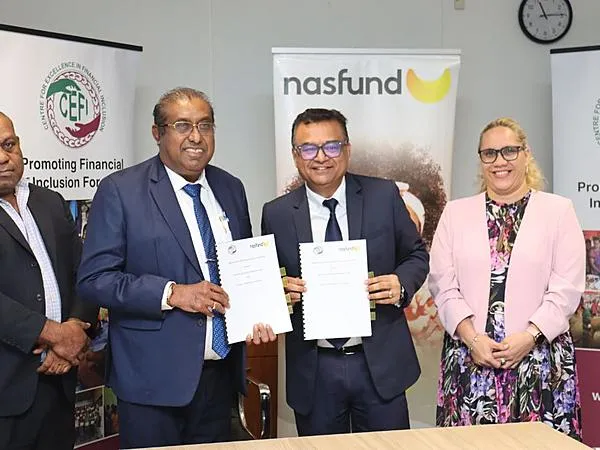
The National Superannuation Fund (Nafsund) Limited signed a Memorandum of Understanding (MoU) with the Centre for Excellence in Financial Inclusion (CEFI) on June 21, 2024.
This MoU is a three year partnership between Nasfund and CEFI that enables both organizations to work together in enhancing superannuation awareness with CEFI’s Financial Inclusion Activities.
CEFI’s collaboration with Nasfund is important as this will advance superannuation awareness within CEFI’s Financial Literacy Training Program and assist CEFI also in incorporating superannuation into schools curriculum activities plus supporting Provincial Government Engagement Programs.The main activities during the three year partnership will include;
CEFI’s Executive Director Mr. Saliya Ranasinghe when commenting on the MoU stated that the partnership between the two organizations is important as it highlights their commitment to expand financial inclusion awareness in Papua New Guinea.
Mr. Ranasinghe further elaborated that CEFI through this partnership with Nasfund will now be able to offer Papua New Guineans financial literacy and superannuation awareness through the activities outlined in the MoU.
“Financial literacy education plays a very important role as it’s brings new knowledge and changes people’s attitude.”
“We hope that this initiative will change the lives of Papua New Guineans to have a better understanding of superannuation and the importance of savings,” Mr. Ranasinghe said.
Nasfund CEO Rajeev Sharma said “Nasfund is proud to announce a series of strategic initiatives aimed at enhancing superannuation education and financial literacy among Papua New Guineans. As part of its commitment to fostering a culture of savings and retirement planning, Nasfund is rolling out three key programs: the School Superannuation Program, the Superannuation Literacy Program, and the long-standing Shopfloor Program.”
Nasfund’s strategic Key Performance Indicators prioritizes superannuation education and inclusion, focusing on the youth through the School Superannuation Program. This initiative targets school children and young people, educating them on the importance of saving and retirement planning from an early age. With the backdrop of high inflation and increasing life expectancy, instilling a savings culture among the youth is critical for ensuring a secure financial future.
Complementing the School Superannuation Program, Nasfund runs the Superannuation Literacy Program for its members and prospective members. This program is designed to deepen understanding of superannuation, providing guidance on effective budgeting and the benefits of maximizing voluntary contributions. “Developed with insights from staff training at the Centre for Excellence in Financial Inclusion (CEFI) in 2022, the program integrates comprehensive modules on savings and budgeting, ensuring that participants are well-equipped to boost their superannuation, “said CEO Sharma.
For over 20 years, Nasfund has been actively engaging with its members and contributing employers through the Shopfloor Program. This program involves regular visits to workplaces, creating awareness about superannuation and Nasfund’s range of products and services. The continuous engagement through the Shopfloor Program underscores Nasfund’s dedication to ensuring that its members are well-informed about their retirement options.
At the core of Nasfund’s initiative is the belief that information is crucial. By educating its members today, Nasfund aims to ensure they are “Ready for Tomorrow” with a well-secured retirement. Through its comprehensive educational programs, Nasfund is empowering members with the knowledge and tools necessary to make informed decisions about their financial future.
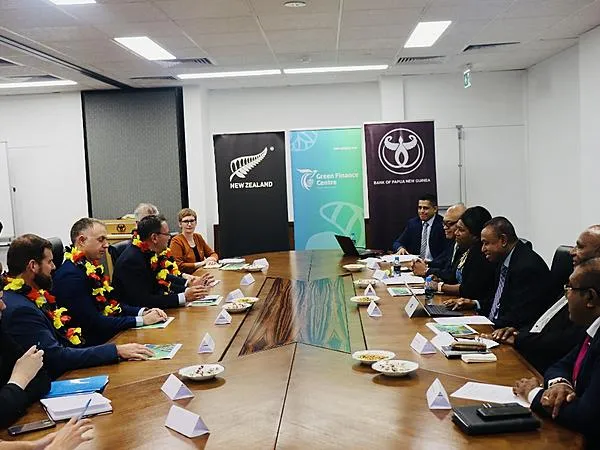
The Bank of Papua New Guinea (BPNG) welcomed a distinguished ministerial delegation from New Zealand to discuss the progress and initiatives of the Green Finance Centre (GFC) in the context of climate resilience in Papua New Guinea.
The meeting, held on May 13, 2024, underscored the pivotal role of green finance in addressing climate change challenges facing the island nation.
The round table discussion facilitated an exchange of insights among officials from the New Zealand Ministerial Delegation, BPNG, the Climate Change Development Authority (CCDA), and the Global Green Growth Institute (GGGI).
Led by the New Zealand Minister of Climate Change, Hon. Simon Watt, MP, the NZ delegation commended the BPNG for its leadership in establishing foundational structures for green finance in PNG noting that the Central Bank can be can be proud of this.
Hon. Watts emphasized that climate change is fundamentally an economic issue. He added that New Zealand, which is also advancing its Green Taxonomy, is eager to assist the Green Finance Centre in harmonizing its Inclusive Green Taxonomy.
"The New Zealand Government is impressed with the Bank of Papua New Guinea’s approach to creating a resilient and stable financial system," Hon. Watts stated.
He expressed New Zealand's interest in collaborating with like-minded countries in the green finance sector, noting that both countries experience the impact of climate events with similar intensity, thereby presenting mutual opportunities for assistance in adaptation and mitigation efforts.
PNG, being an island nation, faces heightened vulnerability to climate crisis such as floods, droughts, rising sea levels, and strong winds. The collaboration between the New Zealand government and BPNG aims to address these challenges by integrating green finance policies into the country's financial ecosystem.
Mrs. Elizabeth Genia, Governor of the BPNG, conveyed through Deputy Governor Mr. Jeffrey Yabom, a message to the Ministerial delegation emphasizing BPNG's mission to serve the people of PNG.
This mission involves implementing effective monetary policy and maintaining a sound and inclusive financial system, she noted, highlighting the systemic implications of climate-related events and policy changes on financial markets and underscoring the need for proactive measures to address climate-related risks.
In response to climate change-related issues, the BPNG is dedicated to playing a pivotal role in safeguarding market stability by proactively addressing climate-related risks and strengthening resilience.
Bank of PNG, Assistant Governor, Mr George Awab, who is also the Chair of the Steering Committee for the Green Finance Centre, stressed a focus on normalizing required finance not only at the international level but also domestically.
Getting the support from the New Zealand government is to develop the Green Climate Center, which is the key Agency, he said.
The establishment of the Green Finance Centre, supported by the Global Green Growth Institute (GGGI) and the Centre for Excellence in Financial Inclusion (CEFI), marks a significant milestone in promoting green growth and economic diversification in Papua New Guinea.
Funded by the New Zealand Ministry of Foreign Affairs and Trade (MFAT) under the Low Emission Climate Resilient Development (LECRD) program, the GFC aims to integrate inclusive green finance policies into lending operations, fostering financial inclusion and sustainable investment activities.
In partnership with the Centre for Excellence in Financial Inclusion (CEFI), GGGI developed the Inclusive Green Finance Policy (IGFP) in 2023.
This initiative, funded by the New Zealand Ministry of Foreign Affairs and Trade (MFAT) with a grant of USD 670,000 under the Low Emission Climate Resilient Development (LECRD) program, led to the establishment of the GFC.
The GFC is mandated to implement the IGFP and Roadmap and oversee other green finance initiatives in the country aimed at mitigating climate-related risks, promoting green finance, and catalyzing investments towards a more sustainable future.
The primary goal of the project is to develop and integrate the Inclusive Green Finance Policy (IGFP) into the lending operations of financial institutions. This integration aims to create a financial ecosystem conducive to financial inclusion, green growth in investment activities, and economic diversification, which in turn will lead to an increase in green jobs.
Hon. Watts reiterated New Zealand's commitment to advancing green finance initiatives and expressed eagerness to collaborate with Papua New Guinea on harmonizing green taxonomies.
He emphasized the economic dimensions of climate change, stating, "The way we address today's pressing climate issues will shape our future."
The significant roundtable meeting was attended by, New Zealand Delegation; Hon. Simon, Watts, Minister of Climate Change, Hon. Dr Shane Reti, Minister of Health, and Minister for Pacific People.
New Zealand MPs Hon. Tim van de Molen, MP and Chair of the Foreign Affairs, Defense and Trade Committee, and Hon. David Parker, an MP for the Labour Party (not current in Government) and opposition spokesperson for Foreign Affairs, were present.
Gerardine Clifford, Chief Executive, Ministry for Pacific Peoples, Charlie Gillard, Deputy High Commissioner, New Zealand High Commission and Laura Holder, First Secretary, New Zealand High Commission were also with the delegation.
Accompanying the NZ delegates were Jessica Rowe, Private Secretary, Minister of Climate Change; Nelson Tiatia, Private Secretary to Minister Reti; Charlotte Gendall, Press Secretary to Minister Reti; Ramphaey Gime, Development Programme Coordinator; and Cynthia Duoribi, Policy Adviser.
PNG delegation attendees included Mr Jeffrey Yabom, Deputy Governor BPNG; Mr George Awap, Asst. Governor BPNG and Chair Steering Committee GFC; Ms. Debra Sungi, Acting Managing Director, Climate Change and Development Authority;
Mr. Mohinesh Prasad, Head of Green Finance Centre; Mr. Saliya Ranasinghe, Executive Director CEFI; Mr. Peter Samuel, Deputy Executive Director, CEFI; Mr. Peniamina Leavai, Deputy Country Rep, GGGI PNG; and Mr. Angus Moina, SCA GFC.
During the roundtable discussion, BPNG Assistant Governor Mr. Awap, who also serves as Chairperson of the Steering Committee for the Green Finance Centre, thanked the New Zealand Government for its regional leadership on climate change.
Mr. Awap highlighted the critical role of the Green Finance Centre in fostering a sustainable financial ecosystem in PNG.
Mr. Prasad, Head of the Green Finance Centre, updated the delegation on the significant progress the GFC has made and its forthcoming initiatives aimed at greening PNG’s financial system.
Through leadership, guidance, and support, the Centre will mitigate climate-related risks, promote green finance, and catalyze investments toward a more sustainable future for PNG, he said.
Key outcomes from the discussion include New Zealand's continued support for the Green Finance Centre's mandate and intentions to collaborate with Papua New Guinea on carbon markets. The collaborative efforts between the two nations reflect a shared commitment to building resilient and sustainable financial systems in the face of climate change challenges.
Follow on LinkedIn:
PNG Business News
Be the "First" to get our exclusive Digital Magazine & Weekly Newsletter.